


FOOTBALL things came in threes for striker John Byrne. He had three different spells playing up front for the Albion and he featured for three different clubs under manager Denis Smith.
Add to that, on three occasions, he was signed by clubs who he’d played well against. And, for QPR fans, he was also the third no.10 who got the crowd off their feet at Loftus Road, following in the footsteps of Rodney Marsh and Stan Bowles.
Ironically, it was former Albion boss Alan Mullery who took Byrne to Rangers, in 1984, during his six turbulent months as manager. Mullery took over from his former Spurs teammate Terry Venables, who’d left to manage Barcelona.
While Mullers’ reign at Loftus Road was brief, the skilful forward he brought in stayed four years and won plenty of admirers amongst the Hoops supporters.
Alongside former Albion striker Michael Robinson, he was part of the QPR team that lost to Oxford (a club he would play for later in his career) in the 1986 League Cup Final (QPR’s sub that day was Liam Rosenior’s dad, Leroy).
Wembley wasn’t to be a happy hunting ground for Byrne, though. That 1986 defeat was the first of three occasions he made it onto the iconic turf, each time ending up on the losing side.
Byrne’s career had begun with basement side York City at 16 after Mike Walker, a taxi driver pal of York’s boss, the former Manchester United manager Wilf McGuinness, spotted him playing local football in Manchester (he was born on 1 February 1961 and raised in Wythenshawe).
Charlie Wright, the former Bolton and Charlton goalkeeper took over as manager and gave Byrne his first pro contract but it was his successor, Denis Smith, the ex Stoke City stopper, who arrived in 1982, together with his coach, former striker Viv Busby, who set Byrne on the road to success.
He scored an impressive 55 goals in 175 appearances for York between 1979 and 1984 and his signing by Mullery for QPR came after he did well in a two-legged Milk Cup tie against the Hoops.
In an odd symmetry, his later move from QPR to Le Havre came after the sides had met in a friendly, and the pattern continued when his eventual move to Brighton came after they too had played Le Havre pre-season.
But back to London where, in his four years at Loftus Road, he scored 30 times in 126 appearances.
QPR fans recall fondly a game when Byrne scored twice in a 6-0 thrashing of Chelsea and, some years later, in an interview with QPRnet, he explained how the drubbing riled the Chelsea, and later Brighton, defender Doug Rougvie to the extent that Byrne and fellow striker Gary Bannister finished the game playing out wide to avoid getting a kicking!
He also scored a winner against Manchester United, the team he’d followed as a boy, and in an interview with Sussex Life in 2010, he said: “I felt a bit like a traitor!”
It was in the year following his move to QPR that he made his international debut for the Republic of Ireland – he qualified to play for them because his dad, Jim, was from County Carlow.
He was an international teammate of Chris Hughton and Mark Lawrenson and between 1985 and 1993 collected a total of 23 caps, scoring four goals, two of which came in a 3-1 win over Turkey.

Although part of Eire’s Euro 88 and 1990 World Cup squads, he didn’t play a game.
Byrne had three spells with Brighton but undoubtedly the most memorable was in the season that ended in heartbreak in the Wembley play-off final against Neil Warnock’s Notts County.
Manager Barry Lloyd had brought him back to the UK from Le Havre for £125,000, shortly after he had been to the World Cup in Italy with the Republic, and successfully partnered him up front with the prolific Mike Small.
Byrne admitted in a 2010 matchday programme interview how he thought he was joining Sunderland that summer but his agent Paul Stretford’s demands put off the Wearsiders and the striker ended up writing to all the English First and Second Division clubs looking for an alternative club.
Surprisingly, he didn’t get many replies, but Brighton did. “Barry Lloyd got in touch and the rest is history,” said Byrne.
It turned out Lloyd had long been an admirer. He wrote in the matchday programme: “I first tried to sign him two years ago, before he went to Le Havre. He was at QPR then and I was vying with Sunderland for his signature when he finally decided to broaden his footballing experience by moving to France.”
Lloyd revealed how he had consulted with Republic of Ireland boss Jack Charlton to check Byrne had lost none of his old skills and ambition. “He is an intelligent player who moves well across the line and I am sure he is looking on his move to us as an ideal opportunity to regain his place in the Republic’s squad for the European Championships in two years’ time,” said Lloyd.
Albion have had some decent striking partnerships over the years but not since Ward and Mellor in the Seventies had a pair captured the imagination in quite the same way as Byrne and Small. Between them they spearheaded Albion’s push for promotion to the elite.
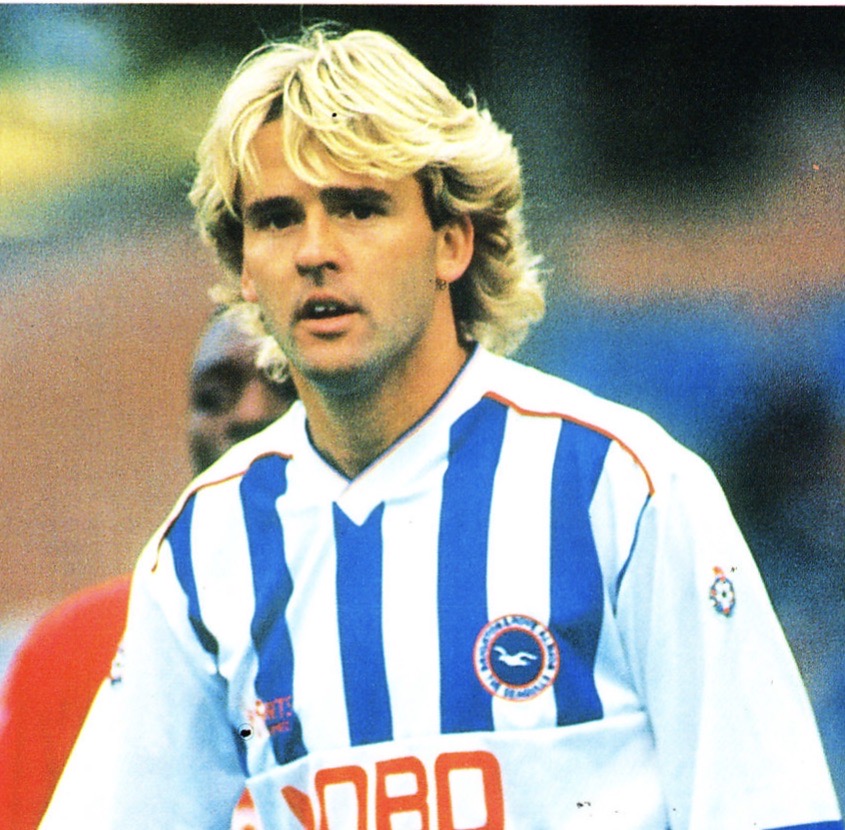 The climax to the season was a classic case of ‘if onlys’ where ‘Budgie’ was concerned: if only he hadn’t been injured in that final game against Ipswich, he would have been fit to play from the start in the final.
There again, if he hadn’t been fouled on the edge of the box, Albion wouldn’t have won the free kick from which Dean Wilkins scored to earn Albion the play-off spot!
With his right leg heavily strapped, Byrne appeared as a substitute in the final. When the Albion story came to an unhappy ending, and the expected financial boost of playing in the top division didn’t materialise, Lloyd had to cash in his prize assets: Small went to West Ham for £400,000 and Byrne was sold to Sunderland for twice what Brighton had paid for him.
Reflecting on Byrne’s impact, Lloyd told Albion’s matchday programme: “He was outstanding for us, he really was. His workrate was excellent.
“He could pass a ball, cross a ball and he knew where the back of the net was. We didn’t have a lot of money to spend but we got something special with him which very nearly got us into what is now the Premier League.”
Byrne famously scored in every round of the FA Cup as Sunderland marched to the final in 1992, and, almost as famously, missed a great chance from six yards as the Wearsiders lost to Liverpool.
After a season at Sunderland, Byrne moved to Millwall, where things didn’t work out for him, and in 1993 he returned to Brighton on loan for a brief seven-game spell in which he scored twice.
He then had two seasons at Oxford, when he scored 18 times in 55 appearances, before returning once more to the Albion to play 39 games in the 1995-96 season. He scored six times, but, it would be fair to say, he was a shadow of the player who graced that 1990-91 season.
Byrne didn’t let the grass grow under his feet when he packed up playing – he learned how to take care of other people’s by becoming a podiatrist.
Followers of the Albion also got to hear his dulcet Mancunian tones on the radio as a summariser on the local radio station’s coverage of Brighton games.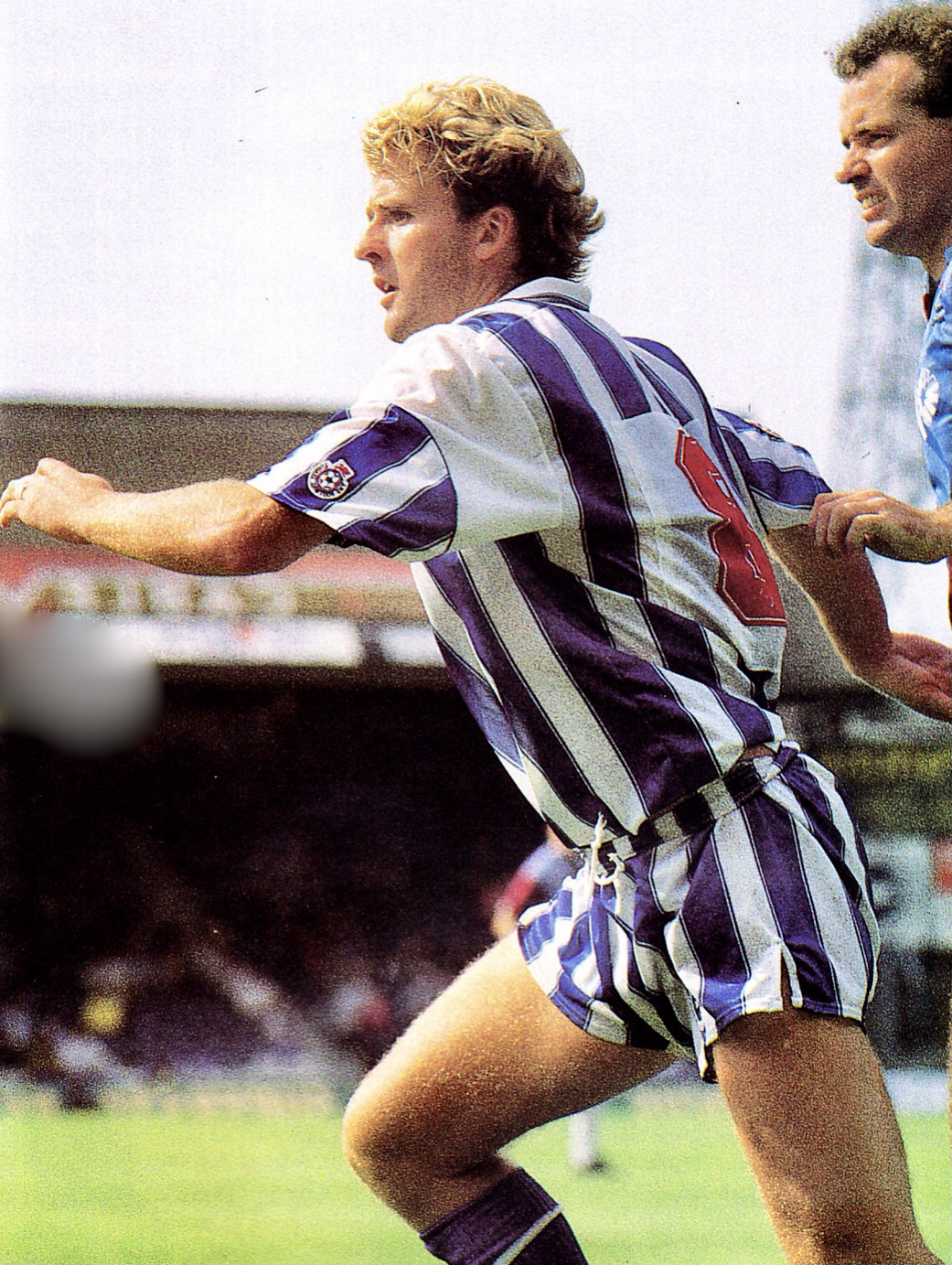
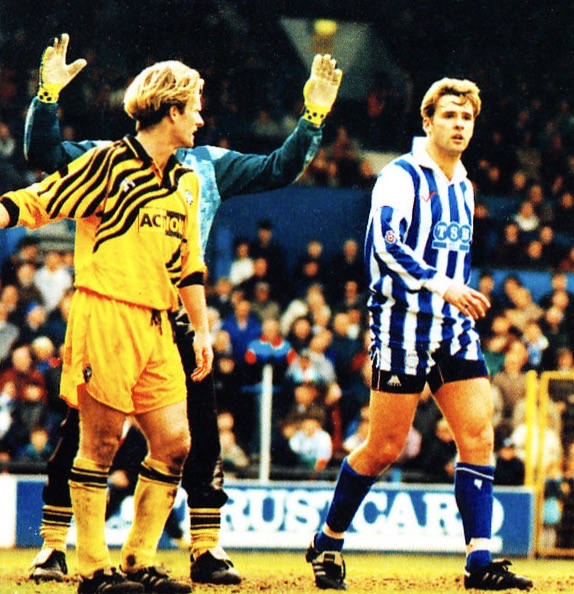


 In parallel lines
15 thoughts on “Eire striker John Byrne’s three spells at the Albion”