Clough’s triple raid on Canaries took Mellor, Rollings and Govier to Brighton

Steve Govier goes into a 50-50 with Crystal Palace’s Alan Whittle

It must be pretty rare for a club to make a triple raid on players from another club but then again Brian Clough and his sidekick Peter Taylor were not known for convention.

In late April 1974, the exasperated former management duo who’d steered unfashionable Derby County to the league championship were trying to breathe new life into Third Division Brighton and Hove Albion.

After an indifferent run of results since their arrival the previous October, Clough and Taylor were planning a huge end-of-season clear-out of the players they had inherited and the pair needed plenty of replacements.

That was why Taylor, the fixer of most of their transfer dealings at that time, took himself off to the Carrow Road home of Norwich City, and persuaded their manager John Bond to let Brighton sign Ian Mellor, Steve Govier and Andy Rollings.

Mellor was said to have been worth £40,000 – a record fee for the Albion at the time – and the trio arrived on the south coast for a combined total of £65,000 (what in today’s money would be something approaching £475,000).

Mellor had been a promising youngster at Manchester City, and although he’d played 54 games over two seasons for Norwich, he was deemed surplus to requirements. Govier and Rollings were both centre backs more familiar to the Norwich reserves.

Govier had played 30 times for the first team but was only ever a deputy for the established Duncan Forbes and Dave Stringer. Rollings was still a teenager who had only played four first team games.
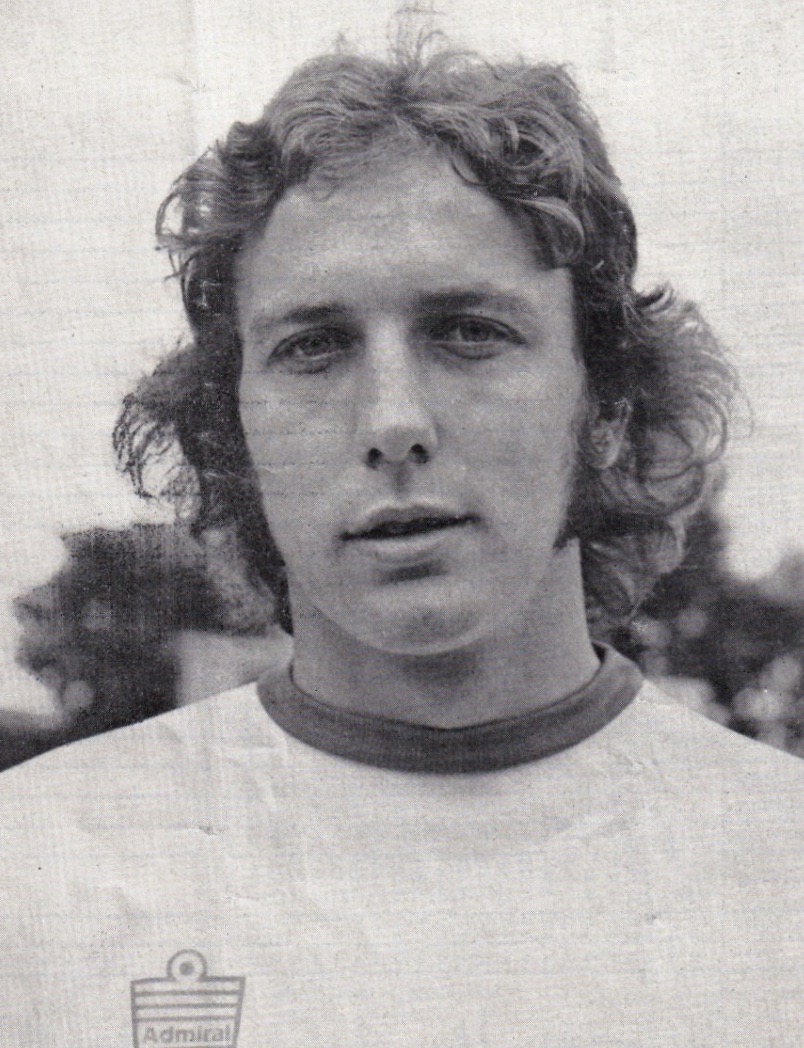
rollings whiteRollings (above) later revealed how Clough had somewhat persuasively told him ‘you’re going to be my next Roy McFarland’ – he’d become England’s centre half alongside Bobby Moore under Clough’s guidance at Derby.

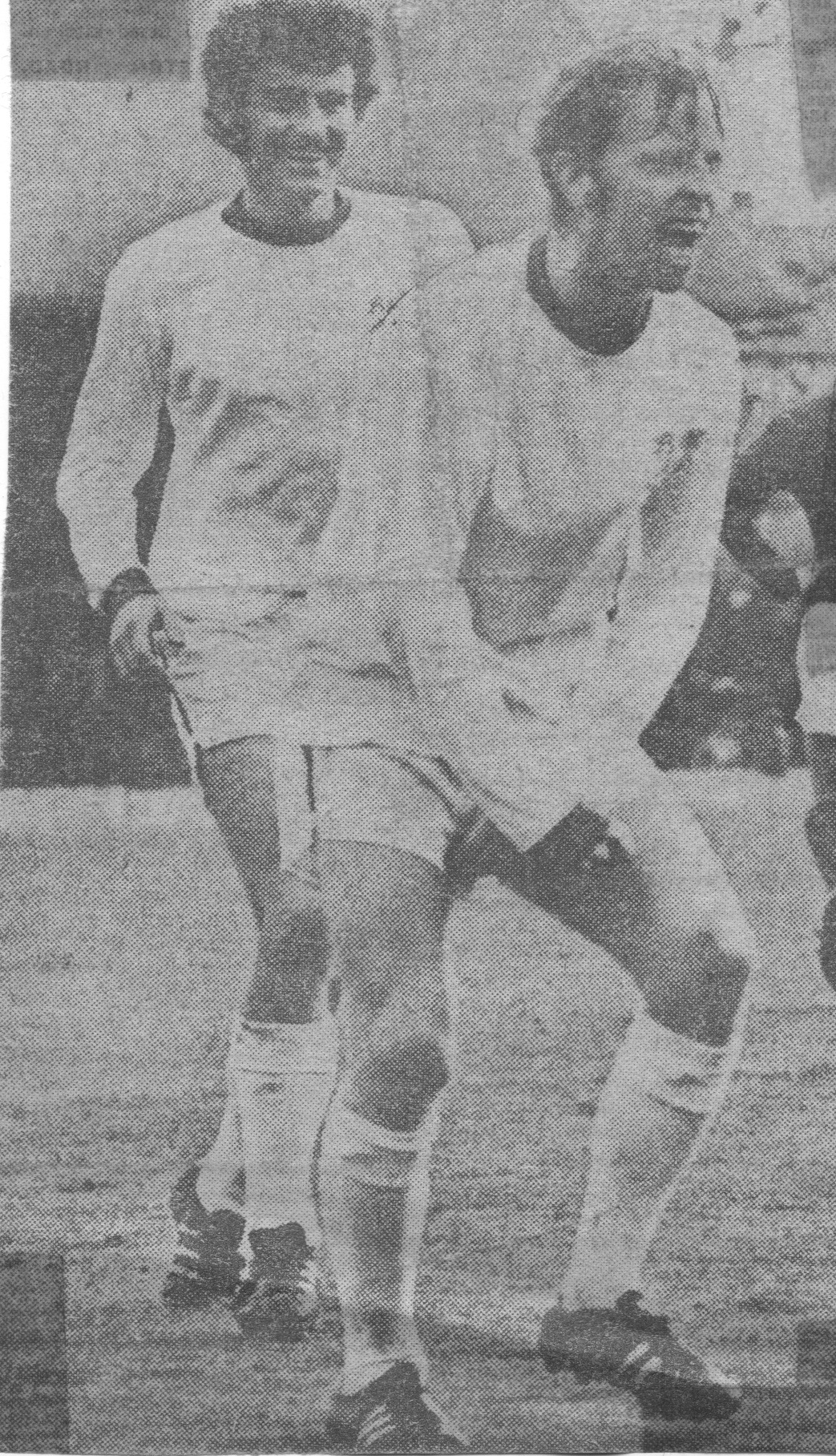
Leeds-bound Clough, of course, didn’t hang around even to witness Rollings make a competitive start with the Albion, but with Taylor in solo charge, all three new signings donned Albion’s new Admiral all white kit with blue collars and cuffs and were in the line-up that began the 1974-75 campaign with a win over Crystal Palace.
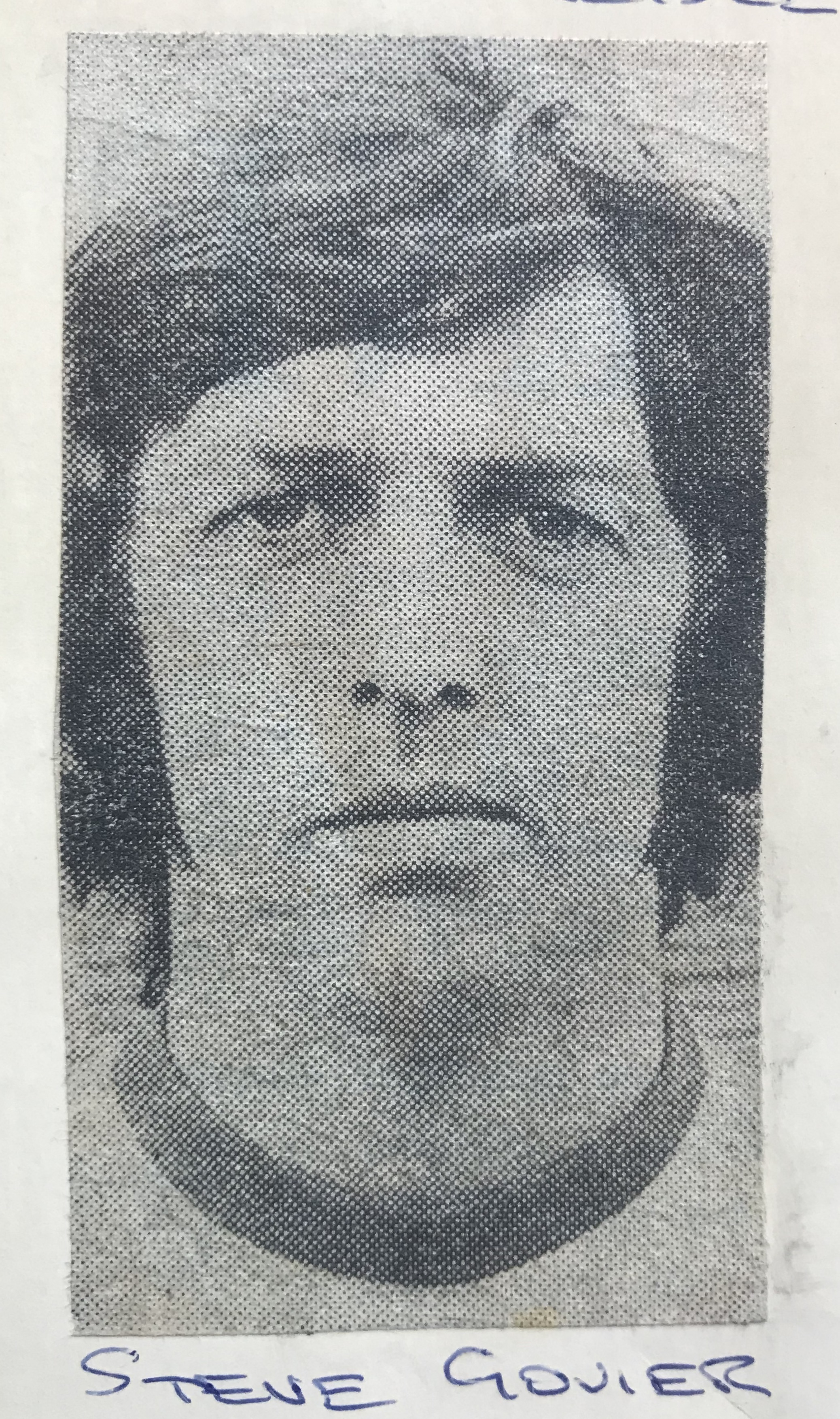
glumGovierGovier and Rollings retained their places for the opening 12 games but with only three wins and 14 goals conceded, Taylor brought in the more experienced Graham Winstanley from Carlisle to try to shore up the leaky defence and Govier departed, former Norwich boss Ron Ashman signing him for Grimsby Town.

As the history books will tell you, both Mellor and Rollings went on to great success with the Albion. Indeed, as described in my blog post, The postman who delivered for Peter Ward , Mellor, under Taylor’s successor Alan Mullery, created one of the club’s most memorable striking partnerships and eventually made 150 appearances for the Seagulls, scoring 35 goals.

Rollings became a regular in defence for the remainder of the decade, playing in 192 games and chipping in with 12 goals.

Govier’s career ended prematurely through a knee injury when he was aged just 25. Norwich fans will remember him most fondly for his stand-in role in the 1973 League Cup semi-final.

In for the injured Forbes and up against Chelsea’s England international centre forward Peter Osgood, a 20-year-old Govier scored the only goal of the game to secure City’s place in the final against Spurs. Forbes returned for the Wembley showpiece, which Tottenham won 1-0.

In Brighton’s climb from the Third Division to the First, Rollings developed into a solid stopper, initially alongside a series of experienced centre back partners in Winstanley, Dennis Burnett and Graham Cross, before two seasons alongside the imperious Mark Lawrenson.

Screenshot
Solid stopper Andy Rollings

Promotion to the top tier and the signing of Steve Foster marked the beginning of the end of his time at the Goldstone. His penultimate game was ironically against Norwich and, in a 4-2 home defeat, he was sent off for retaliation over an ugly challenge in which Justin Fashanu broke the defender’s nose.

He left Albion as part of an exchange deal that saw Swindon Town skipper Ray McHale move to the Seagulls. Rollings then had two years at Portsmouth (29 games) played twice for Torquay and once, very ignominiously, for Brentford.

Mansley Allen chronicled that single game in the April 1997 edition of football fanzine When Saturday Comes. “Within half an hour we were three goals down, with Rollings hapless in a cameo of schoolboy errors,” Allen wrote. “The manager was forced to save the player’s blushes and he was substituted before half-time.”

Rollings is now a matchday host at the Amex and runs a cafe with his wife in Preston Park.A Rollings older
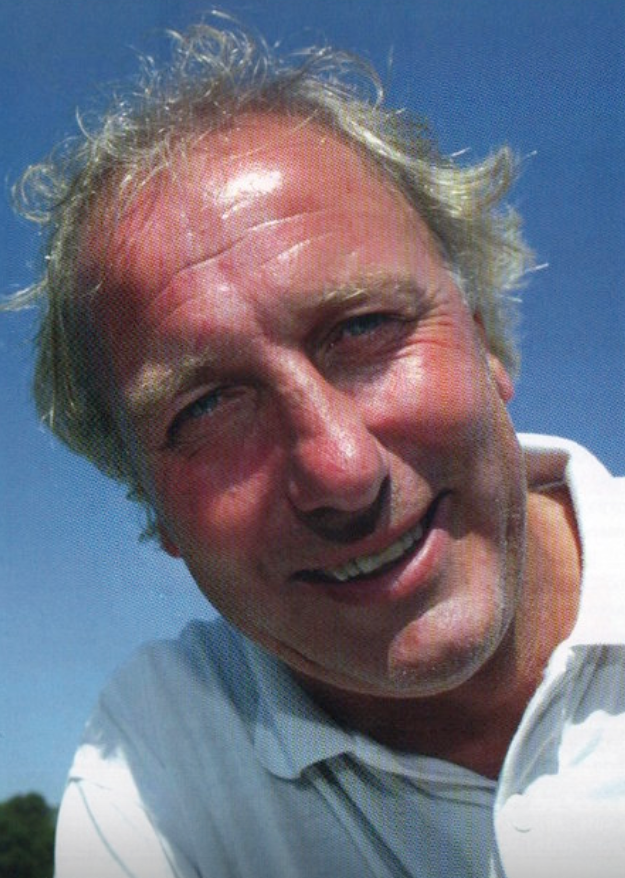
‘Spider’ Mellor struggled to prosper under Taylor but when Alan Mullery converted him from a left-sided midfield player to a striker, there was no looking back and the emerging Peter Ward was the chief beneficiary as goals flowed from the partnership.

Mellor left the Albion in 1978 and moved back to his native north west to play for Chester for two years before ending his career with Sheffield Wednesday.

One of Mellor’s sons, Neil, became better known than his dad among football fans through his TV punditry work. He had to quit the game early through injury after beginning at Liverpool and playing six years for Preston North End.

  • Pictures from my scrapbook show:

– an article from Goal magazine in which Mellor talked about how his move from Man City to Norwich.

– Govier captured by the Evening Argus photographer scoring against Wrexham.

– Rollings in another Evening Argus photograph making his presence felt on his Albion league debut v Crystal Palace.

The highs and lows of Wigan’s Warren Aspinall

PERHAPS for more obviously dramatic reasons, what’s happened in Warren Aspinall’s life since he stopped playing football has rather overshadowed a playing career which began at Wigan Athletic and ended with Brighton and Hove Albion.

Nowadays, the worst demons a more content Warren has to contend with are awkward-looking names he famously mispronounces as the expert pundit on Radio Sussex Albion match commentaries.

It’s a far cry from the post-playing, desperately-dark, drink and debt-ridden days he has opened up about in various media interviews, describing how he attempted to kill himself after blowing £1million on gambling.

Warren’s story is a case study The Samaritans feature as part of their Men On The Ropes programme and, even after several tellings, in print, on TV and online, it remains a salutary tale and, as Warren clearly hopes, a warning to others once the glory days are over.

The 32 games Warren played for Albion in 1999-2000 were the final outings of a playing career that spanned nine clubs over 15 years in which he made approaching 500 appearances, scoring nearly 100 goals.

Born in Wigan on 13 September 1967, his dad was a miner and his mum worked in a sewing factory. At just 13, he was snapped up by the Latics and after fifty-odd appearances for his hometown club in the old Division 3, he got a dream £150,000 move to Everton.

Unfortunately they were well served by the likes of Graeme Sharp, Adrian Heath and Gary Lineker at the time so Warren’s opportunities were limited to just seven appearances for the Merseyside club, but his form for the reserves – 21 goals in 23 matches – attracted the legendary Billy McNeill, then boss of struggling Aston Villa, who snapped him up for £300,000.

An article in The Guardian on 31 December 2015, charting the previous time Villa had been relegated from the top flight, mentioned “the £300,000 spent on 19-year-old Everton striker Warren Aspinall was seen as a gamble” and added: “Throwing an untried youngster into a First Division survival battle seemed a strange decision and it didn’t work out for either man.”

In November 2015, Villa supporter Colin Abbott interviewed him for the Villan on the Spot feature on avfc.co.uk and said Warren’s goals were paramount in clinching promotion back to the top flight in 1987/88 at the first attempt. A nippy striker with an eye for goal, he was a clinical finisher,” Abbott wrote.

He played in the same Villa side as former Albion loanee Martin Keown but was sold by McNeill’s successor, Graham Taylor, after not heeding a warning about accumulating too many bookings, getting himself sent off in a pre-season game against St Mirren.
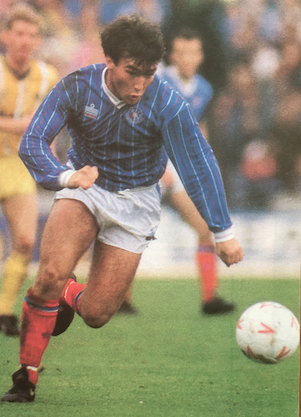
Portsmouth paid £315,000 to take him to Fratton Park where he stayed between 1988 and 1994.

Warren adorned the front cover of the programme for a Pompey v Albion fixture on 17 December 1988 (see picture) when his teammates included Mark Chamberlain (another who later played for Brighton) and he was up against an Albion defence which included Nicky Bissett and Steve Gatting.

In an Albion matchday programme article, Aspinall admitted he didn’t fulfil his potential at Portsmouth. “I was more worried about the demons which I had: the drinking and the gambling,” he said. “That’s probably  why it all went downhill for me quickly.

“I had too much money at too young an age and it broke me.”

Warren was part of Jim Smith’s Portsmouth side that only narrowly lost on penalties to Liverpool in the semi-finals of the 1992 FA Cup but, come the 1993-94 season, with Pompey back among the elite, he was sent out on loan to Bournemouth and Swansea and on New Year’s Eve 1993 joined Bournemouth on a permanent basis.

In 1995 he made the long journey to the far north west and spent two seasons with Carlisle United but, citing a desire to move back south, linked up with Micky Adams for the first time at Brentford. Next stop was Colchester United, initially on loan and then permanently, before Adams, by then in charge at Brighton, brought him in initially on loan and then permanently. It was an ankle injury he sustained playing for Brighton that brought his career to an end.

In a Sunday Mercury/Birmingham Mail interview in 2011, he recalled: “I went into hospital for a routine operation on my ankle in 2000. I woke up afterwards and the doctor told me that I would never play football again. I couldn’t believe what I was hearing.

“It turned out I had got MRSA and it had eaten away at the tendons in my ankle. Looking back, I think that is the moment things started to go badly wrong for me in terms of the drink and the gambling.

“I was constantly thinking: ‘What am I going to do now?’ I had no direction and no idea what I was going to do after football.

“It was a big shock to the system.”

What happened next is documented in plenty of other places so I don’t intend to go into the detail in this blog.

Apart from his radio pundit role alongside Johnny Cantor, Warren now works night shifts as a forklift truck driver at the Sainsbury’s distribution centre in Basingstoke and is a part-time scout for the Albion, with goalkeeper Christian Walton his most notable ‘find’ to date.

The former striker also now goes round football clubs up and down the country sharing his story with teenage players.

“When I visited Villa I saw Gordon Cowans, who I used to play with, and he was flabbergasted at how I had ruined my life since I left Villa Park,” Warren told Colin Abbott. “But if I could save just one kid from making the same mistakes I did, then I would be very happy.”

w-aspinall

Bertie Lutton’s memorable Easter goal at Bournemouth

STANDING amongst the writhing crush of Albion fans squeezed in behind the goal at Dean Court on the afternoon of Easter Saturday 1972, I struggled to get a clear view of the frenzied action on the pitch.

Brighton equalised, that much was evident from the eruption and movement of the swaying masses, but who applied the finishing touch was anybody’s guess as far as I was concerned.

I later discovered it was none other than Bertie Lutton, the £5,000 Northern Irish international winger signed only three weeks previously from Wolverhampton Wanderers.

Lutton had got himself into the penalty area and with a centre forward-like instinct headed Peter O’Sullivan’s cross past Fred Davies in the Bournemouth goal to cancel out the lead Ted MacDougall** had given the promotion-chasing Cherries.

It was Lutton’s second Albion goal in two days. On Good Friday at the Goldstone, he was on the scoresheet with Bert Murray and Ken Beamish as a bumper crowd of 27,513 (remember this was the third tier of English football) saw Albion beat Torquay United 3-1.

It’s difficult for modern day fans to contemplate but literally 24 hours later, the Albion had travelled nearly 100 miles west to take on Third Division promotion rivals Bournemouth and 22,540 fans crammed into the stadium.

In what was a classic game of two halves, the Cherries dominated the opening 45 minutes and took the lead through MacDougall, a prolific scorer of that period who went on to play for Manchester United, West Ham, Norwich City and Scotland.

Albion threw everything at them after the break and Lutton’s equaliser was fully deserved on the balance of play in the second half.

The goal was enough to keep him in the side for the following three games. After that he reverted to the bench to the end of the season, but was on the pitch, having replaced Kit Napier, when the whistle blew at the end of the 1-1 Goldstone draw with Rochdale that earned Albion promotion as runners up behind Aston Villa…..with Bournemouth three points behind in third place (there were no play-offs in those days).

Raising a glass of promotion-winning champagne in the dressing room with his Brighton teammates after that game must have felt good, but that Dean Court moment was probably as good as it got for the blond-haired Ulsterman in his time on the south coast.

Born in Banbridge, County Down, on 13 July 1950, Bertie’s brief footballing career began with his hometown club, Banbridge Town, and it’s reported just £50 exchanged hands to take him to then English elite side Wolves in 1967.Lutton WWFC

At a time when Wolves were blessed with some outstanding players like Derek Dougan, Hugh Curran, Dave Wagstaffe, Jim McCalliog and Mike Bailey, Bertie managed just 25 matches for Wolves between 1967 and 1971.

Brighton manager Pat Saward, nicknamed The Loan Ranger because of the number of players who he brought in on loan, first acquired Bertie’s services on a temporary basis between September and November in 1971.

He made his debut in a 2-0 defeat at Aston Villa and scored twice in seven games before returning to his parent club.

Then, on 9 March 1972, with the clock ticking down to what in those days was the 5pm transfer deadline, Saward completed a double transfer swoop, securing Lutton’s permanent signing for £5,000 together with Beamish from Tranmere for £25,000 (plus the surplus-to-requirements Alan Duffy).

A delighted Saward declared to Argus reporter John Vinicombe: “Bertie can do a job for us anywhere. This can’t be bad for us. At 21 and with two caps for Ireland he has a future and played very well for us while on loan.

“He can play right or left, up the middle, or midfield and Beamish can fit into a number of positions.”

Maybe it was the versatility Saward referred to that worked against Lutton. When Brighton began the 1972-73 season in the second tier, Lutton was still on the bench. He came on in three games, then got four successive starts before going back to the bench.

Albion were finding life tough at the higher level and although Saward switched things around and brought in new faces, the results went from bad to worse.

bertieluttonLutton started three games in December which all ended in defeat and the 3-0 Boxing Day reverse at Oxford United turned out to be his last appearance for the Albion.

It fell in the middle of a spell of 12 successive defeats during which only five goals were scored – and two of those were penalties, another an own goal!

Saward couldn’t put his finger on the reason for the slump and declared himself dismayed by the attitude of certain players: Lutton was one of three put on the transfer list.

Astonishingly he stepped up a division and went on loan to West Ham. He did well enough to secure a full-time switch to Upton Park and almost a year to the day of his arrival at the Goldstone, he was gone and the shrewd Saward turned a £10,000 profit on the enigmatic Irishman.

Those two caps Saward referred to had come while on Wolves’ books in April 1970 against Scotland and England in the old end-of-season Home International tournament. After his move to West Ham, he gained four more. Indeed, in the history books, he became the first Hammer ever to represent Northern Ireland. He came on as sub in three games in May 1973 and his final appearance was in November that year as a starter in a 1-1 draw away to Portugal.

His only goal for West Ham came in a 1-1 draw away to Derby County on 21 April 1973, where one of his teammates was the aforementioned MacDougall. Sadly Lutton’s West Ham career lasted just 12 games. He was forced to quit English football in 1974 at the age of just 23.

He emigrated to Australia and played semi-professional football in the Australian Soccer League for a number of years and settled in Melbourne.

The ‘where are they now’ website reveals he most recently worked as a supervisor for a logistics company.

  • The website wolvesheroes.com tracked down Lutton in March 2010 and reported a fascinating tale about what happened to a 1970 Mexico World Cup England shirt Bobby Moore had given his old West Ham teammate.

** MacDouGoal! the striker’s autobiography.

Pictures from my scrapbook show Bertie Lutton

  • celebrating a goal for the Albion
  • appearing for Wolves
  • heading the equaliser in the Easter Saturday draw at Bournemouth

3-lutton-stripes

luttoningoal

Lutton alongside George Best during Northern Ireland training
Lutton pictured in 2010 on wolvesheroes.com

‘Cultured’ Nobby Lawton a Cup Final captain who led Brighton


WHEN NOBBY Lawton died of cancer aged 66 in 2006, Ivan Ponting, the principal football obituarist of The Independent, penned a marvellous piece about a player who never quite reached the heights his early promise suggested he might.

Lawton was captain of Brighton when I first started watching them in 1969 but he had once played for the post-Munich Manchester United side and was part of Proud Preston’s illustrious history having captained them in the 1964 FA Cup Final. Not surprisingly, Ponting’s obituary began with that showpiece against a West Ham United side led by the imperious Bobby Moore.

“When the two clubs staged one of the most exhilarating of all Wembley FA Cup finals, in 1964, the unassuming Lancastrian was anything but upstaged by the recently appointed England skipper,” Ponting observed.

“Indeed, though Preston of the Second Division were pipped by a stoppage-time goal as the top-flight Hammers prevailed 3-2, many neutral observers made Lawton the man of a rollercoaster of a contest in which his plucky side had twice led.”

In the Lancashire Evening Post’s The Big Interview 40 years after that momentous day, Lawton touchingly shared his memories of the occasion when, aged 24, he’d stood in the famous old tunnel waiting to lead out Preston at Wembley.

“All of a sudden the wave of punishing noise from the 100,000 crowd just ebbed away, and the band struck up the first verse of Abide with Me,” recalled Nobby. “I’d held on to the emotion and nerves until then, but I was a bit overcome at that moment, close to tears in fact.

“I looked over my shoulder and the rest of the lads were coming down the tunnel in those famous white shirts, with the PP crest of Preston on them. It was an unbelievable moment for a young lad.”

Lawton then recalled his early days at Man Utd watching the Busby Babes train and how he thought he’d never make it in the game.

“But there I was at Wembley, captain of the famous Preston North End and I felt on top of the world,” Nobby told the newspaper. “I never thought anything like that would happen to me.

“That day was my proudest moment in football. 1964 was an incredible time in my life, and nobody can ever take that away.”

Readers of a certain vintage will be aware one of Preston’s goals that day were scored by Alex Dawson, another ex-Lilywhite who later linked up with Lawton at the Albion. The pair, who first played together at Man Utd, remained friends for 40 years and Lawton was best man at Dawson’s wedding.

In Ponting’s obituary, he recalled: “a stylish, cultured wing-half who might have been destined for eminence with Manchester United, the club with whom he shared a birthplace of Newton Heath.

“After excelling as a teenager with Lancashire Schoolboys, he signed amateur forms with the Red Devils in 1956, training on two evenings a week while working for a coal merchant.”

Lawton and Dawson were both on the scoresheet as United beat West Ham 3-2 in the first leg of the 1957 FA Youth Cup and Dawson scored twice in the 5-0 second leg win. West Ham’s side included John Lyall, who later went on to manage them.

After the Munich air crash of February 1958, the 18-year-old Lawton gave up his job with the coal company and joined United full time. “However, within days, his fledgling career was in jeopardy,” Ponting related. “After playing for the reserves while suffering from heavy flu he succumbed to double pneumonia, lost the use of his legs and was out of action for many months.”

Matt Busby kept faith with the fledgling talent and gave Lawton his first-team début as an inside-forward at Luton in April 1960. By the middle of the following season, he was a first team regular, forming a promising left-wing partnership with Bobby Charlton.

“Lawton was ever-present in United’s run to the semi-finals of the FA Cup, where they were well beaten by Tottenham Hotspur, but somehow his confidence was never quite on a par with his abundant ability, and soon, in the face of inevitably brisk competition for midfield places, he slipped out of Busby’s plans,” said Ponting.

Lawton recalled in an interview with Spencer Vignes in the Albion matchday programme: “I was in an out of the team. I’d play one game, and go back to the reserves. I’d play another, then back to the reserves again. By the time I was 23, I really wanted – no, needed – to play first-team football.”

After just 36 league games for United, and with Pat Crerand picked ahead of him, he decided to drop down a division and rebuild his career at Preston, joining them in exchange for an £11,500 fee in March 1963.

Lawton explained: “I broke my leg at Manchester United, and although I was in and out of the team at Old Trafford, it knocked the confidence out of me.”

Preston were struggling when he joined them but they enjoyed a mini-revival just missing out on promotion to the top division, and he was made skipper for the 1963-64 season, which culminated in that Wembley final.

Lawton remained Preston captain even though he was hampered by serial knee problems and he admitted to the LEP: “I came back after two knee operations at Preston, but I was a shadow of the player I was in 1964. I was butchered really.”

After 164 league and cup appearances and 23 goals for North End, in September 1967, he dropped a further grade, joining Third Division Brighton for a £10,000 fee.

He was signed by Archie Macaulay but just over a year later found himself helping to select the team as part of a committee after Macaulay stepped down. It wasn’t long though before a familiar face took the helm in the shape of his former Old Trafford playing colleague Freddie Goodwin, and that’s when he first came to my attention, as my Albion-supporting journey began in February 1969.

“I enjoyed playing under him so much. I think we all did,” Lawton told Vignes. “I’ve got some really good memories of us playing well in front of big crowds with him in charge.”

Vignes recounted how Lawton was the scorer of one of the all-time classic goals witnessed at the Goldstone when the midfielder rifled home a volley from around 40 yards against Shrewsbury Town. “I remember their goalkeeper kicking it clear and it bounced in front of me, so I just hit it and it went straight back past him into the net. That was a nice strike,” said Lawton.

After just missing out on promotion in the 1969-70 season, Goodwin left to take over at Birmingham City and, according to the programme article, Lawton didn’t see eye to eye with his successor, Pat Saward, from day one. The player was also suffering a recurrence of his knee problems.

“I went to see a specialist about it , and he said that if I played again, then I could be in a wheelchair for the rest of my life,” he said. “It was around that time that (Fourth Division) Lincoln said they were interested in buying me. The way my knee was, I was going to finish any day soon, and I told them that. But they were still keen, so I signed. ” After a total of 127 games for the Albion, Lawton went to Lincoln in February 1971 together with striker Allan Gilliver.

The following year, at 32, the injury finally put paid to his playing days. He went on to carve out a successful career as a sales director with a Newton Heath-based imports and exports business.

When his death was announced in 2006, former Albion teammate Norman Gall said of him: “Nobby was a true gentleman. When he arrived at the Goldstone his ability and behaviour made him the obvious choice for captain.

“He never criticised or argued with anyone and just encouraged people to play better. A fantastic player and a great friend.”

lawton w Napier

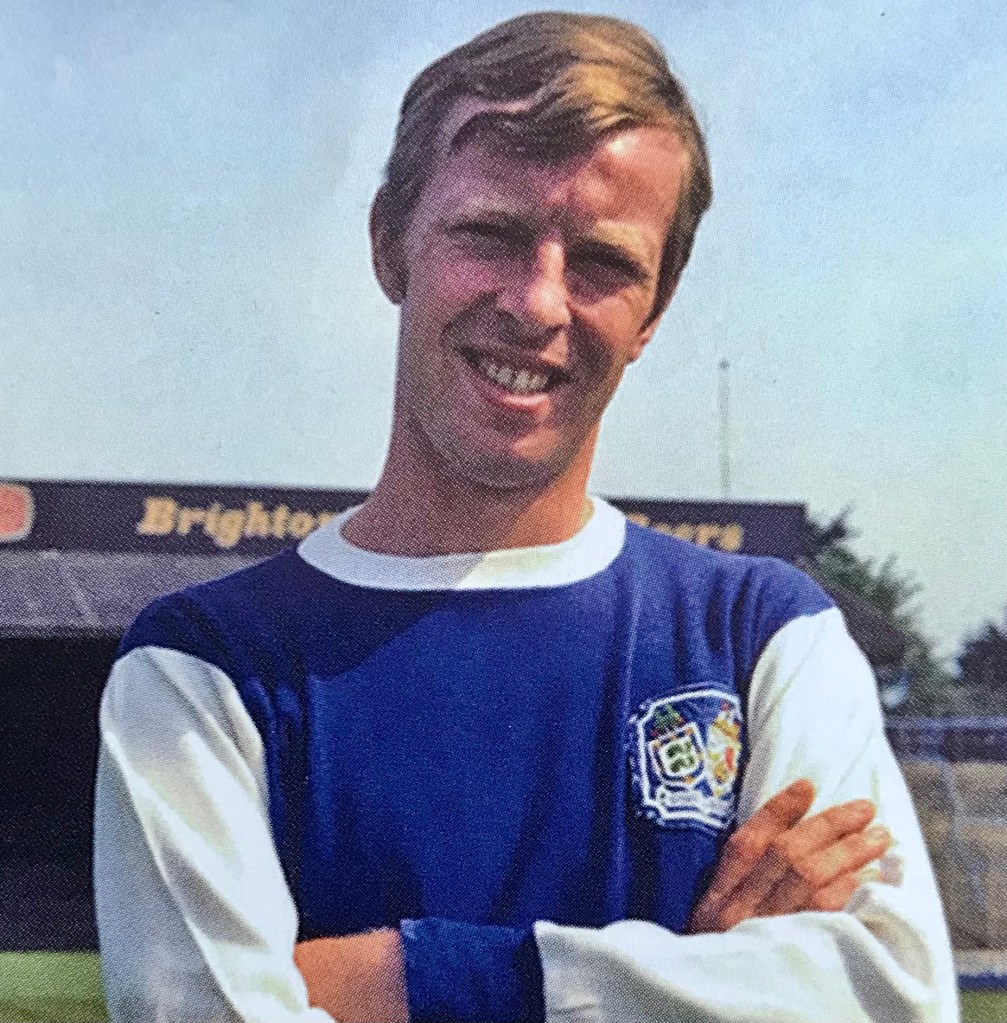
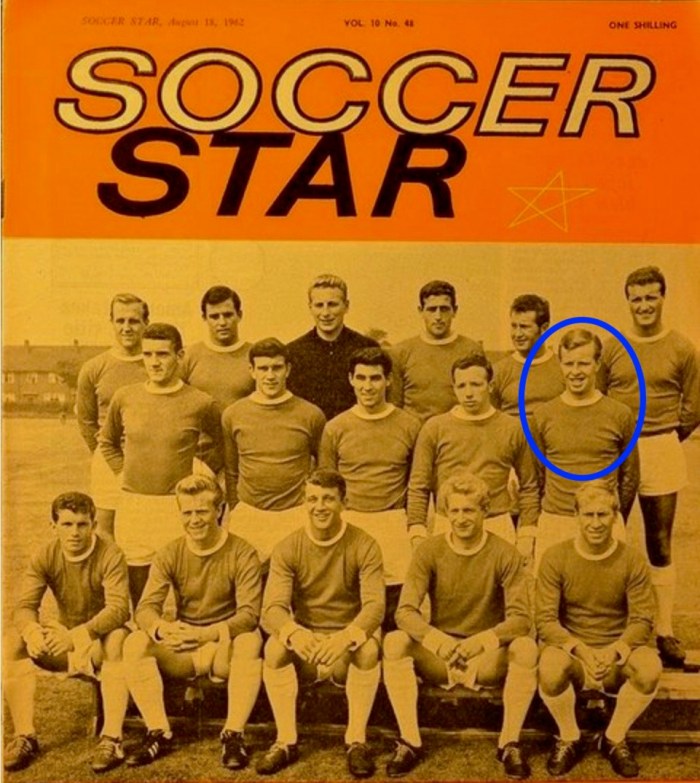
  • Top, Nobby Lawton in action for the Albion during the 1970-71 season, above, celebrating with Kit Napier after scoring a goal. Below, footballinprint.com found this old magazine front cover of a 1962 Man Utd team photo in which Lawton appears alongside Nobby Stiles and behind Bobby Charlton. Other pictures from Albion’s matchday programme.