Kurt Nogan’s phenomenal goalscoring record for Brighton

Screen Shot 2023-03-06 at 08.26.32KURT NOGAN is right up there as one of my favourite all time Brighton & Hove Albion players. The ‘No, no; No, no, no, no; No, no, no Nogan’ fans’ chant still rings around my head when I think about his goalscoring exploits in the stripes.

One of my favourite Albion memories involved Kurt scoring at Filbert Street when he rounded off one of Albion’s best ever performances to give Division 2 Albion a 2-0 League Cup victory over Premiership Leicester.

It was the autumn of 1994 and I had travelled halfway across the country to Cheltenham to meet up with my then exiled Albion-supporting friend Colin Snowball to travel up to Leicester together to watch the game.

Before the match, we parked in a side street near the university and found a tiny back-street boozer where they served a magnificent pint of Everard’s Tiger, the local ale.

In those days, League Cup games were played over two legs and Albion, with Liam Brady as manager, went into the away game leading 1-0, courtesy of another Nogan goal, which had given us optimism rather than confidence that Albion could progress.

Leicester got their Nogans in a twist in the match programme, mistakenly identifying the first leg scorer as Kurt’s older brother Lee who played for Watford at the time: they knew which one it was by the end of the game!
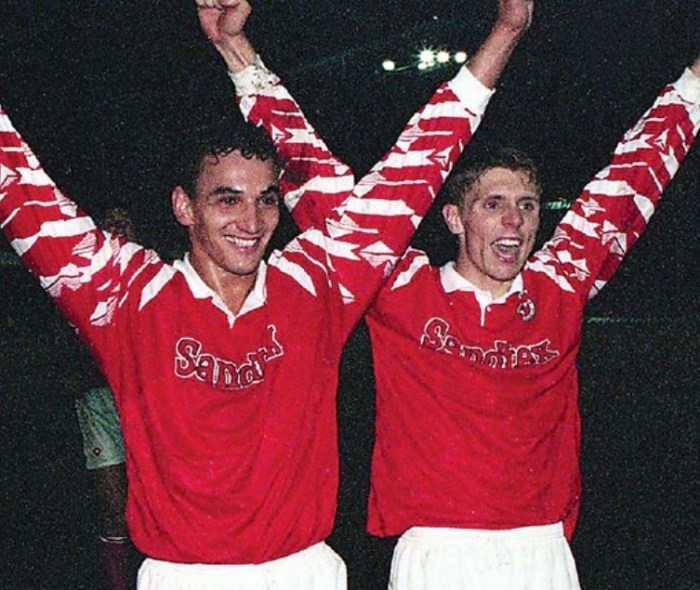
With one of the best away displays I have seen, Brighton took the game to their supposedly more illustrious opponents and caused a major shock when a stunning long range strike from young defender Stuart Munday (celebrating above with Nogan) sailed past Kevin Poole in Leicester’s goal.

There was a curious cameo towards the end of the game when Jimmy Case, who was hard of hearing, trotted over to take a corner and seemed to be wasting time. The ref also thought so and promptly sent him off but Case later claimed he had been waiting for the whistle but hadn’t heard it above the din of the crowd!

With Leicester pushing up for a goal to get themselves back in it, Nogan was left unmarked to seal the win and stun the majority of the crowd into silence.

None of the faithful knew at the time, of course, but it was the last goal Nogan would score for the club.

He subsequently went on a 20-game barren run and, at the end of February 1995, with Albion desperately needing funds, they persuaded Burnley to part with £250,000 for his services.

He might have finished on a downer, but Nogan’s Albion record was 60 goals in 120 games, making him one of the club’s great all-time goalscorers.

Born in Cardiff on 9 September 1970, Nogan arrived at the Goldstone having been released at the end of the 1991-92 season by David Pleat during his second spell as manager of Luton Town. At Luton, Nogan celebrated  his top flight debut in 1990 with a goal in a 2-2 draw against Liverpool at Anfield.

The young Welshman was quickly called up for his country’s under-21s for whom he also scored on his debut. However, competing for a place alongside the likes of established forwards Mick Harford and Brian Stein, he struggled to gain a starting berth in the Luton first team, mainly being used as a substitute.

He had just turned 22 when he signed for the Seagulls, and he told the matchday programme in 2020: “I’d been at Luton since I was 16 – cleaned Steve Foster‘s boots as an apprentice, so I did.”

On reflection, he realised it was a crossroads moment in his life. “You can either drop out of the professional game altogether, or something comes along and you get lucky. For me, Brighton came along and I got lucky.”

If Albion had been able to retain the services of the on-loan strike pair Steve Cotterill and Paul Moulden, who started the 1992-93 season up front, Nogan’s chances of making the breakthrough might have been limited.

But finances dictated otherwise and Nogan eventually made his debut in October 1992, taking over up from another free transfer signing, Matthew Edwards, although much of the season he played alongside Edwards, who moved out to the wing, and Andy Kennedy.

nogan saluteAfter a slow start Nogan scored his first goal in one of those lower league meaningless cup matches and then started finding the net regularly in the league, ending the season with 22 goals in all competitions.

For part of the 1993-94 season he enjoyed a particularly fruitful partnership with a young Paul Dickov, the diminuitive Scottish striker on loan from Arsenal for eight matches.

Nogan ended the campaign with 26 goals to his name, and was voted player of the season, even though the team finished in a disappointing 14th place.

Nogan continued to have a variety of strike partners – often it was Junior McDougald but twice in late 1994 he was alongside the legendary Frank Stapleton who was doing his old Arsenal teammate Brady a favour by turning out for the Seagulls.
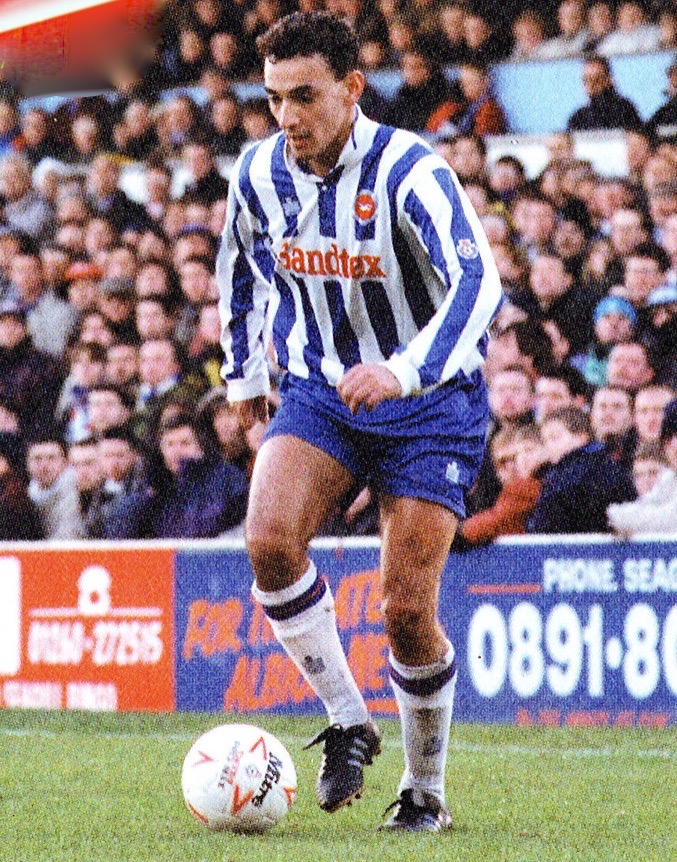
nogan ballIn fact, one of Stapleton’s two games in a Brighton shirt was away to Cardiff on 5 November 1994. In the Bluebirds line-up that day were future Seagulls Charlie Oatway and Phil Stant, the latter scoring twice in a 3-0 win.

Nogan’s career was detailed brilliantly in a profile by Tony Scholes on clarets-mad.co.uk and he noted that Burnley boss Jimmy Mullen’s gamble on Nogan wasn’t enough to prevent them being relegated. The Welshman scored just three times and got involved in an altercation with the manager after being substituted at Bristol City.

However his goal touch returned in the 1995-96 season when he racked up 26 goals, 20 of them in the league, and got on well with Mullen’s successor Adrian Heath – until halfway through the following season when he was suddenly out of favour.

A move was inevitable after Nogan aired his differences with the manager on local radio. “All of a sudden the crowd hero had become public enemy number one,” said Scholes.

That he moved to near neighbours Preston in February 1997 was somewhat galling and Burnley fans of a certain age recall the inevitability of him scoring against them for his new club.

Three years later he moved to home town club Cardiff but, after only four full games and a few substitute appearances, a ruptured hamstring ended his league career prematurely at the age of 32. He did subsequently turn out for some Welsh League clubs but he wasn’t able to return to the previous level.

  • Matchday programme pictures include various shots of Nogan in action and, from the Leicester programme for that cup tie, he is wrongly captioned with his brother’s name.

Barry Lloyd’s turbulent time as Brighton boss

Screen Shot 2021-05-05 at 09.51.14

HISTORY may have judged Barry Lloyd’s reign as Brighton manager unfairly: while bleak times cloud the memory, the former Fulham captain did chalk up some successes.

For instance, it’s worth remembering he put together two of the most entertaining strike partnerships in Albion’s history.

However, when managers start getting involved in the boardroom, it’s probably not going to end well and that certainly proved to be the case after Lloyd was handed the role of managing director.

Frankly, there is probably not enough space in one blog post to cover the various off-the-field shenanigans that were an ugly backdrop to the Lloyd era.

From an outsider’s perspective, it appeared he was the unfortunate public figure put up to deal with a huge amount of flak generated by others wielding power in the background.

Inheriting the hotseat at a time of financial turmoil, from a distance it could be said he did well to win promotion as well as coming mighty close to restoring the elite status lost in 1983.

But fans who had seen huge success under high profile bosses were not best pleased to see their club’s fortunes put in the hands of someone who had previously only managed outside of the league.

Let’s look first at Lloyd’s playing career because, from early on, he was obviously a shrewd observer who made contacts he would be able to call on in later years.

Born in Hillingdon on 19 February 1949, Barry’s early footballing ability was rewarded with selection for the Middlesex and South of England schoolboy sides. He was signed up by Chelsea and was in their 1964-65 youth team alongside former Albion right-back Stewart Henderson in defence and future England international and Chelsea legend Peter Osgood up front.

In an extended interview with Fulham’s club historian, Dennis Turner, Lloyd recalled: “I chose Chelsea because under Tommy Docherty’s management they were an exciting team, with the likes of Osgood, Charlie Cooke and Bobby Tambling.”

Former Albion player Dave Sexton was the reserve-team manager – “a really nice man and terrific coach” – and Lloyd says in his four years at Stamford Bridge he learned a lot.

He made his debut in the top flight in April 1967 aged just 18, but competition for places was tough and, after only 10 first team appearances, in January 1969 he moved to neighbours Fulham with their centre half John Dempsey moving in the opposite direction.

lloyd-fulham-goal

Fulham were struggling for survival in the old Second Division having been relegated from the top flight and the man who signed him, Bill Dodgin, was their fourth manager in a year.

They dropped down into the old Third Division but as part of his rebuilding, Dodgin made Lloyd captain in succession to the legendary Johnny Haynes, who was coming to the end of his career.

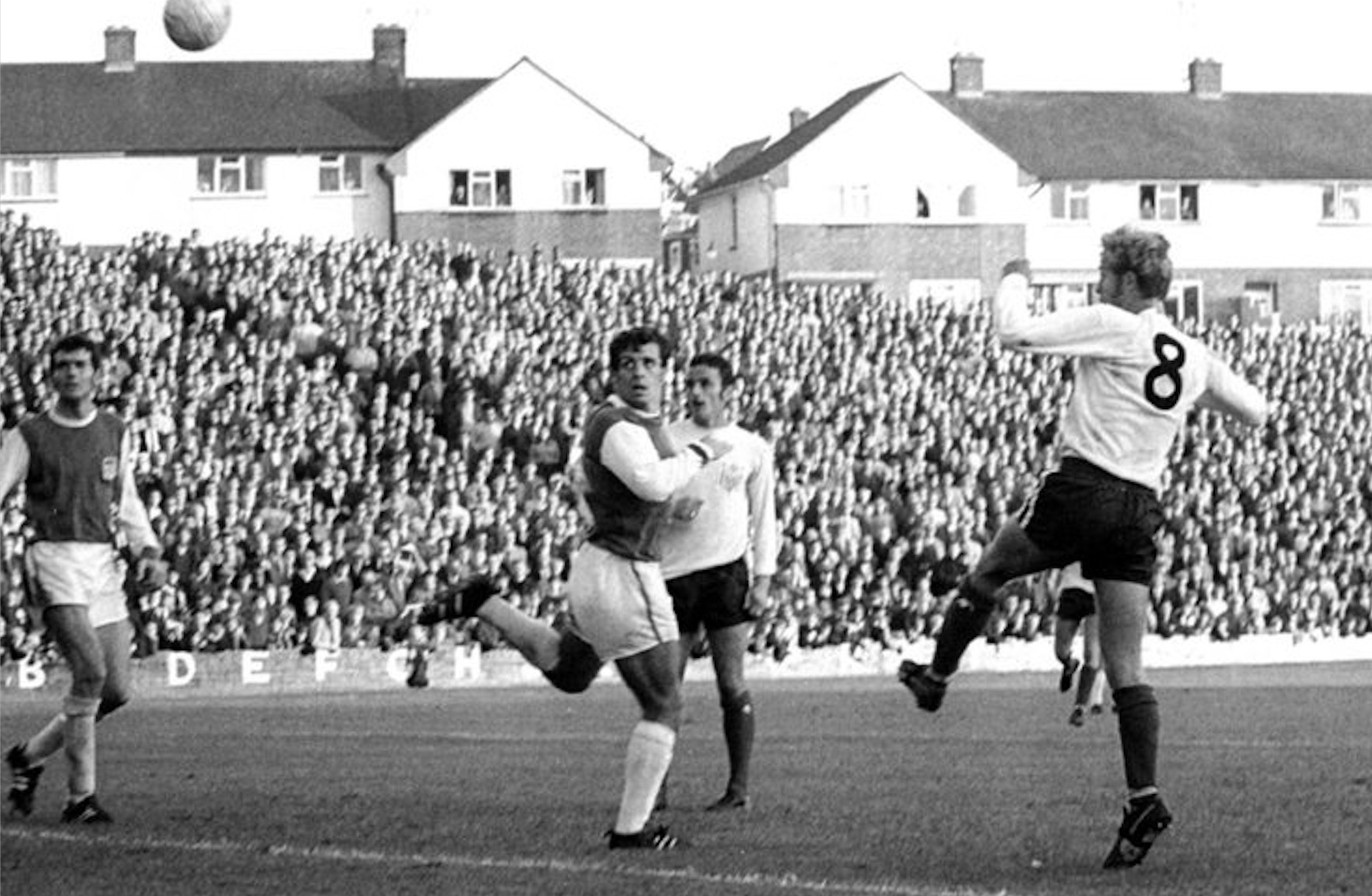
Lloyd is pictured below getting in a header against the Albion at the Goldstone, watched by John Napier (left) and Stewart Henderson. The packed East Terrace never looked like that by the time Lloyd was sitting in the Albion manager’s chair.

Lloyd at Goldstone

Fulham regained their tier two status in 1971 when they went up from Division III as champions. Manager Dodgin was sent packing in the summer of 1972, though, and Alec Stock took over, famously bringing in a number of top name players nearing the end of their careers – notably one Alan Mullery, along with Bobby Moore.

Lloyd remained part of the set-up but when Fulham surprised everyone by reaching the FA Cup Final against West Ham in 1975, he had to be content with what in those days was the single substitute’s berth on the bench, and didn’t get on.

Nonetheless, he chalked up 290 games for Fulham, before having brief spells at Hereford and Brentford (where Dodgin was the manager) and ending his playing days with Houston Hurricanes in the United States.

“I lived in Texas for a year. The league was never going to last but I learnt a lot about how the game can be promoted. They were very good at that over there,” he said in a matchday programme article. “Everyone was made to feel part of the club. It was an interesting experience; I’ve never regretted going.”

During his brief time at Hereford, Lloyd had an eye to the future and took his full coaching badge at Lilleshall, which wasn’t far away.

After his time in America came to an end, he got his first managerial experience with Yeovil Town (then a non-league club) and then headed to Sussex where he took Worthing from the Second Division of the old Isthmian League to runners-up in the Premier Division.

It was in 1986 when he got the call from Mullery to become reserve and youth team manager at the Albion. Dodgin was also on the staff.

lloyd desk

In January 1987, Mullery was unceremoniously dumped and Lloyd came out of the shadows to take charge. Perhaps what fans didn’t know at the time was that the day after Mullery left, Lloyd was summoned to a meeting with chairman Bryan Bedson and told to “get rid of everyone” because the club was going bust.

Against that backdrop, it was 15 games before the side managed to register a win under Lloyd and, unsurprisingly,  Albion were relegated. Some of the mainstays of the side, like Danny Wilson, Eric Young and Terry Connor were sold. Fortunately, Lloyd was able to re-invest part of the proceeds from those sales in some buys who gelled together to form a promotion-winning team.

Screen Shot 2021-05-03 at 20.37.12He returned to former club Chelsea to secure the signing of centre back Doug Rougvie who was made captain and he paired left winger Garry Nelson, a £72,500 signing from Plymouth, with tenacious Scot Kevin Bremner, from Reading, to lead the line. Nelson in particular was a revelation, scoring 32 goals and voted player of the season.

Lloyd reckoned the backbone of the side were two other shrewd signings: Alan Curbishley and Gary Chivers. “Alan was a very level-headed guy, an excellent passer and really disciplined,” he told Spencer Vignes in a matchday programme article. “Chivers was exactly the same, and a real joker at the same time. But there were a lot of great individuals in that side.”

The following two seasons saw Albion maintain their status with lower half finishes but, with the Goldstone Ground crumbling and debts mounting, there was little investment in the team and Lloyd had to use all his contacts to try to find some gems.

One was former England international winger Mark Barham, another was a former Soviet international, Sergei Gotsmanov, a real crowd-pleaser obviously capable of playing at a higher level (as was proved when he opted to join Southampton the following season).

Then, in 1990-91, he rescued two forwards languishing with also-ran clubs in Europe and together John Byrne and Mike Small were superb in attack as Brighton made it to the play-off final at Wembley only to lose 3-1 to Neil Warnock’s Notts County.

No-one had been expecting Brighton to get a tilt at promotion, particularly as the season had once again begun with big money departures of players like Keith Dublin and John Keeley.

But with Byrne and Small on fire and former Fulham and Chelsea winger Clive Walker added to the squad they clawed their way into contention and famously clinched the play-off spot on the last game of the season, courtesy of Dean Wilkins’ curling free kick past Ipswich Town’s Phil Parkes.

Another crucial signing that season was thanks to one of Lloyd’s old Chelsea teammates, George Graham. The Arsenal boss loaned cultured central defender Colin Pates to the Seagulls and he proved a mainstay in the final third of the season. Pates would later sign permanently.

Even though they were clearly beaten by the better side on the day, looking back now, I don’t think anyone could have realised what bad news it was for Albion not to win the final against County.

Starved of the funds promotion would have delivered, Lloyd was forced to sell star performers Small and Byrne and, 11 months after appearing at Wembley, Albion were relegated back to the third tier.

Lloyd had tried to repeat his previous successful European scouting mission with two former league players, but the hapless Mark Farrington turned out to be one of the worst buys ever, managing to score one solitary goal while former Arsenal youngster Raphael Meade fared slightly better but only just got into double figures.

Mark Gall, a £45,000 signing from Maidstone, arrived towards the end of October and ended up top goalscorer and was player of the season, but his 14 goals were still not enough to spare the team from the drop.

In the following season, the very survival of the club was under serious threat with the taxman chasing an unpaid bill. Lloyd rescued the club at the 11th hour by managing to secure a £350,000 fee for goalkeeper Mark Beeney (bought two years earlier from Maidstone for £25,000), former Albion winger Howard Wilkinson buying him for League Champions Leeds United.

With the financial issues continuing in the background, a run of only two wins in 18 league games in the first half of the 1993-94 season eventually brought the Lloyd era to an end – the axe wielded by chief executive David Bellotti, who had arrived only a month earlier.

Fans who were euphoric to see Lloyd go might well have felt differently if they’d known what would eventually transpire, but that’s a story for another day.

The record books show Lloyd made a total profit of £1.2m in his seven years at the helm and he certainly knew his way around the transfer market, particularly in Europe, when it was a lot less fashionable than it is today.

Another of his discoveries was Dean Wilkins, playing for FC Zwolle in Holland, and in 2007 – 14 years after he had left the Albion – Lloyd returned as chief scout during Wilkins’ reign as first team manager.

Also part of the set-up then was director of football Martin Hinshelwood, who had been Lloyd’s assistant during his time in the dugout. Lloyd later returned to the club to assist in the recruitment department but retired in 2021.

He died aged 75 on 28 September 2024 and players in the Chelsea v Brighton game that afternoon wore black armbands in tribute to him.

Lloyd in 2022

Villa’s European Cup winning captain at the Albion

2-mortimer-in-flightA CULTURED midfielder regarded in many circles as the best ever captain of Aston Villa was almost ever-present in one season with Brighton.
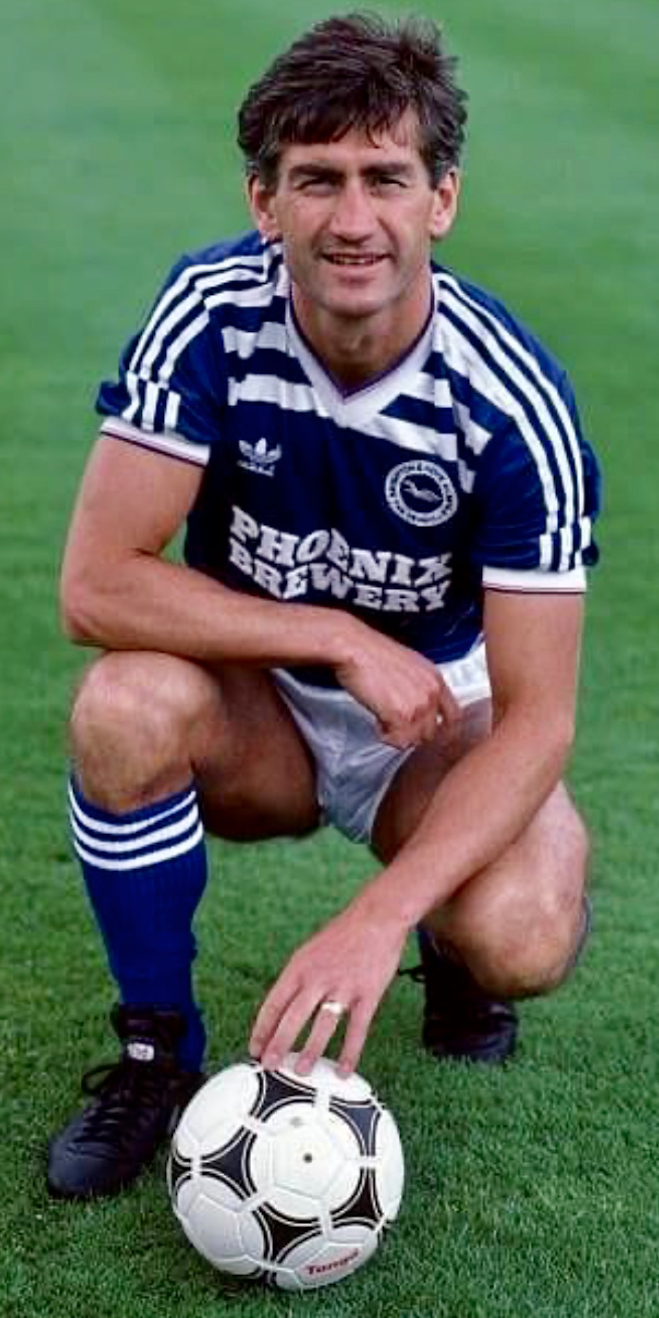
Dennis Mortimer captained Villa when they won the European Cup in 1982 under manager Tony Barton.

Mortimer joined the Seagulls three years later and shone in what was a rather disappointing Division 2 season which saw the Albion finish 11th.

Brighton’s near-promotion form in the season before had prompted Mortimer to try to help the Seagulls to restore their elite status after he’d been released by Villa.

In a programme feature by Tony Norman in November 1985, he said: “I knew this was a good side to come into; a team that wanted to play good football and win promotion.

“They missed it so narrowly last year and I felt I would like to be part of that challenge this year. I knew there would be excitement in the season ahead, and to me that is one of the most important things in football.

“Obviously I’m coming to the end of a long career in the game. I’ve been a professional for 17 years now and I wanted one final challenge. That’s why I came to Brighton.”

In his programme notes for the opening game of the season (against Grimsby Town), manager Chris Cattlin said of his former Coventry teammate: “He is a truly outstanding professional who will give the team steadiness and experience.”

Fans had a taste of what he would bring to the team when he scored a cracker in a pre-season game against Arsenal.

Unfortunately, while Mortimer was a consistent performer in midfield and the team enjoyed a decent run in the FA Cup – losing in the quarter finals to Southampton – Cattlin’s side were beset by injuries to key players and ultimately fell short of the top spots.

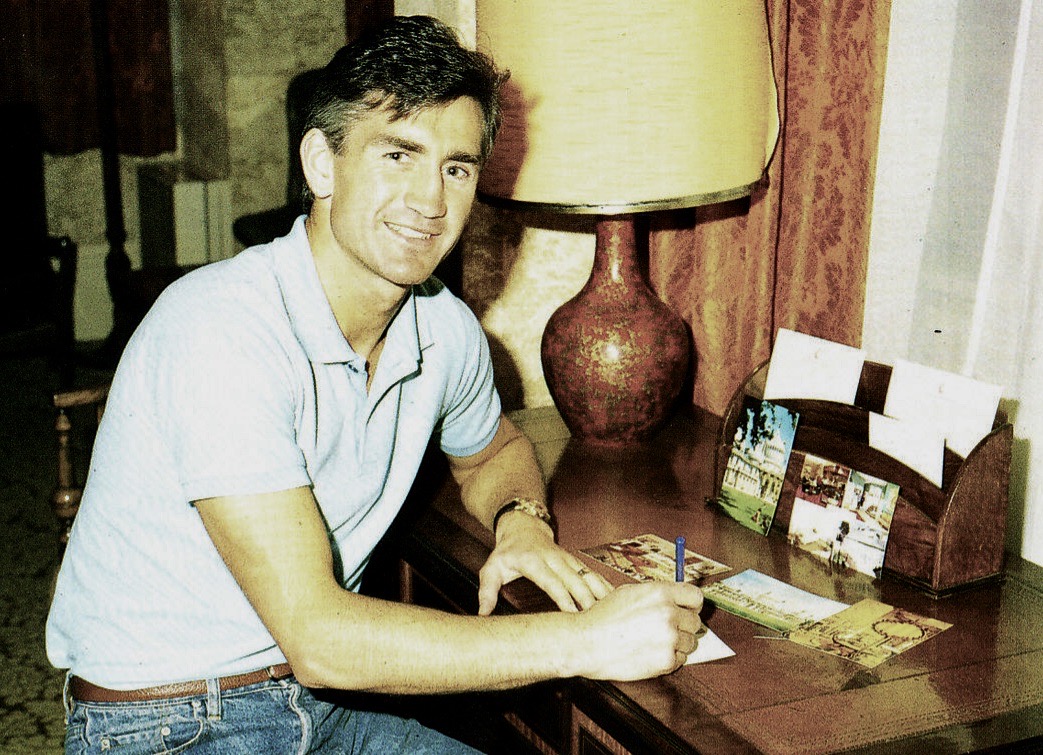
Morty BHAmorty writesKnowing his time on the south coast was going to be limited, Mortimer didn’t uproot his family from their Lichfield home and instead lived in the Courtlands Hotel in Hove (above) for a while and also bought a flat where his wife and children could visit during school holidays.

Despite being born in Liverpool, the bulk of Mortimer’s career was connected with West Midlands teams, beginning with Coventry City under the tutelage of Pat Saward, who later managed the Albion, and ending with West Brom where he had a spell as assistant manager after his playing days were over.

He had not been a schoolboy star but was picked up and developed through Coventry’s youth development system. As well as coach Saward, Coventry’s youngsters also benefitted from the experience of Bob Dennison, the man who, at Middlesbrough, brought together as players one of the most famous footballing partnerships in Brian Clough and Peter Taylor.

“As a lad I thought I would be an engineer and, although the whole family were Liverpool mad, and we never missed a home game, it did not enter my head that I might be a professional until I was 14,” Mortimer said in a Goal interview in 1973. Coventry offered him a trial just as he was leaving school and his career built from there.

His initial Coventry boss Noel Cantwell, the former Man Utd and West Ham full back, was sure Dennis was destined for greater things after his first England under-23 call-up. “Dennis will become a big name in football, “ he said. “When he gets in Sir Alf’s side I don’t think he will lose his place easily.”

Although he never won a full cap, in 1971 he went on an end-of-season tour to Australia in an English FA squad that also included Peter Grummitt (then of Sheffield Wednesday) and Barry Bridges (of Millwall at the time). The group played the Republic of Ireland in Dublin, drawing 1-1, before heading Down Under where they won all nine of the matches they played in various locations across a month.

Coventry general manager, Joe Mercer, who was a legendary figure in the game and had a spell as caretaker manager of England, said of Dennis: “He has this great change of pace…he can go into another gear and accelerate out of trouble like all the good ones.”

However, it was after his move to Villa in 1975 that he rose to prominence, culminating in that famous 1-0 win over Bayern Munich in Rotterdam, courtesy of a Peter Withe goal.

As part of a 30th anniversary celebration of the achievement, Mortimer told the Birmingham Mail in 2012: “It was such a momentous occasion for Aston Villa Football Club and for all of us as young men that you never forget it – and I doubt the fans who witnessed it would ever forget it either.

“You only have to see how big the competition is now and how much hype it gets to realise what an amazing achievement it was for us.

“Every year when the final of the European Cup, or Champions League as it is called now, comes around, I get a glimpse of that fantastic trophy and it all comes flooding back.

“I’ll never get bored of talking about it, but I don’t get reminded about it that much any more. It’s usually me telling the younger kids that Aston Villa won the European Cup.

“Some of them don’t believe me, because it was so long ago, and before a lot of them were born, but they go away and Google it and think ‘Wow, yes, they did win it!’”

DM Villa

In 10 years at Villa, Mortimer made 403 appearances and scored 36 goals. A 1977 League Cup winner, he led Villa to the English Division One title on May 2, 1981, and then lifted the European Cup on May 26, 1982.

The Birmingham Post said in 2010: “The Liverpudlian was at the forefront of the club’s finest era of modern times; a driving force from midfield that helped bring a level of success to Villa Park that his successors can only dream of.”

Although capped by England under-23 and England B, a full cap eluded him. That seems extraordinary now, especially after scoring twice in a 3-1 win for the under-23s against the Netherlands at Highbury, when Goal magazine reported he was being “hailed as the new Bobby Charlton”.

Mortimer was subsequently picked for the senior squad but didn’t get a game. “I got as far as the bench in the home internationals when Villa won the league, but never got on,” he said in a 2010 interview. “I always felt I should have done but there were so many good midfield players around at that time.

“I just needed to get on that pitch for five minutes in that home international, but Ron Greenwood wouldn’t put me on.”

After Cattlin allowed Jimmy Case to leave Brighton (telling the board his legs had gone, even though he then had six seasons at Southampton!), the team was crying out for a seasoned cool head in midfield who could put their foot on the ball and spread the ball about.

Cattlin eventually turned to his former Coventry teammate to bring that quality to a squad that was not quite reaching the heights required to restore the elite status lost in 1983.

Sadly, Mortimer spent just the one season at The Goldstone, but his 49 league and cup appearances were the highest number in that season’s squad.

Cattlin had offered him a two-year contract with the chance to start coaching but, following the manager’s sacking close to the end of the season, and his replacement Alan Mullery not fancying the experienced midfielder, he left the club.

“Player-coach would have been great as I had plenty left in the tank,” Mortimer told journalist Spencer Vignes: “He swapped a player with plenty of experience for one with no experience (Dale Jasper) and I was let go. Four months later (it was actually eight), Alan was let go as well.”

Mortimer returned to the Midlands – making the somewhat controversial decision to join Villa’s arch rivals Birmingham.

Funnily enough at the very same time he was heading back to the Midlands, the captain who lifted the European Cup that month also went on to play for the Albion. Romanian international Stefan Iovan was the Steaua Bucharest captain when they beat Barcelona on penalties in Seville; five years later, he was stepping out at Wembley as part of the Seagulls’ line-up in the Division 2 play-off final with Notts County.

But finally back to Mortimer. Now a sports speaker, pundit and coach, he’s not afraid to speak his mind and has been known to upset a few people with his outspoken comments about Villa’s plight in recent years.

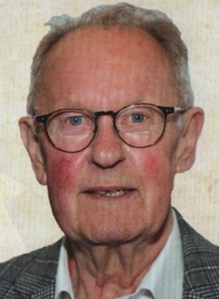
  • Pictures from my scrapbook show Dennis Mortimer in action for Coventry against Liverpool, from Goal magazine, and an Albion matchday programme shot of him in full flight for the Seagulls. Also pictured is Mortimer when reserve team coach at West Brom during Ossie Ardiles’ reign as manager. When Ardiles moved to Spurs, Mortimer became new boss Keith Burkinshaw’s assistant. Full grey head of hair picture from 2010.

A tale of passion for England v Scotland at Wembley

scotflagtickets

Thistle come as no surprise to those who know me but a fierce football rivalry between England and Scotland was imbued in me by my late father.

A normally easygoing happy-go-lucky chap, when it came to football matches between the two countries he was gripped by a curious passion which wanted the Scots buried whenever the sides met.

It was not surprising, then, that on Saturday May 24 1975, my dad could not contain his delight as he at 51 and the teenage me were in our seats at Wembley watching England annihilate Scotland 5-1.

Except my dad was not in his seat. He was standing on his; arms aloft, chanting “Easy, easy, easy.”

The stadium was almost full to bursting with a 98,000 crowd and all around us – for amazingly Scotland fans seemed to permeate all sections of the ground – there were tartan-clad, tam o’ shanter-wearing Scots, frothing with rage.

Discretion being the better part of valour saw my backside firmly glued to my £5 South Stand seat. Not so my dad. That was until a particularly large gentleman in the row in front rose to what seemed a Hagrid-like height, turned to face my father on his now-elevated perch, and gave him the sort of look which clearly suggested something that might hurt would follow.

Never a man of violence, my dad swiftly weighed up the situation and took the wise decision to resume his seat, and restrain his celebration.

Nonetheless, of course, the deed on the pitch had been done and it was a very contented father and son who made their way back to Sussex that evening.

The Home International tournament at the end of each football season was as much part of the football-watching fabric as the FA Cup Final in those days, England, Scotland, Wales and Northern Ireland playing each other home or away in alternate years.

In an earlier blog post, Striking in claret and blue, I spoke about the occasion in May 1972 when I went to see Brighton & Hove Albion’s very own Willie Irvine playing for Northern Ireland against England at Wembley. A decade later I had the good fortune to see two Albion players in opposition in the same fixture when Steve Foster played one of his three games for England and left back Sammy Nelson was playing for Northern Ireland.

But back to 1975, and that trouncing of Scotland. The experience had started well for me because my footballing hero of that era, Alan Ball, had led out the England team; manager Don Revie having given him the honour of captaining the side.

However, it was to be QPR’s Gerry Francis who made the headlines that day, scoring twice as Scotland’s calamitous goalkeeper Stewart Kennedy abandoned the art of keeping the ball out of the net. Defender Kevin Beattie, mercurial midfielder Colin Bell and centre forward David Johnson also got on the scoresheet and Scotland could only reply once through a Bruce Rioch penalty.

Make no mistake, this was some result because we’re not talking about a Scotland side of modern day standards: their team, managed by Willie Ormond, included giants of the era like captain Sandy Jardine, Danny McGrain, Gordon McQueen and Kenny Dalglish.

If the atmosphere generated by the Tartan Army was designed to put the frighteners on the English, the only person it seemed to be rattling was goalkeeper Kennedy, who put in what can only be described as a butterfingers performance.

It was all to the great amusement of my dad! This wasn’t the first time I’d seen him euphoric at the outcome of this fixture, although the margin of victory was a lot narrower on the previous occasion when, two years earlier, on 19 May 1973 to be precise, a single England goal did for the Scots with Martin Peters taking the honours on that occasion.

I had been to Wembley before but I had never experienced an atmosphere quite like the one generated by the Scots.

What was supposed to be an England home game felt like anything but, with Scotland fans dotted around the whole stadium. Somehow or another they managed to purloin tickets, even if they were at inflated tout prices, to ensure vast swathes of the stadium were occupied by boisterous, vociferous Scots.

Not that all members of the Tartan Army actually got to see the action. I recall the wide-eyed me looking round and seeing men draped in the famous blue and white Saltire, clearly off their faces, slumped forwards in their seats fast asleep.

Empty bottles of whisky littered the concrete floors of the stadium and, wherever you looked, the Royal Banner of Scotland (yellow and red flag) and the Saltire were being waved in unison with multiple renditions of Flower of Scotland.

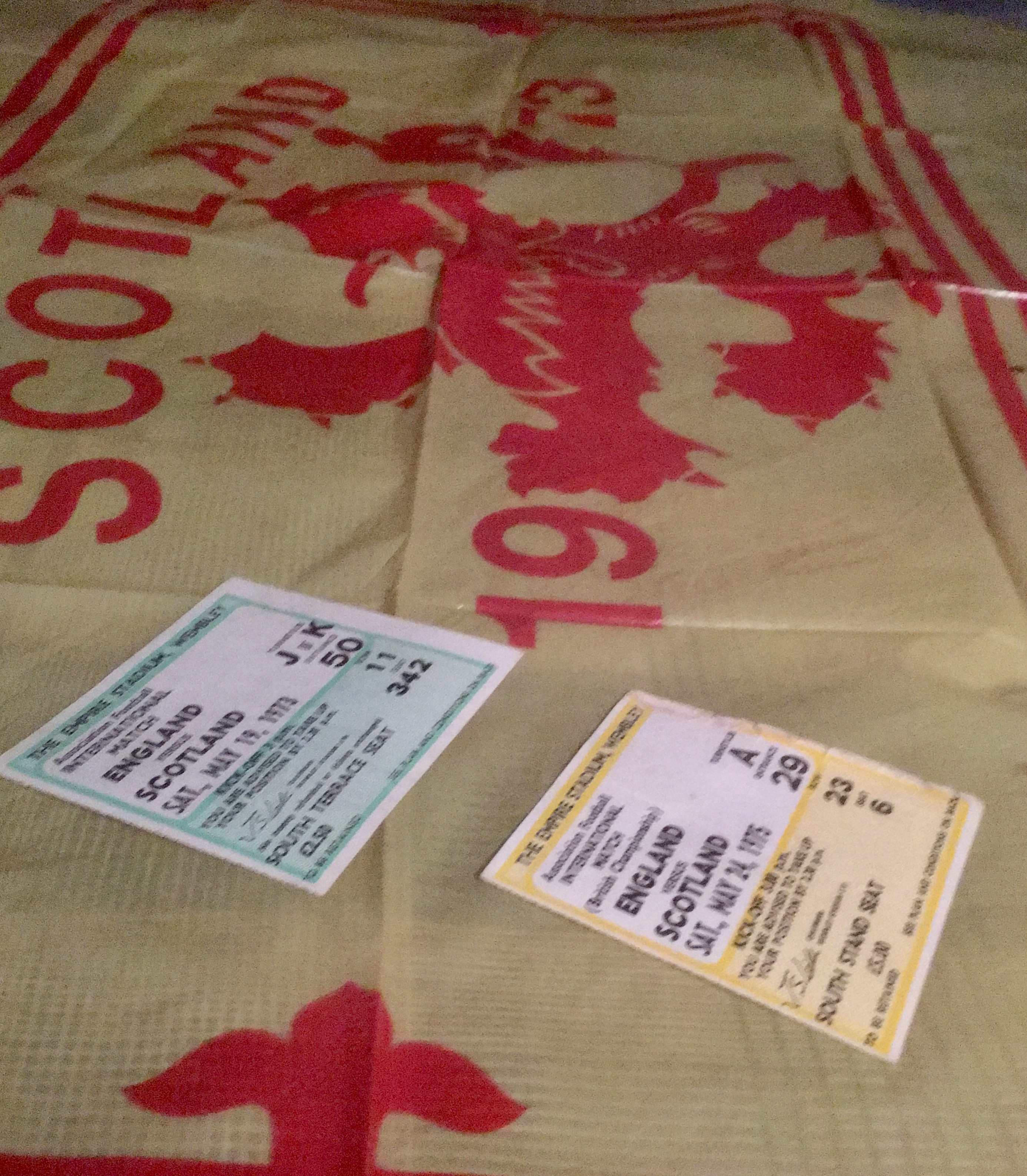
One such polythene version of the Royal Banner floated on the breeze and landed on my head. It seemed to me to be the ideal souvenir of a memorable day out and I’m delighted to say on my recent loft clearance I found said flag together with the matchday tickets from both the 1973 and 1975 fixtures.

I wonder how many dads in their fifties together with their teenage sons will return from Wembley on 11 November 2016 with memories that will last a lifetime.


Did Chris Ramsey’s injury alter outcome of 1983 FA Cup Final?

2-near-post-guardBRIGHTON & HOVE Albion’s May 1983 FA Cup Final clash with Manchester United was historic for the club and for their 21-year-old right back it was even more eventful.
Who would have known that former Bristol City apprentice Chris Ramsey’s ignominious departure from the field in a firemen’s lift on Glen Wilson’s shoulder would more or less be the end of an all-too-brief playing spell in the top echelons of the English game?

Might the match – and Ramsey’s career – have panned out differently if it hadn’t been for that diabolical tackle by Norman Whiteside?

Trouble had been brewing in the weeks leading up to the final and the national media, looking for every possible angle to pick at, had singled out Ramsey for criticism. Did that stoke the fire?

Let’s rewind a little and explore what happened.

Born in Birmingham on 28 April 1962 , Ramsey, whose father came to the UK from St Lucia, was one of two boys and five girls. Rejected by Charlton Athletic as a schoolboy, he became an apprentice at Ashton Gate but was then released and, after a successful trial, Brighton took him on.

The 1980-81 season was Albion’s second in the top division and, as it drew towards its close, it was looking increasingly likely they were heading for relegation.

Manager Alan Mullery was openly criticising his players for their efforts and his big ally off the field, vice-chairman Harry Bloom (current chairman Tony Bloom’s granddad) had died of a heart attack on the team coach on an away trip to Stoke.

Something had to change and, at the tender age of 19, Ramsey was called up from the reserves and plunged in at the deep end.

In three of the last four games, he took over the no.2 shirt after Mullery switched John Gregory from right back into midfield. Ramsey’s debut came in a crucial Easter Saturday clash away to rivals Crystal Palace when, released from the shackles of defending, Gregory scored twice in a 3-0 win. Ramsey also played in the wins over Sunderland away and Leeds at home.

The Seagulls stayed up by the skin of their teeth and Evening Argus reporter John Vinicombe said in his end of season analysis that Ramsey had been “a revelation” in those three games.

Within a matter of weeks, Mullery quit as manager in the furore over chairman Mike Bamber selling Mark Lawrenson to Liverpool (after Mullery had already agreed a deal to sell him to Manchester United).

Gregory was sold to QPR for £300,000 but, far from that move opening up an opportunity for Ramsey, Mullery’s replacement Mike Bailey brought in on a free transfer from Loftus Road the experienced Don Shanks, who was immediately installed as the first choice right back.

Indeed Bailey froze out Ramsey for the following 19 months! At one point he was transfer listed but it was Bailey who departed the Goldstone first – his sacking working to the advantage of the young defender.

When George Aitken and Jimmy Melia took over in December 1982, Ramsey was instantly promoted from the reserves and seized his opportunity.

In a profile in an Albion matchday programme in February 1983, Ramsey told Tony Norman: “Like any other young apprentice, my dream was to play in the First Division. I must admit that even after coming to Brighton, I had times when I wondered if I’d make it. But now I’ve got my chance and I’m keen to make the most of it.”

In one of the most comprehensive profiles on Ramsey, former Brighton teammate, Andy Ritchie, told Adam Ellis of The Football League Paper: “He was quite a shy lad back then but he had everything you want in a full back. Aggression, pace, agility – and he could tackle like a demon.”

These were the attributes that Melia appreciated too. In a Daily Mail preview of the Norwich quarter final, Melia told reporter Brian Scovell: “The other players love playing with him. He’s a great competitor, tackles well and uses the ball with a bit of style.

“I’m pleased he’s taken his chance. He deserves to play at Wembley if we manage to get there.”ramsey + mel

As it turned out, Ramsey’s place was in jeopardy because of two sendings off in the league in April which led to him being banned for the semi-final against Sheffield Wednesday at Highbury.

After being sent off in a 2-1 home win over Spurs, Terry McNeill reported in the News of the World: “Ramsey was lucky to stay on earlier after bringing down Mark Falco in a probable scoring position. When he took the striker again from behind, there was no escape.”

The 20-year-old Ramsey was fairly phlegmatic about the situation and told Alex Montgomery of The Sun: “Whatever I did, I did for the club. You can’t think about Cup games when you are struggling for points at the bottom of the First Division.”

His second dismissal, along with Coventry’s Steve Jacobs (who later played for the Albion under Chris Cattlin) after a scuffle in a 1-0 win at the Goldstone, was lambasted by one of the pre-eminent football writers of the day, Frank McGhee of the Daily Mirror.

“Can Brighton afford to field at Wembley a man who by then won’t have been able to play for 19 days?” he intoned. “And can they trust Ramsey not to sully soccer’s great state occasion by a moment of blind madness?”

Nevertheless, after Wednesday were beaten, Melia was happy to restore his first-choice right back to the starting line-up but one wonders now whether Ramsey had a sense of foreboding about how the big occasion would unfold.

Reflecting on those dismissals in the build-up to the final, he told The Sun’s Montgomery: “I just hope people aren’t looking for me. I’ll certainly be careful. I honestly don’t think I deserve the reputation which I’ve been saddled with in the last few weeks.

“The dismissals were just coincidences – nothing more than that. I know I am an aggressive type of player but that is my game. I always want to give 100 per cent for the club. The last thing I want is trouble at Wembley.”

After Albion had taken a shock lead through Gordon Smith’s header, United piled on the pressure and Ramsey headed a goalbound Gordon McQueen effort off the line.

But then came a pivotal moment early in the second half. Tim Carder and Roger Harris record it thus in their excellent Seagulls! The Story of Brighton & Hove Albion FC: “Whiteside went in high on Ramsey’s shin as the Albion full back cleared, and then trod on his ankle. The referee had a strong word with the United forward but did not signal a foul.”

The tackle had rendered Ramsey lame and while he tried in vain to carry on, two minutes later he wasn’t able to challenge for a ball to the far post which Frank Stapleton duly dispatched to equalise.

Those of us watching in the stadium, together with millions glued to TV screens around the world, saw Ramsey carried from the Wembley turf and, in those days of only one substitute, wondered how Albion would cope with a makeshift defender in the shape of Gerry Ryan.

After United took the lead through Ray Wilkins, Ramsey’s friend – and fellow England under-20 teammate – Gary Stevens’ equalised to send the game into extra time and ultimately a replay. Stevens was adamant about the impact Whiteside’s challenge had on the game.

In Match of My Life, edited by Paul Camillin, he said: “It was a bad tackle and perhaps cost us the game. In those days we only had one substitute and Gerry Ryan came on and did a great job at right back, even though he was a midfield player, but we did miss Chris because he had been having a great game.”

Whiteside was unapologetic about the challenge but Ramsey fumed to The Sun’s Montgomery: “It could have broken my leg. If I’d done it, I’d have been off. I just can’t understand how Whiteside got away with it.”

The injury deprived Ramsey of the chance to play in the replay five days later and, after that sad exit, his playing career never reached similar heights again.

Indeed he actually only played 37 games for the Albion, most of those coming in that 1982-83 season. He played only a handful of games in the following season and in August 1984 went on loan to Swindon Town before joining them permanently four months later.

There, he played alongside the likes of Sky Sports reporter Chris Kamara and one-time Albion assistant manager Colin Calderwood and clocked up over 120 appearances, including being part of Lou Macari’s Fourth Division champions in 1986 and Third Division play-off winners in 1987.

In August 1987, he joined Southend United but played just 13 games for them before persistent back injuries forced his early retirement at the age of just 26.

Some business ventures he embarked on didn’t work out and former Albion right back rival Shanks set him up with a trial for a team in Malta, Naxxar Lions, where he made a playing comeback.

Eventually the ongoing injury problems made him look to other ways of making a living. He coached in the United States but also started studying like crazy.

Amongst lots of qualifications, he got a Master’s degree at the University of North London in Health, Physical Education and Recreation (a qualification which enabled him to become a primary school teacher) and simultaneously obtained his UEFA coaching badges.

That Football League Paper piece records: “With an MSc, ten diplomas and myriad other qualifications, Ramsey is so highly educated that he actually sets the test for pro licence candidates.”

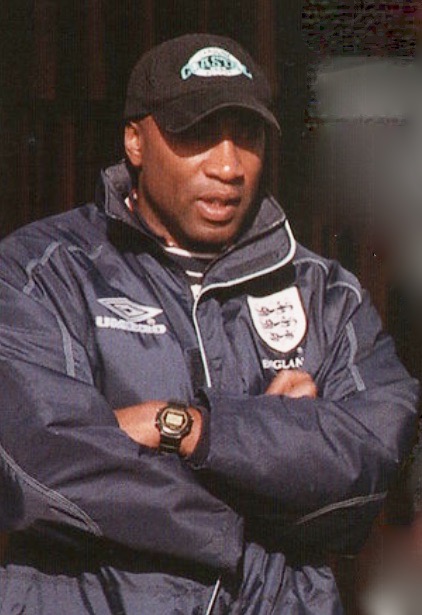
ramsey EngA stint in charge of youth development at Leyton Orient and coaching Newham Ladies was followed by an FA appointment as coach to the England under-20 side in the 1999 FIFA World Youth Championship when among the players under his direction were Ashley Cole, Peter Crouch, Matthew Etherington and John Piercy, who later played for the Albion. At the FA he learned from the likes of Les Reed and one-time Albion winger Howard Wilkinson.

He had a short and unsuccessful three-month spell as assistant to Ricky Hill at Luton Town, and he said: “Ricky Hill was a massive inspiration to me.”

Just when it appeared new offers had dried up, Ramsey got the chance to manage Charleston Battery in the USA, where he stayed for three years.

Winning the USL A-League (second division) with Battery in 2003 brought him to the attention of Spurs, and, as head of player development, many of the young players he coached in tandem with Les Ferdinand and Tim Sherwood were Harry Kane, Ryan Mason, Danny Rose, Nabil Bentaleb, Andros Townsend, Steven Caulker and Jake Livermore.

“He was massive for all of us,” French midfielder Bentaleb told The Football League Paper. “He believed in us, he encouraged us. He told the manager we were ready when everyone else believed we were not. He was not shy or scared of anybody and he knew exactly what he wanted.”

chris ramsey (spurs)In the Evening Standard in 2012, Spurs and England centre back, Ledley King, said: “He is one of the best coaches in the country. The youngsters love the way he works and they have really bought into his methods.”

Ramsey left Spurs in 2014 to take up a coaching role at QPR, and when Harry Redknapp left the floundering Hoops in February 2015, Ramsey stepped up to become a fully-fledged Premier League manager.

He was not able to halt Rangers’ relegation from the elite, though, and lasted only until November in charge of the side as they struggled to come to terms with life back in the Championship.

However, in January 2016, he was appointed technical director at QPR to oversee the club’s academy coaching and player development.

The club’s director of football, Ferdinand, told The Guardian: “While we were disappointed things didn’t work out with Chris at first team level, we were determined to retain his services. As such, we actually put a clause in his contract which allowed us to retain Chris’s services in a player-development role should things not work out for him as head coach.”

Ramsey finally left QPR in January 2024. By then 61, the head of coaching and technical director told the club website: “I have had a fantastic nine years at QPR and the club will always have a special place in my heart.”

The club’s chairman Lee Hoos said: “Chris has been a great servant to the club. I cannot thank him enough for his incredible hard work, dedication and guidance.

“However, as we thoroughly rationalise everything we do, and following very amicable discussions with Chris, it is felt this move is in the best interests of all parties. He will always remain a friend of the club.”

  • Shootthedefence.com did a face-to-face interview with Ramsey on 23 September 2016 which is well worth a listen as he talks in detail about his whole career.
  • In pictures from my scrapbook, Ramsey graces the cover of an Albion matchday programme; (top) he defends the near post during the 1983 FA Cup Final with Gordon McQueen in attendance; he is photographed by Tony Norman outside the Goldstone and criticised in the Daily Mirror by Frank McGhee.