

MOST football fans of a certain age will be familiar with the story of former West Brom and England centre forward Jeff Astle’s death in 2002 from early on-set dementia caused by heading footballs during his career.
The same condition has befallen Allan Gilliver, who played up front for Brighton and Lincoln City.
In September 2015, the Bradford Telegraph and Argus carried a report in which they said: “In 2013 Allan discovered he had dementia and that the likely cause is heading the ball – something he did throughout his football career.”
‘I scored a lot of goals heading the ball, we had heading practice every day,’ Allan told the newspaper. ‘It hurt like hell; footballs were much heavier back then and retained moisture.’
The story was being told in the run-up to a charity event to raise funds and awareness of dementia and Gilly was something of a legend in Bradford having worked behind the scenes at Bradford City for many years after his playing career had ended.
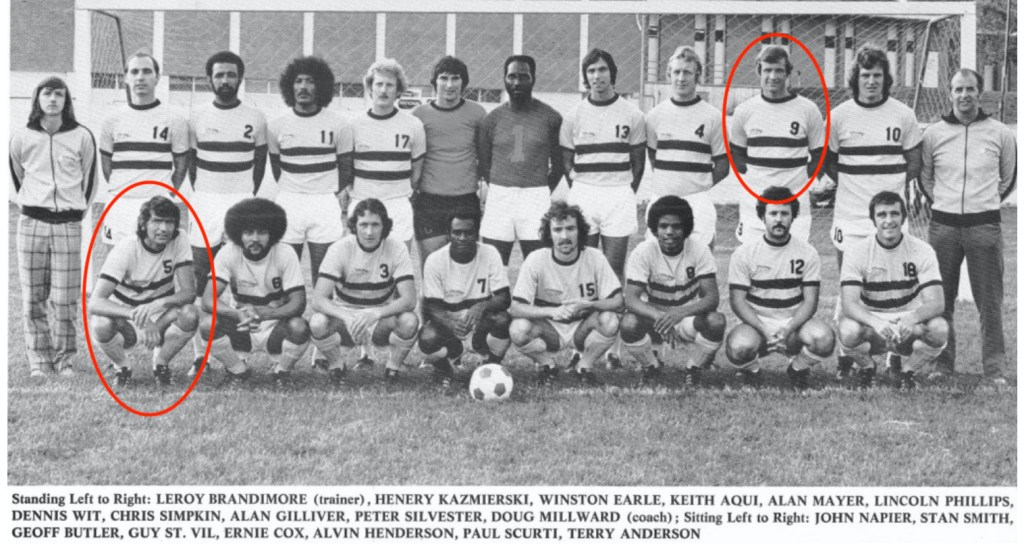
He had originally moved to City from Lincoln in 1972, where he teamed up with former Brighton captain and centre half John Napier (pictured below in a Bradford team photo).
Gilliver arrived at the Goldstone in the summer of 1969 on a free transfer from his hometown club, Rotherham United. He’d been born in the village of Swallownest (in the borough of Rotherham) on 3 August 1944. He was a keen all-round sportsman and when he was 14 was invited for net practice with the Yorkshire county side.
But he opted to pursue a career in football and joined Huddersfield Town in 1961. He scored on his debut in a 4-1 win at home to Swansea and he went on to score 22 goals in 45 appearances for Town. But in June 1966 a £12,000 fee saw him switch to Blackburn Rovers where he netted nine goals in 34 matches.
Two years later, Tommy Docherty signed him for Rotherham to partner Jim Storrie up front and he scored four goals in 29 matches for the Millers. His signing for Brighton proved to be a shrewd bit of business by manager Freddie Goodwin because Gilliver ended the 1969-70 season top scorer with 16 league and cup goals.
He made an encouraging start by netting on his debut in the pre-season 6-0 win over a Gibraltar XI. It wasn’t long before he was off the mark in the league too, scoring the only goal in a 1-0 win at Plymouth on 16 August.


Gilliver also scored in two of the Albion’s memorable League Cup ties in the autumn of 1969, netting in the 2-0 defeat of Birmingham, who were then in the division above Brighton, and also in the closely-fought epic against First Division Wolves when Albion narrowly lost 3-2.
Later that same season he scored a hat-trick in a 4-0 home win over Halifax. Even when Goodwin departed for Birmingham during the summer of 1970, Gilliver retained his place under new manager Pat Saward, and scored eight times.


But, presumably in the knowledge he’d got the loan signings of Bert Murray and Willie Irvine lined up, Saward surprisingly sold Gilliver and former captain Nobby Lawton to Lincoln in February 1971. The pair’s appearance in a 2-1 defeat away to Shrewsbury that month turned out to be their farewell.
As a youngster, I used to watch games from behind the manager’s dugout beneath the West Stand at the Goldstone.
I remember vividly how during one game, as the players trooped off down the tunnel for the half-time break, someone in the crowd behind me, clearly not impressed by the striker’s performance, shouted: “Gilly, why don’t you come off?” The forward looked into the crowd for the source of the comment and retorted: “And why don’t you p*ss off!”
The forward’s spell with Lincoln was ultimately a brief one but his switch to Valley Parade for a £4,000 fee began a lifetime association with the Bantams.
In researching this piece, I came across a picture of Gilliver in action for Bradford against Arsenal at Highbury in 1973.
He moved on to Stockport County in 1974 and had a brief spell with the Baltimore Comets in America, playing alongside the aforementioned Napier, before returning to England.
Back at Bradford in 1978-79, he played twice before his playing days came to an end but he stayed with the club and his subsequent roles included groundsman, safety officer, bar supervisor, stadium manager and commercial manager. He retired in 2007.
In May 2023, Gilliver’s wife Chris opened up to the Telegraph & Argus about the sad impact of the former footballer’s condition, which had necessitated putting him in a care home.
“The grandchildren miss grandad as he was,” she said. “He doesn’t recognise them. He smiles but he would smile at anyone.
“He has got no incentive. He would just sit in one place all day unless someone does something with him.”
She told reporter Rowan Newman: “They are not suffering in many ways because they don’t know, but we are – the families who love and care for them.
“Every day you lose a little bit more. He could speak last week, he can’t speak now. He could use a knife and fork, he can’t cut his food up any more. He has lost so much.”
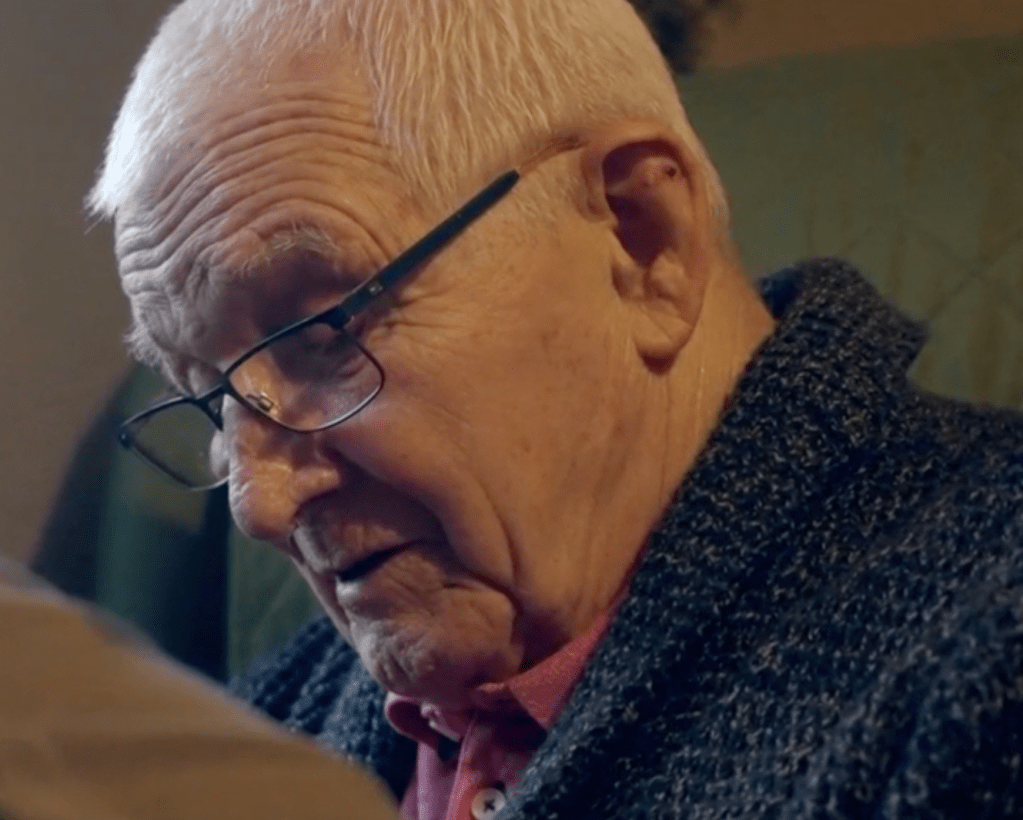
Gilliver appeaed briefly in a news bulletin on BBC One News on 25 March 2025 about professional footballers and dementia. He died aged 81 on 23 December 2025.

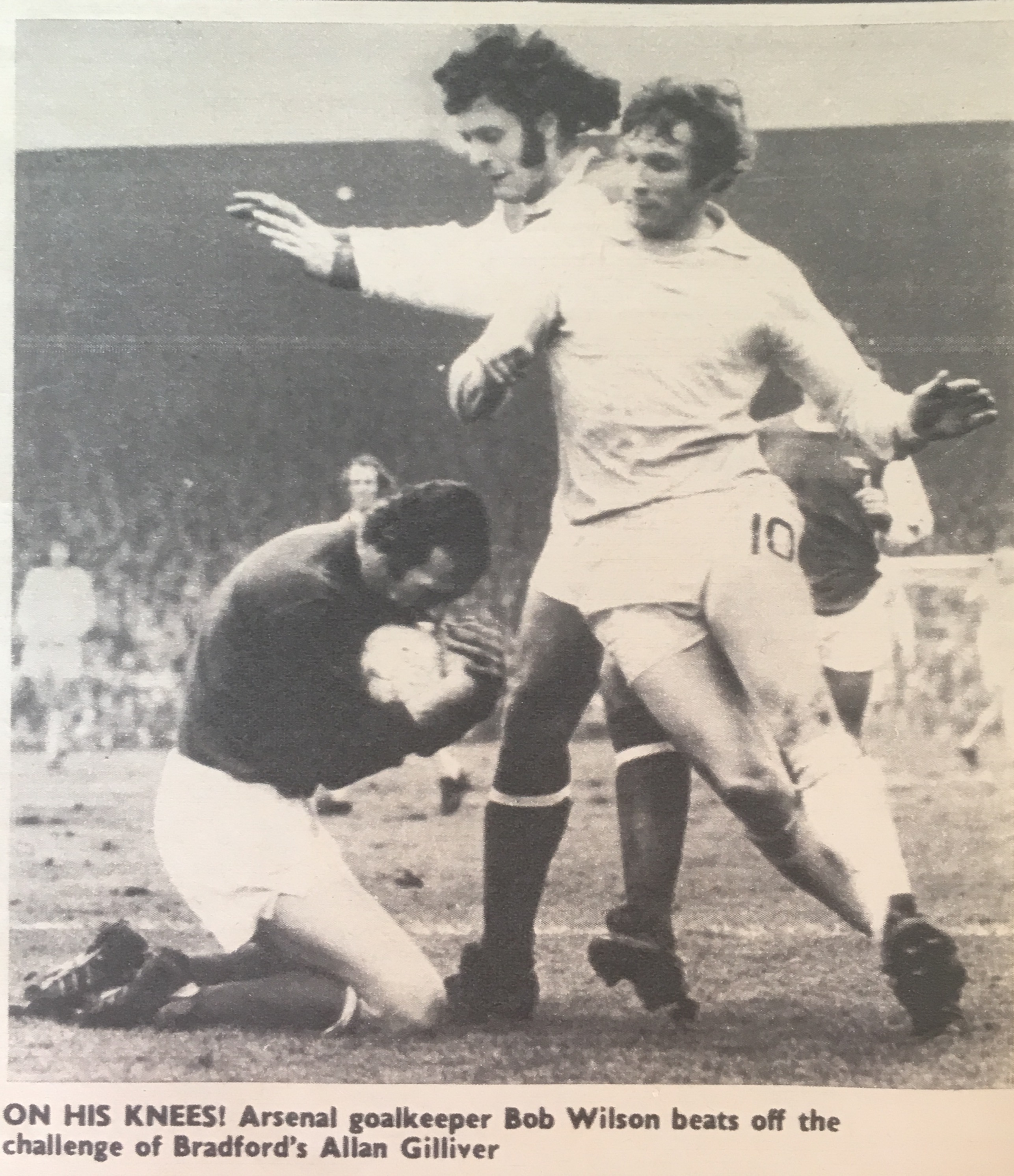
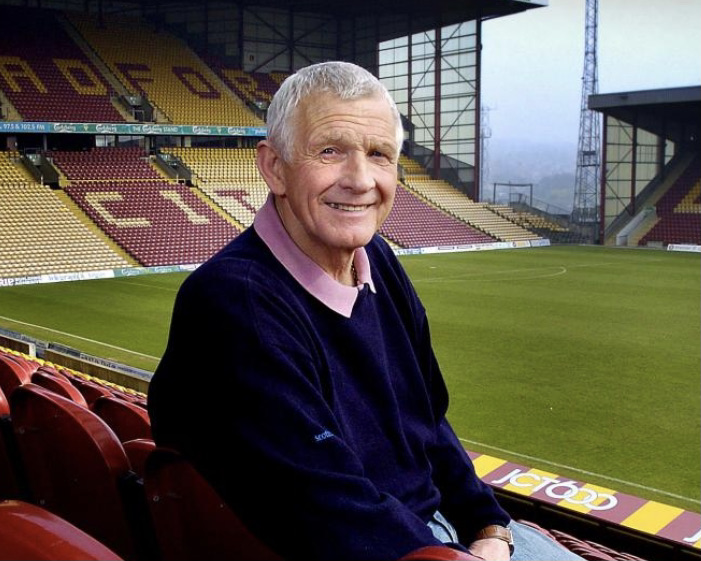
- Pictures from my scrapbook show Gilliver in aerial action for the Albion; alongside John Napier in a Bradford team photo (and below with Baltimore Comets); in Goal magazine playing for Bradford City, challenging goalkeeper Bob Wilson in a 1973 FA Cup tie against Arsenal, a portrait in the stripes of City, and various shots that first appeared in Albion matchday programmes.
 In parallel lines
6 thoughts on “Goalscorer Gilliver was heading for trouble in the days of heavier footballs”