Ajax legend Ray Clarke helped Ward get back on the goal trail

BRIGHTON’S early season form in their first ever season playing in English football’s top tier prompted thoughts of an automatic return to the Second Division.

The status earned so memorably via that 3-1 win at Newcastle on 5 May 1979 was but a glorious memory once the new season had kicked off.

Buried 4-0 by Arsenal in the opening game, the glimmers of hope were few and far between and Peter Ward, the talismanic striker who had been scoring goals for fun in Divisions Three and then Two was struggling to find the back of the net.

Help was soon at hand though in the shape of an Englishman who had been a sensation in Holland. Only the season before, Ray Clarke had been carried shoulder high by the fans of Ajax of Amsterdam for his goalscoring exploits.

The striker was anxious to bring an unhappy five-month spell at new club Bruges to an end and a £175,000 fee saw him reunited with his old Tottenham teammate Alan Mullery.

In Matthew Horner’s excellent biography of Peter Ward (He Shot, He Scored, Sea View Media), Clarke says: “I’d been playing abroad but was looking to come back to England because my wife wasn’t very well. I nearly signed for West Ham but then I heard that Brighton were interested too.

“I had been at Tottenham when I was younger and Alan Mullery was the captain then. So when we met it didn’t take long to tie up the deal.

“When I joined, the team had played 14 games but had only seven points and were bottom of the table.

“Wardy and I got on really well: he was sharp and quick and I could get him the ball. He was a good finisher and a great lad.”

ray clarke BWClarke replaced Teddy Maybank, who was sold back to Second Division Fulham for £150,000. The new man up front scored Albion’s only goal in a 4-1 home defeat to Liverpool but after that unlikely 1-0 win at Nottingham Forest on 17 November (ending the European champions 31-month unbeaten home record), gradually the fortunes began to change — and, crucially, Ward found his scoring boots again. He notched 18 by the season’s end, Clarke himself weighed in with nine, and the Seagulls finished a respectable 16th of 22.

In He Shot, He Scored, Ward said:Ray was a good player — not at all flash, just a sound, straightforward, target man.

“I hadn’t had a regular partner since Ian Mellor in the Third Division and it helped to have some consistency.

“When I played alongside Ray, I probably played the best football of my Brighton career — it was a shame he left so soon.”

It was from an excellent Dutch website, football-oranje.com, that I discovered what prompted Mullery to sell Clarke to Newcastle at the end of that season. I had always thought he was simply making way for the £400,000 arrival of Michael Robinson from Manchester City.

However, football-oranje.com reveals: “In July 1980, following a visit to a specialist, Clarke was sold to Newcastle for £180,000. The news from the specialist had been grave; his hips were in a poor condition and his career could be over in either 12 months or four years. The ramifications for club and player were immense. At that time, Clarke was uninsured and Brighton would not receive a penny if he broke down whilst on their books. After playing only 14 matches for Newcastle United in the 1980-81 season, Clarke was forced to retire aged just 28.”

The website’s Hall of Fame piece about Clarke is fascinating, if too detailed to repeat at length here.

Clarke joined Ajax in July 1978 and, in spite of having to step into the striking boots of Ruud Geels, who had been sold to Anderlecht after being the Eredivisie top scorer for four consecutive seasons (30, 29, 34 and 30 goals respectively), he stepped up to the plate and netted an impressive 26 league goals for the Amsterdam club, six in the Dutch Cup and six in the UEFA Cup.

When the Ajax board controversially decided to sell him to fund the arrival of new players, their legendary former player Johann Cruyff, no less, had this to say: “Those people who wanted to sell Ray Clarke don’t understand that Clarke could take away two or sometimes three defenders on his own because of his vision. The board should have seen Clarke as a goalscorer or a playmaker. He made sure that Tahamata and Ling could play well – and he still scored 30 goals in one season.”

Born in Hackney on 25 September 1952, Clarke was spotted by Spurs playing in Islington schoolboys football and was part of the north London club’s 1970 Youth Cup winning team which included Steve Perryman and Graeme Souness.

It took them two replays to overcome a Coventry City side who had future Aston Villa European Cup winning captain Dennis Mortimer in midfield and, in goal, David Icke, who became a BBC TV sports presenter then professional conspiracy theorist.

Clarke scored bucketloads of goals at youth and reserve level, but with Alan Gilzean and Martin Chivers blocking his path to the first team, he only managed one senior appearance, as a substitute.

Manager Bill Nicholson sold him to Swindon Town for £8,000 in 1973 but he played only 14 times for the Robins, scoring twice, before he moved on a year later to Mansfield Town in the old Fourth Division.

In Mansfield’s league title winning season of 1974-75, Clarke scored 30 goals in 53 matches alongside Terry Eccles, who got 20. Clarke continued rattling in the goals at the higher level, finishing the Division 3 season with 29 goals in 58 appearances.

Then, at 23, he hankered for a return to higher level football and Mansfield made a major return on their £8,000 investment by collecting a £90,000 fee from Sparta Rotterdam.

After two seasons at Sparta, and Clarke’s scoring ratio being close to a goal every other game, Ajax took him north to Amsterdam where, to refer back briefly to football-oranje.com, he earned club icon status.

“Although Ray Clarke may not have been the highest goalscorer in Ajax history or even their greatest striker, what endeared Clarke to Ajax fans was the importance of his goals,” the website says. “Clarke was a player who never went missing in a big game and his performances were the key to ensuring trophies for Ajax.

“One of the most memorable examples of this took place on June 4th 1979, when Clarke scored the only Ajax goal in the 1-1 game at AZ ’67 that would secure Ajax the Eredivisie title. The moment was preserved in a famous photograph of the aftermath of this match, with the Ajax fans carrying the Englishman up on their shoulders.”

When Clarke’s playing days were brought prematurely to an end, he built a new career in football as a renowned scout, including working under Gordon Strachan at Coventry and Southampton and also for Souness when he was at Saints, and his successor, Paul Sturrock. His LinkedIn status says since March 2020 he’s worked as a freelance recruitment agent prior to which he was technical director of Cypriot team Omonia Nicosia for just short of six years.

Read more at:

Hall of Fame: Ray Clarke

http://www.express.co.uk/sport/football/312193/Samaras-is-a-6m-striker-again-says-super-scout-Clarke

1-clarke-v-jennings2-clarke-v-derby3-spur-clarke4-swindon-clarke

At the end of Albion’s first season in the top division, Argus sports reporter John Vinicombe brought out a book, Super Seagulls, An Account of Albion’s First Season in the Top Flight. The first two pictures are from that book and show Clarke eyeball to eyeball with Arsenal goalkeeper Pat Jennings and squeezing the ball past Derby County ‘keeper David McKellar to score his second Albion goal. Also pictured are Clarke from a Tottenham team photo and in a Swindon team line-up.
Cattle auctioneer Kevin Bremner gave clubs a promotion prod

bremner-portraitAS GOALSCORING partnerships go, the pairing of Kevin Bremner and Garry Nelson was something of a masterstroke by Albion manager Barry Lloyd.

Having to readjust to life back in Division 3 after relegation in 1987 meant cashing in on some of the better players – the sale of Terry Connor, Danny Wilson and Eric Young raised over £400,000 – and replacing them with bargain buys.

At £65,000 for Bremner and £72,500 for Nelson, Lloyd showed how shrewd an operator he could be in the transfer market. When Nelson was injured and sidelined for a while, £80,000 was paid to bring in Paul Wood to play alongside Bremner.

Bremner was born on 7 October 1957 in Banff in the Scottish Highlands and worked as an auctioneer in the cattle market in his home town as well as playing Highland League football.

He didn’t make his start in the English league until the relatively late age of 23. That was with Colchester United and he made his debut in a 2-2 home draw with Barnsley in Division 3 on 11 October 1980.

He went on to make 93 consecutive appearances for Colchester in the third and fourth divisions and scored 35 goals while Bobby Roberts was in charge. All was going well until Bremner got in a dispute with the club and found himself out of the side.

Division 1 Birmingham took him on a month’s loan and, after he’d scored a goal in his four games there, Roberts’ repplacement at Colchester, former Ipswich and Northern Ireland centre half Allan Hunter, recalled him to Layer Road. However, former boss Roberts had moved on to Division 3 Wrexham, and he took Bremner on loan at the Racecourse, where he also got on the scoresheet.

“He wanted to take me on permanently but they couldn’t afford it so my next stop was Home Park, and a spell at Plymouth Argyle,” he told the Albion matchday programme. “It was touch and go whether or not I’d stay there in the long term, but once Lincoln and Millwall showed an interest I knew that I’d soon be on my way.”

He chose Millwall – “it was closer” – and joined the Lions in December 1982 for a £25,000 fee. He was one of eight new signings made by manager George Graham as Millwall were floundering at the bottom of Division 3 at the time. In a remarkable turn-round, they picked up 27 points in 12 games to escape relegation.

He was then part of the Millwall side who won promotion from Division 3 in 1984-85. In total, Bremner scored 33 goals in 87 games for the Lions. “It was a fabulous couple of years even though the side was struggling when I joined,” he said. “Playing at The Den is great – it’s wicked for away teams because the atmosphere is so strong.”

Next stop was Reading for a £35,000 fee. He spent two seasons with the Royals and enjoyed a successful partnership with lofty Trevor Senior which helped the Royals to promotion as champions from Division 3 in 1986.

I can remember going to watch Albion play Reading in November 1986 and Bremner scored twice in a 2-1 win for the Royals at Elm Park. He finished the season with 15. Albion signed him from Reading for £65,000 in July 1987.

Brem flowAfter a flying start with Brighton, in which he scored 11 goals, the league goals dried up for Bremner but strike partner Nelson couldn’t stop scoring as Albion powered their way to automatic promotion.
Second spot behind Sunderland was clinched via a 2-1 Goldstone win over Bristol Rovers on 7 May, Bremner finally ending his goal drought with a diving header, and Nelson, inevitably, getting the winner – his 32nd goal of the season.

What was all the more remarkable about the pairing was that it was the first season Nelson had played as an out-and-out striker.

Back in the second tier in 1988-89, Albion struggled to make an impression against better quality opponents although Bremner did score 15 goals, including a hattrick in a New Year’s Eve 4-0 mauling of Birmingham City. In September 1988, he took over the goalkeeper gloves (below) at home against West Brom when Perry Digweed was forced off with a serious groin injury.

In a matchday programme interview, Bremner said: ”I’m probably enjoying the game more than at any time before. I regret not coming into the professional game earlier but I’m delighted at the way things have turned out.

“We always thought we could do well at the Goldstone and after two years of hard work I’d like to think that we can put the club back on the map and, besides, I’d like another try in the First Division.”

The programme notes declared: “It’s his consistent scoring record that has opposing defenders on tenterhooks. His total commitment invariably creates an opportunist goal and he is a popular player with the fans.”

Brem runBremner scored 12 in the 1989-90 season, five of them coming in the space of a week at the start of the season! He was virtually ever-present but Albion struggled in the lower half of the table for most of the season. His goal in a 1-1 draw away to Blackburn in the final game of that campaign was his last for the club. In 134 games (plus three as sub), he’d scored 36 goals.

He moved on to Peterborough United in the close season as manager Lloyd had a new strike partnership up his sleeve in the shape of John Byrne and Mike Small.

After a year at Peterborough, Bremner moved back to Scotland to play for Dundee but in the spring of 1992 had a month’s loan spell at Shrewsbury Town.

Back in the far north of Scotland he had spells as player-manager with Brora Rangers and his old club Deveronvale then in 1995 he became youth team manager at Gillingham and stayed for eight years, and was then academy coach at Millwall for three years. He subsequently coached youngsters in Kent, at an academy and at an independent school.

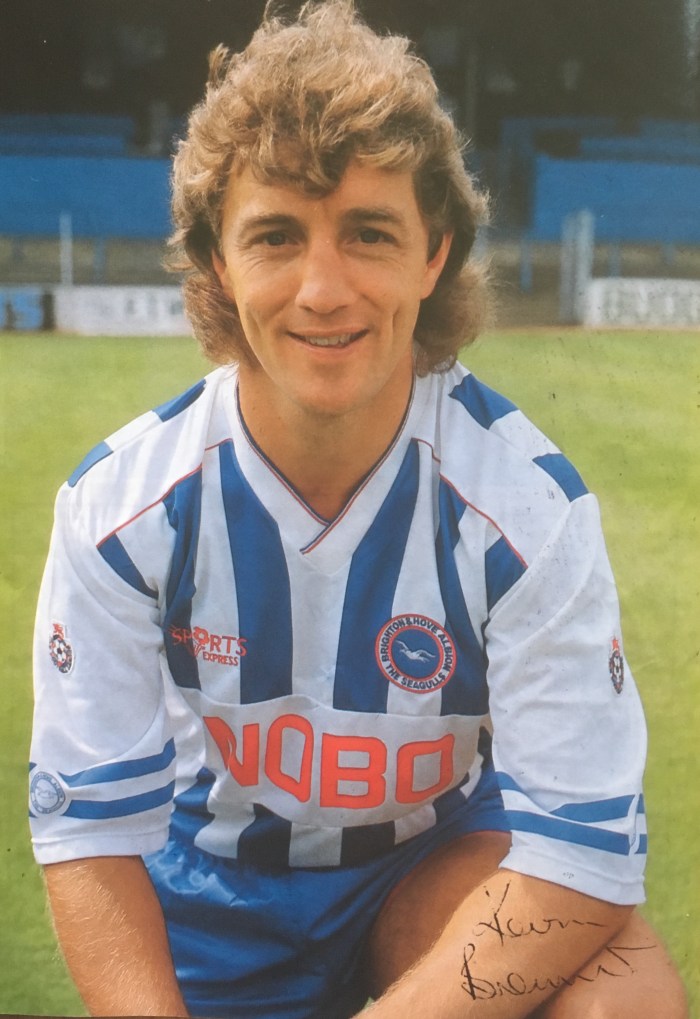
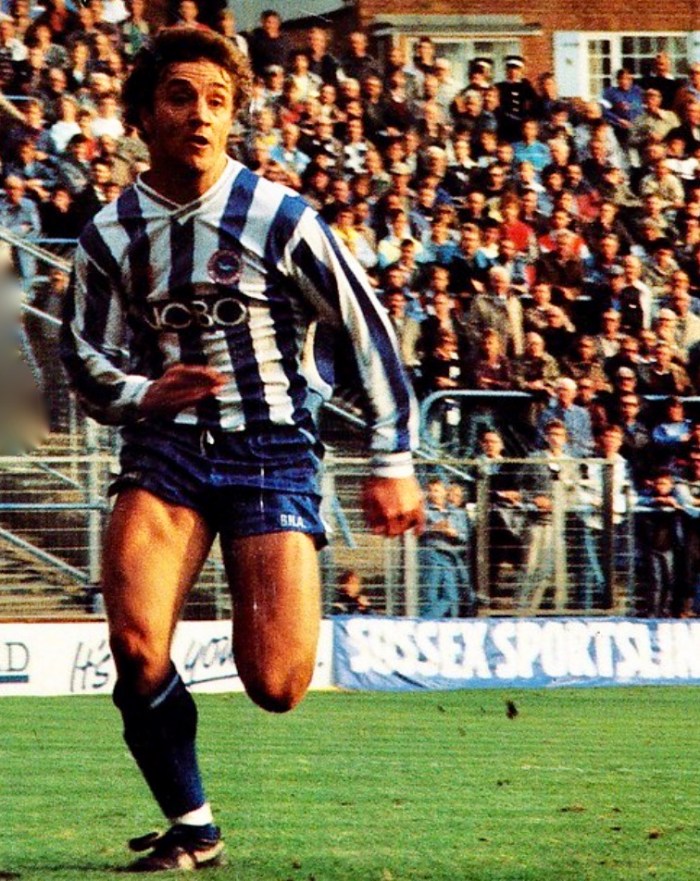
  • Pictures show the front page of the Evening Argus following Albion’s promotion from Division 3 in 1988 with Bremner diving to score; a shot of Bremner in action against West Ham that appeared on the front of a matchday programme, a portrait from a matchday programme at the beginning of the 1989-90 season, and other action pictures from matchday programmes.

Gary Lineker cleaned defender Larry May’s boots

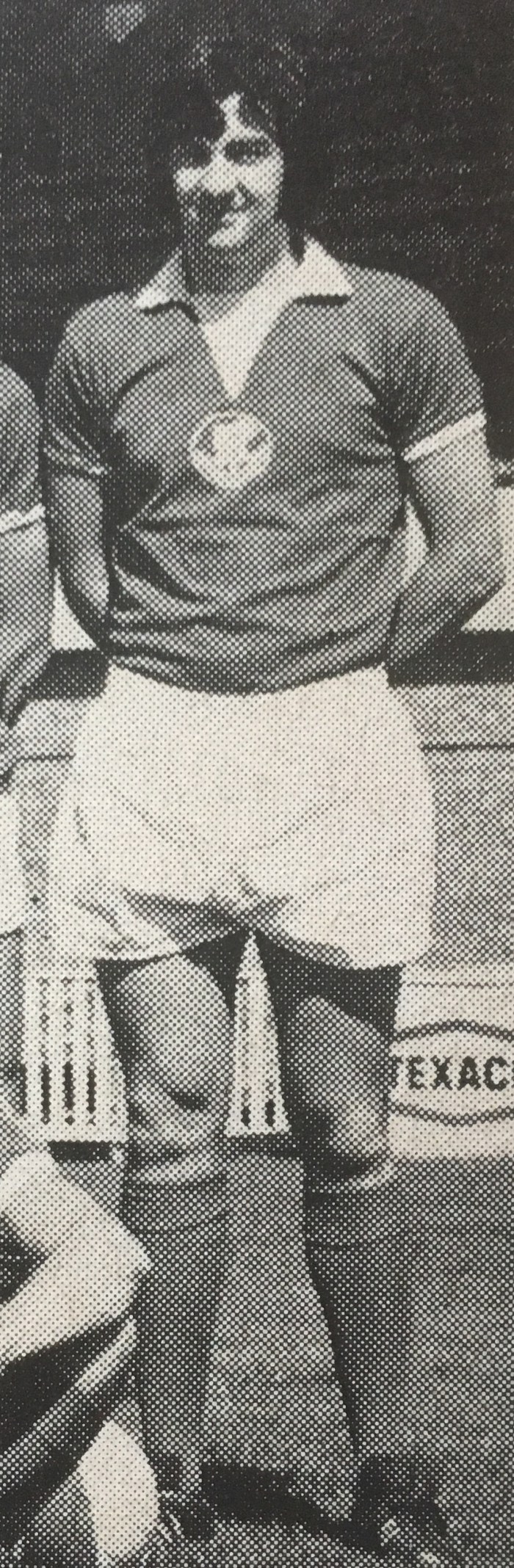
larry may wednesINJURY cut short Larry May’s playing career at Brighton but, during a purple patch of his four-year spell at Barnsley, he impressed his peers to the extent he was in the 1986-87 PFA team of the year.
Alongside him in that selection were Lee Dixon, the ITV football pundit who in those days played for Stoke City prior to his move to Arsenal, and former Albion full back John Gregory, who was playing in midfield for Derby County at the time.

Centre back Larry began his career with Leicester City and played over 200 games for them between 1977 and 1983. When given a run in the first team by former Rangers manager Jock Wallace, Larry’s boots were looked after by none other than Gary Lineker: the Match of the Day host being a Filbert Street apprentice at the time.

Leicester’s club historian John Hutchinson – who said of May: “He was very strong in the air, a powerful tackler and had pace” – drove down to Brighton in 2015 to interview Larry about his time with the Foxes and published the story on foxestalk.co.uk.

Leicester had spotted him playing for a local youth team in Birmingham and invited him for a trial. Aged 17, he made his debut in the top division against Bristol City when one of his teammates was Frank Worthington, another who later played for the Albion.

In the following season, Jimmy Bloomfield, the manager who gave him his debut, departed and was replaced by Frank McLintock, who didn’t give May much of a look-in.

Screenshot
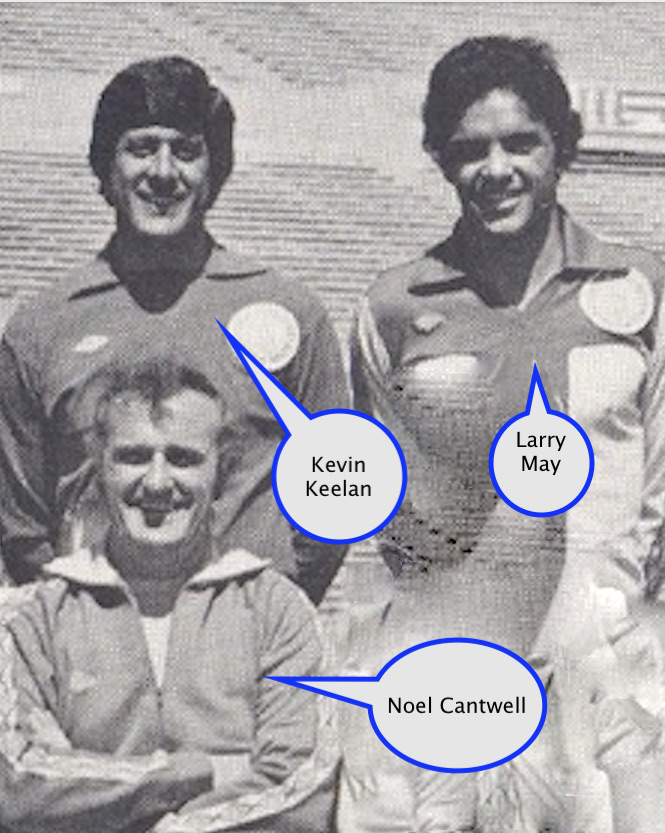
May played in front of ex-Norwich goalkeeper Kevin Keelan for the Tea Men

He went to play for New England Tea Men (a franchise owned by the Lipton tea company) in America under ex-Coventry manager Noel Cantwell to get some games but ruptured a cruciate ligament which some thought might end his career before it had even got off the ground.

Back at Leicester, McLintock was succeeded by Wallace and he paired May at the back with John O’Neill – a partnership that endured for the best part of five years.

In those early times, though, May admitted he had to play through pain and regularly ice his knee.

Not only was May ever-present in the 1979-80 side that won promotion from Division 2, he headed the only goal of the game at Leyton Orient on the last day of the season to clinch the title. Striker Alan Young, who played for Albion in the 1983-84 season, was another ever-present.

Leicester only survived a season in the top flight and following relegation Gordon Milne replaced Wallace as manager, guiding them to promotion in his first season. May, though, didn’t see eye to eye with the former Liverpool midfielder and ended up handing in a transfer request.

In an Albion matchday programme, May said: “”We fell out over something and nothing really but at 24 you think you know it all and there was no future for me once I’d asked for a transfer. “Thinking back, I realise that I should have got on with it.”

As it was, in August 1983 he dropped a division and joined Barnsley for a fee of £110,000, signed by the legendary former Leeds hard man, Norman Hunter.

larry may bw“For a man with a reputation of being one of the fiercest characters in football it was unbelievable – I’d say he was definitely the nicest fellow I’ve ever played for,” said May.
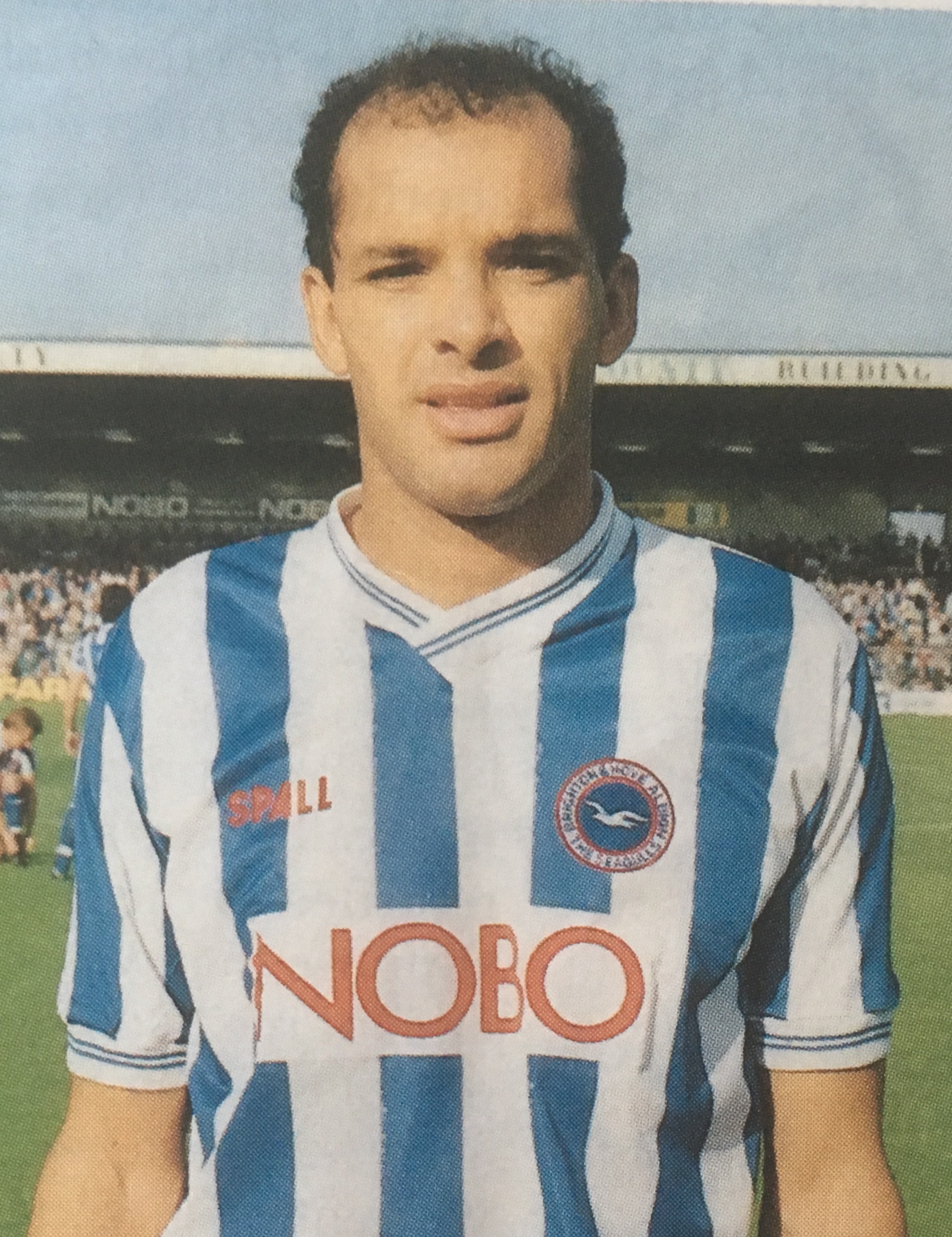
While on the books at Oakwell, with a nod towards a longer future in the game, May took his full FA coaching badge.

He told foxestalk.co.uk: “I was happy at Barnsley but, in retrospect, I should have bided my time and stayed at Leicester really. But I was a bit young and naïve. I loved it at Leicester. Leicester were the best club I ever played at. It was my best time in football and I loved it there.”

After three years with Barnsley, former Albion winger Howard Wilkinson took May to Sheffield Wednesday. He had just turned 28 and the move represented a step back up in standard.

“It was an important move at that stage in my career but looking back it was never brilliant for me at Hillsborough,” he said.

Amongst the competitors for his place was Nigel Pearson, later to be better known for some eccentricities in management with various clubs.

At the start of the 1988-89 season, a move south to Brighton was mooted but Wilkinson held onto him because of some early season injury problems. However, Barry Lloyd got his man towards the end of September 1988 and May joined Brighton for £200,000.

His debut in a 2-1 Goldstone win over Leeds brought to an end a run of eight defeats at the beginning of the season but it was back to losing ways – both 1-0 – in the following two games which, ironically, were against his former clubs, Barnsley, at home, and Leicester, away.

monoMay

The return fixture with Leicester was a happier outcome for May, though, because he was the sponsors’ man of the match in a 1-1 draw.

In his programme notes for the Barnsley game, manager Lloyd said: “I know he’ll have a big impact on the way we play….at 29, we know he has a lot of football left in him.”

Captain Steve Gatting had a programme column that season and he also welcomed the central defender, adding: “His experience in the top two divisions is bound to rub off onto some of younger players. When we’ve played against Larry in the past he’s tended to be the man of the match and I’m sure everyone at the Goldstone wishes him and his family every success.”

Understandable sentiments, of course, and such a shame that before the season’s end, after only 25 games, the cruciate ligament in his right knee was shattered in an accidental collision with teammate Paul Wood during a magnificent 2-1 home win over Man City.

“I knew straight away, having had knee trouble before, how serious it was,” he said. “It wasn’t Paul’s fault. It was just one of those things.” He was carried off on a stretcher and it was his last game for the club.

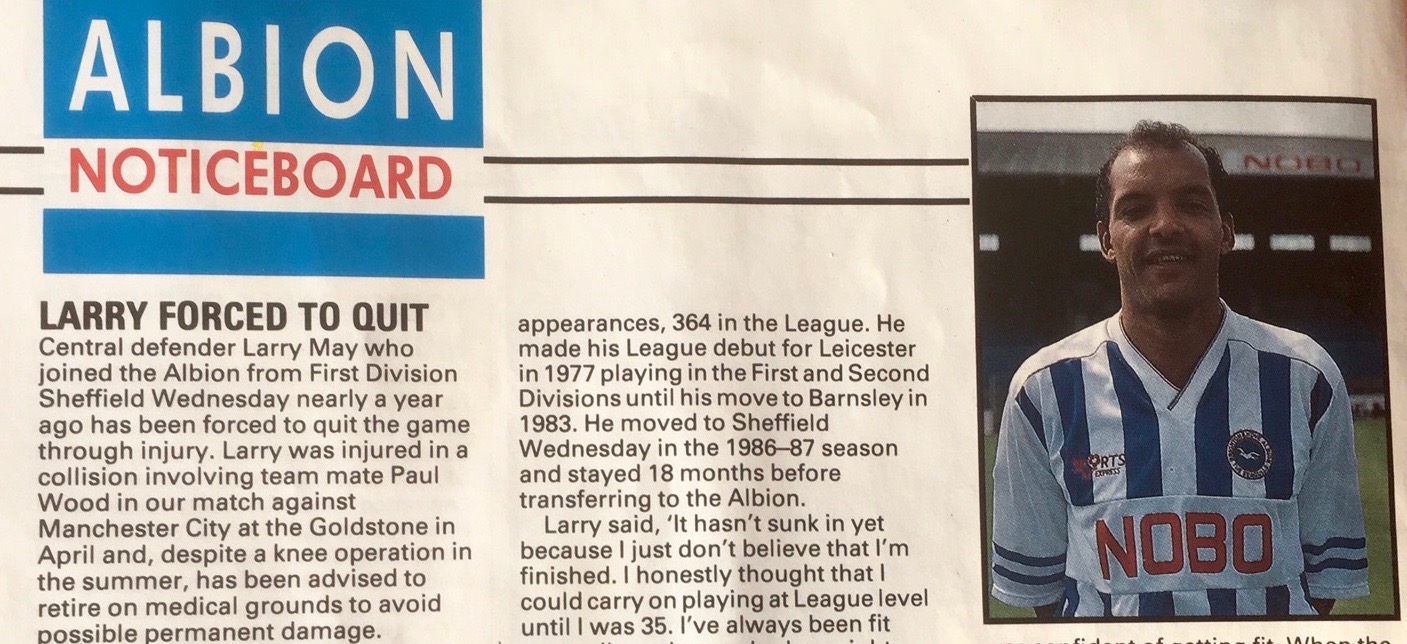
It was in the matchday programme for Albion’s game v Ipswich Town on 27 September 1989 that news of his forced retirement was announced.

“The sudden decision has stunned 30-year-old Larry and his family who were beginning to settle in the Brighton area after moving from Wakefield last year,” the announcement read. “In a 12-year career in the game, Larry has made more than 400 senior appearances, 364 in the league.”

A dejected May told the programme: “It hasn’t sunk in yet because I just don’t believe that I’m finished. I honestly thought that I could carry on playing at league level until I was 35. I’ve always been fit generally and never had a weight problem and this has really hit me.

“When the specialist told me that I shouldn’t play again my first reaction was that it had to be wrong. Now I’ve got to rethink and I’m not really sure about my future.”

Manager Lloyd added: “The announcement that Larry May had been forced to retire from playing was a particularly sad one. He performed very well for us last season and put heart and soul into everything around the club.”

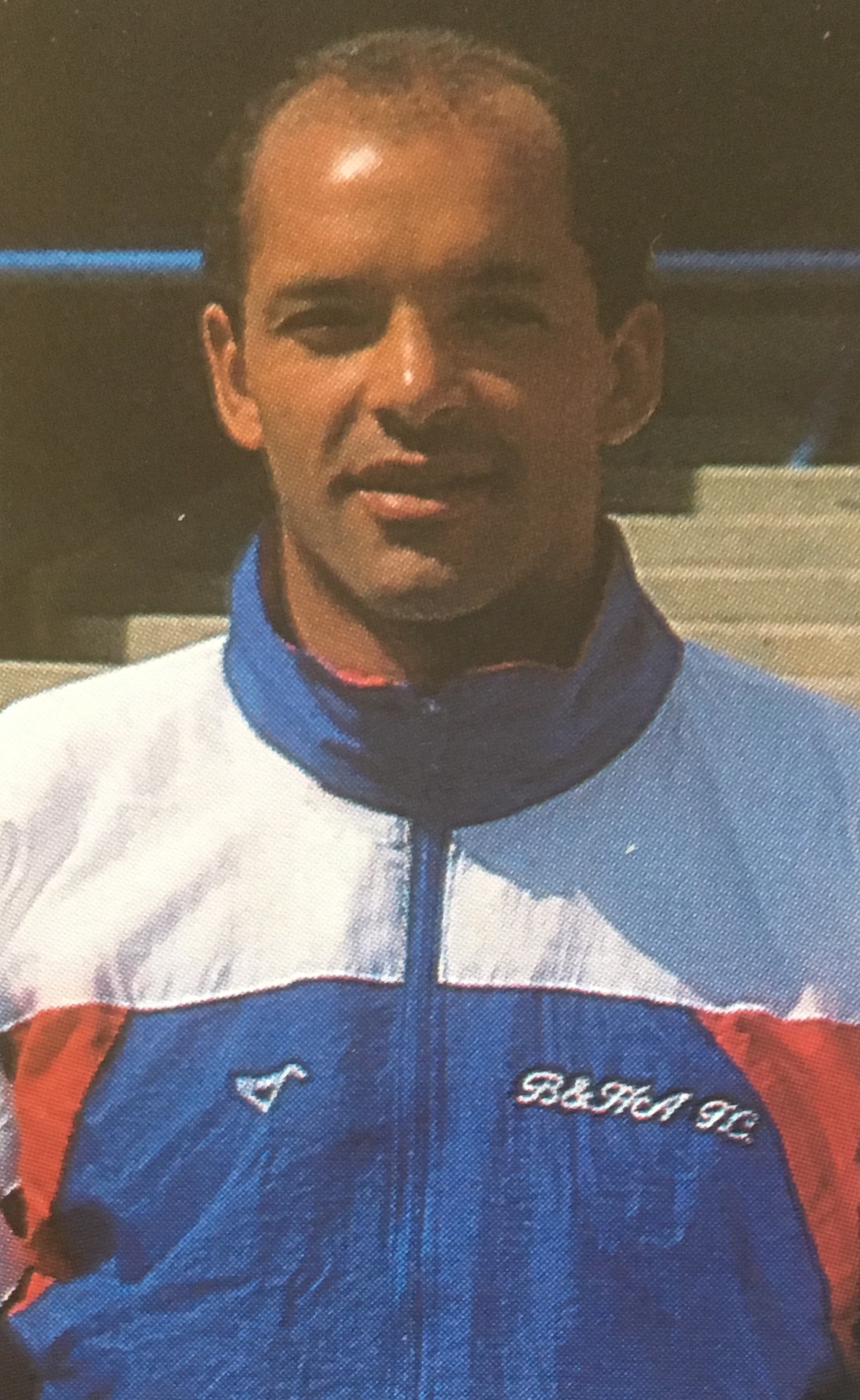
Thankfully Larry was able to put that coaching badge to good use when Lloyd made him reserve team coach and, after a time working for the Surrey FA, he later returned to the club as Head of Sports Participation for Albion in the Community.

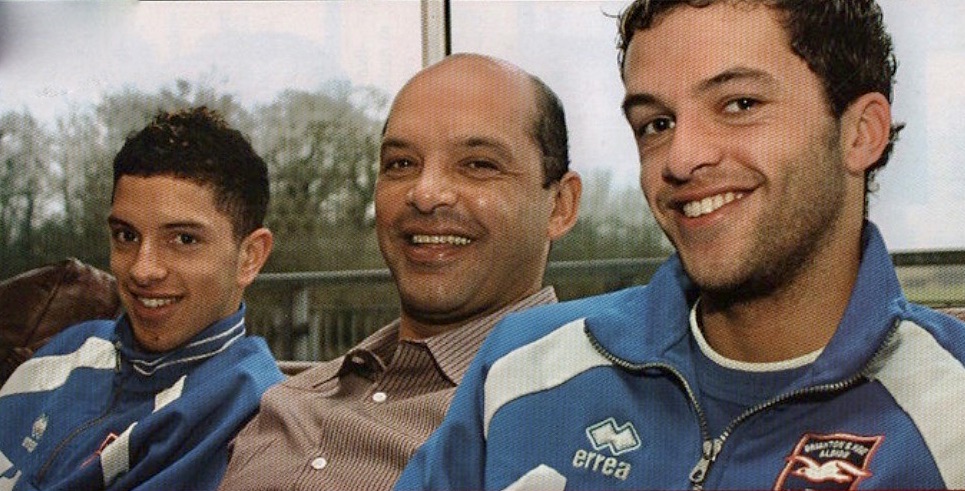
His links to the club also extended to his sons: Chris was a young goalkeeper who once had to replace the injured Michel Kuipers during a game and Steve was a centre-back who was in the youth set-up.

1-larrymaystripes2-argusmayintheface3-may-quits4-coach-may

Larry and his sons Steve (left) and Chris

Pictures include Larry May in matchday programmes; captured by an Evening Argus cameraman getting a hand in the face; the programme announcement of his retirement; in an Albion team line-up as a coach, and with his sons.

Steady Eddie Spearritt ‘Mr Versatility’ and a long throw specialist

2-signed-eddie-spearrittIN THE days before managers had a bench of substitutes, players who could slot into virtually any position were a major asset. One of my favourites was Eddie Spearritt.

A wholehearted, tough character, Spearritt was equally comfortable playing in midfield, at full back or sweeper, would occasionally get on the scoresheet, and even turned his hand to goalkeeping when necessary.

Long before anyone had heard of Rory Delap, Spearritt was a top exponent of the long throw which could sometimes be as effective as a free kick or corner. It was a skill which earned him a place in a Longest Throw competition staged by BBC’s sport show Grandstand in 1970-71, although he didn’t win it.

Born in Lowestoft on 31 January 1947, Spearritt started out at Arsenal but on failing to make the grade there, switched to Ipswich Town as an apprentice in August 1963.


On prideofanglia.com, Tim Hodge details Eddie’s Ipswich career. He made his league debut in the 1965-66 season in a 1-0 win away to Preston in the old Division Two.

Over the next two years, he made a total of 69 appearances (plus 10 as sub) for Bill McGarry’s side, scoring 14 goals along the way (Spearritt is pictured in Ipswich squad photos above, including the side who were Second Division winners).

A 1-0 home defeat to Spurs in October 1968 was his last for the Suffolk club and three months later, surplus to new manager Bobby Robson’s requirements, was one of Freddie Goodwin’s first signings, for £20,000, just a few weeks before my first ever Albion game.ES debut Crewe

He made his debut in a 3-1 home win over Crewe Alexandra (above with the superb backdrop of a packed EastTerrace at the Goldstone Ground) and kept the number 10 shirt to the end of the season, by which time he had scored five times, including both Albion’s goals in the 2-2 draw at home to Tranmere Rovers.

1-spearritt-v-wolves-69-copyIn the 1969-70 season, not only was he part of the Third Division Albion side who pushed his old manager McGarry’s First Division Wolverhampton Wanderers side all the way in a memorable third round League Cup tie, it was his header from Kit Napier’s free kick that put the Albion 2-1 ahead just before half-time (aftermath pictured above).

Scottish international Hugh Curran scored twice in eight second half minutes to clinch the win for Wolves but a bumper Goldstone Ground crowd of 32,539 witnessed a terrific effort by their side.

ES Shoot action

A few weeks’ later, in a marathon FA Cup second round tie with Walsall that required three replays before the Saddlers finally prevailed 2-1, Spearritt took over in goal during the second replay when a concussed Geoff Sidebottom was stretchered off on 65 minutes. Albion hung on for a 1-1 draw.


Spearritt was a midfield regular in his first two seasons but Goodwin’s successor, Pat Saward, switched him to left back halfway through the 1970-71 season and that’s where he stayed throughout the 1971-72 promotion campaign. Player-of-the-season Bert Murray generously declared the award could have gone to Eddie for his consistency that season.

In the close season after promotion, Spearritt tied the knot with Penelope Biddulph, “an accomplished professional dancer,” the matchday programme told us, and they moved into a new home in Kingston-by-Sea.

Spearritt started out at left back in Division Two but after ten games was ousted by the arrival of George Ley from Portsmouth. He then switched back into midfield, but by the end of that relegation season was playing sweeper alongside Norman Gall (for nine games) and Steve Piper (for two).

He scored, along with Barry Bridges, in a 2-0 win at Huddersfield on 14 October but the team went on a disastrous run of 16 games without a win, although Spearritt did get on the scoresheet three times, including notching two penalties.

When Albion went to that footballing outpost Carlisle on 16 December, they had lost five in a row without managing a single goal. Carlisle were 5-0 up, goalkeeper Brian Powney was carried off with a broken nose, replaced between the sticks by Bert Murray, then Albion won a penalty.

Spearritt took up the story in a subsequent matchday programme.

“I used to be the club’s penalty taker but, after I had missed an important one at Mansfield in 1970, I lost the job. Penalty-taking is really all about confidence,” he said. “After I had missed that one at Mansfield, which cost us a point, the players lost confidence in me and the job went first to John Napier and was then taken over by Bert Murray.

“Bert would have taken the penalty at Carlisle. He has already scored two this season. But he had gone in goal and it was decided it was too risky to fetch Bert out of goal to take the penalty.

“Nobody else seemed to want to take it so I just picked the ball up and put it on the spot. We were 5-0 down by then but I thought from a morale point of view that it was extremely important that I scored. You can understand my relief when I saw the ball hit the back of the net.

“Everybody was beginning to wonder when we would score again. I suppose with the run of bad luck we have been having it was almost inevitable that we should break our goal famine from the penalty spot.”

Albion finally returned to winning ways with a 2-0 win over Luton on 10 February, and then beat Huddersfield, Carlisle and Swindon, prompting Saward to refer to “some outstanding individual performances” and adding: “I have been particularly pleased with the way Eddie Spearritt has been playing in recent weeks.

“He has maintained a high level of consistency this season and his work in defence and in midfield has been invaluable as the side has plugged away trying to turn the tide of results.”

Spearritt was Saward’s captain at the start of the 1973-74 season back in Division Three and with the return of central defender Ian Goodwin and then the emergence of Steve Piper in the sweeping role, he was soon back in midfield.

When Saward was sensationally replaced by Brian Clough and Peter Taylor in October, Spearritt was part of the side who capitulated 4-0, 8-2 and 4-1 in successive games against Walton & Hersham, Bristol Rovers and Tranmere Rovers. He was dropped for six games, along with Ley (who never played for Albion again) as Clough went into the transfer market and brought in midfielder Ronnie Welch and left back Harry Wilson from Burnley.

Spearritt was restored to the team in mid January and had a run of seven games — including his 200th league game for Albion — but when he was subbed off in a home win over Hereford United on 10 March 1974, it was to be his last appearance in an Albion shirt.

In five years he’d played 225 games (plus seven as sub) and scored 25 goals.

In common with lots of players from the Saward era, Spearritt was a victim of the great Clough clear-out. Perhaps surprisingly, though, his next step was UP two divisions to play in the First Division with then newly-promoted Carlisle United.

One of his teammates there was defender Graham Winstanley, who later joined the Albion. The side was captained by Chris Balderstone, who was also a top cricketer. Journeyman striker Hugh McIlmoyle played up front while John Gorman, who later played for Spurs and became Glenn Hoddle’s managerial sidekick, was also in the team.

They memorably topped the division after three games….but predictably finished bottom of the pile by the end. In his two-year stay with the Cumbrians, Spearritt played 29 times, was sub twice and scored a single goal.

He moved back south in August 1976, signed by Gerry Summers at Gillingham, and made his debut against Reading, going on to make 22 appearances in his one season at the club, scoring once, from the spot, against Rotherham United at Priestfield.

One of those games was against the Albion on December 29 1976, when the home side won 2-0 on a slippery, snow-covered pitch.

Eddie emigrated to Australia the following summer and settled in Brisbane where he played for and managed the Brisbane Lions before retiring. He subsequently became estates manager for L’Oréal.

3-spearritt-graydon4-spear-pen-v-black5-gill-eddie-v-mellor-dec-76

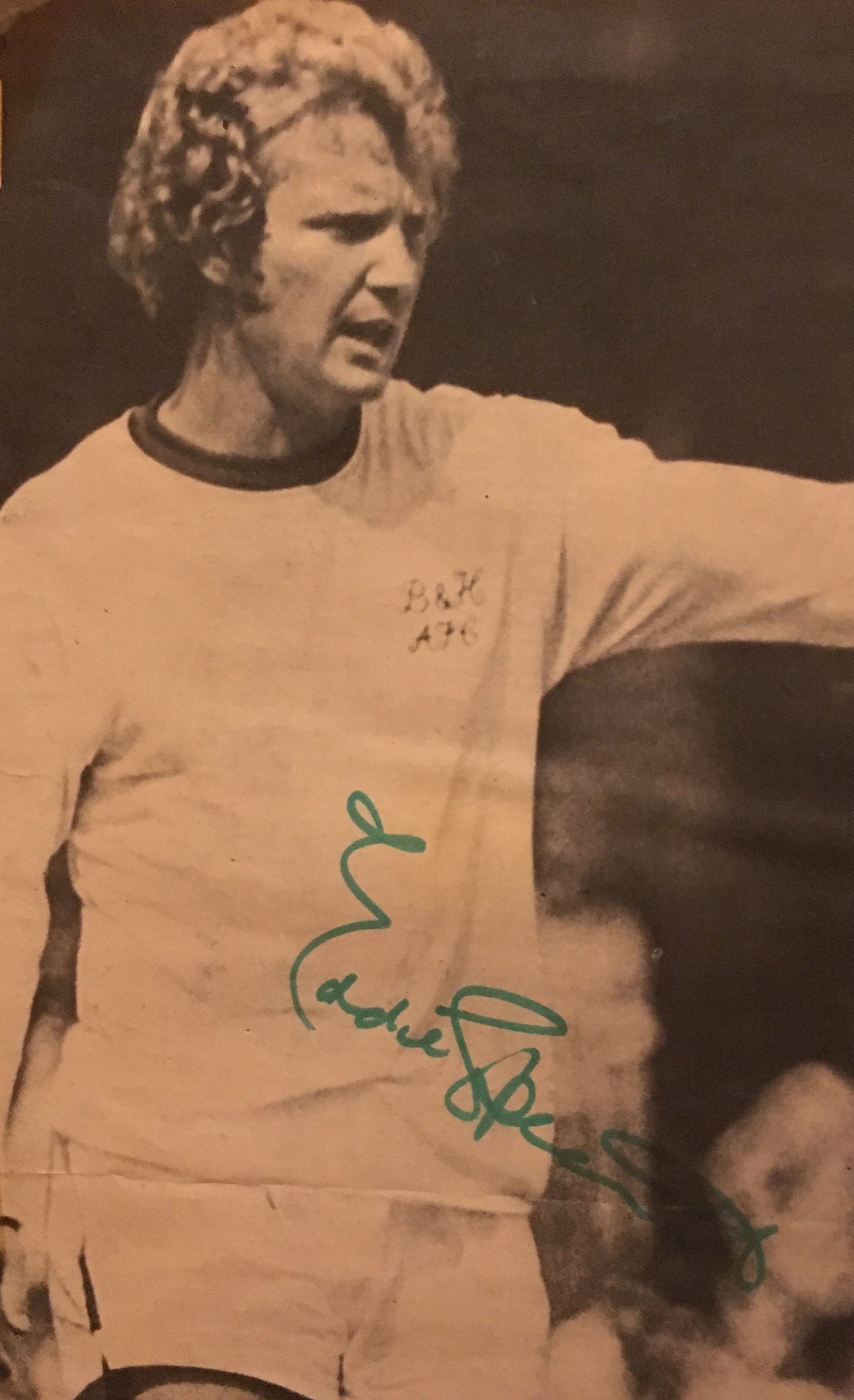
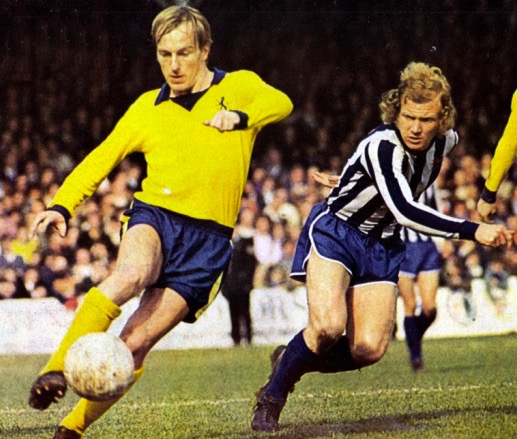
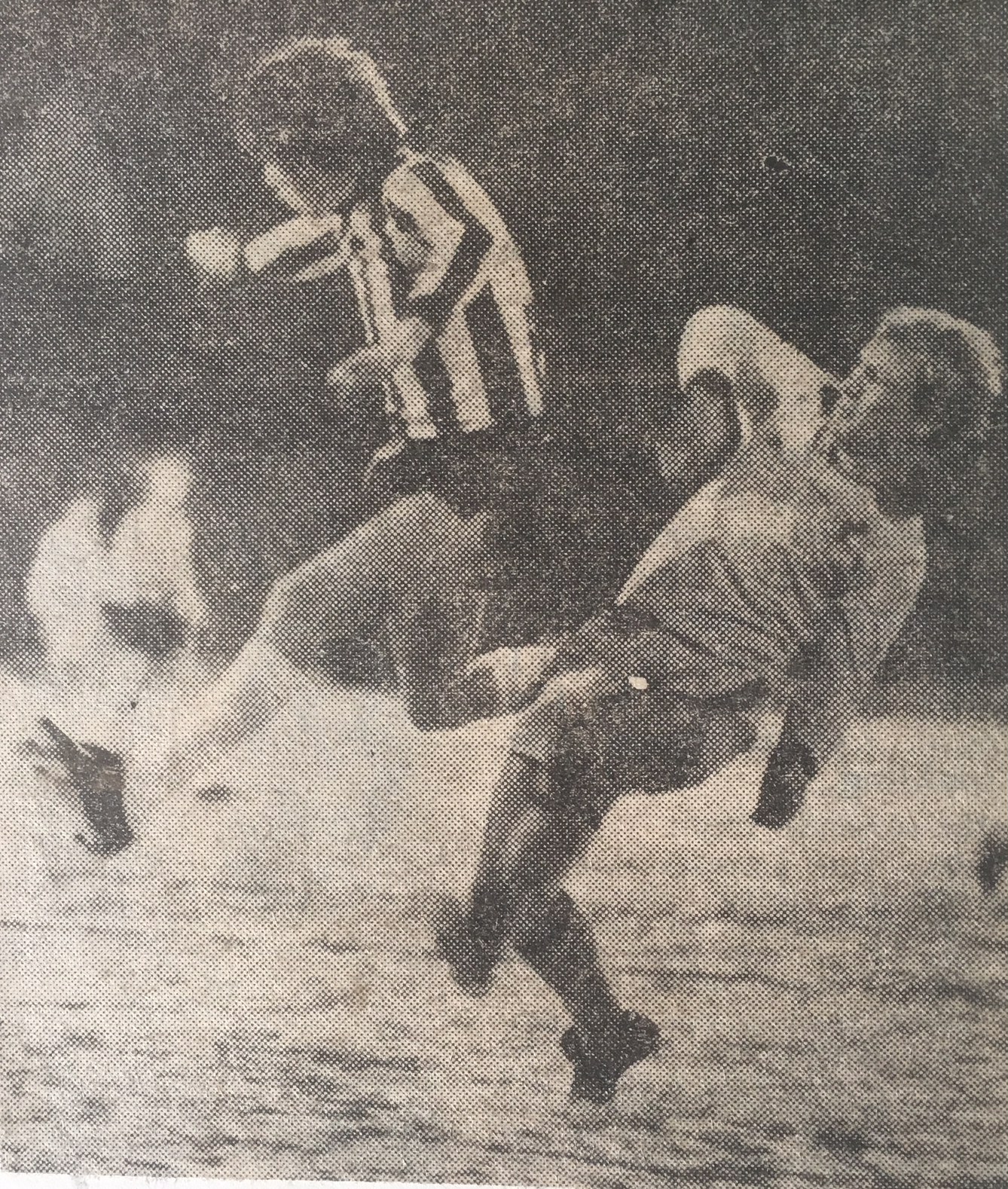
  • Pictures from my scrapbook show him celebrating after scoring in the League Cup against Wolves; an autographed Goal action shot in the white with blue cuffs kit when I was an autograph hunter around the players’ tunnel before a game, Eddie was always happy to oblige; a Shoot colour shot of him in action against winger Ray Graydon in the famous 1972 televised win over Aston Villa; from a matchday programme, Eddie’s successful penalty kick in a 2-1- home defeat to Blackpool in December 1972 nestles in the back of the net, with ‘keeper John Burridge beaten, and, from the Argus, challenging Ian Mellor playing for Gillingham against the Albion in December 1976.

Taylor walked out on Burton and Brighton to join Clough

P Taylor smileBURTON and Brighton and Hove Albion have more in common than you’d think, and it’s not just the name Albion: Peter Taylor walked out on both clubs to work with his old pal Brian Clough.
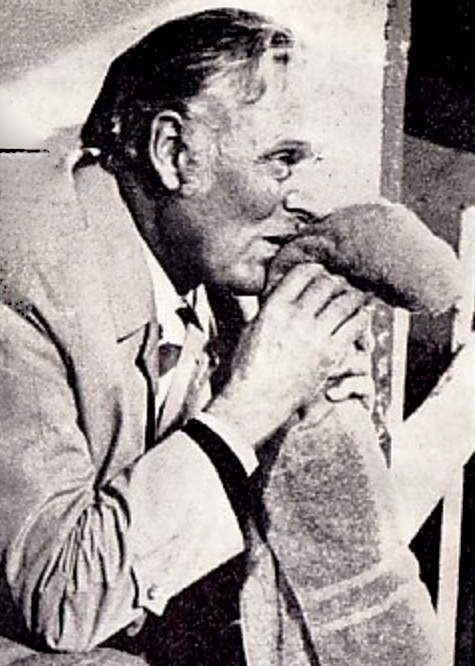
Fascinating then that Clough’s son Nigel declined to walk away from the Brewers when given the opportunity to go to manage Nottingham Forest.

Forest was goalkeeper Taylor’s first club as a player, joining them during the Second World War. During a 10-year spell (1945-1955) at Coventry City (he played 86 games but was mainly the reserve ‘keeper) he built the foundations for his future career by learning from manager Harry Storer.

Transferred to Middlesbrough in 1955, he made 140 appearances in six years, and struck up his friendship with the opinionated centre forward, who was six years his junior.

Much of the detail of how they spent hours together talking football, discovering their shared beliefs about how the game should be played, is covered in a great book, Nobody Ever Says Thank You (Orion Books, 2011) by Jonathan Wilson.

It’s also viewed from a more personal angle in For Pete’s Sake: The Peter Taylor Story Volume One (Matador, 2010), written by Taylor’s daughter Wendy Dickinson with author Stafford Hildred.

For Pete’s Sake is set in a footballing era light years away from the one we know today,” says the book’s publicity blurb. “The maximum weekly wage was £20, players walked to work together because no-one had a car and Peter worked as a brickie in the closed season to make ends meet.”

Taylor moved on from Boro in 1961 and spent a season at Port Vale, playing only one game. He arrived at Burton in May 1962 and was appointed manager in October the same year.

In shades of what he and Clough would do later at Brighton, in 1963 Taylor completely overhauled the squad, retaining only four of the existing players.

One of his signings, Richie Barker, became a legendary goalscorer for Burton, netting 159 goals in 270 appearances, and Taylor subsequently signed him for Derby.

Having created one of the most successful sides in Burton’s history, and led them to win the Southern League Cup in 1964, the following year Taylor answered Clough’s call to rejoin him in the North East, at what was then known as Hartlepools United, even though he’d only just signed a new, better paid three-year contract at Burton.

Many TV programmes and newspaper column inches have been filled over the years covering the managerial exploits of Clough and Taylor and there is not sufficient space here to cover them in detail.

Instead, let’s fast-forward to the summer of 1974. Clough and Taylor, who had sensationally joined Brighton the previous autumn after their acrimonious departure from Derby, had endured a wobbly start to their managerial reign at the Albion.

Clough publically condemned many of the players inherited from Pat Saward and cleared the decks at the end of the season, with the exception of youngsters like Peter O’Sullivan, Steve Piper and Tony Towner. However, Clough was itching to get back onto a bigger stage.

Even though he had been happy to take chairman Mike Bamber’s money when he was out of work, he always hankered for a swift return to the big time and never hid his ambition, constantly creating back page headlines in his efforts to get away from the Goldstone, regardless of having put pen to paper on a five-year contract.

When Leeds United ignored protocol and lured Clough to Elland Road, the other half of the famous partnership made a stand and stayed put. Taylor told Shoot incorporating Goal in August 1974: “I didn’t go to Elland Road because I felt I owed something to Brighton. They had given Brian and myself a super deal and I was anxious to repay them.

“There is work to be done here and I intend to stay as long as it takes me. In nine months at the Goldstone Ground we have done a lot. But much has yet to be done, so I made up my mind to carry on and complete the job.”

In a great Evening Argus feature at the time, Taylor said: “When we both knew it was all over, Brian kissed me. This did not embarrass me. After all, we had become part of each other’s lives.

“There was nothing soft in what he did. He was very, very upset. You won’t hear me say one word against him. He is my closest friend and will always remain so.

“It simply boiled down to this: Brian needs the big time. I felt I had an obligation to Brighton after the way they have treated me. Now I must get on with the job that I am paid to do.”

The opening fixture of the 1974-75 season was at home to newly-relegated Crystal Palace, managed by Malcolm Allison, who Taylor had got one over on when he had been manager of Bath City.

Even though five players were making their Albion debuts, Palace were beaten by a single goal scored by new arrival Ian Mellor in front of a bumper crowd of 26,235 – not bad for a Third Division fixture.

It didn’t last, though. Mellor and centre forward Fred Binney weren’t prolific enough on the goalscoring front and Taylor couldn’t seem to get the formula right.

According to centre back Andy Rollings, Taylor spent too much time behind his desk and never got involved in training. “Before games, he would try to motivate us but he just couldn’t do it,” Rollings told Spencer Vignes for his book Bloody Southerners. “He was a deep person and would talk about all sorts of things in team talks but he didn’t know how to get the best out of us.”

A disappointing season ended with home crowds down to around the 10,000-11,000 mark and Albion finished just two places off the relegation places.

With the popular blue and white striped shirts restored as the first choice kit the following season, there was a complete change in fortunes, and, with three automatic promotion places up for grabs, Albion looked favourites to go up for much of the campaign.

Binney was on fire and finished the season with 27 goals and Northern Irish international striker Sammy Morgan, a £30,000 signing from Aston Villa, was added to the forward options, scoring a memorable double as promotion rivals Crystal Palace were beaten 2-0 in front of a sell-out 33,300 Goldstone crowd.

Midfield dynamo Brian Horton arrived from Port Vale in March and away at eventual champions Hereford United, a youngster called Peter Ward scored within 50 seconds of his debut, to earn a draw, and finished with six goals in the last eight games.

nervy TaylorWith four games to go, Albion were in third spot but a 3-1 defeat at fellow contenders Millwall let them in. Brighton could only draw the remaining three games and they finished fourth, three points behind Millwall.
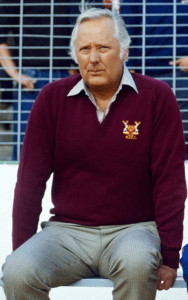
A wounded Taylor added the experienced defenders Chris Cattlin and Graham Cross to his squad, but his thoughts were elsewhere. He went on holiday to Majorca for six weeks, where his friend Clough was also holidaying, and then, four weeks before the start of the new season, dropped the bombshell news that he was quitting.

He told Shoot: “I first started to ask questions inside myself round about Easter when we lost to Millwall. We’d been in a leading position all season but doubts began to cross my mind and I had said when I took over at Brighton that I would give myself two years to win promotion and, if I didn’t, I would resign.

“I have certain principles and targets for myself. I didn’t have to leave Derby County. We were second from the top of the First Division at the time, but I believe I was right to leave them and I believe I was right to leave Brighton.

“Football is the only thing I have known all my life, as player and manager and I know there is no room for sentiment in this game.

“I signed two players gambling on them to win us promotion [presumably that was Horton and Morgan]. We didn’t get it, and the only consolation I have in leaving is I feel I have helped build a good team which is capable of going up next time.

“The most difficult thing has been to make this decision because my family have settled better at Brighton than anywhere else before and I am very sad to leave the club and the town.

“Also, Mike Bamber, the Brighton chairman, who I respect tremendously, and the board have been absolutely magnificent, and I had a very emotional meeting with Mike when I told him of my decision. I never want to go through anything like that again. He tried desperately to dissuade me, and this was the most difficult thing to confront him with.

“I am certain there will be some regrets on my behalf but I can only run my life on my principles, whether it’s at Brighton or Derby. I always play it straight down the line.”

His departure was unsurprisingly front page news for the Argus and he dead-batted speculation linking him with Clough. “I have no plans at all, except to take the dog for a walk,” he told Peter Fieldsend. Two days later, Taylor became Clough’s assistant at Forest.

And, as they say, the rest is history, as together they enjoyed some glorious successes at Forest before their well-documented parting of the ways.

In the circumstances of his – and Clough’s – departure, you can probably only imagine the unbridled delight of so many associated with the Albion when, on November 17 1979, Forest, then the champions of Europe, lost an unbeaten home record stretching back 31 months to that same Brighton and Hove Albion who had been there for them in their hour of need.

After retiring in May 1982, within six months Taylor was back in football – as the new manager of Derby County! The famous falling-out between the pair centred around Taylor signing John Robertson from Forest behind Clough’s back. The pair never spoke again and Taylor died suddenly aged 62 in October 1990 on his beloved holiday island of Majorca.

A statue of the pair now stands outside Derby’s stadium and in October 2015 the main stand at Forest’s City Ground was renamed the Peter Taylor Stand.

As for Brighton, there can be no doubt that Taylor, probably more so than Clough, laid the foundations for what were to be the greatest days in the history of the club.

At least three of Taylor’s signings – Ward, Horton and Cattlin – were to play pivotal roles in that rise to the top. Ward, of course, became a goalscoring legend and the other two later returned to the club after their playing days were over for managerial spells.

  • ANOTHER former Burton boss also ended up in Brighton’s dugout: Ken Gutteridge was no. 2 to Taylor and his successor Alan Mullery before being reunited with Taylor at Derby.

Gutteridge is largely credited as the man who discovered Ward, having given him his debut when manager of the then non-league Burton during one of the most successful periods in the club’s history, particularly in 1974 when he led them to a rare promotion to the Southern League Premier Division.

In fact, we learn from Matthew Horner’s excellent biography of Ward (He Shot, He Scored, Sea View Media), it was one of Burton’s scouts, Jim Phelps, who recommended Ward to Gutteridge having worked with the freescoring player at a Sunday afternoon side, Borrowash United,

Gutteridge died in a Burton residential home in 2012 aged 83.

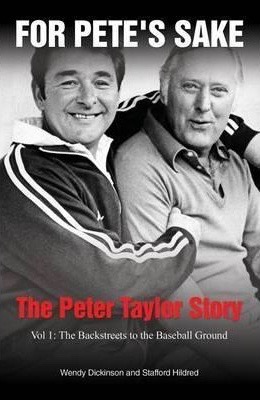
Pictures show the Argus feature after Taylor took sole control of the Albion; the headline in Shoot, a happy Taylor signing Brian Horton, and the front cover of For Pete’s Sake.

1-kiss-cutting2-shoot-cutting3-taylor-signs-horton4-taylor-book-cover

Key building blocks for Steve Sidwell’s Premiership future

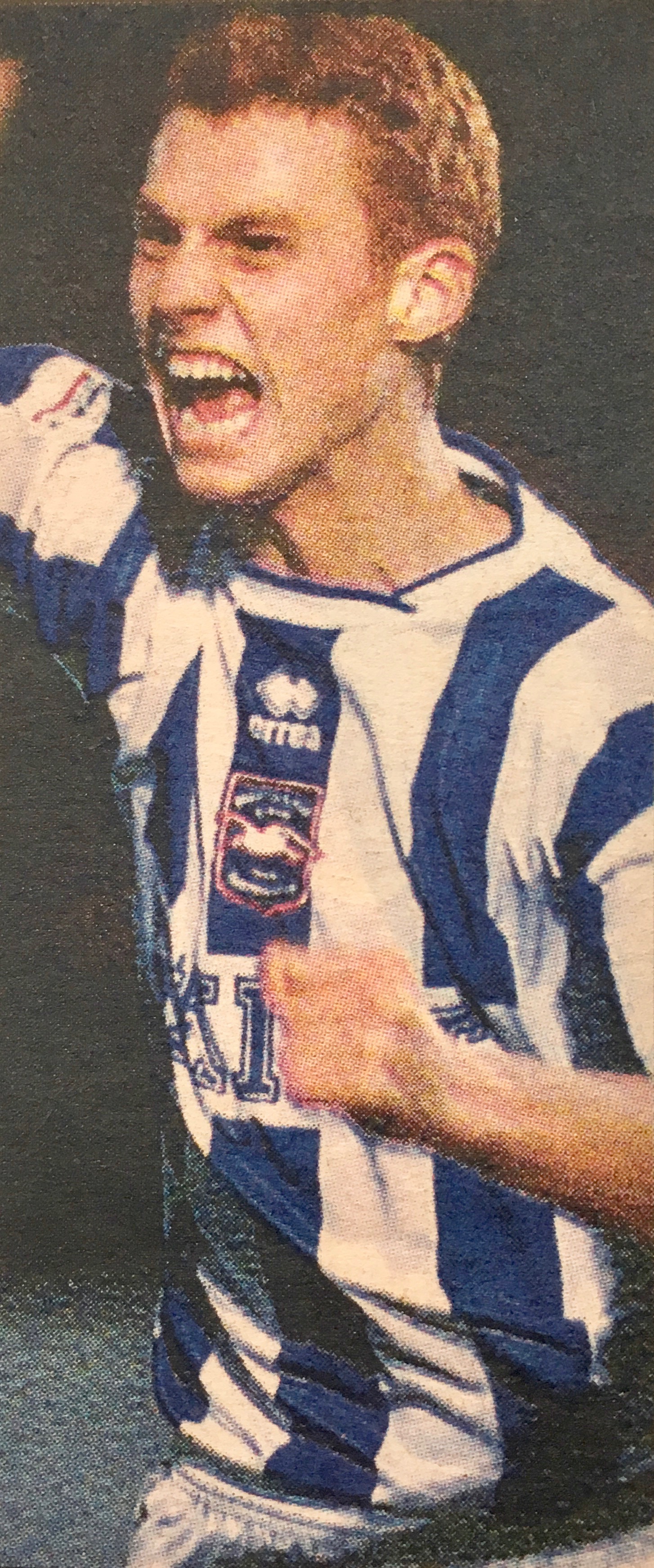
seagull-sidWHEN a flame-haired midfield player called Steve Sidwell joined the Albion on loan from Arsenal in 2002, it wasn’t the first – or last – time he would link up with manager Steve Coppell.
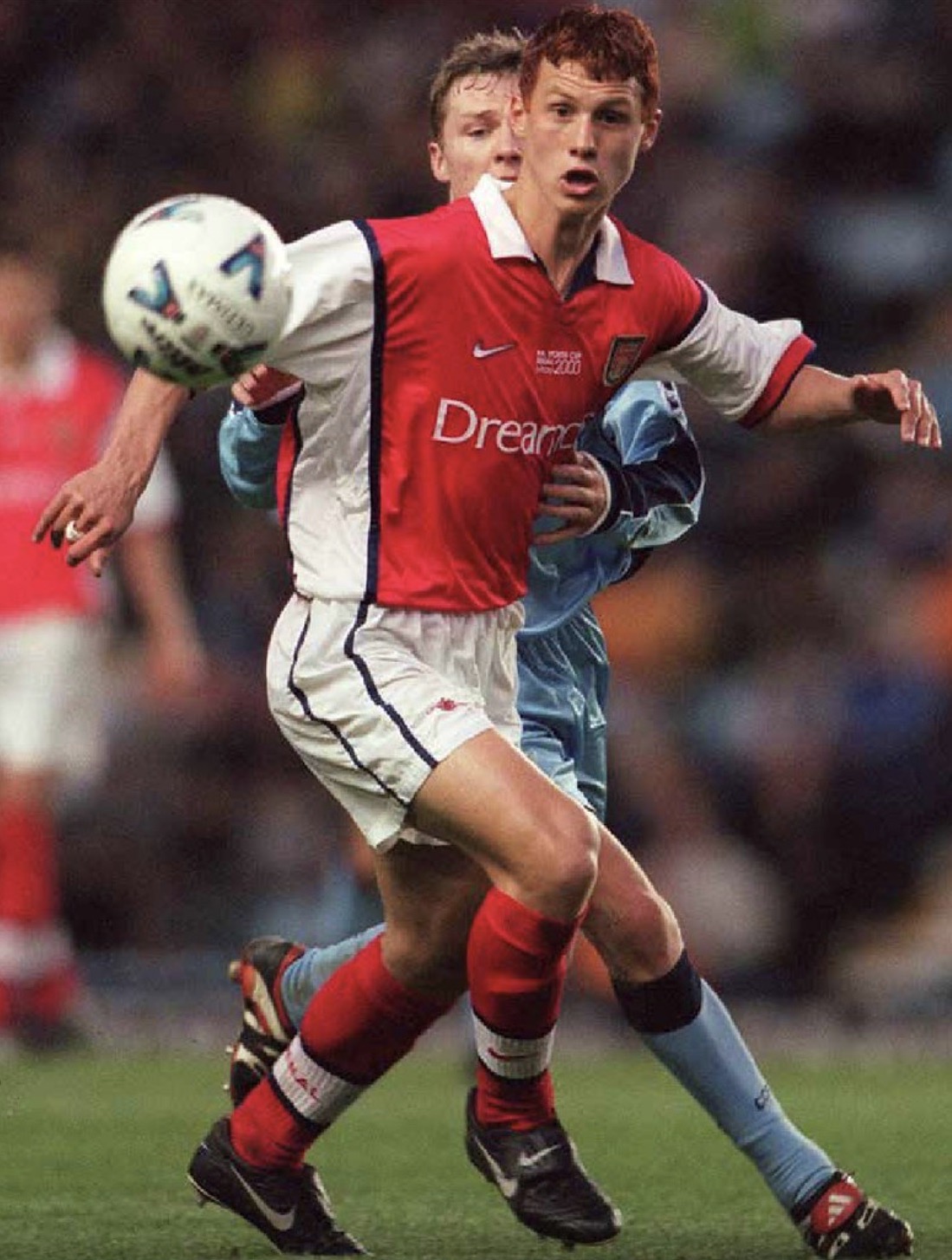
Coppell had organised a similar arrangement the season before when he was in charge at Second Division Brentford, and Sidwell played 30 times for the Bees.

When Coppell acquired his services for the bottom-of-the-second-tier Seagulls, it was instantly apparent that here was a talent destined to perform on a much bigger stage. In a 12-game spell, he scored five goals. They were the building blocks of a career that saw him go on to play in the Premiership for 11 seasons, and against Huddersfield in early 2017 made his 500th career appearance.

So many things are easy in hindsight but presumably if Albion had already been playing at a new stadium at Falmer, Sidwell may have stuck with the Albion rather than moving on to Reading where the Madejski Stadium was already a reality.

In the Royals matchday programme for the Reading v Albion Championship clash in 2005-06, cover boy Siddy was interviewed at great length and recalled his time with Brighton with fondness.

“It was the first time I had played at this level – before then I had been in Arsenal’s youth team and on loan at Brentford in the Second Division – so I was grateful for that opportunity,” he said. “The best description of my time there would be ‘short but sweet’.

“The fans at Brighton were fantastic, especially away from home,” he continued. “”At the time we were bottom of the league and battling against relegation, but they still turned up every week and always backed us.”

Sidwell recounted how it was during that time that he forged his long term friendship with Bobby Zamora and he also spoke of how he played in the same Colliers Wood Sunday football team as fellow midfielder Alexis Nicolas.

Eleven months after Sidwell went to Reading, Coppell made the same choice and enjoyed the best of Sidwell as his scintillating partnership with James Harper in the centre of midfield helped to take Reading out of the Championship and into the Premiership.

Let’s just go back to the 2002-03 season, though, and recall the impact Sidwell made in Brighton’s valiant effort to defy the relegation odds.

A disastrous run of 12 defeats in the first part of the season had dumped Albion at the foot of the table and manager Martin Hinshelwood had been replaced by Coppell, who rung the changes and started turning round the fortunes on the pitch.

Sidwell came in from Arsenal and scored the first of his five goals in a 2-2 draw away to Preston. He scored the only goal of the game in a Boxing Day win at Norwich and two days later scored both the goals in a 2-2 home draw with Burnley (celebrating in this Argus picture below).

Siddy youthfulOne of my favourite memories came at Highfield Road, Coventry, on January 11 2003 when Albion probably deserved to win but had to settle for a point in a 0-0 draw. Before the kick off, Albion fans were chanting his name during the warm-up, urging him to stay, because there had been speculation linking him with moves to other clubs.

Sidwell’s performance that day was acknowledged by no less an authority than the Scotland midfield maestro Gary McAllister, who was player-manager of Coventry at the time.

McAllister told the press after the game: “I was very impressed with Brighton. They passed it well. The front two were always a threat to us, joined by Steve Sidwell creating in the middle of the park and the two guys wide.

“Brighton were as good a side as we have seen at Highfield Road this season.”
Two days later, the Argus was reporting on the clubs interested in signing the promising youngster, including Stoke and Reading. Coppell told them: “What will be will be. I personally think the level of his performance will almost demand Arsenal not letting him go because he has done so well.

“Alternatively, they are going to move him on and take what money they can now. There will, I’m sure, be a lot of people in for him.

“He just wants to play football. I think the more we take these kind of decisions off his shoulders and just let him turn up and play then we are going to get the best out of him.”

siddy arseSidwell, who was out of contract at Arsenal at the end of the season, said: “Stoke put a bid into Arsenal. I went up there and it’s a great set-up and a fantastic club but we will see what happens.”

Interesting then, that the Potters did eventually get their man several years later.

However, in 2003 Reading was his destination and he spent four and a half years with them, helping them to win  promotion from the Championship and playing in their debut Premier League season.

In July 2007, at the end of his contract, Sidwell moved on a free transfer to Chelsea, the team he’d supported as a boy. “People think that because I was with Arsenal from the age of nine to 20 that I support them, but I’ve always been Chelsea. I was born in Tooting, my mum and dad are from Tooting Bec and Balham, so I was born into a Chelsea-supporting family,” he said in an Albion matchday programme article.

So, he said it was a “no-brainer” to go there. “I was joining a club that had won back-to-back titles under a manager who was a breath of fresh air in the game and I’d be playing and training with some of the best players in the world.”

Screen Shot 2021-04-23 at 07.31.27

The wealth of talent meant competition for places at Stamford Bridge restricted Sidwell’s game time, although he did clock up 25 games for the Blues. With the benefit of hindsight, he said: “It was the right move, it just came at the wrong time. I was only 24 so it came too soon. I’d only had one season of Premier LEague football under my belt and wasn’t quite ready for such a big jump from Reading.

“Maybe if I’d gone to Newcastle or West Ham (they’d both been interested) for a couple of years and played really well there, then I would have been better equipped but, like I said, when Chelsea comes knocking you don’t turn the opportunity down.”

He added that off-field issues, such as Mourinho leaving in the September to be replaced by Avram Grant, caused unrest amongst the players. But he added: “In hindsight, I wished I’d stayed another six months because Luiz Felipe Scolari came in and you never know what might have happened then.”

However, in the summer of 2008, in search of more regular playing time, he moved on to Aston Villa on a three-year deal. His time at Villa Park was often interrupted by injury and he made 64 appearances in two and a half years before Mark Hughes ended up signing him twice – for Fulham and Stoke City.

In 2011, Sidwell returned to London and scored 17 goals in 115 appearances over three and a half years, before leaving Craven Cottage when Fulham were relegated from the Premiership in 2014. “I went there on the back of their Europa League run and they were still riding the crest of a wave,” he said in an Albion matchday programme article.  He reckoned he played the best football of his career there and said: “In my first year we finished eighth in the Premier League.

“When I first went there, our home record was phenomenal. It didn’t matter who came to the Cottage, we always thought we would get the win. In the season we got relegated, it was surprising how quickly that mentality had changed.”

siddystokeHughes took him on a free transfer to Stoke but he managed only 13 appearances so jumped at the chance once again to link up with his old pal Zamora to join Albion on loan in early 2016 to supplement their efforts to get promoted from the Championship.

Although the form of Beram Kayal and Dale Stephens meant he struggled to nail down a regular spot, he was a great option to bring off the bench and memorably got the last-gasp winner in a televised away match at Nottingham Forest. “When I was getting taped up, I said to the bench I was going to score, it was just fate,” he said. “I managed to pop up with the goal, and it was a great feeling to see the ball hit the back of the net and you could see from the celebrations what it meant to us all.”Screen Shot 2021-04-04 at 17.19.48

I was in the away end that evening and despite a persistent Nottingham drizzle making the post-match walk back to my hotel pretty unpleasant, I dried off in the company of some other Albion followers in the hotel bar and reflected on a great skin-of-the-teeth win.

As we know, Siddy signed permanently in the summer of 2016, and has had a lot more game time this season. I was also fortunate to be at Ashton Gate on Bonfire Night that year when he scored that magnificent long range effort from inside the centre circle.

Footnote: I didn’t have to join in the last line of the Stevie Sidwell song….because I’m already in possession of similarly-coloured locks. We gingers have to stick together!

sidwell-reading

Pictures show the young Sidwell in Brighton’s away kit in 2002-03, as he appeared in the Coventry programme, and a portrait from Reading’s programme for the 10 December 2005 game v Brighton.