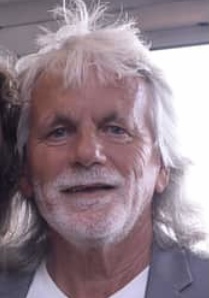
‘Unsung hero’ Dave Turner was Brighton captain at 22

3 Turner portrait

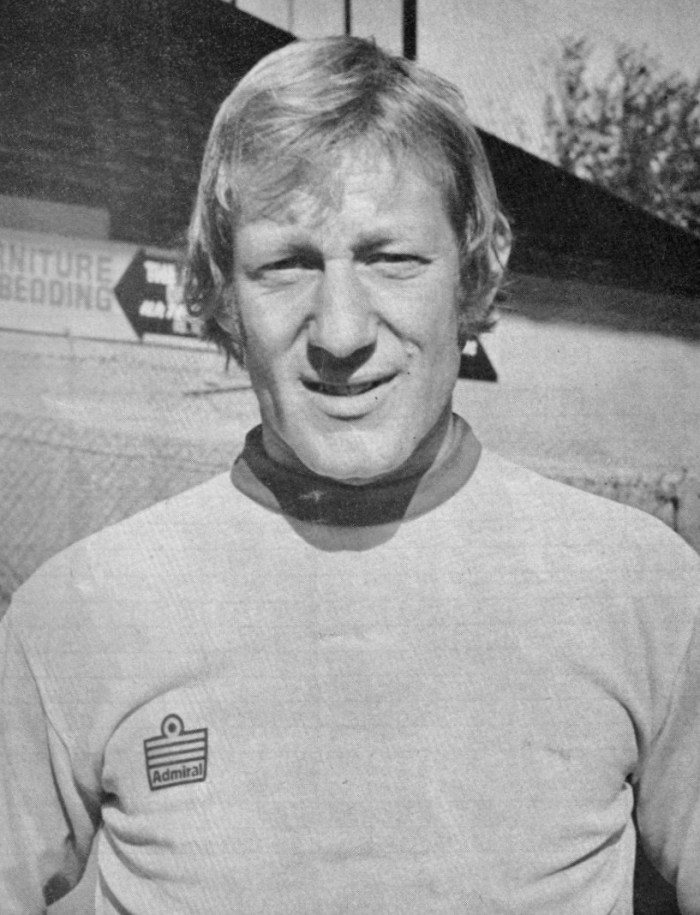
DAVE TURNER, one of Brighton & Hove Albion’s youngest ever captains in the 1960s, had already been at the Albion just over five years by the time I got to see my first game.

Over the course of eight and a half years with the club, he played 338 games, scoring 34 goals. In old-fashioned parlance, Turner was a wing half – what today would be known as a predominantly left-sided midfield player.

Born in Retford, Nottinghamshire, on 7 September 1943, as a youngster he played for Notts Boys and had two trials for England Boys before joining Second Division Newcastle United straight from school as an apprentice in 1960.

He was part of the Newcastle side which beat Wolves 2-1 in the 1962 FA Youth Cup, playing alongside Toon’s future legendary captain Bobby Moncur and long-serving Northern Irish full back David Craig.

Newcastleunited-mad.co.uk says he was “highly thought of when he helped Newcastle win the Youth Cup in 1962, but never broke into the first team”. In fact, that wasn’t quite true because he was given his first team debut in the very last game of the 1961-62 season, a 3-0 home defeat to Leeds United.

He made one more appearance for the Magpies under new manager Joe Harvey but became Archie Macaulay’s first signing for a fee when he headed to Sussex in December 1963 for the princely sum of £6,000.
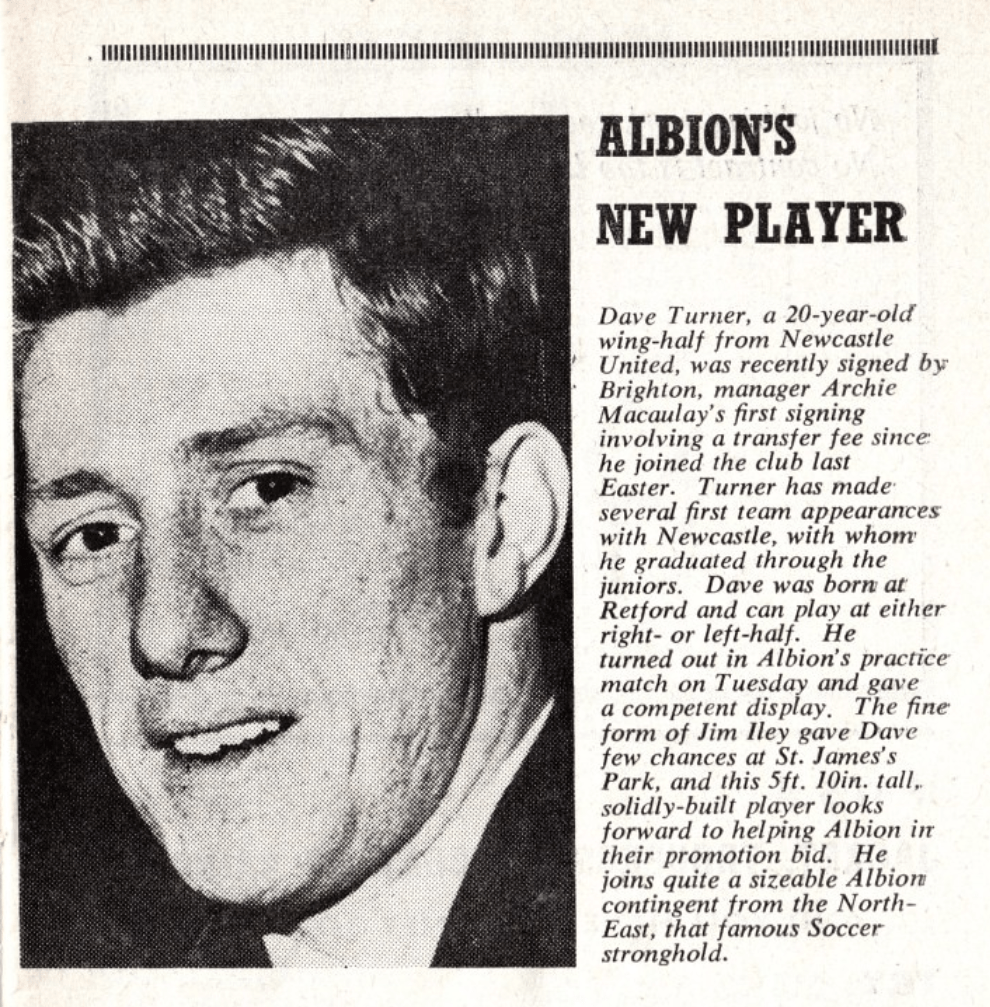
Turner made his debut in a 2-0 home win over Darlington on 7 December 1963 and, in only his second season at the Goldstone Ground, he made 40 appearances and scored twice as Albion marched to the Fourth Division championship.

“That was a great season,” Turner told Goal magazine in 1970. “Bobby Smith (former Tottenham and England international) was with us then. I was very surprised he joined Brighton, but what an asset he was.

“We scored plenty of goals, the crowds flocked back, the atmosphere was great.”

The following year, Dave was appointed captain – the youngest Albion ever had.

Albion’s matchday programme introduces the new young captain

“I was surprised but very pleased,” Dave told the magazine. “There were several players older than I was, so it was a great honour to be made skipper.

“I was a bit frightened at first but after a game or two I realised that the rest of the team were backing me up, so everything was all right.”

It was only when the experienced former Preston North End skipper Nobby Lawton arrived in 1967 that Turner relinquished the job.

“He had a fine reputation and I asked to be relieved of the job, suggesting Nobby should take over,” he said.

Remarkably both Turner and Norman Gall, another player hailing from the North East, reached the milestone of their 285th Albion game at the same time.

Brighton were looking odds on for promotion under Freddie Goodwin in the 1969-70 season and it was rare for a Third Division team to get coverage in Goal, a popular national football magazine at the time.

The article began: “Dave Turner is one of the unsung heroes of Brighton. He has played nearly 300 games for the club, been involved in a Fourth Division Championship victory, and is now in the middle of another bid for glory.

“Brighton are fighting hard to get into the Second Division and the 26-year-old midfield star is a key man in their battle.

“Ever since he joined them from Newcastle in December 1963, Turner has played a vital role in the Brighton set-up.

“Stars like Rodney Marsh, Hugh Curran and Bruce Rioch, all of whom have gone on to better things, have played against (and been overshadowed by) Brighton’s non-stop wing half.

“It is Turner’s consistency which is helping Brighton in their promotion struggle. And he thinks they can do it.”

2 turner colour portrait

Turner told the magazine: “I’m pretty confident we can go up. But so can any of the top 10 at the moment. We’ve been playing well all season, but early on we just couldn’t get the right results. Everyone was getting a bit disappointed.

“Then everyone started getting stuck in a bit more – it began to pay off. We had a long undefeated run in the League after November and conceded only one goal in nine games. Even that was a penalty.

“The defence has been playing well and the whole team has been coming back and doing its share of the work. It would be nice to score a few more goals but if you don’t let any in it means you have at least one point before you start.”

Unfortunately although Brighton were top after a 2-0 win over Reading on 27 March 1970, they blew the chance of promotion with four defeats in the remaining five games and ended up fifth.

In the following two seasons under Pat Saward, Turner was hard hit by injuries and only made 19 appearances in the 1971-72 Third Division promotion campaign, appearing in his suit in the champagne-raising dressing room picture after promotion was achieved.

In its pen pictures of each of the members of the squad, the Argus said of him: “Turner never knows when he is beaten and few players have achieved greater popularity with the Goldstone crowd.”

The arrival of the cultured Brian Bromley to occupy his midfield berth meant Turner was given a free transfer in the summer of 1972 and, together with Kit Napier, he joined Ken Furphy’s Blackburn.

Turner made 25 appearances for Rovers but his injury issues returned and he was forced to retire in 1974. He followed his former boss Furphy to Bramall Lane where he was youth coach for a while. He then moved on to Aldershot before heading to Canada.

He coached at Toronto Blizzard under former Watford and Sheffield United midfielder Keith Eddy and stayed under Eddy’s successor, Bob Houghton, who was a former Brighton teammate. Houghton was at the Goldstone in 1969-70 although he didn’t feature in the first team. He famously managed Swedish side Malmo when they lost 1-0 to Nottingham Forest in the 1979 European Cup Final.

Turner stayed in Canada with Toronto Blizzard and had a season with Toronto Dinamo but he returned to the UK in 1990 and rejoined the coaching staff at Aldershot.

1 turnerleadsout
4 Turner promotion dressing room
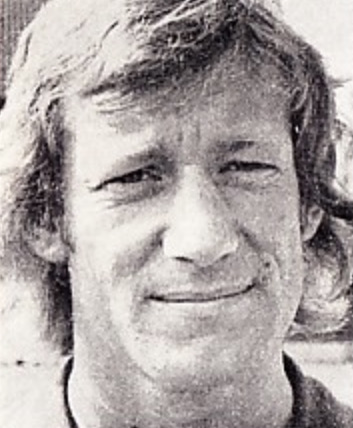
  • Pictures from my scrapbook show Turner leading out the Albion at the Goldstone, as featured in Goal, part of a team line-up in 1969-70, a portrait from the Argus in the 1971-72 season, joining in the 1972 promotion celebrations alongside Ian Goodwin with Brian Bromley (front left) and physio Mike Yaxley.

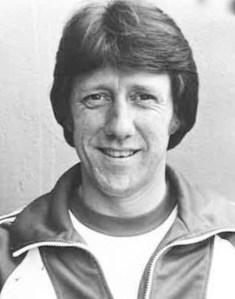
Turner the coach: at Toronto Blizzard with Bob Houghton and some well-known English players, and at Sheffield United and Aldershot.
Goals flowed for Manchester United starlet Andy Ritchie after Brighton-Leeds swap

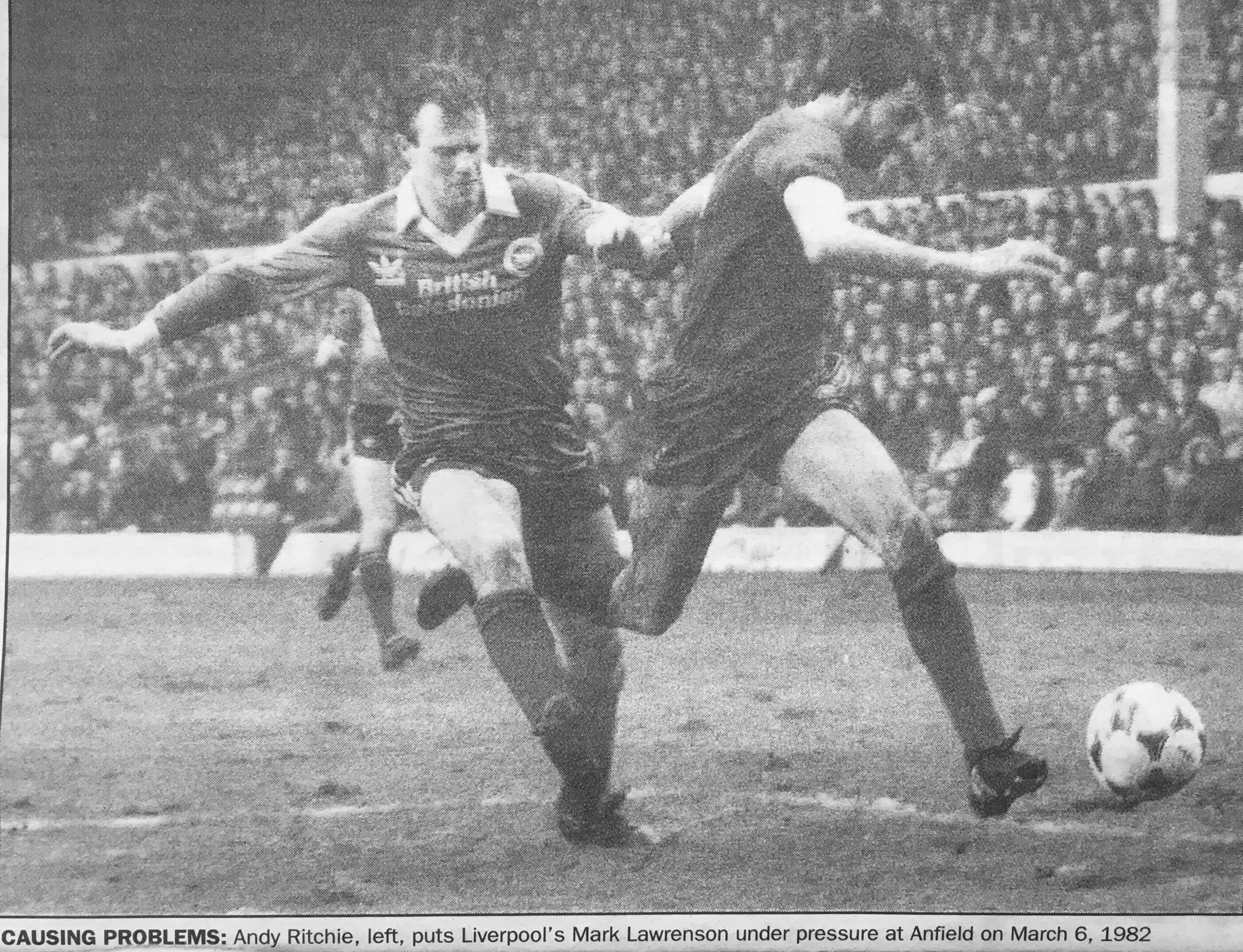
Ritchie v LpoolTEENAGE Manchester United striking sensation Andy Ritchie had big boots to fill when he replaced Peter Ward in Brighton’s forward line.

After a slow start, 18 months after his arrival on the south coast he was the Albion Player of the Season but he missed out on Brighton’s historic journey to the FA Cup Final in 1983 when he opted to move to Second Division Leeds United in exchange for Terry Connor.

With just 26 goals in 102 top flight appearances for the Albion, it would probably be fair comment to say the best years of his footballing career were still to come and he claimed the move to Elland Road was to ensure he continued playing first team football.

He went on to enjoy great success the other side of the Pennines during Oldham Athletic’s time amongst the big boys.

But let’s go back to the beginning. Born on 28 November 1960 in Manchester, the son of a postal worker, Ritchie showed no early signs of a becoming a professional footballer and in fact went to Moseley Hall Grammar where only rugby was played.

The young Ritchie did play football as a cub, though, and then progressed to a Sunday league side and it was there that he was spotted by former Man Utd captain Johnny Carey, scouting for his old club.

After some trials Ritchie signed on as an apprentice at Old Trafford and soon earned a regular place in United’s Central League side.

At Christmas 1978 he made his league debut in United’s 6-2 win over Everton. He never managed to hold down a regular place in the first team but in total played 33 games for United, scoring 13 goals. Amongst those, he memorably scored two hat-tricks, against Leeds and Spurs.

It was in October 1980 that Ritchie became part of a triangular swap of strikers, when Garry Birtles moved from Nottingham Forest to Old Trafford, Ward transferred to the City Ground from Brighton, and Ritchie headed south. “Andy was only 19 but I saw great potential in him,” said Brighton manager Alan Mullery in his autobiography.

Ritchie made his debut in an away game at Aston Villa on 22 October 1980 and, after going seven games without scoring, opened his Albion account….against Man Utd. Unfortunately his goal in the Goldstone clash against his former club on 22 November was just a consolation as the Seagulls crashed 4-1.

Doubtless Mullery expected a greater return from the young man than the six goals he had mustered by the end of the 1980-81 season, but thankfully one of those came in the 80th minute of the final game of the season when a 2-0 defeat of Leeds meant Albion retained their top flight status by a whisker.

When Mullery quit over the sale of Mark Lawrenson to Liverpool that summer, the defence-minded Mike Bailey came in and steered Albion to their best ever finish – 13th of 22 – but at the expense of entertainment.

Ritchie top-scored with just 14 goals and was voted Player of the Season and a personal highlight came in March when he was selected to play for England under 21s against Poland. He played alongside Mark Hateley who scored both England’s goals in a 2-2 draw at Upton Park.

What Ritchie found puzzling was that the England side’s boss was Dave Sexton – the very manager who’d been happy to let him leave Manchester United. But it turned out to be his one and only cap. An Albion commitment prevented him playing in a subsequent game when he was called up to play Scotland.

Although he scored in the opening 1-1 draw of the 1982-83 season against Ipswich, he didn’t find the net again until December – by which time Bailey had been sacked.

The replacement managerial duo of George Aitken and Jimmy Melia opted to play three strikers – Ritchie, Michael Robinson and Ward, who had returned to the club on loan from Forest – but results were not great and Ritchie’s form in front of goal remained poor.

Melia, not exactly a shrinking violet when it came to the media, let it be known he was not impressed and the next thing Ritchie declared he wanted away. While relegation beckoned, Albion continued to make progress in the Cup and Ritchie played in the quarter final win over Norwich. Then, almost out of the blue, Melia organised a straight swap with Ritchie going to Leeds and Connor joining the Seagulls.

The decision was puzzling to say the least because Albion were still in the Cup and, with Connor cup-tied having played in the competition with Leeds, and an extension of Ward’s loan refused by Brian Clough, Brighton had to go into the semi final and the final with only one recognised striker in Robinson.

Of course, as we know, midfielder Gordon Smith was moved up front to partner Robinson – and if you don’t know what happened next you’ve been living on a different planet!

In the pre-match wall-to-wall coverage of the Cup Final, as was commonplace at that time, amongst the multitude of different angles appeared an interview with Ritchie in Match Weekly about the clash between his two former clubs. “I’m glad for both teams that they have made it to Wembley and I just hope that the best team wins on the day,” he said diplomatically.

“Obviously I’ll have a few pangs of jealousy when the lads walk out at Wembley knowing that I might have been involved, but I feel I have made the right decision in attempting to secure my future in first team football.”

Ritchie was sore he had missed out on a Cup Final (v Arsenal) when he was at Man Utd so it was certainly a mighty decision he took. “I knew I was taking a gamble when I joined Leeds just before the semi final but I felt my future outweighed the possibility of Brighton getting to Wembley and I have no regrets,” he said.

Indeed events would prove him right and back in his native north he thrived over the next four years at Elland Road, scoring 44 times in 159 appearances before moving onto Oldham where he stayed for eight years and played a part in one of the club’s most successful periods.

His prolific goalscoring for the Latics meant by the time his playing career came to a close in 1999 he had registered 210 goals in 661 games, a tidy record by anyone’s standards.

Ritchie’s career as a manager never reached the same heights as his playing career – he had spells managing Oldham, Barnsley and Huddersfield – and his later involvement in football was as a pundit for BBC Radio Leeds and MUTV.

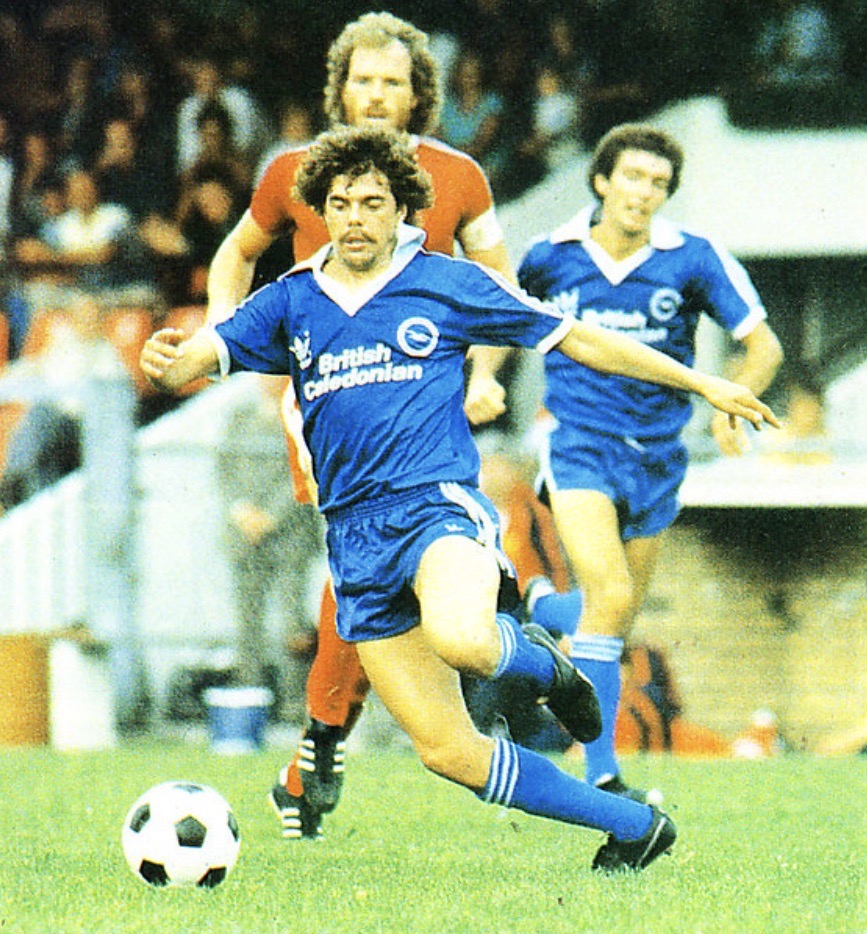
1 ritchie in cally shirt2 ritchie other breakfast3 ritchie villa stretch4 ritchie v sunderland5 Ritchie Oldham

  • Pictures from my scrapbook and Albion matchday programmes show Ritchie sporting Albion’s British Caledonian sponsored kit, breakfasting at home with his wife, two action images, a portrait in Oldham’s colours, and a montage of newspaper and magazine articles about the striker.

Midfielder Jim Walker discovered the other side of injuries

THE MAN largely responsible for extending the football career of gifted Irishman Paul McGrath briefly had a place in Brighton & Hove Albion’s midfield.

Jim Walker ­spent 13 months with the Albion after six years at Derby County. He was later Aston Villa’s physiotherapist for 17 years.

Despite Brighton beating Crystal Palace in the opening game of the 1974-75 season — Peter Taylor’s first in sole charge following the controversial departure of Brian Clough — subsequent early season results were poor.

With close season signing Ernie Machin nursing an injury, and Peter O’Sullivan out of the side for a disciplinary issue, midfield reinforcements were needed.

Taylor returned to his old club in September 1974 to sign Walker and youngster Tommy Mason for a combined £25,000 fee.

Having made an almost wholesale change to the squad at the end of the 1973-74 season, it was perhaps not surprising Taylor turned to some players he knew.

Walker had played his part in Derby’s rise from Second Division obscurity to First Division champions under Clough and Taylor but was essentially a squad player. In seven years at Derby, he only made 42 appearances.

He collected a Second Division Championship medal in 1969, when he played 26 games, and was part of the squad which secured the club’s first ever Division One Championship title in 1972. In 1970 he had been loaned to Clough and Taylor’s old club Hartlepool where he played 10 games.

Walker HSAs well as Walker and Mason, Taylor also brought in former Ram Alan Lewis as cover at left back for Harry Wilson, and ex-Derby striker Ricky Marlowe, who had moved to Shrewsbury, followed the old assistant manager to Brighton.

Doubtless with an eye to an upcoming transfer, Taylor also knew he would need midfield reinforcements because Billy McEwan and Ronnie Welch were the makeweights in a deal to land right back Ken Tiler from Chesterfield.

In only his second game for Brighton, Walker got on the scoresheet in a 2-1 defeat away to Charlton. In the return fixture the following March, an Evening Argus photographer captured a great picture of him on a rain-soaked afternoon at the Goldstone splashing through the mud.

Walker was a regular through to the middle of March but apart from one other start was then substitute through to the end of the season. Although he was still at the club for the start of the following season, he played only twice before being sold for £6,000 to Peterborough United.

As a native of Cheshire — he came from Northwich and played for the local non-league team Northwich Victoria before joining Derby in 1968 — he hankered for a move back to the north west and in November 1976 linked up with an old friend, Alan Oakes, the former Manchester City stalwart who was the manager of Chester City.

Jim made the left back spot his own at Sealand Road and clocked up over 170 appearances in five years in a side which had Peter Ward’s former strike partner Ian Mellor up front and a young Welsh striker called Ian Rush beginning to show some promise!

Eventually an achilles injury brought a premature end to Walker’s career at the age of 34 and he became a physiotherapist and coach with the club.

In 1983 he joined his former Derby teammate Dave Mackay in Kuwait as a coach at Al Arabi and after two years returned to the UK to become physio at Blackburn Rovers. In 1986 he took over as physio at Villa.

Walker worked for six different managers at Villa Park, including Ron Atkinson and Graham Taylor, and it was his careful handling of former Manchester United defender McGrath that made him the Irishman’s best friend.

When asked in the Villan on the Spot feature on avfc.co.uk who was the biggest influence on his career, McGrath replied: “No question about it, Jim Walker the club physio in my time at Villa Park. He was brilliant for me and was responsible for me playing as long as I did. Most of the time spent at the training ground was lifting weights with my legs to strengthen the quadriceps which helped protect my knees. I also did lots of exercise bike work, probably three or four times a week.”

In the One-on-One feature in FourFourTwo magazine: McGrath declared: “The Villa physio Jim Walker, who is more than a friend – a hero of mine – is basically the one that kept my career going. If I hadn’t had Jim on my side, I would have probably finished playing about four seasons earlier than I did.

“Jim created a regime where I just went in and did 10 minutes on the bike each morning and that was about it. Some days I would just have a bath. The games would look after my fitness.”

Walker’s time with Villa came to an end when he became assistant manager to Paul Merson at Walsall in 2004. After that, he briefly returned to Peterborough as physio before taking up the role of senior physio at the famous golf resort hotel The Belfry.

In an interview with the Royal Sutton Coldfield Observer five years ago, Walker told them: “I have been lucky in my career because I was an average footballer who went on to work with some top managers.

“It was a great advantage to have played because I knew what the lads were going through. I understood what it felt like to be injured and not playing football and I understood the frustration that after six weeks of injury you need to be patient and build up your fitness levels instead of walking straight back into the first team.”


Read more here:

http://www.chester-city.co.uk/what_happened_to_20.asp

http://www.suttoncoldfieldobserver.co.uk/decades-quitting-football-physiotherapist-jim-ll/story-14219967-detail/story.html
http://www.fourfourtwo.com/features/paul-mcgrath-one-one#d5I2rTLoUuPT7Zwb.99

 1 Walker best puddles2 Walk + Mason sign

  • Pictures from my scrapbook show Evening Argus shots of Walker pirouetting through Goldstone puddles against Charlton Athletic and Peter Taylor signing Walker and Mason for the Albion.

Flying winger Tony ‘Tiger’ Towner immortalised in children’s TV programme

2-towner-takes-on-argusIF ART is the sincerest form of flattery, Tony Towner can count himself amongst the privileged few to be forever remembered on film.

That it was done by two of Rotherham United’s most ardent celebrity fans is neither here nor there – it’s not everyone who can say their prowess has been portrayed in an episode of Chucklevision.

Towner and fellow Millers hero Ronnie Moore were at the centre of a classic knockabout episode of the children’s TV series in which Rotherham supporters Paul and Barry Chuckle constantly get involved in slapstick scrapes.

In Football Heroes, made in 1996, the Chuckle Brothers meet Towner and Moore (actors playing them rather than the footballers themselves!) on their way to a game and accidentally end up with their invitation cards to play in a veterans match, leading to them ending up on the pitch.

Towner earned plaudits for his Rotherham performances in this Shoot magazine feature – pipping one Danny Wilson!

It was Towner and Moore’s starring performances in the Rotherham side that won promotion from the old Division 3 as champions in 1980-81 that earned them cult status.

Over three seasons, Towner appeared over 100 times for the Millers and even all these years later is still remembered with affection.

Take, for example, comments made on the Millers Mad website a couple of years ago. Ivor Hardy said: “Tony (Tiger) Towner was one of the best and most talented footballers ever to play for us.

“He was instrumental in us winning the league in 80/81, along with doing the double over our near neighbours Sheffield United in the same season.

“We were lucky to get the services of Towner and Seasman from Millwall, and only did so because the Lions were in financial turmoil that season and had to get some money in fast. He will always be a legend with the older fans, along with team mates Seasman, Moore, Fern, Breckin, Mountford etc.

“Tiger gave us some great memories.”

Meanwhile, kevthemaltbymiller said: “Great player for us, very tricky winger with lightning pace. Happy memories.” And sawmiller added: “Tiger was a super player – good winger who created a real buzz in the crowd when he got the ball and ran at players.”

Towner himself considered his time at Rotherham to have been his best playing days. In an Albion matchday programme article, he told Roy Chuter: “They were probably my best years, my most consistent, anyway. I was 26, 27 years old – at my peak. I had three tremendous years.”

Initially playing under Sunderland’s 1973 FA Cup Final hero Ian Porterfield, he also enjoyed working with the former Liverpool legend Emlyn Hughes, when he took over as manager.

Brighton fans also have good memories of the local boy made good. Sussex youngsters making the grade with the Albion have been pretty few and far between over the years, but Towner and defender/midfielder Steve Piper were two who did it in the 1970s.

In Albion’s 1972-73 season in the second tier, Piper had already been blooded in the first team in the November. Towner signed professional on 29 December 1972 and, with Albion having been knocked out of the FA Cup by Chelsea in the third round, manager Pat Saward arranged a friendly against Stoke City on fourth round day, 3 February 1973 (Stoke had been beaten 3-2 by Man City) and gave Towner his first team debut in a 2-0 defeat at the Goldstone.

The following Saturday he made his league debut aged just 17 at home to Luton Town. Albion went into the game having suffered 14 defeats on the trot (12 in the league plus the games against Chelsea and Stoke) and, rooted to the bottom of the table, relegation was inevitable.

Saward gave the side a shake-up, dropping three established players – goalkeeper Brian Powney in favour of loan signing Tommy Hughes from Aston Villa, right back Graham Howell (to the bench), and experienced striker Barry Bridges.

Piper made only his sixth first team appearance and he was joined by winger Towner and forward Pat Hilton. It was Towner’s brilliant display on the wing that really caught the eye as Albion finally mustered a win, beating the Hatters 2-0.

Towner kept the shirt until the end of the season and it was the launchpad for a 15-year professional career in which he made over 400 appearances. After that Luton debut, he scored his first goal in a 2-1 home win against Huddersfield on 10 March.

“I was an Albion fan as a kid, in Bevendean, and I joined them straight from school at 15, as an apprentice,” he said. “I already had the ‘Tiger’ nickname when I got into the team in 1973 – I think it was one of Alan Duffy‘s. I must have tackled him a bit too hard in training, or something. Tiger was a great nickname, and I loved it.”

One of the few survivors of the great Brian Clough cull of the playing staff in 1974, Towner was a speedy, skilful winger who could put in terrific crosses for his teammates. The fact he was a local lad endeared him greatly to the crowd.

In five years, he had plenty of challengers for his place. In the early days, Gerry Fell competed for the wide berth and later Eric Potts, but Towner still managed 171 games (+ 12 as sub) for the Albion and scored 25 goals.

“Gerry was the opposite of me, though still a winger – he had loads of pace, though not too much skill,” Towner recalled. “He’d knock the ball ahead of him and run past the defender to get it, a bit like Stuart Storer. I’d try to trick my way past.”

In John Vinicombe’s end of season assessment of Peter Taylor’s first season in sole charge (1974-75), he said: “It is with no disrespect to Taylor that I suggest that the three most consistent players were those he inherited – O’Sullivan, Towner and Piper.

“Towards the end, Towner tailed off a little but he struck up an intuitive partnership with Fred Binney.”

In fact Towner was third highest in the squad for appearances that season, playing 47 games in total plus four as sub and with 10 goals was second highest goalscorer behind Binney.

It was the arrival of Gerry Ryan from Derby in September 1978, which finally prompted his departure. George Petchey, who later joined Chris Cattlin’s backroom team at the Goldstone, took him to Millwall for £65,000.

Unfortunately, while Brighton won promotion to Division 1 in 1979, Millwall went the opposite way out of Division 2, and Towner found himself back in the third tier.

After 68 appearances for the Lions, in 1980 he was sold to Rotherham along with teammate John Seasman for a combined fee of £165,000.

Towner scored once for Rotherham’s near neighbours Sheffield United in a 10-game loan spell in 1983 and although he had missed out on Brighton’s eventual elevation to the top tier, he managed it with Wolves in 1983-84 having been signed by the Black Country side for £80,000.

He then joined Charlton Athletic but in the 1985-86 season was loaned to Rochdale where he once again linked up with his former Rotherham teammates, Moore and Seasman. He made five appearances for Rochdale and MikeMCSG on clarkechroniclersfootballers.blogspot.co.uk recalls: “He came on as sub in a home game and made an instantly good impression by beating the full back with his first touch.

“He went on to play a blinder in the draw at Halifax on Boxing Day. Unfortunately Tony didn’t want to uproot to the North and couldn’t be persuaded to make his stay permanent. When Cambridge came in with an offer he signed for them instead although he only made eight appearances for them in total.”

Towner’s final Albion appearance had been in a 4-1 defeat away to Leicester in September 1978 but his final appearance at the Goldstone came in a memorable FA Cup 3rd round tie on 4 January 1992.

Albion beat then Southern League Crawley 5-0 and Towner earned a rousing reception from the 18,031 packed into the Goldstone when, at the age of 36, he came on as a substitute for the visitors.

Crawley were one of several non-league clubs he played for: he also turned out for Gravesend, Fisher Athletic, Lewes, Newhaven and Saltdean.

Interestingly, Towner reflected: “I could definitely have played for a few more years at league level, and perhaps I should’ve done. I’d got a bit disillusioned with it though.”

After his playing days ended, Towner ran his own Brighton-based removals business and watched the Albion as a fan. In October 2015, Brian Owen interviewed him for an Argus piece ahead of a game against Cardiff when former Albion winger Craig Noone was in opposition.

Towner reckoned Albion made a mistake letting him go but added: “It’s good to see Brighton making good use of wingers.

“That’s the way I was brought up, using the wide men.

“It’s all right having midfield men or attack-minded full-backs. But what gets the crowd on its feet is a winger going past the full-back and crossing.

“You can have all the formations you like but, if you see a winger getting past his full-back, it excites people.”

Tony Towner certainly came into that category.

1-sawar-towner
3-towner-crosses-argus-prog
4-argus-shot-towner-on-wing

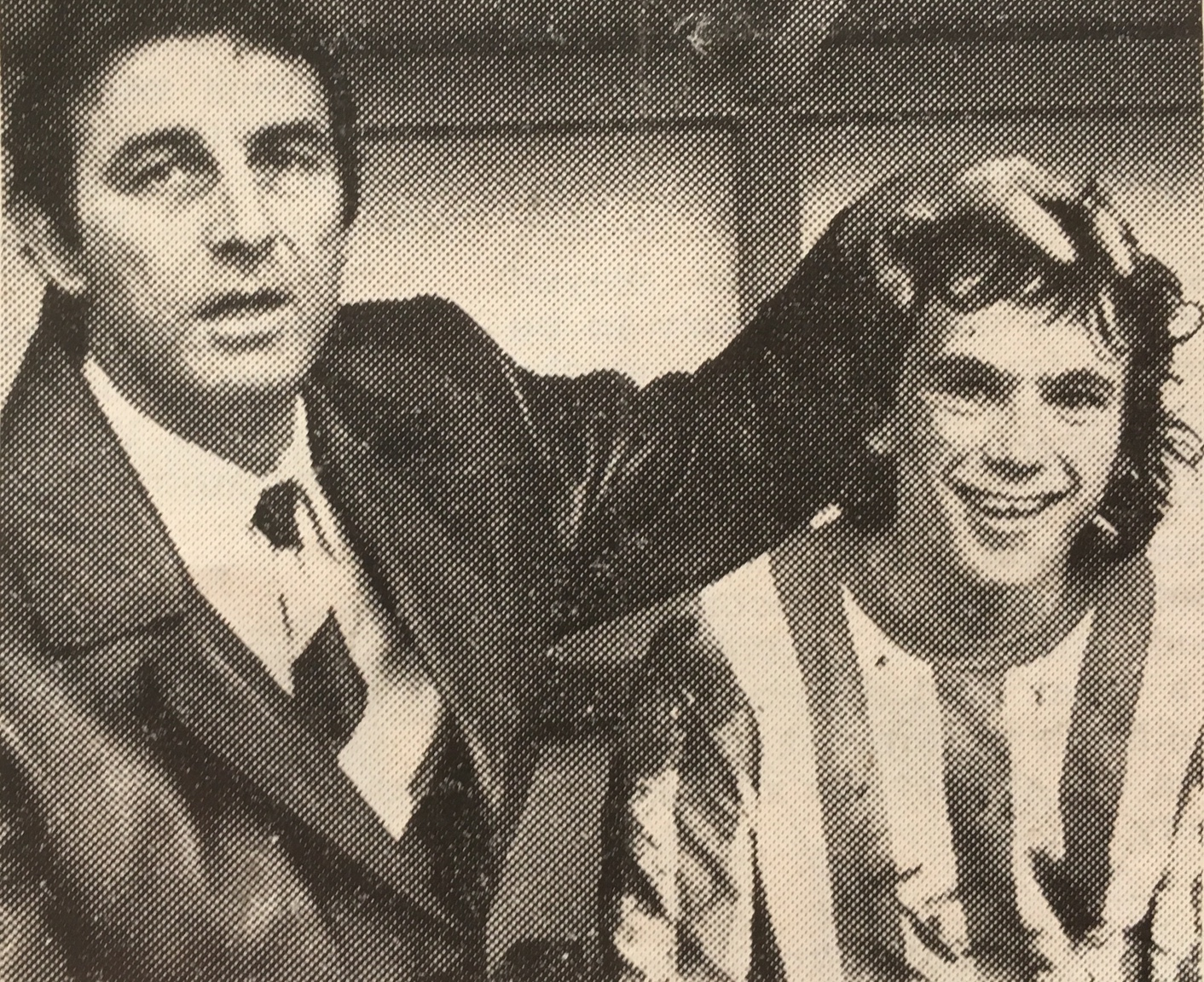
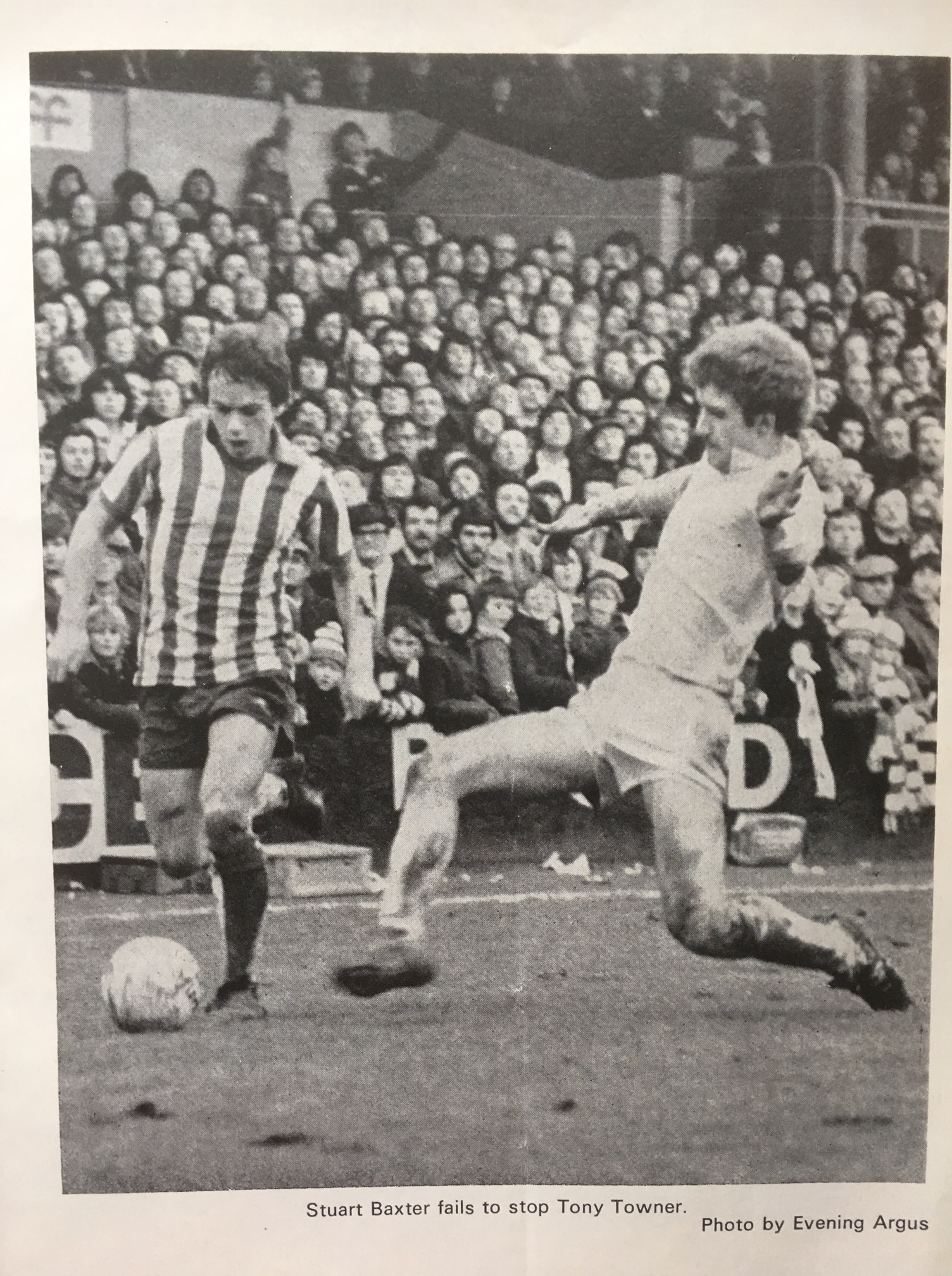
Pictures mainly shot by Evening Argus photographers and then reproduced in the Albion matchday programmes show a happy Towner congratulated by manager Pat Saward after his league debut, in familiar pose taking on a full back, getting in a trademark cross, in full flight on the wing, and finally on a Wolves album sticker.

All-time Albion hero Peter Ward scored inside a minute of debut

ward v bpool

ARMS aloft in familiar salute to yet another goal, the smiling footballer in a black and white picture on a Florida football club’s website dates back 40 years!

All around the world, it seems, Peter Ward’s goalscoring exploits for Brighton & Hove Albion are still the stuff of legend.

Four decades may have come and gone but the memories of this mercurial talent have never dimmed.

FC Tampa Rangers say of their youth coach: “During the 1976–77 season at Brighton, he scored 36 goals, beating the club record and winning him the golden boot.

“He is still revered by Brighton fans who sing a song dreaming of a team in which every player is Peter Ward: ‘We all live in a Wardy Wonderland’.”

If the word legend gets bandied about a little too frequently, where Peter Ward is concerned it is perfectly apt.

1-ward-scoresFew Brighton players have managed to approach the esteem in which this extraordinary talent is held by supporters who saw him score the goals which took the Seagulls from perennial third tier also-rans to a place among the elite.

It takes genuine talent, bravery and skill to score goals at all three levels but Ward delivered. In 220 games for the Albion (plus seven as sub) he scored 95 goals.

In his splendid 2007 book, A Few Good Men (The Breedon Books Publishing Company Limited), Spencer Vignes refers back to 1980 and says of Ward: “No centre forward since has managed to steal his crown. Some have come close – Garry Nelson and Bobby Zamora spring to mind – but Wardy remains special, the golden boy of what proved to be a golden time for the club.”

I was sorry to have missed Ward’s latest return to Brighton when in 2016 he joined some of the Goldstone heroes of the past at the Theatre Royal.

Impishly donning a curly wig on top of his now bald pate to make his grand entrance, Ward showed he’d still got something of the showman about him.

There was never a shortage of superlatives to describe his skills on the pitch. While his dad Colin was a compositor on the Tamworth Herald, his son’s talents with a football filled dozens of column inches in a variety of football publications.

PW green BWAlan Mullery, the manager who benefited most from his audacious skill and compared him to the great Jimmy Greaves, said: “He was just the skinny little kid who could do fantastic things with a football.”

Mullery told Shoot: “Peter has the ability to kill a ball no matter how it comes at him. His pace over short bursts is incredible and he shoots powerfully and accurately with either foot.”

He continued: “Above all else, Peter’s strength on the ball, for a player of his stature, is remarkable. He fools defenders who believe they can easily knock him flying.”

Two of Ward’s former teammates told Vignes what made him so special. “He had this long stride that just seemed to take him away from people,” said Peter O’Sullivan. “One step and he’d be gone. Once he got goal-side of a player, that was it really – bang! Nobody ever seemed to be able to catch him, even in training.”

Brian Horton joined the club around the same time as Ward and said of his younger teammate: “He was this thin, scrawny little player that needed to learn the game, but his finishing was unbelievable, absolutely unbelievable.”

Nottingham Forest fans will have less happy memories of a player the managerial duo of Clough and Taylor took to the City Ground as they strived to replace Garry Birtles and Trevor Francis with any pairing from Ward, Ian Wallace and Justin Fashanu.

It just didn’t work out for Wardy at Forest although he tells Vignes in A Few Good Men: “I had a great time at Forest. I got on well with the lads and had a laugh.”

While he always got on well with Taylor, his relationship with the erratic Clough was a lot stormier which meant he was in and out of the side.

When Lichfield-born Ward left school he was only 4’8” and because he was told he was too small to make a career playing football he got a job as an apprentice fitter at Rolls Royce and played local football in the Derby area.

The detail of those early years can be discovered in Matthew Horner’s excellent biography of Ward (He Shot, He Scored, Sea View Media).

Scout Jim Phelps recommended Ward to the then non-league Burton Albion manager Ken Gutteridge having worked with the freescoring player at a Sunday afternoon side, Borrowash United.

After joining the newly-promoted Brewers initially in the Reserves, the 1974-75 season was only a month old when he made his first team bow alongside former England internationals Frank Wignall and Ian Storey-Moore – and promptly scored a hat-trick in a 4-1 win over Tamworth, his hometown team.

By the middle of November that season, with 10 goals to his name, Ward’s scoring exploits had attracted the attention of league clubs and Brighton boss Peter Taylor, with plenty of contacts in the area, put in a bid.

The Burton chairman, Jim Bradbury, went public on the approach – which Gutteridge found completely unacceptable. He promptly resigned… and before long was appointed to Taylor’s backroom staff!

In the meantime, Burton resisted Brighton’s money and it later emerged that Gutteridge had told Taylor he would only take up the post on condition that Ward would eventually be brought to the Goldstone.

Taylor stuck to his word and eventually signed Ward for £4,000 in the close season of 1975.

The rest, as they say, is history and in researching for this piece it was difficult to sift through the multitude of material from my scrapbooks, programmes, books and other places to condense it all into something manageable.

Because of his popularity, most of the story is familiar to fans of a certain generation anyway and anyone who has not yet read Horner’s book should get themselves a copy because it is rich with material from Ward himself and others who played alongside him or observed him.

Scoring within 50 seconds of his Albion debut away to Hereford United in front of the Match of the Day cameras couldn’t have been a better start and the partnership he struck up with beanpole Ian Mellor was key to promotion from the old Division 3.

For what at times seemed like a fantasy coming to life, it’s intriguing to learn that Ward’s watching of the Bond film The Spy Who Loved Me on the eve of two games was followed the next day by him scoring hat-tricks.

In the 1977-78 season, he saw it before making his England under 21 debut at the Goldstone against Norway in a 6-0 win, and, later the same season, he saw it again before an away game at Mansfield and scored three once again!

It seemed a natural progression that Ward would make it to the full England team and he did eventually – winning one cap for a six-minute substitute appearance against Australia in May 1980.

In fact he made the full England squad three years earlier for a game against Luxembourg but wasn’t involved in the match itself and, by his own admission, reckons he blotted his copybook with manager Ron Greenwood by being ill in the room he shared with Trevor Brooking after going out drinking with Brian Greenhoff.

ward coverIn the way that all good things must come to an end, the beginning of the end of the fairytale came as Albion struggled to come to terms with their first season at the top level.

Ward was certainly not as prolific as he had been lower down the football pyramid although, as reported in my previous blog post, the arrival of Ray Clarke helped him rediscover his form to finish that season as top goalscorer with 17.

However, a return to his Midlands home territory looked increasingly likely. He nearly went to Derby in November 1979 but a swap deal with Gerry Daly fell through, and Forest also wanted him but Clough walked away from the deal.

Eleven months later, though, Clough and Taylor were back in for him when Birtles was sold to Man Utd, paying the Albion £450,000 for his services. Andy Ritchie, being displaced by Birtles’ move to United, promptly replaced Ward at the Albion.

Ward made just 33 appearances for Forest, scoring seven goals, and in 1981-82 went on loan to Seattle Sounders.

In the autumn of 1982, Brighton brought him back to the Goldstone on loan and it was in the fourth game of a 16-game spell that he scored (above) what he considered his favourite goal, the winner against his boyhood idols Manchester United at the Goldstone on 6 November 1982.

Ward was part of the Albion line-up that won that memorable FA Cup fifth round tie at Anfield en route to the 1983 FA Cup Final but it was to prove his penultimate game as the eccentric Clough quashed Ward’s desire to stay with the Seagulls and that potential trip to Wembley.

At that time, Clough’s Forest hadn’t been to a FA Cup Final and he told Ward: “Son, I’ve never been to a Cup Final and neither will you.”

That spelled the end of Ward’s time at the City Ground and by the end of 1983 he was sold to Vancouver Whitecaps for £20,000; the beginning of what became a 13-year career playing mainly indoor football in America, where he still lives.

Pictures from various sources: the matchday programme, Evening Argus and Shoot! / Goal.