Swans and Seagulls trophy wins gave Painter happy memories of Withdean

WHEN the Championship club you play for brings in an established Premier League player with 35 England caps to his name, chances are you’ll realise quite quickly your playing time is going to be limited.

Thus was the situation facing Marcos Painter after he had previously been the established left back in Gus Poyet’s Brighton side.

Born in Solihull on 17 August 1986, Painter was a bright lad at school and acquired nine GCSEs. He grew up supporting Birmingham City and joined the academy when he was just eight.

In 2005, he made it through to the first team group under manager Steve Bruce, playing five Premier League matches and four cup games in his first full season.

It was a similar pattern at the start of the 2006-07 season and, after he’d played only two games by November, Kenny Jackett took him on loan at then League One Swansea City. He played 22 games and two as a sub by the end of a season which saw Swansea just miss out on the play-off places.

Painter’s loan was made permanent in January 2007 and he went on to establish himself as the Swans’ first choice left back, playing 31 games as they romped to the League One Championship under Roberto Martinez in the 2007-08 season.

A former Blue, and briefly a Brighton player, Steve Claridge, wearing his pundit’s hat for The Guardian in October 2007, did a detailed analysis of a player who he said Steve Bruce had “raved about” in terms of his attitude.

“Painter is not overly blessed with natural ability,” said Claridge. “When he was isolated in the final third, one-on-one with an opponent, he struggled to beat him while he must have forgotten to pack his shampoo, so reluctant was he to head the ball.

“In the main, though, he defended well, rarely getting exposed and still finding the time to overlap his winger

“Painter, a Republic of Ireland Under-21 international, might not boast great skill but I like players who think about the game and how best to use the attributes they have, even if they are more limited than others. Making it back to the Premier League, however, might be a step too far.”

Painter continued in the left back spot in Swansea’s Championship side but in October 2008 he sustained a cruciate knee ligament injury to his right knee in a 3-0 win over Southampton, and he was sidelined for the rest of the season.

He returned to first team action for the 2009-10 season but Martinez had departed for Wigan and his successor Paulo Sousa only gave Painter six starts. In January 2010, Brighton stepped in and took him on loan until the end of the season.

He was one of three signings made by Poyet on the same day (Arsenal defender Gavin Hoyte on loan and winger Seb Carole returning were the others) and he wasn’t fazed by Withdean because he’d got happy memories of the place.

“The last time I was there we won the league and were presented with the League One trophy,” he recalled. “I’ve missed a lot of football with a cruciate injury so I’m keen to play as much as I can. Roberto Martinez recommended me but the manager has said there is no extra pressure on me.”

When his two-year deal with Swansea expired in July 2010, he joined Albion permanently on a two-year contract.

Painter was ever-present at left back in the promotion winning team of 2010-11, his total of 54 league and cup appearances being the highest of any in the squad.

Unfortunately, a recurring hamstring injury meant he missed three months of the 2011-12 season, Albion’s first in the Championship, and first at the Amex.
Painter deepPainter managed 22 appearances but Joe Mattock joined on-loan in January 2012 and occupied the left back berth until the end of the season. Prior to that, Romain Vincelot and Gus Poyet’s assistant Mauricio Taricco had slotted in at left back.

Ahead of the 2012-13 season, there was much excitement when Poyet unveiled the signing of Wayne Bridge on a season-long loan from Manchester City.

Painter revealed his feelings in an interview published on BBC Sport when he had a brief return to the first team to replace the injured Bridge.

“Maybe it’s had a good effect on me, not being the number one and having to up my game,” he said. “The manager said to me at the start of the season that Wayne would play but I had to be there to step in.

“He’s been honest and said ‘If you deserve to play, you’ll play’. Wayne will play if he is fit and I accept that. It’s still not a nice feeling but let’s be realistic; he has Premier League and international quality.”

Painter admitted that, on occasions, it was difficult to come to terms with not playing regularly. “It’s horrible,” he said. “That’s one thing when your family play a big part and try and keep your head up.

“When you’re not travelling [to away games] and training with the reserves it’s difficult. You have to try and stay as professional as possible.

“You want to play football or be involved. No player likes to be sitting at home or just trying to keep fit.”

During that final season as an Albion player, Painter had a brief loan spell along the coast at Bournemouth and after he was released by Brighton, he joined Portsmouth in the summer of 2013.

Their manager at the time, Guy Whittingham, told the club website: “Marcos is an experienced player, who has competed at a high level. He’s a good out-and-out defender and we’re pleased he’s come here.

“I think he was impressed with the vision of what we want to achieve here, while we were impressed with his attitude.” Painter said: “I’m used to life down on the south coast and I’m excited to be joining a great club like Pompey, who have such a fantastic fanbase.

“This club is an attractive proposition whatever league they’re in. There’s a lot of work to be done and it’s up to the players to take Pompey back up.

“I enjoy defending and hopefully I’ll be able to use my experience to help the team do well this season.” After his debut resulted in a win over Morecambe, Painter told the club website: “A 3-0 home win and a clean sheet in my first game – it couldn’t have started any better really.

“We moved the ball quickly and penetrated from the wide areas. We’ve got a lot of quality up front and caused them problems.

“The gaffer said that he brought me in to help the side keep clean sheets and we did our job at both ends.”

But he fell out of favour with Whittingham and his injury issues returned before Whittingham’s replacement in the hotseat, former Albion forward Richie Barker, arrived at Fratton Park and restored Painter to the first team. However, he made just 18 appearances for Pompey between August 2013 and February 2014.

Since July 2015, he has been back at his first club, Birmingham, working as an academy coach.

When Albion visited St Andrew’s on 5 April 2016, Painter was interviewed pitchside during the half-time break,  reminiscing about his time with the Seagulls.

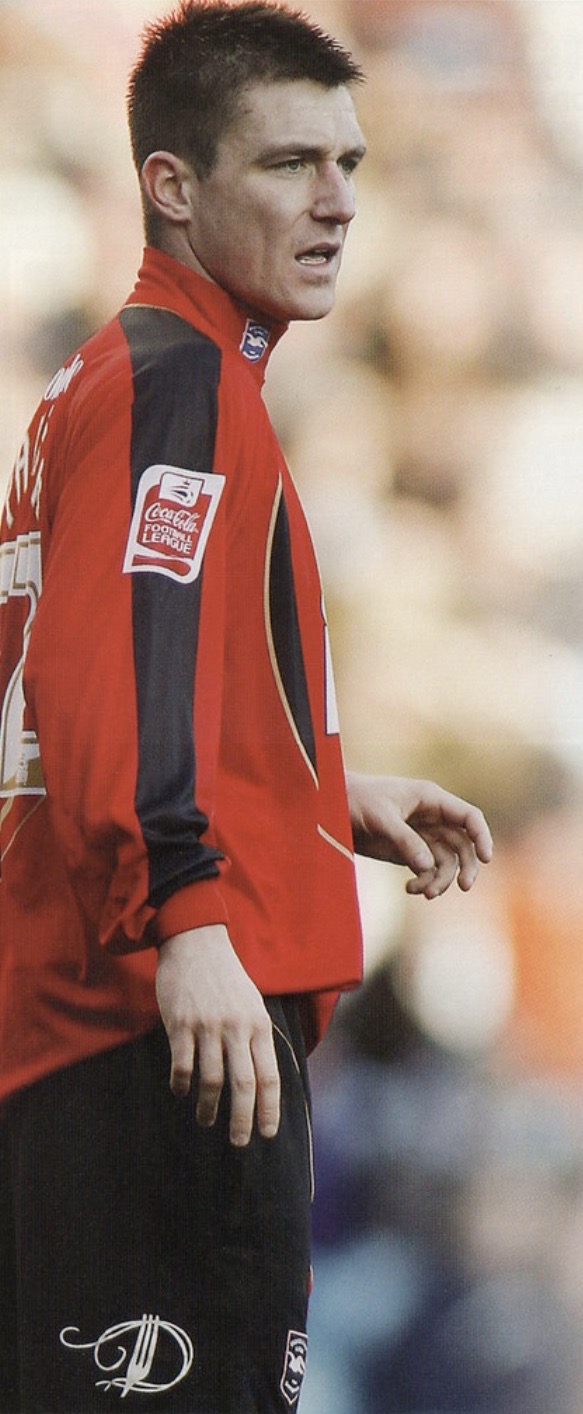
Pictures from my scrapbook show a Simon Dack action picture of Painter from The Argus; a back page headline from The Argus; in the matchday programme, and Joe Pepler’s shot of Painter in Pompey colours (from The News, Portsmouth).

England international Wayne Bridge learned his poker skills at Brighton

Wayne Bridge celebrates scoring for Brighton against Sheffield Wednesday with Liam Bridcutt

IN DEBATES over people’s all time top Albion XI, few would argue the left back spot would belong to Wayne Bridge.

The former England international played 37 games for the Seagulls in the 2012-13 season and showed he was different class to players who’d previously filled that position.

Gus Poyet gave him the chance to play when Manchester City could no longer find a starting place for him, even though they were reportedly paying him £90,000 a week.

It was another former Brighton manager who takes the credit for discovering Bridge and setting him on the path to stardom. That was Micky Adams, a decent left back himself, who in 1994 spotted Bridge playing for Southampton and District Tyro League side Oliver’s Battery, a small parish near Winchester, and recommended him to Adams’ old club, Southampton.

“He was taking the Saints’ School of Excellence at the time and was watching his friend’s son play,” Bridge explained. “He seemed to think I stood out and that was it, I didn’t look back from there. I trained with the club once a week, from there I went on to the schoolboys, then became a YTS.”

Born in Southampton on 5 August 1980, Bridge came through the famed academy at Saints where former Albion right back Stewart Henderson was one of the coaches producing a conveyor belt of stars, including Chris Baird, Gareth Bale, Theo Walcott and Adam Lallana.

Bridge made his reserve team debut for Saints in August 1997, turned professional five months later, and made his first team debut on the opening day of the 1998-99 season. Dave Jones, the manager at the time, converted him from a winger into a full back and, two seasons later, he was Southampton’s player of the year.

Remarkably he played 113 consecutive games between March 2000 and January 2003, and at the end of that season played for Saints in the FA Cup Final at the Millennium Stadium in Cardiff, which they lost to Arsenal.

Just as an aside, I went to that game with my old friend @andrewsetten hobnobbing it in the VIP area with the FA bigwigs and various star players of yesteryear. One abiding memory was seeing that old warhorse of a former England centre half, ex-Saints stopper Dave Watson, queuing up with other lesser lights, including me, to get Trevor Brooking’s autograph for his son!

Four years later, Bridge did collect a winners’ medal as part of the Chelsea side who beat Manchester United 1-0 in the first Cup Final back at the rebuilt Wembley Stadium, and a League Cup winners’ medal in a 2-1 win over Arsenal.

Bridge had joined Chelsea for £7million at the end of 2003. In Chelsea’s Premier League-winning 2005-06 season, Spaniard Asier del Horno was the first choice left back and Bridge was loaned out to Fulham.

When Chelsea brought in Ashley Cole for the 2006-07 season, he was understandably first choice but Bridge got his chance to get games under his belt when Cole was injured.

His Stamford Bridge career came to an end after six years, largely to do with off-field matters luridly reported at the time, allegedly involving his former girlfriend and Chelsea captain John Terry.

On the pitch, it was more to do with Cole being the established first team choice at left back.

Although generally also considered as a deputy for Cole at international level, Bridge nevertheless earned 36 caps for his country.

Sven-Göran Eriksson gave him his first cap against the Netherlands in February 2002 and he was part of the set-up on and off for seven years, announcing his retirement following the allegations involving the then England captain Terry.

It was Mark Hughes who took Bridge to Manchester City in 2009 for a reported £12m fee but, only a year later, with Roberto Mancini having taken over in the manager’s chair, he preferred Aleksandar Kolorov or Gael Clichy at left back, and Bridge was once again on the fringes.

He went to West Ham for half a season, playing 18 games for them in 2011, and the following season had a similar length spell at Sunderland.

Then, to the delight of Brighton manager Gus Poyet and the Brighton faithful, somehow or another a deal was worked out to bring Bridge to Brighton for the 2012-13 season.

At the time, Poyet told the club website: “It’s difficult to say how happy I am because it’s not easy to get top-class players.

“I’m absolutely delighted to have Wayne with us. He’s been one of the top three left-backs in this country for many years.

“There were a lot of things that had to come together to make it happen. Firstly, David Platt has been great at Manchester City, and then Wayne and his agent have helped a lot too.

“It was not an easy one to secure, but this is what we want at this club. He’s a quality player with lots of international experience.”

During his season with Brighton he made his 400th club career appearance. It came in the 2-2 draw away to Birmingham in January 2013 and he celebrated with a great cross for David López to volley past on-loan goalkeeper Jack Butland to put the Seagulls 2-1 up.

In a programme feature on Bridge, he spoke of how much he was enjoying playing for the Seagulls, and at the Amex: “The fans here have been terrific. I like stepping out on that pitch; it’s a great surface and a great atmosphere,” he said.

After Bridge returned to the side following an absence with a calf injury, and kept Palace widemen Wilfried Zaha and Yannick Bolasie quiet in the Albion’s 3-0 home win, Poyet was in typically ebullient form when he told the Argus: “Sometimes I need people to stop me, calm down, relax and look back three years ago at where we were, the kind of football we were playing, the players who were at this football club and that are here now.

“If, three-and-a-half years ago you had said to me Wayne Bridge was going to be playing for Brighton I’d have said, ‘yeah funny’, but he is.”

It’s recent enough history for everyone to remember the painful play-off finish to that season, ending too Poyet’s time as manager. Nevertheless, Bridge told The Independent on 19 May 2013: “Brighton have been great to me. I just want to say a big thank you to the chairman and the fans. Gus has revitalised my love for football after I was in the wilderness at Manchester City.

“He got me to focus and enjoy my football. He is a top-class manager both tactically and on the man-management side, one of the best I have worked with. I hope he and Brighton can get their problems sorted.”

Although it was reported Brighton wanted to sign him permanently for the 2013-14 season, I have it on good authority they knowingly “dodged a bullet” because there were doubts about his fitness and, so it proved, because when he went to Reading instead he managed only 12 games in the whole of the season before deciding to retire.

One of the more leisurely pursuits Bridge has taken up since retiring is playing poker, and it was interesting to read that his thirst for it was developed while at Brighton – but not from the chairman!

In April this year, he spoke to PokerStars about the card school operated on the players’ coach and in hotels during away games.

Bridge said that his toughest opponent was David López because he was hard to read and spoke Spanish, “so you never knew what he was saying”. The biggest fish in the game was Adam El-Abd because “you always knew when he had a good hand”.

In retirement, of course, Bridge has not exactly drifted into obscurity, bearing in mind he married The Saturdays singer, Frankie Sandford, and in 2016 was a contestant in I’m A Celebrity Get Me Out of Here.

In an article published on squawka.com earlier this month, Bridge told Planet Football: “Even I pinch myself at the career I had and the money you can earn, but I almost find it embarrassing to talk about.”

main Bridge in 03 CF prog w Beattie

Main picture, from the 2003 FA Cup Final programme, shows a young Bridge with teammate James Beattie; and (below) online images of him variously in Chelsea, Manchester City, Sunderland and England colours; an Argus shot of him in Albion’s stripes, and a Guardian headline on his retirement.


Dennis Burnett – England World Cup trio’s teammate – added finesse to Brighton’s defence

1newhamrecorder.co.uk

WITH all due respect to his predecessors in the number 6 shirt, Dennis Burnett was a classy addition to Brighton’s defence when he signed from Hull City in 1975.

At the end of his first season with Brighton, when they toyed with promotion from Division 3 but just missed out, Burnett was selected in the PFA Third Division Team of the Year, which said everything about his stature amongst his fellow professionals. Albion’s Peter O’Sullivan was also selected while the goalkeeper was Eric Steele, then with Peterborough, and Crystal Palace winger, and, future Brighton manager, Peter Taylor, was also in the XI.

Before 1975, Brighton fans had been used to seeing their centre halves hoof it, but Burnett play more in the style of another famous former West Ham number 6. OK, he might never have reached Bobby Moore’s level but he played alongside the great man for a while and came through the ranks at West Ham when they had a reputation for playing cultured football.

He started off in the West Ham youth team and was in the 1963 FA Youth Cup winning side alongside the likes of Harry Redknapp, Clive Charles, Bobby Howe and John Sissons.

Burnett made his first team debut for the Hammers as a 21-year-old in October 1965, along with Jimmy Bloomfield (the future Orient and Leicester manager), in a 3-0 defeat to Fulham at Craven Cottage. He made 24 league appearances in 1965-66, the most he managed in any one season for the Hammers.

In March 1966, he collected a League Cup runners-up medal playing right back in a side that lost 5-3 over two legs to West Brom. The team was captained by Bobby Moore, and included Martin Peters and Geoff Hurst, just four months before all three played in England’s one and only World Cup win.

Burnett went on to complete 66 league and cup appearances for West Ham.

Born in Southwark on 27 September 1944, perhaps it was no surprise his next stop was Millwall. West Ham sold him to The Lions in 1967 for £15,000, and the vast majority of his football career was spent at The Den, playing in the second tier.

Playing alongside Barry Kitchener at centre half and Harry Cripps at left back, he was part of a team that nearly made it to the First Division, particularly in 1971-72.

In a scene you would never get now in the mobile phone age, Millwall were leading Preston at home and the word went round The Den that rivals for promotion Birmingham were losing at Sheffield Wednesday. It looked like Millwall would be promoted to the elite for the first time in their history and the news spread to the players on the pitch.

Unfortunately, the rumour was completely wrong. Birmingham were leading, not losing. Club skipper Cripps had even gone round the Preston players telling them Millwall were going up but level-headed Burnett didn’t get carried away.

millwall-history.org records: On-the-field skipper Dennis Burnett was less convinced. “I wasn’t going to believe it until I knew for sure,” he said. “Those last few minutes were agonising. We played on in a dream. It was the longest 20 minutes ever for me.”

As the end of the game approached, the crowd jammed the touchline, waiting to cheer off the Millwall players. The pressure behind Millwall’s goal was so great that the woodwork began to buckle.
Centre-forward Barry Bridges
(who would join Brighton five months later) ran back to appeal to the fans to be patient. When the referee blew for the last time – suspiciously early – half the 20,000 crowd stormed on to the pitch. Cripps was carried aloft and some of the other players lost their shirts.

Finally the correct score from Hillsborough was announced and the crowd fell silent and faded away.

The following season, Millwall struggled near the bottom of the table and manager Benny Fenton moved Burnett into midfield.

“As a sweeper I was a bit restricted,” he told Goal’s Ray Bradley, who described him as “one of the most accomplished and stylish players outside the First Division”.

“I had to stay back and wasn’t so involved,” said Burnett. “ Now I find I can express myself more and go up in support of the attack.”

Unlike his illustrious former Hammers teammates, full international recognition eluded him but in April 1973 Burnett was part of an English FA squad managed by Sir Alf Ramsey that thrashed Gibraltar 9-0 in a ‘friendly’. Frank Worthington (of Leicester at the time) scored a hat-trick.

Hankering for another shot at top division football, Burnett went on to the transfer list at The Den. He got his move, but only to a club in the same division.

After clocking up 257 appearances for Millwall, in 1974, Terry Neill paid £80,000 to take Burnett to Hull City, where a young Stuart Pearson, future West Ham, Man Utd and England international was making a name for himself.

However, when Neill left to become manager of Spurs, his replacement John Kaye brought in his own man while Burnett was out of the side suspended. After losing his place, Burnett had a brief loan spell back at Millwall.

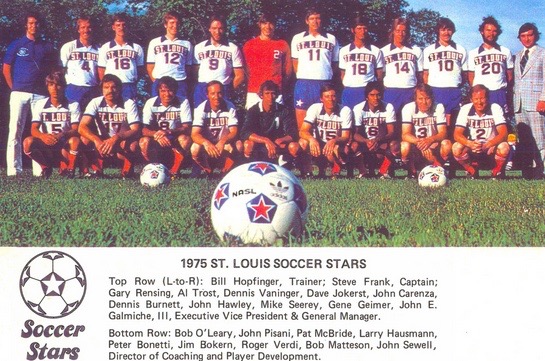
During the summer of 1975, he played 21 games in the States with St Louis Stars (for whom former Chelsea and England goalkeeper Peter Bonetti was playing) before Brighton manager Peter Taylor secured his services for the Seagulls.

In an article in Shoot incorporating Goal, Burnett explained how, although he’d been sidelined for two months with an ankle ligament injury, he’d got back in the side only to be sent off in a game away to Bristol City.

“It was a most unjust decision. Even the opposition seemed flabbergasted,” he said. “Anyway, I never played for Hull again. The signing of Dave Roberts from Oxford United put paid to my chances of a first team recall, following my suspension.

“Eventually, manager John Kaye called me into his office and asked if I wanted a move. A price of £30,000 was put on my head, later reduced to £15,000. No one came for me so in April I went to the United States and played for St Louis Stars in Missouri, a North American Soccer League club.

“While there I received another contract from Hull City, which I refused to sign. I lodged an appeal against it to the Football League Management Committee. Surprisingly they upheld it, and, during July, I received a letter to say I’d been given a free transfer.

“I arrived back in England on August 24th, made and received a number of ‘phone calls which resulted in my being offered a three-year contract by Brighton, plus excellent wages, which at the age of 31 was fantastic for me,

“Added to all this is the potential of Brighton in terms of location, players and attendances. It was a move not to be resisted.”

Burnett told the magazine he felt Brighton were much better prepared for promotion than Millwall had been. “Had we gone up, we would have needed a miracle to survive in the First,” he said. “At Brighton, we are winning matches without being fully stretched. The right blend is there and we can only get better.

“If I look after myself, I can get through another four or five seasons, by which time Brighton could be up amongst the big boys.”

Burnett was obviously a good judge because Brighton certainly got themselves up amongst the ‘big boys’ four years later – although by then he was no longer a part of it.

After a successful first season in which he developed a formidable central defensive partnership with Andy Rollings, and earned that placed in the PFA team of the year, perhaps there were signs that age was catching up with him.

In his end of season review in the Evening Argus, Albion reporter John Vinicombe observed: “Over the course of the season, the most improved player was Andy Rollings who profited by the experience of Dennis Burnett at his elbow.

“There were times when Burnett looked unflappable in the centre of the defence. As time wore on, and situations became more frenetic, that casual style, no doubt a legacy of his West Ham upbringing, now and again landed him in trouble.”

Maybe manager Taylor thought the same because one of the last things he did before quitting and rejoining Brian Clough was to sign veteran defender Graham Cross, which spelled trouble for Burnett.

Under new manager Alan Mullery, in the league at least, Cross was preferred alongside Rollings. Burnett deputised for Rollings when he was injured – for example, he played alongside Cross in the memorable 7-2 demolition of York City – and was given some games in midfield, but mainly in the League Cup he got the chance to shine.

He played in memorable games against First Division opponents Ipswich, West Brom and Derby, and was assured alongside Cross in the memorable narrow 2-1 defeat at the Baseball Ground in November 1976.

Vinicombe reported: “Cross and Burnett played coolly and neither looked out of place among the high-priced cream.”

He kept his place for a league game away to Port Vale five days later, but that 2-2 draw was his last in an Albion shirt.

In early February 1977, together with ex-Spur Phil Beal, he agreed a pay-off with the club and played non league with Ilford for the remainder of the season before returning to the States and another 19 games for St Louis Stars, where he was joined by former Albion teammate Fred Binney.

Mullery explained several years later in his autobiography that he had inherited a squad of 36 professionals and needed to prune the numbers. The older players were the obvious ones to go and, although Beal and Burnett went quietly, he had more truck dispensing with Joe Kinnear’s services – but that’s a story for another day.

On his return to these shores, Burnett headed for Ireland to play for Shamrock Rovers, at that time managed by the legendary Johnny Giles.

The defender subsequently played for three years in Norway, for SK Haugar, and popped up back in Sussex in 1994 as assistant manager of Sussex County League side Lancing, and played in a 2-1 defeat against Horsham YMCA in the FA Cup a month before his 50th birthday!

According to Wikipedia, Burnett ran a painting and decorating business in Sussex after he left football and was working in the hospitality suites at Upton Park before West Ham moved to the Olympic Stadium.

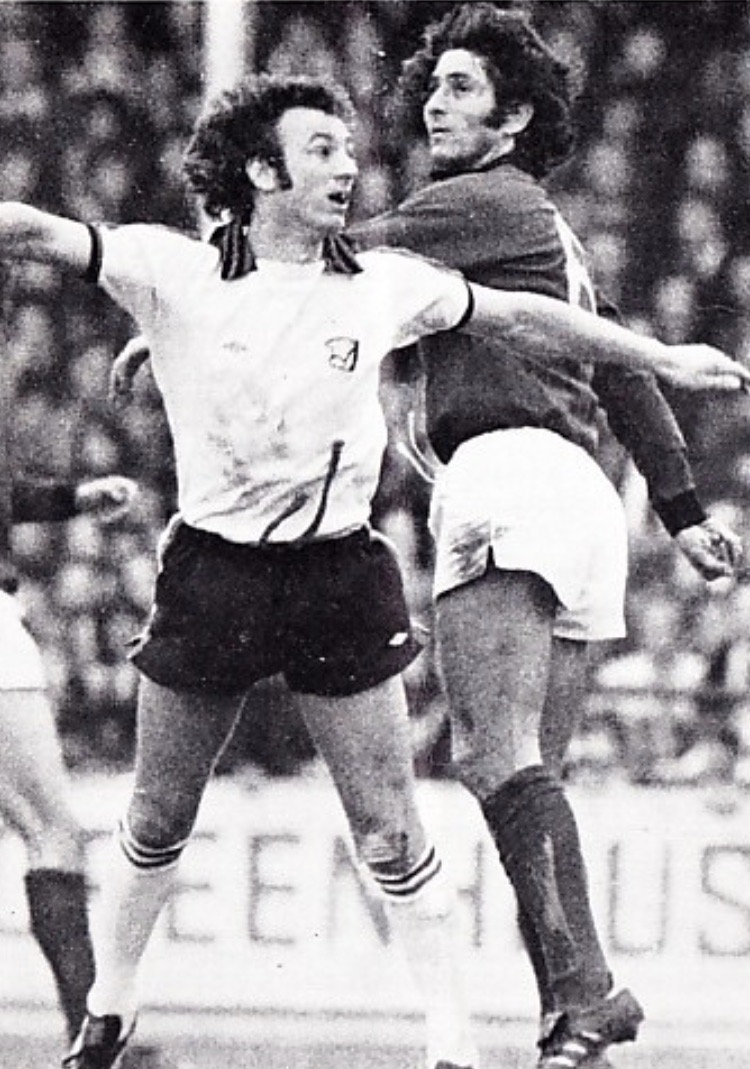
Pictured above are a Newham Recorder shot of Burnett in West Ham colours; in action for Millwall (from Goal), and in Albion’s stripes (from Shoot!). Below, an archive shot of the St Louis Stars side of 1975 with Burnett in the back row wearing the 18 shirt and Peter Bonetti in the centre of the front row.

back row burnett

Wing wizard Mickey Thomas suffered the blues at Everton and Brighton

TRICKY Mickey Thomas was nothing but trouble in nine months as a Brighton player – and it wasn’t much better at his previous employers, Everton, either.

The diminutive Welsh wing wizard had a sweet left foot and no little skill on the ball but he also had a self-destruct button that he pressed on numerous occasions.

Born in Mochdre, Conwy, in north Wales, on 7 July 1954, Thomas was on the books of nearby Wrexham at the age of 15 and made his first team debut when just 17, under manager John Neal.

Over the next six years, he made 230 appearances for Wrexham and scored 33 goals before making what one would imagine must have been a dream £300,000 move to Manchester United in 1978. He had already made his debut for the Welsh national team, in 1976, and in 10 years accumulated 51 caps.

Thomas played a total of 110 games for United, and scored 15 times along the way, including being a runner up in the 1979 FA Cup Final against Arsenal, but, he revealed in his autobiography Kickups, Hiccups, Lockups that he struggled with the pressure.

“I was like a startled rabbit in the Old Trafford headlights,” he said. “I always played well within myself. There was a lot more pressure than I could have ever imagined, especially in front of the home supporters, even though I knew they loved me.

“Sometimes it was too much to bear. I felt fear. Fear of not being the person I was at Wrexham. Gone was the happy-go-lucky lad and I knew he wouldn’t come back while I was at United. I didn’t feel as though I deserved to be a Manchester United player.”

He said it would take two bottles of wine the night before a match to help ease his nerves. “I was playing in front of 50,000 United fans and I was desperate to please them. In the end the pressure brought me down and I walked out.”

There was some degree of mystery exactly why he left Old Trafford in August 1981 (the Argus reported on 4 February 1982: “It wasn’t a gambling debt but Thomas needed the cash fast, and a move was the only answer”).

Moving to his boyhood favourite team, Everton, was, on the face it, a perfect next step but it didn’t take long for the move to turn sour.

After a bright 11-game start, he sustained a hamstring injury which sidelined him for several weeks. When fit again, he’d only trained for two days and expected to be restored to the first team. Manager Howard Kendall wanted him to prove his fitness in the reserves first – but Thomas refused to play.

Kendall said: “I put a high regard on discipline. I couldn’t let Thomas get away with refusing to play for the reserves.” He was fined two weeks’ wages with Kendall adding: “The whole club and all the fundamentals I believe in would have gone out of the window if I had let him get away with it.”

The hoped-for first team return never happened because Brighton manager Mike Bailey stepped in and snapped him up for £350,000 – on a four-year contract.

Bailey said in his programme notes: “The signing of Mickey Thomas was a significant move….it was no secret that I had been looking for a left-sided player and I had made an approach for Mickey in the summer before he moved from Manchester United to Everton.

“I am now confident that we have the depth of squad we need to continue our progress and now we are all together we will work to improve in both our teamwork and individually. We have the competition we want for places and the whole squad is aware of what we are trying to achieve.”

Three months later the manager was making completely different noises.

Thomas made an impressive cameo debut performance for the Seagulls as a substitute in a 1-1 draw with Birmingham. Blues midfielder and future Albion player Alan Curbishley made a hash of a back pass that enabled Michael Robinson to seize the chance to equalise for Albion.

The Sunday People reported: “Brighton cast new signing Mickey Thomas into a crazy, helter skelter 23 minute debut. And within seconds of his going on as a substitute, patched-up Birmingham cracked under the pressure.”

And the Sunday Express added: “Thomas, a £350,000 signing from Everton, came on as a substitute for Andy Ritchie and eight minutes from time he was floored in the box. But despite protests from the Brighton players, referee Colin Downey refused a penalty.”

Thomas made his full debut in a 2-2 draw at home to Notts County and kept the shirt for 12 games, getting on the scoresheet in a 3-1 FA Cup 3rd round game in which opposition full-back Graham Pearce did so well that Bailey promptly signed him.

It would later emerge, however, that Thomas’ 20-year-old wife, Debbie, had been unable to settle in Sussex – the word was that she gave it only five days, living in a property at Telscombe Cliffs – and had gone back to Colwyn Bay with their baby son.

Thomas meanwhile stayed at the Courtlands Hotel in Hove and the club bent over backwards to give him extra time off so he could travel to and from north Wales. But he began to return late or go missing from training.

Stories abounded across the press and in a candid interview with the Argus, Thomas admitted: “My wife will never live in Brighton, and I can see her point of view. All our roots are up north.

“Everything is fine in our marriage, but I want to be with Debbie and see our little son grow up. I just can’t settle down at Brighton.

“It’s a marvellous club but it’s in the wrong place. If it was up here, I would be the happiest player in Britain.

“My dream club was Everton, but things didn’t work out there, although I don’t think it was my fault.

“I was more or less shoved down to Brighton and really Debbie and I should have been given another couple of days before making up our minds.

“The signing was done in too much of a hurry, so I could turn out in the next match.”

Bailey was incandescent with rage and after the third occasion that he went missing, declared: “”Thomas has s*** on us….the sooner the boy leaves, the better.”

Thomas claimed he had a bad back “probably caused by all the travelling I’ve been doing the length of the country.

“I’m sick of everything. I’m made out to be a bad boy, but I’m not. I’ve got a genuine reason for this problem and people know what it is.

“The strain of the whole business on myself and my family has been immense. People don’t realise what I’ve been going through – it’s been an absolute nightmare.”

When he went missing again and was fined another fortnight’s wages, Bailey once again went on the front foot and told John Vinicombe: “He came in and trained which allowed him to play for Wales.

“He is just using us, and yet I might have played him against Wolves. Thomas is his own worst enemy and I stand by what I’ve said before – the sooner he goes the better.”

At one point in March it was hoped a swap deal could be worked out that would have brought England winger Peter Barnes to the Goldstone from Leeds, but they weren’t interested and so the saga dragged out to the end of the season.

Thomas was ‘shop windowed’ in the final two games and during the close season was sold to Stoke City for £200,000.

Unfortunately for Albion, it was only a matter of months before Thomas came back to haunt them again. Away to Stoke on 16 October 1982, the game was only four minutes old when Thomas seized on a Sammy McIlroy pass to put the Potters a goal up. Mark Chamberlain, who would have a spell at Brighton several years later, scored a second and McIlroy added a third as the Seagulls lost 3-0.

It was with some relief that Thomas left the field with a gashed ankle with 19 minutes remaining.

Tony Lamb in the Sunday People said Thomas had “mesmerised” Albion and added: “The little Welshman gave one of those brilliant all-action performances that used to delight the fans in his days with Manchester United before his unhappy stay in the south.”

Based closer to home, Thomas did indeed hit some of the form he had previously shown, scoring 22 times in 122 appearances for Stoke.

His old Wrexham manager, John Neal, had taken the reins at then Division 2 Chelsea, and, in January 1984, Thomas headed to London and clocked up 44 appearances for them, also weighing in with nine goals.

After John Hollins took over, though, he was sold to West Brom for £100,000 but he only made 20 appearances for the Baggies. He played nine games on loan to Derby and then tried his luck in the United States, spending two years with Wichita Wings.

Back in the UK, he had spells with Shrewsbury Town and, ironically, Leeds.

In an interview with respected football writer Henry Winter, in 2008, Thomas told him: “Howard Wilkinson paid me the biggest compliment when I signed for Leeds at 36. He said, ‘I’ve done my homework, you’re a player I’ve always admired, and I talked to Dave Sexton and he said, ‘Just get him on the pitch and he’ll be fine. Off it, I’m not sure what you can do with him’.’’

After helping Leeds win promotion, he went back for a second spell at Stoke City, and earned the player of the year award.

In 1991 he made another return journey, and went back to where it had started – Wrexham – during which time, at the age of 37, he memorably scored an oft-televised free kick when the mighty Arsenal were beaten in the FA Cup by the Welsh minnows.

Remarkably, considering the troubles he had along the way, by the time he hung up his boots professionally, he had amassed 727 appearances and scored 92 goals.

After his football career was finished, he was back in the headlines for involvement in counterfeit currency and was sentenced to an 18-month jail term in 1993.

“Prison taught me a lot,” he told Winter in that 2008 interview. “It taught me to sleep with one eye open! It gave me the confidence I’d lacked. I had to be sure of myself. It taught me not to trust anyone any more, to choose my friends carefully.’’

Now Thomas pops up as an analyst on Manchester United matches and is on the after dinner speaker circuit.

Further reading: Kickups, Hiccups, Lockups – The Autobiography by Mickey Thomas (Century).

1 thomas headline
2 Thomas on pitch
Mickey T one
4 Thomas (Stoke)

Pictures show a News of the World article summing up his time at Brighton; Thomas on his full Albion debut against Notts County; an action shot from the Albion matchday programme, and in Stoke City’s colours.