
 TOUGH-TACKLING midfielder Bobby Smith made more than 200 appearances for Manchester United’s reserve side.
He played alongside emerging talents such as George Best and Nobby Stiles but wasn’t able to follow them in making the step up to the first team.
Like many before and since, he had to look elsewhere to establish a career in the game, and 85 of his 307 senior career appearances came in the colours of Brighton & Hove Albion, the fourth of seven clubs he served as a player.
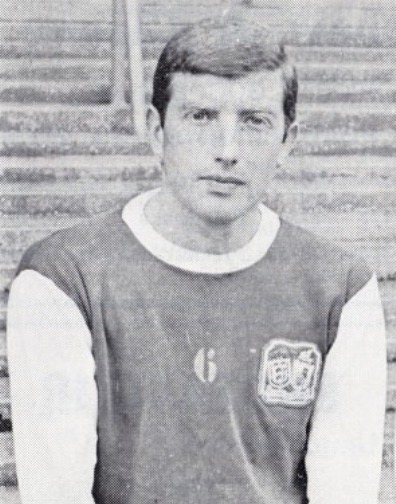

Smith stayed in the game as a manager and coach for 26 years after hanging up his boots, his most notable achievement coming in December 1979 as boss of Third Division Swindon Town when they overcame the mighty Arsenal in a thrilling League Cup quarter final.
Born in Prestbury, Cheshire, on 14 March 1944, Smith won six England Schoolboys (under 15s) caps, playing right-half with future World Cup winner Martin Peters playing on the left.
He went on to win two England Youth caps: on 9 March 1961, he was in an England side (which also included John Jackson in goal and future Luton and Spurs boss David Pleat) that lost 1-0 to the Netherlands in Utrecht and three days later was again on the losing side, this time 2-0, to West Germany in Flensburg, when teammates included John Milkins, Portsmouth’s ‘keeper for many years, and striker John O’Rourke, who played for various clubs. Smith turned professional with United the following month.

I’ve discovered an old programme (above) for a Man Utd reserve fixture against West Brom during that era. It shows Smith alongside Wilf Tranter (who also later played for Brighton, and was Smith’s assistant manager at Swindon), Nobby Stiles in midfield, and George Best on the left wing.
In 1964, when a first team call-up continued to elude Smith, he lowered his sights and went to play for a former United colleague at Scunthorpe United. That colleague was Freddie Goodwin who would later be his manager at Brighton as well.
At Scunthorpe, Smith finally saw league action and played 87 games in two seasons before being transferred for £8,000 to Grimsby Town. In two years with the Mariners, he played 56 games before joining the Albion in June 1968.
My distant memory of Smith was of a tough-tackling midfielder who was in the shadow of the likes of Nobby Lawton and Dave Turner when it came to his popularity with supporters. And manager Goodwin hit back strongly when a section of fans voiced their disapproval of the player.
Smith scored the only goal of the game after only 50 seconds away to Stockport County on 23 January 1970, but in the previous home game (a 2-1 win over Bradford City) there had been a few shouts from the terraces in Smith’s direction.
In his weekly article for the Brighton and Hove Herald, Goodwin said: “I was most disappointed to hear certain sections of the crowd getting at Bobby Smith.

“He has done nothing to warrant this behaviour. He is a 90-minute aggressive player and his value to the team lies in his ability to win the ball from the opposition.
“He is well aware of his limitations as a player, but there is no-one who can accuse him of ever giving less than 100 per cent.
“This sort of behaviour by a small minority of spectators does nothing to help the team or the individual players.

“Any player who takes the field as a representative of Brighton and Hove Albion does so because he has been selected for the team by me.
“It is my responsibility that a player represents the Albion. So, to barrack any player is most unfair to him.”

His 85 games for the Albion came across three seasons: 33 in 1968-69 and 26 in each of the following two seasons. Goodwin’s successor, Pat Saward, released him at the end of the 1970-71 season, and, in June 1971, he went on a free transfer to Chester City.
After only four months in the North West, he switched to the North East, joining Hartlepool United, initially on loan. Over two years, in which Len Ashurst’s side only just avoided the old re-election places, Smith played in 76 matches before moving on to Bury in August 1973. He signed as a player-coach but didn’t feature in the league side, instead taking over as manager – aged only 29 – from Allan Brown in December 1973.
It was the start of a coaching and managerial career that would span more than a quarter of a century.
He took Bury to promotion from the fourth tier by the end of that 1973-74 season, and remained in charge for just under four years, He was at the helm for a total of 215 games; the record books showing he achieved a 41.9 per cent win rate.
A six-month stint followed at Port Vale, between November 1977 and May 1978, but, of his 33 games in charge, he only presided over six wins (there were 14 draws and 13 defeats).
Swindon paid £10,000 compensation to lure him to the County Ground, where, as mentioned, his assistant manager was the aforementioned Tranter.
The official Swindon website remembered: “Despite being a relatively young manager, he guided Swindon to a promotion challenge in his first season in charge – missing out by three points, after losing the last two games of the season.”
Part of the secret had been Smith’s signing of strikers Andy Rowland and Alan Mayes.
 Smith (far right) as manager of Swindon, with Tranter (far left), Chris Kamara (circled back row) and skipper Ray McHale (centre front row).
His major achievement came the following year, when Town beat Arsenal 4-3 in a replay to reach the League Cup semi-final.
When one considers the size of League Cup game crowds now, it seems extraordinary to discover around 7,000 Swindon fans (in a gate of 38,024) had made the trip to Highbury for the initial tie, which finished 1-1.
The Gunners had famously lost to lowly Swindon in the 1969 League Cup Final at Wembley, so the humble Wiltshire club smelled history repeating itself.
In the replay, with 21,795 packed into the County Ground, Steve Walford and John Hollins scored own goals and future Brighton manager Liam Brady scored twice for Arsenal. One of the key players for Swindon was future Sky Sports reporter Chris Kamara.
Striker Rowland, who scored an extra time winner, relived the momentous occasion in an interview with SwindonWebTV.

Unsurprisingly, the giant killing attracted plenty of media attention and Smith was interviewed live on Football Focus by presenter Bob Wilson.
Smith pointed out that his side had been well grounded and, after the initial draw against Arsenal, had thumped his old club Bury 8-0, equalling Swindon’s biggest winning margin in a league game. Amongst the scorers were Rowland and Billy Tucker – two of four ex-Bury players in Swindon’s starting line-up. Another was Brian Williams – Bury’s youngest ever player – and one of the other goalscorers, Ray McHale, (later to play for Brighton in the top division) went on to have a loan spell at Gigg Lane later in his career.
The Robins beat top-flight opponents Wolverhampton Wanderers 2-1 at home in the first leg of the semi-final but went down 3-1 at Molineux in controversial circumstances, Wolves scoring the decisive goal five minutes from the end.
“We were so unfortunate because Wolves should have been down to 10 men,” Kamara told the Swindon Advertiser. “Alan Mayes got hit by the goalkeeper (Paul Bradshaw). He came out of his goal, didn’t get anywhere near the ball and he clattered Alan and broke his two front teeth and his nose but didn’t get sent off.
“I know everyone looks at situations and says ‘You were unlucky’ but that was a turning point in the game, and we ended up losing.”
It later emerged that the tie could have had a dramatic impact on Kamara’s playing career. In a 2010 interview with FourFourTwo magazine, he explained how he was once on Manchester United’s radar during Ron Atkinson’s reign.
“I was at Swindon and my manager Bobby Smith said, ‘Big Ron’s coming to watch you.’ We were playing in the 1980 semi-final of the League Cup against Wolves, but I had the ’flu and didn’t play so well. I’m not saying that’s the reason he didn’t sign me, but Ron went back to his old club, West Brom, and signed Remi Moses instead.”
With the benefit of hindsight, the cup run took its toll on the Swindon side. Before the semi, they were just five points from a promotion place, with four games in hand. But only five of their last 18 games were won, and they lost nine away games on the trot, resulting in a disappointing 10th place finish.
Smith had spent large – by Swindon’s standards – including £250,000 on two players, David Peach and Glenn Cockerill, both of whom never fitted in at the club.
When Swindon lost their first five matches of the 1980-81 season, Smith was relieved of his duties.
He later took charge at Newport County and Swansea City, as well as coaching at the Swans, Blackpool, Cardiff City, and Sheffield Wednesday, together with a spell as assistant manager of Hereford United.
He was assistant manager to Frank Burrows at the Vetch Field but when the chairman at the time announced his intention to sell up, and no funds were being made available for new players, Burrows left of his own accord and Smith became caretaker manager.
Contributor Colin_swansea, on the fans website scfc2.co.uk, observed: “After Tosh left we had caretakers Doug Livermore for 30 days, Les Chappell for 23 days prior to Tosh returning, and after Tosh had left for a second time on the 5th March 1984 Les returned as caretaker until the end of the season.
“Our manager’s position was even more farcical after Frankie Burrows left with his assistant Bobby Smith taking over until a bust up during the Xmas period when Doug Sharp wouldn’t sanction the buying of rubber studded boots to combat the winter conditions.

“Smith left on 22 December 1995, Jimmy Rimmer was caretaker to 7 February 1996, Kevin Cullis became manager for a week, a two-game spell of two defeats, Rimmer returned for eight days as caretaker, before Jan Molby’s appointment on 22 February 1996. Molby’s replacement as manager on 9 October 1997 was Micky Adams who lasted 13 days and three league defeats with his assistant Alan Cork taking over until the end of the season.
“Cork didn’t fit the profile for the club’s new owners, Silver Shield, and he was offloaded at the end of the season. Ironically his successor, John Hollins, didn’t sign one player the following season when the club reached the play offs.
“Never a dull moment being manager of the Swans during the 80s and 90s!”
 SELDOM in his remarkable 29-club career did Trevor Benjamin enjoy such a successful spell as the 10 games he spent on loan at Brighton.

 “The conditions were terrible and both sides had to work hard to beat the elements. But I think our quality shone through on the night.” (Leicester won 1-0).


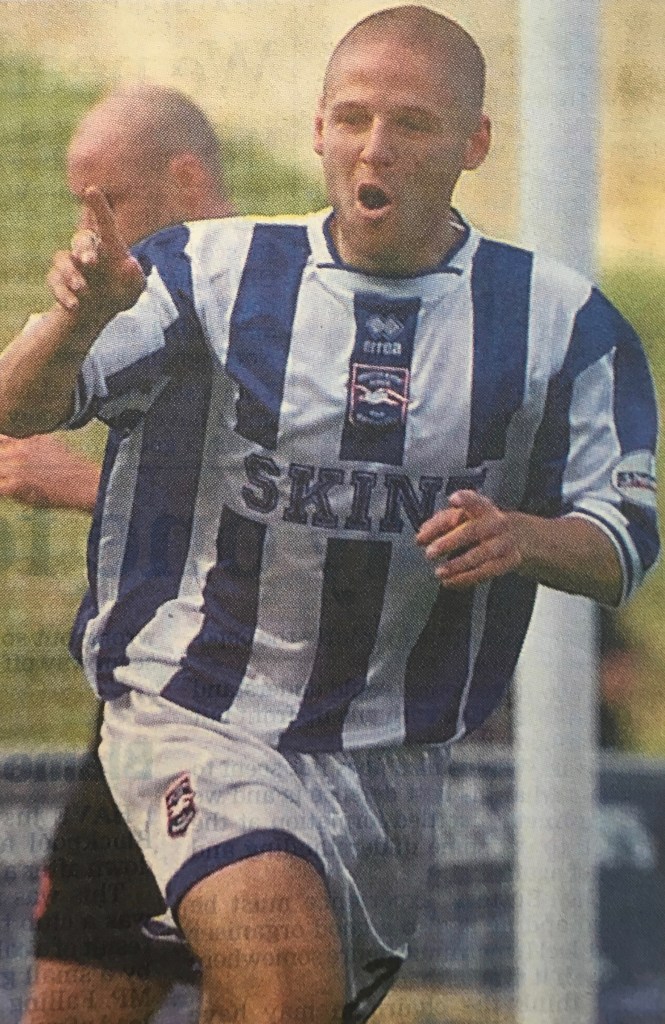
 Born in Dublin on 6 October 1981, Barrett was one of several Irish youngsters who began their football careers with Arsenal having been spotted by ex-Albion boss, and fellow Irishman, Liam Brady, playing in an Ireland U15s game against England at Blackburn.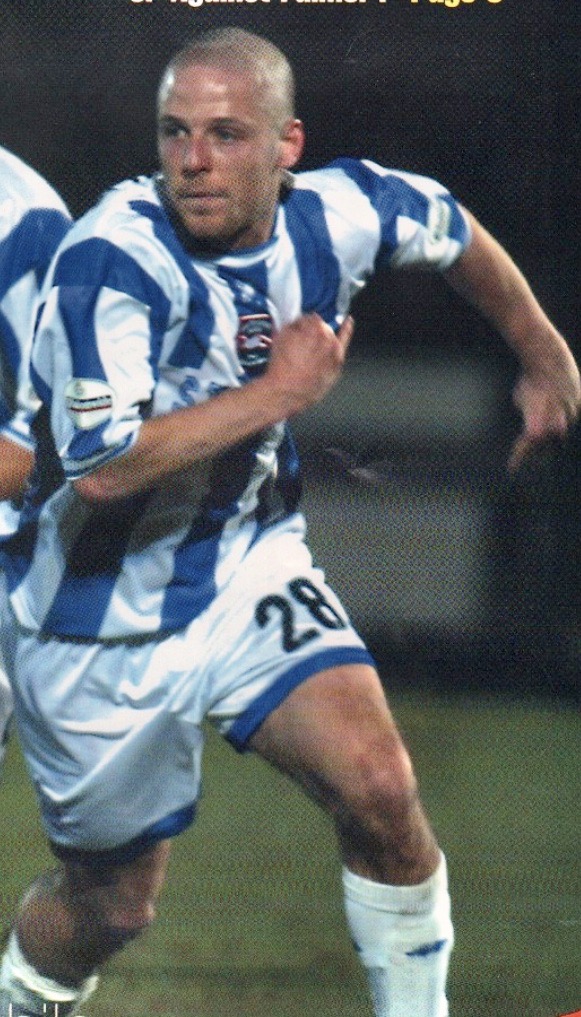

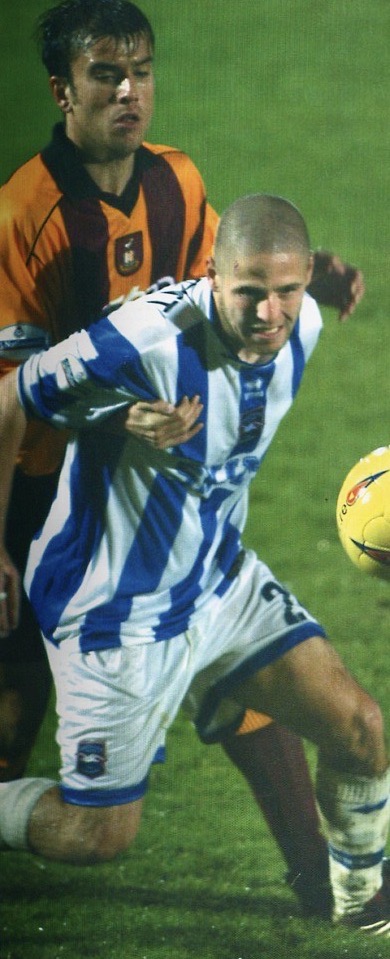
 Although he made 32 league starts plus 23 as a sub, ex-Albion boss
  In parallel lines