Jesse Lingard took steps to stardom at Brighton

MANCHESTER United youngster Jesse Lingard scored four goals in 17 appearances for Brighton in their 2013-14 Championship season.

As well as helping the Seagulls to reach the play-offs, the move proved a useful development step for Lingard, who later become a regular at United and played for England at the 2018 World Cup.

Former United boss Jose Mourinho spoke about the value of the experience in an interview with manutd.com ahead of a Brighton v Man Utd Premier League game in May 2018.

Although Sir Alex Ferguson involved him in the first team squad a couple of times in the 2011-12 season, his real senior football education began during a three-month loan to Leicester City (he was sent with Michael Keane) in November 2012.

And, although Lingard went on United’s pre-season tour Down Under in the summer of 2013, he joined Birmingham City on loan in September 2013.

He scored a total of six goals in 13 games for the Blues, including a debut four goals at home to Sheffield Wednesday.

Birmingham hoped to keep Lingard

They’d been hoping to re-sign him for the rest of the season but Albion nipped in at the end of February 2014 and he headed south to join Oscar Garcia’s promotion-chasing side until the end of the season.

Garcia told the club website: “We are delighted we have finally secured Jesse until the end of the season. He is one of the most exciting young English players and has already created a lot of interest following his successful loan spell at Birmingham.

“We worked hard to secure a talent who has already shown that he can play at Championship level, and I am very pleased to have added Jesse to our striking options.

“He has an excellent pedigree, having come through the academy at Old Trafford, and there is no doubt that he has a lot of talent and ability. I am really looking forward to working with him.”

Lingard got on the scoresheet in the 4-1 away win at already-crowned champions Leicester City, and four days later also found the net in a 3-0 win over Charlton.

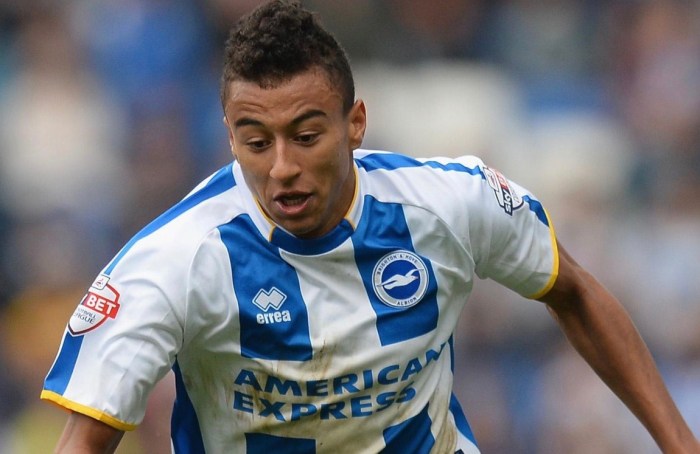
In the third minute of added on time at home to Yeovil Town, Lingard added to Kazenga LuaLua’s opener to secure a 2-0 win in the last home league fixture.

He then scored Albion’s goal in the play-off first leg at home to Derby, but, with Albion losing the game 2-1, they were always on the back foot going into the second leg when County ran riot against the injury-ravaged Seagulls to win 4-1.
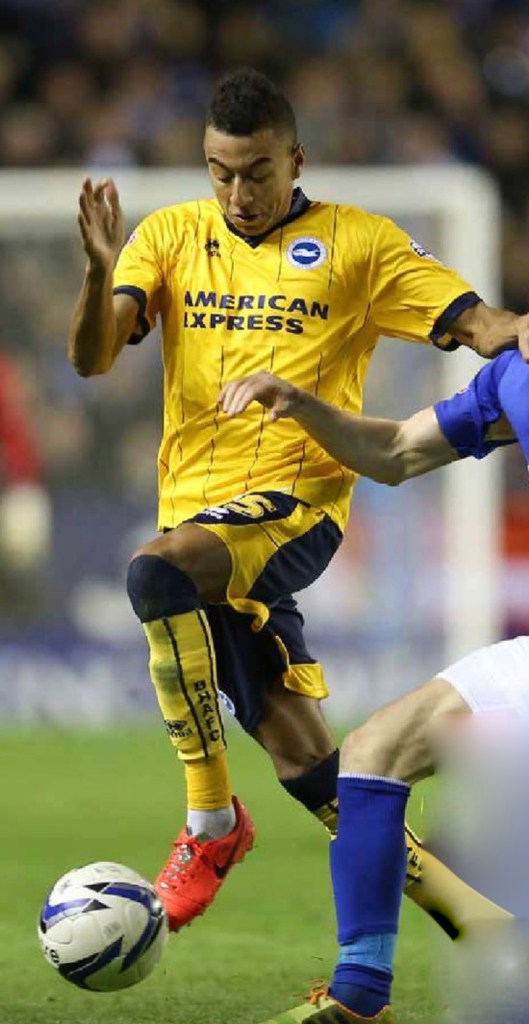
Lingard went back to United and got his first competitive first team start under Louis van Gaal in the season-opener against Swansea at Old Trafford, but the occasion was marred by him having to go off with a knee injury after only 24 minutes – and United lost 2-1.

The injury set his career back six months and, on his recovery, Lingard was sent out on loan again in February 2015 when former United assistant manager Steve McLaren took him to Derby County.

Back at Old Trafford the following season, he got his first United goal in November 2015 when United beat West Brom 2-0, and he began to establish himself, making a total of 40 appearances by the season’s end.

In fact, that season ended on a particularly high note for Lingard when he came off the bench to score the winning goal for United in the 2016 FA Cup Final against Crystal Palace.

The 2017-18 season saw him involved even more, when he made 48 appearances, and, even through managerial upheaval, he continued to be a regular member of the United first-team squad.

Born in Warrington on 15 December 1992, Lingard went to the town’s William Beaumont Community High School and was on United’s books from the age of seven.

He progressed through the different age groups but, as a slow developer physically, was still playing at under 16s level when he was 18.

Nevertheless, as a youth player at Manchester United, he helped them to win the FA Youth Cup in 2010-11.

An extended feature on Lingard’s development appeared in the matchday programme for Albion’s game at Old Trafford in November 2017.

One of the coaches involved in his development, academy advisor Tony Whelan, said: “Jesse has had to be patient throughout his career. As a younger player, he was physically under-developed so he had to play a younger age group. That wasn’t easy, but he had the patience, intelligence and trust in the coaching staff to know that those decisions were made in his best interests, that we knew at some point he was going to grow. At some point, all that ability would be able to come out.

“He’s got a wonderful mindset, so his ability to come on and make an impact on the game is down to the fact he’s resilient, he has a wonderful mentality, and he is a great observer of the game. That comes out all the time in the way he deals with things. And on top of that, he has his excellent technical ability.”

Whelan added: “He’s only of slight build, so he’s developed great technical ability, good passing, dribbling, he’s a really good mover – very fluid, a wonderful mover – and he’s athletic without looking that athletic.”

The coach said: “You don’t get in our first-team squad without being a very accomplished player. He’s also playing for the national team fairly regularly. That’s testimony to Jesse’s abilities as an all-round footballer now.”

Lingard was 23 when he made his full England debut, at Wembley against Malta, on 8 October 2016, and he went on to become part of the England squad that reached the World Cup semi-finals in 2018.

He scored his first England goal in a 1-0 win away to the Netherlands in March 2018, and has since scored three more times in 24 matches; against Panama at the World Cup, against the USA at Wembley in November 2018 and three days later also at home against Croatia.

He’d already appeared on the international stage earlier in his career, playing three times for England under 17s in 2008 and scoring twice in 11 games for the under 21s between 2013 and 2015.

Coach Whelan summed up Lingard thus: “From the day he first walked into this football club at seven years of age, he always had a smile on his face. He’s always loved playing, always loved the game, always had wonderful enthusiasm, and in some ways he’s inspired the coaches with his love of the game and love of the ball.

“You never had to ask him to work hard, he was always running around, always energetic, always mischievous, and those are the qualities he brought.”

In an interview with the Albion matchday programme for Brighton’s home game with United in 2017-18, Lingard reflected on his loan spell with the Seagulls and said: “I wanted to go to the club because I knew they were a good club with a great stadium and great fans – it was the perfect club to go on loan to.”

He added: “The stadium, the staff, the fans, you could see the ambition of the club. I always knew that the club would make it into the Premier League. It was heading in that direction for a couple of seasons.”

The 2019-20 season saw a marked decline in Lingard’s fortunes with his starts for United under double figures, and most of his involvement coming off the bench. He also lost his place in the England squad.

It was revealed a business venture had performed badly and, sadly, trying to cope with personal issues involving his family impacted Lingard’s form and demeanour.

After United boss Ole Gunnar Solskjaer challenged him publicly over his declining performances, he decided to talk about the problems publicly.

After the curtain came down on the season, Lingard told his 6.6 million Instagram followers: “This season has been difficult for so many reasons. I lost who I was as a player and person, but I never wanted to give up.

“I knew who I really was on and off the pitch and knew that having been there before I could get there again.”

“This meant working harder than I’d ever done before and trusting in those around me that they knew how to best help me achieve that.

“I know the fans have been frustrated but in all this time my love for this club and everyone connected to it has never left me.”

“This team, this club is my family and I will continue to keep working harder than ever to help this team achieve its goals.”

However, with several new faces arriving at Old Trafford prior to the start of the 2020-21 season, football’s rumour mill was busy suggesting Solskaer was looking to offload Lingard.
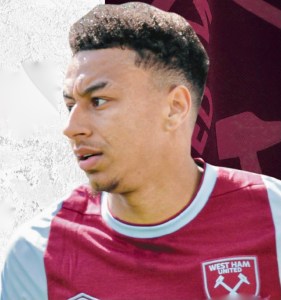
In January 2021, Lingard joined West Ham on a half-season loan and the change of scene seemed to give his career a boost. He scored twice on his debut in a 3-1 win over Aston Villa and finished the season with nine goals in 16 appearances for the Hammers.

He returned to Man Utd for the 2021-22 season, playing in 22 league and cup games but only scoring twice.

When his contract wasn’t renewed at Old Trafford, in the summer of 2022, Lingard signed a one-year deal with newly promoted Nottingham Forest on a reported £200,000 a week.

Steve Harper’s part in the Seagulls-Magpies goalkeeping ‘trade’

BRIGHTON and Newcastle United clearly have a similar eye for goalkeepers with a string of custodians having played for both clubs.

A few years before I started watching, Dave Hollins, older brother of ex-Chelsea midfielder John, moved to Tyneside in 1960 after three years with the Albion, and played twice as many games for Newcastle in the early part of that decade than he had for Brighton.

Back in the first Alan Mullery era, Eric Steele, who went through the Newcastle ranks without making the first team, arrived at Brighton to replace the injured Peter Grummitt in 1977 and was in the side that won promotion to the elite via a 3-1 win at St James’ Park in 1979.

Dave Beasant, who Newcastle bought from Wimbledon for £850,000 in 1988 – although he only played 20 games for the Magpies – was between the sticks for the Albion for 16 games in 2003.

More recently, Dutchman Tim Krul – who’d been at Newcastle a decade – spent a couple of seasons as back-up to Mat Ryan and would probably be disappointed he didn’t get more game time.

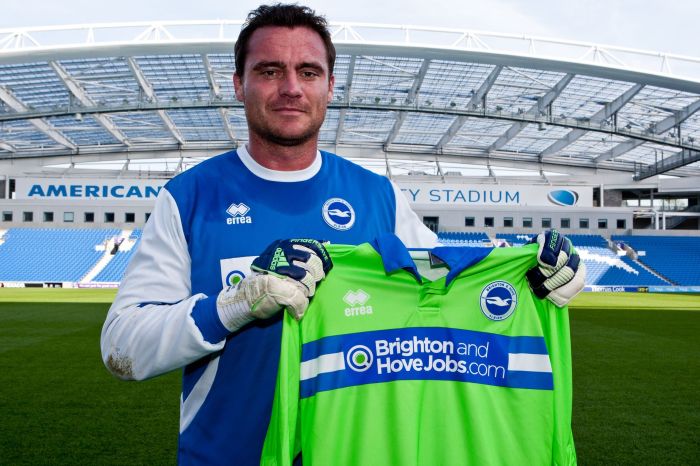
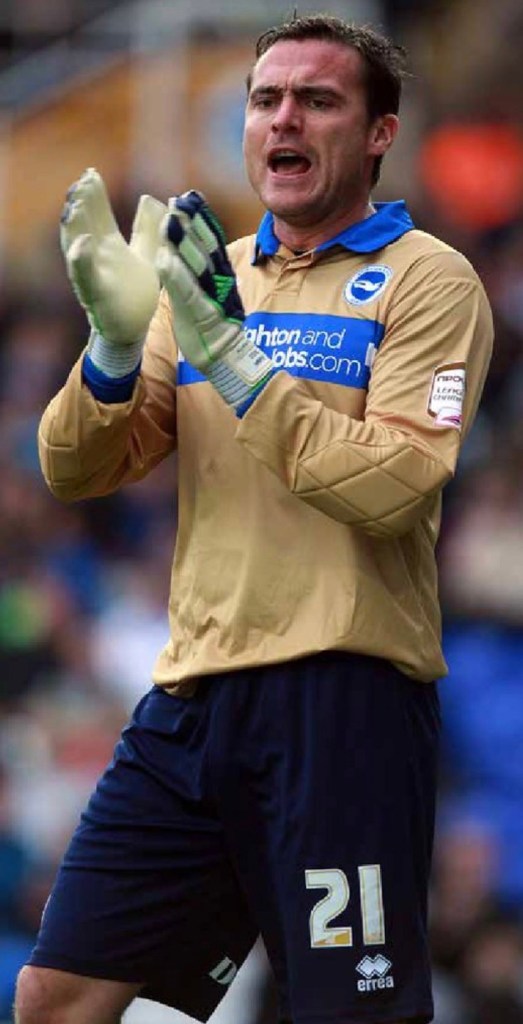
My post on this occasion, though, is about Steve Harper, United’s longest-ever serving player having been there 20 years. He later went back as one of the coaches working with Steve Bruce, as well as being goalkeeping coach to the Northern Ireland international side.

Harper is a qualified UEFA A coach and UEFA A goalkeeping coach, and holds a Masters degree in Sport Directorship.

Back in 2011, Harper was happy to lend his experience to the second tier Seagulls during Gus Poyet’s tenure as manager, a decision applauded by Alan Pardew, Toon boss at the time.

“He just wanted to play,” Pardew told the Chronicle. “Not all the top players in the country would have gone on loan – you’re vulnerable.

“You’re going down a division, but he was prepared to do that, and fair play to him.”

For his part, Harper told BBC Sport: “Everybody knows I haven’t played enough football until the last two-and-a-half years.

“I hadn’t played a competitive game for about six months so it was nice to blow the cobwebs out.”

In his first Seagulls match, unfortunately Albion lost against West Ham to a single goal from Harper’s former teammate Kevin Nolan, and he said: “It was disappointing to lose against West Ham with the possession we had.

“Now I’m here, it’s time to get stuck in. We want Brighton to consolidate and finish as high as we can. People tell me it’s a lovely city. I’m looking forward to seeing more of it.”

Harper recalled the time fondly in an interview for the Albion website in 2019.

He featured in five games for the Seagulls, keeping two clean sheets. While he conceded five goals, three came away to Southampton when the Seagulls were unjustly punished by referee Peter Walton.

Harper told journalist Nick Szczepanik: “I would have stayed longer given the opportunity. They made me feel very welcome.”

He even managed to give two of his new teammates a surprise when he started speaking to them in Spanish. Playing behind Spanish speakers Inigo Calderon and Gonzalo Jara Reyes, he explained to Andy Naylor, then of The Argus: “After five years of Bobby Robson and his multi-lingual team talks my Spanish is okay.

“Calde got quite a shock with how much Spanish I know, but I had Colocinni and Enrique in the team with me at Newcastle.”

After his brief spell with the Albion, Harper returned to Newcastle and played nine more games for them the following season before moving on to Hull City (at the time managed by current Toon boss Bruce), where he played alongside Liam Rosenior.

Born in Seaham on 14 March 1975, Harper grew up in the County Durham mining village of Easington and went to its local comprehensive school. Originally a striker at local Sunday league level, he only started playing in goal from the age of 17 and he turned out for Newcastle’s youth team while he was still at college doing A levels.

In fact he was offered a place at John Moores University in Liverpool to study for a Sports Science degree but he deferred it when Newcastle offered him a one-year contract. He signed in 1993 as a back-up for first choice Pavel Srnicek, later Shaka Hislop and subsequently Shay Given.

Much of his time at Newcastle was as a more than capable deputy to whoever was first choice although in United’s 2009-10 season in the Championship, under Chris Hughton, he was the main man and played 45 matches.

Harper had nothing but praise for Hughton, telling chroniclelive.co.uk: “He came in at an incredibly difficult, turbulent time after relegation.

“Chris was the man at the centre of a perfect storm who steered us through some very choppy waters.

“He did a wonderful job and I don’t think he got enough credit. It was no surprise to me to see him go on to do an excellent job at Birmingham City and then at Brighton.”

In total, Harper played 199 games for Newcastle, featuring under nine different managers – Kevin Keegan and Bobby Robson being his favourites.

Periodically over the years, he went out on loan to gain first-team action, appearing between the sticks for Bradford City, Gateshead, Stockport County, Hartlepool and Huddersfield. The Brighton move was his sixth spell out on loan.

Harper’s long service for Newcastle was rewarded with a testimonial against AC Milan in 2013 before he left the club to join Hull, where he spent two seasons.

Six months after his departure from Hull, he was taken on by then Premier League Sunderland as cover for Jordan Pickford and Vito Mannone, but he didn’t make a first-team appearance and was released at the end of the season.

‘Sleekly skilful’ Dale Jasper remembered with a smile

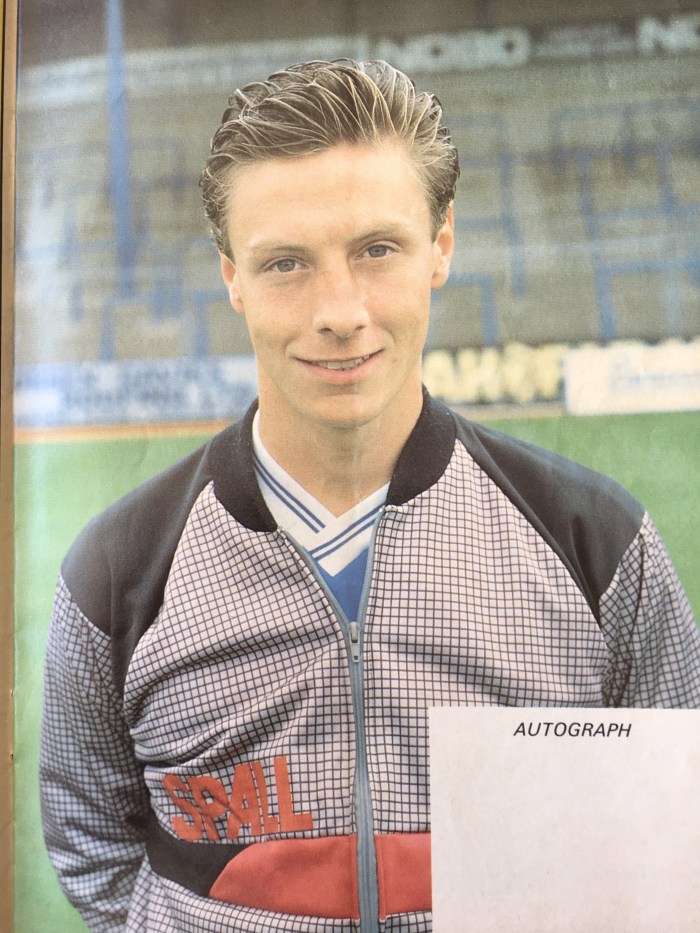
FORMER teammates expressed fond memories and a sense of shock when Dale Jasper died in January 2020 aged only 56.

A product of Chelsea’s youth system in the 1980s, he made it through to the first team but moved to Brighton to get more playing time.

Although he succeeded – playing a total of 52 matches plus eight as a sub under Alan Mullery and Barry Lloyd between 1986 and 1988 – he had to move on again, this time to Crewe Alexandra, to establish a regular starting berth.

It was certainly no mean achievement, though, to have on his CV that he won promotion with all three clubs.

In Ivan Ponting’s obituary for Back Pass magazine, Jasper was described as “a sleekly skilful midfielder-cum-central defender”.

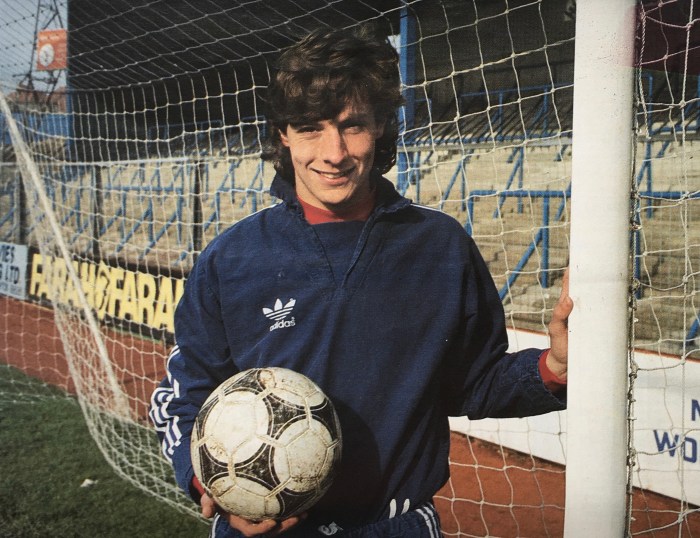
Born in Croydon on 14 January 1964, Jasper was an associate schoolboy with Chelsea from the tender age of 10.

He progressed to the youth ranks and turned professional at Stamford Bridge in January 1982. Manager John Neal gave him his first team break against Cardiff City in March 1984, and Chelsea fans remember him for his involvement in some eye-catching matches.

One involved a 4-4 League Cup quarter final against Sheffield Wednesday but in the semi-final v Sunderland he conceded two penalties.

Although part of the squad Neal steered to promotion from the second tier in 1983-84, the form of his friend Colin Pates, who later had two spells with Brighton himself, and Joe McLaughlin, meant first team chances were few and far between.

Nevertheless, former Chelsea star Pat Nevin remembered Jasper’s involvement in a warm tribute on chelseafc.com.

“Dale was about as much fun as you could find wrapped up in one person,” said Nevin. “He had a brilliant personality in the dressing room at Stamford Bridge and was always up for a surreal laugh with all of us, particularly when he was with his great friends Colin Pates and John Bumstead.”

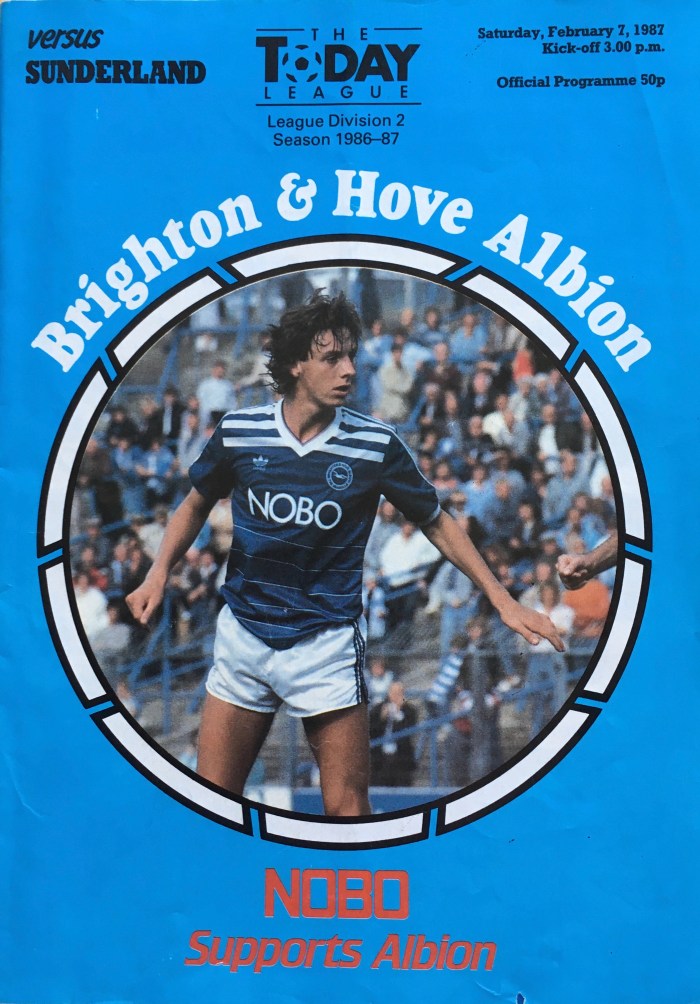
When Neal’s replacement, John Hollins, failed to offer Jasper the first team game-time he craved, he took the chance to join Brighton in May 1986, and enthused about the move in an interview with Albion matchday programme contributor, Tony Norman.

“I signed on the Monday and three days later I flew out to Hong Kong with the team, so it wasn’t a bad week, was it? We played an exhibition match over there. I was a bit disappointed when a goal I scored was disallowed, but I was smiling by the end of the game, because we won 3-1.

“We were away for about a week and it was a very good way for me to meet the rest of the p!ayers and get to know them. It all seemed a bit unreal, because it had all come out of the blue, but it was very enjoyable.”

Unfortunately for him, the manager who signed him for Brighton – Mullery – was unable to recapture the midas touch he’d previously enjoyed at the club.

Jasper started the first 13 games of the 1986-87 season but only three wins were chalked up and Mullery was shown the exit door shortly into the new year.

Jasper played 16 games plus one as a sub under new boss Lloyd but, after the side were relegated back to the third tier, he found it difficult to cement a regular place in the starting line-up.

Apart from a 10-game stint of starts between November and January, he spent most of the 1987-88 season on the subs bench, with Alan Curbishley and Mike Trusson preferred and, for the promotion run-in, Lloyd turned to Adrian Owers. instead.

Although Jasper scored in successive matches in February (one after coming on as a sub in a 2-2 home draw with Chesterfield), his final appearance in an Albion shirt was in a 5-1 defeat at home to Notts County in a Sherpa Van Trophy regional semi-final on 9 March 1988.

Jasper’s well-known sense of humour was evident in his answers for a profile feature in the Albion matchday programme. Perhaps reflecting his lack of first team game time, he said his ambition was “to win the Sussex Senior Cup” and said his favourite actress was teammate Perry Digweed!

Interestingly, he listed (former Chelsea coach) Dario Gradi as one of the main influences on his career, and it was to Gradi’s Crewe side that he moved on leaving the Albion in July 1988.

At the Alex, he made more than 100 appearances in four years, including being involved in their 1989 promotion from the fourth tier. He later played non-league for Crawley Town and Kingstonian.

After his playing career came to an end, he worked in the building trade.

Shocked to learn of Jasper’s death on 30 January 2020, former Albion teammate John Keeley told the Argus: “Dale was really well liked by everyone. He had some real talent and was a top, top lad.”