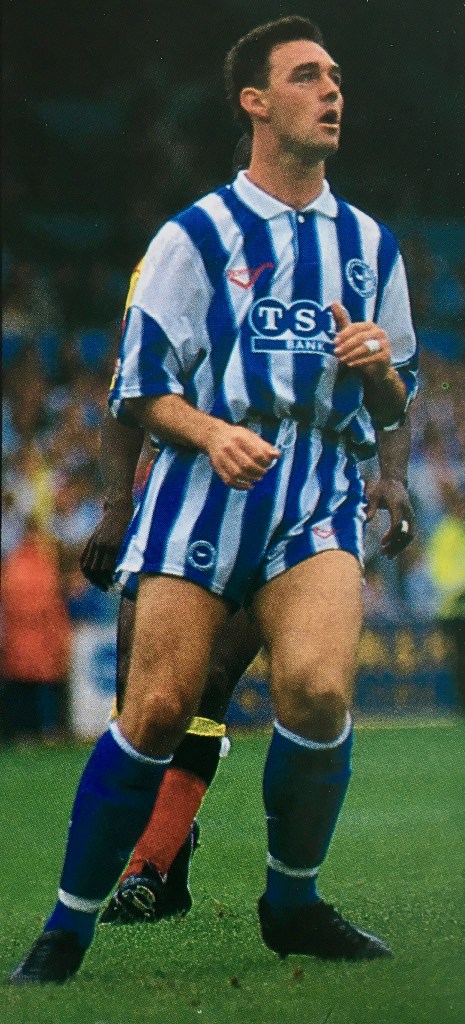
Spurs’ Junior acted the Dream after scoring for the Seagulls

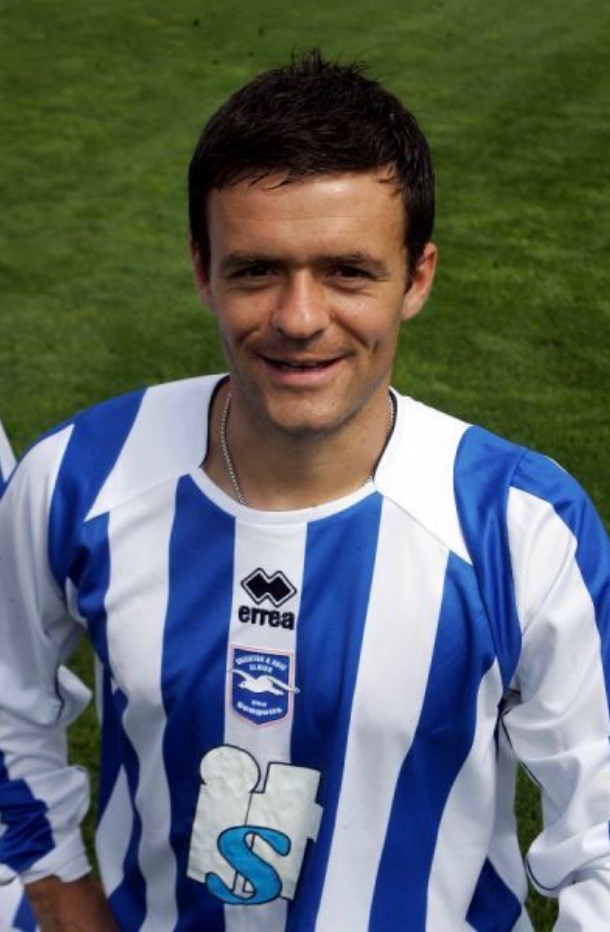
JUNIOR MCDOUGALD played professional football for 23 years and managed to combine it with acting, featuring in Sky 1’s Dream Team series.

Brighton fans of a certain vintage will remember him as a nippy, diminutive forward who scored 22 goals in 88 matches (+ seven as sub) during a difficult period for the club.

By his own admission (in an interview with the Argus), he left too soon, and a move to Rotherham United didn’t work out.

Born in Big Spring, Texas, on 12 January 1975, McDougald grew up in the UK and his early potential saw him associated with Tottenham Hotspur from the age of nine.

He was subsequently chosen as part of a group of the country’s top 25 14-year-old footballing prospects to be nurtured at the FA’s National School at Lilleshall.

On his graduation from Lilleshall in 1991, he joined Spurs as a trainee. Alongside McDougald both at Lilleshall and Tottenham was Sol Campbell, the defender who went on to star for Spurs and Arsenal, as well as England. Campbell told tottenhamhotspur.com: “I’ve some fond memories of Junior. We used to play against each other when we were 13, then we were at Tottenham and Lilleshall when we were 14.

“He’s a smashing lad and I can’t speak highly enough of him. He’s a good bloke, a good man and a fabulous footballer.”

McDougald joined the full professional ranks at White Hart Lane in the summer of 1993, but when he didn’t make the breakthrough to their first team, he made the switch to Brighton.

He described his time at Spurs as “a dream come true” and, in an article on tottenhamhotspur.com, said: “I know it’s an old cliché but I’d always supported Spurs.

“I think it’s well documented now that I even wrote to Jim’ll Fix It to ask to go training with them!”

He added: “It was a great experience, a positive experience and it was always my dream to play for the club.”

Spurs fanzine My Eyes Have Seen The Glory (mehstg.com), recalled him as “a young striker who scored a large number of goals for the Tottenham junior sides, but progressed no further than the reserves at White Hart Lane. Blessed with good pace, but a little on the short and light side.”

Unfortunately, while his contemporary Campbell went on to superstardom, McDougald was released at the age of 19.

“It was very disappointing to leave,” he said. “But at the same time, I was ambitious and, when Liam Brady at Brighton called me, I saw it as a great opportunity. I wanted first team football.

“Any disappointment was hidden by excitement. It was a new start.”

I can remember seeing McDougald make his debut in the opening game of the 1994-95 season, away to Swansea City at their old Vetch Field ground; Albion resplendent in the turquoise and black striped shirts in the style of the kit once worn by boss Brady at Inter Milan.

McDougald’s subsequent one-in-four scoring ratio with the Seagulls was set against the backdrop of financial turmoil at the club and he was there when the club was relegated to the fourth tier.

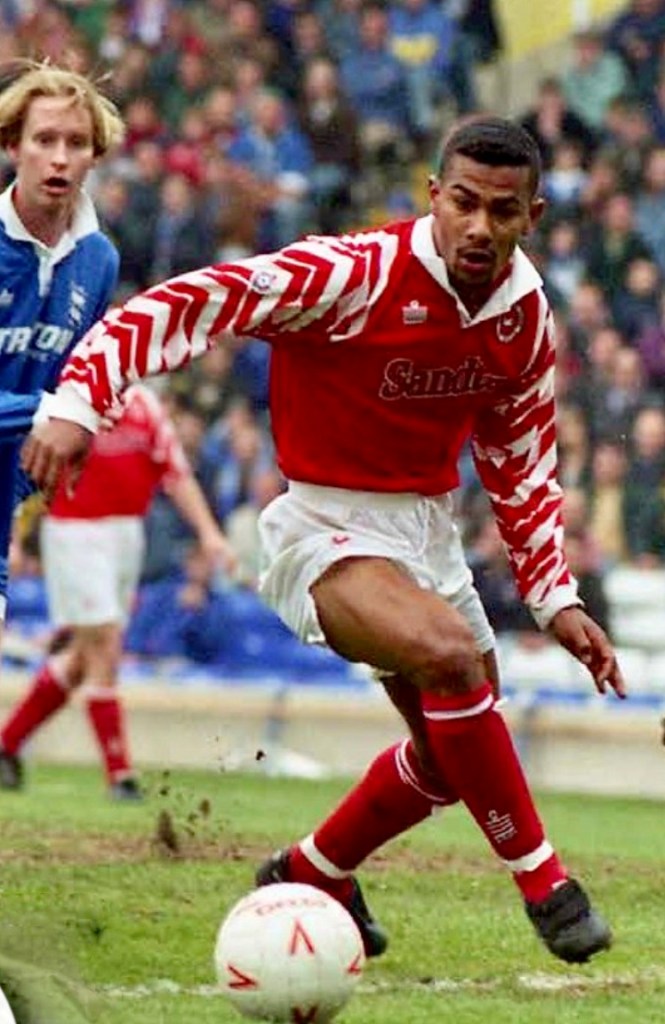
“There was no stability off the field and that could transfer itself on to it,” he told the Argus. “I was very young and Liam Brady was a great help. I was pleased to have played with legends like Steve Foster, although he was coming to the end of his career.

“The supporters were fantastic and really good to me as a young player. Overall, I had two enjoyable years there and I’m delighted to see them doing so well now. They’ve always had the potential and the fans deserve the success.”

Towards the end of his second season with the club, he was loaned to Chesterfield, where he scored once in nine games, and he then chose to move to Rotherham United for £50,000 in August 1996.

“It is only when you leave somewhere sometimes that you realise how good a club it was,” he told the Argus. “I have fantastic memories of Brighton. The support was so good and they have such potential.

“I thought I was doing the best thing for my career when I left. I wasn’t to know I would go to Rotherham, score on my debut, get injured in the same game and not play for three months.”

He had a relatively successful six-month spell at Toulon in France but efforts to re-establish himself back in the UK with Cambridge, Millwall and Orient didn’t work out.

“With the gift of hindsight maybe I would have stayed at Brighton for another season or two and established myself,” McDougald said in the Argus interview.

It was only when he signed for Dagenham & Redbridge in 1999 that he got back in the headlines, in particular when, in January 2001, he scored in the FA Cup 3rd round as the non-league Essex side held Alan Curbishley’s then Premier League Charlton Athletic to a 1-1 draw.

The 4th round draw paired the winners of the tie with Spurs, so it looked like it would be a perfect match for the former Spurs youngster, but the Addicks edged the replay 1-0 in extra time to spoil his dream.

Nevertheless, his form for Dagenham saw him selected for the England semi-professional side at a Four Nations Trophy tournament in 2002, where he was up against his clubmate Tony Roberts, the former Spurs goalkeeper.

Alongside the serious business of earning a living from playing football, McDougald also appeared for the fictional Harchester United side in Sky’s Dream Team, together with former Albion players Peter Smith and Andy Ansah.

“It was through Andy who actually recruits the players,” he said. “Pete Smith told me it was fun and it is. We just do what footballers do and are filmed playing, in changing rooms and night clubs. It is a good little avenue.”

By the time Dagenham made it into the Football League, McDougald had moved on to St Albans and, in the 2003-04 season, he was part of a Canvey Island squad that also included former Brighton players Mickey Bennett, the aforementioned Peter Smith, and Jeff Minton.

He later played for Kettering Town, Histon, and Cambridgeshire side St. Ives.

McDougald, a Born-again Christian, has since become the co-founder and director of children’s charity Sports Connections Foundation which uses sport to help and inspire children.

Unstoppable free kick earned Poco’s place in Albion folklore

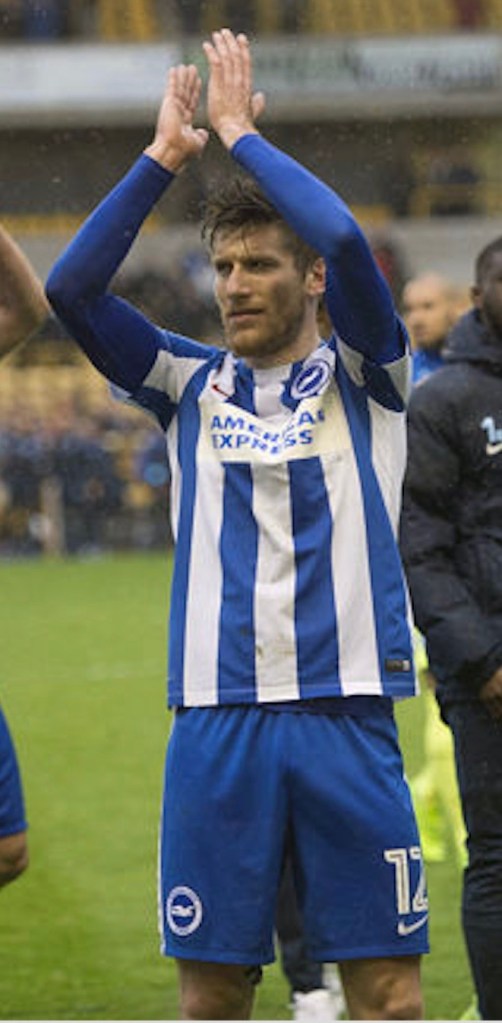
SÉBASTIEN Pocognoli will forever be remembered by Brighton fans for a spectacular free-kick goal he scored against Queens Park Rangers en route to promotion from the Championship.

Glenn Murray had given the Seagulls the lead in the April 2017 encounter at Loftus Road before, as the BBC reported, Pocognoli “executed a pinpoint free-kick with his left foot which flew in off the crossbar for an unstoppable second”.

Although Rangers pulled a goal back, Albion’s advantage gave them their first win at QPR for nearly 60 years and sent them back to the top of the league.

It was Pocognoli’s first competitive goal for six years and such a sweet strike etched his name in Brighton folklore.

Injuries and suspension dogged the left-back slot during that promotion season. Pocognoli had signed on a season-long loan from West Brom in August 2016 as cover for Gaetan Bong; Liam Rosenior having suffered an ankle injury.

But the loanee himself was troubled by a groin injury and made only 18 appearances for the Seagulls (plus three as a sub).

“Sebastien has a vast amount of experience having played in some of the top divisions in Europe,” Brighton manager Chris Hughton said on the day Pocognoli signed. “He is the type of quality player we want to add to the squad, and we are looking forward to working with him.”

The Belgian international came to the UK in 2014 having played top-flight football in Belgium, Holland and Germany.

Injury denied him the chance of going to Brazil to play in that summer’s World Cup for his country, but his disappointment was tempered by securing a move to the Premier League.

Unfortunately for him, his West Brom career barely got off the ground because the head coach who signed him – Alan Irvine – was soon replaced by Tony Pulis, who preferred Chris Brunt, Chris Baird or Joleon Lescott as left-back.

According to the uefa.com website, Pocognoli is a “technically-assured player, primarily a left-back but can also operate in midfield and is a specialist from dead-ball situations”. You can say that again!

Born in Seraing, near Liege, on 1 August 1987, Pocognoli represented Standard Liège at junior level but joined Genk aged 15, making his first team debut a year later, in 2004.

However, he had to be content with reserve team football until the 2006-07 season when he became a first-team regular, helping the club finish second in the Belgian first division.

In June 2007, Pocognoli joined Eredivisie side AZ Alkmaar, and featured in 33 games under Louis van Gaal, later renowned for managing Holland and Manchester United.

“I was 19 years old, and I worked for two years under him,” he told the West Brom website. “He helped my formation as a footballer, pass-control-pass, tactically, because defensively I was not so strong. And also my personality, because he likes players with personality.

“He’s not only a good trainer but he’s also a good human being.”

After three years at AZ, his first club, Standard Liege, bought him and gave him a three-year contract. He became the established left-back for two seasons but in 2012-13 missed lots of games when sidelined by injury.

With only six months of his contract remaining, German club Hannover 96 took the opportunity to sign him in January 2013. He made an inauspicious start, getting sent off on his debut, and faced competition for the left-back spot.

Only 18 months into a three-year deal, he made the switch to the Premier League with West Brom, head coach Irvine telling the club website: “Sébastien is an experienced left-back who has played at a high level for many years.

“After being named in Belgium’s provisional World Cup squad, he just missed out on Brazil, mainly because he hadn’t played enough games towards the end of the season.

“But he’s joined us with a real hunger to prove himself at Albion and get back into the international set-up.

“We’ve done our due diligence on Sébastien in terms of people who have worked with him, including Romelu Lukaku and Kevin Mirallas.

“You make your own mind up about a player’s ability from watching him play but you put these calls in to find out about their personality. The feedback on Sébastien was very positive.”

The defender had gained international recognition from an early age and played for Belgium’s under 16s, under 17s, under 19s and under 21s. He was called up to the senior squad in 2008 and won 13 caps for his country.

After his Brighton loan expired, he returned to West Brom but was not retained. He expected to re-join Standard Liege when interviewed by the expressandstar.com, saying: “It all adds up: I will soon be a free agent, they need new blood and I’m an ex-player of Les Rouches. At the moment there is no contact, but the board is looking for players who are interested in their project.

“If I did go to Standard, I am one of the leaders in the dressing rooms anyway – not by shouting loudly, by setting a good example. I certainly would be an example for the young players.”

The move was duly confirmed and in his third spell with the club Pocognoli made 32 appearances, including, in March 2018, in the Belgian Cup Final, when Liege beat his former club Genk 1-0.

In 2020, Pocognoli switched to Royale Union Saint-Gilloise, the club owned by Albion owner and chairman Tony Bloom.

Pass ‘master’ Steven Thomson’s unhappy year with Brighton

STEVEN THOMSON didn’t enjoy his year playing for Brighton in League One and the former Crystal Palace midfielder seized an escape route to return to Scotland to see out the remainder of his long professional career.

It had been considered quite a coup when Dean Wilkins secured the signing of the Falkirk captain in January 2008. In effect a replacement for the departing Dean Hammond, Thomson was soon a victim of Wilkins’ tinkering with the formation, and over his 41 matches for the Seagulls had a conveyor belt of midfield partners, not to mention a change in manager, as Wilkins’ replacement, Micky Adams, introduced a different style – in vain – to try to galvanise the side during his second spell as boss.

Although Thomson had signed a two-and-a-half-year contract with the Seagulls, in January 2009 the disillusioned Scot headed back north of the border.

“I didn’t enjoy it there at all and was keen to try and get myself back up the road,” he admitted in an interview with the Daily Record in 2018.

Having wound down his full-time career at St Mirren, after 18 seasons as a professional, and having moved to London to begin a business career, Thomson linked up with his former Albion teammate Nicky Forster to spend a season as a part-time player with Dover Athletic, where the former Seagulls striker was manager at the time.

In an in-depth interview for the Dover Athletic website, Thomson gave a great insight into his career, revealing the lengths he went to to get a break into the professional game.

Born in Glasgow on 23 January 1978, he explained: “After playing for a local boys club I was invited to go and train with a few clubs, so, at the age of 10, I found myself training with Rangers on a Monday, Celtic on a Tuesday, Hearts on a Wednesday and Hibs on a Thursday.”

When he reached 14, he was advised to choose one club over the others and opted for Rangers. Daunted by the high numbers of youngsters all trying for the same opportunity, aged just 16 he took the bold move to head to Croydon and signed on as an apprentice with Palace.

He progressed from the youth team to be offered a pro contract at 17, worked his way through the reserves and then got some calls up to the first team subs bench when they were still in the Premier League. He also played for Scotland’s under-18 side between 1995 and 1997.

During his brief return as manager, Terry Venables gave Thomson his debut aged 19 in the 1998-99 season. Thomson wasn’t renowned for goalscoring, but Palace fans do remember a particularly sweet strike he succeeded with in a 3-0 Worthington Cup win at Leicester City in November 2000.

Leicester’s back-up goalkeeper Simon Royce, who would later join Albion on loan, was beaten from 35 yards by Thomson’s spectacular shot.

The midfielder’s 121 games spanned the spells of five managers – Venables, Steve Bruce, Trevor Francis, Steve Coppell and Dave Bassett – before he left the club at the end of the 2002-03 season. It would be fair to say he divided opinion among Eagles supporters.

On fans forum cpfc.org, ‘Hairybear’ said: “Thomson was a warrior. Very little ability but did a good job when called upon under Bruce and co. He would never let you down.”

But ‘Baron Greenback’ said: “As well as THAT goal against Leicester, he also scored great goals at home to Sunderland in the FA Cup and Wolves.”

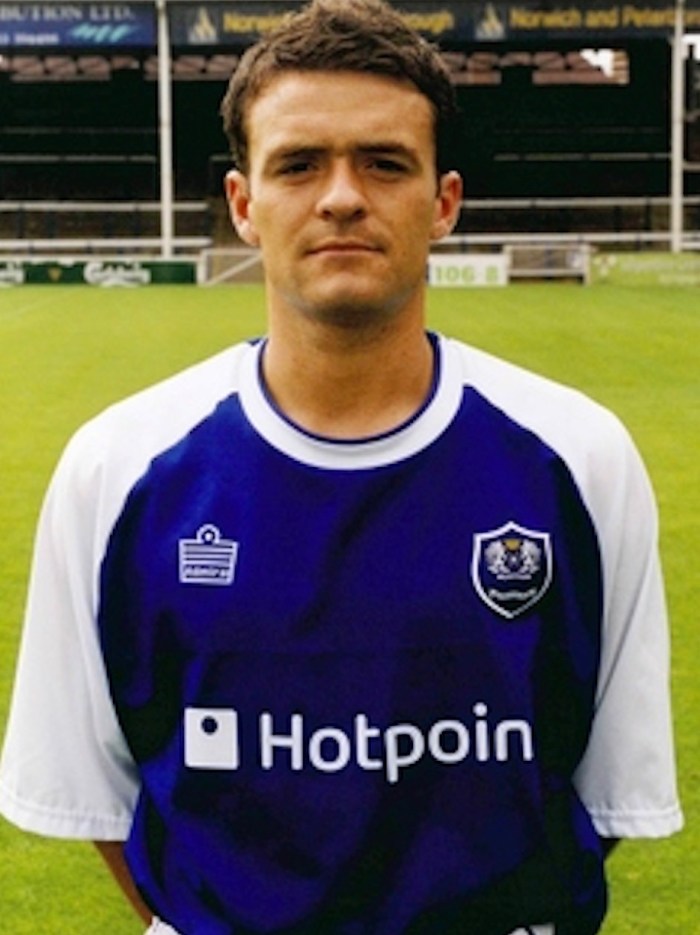
It was the ebullient Barry Fry who took Thomson to Peterborough United, (above) where he played 75 games in two seasons before moving back to Scotland to play for Falkirk in the Scottish Premier League.

When Brighton signed him, his former Falkirk teammate and one-time Albion loanee, Graham Barrett, told the Argus what Seagulls supporters could expect.

“They are getting a fantastic professional and a really good player,” said Barrett. “We have been going really well and he has been a massive part of that.

“He is a box-to-box player, he is comfortable on the ball and he has got a bit of everything.

“He is not particularly big (5ft 8in) but he is also very good in the air for his height.”

Barrett reckoned he would be “a massive influence” if he could continue the form he’d shown in Scotland. “He is great in the dressing room as well, a real leader,” said Barrett.

Thomson made his Albion debut in a 1-1 draw at home to Huddersfield on 19 January, starting at the base of a midfield diamond with Paul Reid and David Martot out wide and Dean Cox at the top of it.

Brian Owen, of the Argus, described him as “a neat and tidy passer who only gave the ball away when trying something ambitious”.

Within a couple of months, the Argus was reporting: “It has not been easy for Thomson since his January move back to England from Falkirk.

“He has had to adjust to playing with a number of different partners and now Adam El-Abd is a long-term casualty with the medial knee ligament injury he suffered at Huddersfield.”

Although mostly recognised as a centre back, El-Abd had been one of the options tried in midfield. Thomson admitted to the newspaper: “I know I can perform better. There is more to come. I am adjusting to playing so many games. In Scotland you just play Saturday to Saturday.

“It has been a big move for my family as well. My wife (originally from London) is a lot closer to her parents now and she has got a lot of family around, which helps with our young son.”

In rather a similar vein to the Palace faithful, Brighton fans were also divided as to Thomson’s merits. ‘The Complete Badger’ declared on North Stand Chat: “The only midfielder of any class we’ve got. A real touch of quality about everything he does in my opinion. Much better than Hammond, and much better than anyone else we’ve got.”

But ‘Napper’ reckoned: “Thomson just seems to have nothing about him, not quick, no killer passes. Just seems to either waste possession or go backwards. I’ve really given him more than enough time, but facts are he just isn’t very good. I’ve been watching him closely for many games now.”

In his end-of-season summary, Andy Naylor, Albion reporter for the Argus in 2008, reckoned Hammond had been a hard act to follow, and commented: “Thomson looks a tidy player who will benefit from playing as a central midfielder in a 4-4-2, not the dreaded diamond.”

After Wilkins was shown the door, new boss Adams recognised Thomson’s leadership qualities, making him vice-captain to skipper Nicky Forster, as well as saying he was going to play him in a role further forward than he had been previously.

“I enjoyed the responsibility at Falkirk and I will be willing to help Nicky as much as I can,” Thomson told the Argus. “The manager has stressed that he wants me to try and push forward a lot more, rather than just sitting in front of the back four, and I am quite happy with that.

“I look after myself off the park, so I’m quite fit. Maybe he thinks I have got the engine to get up and down!”

However, problems mounted for Adams when Forster was ruled out by injury and, as in the previous season, Thomson found himself alongside different midfield partners, including, at one time, the flamboyant Robbie Savage, trying to recover some fitness on loan from Derby.

As the year drew to a close, it became public knowledge that Thomson was unsettled and itching to go back to Scotland, so a deal was lined up for him to join St Mirren as soon as the January transfer window opened.

He joined them on the day they played their final game at Love Street ahead of their move to Greenhill Road, and he went on to make more than 100 appearances for the Buddies.

Their fans’ abiding memory of his time there centre on a surprise 4-0 win over Celtic on 24 March 2010, when Thomson scored twice. The result so shocked the Parkhead bosses that they sacked Hoops boss Tony Mowbray.

On joining Dover in May 2012, Thomson told the club’s website: “I made the decision last year that this would be my final season as a full-time player. I have been studying for four or five years and I’m now fully qualified and have secured a job in London.

“My wife Bryony is from London anyway and she wanted to move closer to her family. I’ve been a footballer for 18 years and now it’s time to enter the real world.”

Thomson now works as a financial advisor, with a stylish looking profile on LinkedIn.

Everton reject Mark Farrington earned rebuke at the Albion

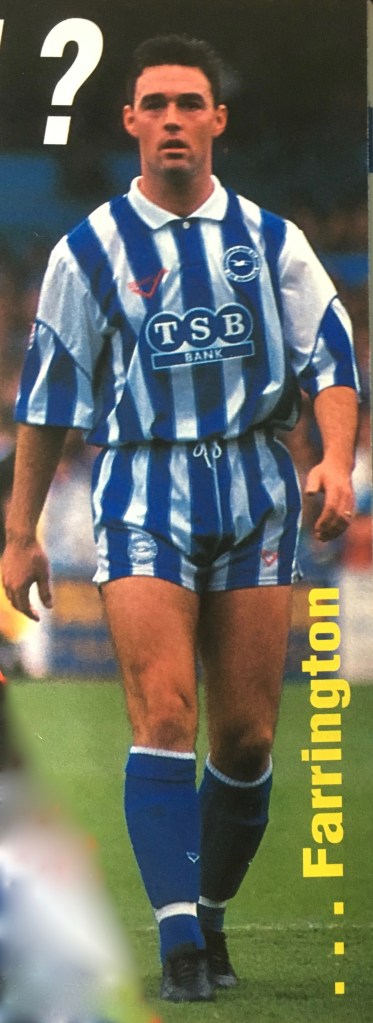
BARRY LLOYD made a number of astute signings during some turbulent years in charge of the Seagulls; Mark Farrington wasn’t one of them!

Although Lloyd struck gold when he picked up Mike Small after seven years playing in Europe, his luck evaporated when he brought former Everton youth player Farrington back to the UK after a five-clubs-in-five-years spell in Holland, Belgium and Germany.

Lloyd agreed a £100,000 fee to sign him from respected Dutch outfit Feyenoord in 1991 – as a replacement for Small, who’d been sold to West Ham for £400,000. But in three years on the Albion’s books, Farrington mustered just four goals in 28 appearances. Subsequently, apart from a single league appearance for Hereford, he ended up at non-league Runcorn.

It’s no secret he’s gone down in Albion folklore as one of the club’s biggest flops, as evidenced by comments on the popular fans forum, North Stand Chat.

In 2004, in one of those discussions about all-time-worst player, ‘Metal Micky’ gave his vote to Farrington, adding: “The only one who came close to his utter shiteness was Ashley Neal.”

On another occasion, noting that Farrington managed to get on the scoresheet in a 3-1 win away to Burnley, ‘Pinkie Brown’ declared: “Mark Farrington scoring a goal rates alongside stepping in rocking horse crap, spotting Lord Lucan and going for a ride on Shergar. The last three are more realistic.”

On the same forum, ‘Withdean and I’ described him as: “The most expensive player ever to make so little impact at the Albion.”

It seems only right and fair, though, to try to balance the picture and I’m grateful to a November 2018 look-back article in the Sussex Express which recalled an occasion on 26 February 1994 when Farrington scored a goal in a 3-1 win at Huddersfield, and earned a plaudit from Lloyd’s replacement as manager, Liam Brady.

The newspaper reported: “For Farrington in particular, it had been a difficult season. He had made only sporadic appearances under Lloyd, but Brady was committed to give everyone a chance. ‘I brought Mark Farrington back into the side,’ said Brady. ‘As far as I am concerned, the slate is clean with everyone at the club and I am prepared to look at each and every player and Mark has done particularly well (in the reserves) and shown a good attitude’.”

It was good of Brady to give him the opportunity but at the start of the following season he brought in Junior McDougald to play alongside Kurt Nogan, and, in October 1994 Farrington left the club.

Born in the Allerton district of Liverpool on 15 June 1965, Farrington’s dad was a long distance lorry driver and his mum a shoe shop manageress. He attended Springwood Primary School and moved on to Hillfoot High School, where his footballing ability began to be recognised.

He also played for the local Allerton side and an Everton scout, Ray Marshall, spotted him. He was taken on as an associate schoolboy and then progressed to an apprenticeship. Unfortunately, his hopes of making it at Everton were dashed within weeks of him ending up on the losing side in the 1983 FA Youth Cup Final.

Farrington scoring features on the front cover of the Everton programme

Ironically, Farrington scored four times against Norwich City (see picture of one of them on front of programme) over two legs but City won a play-off and collected the trophy 6-5 on aggregate.

Everton decided not to offer Farrington a professional contract, but the opposition’s manager, Ken Brown, liked what he saw and took him on at Carrow Road.

A year later, he was blooded in an end-of-season top tier game away to Coventry City which the Canaries lost 2-1.

City history site Flown From The Nest notes he made a total of 18 appearances and scored twice before he was loaned to Cambridge United, where he scored once in 10 matches, and was then transferred to Cardiff City in July 1985.

City were newly relegated from the second tier. Farrington scored in the first game of the new season, a 4-1 win at Notts County, but Cardiff had a disastrous season and finished up relegated to the bottom tier. According to mauveandyellowarmy.net, Farrington scored only three more times in a total of 36 appearances for the Bluebirds before being sacked for a breach of club discipline by manager Alan Durban, who was sacked himself following relegation.

After an unsuccessful trial with Portsmouth, Farrington tried his luck on the continent.

At Dutch side Willem II Tillburg, he got into his goalscoring stride and bagged 26 in 61 appearances – by far his best scoring ratio for any club.

At RC Genk he scored five in 17 matches, and 10 in 30 games for Fortuna Sittard, including a hat-trick against PSV Eindhoven and four against Volendam. Next up on his European travels was Hertha Berlin for eight months, but he struggled to settle in Berlin and didn’t register a goal in nine games.

Dutch giants Feyenoord came to his rescue and, after he’d scored twice in a friendly, they bought out the rest of his Hertha Berlin contract. He scored once in five matches but when Gunther Bensson, the coach who’d bought him left, he failed to see eye to eye with his successor and began to seek a move. Lloyd took him on trial at Brighton and he scored in a reserves match against Ipswich.

“In May 1991 I had the chance to go to Spain to play for Seville but that fell flat and in August Barry called me again and I came to the Goldstone,” he told the matchday programme. “I had missed the pre-season training and all the other players had a head start and I suffered. I injured an ankle early on and one thing led to another. It soon became a nightmare, one injury followed another,” he said.

Farrington saw various specialists to try to get to the bottom of several niggles that were keeping him sidelined and months went by before he finally got the all-clear.