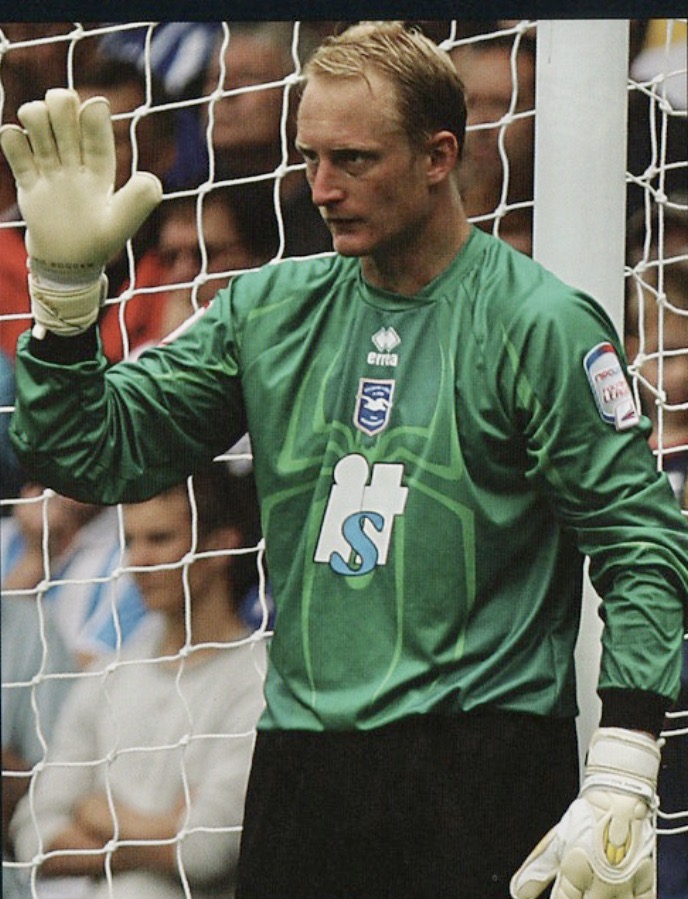
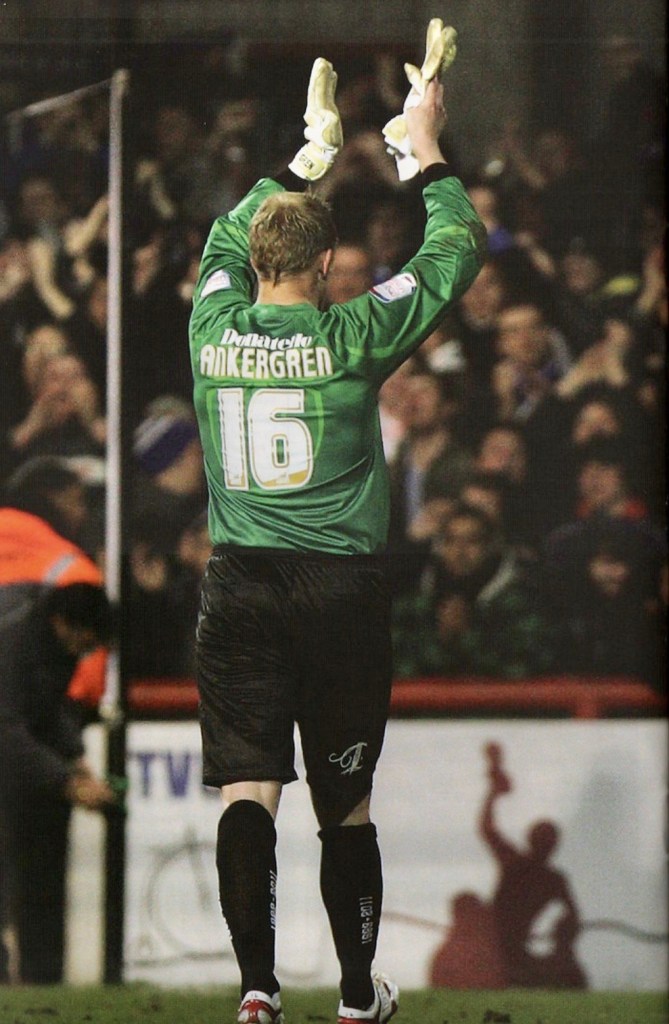
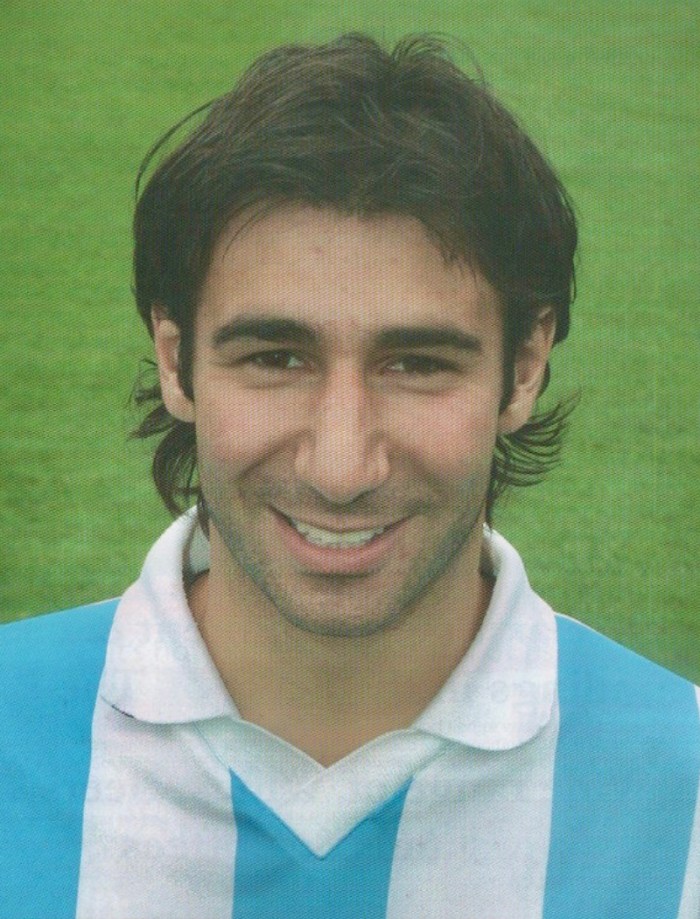
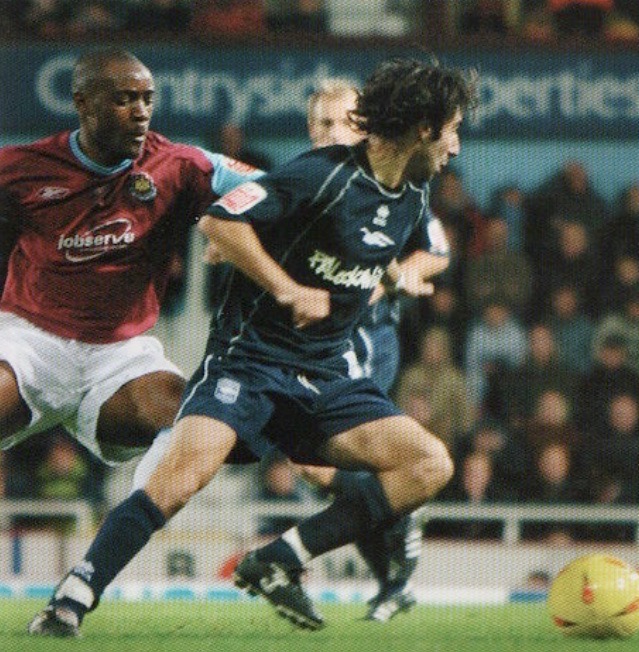
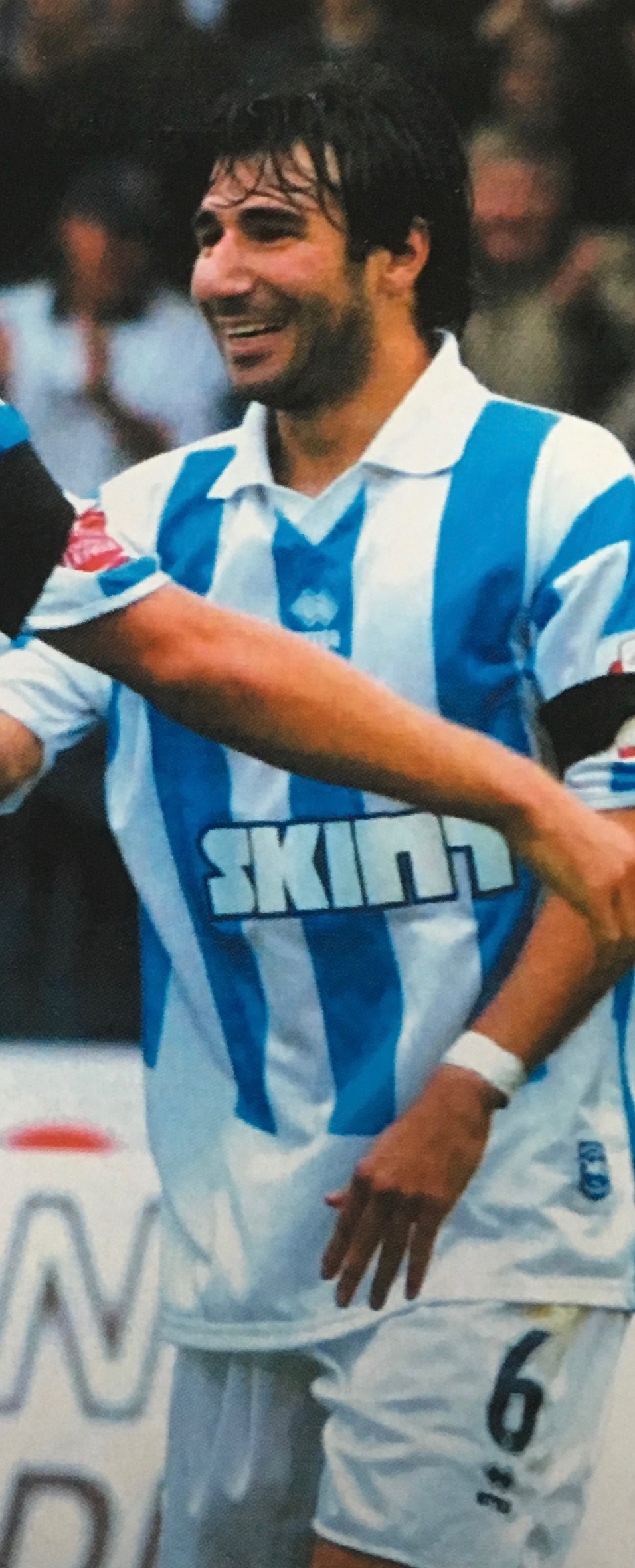
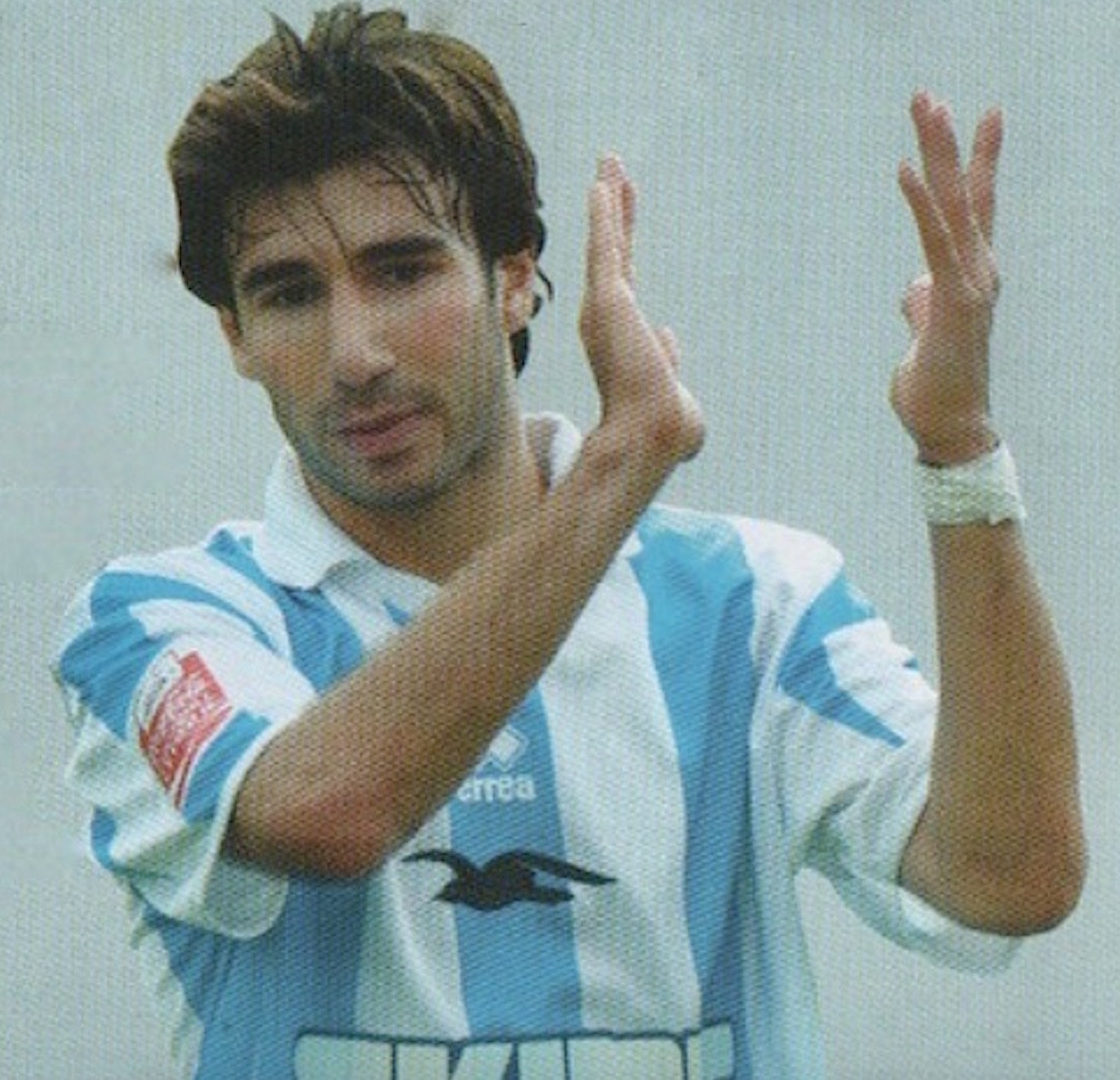
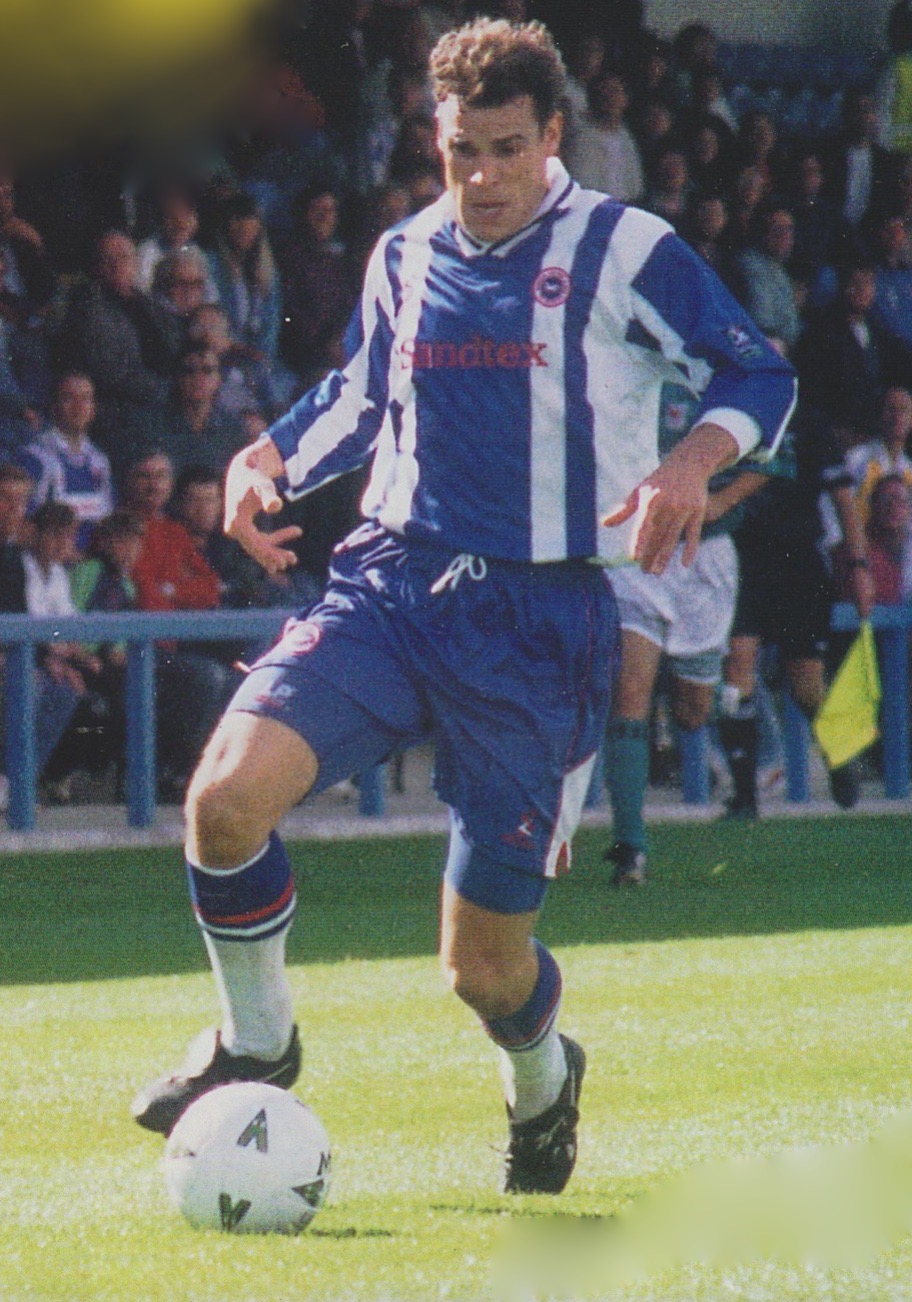
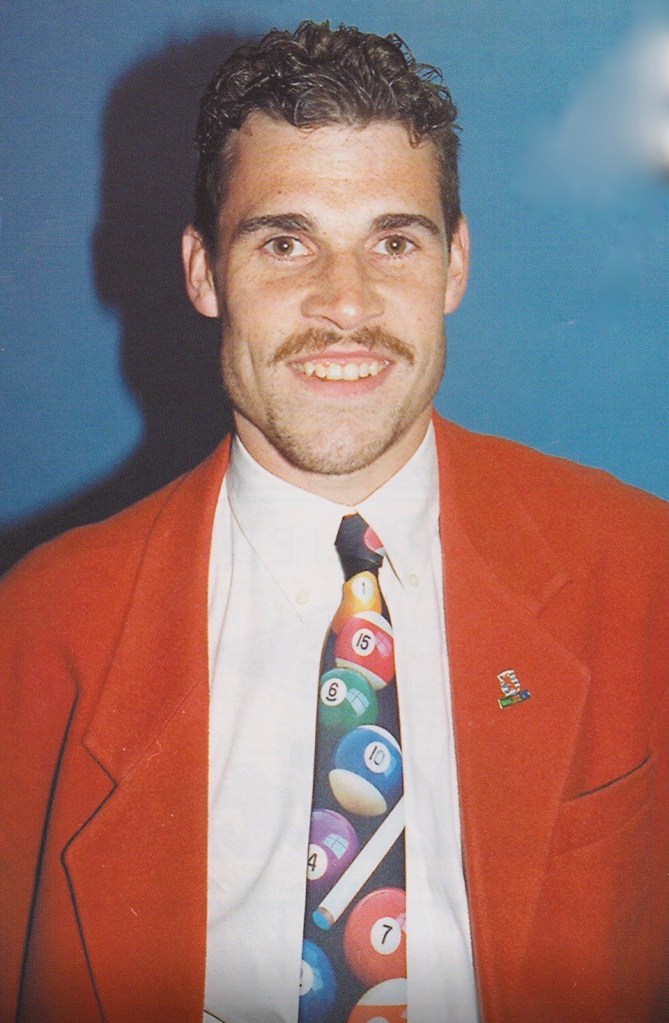
Casper Ankergren – the ‘Great Dane’ between the sticks

DANISH goalkeeper Casper Ankergren earned the League One player of the month award four times – twice with Leeds United and twice with Brighton.

When the Yorkshire club dumped him after he’d played 143 games for them, Gus Poyet, his former assistant manager at Elland Road, gave him the chance to revive his English football career. He spent seven years as a player at Brighton and between 2017 and 2021 assisted Ben Roberts with coaching Albion’s goalkeepers.

The Dane was only truly Albion no.1 for a season and a half, and fans were often divided about his capabilities. But his ability with the ball at his feet suited the way Poyet wanted the Albion to play, and as a coach chimes perfectly with the expectations placed on today’s Albion goalkeepers.

“He really is key to the way we pass it out from the back,” observed ‘Murraymint’ on North Stand Chat, noting his ball playing and vision for a pass as “excellent”.

Ankergren himself explained in a podcast on the club website in 2020: “I was always quite comfortable with the ball at my feet, probably because I played outfield as a kid.
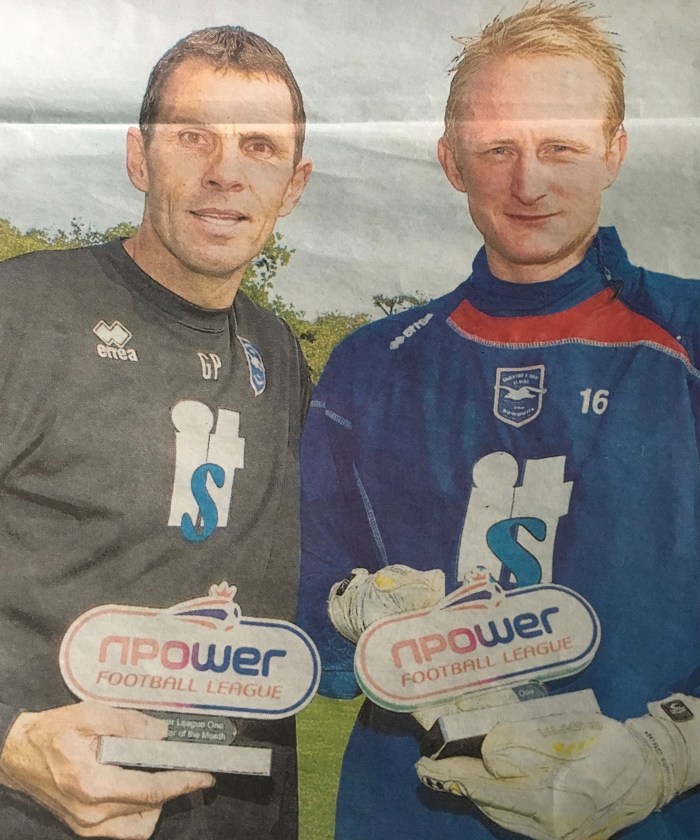
“At Leeds I wasn’t supposed to play it to the centre backs but under Gus you had to play it short; he would go mental if you didn’t. That was his philosophy. I’ve always been a big fan of possession-based football.”

On the eve of the 2010-11 season, Poyet’s goalkeeping options were narrowed when first-choice Peter Brezovan was nursing a wrist injury and he wasn’t happy to start the campaign with either of the inexperienced understudies, Michael Poke or Mitch Walker.

Poyet told the club’s official website: “Goalkeeper is a key position in the team, and with Brezovan injured, we wanted to bring some experience to that position.

“Casper brings that experience and has played at this level and higher. I have worked with him at Leeds United, and know exactly what he is capable of, he also knows what it takes to get promoted from League One.”

Ankergren hadn’t even had time to get to know his new teammates when he made his Albion debut in a 2-1 win in the season-opener away to Swindon Town the day after signing.

Unfortunately, he didn’t cover himself in glory on his home debut when a mistimed punch helped Rochdale to get a last-gasp equaliser in a 2-2 draw at Withdean.

The ’keeper admitted he later hid himself away in his Jury’s Inn hotel feeling dreadful about the mistake. “I was devastated, but that’s football. As a keeper you can do well for 90 minutes but if you cock up in the 91st minute that’s all people remember you for,” he said in a matchday programme article. “It’s part of the game as a goalkeeper and you have to accept it.”

He certainly made up for it to the extent that he won the first of two nPower League One Player of the Month awards that season for his displays the following month, when he only conceded once in five matches as Albion secured 13 out of 15 points.

Ankergren won the award again in March 2011 when the Seagulls won eight matches out of eight – with six clean sheets for Ankergren – to consolidate their gallop towards the League One title.

In April 2011, Ankergren, speaking at the PFA awards in London, said: “He [Gus] was asking us to be perfect and although there’s no such thing in football, we were close, the way we did it, the way we played – he’s very, very pleased. He couldn’t ask for much more, I think.

“At the beginning of the season I had a chat with him and he said he thought a top six finish would be possible. But no, we finished first – an amazing season.”
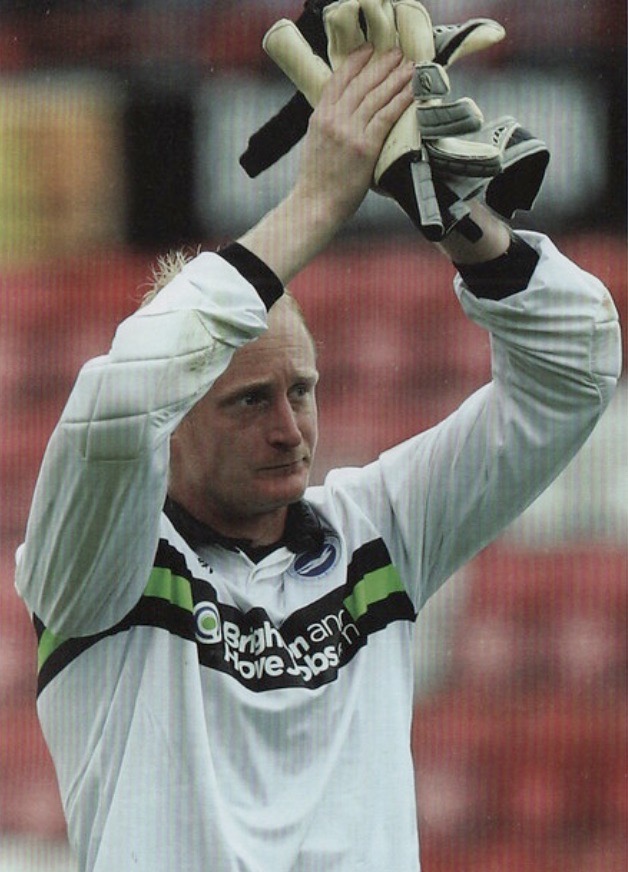
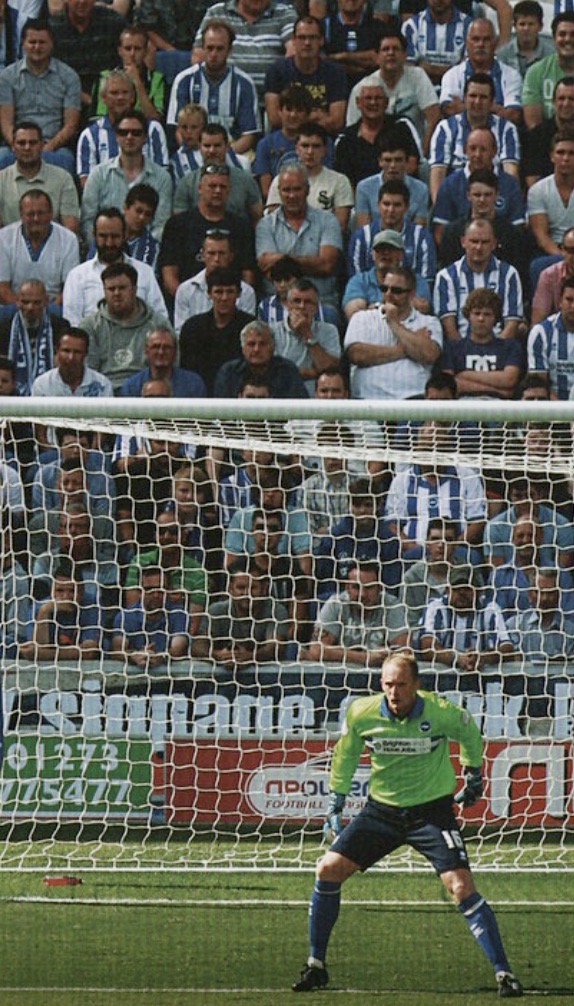
The promotion with Brighton was more personally satisfying for Ankergren because he was involved from the beginning to the end of the season.

“I played a lot of games for Leeds last season when we went up but I didn’t play the last eight or nine games and that was a big blow for me,” he said. “I’ve played every game in the league this season and obviously it’s great, that’s what you want to do as a footballer; you want to play every game and win and achieve something.”

He was in goal for the memorable first Amex league fixture against Doncaster and kept the shirt for the first 15 games of the 2011-12 Championship season. But after a seven-game winless run, Steve Harper came in on loan from Newcastle United.

When Harper returned to the North East, he got back in the side for seven more matches, but after four successive defeats in December, Poyet rang the changes for the New Year’s Day match at home to Southampton. Brezovan started in Albion’s surprise 3-0 win and stayed in goal through to the end of the season.

Fan Bradley Stratton later observed: “Brighton’s return to the Championship at the Amex highlighted the need for another change in goal. Ankergren and Brezovan, whilst competent in League One, were regularly found out at the higher level.

“They inspired little confidence in fans, and there was no doubt Poyet would use the summer window in 2012 to bring in a new man who could galvanise the Albion back line and restore confidence to a defence that had conceded six goals at both West Ham and Liverpool that year.”

After Tomasz Kuszczak arrived to become the senior goalkeeper, Ankergren’s first team action in 2012-13 was limited to four starts plus one as a sub.

Two of those were in the FA Cup against Premier League opposition. The third round FA Cup win over Newcastle United was his first appearance in the first team for 13 months and he said: “Although I have not been playing for the first team, I’ve always trained as hard as ever because you never know what’s round the corner and you want to push the other keepers hard, so I was ready. It’s still hard to be thrown straight back into action because you need to play regularly to get into the rhythm of things, but I was pretty happy with my performance against Newcastle.”

And there was nothing he could do to prevent Theo Walcott’s late deflected winner as Arsenal won the fourth round tie 3-2 at the Amex, when Leo Ulloa scored on his debut.

As if to emphasise his point about memorable howlers, one of his two league games that season was at Nottingham Forest, when he fumbled a last-minute equaliser at the City Ground, allowing Henri Lansbury’s long-range effort to earn the home side a point in a 2-2 draw.

Poyet was quick to sympathise with the goalkeeper and said: “To begin with I thought the shot must have taken a deflection but when I’ve seen it again I nearly killed myself!

“When you are a keeper you pay the price and Casper has done that today. He was having a very, very good game, making two or three good saves, coming for crosses and kicking very well. And in training he will save 1,000 shots like that, but we wanted him to save it today.

“Goalkeeper is a terrible position to play but we lose together and we win together – at least we got a point.”

In Oscar Garcia’s only season in charge, Ankergren played only two first team matches but he was kept on under Sami Hyypia and, with the arrival of David Stockdale and the emergence of youngster Christian Walton limiting his likely involvement even further, he made just the one appearance in the 2014-15 season, in Albion’s 4-2 League Cup win away to Swindon Town.

He confessed on the podcast that he struggled to get his head round the situation and contemplated quitting the game but was talked out of it by goalkeeping coach Andy Beasley.

With the arrival of Niki Maenpaa as back-up to Stockdale, Ankergren could have been forgiven for thinking his chances of ever playing first team football again had gone, but in a bizarre set of circumstances during a FA Cup tie at Lincoln City on 28 January 2017, Ankergren had to come off the bench in the 56th minute when Maenpaa went off injured.

The Finn had injured his shoulder in the melee that resulted after Glenn Murray had committed a foul in the penalty area and the first thing Ankergren had to do was to face the resultant penalty, which was scored.

Five minutes later he was picking the ball out of the back of the net again after inexperienced Chelsea loanee Fikayo Tomori had skewed a shot past the beleaguered ‘keeper. To rub salt in the wound, Albion lost 3-1, enabling City to reach the last 16 of the competition for the first time in their 115-year history. The consolation for Albion, of course, was that they were able to concentrate on the league, and they went on finally to win promotion to the elite level they’d left in 1983.

That promotion signalled the end of Ankergren’s playing days but the start of a career as a goalkeeping coach which he admitted in the podcast he’s enjoying immensely.

Born in the Danish coastal seaport of Køge on 9 November 1979, Ankergren played football with his mates from an early age on a pitch close to his home. He also played handball in the winter – it’s a big sport in Denmark – and it got to the point where he had to decide which one to pursue seriously because his parents said he couldn’t do both. He chose football because he enjoyed it a bit more, although he reckoned the hand-eye coordination involved in handball was an asset as he pursued his career as a goalkeeper.

When he started out playing organised football with Solrød FC, he switched from centre half to midfielder to striker and only went in goal when their keeper got injured.

He was only 12 when he was signed by his hometown’s local professional club, HB Køge. Before he became a full professional, he worked for a pizzeria delivering pizzas and at an after-school club. After leaving school, he continued his education at college for a further two years because he wanted to be a policeman if football didn’t work out.

But having broken into the Køge first team, he caught the attention of Brondby, who were probably the biggest club in Denmark at the time.

He joined them in May 2000 and started full-time the following January. “It was a big, big step for me,” he told the podcast. “I didn’t really enjoy it at first. It was a bigger step than I expected it to be.”

Their first-choice keeper, Morgens Krogh, had won Euro ‘92 with the national team so it was tough to compete with him. But the youngster made his debut when Krogh was injured and eventually took the no.1 spot. As well as winning one championship, he topped it by winning the league and cup double in 2005-06.

Ankergren also gained experience playing in the Europa League against teams like Locomotiv Moscow, Espanol and Palermo.

Shortly after he signed a new three-year contract with Brondby, unbeknown to him they signed Stephan Andersen from Charlton Athletic, and Ankergren wasn’t assured he’d still be first choice. “I’d had enough and wanted to try something different so while I was away with the national team (the B side) in Asia, I got a call from my agent saying Leeds were interested.”

Ankergren just missed out on a full international cap, although he was on the bench for games against Luxembourg and the Czech Repubic. He did win a handful of under 21 caps, and he said: “I’ve represented my country at various junior levels and remember making my under 16 debut against England. On the other side that days was Wes Brown and Michael Owen – you could tell both would have successful careers. Owen looked something special and he scored against me in a 4-1 defeat. I didn’t have my best game.”

Ankergren joined Leeds on loan initially, making his debut aged 27 in a 2-1 home win over Crystal Palace on 19 February 2007. Although it panned out to be one of the most turbulent times in the club’s history, Ankergren found life at Leeds more relaxed under Dennis Wise and Poyet than he had in Denmark.

His 14 games at the bottom of the Championship couldn’t halt the slide towards relegation which was confirmed emphatically with a points deduction when the club went into administration.

“I saved a couple of penalties early on, which won over the fans, including an important one against fellow strugglers Luton,” he said. He denied Dean Morgan from 12 yards with only four minutes left of a tense afternoon, and he told a supporter’s blog: “There were a few minutes, plus stoppage time to go against Luton so I had to stay focused as they were down there with us, so the win was vital.

“I had also saved a penalty away at Cardiff City but unfortunately we still lost the game.”

After signing on permanently, Ankergren was first choice as Leeds acclimatised to third tier football in 2007-08. He made 54 appearances in all competitions and, having conceded only one goal in five league games in September 2007, won his first League One Player of the Month award.

It wasn’t always plain sailing at Elland Road, though, and he was sad to see Poyet depart to become assistant manager to Juande Ramos at Spurs in November 2007, followed early in the new year by Wise, who became director of football at Newcastle.

“Gus was really, really respected up in Leeds. It was a big loss when he went to Tottenham – we really missed him, but I kept in touch after he left,” said Ankergren.

“I liked his style. If you do well, he’ll let you know – but if you don’t do well, he’ll also let you know. There’s none of this going behind your back; he’ll say it to your face, which is what I like.”

He also felt a sense of loss with Wise’s departure. “It was a massive disappointment for me personally,” he said. “Wisey is a good man, he had given me the chance to play in England and I will always be grateful to him.”

In March 2008, the goalkeeper faced an “improper conduct” charge brought by the FA for allegedly throwing a missile into the crowd at the County Ground, Swindon. He was fined £750 but not banned.

Gary McAllister was installed as manager and steered the club to the end of season play-offs against Doncaster Rovers and, despite some important saves by Ankergren, they lost. “I don’t know why but we never turned up at Wembley,” said Ankergren. “It was a strange feeling which let me flat, and it took a long time to get over that. We came so near, yet so far.”
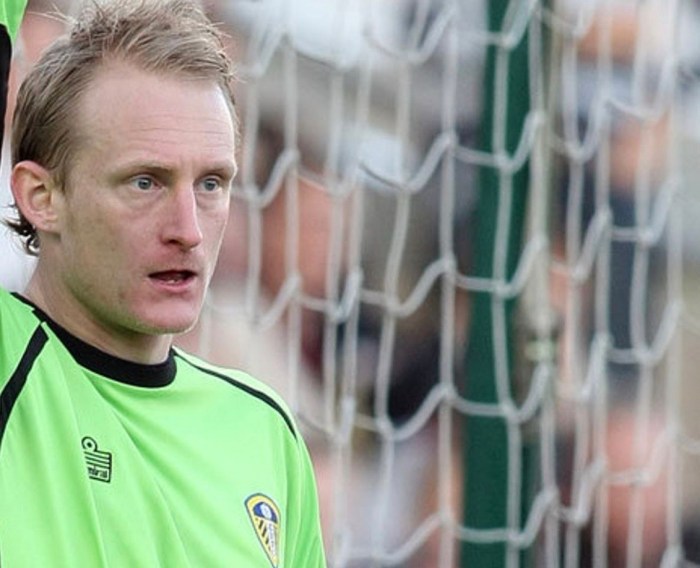
Ankergren admitted to sheridan-dictates.com that he did not particularly enjoy the 2008-09 season. “It appeared that McAllister didn’t know his best team. I was in the side one week then the next he would pick Dave Lucas. Goalkeepers need games to stay sharp and focused and the thought of being dropped played on me and I did not perform to the standards I expected from myself.

“McAllister had been an outstanding midfielder but he was a League One manager with a League One squad. I think he expected too much from a group who didn’t have the ability that he had been blessed with as a player.

“The atmosphere was not great around the club and I thought that McAllister made some very strange decisions.

“Although I did not have any real issues with the manager, I have to be honest and say that I was not too disappointed when he was sacked and Simon Grayson was brought in.”

Grayson’s reign started on Boxing Day 2008 and he put Ankergren back into his team to play Leicester City. Leeds had fallen into mid-table but turned things around to earn a place in the play offs against Millwall who won the two-legged semi-final.

“Looking back, could we handle the favourites tag?” Ankergren asked. “It was another horrible feeling, but we were all determined to come back for pre-season training and go one better.”

However, although Lucas had left the club, Ankergren faced new competition in Shane Higgs and Grayson went with him at the start of the 2009-10 season.

But when Higgs was injured at MK Dons on 26 September 2009, Ankergren appeared as a substitute and eventually won his place back, even though United brought in Frank Fielding and David Martin as loan goalkeepers, and he had the feeling Grayson didn’t really rate him.

Ankergren re-established himself with a string of impressive performances and clean sheets and was the last line of defence in a memorable 1-0 FA Cup third round win for Leeds at Old Trafford in January 2010, including pulling off a terrific save to deny Danny Welbeck.

He was also in goal against Spurs in the next round when it took a replay at Elland Road before the north London club finally won through.

However, the beginning of the end of his time at Elland Road came when he made a mistake in a 2-0 home defeat against Millwall on 22 March 2010, and he didn’t return to the side for the remaining nine games as they went on to win promotion to the Championship as runners up behind Norwich City.

“I remember sitting with Paul Dickov in the dressing room having a beer and reflecting on what we had achieved,” Ankergren told sheridan-dictates.com. “We went over to the Centenary Pavilion for the end of season dinner and on to a nightclub, It was a great night but deep down I knew that I had played my last game for the club as my contract was up.”

Ironically, his replacement at Leeds was fellow Dane, Kasper Schmeichel, son of Ankergren’s goalkeeping idol, Peter, who also played for Brondby before going on to achieve fame at Manchester United.

Ankergren’s 11-year association with the Seagulls came to an end in September 2021 when he returned to his home country as head goalkeeping coach at Brondby.

Pictures from various online sources, matchday programmes and the Argus

Paynter left a blank canvas at Seagulls and Blades

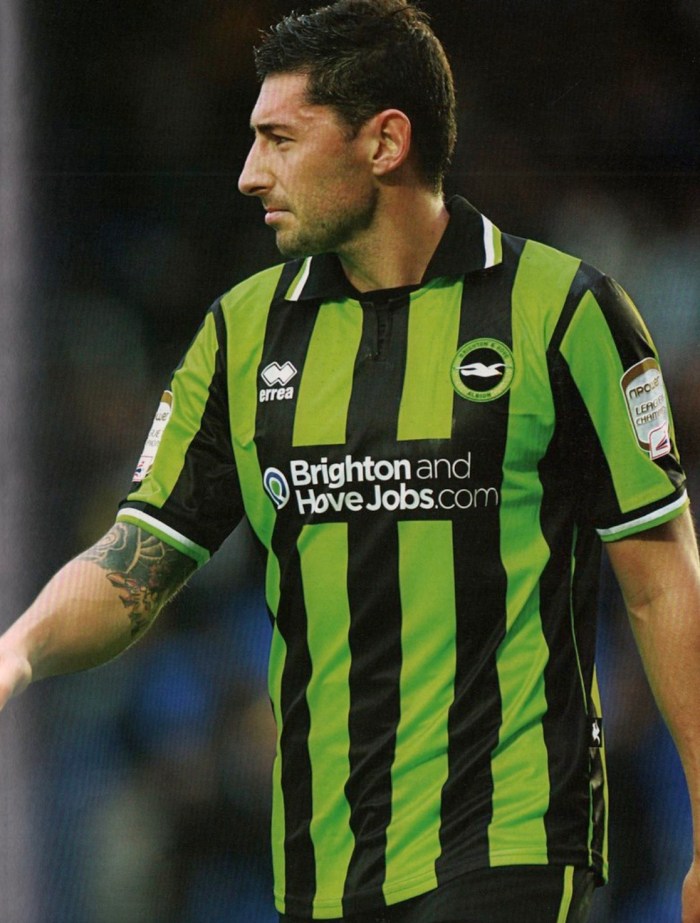
A JOURNEYMAN striker who fired blanks for Brighton and Sheffield United only found very occasional purple patches of goalscoring in a 12-club, 17-year career.

Billy Paynter didn’t manage a single goal in 10 games on loan for Gus Poyet’s Seagulls and carried with him from parent club Leeds United the somewhat unkind epithet ‘Barn door Billy’ for his proverbial inability to hit one with a banjo.

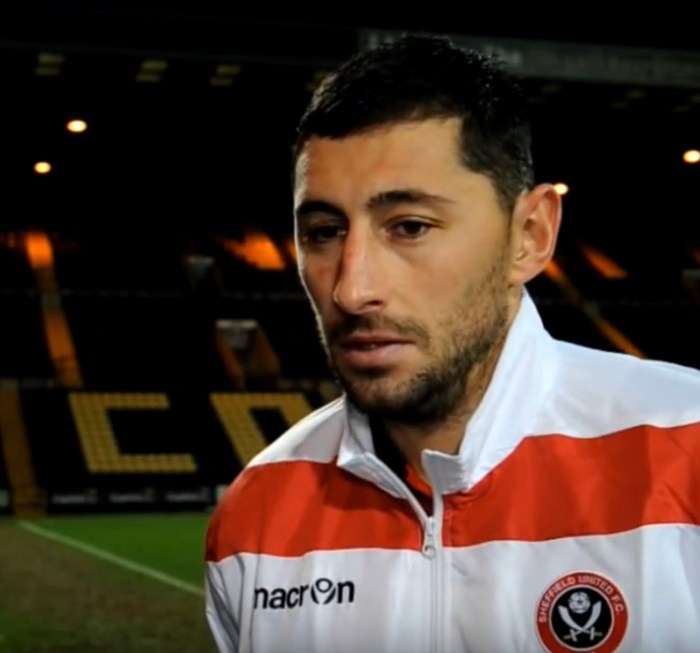
A subsequent half-season loan spell at Sheffield United under Nigel Clough yielded a similar zero in the goals scored column.

A journey around the message boards on supporter websites uncovers some brutal and unflattering comments about Paynter’s contribution for their team and yet it was a career that yielded 131 goals in 529 games – one in four.

And it all began promisingly under the guidance of former Albion captain and manager, Brian Horton.

Born in the Norris Green area of Liverpool on 13 July 1984, Paynter joined Port Vale’s academy at the tender age of 10 and turned professional soon after his 16th birthday.

Horton gave Paynter his first team debut when he was only 16 years and 294 days old on 3 May 2001 as a 61st-minute substitute at home to Walsall.

It was 10 months before he made a start, although he got a few more sub appearances, and Vale supporters had to wait until the start of the 2002-03 season for his first goal, after he’d replaced injured crowd favourite Steve McPhee in a home game against Wrexham.

Eventually, Paynter got into his stride and his popularity with the fans saw him voted Player of the Year in 2004-05.

His 34 goals in 158 games for Vale caught the eye of another former Albion manager, Peter Taylor, at then-Championship side Hull City.

Signed initially on loan, a fee of £150,000 took him on a permanent two-and-a-half-year contract to the KC Stadium in January 2006.

The following month Paynter turned out as a right-sided midfield player for a Football League Under-21 team (selected and managed by Taylor) in a game against an Italian Serie B side at the KC Stadium.

Taylor also experimented with him in the same position for Hull but, having scored only three times in 23 matches, Paynter was on the move again after only eight months.

He switched to Southend United, also in the Championship, for £200,000 in August 2006 and somewhat ironically, his only goal for the Shrimpers was scored against Brighton in a 3-2 League Cup win at Roots Hall in September 2006.

A lack of goals and a hamstring injury meant his stay in Essex was cut short and for the second half of the 2006-07 season he went on loan to League One Bradford City, where he managed four goals in 15 matches, including one on his debut.

On August deadline day in 2007, Paynter’s next move saw Paul Sturrock sign him for Swindon Town. Within a month he had netted a hat-trick against Bournemouth and added two more in a 5-0 win over Gillingham the following month.

It wasn’t all plain sailing for him, though, and after a two-month goal drought which had seen him lose his place, he told BBC Radio Swindon: “You can try and do too much and get caught up with it, but if you relax and get on with your game, I think it will come naturally.”

Paired with Simon Cox initially, Paynter got amongst the goals in support of the main man. But he stepped up a gear after Cox was sold to West Brom in the summer of 2009. His new strike partner was a young Charlie Austin and the pair enjoyed a rich seam of goalscoring form in the 2009-10 season under former Albion captain Danny Wilson.

Paynter had a spell where he scored 15 goals in 17 games and ended the season with 29 goals in 52 matches, his best goals-to-games ratio in a season. Swindon’s captain that season was none other than Gordon Greer, who remains a close friend of Paynter.

Four of Paynter’s goals had been scored against Leeds and, in the summer of 2010, he moved to Elland Road on a Bosman free transfer, with Wilson admitting to BBC Radio Wiltshire: “Anybody who scores nearly 30 goals in a season will be wanted by bigger clubs than us.”

Leeds boss Simon Grayson said: “He has matured as a player over the last couple of years and he had a fantastic season last season. He works ever so hard, holds the ball up well and he has proved he knows where the back of the net is.

“When we knew he was available we were desperate to get him. We feel he will be a good acquisition for the club, and I am delighted to have got him.”

Unfortunately, his time at Leeds didn’t start well when he picked up a shin stress fracture in a pre-season match in Slovakia, leading to him missing the start of the season.

It wasn’t until the second week of October that he was able to make his Leeds debut and starts were rare as Luciano Becchio and Davide Somma were Grayson’s preferred selection up front. Paynter didn’t register his first goal for Leeds until the following March, in a 2-1 win at Preston. It was his only goal in 23 matches that season.

As the 2011-12 season got under way, Grayson had added Mikael Forssell to his striking options and the manager encouraged Paynter to talk to other clubs, with Sheffield United and Brighton discussed as possible destinations.

Paynter preferred to stay and try to stake a claim for a place but, having only played once as a sub in the opening game of the season, he decided to make a three-month loan switch to Brighton at the end of October 2011.

On 29th October 2011, he made his Brighton debut as a 67th-minute substitute for Matt Sparrow in a 0-0 draw away to Birmingham City.

The first of his six starts came on 1 November in a 0-1 defeat at Watford. He came off the bench a further three times and, without troubling the scorers, returned to Elland Road in January.

Back at Leeds he had to wait until April before he was selected by new manager Neil Warnock for a home game against Peterborough United. Paynter scored twice in a 4-1 win and, when replaced by substitute Becchio in the final minute, left the field to a standing ovation. But he picked up an Achilles injury in the following game away to Blackpool and was made available for transfer at the end of the season.

Paynter earned a place in a planetfootball.com poll listing 13 of Leeds’ “worst and weirdest signings under Ken Bates” although he was good-humoured enough to acknowledge it in a 2018 Under the Cosh podcast.

“I’ve always said there’s some players that will be remembered for being good, there’s some players that will be remembered for being sh*te,” he said. “No one remembers the OK players. Take the positives out of a bad situation, in that way I will be remembered!”

It was former Brighton striker Dean Saunders who was responsible for Paynter’s next move, picking him up on a free transfer for League One Doncaster Rovers on 13 August 2012.

While Saunders left the Keep Moat Stadium in January 2013 to join Wolves, Paynter played his part in Rovers winning promotion back to the Championship under Brian Flynn, top-scoring with 15 goals as Rovers returned to the second tier as champions.

An anonymous Donny fan recalled: “He had some good games for us and made the pass from the missed penalty at Brentford that enabled (James) Coppinger to score and win us promotion. He is best played in the box. He causes all sorts of problems. He is a tough guy and takes no prisoners. I liked him but I would say League One is his limit.”

A familiar face in the shape of Brian Horton arrived as assistant manager to new Donny manager Paul Dickov (Flynn had been promoted to director of football) in the summer of 2013.

It must have given Paynter some satisfaction on 27 August 2013 when he scored in a League Cup tie at home to Leeds, although the visitors ran out 3-1 winners. However, that was his only goal and, after managing only one start and 11 appearances off the bench, up to Christmas, he was sent on loan to League One Sheffield United for the second half of the 2013-14 season.

An exiled Blades fan living in Leeds, ‘Blader’ said: “I am uninspired and don’t see this is a great signing. I’ve seen him play many a time and never seen him perform notably and he is a laughing stock in Leeds for how badly he performed.”

A blunt Blade

He made his debut as a sub against Notts County on 11 January 2014 but spent much of the time on the sub’s bench as manager Nigel Clough preferred to play with ‘a false 9’. Paynter made just six starts and came off the bench seven times but no goals were forthcoming. United finished seventh, one place off the play-off places, seven points adrift of sixth-placed Peterborough United.

Paynter was only a spectator as United remarkably reached the semi-final of the FA Cup, losing 5-3 at Wembley to Hull City, Jamie Murphy, later to play for Brighton, among the Blades scorers. A young Harry Maguire at the back for the Blades was named the League One player of the year.

The last three seasons of his playing career saw Paynter drop into League Two and he joined Carlisle United on the same day as former Albion midfielder Gary Dicker.

However, the season wasn’t even a month old when Graham Kavanagh lost his job as manager. His successor Keith Curle steered them to a fifth from bottom finish.

Paynter’s involvement was limited to 12 starts plus eight appearances off the bench and he and Dicker clashed with Curle when they sought PFA guidance after they were fined for allegedly failing to attend training sessions.

In the close season, Paynter headed 90 miles east to Hartlepool United, who’d just avoided dropping out of the league after finishing four points above Cheltenham Town.

The goal touch returned as Paynter top scored with 15 goals in 35 appearances as Hartlepool finished in 16th place courtesy of a decent run of wins in the spring under new boss Craig Hignett.

The managerial door revolved once more at Victoria Park the following season but Hignett’s successor Dave Jones (the former Southampton and Sheffield Wednesday boss) couldn’t prevent Hartlepool from heading out of the league, controversially parting company with the club with two games to go following an on-screen rant by United’s best known fan, Jeff Stelling.

Club captain Paynter, who had openly questioned Jones’ tactics in the local press, joined forces with fitness coach Stuart Parnaby to assist caretaker Matthew Bates for the final two fixtures.

It was one of those footballing fates moments that they needed a miracle against Paynter’s old club Doncaster in the final match and it was given a big build-up in the Mirror.

“Although we lost at Cheltenham last weekend, the lads had a lot more fight in them. I can understand it when players lose confidence or belief, but you can’t drop out of the Football League after 100 years without a fight,” he said.

“It’s one of those strange coincidences that we need to beat my old club to stand a chance of survival. I really enjoyed my time at Doncaster, and I’ll never forget that day we were promoted to the Championship, but I hope the supporters understand my loyalty is with Hartlepool now.”

Hartlepool hitman

Although Hartlepool won 2-1, they had been relying on other results going their way and Newport’s 2-1 win over Notts County 2-1 meant they stayed up and the North East side lost their league status. Having contributed just four goals in 26 matches, Paynter left the club.

While he attempted a brief extension to his playing career, training at non-league AFC Fylde, Southport and Warrington Town, he retired from playing in November 2017 and turned to coaching. He joined Everton’s academy in February 2018 before returning to his first club, Port Vale as professional development phase lead coach in October 2020.

On rejoining, he said: “It’s a joy to be back where it all started. Coming through PVFC’s Centre of Excellence from the age of 10, I know what the DNA of Port Vale is and what sort of players we should be producing.”

Pictures from various online sources and the Albion matchday programme.

Why Roman’s roubles spelled bad news for Alexis Nicolas

A PROMISING young midfielder edging towards first team football at Chelsea had his dreams extinguished when Roman Abramovich arrived with lorry loads of cash.

Manager Claudio Ranieri had let Alexis Nicolas know that he was heading in the right direction after he’d broken through to the fringes of the first team.

But when Abramovich took over at Stamford Bridge, big name signings started to arrive and Nicolas was left way down the pecking order behind the likes of Juan Sebastián Verón, Claude Makélélé, Geremi and Scott Parker.

New boss Jose Mourinho informed the youngster he should look elsewhere to make progress, and Brighton, newly promoted to the Championship, offered a refuge for the talented London-born Cypriot under-21 international.

Albion’s midfield options were depleted at the beginning of the 2004-05 season with Simon Rodger a long-term absentee, stalwart Richard Carpenter recovering from close-season knee surgery, and Charlie Oatway also sidelined through injury.

It meant Nicolas had a chance to show what he was made of and he played 15 games on loan from the start of the season through to October.

Enthusiastic Albion boss Mark McGhee said: “He has brought energy and he has got quality. He is a certain type of player, similar in many ways to Charlie Oatway.

“He is not a box-to-box goalscoring midfielder but what he does brilliantly is that he is always in the area around the ball where you need him.

“He breaks things up quickly and, when we win possession, we go more quickly from defence into attack with Alexis in there than we did previously.”

Nicolas clearly relished the opportunity he’d been given and, as the prospects of a permanent move grew stronger, he told the Argus: “It’s flattering that Brighton want to keep me. I like it here. I am happy with the club and the manager and I don’t see why it can’t be permanent.

“If everything can come together, and I think it will be a good move, then I don’t see why it won’t go ahead.”

He added: “There is a lot of stuff to be sorted out with a lot of different people.

“All I can say is I am happy here and I like the club. They are good people and the fans are great. Anyone with an offer to come here has got to be chuffed with that, because it is a great set-up.”

McGhee made no secret of his admiration for the 21-year-old, saying: “He’s been a fixture in the team and that says it all. He is improving week in and week out and I think he has got a good future.

“He has a terrific little engine and attitude. He quietly goes about his job and he has been really important for us so far this season.

“The boy himself is modest and unassuming. He loves Chelsea, he loved being there and I am sure he will be very disappointed to leave, but he wants to be a footballer more than he wants to be a Chelsea player. That is the important thing for us.”

McGhee explained the difference Nicolas made to the side. “He has that knack of being in the right place at the right time; he seems to cover such a big area. For a physically small lad, he is everywhere.

“He anticipates where the next ball is going and gets there early, puts people under pressure, wins the ball back and activates us going forward. He wins it and, before you know it, we’re going forward.”

When he signed permanently, Nicolas said: “It feels great. You are always sad to leave a club and I have been at Chelsea for a while, but I am excited and glad that I have signed for Brighton.

“The role I play is similar to Claude Makélélé’s and I used to speak to Claude regularly. He used to give me a lot of good advice. I’ve learned from all of the players at Chelsea, but now it’s time for me to open another chapter in my life and learn some other stuff.”

Nicolas said breaking into the Chelsea first team had whetted his appetite to return to that level and he told the Albion matchday programme: “Having played in the Premiership, I would like to achieve it here at Brighton and I don’t see why one day Brighton can’t be a club in the Premiership.”

Unfortunately, he joined an injury and suspension hit squad that couldn’t compete with better-resourced clubs in the second tier because of crowd-restricted home gates at the Withdean Stadium.

While Nicolas impressed in his first season, playing in a further 19 games, McGhee was forced to sell star players Danny Cullip and Darren Currie to bolster the club’s perilous finances, and the side only just managed to avoid the drop.

The following season, with Dean Hammond and Carpenter the mainstays in central midfield, Nicolas too often watched on from the bench and missed several weeks because of ankle and knee injuries.

Asked about his watching brief from the sidelines, he said in a matchday programme article: “It’s been very frustrating for me this season and I’m upset about it. I’d like to think that a lot of the fans would like to see me out there. The manager can only pick eleven players and he’s the boss – what he says goes and I respect that.”

His frustration was barely disguised in an interview with the Argus on 23 Feb 2006, after a reserve match he was due to play in was called off.

“It seems impossible for me to get 90 minutes at the moment,” he said. “I was out for six weeks injured and have only managed 60 minutes football against Millwall in a reserve match since because of postponements.

“Before that I was mostly on the bench. I have hardly played this season.

“Even though I am not fully match fit, I have been training hard and have enough about me to be able to cope. I am not thinking of myself when I say this. I have put personal goals to one side.

“After all, I pulled out of international squads with Cyprus earlier in the season even if it meant I could just be on the bench for Brighton. I feel I have a lot to offer.”

The midfielder added: “What matters is Albion. I love the club, the lads and the fans and want to do my best for them.”

Unfortunately, after playing only 12 matches in 2005-06, he wasn’t kept on after the Seagulls were relegated on 30 April 2006, and he never played league football again.

Born in Westminster on 13 February 1983, Nicolas went to Trent CE Primary School in Cockfosters, where he first showed a talent with a football. He also enjoyed long distance running and tennis.

He played football for a decent Sunday League side in Colliers Wood alongside two other future professionals, Steve Sidwell and Leon Britton, and eventually became part of Arsenal’s youth set-up. But he ended up as an apprentice at Aston Villa, and got taken on as a professional. He was in the same under-19s squad as future Albion goalkeeper Wayne Henderson and defender Liam Ridgewell.

But in December 2001, he joined Chelsea on a free transfer, and with 24 starts plus one as a sub, he missed only one of the reserves side’s 26 matches in the 2002-03 season.

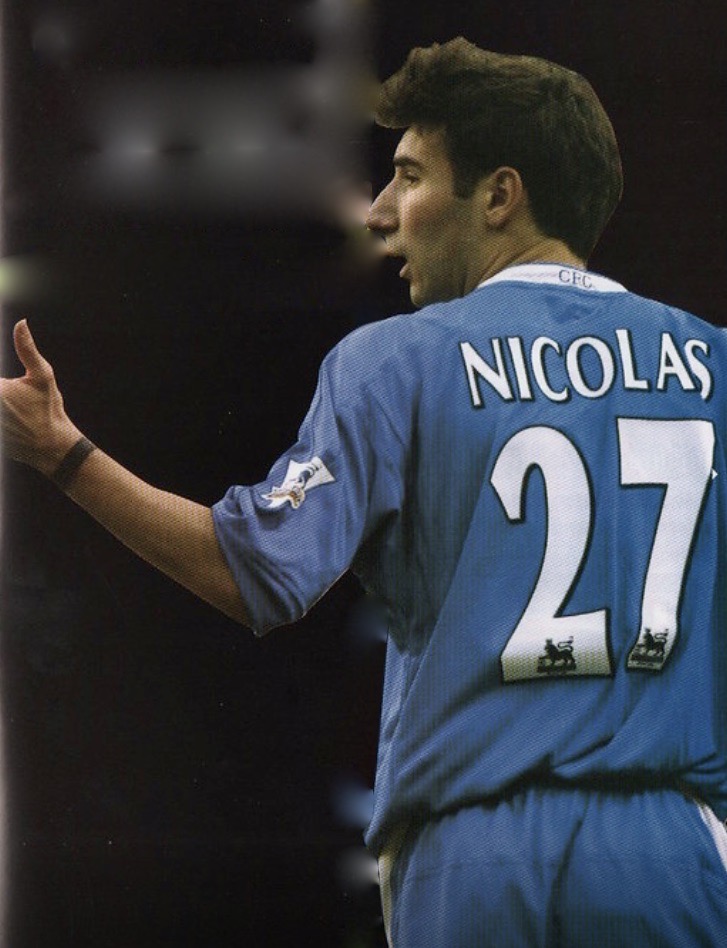
He was handed the no.27 shirt for the 2003-04 season and made his Chelsea first team debut in their 1-0 FA Cup win away to Scarborough on 24 January 2004.

John Terry scored the only goal of the game and Nicolas played in midfield alongside Frank Lampard and Emmanuel Pettit in a side also featuring Joe Cole and Wayne Bridge.

Guardian football reporter, Paul Wilson, noted: “Alexis Nicolas made an encouraging debut, but time and again Cole, in particular, would attempt something complicated when a simpler option was available.”

Nicolas made his Premiership debut a week later in a 1–0 win over Charlton Athletic. His only other appearance was as a 90th minute substitute for Lampard as the Blues rounded off the season with a 1-0 home win over Leeds United.

Nicolas spoke about those early years at Chelsea in an interview with Simon Yaffe of planetfootball.com.

“Ranieri called me into his office at the end of 2002-2003 and told me the club didn’t have a lot of money to invest and that he didn’t have too many midfielders at his disposal, so I would be in his plans for the following season,” Nicolas said.

Even as the oligarch’s takeover was going through in the summer of 2003, the youngster was part of Ranieri’s team which beat Newcastle United 5-4 on penalties in the final of the FA Premier League Asia Cup in front of a crowd of 41,500 in Kuala Lumpur’s national Bukit Jalil stadium. It was the first piece of silverware of the Abramovich era.

“It maybe wasn’t the most glamorous of trophies, but it was still the first of many under the new owner,” Nicolas said.

It wasn’t long before a flurry of big-name signings soon changed the picture for Nicolas; the arrival of five midfielders in particular being somewhat ominous.

“I had planned to go out on loan because I had fallen so far down the pecking order,” Nicolas added. “But some of the midfielders, like Makélélé and Petit, were picking up injuries, so I stuck around.

“Looking back, it was easy to think, ‘He’s signed, so that is why I am not playing,’ but it was really a turning point in Chelsea’s history, and it was nice to have been part of it.

“I was pleased for the club when Abramovich took over but also a little bit disappointed for myself.”

After relegated Brighton released him, Nicolas tried to continue his league career and had a trial with Bradford City, but after an unremarkable game for their reserves side, manager Colin Todd told the Bradford Telegraph & Argus: “At the moment I can’t guarantee him anything. His fitness levels aren’t the best but if he wants to continue to train with us and try to improve on that then it’s up to him.”

In fact, he decided to join St Albans City on 26 September 2006 and made his Nationwide Conference debut in a 2-1 defeat at Weymouth four days later.

On 12 November, the St Albans City website noted: “A knee injury restricted Alexis to just six appearances for St Albans City but, with a number of League One and League Two sides showing an interest, the player has decided to move on.”

Nicolas said he was grateful to manager Colin Lippiatt for giving him the opportunity and added: “I was not in the best of states when I joined the club but everyone has been a great help and when fully fit I hope to join one of the League One or League Two sides who are showing an interest in me.”

But it was a career in property investment that opened up for him instead and in 2012 he set up his own business in partnership with Ryan Springer.

He wasn’t completely done with football, though, and, also in 2012, Nicolas had a spell as player-manager of Hadley FC, a Spartan South Midlands League Premier Division side, and in 2014-15 he was part of the club’s management team under former Spurs and Chelsea player Micky Hazard.

Pictures as featured in the Albion matchday programme and from various online sources.

Transfer makeweight Storer became all-time Seagulls hero

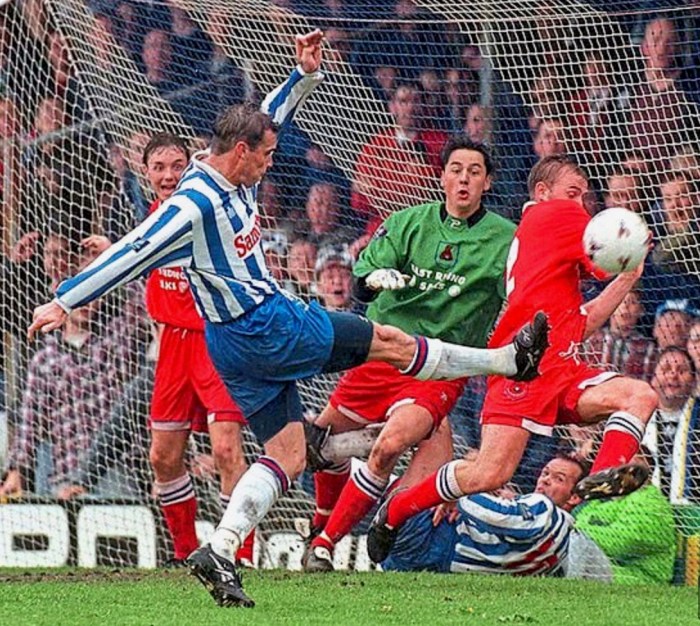
STUART Storer cemented his place in Brighton’s history when he scrambled home a last-gasp winner in the final ever home game at the Goldstone Ground.

When a seemingly goal-bound header from Mark Morris bounced off the south stand end’s crossbar, fortunately it fell into the path of the onrushing Storer who managed to scramble it over the line among a sea of flailing Doncaster Rovers legs.

That moment on 26 April 1997 is often brought up with Storer via media interviews or simply when bumping into Brighton fans while on his travels. The goal is featured in the pre-match video montage shown on the TV screens at the Amex, so it has been seen by various generations of fans.

“I’m proud that people hold me in so much esteem and I’m very fortunate to be part of the club’s history,” Storer told Brighton & Hove Independent in an April 2017 interview. “Younger people that I teach watch the video and take the Mickey but they’ll never kill my pride. I’m very proud of that moment.”

The goal ensured a vital three points were secured in the fight to avoid relegation from the lowest tier in the Football League. In the one remaining game the following week, Albion managed to get the point needed to stay up while simultaneously relegating Hereford United.

Those crucial matches were just two of more than 150 games Storer played for the Albion under six different managers during an extraordinarily turbulent time for the club.

It was, though, a rather curious playing career all round that saw some of the game’s biggest names – Liam Brady, Alan Ball, Howard Kendall and Ron Saunders – sign him for their clubs. And he carried on playing until he was 42.

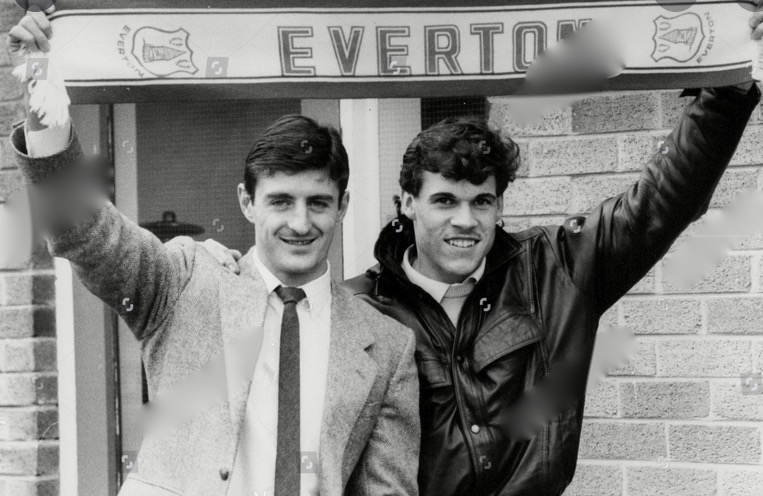
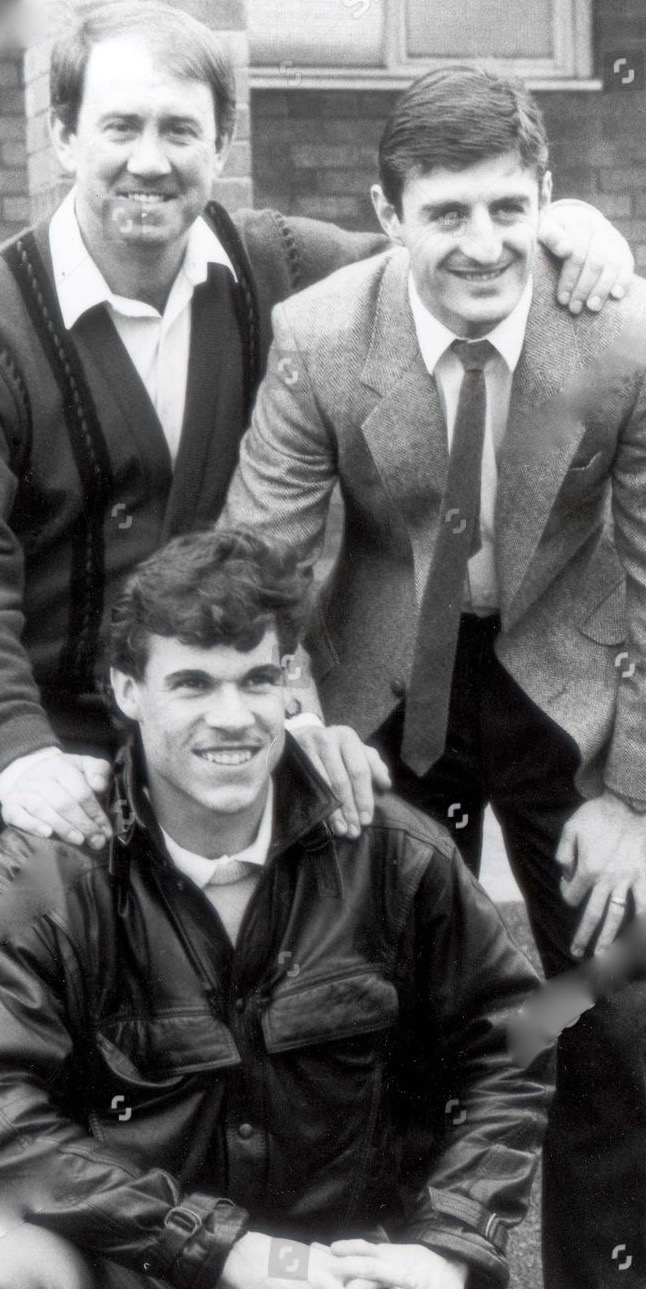
In 2006 and 2007, he was part of Everton’s Masters’ six-a-side team in the televised tournament featuring veteran players. Storer’s teammates included the likes of Neville Southall, Adrian Heath and Alan Harper.

Storer had been at Goodison Park the last time the Toffees were the English league champions. However, he didn’t make a first team appearance, invariably being the 13th man in the days when there was only one substitute.

He’d arrived on Merseyside as a transfer makeweight in a £300,000 deal Kendall struck with Birmingham City to sign Wolverhampton-born striker Wayne Clarke – the youngest of five brothers who played league football.

Clarke’s former club, Wolves, were convinced Storer had been included in the deal simply to lower the sell-on amount they were due as part of a previous agreement.

Clarke scored five goals in 10 games – including a hat-trick in a 3-0 win over Newcastle United on Easter Monday – to help Everton win the League Championship. Storer had made only 12 appearances for City in three years so his chances of making an impact with the title-chasers were slim.

Although Storer was on Everton’s books for nine months, he never crossed the white line for the first team and went on loan to Wigan Athletic, making his debut on the opening day of the 1987-88 season in a 4-4 draw away to Notts County (Garry Birtles scored two of County’s goals).

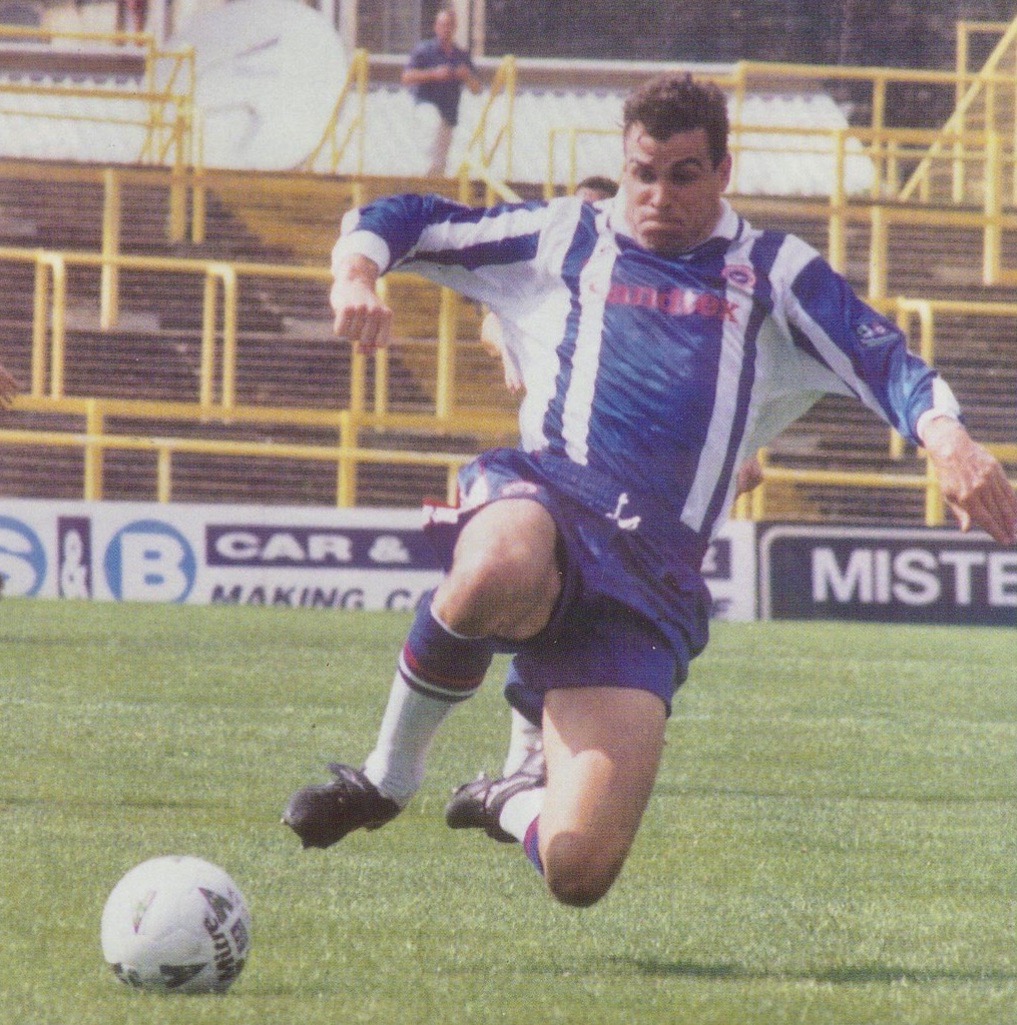
Storer was no stranger to a 4-4 draw. He played in two for Albion in 1997 – on 8 March at home to Orient and on Boxing Day later the same year when they drew at Priestfield against Colchester United (Paul Emblen got a hat-trick for the Seagulls).

Storer started nine games for the Latics and came on as a sub three times under Ray Matthias but they didn’t have the funds for a permanent transfer. Instead, the loan was cut short and, on Christmas Eve 1987, Everton sold him to then Fourth Division Bolton Wanderers for £25,000. He scored his first goal for the Trotters four days later in a 2-1 home win over Stockport County.

He enjoyed seven seasons at Burnden Park as they progressed from the basement division to the third tier under former Liverpool and England full-back Phil Neal.

His time with the Trotters included two trips to Wembley. He was a late substitute in the Wanderers side captained by Phil Brown who beat Torquay United 4-1 in to win the Sherpa van Trophy in 1989. And he was a starter in the Wanderers side who lost the 1991 Third Division play-off final to Tranmere Rovers.

Having broken an ankle and seen Neal switch to become Steve Coppell’s assistant manager at Manchester City, Storer was sold to Exeter City in March 1993 by Neal’s successor Bruce Rioch. Storer made 177 appearances for Bolton, but Rioch’s signing of David Lee had signalled the beginning of the end of his time there.

It was former World Cup winner Ball, then boss of Exeter City, who paid £25,000 for Storer’s services. He made 75 appearances (plus two as a sub) for the Grecians, initially under Ball and then his successor, former Leeds and England left-back Terry Cooper in the 1994-95 season.

Financial problems at the Devon club led to his departure. Early negotiations with a view to a transfer to Brighton initially broke down but Brady finally managed to secure his services for £15,000 in March 1995.

Ironically, he then suffered an injury during his first day’s training with the Seagulls, delaying his first appearance until 29 April. But it was memorable as he scored in a 3-3 draw away to his former club, Birmingham.

He recalled in a March 2019 interview with Michael Walker for the Daily Mail: “I was in an untenable situation at Exeter because they were going into administration. I had to get out. It was from the frying pan into the fire.”

However, Storer said, at the time he signed, he was unaware of the tensions going on around the Albion, although he knew he was the first player signed after a transfer embargo had been lifted. Not for the first time in the club’s history, fans dipped into their pockets to help buy the player.

“I think the fans just wanted to buy a player, any player, and they chipped in,” said Storer.

Born in the village of Harborough Magna, just north of Rugby, on 16 January 1967, he was raised in the village of Dunchurch, just south of Rugby, attending its local junior school before moving on to Bilton High School, where his footballing ability was recognised with selection in the Rugby Boys and Warwickshire Boys representative sides.

Wolverhampton Wanderers scout John Jarman spotted him and he went along to Molineux during the Ian Greaves managerial reign. When a takeover at Wolves saw Jarman and Greaves depart for Mansfield Town, they took the young Storer on as a trainee at Field Mill.

He began playing for their youth side but he was given his Mansfield first team debut aged only 16 in a 4-0 win over Hartlepool.

Storer and Julian Dicks at Birmingham City

Released after only a year with the Stags, he was offered another chance to build a league career by Birmingham who he joined in July 1984, initially signing as a trainee and then becoming a professional. But after limited first team opportunities at St Andrews, Saunders’ successor, John Bond, sold him to Everton as part of the Clarke transfer.

After Storer’s crucial part in keeping Albion in the League, he remained at the club until 1999, playing a total of 152 games and being part of the side who had to spend two years playing home games at Gillingham.

He moved back to Warwickshire on the day the Seagulls played their first friendly at Withdean on 24 July 1999,signing for Southern League Premier Division side Atherstone United, but he was only there for two months before moving to Kettering Town, who were playing in the Football Conference, the tier just below the Football League.

In May 2000, Storer signed for Isthmian League Premier Division side Chesham United and spent a season with them, before moving nearer to his Midlands base and signing for Hinckley United in March 2001.

Storer was made club captain, and as he approached his late 30s, he got more involved with coaching. At the age of 40, Storer was a member of the Hinckley team that achieved their highest ever league position of fourth in the Conference North, losing in the play-off final to deny them promotion.

After eight seasons, he had made more than 300 appearances for the part-timers of Hinckley while working as a PE teacher at various colleges in Coventry.

Storer continued to play until he was 42 and since 2013 has managed Bedworth United, where he is still in charge and also runs academies for boys and girls and A Level courses. He said: “I played until I was 42 at Hinckley in the Conference and then my legs gave way and I had to do something else in football.”

There’s a Michael Portillo style to Storer’s attire here and he admitted in a matchday programme article to having a penchant for “having a bizarre choice in clothing” as well as being an avid collector of hats.