Fans warmed to ‘indestructible’ Goldson after own goal start

CONNOR GOLDSON’S dad Winston must have had mixed emotions when his son scored the only goal of the game at the Amex on New Year’s Day 2016.

The avid Wolverhampton Wanderers fan in him would have been delighted to see his side leave the south coast with three valuable Championship points.

Unfortunately, Wolverhampton-born Connor was playing for Brighton that day – just his second game in the blue and white stripes.

What made it worse was that the defender had been on Wanderers’ books for five years as a young boy but was released when he was only 13.

Goldson must have been mortified when, in the 32nd-minute of that first game of 2016, he inadvertently diverted Jordan Graham’s cross past David Stockdale in the home goal.

Sure, injury-hit Albion had chances to restore parity or even win, but 11th-placed Wolves hung on to the lead and Chris Hughton’s luckless Seagulls saw a winless run extend to six games.
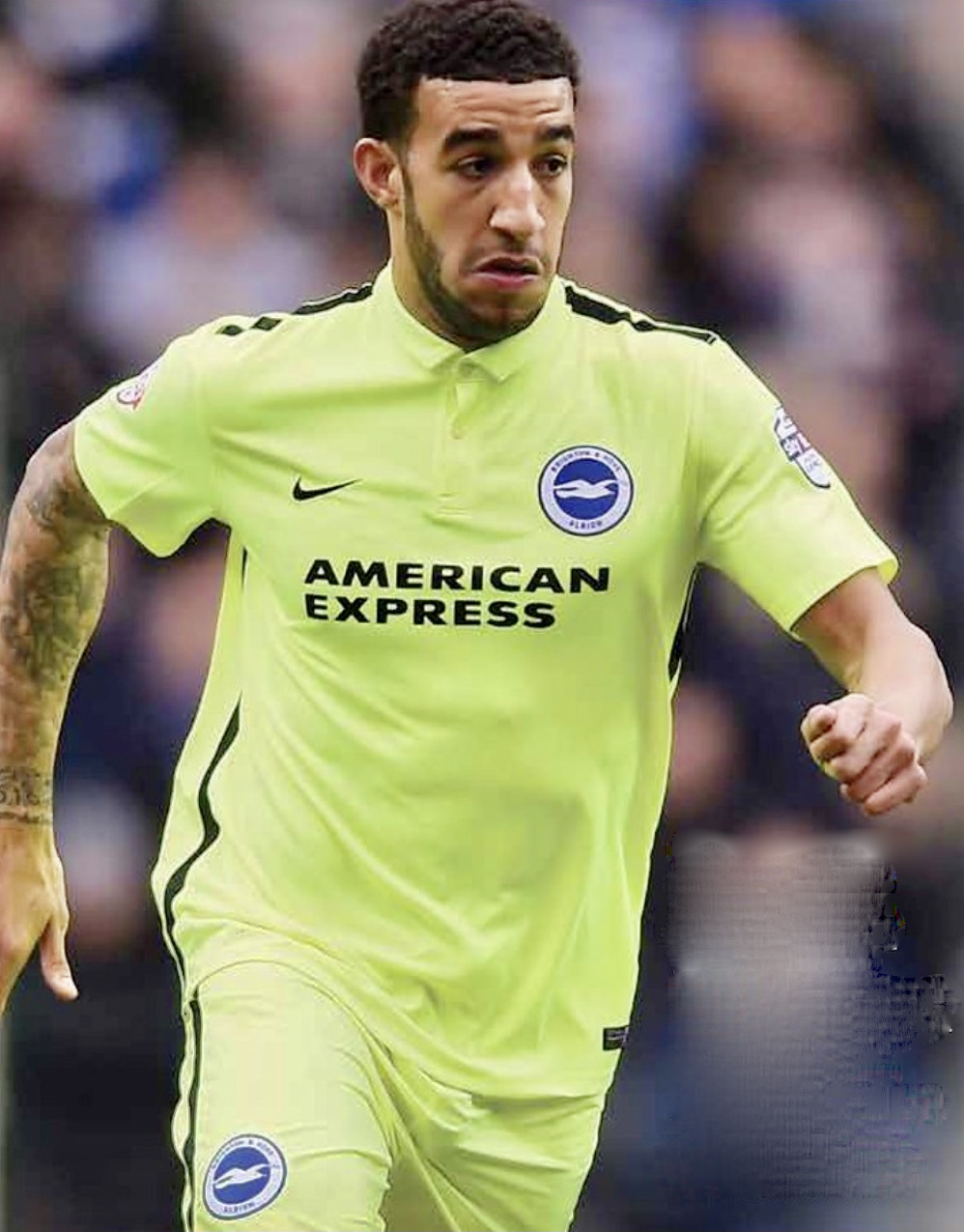
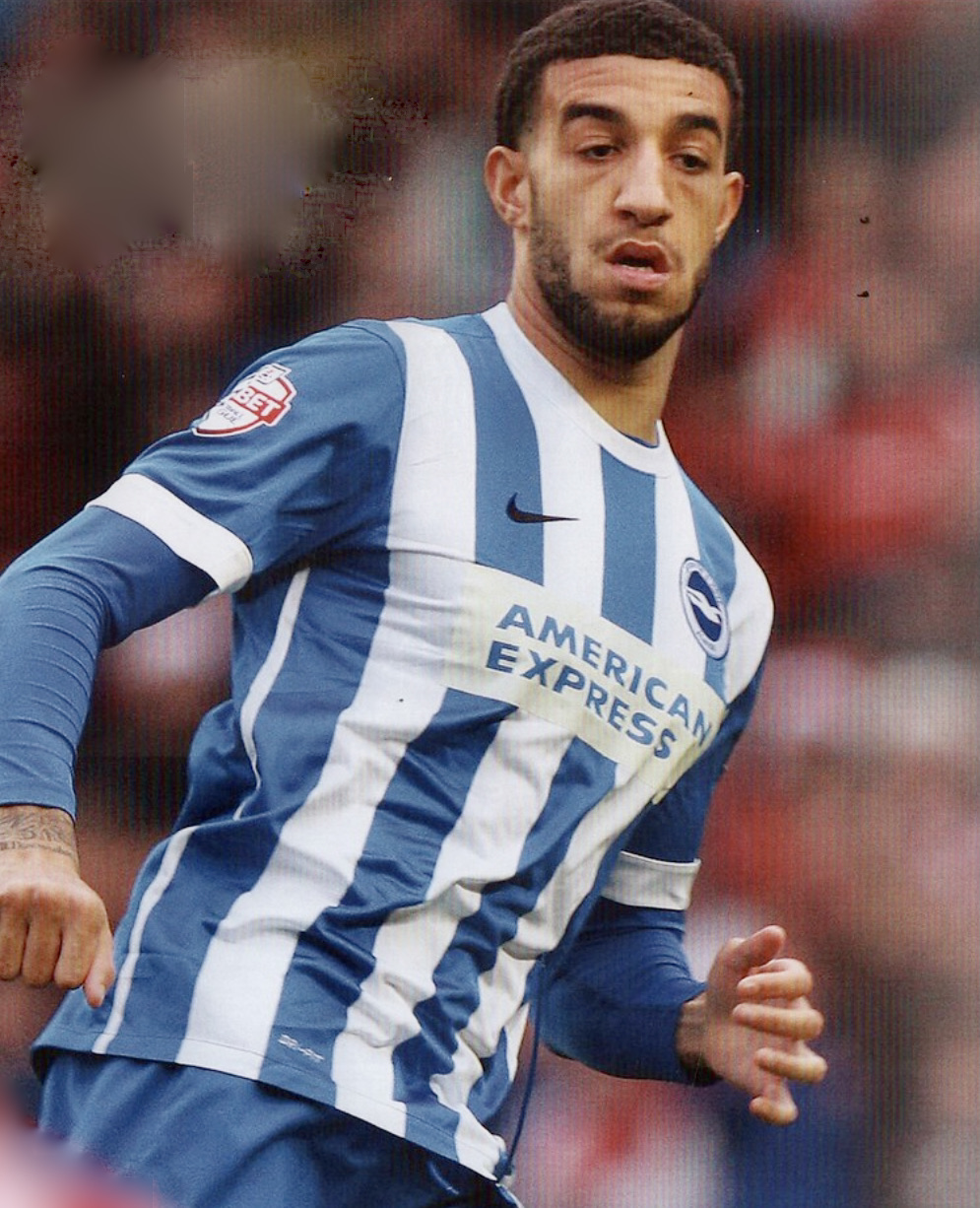
Albion also lost the next two matches but got back on track with a 1-0 win at Blackburn on 16 January and then pushed hard for an automatic promotion slot.

For Goldson, that fixture marked the start of a run of games alongside Lewis Dunk, and his first goal for the club came in a 2-1 away win at Birmingham City on 5 April, when he glanced in a Jiri Skalak set-piece delivery.

Goldson celebrates his goal at Birmingham with Beram Kayal and Lewis Dunk

He found the net again a fortnight later with a towering header from a corner as the Seagulls crushed QPR 4-0 at the Amex to edge closer to the top two (Burnley and Middlesbrough) with three games to go.

The centre-back partnership was only broken up when Dunk was shown a red card in the penultimate game, a 1-1 draw at Derby, and suspended for the final game of the ordinary league season.

Goldson was alongside returning skipper Gordon Greer for the crucial away game at Middlesbrough on 7 May when the 1-1 draw meant Boro, equal on 89 points, pipped the Albion to automatic promotion by virtue of having scored two more goals.

With Albion forced to endure the play-offs, Goldson’s involvement in the Seagulls’ bid to overcome Sheffield Wednesday cruelly came to a premature end when the centre-back was forced off injured before half-time in the first leg at Hillsborough, and Albion eventually succumbed 2-0.

The injury prevented Goldson being involved in the second leg when Dunk scored but Wednesday somehow managed a 1-1 draw to thwart Albion’s progress.

If that was a blow, it was the least of the troubles the defender would have to overcome the following season.

Frustrating though it was that Brighton brought in Shane Duffy to partner Dunk in the centre of defence, Goldson’s brief spell back in the side in early 2017 came to a juddering halt when a routine scan discovered a heart defect that required surgery.

Then it wasn’t just his football career that was under threat, but his life was in danger if urgent action wasn’t taken to operate on the swollen aorta the tests uncovered.

It has since emerged that Winston suffered a heart attack aged only 35 and Goldson’s grandfather had died of a heart problem.

The required “preventative surgery” took place at the Royal Brompton Hospital, Chelsea, leaving him with a scar down the middle of his chest. His best friend in football and former Shrewsbury teammate, Jon Taylor, told The Athletic: “He thought the worst about not playing again. He was struggling. When I saw him in the hospital it was horrible.”

Taylor was among several former Shrews people Scottish football writer Jordan Campbell spoke to for an extended article about Goldson published by The Athletic in March 2021.

“I made a T-shirt for him before a game which said ‘Stay Strong Con’. That gave him a little bit of a boost but he’s got a great family around him,” said Taylor, who is now at Doncaster. “When he had the op, and he knew he could play again, his mentality was, ‘How quickly can I get back?’. Even as young lads at Wolves we knew his mindset was second to none.”

Campbell reported how once Goldson had come to terms with the situation, he was determined to get back playing regularly, and just 15 weeks after the operation he took part in a pre-season friendly match in Austria. In a changed second half team, he lined up alongside Uwe Hünemeier against Fortuna Dusseldorf.

Physio Chris Skitt, who’d nurtured Goldson through physical issues when he was developing at Shrewsbury, said: “If I talk to kids and they say, ‘What does it take to be a professional footballer?’, I use Connor as the example.”

With a surname that lent itself so readily to the Spandau Ballet classic Gold, the “indestructible” line in the lyrics was a natural for Albion’s singing fans to pick up on.

But at the end of August 2017, on transfer deadline day, it looked certain Goldson would continue his rehabilitation into league football with a season-long loan move to Ipswich Town.

He was manager Mick McCarthy’s main target, but Albion pulled the plug on the deal at the last minute because of the collapse of a separate deal for centre-back cover they’d hoped to complete.

Goldson played in League Cup matches against Barnet and AFC Bournemouth but it wasn’t until December that he finally got his chance to feature in Albion’s debut Premier League season – and he turned in a Man of the Match performance as the Seagulls beat Watford 1-0 at the Amex.

He played in three games in January: FA Cup matches against Crystal Palace and Middlesbrough (2-1 and 1-0 wins), and the 4-0 home defeat to a rampant Chelsea.
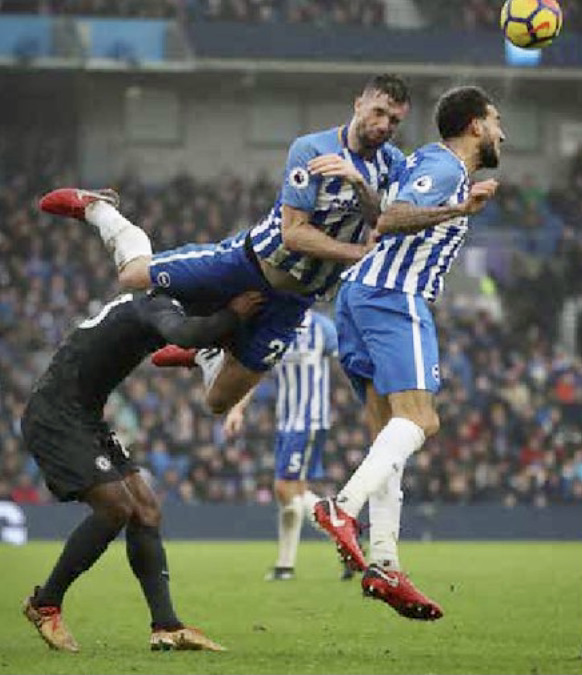
Goldson and Duffy in action v Chelsea

As Albion progressed to the fifth round of the FA Cup, Goldson once again got a start, alongside Hünemeier, as Albion beat Coventry City 3-1 at the Amex.

His last league game in an Albion shirt was as a 71st-minute substitute for Duffy in a 4-0 reverse away to Liverpool on the final day of the season.

During the close season, Goldson seized on the chance to play for his boyhood hero Steven Gerrard, who had just been appointed manager of Glasgow Rangers. Gerrard drove all the way to Brighton for face-to-face talks with Goldson and explained how he saw him as a cornerstone of the rebuilding job at Rangers.

The often magnanimous Hughton was not going to stand in his way and said on the club website: “Connor has done extremely well for the club in the three years he has been here, but he wants to play regular senior football, and at this stage we cannot give him that guarantee.

“He has been a great professional and a pleasure to work with – and he has shown a great mental strength to come through a very tough time after he underwent crucial heart surgery just over a year ago.”

Determined to seize the opportunity presented to him in Glasgow, Goldson remarkably played in 151 of 159 games Rangers took part in over the next three years; when he made his 150th appearance, it was the quickest any player had reached that landmark in the club’s history.

After Gerrard departed Rangers to take on the manager’s job at Aston Villa, Goldson indicated he wanted to make a move himself, although, at the time of writing, he remains in Glasgow.

Born on 18 December 1992, Goldson grew up on the same Wolverhampton estate as future Wanderers players Leon Clarke and Carl Ikeme.

As the son of a Wolves-mad dad, it was probably not surprising that his early footballing promise was nurtured with Wanderers. The family lived only a 10-minute car ride from Molineux.

“I was with Wolves from the age of eight until I was 13,” Goldson recalled in an Albion matchday programme article, explaining that he was in the same group as Jack Price and Ethan Ebanks-Landell, who both made it through to the first team.

“I was a striker until I was about 10 or 11, simply because I was the biggest and the quickest, but I was then converted into a centre-half,” he said. “When I got to under 14 level, the manager stopped playing me and so my dad and I made the decision to leave for Shrewsbury – and it was the best thing that could have happened to me.”

Shrewsbury fast-tracked Goldson through the groups and he was training with the first team by the time he was 16. He signed professional forms at 17 and made his first team debut the following year.

“I owe Shrewsbury a lot, both the first-team management and the coaches who brought me through,” he said.

In The Athletic feature, Skitt described in detail how Goldson went through a difficult physical development phase which in effect involved “putting him back together”.

The physio was responsible for resetting his body and created a specific programme comprised of core work, gym sessions and remedial work to counter the loss of power growth spurts were causing.

“We even tried to get him boxing to improve his footwork because of his canal boat shoes. He is a size 14 and they are absolutely honking,” said Skitt.

After successfully rebuilding his body, Goldson played 18 games at the start of the 2013-14 season under Graham Turner but only 11 were as a starter, so he went on a two-month loan to Cheltenham.

His loan was extended but he was recalled after first team coach and reserve team manager Mike Jackson (the chap who has taken over as caretaker Burnley manager following Sean Dyche’s sacking) was put in charge at Shrewsbury until the end of the season following Turner’s resignation. Goldson played every minute of the last 21 league games.

Shrews were relegated but the following season, under Micky Mellon, with Jackson as coach, Goldson was a key player as they bounced straight back: he won the club’s Player of the Year and Players’ Player of the Year awards and was named in the PFA Team of the Year.

Such recognition led to Brighton signing him, doubtless with half an eye on his replacing Greer, who was edging towards the end of his playing days with the Seagulls.

It was a while before Goldson got his chance and Greer admitted in The Athletic feature that the new boy’s frustration spilled over into a set-to with the skipper in training.

“Training finished and we went into the dressing room to find that the lads had laid out two sets of boxing gloves for a laugh with the Rocky music playing,” said Greer. “As soon it was over, though, it was done, as I liked Connor.”

And to show the hatchet had been well and truly buried, Goldson revealed that after he’d taken the captain’s place in the side, behind the scenes Greer had offered him encouragement and advice. “He’s been very helpful and supportive at the same time,” he said. “There are plenty of people who wouldn’t be like that, so I can’t speak highly enough of him.”

Goldson had to wait until 15 December 2015 to make his Albion debut, when he went on as a substitute for the injured Hünemeier against Middlesbrough. Unfortunately, the visitors emphatically ended Albion’s 21-game unbeaten run, winning 3-0.

That game was watched from the stands by Jose Mourinho, who’d just been deposed as Chelsea boss, catching up on the progress of his former Real Madrid colleague and Boro manager Aitor Karanka.

For the new young centre-back, the rise to playing in the Championship was all a learning experience, and he said: “I’ve been working with Colin Calderwood a lot, even after training, and as a former centre-back himself, he has put on a lot of good drills.”

Little did he know at the time there would be far greater challenges ahead.

Even fearsome John McGrath couldn’t stop the rot

IN ALBION’S bleak midwinter of 1972-73, manager Pat Saward was desperate to try to reverse a worrying run of defeats.

The handful of additions he’d made to the squad promoted from the old Third Division in May 1972 had not made the sort of improvements in quality he had hoped for.

An injury to Norman Gall’s central defensive partner Ian Goodwin didn’t help matters and Saward chopped and changed the line-up from week to week to try to find the right formula.

Previously frozen out former captain John Napier was restored for a handful of games (before being sold to Bradford City for £10,000). The loan ranger’ (as Saward was dubbed for the number of temporary signings he brought in) then tried Luton Town’s John Moore in Goodwin’s absence.

Youngster Steve Piper was given his debut at home to high-flying Burnley, but Albion lost that 1-0. Then Saward tried left-back George Ley in the middle away to Preston, but that didn’t work either. North End ran out comfortable 4-0 winners with Albion’s rookie ‘keeper Alan Dovey between the sticks after regular no.1 Brian Powney went down with ‘flu.

As December loomed, and with Goodwin still a couple of weeks away from full fitness after a cartilage operation, Saward turned to John McGrath, a no-nonsense, rugged centre-half who had played close on 200 games for Southampton over five years.

“With his rolled-up sleeves, shorts hitched high to emphasise implausibly bulging thigh-muscles, an old-fashioned haircut and a body dripping with baby oil, ‘Big Jake’ cut an imposing figure,” to quote the immensely readable saintsplayers.co.uk.

In Ivan Ponting’s obituary in the Independent following McGrath’s death at 60 on Christmas Day 1998, he reckoned his “lurid public persona was something between Desperate Dan and Attila the Hun”.

Although McGrath had begun the 1972-73 season in the Saints side, the emerging Paul Bennett had taken his place, so a temporary switch to the Albion offered a return to first team football.

Albion had conceded eight goals in three straight defeats and hadn’t registered a goal of their own, so, even though the imposing centre-half was approaching the end of a playing career that had begun with Bury in 1955, it was hoped his know-how defending against some of the best strikers in the country might add steel in the heart of the defence, and stem the flow of goals.

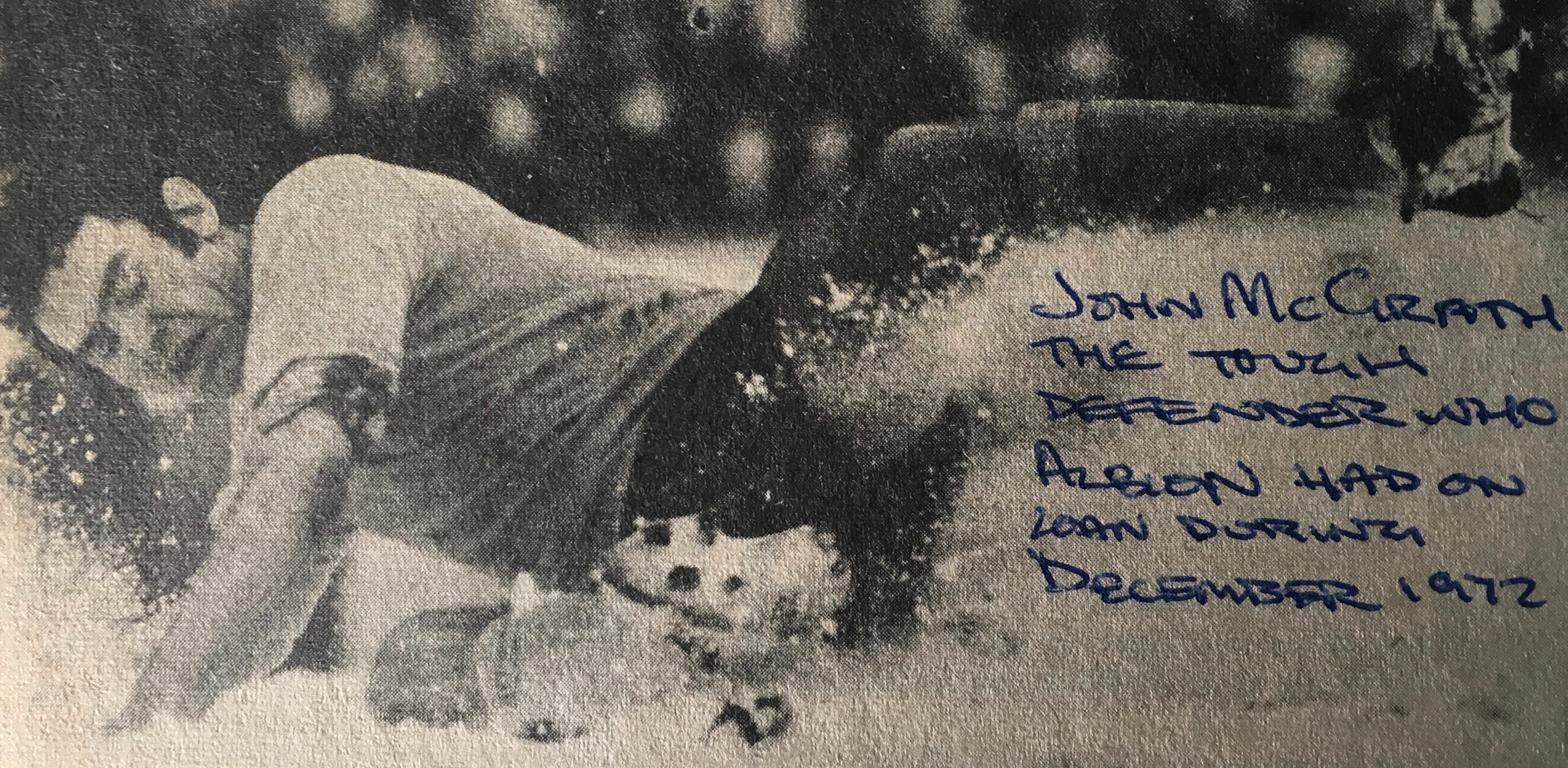
In short, it didn’t work. McGrath played in three matches and all three ended in defeats, with another eight goals conceded.

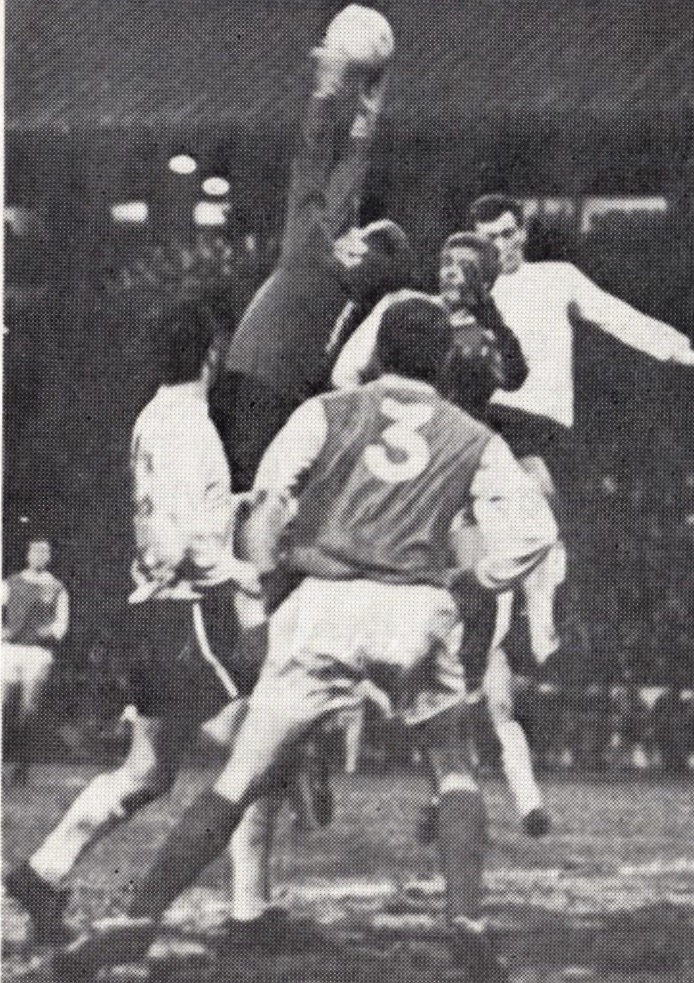
In his first match (above left), Middlesbrough won 2-0 at the Goldstone. At least the deficit was slimmer in his second game: a 1-0 loss away to George Petchey’s Orient in which Lewes-born midfielder Stan Brown played the last of nine games on loan from Fulham.

McGrath’s third match saw Albion succumb to a thrashing at Carlisle United. By then, Brighton had lost five in a row and still hadn’t managed to score a single goal. Stalwart Norman Gall was dropped to substitute to allow the returning Goodwin to line up alongside McGrath, and Bert Murray led the side out resplendent in the second strip of red and black striped shirts and black shorts.

Carlisle hadn’t read the script, though, and promptly went 5-0 up. To compound Albion’s agony, with 20 minutes still to play, goalkeeper Powney was carried off concussed and with a broken nose.

In those days before substitute goalkeepers, Murray (who’d swapped to right-back that day with Graham Howell moving into his midfield berth) took over the gloves. Miraculously, Albion won a penalty and because usual spot kick taker Murray was between the sticks, utility man Eddie Spearritt took responsibility having relinquished the job after a crucial miss in a game in 1970.

Thankfully, he buried it, finally to make a much-awaited addition to that season’s ‘goals for’ column.

No more was seen of McGrath, however. Gall was restored to the no.5 shirt and was variously partnered by Goodwin, Piper and, towards the end of the season, Spearritt.

After another heavy defeat, 4-0 at Sunderland, which had seen another rare appearance by Dovey in goal, he was transfer-listed along with Gall and Bertie Lutton, as Saward pointed the finger. Lutton got a surprise move to West Ham but Gall stayed put and Dovey was released at the end of the season without playing another game.

The run of defeats eventually extended to a total of 13 and was only alleviated after a big shake-up for the home game versus Luton Town on 10 February.

Powney, who’d conceded five at Fulham in the previous game, was replaced by Aston Villa goalkeeper Tommy Hughes on loan; out went experienced striker Barry Bridges in favour of rookie Pat Hilton and exciting teenage winger Tony Towner made his debut. Albion won 2-0 with both goals from Ken Beamish, and the monkey was finally off their backs.

Although the following two games (away to Bristol City and Hull) were lost, results did pick up, but it was all too little too late and Albion exited the division only 12 months after their promotion.

Born in Manchester on 23 August 1938, McGrath sought unsuccessfully to get into the game as an amateur with Bolton Wanderers but at 17 he joined Bury who were in the old Division Two at the time.

Although they were subsequently relegated, McGrath was part of the 1961 side that went on to win the Third Division Championship. By the time they lifted the trophy, though, he had moved on to Newcastle United for a fee of £24,000, with Bob Stokoe (later renowned for steering Second Division Sunderland to a famous FA Cup win over Leeds United in 1973) a makeweight in the transfer.

It was a busy time for the young defender. On 15 March 1961, he made his one and only England Under-23 appearance against West Germany at White Hart Lane, Tottenham, playing alongside future World Cup winners George Cohen at right-back and the imperious Bobby Moore.

Also in the young England side for that 4-1 win was Terry Paine, who would later become a teammate at Southampton.

Newcastle had hoped the defender would prevent their relegation from the top flight, but it didn’t happen as they went down having conceded 109 goals; their worst ever goals against tally.

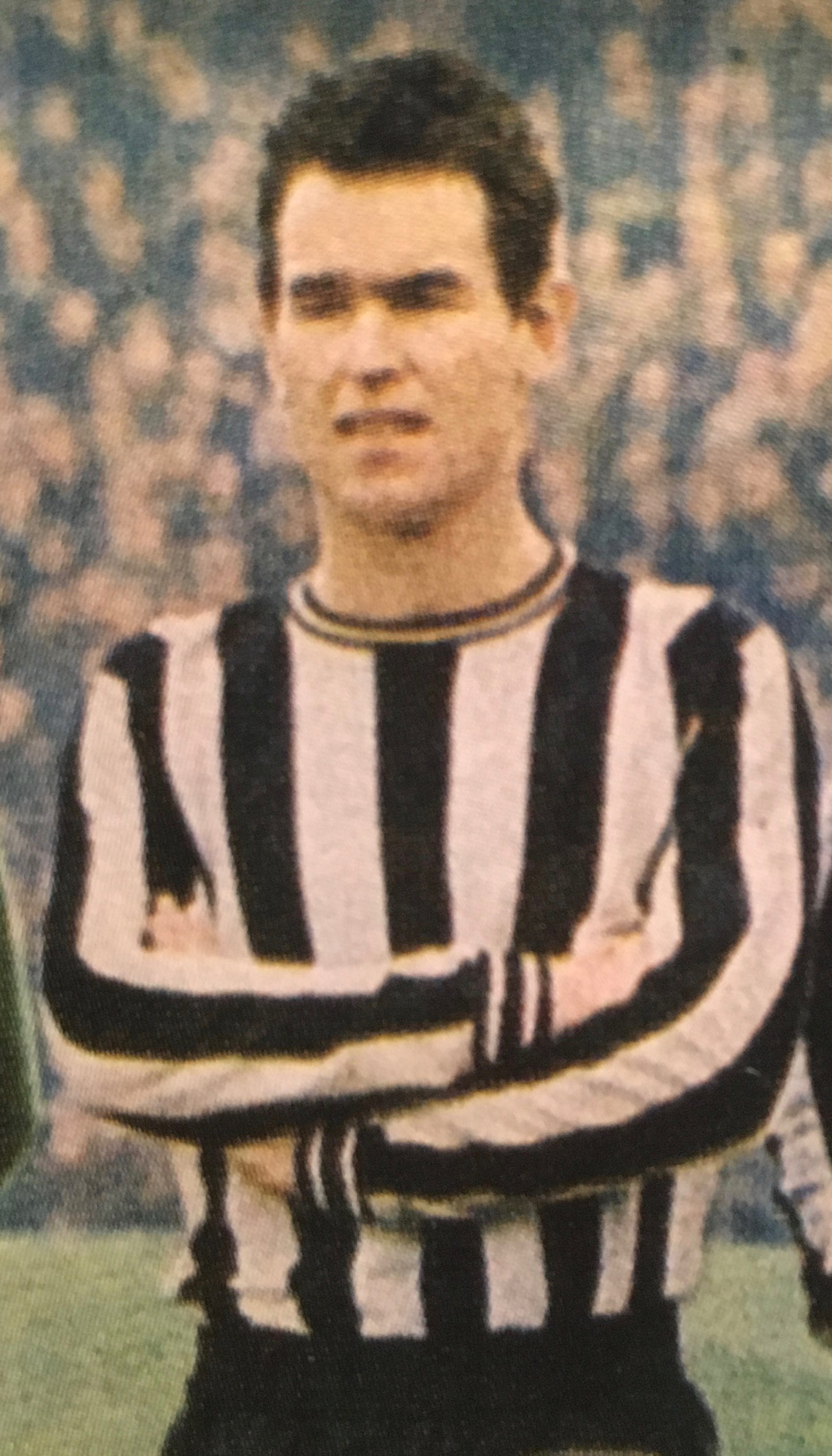
Joe Harvey eventually succeeded Charlie Mitten as manager as Newcastle adapted to life back in the Second Division, and McGrath (below left and, in team picture, back row, far left) played 16 matches in a side in which full-back George Dalton (below, back row, far right) had started to emerge.

Future Brighton captain Dave Turner was one of the successful FA Youth Cup-winning side Harvey inherited, but his first team outings were rare and he was sold to the Albion in December 1963.

Meanwhile, McGrath really established himself, featuring in 41 games in 1963-64 (Dalton played in 40) as Newcastle finished in a respectable eighth place.

The 1964-65 season saw McGrath ever-present as Toon were promoted back to the First Division, pipping Northampton Town to the Second Division championship title by one point. McGrath – “a monster of a centre-half, who was as tough as he was effective” was “the cornerstone” of the promotion side, according to newcastleunited-mad.co.uk.

McGrath retained his place in Toon’s first season back amongst the elite but the arrival of John McNamee and the emergence of Bobby Moncur started to restrict his involvement.

That pairing became Harvey’s first choice, and young Graham Winstanley was in reserve too, so, after playing only 11 games in the first half of the 1967-68 season, McGrath, by then 29, was sold to Southampton for £30,000. He’d played 181 games for United.

In Ted Bates’ Saints side, McGrath was a rock at the back alongside Jimmy Gabriel, although, as saintsplayers.co.uk records, he wasn’t too popular with opposing managers: Liverpool’s Bill Shankly accusing Southampton of playing “alehouse football”.

He went on to make 194 appearances (plus one as a sub) for Saints, before becoming youth coach at the club, part of the first team coaching staff when Southampton won the FA Cup in 1976, and then reserve team manager.

Not content with a backroom role, McGrath took the plunge into management and made his mark with two clubs in particular: managing Port Vale on 203 occasions and Preston North End in 205 matches.

According to Rob Fielding he became a cult hero at Vale Park with his unorthodox ways, once putting FIFTEEN players on the transfer list…which resulted in a six-match unbeaten run!

Winger Mark Chamberlain, who went on to play for Stoke and England, and later Brighton, was one of the young players McGrath introduced.

Long-serving Vale defender Phil Sproson, who was originally signed by former Albion midfielder Bobby Smith, rose to prominence under McGrath and said: “I’ll always be grateful because he taught me how to play centre-half.”

Fielding reckoned McGrath’s finest hour was steering Vale to promotion from the old Fourth Division in 1982-1983, even though by then he had sold Chamberlain to Stoke.

Against a backdrop of player unrest and what were perceived to be ill-judged moves in the transfer market, McGrath was sacked in December 1983 and replaced by his assistant, John Rudge.

He wasn’t out of work for long, though, and took the reins at basement side Chester City where he was in charge for just under a year. Most notably in that time, he gave future Arsenal and England defender Lee Dixon his first taste of regular football.

While success eluded him at Chester, his arrival at Preston in 1986 proved fruitful, North End striker Gary Brazil recalling: “It needed a catalyst and it needed a change and very fortunately for the club and for the players, John McGrath came walking through the door who was like a Tasmanian devil. He came in and the world changed really, really quickly for the better.”

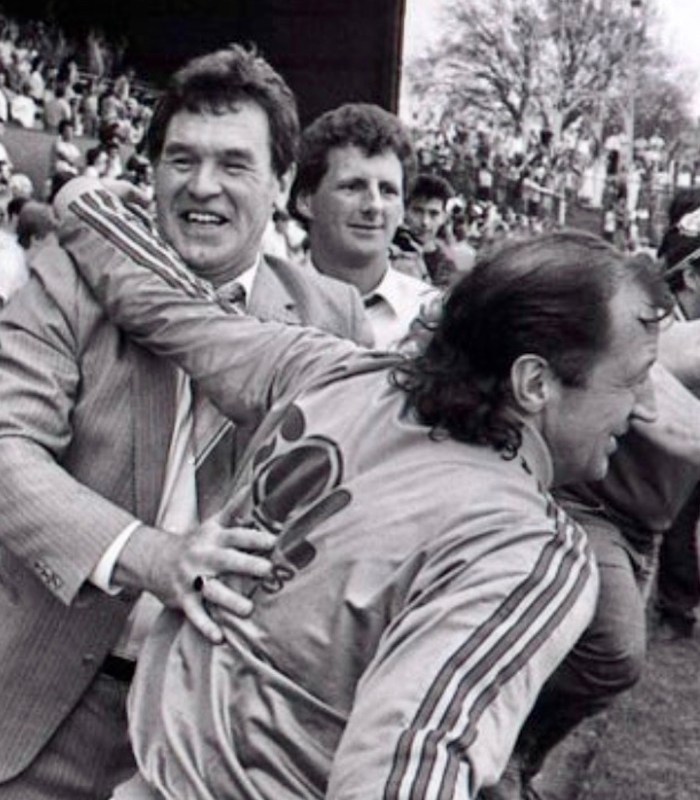
McGrath led Preston to promotion from the bottom tier in 1987 with a squad built around Sam Allardyce and veteran Frank Worthington.

Manager McGrath and Frank Worthington celebrate promotion

“Frank Worthington was a delight to have around and set a real high standard for a lot of us in terms of how we train,” said Brazil. “He just stunned me how he was always first out training.”

The turnround McGrath oversaw, with Deepdale crowds rising from below 3,000 to more than 16,000, rejuvenated the club and the city.

Brazil reminisced: “It was the best year of my football life that year that we got promoted. It wasn’t just an experience playing but an experience of a group of players and how well they could bond and John was integral to that. He was a very, very clever man.”

Indeed McGrath was viewed as having saved North End from the ignominy of losing their league status, the club having had to apply for re-election the season before he arrived at Deepdale.

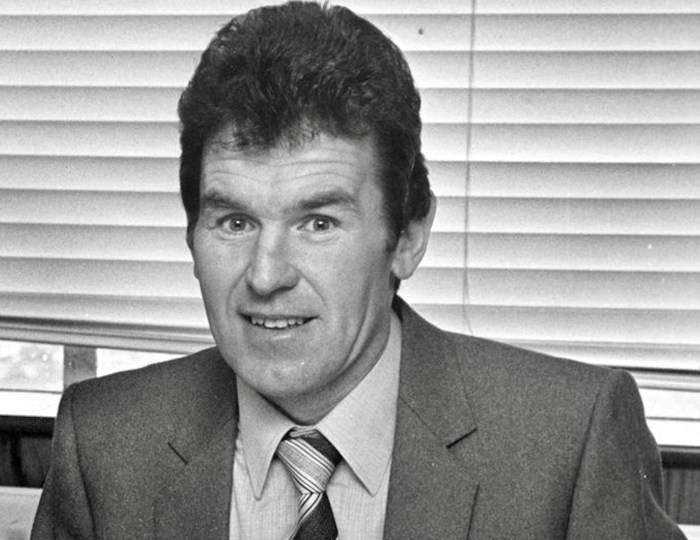
Edward Skingsley’s book, Back From The Brink, features a black and white photograph of McGrath on its cover and tells the story of North End’s transformation under his direction.

Describing his appointment as “a masterstroke” he reckoned the club owed him a massive debt for masterminding their resurgence and subsequent stability.

“Without him, it is debatable whether Preston North End would even exist today, never mind play in the latest fantastic incarnation of Deepdale,” said Skingsley. “Thank goodness he caught Preston North End before it died.”

McGrath left Preston in February 1990 and had one last stab at management, this time with Halifax Town. He succeeded Saints’ FA Cup winner Jim McCalliog and was in charge at The Shay for 14 months but left in December 1992. Five months later they lost their league status, finishing bottom of pile.

The silver-tongued McGrath was subsequently a popular choice on the after-dinner speaking circuit and a pundit on local radio in Lancashire but died suddenly on Christmas Day 1998.

Teenage prodigy Assulin didn’t live up to early expectations

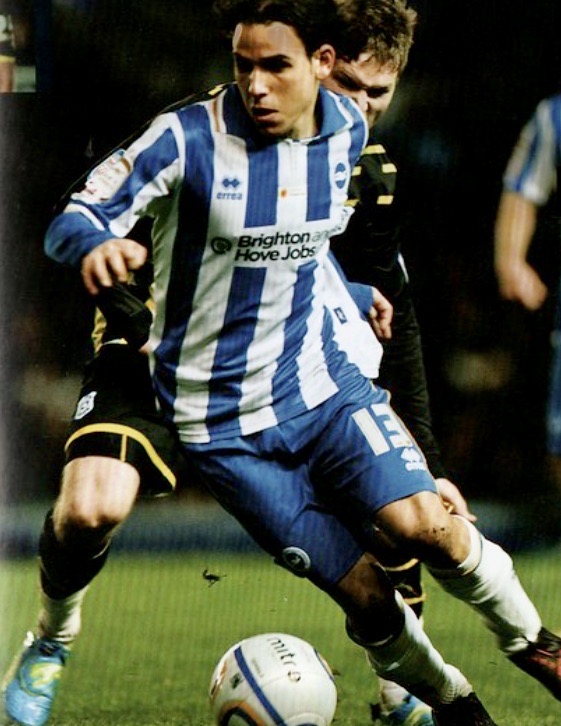
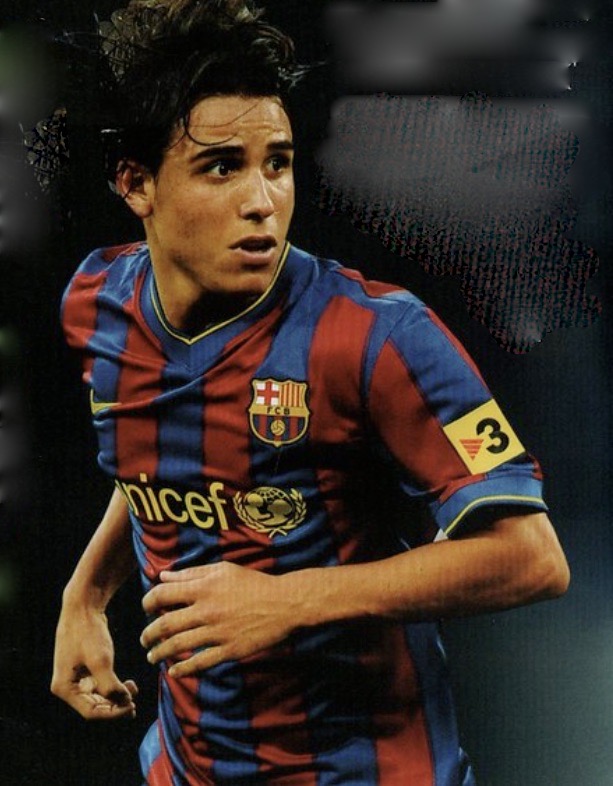
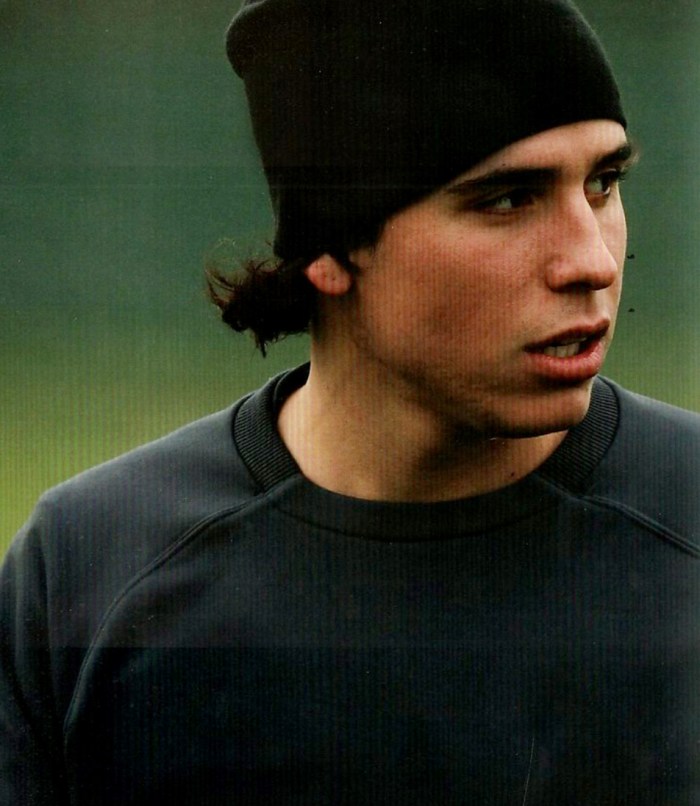
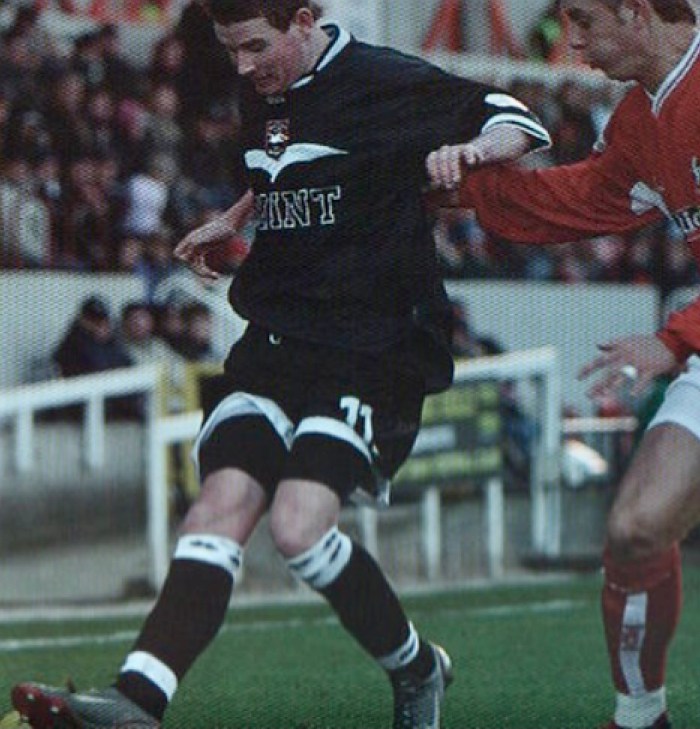
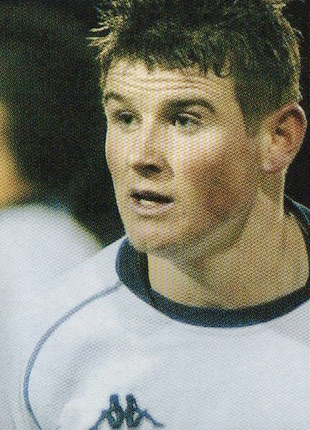
GAI ASSULIN played for his country aged just 16, was hailed as ‘the new Lionel Messi’ and appeared in Pep Guardiola’s Barcelona first team at 18.

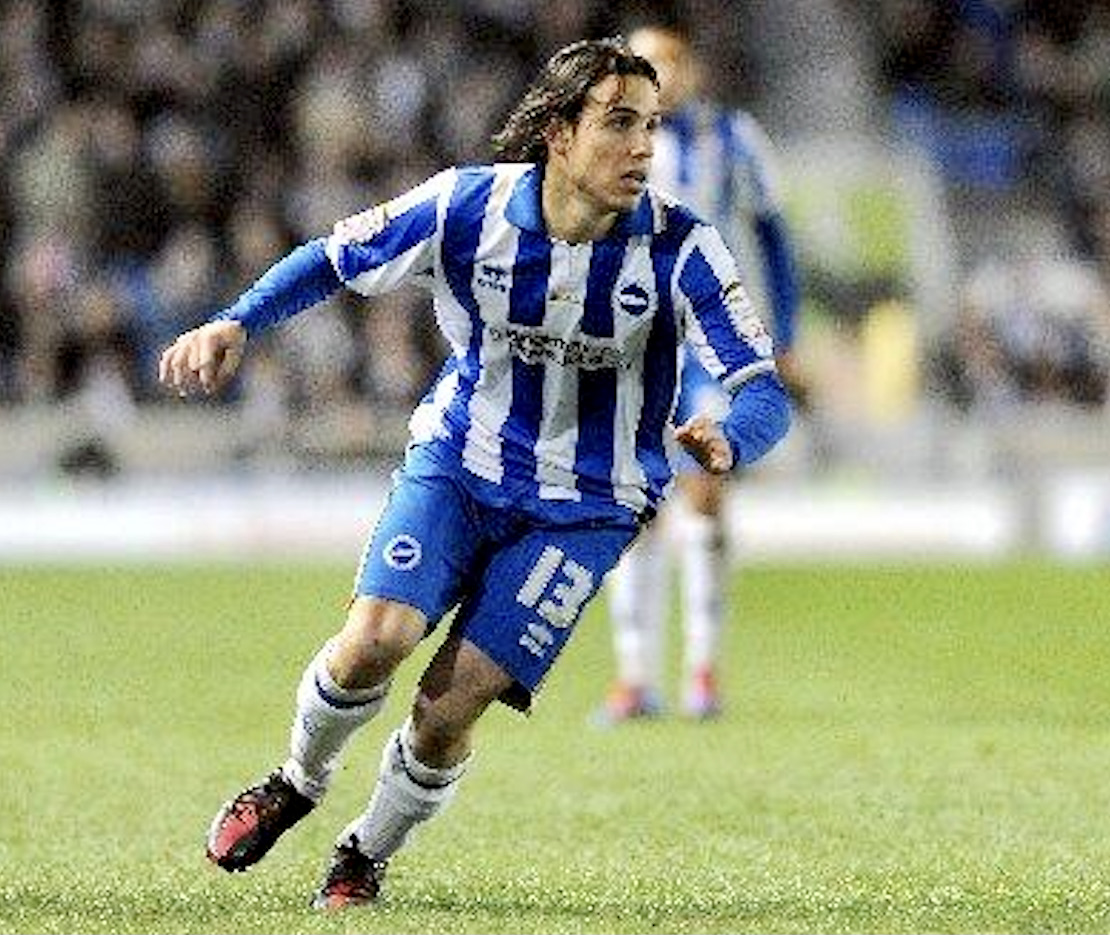
Two years later he had two starts and five substitute appearances for Brighton in the Championship, on loan from Manchester City, but couldn’t agree terms for a permanent move.

He subsequently flitted from club to club, country to country, and in the autumn of 2021 was playing local five-a-side football in Cheshire.

Where did it all go wrong? Was it a case of too much too soon?

Assulin was only 12 when he uprooted from his Israel home to pursue the chance of a career with Barca. He spent seven years there, playing for the youth side before reaching the renowned B team in 2007 where he was coached by Guardiola.

“I learnt a lot from him,” he said. “He helped me develop as a player but then so did all the coaches I played for at the club. From the age of 12 to 17 you learn the philosophy of the first team; how to play, what to do, and that never changed.

“Whatever age group you are in, the system you play is the same as the senior side so, if you do get called into the first team, it is not a big, big difference to what you are used to.”

When Guardiola stepped up to first team coach, Assulin was among the youngsters he blooded involving the winger in the Copa del Rey game against Cultural Leonesa in October 2009 and then some pre-season friendlies, including against Tottenham at Wembley.

“Playing in those games was a good experience,” he told the Albion matchday programme. “As the manager likes his younger players, he gave me an opportunity but the competition for places was really, really tough so it was hard to break into the team.

“I also had a few problems with my knee which didn’t help either and my time with the club eventually came to an end.”

Ahead of Guardiola eventually making the same move, Assulin signed for Manchester City under Roberto Mancini in December 2010, explaining: “I wanted to continue my football education at another top club and Manchester City has many top, top players.”

He has since publicly castigated Mancini for not giving him the opportunity to break through at City, telling ITV in 2016: “He didn’t give anyone a chance, he didn’t care about any young players, especially me.

“I didn’t even do the pre-season, when it was a good time to give someone a chance and see if they do well (or) if they are not doing well. But I didn’t get a chance, which was frustrating. It was a shame as I always felt good when I trained with the first team, but sometimes he chose his own sons over other players and I don’t think it was fair.

“It is very important for me to tell people as a lot of City (fans) don’t know what happened with me at City. People always ask me why I didn’t get a chance, and it’s obvious that the manager was the problem.

“I loved playing there, I loved the city and I wish I had a chance there. (City execs) Brian Marwood and Garry Cook loved me and really wanted me to stay, but Mancini didn’t and that was the problem.”

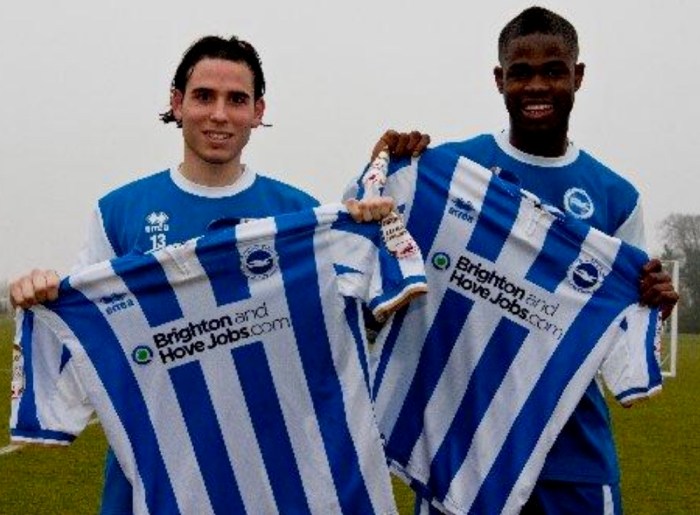
When Assulin joined Brighton in February 2012, Gus Poyet admitted he hadn’t been planning to take him on because at the time he was only interested in getting City midfielder Abdul Razak on loan.

A window opened up when forward Will Hoskins went to Sheffield United on loan, and Poyet told the Argus: “We were not looking to bring in another player after Razak. This was something that came along that I thought was very interesting. When there is something unique and unexpected like this I think it’s a no brainer.

“Gai was one of the top young talents in the world four or five years ago and he was very unlucky with an injury.

“He is still very young. He has got an incredible amount of quality and he can really make a difference but for any young player he needs to be playing and right now at Man City that is very difficult.

“He is an offensive player without any doubt, not a midfielder. He can play up front, wide or behind the striker.”

Assulin made his Brighton debut on 22 February against Hull City, going on as a substitute for Razak in the 77th minute of a 0–0 draw. He made his first start against Cardiff City at the Amex on 7 March but was substituted after 59 minutes of a 2–2 draw.

Although Razak returned to City after falling out with Poyet, Assulin’s loan was extended to the end of the season. However, he only made one more start – in the 6-0 drubbing dished out by West Ham at the Boleyn Ground, again being subbed off when Kazenga LuaLua replaced him on 53 minutes.

His last action in an Albion shirt was as a 61st-minute substitute for Will Buckley in a 0-0 draw at Barnsley’s Oakwell ground. As an aside, Barnsley had future Albion back-up ‘keeper David Button in goal, and ex-Seagulls Jim McNulty in defence and Craig Davies up front.

Rather like the situation at City, there was plenty of competition for places at Brighton with Buckley, Craig Noone and LuaLua the wide choices and the incomparable Vicente playing just off the strikers.

Supporters commenting online recognised Assulin’s talent but felt he was too slight for the robust sort of treatment meted out by Championship defenders.

There was some speculation at the end of the season that a permanent move from City might materialise but terms couldn’t be agreed and Assulin moved instead to Racing Santander back in Spain.

He also had spells with Granada, Hercules and Mallorca and Israeli side Hapoel Tel Aviv. He returned to Barcelona to join third-tier side Sabadell in August 2016 but in January 2018 his contract was cancelled by mutual consent after an 18-month spell hampered by injury.

Next stop was Kazakhstan Premier League team Kairat but he played only once and mutually agreed to tear up the two-year contract he’d signed. He also went to Romanian outfit FC Politehnica Iași and, until the end of the 2020-21 season, he was playing for Crema in Italy’s Serie D.

Without a club, Assulin returned to his home in Cheshire with his partner and eight-year-old daughter, and, while searching for his next move, was doing the school run, coaching, playing five-a-side and helping with his partner’s children’s clothes shop, he told football reporter Will Unwin in a November 2021 interview.

“On an indoor pitch at an industrial estate in nearby Cheadle Hulme, it is not hard to spot the man with La Masia education among those from Moston and Moss Side,” Unwin observed.

“I grew up as a kid in Israel, in a small town and my dream was to play first-team football for a professional club,” Assulin told the reporter.

Born in Nahariya, Israel, on 9 April 1991, Assulin’s family supported Maccabi Haifa,  and young Gai went to watch them from an early age.

How did he end up at Barcelona? “My dad (Eli) took me to a club in Israel called Natanya and they had a manager who had contacts with Barcelona,” he explained. “I was invited to Andorra for a ten-day trial with other players from many different countries and I did really well. A scout from the club then invited me to Barcelona and I did really well at a trial there too. They then offered me a contract.”

Only 12 at the time, he said: “It was a big change obviously at that age, as you are not used to being in a different country and a different culture, but I did the right thing. I love football, it is my life and my family were with me when I needed them.

“My dad came over with me to live in Barcelona and then the rest of my family – my mum, one brother and two sisters – came over for a year before returning to Israel. They used to come and visit every couple of months. The experience has made me a more mature person.”

Unwin noted that Liverpool’s Thiago Alcântara once described Assulin as “the most talented player I’ve ever seen in La Masia”, the two players having progressed alongside each other.

“We grew up together at the club and played in the same team for seven years,” said Assulin. “I would see him every day, and we went to school together.”

In a 2018 interview with Unwin for Planet Football, Assulin said: “Training with Barcelona’s first team was the best experience I’ve had in my career.

“I learned so much. I’m proud to say I was training with such big players. I’ve learned from Messi, Henry, Zlatan. They’re all different types of players, so it was great to see how they operate and pick up little things from them.”

Likewise at Man City, especially from David Silva. “He’s such a good player and different from anything you will see,” said Assulin. “He’s just so intelligent on the pitch and a great guy too.

“I had a good relationship with almost everyone. I was talking more to the Spanish guys – Silva; Carlos Tevez was there at the time; Yaya Toure I knew from Barcelona; Kolo Toure was a really nice guy.

“I had a great relationship with everyone, but especially those guys. Every time I went to train with the first team, they helped me, and they liked me.”

That one full international appearance for Israel happened in a friendly match against Chile in 2008, his appearance as a 78th minute substitute coming 14 days before his 17th birthday. He subsequently made 22 appearances for Israel’s under 21 side over the next five years, but didn’t win another full cap.

Unwin observed: “The early pressure of being synonymous with Lionel Messi was not a tag Assulin particularly enjoyed as he looked to come out of the Argentinian’s shadow.”

The player himself explained: ‘They like to compare in football; it is something they do all the time and for me it is a big compliment, but Messi is the greatest footballer in history. ‘Sometimes it is not good if you take it in the wrong way, as the expectation is for you to go on to the pitch and do the same as Messi all the time. Whichever club I went to, they saw I was compared with Messi, so they thought I was going to be Messi and score 50 goals a year, so that comparison at the time was not as positive.

‘Right now, after being at so many clubs, I see it as something positive and I take it as something that hasn’t been said about so many players. Messi is the best in history, so it’s nice to be compared to him for something that I did right at the time.’

McGhee provided Albion platform for playmaker Mark Yeates

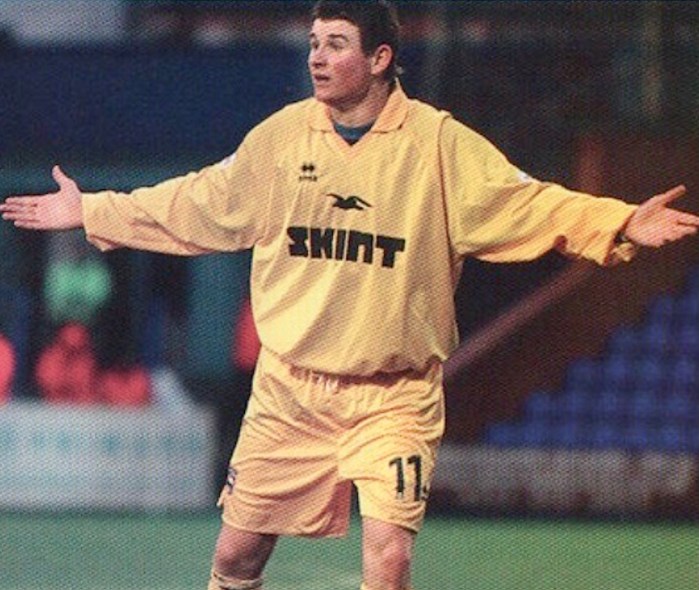
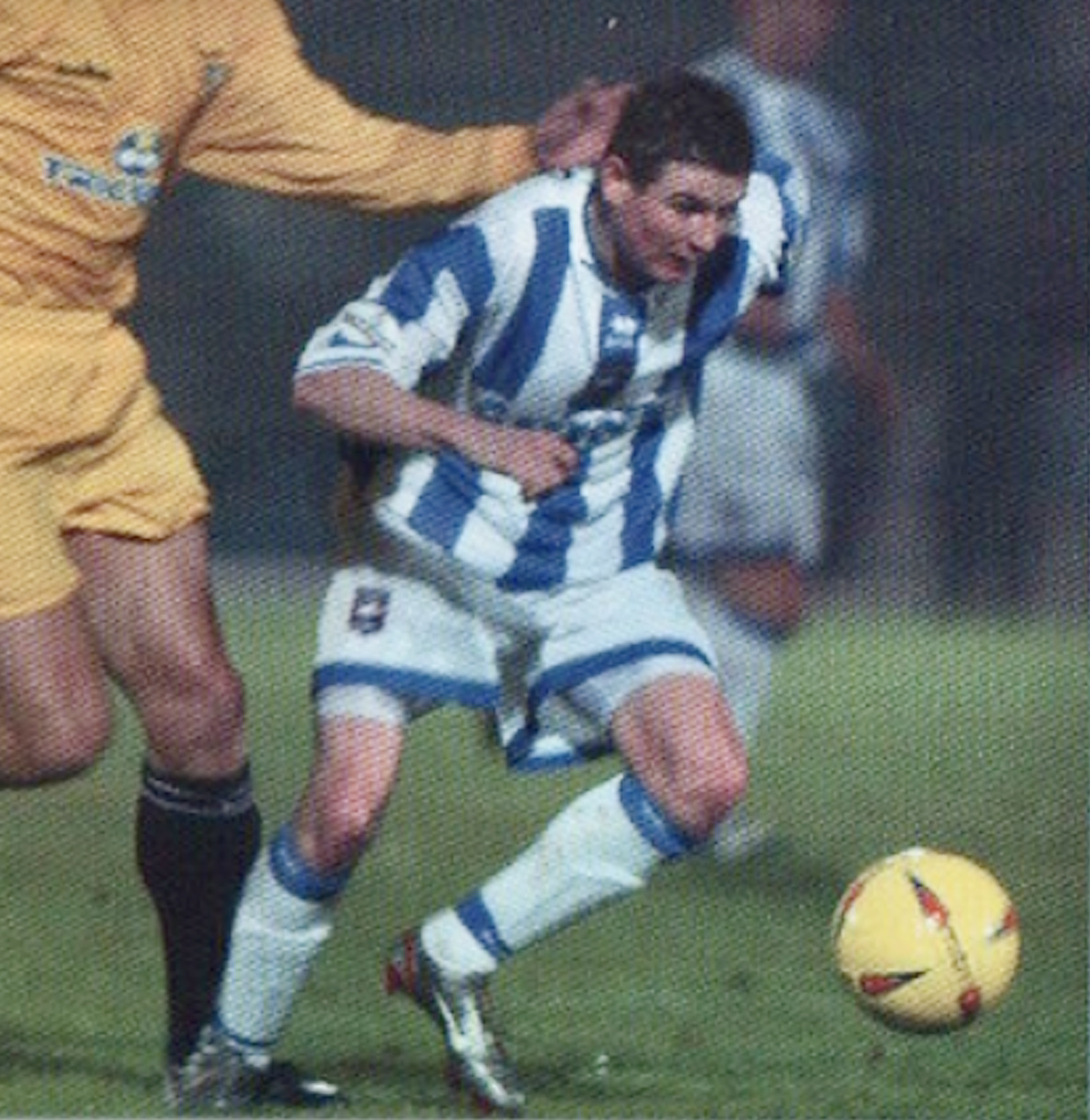
TRICKY playmaker Mark Yeates spent five years as a Tottenham Hotspur player but it was with Brighton that he played his first competitive football.

Yeates looked like a useful loan signing when he joined new manager Mark McGhee’s Albion squad in November 2003. He drew plenty of admirers and featured in 10 games over two months.

It wasn’t long before McGhee was talking about the possibility of signing him on a permanent basis, but Spurs had other ideas. He eventually had to leave north London to pursue his career but he ultimately made nearly 500 professional appearances.

Eighteen-year-old Yeates arrived on the south coast shortly after Zesh Rehman had also signed on loan (from Fulham), Albion having lost midfield duo Charlie Oatway and Simon Rodger to injuries.

The diminutive Irishman made his debut in McGhee’s first match in charge: a 4-1 defeat to Sheffield United at Withdean.

The matchday programme’s assessment was thus: “The second half was better. Mark Yeates moved into the centre of midfield and so had an opportunity to show what he can do. He could beat players, look up, and try a perceptive through ball. Wide on the left in the first half, he’d been exposed and given the ball away too often.”

On the day England won the Rugby World Cup, Yeates was one of six Albion players booked as the Seagulls beat Notts County 2-1 at Meadow Lane; an eventful game which saw Adam El-Abd make his league debut, Leon Knight score twice and John Piercy sent off for two bookable offences.

After only his third game, Yeates was off on international duty, playing for the Republic of Ireland under 19s away to France.

It was in early December that McGhee spoke about wanting to take Yeates on a permanent basis, telling the club’s website: “I’ve said already that I knew before he came here what a good player he is and I imagined he would do well in this team, and he has done that.”

McGhee told the Argus: “He has a kind of Gaelic confidence. Robbie Keane had it and Mark is similar in that respect.

“His character is perfect really for the way he plays. It goes with the ability and flair.”

Yeates hailed from the same Tallaght district of Dublin as Keane – a player McGhee knew well having given him his English football debut at 17 when manager of Wolves.

After extending his stay at the Albion to a second month, Yeates told the Argus: “Before I came here I had never really played in the centre of midfield. I usually play up front off a big man.

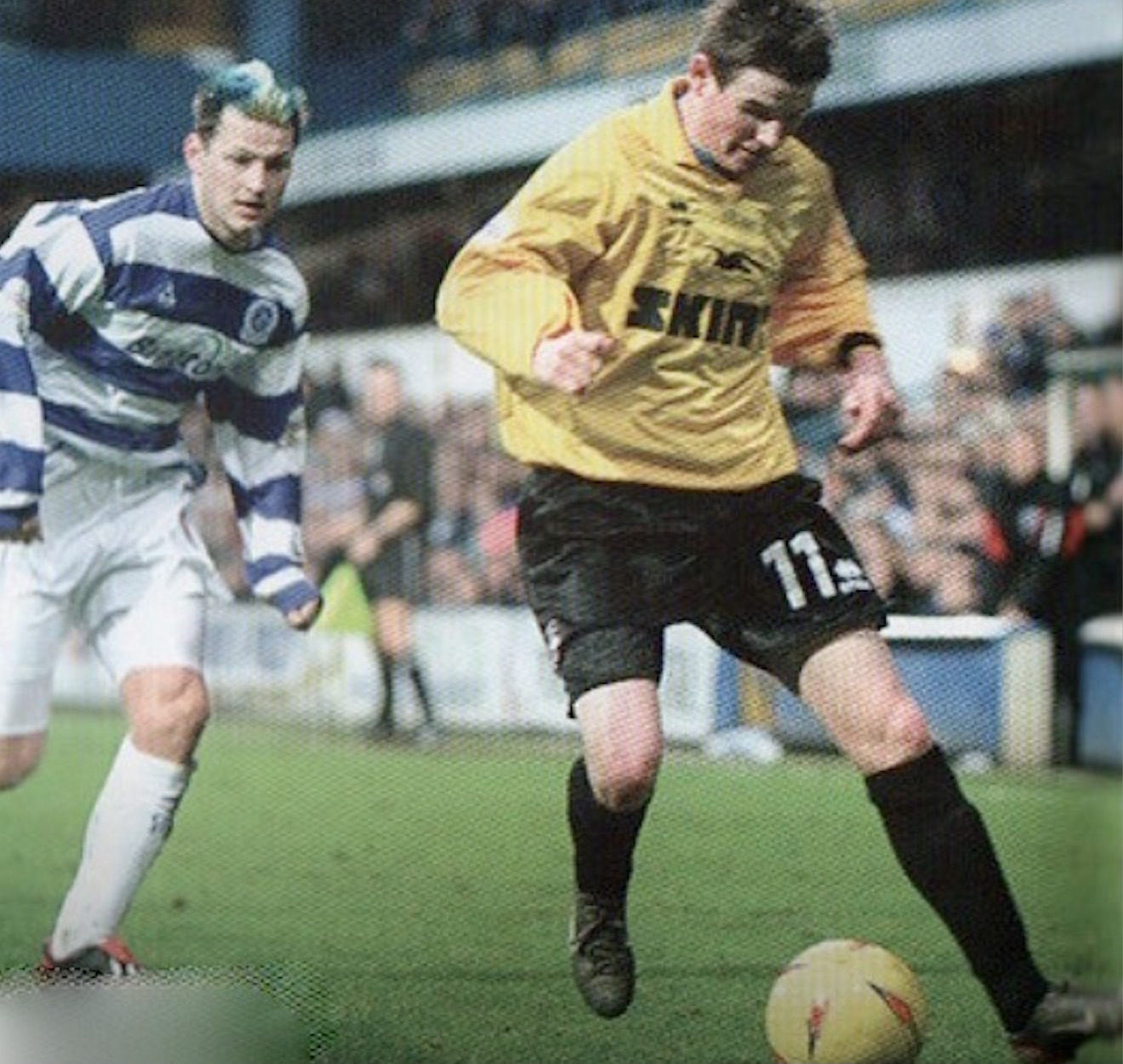
Yeates takes control watched by Adam Hinshelwood

“The gaffer tried me up front in the first half at QPR (in the LDV Vans Trophy) but we didn’t get the ball into mine and Leon’s feet, and with two little men you are not going to get much joy.

“At Tottenham we play with wingbacks and two holding midfielders and I am allowed a free role.

“I have to be a bit more disciplined here. Sometimes I can go running about a bit, it’s just up to the lads to call me back in to help out.”

Yeates appreciated the opportunity Albion had given him to taste senior football, telling the newspaper: “It’s great for me just to be getting first team football, plus the reason I am staying here is because they are a good bunch down here.”

He observed: “It’s a lot more fast and furious because everyone is playing for their living. You have to give a bit more and get more out of yourself which you probably wouldn’t get in a reserve game.

“In reserve football, players are going through the motions. It’s just a matter of playing a game.”

After he’d played his final game on loan, a 0-0 home draw with Oldham Athletic, the matchday programme observed: “Yeates showed some neat touches and was Albion’s most creative outlet once again.”

When Albion struggled to beat Barnsley 1-0 in the FA Cup, the matchday programme noted: “The passing abilities of Mark Yeates, and his desire to get into the penalty area, were sorely missed.”

Back at Spurs, Yeates had to wait until the very last game of the season to make his Premier League debut. He’d previously been an unused substitute when Glenn Hoddle’s Tottenham were thrashed 5-1 by Middlesbrough at the end of the 2002-03 season.

But in May 2004, David Pleat selected him to start in a side also featuring Ledley King, Jamie Redknapp, Christian Ziege, Jermain Defoe and Robbie Keane.

The fixture at Molineux ended in a 2-0 win for the visitors and Yeates helped Spurs take the lead against the run of play, laying on a cross for Keane to score against his former club. Defoe netted a second to seal the win.

Born in Tallaght on 11 January 1985, Yeates was the eldest son of former Shelbourne, Shamrock Rovers, Athlone Town and Kilkenny City striker Stephen Yeates, who died aged just 38 following a tragic accident, just as Mark was making his way through the youth ranks at Spurs.

The young Yeates first played competitive football with Greenhills Boys, a club who his grandfather and father had been involved with, and then moved on to Cherry Orchard, a Dublin side renowned for producing a number of players who went on to have successful professional careers.

In an extended interview with Lennon Branagan for superhotspur.com, Yeates recalled how Tottenham scout Terry Arber did a two-day coaching course at Cherry Orchard, after which he, Willo Flood (later to play for Manchester City and Dundee United) and Stephen Quinn (who went on to play for Sheffield United) were invited to London for a trial with Spurs.

Yeates was only 15 but he was taken on and had to up sticks from home and move into digs in London.

“As a skilful dribbler who was regularly a source of assists and goals in the youth set-up, Yeates quickly demonstrated to the coaching staff at Tottenham that he possessed the raw materials required to graduate to the next level,” wrote Paul Dollery in an October 2021 article for the42.ie.

Sadly, his progress through the youth ranks was interrupted by the shock news of his father’s death in an accident. Yeates told Dollery how it could have all gone the wrong way, but he thankfully remained focused.

“It was really tough, but you’d ask yourself what else you could do if you didn’t keep going – go home to your estate in Tallaght, drink cans every weekend and get roped into whatever else? 

“I could have done that, or I could look at the three-year contract that was on the table at Tottenham and get my head down to go after that.

“It was hard, but a bit of willpower and the desire to be a footballer – which I had since I started kicking a ball – got me through it.”

In his interview with Branagan, Yeates said: “I started to train with the first team at a decent age and really being involved quite a bit as well as being a regular with the reserves group with Colin Calderwood and Chris Hughton at the time.

“I’ve just got so many unbelievable things to say when I look back now and I can only say so many good things about Spurs because it sort of built me and gave me so much.”

It was in January 2005 when Yeates next appeared for the Spurs first team, Martin Jol sending him on as a sub in the third round FA Cup tie against Brighton at White Hart Lane when Tottenham edged it 2-1.

The following week he once again replaced Pedro Mendes as a sub when a star-studded Chelsea side won 2-0 on their way to winning their first Premier League title under Jose Mourinho. He also got on in the next game, as Spurs crashed 3-0 at Crystal Palace,

While he could have continued to bide his time at Spurs, he preferred to go out on loan again to get some games under his belt. He played four times for League One Swindon Town and then had a season-long loan at Colchester United, helping them to promotion from League One in 2005-06 in a squad which included Greg Halford and Chris Iwelumo.

Further loan spells followed at Hull City and Leicester City but, in the summer of 2007, he joined Colchester on a permanent deal.

Yeates scored 21 goals in 81 games for United drawing him to the attention of future England manager Gareth Southgate who took him to Middlesbrough (who had just been relegated from the Premier League) for a £500,000 fee.

On signing a three-year deal, Yeates said: “This is massive for me. There was interest from other clubs but there was only one thing on my mind once my agent told me Middlesbrough had been in touch.

“This club belongs in the Premier League, the fans deserve to be there and I can’t wait to play in front of them. It’s a Premiership club in my mind – all you have to do is look around the facilities, the training ground, the stadium, everything is spot on.”

Yeates reckoned his versatility would suit Boro. “I can play on the right or the left,” he said. “I played a full season’s Championship football on the right for Colchester, while I played most of last season on the left. But then, in probably eight of the last 10 games, I played behind the front two.

“For a winger, I think my goals record is quite good,” he added. “I got 14 last season and nine by Christmas the season before I got injured.

“I like to get on the ball and take on defenders. The number one job of being a wide man is creating chances and I certainly like to do that, but scoring goals isn’t a bad habit to have either. I promise the fans I’ll give 110 per cent. I’m hungry to prove that I deserve to be here.”

Fine words but it didn’t pan out well for him because Southgate was sacked in October 2009 and his successor Gordon Strachan shunned the Irishman. By January 2010, Yeates was on the move again, this time to Sheffield United.

Blades boss Kevin Blackwell told the club’s website: “He’s a player we have looked at before, I’ve had my eye on him for a year or two but we couldn’t agree terms with Colchester. I’m delighted to finally get my man, although I was surprised that Boro would let him go.”

Yeates was reunited with Stephen Quinn and another former Albion loanee, Darius Henderson, was up front for the Blades. Yeates reckoned he had his best ever spell playing under Blackwell’s successor, Gary Speed.

“He was just an unbelievable man and, going back to when I was at Tottenham as a young lad, he was the prime example of the player you should aspire to be like,” he said. “He had faith in me.”

Unfortunately, when Speed left to manage Wales, former Albion boss Micky Adams took charge and the pair didn’t see eye to eye, as he explained to watfordlegends.com.

“I was at Sheffield United and it was the season when we went from the Championship to League One. Micky Adams was the manager and we weren’t getting on. In the summer Micky was sacked and Danny Wilson came in as manager.

“I trained for the full pre-season with the club, but I was aware that there were a couple of clubs keeping an eye on my situation throughout the summer. It was Blackpool and Watford who put in offers for me, and I spoke with both clubs, but when I met Dychey (Sean Dyche) I decided to sign for Watford.

“I still had a house in Loughton so overall it was a good opportunity to get back down south, and everything that Sean said to me on the phone really appealed to me.”

Yeates was at Watford for two seasons, initially under Dyche and then Gianfranco Zola, but his contract wasn’t renewed in the summer of 2013 and he decided to link up once again with his former Colchester and Hull boss, Phil Parkinson, at League One Bradford City.

He was one of the goalscorers for Bradford when they completed a massive upset by beating Premier League table toppers Chelsea 4-2 at Stamford Bridge in the fourth round of the 2015 FA Cup.

However, released that summer, he switched across the Pennines to join Oldham Athletic and six months later was on the move again, this time to Blackpool.

“Since leaving Hull it’s been a bit up and down,” he told Branagan. “I was on a short term deal at Oldham which went alright before then deciding to go to Blackpool because of a longer contract which was put in front of me which I don’t regret, as I’ve been living around the St Annes area now for five years and my children have grown up here and are at school and it’s a great area to raise a family in.”

His final league club as a player was Notts County, who he joined on a short-term deal in January 2017, and he appeared in 11 games plus three as a substitute as new manager Kevin Nolan’s side turned what at one point looked like relegation from the league into a 16th place finish (although two years later County lost the league status they’d held for 157 years).

After playing non-league for Eastleigh, in 2019 Yeates moved closer to home and signed for AFC Fylde. In September 2021, he became an academy coach at Fleetwood Town, although he continued to keep his hand in as a player at Bamber Bridge.

Reflecting on the player’s career, Dollery wrote: “With a ball at his feet, Yeates was one of the most technically accomplished Irish players of his generation, cut from the same cloth as the likes of (Wes) Hoolahan and Andy Reid.

“That such a claim isn’t backed up by international achievements can perhaps be partly explained by his own admission that he didn’t marry his talent with a devotion to other aspects of the game that were beginning to play a more prominent role in the life of a professional footballer.

“If fitness coaches scheduled a gym session, Yeates felt his time would be better spent by staying on the training pitch to perfect his free kicks. A predilection for crisps, fizzy drinks and nights out didn’t aid his cause either.”

Yeates recognised he could have done things differently and said: “The reality was that I didn’t live like a saint.

“Everyone who knows me would know that that’s just not my personality. I’ve always been a fella who likes a bit of craic; just a normal Irish lad from an estate who happened to love playing football.”

• Pictures from the Albion matchday programme and various online sources.

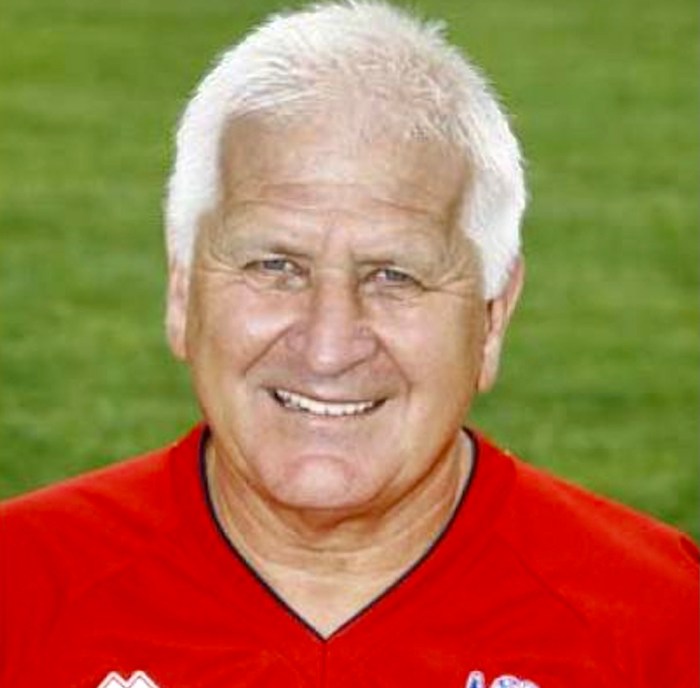
Tony Burns handled the art of goalkeeping for decades

A GOALKEEPER with film star looks signed for Brighton from Arsenal just after England lifted the World Cup.

Tony Burns had kept goal for the Gunners in 31 top-flight matches and Albion boss Archie Macaulay, who had played for Arsenal himself, went back to his old club to sign a no.1 to challenge the emerging local lad, Brian Powney.

It wasn’t difficult for Burns to settle at the Goldstone because the dressing room included Northern Irish full-back Jimmy Magill and winger Brian Tawse, familiar faces from his time in north London who’d also made the switch to Brighton.

It also wasn’t long before female fans who admired his smouldering good looks were sending in letters to the office inquiring about his eligibility!

Burns relived his career in detail in 2020 when interviewed by 17-year-old would-be journalist Jed Vine, who watches games at the Amex with his mother, and games at the Emirates with his dad.
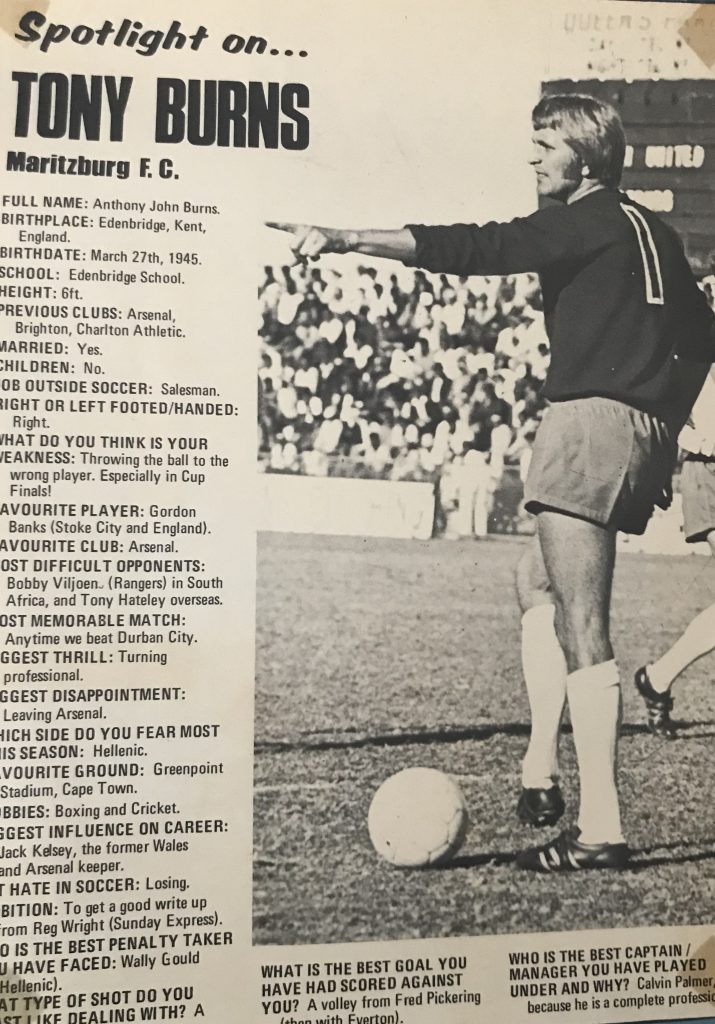
Born in Edenbridge, Kent, on 27 March 1944, Burns first showed his goalkeeping prowess during his schooldays in the town before he joined Southern League club Tonbridge (now Tonbridge Angels) who he returned to twice more and later managed three times.

He made his Southern League debut against Yiewsley (later to become Hillingdon Borough) in February 1963 and only his third game for Tonbridge was as an 18-year-old against Arsenal at Highbury.

With long term custodian Jack Kelsey retiring, Arsenal were looking around for likely successors and, liking what they saw of Burns, offered him a contract.

“In his early days at Highbury, he showed immense potential and, after benefitting from Kelsey`s coaching, made encouraging strides,” a 2020 Pitching In piece for the Southern League recalled.
Manager Billy Wright gave him his senior Arsenal debut in a friendly against Enschede in Holland in August 1963, with Magill in defence, and he got his first taste of South Africa on a five-game tour the following May when he was in goal for Arsenal’s 5-1 win over a Western Province XI and their 6-0 win over an Eastern Province XI.

But his big breakthrough came when he made his league debut in a 3-2 home win over Burnley in October 1964 (three days earlier he’d played in goal in a 7-0 friendly win over non-league Corinthian Casuals).

“I felt on top of the world. I had always wanted to play for the Gunners and here I was keeping goal for them, and on the winning side at that,” he told the Albion matchday programme. “There’s only one first match and I’ll never forget this one.”

Once he got the shirt, he had a run of 26 games (32 including friendlies) from October 1964 through to the end of March 1965.

He generally played in front of a defence featuring the likes of Don Howe, Frank McLintock and Ian Ure with John Radford and Joe Baker up front.

During the first half of the 1965-66 season, Burns appeared in seven league games and three friendlies, but his final Gunners first team appearance came on 27 December 1965 in a 4-0 defeat away to Sheffield Wednesday.

Jim Furnell was Wright’s preferred first choice, and, as the season wore on, the emerging Bob Wilson was getting the nod ahead of him as stand-in (although it wasn’t until 1968 that Wilson finally ousted Furnell).

Disappointed to leave, Burns nonetheless went in search of regular football by joining Third Division Brighton for £2,000 in July 1966.

He made his first appearance for the Albion on 17 September 1966, when he took over from the injured Powney, but Brighton went down 2-0 to Grimsby Town.

Powney returned the following week and Burns had to wait until January for his next games – two FA Cup ties against Aldershot.

Burns in action versus Chelsea

He kept his place for the big fourth round FA Cup game against First Division Chelsea at the Goldstone which finished 1-1 when his former Arsenal teammate Tawse controversially had what he thought was a cracking late winner ruled out for a foul by Kit Napier.

Unfortunately, Burns conceded four in the replay at Stamford Bridge as the superior Chelsea side made the most of home advantage to ease their way through comfortably, 4-0. That was the season they went all the way to the final only to lose 2-1 to Tottenham Hotspur, whose ranks included Alan Mullery and Joe Kinnear.

By the end of the season, Burns had played 18 matches against Powney’s 37. But Burns had the upper hand in 1967-68 featuring in 29 games compared to Powney’s 21.

He also started the 1968-69 season as first choice but his 54th and final game for the Albion was in the 2-1 home defeat to Northampton in the second round of the FA Cup on 20 December 1968.

New manager Freddie Goodwin brought in former Wolves and Aston Villa ‘keeper Geoff Sidebottom to challenge Powney and let Burns leave on a free transfer in March 1969.

He joined Charlton Athletic, where he made 10 appearances in their unsuccessful tilt at promotion, but declined what he saw as a derisory contract offer. He returned to Tonbridge briefly and in January 1971 headed off to play in South Africa, initially for Durban United, and later, Maritzburg.

In his interview with Jed, he recalls playing in an English All Stars team managed by Malcolm Allison who invited him to return to England with Crystal Palace when his contract was up.

Burns made the move in October 1973 after previous Palace no.1 (and later Albion youth coach) John Jackson had moved to Orient.

He shared goalkeeping duties with Paul Hammond, playing a total of 90 matches between the sticks for Palace over the next four years under Allison and his successor Terry Venables.

In 1977, Burns played half a dozen games on loan for Brentford before heading off to the States like a lot of ageing players did at that time.

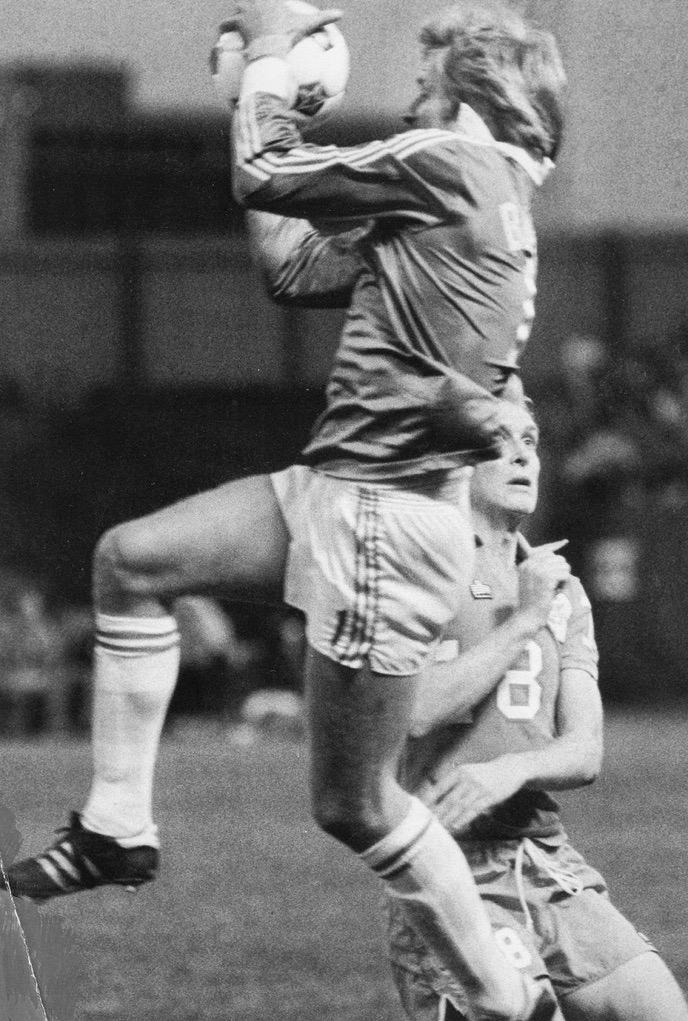
The ‘keeper played a dozen games for Memphis Rogues in the North American Football League. They were coached by former Chelsea defender and manager Eddie McCreadie although Burns had gone there to team up with former boss Allison who was sacked without a ball being kicked because he hadn’t signed enough players!

Burns played for Memphis Rogues in the USA

Among Burns’ teammates were a young Neil Smillie, who’d been struggling for games at Palace, Phil Beal, who had left Brighton the year before, John Faulkner, the one-time Leeds and Luton defender, and the flamboyant Alan Birchenall, beloved by Leicester City supporters of many generations.

Back in the UK in 1978, Burns joined Plymouth Argyle as cover for Martin Hodge, and ended his league playing days in this country appearing in 11 games in the first half of the 1978-79 season.

However, he left Home Park to rejoin Tonbridge Angels for a third time and he also played for Hastings United and Dartford.

After his playing days were over, Burns had three spells in charge of Tonbridge, from August 1980 to December 1982, August 1989 to May 1990, and in a caretaker role from November 2001 to May 2002 (by which time he was goalkeeping coach at Millwall, who he joined in 1992 under Mick McCarthy.

Burns served as goalkeeper coach under several Millwall managers.
Picture: Brian Tonks.

He also spent seven years as manager of Gravesend and Northfleet (who became Ebbsfleet United) between 1982 and 1989.

But it was at Millwall where he finally found a permanent home, working under no fewer than 18 different managers, including Steve Gritt and Mark McGhee.

He was even at the helm himself for a while, working as co-caretaker manager with former Lions boss Alan McLeary after Dave Tuttle’s departure in April 2006, when Millwall’s relegation had already been confirmed.

The appointment of Nigel Spackman the following month led to Burns’ departure in July 2006, when he took up a similar role at his old club Palace, working under former Albion boss Peter Taylor coaching Julian Speroni and Scott Flinders.

Goalkeeping coach at Palace under Peter Taylor

He left Selhurst in November 2007 when Taylor lost his job, and Speroni told yourlocalguardian.co.uk: “It was sad to lose Tony Burns because we worked well with him. During last season when I wasn’t playing regular football, Tony was the one who kept me going which was very important.”

Burns moved with Taylor to Conference side Stevenage Borough but later returned to Millwall under Kenny Jackett before stepping down in 2012, when he was succeeded by Kevin Pressman.

Still, he wasn’t finished with the game, though, and at the age of 70, in the summer of 2014, he teamed up with Taylor yet again to become goalkeeping coach at Gillingham. He joined them on a part-time non-contract basis as a replacement for Carl Muggleton.