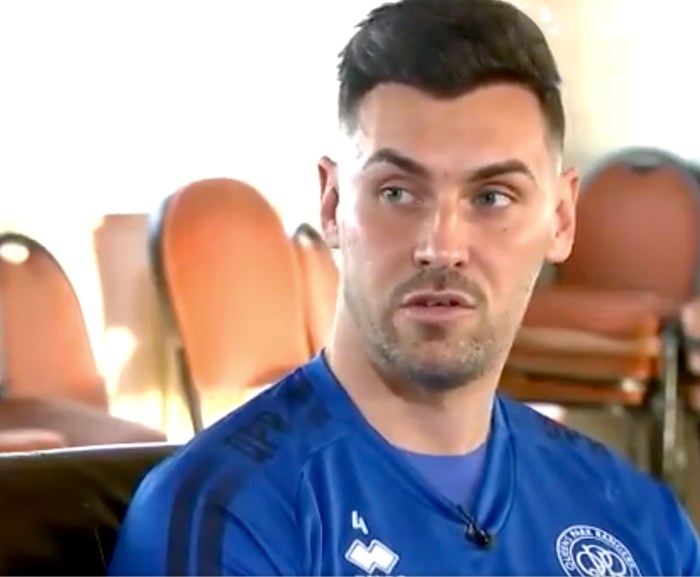
Lowe and behold, the centre back who couldn’t get a game

KEITH LOWE is one of those curious cases of a player who joined the Albion on loan but didn’t kick a ball in anger!

He played one game for the reserves and sat on the first team bench for five matches without getting on.

Lowe was just 20 and well down the centre half pecking order at Wolves when Mick McCarthy had just taken charge.

At the beginning of the 2006-07 season, Albion’s first choice centre backs, Adam Hinshelwood and Guy Butters, were both out injured, and Joel Lynch was a doubt after picking up a niggle in a pre-season game. So, manager Mark McGhee took the opportunity to get Lowe on loan for a month.

Candid former Wolves manager McGhee told the Albion matchday programme how the club had done its homework on the youngster, who he described as a “no frills central defender who gets in where it hurts to head it and boot it. Obviously, that’s something we need – a big lad in our box to head it away. With the absence of Guy Butters, we’ve missed that sort of height in pre-season so I hope he will do well for us.

“Obviously I know people well at Wolves, so we don’t think for a minute that we are signing Rio Ferdinand, but we’ve signed a steady young player who’s determined to make a career for himself and wants to do well.”

For his part, Lowe told the Argus: “I’ve found out that there are a few injuries in the defence here so hopefully I’ll get into the team as soon as possible and play as much football as I can.”

Born in Wolverhampton on 13 September 1985, Lowe had progressed through the Wolves academy and was given a first team debut by Dave Jones in the League Cup at the beginning of the 2004-05 season, three weeks before his 19th birthday. Two months later Lowe was awarded a three-and-a-half-year contract and he said:“My family are all Wolves supporters so it’s a bit of a dream come true.”

Although he made 13 appearances at either right-back or centre-back that season, he only played three matches for them under Glenn Hoddle the following season although he gained experience out on loan, at Burnley (under Steve Cotterill), and QPR in the Championship, and Swansea in League One.

“A lot of people have left Wolves but the one thing they have got is a lot of defenders and they have scrapped their reserve team now so it was best to go and play somewhere else,” Lowe told Andy Naylor of the Argus. “I’m looking to play as many games as I can. I wasn’t getting the opportunity I would have liked at Wolves so I jumped at the chance to come and play some football.”

Lowe said that even though McCarthy had not long been in charge, he had already got his starting eleven in mind. “I hadn’t asked to go out on loan yet, but from what I can gather the manager here ‘phoned up our manager and it seemed like the ideal place to come,” he said. “I’ve not been down to Brighton before but my first impressions, even from the drive in, were it seems really nice and I’m really looking forward to it.”

He added: “My aim is to get noticed at Wolves but I’m open to anything that happens. If it’s not going to happen for me at Wolves then I’ll stay here as long as the management staff want me.”

Unfortunately for Lowe, Lynch recovered from a pre-season thigh injury in time to make the starting line-up for the season opener at Rotherham, and he never did manage to force his way into the side.

By mid-August, he confessed in another Argus interview: “I’m very disappointed. I came down here to play football but it hasn’t happened. You’ve got to be professional about it, keep working hard and hopefully it will come.

“We kept clean sheets in our first two games and, when things like that happen, you can’t really go knocking on the gaffer’s door and say: ‘Why am I not in the team?’ The lads have done really well but I’ll just keep working hard in training and hopefully he’ll take note.”

Lowe pressed his claims for a place by scoring on his debut for the Reserves, heading an equaliser from a Tommy Fraser corner on 54 minutes, in front of McGhee, in a 2-1 win away to QPR. He said: “It was nice to get 90 minutes under my belt and it was a good performance and result, so I was pretty pleased.

“Hopefully I’ve caught the gaffer’s attention. I thought I did well enough and I’m just trying to push to get into the team.”

It didn’t happen, though, and McGhee was at pains to point out the circumstances. “We brought him here to play but then Joel got fit and suddenly looked absolutely fine.

“By the time we got Keith down here we weren’t sure he had trained with us enough and done enough work with us. Joel was there and we decided not to gamble with Keith but to play Joel, who has then played so well, so things have conspired against him a wee bit.”

McGhee added: “He did fine at QPR. In the second half, particularly, when we pushed them up the park and asked them to defend in behind, he did it well.”

Lowe might have got a chance in the Carling Cup against Boston United but Wolves were only prepared to allow him to be cup-tied if Albion intended keeping him longer – and McGhee had decided to add to his defensive options by signing veteran Georges Santos.

Lowe headed back to the Black Country, but the following month he went on loan to Cheltenham Town, where he finally saw some league action, playing in 18 matches. It sowed the seed for a later period in his career: he played 133 games for League Two Cheltenham between 2010 and 2014 in a career that ultimately embraced 617 appearances for 13 different clubs.

Lowe spent the final season of his Wolves contract on loan at League One Port Vale. Signed by Martin Foyle, Lowe also featured under his successors Dean Glover and Lee Sinnott, playing in 31 matches. But Vale were relegated in 23rd spot and the defender finally bade farewell to his boyhood club in May 2008.

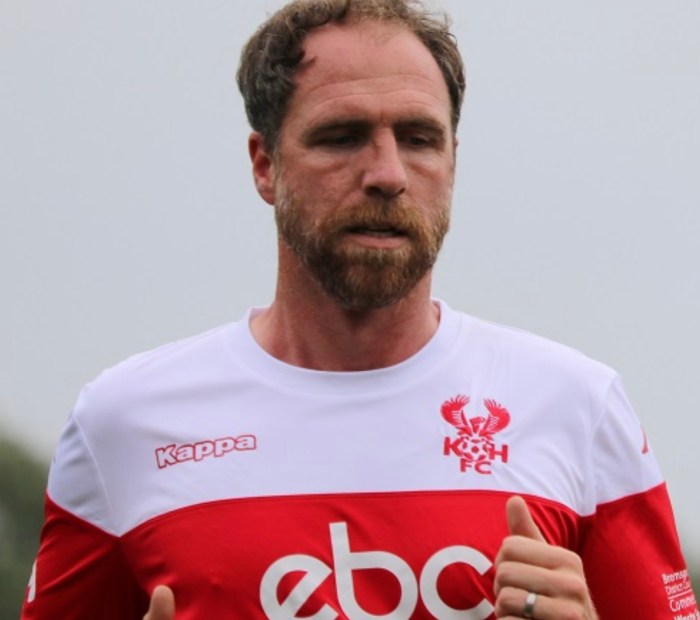
He dropped out of the league for the 2008-09 season, appearing in 52 games for Conference Premier League side Kidderminster Harriers.

Budget issues meant he was released at the end of the season and the following campaign he was back in the league with Hereford United, playing 26 games for the League Two Bulls under John Trewick and former Wolves boss Graham Turner. That spell at Cheltenham came next.

During two years at York City, Lowe collected no fewer than four Player of the Year awards in 2014-15 – three from supporters’ groups and one from local newspaper The Press.“Keith deserves the awards for his consistency,” City boss Russ Wilcox told the newspaper. “To play every league game is always an achievement. It shows you are doing things right on and off the pitch. It means you look after yourself, train properly and are a good professional.”

Released by new York boss Jackie McNamara, Lowe returned to Kidderminster, by then in the National League, where he spent another 18 months, much of it as club captain.
National League Macclesfield Town was his next port of call and he played in all of their matches as they won promotion back into the league in 2017. However, it ended on a sour note in 2019 when he was one of six players to issue the club with a winding up order for unpaid wages.

The 2019-20 season saw him turn out for three different clubs: Southern League Nuneaton Borough, National League North side Bradford Park Avenue and latterly (until the Covid pandemic called a halt to the league) Kidderminster for a third spell.

At the end of the 2021-22 season, he announced his intention to concentrate on developing a career as a teaching assistant. He told the Kidderminster club website: “I’m not ready to stop yet and am very much planning to play part-time next year, but it feels like now is the time to move away from the full-time game and think about the future and the career I’ve been building in schools.”

Back-up ‘keeper Alan Dovey’s limited chances to shine

THE LIFE of a back-up ‘keeper can be pretty soul destroying, with first team opportunities often few and far between.

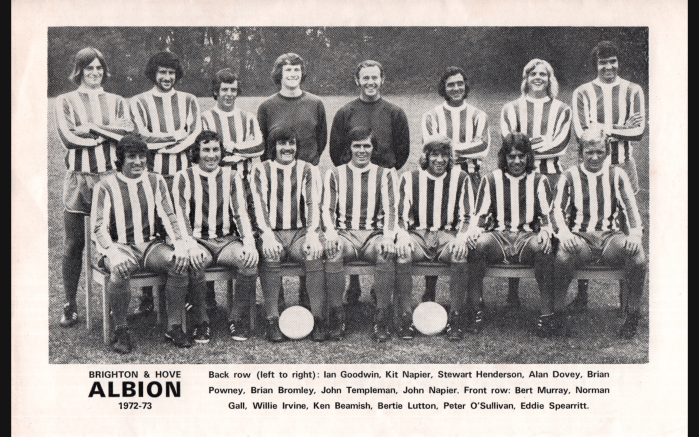
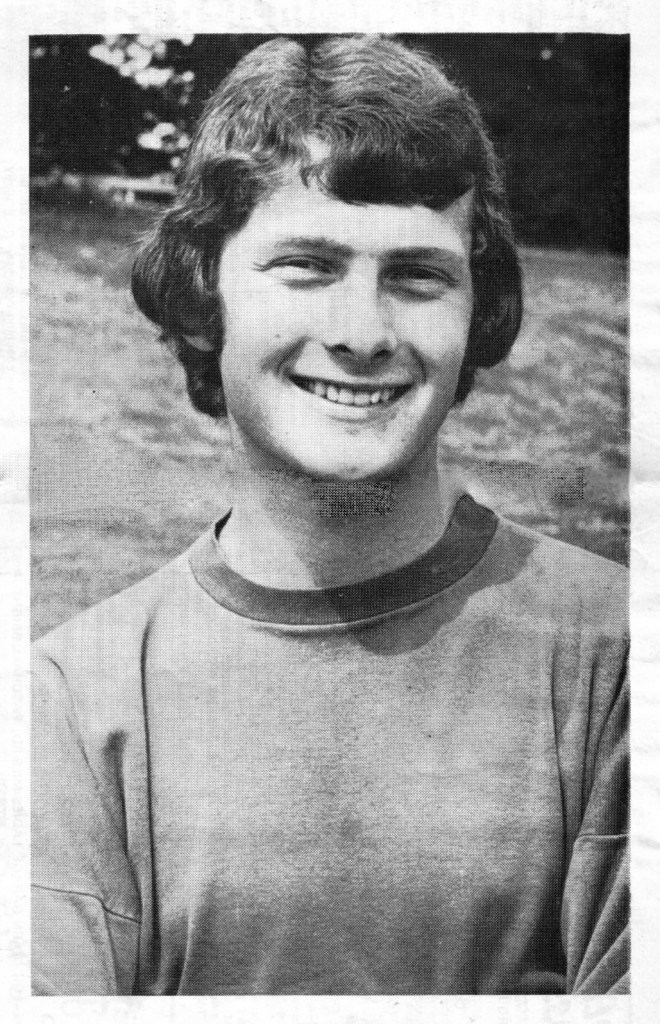
Such was the lot of former Chelsea youngster Alan Dovey, who was deputy to longstanding no.1 Brian Powney at the start of the 1970s, and only played eight first team matches for Brighton in two years.

Dovey initially joined on loan in March 1971. Powney’s rival for the no.1 shirt at the start of the season had been the experienced Geoff Sidebottom but he had been forced to retire because of a head injury.

Saward subsequently brought in Ian Seymour from Fulham on a temporary basis when Powney was out for three games, but Chelsea boss Dave Sexton, who’d previously played for the Albion, did his old side a favour by lending them youth team goalie Dovey until the end of the season.

He had to wait until the last two games before getting his chance to shine, making his debut in a 3-1 win away to Bristol Rovers and then appearing in the season’s finale at Wrexham, which ended in a 1-1 draw.

The loan became a permanent transfer that summer, Albion securing the young ‘keeper’s services for £1,000.

He played three times in Albion’s 1971-72 promotion season, and manager Pat Saward appeared content with the youngster, telling Goal magazine “It’s hard having to leave him out again, but what can you do. Chelsea manager Dave Sexton did us a great favour when he let Alan go for £1,000.”

His first game of the season was at Carrow Road, Norwich, when Albion were knocked out in the second round of the League Cup 2-0.

However, under the headline ‘Dovey’s daring display’ the matchday programme declared: “Despite the 2-0 defeat, the former Chelsea goalkeeper had a fine game and thrilled spectators with some daring saves. He had been nursing an injury and this was an in-at-the-deep-end experience but he came through it with great credit.”

It was more than three months before he got his next first team outing, but he once again earned rave notices for his performance in a 2-1 win away to York City, earning Albion’s Man of the Match accolade from Evening Argus reporter John Vinicombe.

The following matchday programme reported: “It was ‘all go’ for Alan. He had to race out of his goal in one York raid and was booked for an infringement, and also had numerous adventures in keeping out shots, centres and breaking up penalty box scrambles.”

Dovey was only ever back-up to Brian Powney

Saward didn’t next call on Dovey until 15 March, a 1-0 home defeat to Oldham Athletic which temporarily put the brakes on Albion’s bid for automatic promotion. Remarkably, that game against Oldham (which also saw a debut as substitute from new signing Ken Beamish) was the first time Dovey had played in front of the Goldstone faithful.

When Albion entertained Exeter City in the first round of the League Cup on 16 August 1972, the crowd may have been 6,500 down on the attendance for the season opener against Bristol City four days earlier but the game presented Dovey with another chance to show what he could do. (The game also saw the return of former captain John Napier to the centre of defence, although he was most likely being ‘shop windowed’ with a view to a transfer).

It is interesting to read an Exeter-angled summary of the game, which declared: “There was no denying that the first half belonged to City, and they deservedly led after 22 minutes with Fred Binney’s goal. There were a few moments early on when the back four and reserve goalkeeper Alan Dovey were little more than strangers in the night. 

“Eventually the pattern knitted together and Dovey gained confidence to make two fine saves in the last 20 minutes from Binney (who two years later joined the Albion in exchange for John Templeman and Lammie Robertson) and Dick Plumb – shots that could so easily have caused a shock defeat.”

Albion eventually prevailed thanks to goals from Willie Irvine and Beamish.

The two league matches Dovey featured in that season were not games he’d look back on fondly. Away to Preston North End on 25 November, Albion’s rookie ‘keeper conceded four when he deputised for ‘flu-hit Powney.

It was the same scoreline at Sunderland, who hadn’t won in 11 games, but who went on to reach that season’s FA Cup Final in which they famously beat Leeds United 1-0.

The Wearsiders hadn’t won at home since September but Brighton went to Roker Park having lost their previous nine matches and, according to the Sunderland Echo, “The winning margin could well have been doubled…. they applied themselves to the task of mastering Brighton’s strong-arm tactics and taking them apart.”

Sunderland took the lead in the ninth minute. Joe Bolton’s hammered left-foot shot struck Dovey in the face, knocking him over, and Billy Hughes pounced on the rebound to drive home a low shot.

Dennis Tueart added a second in the 45th minute and Brighton found the going tougher still in the second half.

After surviving a goalmouth scramble, Sunderland got their third goal in the 58th minute. A free-kick against George Ley for pushing Tueart was taken by Bobby Kerr, whose well-placed drive to the near post was brilliantly headed into goal by Hughes.

Hughes twice came close to completing a hat-trick but it was Bolton who hit what the Echo described as the goal of the game: “a right-foot drive, of such power that Dovey had no chance”.

Struggling to come up with a solution to the disastrous run, Saward went public and started to point the finger at players who he reckoned weren’t cutting it.

Dovey was transfer-listed along with veteran defender Norman Gall and Bertie Lutton. Lutton got a surprise move to West Ham but Gall stayed put and Dovey was released at the end of the season without playing another game.

Born in Stepney on 18 July 1952, Dovey grew up in Chadwell St Mary in Essex and played for Thurrock Boys before joining Chelsea straight from school in 1968 after writing to them to ask for a trial.

He became a youth team regular as well as playing a handful of games for the reserves. On 18 January 1969, he was in goal for a Chelsea side (which also included future first teamer and England international Alan Hudson) when they beat Brighton 5-2 in a South East Counties League youth team fixture.

It was always going to be difficult for Dovey to progress at Stamford Bridge because Worthing-born Peter Bonetti was an almost permanent fixture in Chelsea’s first team and he was understudied initially by Scotland under-23 international Tommy Hughes (who later played three games for the Albion on loan from Aston Villa in 1973) and then future Welsh international John Phillips, who was briefly Graham Moseley’s back-up during Albion’s second season (1980-81) in the First Division.

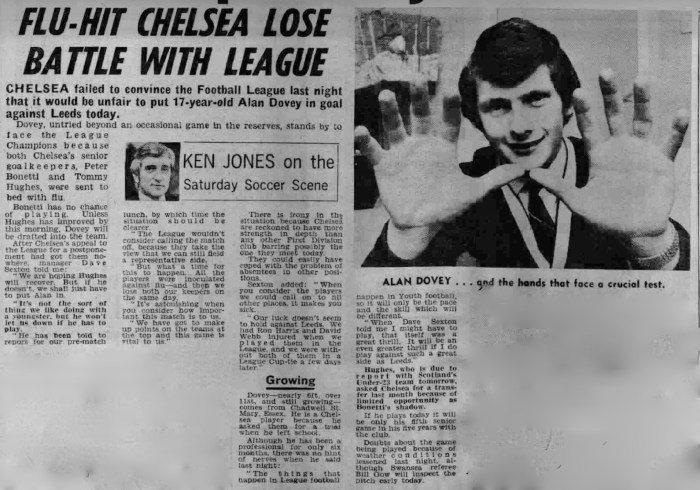
However, Dovey made national newspaper headlines when he came close to making a first team appearance on 10 January 1970.

Both Bonetti and Hughes went down with ‘flu ahead of a key match between third-placed Chelsea and Leeds United, who were in second place. Chelsea tried to get the game postponed but the Football League wouldn’t hear of it.

The Daily Mirror reported: “Chelsea failed to convince the Football League last night that it would be unfair to put 17-year-old Alan Dovey in goal against Leeds today.

“Dovey, untried beyond an occasional game in the reserves, stands by to face the League Champions.”

Veteran football reporter Ken Jones wrote: “Bonetti has no chance of playing. Unless Hughes has improved by this morning, Dovey will be drafted into the team.”

Chelsea boss Sexton told Jones: “We are hoping Hughes will recover. But if he doesn’t, we shall just have to put Alan in.

“It’s not the sort of thing we like doing with a youngster, but he won’t let us down if he has to play.”

Jones noted that although Dovey had only been a professional for six months, he didn’t display any nerves when interviewed.

“The things that happen in League football happen in youth football,” Dovey told him, “so it will only be the pace and the skill which will be different.

“When Dave Sexton told me I might have to play, that itself was a great thrill. It will be an even greater thrill if I do play against such a great side as Leeds.”

As it turned out, Hughes was adjudged fit after all, although he might have regretted it. In what was only his fifth senior game in five years at the club, he shipped five goals as United won 5-2 in front of a Stamford Bridge crowd of 57,221.

In August that year, Dovey was once again on standby to step up to the first team squad when Hughes suffered a broken leg. But Sexton went into the transfer market instead and bought Phillips from Aston Villa.

The Goldstone Wrap in 2014 noted Dovey stepped away from full-time football after the Albion let him go to pursue a career in insurance. Nevertheless, he played part-time for various Sussex clubs.

Notably he was at Southwick, along with former Albion teammate Paul Flood, at the same time as Ralf Rangnick, later to take temporary charge of Manchester United, was on their books.

Dovey also played for Worthing for three seasons, in their double promotion-winning squad of the early ‘80s, until, in April 1984, manager Barry Lloyd publicly criticised him, telling the Argus: “Alan has done exceptionally well for us over the past three years, but he’s not really aggressive enough in this premier division.”

Albion offered temporary refuge to winger Scott Thomas

A PLAYER seen by only a few hundred loyal Albion supporters played under Brian Horton for Manchester City and Brighton.

Scott Thomas was spotted by City as an 11-year-old, joined them straight from school and was on the club’s staff for six years.

But he only ever featured for the first team on two occasions, in successive matches during Horton’s Maine Road reign.

Thomas in City’s sky blue

A serious injury while playing on loan in America dealt a devastating blow to his hopes of a top flight career, and when City overlooked Thomas during the club’s slide towards the third tier, Horton threw him a brief lifeline.

Albion’s former captain, back at the club as manager when they played home games in exile at Gillingham, inherited a side in turmoil when he took over from Steve Gritt in February 1998.

Albion were second from bottom of the basement division and had endured a 12-game winless home run under Gritt. A Valentine’s Day nightmare 0-0 draw at home to bottom club Doncaster Rovers followed by successive away defeats against Rochdale and Exeter saw chairman Dick Knight wield the axe on a man who had delivered the miracle escape from relegation less than a year earlier.

Horton wheeled and dealed as best he could with limited resources and, after one of many loanees, Steve Barnes, returned to parent club Birmingham City, he remembered the youngster who he’d given a couple of outings to at the end of the 1994-95 season.

Paul Dickov and Scott Thomas

It seems extraordinary to say it now, but Manchester City were in a pretty desperate plight themselves between 1996 and 1998. Five different managers took charge over the course of the 1996-97 season. Alan Ball was in charge at the beginning, he was followed by Asa Hartford. Then Steve Coppell took the reins, before deciding after six matches that it wasn’t for him. Former Liverpool full-back Phil Neal succeeded his former England teammate. Eventually, former Nottingham Forest player and boss Frank Clark took over.

Clark was still in charge at the start of the following season, but a run of poor results saw him off, replaced by former Everton and City centre-forward Joe Royle. He couldn’t stop the rot and City were relegated to the third tier for the first time in their history.

Although a total of 38 players saw action in that desperate but ultimately fruitless attempt to avoid relegation, Thomas wasn’t one of them.

There had been a succession of players not wanted at other clubs who pulled on Albion’s stripes that season and Horton turned to blond-haired winger Thomas on the eve of the March transfer deadline day as he shuffled his pack trying to steer the side away from the bottom of the fourth tier.

“He can play on either wing or down the middle,” said Horton, by way of introduction in his Albion matchday programme notes.

Scott Thomas (front row, second from right) in a pre-match Albion line-up

After making his debut in a 0-0 draw at Cardiff City on 28 March 1998, skipper Gary Hobson declared: “Scott Thomas did well on the right of midfield.” And Horton said: “I was pleased with the first game for Scott Thomas, he looked lively and he came off with a bit of cramp late on.”

It was the first of seven games Thomas played for the Seagulls as the season drew to a close, and in his second game Albion earned their first win in six matches, beating Scunthorpe United 2-1 in front of a Priestfield crowd of 2,141.

Thomas took over the no.9 shirt v Scunthorpe

He switched wings and played on the left in that match and Horton made a point of mentioning in his programme notes how the youngster had been unlucky to have been denied by a fantastic save by Iron ‘keeper Tim Clarke.

Unfortunately, that was the only game in which he was on the winning side: Albion drew three and lost two in the remaining matches. And Thomas was sent back to City at the season’s end.

It has since emerged that a serious injury the winger sustained two years earlier ultimately put paid to him continuing to play professionally.

He had been sent on loan to the United States to play for Richmond Kickers in Virginia. He told the Bolton News: “It was a brilliant opportunity being in the States but I shattered my left leg in four places and had to come back. I was gutted.”

As part of his recovery, he was sent to his local gym, Phoenix Health and Fitness in Bolton, and, four years after the injury forced him to retire, he bought it.

Gym owner

“Football will always be my main love,” he told the newspaper. “Keeping fit has played such a big part of my life — I’ve done various marathons and two Ironman triathlons too — so owning a gym was a natural choice.”

Born in Fairfield, Bury, on 30 October 1974, Thomas told the newspaper his father reckoned he started kicking a football against a wall or fence as soon as he could walk.

He was playing for Radcliffe Juniors when he was seven and, at 11, was scouted by City while he was playing in the Bury League.

“I thought it was brilliant at the time – it was a really big deal,” he said. “I did trials in the school holidays and then trained after school, so I’d get a bus from Bolton, through Bury and into Manchester to meet my dad before going to the grounds.”

Thomas’ son, Luca, has followed in his father’s footsteps. He worked his way through City’s academy sides but when he turned 16 switched to Leeds United’s scholarship scheme.

In the 2021-22 season, he scored 15 goals in 17 matches in the Under-18s Premier League North, and in August 2022 signed a two-year professional contract with Leeds.

“It has changed from when I was younger,” Thomas Snr told the Bolton News. “They have to grow up a lot quicker these days. It’s such a cut-throat industry: you can be flavour of the month one minute, winning Young Player of the Year like me, then out with an injury the next.”

Both of Scott’s City first team appearances were as a substitute. The first was on 6 May 1995 when he went on for Maurizio Gaudino on the hour mark at the City Ground, Nottingham. Forest won by a single goal, scored by Stan Collymore in the first half.

Matchday programme

Eight days later, Thomas only got on in the 83rd minute when he replaced Paul Walsh as City went down 3-2 at Maine Road to QPR, for whom Les Ferdinand scored twice.

The winger also played in America for Richmond Kickers founder Bobby Lennon’s other club, Palm Beach Pumas, and he is quoted on the US Soccer Academy website as saying: “The level of football was excellent. Even though my career was cut short due to an injury, I will always have great soccer memories of my time in Florida.”

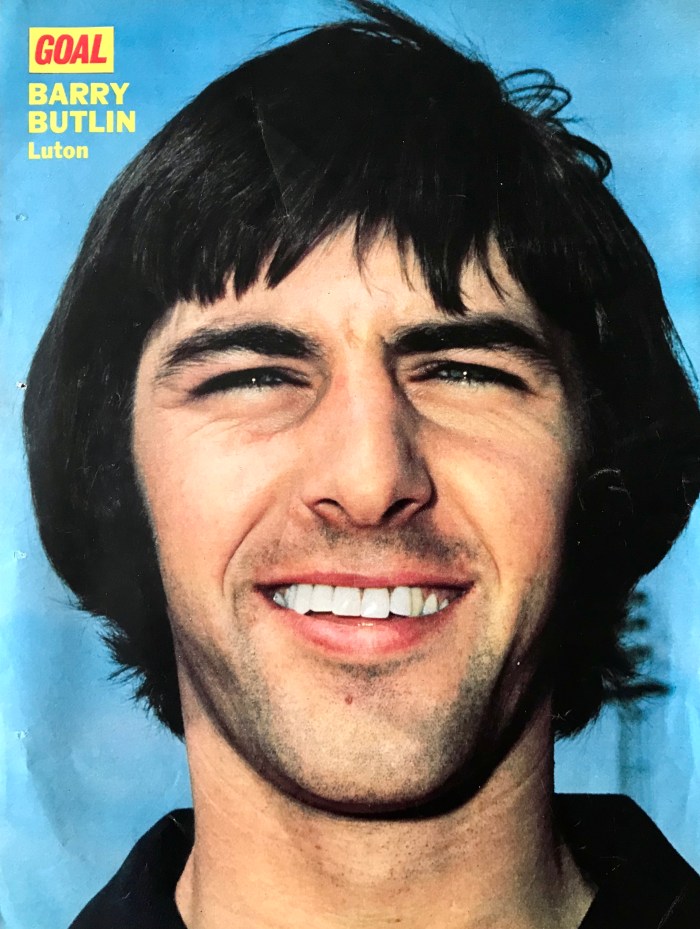
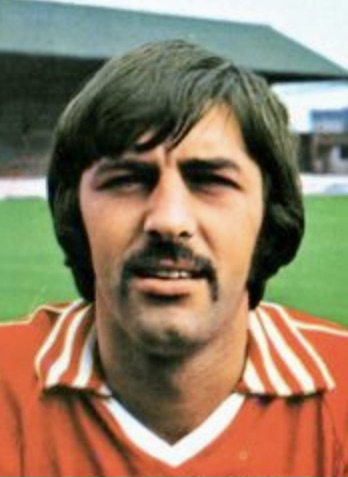
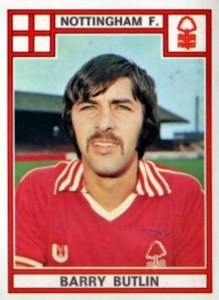
Barry Butlin’s belter at Selhurst helped revive Forest career

BARRY BUTLIN is one of that pantheon of players who’ve scored winning goals for the Albion against Crystal Palace.

He may sound like the alliterative title of a south Wales holiday camp, but this was a moustachioed striker who’d joined Third Division Brighton on loan from Second Division Nottingham Forest.

When former Albion boss Brian Clough couldn’t find a place for him in his Forest line-up in September 1975, previous managerial partner, Peter Taylor, going it alone at the Albion, was more than happy to add Butlin to his forward line options.

Butlin had started his career at Derby County on the periphery of Clough and Taylor’s squad at the Baseball Ground.

During his five years as a Rams player, he’d twice been out on loan to Notts County, scoring eight in 20 games in 1968-69 and another five in 10 appearances in the 1969-70 season.

While Derby won the First Division title in 1972, Butlin was sold for £50,000 to Luton Town, where he made his mark with an impressive 24 goals in 57 matches.

One of them came in a 1-1 draw at Elland Road during Clough’s ill-fated 44-day spell as Leeds manager, and, in a typically odd Clough way, in the post-match press conference he put his arm around Butlin and told the journalists: “This is who you want to write about after that wonderful goal. He deserves it.”

The following month, Butlin’s goalscoring exploits for the Hatters saw Forest boss Allan Brown take him to the City Ground for a fee of £120,000.

Imagine how he must have felt when his old Derby boss Clough arrived to take over at Forest in January 1975!

Nevertheless, the striker said all the right things publicly ahead of the manager’s first game, a third round FA Cup replay against Spurs, as recorded in Jonathan Wilson’s excellent book Brian Clough: Nobody Ever Says Thank You The Biography (Orion Books 2011).

“The lads all know that everybody is starting from scratch with everything to prove,” said Butlin. “Brian Clough has the ability to make an average player good and a good player great.”

Such a show of loyalty might have been understandable in the circumstances but Wilson also recalls Clough’s eccentric attitude towards players when they were injured. Butlin fractured his cheek in a training ground incident when at Derby.

“As he lay on the ground, Clough screamed at him to get up, insisting there was nothing wrong with him,” wrote Wilson. “Even after he’d been taken to hospital, Clough refused to believe anything was the matter.

“When Butlin’s wife turned up looking for her husband and mentioned an ‘accident’ to Clough, he snapped: ‘I’ll tell you when there’s been an accident’.”

Although Butlin feared the worst when Clough arrived at Forest, he wasn’t instantly discarded, finishing that season with seven goals in 33 games (plus one as a sub), while fellow forward Neil Martin netted 12 in 30 matches (plus two as a sub).

Butlin had a front row seat in this Forest line-up

But Clough clearly had other ideas about who he wanted in attack and brought in John O’Hare, who had done well for him at Derby, but less well during the ill-fated spell at Leeds, and introduced a young Tony Woodcock.

Intriguingly, that summer Martin was reunited with Taylor at Brighton and, within a matter of weeks, Butlin was also heading to the Albion, although his move was only temporary.

As it happened, Martin got off to a decent start alongside Fred Binney up front, scoring three times in the opening matches. But Taylor obviously considered Butlin offered a more potent threat; and it wasn’t long before fans saw why.

Butlin lets fly and scores the winner at Selhurst Park in 1975

In only his second game, in the third minute of Albion’s clash with Palace at Selhurst Park on 23 September 1975, Butlin got on the end of a Gerry Fell cross and hit an unstoppable shot that turned out to be the only goal of a pulsating game played in front of a crowd of 25,606 – a quite remarkable number for a third tier fixture.

“It still sticks with me, that one,” Butlin told Spencer Vignes, in his book Bloody Southerners (Biteback Publishing), which details the Clough-Taylor period at the Goldstone.

“It was the start of a cracking time down at Brighton,” said Butlin. “I only wish I could have gone on a little longer.”

Butlin soars to connect with this header

Butlin followed up that midweek winner at Palace with another goal on his home debut four days later when Chesterfield were beaten 3-0 (Peter O’Sullivan and Binney the other scorers).

Although not on the scoresheet, he also featured in two more wins (2-1 at Shrewsbury Town and 1-0 at home to Preston). However, in his absence Forest had gone through a mini slump, losing four out of five matches.

Butlin had taken his wife and children to Sussex with him, staying in the Courtlands Hotel in Hove. They all really liked the area, and the player had hopes of making the move a permanent one. Clough had other ideas.

“Brighton made me so welcome, but Forest weren’t doing very well at all,” Butlin told Vignes. “When I came to the end of my loan period, Brian got me straight back up to Forest and I had a real purple patch during which I played really well.”

In fact, he finished the season with eight goals from 38 games played as Forest finished eighth in the old Second Division.

Collector’s item

“We had this team meeting before one game and Brian said: ‘If sending you down to Brighton gives you that impetus, then I’d better start sending some more players down there!’

“I’d seen the seafront and the wonderful countryside and thought it was the prelude to us staying there as a family, but it wasn’t to be. I was disappointed to say the least.”

Born in the south Derbyshire village of Rosliston, on 9 November 1949, Butlin attended Granville County Secondary School in Woodville from 1961 to 1966, and proudly records on his LinkedIn profile that he obtained six GCEs. He was also the school football captain.

He signed on for Derby in July 1967 but the likes of Richie Barker and Frank Wignall initially, then O’Hare and Kevin Hector, were ahead of him as the Rams progressed from the old Second Division into the First, before winning the title in 1972.

Chances for Butlin were few and far between. He made just four first team appearances in five years but those loan spells at Notts County at least demonstrated there was a player in the making, able to find the back of the net.

A knee injury prevented him making an immediate impact at Luton, after Harry Haslam had signed him, but he was the top scorer as Town gained promotion to the elite in second place in 1973-74.

The Hatters assured promotion by securing a 1-1 draw at West Brom in the penultimate game of the season, and midfield player Alan West relived the moment in an interview with theleaguepaper.com.

“I remember Barry Butlin, who was magnificent in the old centre forward’s role that season, got the vital goal,” he said. “I played in midfield with Peter Anderson and Jimmy Ryan. Peter was a great player and finished that season as our second highest scorer behind Barry.”

Just before Christmas in 2014, Butlin and West were among several former players who got together for a 40th anniversary celebration dinner. Also there were John Faulkner, Gordon Hindson, Alan Garner, Jimmy Husband, John Ryan, Jimmy Ryan, Don Shanks and Ken Goodeve.

Luton history website hattersheritage.co.uk remembers Butlin as “brilliant in the air and no slouch on the ground” and mentions the shock fans felt when he was sold to Forest, particularly as Town were desperate for goals at the time.

In the 1976-77 season, Butlin once more went out on loan, this time to Reading, and the heave-ho from Forest he had long expected finally came when Peter Withe was brought in.

Butlin was sold to Peterborough United and in two seasons with the Posh he scored 14 goals in 77 matches. His teammates at London Road included former Forest colleagues Jim Barron and Peter Hindley as well as former Albion midfielder Billy McEwan.

United just missed out on promotion from the Third Division, finishing fourth in 1977-78. It was a disastrously different second season, by which time another former Albion player, Lammie Robertson had joined them – when Posh were relegated to Division Four.

Butlin’s final club was Sheffield United, as they faced their first season outside the top two divisions. Signed by his former Luton boss Harry Haslam, Butlin scored 12 times in 53 matches for the Blades, but by the end of 1980-81 season, after Martin Peters had taken over, United were relegated to the fourth tier for the first time in their history.

Butlin retired and spent three decades working as a financial adviser and mortgage manager in Sherwood, Nottingham.

He lived in Derby and between July 2000 and October 2010 was secretary and treasurer of the Derby County Former Players’ Association.

The strange tale of Lorenzo Pinamonte, a gentleman of Verona

IF CASH-STRAPPED Brighton hadn’t been outbid by Brentford for a little-known Italian striker in the opening months of the 21st century, a teenage forward who went on to earn a place in the club’s history might never have appeared in an Albion shirt.

‘If only’, ‘but’ and ‘maybe’ preface many a football fan’s dashed hopes but in the case of Lorenzo Pinamonte, it seems the Gods were smiling on the Seagulls.

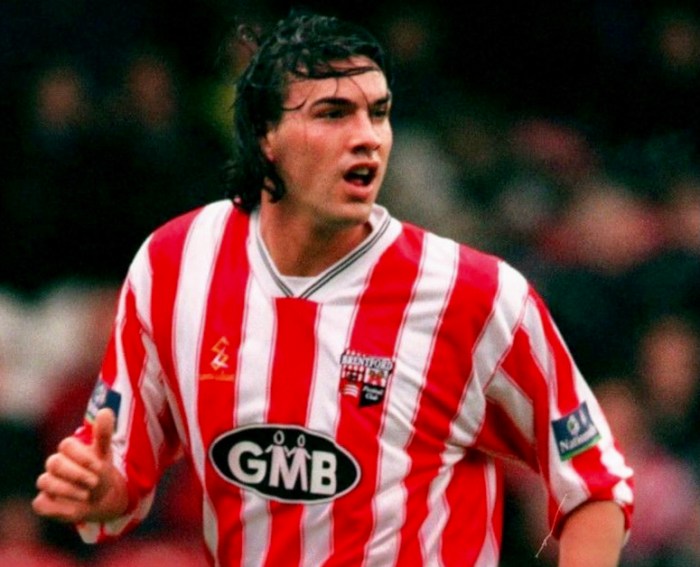
The imposing Italian scored only three goals in 26 appearances for the Bees after their £75,000 gazumped Albion’s bid to take him permanently from Bristol City.

Thankfully Brighton’s fortunes were vastly improved by the chap they signed instead: a raw reserve at City’s neighbours Rovers called Bobby Zamora!

Let’s go back to the last month of the 20th century. After a spectacular start to life back in Brighton following the two-year exile playing home games at Gillingham – including an opening day 6-0 crushing of Mansfield Town – mid-table Albion were struggling to find the back of the net with any consistency.

Twice-red-carded striker Darren Freeman missed multiple games through suspension, former soldier David Cameron struggled to cut it at leading the line, and former England Youth international Aidan Newhouse didn’t live up to Micky Adams’ expectations either.

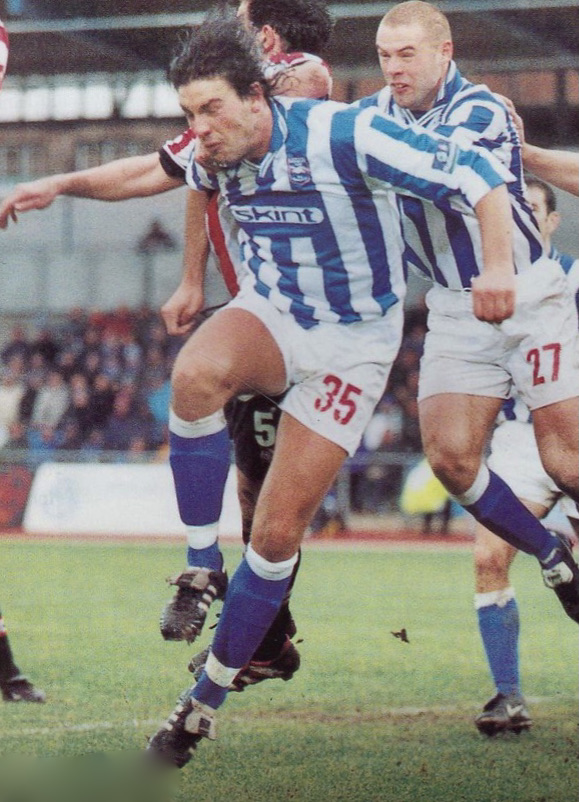
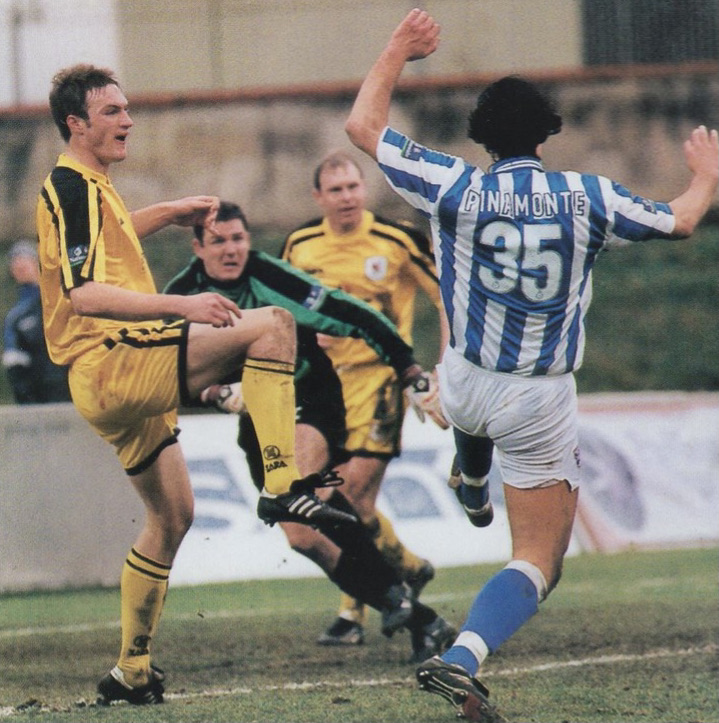
That’s when Adams turned to the first Italian to represent the Albion, 22-year-old 6’3” Pinamonte, who was struggling to get a game under Tony Pulis, then boss of the relegated Robins (they’d dropped down to the third tier the season before).

He made his debut for ‘flu-hit Albion away to Swansea City on a rainy night at the Vetch Field, only meeting his teammates for the first time when being picked up en route to Wales for the game.

“Pinamonte led the line as a lone striker,” recalled wearebrighton.com. “A thankless task was made even harder when the Albion were reduced to 10 men following a red card for Jamie Campbell with only 25 minutes played.”

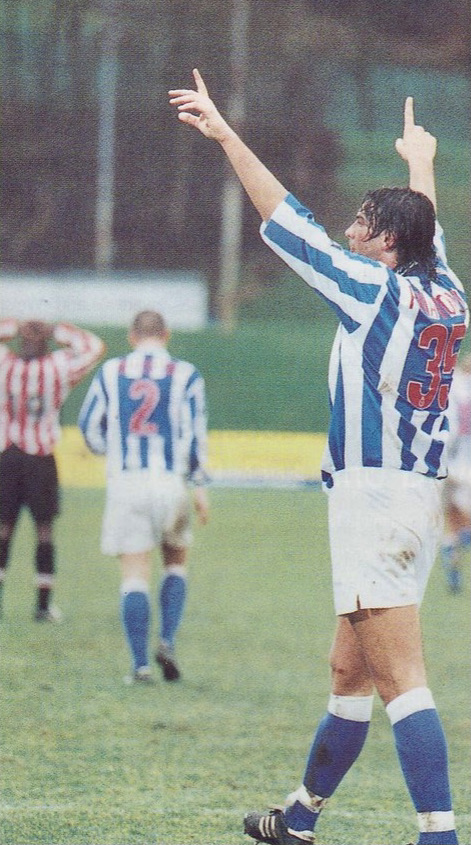
While makeshift Albion lost 2-0 to the Swans, their run of defeats was halted courtesy of a 1-1 Boxing Day draw at home to Barnet and a last game of the century 3-1 win at Rotherham. The 3 January match at home to Exeter City not only famously saw Freeman score the first football league goal of the 21st century, it also featured a brace from the lanky loan signing as Albion won 4-2.

It seems Adams had seen enough to want to make Pinamonte’s move permanent, but matters became complicated when Pulis decided to quit the Robins and take over at Portsmouth.

Because the departing manager’s successor may have had a different view of the striker, he signed on loan for a second month, rather than permanently, Adams telling the Argus: “We are pleased to keep Lorenzo for another month. The situation at Bristol won’t be resolved for a few weeks, so a permanent deal is up in the air.”

The same article declared that Pinamonte wanted to join Albion permanently but the bid put in by chairman Dick Knight was below the asking price, and Brentford, a division above Albion at the time, had also made an offer.

Pinamonte unsurprisingly felt in limbo and confessed to being distracted when he played in a 1-0 defeat against Leyton Orient.

“In your mind you wonder what is happening, whether you are going to stay or go, so there was a little bit of confusion.

“That probably affected me. I was thinking about it, and perhaps not concentrating,” he said. “I think I have done well so far, but not in that game.”

Cover boy Lorenzo

The turn round in form took the Seagulls to within five points of a play-off place but Pinamonte’s head was turned by the chance to play at a higher level and Brentford eventually got their man.

Offered a lucrative three-and-a-half-year contract at Griffin Park, Pinamonte admitted to the Argus: “I am a little bit upset to be leaving and I would love to come back in the future. I wanted to stay but for my future it is better to leave. Money talks and I will be playing in a higher division.”

A disappointed Adams admitted he would have to look elsewhere for a big, hold-up striker. “We thought Dave Cameron would come in and be that big centre forward and Aidan Newhouse also. Unfortunately Dave prefers the ball into his body and feet so he can jink and turn.

“Big Lorenzo came in and gave us that other option. Gary Hart and Darren Freeman gambled off him. Now that he has gone, to get the best out of them and the other forwards at the club, we may need to bring another big man in.”

Adams later told Greville Waterman, one of the voices of authority on all things Brentford: “We were going through an indifferent spell and struggling for a big centre forward. David Cameron wasn’t up to it and we had been outbid by Brentford for Lorenzo Pinamonte, so I called Ian Holloway at Bristol Rovers who told me: ‘I have got a young lad who’s been on loan at Bath City. He’s only 19 and as raw as anything, but he has scored a few goals for them.’

“I was not totally convinced but we were desperate and the clincher was when Ian told me he was only earning £140 per week, so I said ‘send him down,’ and the rest is history!”

For his part, Pinamonte reflected some years later that his time at Brighton probably just came too early in his life. “Maybe if I had gone when I was 25 or 26 it would have been different for me,” he told Brian Owen of the Argus in 2016. “I enjoyed England but it probably came too early for me. I was there alone and I was very young.”

Pinamonte’s time at Brentford certainly divided opinion. ‘Smilely’ on griffinpark.org described him as “Lorenzo Pinthetailonthedonkey” but ‘Saffrey’ on the same platform said: “I think he’s been unlucky with (Ron) Noades as he was never really given a chance, as Uncle Ron brought in that donkey Steve ‘Murray’ Jones, when he should have given Pinamonte, who had recently joined the club, a decent run out.”

The Bees lured Pinamonte from Albion’s grasp – thankfully

‘Chalfont Bees’ reckoned: “All I’ve seen of Lorenzo is him getting booked or worse. He just doesn’t seem to be good enough at the moment and I can’t see him improving. I say cut our losses and get rid of him so as to give other strikers a chance.”

And ‘Holysmith’ opined: “Although Pinamonte hasn’t done much, he has a good strike rate for the amount of time he has played for Brentford. The problem is he doesn’t move about much.”

In the 2000-01 season, Pinamonte went out on a mid-season loan to Leyton Orient and at the season’s end he was released by Steve Coppell.

As he explained in that 2016 interview with Brian Owen, he then returned to Italy and spent eight years playing in the Italian third division until retiring as a pro at the age of 31.

Born on 9 May 1978, a gentleman of Verona (Caprino Veronese to be precise), the young Pinamonte was with southern Italy side Foggia before trying his luck in England. He joined Bristol City on a free transfer in the 1997-98 season.

In City’s disastrous 1998-99 season, when they were relegated from Division One (now the Championship) in bottom place, Pinamonte celebrated his 21st birthday by scoring the only goal of the game on his debut as Norwich City were beaten at Ashton Gate in the last fixture of the campaign.

With their fate already sealed and with an eye to the following season, Swedish manager Benny Lennartsson, who had won only five of the 30 games he’d taken charge of, chose to blood a few youngsters and handed Pinamonte his debut up front alongside £1.2m signing Ade Akinbiyi.

Five minutes before half time, the City faithful finally had a moment to cheer, as Bristol Evening Post reporter Richard Latham recorded. “Akinbiyi, made captain for the day against the club who launched his career, headed down a Micky Bell corner and Pinamonte stuck out a long right leg to find the top corner of the net from close range.”

Lennartsson was relieved of his duties at the end of the season and two months later he was replaced by former Gillingham boss Pulis, who sent the young Italian striker on a fruitless loan at Carlisle United (he didn’t play a game) before answering Brighton’s call for reinforcements.

Off the field, Albion’s matchday programme informed us how Pinamonte was staying at the Courtlands Hotel in Hove during his temporary stay where the manager was Italian Jo Guiseppe-Messina, and he had also enjoyed the hospitality of Angelo Cavalli, the owner of Topolino Duo restaurant in Hove.

Apart from scrapbook memories of his time with the Albion, Pinamonte continued his friendship with Cavalli; the restaurateur had been to visit him at the hotel at Lake Garda that he ran after his professional playing days were over.

Grant Hall owed second chance to mentor Danny Cullip

TALENTED defender Grant Hall has suffered plenty of slings and arrows in a career that might not have got off the ground but for the influence and encouragement of former Albion captain Danny Cullip.

When he got a second chance at Brighton, he seized it, made it to the first team, was signed by Tottenham Hotspur and is still playing tier two football more than 10 years later.

In one of those strange quirks of football, Neil Warnock, the manager who signed Cullip for Sheffield United, made Hall his first signing when he took charge at Middlesbrough.

Warnock infamously dumped Cullip within three months of signing him for the Blades but he was a lot more complimentary about Hall, who had faced his demons at one of Cullip’s old clubs, QPR.

“Grant is a smashing lad and I’m sure the fans will really take to him,” Warnock told Boro fans after signing him in July 2020.

Born in Brighton on 29 October 1991, Hall was with the Albion as a schoolboy but was released when he was 16. That’s when he went to play for non-league Lewes where Albion’s former captain was seeing out the remaining days of his career.

“He (Cullip) was a massive influence on me,” the young defender told Albion’s matchday programme. “Danny talked to me every time I played. He gave me advice on what to do and he never had a go at me, which might not have helped me as a youngster. He was always positive and encouraging me.

“He was a great pro when he was playing so was a great person to be mentored by.”

Together with input from another former pro, Anthony Barness, and manager Kevin Keehan, Hall said: “I felt their belief and that gave me confidence and I became a better player. They helped me so much; I owe a massive thanks to them.”

The changed Hall brought Albion’s director of football Martin Hinshelwood back to his door with an invitation to return to the club two years after he’d left.

Hall was part of a hugely successful development squad under youth team coach Luke Williams, and eventually made it to the first team, joining Gus Poyet’s squad for training over Christmas 2011.

Although a centre back by preference, his debut was at left-back as a second-half substitute for assistant manager Mauricio Taricco in a memorable New Year’s 3-0 win over 10-man Southampton at the Amex. Saints’ Rickie Lambert was shown a red card and Matt Sparrow scored two belting goals for the Albion.

“I’ve waited a long time but it’s a great feeling to have finally made my debut,” said Hall. “Obviously there were a few nerves as I was getting my shirt on but once you step onto the pitch you just block everything out.

“You are just so focused on your game that you can’t even hear the crowd but I really enjoyed the experience.”

Hall did well enough to be given his full debut the following Saturday in the FA Cup against Wrexham, although Poyet couched his words of praise carefully after the youngster put in a composed display, suggesting certain representations on Hall’s behalf were not welcome.

“I would stay calm if I was anyone connected to Grant,” he said. “He played for half-an-hour against Southampton when we were eleven v ten, and then 90 minutes against Wrexham, with all respect to Wrexham, so we’ll see.”

Albion fans liked what they saw though, with correspondent ‘4everaseagull’ saying on the Argus discussion forum: “Hall’s performance was very assured against Wrexham and he looked very comfortable. For me he was MoM. He didn’t miss a header all game, and his positional play and passing were excellent. It really showed how important it is for all the respective teams at the club to play the same way. Feet on the ground for Hall but what a great prospect.”

Hall played alongside versatile Frenchman Romain Vincelot against the Welsh Conference side but there was plenty of competition at centre back with captain Gordon Greer usually featuring alongside Adam El-Abd, and a rookie Lewis Dunk beginning to emerge. Steve Cook, also 20, had returned from a loan spell at Bournemouth to help out during an injury crisis but he soon departed to Dean Court on a permanent basis, joining Tommy Elphick whose own Albion progress had been blighted by a serious injury.

Whatever had narked Poyet in January resurfaced when Hall rejected a three-year deal offered by Albion before his contract expired at the end of June. Hall chose to join Spurs instead, although Poyet was baffled and, in a convoluted but contorted way, went public with his criticism of the youngster’s move.

“The only disappointing side with Grant Hall is that what he told us was the reason for not signing a contract was not true,” Poyet told the Argus. “He didn’t accept our contract for a reason but that reason is not happening.

“There was a clear reason he gave us as to why he did not want to stay here. I know what he said and it’s not happening, so it’s disappointing, no doubt.”

Albion clearly felt Hall had a future, and with the seven substitutes rule coming in it was felt his chances of being involved in the first team squad were pretty good.

Nevertheless, Poyet added: “Sometimes we try to advise players knowing the game, but my point of view is probably not the same as the player’s point of view. I just wish him well. I hope he can make it and can be playing at the highest level.

“I am not against him. He made a decision, nothing else, but I think it’s important to know the reason.”

While Hall went straight into Tottenham’s academy team and made his debut in a 2-1 friendly victory over Kingstonian, Albion began a drawn out wrangle over compensation, which was due because Hall was still under 24.

It wasn’t until the following January that Albion finally reached an undisclosed settlement with Spurs to prevent it going to a tribunal.

Hall featured in Spurs’ under 21 side from the start of the 2012-13 season but in three years on their books, he didn’t make a first team appearance. He had three loan spells away from White Hart Lane – at League One Swindon Town under the aforementioned Luke Williams – and at Birmingham City and Blackpool, both in the Championship.

In 2015 he made a permanent move to Queens Park Rangers, signed by former Albion full-back Chris Ramsey who had coached him at Tottenham.

“He’s an old-fashioned defender who can head the ball, tackle and he doesn’t mind putting his foot in when he needs to,” said Ramsey. “But he can play as well from the back, and that’s what we’ll be looking to do when the opportunities present themselves this season.

“He’s still a young boy and centre-half is a very responsible position, but he’s got experience in the Championship and that’s vitally important for us.”

Hall won the supporters’ Player of the Year award in his first season but suffered a serious knee injury towards the end of the 2016-17 season.

He started drinking heavily because he couldn’t cope with the pain of tendonitis in his knee, and two years later spoke out about the mental health issues he went through.

Hall encouraged others to talk about such problems in the way he did after he broke down in a meeting with QPR director of football Les Ferdinand and then manager Steve McLaren.

Ferdinand put him in touch with the Professional Footballers’ Association and he was able to understand that it was OK to speak about his issues.

“I had a really good conversation with them and they helped me understand that it’s okay to speak about your mental health. No-one is going to judge you for it and opening up about your mental well-being is a strength and not a weakness,” he told qpr.co.uk. “It was exactly what I needed. It felt like a huge release, a weight off of my shoulders and it allowed me to re-focus and start to look after myself again.”

Explaining how things unravelled, Hall said: “I went from a place where life was perfect, I had a great relationship with the QPR supporters and everything was going right on and off the pitch. Then all of a sudden everything seemed to come crashing down. It was a huge reality check for me and I now realise that you can never anticipate what is around the corner in life.”

Hall managed to turn that corner and worked hard to restore his fitness to the extent that he featured in 30 matches during the 2019-20 season. “Deep down it’s just a relief for me to be playing football again,” he said.

But after 128 appearances across five years at Loftus Road, where he had become club captain, he was unable to agree a new contract with QPR in the summer of 2020 and upped sticks at the age of 28 to become Warnock’s first signing at Middlesbrough.

“I’ve known Grant for a few years now,” said Warnock. “Everyone knows I’m looking at the spine of the team, and he’s the right fit for what we need.”

Unfortunately, not for the first time in his career, injury sidelined him for several of those early months on Teesside but on his return he proved a bright spot in a disappointing second half of the season.

“It’s been a massive plus because I didn’t personally think he’d be able to come back like he has, if I’m totally honest,” Warnock told Craig Johns, of gazettelive.co.uk. “I was worried he’d put a bit of weight on and I couldn’t see enough mobility.

“And yet he’s proven me entirely wrong. He’s come back fitness-wise better than I’ve ever seen him and he’s using his experience at the back for us to the point where he’s been a breath of fresh air for us.”

Warnock also told the reporter: “The thing I’ve been most impressed with, more than his heading or his contribution in that respect, has been his reading of the game against quick players. You would probably question how he would get on against a quick player, but he’s just revelled in it really.

“His quickness of thought has put him a long way ahead of some of these quick strikers that he’s been playing against. That’s what I’ve been pleased with more than anything.

“I always know he’ll chip in with an odd goal here and there, but his reading of the game has been outstanding.”

After Warnock’s departure, Hall was on the outside looking in under Chris Wilder although the new manager sought to give him public encouragement by saying he could still have a role to play. “He’s had a couple of little issues but he is back involved now and back part of the group,” he told gazettelive.co.uk. “Grant has an important role to play between now and the end of the season,” he said. “I think they all know they have to be ready when called upon.”

In July 2022, it was announced Hall was joining newly-promoted Championship side Rotherham United on a season-long loan.