The moment Lee Hendrie felt ten feet tall at Brighton

SKY SPORTS pundit Lee Hendrie has reached heights and plumbed depths in a life that saw him stop off at third-tier Brighton in 2010 after 17 years with Aston Villa.

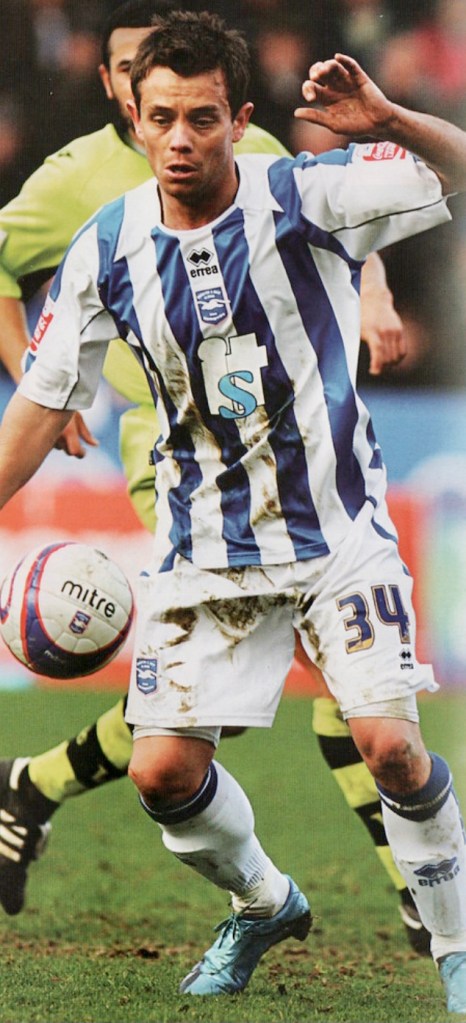
Hendrie was something of a forgotten man of football when Gus Poyet snapped him up for the Seagulls on loan from Derby County in March 2010.

Hendrie featured in eight Albion games in the last six weeks of the season: four wins, two draws and two defeats.

Turning out in League One was quite a fall for a player Glenn Hoddle selected for England, but he told the matchday programme: “The main thing is to play football. If you’re not playing then you tend to get forgotten but hopefully I can get some game time between now and the end of the season.”

And he later said to football.co.uk: “I went to Brighton to get my face back out there. Gus Poyet was brilliant. He got the lads together in a circle and said, ‘******* hell, we’ve got Lee Hendrie here’. Let me tell you, after feeling so unwanted I suddenly felt 10 feet tall.”
Hendrie made his debut as a 75th minute substitute for Sebastien Carole in a 3-0 home win over Tranmere Rovers, and he told the matchday programme: “We could have had more than three goals and I should have scored.”

But Hendrie was bubbling after his involvement and said: “Listening to the gaffer in the changing room, you can see why the lads are playing with a lot of confidence and have improved so much.

“I’ve played under a few managers, but not many, can I say, are like Gus, who is so enthusiastic and tells the players to go and enjoy themselves. There is nothing a player wants more than a gaffer telling you to enjoy your game.”

Of Albion’s midfield triumvirate of Gary Dicker, Alan Navarro and Andrew Crofts, it tended to be Dicker who was edged out by Hendrie’s arrival.

However it was in Crofts’ place that the loanee got his first start, in a 2-0 Easter Monday defeat at Hartlepool in which former Albion loanee ‘keeper Scott Flinders prevented the visitors from leaving with a point. Hendrie was subbed off on 58 minutes when Kazenga LuaLua took over.

Hendrie went on as a sub for Dicker in the following home game against Carlisle United and it was his cross that set up what looked like a late equaliser by Tommy Elphick, only for Gary Madine to nick all three points with a second for United two minutes from the end.

Hendrie started in place of Dicker away to Gillingham but gave way to the Irishman in the 79th minute and the game ended 1-1. Hendrie started once again in the 1-0 win away to Southend, but Dicker replaced him on 65 minutes.

Hendrie’s third successive start in place of Dicker came at home to Bristol Rovers, when Albion won 2-1, but once again he didn’t last the 90 minutes as Dicker took over on 74 minutes.

In the penultimate game of the season, away to MK Dons, the game finished goalless although Alex Rae and Diego Arismendi were red carded for brawling. Hendrie started and Dicker replaced him on 58 minutes.

The on-loan midfielder’s only full 90-minute appearance came in the last game of the season when Yeovil were beaten 1-0 at the Withdean Stadium; Elliott Bennett scoring the only goal of the game a minute before half-time.

The chances of a permanent deal for Hendrie looked unlikely with Poyet admitting: “We were very pleased with him and he was pleased to be here. We will wait to see if, when we start putting the squad together, there is a possibility of it happening. It’s not an easy one, because of the wages.”

Born in Solihull on 18 May 1977, football was in Hendrie’s blood: Scottish dad Paul had played for Villa’s arch rivals Birmingham City and he was playing professionally for Portland Timbers at the time his son was born. He later played for Bristol Rovers, Halifax Town and Stockport County.

For someone who became Villa through and through, Hendrie admitted to the Birmingham Mail that he had actually been at city rivals Birmingham’s school of excellence before ‘Big’ Ron Atkinson snapped him up as a teenager.

As well as his dad having played for them, his nan was a City season ticket holder and his uncle also supported them. “Villa didn’t come and scout me at the time and Blues were the first club that did. It was an opportunity for me to get myself into the pro ranks and see what it was all about. Dad said it would be good to go and have a feel for it, which I did.”

But ever since he’d scored two goals in a schools’ cup final victory for his school, Washwood Heath, against Hodge Heath at Villa Park, he had dreamed of playing for Villa.

The dream came closer when Hendrie signed on the dotted line as a 14-year-old at Villa’s Bodymoor Heath training ground, although he remembers his dad tempering his excitement.

“When we came out after I’d signed, I’d got given a load of training clobber and I thought this was it, I’d made it,” he said. “My dad said: ‘Take a step back, you, you ain’t got anywhere yet, this is the start of a long road. Just because you’ve got all the kit it doesn’t mean you’re a professional footballer and an Aston Villa player – relax yourself’.”

Hendrie and his best mate Darren Byfield, who had been strike partners in Erdington Star and Erdington & Saltley district team as kids, developed a reputation as a dynamic duo on and off the pitch, and soon became Atkinson’s ‘teacher’s pets’.

Atkinson converted Hendrie from a centre forward to left winger (even predicting he’s one day play for England in that position) and the duo continued to do well for the Villa youth team.

As it turned out, it was Atkinson’s successor, Brian Little, who ended up giving Hendrie his first team debut – although it was memorable for all the wrong reasons!

It came two days before Christmas in 1995 when he went on as a 33rd minute substitute for Mark Draper away to Queens Park Rangers. He collected a yellow card for kicking the ball away and was red carded in stoppage time; a second booking for an innocuous foul on Rufus Brevett. Into the bargain, Villa lost 1-0.

A devastated Hendrie revealed it was the opposition player-manager, Ray Wilkins, rather than Little, who put a comforting arm round him. “Someone who I’ve seen play football, a legend of the game, to come and console me and say: ‘This is football, welcome to football, these are the ups and downs you’re going to have in your career’.

“He said there’s lot of people who are talking highly of you, you’ve got a big future in the game, kid. As he got up, he tapped my shoulder and said: ‘Keep that up’.”

Few subsequent chances were given to him under Little but, when John Gregory took over, he became more established.

He would go on to make a total of 308 appearances for Villa (243 league and cup starts), scoring 32 goals, with his best performances coming in Gregory’s tenure. He wasn’t quite the same player under Graham Taylor or David O’Leary.

It was on November 18 1998 that he won his one and only England cap, sent on by Glenn Hoddle as a 77th minute substitute for Villa team-mate Paul Merson in a 2-0 win over the Czech Republic at Wembley. Two other Villa teammates, Dion Dublin and Gareth Southgate, were also part of Hoddle’s squad.

Unfortunately for Hendrie, Hoddle was sacked two months later and no subsequent England bosses called on him. “It’s a regret that I didn’t go on and make more of my England career,” he said. “It’s great that I’ve got a cap and it’s something you can’t take away from me, but I hate being classed as a one-cap wonder.”

Hendrie’s days at Villa came to an end in August 2006, his last involvement being from the bench in Martin O’Neill’s first match in charge, a 1-1 Premier League draw at Arsenal on the opening day of the 2006-07 campaign.

While Hendrie, by then 30, was excited about playing for O’Neill, the new boss had other plans and told him he was not part of them.

Initially he joined Stoke City under Tony Pulis on a season-long loan but Bryan Robson at Sheffield United outbid the Potters for his services on a permanent basis, and he signed a three-year deal at Bramall Lane at the start of the 2007-08 season.

Unfortunately, when Robson swiftly parted company with the Blades, Hendrie didn’t see eye to eye with his successor, Kevin Blackwell, who accused the player of being a money-grabber.

“Sheffield United was just the worst thing I could have done,” he told the Claret & Blue podcast.

“Kevin Blackwell was one of the worst managers I have ever, ever been under. He put the nail in the coffin for (my career).”

Blackwell sent him on loan to Leicester City, where he played nine games, and he later went to Blackpool too. United moved him on to Derby County but when he struggled for games there, he joined Brighton.

If the spell at Brighton was a temporary relief from his mounting problems, he revealed in a Guardian interview with Donald McRae that 2010 turned out to be one of the worst years of his life, and he attempted suicide on several occasions.

A property empire he had built up amassed insurmountable debts which even saw his mother’s home repossessed. He lost his own house as well, and it sent him into depression. Divorce and bankruptcy made the situation even worse.

“The football was almost over and my head was gone. I’d been trying to sell property, but the housing market crashed,” he said. “I got to the stage where I just wanted to end it all. I’d hit rock bottom.”

The ups and downs of Hendrie’s colourful life have featured in various media interviews.

The rise and fall tale was charted by the sporting.blog and Hendrie’s spoken about his troubles on Sky Sports, where he later became a pundit.

He was in tears on Harry’s Heroes: Euro Having A Laugh discussing his depression struggles with Vinnie Jones. The BBC radio programme You and Yours highlighted his plight in a March 2013 episode.

On the footballing front, a brief spell at Bradford City was followed by a host of short stopovers at Bandung (2011), Daventry Town (2011), Kidderminster Harriers (2011-12), Chasetown (2012), Redditch United (2012) and Tamworth (2012-13) before he retired as a professional.

He then played for Corby Town (2013), Highgate United (2013), Basford United (2013 – 2015), Montpellier (2016-17), Redditch United (2016), Nuneaton Griff (2019) and Highgate United (2019) on a non-professional basis.

As he tried to find a new purpose in life, alongside his media work, Hendrie set up FootieBugs, a football academy for kids aged from three to 12.

Hendrie chats on TV with Dion Dublin, a former Villa teammate

That’s the way Cookie crumbled for Hastings-born defender

WHEN IT comes to home-grown talent, Brighton have had particular success with central defenders.

Lewis Dunk is the prime example, staying with the club from humble beginnings through to Europe. Others had to move on to make the most of their careers.

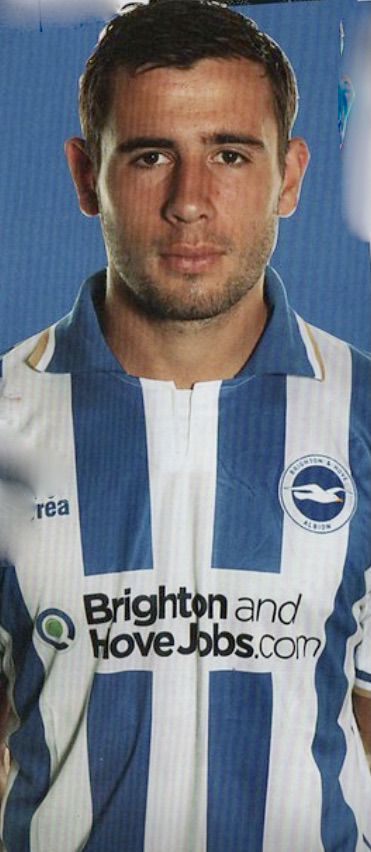
For example, Steve Cook joined the club aged nine and made it through the different age levels into Albion’s first team. But to get regular football, he moved along the coast to Bournemouth.

If moving from Championship Brighton to League One Bournemouth seemed like a backward step in 2012, two promotions later saw him laughing on the other side of his face when the Cherries made it to the Premier League (in 2015) a season before the Seagulls.

Cook spent 10 years with the Cherries, making more than 350 appearances (168 of them in the Premier League), and after the departure of fellow ex-Albion defender Tommy Elphick, he took over as their captain.

Cook first got a taste of the big time in 2008, when he was a second year scholar on £60 a week, aged just 17. He was sent on by Micky Adams as an 85th-minute substitute in the famous League Cup game against Manchester City that League One Albion won on penalties.

Two months later, he once again replaced right-back Andrew Whing, this time in a FA Cup first round replay defeat to Hartlepool United, and picked up a booking into the bargain.

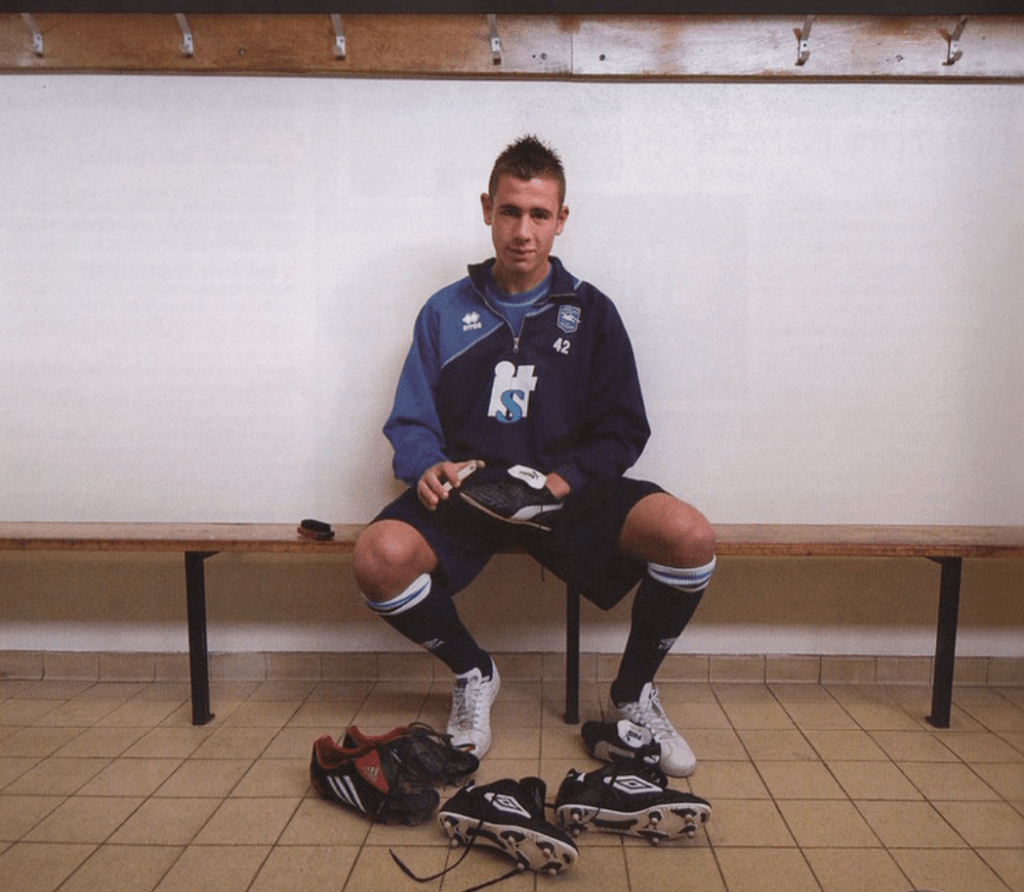
Boot cleaning duties for young Steve Cook

To gain more experience, in December that year, Cook went west to spend six weeks with Conference South Havant & Waterlooville. On his return, he once again had a first team look-in, going on as a 77th-minute sub for Calvin Andrew in the Johnstone’s Paint Trophy southern final defeat at Luton Town that marked the end of the second coming of Adams.

Before the appointment of Russell Slade, Cook went on for the second half as a sub for injury-plagued sub Adam Hinshelwood (who’d been an 18th-minute sub for Elphick) in a 4-0 home defeat against Crewe Alexandra.

Slade marked his arrival by bringing in plenty of old hands in what eventually proved to be a successful skin-of-the-teeth survival battle against relegation. Cook didn’t get another chance in the first team until some time after Gus Poyet had taken charge.

His development continued on loan with the likes of Eastleigh and Eastbourne Borough and in November 2010 he moved away from home to join former league club Mansfield Town on a three-month loan.

“Mansfield play very different to Eastbourne but it’s more like playing for Brighton where they like to keep the ball and play out from the back, which you don’t get in the Conference very often,” he told the matchday programme. “I see it as a great opportunity to prove myself and try to earn another contract at Brighton.”

He added: “Playing Conference football helped me grow up, physically and mentally, so by the time I returned I felt I was ready to challenge for a first team place.”

Cook up against Suarez

After a handful of non-playing appearances on the first team subs bench, when he did get his first ever start, it could not have been a bigger match: Liverpool at home in the third round of the Carling Cup with Luis Suarez, Dirk Kuyt and Craig Bellamy in the opposition forward line.

“It was a real confidence boost knowing the manager had faith putting me into the side for such a big game, but I really enjoyed the experience and got a great deal out of it,” he said.

“While I had a good pre-season, I’ve not played a lot of games since then. It was one in two months before the Liverpool game, but I’d been working hard in training and got my reward.”

Cook only found out 90 minutes before kick-off that he would be taking the place of fellow academy graduate Dunk, with both Elphick and Adam El-Abd out injured.

“It was a real baptism of fire though because for the first 20 minutes Liverpool were brilliant. Suarez, Bellamy, they were all excellent going forward, the pace of them as a team was unbelievable and in that opening spell I think we were in awe of them.”

Cook thought his involvement that night would lead to more chances, but he said: “Later that month we had Ipswich away, Dunky was suspended but instead of playing me, Gus put Romain Vincelot – a midfielder – in alongside Gordon Greer. From that point on, my mind was made up; I knew I had to look elsewhere if I wanted to kick on in my career.”

That autumn, Cook initially joined Bournemouth on loan, featuring in eight games, but he was recalled by the Seagulls when a shortage of defenders meant he was needed for a crucial New Year game at home to table-topping Southampton.

Having lost four games on the bounce, the odds were stacked against a positive result, but Albion remarkably won the game 3-0 (two cracking goals from Matt Sparrow and another from Jake Forster-Caskey).

Nevertheless, within 24 hours of the game ending, Cook finally took the tough decision to leave the Albion permanently. The fee was a reported £150,000.

He told the matchday programme: “I have loved my time at Brighton but this is a chance to play regular football and I can’t turn that down. It was nice to go out on such a high – not many players get that chance.”

Cook reckoned he might have got the odd game or two if he’d stayed at Brighton but he didn’t rate his chances of becoming a regular when everyone was fit. “I could play close to 30 games for Bournemouth and that is massive for a young footballer,” he said.

In a later interview, he said: “It was always going to be a tough decision to leave the Albion as I had been at the club since the age of nine.

“I had a decision to make: do I stay and fight for my place, despite being a fair way down the pecking order, or do I leave and try to continue my career elsewhere?

“It wasn’t easy because I was leaving a club on the rise; the Amex is one of the best stadiums in the country, the team was establishing itself in the Championship and there was a new training ground on the way.

“But having been at Bournemouth on loan, I could also see a hugely ambitious club and a talented squad which I believed was going places.

“So, I decided to leave and it’s been the best decision I could ever have made. I’ve moved away from my parents, so have grown up off the pitch, while on it I’ve been playing regularly and have really enjoyed my football.”

Much of that time he partnered Elphick in the middle of the Cherries defence and it wasn’t long before the pair were emulating the Albion’s achievement of promotion from League One.

“Tommy arrived a year after me but of course I told him about the club, the town and knew it would be a good move for him as it was for me,” he said. “We’d obviously played alongside each other before, had known each other a long time, and so we soon built up a good partnership.

“He had those leadership qualities he displayed at Brighton and was soon made captain. We had a terrific three years together and remain good friends off the pitch.”

In a subsequent Albion matchday programme, when he was once again visiting with the Cherries, he said: “Lovely stadiums and training facilities are great, but only if you’re playing in them and I can now look back on nearly 300 appearances for Bournemouth, where I’ve had some fantastic moments, played regularly in the Premier League and really developed my game. It’s a move that couldn’t have gone better.”

Although Cook held his own in the Premier League, he admitted the transition from the Championship was hard. “The gulf with the Championship is huge,” he said. “The intensity and pressure, in particular, are massive and the first six months were a real learning curve.

“Once I’d adapted and dealt with the expectations placed on me, I could relax and start to enjoy myself.”

Born in Hastings on 19 April 1991, Cook joined the Albion as a schoolboy following a six-week trial under the auspices of Martin Hinshelwood, the head of the youth set-up at the time.

“Initially, I was only training Tuesday evenings in the Eastbourne centre of excellence but, when I reached 13, we were training twice a week with a game on the Sunday,” he recalled.

“I remember I had a choice to make: Hastings Town, my local team, or Brighton and obviously I was swayed by the facilities, the coaching and being associated with a professional club.”

After Bournemouth lost their top tier status in 2020, Cook captained the side through to the Championship play-off semi-finals in 2021 where they were beaten by eventual winners Brentford.

There was plenty of emotion when Cook finally left the club in January 2022 with manager Scott Parker saying: “I know too well what someone like Steve Cook has done for this football club and the journey he has been on with the club. He has been paramount and done everything, really. I wish him all the best.”

And in an open letter to the club’s fans, Cook wrote: “I’ve been lucky enough to captain the team in League One, the Championship and Premier League and writing this just fills me with immense pride.

“The time has come for me take the next step in my career but I will never forget the staff that helped me improve as a player and person.

“The players that I shared a dressing room with and, and most importantly, the fans that supported and cheered for all those games.

“The journey that we have had is one that will never be beaten, and the relationship we had was undeniably strong. Thanks for everything.”

Upon signing for Nottingham Forest, Cook declared: “You can see the progress the club is making and I’m excited for the new challenge. 

“I thought it was the perfect time in my career to make this move to hopefully come and contribute and help get this club back to where it wants to be.

“The history of the club speaks for itself and I know how passionate the fans are. I’ve played at the City Ground in the past and it’s always been electric.”

Manager Steve Cooper said: “Steve is a fantastic player and brings a good level of experience, both in the Championship and the level above.

“He’s played in a team that has won a lot of games and I think that that’s important. We want our group to be young and hungry along with players of experience that can drive the team forward and that’s what we’re building.”

Having been part of the Forest side promoted to the Premier League in May 2022, his involvement back in the elite division was restricted to 12 games and he was omitted from Forest’s 25-man Premier League squad for the second half of the 2022-23 season.

In the summer of 2023, he switched to Queens Park Rangers in the Championship, telling the club’s website: “Playing football is the most important thing for me but I also pride myself on being a good character around the group.”

He went on: “My time in the Championship has been quite successful, and that success is something I want to bring here. 

“I don’t want my career to peter out, I still really want to be successful and to contest. I still have aims and targets I want to achieve and I’m hoping that the success I’ve had in my career so far continues so that I can help push QPR forward.” 

‘Radio’ Poyet talked himself out of Brighton and Athens jobs

GUS POYET’S penchant for speaking out cost him his job at Brighton and AEK Athens.

“There is a reason they nicknamed Poyet ‘Radio’: always on, always talking, especially when it comes to football,” wrote Sid Lowe, in The Guardian.

While the exact reasons for his departure from the Albion in 2013 were never made public, there was speculation that it revolved around him talking openly about his desire to move on moments after the Seagulls had lost a Championship play-off match against arch rivals Crystal Palace.

“I’ve not been in this situation before but I don’t like it,” Poyet said after the game. “It’s changed my view completely about everything I was prepared for, so we’ll see now. I have always said that all the time we keep improving I am going to be at this club and the day we hit the roof, I’m not. Is there something more?

“Right now I don’t know, so I need to make sure I know there is, because if not I am not going to stay forever.”

Poyet was suspended by the club three days later, along with the assistant manager Mauricio Taricco and first-team coach Charlie Oatway, with them only saying they were launching an internal inquiry.

Andy Naylor in the Argus of 17 May 2013 reckoned the suspensions related to “numerous alleged breaches of contracts” pointing out: “Poyet refused to deal with the retained list, announced by the club earlier in the day.

“He told the squad at a meeting at The Amex on Tuesday he would not be involving himself with players’ contracts, because they were not his decisions and he might not be the manager next season.

“Players leaving and staying at the end of their contracts were dealt with instead by chairman Tony Bloom and head of football David Burke.”

At the time, Poyet’s name was being mentioned as a potential successor to David Moyes at Everton, and Martin Jol’s position at Fulham was not thought to be secure.

In the Argus, Naylor wrote: “During his post-match press conference he demanded assurances from Bloom he would have enough money to continue improving the team after their promotion near-miss.

“Those remarks are not, however, thought to be instrumental in the action taken by the club. Poyet’s relationship with Bloom and other senior figures has deteriorated in recent weeks.

“The Uruguayan almost joined Reading in March and his decision to stay only papered over the cracks.”

Naylor observed that Poyet’s previously “wide-ranging powers” had been reined in since the appointment the previous year of chief executive Paul Barber, who was on the board at Spurs when Poyet lost his job as assistant to Juande Ramos.

“It became an open secret within the Amex that Poyet would leave at the end of the season, irrespective of how Albion fared in the play-offs,” he said.

The following month Poyet claimed he was sacked while live on air doing punditry for the BBC although the club maintained he knew full well that he wouldn’t be returning to the job he had been doing for three and a half years.

Announcing his sacking on the club website, a statement read: “This followed his suspension, an investigation, and a subsequent formal disciplinary process. In line with the club’s own procedures, and UK employment law.”

Wind on the clock three years to April 2016 and, after only five months in charge of AEK Athens, Poyet was labelled “immoral” by the Greek club’s owner, Dimitris Melissanidis for telling the Greek media he would be leaving the club at the end of the season. Sounds familiar?

A Reuters report of 20 April 2016 maintained: “Speaking to the media on Tuesday, a day ahead of AEK’s Greek Cup semi-final second leg match against Atromitos, Poyet further angered the club by revealing details of a private meeting he had held with Melissanidis.

“What he did was unacceptable, it was not the appropriate time to unsettle the team just hours before the semi-final,” Melissanidis told reporters.

“AEK has never leaked any information from any of our meetings with him and for him to talk to the press about the contents of our meeting is immoral.”

Local media reported Poyet had been fired and would not be in the dugout for the match against Atromitos.

“AEK was informed of Gus Poyet’s decision that he will not stay with the club after the summer on Tuesday evening,” the club said.

“The important thing for AEK at the moment is the crucial semi-final with Atromitos, all of the other issues will be seen to after the match.”

After losing his job at Sunderland seven months previously, Poyet took over from Traianos Dellas in Athens in October 2015 on a deal until the end of the season, with the option to renew for another two years. Taricco and Oatway joined with him.

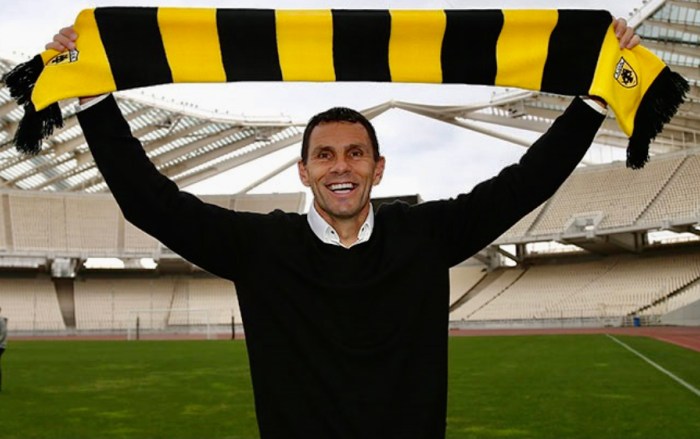
All smiles as Poyet arrives at AEK as manager

At the time of his appointment Poyet said: “I know that I have come to a huge club and I’ve been astonished by the reception that I have received.

“Our goal is to play to win every game, starting with the derby against Panathinaikos on Sunday (it finished 0-0), and maintain contact with the top positions.”

The ‘Yellows’ picked up a string of impressive results under Poyet but speculation about his future was never far away. In December 2015 he was linked to the managerial vacancy at Swansea City (following the departure of Garry Monk), prompting AEK to make a public declaration.

“We have not been approached by Swansea, there is no need for us to be approached and no propositions have been made from Swansea,” said a club spokesman. “Mr Poyet is happy at the club and will be our manager at least until the end of the season.”

AEK ended the regular season in second behind champions Olympiakos, although points were deducted for crowd trouble and they eventually finished third.

On his personal website, Poyet records that he led AEK Athens to the semi-finals of the Greek Cup and they won the three biggest derbies in the country against Panathinaikos, PAOK and Olympiakos over a month and a half. After he left, they went on to win the Greek Cup.

A month after his departure from Athens, Poyet was installed as head coach at Spanish La Liga side Real Betis, from Seville, on a two-year contract.

He subsequently managed in China, France and Chile but returned to Greece in February 2022 as the head coach of the country’s national team.

At one point it looked like he might return to Greece before then. It seemed all had been forgiven when, in September 2019, word had it that Poyet was lined up to return to AEK as the successor to the departed Miguel Cardoso.

However, agonasport.com said: “All of the signs seemed to be pointing towards Poyet returning to AEK as manager, but reports have now revealed that negotiations have reached a dead end. AEK are not willing to match the Uruguayan’s financial demands.”

High notes, low notes and forged notes – the colourful life of Mickey T

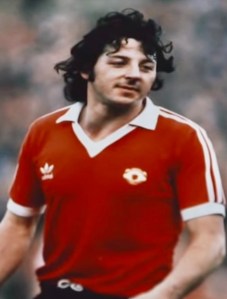
TRICKY Mickey Thomas earned a dream move to Manchester United but it turned into a nightmare.

Thomas is now a wisecracking ex-pro with a raft of entertaining self-deprecating stories about his colourful life and career, which included an unhappy spell playing in the top-flight for Brighton.

But before laughs became his stock in trade there was genuine fear.

Former Brighton player Dave Sexton was the United boss who signed Thomas from Wrexham to provide left-wing crosses into centre-forwards Jimmy Greenhoff and Joe Jordan, but the Welshman admitted: “I was petrified.”

He told interviewer Helen Evans: “I was scared to walk into the dressing room. I came over as a confident person, but I pretended I was. I got away with it.”

And in an interview with the Mirror, he said: “I played a lot of games – 110 – in a short space of time at United, but it wasn’t me.

“I wasn’t relaxed, I didn’t feel comfortable. I found it hard there. I couldn’t relay to anyone what I was going through.”

He expanded on the theme in his autobiography, Kickups, Hiccups, Lockups. “I was like a startled rabbit in the Old Trafford headlights,” he said. “I always played well within myself. There was a lot more pressure than I could have ever imagined, especially in front of the home supporters, even though I knew they loved me.”

Born in Mochdre, Conwy, in north Wales, on 7 July 1954, Thomas was brought up in poverty on a council estate and left school unable to read or write properly. He relied on a local factory to buy him his football boots and returned the favour by turning out on the left-wing for the factory’s men’s team, aged just 13.

He signed for nearby Wrexham at 15 and made his first team debut when just 17, under manager John Neal. Over six years, he made 230 appearances for Wrexham, scoring 33 goals along the way He made his debut for the Welsh national team in 1976 (in 10 years he won 51 caps) before moving to United in 1978.

“Sometimes it was too much to bear,” he said in Kickups, Hiccups, Lockups. “Fear of not being the person I was at Wrexham. Gone was the happy-go-lucky lad, and I knew he wouldn’t come back while I was at United. I didn’t feel as though I deserved to be a Manchester United player.”

He said it would take two bottles of wine the night before a match to help ease his nerves. “I was playing in front of 50,000 United fans and I was desperate to please them. In the end the pressure brought me down and I walked out.”

There was some degree of mystery exactly why he left Old Trafford in August 1981 (the Argus reported on 4 February 1982: “It wasn’t a gambling debt but Thomas needed the cash fast, and a move was the only answer”).

Moving to his boyhood favourite team, Everton, was, on the face it, a perfect next step but it didn’t take long for the move to turn sour.

After a bright 11-game start, he sustained a hamstring injury which sidelined him for several weeks. When fit again, he’d only trained for two days and expected to be restored to the first team. Manager Howard Kendall wanted him to prove his fitness in the reserves first – but Thomas refused to play.

Kendall said: “I put a high regard on discipline. I couldn’t let Thomas get away with refusing to play for the reserves.” He was fined two weeks’ wages with Kendall adding: “The whole club and all the fundamentals I believe in would have gone out of the window if I had let him get away with it.”

The hoped-for first team return never happened because Brighton manager Mike Bailey stepped in and snapped him up for £350,000 – on a four-year contract.

With long-serving left-sided midfield player Peter O’Sullivan – ironically also from north Wales and a former United youngster – having left the Albion in the summer of 1981, Thomas fitted the bill as his replacement.

“It was no secret that I had been looking for a left-sided player and I had made an approach for Mickey in the summer, before he moved from Manchester United to Everton,” Bailey wrote in his programme notes.

“I am now confident that we have the depth of squad we need to continue our progress and now we are all together we will work to improve in both our teamwork and individually. We have the competition we want for places and the whole squad is aware of what we are trying to achieve.”

Three months later the manager was making completely different noises. Thomas made an impressive cameo debut performance for the Seagulls as a substitute in a 1-1 draw with Birmingham. Blues midfielder and future Albion player Alan Curbishley made a hash of a back pass that enabled Michael Robinson to seize the chance to equalise for Albion.

The Sunday People reported: “Brighton cast new signing Mickey Thomas into a crazy, helter skelter 23-minute debut. And within seconds of his going on as a substitute, patched-up Birmingham cracked under the pressure.”

And the Sunday Express added: “Thomas, a £350,000 signing from Everton, came on as a substitute for Andy Ritchie and eight minutes from time he was floored in the box. But despite protests from the Brighton players, referee Colin Downey refused a penalty.”

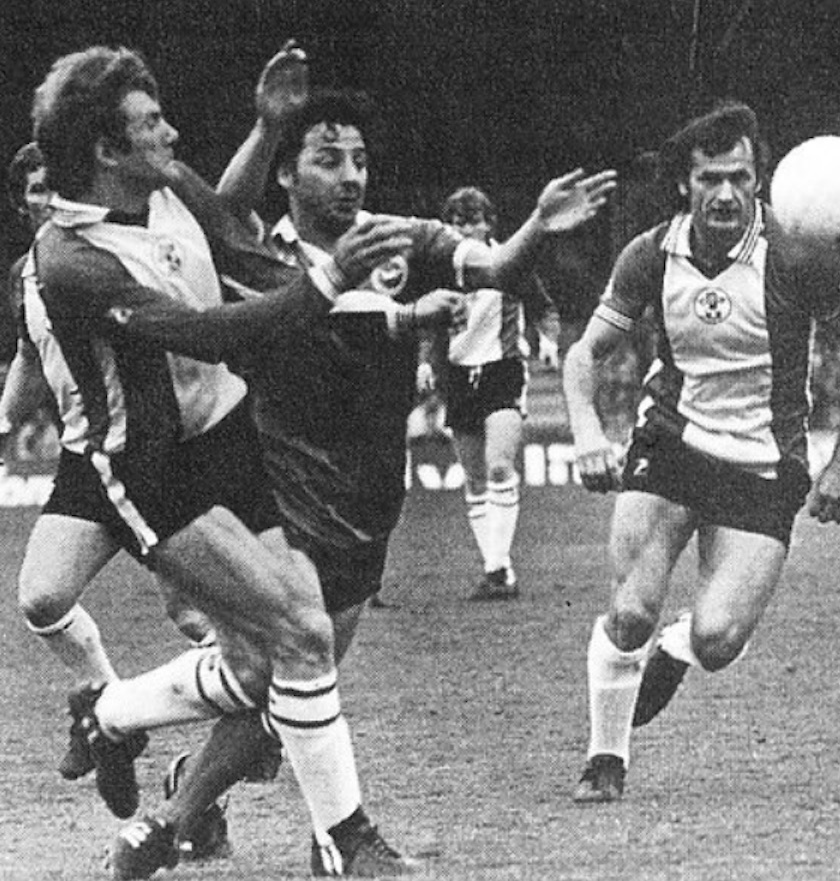
Thomas made his full debut in a 2-2 draw at home to Notts County and in only his third start in an Albion shirt he was back at Old Trafford. A less than memorable return, though, saw Albion go down 2-0 – and Thomas picked up a booking.

Nevertheless, he kept the shirt for 12 games, getting on the scoresheet in a 3-1 FA Cup 3rd round game in which opposition full-back Graham Pearce did so well that Bailey promptly signed him.

It would later emerge, however, that Thomas’ 20-year-old wife, Debbie, had been unable to settle in Sussex – the word was that she gave it only five days, living in a property at Telscombe Cliffs – and had gone back to Colwyn Bay with their baby son.

Thomas meanwhile stayed at the Courtlands Hotel in Hove and the club bent over backwards to give him extra time off so he could travel to and from north Wales. But he began to return late or go missing from training.

Stories abounded across the press and in a candid interview with the Argus, Thomas admitted: “My wife will never live in Brighton, and I can see her point of view. All our roots are up north.

“Everything is fine in our marriage, but I want to be with Debbie and see our little son grow up. I just can’t settle down at Brighton.

“It’s a marvellous club but it’s in the wrong place. If it was up here, I would be the happiest player in Britain.

“My dream club was Everton, but things didn’t work out there, although I don’t think it was my fault.

“I was more or less shoved down to Brighton and really Debbie and I should have been given another couple of days before making up our minds.

“The signing was done in too much of a hurry, so I could turn out in the next match.”

Bailey was incandescent with rage and after the third occasion that he went missing, declared: “Thomas has s*** on us….the sooner the boy leaves, the better.”

Thomas claimed he had a bad back “probably caused by all the travelling I’ve been doing the length of the country.

“I’m sick of everything. I’m made out to be a bad boy, but I’m not. I’ve got a genuine reason for this problem and people know what it is.

“The strain of the whole business on myself and my family has been immense. People don’t realise what I’ve been going through – it’s been an absolute nightmare.”

When he went missing again and was fined another fortnight’s wages, Bailey once again went on the front foot and told the Argus: “He came in and trained which allowed him to play for Wales.

“He is just using us, and yet I might have played him against Wolves. Thomas is his own worst enemy and I stand by what I’ve said before – the sooner he goes the better.”

At one point, in March, it was hoped a swap deal could be worked out that would have brought England winger Peter Barnes to the Goldstone from Leeds, but they weren’t interested and so the saga dragged out to the end of the season.

Thomas was ‘shop windowed’ in the final two games and during the close season was sold to Stoke City for £200,000.

Unfortunately for Albion, it was only a matter of months before Thomas came back to haunt them again. Away to Stoke on 16 October 1982, the game was only four minutes old when Thomas seized on a Sammy McIlroy pass to put the Potters a goal up. Mark Chamberlain, who would have a spell at Brighton several years later, scored a second and McIlroy added a third as the Seagulls lost 3-0.

It was with some relief that Thomas left the field with a gashed ankle with 19 minutes remaining.

Tony Lamb in the Sunday People said Thomas had “mesmerised” Albion and added: “The little Welshman gave one of those brilliant all-action performances that used to delight the fans in his days with Manchester United before his unhappy stay in the south.”

Based closer to home, Thomas did indeed hit some of the form he had previously shown, scoring 22 times in 122 appearances for Stoke.

His old Wrexham manager, John Neal, had taken the reins at then Division 2 Chelsea, and, in January 1984, Thomas headed to London and clocked up 44 appearances for them, also weighing in with nine goals.

After John Hollins took over, though, he was sold to West Brom for £100,000 but he only made 20 appearances for the Baggies. He played nine games on loan to Derby and then tried his luck in the United States, spending two years with Wichita Wings where former Chelsea and Scotland international Charlie Cooke was the head coach.

Back in the UK, Thomas had spells with Shrewsbury Town and, ironically, Leeds. In an interview with respected football writer Henry Winter, in 2008, Thomas told him: “Howard Wilkinson paid me the biggest compliment when I signed for Leeds at 36. He said, ‘I’ve done my homework, you’re a player I’ve always admired, and I talked to Dave Sexton and he said, ‘Just get him on the pitch and he’ll be fine. Off it, I’m not sure what you can do with him’.’’

After helping Leeds win promotion, he went back for a second spell at Stoke City and earned the player of the year award.

In 1991 he made another return journey and went back to where it had started – Wrexham – during which time, at the age of 37, he memorably scored an oft-televised free kick when the mighty Arsenal were beaten in the FA Cup by the Welsh minnows.

Remarkably, considering the troubles he had along the way, by the time he hung up his boots professionally, he had amassed 727 appearances and scored 92 goals.

Perhaps unsurprisingly, Thomas is delighted to see his old club making waves again under the ownership of Hollywood stars Ryan Reynolds and Rob McElhenney, telling the Wrexham website in August 2023: “It was Wrexham that gave me my life. My first club will always be Wrexham, and I will never forget that. To see where it is now makes me walk tall and proud knowing that Wrexham are back.”

Thomas has talked openly about various battles he’s fought in his life

He added: “I came from a council estate in North Wales dreaming of becoming a footballer and our manager John Neal believed in both me and Joey Jones.

“The club gave me an opportunity to do something I always wanted to do, and it gave me a great life.”

After his football career was finished, Thomas was back in the headlines for involvement in counterfeit currency and was sentenced to an 18-month jail term in 1993.

“Prison taught me a lot,” he told Henry Winter. “It taught me to sleep with one eye open! It gave me the confidence I’d lacked. I had to be sure of myself. It taught me not to trust anyone any more, to choose my friends carefully.’’

‘Mickey T’, with 52,000 followers on Twitter (or X as we’re now supposed to call it), later became a frequent contributor to MUTV and is a regular in the hospitality suites at Old Trafford.

He had a well-publicised battle with stomach cancer in January 2019, which required surgery, and he went on to make a full recovery, sharing the news on social media. 

What he went through was documented in an emotional edition of UTD Unscripted, when he explained how football had helped him. “The reaction I’ve had, from inside and outside football, has been incredible,” he said.
“Manchester United have been absolutely amazing,” he said. “They give me the biggest lift that I could possibly want. I know it might seem nothing to some people, but to go to a game, and see people there – I’m thankful for that. Coming to the home games and meeting up with players, it’s great. I go home after and I feel 10 feet tall – even though I’m a midget!”
Reflecting on his many and varied experiences, Thomas told the Mirror: “Fans see players on the pitch and think they’re superhuman, but they’ve got lives away from football, with their own problems.

“There’s more awareness now of mental health, of the pressure on players and what it can do to them. But my era was a tough era, you had to be a proper man. If you said you were a bit scared, they’d say ‘f***-o**’ and knock you out.”

He added: “We’re all human, we don’t know what goes on behind closed doors, in people’s lives.

“Everyone used to think I was cocky, but it was the complete opposite. That was all a front.”