IT WAS A DREAM come true for Bobby Zamora to play for West Ham, the team he supported as a boy.
Born in Barking on 16 January 1981, he explained: “They were my local team and having been spotted by the club playing for my Sunday side, Senrab, I signed schoolboy forms and we’d be given tickets to watch the team on a Saturday afternoon at the Boleyn.”
Zamora’s favourite player was Tony Cottee and the side at that time included the likes of George Parris and Julian Dicks. “It was always a great atmosphere down there, singing ‘Bubbles’, and I count myself honoured and privileged to have played for the club that I grew up supporting,” he said.
Fellow Senrab players John Terry, Paul Konchesky, Ledley King and JLloyd Samuel were all snapped up by the Hammers at the same time but when the club decided to merge two centres of excellence they found themselves playing fewer games which prompted them all to leave.
Zamora joined Terry at Chelsea but suffered Osgood-Schlatter disease (which causes pain and swelling below the knee joint)and had to stop playing for six months. He described in the Undr The Cosh podcast how Norwich kept in touch with him to see how the injury was progressing so, when he was fit again he joined them and spent a season in Norfolk.
“They had a lot of London lads in their side but it was like playing in the Land of the Giants,” he explained in a matchday programme article. “They were all 15 going on 18, much bigger physically and taller than me, and I was released for being too small.”
His friend Luke Williams was also released but the pair of them were offered a trial by Bristol Rovers and, after only playing half a match, both were offered apprenticeships.
As described in my previous post, it was from Rovers that Zamora joined Brighton, while Williams played non-league before moving into coaching, which included a spell as development coach at Brighton.
When Spurs decided to swap Zamora for Jermain Defoe, a move to the Boleyn was a bit of a no-brainer for the former fan, although Premier League Leeds United were also keen to take him.
“The pull of West Ham was too great and although it was a drop into the Championship, the squad they had under Alan Pardew was more than good enough to go up,” he said.
Zamora got off to a good start with the Hammers, scoring on his debut and again on his home debut. That first goal came after he had gone on as a sub in a 2-1 win at Bradford City on 7 February 2004. He followed it up with the only goal of the game in a home win over Cardiff on 28 February.
Three more goals followed before the end of the 2003-04 campaign, but the season ended in disappointment when the Hammers lost in the Championship play-off final at the Millennium Stadium, Cardiff, against Crystal Palace the day before Brighton’s famous League One play-off win against Bristol City in the same stadium.
Zamora had a first half effort saved at point blank range by Palace keeper Nico Vaesen and a second half ‘goal’ ruled out for offside before being subbed off on 68 minutes as Palace won promotion courtesy of a Neil Shipperley goal.
All was put right a year later, though, when at the same ground Zamora was the Hammers hero. It was his turn to score the only goal of the game, against Preston North End, getting on the end of a Matthew Etherington cross to slot home from six yards in the 57th minute.
Play-off final scorer
Across the season, Zamora made 20 starts and 19 sub appearances, scoring 13 goals. His first double for the club came in a 3-2 League Cup second round win over Notts County at Upton Park on 21 September 2004.
Competition for forward places was fierce with Marlon Harewood, Teddy Sheringham and Sergei Rebrov also pushing for a place up front.
As well as scoring in that play-off final, Zamora had emphasised his claim to a starting berth by scoring in the 2-2 semi-final first leg home draw with Ipswich then twice in a 2-0 win at Portman Road in the second leg.
Pete Ellis on claretandhugh.info reckoned Zamora “played a key role for the Hammers at a pivotal point in our recent history” and he added: “The promotion season in 2005, where he and Etherington played like men possessed in the play-offs, still fills me with great pride.”
Back in the Premiership, Zamora scored 10 goals in 20 starts and 22 appearances off the bench and Ellis remembered “some great displays showing his ability to hold the ball up and have the craft and guile to bag a few tasty goals in the process.
Zamora marked by former Brighton teammate Guy Butters who scored Albion’s goal in a 1-0 win for the Seagulls at the Boleyn Ground
“A proper character around the club, I enjoyed watching Bobby play and thought he never really got the plaudits that his talents and performances deserved.”
Amongst memorable goals in 2005-06 were a stunning solo effort in a 2-1 win at Birmingham and a goal in a 3-2 win at Highbury. Unfortunately, he’s also remembered for having his penalty saved by Pepe Reina in the FA Cup Final shoot-out with Liverpool.
The 2006-07 season saw Zamora make 30 starts and seven sub appearances, scoring 11 goals and named runner-up to Carlos Tevez in the Hammer of the Year contest.
A terrific start to the season saw him score five goals in his first four matches, including two against Charlton in a 3-1 opening day win.
A four-month barren spell came as the Irons struggled but he scored crucial goals against Blackburn, Everton, Middlesbrough and Arsenal (the last time West Ham played at Highbury).
Fans remember too his goal the following season – a chip over Jens Lehmann – that sealed a vital win for the Hammers at Arsenal’s new Emirates Stadium, with a heroic performance from ‘keeper Rob Green keeping out the Gunners at the other end.
The arrival of Craig Bellamy and return from injury of Dean Ashton added competition for Zamora, who missed seven months of the 2007-08 season with tendinitis.
His last Hammers goal was in a 2-1 win at the Boleyn against Derby on 19 April 2008, and his last game for the club was in a 2-2 draw at home to Aston Villa the following month. He had scored a total of 40 goals in 152 appearances for West Ham.
Even though he had missed a lot of games, and only scored once in 12 starts plus two off the bench across the whole season, he had no inkling he wouldn’t be offered a new contract.
“I went in at the start of the next season expecting to be talking about a new contract and they told me they’d agreed a deal to sell me to Fulham,” he told the Fulham website in a 2019 interview.
“It was obvious I wasn’t wanted and I made my way down to Motspur Park,” he said.
Zamora and team-mate John Paintsil moved to Fulham for a joint fee of £6.3m (Zamora was valued at £4.8m).
TEN DAYS after Barry Fry’s prediction about Bobby Zamora playing for England, he made his debut for the country’s under 21 side.
It was 16 April 2002 and the Brighton striker went on as a sub for Leeds’ Alan Smith in a 1-0 friendly defeat v Portugal at Stoke’s Britannia Stadium. Paul Konchesky, a fellow graduate of the East London boys’ team Senrab, was left-back that day.
While plenty of observers expected Zamora eventually to step up to the full England side, he had to wait until he was 30 to make his first (and only) start at that level, and not before being wooed to switch allegiance and play for Trinidad and Tobago.
That happened in 2005, when the Caribbean country’s Dutch coach, Leo Beenhakker, wanted him to play in a World Cup qualifier against Guatemala. Zamora told the News of the World: “Trinidad is my dad’s country and to play in the finals would be a dream but West Ham are more important.
“I am only thinking about the club at the moment and do not want to be distracted from that. The club mean everything to me and if I can help us have a good season that is all that matters.”
After an injury-hit 2007-08 season, though, West Ham sold him to Fulham in the summer of 2008. The following year it was reported Zamora and his old Senrab teammate Jloyd Samuel had both obtained Trinidad & Tobago passports in time to play in a 2010 World Cup qualifier.
Injury prevented Zamora from getting involved but Samuel did play twice for the Soca Warriors even though he had won seven England under 21 caps. (Samuel tragically died in a road accident aged 37 in 2018).
Zamora top-scored with 19 goals in Fulham’s memorable 2009-10 season under Roy Hodgson. The south London side finished 12th in the Premier League and made it through to the final of the Europa League (the first season of the revamped competition previously known as the UEFA Cup).
Zamora had been a fitness doubt before the game against Athletico Madrid in the People’s Park Stadium in Hamburg and he had to give way to Clint Dempsey 10 minutes into the second half.
The game went into extra time with the score 1-1 after 90 minutes and agonisingly Fulham succumbed to an extra time winner scored by Diego Forlan. Sergio Aguero, later of Man City fame, beat defender Aaron Hughes and crossed for Forlan to flick the ball home four minutes from the end.
Nevertheless, Zamora’s goalscoring form had caught the attention of England manager Fabio Capello and his deputy Franco Baldini who were keen to call him up for the 2010 World Cup.
Sadly, those hopes were dashed by an achilles injury, and Zamora conceded: “I told Fabio that I was struggling and I knew that, had I gone, I wouldn’t have done myself or England justice.”
The player told The Independent: “It’s been an up and down season because it’s been so good on the pitch and I’ve scored some important goals. To now pick up this injury has kicked me in the teeth.
“It’s come during the last couple of weeks and when there was the possibility of going to the World Cup with England. That’s football, it’s a cruel game.”
He added: “The World Cup’s a massive tournament. It’s not about myself, it’s about England.
“Capello wished me all the best, hoped that I get fit and would be available next season.”
True to his word, Zamora was one of five uncapped players included in Capello’s squad immediately after the disappointment in South Africa.
One of the first people to contact him was former West Ham teammate, Teddy Sheringham, who he said he learnt so much from. “I got a long text message from Teddy. He said I might be nervous beforehand but that I deserved this opportunity, and he said once I’d taken part in my first training session, I would realise that I deserved to be there. He was spot on; after that I did not look out of place and I embraced being part of the squad.”
The call up came in something of a crazy week for Zamora because only days earlier his wife gave birth to twin girls, Gisele and Siena.
“The twins were born last Monday, they came out (of hospital) on Friday, then I had a match on Saturday, was back home for one day and then I was away with England, so I have not seen them as much as I wanted to, but I am sure I will find some time when I get back home,” he said.
“The twins are a massive part of my life now, and with getting the call-up to play for your country is a massive honour. I am lost for words. I am extremely proud to be called up to play for my country.”
Capello sent him on as a second half substitute for Frank Lampard to play up front alongside Wayne Rooney in England’s 2-1 friendly win over Hungary at Wembley on 11 August 2010.
Having made that breakthrough, the day after he signed a new four-year contract with Fulham he agonisingly suffered another setback when he broke a leg (above) and sustained ankle ligament damage during a 2-1 win over Wolves. He was sidelined for five months.
Capello didn’t consign him to history, though, and called him up again in May 2011 (his teammate David Stockdale was in the same squad) to face Switzerland in a Euro 2012 qualifier. But neither were involved in the disappointing 2-2 Wembley draw.
His first start for England finally came six months later in a 1-0 home win over Sweden, the first time in 43 years that England had beaten the Scandinavian country. Zamora’s close friend (and another former Senrab graduate) John Terry was England captain and joining the striker in making first starts were right-back Kyle Walker and Everton’s Jack Rodwell.
Richard Williams in The Guardian clearly felt sorry for the debutant centre forward, though, writing: “Poor Bobby Zamora. Offered the opportunity to score England’s 2,000th goal on Tuesday night, a perennially unfortunate footballer was forced instead to stand and watch as Stewart Downing’s cross glanced off the side of Gareth Barry’s head and then off Daniel Majstorovic’s forehead before evading Andreas Isaksson’s dive as it looped inside the post for the most anticlimactic of own goals.”
Reporting on the narrow victory over the Swedes, Williams added: “Whichever side the ball went, Zamora made sure he was available. A double exchange of passes with Walcott in the 17th minute put Zamora in on goal, but after Isaksson blocked his first effort the follow-up was poked past the post from five yards.
“Any centre forward will ultimately be judged by the goals he scores rather than his total of assists, and Zamora spurned a wonderful chance in the 65th minute when Downing scampered down the left once more before pulling the ball back at precisely the right pace and angle for the striker to meet it with a first‑time connection. Jonas Olsson, however, flew in to deflect the shot for a corner.”
Zamora was subbed off in the 70th minute to be replaced by Darren Bent and the Guardian sports writer concluded: “England – and Zamora in particular – really should have inflicted greater punishment on such humdrum opposition.”
Bent had also replaced Zamora in his first start for England under 21s. That came in February 2003 in a 1-0 defeat to Italy in Carrara.
A month before his move to Spurs, he also started England’s 3-2 friendly win over Serbia and Montenegro at Hull’s Kingston Communications Stadium, on that occasion being replaced by Darren Ambrose. (His future Fulham and Albion teammate Steve Sidwell was in midfield that day).
Eight days later, in a UEFA under 21 championship preliminary match, he went on as a sub for Shola Ameobi as England beat Slovakia at the Stadium of Light, Sunderland.
Zamora showed England quality at an early age
After that under 21s debut against Portugal, he was selected in the squad for the UEFA under 21 championship finals in Switzerland. On 20 May 2002, David Platt sent him on as a sub for Gareth Barry in a 2-1 defeat to Italy in Basle.
Two days later, in the third group match, again a sub, he replaced Jermain Defoe as England lost 3-1 to Portugal and were eliminated from the competition.
On two other occasions Zamora was an unused sub but he didn’t add to his six caps. And, after
Capello quit the England job in February 2012, Zamora didn’t play for the full England side again.
• Ahead of Albion’s new year clash with West Ham, find out why Zamora’s move to the Boleyn Ground was so ideal in the next instalment.
EVERY NOW AND AGAIN as a football supporter a truly special player stands out well above the rest you’ve watched. Bobby Zamora was most definitely in that category.
As the new year dawns on what will be my 55th year supporting Brighton & Hove Albion, it is perhaps fitting to spend a little time remembering just how good Zamora was for the Seagulls before his outstanding ability to score goals was taken to higher levels: Tottenham Hotspur, West Ham, Fulham and ultimately, and, quite deservedly, England.
That he came back to the Albion from QPR as his career began to ebb was nothing short of a bonus – and, while I’m not a big gambler, I was delighted to get a modest return from the bookies when my punt on him being the last goalscorer came good after he had gone on as a sub at Elland Road on 15 October 2015 and chipped the winner (below) to register his first goal since rejoining!
“That goal was definitely the highlight of my season,” Zamora told interviewer Adam Virgo in a Seagulls World interview. “It was my first goal since coming back and to score the winner so late in the game was unbelievable. It was a special moment for me, and it settled the nerves knowing that we’d got the three points.”
Just four days later, Zamora repeated the feat going on as a 76th-minute substitute for Tomer Hemed at home to Bristol City and beating goalkeeper Frank Fielding with a low shot from 15 yards out. Albion won 2-1; Sam Baldock having levelled things up against his former club after Derrick Williams opened the scoring for City.
Unfortunately, Zamora managed just five more in that second spell. He made 10 starts plus 16 as a sub in Chris Hughton’s side but he was struggling with a hip injury.
It eventually caught up with him and prevented him from contributing further to Albion’s aim of promotion back to the elite; his last game being as a sub in a 0-0 draw at home to Sheffield Wednesday on 8 March 2016. “If I was fit, I would have scored some goals and we’d have been promoted automatically,” he told the UndrThe Cosh podcast (pictured above).
Thankfully another returning striker in the shape of Glenn Murray completed that task the following season and went on to cement his own place in Albion’s history: his 111 goals in 287 appearances putting him second in the list of Brighton’s all-time top goalscorers.
Golden goalscorers: Zamora + Murray
Each of the different eras I’ve watched the Albion has thrown up truly memorable players who have generated their own air of excitement and anticipation because of the goals they scored.
The first one for me was Alex Dawson, who netted seven in the first five games I watched in 1969. Then along came Willie Irvine whose goalscoring in third tier Albion’s promotion-winning season of 1972 earned him an unexpected recall to the Northern Ireland side – and an appearance (that I went to watch) in a 1-0 win against England at Wembley.
Next, of course, was the truly outstanding Peter Ward, who jinked his way past defenders with apparent ease and scored goals for fun, his 36 goals in 1976-77 smashing a decades-old record. Like Zamora, he came back to the scene of past glories (albeit only on loan) and scored a magnificent winner against the team he supported as a boy, Manchester United.
Garry Nelson, with 32 goals, and Kevin Bremner were a superb front pair in another third tier promotion-winning line-up in 1988 while, in 1990-91, Mike Small and John Byrne combined brilliantly to take the Seagulls within a hair’s breadth of a return to the big time.
The arrival of a beanpole of a kid with an eye for goal in Zamora completely transformed Albion’s fortunes under Micky Adams and he was the talisman in back-to-back promotions following years in the doldrums.
Zamora’s Albion story is pretty well known but let’s remind ourselves of how it all began.
Depending on whose account you believe more, it was either Dick Knight or Adams who had the foresight to bring Zamora to the Withdean.
Adams said: “The first time I saw him he came onto the training ground; he looked like a kid. But he was tall and gangly with a useful left foot; there was potential there.”
In fact, Zamora might never have arrived in Sussex if Albion had been successful in securing a permanent deal for on-loan Lorenzo Pinamonte. When Brentford outbid Brighton for the services of the Bristol City loanee, Albion turned their attention to Zamora (left), a Bristol Rovers player who was only getting sub appearances under Ian Holloway but had scored eight goals in six games on loan at nearby non-league Bath City.
“He was six foot one and we knew he had a very good first touch and could hold the ball up well, the type of player we wanted,” Knight recounted in his autobiography Mad Man: From The Gutter to the Stars (Vision Sports Publishing, 2013).
Zamora duly arrived on loan and scored six in six matches (including a hat-trick in a 7-1 away win at Chester). He scored an equaliser and was named Man of the Match on his debut v Plymouth and by the end of February was Player of the Month.
Hat-trick ball at Chester
While Knight and Adams wanted him to stay, he insisted on returning to Rovers where he thought he might force his way into Holloway’s starting line-up. But it was back only to the bench as Nathan Ellington, Jason Roberts and Jamie Cureton were ahead of him in the pecking order.
As preparations began for the new season, Albion offered £60,000 for Zamora but Rovers chairman Geoff Dunford wanted £250,000. An incredulous Knight said he wouldn’t go higher than £100,000 and couldn’t believe they could demand such a figure for someone who hadn’t actually started a first team game.
Zamora had Rovers’ youth team coach Phil Bater to thank for forcing through the move. He accompanied the shy youngster into a meeting with Holloway, who tried to say he’d get some games if he stayed. Bater reckoned the youngster was being strung along and argued Zamora’s cause saying he stood more chance of playing if Rovers let him join the Albion.
After some brinkmanship from each club’s respective chairmen, with Knight threatening to walk away from the deal, it finally went through two days before the start of the season, although Albion’s chairman reluctantly agreed to a 30 per cent sell-on clause for the player.
Zamora instantly became one of the top earners on £2,000 a week with a goal bonus built in.
“It was an absolute coup that we had finally secured this player,” said Knight. “I could only see good things in him, could only see that he would be a huge asset to us.
“Football is all a matter of opinions. There is little science to it. For me, Zamora was the best signing I ever made.”
Zamora has eyes on the ball closely watched by a young Wayne Bridge for Southampton
Not only did Zamora manage to score 31 goals as Albion won promotion from the basement division, he went one better when they went straight to the top of the third tier the following season, netting 32 times in 46 matches.
A significant number of those goals came courtesy of Zamora’s excellent understanding with left-footed right-back Paul Watson, of whom he said: “He created a lot of goals for me with those quick free kicks. He didn’t put a foot wrong too often and was very underrated. He never got the credit his hard work deserved.”
Expanding on it in another interview, he said: “Whenever Watto got the ball I knew precisely where I needed to run to and he knew where to deliver it. It was such a great connection: Watto has an absolutely wonderful left foot and it made my job as a striker so much easier when you get deliveries like that.”
Declaring that even in the Premiership he hadn’t come across anybody with a better left foot, he added: “I was very lucky to have played in the same team as him; he created numerous goals for me; not only with his deliveries but with his intelligent play as well.”
Watson had arrived at the club with Charlie Oatway and was part of a cluster of players who had served under Adams at Brentford and Fulham. When Adams and assistant Bob Booker steered Albion to promotion as fourth tier champions, Zamora was player of the season and he and Danny Cullip were named in the PFA divisional XI.
Not long into the following season, the lure of taking over as manager at a Premier League club saw Adams quit Brighton, initially to become Dave Bassett’s no.2 at Leicester City, but with the promise of succeeding him.
“While I thought I had a shot at another promotion, it wasn’t a certainty,” Adams explained. “I knew I had put together a team of winners, and I knew I had a goalscorer in Bobby Zamora, but football’s fickle finger of fate could have disrupted that at any time.”
His successor, Peter Taylor, knew how fortunate he was to inherit an experienced squad, and said: “Of course the greatest asset we had was Bobby Zamora. Having him meant that we could play a front two at home and away from home we could play him on his own and he would still get us a goal out of nothing. He was an incredible player and miles too good for that level.”
And Zamora wasn’t only a star on the pitch, as Knight spoke about in his autobiography. “When he was at his zenith at Brighton, the requests we got for him to visit schools, hospitals and go to prize-givings far outweighed all the other players together, but he was always amenable. He was never starry, never refused. I couldn’t speak more highly of Bobby Zamora as a person.”
Knight recounted in his book how, after a 1-0 win at Peterborough, when Zamora missed a penalty but also scored the only goal of the game, Albion’s promotion to the second tier was confirmed and in his own inimitable way Posh boss Barry Fry said to Brighton’s star striker: “You’re a fucking great player and you’ll play for England one day, I’m fucking sure of it.”
Zamora was still only 21 when Tottenham signed him from relegated Brighton in July 2003. He left the south coast having scored a total of 83 goals in 136 appearances but in his last season in the stripes he netted just 14 as the Seagulls battled unsuccessfully to retain their tier two status.
Unfortunately, he missed eleven matches with a dislocated shoulder and, had former Premier League striker Paul Kitson been fit to play alongside him (he managed only seven starts plus three off the bench), the season may well have had a different outcome.
Everton’s Bill Kenwright had offered £3m for Zamora during the season but their manager Walter Smith seemed less convinced and, with Kevin Campbell and Wayne Rooney likely to be ahead of him, Zamora stayed in Sussex.
But chairman Dick Knight promised not to stand in his way if an opportunity was presented at the end of the season and that came from Tottenham. Manager Glenn Hoddle and assistant Chris Hughton had been to see Zamora in action at the Withdean on a number of occasions.
Spurs chairman Daniel Levy played hardball over the deal. Eventually, Knight settled on a £1.5m fee but, because of the original sell-on clause, £450,000 was due to Bristol Rovers.
Hoddle told The Guardian: “He has got good pace and great movement on and off the ball. No disrespect to Brighton, they have got a good team down there, but we have got players here who can make the most of his movement.”
The player’s agent Phil Smith told the newspaper: “The fee for Bobby is £1.5m which is a decent price in today’s market for a Second Division striker.
“It has been a long time coming for Bobby but he is delighted to be going into the Premiership. It has always been an ambition.”
Disappointed Albion manager Steve Coppell observed: “It is a big move for Bobby and nobody really expected we could hang onto him for much longer. But it has blown a big hole in any plans I had. I don’t have a better option than playing with Bobby Zamora up front.”
When he arrived at Spurs, one of the senior pros who took him under his wing was none other than Gus Poyet.
“As a young guy coming into the team, he was one of the senior pros who would always talk to me and encourage me,” Zamora told the matchday programme. “He didn’t have to do that, but he went out of his way to do so and you could see he had coaching qualities. He would often point things out on the pitch that you’d pick up on, and when he spoke, you’d listen.
“He wasn’t starting every game either, so in training I did more things with him than maybe the rest. I really got on well with him.”
As it turned out, Zamora made only 18 appearances for Spurs (11 as a substitute) and only scored once – ironically a single goal that knocked West Ham out of the Carling Cup in October 2003.
In January 2004, Spurs chose to use him as a makeweight in taking Jermain Defoe from the Boleyn Ground to White Hart Lane.
Phlegmatic Zamora didn’t look on it as a failure but embraced the “learning curve” of training alongside the likes of Poyet, Robbie Keane, Darren Anderton and Jamie Redknapp.
“I came away a better player and with more experience,” he said. “Glenn Hoddle had signed me and then he got sacked not long afterwards. David Pleat took charge and we didn’t really see eye-to-eye, but the lads and the club were brilliant and I learned so much from my time there.
“I took a chance by stepping back down to the Championship with West Ham – but it was the opportunity of playing regular football again that was the pull for me.”
PETER TAYLOR steered Albion to promotion from the third tier in 2002 – a feat his namesake as Brighton boss fell short of achieving back in 1976.
The younger Taylor, who played for and managed arch rivals Crystal Palace, had quite an extraordinary managerial career – from taking charge of the England international side, when he appointed David Beckham as captain, to taking the reins at Isthmian League side Maldon & Tiptree at the age of 69.
He took the helm at third-placed third-tier Brighton in October 2001 after being sacked by Premier League Leicester City – who had created the Albion vacancy by recruiting manager Micky Adams to work as no.2 to newly-appointed Dave Bassett.
Starting at the Albion
Taylor revealed that it was on Adams’ advice that he accepted Albion’s offer. “Micky said they were a close bunch, a confident group and happy with each other,” Taylor told The Guardian. “My job now is to carry on the good work he has started.”
In dropping down two divisions Taylor returned to the level of a previous success, when he guided Gillingham to the First Division via (via a play-off final win over Wigan Athletic). In less than two years he went from the Second Division to the Premiership – managed England for one game along the way – and back again.
“I’ve not lost any self-belief after what happened at Leicester,” said Taylor. “I don’t feel I have anything to prove. Leicester is in the past now as far as I am concerned. I am not worried about the level I am managing at. Brighton has fantastic potential, particularly in size of support, and it is my job now to fulfil it.”
Albion press officer Paul Camillin wrote in the matchday programme: “Micky’s replacement is a man whose coaching ability is unquestionable. Here is a man who not so long ago was taking England training sessions under the gaze of Sven Goran Eriksson,”
Taylor’s knowledge of the game spanned all four divisions and beyond and Camillin pointed out: “He was the overwhelming choice of the board of directors.”
Indeed, chairman Dick Knight said: “Peter Taylor’s management experience at both Nationwide and higher levels of football make him ideal for the Albion.
“He quickly identified with the ambition and potential here and I’m very pleased he has chosen to join us.”
Top scorer Bobby Zamora was also delighted, telling The Guardian: “When I heard the list of who was being put forward, Peter Taylor was the name that stood out. He has proven his ability and has got an obvious wealth of experience.”
In young Zamora, Taylor inherited a magnificent key to unlock defences. One player he did bring in who also made a difference was a lanky goalscoring midfielder called Junior Lewis (remarkably Taylor also signed him for four of his other clubs – Dover, Hull, Gillingham and Leicester) and his contribution certainly helped to cement the title.
Working alongside Bob Booker
“Junior did exactly what he had done for me at Gillingham, which is make the team play more football,” Taylor told Nick Szczepanik. “He wasn’t easy on the eye, but he was always available to get the ball from defenders and got it to the strikers and was very useful.”
While Taylor’s eight months as manager of Brighton culminated in promotion, he was never really credited with the success because many said he achieved it with Adams’ team.
“Micky had done the hard work because he signed all the squad before I got there, and they had done well so the last thing I was going to do was to change too much,” Taylor told Szczepanik, in an interview for the club website. “He had built a team with a great spirit.
“You could see why we went on to win the division because the squad was full of incredible characters – not just experienced professionals but good professionals who were desperate to do well for the club.”
Citing the experience and ability of Danny Cullip, he made special reference to “the greatest asset” Zamora, saying: “He was an incredible player and miles too good for that level.
“Simon Morgan was another one. What a great defender – and yet he could hardly train because he had two bad knees. Whenever he played, he was such a good organiser at the back that we were always solid.”
Unfortunately, Taylor didn’t help to endear himself to Albion’s public when he quit within days of the victory parade along the seafront, but deep down not too many people could blame him considering the limitations prevailing at the time.
“People will think I was stupid to leave the club after we won the league but I think everyone understands the reasons, which were because of the budget I thought I’d need to keep them up and the new stadium not being as close as Dick promised in my interview,” Taylor explained.
“Some people assumed I must have a new job lined up, maybe at Palace, but no, I didn’t. My plans had been to win promotion at Brighton, move into the new stadium with a big budget and then try eventually to get them to the Premier League.”
Nevertheless, Knight said: “It’s a great shame that Peter has chosen to resign. He has done a terrific job for the club in leading the Albion to the Second Division title, and it’s sad that he doesn’t wish to continue.”
The captain at the time, Paul Rogers told The Argus: “It’s a big shock to me and I’m sure it will be a big shock to the other lads as well. He’s done really well here. Since he came in the lads took to him straight away.
“He is a good coach. His sessions were a lot more technical than we were used to and he’s improved some of the players during his time at the club.”
Six months after he left Brighton, Taylor took over at Hull City, who were about to move into the 25,000 all-seater KC Stadium and in four years he guided them from the bottom tier of football through to the Championship.
I recall a visit to the KC when Albion’s travelling supporters taunted him with a ‘Should have stayed with a big club’ chant, to which he responded by opening wide his arms to point out the plush new surroundings he was working in.
Born in Rochford, Essex, on 3 January 1953, Taylor was a Spurs supporter from an early age and had an unsuccessful trial with them – including playing in a South East Counties league match.
Looking back in an interview with superhotspur.com, he recalled that he didn’t perform well in his trial match at Cheshunt because he was up against Steve Perryman (who later became a close friend) and Graeme Souness in the Tottenham midfield.
Taylor also had an unsuccessful trial with Crystal Palace, so it was somewhat ironic that both clubs who rejected him as a youngster ended up paying handsome fees to sign him.
Taylor had first drawn attention while playing for South-East Essex Schools and Canvey Island but it was nearby Southend United who took him on as an apprentice in 1969.
The winger turned professional with the Shrimpers in January 1971 and scored 12 goals in 75 league matches for the Essex side.
It was the flamboyant Malcolm Allison who signed him for Palace in October 1973, paying a £110,000 fee. Allison told the player he had been trying to sign him for some time, including when he was in charge at Manchester City.
“He made me feel like a million dollars and I couldn’t thank anyone more than I would thank Malcolm for the career that I have had,” said Taylor. “He knew his stuff and he was an exciting coach, far ahead of his time, but the most important thing for me was that he made me feel that I was the best player in the world.”
Taylor went on to be Palace’s player of the season, although they were relegated to the third tier.
His time at Selhurst Park was his most successful as a player, he reckoned, and he scored 33 goals in 122 league games for the Eagles. But his notable performances when Palace made it through to the semi-finals of the FA Cup in 1976 led to Keith Burkinshaw signing him for Spurs for £400,000.
“I was desperate to play for Tottenham, because they were the team that I supported, so it was a wonderful move for me,” said Taylor.
Earlier that year, he had made his debut for England while playing in the third tier of English football, going on as a substitute in the second half of a Welsh FA centenary celebration match at the Racecourse Ground, Wrexham, and scoring the winner in a 2-1 victory.
He was the first Third Division player to be capped since Johnny Byrne in 1961, and also the first player to score while making his debut as a substitute. He went on to win four caps.
Two months later, against the same opponent, but at Ninian Park, Cardiff, in the Home International Championship, he scored again – this time the only goal of the game as Don Revie’s England won 1-0.
Taylor’s third cap came in the 2-1 defeat to Scotland at Hampden Park on 15 May 1976. And he went on as an 83rd minute sub for Kevin Keegan as England beat Team America 3-1 in America’s Bicentennial Tournament. Bobby Moore was Team America’s captain and the great Pelé was playing up front.
Although he scored 31 times in 123 league matches for Spurs, he was hampered by a pelvic injury during his time at White Hart Lane but superhotspur.com writer Lennon Branagan said: “A player with a real eye for goal, Peter Taylor was a really fine all-round winger, who also had good defensive qualities to his game.
“He was a very important player during his second season at Spurs, as he helped them to win promotion from the old Second Division, following their relegation to that division during the previous season.”
Taylor moved on from Spurs after four years when Burkinshaw couldn’t guarantee him a starting spot, leaving for £150,000 to join second tier Leyton Orient, where Jimmy Bloomfield was manager.
He scored 11 goals in 56 league games for the Os and had four games on loan for Joe Royle’s Oldham Athletic in January 1983. He then went non-league with Maidstone, apart from a brief spell back in the league, that he didn’t enjoy, playing under Gerry Francis at Exeter City.
Having returned to Maidstone to carry on playing, he eventually got his first managerial job at Dartford in 1986 as a player-manager.
He moved on to Enfield in a similar role, telling superhotspur.com: “I thoroughly enjoyed it, and I was learning all the time about coaching players, and then Steve Perryman asked me to be his assistant at Watford in 1991, and I had two fantastic years there of coaching and learning. So that was the start of my managerial career.”
His first league manager’s job then followed at his old club Southend, between 1993 and 1995, but he quit having not been able to raise them above mid-table in League One. Curiously, his next outpost was non-league Dover Athletic but he left when his former Spurs teammate Glenn Hoddle invited him to coach the England under 21 team.
A successful spell in which he presided over 11 wins, three draws and only one defeat came to an abrupt end when Taylor was controversially relieved of his duties by the FA and replaced by former Albion winger Howard Wilkinson.
Gillingham offered him a return to club management and, with Guy Butters at the back and the aforementioned Junior Lewis in midfield, he steered the Kent club to that play-off win, taking them into the top half of English league football for the first time in their history.
That achievement prompted Leicester to poach him and he got off to a great start with the Foxes, even earning a Premier League manager of the month award in September 2000.
It was during his time at Leicester that he rode to England’s rescue two months later by taking caretaker charge of the England national side for a friendly against Italy in Turin. England lost 1-0 but the game is remembered for Taylor handing the captain’s armband to Beckham for the first time. He also included six players still young enough for the under 21s: Gareth Barry, Jamie Carragher, Kieron Dyer, Rio Ferdinand, Emile Heskey and Derby’s Seth Johnson (it was his only full cap).
Describing it as the proudest moment of his long career, Taylor told Branagan: “I never dreamt that opportunity would happen to me. I knew that it was only going to be for one game, but it’s on my memory bank, and no one will ever change that.”
Back at Leicester, it all went pear-shaped towards the end of the season and when City were beaten 5-0 at home by newly promoted Bolton Wanderers in the new season opener, and then recorded a further four defeats, two draws with a solitary victory, Taylor was sacked.
He combined his job at Hull with once again coaching the England under 21 side between 2004 and 2006, and early into his reign called up Albion’s Dan Harding and Adam Hinshelwood (Jack Hinshelwood’s dad) for a home game v Wales and an away fixture in Azerbaijan. Harding started both matches and Hinshelwood was an unused sub.
Taylor oversaw nine wins, two draws and five defeats, selecting players such as James Milner, Darren Bent and Liam Ridgewell.
After promotion success with Albion and Hull, where he spent three and a half years, in the summer of 2006 Palace, in the Championship, stumped up £300,000 in compensation to take the Tigers boss back to Selhurst Park to succeed Iain Dowie.
Telling the BBC it had to be “something special” for him to leave Hull, Taylor added: “When I got the call from Simon (Jordan) there was no doubt in my mind that I wanted to be at Selhurst Park.”
Talking to cpfc.co.uk some years later, he said: “I was very confident as a manager. Very confident. I felt as though I would succeed.
“I didn’t look at my reputation too much. I looked at: ‘How can I get these into the top division?’ Even if I was worried about the reputation I had, I still would have taken the job.”
On the Palace bench with Kit Symons
After a promising start, results went awry and Palace finished the season in mid-table. When the Eagles managed only two wins in their first 10 games of the 2007-08 season, Taylor was sacked and replaced with Neil Warnock.
Undeterred, he stepped outside of the league for his next position, taking charge of then Conference team Stevenage Borough – recruiting Junior Lewis as his first signing!
Lewis followed him into his next job as well, this time as first team coach at Wycombe Wanderers, where Taylor succeeded Paul Lambert in May 2008. Taylor’s promotion-winning knack once more came to the fore when the Chairboys won promotion from League Two.
However, a poor start to life in League One cost him his job and Wycombe owner Steve Hayes told BBC Three Counties Radio: “We started the season reasonably well, but truthfully, six points from 33 is very worrying.
“We need a change. [Peter’s] body language in the last few weeks has not been great and he doesn’t seem to be as happy as he was last year.”
Taylor was approaching his fifth month out of the game when, in mid-February 2010, League Two Bradford City gave him a short-term deal to replace Stuart McCall. Once again, loyal Lewis joined him.
Hoping his stay at Valley Parade would ultimately be longer, he told the Yorkshire Post: “I remember what happened at Hull when I went in there (in 2002) with the club sitting 18th in the bottom division.
“We went on to enjoy a lot of success and I see similar potential here at Bradford. Certainly if we can go on a run then there is a potential of putting bums on seats.
“I still believe we can do something this year. But if that does not prove to be the case, then definitely next year.”
Taylor signed a contract extension and stuck at it even when he was offered the chance to become no.2 to Alan Pardew at Premier League Newcastle United at the beginning of January 2011.
“It’s flattering to be offered the position to work alongside Alan Pardew,” Taylor told BBC Radio Leeds. “I wasn’t comfortable leaving Bradford earlier than I need to, I know what the game is about, I can easily get the sack in a month’s time, I understand that, but I don’t really feel I want to leave at this particular time.”
Saying Bradford had “really switched me on”, he added: “I’ve always had a special feeling about the club, and I’ve still got that feeling.” Six weeks later he left City by mutual consent.
In the summer that year, Taylor headed to the Middle East and spent 15 months in charge of the Bahrain national side, leading them to success in the 2011 Arab Games in Doha when they beat Jordan 1-0. He was sacked in October 2012 after Bahrain lost 6-2 to the United Arab Emirates in a friendly.
The following summer, he was given a short-term contract to take charge of England’s under 20s at the Under 20 World Cup in Turkey. Hopes may have been high after a 3-0 win over Uruguay in a warm-up match but England were eliminated at the group stage after only managing to draw against Iraq and Chile and then losing to Egypt. The England side included the likes of Sam Johnstone, Jamal Lascelles, John Stones, Eric Dier, Conor Coady, James Ward-Prowse, Ross Barkley and Harry Kane.
Taylor found himself back in club football that autumn when Gillingham welcomed him back on an interim basis after they’d sacked Martin Allen. Handed a longer term deal a month later, he stayed with the League One Gills until halfway through the next season when, after only six wins in 23 matches, he was sacked on New Year’s Eve.
Another posting abroad was to follow in May 2015 when he was appointed head coach of Indian Super League side Kerala Blasters, taking over from former England goalkeeper David James.
But his time in India was brief. Despite winning five of six pre-season friendlies and the opening league fixture, the Blasters lost four and drew two of the next six matches and Taylor became the league’s first managerial sacking in October that year.
The New Zealand national side recruited Taylor to work with the country’s UK-based players in 2016-17 and a third spell at Gillingham followed in May 2017. He was named director of football at Priestfield where Adrian Pennock was head coach and he was briefly interim head coach when Pennock lost his job in September 2017.
That turned out to be his last job in league football. He joined National League Dagenham & Redbridge in June 2018 and spent 18 months in charge, leaving the club after a spell of nine defeats in 11 games.
Welling United, in the sixth tier of English football, appointed Taylor manager in September 2021 but with only six wins in 25 matches he left in March the following year. His final job was at Isthmian League Maldon & Tiptree, from December 2022 to August 2023.
IT SEEMS extraordinary that a young goalkeeper who played more than 200 first-team games for Brighton quit the professional game at 24.
Nicky Rust had been one of the country’s elite young players when he graduated from the FA School of Excellence at Lilleshall. Then, at Arsenal, he was coached by the club’s legendary former ‘keeper Bob Wilson and trained alongside England international David Seaman.
But with little likelihood of 18-year-old Rust dislodging the established Seaman any time soon (and Alan Miller as back-up), Arsenal let him go in the spring of 1993. He ended up playing for five different managers in five years with the Albion.
Young Rust found himself picking the ball out of his net after only four minutes of his debut in Albion’s colours. That was on trial on 23 April 1993 away to Norwich City when Albion’s reserves, under Larry May, were looking for their first win in TWENTY attempts!
The Canaries included big money signing Efan Ekoku in their side and he opened the scoring before Rust had even had chance to break into a sweat.
However, a fairly strong Brighton side, including striker Andy Kennedy, returning to action after a back injury, Ian Chapman and Dean Wilkins, equalised with a Wilkins special: a 25-yard free kick that flew into the top corner past Mark Walton, a goalkeeper who would join Brighton five years later. Kennedy won it for the Albion with a cool finish past Walton in the last minute of the game.
Rust’s arrival was as a direct replacement for Mark Beeney, whose £350,000 move to Leeds three days previously had quite literally saved the club from going under (all the money went to pay an overdue tax bill with the Inland Revenue threatening to wind up the Albion).
By the time the summer came round, cash-strapped Albion also let go long-serving ‘keeper Perry Digweed, who’d been with the club for 12 years. So Rust, still only 18, suddenly found himself first choice at the start of the new season.
“I was thrown in the deep end and didn’t have time to think about nerves,” Rust told the Argus in a 2002 interview. “Barry Lloyd brought me in. Obviously, like any youngster, I had aspirations of making it in the Premiership.”
Arsenal boss George Graham was a former teammate of Lloyd’s going back to their days together at Chelsea and that friendship had already helped Albion obtain the services of defender Colin Pates on loan two years earlier (Pates also made a permanent move to the Albion that summer).
“Arsenal were and are a big club,” said Rust. “I had Bob Wilson as a goalkeeping coach and David Seaman was there offering me a lot of good, sound advice. He was a bit like myself in temperament, laid back, and we got on very well. But unfortunately for me it didn’t work out, and I was released. I was pleased Albion wanted me.”
Albion lost their opening two games, 2-0 at Bradford City in the league and 1-0 at Gillingham in the League Cup but two wins and a draw followed. While the side’s subsequent poor form ultimately led to the end of Lloyd’s reign, Rust kept his place when Liam Brady took over and was Albion’s regular no.1 for the next four years, much of which was played out against huge turbulence off the pitch.
“There was a lot of turmoil when I was there and saving our league status was a huge relief and was, in a strange way, one of my highlights,” he said. “The club’s problems were constantly there in the background and we were getting headlines for all the wrong reasons.”
On the pitch, Rust only missed two games in his first three years at the Albion. He equalled a club record for clean sheets with five on the bounce across February and March 1995.
The young goalkeeper had his own place in Portslade and also proved to be something of a landlord for other young players. He welcomed to his home temporarily during their loan spells former Arsenal teammates Mark Flatts and Paul Dickov and, longer term, striker Junior McDougald who had been at Lilleshall at the same time.
“Even though he was ex-Spurs and I was an ex-Gunner we got on really well,” he said. “We came from similar areas. I was from Cambridgeshire and he was from Huntingdonshire.”
Rust played his 100th league game for the Albion away to Bournemouth the day before he celebrated his 21st birthday on 25 September 1995. Teammate Steve Foster celebrated his 38th birthday on the day of the game, which Brighton lost 3-1. “Fozzie was a big influence in the dressing room,” Rust remembered. “He was highly respected and one of the loud characters. I certainly got my ear bent.”
Rust’s 210 games for Albion place him eighth in the list of longest-serving goalkeepers in the club’s entire history. But an injury and loss of form in the 1996-97 season led to him losing his place to local lad Mark Ormerod, who had started the season and was in goal for the final six matches when Albion only just survived dropping out of the league.
Rust had to play a waiting game as Ormerod continued as first choice at the start of the 1997-98 season. Unluckily for him, his chance of returning to the starting XI coincided with his partner having their first child. In November 1997, after only two wins in 15 matches, manager Steve Gritt was planning to rest Ormerod and reinstate Rust for an away game at Hull City.
But Rust’s pregnant partner went into labour and he dashed to be with her for the birth. Typically, Ormerod kept the first away clean sheet Albion had managed for TWENTY months and when he repeated the feat the following Saturday at Hartlepool, they were the first successive clean sheets since Rust’s run of five in March 1995!
Rust had to wait another fortnight, after Ormerod had been beaten twice in a defeat at home to Rotherham, before finally getting his chance to return to first-team duties.
Before long he demonstrated what he was capable of in a game close to home territory, at Peterborough United on 28 December 1997.
Albion were under severe pressure but held on for a 2-1 win and Gritt said: “We showed a great deal of fighting spirit and commitment to overcome their attacks and, on the day, had Nicky Rust in superb form to keep them out when they got through our last line of defence.”
The game was marred by young Darragh Ryan breaking a leg but Jeff Minton celebrated his 24th birthday by scoring Albion’s first goal and substitute Robbie Reinelt added Albion’s second – the first goal he’d scored since that all-important equaliser in the last game of the previous season at Hereford.
It came halfway through a run of 17 league games Rust played that season, the last of which (a 2-0 defeat at Exeter City) coincided with Gritt’s last game in charge.
New boss Brian Horton went with Ormerod and Rust had to watch on from the sidelines, although he did prove quite adept at offering his opinion on matches when drafted in as a summariser for South Coast Radio coverage of games.
The matchday programme noted he had been “doing an excellent job with his inside knowledge whilst, at the same time, earning the respect of his fellow players whose loved ones have been listening at home”.
While admitting he’d rather have been playing, Rust said he enjoyed the commentary banter. “His perception of the game and sense of humour have certainly come through on the air; they have received many favourable comments from listeners,” the programme noted.
However, disillusioned with life as an understudy, Rust chose to leave the Seagulls at the end of that season.
“I had got used to being No.1, but I wasn’t complacent and worked hard to get back in,” he told the Argus. “But it wasn’t the best of times for me.
“Brian Horton called me in one day and said: ‘You’re not in the team, how are you feeling?’ I said I thought I needed a new challenge. He told me not to rush into anything and I waited until the end of the season when I still felt the same way. It was very amicable.”
However, the grass definitely wasn’t greener on the other side. He spent pre-season with Orient but didn’t get taken on and moved to Barnet instead.
On his debut for Barnet, he picked the ball out the back of his net NINE times as the ‘keeper’s new club went down 9-1 at home to Peterborough, the cause not being helped by two Barnet players being sent off, one as early as the ninth minute.
After only two games for Barnet, Rust switched to Conference side Farnborough Town (where former Albion defender Wayne Stemp was playing at the time).
“The trouble was that the only contract Barnet could afford, because of limited finances, was just not enough,” Rust told the Argus. “It just wasn’t viable for me to sign it. I had a young family, my partner Clare, a childhood sweetheart by the way, and baby daughter Eloise to consider. Quite simply, the family came first. I wasn’t prepared to put them at risk by being selfish.” They later had a son, Harrison.
Rust chose to quit the full-time game and went on to run his own building business.
“A lot of goalkeepers go on forever but, in my case, I thought, at 24, that I ought to go out and get a proper job,” he said. “I don’t regret it for a moment.”
He went on to play non-league closer to home with Cambridge City and later helped out with once-a-week goalkeeper coaching.
Born in Ely, Cambridgeshire, on 25 September 1974, his father Alistair was a policeman in Great Shelford, just south of Cambridge, and his mother Corinne ran her own curtain making business. Rust was one of five children: there were three brothers (James, Philip and Thomas) and a sister (Francesca).
From Swavesey Primary School he moved on to Sawston Village College and the promising youngster was chosen for the Cambridgeshire and East Anglia representative sides.
He then gained a place at the FA School of Excellence at Lilleshall. Apart from McDougald, other contemporaries were Kevin Sharp and Jamie Forrester from Leeds United and Tottenham’s Sol Campbell, Danny Hill and Andy Turner.
Rust had trials at Tottenham and Luton Town, and Manchester United showed some interest, but he chose Arsenal as an associated schoolboy. It was the summer of 1991 when he joined them on a full-time basis as a YTS trainee.
The young ‘keeper played for England at under 15, under 16 and under 18 level and after joining the Albion was at one point put on standby for England under 21s.
FEW ALBION players of recent years divided opinion among supporters more than Ashley Barnes.
It might even surprise the sceptical to recall he scored 10 minutes into his Albion debut and his goalscoring ratio for Brighton was virtually a goal every three appearances (57 in 178 games) at League One and Championship level.
Any doubters about his ability were rather made to eat their words by virtue of him going on to play seven seasons in the Premier League with Burnley, scoring 42 of his 55 goals for the club at that level.
He became a cult hero for Clarets fans over nearly 10 years in Lancashire and began to create a similar aura at Norwich City, where he moved at the age of 33 on a two-year deal in the summer of 2023.
Barnes was only 20 when he joined the Seagulls, initially on loan, from Plymouth Argyle in March 2010. The Albion were the fifth side he’d been sent on loan to by the Pilgrims – he also had spells at Oxford United, Salisbury City, Eastbourne Borough and Torquay United.
Albion had a vacancy up front after the somewhat acrimonious departure of Nicky Forster to Charlton Athletic and Barnes scored within 10 minutes of his debut in a 3-0 Withdean win over Tranmere Rovers after he’d gone on as a sub for opening goalscorer Glenn Murray. Andrew Crofts scored Albion’s second.
After netting four goals in eight appearances by the end of the season, Barnes joined on a permanent basis.
“Ashley quickly adapted to our style of football last season,” said manager Gus Poyet. “He is strong and can score goals, and is the type of character we are looking for in a player. He will be a great addition to the squad.”
Barnes added: “I loved every minute of my loan spell last season, and was desperate to come back.
“Working with Gus and the other coaches was unbelievable. They really improved my game, as well as helping me with the mental side, and I can’t wait to get started now.”
In his first full season at the club, he found the net 20 times to help the Seagulls clinch the League One championship.
Indeed, it was he who went on from the bench and netted the decider as Albion sealed promotion with a 4-3 win over Dagenham & Redbridge.
At the time, he described it as the highlight of his career, and told the Western Daily Press: “It’s fantastic to get promoted and a brilliant thing to have on your CV.
“You couldn’t have scripted it better, to come off the bench and score the winner to get us promoted.
“My future ambition is to play in the Premiership. If it could be with Brighton that would be brilliant.”
After promotion was won, previous strike partners Chris Wood (returning to parent club WBA) and Glenn Murray (transferred to Crystal Palace) left the club.
It meant Barnes having to strike up a new understanding with Craig Mackail-Smith, with Will Hoskins also providing competition up front.
“For the start of the season it was Macca and me playing together and it just clicked straight away in pre-season,” he said. “We’ve had a fantastic partnership ever since.”
Barnes had previously played at Championship level for Plymouth, but he admitted in a matchday programme interview: “Back then I was very raw and inexperienced, whereas now I feel physically and mentally more ready for this level.
“I’ve gone away, learned a lot about the game, and I’ve come back in a better position to give it another go in this league.”
It was possibly the fact Barnes was asked to play in different positions for Albion that meant some didn’t appreciate him.
In one of several programme interviews, he said: “I’ve played up front, I’ve played on the left, on the right, as part of three in midfield and just behind the strikers, all sorts.
“My natural position is up top but I’ve really enjoyed playing these different roles and I’m learning all the time.
“As a striker you are judged on your goals but people need to see that I’m helping the team out in different positions now.”
There were other occasions when fans were left scratching their heads about Barnes; like the time in a post-match interview after a cup win he said how important it had been to get the three points!
Then, of course, there was the occasion at Bolton – which I witnessed from behind the goal – in March 2013 when the aggrieved Barnes (believing he should have been awarded a penalty) chased after referee Nigel Miller and deliberately tripped him up.
Not surprisingly, he was instantly shown a red card and the football authorities took a dim view of such a petulant act that he was subsequently handed a seven-game ban.
Barnes was hammered in the press and by fans but on his return he scored twice as Albion thumped Blackpool 6-1 and earned the man of the match award.
“I was so hungry to get back after being out of the team for so long, and I think that showed in my performance,” he said. “The frustration of being sidelined was finally released and I could just get out on that pitch and prove to everyone why I’m here and what I’m about.
“I’d trained hard while I was suspended, and trained as if I was playing on a matchday, and I think that helped me because I was still sharp.”
Having tasted the success of promotion from League One with the Seagulls and the disappointment of two near-misses in the Championship play-off losses of 2012 and 2013, it was in the January 2014 transfer window (with only six months left on his Albion contract) that Barnes was snapped up by promotion-seeking Burnley.
Nevertheless, he reflected on his time at Brighton in an interview with Tyrone Marshall of the Lancashire Telegraph, and said: “It was fantastic, I loved every minute there.”
Meanwhile, boss Sean Dyche said on signing him: “Ashley is a robust, hard-working centre-forward with an eye for goal.”
Dyche had Sam Vokes and Danny Ings leading the line in their bid for promotion, but he said: “I can assure you Ashley is not here just to supplement the group and support the front two, but to make sure we have a real challenge up front.
“He has a will and desire to improve and affect football matches, as strikers do by scoring goals.”
Five months after his move to Turf Moor, he was celebrating promotion to the Premier League having scored three in 11 starts plus 10 sub appearances.
Looking back on his time with the Clarets in August 2019, Reuben Pinder wrote an appreciation of Barnes for joe.co.uk.
“Despite incomings, from Andre Gray to Jon Walters, Peter Crouch and now Jay Rodriguez, he has remained a constant in Burnley’s front line ever since their promotion in 2014 – and subsequent relegation a year later,” he wrote.
“He provides the energy, solidity, graft and guile necessary for a team of Burnley’s style and stature to survive in such a cut-throat league.
“A powerful yet nimble dribbler, and a battering ram in the air, he possesses a skillset that is becoming increasingly rare at the top level. He’s the Bath Benzema. The Burnley Bergkamp.”
Pinder continued: “Barnes is not the most glamorous of players and that’s fine – he is all the more charming for it. This is a man who played non-league football while he was still at school, giving most of his income to his parents.
“This is a man who drives seven of his teammates to training in a minibus they all chipped in for. This is a man of the people who made it to the top the hard way, and on that journey developed a sharp edge that often comes to the fore in the heat of the moment.”
Born in Bath on 30 October 1989, Barnes grew up in the village of Dunkerton, five miles south west of the city, and went to the nearby Writhlington School at Radstock. A goalkeeper until he was 14, he declared himself a Man Utd fan at the time because they had Peter Schmeichel in goal.
As a youngster, Barnes played for Bath Arsenal alongside Scott Sinclair, the former Chelsea, Swansea and Celtic winger.
He was on the books at Bristol Rovers as a kid but was released when the club ran into financial difficulties. He played for Welton Arsenal and Welton Rovers under 18s before being snapped up by Southern League Paulton Rovers.
As a youth player at Paulton, he started in central midfield and, when he made the first team at 16, he moved up front. His goalscoring exploits there caught the attention of Ian Holloway, who signed him for Argyle in 2007.
In a 2011 Western Daily Press article, Barnes said he was still regularly in contact with former Rovers boss Andrew Jones and looked back with fond memories at his time at Winterfield Road.
“It was brilliant at Paulton, they were good times,” he said. “I had a fantastic time with the manager Andrew Jones, he was great to me. I still speak to him at least once every week and I get on really well with him.
“To leave Paulton was obviously a bit disheartening but to go from there to a Football League club was amazing.”
A young Barnes scoring for Plymouth
Forever grateful to ‘Ollie’ for giving him his break at Plymouth, he said: “His madness is not an act, that’s how he is every day in training; a crazy man, and everyone loves him for it. He gets his players playing for him because of that.”
Barnes also famously played one game for Austria under 20s, qualifying because his grandmother was from the country.
After scoring seven times in 26 appearances (plus 19 off the bench) as Burnley returned to the Premier League as Championship champions in May 2023, Barnes left Turf Moor to join Championship side Norwich City.
Head coach David Wagner said: “We’re delighted to welcome Ashley to the club. He is a player I’ve come across on a number of occasions and he knows exactly what it takes to be successful in this league.
“It was very clear from our conversations that he has a real hunger and desire to continue to perform at the highest level. It was a feeling that we both have, the determination to do whatever it takes to win football games.
“There was a lot of competition for his signature, which says a lot about how he is respected and valued in the game.”
In a September 2023 interview with Samuel Seaman in the Norwich Pink Un, Barnes said: “You know you’ll get 110 per cent from me, putting in a shift every game. That’s what I’ll try to do. Once I do that, I can go out there, create something for the team, be a force to be reckoned with.
“Work rate is one, that’s first and foremost. Every player in this changing room, the boss, us older ones, that’s what we have to instil, that demand we have on each other.
“We’re all fighting in this together to get out of this league, that’s something that we want to do.”
Always wanting to connect with supporters, Barnes began building a rapport with Canaries fans by impressing at a fans’ forum event in the city shortly after signing.
“They’ve been tremendous,” he said. “A huge amount of credit to them for making me feel so welcome straight away, making me feel loved.”
Unfortunately, injury deprived Norwich of Barnes’ services for several weeks after he’d played in each of the team’s first seven league games, when they earned 16 points from a possible 21.
And after scoring seven goals in 49 appearances for the Canaries, in January 2025, Barnes, by then 35, rejoined Burnley, hoping to add to the 67 goals in 293 appearances he scored for them between 2014 and 2023,
“It feels fantastic to be back home! Burnley has been a massive part of my life for over a decade, and I can’t wait to pull on the Claret shirt again,” he told the club’s website.
MUCH-MALIGNED Mark McCammon was not afraid to stand his ground, answer his critics directly and to challenge injustice when he felt aggrieved.
Fans of Brentford, Brighton and Millwall voiced some strident – nay, downright offensive – opinions of his ability as a footballer.
Remarkably, the Barnet-born striker played in a FA Cup final and Europe for the Lions before Mark McGhee signed him a second time – for Brighton – having previously taken him to Millwall from the Bees on transfer deadline day in 2003.
McCammon and Neil Harris at the 2004 FA Cup Final in Cardiff
When his suitability to contribute to the Seagulls’ flagging cause in the Championship was called into question in a post-match radio phone-in, McCammon took umbrage and called the show himself to argue the toss with presenter Ian Hart.
Also, in what was something of a landmark case, McCammon took a subsequent employer, Gillingham FC, to courtand won a claim that he had been racially victimised.
It certainly wasn’t uncommon for McCammon to be at odds with the people running whichever club he was playing for.
He first joined the Seagulls on loan when he was out of favour and on the transfer list at Millwall.
He made his debut in a 1-0 home defeat to Stoke City in December 2004 and said: “I just want to get back playing and enjoying my football again.
“I have been in and out at Millwall and my fitness has dipped a little bit because I haven’t played. I’m happy to be playing under Mark again and I want to show what I can do.”
Although he didn’t get on the scoresheet in five matches, when McGhee made it a permanent move in February 2005 he told BBC Southern Counties Radio: “Not everyone understands the contribution Mark makes. We have become a much more effective team with him in the squad.”
McGhee was a great believer in the ‘one big one, one little one’ striking line-up, and was sure McCammon’s presence would help pint-sized Leon Knight to score goals.
Because of what followed, it is easy to forget McCammon scored three goals in his first two home games after signing on a permanent basis.
He scored a brace and won the man of the match award in a 3-2 defeat to Derby County and he got 10-man Albion’s second in a surprise 2-1 win over promotion-chasing Sunderland (Richard Carpenter scored the other, and Rami Shabaan made his debut in goal).
The Argus enjoyed building up the visit of McCammon’s old side Millwall to the Withdean, interviewing the player and the manager, who we learned called his new signing ‘The Fridge’.
McGhee urged McCammon to stay cool if he managed to score against his old club, but it was fellow striker Gary Hart who got the only goal of the game, in the 89th minute.
Ahead of the game, McCammon told the newspaper: “It would mean a lot to me to score the winning goal against them. I wasn’t given a chance there, but I’ve got a fresh start here. I’ve got a lot to prove.”
In the following game, he was subbed off at half-time in a 2-0 defeat at Stoke when he gave away a penalty. He underwent blood tests and McGhee said: “Mark is seeing a specialist to find out why he was feeling lethargic. It wasn’t the back injury he suffered against Millwall, he was just feeling ill and weak.”
That game was the first of a run of six defeats and Albion only won once in 11 matches – form which saw them avoid relegation by a single point.
One of several infamous McCammon incidents occurred following the Seagulls’ 1-1 draw at Turf Moor on 16 April.
After a lucklustre first half display when Albion went in 1-0 down, McGhee ripped into the team at half-time and McCammon and fellow striker Chris McPhee were told they weren’t holding the ball up well enough.
According to an account in the Daily Telegraph, McCammon argued back in a fiery exchange with the boss, claiming a lack of service from midfield was the issue. He didn’t reappear for the second half, being replaced by fired-up teenager Jake Robinson and Albion managed to salvage a point courtesy of an equaliser from Dean Hammond.
A delighted McGhee said of Robinson: “We say when people get their chance they have to take it and I thought he took it absolutely brilliantly. He was different class.”
But McGhee’s ire with McCammon hadn’t cooled at the final whistle – he ordered him off the team bus and told him to return south in the kit-carrying vehicle instead.
Not fancying a tight squeeze alongside sweaty shirts, shorts and socks, McCammon chose to return by train.
“After the match I told him I didn’t want him travelling back on the team bus with the rest of us and that he was to return home with two other members of staff in another club vehicle,” McGhee told Sky Sports News.
McCammon apologised to McGhee afterwards but any subsequent first team opportunities were few and far between after that.
At the start of the 2005-06 season, he managed a recall for a Carling Cup match away to Shrewsbury Town and pleased his manager by scoring a goal and laying one on for Robinson, even though the Albion went down 3-2.
“I thought Mark was much better. That type of performance is what we expect of him and it’s what he can do,” said McGhee. “Now he’s got to reproduce that in the Championship.
“He set his standard tonight in terms of his effort and the simple way he played the game. He didn’t complicate things; he laid it off, held it up, laid it off, then got in the box; he won a lot of headers; took a lot of stick and kept going. He got a goal, made a goal and I thought he was terrific.”
But McGhee, with other forward options in the shape of Colin Kazim-Richards, Robinson, Knight and Gary Hart only called on McCammon for three starts and five sub appearances.
“He (McGhee) asked me to go out on loan to a lower league team and I think I’m better than that,” said McCammon when, incensed by criticism of him on the BBC Southern Counties Radio post-match phone-in after a game in February, called in and took issue with show host Hart.
“I went on trial at Watford and I got called back to train for no apparent reason. I think I was hard done by there, a bit unlucky. I’m back but I’m not in the squad but I don’t think I’ve been given a long enough chance.”
Once again suggesting the team’s issue was service through to the front players, he responded to Hart’s personal criticism of him saying: “When you kick a ball in professional football you can tell me whether I’m good enough for this standard.
“You don’t know anything about me. What you said is very disrespectful.
“I’ve been out since the beginning of the season with ankle and knee injuries. I had surgery on both. I came back and made three first-team starts but it takes about seven or eight games to get your rhythm back. I think it’s a bad comment you have made.”
The striker also took aim at the Withdean faithful, claiming: “All we hear is supporters whingeing.
“If they get behind the team it will give the players an extra boost. All the first team players at Brighton listen to the radio and they hear the supporters being 100 per cent negative.
“It’s a team game, it’s not about individuals. The supporters need to get behind the team a bit more.”
If the player didn’t think much of the fans, it would be an understatement to say they were none too impressed by the player.
Amongst a veritable litany of abuse from Albion supporters, this from ‘The Full Harris’ on North Stand Chat encapsulated the opinions of many.
“Mark McCammon is the worst player to have played for us in this division … he just simply doesn’t have a clue. He is unfit, he doesn’t know where he is meant to be running, he can’t shoot. For a man of his size, he is pathetic in the air.
“He is clumsy, he has the touch and control of a Sunday league centre half, he is about as prolific as an impotent monk, he is an embarrassment, he is a disgrace, he is lazy and, personally, I object in the extreme to my paying his wages when I believe many of the crowd around me could do a better job and they would do it for free.”
Long before Dominic Cummings referred to his erstwhile boss, Boris Johnson as “a shopping trolley smashing from one side of the aisle to the other”, supporters voiced something similar of McCammon. The song went like this:
Super, super Mark Super, super Mark Super, super Mark Supermarket Trolley.
Perhaps it was no surprise that McCammon was allowed to leave Albion on loan, linking up with League One Bristol City, where he scored four goals in 11 appearances.
He didn’t play another game for the Albion and, in the summer of 2006, joined Doncaster Rovers after impressing boss Dave Penney on trial.
Although born in Barnet on 7 August 1978, McCammon qualified to play for Barbados through his mother and he won five caps for the Caribbean country. He scored on his debut against Antigua and Barbuda in a 3-1 win in September 2006 and two days later hit a hat-trick when Barbados beat Anguilla 7-1.
Two years later he returned to international action for two World Cup qualifiers against the United States. Barbados lost 8-0 in California and 1-0 in Bridgetown.
McCammon was with QPR as a teenager but it was Cambridge United who took him on as a YTS and he joined Cambridge City on loan at 19 to gain experience.
He played just six games for United between 1997 and March 1999 but was signed by Premier League Charlton, managed by Alan Curbishley.
After relegation to the old First Division, McCammon played five times for the Addicks as they won the title with a squad that included John Robinson, Steve Brown and Paul Kitson on loan from West Ham. McCammon also spent time on loan at Swindon Town in January 2000.
That summer, McCammon left The Valley to sign for Second Division Brentford for a fee said to be £100,000. He scored six times in 33 appearances in his first season at Griffin Park. He scored 10 in a total of 75 appearances for the Bees but it seems their supporters were also unconvinced about his merits.
Stan Webb, on the excellent BFCTalk website, said: “Mark McCammon was yet another misfit who cost a significant fee. Despite looking every inch a footballer, he signally failed to deliver.
“He is best remembered for his cataclysmic miss from a free header at Loftus Road which might have changed our recent history had he scored, as he surely should have done.
“And yet for all the criticism he faced, he eventually became a sort of anti-hero as fans recognised that he was always giving everything he had and appreciated his efforts even though he was just not up to scratch.”
By contrast, McCammon’s time in south Yorkshire was relatively successful, although if he felt he was dogged by bad luck, in November 2006 he had a headed goal away to Brentford chalked off after the ref didn’t notice the ball went through a hole in the back of the net. Thankfully Donny still won 1‑0.
Across two seasons, he scored 13 goals in 70 matches for the south Yorkshire side and went on as a 71st minute sub for Richie Wellens in the 2008 League One play-off final at Wembley when Donny beat Leeds United 1-0. Leeds had Casper Ankergren in goal and Bradley Johnson in their line-up.
However, McCammon chose to head south that summer and signed a three-year contract with recently relegated League Two Gillingham.
He scored five goals in 35 matches in his first season at Priestfield but 2009-10, when the Gills were back in League One, was a different story.
By February 2010, a lack of starts saw him seek a loan to get some match fitness. Gills boss Mark Stimson told BBC Radio Kent: “Going out on loan will be good for him and the club. He needs games and if he comes back fit in four weeks that would be great.”
He added: “We want him sharp and scoring goals then he could come back because we might need someone like him. Last season he stepped in and put in a good shift.
“At the moment he’s frustrated, like all the other boys who are not playing. He didn’t want to drop down to League Two. Now he’s seriously thinking about it because it might get his career back on track.”
McCammon joined Bradford City for a month, playing four games, before returning to the Gills. But the following season, when Andy Hessenthaler had returned as manager, saw the final dismantling of McCammon’s league playing career.
The club dismissed him in 2011 for alleged misconduct but he didn’t go quietly and took them to an employment tribunal claiming he had been unfairly sacked and ‘racially victimised’. He won £68,000 in compensation and Gillingham and chairman Paul Scally were subsequently each fined £75,000 by the FA “for failing to act in the best interests of the game and bringing the game into disrepute”.
Furious Scally appealed the fines, which were set by an independent regulatory commission, saying they were “manifestly excessive, totally disproportionate and completely unjust” and, although the board reduced the club’s fine to £50,000, the sanction against Scally was upheld.
McCammon told the original hearing in Ashford, Kent, that he and other black players at the club were treated differently from white players. For example, he said, he was ordered to attend the ground amid ‘treacherous’ snowy driving conditions or be fined, while some white players were told they were not required.
The club tried to “frustrate him out” by refusing to pay private medical bills for injury treatment, while a white teammate had been flown to Dubai for treatment at the club’s expense, he claimed.
McCammon, who, on £2,500 a week, was the club’s highest-paid player, was also told not to blog while others were permitted to, he said. During an injury spell, he had to stay behind at the club for four hours longer than other injured and non-injured players, he claimed.
The tribunal heard he was dismissed after a disciplinary hearing following a confrontation in which he accused club officials of being “racially intolerant” regarding the decision to order him in during the heavy snow.
The tribunal found in McCammon’s favour and his solicitor, Sim Owalabi, said it was believed to be the first time a footballer had successfully brought before an employment tribunal a case of race victimisation against a professional football club.
After all the legal to-ing and fro-ing, the player himself, by then aged 35, said: “It was traumatising and it sort of sabotaged my career in the football world, my progress.
“I had football clubs after me and that just deteriorated. It’s very, very unfortunate.”
He dropped down to Conference level with Braintree Town in October 2011 and later played for Lincoln City, on loan and then on a permanent basis, when they were in the same division.
IZZY BROWN was just 20 when he joined Albion on a season-long loan from Chelsea hoping to prove his worth as a Premier League striker.
Sadly, a serious anterior cruciate ligament (ACL) injury meant that ambition was thwarted after only four starts and eight appearances off the bench.
Then, at the age of 26, a twice-ruptured Achilles tendon forced him to quit the game altogether.
Brown’s ascent to the elite level of English football was rapid. He was only 16 when he made his debut for West Bromwich Albion, becoming the second-youngest player in Premier League history when he went on for the Baggies towards the end of a 3-2 defeat against Wigan in May 2013.
Two months later, Chelsea offered him five times more than West Brom were paying him and he switched to Stamford Bridge to join their scholarship scheme.
The financial cushion they gave him at such a tender age meant retiring from the game early came as less of a blow than it might have done.
“I’m thankful to Chelsea for everything they’ve ever done for me because if it wasn’t for them, I don’t know what my life would be like now,” Brown told Nancy Froston in an exclusive April 2023 interview with The Athletic.
“They put me in a position where, while it’s not that I don’t ever want to work again, it has set me up to provide for my family for quite a few years.”
Brown spent eight years as a Chelsea player although Brighton were the fourth of seven clubs he joined on loan over that period.
Although he scored twice on his Chelsea debut in a 5-0 pre-season friendly win over Wycombe Wanderers, he made only one competitive first team appearance and that was as a sub against his old club, West Brom, in May 2015. Chelsea lost 3-0 and Brown saw only 11 minutes of action when Jose Mourinho sent him on to replace Loic Remy.
Brown had previously been an unused sub on several occasions in the second half of the 2014-15 season, but that summer he was sent on loan to Vitesse Arnhem where he registered just the one goal in 24 appearances.
In the 2016-17 season, Brown had two loans in Yorkshire: scoring three in 20 matches for Rotherham United and then five in 21 for their fellow Championship side Huddersfield Town.
He was involved in the Terriers’ Championship play-off final win over Reading and there were reports they wanted to make his move permanent, with a fee of £8m mentioned.
But Brown thought it wasn’t the right move for him, still harbouring hopes of making it at Chelsea. “I’m still learning and I feel Brighton is the place for me to develop further,” he said.
“There were plenty of clubs calling my agent but Brighton was always my number one choice,” he told the matchday programme. He explained he wanted to learn from manager Chris Hughton, adding: “The facilities here and the ambition of the club was also important for me.”
Hughton said of the youngster: “He’s a very flexible forward player. We brought him in very much as a (number) ten, where he had played for Huddersfield last season.
“In his first loan at Rotherham he played very much off the front, went abroad played off the left, and in his first game for us and in pre-season was on the left. He has that versatility in his game.”
That first league game was the opening day defeat at home to Manchester City and he went off injured (replaced by Jamie Murphy) as Albion went down 2-0. He didn’t re-appear until 1 October away to Arsenal when he struggled as an orthodox striker in another 2-0 defeat.
Thereafter, he only made two more league starts – the 5-1 home battering by Liverpool and a 2-0 defeat at Huddersfield.
Although Crystal Palace in the third round of the FA Cup on 8 January gave him a chance to show what he could do from the start, the game was only six minutes old when he was forced off with the knee injury that brought his time with Albion to a close.
Hughton saw it as a big blow because he had been planning to make much more use of the young striker in the second half of the season.
“You would have seen him much more involved,” he said. “He’d had a slight hamstring injury when he first came which kept him out for a few weeks.
“But certainly I would have seen him play in more games than perhaps in that first half,” said Hughton.
“He is a very popular player here. Before he’d come here, he’d had a couple of other loans and I think that adapted him well going into a new environment.”
Brown himself had said the only player he knew before his arrival was Connor Goldson through his friendship with Jonny Taylor, who Brown had played with at Rotherham.
Deprived of Brown’s services, Hughton brought in Jurgen Locadia from PSV Eindhoven and a familiar face in Leonardo Ulloa, returning to the Amex on loan from Leicester City.
Although both were on the scoresheet when Albion dispensed with Coventry City in the fifth round of the FA Cup, it would probably be fair to say neither were a rip-roaring success. The combination of Glenn Murray and Pascal Gross were the main goal contributors.
Born in Peterborough on 7 January 1997, Isaiah Brown, to give him his proper name, said in an emotional open letter on his retirement: “As soon as I could walk, I always had a football at my feet. That was me, that was my happy place.”
He was talented enough to represent England at under 16, under 17, under 19 and under 20 levels, winning a total of 34 caps.
At Chelsea, he was in the side that won the Under-21 Premier League title in 2013-14 and the UEFA Youth League the following season.
After the disappointment of his time at Brighton being curtailed, he was still recovering in August 2018 when he went back to Yorkshire on loan to Championship Leeds United under Marcelo Bielsa.
But once recovered, he was mainly involved in United’s under 21 side. He only made two substitute appearances for the first team, one in a 1-0 league defeat at QPR and one in the end-of-season play-off final that Leeds lost 4-3 on aggregate to Derby.
The following season once again saw him head out on loan for a season, this time to Luton Town. He scored once in 19 starts, plus nine games as a sub, as the Hatters narrowly avoided relegation from the Championship.
The 2020-21 season once again saw Brown heading to Yorkshire, this time with Sheffield Wednesday in the Championship.
It was a season that saw the club have three full-time managers and a caretaker, finishing bottom of the league and relegated to League One. Brown made only five starts plus 16 appearances off the bench.
With his contract at Chelsea finally coming to an end, his next move was a permanent switch away from the Bridge, and he signed a one-year deal with Preston North End.
Head coach Frankie McAvoy said: “He’s got good pedigree. He’s got great experience in terms of playing in the Championship and an ex-Chelsea player from a young age.
“He’s had quite a few loans over his time, some he’s done well, others maybe latterly not done as well as he hoped, so he just needs to find that self-belief again and confidence. But we’re certainly getting a player with undoubted talent, very offensive and we’re looking forward to working with him.
“He can play across the front, but probably his preferred position is a ten behind a striker or two, depending on how we play.
“He can also play in pockets off right and left, so he adds that bit of versatility to our front players and I think if we can get him up and running, believing in himself, being confident in his own ability then I’m sure he’ll endear himself to the Preston faithful.”
Brown, by then 24, said: “Now I’m getting to that age where I want to develop myself as a player and hopefully be a legend at a club, and I really feel like Preston’s a place where I could do that.”
But less than a month after signing for North End, he ruptured an Achilles during pre-season training – and he never actually played a competitive game for Preston.
“We had a pre-season game against Celtic when I was at Preston and I felt some pain in my Achilles, but it wasn’t too bad,” Brown told Froston. “Then we had a couple of days off, I came back for training and then I just passed the football, like I’d done a million times before, and I heard a pop. I thought someone had kicked me but no one was around me.
“It had snapped. So I had the surgery and it went well, but we noticed there was like a little gap in my Achilles.
“We thought maybe it’s not healed properly, but this was only after two months so we gave it time. Then I went out for some dinner and stepped down a small step and it snapped again.
“So I had two Achilles surgeries in the space of three and a half months. To come back from one is hard. To come back from two is basically impossible.”
On top of those football injuries, he got sick with hand, foot and mouth disease, then had an issue with his nervous system that led to muscle loss and affected the nerves in his feet.
He was subsequently told he had a rare and serious condition called Guillain-Barre syndrome and it was apparent he would have to retire from playing football.
In a revealing interview with Froston, he concluded: “Football was my dream. It still is my dream. But dreams have to end one day.”
In the open letter he wrote on his retirement, he said: “Football doesn’t define me as a person. I’m a father, a son, a brother and a friend, and I will be that after football.
“I’ve lived my dream and memories that will stay with me forever. To every club that I have played for, I really appreciate you all for believing in me and giving me a chance to play the game I love.”


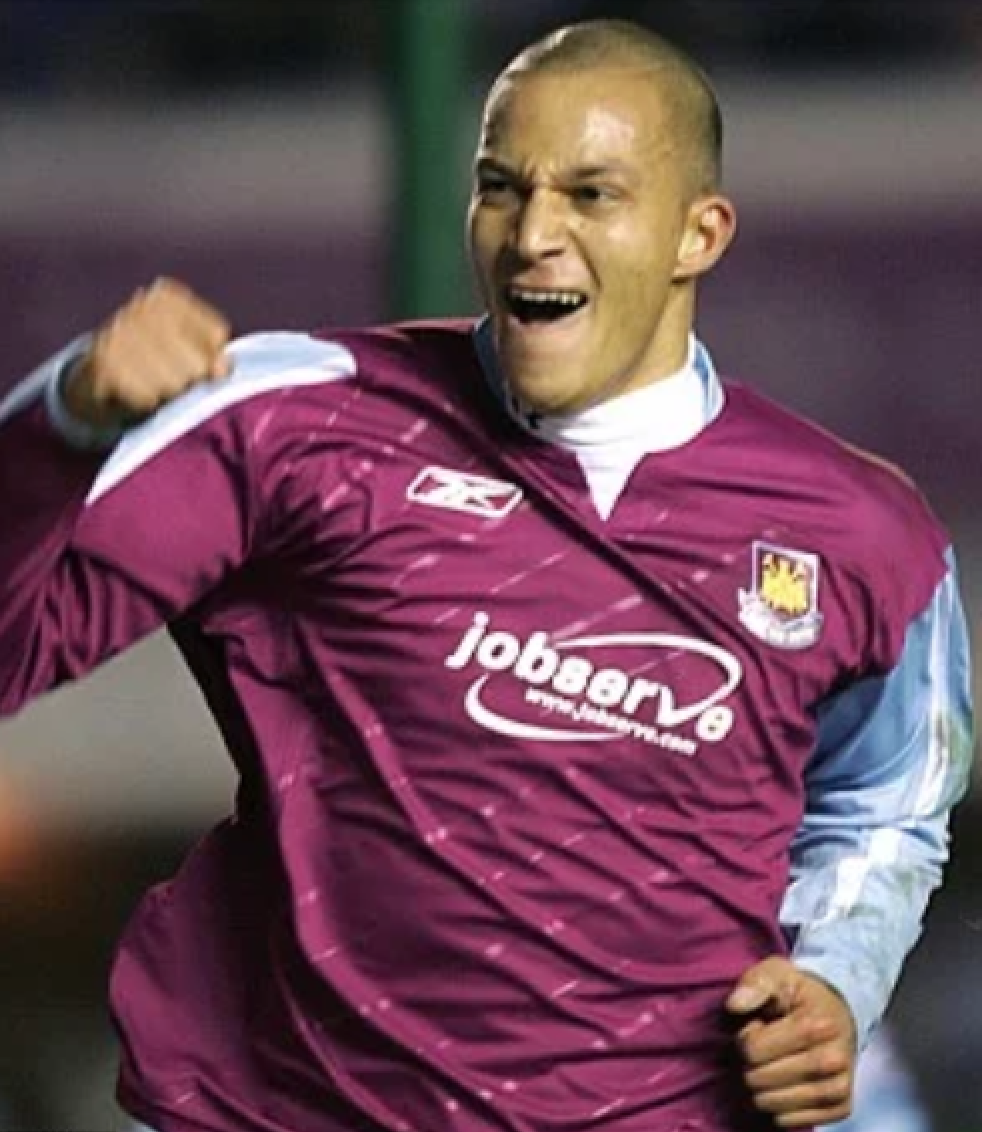


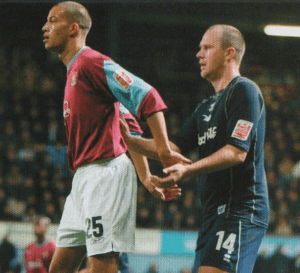
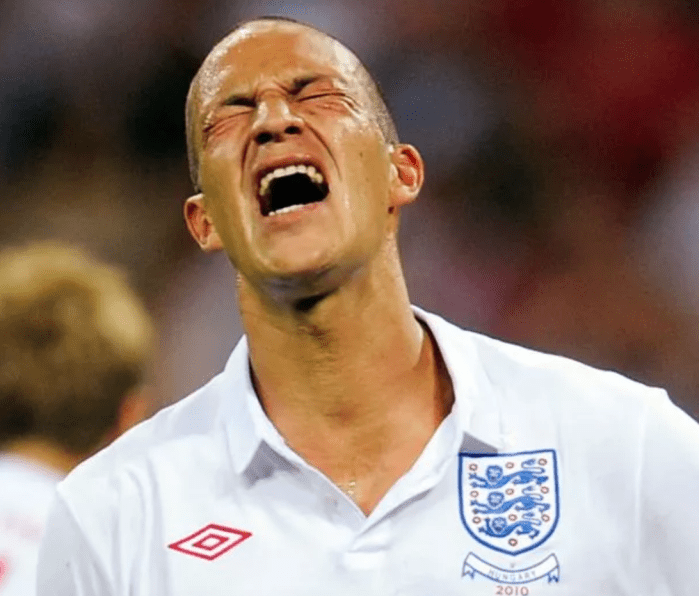

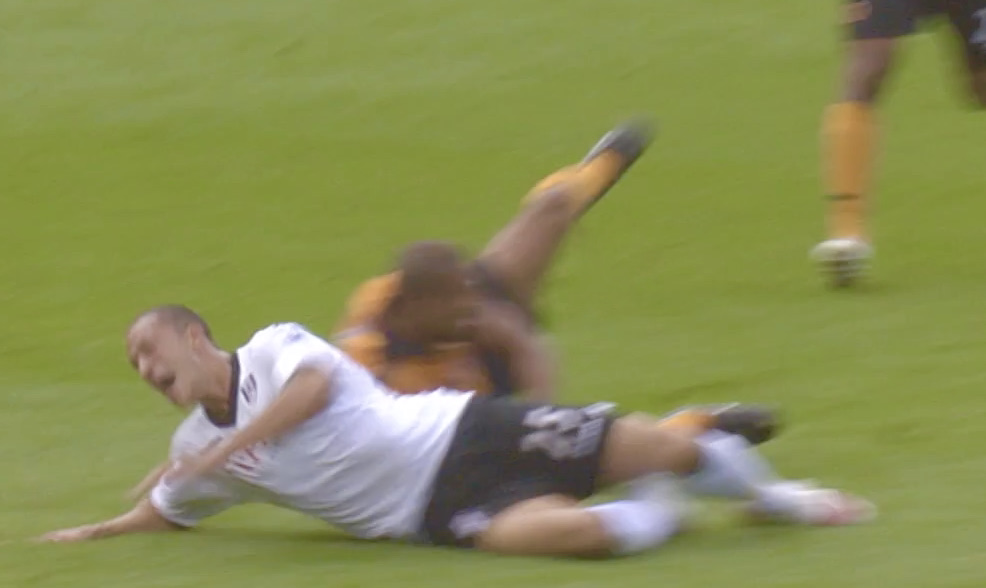


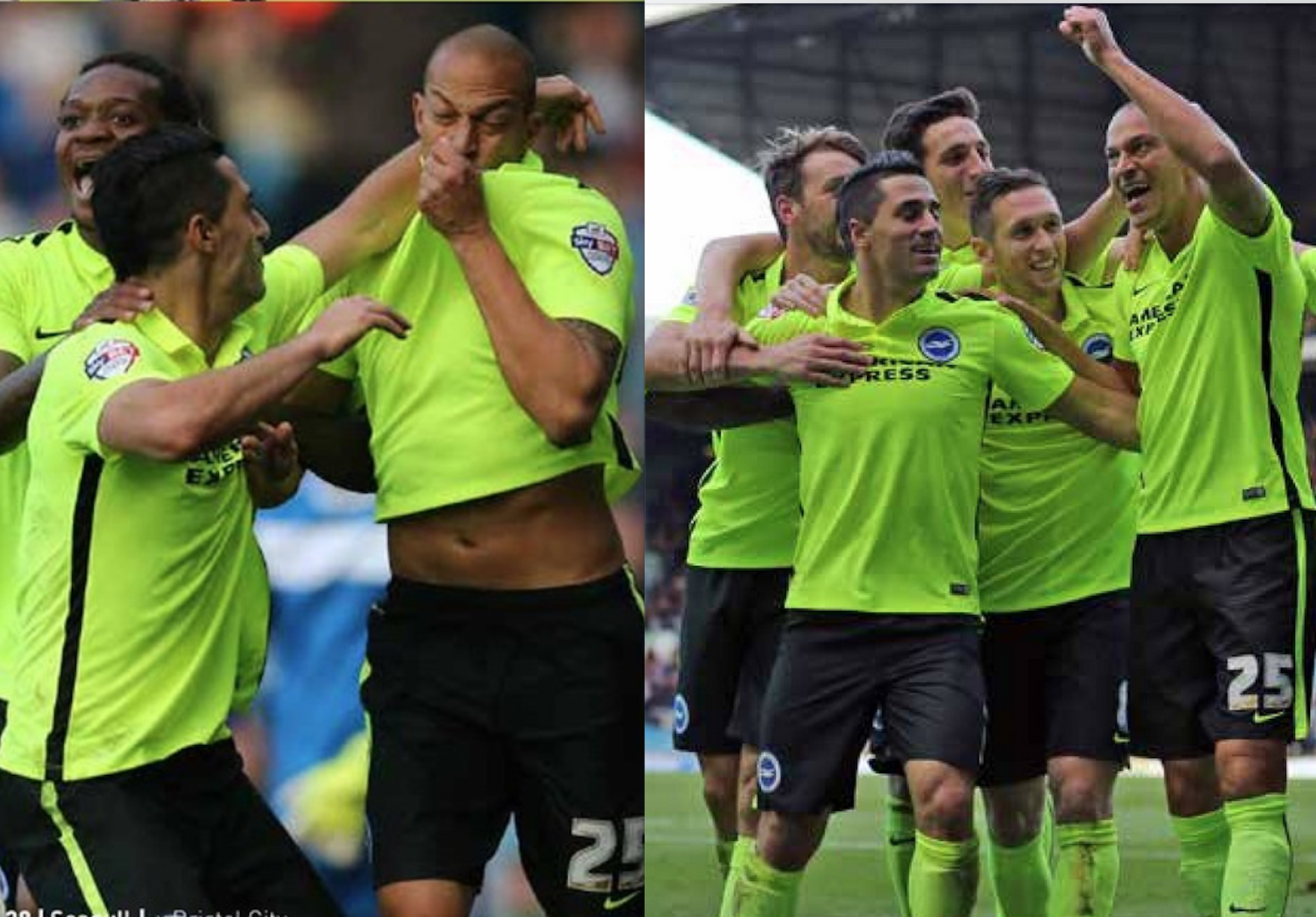


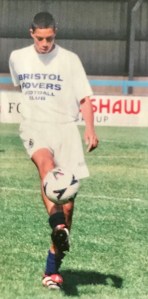


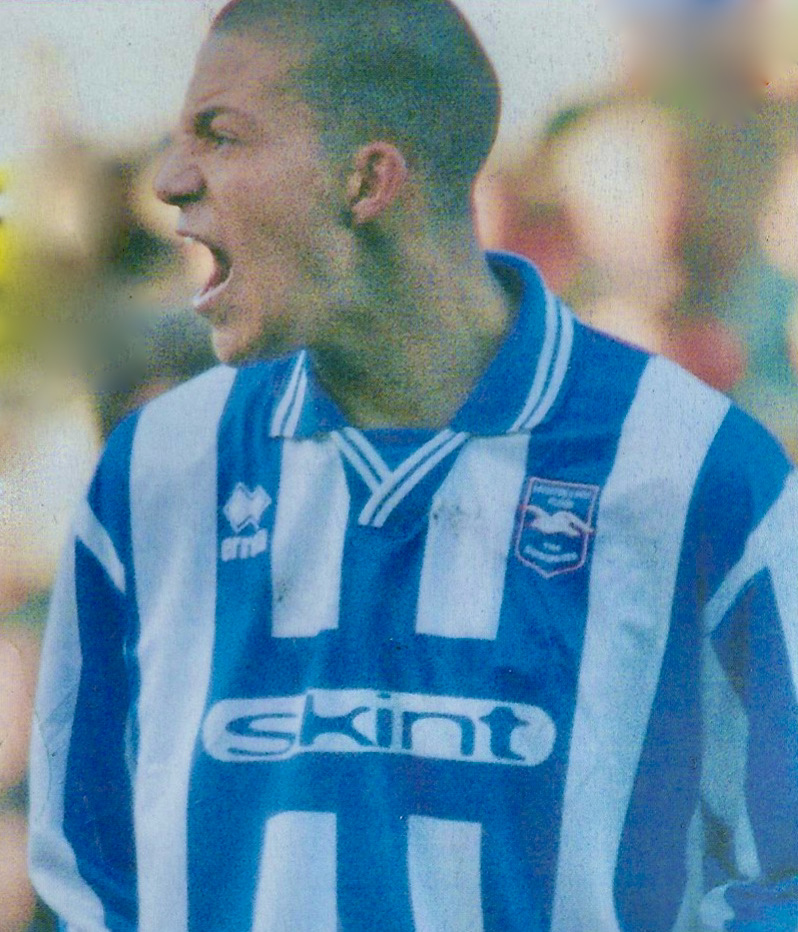

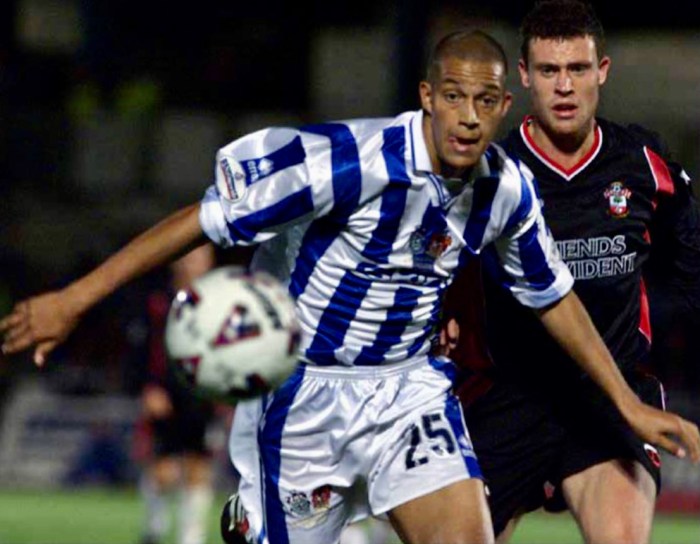
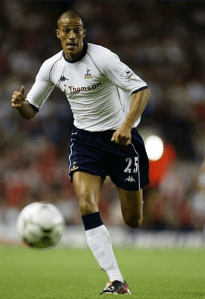


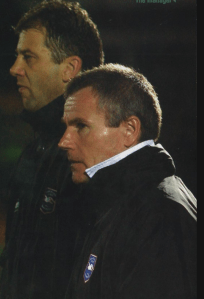


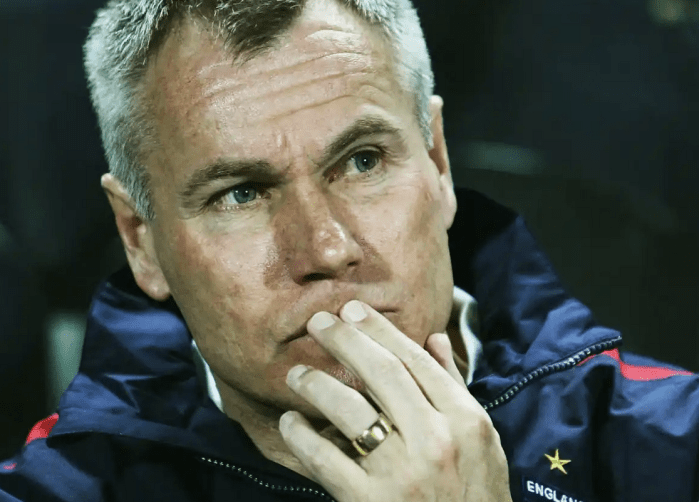


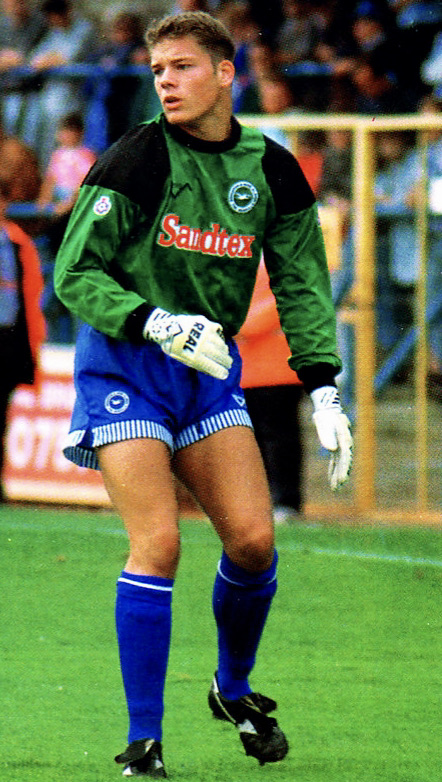


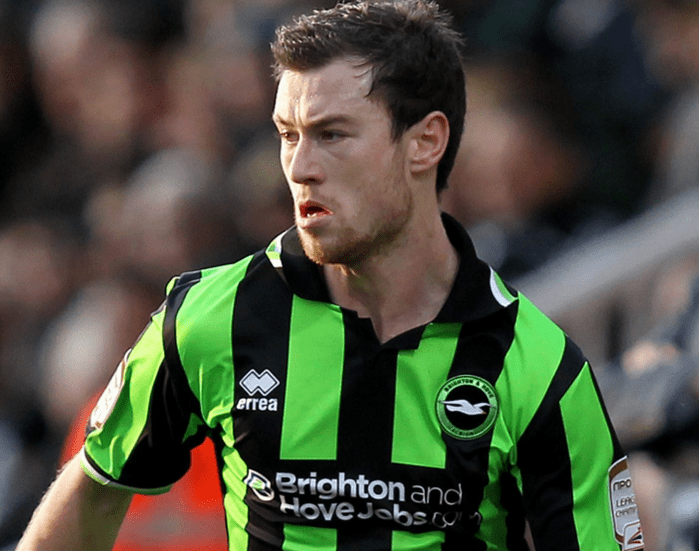


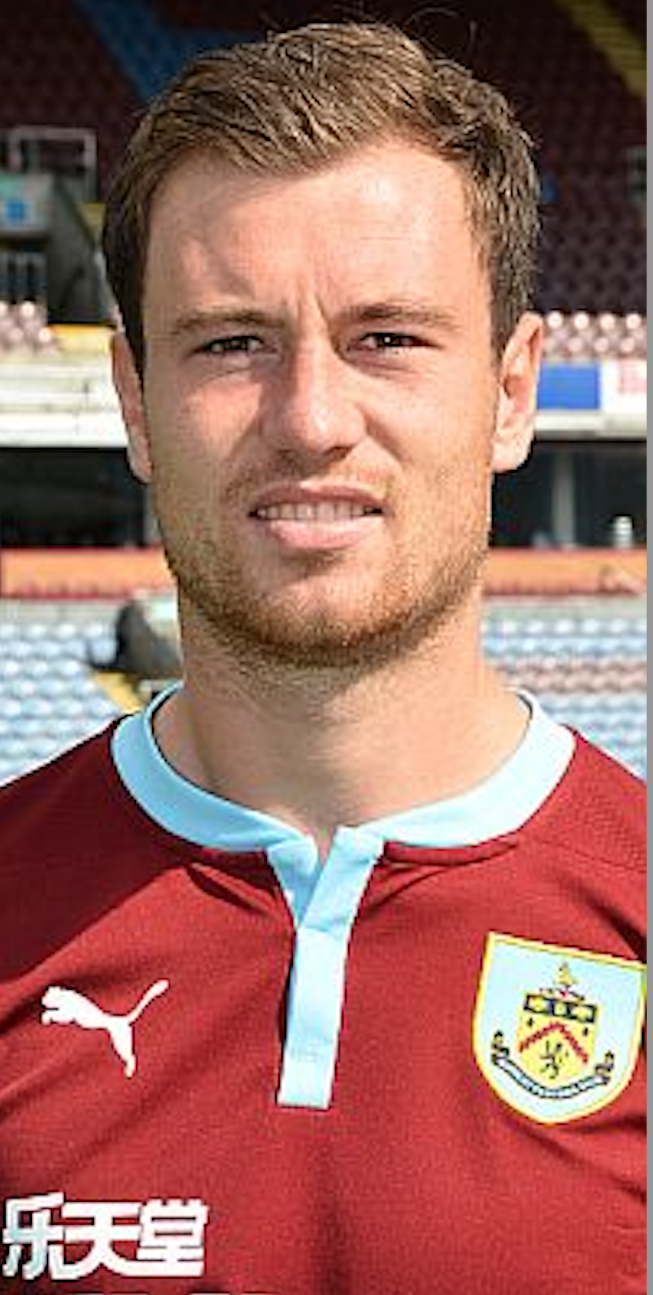
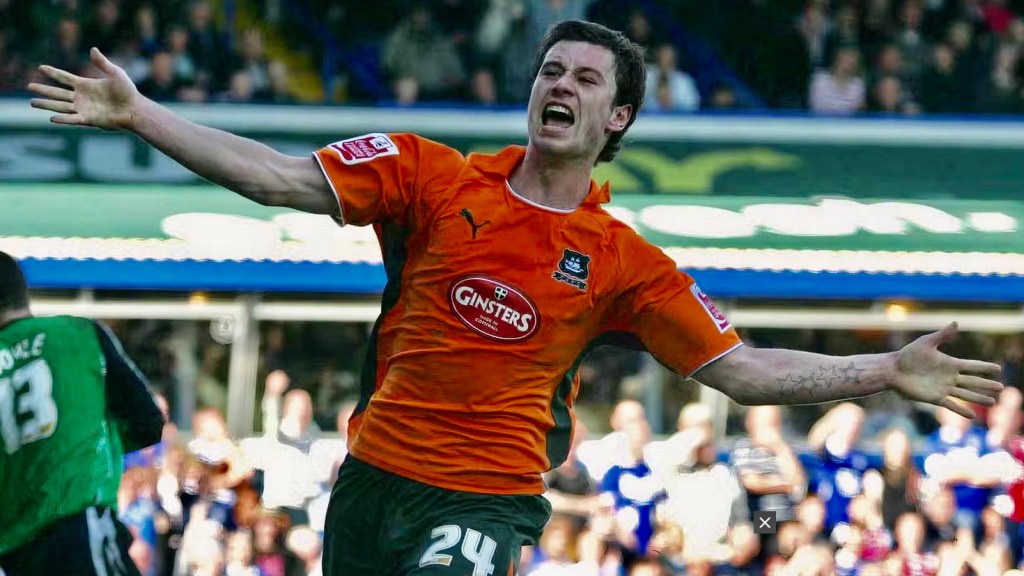


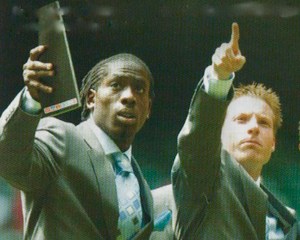


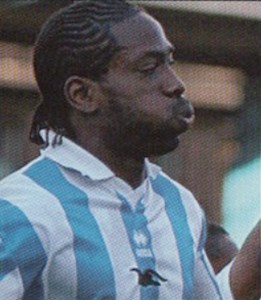


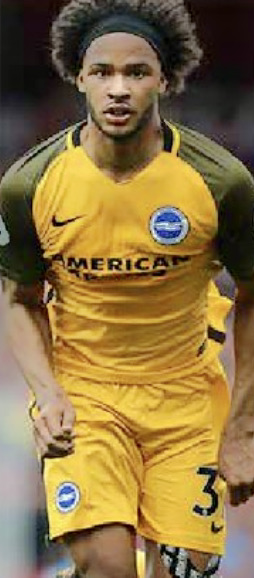
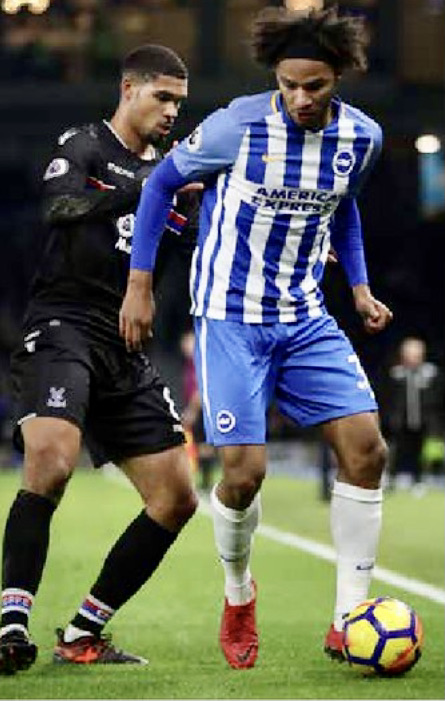
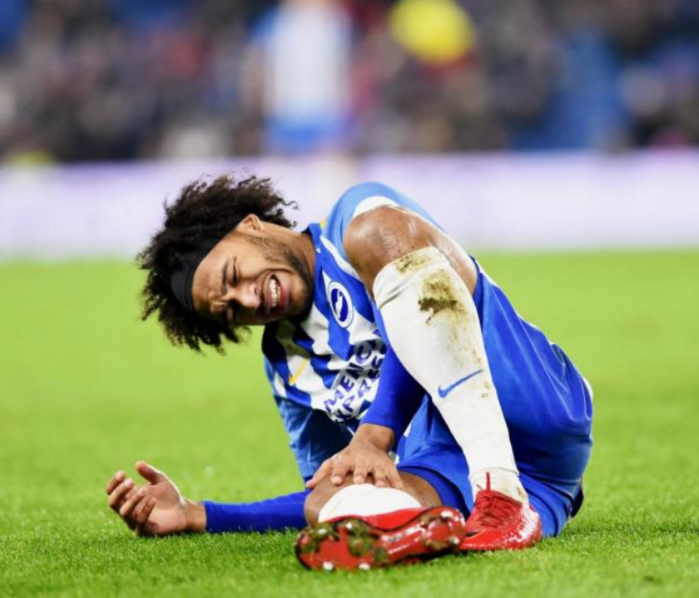
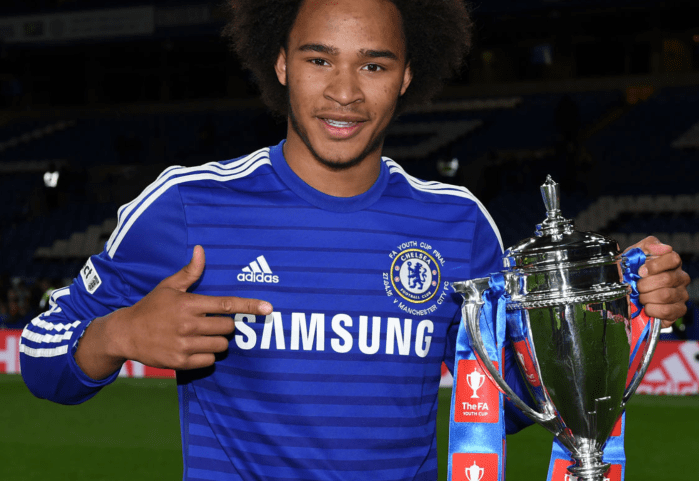
 In parallel lines