The Withdean visitors’ teenage winger went on to great things

MY FIRST memory of watching James Milner play was at Withdean Stadium when he was on loan to Swindon Town from Leeds United.

Even then, as a seventeen-year-old, he had something about him – but I certainly didn’t imagine I would be watching him playing in the Premier League and Europe for Brighton 20 years later!
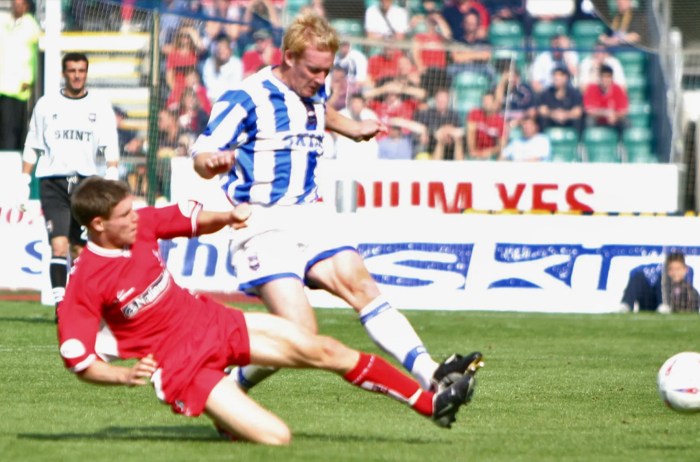
Young Milner tackles Brighton’s Kerry Mayo

That League One game on 6 September 2003 finished 2-2. Sam Parkin scored twice for Town and Albion’s goals came from Gary Hart and a penalty from on-loan Darius Henderson.

The Albion matchday programme subsequently recorded: “Kerry Mayo had a fine match, mainly subduing the impressive teenager James Milner.” (although, as the picture suggests, he wasn’t afraid to launch himself into a tackle).

Swindon’s manager Andy King had persuaded his old Everton teammate, Peter Reid (in charge of Leeds at the time) to loan Milner to the Robins for a month. In just six matches, the young winger scored twice.

“The boy is a terrific talent and everyone has been able to see the skills he has and I have no doubt he will go on to perform in the Premiership,” King told Sky Sports.

Milner already had two goals to his name for his parent club having scored twice in the Premier League in 2002-03 while still only 16.

On Boxing Day 2002, ten days short of his 17th birthday, he became the youngest player to score in the elite division, with a goal in a 2–1 win at Sunderland (the record had been set a couple of months earlier by Wayne Rooney for Everton and was subsequently taken by James Vaughan, also for the Toffees).

Milner had gone on as a 36th-minute sub for Alan Smith, a player he had admired when a boy growing up in Leeds. Terry Venables, Leeds manager at the time, said: “It’s not just a case of him simply coming through and helping out because every day he is getting better and better.”

Milner scored again three days later after going on as a 31st minute sub for Harry Kewell as Leeds beat Chelsea 2-0 at Elland Road.

“Picking up Mark Viduka’s pass in first-half injury time, Milner beat his man before thumping a right-foot shot low into the net with Blues keeper Ed de Goey powerless to stop him,” said the BBC report of the match.

“I am very pleased with him,” said Venables. “He is growing in this group and he has taken advantage of every day’s training to show what he can do.

“He has two good feet, he is courageous and everyone likes him a lot. He also is not only a nice, solid, good, well-mannered boy, he is a very talented player.

“It’s early days for the boy. At the moment he has not achieved anything and he is the first to admit that.

“But I think a lot of people are confident about his development. We have just got to take it easy.”

Wind on the clock more than two decades and Albion are now enjoying the benefit of Milner’s vast experience gained winning trophies galore for two of the country’s top clubs and playing for his country.

Born in Wortley, Leeds, on 4 January 1986, Milner broke through with Leeds United before joining Newcastle United at 18 and having loan and permanent spells at Aston Villa.
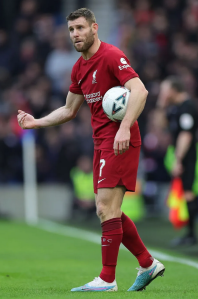
Milner went on to make more than 200 league and cup appearances for Manchester City and more than 300 for Liverpool as well as earning 61 full England caps and a record 46 at under 21 level.

Against Wolves on 22 January 2024, 38-year-old Milner overtook Ryan Giggs to go second outright on the Premier League’s all-time appearance list when he played in his 633rd top-flight match, 20 short of record holder Gareth Barry.

“I’ve had some luck,” Milner told TNT Sports. “I’ve worked hard and you have to enjoy it to put the work in every day. I’ve hopefully got a few more games in me.”

Milner’s free transfer move to Liverpool from Manchester City in the summer of 2015 proved an inspiration that brought him even more medals than he had won with the Sky Blues.

Over eight seasons, he made 332 appearances, scored 26 goals and lifted seven trophies along the way.  

“He’s a role model,” said manager Jürgen Klopp. “Nothing we have achieved in the last few years would have happened without James Milner, it’s as easy as that.

“Whether he was on the pitch or not, he’s set standards in a way not a lot of people can set standards, and it educated all of us.”

In a heartfelt tribute to the player, Klopp added: “From the first moment for me, he was a super-important player reference point.

“When you have a meeting and you look at Millie’s eyes and he’s not shaking his head, you know you’re on the right way. Nothing would have happened here without Millie because he kept it always going.

“From the player who was super-angry when he didn’t play, to the player when he did play, the way he pushed the whole dressing room before a game is absolutely second to none.”

For his part, Milner enjoyed a good relationship with Klopp, apart from once during a half-time flashpoint when the manager lost it, as Milner revealed to The High Performance Podcast.

“We had one moment where he was sharing his thoughts and I was sharing mine and I remember him smashing his hands on down the table and shouting, ‘Will you shut the f**k up!’ But Jurgen was brilliant, we had a great relationship and we were great off the pitch.”

It was Klopp’s predecessor, Brendan Rodgers, who persuaded Milner to make the journey along the M62, and he said at the time he signed him: “He had won the Premier League, he had won cups. His whole ambition was to win the Champions League and he felt that he would have a better opportunity to win it at Liverpool.”

Rodgers revealed that when Liverpool were trying to persuade him to sign, his wife Charlotte spent time chatting to Mrs Milner while he spent time with her husband!

“His actual football talent has probably gone under the radar because he’s played around some outstanding talents, but this is a guy who works tirelessly at his game,” said Rodgers.

“He’s in here at 7.45am making sure he’s prepared for his training, getting all of his food supplements and getting everything correct before training – he’s in two-and-a-half hours before he trains and then does his work, gives his maximum.

“He prepares himself like an elite player should. He’s also got big character and a big mentality.”

Rodgers was effusive in his praise of the new signing even before a ball had been kicked in anger after he scored the winner in a 2-1 pre-season victory over Brisbane Roar. Playing in the central role he preferred, he also provided a pass for Adam Lallana’s 27th-minute equaliser.
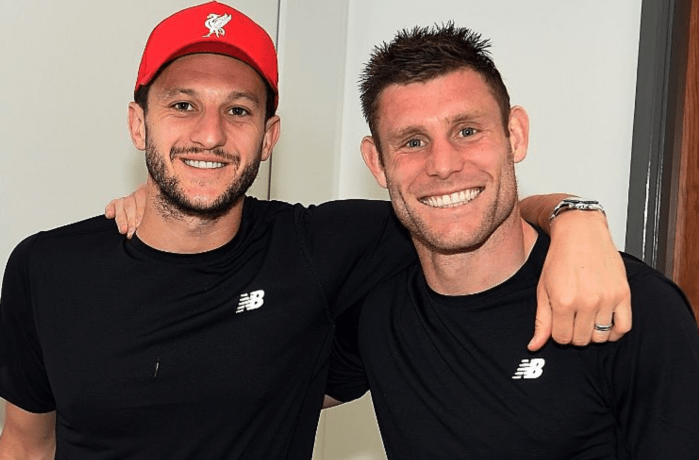
Former Liverpool teammates Adam Lallana and James Milner reunited at Brighton

“James Milner is a class act,” he told reporters. “We had to work very hard to get him in but I think we’ll see over the course of the season how important he is for us.

“He’s a wonderful personality and a top class footballer. When you see him play in his favourite position, you see all these qualities come out.”

Milner in action for Liverpool against Brighton during a lockdown match

Rodgers departed Anfield not long after Milner’s arrival but the player grew in stature under Klopp and, although it wasn’t his favourite position, he spent much of 2016-17, filling in at left-back.

That season he made 40 appearances – 36 in the Premier League – as Liverpool qualified for the Champions League. They made it all the way to the final, only to lose to Real Madrid in Kyiv. But they made amends the following season and returned from Madrid with Liverpool’s sixth European Cup.
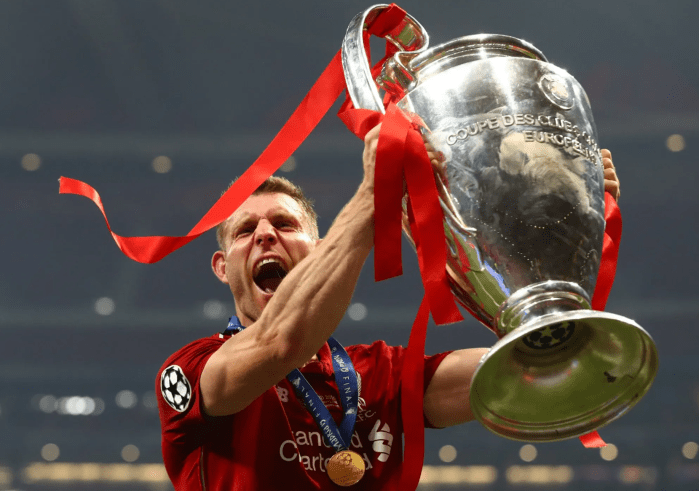
Milner went on as a second-half substitute in the Estadio Metropolitano in the 2-0 win over Tottenham Hotspur. “It will be nice going to Melwood seeing No.6 there,” he said. “Liverpool has a great history and when I signed for the club, I was desperate to add trophies as this club expects to win trophies and it has an amazing history – but we want to create our own history.”

Not only did they add the UEFA Super Cup and FIFA Club World Cup, Milner made 22 appearances as Liverpool clinched the Premier League title in 2019-20 with 99 points.

In 2021-22, Milner scored the first in Liverpool’s 11-10 penalty shoot-out win in Liverpool’s Carabao Cup defeat of Chelsea at Wembley, having gone on as an 80th minute sub, and he repeated the feat (as a 74th-minute sub) when the teams were also goalless at the end of the Emirates FA Cup final three months later. Liverpool won that 6-5 on penalties.

In his final season at Anfield, Milner featured 43 times and moved up to third spot on the Premier League’s all-time appearances list.

“I’m Leeds through and through and always have been and always will be – but I never probably thought that another club would get into me as much as Liverpool has,” said Milner.

The player he followed from Anfield to the Amex, Lallana, told the BBC exactly what Milner brings to a squad, especially in setting an example to younger players.

“He helps the management team in so many ways with the experience he’s built up,” said Lallana. “He knows what it takes to win. He knows what sacrifices need to be made.

“I’m not sure how he got the boring James Milner label, but he couldn’t be further away from that. He’s one of the loudest in the dressing room for sure. Full of life. Full of banter. But he’s definitely old school.”

Lallana added: “Those basics are always there and they’ll never change. I think that’s what’s made him who he is and given him his success. Those values that he’ll always live by. He taught me how to be a better professional and a better role model.”

It all began at Westbrook Lane Primary School in Horsforth and the secondary Horsforth School. He played local amateur football with Rawdon whose coach Graeme Coulson had first noticed Milner as a nine-year-old.

“I first came across him when I was refereeing a junior match involving Westbrook under nines at Horsforth,” Coulson told the Craven Herald and Pioneer. “He was so outstanding then that I asked some of the Horsforth parents who he was.

“I noted his name and it was one not to be forgotten. He was an outstanding talent scoring lots of goals but he was also very strong.”

Horsforth School spokeswoman Fran Morris said: “He was a first class student and he did really well at his GCSEs (he got eleven).

“He was very sporty at school and he won the PE prize which was handed out just before we broke up.

“He was the most wonderful young man and he was very popular, so we wish him all the best in his career. I am very sure he will do well and we are all proud of him at the school.”

Let alone his football ability, the young Milner also played cricket for Yorkshire Schools and excelled as an athlete: he was Leeds Schools’ cross-country champion for three successive years and district 100 metres champion for successive years.

Milner was a season ticket holder at Elland Road along with his parents Peter and Lesley before becoming a ball boy. He joined the Leeds United Academy after being spotted playing for Westbrook in Horsforth.

The sporty youngster was forced to decide between cricket and football, explaining in one interview: “I played for Yorkshire at the ages of 10 and 11 as a wicketkeeper-batsman. It was something I enjoyed but you get to a stage where you have to make a choice.

“I stopped playing cricket at 16 when I moved full time to the Leeds United Academy. They couldn’t take the risk of me getting injured, having my foot broken by a yorker or something like that.

“A couple of months later I made my Leeds debut. I still can’t take the risk for the same reason, but as soon as I retire from football, I’ll look forward to taking up cricket again.”

He completed his formal education at sports college Boston Spa School, which works in partnership with Leeds United, and, as soon as he left school, he was taken on as a trainee.

As he worked his way through United’s youth ranks, he also played for England at under-15 and under-17 levels.
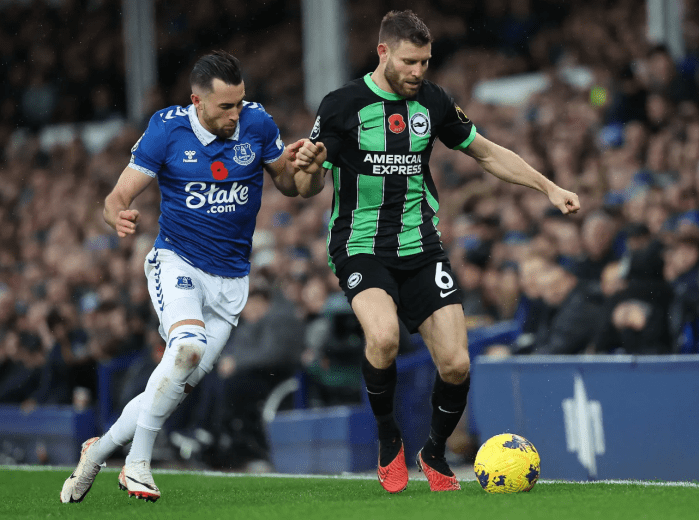
Milner in action for the Albion against Everton at Goodison Park

Calderwood’s switch to promotion rivals backfired

Hughton’s not so loyal assistant

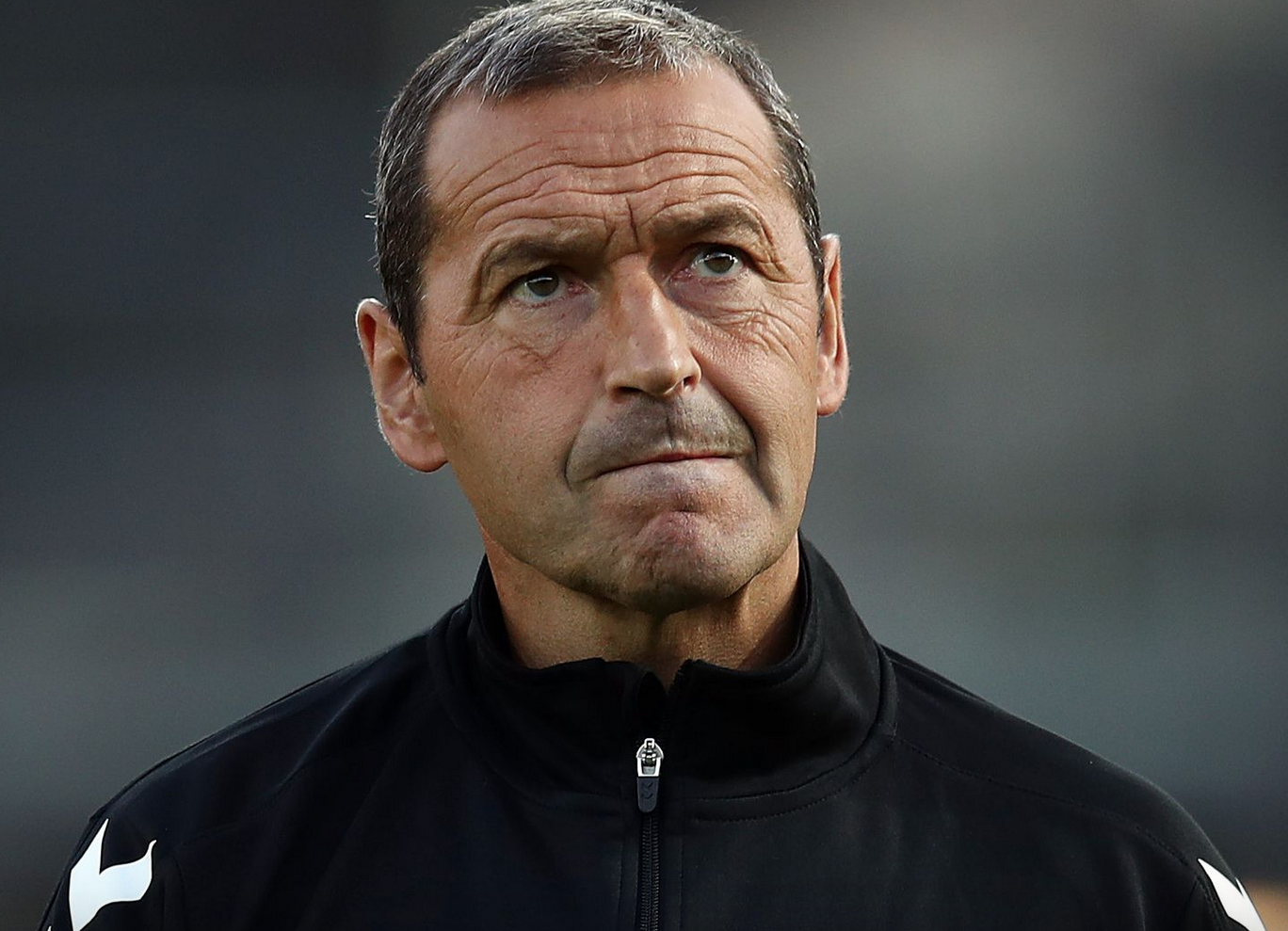
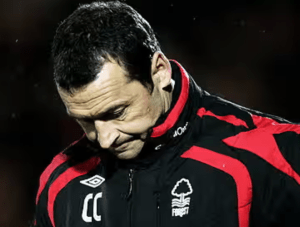
SCOTTISH international Colin Calderwood played for and managed Nottingham Forest in a lengthy playing and managerial career that has spanned a host of clubs across the country.

His 21 months as assistant manager to Chris Hughton at Brighton came to an abrupt end that drew harsh criticism at the time but thankfully didn’t hinder Albion’s upward trajectory.

Calderwood worked under Hughton at three other clubs: Newcastle United, Birmingham City and Norwich City.

The pair first met on the same A licence coaching badge course and Hughton was later a coach at Tottenham when Calderwood was a player. He then played a part in Calderwood becoming reserve team coach at White Hart Lane after his playing days were over.

Calderwood went on to become a manager in his own right at League Two Northampton Town, where he got them promotion at the end of his second season (in 2006).

Two and a half years as boss at Forest followed, during which he got them promoted from League One to the Championship. In 2007-08, his Foest side took four points off the Albion, winning 2-0 at Withdean but being held to a goalless draw at home.

Forest were promoted in second place behind champions Swansea City (Albion finished seventh) but Calderwood was sacked just before Christmas in 2008 with the side struggling in the Championship relegation zone.

When Hughton succeeded Sami Hyypiä at the start of 2015, it wasn’t long before he turned to trusted ‘lieutenant’ Calderwood to help Albion’s cause.

The no.2 had first worked with him at Newcastle in 2009 when, after relegation from the Premier League, the pair led the Magpies back to the elite as Championship champions in 2010.

Hibernian in Edinburgh lured him to try a third spell as a no.1 but, after just 13 months in charge, and only securing 12 wins from 49 matches, he was sacked. He was not out of work for long, moving later the same month to Birmingham to become Hughton’s assistant at the Championship side, where another of Hughton’s backroom team, Paul Trollope, was first team coach.

When Hughton left for Premier League Norwich in June 2012, Calderwood, Trollope and chief scout Ewan Chester (who also later joined him at Brighton) all decamped to Carrow Road. City dispensed with their services in April 2014.

Having helped steer Albion to the Championship promotion near-miss of 2015-16 (when they suffered the agonising play-off semi-finals defeat to Sheffield Wednesday), the Seagulls were well geared up to go one better the following season.

So it came as something of a shock when Calderwood quit in November 2016 to become assistant manager to Steve Bruce at promotion rivals Aston Villa.

Hughton was said to be “very disappointed” and “very surprised” by his assistant’s departure, “particularly at this stage of the season”. Albion watcher Andy Naylor reckoned that amounted to a “withering condemnation” from the normally placid manager.

In an excoriating article for the Argus, Naylor wrote: “He clearly feels let down – and he is entitled to feel that way. Is there any justification for treating Hughton the way he has?”

It emerged that the move gave Calderwood a much shorter daily commuting distance from his home in Northampton, but, even so, Naylor reckoned Hughton deserved better.

Thankfully, there was a ready-made replacement in the wings because Trollope had just lost his job at Cardiff City.

Naylor wrote: “Trollope is in the right place at the right moment to bring his promotion-winning mentality as both a player and manager into the camp. Let’s hope he demonstrates more loyalty than Calderwood.”

Perhaps it was the supreme irony that as Albion marched to promotion from the Championship the following spring, the side Calderwood had moved to only finished in 13th place – although the last-game draw at Villa stymied Albion’s chances of going up as champions.

Nevertheless, there were no bitter recriminations on Calderwood’s part. “Chris did a terrific job turning around the shape and the balance of the team,” he recalled in an interview with the Argus in January 2021.

Ahead of his subsequent club Blackpool’s visit to the Amex for a fourth round FA Cup tie (Albion won 2-1), the former assistant boss said: “We found, as I’ve found at most clubs I’ve been at, there’s a core group of players that have an appetite and an ability level that can give you a chance of success.

“When it falls into place, it is really nice to watch and it is very heart-warming and you feel justified in what you preach and practice.

“A lot of the time you are determined by the quality of the person and the player within the club. We found some really good people down there.”

Born on 20 January 1965 in Stranraer, Calderwood didn’t play professionally in Scotland, instead joining Mansfield Town as a 17-year-old in 1982.

He realised in hindsight that he learned a lot from Town’s manager at the time, the experienced Ian Greaves, and he went on to play over 100 matches for the Stags before Swindon Town boss Lou Macari signed him for £27,500 in 1985.

“Ian and Lou were the ones that built the foundations of my career,” he told the Albion matchday programme.

The centre back spent eight seasons at the County Ground and is recognised as a Swindon legend having featured in 412 matches (plus two as a sub).

At only 21, he was made club captain and, despite a difficult start, led Town to back-to-back promotions as they won the Division Four title in 1986 and overcame Gillingham in a Division Three play-off final replay in 1987.

Promotion winner with Swindon Town

Calderwood was said to be “a rock at the heart of the defence” and eventually led Town to their first promotion to the top-flight, after beating Sunderland in the play-off final at Wembley in 1990. But Swindon were demoted due an irregular payments scandal in which Calderwood was implicated: he was arrested just four weeks before the Wembley match but released the same day without charge.
Calderwood missed five months of the 1990-91 season following a horror tackle by Wolves legend Steve Bull but he returned stronger than ever and was ever present when, under Glenn Hoddle, Swindon were promoted at the end of the 1992-1993 season, beating Leicester 4-3 in the play-off final.

But instead of featuring for Swindon in the Premiership, Town’s former manager Ossie Ardiles took him to Tottenham for a fee of £1.25 million.

Playing in the top division for Spurs earned him international recognition. He made his Scotland debut aged 30 in a Euro 1996 qualifier against Russia and was a regular under Craig Brown, winning 36 caps in four years, including playing at the 1998 World Cup.

According to Spurs fan website mehstg.com (My Eyes Have Seen The Glory), Calderwood was “a solid defender, who could tackle and was good in the air, but lacked the pace and distribution skills to be a top class centre half.

“Calderwood gave Spurs a tough presence in the middle of the back four they had been missing for some time and showed that Ardiles’ judgement had been sound.”

After 198 appearances for Spurs (more than 150 in the Premier League), he left White Hart Lane in March 1999 when a £230,000 move saw him join Aston Villa under John Gregory. A year later, he switched to David Platt’s second tier Forest for £70,000.

He had only been at Forest a month when, ironically at Birmingham’s St Andrews ground, Calderwood, by then 35, suffered an injury that would ultimately force him to retire.

Forest goalkeeper Dave Beasant had already been injured in a clash with City’s Jon McCarthy earlier in the game but recovered. Calderwood wasn’t so fortunate. He ended up being stretchered off after a collision with the same player. He had fractured his leg and dislocated his ankle, causing ligament damage.

The injury overshadowed Forest’s 1-0 win and it meant he played only a handful of games at the City Ground. He later had a brief spell on loan at neighbours Notts County before calling it a day.

Calderwood initially returned to Spurs as reserve team manager before leaving for Northampton in October 2003. Spurs director of football and caretaker manager, David Pleat, said: “Colin leaves us with our very best wishes. He’s had two-and-a-half years here as a coach which I’m sure has been valuable experience.

“Colin is young, he has energy, ideas and, most importantly, ambition. This could be a terrific apprenticeship for him and everyone at the club wishes him well in his new role.”

Fast forward 15 years, and after he left Villa along with Steve Bruce in October 2018, two months later he was back in the game at League Two strugglers Cambridge United. He was given an initial 18-month contract and a year later he was given a two-year extension on his deal.

However, after a 4-0 home defeat to Salford City in January 2020 which meant Cambridge had taken only one point from their previous six games, he was sacked.

In October that year he was taken on at Blackpool as part of Neil Critchley’s managerial team and was part of the set-up that saw the Tangerines win a place in the Championship in 2021.

In June 2021 Calderwood returned to his old club Northampton as assistant manager to Jon Brady, and he told the League Two club’s website: “I have learned a lot in the years since I was last at the club and hopefully I can put all of that experience to good use.

“The situation here is similar to the situation I arrived in at Blackpool in working with a talented young manager.
“I have spoken with Jon Brady a number of times, that relationship will build quickly and I am really looking forward to working with him and the rest of the coaching staff.”

The Cobblers finished fourth in League Two and made it through to the division’s play-off semi-finals where they lost 3-1 on aggregate to Calderwood’s first club, Mansfield.

They made up for it in 2022-23 when they earned automatic promotion in third place behind Leyton Orient and Stevenage.

Nevertheless, in October 2023, Calderwood returned to Championship level as part of Russell Martin’s backroom team at Southampton.

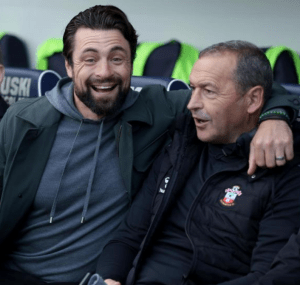
Teaming up with Russell Martin

“First and foremost, he’s a brilliant human being. I really trust him and know him very well,” Martin told the Daily Echo

“We worked together at Norwich many moons ago when he was the assistant manager. I used to moan all the time to him and he had a brilliant way of being able to deal with that.

“He just has a great relationship with the players, and he’s a coach throughout my career who I’ve stayed in real constant contact with and discussed football.

“We’ve spoken a lot even when he’s not worked with me. I tried to get him at my two previous clubs and it couldn’t quite happen for various reasons.

“He’s been a manager, an assistant manager, he’s helped some young managers recently get promoted in Neil Critchley and Jon Brady, and added huge experience and value to them.”

The Maldera name is part of Giallorossi history

WHILE I’ve not found a direct link between Brighton and Europa League last 16 opponents AS Roma, there is an indirect one via Roberto De Zerbi’s assistant, Andrea Maldera.

Maldera’s uncle Aldo – a left-sided full-back or midfielder who was in the Italy squad at the 1978 World Cup – spent three years playing for Roma between 1982 and 1985.

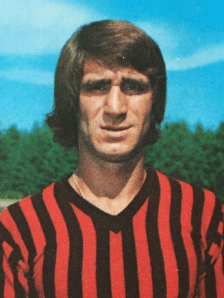
Aldo Maldera

The majority of his career was spent at AC Milan but as well as Roma he also played for Bologna and Fiorentina and won 10 caps for his country.

Maldera won Serie A with them in 1983 – only the second time they’d won the Scudetto with a 41-year gap in between.

Nicknamed the Giallorossi after the club’s kit colour of carmine red and golden yellow (that’s how it is described!), the club’s official history gives Aldo a special mention.

“The team put together by Nils Liedholm turned out to be a perfect machine: an impenetrable defence with pillars such as Tancredi, Vierchowod, Nela and Maldera, an admirable midfield with Di Bartolomei, Falcao, Ancelotti and Prohaska and an explosive attack with striker Pruzzo and winger Bruno Conti.”

Before you ask, yes, that was Carlo Ancelotti, later a successful manager with the likes of AC Milan, Chelsea, Paris Saint-Germain, Real Madrid and Bayern Munich.

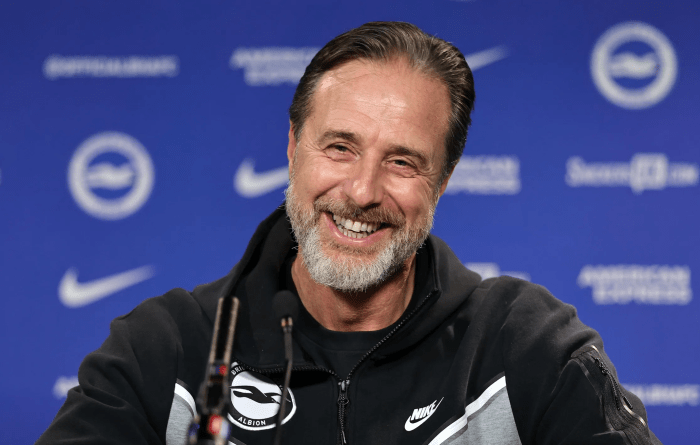
Brighton’s likeable assistant manager (pictured above), who was thrust into the media spotlight in early February 2024 when De Zerbi was absent following dental surgery, didn’t follow in Aldo’s playing footsteps, nor his dad Luigi, a centre-back who won the European Cup with Milan in 1969. Another uncle, Attilio, was also a professional at Milan, and later coached the club’s youth players.

Luigi Maldera
Attilio Maldera

Born in Milan on 18 May 1971, although young Andrea went through Milan’s academy system, his playing days were in lower leagues of Italian football with Leffe.

It was as a coach that he found his niche, starting out with Milan’s under-19s and then stepping up to be technical coach for the first team.

He worked under Massimiliano Allegri when they won the league title in 2010-11 and the Italian Supercup. And De Zerbi need look no further than his no.2 for someone with experience of European football because Maldera was part of Milan’s set-up when they reached the quarter-finals of the Champions League in 2012, where they lost to Barcelona. They’d beaten Arsenal 4-3 over two legs in the previous knock-out round.

Maldera reverted to head of video analysis for the under-19s after Filippo Inzaghi took charge in 2014 and the following year linked up with former Milan and Chelsea striker Andriy Shevchenko as head of analysis for the Ukraine national team.

It was in Ukraine that De Zerbi and Maldera talked together a lot about Ukrainian players and the assistant explained a little more of their background ahead of Brighton’s February game versus Spurs.

“My father was his coach when Roberto was in the academy of AC Milan and I worked for a lot of seasons at AC Milan and after that I worked with the national team of Ukraine.

“We spent a lot of time on the phone talking tactics because for me he’s one of the best coaches in this moment. When he was a coach at Foggia or Sassuolo, I was working at AC Milan and we spoke a lot about football and I studied his idea a lot.

“When he went to Shakthar Donetsk we spoke about the Ukrainian players and we always had a big discussion about football. Two years ago he changed some people on his technical staff, he called me and I was very happy.

Andrea Maldera relishing his role working alongside Roberto De Zerbi

“For me it’s a dream. I am 53 but I am young for a second time with him and working in the Premier League. Roberto he has a big energy, a big passion, he involves you a lot. I become younger with him.”

Another big fan of De Zerbi is former Brighton player Andrea Orlandi, who first saw the head coach at work when he was in charge of Italian third tier side Foggia. Although born in Barcelona, Orlandi’s parents were both Italian: a Juventus-supporting dad and an AC Milan-supporting mum!

He was winding down his playing career in Italy’s Serie B with Novara when he first saw De Zerbi taking training sessions. He told the Albion podcast in November 2023: “When you saw the clips of his Foggia team play, you knew the coach was going to be amazing. Then he went to Benevento and Sassuolo. In Serie A he was able to play a style of football that they would usually say no to – “this isn’t how you should play” – attacking and looking after the ball.

“In Italy, 80 per cent of the teams play the same style; the same pattern of play ‘give the ball to the wing-back and he will run…’ every team does the same.

“By being provocative at times is how he became successful at Sassuolo.”

There can be little doubt De Zerbi will feel he has an incentive to get one over on Roma because in 2021 the Giallorossi pipped his eighth-placed Sassuolo side to UEFA Conference League qualification on a narrow two-goal difference; both sides having finished the Serie A season on 62 points – six points behind sixth-placed Lazio.

Continuing his appreciation of Albion’s head coach, Orlandi said: “He’s a fantastic motivator and coach, he’s the next big thing in football. It’s great to have him at the club and hopefully Albion will be able to keep him for a long while. He’s impressed me, but he has probably gone beyond my early expectations.”

De Zerbi’s qualities as a coach are something Orlandi says were a part of the Italian’s makeup as a player. “He as a player was a number ten, he was left-footed player and he had this magic about him, they would call him anarchic. Managers wouldn’t play him because ‘he doesn’t fit the system’ and he probably thought, ‘well, I am going to be a coach and I am going to be different.’

“He was different as a footballer, he has the same magic and charisma in coaching.”

Although De Zerbi was on AC Milan’s books as a young player, the majority of his playing days were spent with lower league clubs in different regions of Italy.