Class act Lallana helped lift Albion to a new level

IT WAS SOMETHING of a coup when multiple trophy winner and England international Adam Lallana joined Brighton from Liverpool in 2020.

His best years might have been behind him, but Lallana’s football intelligence and astute movement were a joy to watch and were, perhaps, a sign that once-humble Albion were getting serious about challenging for the top spots in the Premier League. The club twice achieved top 10 finishes during his four years at the Amex.

As much as anything, Lallana observed in an early interview that his new side would improve with a bit more belief. “That comes with time, with the development of players and with confidence,” he explained. “The more times we play well, the more we’ll get that belief and with that we’ll score more goals and get more wins, but we need to be a little bit patient. Empires aren’t built in a day.”

One of Lallana’s trademarks, as observed in an early profile on Liverpool’s website, was “turning markers inside-out with impulsive twists or burrowing through swathes of players with fine close-control”.

The player said: “Pace isn’t a huge part of my game, but playing the percentages, mathematically, if you can add an extra yard of pace or a couple of percentage points to your game, then that’s massive nowadays.

“I still do a lot of work in the gym to improve my pace, power and strength to try to get that little bit more explosive power to my game. I’m always working to improve.”

Players used to performing at the highest level week in week out don’t suffer fools gladly and it was no surprise to learn that Lallana had a few fallings out in his early days at Brighton, for example with Neal Maupay.

Younger players certainly enjoyed the experience of learning from someone who had played at the very top, for example, Columbian international Steven Alzate, who said: “On and off the pitch he is a leader and when he’s got the ball at his feet he can really show people what he can do. Training with him is an honour; he’s a great guy.”

Those leadership qualities were drawn on by both Graham Potter and Roberto De Zerbi, even though the ageing player’s minutes on the pitch had to be managed carefully.

Lallana even stepped up to support coach Andrew Crofts with first team training in between the reigns of the two managers.

Towards the end of his time at Brighton, Lallana went off in international breaks to work with Lee Carsley preparing the England under 21s ahead of matches.

Born in St Albans on 10 May 1988, Lallana’s family moved to the Ilford area of Bournemouth when he was five and he went to the local Corpus Christi School and St Peter’s Catholic School.

If the surname doesn’t sound Anglo Saxon, that’s because he has Spanish roots: his grandad was from Madrid.

From kicking a ball around with his young pals, Lallana began to harness his footballing talent at the AFC Bournemouth centre of excellence. Southampton paid a £3,000 fee to take him into their own junior ranks when he was just 12 years old. They made subsequent payments totalling £15,000 as he progressed to scholarship and full professional levels.

Lallana was grateful for the quality of the Southampton academy set-up and in particular referenced George Prost, his under-17 coach, as someone who instilled a lot of the attributes that helped to develop his career.

Lallana was in the same Saints youth team as Theo Walcott and Leon Best (Gareth Bale was only on the bench!) that lost the 2005 FA Youth Cup final to Ipswich Town. He was also in the side that lost in the semi-final to Liverpool the following year.

The same year, he made his first team debut in a 5-2 League Cup win over Yeovil Town. Saints loaned him back to Bournemouth in 2007, when he played three games, but he returned to Southampton, then in League One, and was part of their back-to-back promotion-winning side that went from League One to the Premier League.

Having helped Southampton under captain Dean Hammond to the League One runners up spot – behind Brighton – in the 2010-11 season, he was a key member of the side that gained promotion from the Championship in second spot behind Reading (Brighton finished 10th). Over the course of eight years with Southampton, he made 235 appearances, scoring 48 goals.

In the Premier League, Lallana was made Saints captain and he admitted he struggled at first. But the arrival of Mauricio Pochettini had a positive influence on him, as he explained in a matchday programme interview. “He had a big part in moulding me into the player I am today – he took me to that next level.

“When he came to the club he could see that I had pressure on my shoulders, that I wasn’t playing freely – and we just spoke about it and he talked it out of me. By the end of the season and the next season, I was playing the best football of my life I think and a big credit goes to him for that.

“He could see I was a talented player and probably wasn’t playing to my best, but he knew it was because I wasn’t playing freely. We had lots of conversations and him knowing that and speaking to me about it was amazing because instantly it was like a balloon that just popped – immediately it took the pressures off. That was one of many things he did for me at Southampton.”

Lallana said Pochettino also helped him to become fitter and introduced him to the art of pressing. “My love of winning the ball back – that came under Mauricio.”

It was Brendan Rodgers who signed Lallana for Liverpool for £25m after the 2014 World Cup in Brazil where he had been a member of the England squad that finished bottom of its group. Lallana had made his England debut the previous November in a 2-0 friendly defeat v Chile.
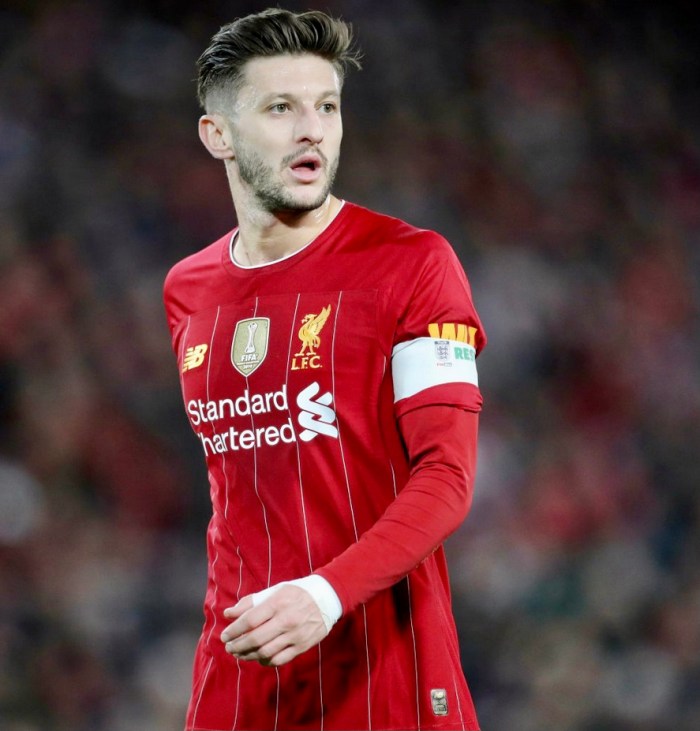
In the red of Liverpool

Ten of his 34 caps for England were won in 2016 when he was voted by supporters as the country’s player of the year.  By then 28, he scored his first international goal in a last-gasp win over Slovakia in September and two months later netted again against Scotland and Spain at Wembley.

Taking instructions from England boss Gareth Southgate

“This award is a huge honour,” Lallana told The FA.com. “The last three winners were Rooney (2015), Rooney (2014) and Steven Gerrard (2012) so that just goes to show what a great achievement this is.”

By then, Rodgers had been replaced by Jurgen Klopp under whom Lallana blossomed and developed (they were also close neighbours in Formby) as together they went on to win the Premier League title and the Champions League.

In a 2022 documentary about Klopp, made by The Anfield Wrap, Lallana said: “He has the X factor doesn’t he? It’s as simple as that. The amazing ability he has to motivate players. If he’s left you out for 10, 11, 12 games you’re a bit down but somehow with him, you’ve still got so much respect for him even though you aren’t happy.

“I don’t know how he does it but he just has the ability to get you motivated because of who he is, so you’re fighting for the team and for him and that’s the art. It just shows how good he is at being a manager.”

According to thisisanfield.com: “2015-16 was arguably Lallana’s best, as he started 38 games and helped push Liverpool on to the League Cup and Europa League finals.

“One of his finest performances in red came in the Europa League semi-final against Villarreal. With Liverpool trailing 1-0 from the first leg in Spain, an emotionally charged Anfield were put at ease when an early own goal drew them level.

“From then on, Lallana was brilliant for Liverpool in an attacking line-up also featuring Roberto Firmino, Philippe Coutinho and Daniel Sturridge. The latter got the second goal after 63 minutes, but it was Lallana who sealed the game and sent the Reds through to the final, with a composed flick into the net.”

Summing up the Liverpool mindset, Lallana said in a matchday programme interview: “At Liverpool, where the expectations are so high, it was all about just dealing with those pressures.

“We had to forget about what the supporters want, the trophies that are expected, and just believe in what we as a team believed in – and that was playing high-intensity football and being motivated in every game to fight for each other.”

In another interview, this time with the Liverpool Echo, he said: “Playing six years with the intensity of that club takes over your life.”

Nonetheless, when he finally left Anfield for the Albion, he said: “I’m desperate for a new challenge and I’m desperate to play a bit more.

“I still feel like I’ve got plenty more football ahead of me and I’m thoroughly excited by this next challenge and what that will bring.”

A sign of the respect Liverpool fans still had for Lallana was demonstrated at the end of Albion’s 2-2 draw at Anfield in October 2022. As fans sang his name, Lallana tapped his chest and clapped every stand before walking down the tunnel.

Lallana helped lift Brighton to a new level

Reds supporter Aaron Cutler wrote on social media: “Pleased Lallana got a deserved (and delayed) ovation. Easy to forget how integral he was at the start of Klopp’s reign. While injuries limited his game time towards the end he clearly remained an influential presence within the squad. Could have done with him today!”

Of course, during his time with Brighton, Lallana was able to see at close quarters the emergence of Alexis Mac Allister, and he was full of praise in an interview with Graham Hunter:

“What a special player and special person,” he said. “He’s a player that is so pure with how he plays. The way he lends the football, uses others, there’s no selfishness in the way he plays.

“It was so special watching him during the World Cup, not playing to begin with then getting used and proving himself. Then playing so well that there’s no way he doesn’t play, by the end Messi is looking for him.”

Speaking of Mac Allister’s “footballing intelligence” Lallana said: “OK he’s not the quickest or strongest, but so smart. Knows that the football is faster than anyone, Alexis is of that ilk.

“He had to battle tough moments here at the beginning. He’s a very introverted, shy guy.”

With an eye to a likely future in the game as a coach, Lallana enjoyed a great relationship with De Zerbi and told BBC Radio Sussex: “I feel like we’ve helped each other an awful lot in the two years and I’m extremely grateful for how he’s managed me.

“At times I can’t train every day and my body probably lets me down, but he’s been so supportive of me and he’s managed me differently to most other players, probably because of the history I’ve had with injuries and the age I’m at. I know as a footballer that doesn’t often happen.

“Our relationship goes beyond player and coach, he’s like an older brother to me.”

When Lallana decided to leave Brighton at the end of the 2023-24 season and return to Southampton, he had made 64 starts for the Seagulls plus 40 appearances off the bench.

Albion had finished 16th and ninth under Potter then sixth and eleventh under De Zerbi.

In an extended interview with The Athletic, Lallana said: “What has happened is everything I thought was possible. I wouldn’t have said in my first interview we are going to be in Europe in three years, but that is the genius of Tony Bloom (owner-chairman) and Dan Ashworth (former technical director).”

Outspoken Scot whose words and tactics divided opinion

MENTION Mark McGhee to supporters of Wolverhampton Wanderers and most are less than complimentary about the Scot who won third tier promotion with Brighton in 2004.

Steering the Seagulls to that 1-0 play-off final win over Bristol City at the Millennium Stadium, Cardiff, (as I covered in my previous blog post about McGhee) emulated his feat of taking Millwall out of the same division three years previously, and certainly helped to repair a reputation sullied by his experience at Wolves.

A play-off winners’ medal at last for Mark McGhee

It also delivered much relief for a manager who’d previously only experienced play-off heartache, seeing Wolves’ hopes of returning to the Premier League dashed by a play-off semi-final defeat to Crystal Palace in 1997 and losing to Birmingham with the Lions at the same stage in 2002.

After cutting his managerial teeth at Reading and Leicester, McGhee succeeded former England boss Graham Taylor at Wolves, appointed by chairman Jonathan Hayward, the son of owner Sir Jack Hayward (the pair subsequently had a big falling out and McGhee was caught in the crossfire).

McGhee’s three years at Molineux weren’t all bad – many supporters said he certainly rated higher than the hated Glenn Hoddle – and he couldn’t be faulted for spotting genuine talent having given Irish striker Robbie Keane his Wolves debut as a 17-year-old away to Norwich. “I always believed he could be special,” he said. “Even at that age he was sensational.”

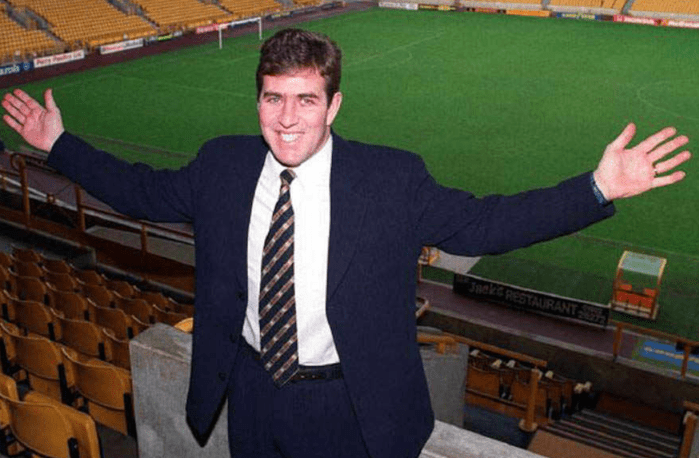
Young Mark McGhee on his arrival at Molineux

But fans of the boys in old gold disliked his managerial style of winding up forthcoming opponents with disparaging remarks. They also felt some of his signings weren’t up to it – a feeling echoed in the spat that emerged between Sir Jack and Jonathan.

“Nice man, Mark, and he had done well enough at Reading and Leicester. But he didn’t buy very well, did he? You have to ask questions about the quality of the players he brought to this club,” Sir Jack told reporter Paul Weaver in January 1999.

“We should never have let Graham Taylor go. Graham is an outstanding football manager. I’m afraid we bowed to pressure from the fans. We didn’t give him enough time. Then we gave McGhee plenty.”

For many, the final straw in the McGhee reign was when he left club legend Steve Bull on the subs bench in favour of much-derided Steve Claridge when Wolves lost the 1998 FA Cup semi-final to Arsenal.

“No turning back after that really, he’d lost it,” said ‘Bend It Like Dennison’ on molineuxmix.co.uk. “A very negative manager, prone to making stupid comments which wound opposition teams up and made us one of the most hated teams in the division,” opined ‘Nashie’ on the same platform.

“I had high hopes for McGhee and sometimes I quite liked the way he wound up the opposition with his arrogance, however, while he could talk the talk, he couldn’t quite walk the walk!” said ‘Bill McCai’.

The Scot was never afraid to speak his mind and even his former Newcastle boss, Bill McGarry (a figure well known to Wolves fans from his days as manager between 1968 and 1976) told him:  ‘Mark, you talk too much. Tone it down a bit.’

“I tried to take his advice, give nothing away in media briefings. Then, somebody would say something interesting and I wasn’t able to stop myself,” McGhee admitted in an interview with theleaguepaper.com.

On molineuxmix.co.uk, ‘stuj4z’ reckoned: “McGhee started to believe his own hype and became a parody of himself. Stupid signings were his downfall because overall I thought his tactics were ok. McGhee wasn’t the devil incarnate and did do some good things for the club.”

‘Florida Wolfey’ maintained: “McGhee was a decent manager and he certainly cared about this football club. He was unfortunate not to get us up in his first season and we never really recovered from that failure. Like all managers he made some good decisions and some decisions he’d rather have made again.”

When the axe fell, McGhee admitted to Nick Townsend of The Independent: “For that first month after I was sacked by Wolves, until I got over the initial shock, I never really opened the door. I became a recluse. I was feeling angry and frustrated.”

Townsend observed that having previously walked out on Reading and Leicester to take the Wolves’ job, “many supporters among his former clubs relished the spectacle of the assured and articulate McGhee being thrown from the steed of his own galloping ambition, his features ground in the dirt”.

“I was 100 per cent justified in leaving Reading after John Madejski gave me permission to talk to Leicester” McGhee told Townsend. “Leaving Filbert Street, a year later, was different. I knew when I walked out of there that it was, in a sense, wrong.

“I knew I’d let their chairman, Martin George, down badly, and the players I’d brought in. People thought, when Wolves dangled the bait, that was me, off and out, no hesitation, no qualms, and that’s where I got my reputation. But it wasn’t like that. It was torture.

“Two minutes before I made the decision to go, I was staying. There was pressure from all kinds of people I respected to go. Against my own conscience, I took the job.”

He added: “I read the papers and I don’t recognise myself. But, obviously, people are thinking that a guy who can up and leave Leicester after a year like that must be one kind of arrogant, callous bastard. All I can do to fix that impression is to go on from here and prove to people that’s not the way I am.”

As it turned out, he feared the football community had turned its back on him when no further managerial opportunity surfaced for nearly two years. It was only a regular punditry slot on Sky Sports that reminded people he was still around.

When he eventually got back in the game as manager of Millwall in September 2000, McGhee garnered a sympathetic ear from The Guardian football writer Roy Collins.

“I don’t think I got a bad deal,” McGhee told Collins. “I think I got exactly what I deserved. The biggest mistake I made was in underestimating the reaction of people when I walked out on Leicester. That is not to say that I regret leaving Leicester but it tarnished my reputation in such a way that Wolves’ fans never really accepted me.

“I was only fulfilling my ambition but I’ve learned that sometimes you have to think twice and maybe it would have been right for me to have said, no matter how much I want to take what I see as a bigger job, I can’t have it.”

McGhee admitted to the reporter he’d had sleepless nights and restless days wondering whether any club would forgive him, so he was grateful for the chance Millwall gave him, admitting: “This is a second chance for me and if I mess it up, I won’t get a third.”

A relieved McGhee told the Evening Standard: “To say I am very pleased to get back into the game is an understatement. I am absolutely ecstatic, but I would not have come back for any job.

“I haven’t been applying for everything that has been going because I felt the opportunity had to be one I was motivated by.

“It did not have to be the biggest club, or in the top league, but I had to really want to do it. I got a gut feeling about some jobs and I had that for Millwall.

“You get a feel for the place and I had an idea what they were about because I am a good pal of their old manager Mick McCarthy.

“In my playing career I was at Newcastle and Celtic. They have demanding, but passionate fans and I know that is the same at Millwall. It is very exciting.”

Millwall chairman Theo Paphitis admitted: “Mark was not always the front runner for the job, but got himself into the position at the interview.

“He said the right things. I believe he was sincere and I am very pleased we have him on board. He is the right person for the job.”

When there was a mutual parting of the ways in October 2003, Paphitis said: “He took over in September 2000 with the brief to get the club into the First Division that season which he duly achieved.

“We then enjoyed a very successful first season at this level, reaching the play-offs the following year. Last season was a frustrating one for the club and whilst expectations were high at the start of the current campaign, we have struggled to live up to them.”

Interestingly, when he was shown the door at Brighton, likewise there was appreciation rather than dismay at what he had brought to the club.

Powering up

“No matter where you stand on the club’s decision to part company with the former Scottish international, you can’t say he didn’t leave us without one or two golden memories, especially during his first season in charge,” the matchday programme reminded readers.

“There are more than a few supporters out there who rate what happened inside the Millennium Stadium that May day in 2004 as their top Albion moment, above Wembley 1991 and – whisper it – even 1983. Why? Well, for once, we actually won on a big stage. But there was more to it than that: thirty thousand fans invading Wales and laying siege to what is generally regarded as one of the finest stadiums in the world.”

The piece reminded supporters that in the higher division, against clubs with hugely superior resources, Albion beat the likes of Leeds United and Sunderland at humble Withdean as well as nicking unlikely wins at Leicester City, West Ham and Sheffield United.

Even in the season (2005-06) when they weren’t able to retain that hard-earned status, they managed a first win in 22 years at Selhurst Park, toppling the old rivals on their own patch with the only goal of the game scored by loanee Paul McShane.

After a fascinating 3-3 draw at Elland Road, home boss Kevin Blackwell observed that McGhee had “the hardest job in football”.

The programme pondered: “One can’t help but wonder what McGhee’s record would have been had the club been playing inside a stadium worthy of the upper echelons of the English game, with some finance to burn and facilities good enough to tempt Championship and Premier League calibre players to Sussex.” Indeed.

Hughton: “one of the most employable and universally liked managers”

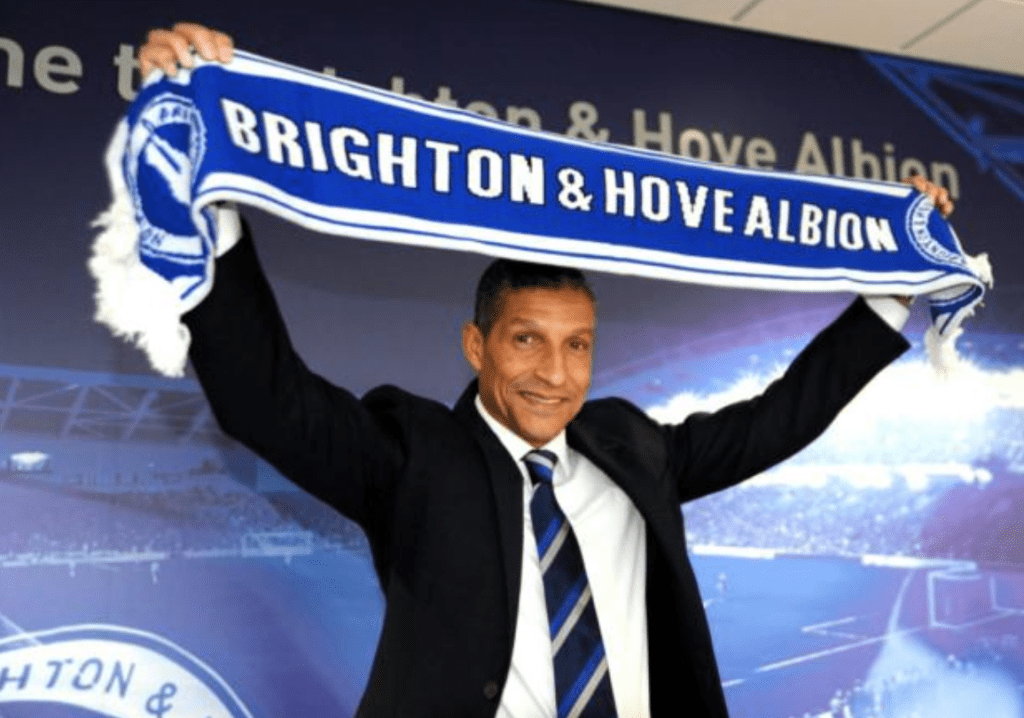
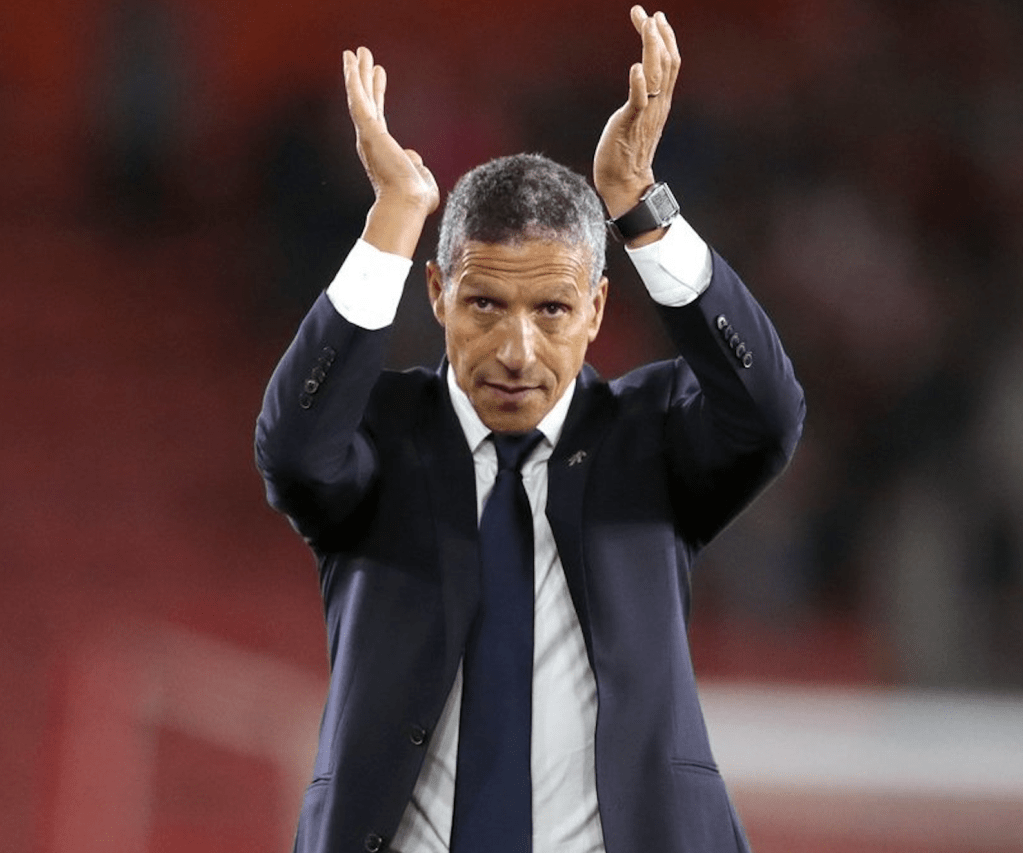
CHRIS HUGHTON is well respected for his achievements at Brighton but he never forgot that it was Newcastle United who gave him his first job as a manager.

Steering both clubs to promotion from the Championship earned him the League Managers Association’s manager of the season accolade on each occasion (2010 and 2017).

The fact Brighton hadn’t reached the top tier for 34 years and had been close to the bottom of the Championship when Hughton took over meant he saw it as an even greater achievement than his Toon success.

“A lot of people ask me about the difference between that promotion and the one I had with Newcastle,” he said. “In all honesty, if I look at where the team was when I took over, I think it was a harder job to do it with Brighton.

“I’ll always remember Newcastle’s promotion as my first achievement as a manager, but this one was probably the most emotional.”

Albion were one place above the Championship relegation zone when Hughton took over at Brighton on New Year’s Eve 2014.

Club chairman Tony Bloom said: “Chris has an excellent record in coaching and management. He’s hugely respected, both nationally and internationally, and he has great contacts within the game.

“He is someone who has a real wealth of experience in the top two divisions, from nearly 15 years at Spurs as a coach, assistant and interim manager, through to his more recent work in the Premier League and Championship.

“Chris is also a manager who has a track record for developing talent at all levels from academy upwards and will embrace the work we’ve been doing at the club in this area in recent seasons.

“Importantly, we also felt Chris is someone who can improve our immediate situation, while also having the management credentials and skills to plan our long-term future and help us to get back to progressing in the way we have in previous seasons.”

Former Spurs and Fulham captain and ex-Brighton manager Alan Mullery, by then an Albion ambassador, declared: “I think they have pulled off a real coup by bringing in Chris. He’s a very experienced manager, both at this level and in the Premier League, and he is a good man as well.

“We obviously go back a long way with our Tottenham connections; I know him well and his lovely family.

“He’ll be keen to see his players keep possession of the ball, but I also think he’ll make the side harder to beat. He knows exactly what is needed to be a success at this level and I’m sure we’ll see his own stamp on the team as the weeks pass.”

Indeed, in an interview with Tony Hodson for coachesvoice.com, Hughton spoke about how he set about the task of restoring Albion’s fortunes.

“When you join at that stage of the season, it’s about instilling the system that you want to play in as short a period of time as you can and getting the players to buy into that system.

“You hope that the reaction to a new manager coming in is a help and not a hindrance to that. And in most cases it is a help, because everybody wants to do well. But I was aware that the team had been through a difficult period, and that I was changing their way of playing quite dramatically.

“Everything rested on how they’d respond to it, and fortunately they did that well (Albion just avoided the drop, finishing third from bottom). But even then, I knew it was going to take a summer of working with them throughout the pre-season period, and recruiting well, to take the club where they really wanted to go.”

Hughton continued: “In my first full season at Brighton, we came within touching distance of automatic promotion to the Premier League, missing out on goal difference. We then had less than a week to prepare for the first leg of our playoff semi final against Sheffield Wednesday.

“We lost it 2-0. And, despite playing some of the best football we’d played all season for 30 minutes of the second leg at the Amex, we drew that game – meaning that, despite losing just six league games all season, our hopes of playing Premier League football the following year were over.

“The question then was, having got so close to promotion and put so much into achieving that aim, what would the reaction be like from the players next season?

“Would they be as determined to go through it all again? The honest answer is that, at that moment, you just don’t know.

“All you can hope is that the disappointment will drive them on, and that you’ve instilled enough into them to give you the best possible chance of success. As soon as pre-season started, though, I could feel we had a group of players who were desperate to go again. We were playing in a division that had a lot of strong teams, but thankfully we started the season well – we lost just twice before the turn of the year.”

Hughton recalled: “With four games of the season to go, we were top of the league. By that stage, I was quietly confident that we were going to achieve promotion.

“Going into our game against Wigan Athletic – at home, where we had a strong record – I was equally confident of getting a result. But that belief doesn’t take anything away from the emotion of what you feel inside once the job is done, and promotion is secured.

“At that stage, it becomes not so much about yourself but what it means to the club, the fans, to the people who employ you, and to a group of players who were desperate to be Premier League footballers.”

While Brighton’s ownership and structure suited Hughton down to the ground, his time at Newcastle was largely against a backdrop of turmoil off the pitch.

Nonetheless, the ever reasonable Hughton said: “Newcastle are a club and a fanbase that I have the utmost respect for and I will always want them to do well.”

Hughton spent three years on Tyneside, initially as first-team coach under Kevin Keegan. Toon finished that first season 12th in the league – but the following year it all went wrong.

“By the end of the season, there had been three different managers in charge – and defeat to Aston Villa on the final day meant that, after 16 years in the top flight, Newcastle were relegated,” he recalled in an interview with coachesvoice.com.

During the close season of 2009, Hughton was appointed caretaker manager before the position was made permanent in November of that year.

So, after all those years of coaching, the likeable Londoner finally had his opportunity to be a manager in his own right, although he admitted: “However much preparation you have as a coach, when you cross that line into management it is completely different.

“Newcastle was far from the stable, calm environment you would want when starting out. The team had just been relegated, we’d lost a lot of players and the club was up for sale. I had to dig deep and draw on the wealth of experience I’d gained as a coach.

“I knew I still had a good squad, so the challenge was making sure each and every one pushed in the right direction to get us back into the Barclays Premier League.

“Central to that was creating the right environment at the training ground, because the training pitch can provide great solace for players. I knew that if I could get everyone on board, we could be a strong force in the Championship.”

As he told coachesvoice.com: “Everybody was aware that the owner was trying to sell the club – and we had players who wanted to leave for Premier League clubs or moves abroad. We had to quickly determine the ones who wanted to stay and fight – the ones who wanted to get the club back up into the Premier League.

“There was so much uncertainty around the club. But, even in those situations, there are some things that will always remain. Firstly, the team have to train. Irrespective of what’s going on around them, that’s what players want to do. They enjoy training.

“By the time we’d got past the transfer window and it was determined which players were going to stay, I knew we had a group who were determined to go straight back up again.”

As it turned out, it couldn’t have gone better for him. The side were unbeaten at home and earned promotion back to the Premier League as the 2010 Championship title winners. Hughton won the LMA Championship Manager of the Year title too.

This was a side in which Andy Carroll netted 19 goals and Kevin Nolan 17 blending successfully with the likes of Jose Enrique, Fabricio Coloccini and Jonas Gutierrez.

In December the following season, amazingly, with Newcastle sitting 11th in the Premier League table, Hughton was sacked – and his players weren’t happy about it.

Joey Barton, Nolan, Steve Harper and Alan Smith complained to managing director Derek Llambias over the hasty manner of his departure.

The League Managers Association also took a dim view. Its chief executive Richard Bevan said: “The LMA is extremely disappointed that Newcastle have parted company with Chris given the success the club has experienced since his appointment.

“Throughout his time at Newcastle, Chris has conducted himself with tremendous integrity and dignity, the team’s current position of 11th demonstrating the stabilising effect Chris has had in his role as manager during his period at Newcastle.”

Hughton, meanwhile, with characteristic understatement, told leadersinperfomance.com: “I was disappointed, but I didn’t let it knock my confidence and self belief.

“It helped to know that many managers and others in football thought I’d done a good job at Newcastle. The reaction was terrifically supportive. My coping mechanism was to keep busy and prepare for the next job.”

In an exclusive interview with Lee Ryder for chroniclelive.co.uk, Hughton reflected warmly on his time at the club, saying: “I don’t look back on my time at Newcastle – because it’s always there with me, once you’ve been part of the club it never goes away.

“For me, there were so many firsts. It was the first time I’d worked away from London, Newcastle was my first stint away from the capital.

“It was my first role as a manager and first foray into management. And it was my first time in the Championship.

“So, for me, Newcastle is always with me, always there, it was an incredible time.”

Hughton told the reporter: “The one thing I have been very grateful for was the opportunity to do it. I will be forever grateful for the opportunity because it set me on the way to a management career.

“That was an unbelievable start for me and that’s what I will never forget – even without pictures and reminders. It’s always etched into my head.”

In the circumstances of his departure from Newcastle, it was probably not a surprise that he didn’t have to wait long for another job, although it was back in the Championship at Birmingham City, after they’d been relegated from the Premier League under Alex McLeish at the end of the 2010-11 season.

Having won the League Cup, Blues competed in the Europa League in 2011-12, competing in eight qualifying and group matches. In spite of that burden, they finished fourth in the league. Unfortunately, they lost to Blackpool in the play-off semi-finals.

Their penultimate game of the season had been at the Amex against Gus Poyet’s Seagulls, a game which finished in a 1-1 draw, the point enough to guarantee their play-off place. The matchday programme gave plenty of coverage to the visitors and their manager.

talkSPORT presenter and Blues fan Ian Danter spoke about how the side had benefited from Hughton’s “calm approach” and his “sharp and focused manner” after an astonishing churn of 27 players in or out of the club over the summer.

And he said the fans had really taken to Hughton, adding: “He has been the one aspect that has pulled everyone together and he has certainly done well with the players. He has got his theories and ideas across to them. He also understands his constraints from board level regarding money.”

When Paul Lambert decided to jump ship and leave Norwich City to take over at Birmingham’s city rivals Aston Villa, the vacancy at Carrow Road proved ideal to enable Hughton to step back up to the elite level in English football.

He signed a three-year deal with Norwich, taking assistant manager Colin Calderwood and first team coach Paul Trollope with him.

“My decision to leave was based on what Norwich City had to offer,” he said. “The chance to return to managing at Premier League level at a club that had made great strides in the preceding seasons. It very much whetted my appetite.”

He admitted to the Birmingham Mail that it had been a tough decision but added: “As a manager or coach you want to manage or coach at the highest level. The draw of going to the Premier League was one that was too big an opportunity to turn down.

“In some ways Norwich is, possibly, a very similar club to Birmingham. They have a very loyal and local support.

“This was an opportunity to return to the Premier League and that is what excited me.”

Hughton led Norwich to an 11th-place finish in the top flight during the 2012-13 season but patience hasn’t always been in plentiful supply at City and with relegation on the cards the following season, he was sacked with five games still to play.

A 1-0 home defeat to West Brom on 5 April 2014 had been the final straw and in angry post-match scenes the Carrow Road faithful called for Hughton’s dismissal. Only one point was gained from the remaining four matches and they were relegated anyway in 18th position, three points short of the Baggies in 17th.

It would be eight months before Hughton rode to Brighton’s rescue, picking up the reins of what had been a challenging first half of the 2014-15 season under the relatively inexperienced coach Sami Hyypia.

Having reached the Premier League within a season and a half of taking charge at Brighton, Hughton reflected: “My ultimate responsibility was to make sure that we stayed there. That means making the right decisions when it comes to putting together a team you feel is going to be good enough to do that.

“At that point, you have to take the emotion out of it. Hard choices have to be made in terms of areas you feel need to be strengthened. But it’s also about finding the right balance between keeping the consistency of players who have been playing together for a period of time, and deciding whether they are good enough to make that step up.

“At the time, I thought that we had the makings of a team, and a mentality, that didn’t need too much work. And, for the next two seasons, we remained a Premier League team.”

Hughton received an honorary degree from the University of Sussex to mark his achievements in the game and admitted: “It’s a huge honour and something I certainly didn’t expect.

“To do what we have done over the past four years with Brighton and to be honoured for that is something that is hugely humbling.”

It was the second half of 2018-19 that changed the wave of goodwill, though. Although Albion reached the semi-finals of the FA Cup, league form was poor.

Even so, when Hughton was summoned to meet chairman Bloom at the training ground the day after Manchester City eclipsed Brighton 4-1 to win the league title, he had no idea the fate that awaited him.

“It came as a shock to lose my job in the way that I did,” he said. And in a subsequent interview with Alyson Rudd of The Times, he said: “The biggest disappointment is that I never saw it coming.

“As a manager you get a feel when things are not right or relationships have broken down, but there was never anything there for me to feel what was coming. I thought the chairman was in there for club stuff or if he was there to see me it was about the pre-season, so it was a big shock. For a moment, I couldn’t say anything. I absolutely wasn’t expecting it. I was stunned; there was a silence.”

Hughton felt getting Albion into the Premier League and never being in the bottom three once was “achieving” although he admitted: “I am very conscious that the second half of the season was not as good as the first and it was not a rosy situation.”

But he pointed out: “I spent four and a half years there and never had an argument with the chairman, never had an argument with (chief executive) Paul Barber, never had an argument with (technical director) Dan Ashworth. I’m certainly not bitter. If you end up bitter, you’re the only one who loses out. It was the club’s prerogative.”

Hughton’s way back into the game post-Brighton came at the City Ground, Nottingham, in October 2020 when he succeeded Sabri Lamouchi who’d had a winless start to the Championship season.

Even though he was able to turn to three of his former Brighton promotion-winners in Glenn Murray, Gaetan Bong and Anthony Knockaert, Forest had an indifferent campaign and finished in a disappointing 17th place. The new season was only into its second month when Hughton was shown the door having secured just one point from the first seven games. His successor, Steve Cooper, led Forest to promotion.

Hughton’s next job in football came with his appointment in February 2022 as the technical advisor to Ghana’s national football team.

He then replaced coach Otto Addo as head coach after Ghana finished bottom of their group at the World Cup in Qatar. But he won just two of his nine matches in charge (three draws and four defeats) and was relieved of his duties in January 2024 after Ghana exited the Africa Cup of Nations at the group stage.

Amongst many different articles and interviews about Hughton, perhaps this leadersinperformance.com piece best sums him up: “Modest and measured in his approach, Chris Hughton is a rare find in the world of senior management.

“Confident in his own personality and abilities, Hughton has no reservations about drawing inspiration from a host of managers, past and present.

“While Chris Hughton remains true wherever possible to his calm and thoughtful style of leadership, underneath is a steel and determination that enables him to deal with the tough scenarios that inevitably arise in football, albeit in a respectful manner.

“It is perhaps because of this considered, well-balanced and open style of leadership that he has become one of the most employable and universally liked managers around.”

Lift engineer Hughton took Seagulls to a different level!

TOTTENHAM HOTSPUR was a key part of Chris Hughton’s life for more years than any of the other clubs he went on to serve.

While Brighton fans will always appreciate his four-year tenure taking the Seagulls from the Championship into the Premier League, he spent the first 19 years of his playing career at Spurs as well as 14 and a half years as a coach (and occasional caretaker manager) at White Hart Lane.

Hughton joined Tottenham’s youth set-up at the tender age of 13 in 1971, as he recounted in an In The Spotlight feature in the Spurs matchday programme for their September 2024 game v Brentford. It was the year the club won the League Cup captained by Alan Mullery with a side that included Phil Beal, Joe Kinnear and Martin Chivers, who scored both goals in the 2-0 victory over Aston Villa.

Hughton attended inner city school St Bonaventure’s in Newham, many years later attended by loanee striker Chuba Akpom who told Andy Naylor in an exclusive for the Argus: “When I was in school there used to be pictures of the gaffer there. The kids used him like an inspiration and motivation. I did as well: seeing someone come from the same area and the same school as me to become such a big and successful person.”

Other footballing St Bon’s alumni included Hughton’s brother Henry, John Chiedozie, Jermaine Defoe and Martin Ling (briefly an Albion player under Micky Adams).

Hughton’s progress as a youngster took a slightly unconventional turn when, at 16, Spurs told him he hadn’t done quite enough to be taken on as an apprentice.

“There was still that chance, though – a small window of opportunity,” he recounted to coachesvoice.com. “So, while I started a four-year apprenticeship as a lift engineer, I stayed on at Tottenham as an amateur.

“That meant working all day, then on two nights a week getting the bus or train to the training ground – apart from those days when I ended up working late and just couldn’t get there in time. Then, on Saturdays, I’d play for the youth team. I lived that life for two years.”

Football-wise, by the age of 18 Hughton had done enough to persuade Spurs to offer him a professional contract – but he didn’t want to cut short his lift engineer apprenticeship, so he turned them down but continued playing for the club as an amateur.

“I was fortunate,” he said. “My window of opportunity stayed open, and at 20 I finally became a professional footballer for Tottenham… as well as a qualified lift engineer.”

It was during Keith Burkinshaw’s eight-year reign as manager that Hughton enjoyed most of his success as a Spurs player, usually filling the left-back spot of a side that won the FA Cup in 1981 and 1982 and the 1984 UEFA Cup.

“It was a period that had a big impact on me, and on who I became,” said Hughton, who played alongside the likes of World Cup winners Ossie Ardiles and Ricky Villa, the gifted Glenn Hoddle and goalkeeper Ray Clemence, and Steve Perryman, “the best captain I played under”.

Born in Forest Gate, east London, on 11 December 1958, it might have been West Ham territory but it was Spurs that took on trial a group of five lads who had been playing in the district of Newham side.

“I ended up staying there,” he told the Argus in a November 2017 interview. “My upbringing was different. I was always playing. Although my dad is very much now a football fan, I didn’t have a family background of football.

“I think I went to West Ham once, a family friend took me. I was a football fanatic but always playing. I never really had an allegiance to any team. But I’m very much a West Ham lad.”

Hughton qualified to play for the Republic of Ireland – home of his mother Christine. His father Willie was Ghanaian (Hughton later became that country’s coach).

He made his debut for Eire in 1979 and won 53 caps over the next 12 years, including playing in three matches at the 1988 Euros. Although he was in the 1990 World Cup squad, he didn’t play any matches. He was the Republic’s assistant manager to Brian Kerr between 2003 and 2005.

Being of mixed race, Hughton suffered plenty of racial abuse both from the terraces and from opposition players, as he revealed in an interview with broadcaster Ian ‘Moose’ Abrahams for whufc.com in November 2023.

“You suffered it by yourself because you were the only one who was receiving that type of abuse, you were the only one that almost understood it, and being the only black player in the team you took all of that on your own shoulders,” he said.

“Sometimes it’s hard to think back now and comprehend how you coped with that, and the coping mechanism is because firstly you are used to it, and secondly your mentality had to be that you’re better than that. You generally suffered by yourself.”

Hughton continued: “There were numerous times over that period, especially in the reserve team, and yes, even in the first team that I suffered racial abuse [from opposing players].

“I reacted to it, but I knew the boundaries, because you knew if you went too far you were going to get sent off.”

A knee injury at the age of 28 was a signal for Hughton to begin to consider what he might do once his playing days were over, and he did some coaching sessions at soccer schools. “I started to think this was what I wanted to do,” he said.

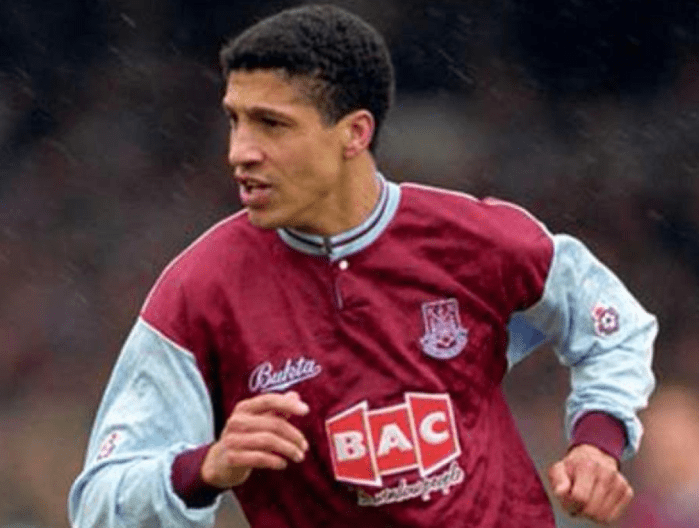
When he was no longer guaranteed a starting berth at Spurs, Hughton moved across London to the club closest to where he grew up: West Ham. Hughton signed for the Hammers initially on loan in November 1990 to cover for the injured Julian Dicks, and then permanently on a free transfer.

“My parents still live in Upton Park, so I was born and brought up very close to the stadium,” Hughton recalled in a November 2017 Argus interview.

Signed by Billy Bonds, he was with the Hammers for just over a year, helped them win promotion from the old Division Two in 1990-91and played a total of 43 matches (plus one as a sub).

“It was a really enjoyable period of time,” he said. “Billy Bonds was the manager. He was not only a great manager but a great individual.”

In February 1992, he moved on a free transfer to then Third Division Brentford, whose squad included Neil Smillie and Bob Booker. Graham Pearce was a coach. They won the divisional title but the following season Hughton’s troublesome knee forced him to retire at the age of 34.

“By the time I signed for Brentford at the age of 33 I was certain that I wanted to coach,” Hughton told coachesvoice.com. “I was taking far more interest in things like tactics and the thinking behind training sessions. Brentford’s manager at the time, Phil Holder, even allowed me to take a few sessions.”
Hughton added: “It actually set me up for my coaching career as I learned a lot in that time.”

After he’d called time on his playing days, he didn’t have to wait long for an opportunity to open up for him as a coach because his former teammate Ardiles, who’d not long since taken over as Spurs manager, invited him to help out back at White Hart Lane.

“We’d been good friends since our days playing for the club, so he knew all about my coaching aspirations and brought me in as the under-21s’ and reserve team coach,” Hughton explained. “I’ve always been very grateful to him for giving me that first opportunity.”

For the first year or so, he worked alongside the former West Ham player Pat Holland, who he described as “an excellent tactical and technical coach”.

Hughton explained it was a period in which he discovered how to transition from being a player to a coach. “As much as you’ve been part of a changing room thousands of times as a player, taken part in countless training sessions and listened to more team talks than you can remember, none of those things have ever been your responsibility before.

“In that respect, football is no different to any other aspect of life. If someone has spent years working on a shop floor, then moves up to management and has to govern a group of people, they have to make that same transition. It’s not easy.”

As managers came and went, Hughton remained on the coaching staff. After Ardiles came Gerry Francis and Christian Gross. Hughton was in caretaker charge for six matches before George Graham took over from Gross. Next in the hot seat was Glenn Hoddle, followed by Jacques Santini and then Martin Jol.

“Such a long apprenticeship might not be for everyone and some can go straight from player to manager at a young age, but I wouldn’t have been ready,” said Hughton.

“There was always something new to learn and experience. It was exciting to see what each new manager would be like, how he would involve me and what I would learn.

“The club could easily have said, ‘Now that the manager has left we won’t be keeping you on’, but they showed faith in my abilities and, in return, I provided some continuity.”

Hughton was assistant manager to Jol and said: “We had three years together, and in terms of league positions they were successful ones.”

By the time he was shown the door at Spurs, along with Jol, after a difficult start to the 2007-08 season, he felt ready to become a manager in his own right.

But before that happened, a different proposition emerged when Kevin Keegan asked him to become first team coach at Newcastle United.

“I’d spent my entire playing and coaching career in London, but any apprehension I felt at relocating to another part of the country was outweighed by the excitement,” he told leadersinperformance.com.

“I was going to a legendary club with an incredible tradition, rich history and great fan base and I was going to assist Kevin Keegan. I learned a lot from him during our time together, especially from his strengths in man-management.”

• What happened next in Hughton’s career is the subject of my next blog post. Thanks for reading!