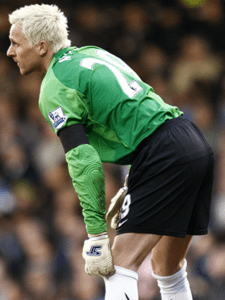
Hero and Villain Sammy Morgan got off Albion mark v Palace

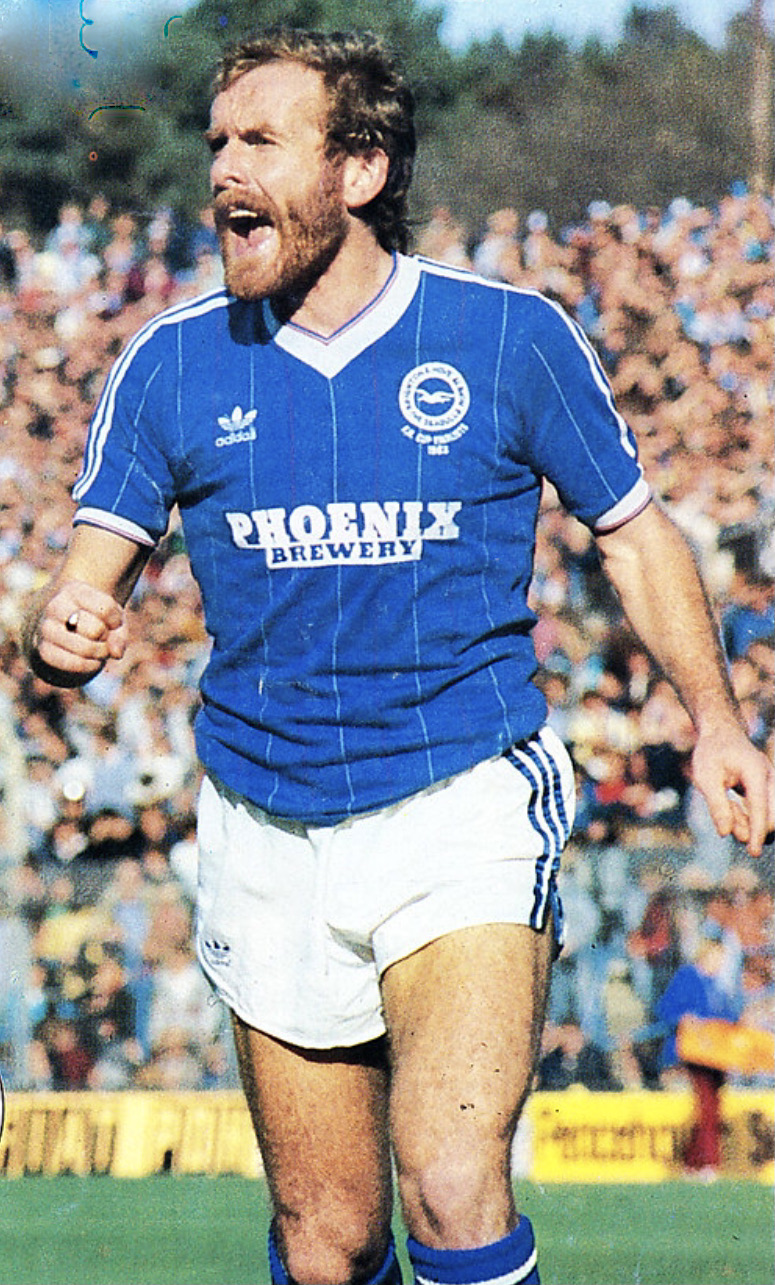
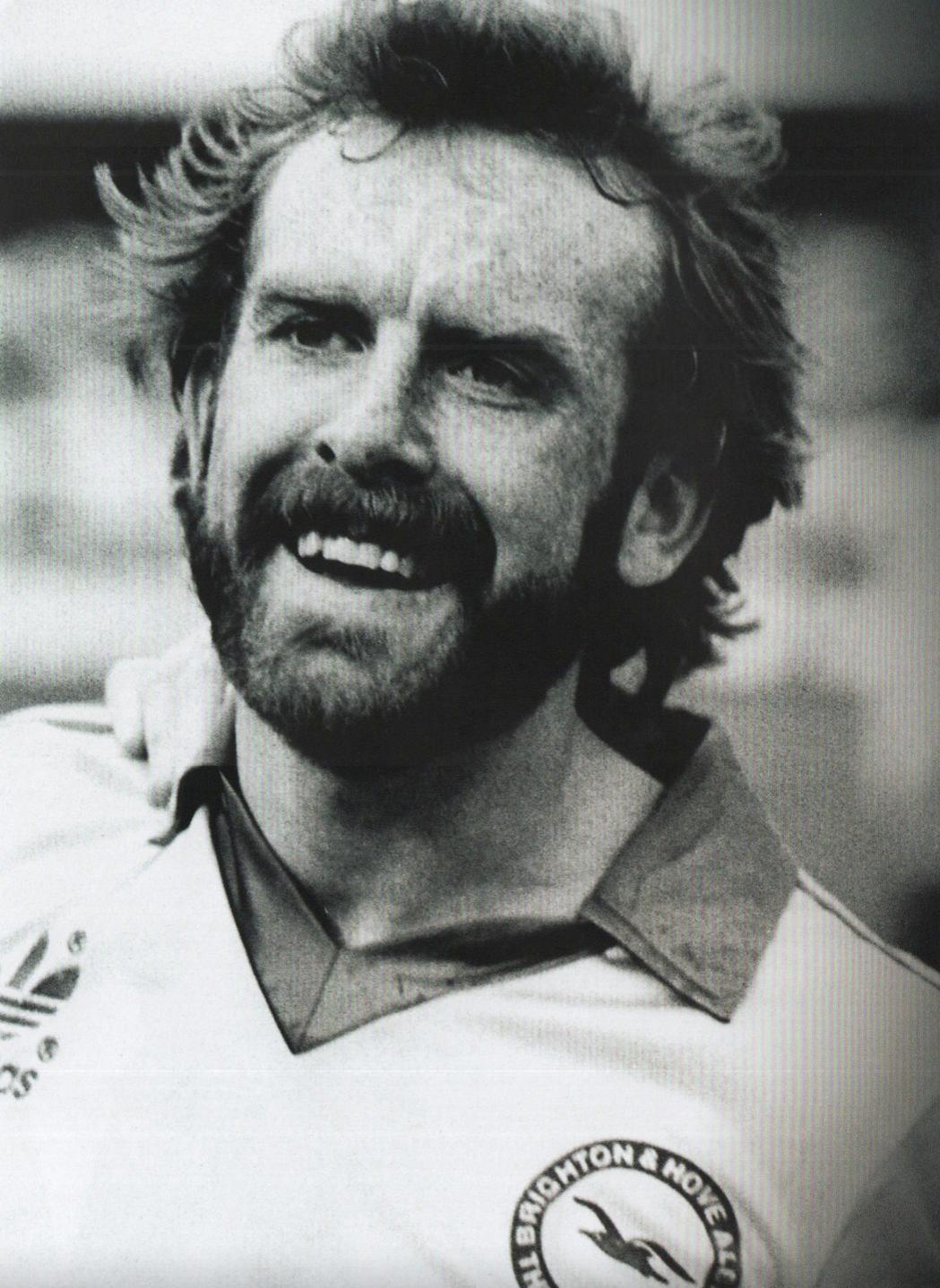
FEARLESS NORTHERN Ireland international centre forward Sammy Morgan and his former Port Vale teammate Brian Horton were bought to win promotion for the Albion.

The gamble by manager Peter Taylor didn’t quite pay off and although midfield dynamo and captain Horton went on to fulfil that promise under Alan Mullery, Morgan’s part in the club’s future success was eclipsed by the emergence of Peter Ward.

Morgan, who was in the same Northern Irish primary school year as George Best, was the first to arrive, a £35,000 signing from Aston Villa in December 1975, replacing the out-of-favour Neil Martin alongside Fred Binney. He wasn’t able to find the net in his first seven matches but when he did it was memorable and went down in the annals of Albion history.

Morgan opens his Albion account in style against Crystal Palace

He scored both goals in a 2-0 win over Crystal Palace in front of a 33,000 Goldstone Ground crowd that took Albion into second place in the table, manager Taylor saying afterwards: “I am delighted for Morgan. It must have given him a great boost to get a couple of goals like this.”

That breakthrough looked like opening the floodgates for the aggressive, angular forward who went on to score in five consecutive home games in a month.
And when Horton arrived in March 1976, with Albion still in second place and only 11 games to go, promotion looked a strong possibility.

But an Easter hiccup, losing 3-1 to rivals Millwall, followed by three 1-1 draws to end the season, saw Albion drop to fourth, three points behind the south London club, who went up behind Hereford United and Cardiff City.

Short-sighted Morgan – he wore contact lenses to play – might not have seen it coming, but it was something of a watershed moment for him too.

The man who signed him decided to quit, saying: “I signed two players gambling on them to win us promotion. We didn’t get it, and the only consolation I have in leaving is I feel I have helped build a good team which is capable of going up next time.”

Before he managed to kick a ball in anger under new boss Mullery, Morgan suffered a fractured cheekbone in a collision with Paul Futcher in a pre-season friendly with Luton in August 1976. The injury sidelined him for months.

Morgan shares a training ground joke with Peter Ward

By the time he was fit to resume towards the end of November, young Ward and midfielder-turned-striker Ian Mellor had formed such an effective goalscoring partnership that Morgan could only look on from the substitute’s bench where he sat on no fewer than 29 occasions.

He got on in 18 matches but only scored once, in a 2-1 home win over Chesterfield. Of his two starts that season, one was a New Year’s Day game at Swindon in which Albion were trailing 4-0 when it got abandoned on 67 minutes because of a waterlogged pitch (and he was back to the bench for the rescheduled game at the end of the season).

Nonetheless, Taylor’s promotion premonition was duly achieved at the completion of Mullery’s first season, and Ward had scored a record-setting 36 goals.

Morgan wasn’t involved in Albion’s first two games of the new season – consecutive 0-0 draws against Third Division Cambridge United, in home and away legs of the League Cup – and, by the time of the replay, he had signed for the opponents, who were managed by Ron Atkinson.

So, in a strange quirk of fate, £15,000 signing Morgan’s first match for the Us saw him relishing a bruising encounter up against former teammate Andy Rollings, although Albion prevailed 3-1.

Morgan spoke about the encounter and his long career in the game in a fascinating 2015 televised interview for 100 Years of Coconuts, a Cambridge United fans website.

Morgan’s easing out at Brighton followed a similar pattern to his experience at Aston Villa who replaced him with 19-year-old Andy Gray, a £110,000 signing from Dundee United. Morgan only made three top flight performances for Villa after a pelvic injury had restricted his involvement in Villa’s second tier promotion in 1975 to just 12 games (although he did score four goals – three in the same match, a 6-0 win over Hull City early in the season). He was injured during a 1-1 draw at Fulham in November and subsequently lost his place in the team to Keith Leonard.
Villa scorer

Morgan had been 26 when Vic Crowe signed him from Port Vale as a replacement for the legendary Andy Lochhead. The fee was an initial £22,222 in August 1973 with the promise of further instalments of £10,000 for every 10 goals up to 20. Vale’s chairman panicked when the goals tally dried up with the total on nine but Morgan eventually came good and Villa ended up paying the extra.

He made his Villa debut on 8 September 1973 as a sub for Trevor Hockey on the hour in a 2-0 home win over Oxford United, the first of five sub appearances and 25 starts that season, when he scored nine goals.

Villa writer Eric Woodward said of him: “Sammy was never a purist but he was a brave, lively, enterprising sort who put fear into opposing defences.”

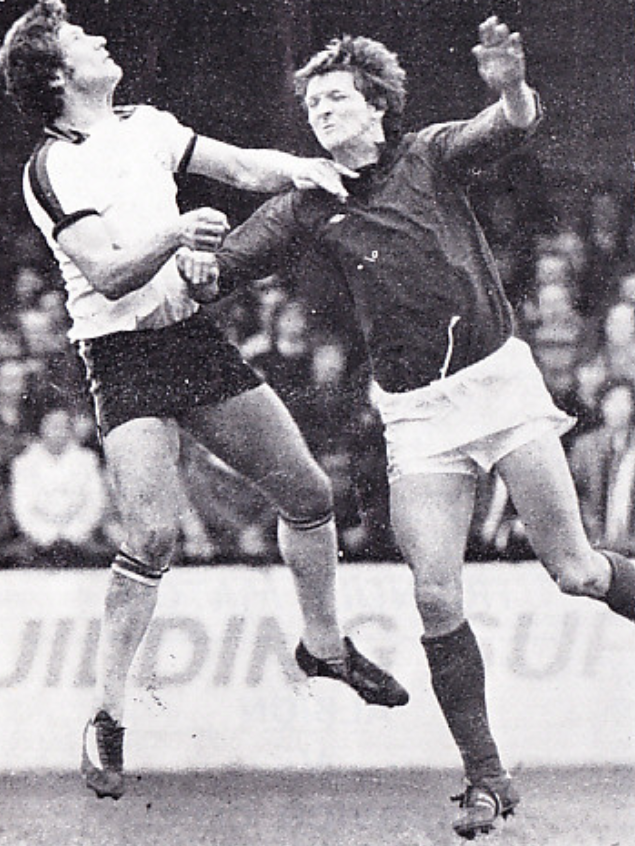
He carved his name into Villa legend during a fourth round FA Cup tie against Arsenal at Highbury in January 1974 when he was both hero and villain.

Morgan put the Second Division visitors ahead with a diving header in the 11th minute but in the second half was booked and sent off for challenges on goalkeeper Bob Wilson. After his dismissal, Arsenal equalised through Ray Kennedy.

Esteemed football writer Brian Glanville reckoned: “Morgan had scored Villa’s goal and had played with fiery initiative but, alas, he crossed the line dividing virility from violence.

“He should have taken heed earlier, when booked for fouling Wilson. But a few minutes later, going in unreasonably hard and fractionally late as Wilson dived, he knocked the goalkeeper out and off he went.”

An incensed Morgan saw it differently, though, telling Ian Willars of the Birmingham Post: “Neither my booking nor the sending-off were justified. I never touched Wilson the first time and the second time I was going for the ball, not the man. It was a 50-50.

“I actually connected with the ball not Wilson. I went over to check if he was hurt and, in my opinion, he was play-acting.”

Morgan had sweet revenge four days later. No automatic ban meant he was able to play and score in the replay at Villa Park which Villa won 2-0 in front of a bumper crowd of 47,821.

Randall Northam of the Birmingham Mail wrote: “Providing the sort of material from which story books are written, the Northern Ireland international Sammy Morgan, who was sent off on Saturday, scored in the 12th minute.

“He had scored in the opening game in the 11th minute and to increase the feeling of déjà vu it was another diving header.” Fellow striker Alun Evans scored Villa’s second.

Northam added: “It was never a great match but the crowd’s enthusiasm lifted it to a level which often made it exciting and they had their reward for ignoring the torrential rain in a driving Villa performance which outclassed their First Division opponents.”

For his part, an unrepentant Morgan said: “It was obvious that we had to put Wilson under pressure as anyone would have done in the circumstances. My goal could not have happened at a better time.”

How heartening to hear in that 100 Years of Coconuts interview that when Morgan was struck down with cancer 40 years later, one of several well-wishing calls he received came from Bob Wilson.

Best and Morgan (back row, left) in the same Belfast school photo

Born in East Belfast on 3 December 1946, Morgan went to the same Nettlefield Primary School as George Best and the first year at Grosvenor High. But Morgan left Belfast as an 11-year-old with his family, settling in Gorleston, near Great Yarmouth (his mother’s birthplace).

His Irish father, a professional musician, took over the running of the Suspension Bridge tavern in Yarmouth and Morgan’s footballing ability continued to develop under the watchful eye of his teacher, the Rev Arthur Bowles, and he went on to represent Gorleston and Norfolk Schools.

Morgan went to the same technical high school in Gorleston that also spawned his great friend Dave Stringer (a former Norwich player and manager), former Arsenal centre back Peter Simpson and ex-Wolves skipper Mike Bailey, who managed Brighton in the top flight in 1981 and 1982.

Morgan’s early hopes of a professional career were dented when he had an unsuccessful trial at Ipswich Town. Alf Ramsey was manager at the time and the future England World Cup winning boss considered him too small. He also had an unsuccessful trial with Arsenal.

Morgan continued to play as an amateur with Gorleston FC and although on leaving school he initially began working as an accountant he decided to study to become a maths and PE teacher at Nottingham University. It was Gorleston manager Roger Carter who recommended him to the then Port Vale manager Gordon Lee, who was a former Aston Villa colleague.

“I loved my time under Roger and my playing days under him were the most enjoyable years of my footballing career even though I went on to play at a higher level,” said Morgan.

He was the relatively late age of 23 when, in January 1970, he had a successful trial with Vale and signed amateur forms. But by July that year he was forced to make a decision between full-time professional football or teaching. He chose football and made a scoring Football League debut against Swansea in August 1970.

However, that summer he was spotted as a future talent by Brian Clough and Peter Taylor when he played against their Derby County side in a pre-season friendly. Clough inquired about taking him on loan but he cemented his place in the Vale side and it didn’t go any further.

nifootball.blogspot.com wrote of him: “The burly centre-forward, he weighed in at up to thirteen and a half stone during his career, proved highly effective in an unadventurous Vale side.”

His strength and aggression in Third Division football caught the attention of Northern Ireland boss Terry Neill and he scored on his debut for his country in a February 1972 1-1 draw with Spain, played at Hull because of the troubles in the province, when he teamed up with old school chum Best.

Morgan remembered turning up at the team hotel, the Grand in Scarborough, and encountering a press camera posse awaiting Best’s arrival – and he didn’t show! The mercurial talent did make it in time for the game though, when another debutant was Best’s 17-year-old Manchester United teammate Sammy McIlroy, who earned the first of 88 caps.

In the home international tournament that followed, Morgan was overlooked in favour of Derek Dougan and Albion’s Willie Irvine who, having helped Brighton win promotion from Division Three (and scored what was selected as Match of the Day’s third best goal of the season against Aston Villa) earned a recall three years after his previous appearance.

In October of 1972, though, Morgan was selected again and took his cap total to seven while at Vale Park, for many years a club record.

While at Brighton, he earned two caps during the 1976 home international tournament, starting in the 3-0 defeat to Scotland and going on as a sub in a 1-0 defeat to Wales.

He earned his 18th and final cap two years later during his time at Sparta Rotterdam in a 2-1 win over Denmark in Belfast. The legendary Danny Blanchflower was briefly the Irish manager and he selected Morgan up front alongside Gerry Armstrong but he reflected that he didn’t play well, was struggling with a hamstring injury at the time, and was deservedly subbed off on the hour mark.

Morgan’s knack for helping sides win promotion had worked at Cambridge too, where he partnered Alan Biley and Tom Finney (no, not that one!) in attack, but after Atkinson left to manage West Brom, he fell out with his successor, John Docherty, and in August 1978 made the switch to Rotterdam.

After one season there, he moved on to Groningen in the Eeste Divisie (level two) and although he helped them win the title, he suffered a knee injury and called time on his professional playing days.

He returned to Norfolk to teach maths and PE in Gorleston, at Cliff Park High School and then Lynn Grove High School, and carried on playing with his first club, Gorleston, where, in 1981, he was appointed manager.

As well as coaching Great Yarmouth schoolboys, he also got involved in coaching Norwich City’s schoolboys in 1990 and in January 1998 he left teaching to work full-time as the club’s youth development manager. As the holder of a UEFA Class A licence, he went on to become the club’s first football academy director, a position he held until May 2004.

In October that year, Morgan was unveiled as Ipswich Town’s education officer, a role that involved ensuring Town’s young players received tuition on more than just football as they went through the academy system. In 2009, he became academy manager and during his three years notable youngsters who made it as professionals included strikers Connor Wickham and Jordan Rhodes.

He admitted in an interview with independent fan website TWTD: “If I’ve contributed to anybody in particular it probably would be the big number nine [Wickham] and Jordan because I was a number nine, and I kick the ball through them – I play the game through the number nines.”

He went on: “I’m very proud to have played a part in the development of a lot of young players. I’m equally proud of those lads who haven’t quite got there in the professional ranks but have maybe gone on to university and have forged other careers and are still playing football at non-league level, still enjoying their football. That means a lot to me as well.”

Morgan continued: “I finished playing in 1980 and I’ve been in youth development since then. I did the Norfolk schools, Great Yarmouth schools, representative sides and the Bobby Robson Soccer Schools. That’s 32 years, I’ve given it a fair crack and I love my football as much now as I ever did.

“I’ve been privileged to work with young people, very privileged. It’s kept me young, kept my passion and kept my enthusiasm going. One thing you could never accuse me of is not having any enthusiasm or passion for the game, and that will remain.”

In 2014, Morgan was diagnosed with stomach cancer and underwent chemo to tackle it. Through that association, in September 2017 he gave his backing to Norfolk and Suffolk Youth Football League’s choice of the oesophago-gastric cancer department at the Norfolk and Norwich University Hospital (NNUH) as its charity of the year.

Even when he could have had his feet up, he was helping to coach youngsters at independent Langley School in Norwich.

Morgan was on good form in this interview for 100 Years of Coconuts TV

Last eight in the FA Cup becoming familiar territory

REACHING the FA Cup quarter-finals for the fourth time in seven years is music to the ears of Brighton fans of a certain vintage.

Time was when an exit far earlier in the competition was the more likely expectation and falling victim to non-league giant killers (remember Walton & Hersham, Leatherhead, Kingstonian, Canvey Island, Sudbury Town) was nothing short of humiliating.

But as each season in the exalted company of the Premier League has gone by, the last eight stage of the FA Cup has been well within reach.

As one who goes back a good many years, it was a delightful surprise to reach the quarters twice in the mid-1980s (going all the way to the final in 1983, of course, if you hadn’t heard!).

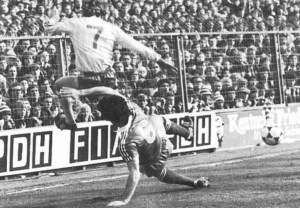
Gary Stevens tackles Mark Barham

It still pains me to say that I was one of the many locked out of the 28,800 Goldstone Crowd on 12 March 1983 when Albion played in their first ever FA Cup quarter-final.

Norwich City, under former West Ham FA Cup winner Ken Brown, were the opposition with future England goalkeeper Chris Woods in goal and Mark Barham, who joined Albion towards the end of his career, on the wing.

Jimmy Melia’s Seagulls had already beaten the Canaries 3-0 a few months earlier but the cup match proved a much tighter affair described as “bruising” by several football reporters who noted the physios were called on seven times to treat injuries – Albion’s Norwich-born Mike Yaxley twice attending to Steve Foster.

Andy Ritchie in what turned out to be his last home game for the Albion

Nonetheless, it was “marvellous entertainment for all its imperfections” reckoned the Sunday Telegraph’s Lionel Masters, who said: “Brighton full-back Chris Ramsey did more than most to inject a steely resolve. He conducted a feud with (Dave) Bennett, whom he flattened more times than a target a fairground rifle range.”

Alan Hoby of the Sunday Express wrote: “It was a tough, turbulent, physical affair with an orgy of high balls,” while the only goal of the game, from Albion’s Jimmy Case was “one of the few moments of quality in a frantic game,” according to Brian Scovell of the Daily Mail.

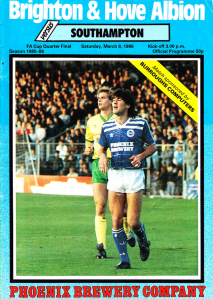
The less well-known quarter-final appearance of that decade came on 8 March 1986 when a Goldstone Ground crowd of 25,069 (at a time when the average often dipped below 10,000) saw Chris Cattlin’s Second Division Albion entertain First Division south coast rivals Southampton.

Albion were pleased finally to have got a home game in the competition having had to overcome away ties at Newcastle, Hull and Peterborough (who were eventually beaten 1-0 in a home replay five days before the Saints match).

Saints were managed by Chris Nicholl, Cattlin’s fellow former Burnley youth team colleague, and in the opposition line-up was Case, the talisman of Albion’s run to the final three years previously when he rifled in the winner at Anfield in the fifth round, scored that only goal v Norwich and buried a long-range rocket in the semi against Sheffield Wednesday at Highbury.

England’s Peter Shilton was in goal for Southampton and, most curiously, after a five-week absence from first team action, misfiring Mick Ferguson was selected by Cattlin to lead Albion’s attack. Not one of the 1983 Albion side started for the Seagulls.

Sadly, Brighton, in the upper reaches of the second tier at the time, didn’t do themselves justice. Saints won it 2-0 with first half goals from Steve Moran and Glenn Cockerill – and it turned out to be Ferguson’s last game for the Seagulls. Three weeks later he moved to Colchester United.

Fast forward to 2018 and another strange striker selection by a Brighton manager – this time Chris Hughton leaving top scorer Glenn Murray on the subs bench – proved costly in a quarter-final against Manchester United at Old Trafford.

New £14m signing Jurgen Locadia missed four good chances among 12 second-half Brighton efforts on goal to United’s one and Pascal Gross went close on three occasions. But BBC Sport’s Mike Whalley suggested: “He (Hughton) might have been left wondering if resting Murray caused Brighton to miss their chance of a first FA Cup semi-final since 1983.”

United topped and tailed the tie with Romelu Lukaku opening the scoring early on and Nemanja Matic sealing victory late on when he nodded in Ashley Young’s free-kick.

A year later, it looked like Albion wouldn’t be going beyond the last eight once again when Championship side Millwall led the Seagulls 2-0 at The New Den with only two minutes to go. Cue Locadia, on as a sub, to make amends for the previous season’s misses by making space for himself in the box and firing home an unstoppable shot to pull a goal back for the visitors.

Then, with 95 minutes on the clock, Solly March from way outside the box floated in a free-kick that Lions’ ‘keeper David Martin inexplicably let slip through his grasp to bring the Albion level.

Goalkeeper Mat Ryan a penalty shoot-out hero at Millwall in 2019

The momentum was in Brighton’s favour in extra time but it took a penalty shoot-out to decide the tie and when Murray missed Millwall might have thought it had turned back their way. But after three successes each, Mat Ryan kept out Mahlon Romeo’s effort, and Lions centre back Jake Cooper needed to bury his spot kick to keep the tie alive for the home side. He blazed his shot over the bar and Albion were through.

There was to be no such drama in 2023 when 18-year-old Evan Ferguson did a whole lot better than his 1986 namesake and stole the headlines by scoring twice against League Two Grimsby, who were playing in their first FA Cup quarter-final for 84 years.

The Mariners had knocked out five teams from divisions above them to reach that stage but they were well and truly put to the sword by Roberto De Zerbi’s impressive Seagulls who ran out 5-0 winners at the Amex.

As well as Ferguson’s brace, Deniz Undav, March and Karou Mitoma were also on the scoresheet and it could have been more; Mitoma missing a sitter and Adam Webster’s effort hitting the bar.

Perhaps by way of highlighting how quickly fortunes can change for young players, it’s interesting to recall that of Ferguson BBC pundit Danny Murphy said at the time: “This kid is a superstar. Honestly.

“He’s got great feet, technical ability. He’s calm, powerful and plays the role really well. You don’t see him out wide, he stays central and is always a target.

“I can’t see a weakness in his game at the moment. For 18 years old, the maturity he shows in his game is phenomenal.”

Murray, having moved into the punditry game himself by then, added: “It was the manner in which he scored those goals, he was so composed. As a young lad just coming into the first team, you can snatch at those chances but he just relaxes in that moment – and that is something that you can’t teach.

“He’s got a good stature and I think there’s big things in the future for him.”

Well-loved Grealish went down with the Albions and City

TENACIOUS Tony Grealish earned plenty of plaudits in a 20-year professional career spanning almost 600 matches and etched his name in the record books along the way.

Thought to be the only person to play in two different sports at Wembley Stadium, Grealish was also the first Brighton & Hove Albion player to captain his country.

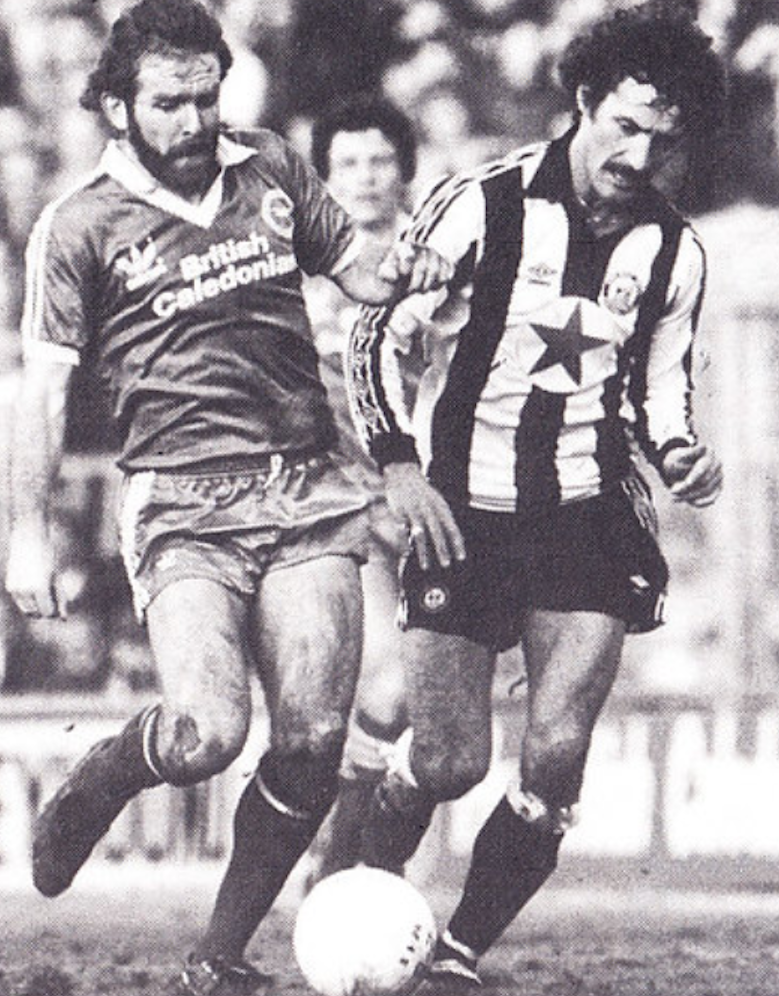
On the ball for Brighton

One statistic less favourably remembered is that he was relegated from the top level of English football with three different clubs: Brighton, West Bromwich Albion and Manchester City.

The London-born Republic of Ireland international was first relegated in the same year that he led the Seagulls out at Wembley for the 1983 FA Cup Final.

He was also part of the Throstles squad who went down in last place in 1986. And it was two relegations in a row after switching to an ailing Sky Blues side that went on to relinquish their top flight status in 1987.

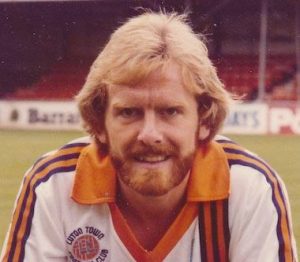
When Grealish signed for Brighton from Luton Town for £100,000 in July 1981, it was a time of significant change. After only just avoiding relegation the season before, manager Alan Mullery had quit over a disagreement with chairman Mike Bamber and four key players left the club: John Gregory, Mark Lawrenson, Peter O’Sullivan and captain Brian Horton.

Grealish had quite a tall order taking over in midfield from ex-skipper Horton, who replaced him at Kenilworth Road, but Gordon Smith, another Albion teammate who later played for City, said:

“He did it with style – he was excellent. He was a very hard working player, he could tackle, but he was also classy with it – he could always pick out a pass.”

Part of the deal that saw Liverpool acquire Lawrenson saw the experienced Jimmy Case move to Brighton and he also appreciated what Grealish brought to the side. “Tony was so, so reliable. Playing with him in midfield, you knew that if the going got tough, he would be shoulder to shoulder alongside you.

“He would go in where it hurt, a tough lad, but he was not just a worker, he could play a bit as well and his enthusiasm for the game rubbed off on everyone in that changing room.”

Grealish and Case together with Mullery signing Neil McNab proved to be quite a formidable midfield trio and together they helped Mike Bailey’s side to jostle for top half of the table positions during the 1981-82 season before falling away to finish in 13th place – a record that remained in place until 2022!

Wembley gesture

Reaching the FA Cup final in 1983 under Jimmy Melia and George Aitken provided a personal highlight for Grealish when he captained the Seagulls in the absence of suspended regular skipper Steve Foster, memorably wearing the defender’s trademark white headband as a mini-protest at his exclusion.

Grealish’s departure to West Brom in March 1984 was part of the ongoing break-up of the former top level squad, Melia’s successor Chris Cattlin being tasked with trimming the wage bill to bring it into line with second tier football.

Three and a half years later, Grealish had just turned 30 when Jimmy Frizzell signed him for City in October 1986 for a modest £20,000 fee, re-uniting him with McNab.

It was only a short-term deal, though, and he continued to live in Sutton Coldfield, a commute of 90 miles each way! “We haven’t bought a place because I only signed until the end of the season,” he explained. “We’ll see what happens first.”

Frizzell had previously been assistant manager to Billy McNeill but took over the reins when the former Celtic captain, frustrated by City’s parlous financial circumstances, left for Aston Villa in September 1986.

City of the mid-1980s were a very different proposition to the modern day version: they were more than £4m in the red and struggling with crippling debt repayments after an ill-advised spending spree in the late 70s and early 80s.

“The first thing I was told when I joined and went to discuss money was that they were so skint they would sell their goalposts if they could,” a Grealish contemporary, centre-back Mick McCarthy, told Chris Bevan for BBC Sport in a 2013 article looking back at that period.

Frizzell felt the relatively youthful City needed some experienced old heads to steady the ship and Grealish joined from West Brom in the same week John Gidman joined on a free transfer from city rivals Manchester United. Both made their Maine Road debuts for bottom-of-the-league City against United in a 1-1 draw on 26 October 1986.

It was the 118th meeting between the two sides, but the first to be broadcast live on TV.

Injury-hit United took the lead through a Frank Stapleton header that crept past the diving Perry Suckling and inside the post, but McCarthy equalised with a header from a cross by McNab.

Under fire United boss Ron Atkinson only had one more game in charge of the Reds; after a 4-1 League Cup defeat by Southampton, he was sacked.

United’s plight was nothing compared to City, though. They didn’t win away throughout the whole season and, in spite of the additions of forwards Paul Stewart and Imre Varadi, scored a meagre 36 goals in 42 games.

Youngster Paul Moulden, having been a prolific goalscorer in City’s FA Youth Cup-winning side of 1986, briefly offered hope when scoring four goals in four games in November but then picked up an injury.

Frizzell blooded several other members of that youth side including Paul Lake, David White and Ian Brightwell but City were relegated. Grealish’s last game for them was in a 0-0 home draw against Newcastle in March, City’s first point in a month. They only won twice in the remaining 10 games and were relegated…along with McNeill’s Villa!

Grealish only made 15 appearances in that 1986-87 season and was an unused sub on two other occasions. He made 11 league starts, one in the FA Cup (a 1-0 defeat v Man U) and three in the Full Members Cup. He also played in City’s reserve side on 14 occasions (stats courtesy of the Gary James archive).

Born in Paddington, west London on 21 September 1956, Grealish played underage for St Agnes Gaelic football club in Cricklewood – alongside brother Brian – and represented London at various underage levels.

That special 1983 Wembley moment meant Grealish achieved the unusual claim to fame as reportedly the only person to play soccer and Gaelic football at the iconic stadium. He’d previously played there in the early ’70s for London’s Minors against New York in what at the time was an annual Whit weekend tournament.

“For a group of London lads, playing at Wembley Stadium was magnificent,” said Éamonn Whelan, a teammate of Grealish’s for St Agnes and London.

Ireland was certainly in his blood even if he wasn’t born there: his father, Packie, was from Athenry in Galway, and although his mother, Nora, was born in London, both her parents came from Limerick.

No surprise then, that Grealish represented Eire with some distinction, winning 45 caps between 1976 and 1985, and It was during Alan Kelly’s brief reign in charge, in 1980, that Grealish was first made Eire skipper – in a 2-0 win over Switzerland at Lansdowne Road, Dublin.

Brighton’s Lawrenson and Gerry Ryan were teammates that day, as was Chris Hughton.

One of the goalscorers that day, Don Givens, said of Grealish: “He gave so much effort that he wasn’t going to accept anything less from his teammates.

“Tony was a 100 per cent tough little midfield player, and a great character off the pitch.”

Former Ireland manager Eoin Hand chose Grealish as Eire captain for the 1984 European qualifying campaign, when Ireland ended in third place behind Spain and Holland.

In his book, First Hand My Life and Irish Football, Hand said Grealish was “more Irish than the Irish themselves”.

“With his dynamic, combative style in the midfield engine room, Tony, with his tousled hair and Viking beard, was the kind of guy you were happy to go into battle alongside,” he said.

Grealish on the international stage with the Republic of Ireland

“He was a natural leader, and although known for his ceaseless industry, he was no mere artisan. Grealish could play as well and conjure up the odd goal from deep positions.”

Previous manager Johnny Giles had given Grealish his Ireland debut at the age of 19, in a friendly against Norway at Dalymount Park, Dublin on 24 March 1976.

Grealish, unusually, started at full back as Ireland won 3-0 thanks to goals from Liam Brady, Jimmy Holmes and a penalty from Mickey Walsh.

“Tony was very good for me when we played together in midfield because he was a ball winning all action player, and we had a good understanding,” said Brady, who later became Brighton’s manager.

“Around the Ireland dressing room, he was very enthusiastic, determined and very motivating – he liked to motivate everyone around him,” he told the Irish World in 2013.  “He’d be up for every match.”

Brady added: “We had a strong friendship, and I haven’t met anyone who played with him who wasn’t a friend of Tony Grealish’s.

“He was a super man, and a super bloke. He made the atmosphere better wherever he was.”

Grealish took his first steps to becoming a professional footballer aged 15 in 1972 when he joined Leyton Orient as an apprentice. Manager George Petchey took him on as a professional in 1974 and he was the club’s player of the year at the end of the 1975-76 season.

In 1977-78, Orient reached an FA Cup semi-final at Stamford Bridge, where they lost 3-0 to  Arsenal, although the aforementioned Liam Brady mentioned: “He man-to-man marked me that day and put me out of the game. Luckily some of our other players performed despite the fact that I didn’t.”

One of the last of his 171 appearances for Orient was in the April 1979 3-3 draw with promotion-chasing Brighton in front of The Big Match cameras (John Jackson was in goal for the Os and Martin Chivers scored his only goal for Brighton).

Grealish transferred to David Pleat’s Luton Town in the summer of 1979 for a fee of £150,000, racking up 78 Division Two appearances over two seasons before joining Brighton.

In total, Grealish played 116 games plus five as a sub for Brighton, and his last game for the Seagulls ironically saw him score in a 1-1 home draw with Manchester City.

Having known what he could bring to a side, it was Giles, when manager of West Bromwich Albion, who took Grealish to the Hawthorns in March 1984 for £75,000.

Reunited with Johnny Giles at West Brom

In one and a half seasons with the Baggies, Grealish made 65 appearances before that move to City.

He spent a brief period with Salgueiros in Portugal before former Leeds hard man Norman Hunter signed him for Rotherham United in August 1987. He made 110 appearances over three seasons, going down with them in 1987-88 and helping them to bounce straight back by winning the Fourth Division title the next year under another former Albion midfield player, Billy McEwan.

His last league club was Walsall during Kenny Hibbitt’s managerial reign before he continued playing at various non-league clubs in the Midlands: Bromsgove Rovers, Moor Green, Halesowen Harriers, Sutton Coldfield and Evesham United.

He returned to Bromsgrove Rovers as player-manager before calling it a day, and then worked in the scrap metal business. He died of cancer aged 56 in April 2013.

An obituary in Albion’s matchday programme saw tributes paid by several former teammates. Gary Stevens, who memorably scored Albion’s equaliser in the 2-2 Cup Final draw against Man Utd, said: “Off the field, Tony was the life and soul of the party.

“When he was with us, he was always laughing, joking and just enjoying life. Yet on the pitch he always gave 100 per cent, was tenacious in the tackle and he had a tremendous will to win.”

Ex-skipper Foster added: “Tony was a lovely man off the pitch and a passionate footballer on it. He was a fantastic midfielder.”

‘One of the world’s best’ coached Albion’s goalkeepers

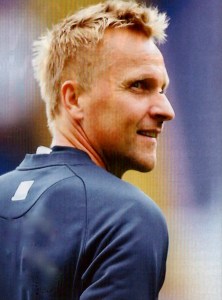
‘I’VE STARTED so I’ll Finnish’ could have summed up Antti Niemi’s season coaching Brighton’s goalkeepers.

Even though the fellow countryman who appointed the former Southampton and Fulham ‘keeper left in ignominy less than halfway through the 2014-15 season, Niemi stuck it out to the end before returning to his native Finland.

Niemi joined Albion in the summer of 2014 as part of the new backroom team put together by former Liverpool and Finland international Sami Hyypia.

“This wasn’t planned and, when Sami called me, I was working in Finland for a few years with two different clubs on a part-time basis,” he told the matchday programme. “It was a surprise.”

Seeing it as a “great opportunity” he added: “I thought about it for a couple of days, but it was not a difficult decision to make in the end. I’m obviously already familiar with the south coast.

Niemi enjoyed Albion coaching environment

“If you look at the surroundings at the training ground and the stadium, it’s a fantastic place to work each day. I seriously love the job.”

At Brighton, Niemi was responsible for the form of newly-arrived David Stockdale, emerging youngster Christian Walton and back-up ‘keeper Casper Ankergren.

Stockdale admitted it was the presence of Niemi — a former team-mate at Craven Cottage — as goalkeeping coach that was a big reason in his making the move to Sussex (as well as a chat with Bobby Zamora).

“Antti looked after me at Fulham when I first went in as a young keeper,” he said. “I know what he is about, what his training is like and what kind of person he is.”

Niemi was also the reason fellow countryman and Finland international Niki Mäenpää joined the Seagulls, although their paths ultimately didn’t cross on the training ground in Sussex because Niemi decided to return home for family reasons.

Mäenpää had been coached by Niemi back in Finland and he was first linked with the Albion when Hyypia was appointed. Although a move from Dutch second division club VVV-Venlo didn’t go through then, it eventually happened in the summer of 2015.

“Seeing as his contract is ending, he is looking forward to a new adventure and Antti has explained to him about Brighton and everything,” the player’s agent, Richinel Bryson, told The Argus.

Born on 31 May 1972 in Oulu, the northern Finnish city where there is no darkness during summer nights, Niemi remembered going to school when the temperature was 42°C one winter.

He completed compulsory military service in his homeland, explaining in a 2003 interview with The Guardian that he found life tough for much of his 11 months at a sports military school.

“I didn’t realise this at the time but, if I wasn’t in football, I would probably be in the army,” he told reporter Joe Brodkin. “I’m very patriotic. It was fun and it’s something I would have considered, although I’m too old now.

“In some ways it’s similar to what we have in the dressing room: being together and having fun, giving stick and taking stick. In the army it was a similar situation. We had something like 20 footballers in there and it was fun. Not at the time but looking back.”

Niemi began his football journey with local side Oulun Luistinseura before moving on to Rauman Pallo and then to the country’s biggest club, HJK Helsinki, where he eventually became first choice ‘keeper and made 101 appearances over four years.

He then swapped from Finland’s capital to Denmark’s fortuitously because the Finland FA president at the time had played in Denmark as a goalkeeper and FC Copenhagen asked him for a name.

“He mentioned me and everything happened in two days,” Niemi recalled in an interview with fulhamfc.com. “I was inconsistent in my first six months in Denmark but did well in my first full season.

“I learned that Rangers had sent a scout to watch someone on the pitch when we played in a league cup semi-final; it was one of those games where I just saved everything and we won. That 90 minutes made them choose to sign me, so it was all about luck really.”

That was luck he would come to rue, subsequently, though, because he had actually agreed to sign for Gordon Strachan at then Premier League Coventry City. Rangers stepped in at the last minute to clinch his signature in 1997 but it was a period of his career that would prove to be frustrating.

Andy Goram was first choice ‘keeper and Theo Snelders was also ahead of him.

He did win the Scottish League Cup (beating St Johnstone 2-1 in 1998) but he only played in one Old Firm game and that ended in a 5-1 defeat, so he didn’t have happy memories of his time at Ibrox where Walter Smith’s successor, Dick Advocaat, was unconvinced of the Finn’s ability under pressure and suggested he needed to move on to prove himself.

Highly regarded at Heart of Midlothian

He switched from Glasgow to Edinburgh to join Hearts for £350,000 in December 1999, manager Jim Jefferies telling The Herald: “Niemi is a fine keeper and is very highly regarded by everyone.”

Niemi reflected: “They were the third best team in the country behind Celtic and Rangers, but I said to myself that sometimes you have to take a step backwards to go forward.

“That was maybe the best decision that I ever made; it felt a bit of a downgrade at the time, but I wasn’t playing and I knew it would be good for me in the long run.”

In two-and-a-half years at Hearts, he became first choice and made a name for himself as a penalty stopper.

The keeper said of himself in a 2021 interview with the Edinburgh Evening News: “The biggest strength I had in my game was quick hands and quick reactions.”

Looking back on his 106 appearances for the Jam Tarts, he revealed: “Hearts have always been THE club for me.”

In an interview with CoffeeFriend.co.uk, he said: “Don’t get me wrong. I was very lucky to play in the English Premier League with Southampton and Fulham but there was something romantic about the place.

“I went there from Rangers where I was second or third keeper and suddenly got the chance to be No.1 and be a big part of the team.

“We finished third, had some European football, memorable derbies. I hope it doesn’t sound cocky but I really can’t remember too many games I let the team down.

“I loved my time there and it’s definitely one of those places I miss now and then.”

Saint Antti

It was Strachan who persuaded Niemi, by then 30, to try his luck in the Premier League at Southampton.

“My decision to move was purely on a football basis,” he said. “I hardly get any more money than I did in Scotland. I was there for five years and for two and half years I was playing regularly. Sometimes I felt I was playing against the same teams and the same players the whole time.”

Saints paid a fee of £2m to secure his services and he made his debut against Charlton Athletic, where he had spent a month on loan before his move to Hearts.

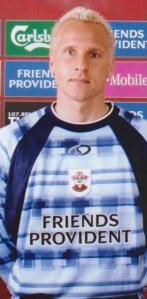
Strachan quickly installed Niemi as his preferred ‘keeper over Paul Jones and at the end of his first season with the Saints he appeared in the FA Cup final against Arsenal at the Millennium Stadium, Cardiff – a game which I watched with my friend Andrew Setten, sitting in front of Geoff Hurst in the best seats in the house!

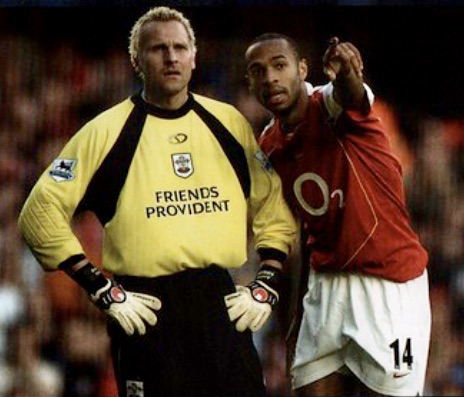
Arsenal’s Thierry Henry points things out to Niemi

With Arsenal retaining a 1-0 first half lead, Niemi unfortunately tore a calf muscle midway through the second half and, when replaced by Jones, became the first goalkeeper to be substituted in a FA Cup final.

In spite of losing to that solitary goal, Niemi didn’t want to miss the lap of appreciation and took a ride on a team-mate’s shoulders as they trooped around the stadium.

A series of injuries and a couple of operations limited him to 28 Premier League games in each of the next two seasons but in the opinion of goalkeeping coach David Coles (who once played on loan for Brighton), he was among the world’s top five ’keepers and he was the Saints player of the year in 2003-04.

“The Premiership has been every bit as good as I expected and even more,” Niemi said in that Guardian interview. “Everywhere you go it’s a full stadium and the pitches are perfect. It’s a fantastic league.

“I was making some good saves in Scottish football but the spotlight in the Premiership is so much bigger. There are so many cameras and every single game and situation is highlighted, so it’s easier to shine.”

Niemi’s reputation was certainly enhanced after he kept 17 clean sheets in his first two top flight seasons under Strachan at St Mary’s.

But he was also part of the Southampton side that was relegated in 2005, bringing to an end 27 years in English football’s top tier.

“The longer the season went on, the worse the results got and the more it started to affect the dressing room,” he told hampshirelive. “But overall, I can only look into the mirror and blame myself.

“My first two seasons at Saints were great, but during the third one, I just couldn’t get up to that standard any more. It was average at best.”

Niemi saw influential team-mates leave without being properly replaced and he said: “I remember looking around myself at the beginning of the campaign and thinking ‘things here aren’t as well as they should be’. The team had weakened and the contrast was huge.”

After the relegation, Niemi said: “I felt ashamed, simple as. It just felt embarrassing as hell.”

He stayed half a season after Saints playing in the Championship but returned to the Premier League in January 2006 when he moved to Fulham under Chris Coleman.

“Living in London was a big attraction.,” he told fulhamfc.com. “My wife was delighted to get a chance to move to West London and, as I’d played against them many times, I knew that it was a nice club too.”

Niemi switched to Craven Cottage in January 2006

A hamstring injury limited him to nine appearances in those first few months at Craven Cottage but he established himself as first choice the following season and went on to make 63 appearances before a wrist injury led to him calling it a day at the start of the 2008-09 season.

However, at the age of 37, he was persuaded to come out of retirement and followed his former Saints coach Coles to south coast rivals Portsmouth as back-up to first choice David James.

He left Pompey in March 2010 having earned around £450,000 over the course of eight months without having made an appearance, the Daily Mirror reported.

The newspaper said the Finn earned £14,000 a week during his time at Fratton Park and played just twice for the reserves and spent one Premier League match on the subs’ bench.

Having won 67 caps playing in goal for Finland, Niemi became his country’s goalkeeping coach from 2010 as well as working with the Finnish FA in developing the quality of goalkeeper coaching in the country. Alongside those responsibilities, he slotted in club goalkeeper coaching in various locations – including back at his old club HJK Helsinki, at another Finnish side, FC Honka, and the season at Brighton.

Joaquin Gómez, a coach he first met during that season with the Albion, subsequently called on his services at Finnish side HIFK in 2021.

Gómez, originally an academy coach with the Seagulls, stayed on as part of the first team management set-up having worked under Hyypia’s successor, Oscar Garcia., but then left to become head of tactical analysis at Derby County before teaming up with Nathan Jones at Luton Town, and then Stoke City.

In May 2019, on Niemi’s recommendation, he also started coaching Finland’s under 21 team. After leaving Stoke, he was assistant manager at Spanish Second Division side FC Cartagena, assistant coach at Finland’s SJK Seinäjoki and spent a season at Al-Qadsiah in Saudi Arabia.

On persuading Niemi to join him at HIFK, Gómez said: “He’s an outstanding goalkeeping coach and will now also assist me in other areas.

“Antti is the best Finnish goalkeeper of all time, and he has done great work in coaching after his retirement from playing. At HIFK he’ll have a more versatile role than previously, as he’ll be working more with outfield players as well.”

In the summer of 2024, Gómez persuaded Niemi to join him at Greek Super League club Volos and the Finn spoke to Tribalfootball.com about those days spent in Lancing.

“I have seen a lot of passionate people in my lifetime in football but this guy is something else; he has dedicated his life to football. 

“He moved from Spain (to England) without knowing any English, he just wanted to work in English football. He was working as a waiter, he was cleaning the toilets at Brighton, he was coaching kids and eventually somebody saw that this guy is really passionate and he can coach so he got in the first team.”

Niemi continued: “He called me in the summer, he said I had a few days to decide. He is very temperamental; he is very passionate and I am the boring, steady guy who always tells him to calm down! You need that sort of personality; you don’t need a similar sort of personality as you need to balance each other out 

“He offered me the job to be the assistant manager which is different as I have always been a goalkeeping coach and I still am with the Finnish national team but I took it as a challenge, as an adventure. It is going to be a learning curve for me and I am really enjoying it so far.” 

Unfortunately, Gómez was sacked after only five league matches and his next appointment, in January 2025, was as the new coach of Indonesian Liga 1 club Borneo Samarinda.