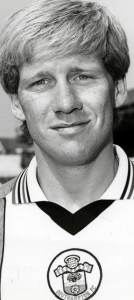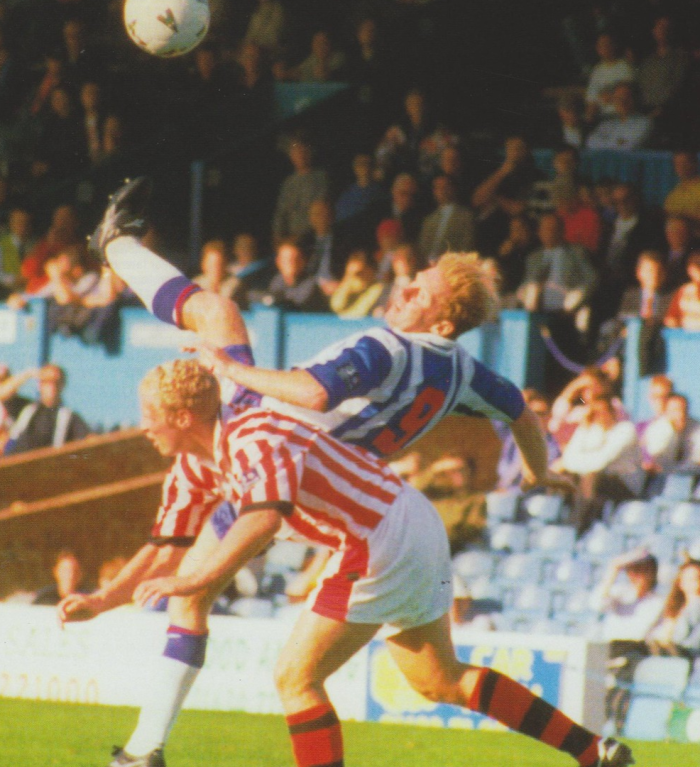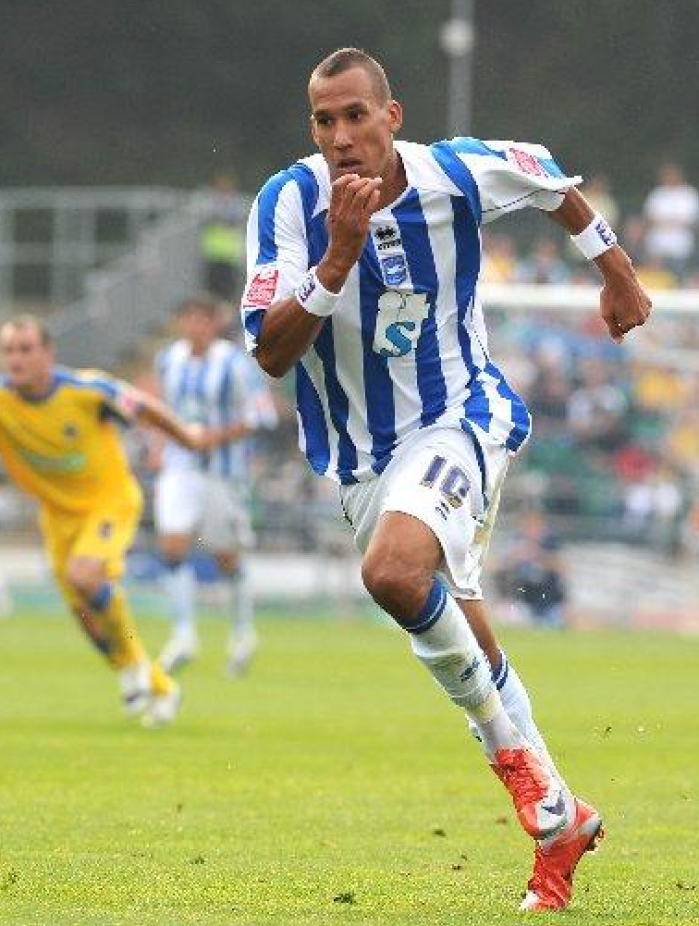
Wembley hero Liam Dickinson’s nomadic football journey

HE’D SCORED a decisive play-off final goal at Wembley for Stockport County but a subsequent £750,000 move to Derby County didn’t work out for Liam Dickinson and Brighton signed him for £300,000 only a year after the Rams had shelled out that big money.

Dickinson didn’t even get a game for the Rams, instead being sent out on loan to Huddersfield Town, Blackpool (where he’d begun his career in their school of excellence) and Leeds United.  He was a player who didn’t stay in the same place for long; in total he featured for 23 different clubs.

Like many before and since, changes of manager were often the cause of him moving on. At Derby, for instance, he was signed by Paul Jewell, recalled from his loan at Blackpool by caretaker manager Chris Hutchings and eventually let go by Nigel Clough.

It had been intended he’d join Leeds in January 2009 but the necessary paperwork didn’t arrive until 14 minutes after the deadline! Further discussions led to a revised deal, but the move was called off because he was injured. He eventually joined up with United in the second week of March and although he scored in a behind-closed-doors friendly against Sheffield United (1-1), he didn’t get on the scoresheet in eight League One games (four starts, four as a sub) under Simon Grayson.

His first start was in a 3-2 win at Crewe and he managed three successive starts, in a 2-2 draw at Leyton Orient, a 1-0 win over old club Stockport and a 1-0 defeat at Leicester but he was not involved in the end-of-season play-offs when Leeds (with Casper Ankergren in goal) lost out to Millwall in the semi-finals.

An enclave of former Stockport teammates – James Tunnicliffe, Jim McNulty, Gary Dicker and Craig Davies – helped Dickinson to choose Brighton as his next club

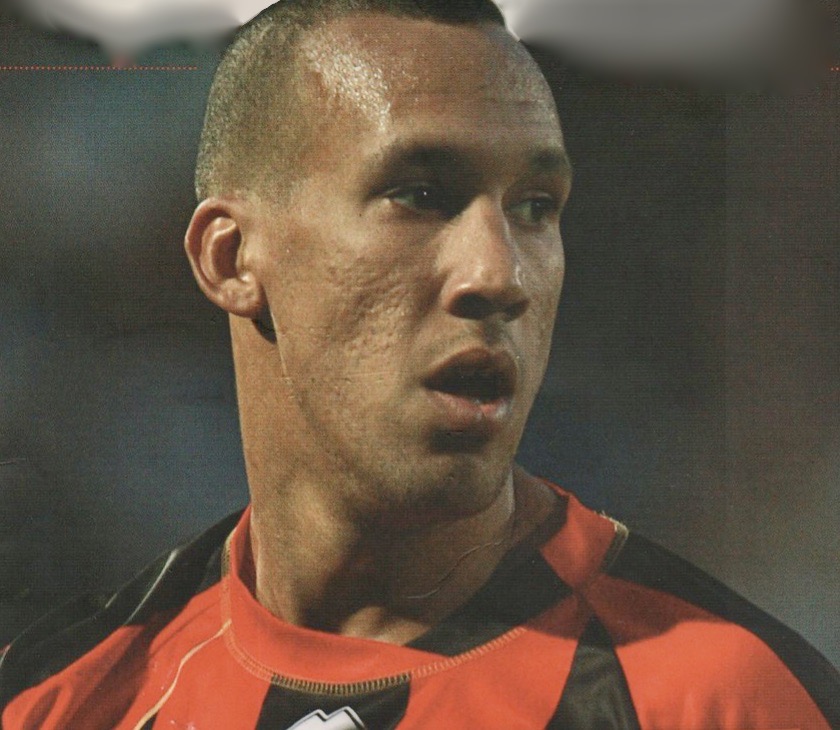
After Brighton boss Russell Slade welcomed the 6’4” forward to Withdean on a three-year contract, he told the club website: “He brings something different to the table. His goalscoring record is very good and he has a good goals-per-game ratio, and like one or two of the other signings I have made this summer, he is hungry to get his career back on track. I’m sure there is a lot more to come from him.”

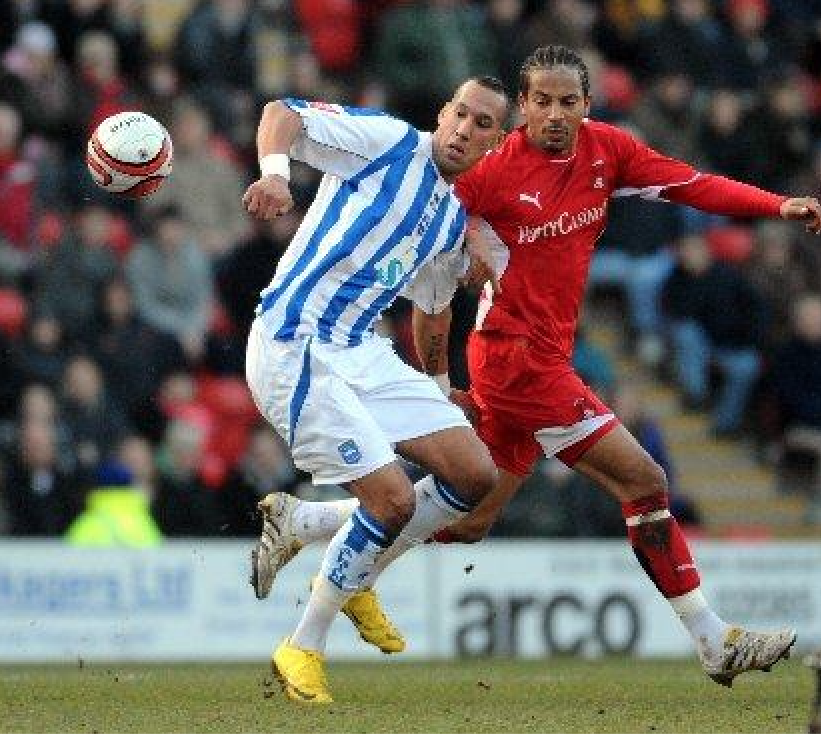
He scored in his third and fourth games for the Albion, but both came in defeats against former clubs: the first in a 7-1 capitulation to Huddersfield and the next in a 4-2 defeat to Stockport.

He was on the scoresheet in the home 3-3 draw against Hartlepool (Nicky Forster scored Albion’s other two goals) that spelled the end of Slade’s tenure as manager. But it is what happened two days later that many will remember him for.

Unluckily for him, he was pictured carrying a seemingly comatosed young woman in his arms in the middle of Brighton at 1am. The Sun newspaper was covering a renowned student pub crawl ritual at the time and didn’t realise who they’d snapped.

Eagle-eyed Albion supporters did, though, and, after discussion about the incident on fans’ forum North Stand Chat, The Argus picked up the story, running an article headlined ‘Samaritan Brighton and Hove striker scores an own goal’.
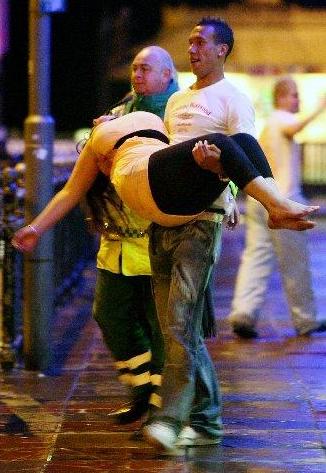
For his part, Dickinson told reporter Ben Parsons how he was on his way home after a meal out in the city when he helped a girl to a car waiting to pick her up.

He said it was simply a coincidence that he was helping the girl when the photos were taken, adding: “I saw two girls holding another girl up. She collapsed in front of us. Her mum or her auntie picked her up in a car. I picked the girl up and put her in the car.

“I didn’t want to just leave her. Anybody else would have done the same thing.”

Albion said they would deal with the matter internally. Dickinson was omitted from the squad for the following game, a 4-4 FA Cup draw with Wycombe Wanderers with caretaker manager Martin Hinshelwood in charge, but he was back in the fold for Gus Poyet’s first game as Slade’s replacement.

In the televised away game at Southampton, he went on as a sub for Forster in Albion’s 3-1 win at St Mary’s. Dan Harding, Dean Hammond and Adam Lallana were in the Saints side.

Dickinson got occasional starts under Poyet but more often than not was sent on as a sub to replace either Glenn Murray or Forster.

Given a start in the FA Cup second round win over Rushden and Diamonds, he scored twice, in the third and 86th minutes, as Albion edged the tie 3-2. He was preferred to Murray in a Boxing Day clash with Leyton Orient that finished goalless but, perhaps to prove a point, two days later the restored Murray hit four at Wycombe in a 5-2 Seagulls win.

Dickinson was back on familiar territory at Edgeley Park in January 2010, but only got a half an hour run-out as a sub against his old club (replacing another former County man in Dicker) as the game finished 1-1, Andrew Crofts salvaging a point with a 90th minute equaliser.

In a 1-1 draw at Leyton Orient, Dickinson started the game and, when he was denied a penalty, incandescent Poyet was sent from the dug-out for protesting.

“If you ask anyone, they will tell you it was a penalty and a red card,” Poyet maintained afterwards. “The referee is 10 yards away and he doesn’t give it. You’ve got a chance to score a penalty and it’s 2-0. It’s a different game.”

Dickinson took to the field against another of his former clubs in Huddersfield wearing distinctive ‘banana yellow’ boots. “I don’t like dull, boring colours. I like to brighten the pitch up a bit. I’ve had a bit of stick off the lads,” he told The Argus.

The striker, who’d scored six goals in 13 games for the Terriers while on loan, didn’t manage to get on the scoresheet and was replaced by Murray as the game petered out to a 0-0 draw.

At that stage, Dickinson was deputising for Forster who was out of favour with Poyet over a contract dispute.

As the Uruguayan began to bring in his own selections, such as on-loan Kazenga LuaLua, Dickinson chose to go on loan to Championship strugglers Peterborough United, who were managed by his former Stockport boss Jim Gannon. Dickinson scored three in nine games for Posh. On his return to Brighton, he was sold to Barnsley, who were in the Championship at the time, for reportedly half the fee paid out for him just a year earlier.

Tykes boss Mark Robins declared: “He is different to the strikers we have here already and will give us something else up front.

“He is only 24 and still has room for improvement. He has a decent scoring record both in the Championship and in the lower leagues.

“Liam fits in to what we are trying to do here both in terms of on the pitch and within our budget.”

But he made just one start, in a League Cup match, and three sub appearances in the league for Barnsley when his old Derby caretaker manager, Hutchings, took him on loan to Walsall. He didn’t find the net in seven League One games.

Next stop, from January to the end of the season, was Rochdale, the side against which he had scored that 2008 League Two play-off final winner.

But a goalless run of 14 games (seven starts and seven off the bench) prompted this comment from AtThePeake on fansnetwork.co.uk in 2021: “In terms of expectation versus reality, few signings can have disappointed Rochdale fans quite like the loan signing of Liam Dickinson in January 2011.”

The supporter wrote: “Dale were looking for someone to become the fulcrum of an attack that included Chris O’Grady drifting in from the left and the emerging Matt Done playing as a second striker.

“Having seen first-hand the threat Dickinson could be with his aerial prowess, strength and touch in front of goal, Dale fans were reasonably excited that the answer to their striker problem had been found, but it quickly became apparent that the struggles with Derby and Barnsley had affected Dickinson’s confidence.

“During his spell, Dickinson was all too easy to defend against, struggled to hold the ball up and lacked any cutting edge when it came to finishing the chances he did manage to fashion for himself.”

A projected move to Plymouth Argyle was called off after just eight days, with personal reasons being cited, but the nomadic striker’s next stop was League Two Southend United under Paul Sturrock, where he netted 12 goals in 37 matches (33 starts plus four as a sub).

Dickinson scored a dozen times for Southend United

Not for the first time, he found himself in the headlines for the wrong reason when he and two others were reprimanded for a breach of club discipline over an unspecified incident at a hotel the evening before a match at Morecambe.

A broken ankle brought a premature end to his season with the Shrimpers, and it proved problematic in trying to continue his league career elsewhere.

He trained with Port Vale but even his agent Phil Sproson was quoted as saying: “Liam will admit he has been no choirboy in the past.

“He has had quite a few clubs and that’s probably because he has been no angel.

“He is loud and vocal and has had too many nights out over the years – but he has matured.

“He realises he will have to change and toe the line because he has a darker side that has dragged him down in the past.”

As it turned out, he was eventually out for a year because his broken ankle didn’t heal properly. He played two pre-season friendlies for Vale in 2013 but manager Micky Adams didn’t take him on because of ongoing problems with the ankle.

Born in Salford on 4 October 1985, Dickinson was originally a centre-half when he was on the youth books of Blackpool, Bolton and Blackburn. He stepped away from professional football at 16 and studied to be a graphic artist but continued to play in non-league sides. He appeared for Irlam, Swinton, Trafford and Woodley Sports before he was taken on as a pro by Stockport in 2005 after a successful trial.

He scored on his County debut, only five minutes after going on as a 71st-minute sub against Cheltenham Town at Edgeley Park. In three years under Jim Gannon, he hit 33 goals in 94 appearances.

The 2007-08 season was his most prolific term as a league player, netting 21 times from 32 starts and six games from the bench. It also earned him Stockport’s Player of the Year award.

It was to Stockport, then in the Conference North league, that he returned in 2013, but he only managed one goal in 13 games before returning to the non-league arena.

Between 2014 and 2019, he turned out for Stalybridge Celtic, Guiseley, Bradford Park Avenue, FC United of Manchester and finally Droylsden before calling it a day.

In an online chat with Stockport County Live towards the end of the Covid lockdown, in August 2020, Dickinson opened up about his mental health, admitting he’d been through a period when he was suffering with depression.

Post playing, he told his interviewer, he was working installing signage for a print company.

Welbeck – “something really exceptional you don’t find in many players”

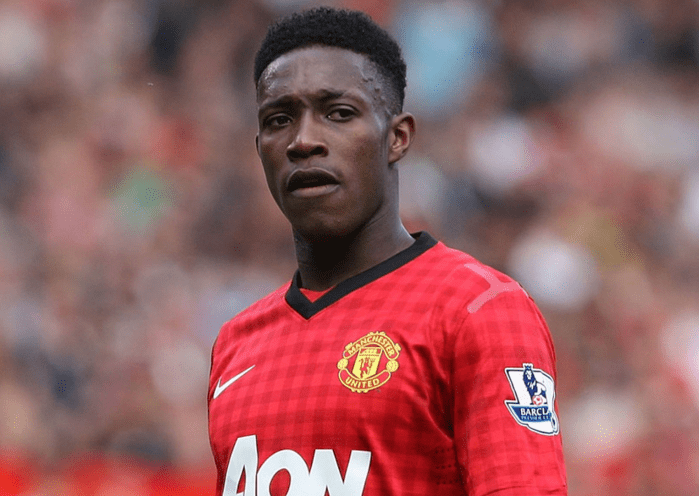
DANNY WELBECK was still at school when he made his senior football debut in the League Cup.

A first-year scholar at Man Utd, and just 17 in September 2008, Welbeck made his bow against Middlesbrough in front of a 53,000 crowd at Old Trafford. United won 3-1 with goals from Ronaldo, Giggs and Nani. And they went all the way that season, beating Tottenham on penalties in the final at Wembley.

Although Welbeck had been subbed off 10 minutes into the second half, it was the first of many medals he collected and in five years at Arsenal, after his £16m 2014 transfer deadline day move from Old Trafford, he twice collected FA Cup winners’ medals (even though he missed the 2015 final through injury when Aston Villa were humbled 4-0).

When Welbeck scored the decisive quarter-final goal for Arsenal that knocked United out of the 2015 competition, manager Arsene Wenger praised the player and said: “We all want to do well when we play against our former club, to show that you are a great player, but it’s not easy to deal with the mental situation of it. 

“He focused just on his game, didn’t do anything special. He just played football like we wanted him to play. He has shown mental strength because it’s not always easy to deal with that. You have a little bit of a psychological consideration.”

Wenger continued: “Overall, I think he had a great game. He just wants to win. He’s a team player, that’s what I like about Danny. He’s intelligent and he always wants to do well for the team. 

“He’s a great talent and he has shown again that he can produce such a complete performance, defensively and offensively as he did today – he has a great future.”

Welbeck played in the 2017 final when the Gunners edged it 2-1 against favourites Chelsea, and it was a highlight of his injury-plagued five years at Arsenal.

“It was a great performance,” he said. “Every single one of us on the pitch performed really well that day. It was a deserved win.”

Welbeck scoring one of his three against Galatasary

Another highlight was scoring the first senior hat-trick of his career in a 4-1 Champions League home win over Galatasary in October 2014.

Injuries to each of his knees and a serious broken right ankle severely limited Welbeck’s availability during his time with the Gunners and he admitted in a matchday programme interview: “When I look back, the injuries I suffered really hindered my progress.

“That really disappoints me to this day because I know that if I had managed to stay fit I would have done a lot more at the club, scored more goals and made more appearances.”

Even so, he pointed out: “I look back on my time at Arsenal as a great experience; a great club. There were lots of positives, despite the negatives with the injuries.

“The fans always treated me well, showed me love, and I will always respect and remember that.”

Welbeck opened up about the impact of his many injuries in a July 2020 interview with Adam Bate of Sky Sports. “You go through a load of emotions,” he said. “There are times when you are there sat in your hospital bed and you are crying. You are just overthinking things.”

He continued: “Once you have had the surgery and your head is straight, you know what has happened, it is behind you and you have got to look forward. You try to build from where you are that day. Every single day there are steps to overcome. You just have to come through them and you find that you are getting better and better and feeling in a better state of mind.”

He also explained how the time wasn’t entirely wasted. “There are football games on TV, you can watch different players who are playing in your position, you can watch your own clips to see what you can improve on,” he explained.

“There are little apps that can help you, people who you can talk to. I think there are so many extra percentages you can gain and if you can get that extra one per cent it is always going to be a help.”

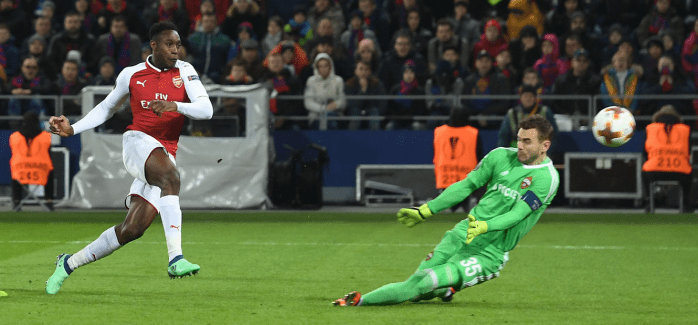
Welbeck buries one of his 32 goals for Arsenal

Wenger was certainly an admirer of what Welbeck was able to contribute. For example, speaking in February 2018 ahead of a shock 2-1 Europa League second leg home defeat against Graham Potter’s Ostersunds, Wenger said: “I want to keep him because I believe he has gone through a torrid time.

“He has come out well. I see signs in training now that are positive. If he can stay on the pitch and not be injured, I want him to stay here.”

And after the striker scored his fifth goal in five appearances to clinch a Europa League quarter final v CSKA Moscow, he said: “The qualities of Danny Welbeck… when your back’s against the wall, he looks like he has that extra special motivation in his body and in his head, that can give you something special.

“That’s something really exceptional and that you do not find in many players.”

Welbeck made 126 appearances for the Gunners (78 starts + 48 as sub) and scored 32 goals. As he had at United, he once again found himself at a club when there was an end of an era moment as Wenger left the Gunners after 22 years in 2018.

A badly-broken right ankle sustained in a Europa League match against Sporting Lisbon in November 2018 proved to be the end of his Arsenal career – he only made one Premier League start (out of seven appearances in total, plus seven off the bench) under Wenger’s successor Unai Emery.

Released at the end of that season, he joined Watford, who train next to Arsenal’s training ground in Hertfordshire, but injury struck early into his time with the Hornets, a hamstring problem putting him out for four months. After they’d got through four managers in the Covid-hit season, and been relegated from the Premier League, he left in October 2020 having scored three goals in 20 appearances (10 starts + 10 as a sub).

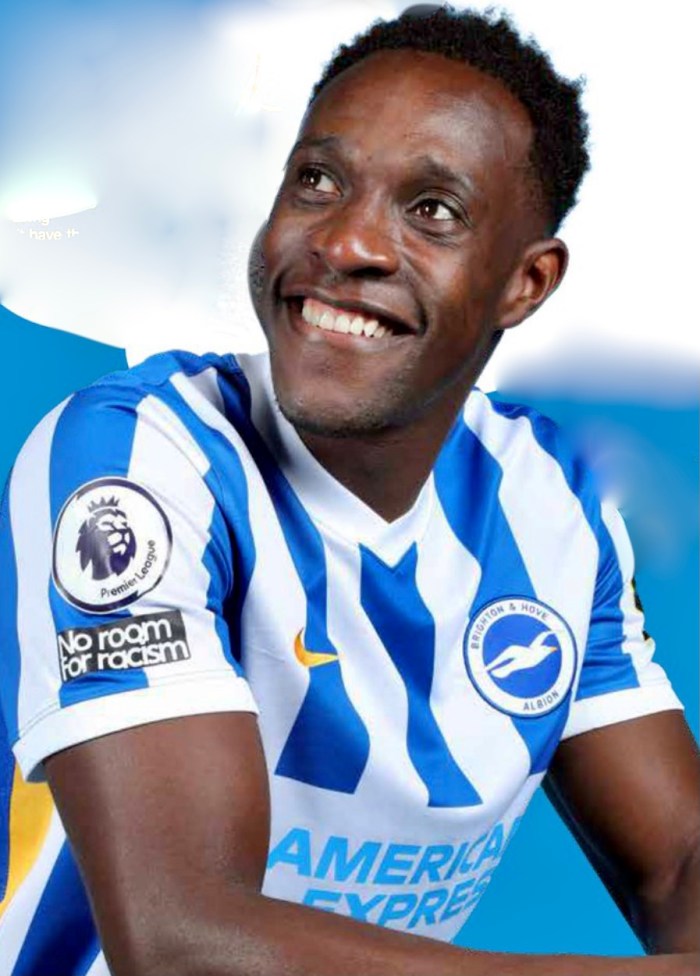
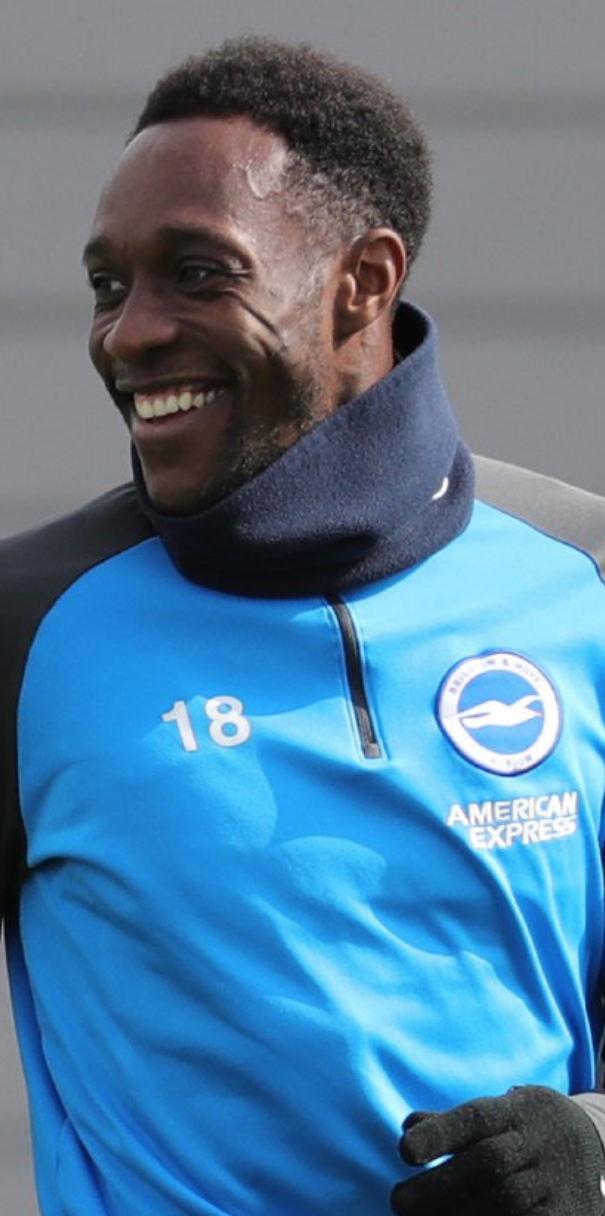
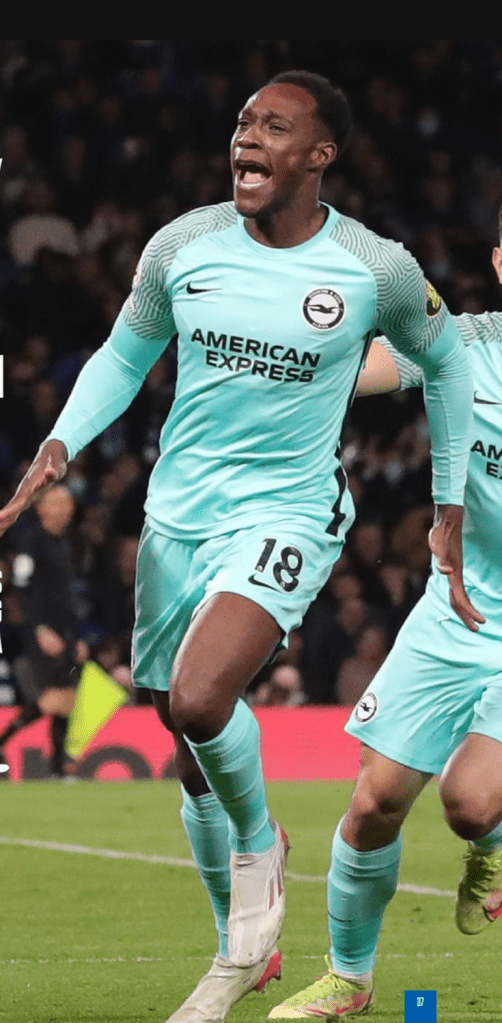
When Welbeck linked up with Brighton that autumn, few supporters would have imagined five years later he would still be making a huge contribution to the club.

There were a few murmurings at the beginning of the 2025-26 season but a brace in Albion’s comeback 3-1 win at Chelsea in September once again saw him grabbing headlines for all the right reasons. Two more followed at home to Newcastle and he once again scored against his first club at Old Trafford on 25 October. And long may it continue!

Speaking to The Athletic in February 2025, Welbeck said of his longevity: “I can probably thank my mum and dad for the genes. I work hard to keep myself in good condition and I am feeling fit and strong.”

Reporter Andy Naylor said: “He does not have a strict diet regime but watches what he eats, snacking on fruits or an occasional bar of chocolate between a normal three meals a day. His idea of a takeaway is a mixed grill with rice and salad.

“Another secret of Welbeck’s long-running success is a desire and determination to be the best he can be for as long as he can. He focuses on his football, turning down invites to take part in podcasts and punditry, preserving his energy for the training pitch and matchdays.”

After four seasons at Brighton in each of which he scored six or seven goals, in 2024-25 his 11 goals made him joint top scorer with Karou Mitoma from 26 starts + 10 as sub.

With five on the board before Halloween in 2025-26, the signs are looking positive for his best-ever haul.

Welbeck himself declared: “As long as I feel good, that’s how long I will go on for. If I feel good, feel like I can impact games, then I will just keep on going.”

Dat guy Danny Welbeck “a top player and a top person”

INJURY has undoubtedly caused Danny Welbeck to miss more games of football than he would have wished but the game is full of admirers for the longevity of his career.

As Gabby Logan said on Match of the Day, like a good wine, Welbeck seems to be getting better with age. He has scored more Premier League goals per game in his thirties than he did in his twenties or teens.

His 10 Premier League goals for Brighton last season was his best goalscoring campaign in the top flight and in the autumn of 2025 he has already scored two goals apiece against Newcastle and Chelsea, opponents competing in the Champions League.

“I have the passion and love for football,” he told Match of the Day after scoring the pair against Newcastle. “It’s what I want to do. I feel good. I feel strong and fit so I won’t be stopping soon.”

And as BBC Sport reporter Ciaran Kelly pointed out, Welbeck has the knack of scoring crucial goals for the Seagulls: 11 of his last 12 Premier League goals for Brighton have either put the side ahead (eight) or drawn the game level (three).

Welbeck has now played more matches for Brighton than Manchester United, the club he joined aged eight and where he spent 15 years, rising from the club’s academy, making his way through the junior sides and going on to play 142 first team games (90 starts + 52 as sub) between 2008 and 2014.

The 29 goals he scored along the way played a big part in him earning selection for the England national team for whom he collected 42 caps between 2011 and 2018 having also won 42 caps across the various junior England levels. Welbeck netted 16 times for the full England side.

That there have been calls in certain spheres for United to try to take him back to Old Trafford as he approaches his 35th birthday are a mark of the man and the quality he still exudes.

Striker-turned-pundit Tony Cascarino even urged Thomas Tuchel to recall him for England as back-up for Harry Kane. He told talkSPORT: “Welbeck contributes in various ways beyond scoring. His goal tally isn’t huge, but it’s a decent level and, above all, he is an excellent team player.

“I’ve never seen anyone speak ill of his attitude or professionalism. He is truly an exemplary veteran,”

Cascarino added: “Poland still uses superstars like Robert Lewandowski. If a team needs a veteran, I think there’s absolutely no problem calling Welbeck back,”

Graham Potter was in charge when Welbeck arrived at the Albion in October 2020 on a free transfer, signing a one-year contract.

Welbeck scores for Albion at Old Trafford

Potter moved on but in October 2024 he couldn’t speak highly enough of what the player had brought to the Seagulls, in particular as an influence on others.

“Somebody like Danny is a role model. He can teach you how to act, how to be, how to condition yourself and how to interact with your team-mates at the highest level,” said Potter, speaking on BBC Sounds’ Planet Premier League podcast.

“He is a top player and a top person. Credit to the club – they didn’t just recognise that it is about signing young players, it is also about understanding what older players can do for the environment and for the collective.

“To have someone [in your squad] that has been there and done it, and can just handle it well, I think is priceless as a coach.

“If you see what Danny has had to go through, I think he is also a resilient character. He is a good human being, so he doesn’t get carried away too much with the nonsense of football.”

Potter’s successor Roberto De Zerbi was equally effusive. “Great player, great guy,” said the Italian. Speaking in April 2024, when his own Albion future was in doubt, he said of Welbeck: “We have to keep him for a lot of years. He is playing very well and he is important for the young players, for the dressing room.”

A couple of months earlier in the season, De Zerbi’s assistant, Andrea Maldera, told Andy Naylor of The Athletic: “Danny is one of the best teachers on the pitch.

“He is always positive and he is not only a teacher on the pitch. He can speak with a young player when he is eating with them or when he is on the bus.

“He always gives a lot of advice to everybody. He is a big teacher, he has the soul of a teacher. I don’t know what he wants to do in the future in his life, but he is always very clear-minded. On the pitch, it is the same. He doesn’t speak a lot, but he’ll go close to the players, sometimes work a little with them on the training ground.”

Welbeck himself appreciated the influences of more experienced players in his own early days and told BBC Sport’s Simon Stone: “At Manchester United there were lots of players to guide me and give me advice. It meant a lot back then hearing that sort of stuff, listening to people who had been through certain situations and different experiences, who have a lot of knowledge in the game.

“I am always happy to help with the other players. It is pretty easy for them to come and talk to me. It’s nice to pass on a bit of knowledge and experience.”

Born in the Longsight suburb of Manchester on 26 November 1990, Welbeck’s first games of football were played with his older brothers Wayne and Chris when he was just four or five.

Wes Brown, who was already on United’s books, and his brothers lived nearby and the young Welbeck was inspired to follow in Brown’s footsteps.

He actually had a trial for City when he was eight but they didn’t have an age group side for him. It was while he was playing for local side Fletcher Moss Rangers that United seized the opportunity to offer him a two-week trial, and he didn’t look back.

After progressing though the academy schoolboy squads, he made his debut for the youth team in December 2006, debuted for the reserves the following October and was United Young Player of the Year for the 2007-08 season, going on to sign as a professional in July 2008.

On the ball for United

Three months later, Sir Alex Ferguson gave him his first team debut, starting up front alongside Cristiano Ronaldo at home to Middlesbrough in the third round of the League Cup, when United won 3-1.

In November, he went on as a substitute to make his Premier League debut and scored United’s fourth goal in a 5-0 thumping of Stoke City, unleashing a swerving shot from 30 yards.

Welbeck was winning his first significant medal before that season was over after he had started for United in the League Cup final, when they beat Tottenham on penalties at Wembley (although Welbeck had been subbed off 10 minutes into the second half, the BBC match report noting “youngster Welbeck was having a tough time making an impact in the face of the physical presence of Dawson and King”).

He scored twice in eight matches on loan to Preston North End in 2010 and then spent the 2010-11 season on loan to Sunderland, scoring six in 28 matches (23 starts plus five as sub) for ex-United skipper Steve Bruce’s Premier League side.

“He has always had ability but made slow progress because he had a bit of a knee growth problem, so we knew we had to wait for him,” said Ferguson in August 2011. “We put him on loan to Sunderland last season and that is when he became a man. He has grown up.”

Dat Guy (Mancunian slang for The Man), the nickname given to him by former United teammate Ravel Morrison, was part of the 2012-13 Premier League title-winning squad (23 starts plus 17 as sub) which turned out to be Ferguson’s last in the hotseat.

He scored 10 in 24 starts plus 12 as sub under David Moyes, but Dutchman Louis van Gaal preferred to bring in Colombian striker Radamel Falcao and, after only three games at the start of the 2014-15 season, Welbeck was sold to Arsenal for £16m (Ferguson putting in a good word with Gunners boss Arsene Wenger).

Plenty of iconic United names, such as Rio Ferdinand, Paul Scholes and Bryan Robson, voiced their disapproval of the decision and former coach Rene Meulensteen was adamant Ferguson wouldn’t have sold him if he’d still been in charge.

Meulensteen told talkSPORT: “We were always keen on bringing young players through and giving them a chance. I had him from when he was 8, 9 years of age and I think the best of Danny is yet to come.

“He is a very versatile player and I’m 100 per cent sure he will do very, very well for Arsenal. Danny is a perfect match for Arsenal. He is such a versatile player.

“He is very good in short, creative, combination play, showing for the ball, passing and moving, picking up different positions. At the same time, he has the pace and power to break away if they break from their own half.”

Robson said: “He came through the ranks, he has a great attitude, he’s a great lad.” And Wayne Rooney told The Mirror: “Danny’s great to play alongside. If I’m completely honest, I’d probably like to still see him here, playing for Manchester United.”

Saying United let him go too quickly, Gary Neville added: “He’s actually perfect for how Manchester United should play. Threatening space in behind, playing off front players. This idea that he’s not good enough for Manchester United is absolutely rubbish.”

In a January 2025 interview with the Manchester Evening News, Welbeck remembered: “At the time I was playing on the left-wing a lot and in a 4-4-2, which is very difficult for me because I can’t make an impact on the game.

“I can play it to the best of my ability but that’s not best for the team, and I could make a bigger impact playing in my preferred position.

Welbeck and Ashley Young at United

“You start to have thoughts but at that time you’re still going to training and I was still giving 100 per cent and giving my all in every single game – that’s just me, I’m not going to change that. But you do start to think about what’s best for you.”

Apart from anything else, Welbeck was an established member of the England set-up by then.

He had been on loan at Sunderland when he was first called up to the England senior squad (following the withdrawal of Aaron Lennon) only days after scoring for England Under-21s in a win over Denmark.

Ironically, the opponents at Wembley on 29 March 2011 were Ghana – the country his parents came from – and Fabio Capello sent him on in the 81st minute as a sub for Ashley Young. The game ended 1-1.

He ultimately featured under four different England managers (albeit Stuart Pearce only managed one game) with the majority (29) under Roy Hodgson. His final England game was as a sub for Trent Alexander-Arnold at the 2018 World Cup in a 1-0 defeat to Belgium.

When Welbeck suffered a badly broken night ankle in a Europa League match for Arsenal in November 2018, and was forced to withdraw from the England squad, Gareth Southgate revealed how the squad showed their strong bond with him by placing his photo on a TV they were watching ahead of a Nations League match.

And after he’d left Arsenal in the summer of 2019, but was still recovering from the ankle injury, the FA helped his comeback by allowing him to use all of the facilities he needed at the St George’s Park national centre.

Welbeck nets in the FA Cup against Newcastle

Another illustration of the enduring relationships Welbeck has built during his career came after he’d scored an extra-time winner for Brighton at St James’ Park in March 2025 to book an FA Cup quarter-final against Nottingham Forest.

Ferguson phoned the player after the game, and Welbeck told BBC Football Focus: “He talked about the goal and the performance. He was buzzing and to have that sort of connection, he is a manager who is always looking out for his players, always wants the best for them, and still to this day is in contact.”

At Arsenal, Welbeck played under another great manager and he told the programme: “Sir Alex Ferguson got success in his own way, Arsene Wenger had success in his way. There’s different ways to reach success. Those two managers played a huge part in my life, not just my career.”

• More about Welbeck’s time at Arsenal in my next blog post.

Toon scourge Ian Baird no stranger to red cards

A GOALSCORING scourge of Newcastle United once pulled on the famous black and white stripes – and was booked in three of the five games he played for them!

Baird, who notoriously got himself sent off in the crucial last ever game Brighton played at the Goldstone Ground, led the line in an infamously fiery New Year’s Day derby between Newcastle and Sunderland when the Toon won 3-1 courtesy of a hat-trick by Peter Beardsley.

Jeff Clarke, who’d previously spent seven years at Sunderland and had five games on loan at Brighton at the start of that season, was at the back for Newcastle and future Albion veteran Clive Walker was in attack for the visitors.

A crowd of 36,529 watched the First Division fixture on 1 January 1985 when Sunderland were reduced to nine men through the sendings off of Howard Gayle and Gary Bennett. Baird was one of five bookings made by ref David Scott.

It was Baird’s fourth match for Newcastle after England World Cup winner Jack Charlton signed him on loan from Southampton. He made his debut three days before Christmas 1984 in a 4-0 defeat away to Aston Villa when his former England Schoolboys strike partner Paul Rideout scored a hat-trick. Baird’s only goal for United came in a Boxing Day 2-1 defeat at West Brom.

Three days later, as United lost 3-1 at home to Arsenal, Baird’s involvement was from the bench as a sub for David McCreery. His last game, on 12 January, was another tonking, 4-0 away to champions-in-waiting Everton.

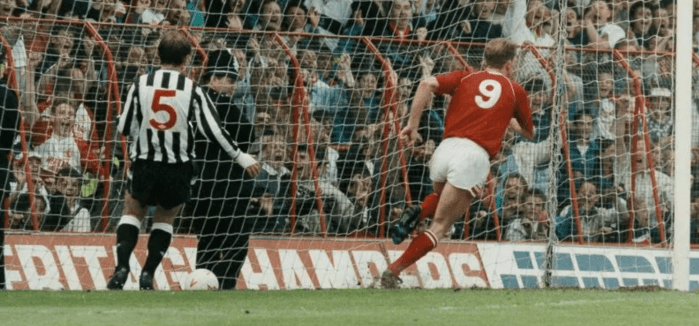
Five years after his Toon cameo, Baird twice stymied Newcastle’s hopes of promotion from the second tier, scoring against them for Leeds in a 1-0 win in December 1989 (it turned out to be his last goal for them) and, after he’d fallen out with manager Howard Wilkinson and been transferred to Middlesbrough in January 1990, netted twice for Boro as they beat Newcastle 4-1 in the last game of the season.

Baird nets for Boro against the Toon

Leeds finished that campaign as second tier champions (Newcastle, who by then had Mark McGhee up front, were five points behind in third place) and Baird’s goals in Boro’s win put paid to the Magpies’ hopes of automatic promotion. To add salt to the wound, Newcastle lost to Sunderland in the semi-final of the play-offs.

Six years later Baird was Brighton’s captain in the penultimate must-win game of the season, when Doncaster Rovers were the visitors.

Albion needed all three points to give themselves a chance of avoiding relegation out of the league when they travelled to Hereford the following week for the final fixture of that tumultuous season.

What they really didn’t need was for the captain to get himself sent off after just 18 minutes of the match!

Talking to The Athletic about it in a 2022 interview, Baird recalled: “I was fired up for it. Darren (Moore) had come right through me, literally in the first minute. The referee didn’t give anything.

“Then he came through me again, and the referee gave a foul. The third time, I lost it. I just turned around and tried to wallop him. There was a big melee. Everyone knew what was at stake.”

Both players were dismissed (it was one of 11 sendings off in Baird’s career) and thankfully Stuart Storer’s memorably-scrambled goal in the 67th minute settled the game in Albion’s favour, although Baird admitted: “It was nerve-racking. I felt guilty that I’d let my team-mates down, let everybody down by getting sent off. It was a massive relief when we won.”

Thankfully, disciplinary rules were different back then (bans were only applied 14 days after the offence) and Baird was able to play his part in the match at Hereford when a 1-1 draw ensured Albion stayed up and The Bulls went down.

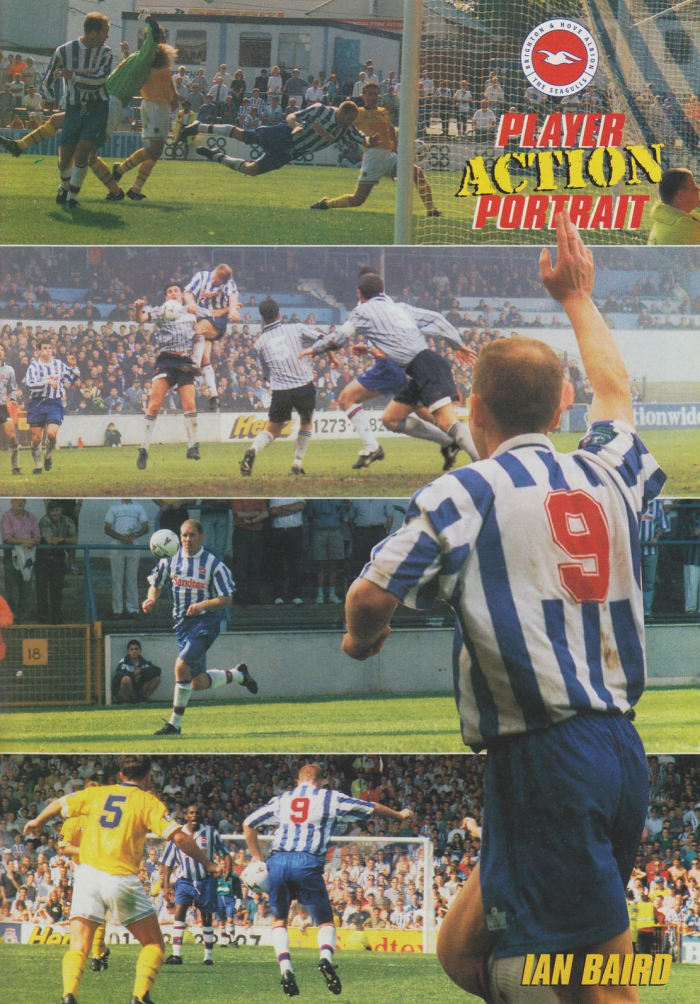
Baird’s exploits for the Albion highlighted in the matchday programme

Brighton were the tenth and last league club Baird had played for and he had only ended up with the Seagulls because of a pre-season falling out with Plymouth Argyle manager Neil Warnock.

Living near Southampton, only a 15-minute drive from Brighton manager Jimmy Case, a move east along the coast made good geographical sense, and a £35,000 fee took him to the Goldstone at the start of the 1996-97 season.

“Whenever I’d played against Brighton, I seemed to score,” Baird told The Athletic. “I loved the Goldstone Ground and there was the lure of playing for Jimmy.”

Although born in Rotherham on 1 April 1964, Baird had moved to Southampton with his family, via Glasgow, when he was a young lad, his father having sailed from the port when he worked on the Queen Mary.

After surviving meningitis as a six-year-old, Baird’s footballing ability saw him turn out for Bitterne Saints, St. Mary’s College, Southampton, Southampton and Hampshire Schools. He joined Southampton on schoolboy terms after he’d been spotted in the same boys’ team, Sarisbury Sparks, as Lawrie McMenemy’s son, Sean.

Baird won two England schoolboy caps: he was in England’s Victory Shield team that beat Wales 2-1 at Wrexham’s Racecourse Ground on 27 April 1979, playing alongside Rideout and winger Mark Walters, who went on to star for Aston Villa, Rangers and Liverpool.

In the same competition, he also played at St James’ Park – two days after Brighton had won 3-1 on the same pitch to win promotion to the top division for the first time in the club’s history.

On 7 May 1979, young England drew 1-1 with Scotland and 14-year-old Rideout’s goal was enough to enable England to retain the Victory Shield. The following month, Baird was an unused sub when England drew 2-2 with West Germany at Wembley.

A Saint with hair!

Baird was offered pro terms by Swindon, but he chose instead to sign for his adopted home town club. However, with McMenemy preferring the more experienced Frank Worthington and Joe Jordan, Baird was restricted to 21 starts and three sub appearances for Saints, and, after that loan spell at Newcastle, he moved to Leeds.

His two spells at Leeds (sandwiched either side of an unhappy time at Portsmouth) produced 50 goals in more than 160 appearances and he was in the Leeds side alongside Mervyn Day and Micky Adams that lost the 1986-87 Division Two play-off final to a Charlton Athletic team that included his future Brighton boss Steve Gritt and teammate John Humphrey.

Baird scored 19 goals that season for Billy Bremner’s side, four of them in the FA Cup as United reached the semi-final where they were beaten 3-2 by eventual cup winners Coventry City.

He had taken Saints’ teammate Jordan’s advice to move to Leeds and his next move was to Scotland where Jordan was in charge of Hearts. He later played under the Scottish international striker at Bristol City too.

The Pilgrim who fell out with Neil Warnock

Baird scored six in 29 appearances for Plymouth before that move to Brighton. Discipline might have been a problem but Baird scored eight goals in 10 games from January 1997 as nine wins and a draw at the Goldstone went a huge way to enabling Albion to escape the drop.

As Albion began the 1997-98 season in exile at Gillingham, Baird began the campaign with a three-match ban for that red card against Doncaster — and it wasn’t long before he was seeing red again!

It came in the 13th game of the season and it was certainly unlucky for Baird, well, unlucky in that a linesman spotted his off-the-ball headbutt on a Chester defender. Gritt publicly condemned Baird’s “out of order” behaviour and stripped him of the captaincy.

The following month, with another knee operation required, a surgeon advised him to pack in the game and he left Brighton in December that year having scored 14 goals in 41 appearances in 16 months.

“At least we kept Brighton up,” he told The Athletic. “There were a multitude of problems, it was a weird period, but it was a big thing.”

Post-Brighton, Baird ended up coaching in Hong Kong and was put in charge of the national side for three Asian Cup qualifiers, playing in Jakarta in front of 75,000 people, and then in Cambodia in front of 1,200 people. “It was certainly an experience, that is for sure,” he said.

Baird eventually returned to Hampshire, developed business interests in the vehicle sales and leasing and sports gear industries, while keeping his football links going in non-league circles: at Eastleigh, Sutton United and Havant & Waterlooville.

Baird certainly never ducked a challenge

‘Model professional’ Stephen Ward loved his season at Brighton

STEPHEN WARD’S view from the bench as Brighton sealed Wolves’ relegation fate at the Amex on 4 May 2013 was enough to convince him it was a place he’d like to get to know better.

Rather than drop down to the third tier with Kenny Jackett’s side, Ward switched from Molineux to the Albion to join Oscar Garcia’s promotion hopefuls.

Having won the Championship with Wolves in 2009, Republic of Ireland international left-back Ward brought ideal experience to a Brighton set-up looking to mount another tilt at promotion after missing out at the play-off semi-finals stage the season before.

The defender made 47 appearances, chipped in with four goals, and was runner-up in the player of the season awards as Albion once again fell at the play-off semi-finals hurdle.

Nonetheless, it looked like Ward would make his stay permanent – until newly-promoted Burnley stepped in and offered him a more immediate return to Premier League football.

Convinced that Brighton had clinched the deal for Ward, boss Jackett told the local press: “The clubs have agreed and now it’s down to Brighton and the player. It is a good move for him, he did well last year, they got into the top six and he was part of it. They have wanted him all along.

“All of us thank him for what he’s done and wish him all the best. He got a club reasonably quickly last season which shows the standard of the player.

“He didn’t let them down. He’s got a good reputation in the Championship and has been professional here. He had been good enough to get a good move last year and he has got a good one now.”

According to the player’s agent, if Albion’s head of football David Burke hadn’t dithered over a deal, Ward would have signed on the dotted line for the Seagulls.

But his prevarication opened the door to Sean Dyche’s Clarets and Ward headed to Turf Moor instead, returning to play at the elite level at which he’d previously made 94 appearances for Wolves between 2009 and 2012.

Ward had also played 128 times at Championship level for Wanderers having joined them aged 21 in 2007, moving over from his native Ireland, where he had spent four years with League of Ireland side Bohemians.

After making his Albion debut in a 1-0 win at Birmingham, Ward told BBC Radio Sussex: “From watching them last year and playing against them, it is a team I admire for how they play the game.

“Every footballer wants to play in a team that likes to pass the ball and keeps the ball. On the last day of the season, they played us (Wolves) off the park. It was one of the reasons I was really excited about the move.”

Although he had enjoyed success at Wolves, he had also been part of back-to-back relegations and he said: “I felt I needed a fresh start and I am thankful Brighton gave me that. I hope I can repay their faith. Hopefully I can help the team go one better than last year.”

Reflecting on his time with the Albion in a matchday programme article, Ward was complimentary about Garcia, saying: “I loved the mentality of the manager, the environment, and I learnt a lot as a result.

“He wanted to play out from the back, he wanted us to be really expansive, and that allowed me to get forward, which I really enjoyed doing.

“I learnt a lot from the manager and would speak to him about his time at Barcelona.

“I was lucky that I also had experienced players around me in defence like Matty Upson, who was great for me, and Bruno. He’s one of the best guys I’ve met in football – he was so welcoming to me and my family.”

Although principally in the side to defend, Ward also scored four times for the Seagulls, one coming in the impressive 4-1 win at Leicester and another in the crucial 2-1 win at Nottingham Forest that helped to clinch a spot in the play-offs.

“Going to Brighton was great for me; I had a fantastic year, a really enjoyable time, and I don’t have a single bad word to say about the club or the city,” he said. “I enjoyed every minute.”

After five years at Turf Moor, Ward went on to play for Stoke City (when Nathan Jones was boss), Ipswich Town and Walsall, hanging up his boots in 2022. He also made 50 appearances for Republic of Ireland, playing for the national side at the Euro 2012 and 2016 finals.

At the end of a 19-year playing career, Ward had clocked up 570 senior appearances.

Disappointed to see the player retire, Walsall manager Michael Flynn told BBC Radio WM: “He’s somebody I’d love to have worked with for a longer period. He’s a breath of fresh air. But, unfortunately, he’s at the age where he thinks his body’s had enough.

“I’ve got nothing but praise for Stephen Ward. He’s had a fantastic career and is still working hard day in, day out and he’s a model professional.

“The way he’s handled himself has been exemplary and I don’t expect anything else from someone who’s had the career he’s had because it’s been an unbelievable career.”

During the 2022-23 season, Ward was part-time assistant manager to former Wolves teammate Roger Johnson at National League North side Brackley Town.

His next steps were in football administration and he achieved a Masters degree in sports directorship through the University of East London while serving as director of football at National League side Solihull Moors. Head coach from June 2023 to January 2025 was Andrew Whing, who played more than 100 games for the Albion between 2006 and 2011.

Stepping down from the role in August 2025 to spend more time with his family, Ward said: “We shared some great moments together most notably watching our club appear at Wembley Stadium in the play-off final.”

Moors missed out on the chance to gain a first ever promotion to the Football League in May 2024, beaten in a penalty shootout by Bromley after twice coming from behind to take the game to extra time and then penalties.

Agonisingly, a week later, Moors lost on penalties again, this time in the FA Trophy final at Wembley, Gateshead edging it 5-4 after the sides were level on 2-2.

“It’s a brilliant club and a very special place to work but it’s time to step away and recharge the batteries,” said Ward. “Football is a fast-moving industry and it can be tough to find the right balance.”