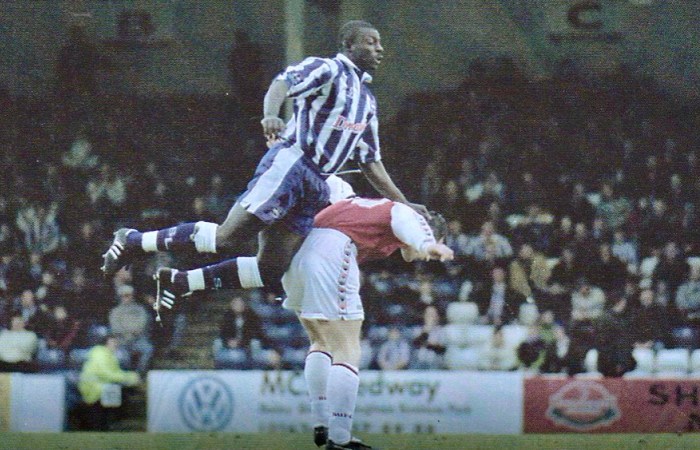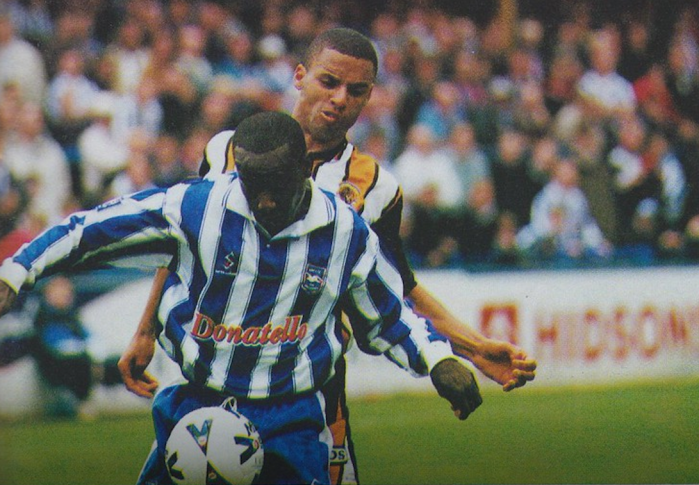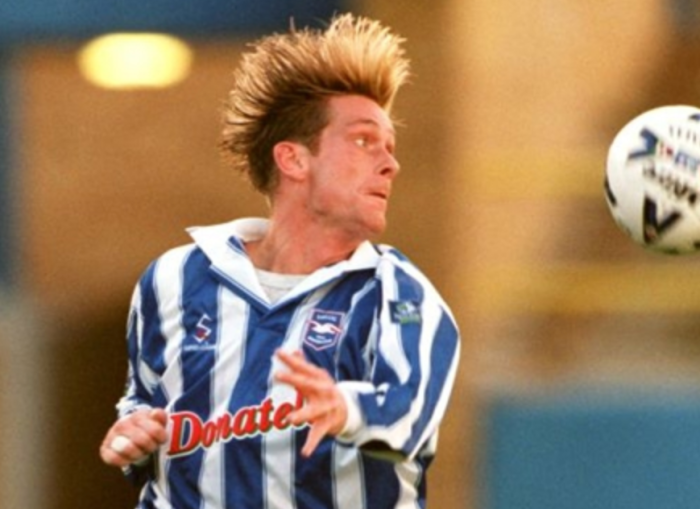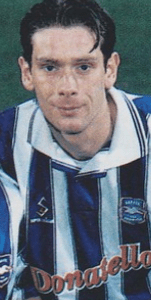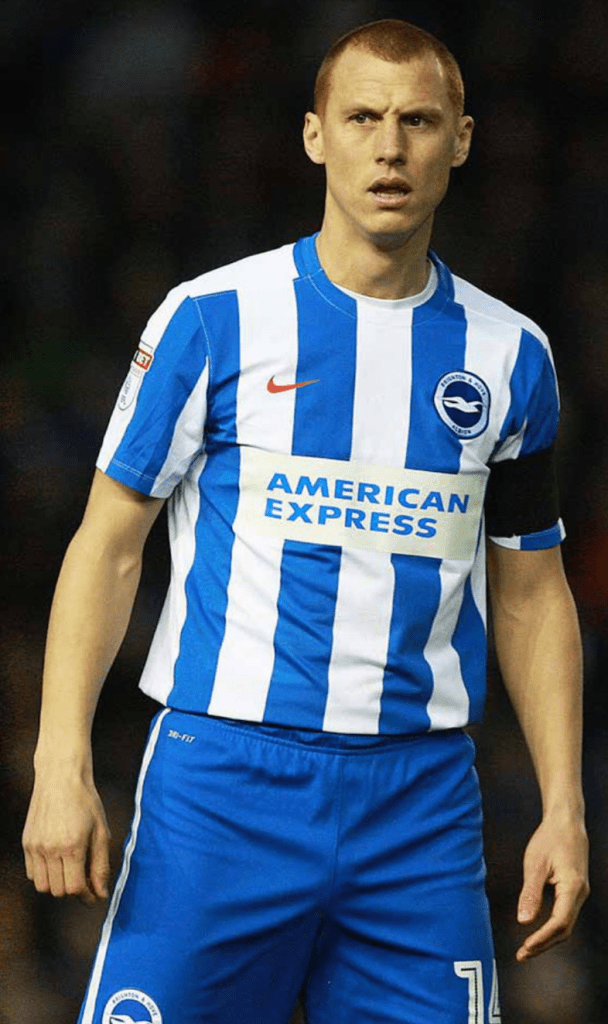
Not many of them, but Sidwell’s goals were memorable

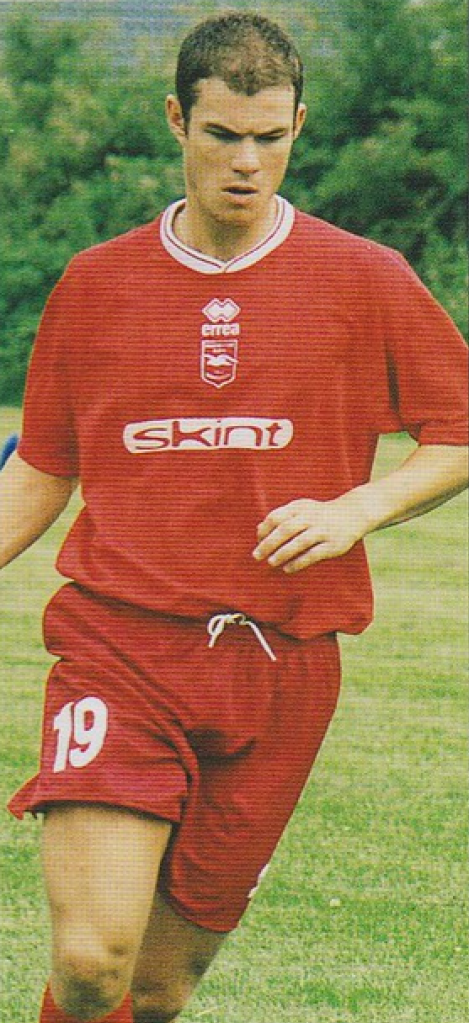
STEVE SIDWELL was not a recognised goalscorer but when he did find the back of the net it was often memorable and headline-making.

Such was his most talked about goal for Brighton – hit from the centre circle away to Bristol City in a Championship match on Bonfire Night in 2016. 

Eight years earlier, he stunned Goodison Park by rifling home from 25 yards after only 31 seconds of Aston Villa’s 7 December Premier League visit to Everton.

I was at Ashton Gate to see Sidwell’s amazing 50-yard lob over stranded Robins’ ‘keeper Richard O’Donnell (Jamie Murphy added a second in promotion-chasing Albion’s 2-0 win).

Manager Chris Hughton said: “It was a wonderful strike by Sidwell on his left foot when I would have expected it more from his right. It caught everyone by surprise, including their goalkeeper.”

I was also at the City Ground, Nottingham, seven months earlier when Sidwell went on as an 85th-minute sub and scored the winner (below) in the 91st minute to earn a 2-1 victory over Forest.

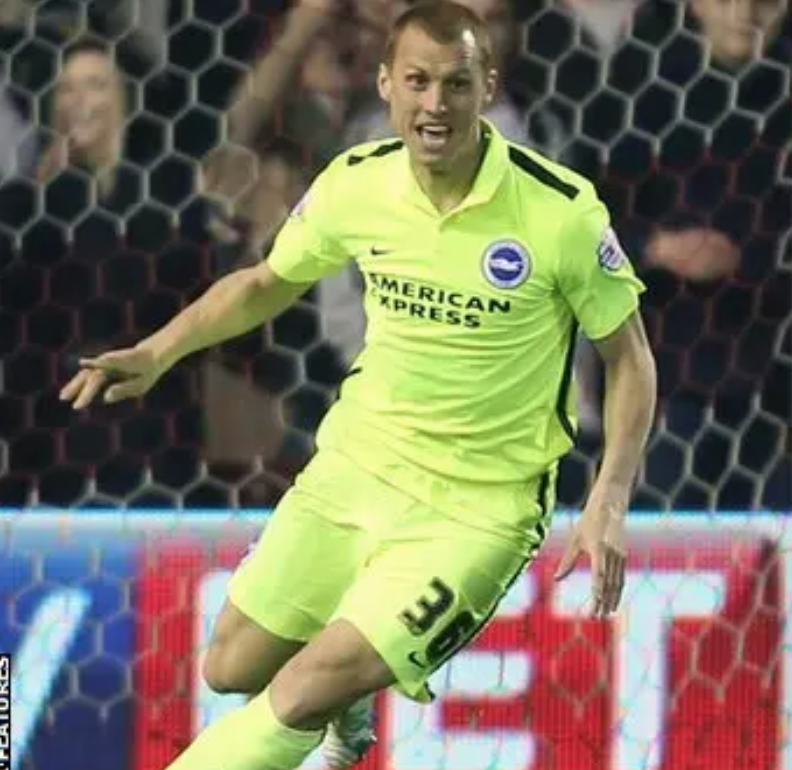
With his right foot this time, he drilled the ball in from 12 yards giving Albion a fourth win in five games which extended their unbeaten run to nine games.

“We felt that the game was becoming open and we felt we could bring players off the bench who could influence the game,” said Hughton. “One thing about Steve Sidwell is that he can break forward from midfield. I did not bring him on for that, but I am very glad he did it.”

Back to that game for Villa in 2008; moments after kick-off, Everton’s Mikel Arteta lost possession to Ashley Young. He fed James Milner who in turn found Sidwell. Finding himself with a sight at goal from 25 yards, he buried a stunning shot past Tim Howard. In an extraordinary end to the game, Young, who had scored Villa’s second, got a 94th-minute winner for the visitors after Joleon Lescott thought he’d salvaged a point in the 93rd minute, netting his second of the game. 
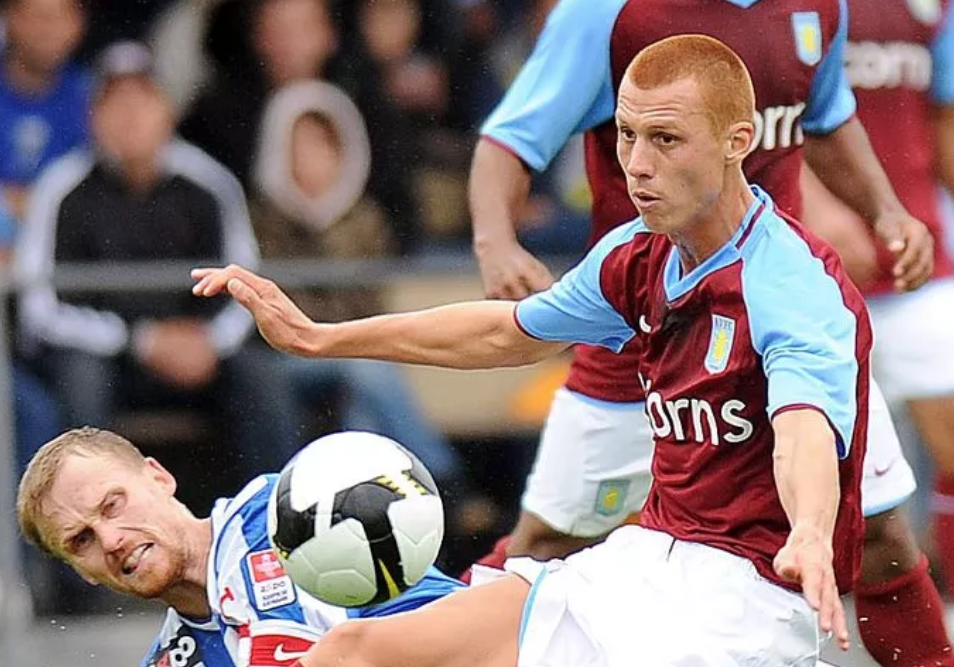
That opener at Goodison was a rare highlight for Sidwell in what overall was an unhappy two and a half years at Villa.

Sidwell had first caught Villa boss Martin O’Neill’s eye when he scored twice for Reading in a 2-0 home victory over Villa in February 2007.

O’Neill tried to land him before he opted to join Chelsea (the team he’d supported as a boy) and, by all accounts, predecessor David O’Leary had also tried to sign him.

So, it appeared to be a case of third time lucky when in July 2008 O’Neill took him for a reported £5million fee from being a Chelsea benchwarmer and gave him a three-year contract.

Sidwell during his first Albion spell

After success at Reading, where he had been reunited with Steve Coppell (who’d had him on loan at Brentford and Brighton as a young Arsenal player, as covered in my 2017 blog post), Sidwell had a disappointing season at Stamford Bridge, where he made just seven Premier League starts. 

Managerial change didn’t help his cause: he’d been signed by Jose Mourinho who left early in the season to be replaced by Avram Grant.

Sidwell later admitted: “I left for Aston Villa in search of regular football. In hindsight, I wished I’d stayed another six months because Luiz Felipe Scolari came in and you never know what might have happened then.”

At the time, Sidwell told Villa’s official website: “For me personally, it’s about getting back and playing. I have had a year of not playing as much as I would have liked so to get out on the pitch is the first aim.” 

Although he played in both legs of the InterToto Cup tie against Odense in July, knee and calf problems delayed his league debut until the end of October which he marked with a goal after going on as a late substitute in a 4-0 win at Wigan Athletic. That and the strike at Everton were two of four league and cup goals he scored for Villa that season when his 25 appearances (20 starts + five as sub) would ultimately amount to nearly half the total he made for the club: 37 starts + 27 as sub.

He didn’t add any more goals in the claret and blue and in the remainder of his time at Villa Park he was never really a regular, eg in 2009-10 only 14 of 33 appearances were as a starter and in 2010-11, three of six under Gérard Houllier.

Although he and O’Neill clashed on occasion, the Northern Irishman did say: “I’ve been very happy with him. It’s just that other players playing in positions all over the place have been playing brilliantly. Some people are playing out of their skin at this minute in our team. But I’ve been very pleased since he’s arrived at the football club.”

Sidwell’s former Reading teammate Nicky Shorey, who’d joined him at Villa Park, had high expectations of him ahead of his second season, telling the Birmingham Mail: “I don’t think Villa have seen the best of him yet. It’s been a strange season for Siddy. He’s been out injured for long periods and he’s picked up niggles here and there. I don’t think he’s ever had that before.

“For as long as I’ve known him, he’s never really been injured, so I think that’s something new for Siddy to try and learn from.”

Shorey said Sidwell had remained positive and upbeat around Bodymoor Heath and Villa Park and reckoned: “When he comes back for pre-season and hopefully has a good pre-season you’ll see the best of him and I think everyone will be impressed with how well he can do.

“When you know Siddy, that’s all he ever does – trains and plays with a smile. You haven’t got any worries with him on that count. He just keeps going and he’ll be fine. He’s just an all-round good midfielder and I’m sure he’ll show that before too long.”

Sidwell found himself competing for a midfield place with the likes of Milner (before his move to Manchester City), Gareth Barry, Stiliyan Petrov, Nigel Reo-Coker and Craig Gardner. He revealed later that he’d fallen out with O’Neill and at one point he went on the transfer list.

After O’Neill quit in protest at the sale of Milner to City, and ahead of Houllier’s appointment, Sidwell hoped to be given a new lease of life in claret and blue.

He overcame an Achilles’ problem and declared himself raring to go after playing 90 minutes in a 4-0 reserve team win over Blackpool at Bodymoor Heath.

“I feel I’ve shown glimpses,” he told the Birmingham Mail. “In the previous years, there have been good games and some poor games.

“If I get a run of games, I am sure I can perform to the best of my ability. Hopefully, now, whoever takes charge I will just get an opportunity and I will take it.

“It is going to be tough but it is down to individuals to perform in training, perform in reserve games and show the manager you are worthy of a start.

“Once you get that, you have to take it with both hands. Fitness wise, I’ve been training really well and looking sharp. It is just games that I need. I wasn’t unfit before the injury took place.”

When the Mail spoke to him ahead of a second city derby at the end of October 2010, Sidwell sought to exploit a two-month injury absence for Petrov saying: “It is all about opinions.

You don’t play under certain managers. Under certain managers you do get a chance.

“Once you get a chance it is about taking it and staying in the team.”

Sidwell started the game but was replaced by young Barry Bannan in the 58th minute of the dour goalless draw – and it turned out to be his last game for Villa (he was an unused sub away to Fulham the following week).

It was in a 2018 interview with Donald McRae of The Guardian that Sidwell revealed the extent of his disillusionment at Villa, telling the journalist: “When I was at Aston Villa I was on the most money in my career. But that was when I was at my unhappiest. I was living in Birmingham away from my wife and family.

“My middle son caught meningitis and was in hospital. The football never really took off and me and Martin O’Neill clashed. So, it was a combination of things.”

Released on a free transfer in January 2011, after being deemed surplus to requirements by Houllier, Sidwell joined Fulham – which is a story for another blog post.

After three years with the Cottagers, he followed ex-Fulham boss Mark Hughes to Stoke City and it was from there that he made his initial return to Brighton, on a half-season loan. 
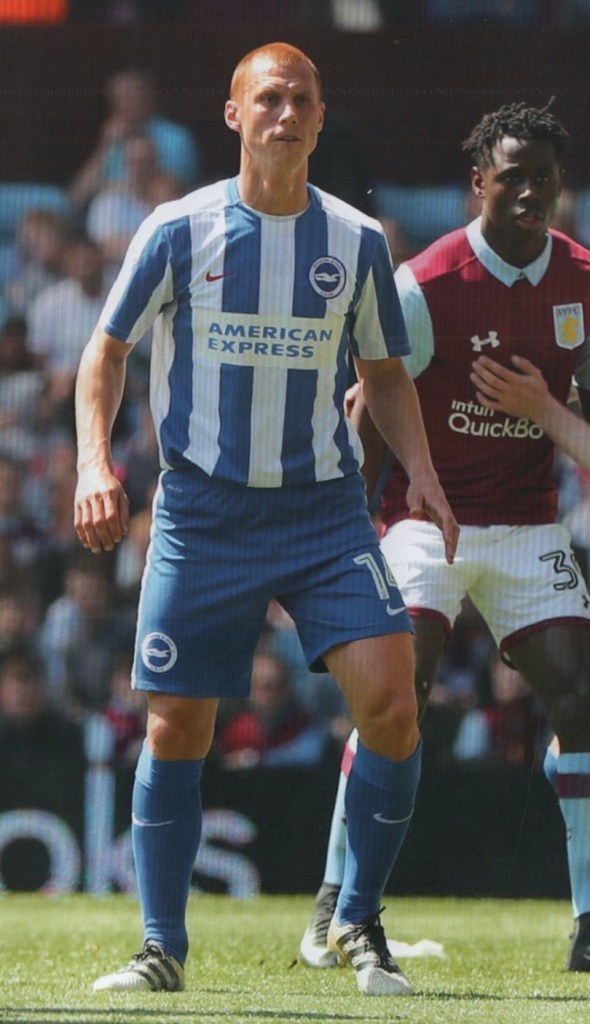
Sidwell in action for Albion against Villa

In clinching his signing in January 2016, Hughton told the Albion website: “Steve is an experienced player who has played virtually his entire career in the Premier League. He knows this club, as well as a few of the squad and will supplement our existing midfield options.

“Beram Kayal, Dale Stephens, Andrew Crofts and others have been excellent in midfield for us this season, but we also need to make sure we have good options in every position of the team, and options which will be enough for us through until the end of the season.

“Steve brings that, and in addition, he is another experienced head; he is a player who’s proven at the very top level of English football. Brighton fans will know Steve is also a great athlete and top professional.”

Although he only made six starts, Sidwell went on as a sub 13 times in that half-season. When Albion had to endure the end-of-season play-offs after missing out on automatic promotion by only drawing (1-1) the last game of the season at Middlesbrough, it was Sidwell who stepped in to fill the boots of Stephens, who was suspended after his controversial sending off by Mike Dean at the Riverside Stadium.

Unfortunately, Sidwell was one of four Albion players who had to go off injured in the 2-0 play-off first leg defeat at Sheffield Wednesday. He suffered ligament damage but was taped up and given medication to enable him to play in the home tie, although he later admitted: “I should never have played really.”

He reckoned the Amex atmosphere for that game was the best he’d ever been involved in. In spite of a valiant effort, it ended in a disappointing 1-1 draw although Sidwell said: “I ended up playing one of my better games in a Brighton shirt, which maybe cemented a contract for the following season.”

Released on a free transfer by Stoke, Sidwell signed on a permanent basis for the Seagulls and was a key component in the side that won promotion from the Championship in May 2017. He made 29 starts plus eight substitute appearances that campaign.

“The whole reason behind my return was to help the club into the Premier League,” he said.

Sidwell was on the bench as Albion began life amongst the elite but after that “a slipped disc, surgery, and then before you know it your career’s gone.”

Sidwell later admitted: “It was really hard. I came here to do a job, to get the football club into the Premier League, and then it was time to go and enjoy it. I thought I had two or three years left, but that was cut very short.”

Recognising he was blessed to have enjoyed a 20-year career, he nonetheless said: “To not really say goodbye to football, something I’d done since I left school, and also to Brighton, was really disappointing.”

He stayed on at Albion as under-16s coach (right) for a while but increasingly his work as a pitchside pundit for live TV coverage of matches took up more of his time. He is also now a regular co-host of the popular That Peter Crouch Podcast.

Sidwell is also business development director of Box3 Projects, a company that constructs and designs office spaces to be rented out or sold.

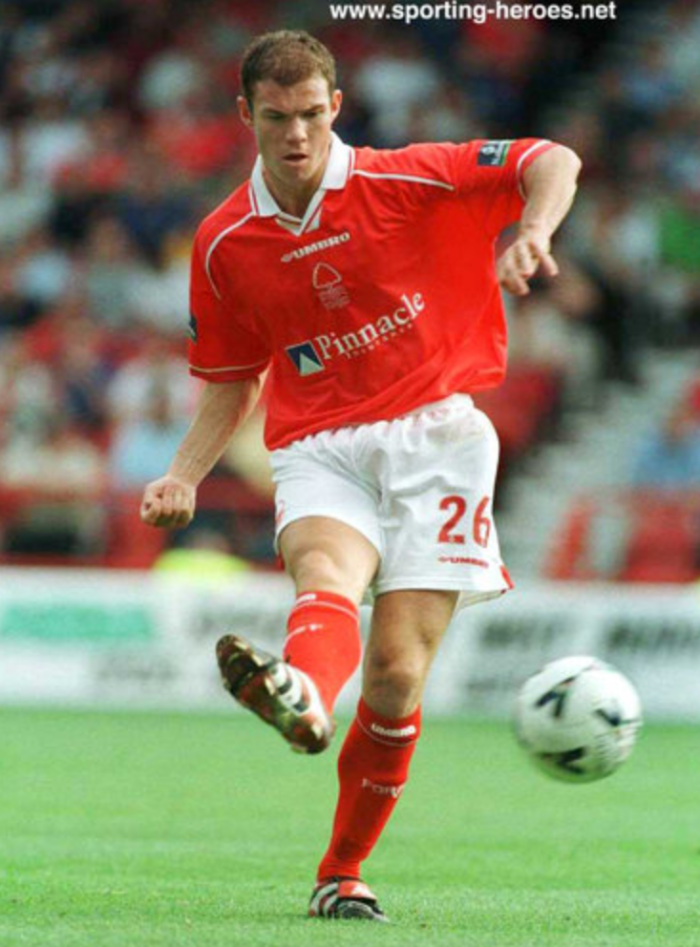
Melton took Micky at his word – and saw red 

MIDFIELDER Steve Melton took manager Micky Adams at his word in a notorious pre-season friendly – and ended up being sent off after putting in a waist-high tackle on an opponent.

Adams subbed off a riled Richard Carpenter against Longford Town in July 2001 with instructions to former Nottingham Forest trainee Melton “to give the lad who was booting our players up in the air a taste of his own medicine. Make sure he knows you are around.”

Melton duly put in a flying lunge on Longford midfielder Alan Reynolds that saw him receive an automatic red card and the fall-out from the challenge sparked an almighty punch-up which ended up with Albion’s Charlie Oatway and opponent Alan Murphy also being sent off after an altercation.

That particular battle then led to an even bigger scrap involving coaches and even the Longford chairman who took a punch in the face from one of his own players!

The so-called pre-season “friendly” – later dubbed the Battle of Longford – was abandoned with only 44 minutes on the clock by inexperienced ref Dermot Tone, who had only stepped in to officiate because senior Irish referees were at a seminar.

For Melton, it was all a far cry from making your Premier League debut two years earlier in front of 25,353 fans at the City Ground, Nottingham, in Ron Atkinson’s last-ever game as a manager. Melton was pitched in for already-relegated Forest for an East Midlands derby against Leicester and they went down in style (Blackburn and Charlton also went down), scraping a 1-0 win against the Foxes.

Born in Lincoln on 3 October 1978, Melton first linked up with Forest when he was just 11, playing at the centre of excellence. He signed full time at 16, a matter of days after finishing his GCSEs. He progressed through the youth team and reserves and it was during that time that he first worked with Adams, who’d been assistant manager to Dave Bassett before Atkinson’s arrival. 

Before he got close to the Forest first team, 18-year-old Melton and another trainee had experienced competitive football in Finland where Bassett had sent them to play for Sami Hyypiä’s old club MyPa on a three-month loan.

“He sent us out there to toughen us up. It also got us used to playing in a proper men’s league so that we learnt to value the prize of the three points and the standing within the first team,” he explained in a matchday programme interview.

That experience followed by his Forest first team debut didn’t have the outcome he wanted and after only three games under Atkinson’s successor, David Platt, he picked up an injury and couldn’t force his way back into the first team picture.

In February 2000, he switched 50 miles west to third tier Stoke City and admitted: “It seemed a good move as I didn’t have to travel too far. 

“It was a chance for me to play for a decent-sized club that were going strong in the cup and in the league. It was either that or play reserve team games for the rest of the year at Forest and wait for a break that I didn’t think was going to come.”

As it turned out, it was mainly a watching role, making only seven appearances as a substitute. He was a non-playing bench warmer alongside Chris Iwelumo (who did get on) when City won the Football League (Auto Windscreens Shield) Trophy at Wembley, beating Bristol City 2-1.

Stoke’s new Icelandic consortium hinted that they wanted to keep him on but in the absence of a contract offer, rather than risk uncertainty, he took up Adams’ offer to join fourth-tier Albion. 

A complimentary caption in the club match day programme

On a trial in the Emerald Isle the year before the Longford incident, Melton did enough across the week of the tour to earn a one-year contract. He had a long wait before getting a start but after 11 introductions as a substitute he finally made his full debut in February 2001, stepping in for Carpenter at Torquay after the regular midfield starter pulled out with an injured ankle. 

After playing his part in Albion’s first win (1-0 courtesy of Bobby Zamora) at Torquay for 36 years, Melton told The Argus: “I’m enjoying it here. I’ve settled in with the lads and I share a house with some of them.” 

On playing for Adams, he said: “I think Micky is going to be a really good manager. I enjoy working with him. A lot of the lads do. 

“Hopefully he will take Brighton up. He’s had a taste of managing at a higher level at Forest and I think he has the potential to do it again.” 

Melton’s outlook brightened the following month and he got starts in nine of the season’s remaining 15 matches as Adams led the Seagulls to promotion as champions. 

At home to his future employer Hull City, Melton made his home debut and scored his first goal for the club in a 3-0 win (Paul Watson and substitute Phil Stant also scored).

Reflecting on his involvement, he said: “It’s difficult to break in when the team keep winning every week, and they go unbeaten for 12 or 13 games, maybe drop a point but then go off on another run.

“It’s frustrating because you’re not playing, but you can’t really have too much of a case when the team is sat at the top of the league.”

Come the end of the season, he had done enough to be offered a two-year extension to his contract. As it turned out, the 2001-02 season followed much the same pattern as his first in terms of more appearances off the bench than starts.

He was on the scoresheet twice in the LDV Vans Trophy, scoring an extra time golden goal in a 2-1 home win over Wycombe Wanderers but was then inadvertently the fall guy in a 2-1 quarter-final defeat at Cambridge United.

Having given Albion a 36th-minute lead, latching on to Dirk Lehmann’s lay-off to fire a low right-footer past Lionel Perez from just outside the penalty area, he lost possession to Dave Kitson, who ran away to equalise, and then, four minutes into extra time, a shot by Armand One that was going wide took a wicked deflection off Melton’s shoulder to send United through to the next round.

A happier outing came when he made a rare start and scored as promotion-chasing Albion beat table-toppers Reading at the Withdean in February 2002. Peter Taylor’s Seagulls triumphed 3-1 on a rain-lashed night under the lights (Zamora and Junior Lewis also scored).

Goalscorers Melton and Zamora after a memorable win over Reading

“It was pleasing to start,” Melton told The Argus. “You have got to be patient and I have waited a good few months. 

“I have been on the outside for the last few weeks. Hopefully I can stay on the inside now. 

“Playing against the League leaders is a different matter completely from the LDV appearances that I made earlier in the season. 

“You can only do as well as you can when you are chosen to play and hopefully I did that. Once you have been given the shirt you have to try and keep it.” 

Melton’s goal was only the second league goal of his career and his first for 11 months. 

Taylor reckoned it was the best home performance since he took over from Adams the previous autumn and Albion won eight (and drew five) of the following 14 games to go on and clinch the third-tier title with the also-promoted Royals six points behind.

Melton scored Albion’s first goal of the 2002-03 season when he started in the 3-1 win at Burnley under his third Brighton manager, Martin Hinshelwood (Zamora and Paul Brooker also scored; Hinshelwood’s 18-year-old nephew Adam made his debut). 

Unfortunately, Melton tweaked a hamstring in the process and had to be subbed off. He only made nine more appearances (six starts plus three off the bench) as Hinshelwood’s short reign in charge ended with 10 league defeats in a row.

Incoming boss Steve Coppell brought in the likes of free agent Simon Rodger and Arsenal loanee Steve Sidwell and Melton found himself surplus to requirements.

It was in October 2002 that he moved to Hull on loan shortly after Peter Taylor had replaced Jan Molby as manager with the club about to move out of Boothferry Park and into the Kingston Communications Stadium.

Tiger Melton

Melton made 19 starts plus six appearances off the bench as the Tigers finished 13th in the old Third Division.

According to the website oncloudseven.com: “Despite his promise and Taylor’s persistence, Melton’s career at City was not a success and he showed only brief flashes of good form. Melton is, however, forever enshrined in the City record books because in December 2002 he scored the first ever goal at the KC Stadium against Sunderland, for the honour of lifting the Raich Carter Trophy.”

He found himself only on the fringes the following season and he had moved on to Boston United under Steve Evans by the time Taylor steered Hull to promotion as divisional runners up.

A recurring back injury restricted his playing time at Boston and during 2005-06 he was sent out on loan to Conference National side Tamworth. On his release from Boston in the summer of 2006, he switched to Southern League Premier King’s Lynn FC for two seasons.

Melton at Boston

In September 2008, he rejoined Boston with manager Tommy Taylor telling the club’s website: “Steve has great quality on the ball and that’s what we have been missing in the midfield area. 

Hopefully he will add another dimension to our team.”

But he was released at the end of the season and joined Lincoln United of the Northern Premier League Division One East, alongside his former Boston and King’s Lynn teammate Matt O’Halloran. After spells with Lincoln Moorlands Railway, Grantham Town and Worksop Town, he wound up his playing days back at Lincoln United.

In the meantime, his first job outside of football was in sales for mobile comms company Vodacom. He spent nearly seven years with the now defunct energy advice and installation company the Mark Group and since 2019 has worked for building services certification business The National Association of Professional Inspectors and Testers, where he is now commercial and compliance director.

Bees and Seagulls milestones on Michael Bennett’s wellbeing journey

IT ALMOST certainly wouldn’t have occurred to the loyal few Albion fans who followed the basement division Seagulls in exile in 1998-99 that one of the men in stripes would go on to make a difference to the lives of hundreds of footballers.

Brighton was the eighth and last league club Michael Bennett played for over the course of 12 years in which he discovered all the highs and lows that footballers can experience.

Since packing up playing, those personal insights helped him to begin a journey that led him to help huge numbers to cope with the game’s often-unseen stresses and strains.

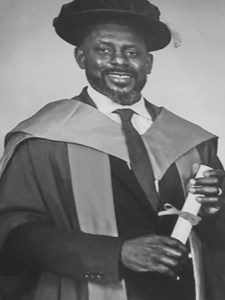
Bennett became a psychotherapist, gained a degree and led the setting up of a counselling and mental health and wellbeing support network for the Professional Footballers’ Association, where he worked for 15 years, latterly as director of player wellbeing. In that role, he was frequently a media spokesman for the PFA.

Dr Michael Bennett

Now running his own counselling business it’s all a far cry from the days when his league playing career ended filling a variety of positions in Brian Horton’s fourth-tier Brighton team, playing home games in exile at Gillingham. In one game, he was racially abused by a Swansea City fan who ran onto the pitch to confront him (more of which, later).

It was quite a fall from career highlights that saw him play for England at under-20 level alongside the likes of Matt Le Tissier, David Batty, Neil Ruddock and Tim Sherwood, make his debut at 17 in the top division for Charlton Athletic alongside John Humphrey, Colin Pates and Steve Gritt, and feature for Brentford (with Chris Hughton and Neil Smillie) when the Bees played second-tier football for the first time in 38 years.

While Addicks fans remember Bennett fondly, Bees supporters are a lot less generous and mainly recall a training ground incident in which the player broke a teammate’s jaw with a single punch.

The internet can be – and is – many things and unfortunately for people like Dr Bennett, such past incidents are still recorded for all to read about.

Thankfully, all the excellent work he has achieved in the health and wellbeing field is also documented and, in October 2021, Andy Naylor of The Athletic did an in-depth piece which examined his journey in detail.

“The story of his rise to prominence as a leader in his field is inspirational, a demonstration that with application, determination and drive you can build a career in the game that extends well beyond playing football,” wrote Naylor.

Bennett eschewed a coaching career (even though he passed his UEFA B licence) and at college, while studying Maths and English, was urged to take up counselling. As Naylor reported: “By 2004, Bennett had his degree in it and the following year he set up his own company, Unique Sports Counselling.”

Three years later, he joined the PFA as southern region education adviser aiming to get players to prepare for life after football. He also invited attendees to his workshops to speak to him privately about emotional issues – and he discovered there were plenty who took up the offer.

Eventually he persuaded then PFA chairman Gordon Taylor of the need for a designated wellbeing department dealing with the welfare of players.

In 2015, Sam Wallace of The Independent interviewed Bennett for an article about troubles ex-Arsenal and England full-back Kenny Sansom was facing. He discovered the year before the PFA had requests for support from 197 of its members.

“That is some caseload for Bennett, a man who talks in the careful, measured tones of someone used to dealing with problems that must seem intractable,” wrote Wallace. “Last year, the PFA established a 24-hour telephone helpline for members. Safe to say, it is not underused.”

The problem, Bennett told Wallace, is that the elite-level game prepares footballers physically but not emotionally. “What we realise is players often don’t get asked how they are. They get asked about football. When they get asked about their emotions, they tend to open up.”

After a 2017 presentation by Bennett to first and second-year scholars at Norwich City, Canaries’ assistant head of education and welfare Mike Macias told Press Association Sport: “When they see it and hear it coming from someone like Mickey, who has been there, done it and bought the T-shirt, they will think: ‘This impacts me and there is someone there to help me’.”

When Bennett left the PFA earlier in 2025, he said: “I am proud of the work we have done within the department which has grown into a vital and impactful part of the PFA’s mission, ensuring that wellbeing remains at the heart of everything we do.”

Among dozens of messages of thanks for his contribution left on his LinkedIn account was one from former Albion and West Ham midfielder George Parris, who wrote: “A great stint Dr Bennett, thanks for all your help, support and encouragement not just to myself, but loads of other people along the way during your time at the PFA.”

Born to Jamaican parents in Camberwell on 27 July 1969, Bennett was raised in a block of flats near Millwall’s old ground, The Den, and it was only when he was spotted by Charlton playing Sunday League football that thoughts of a professional career in the game arose.

Young Mickey at Charlton

He went straight into the Addicks academy at 16 and made his debut in Charlton’s first team a year later. In his interview for The Athletic, he said: “You move from a youth team changing room to a first-team changing room. People don’t talk about that transition but that, for me, was pressure. I’ve gone from having jokes and banter with the boys in the youth team to the first team.

“The pressure intensifies. You put it on yourself more than anything else, because you don’t want to let anyone down.”

He continued: “The first well-being issues came when I signed for Charlton. I went from parks football, having fun, to going into a pressurised environment where results are key and you know if you have one or two bad games there’s somebody behind you waiting to take your spot.

“So, the pressure for me was constant. I wasn’t able to deal with that, I didn’t know who to talk to about it. I’d already formed my personality going into the game. I’m a very talkative person and I like to talk about stuff. There wasn’t anyone to do that with.”

Addicks action

On top of the various issues he was facing as a young player, he then ruptured his anterior cruciate ligament and crushed the cartilage in his knee against QPR in December 1988 which sidelined him for nine months. By his own admission, when he eventually returned to action he was not the same player, concerned over whether the injury would happen again.

On the fans forum Charlton Life: ‘Amos on the wing’ wrote: “One of the good guys Mickey Bennett. Good player, but was never quite the same player after his bad injury against OPR in 1988.”

Another poster, Leroy Ambrose, said: “One of my favourite players from the ‘Sellout’ era (ed: Charlton played ‘home’ games at Selhurst Park at the time). Good bloke – my mate was a mascot back when he was playing and he and his parents were thrilled at how nice he was, and how much time he took with them during the pre-match kickabout and after the game.”

And Ormiston_Addick added: “Started brilliantly for us, great pace and drive but never the same player after doing his knee. Great little period in 88-89 with our ‘Black Magic’ front line of Bennett – Leaburn – Williams – Mortimer.”

‘Home’ continued to be Selhurst Park between 1990 and 1992 after Bennett switched to then top division Wimbledon, who rented Palace’s stadium because their own Plough Lane wasn’t up to scratch for the top division. But Bennett was never a regular for the Dons and he and Detzi Kruszynski were used as makeweights in the transfer of Dean Holdsworth from Brentford to Wimbledon.

He joined just as Brentford began playing second tier football for the first time since 1954 but the elevation didn’t last long. They were relegated in bottom place come May 1993 although Bennett was a fixture in the side, playing a total of 43 league and cup matches plus six as a sub, and scoring four goals.

The Brentford fans forum bfctalk declared: “Despite losing Chris Hughton in December to a career ending injury, no real replacement was signed until March by which time the rot had well and truly set in. Mickey Bennett flattered to deceive and was a one game in four merchant, Detzi Kruszynski had an aversion to training and hard work.”

In another post, the forum said Bennett had “started out like a house on fire as a direct and goal hungry right winger and we thought we had discovered a new star, but he too flattered to deceive”.

It was what happened in November 1993 that many Bees fans of a certain vintage remember. Bennett had his contract terminated by manager David Webb after breaking transfer-listed teammate Joe Allon’s jaw in three places with one punch in a training ground incident.

But the PFA backed Bennett’s version of the incident and took Brentford to a Football League commission of appeal which decided the player should be reinstated. However, Bennett knew his position in the Griffin Park dressing room was untenable, and he was released by mutual consent.

The incident was back in the spotlight five years later when the media was pondering what fate awaited John Hartson for his infamous West Ham training ground kick in the head of teammate Eyal Berkovich.

Rising high for the Albion

Bennett, by then playing for Brighton, told a reporter: “Obviously you can’t do that sort of thing to a teammate and I would prefer to leave that memory where it belongs – in the past.”
He added: “You have to get on with life, and I have no complaints. What happened between me and Joe Allon was little more than handbags at six paces – that’s why the PFA got involved and stood my corner.”

Bennett also said: “What happened to me at Brentford was way back. Right now, I’ve got other things on my mind, like trying to score my first goal of the season for Brighton.”

However, when an enterprising journalist caught up with Allon, he said: “Mickey broke my jaw in three places with a single punch in an unprovoked attack. There had been no history of ill-feeling between us and something inside him must have snapped.

“He just flipped, I collected a punch on the chops and got carted off to hospital, where they operated on me and wired up my jaw. I was in hospital for about 10 days and out of football for three months.

“The funny thing is that Mickey was supposed to be a born-again Christian, and I couldn’t work out how such a religious bloke could just clock one of his teammates.”

For all Bennett’s desire to steer clear of headlines for the wrong reason, it was while playing for Brighton away at Swansea City on 5 February 1999 that he was in the spotlight again when he was racially abused by a home supporter who ran onto the pitch.

“I was shocked by it,” he told Naylor of The Athletic in 2021. “I knew it was bad because I couldn’t function in the game after that, my head had gone.

“The police came to me and asked what I wanted to do. For a split second I remember thinking, ‘I just want to get on the bus and go home’. The other side of me thought, ‘If I don’t do something, that person could do something to another player’.”

The case went to court and the 29-year-old assailant, who admitted racially abusing Bennett and invading the pitch, was sent to prison for a year and banned from watching in a football league ground for three years.

The player told The Argus: “All of a sudden, I turned around and saw this fan running towards me. He was coming closer and closer.

“I remember thinking to myself should I just take a punch or what do I do? Then a steward and one of their players jumped in front of him when he was about a foot away from me and hauled him off.

“For five minutes I was a bit shaky. He could have done anything to me.

“After that I just got on with the game and tried to cancel it out, but when the police came to me after the game to take a statement it brought it all back again.”

By the time of that match, Jeff Wood had succeeded Horton, the manager who’d taken on Bennett after he’d impressed enough on trial in pre-season games against Lewes and Crawley to be awarded a one-year contract.

Introduced in match programme

The matchday programme introduced him as “a versatile right sided player who can operate at anywhere down the right side or in the centre of midfield”.

He started off in central midfield alongside Jeff Minton and later was used as a central defender. That autumn, he clocked up his 150th League appearance in a 2-0 defeat to Cardiff City, where he’d spent the opening three months of the 1996-97 season. Having left Brentford, he’d gone back to Charlton briefly before barely featuring in the 1995-96 season at Millwall. On leaving south Wales, he spent a year at non-league Cambridge City, and at Christmas 1997 returned to the league at Orient under Tommy Taylor.

Before facing the Os in a first round FA Cup tie in 1998, Bennett told The Argus: “I knew Tommy Taylor from my time at Charlton and I figured in one game away to Exeter, then four or five more as a sub before I was eased out.

“I’ve got another chance to face them now because I missed the league game away with a groin injury. It’s a nice tie, but I’ve got nothing to prove to Tommy or anyone else.” (Albion lost 4-2).

Bennett in Albion’s change kit in the 1998-99 season

Bennett found himself playing for a third Albion manager when Wood’s brief and unsuccessful reign at the Albion helm was brought to an end and, although he featured under Micky Adams, he was one of eight players released at the end of the season.

His league career at an end, he continued to play at non-league level for Canvey Island and in the 2003-04 season was part of a Canvey Island squad that also included former Brighton players Junior McDougald, Peter Smith, and the aforementioned Minton.

Meanwhile, he transitioned into a mental health and wellbeing counsellor, saying: “I identified the value of offering to the side of the game that rarely grabs the headlines but is just as affecting to the people it helps.”

On his LinkedIn profile, he points out: “Playing at all levels of the football league has provided me with an invaluable knowledge of the inner workings and operational structure of football in this country, experience that I have endeavoured to apply for the benefit of my fellow pros since my retirement.”

Jamie Moralee’s pitfalls a valuable lesson for future prosperity

IT WOULD BE an understatement to say striker Jamie Moralee had mixed fortunes during his time with Brighton.

A one-time £450,000 signing, the former Crystal Palace player joined the lowly Seagulls on a free transfer when they were playing home games in exile at Gillingham in 1998-99.

His lack of goals earned a certain amount of derision from the handful of Albion followers who supported the club in those dark days.

And on one infamous occasion, in March 1999, he managed to get himself sent off within a minute of going on as a late substitute, without touching the ball.

Moralee sees red at Scunthorpe

To make matters worse, the punch he threw didn’t even catch the opponent, John Eyre, who promptly added to Albion’s woes by completing his hat-trick in a 3-1 home win for Scunthorpe United.

The Argus put Moralee’s “moment of madness” down to frustration at so regularly being on the subs bench (16 times – and only sent on in eight of them).

“He did not actually connect, but the intent was obvious and the resulting red card inevitable,” the newspaper reported.

Signed at the start of the season on a month-to-month contract, Moralee had a run of 14 starts under Brian Horton but after scoring just the one goal (in a 3-1 defeat against Mansfield), he was dropped to the bench.

Just before Horton quit to move to Port Vale, he gave Moralee a contract until the end of the season and in January, after Jeff Wood briefly took charge, the player hoped his impact as a sub when laying on a winning goal for Paul Armstrong against Scarborough would help change supporters’ views of his contribution.

“It was nice to be a bit of a hero for a change,” he told The Argus. “I was a bit unlucky with a goal which was disallowed at Chester in the game before and I just want to get on with Brighton and do my best.

“I’ll take the credit because I’ve not had much this season. Hopefully the corner has turned for me.”

Moralee said he had been asked to play several different roles and reckoned much of the criticism aimed his way was unjustified.

Moralee gets stuck in

“I feel I have done all right,” he maintained. “I don’t think the supporters really appreciate me and they let me know that when I came on, but I will just keep doing my job.

“The players give me all the support I need and I am confident enough to go out and do the business. I certainly won’t hide.”

Having missed several matches after the red mist descended at Scunthorpe, a third manager arrived in the shape of Micky Adams, and Moralee started the last seven matches of the season under the new boss, scoring once.

Moralee slides in

But it wasn’t enough to earn a new deal and Moralee was one of eight players released at the end of the season. Having played under three managers in one season for the Albion, there was swift change in the dugout at his next port of call too.

He began the next season up a division with Colchester United, whose manager Mick Wadsworth said: “I remember him as a very outstanding young player with Millwall. We watched him several times during last season.

“He is very sharp in and around the penalty box and his hold-up play is exceptional – a quality we were sadly lacking in the season just gone.

“Jamie was an outstanding prospect as a young player with Millwall and was sold on to Watford for £450,000 around five years ago before his career became blighted by injuries.

“Last season was his first full season for some time as he battled to shrug off a string of injuries and has probably used Brighton to get back to full fitness and match sharpness.”

The season was only three games old when Wadsworth resigned and was replaced by Steve Whitton who saw his United side beat Reading 3-2 in his first match (Warren Aspinall scored twice and Nicky Forster scored one for the visitors). Moralee, making his league debut for Colchester, was subbed off on 76 minutes.

After that, Colchester went on an 11-game winless run and other than a positive spell in January, had a forgettable season and finished third from bottom. Moralee made 21 starts plus eight as a sub.

Born in Wandsworth, London, on 2 December 1971, Moralee joined Palace as a YTS trainee, working his way through the levels alongside Gareth Southgate. He was a regular in the Palace reserves playing up front with Stan Collymore.

But after just two first team starts and four sub appearances under Steve Coppell, he was traded as a makeweight in exchange for Millwall’s Chris Armstrong.

Happy days in the Lions’ Den

When unveiled to Lions fans in a matchday programme article, Moralee boldly declared: “Having broken though into first team football with Palace last season and learned from strikers like Mark Bright and Garry Thompson, I feel I’m ready to come to a club like Millwall and score twenty goals a season.”

Amongst the goals for Millwall

Of the player he swapped places with, he even went as far as to say: “Chris was quick and by all accounts did very well here in the opening games this season, but I’ll score more goals than him.”

Continuing in a similar vein, he added: “I’m most effective in the box, I like the ball into my feet and, at the risk of sounding over confident, if I get the chances I’ll score goals for you.”

True to his word, Moralee did get amongst the goals for Mick McCarthy’s side and 20 goals in 63 appearances (plus 13 as a sub) over two seasons earned him a £450,000 move to Watford.

Moralee made a big money move from Millwall to Watford

But the Glenn Roeder signing had a tough time with the Hornets, only seeing his fortunes change after Graham Taylor returned to the club as manager. He explained the circumstances in a full-page piece in the Wolves v Watford matchday programme of 30 March 1996.

“Glenn bought me to play up front with a big target man, which I was used to at Millwall. But the partners I had were all smaller than me and I was now the big target man, a role that did not suit me and one that I do not enjoy.

“I had always been used to scoring, something that wasn’t happening, and this resulted in a loss of confidence.

“The intentions were there, but I needed a big target man to feed me the ball. It just did not work out.”

When Taylor took over from Roeder, Moralee got back the starting place he’d lost and learned how to play as a lone striker. “It is a lot of work but I believe I have developed into a better all-round player,” he said. “It is nice to have a manager with a little faith in me.”

After Watford were relegated to Division Two, in the summer of 1996 he moved on a free transfer to Crewe Alexandra where he didn’t register any goals and made just 13 starts and six sub appearances.

He ended the 1997-98 season with Royal Antwerp in Belgium and spent pre-season with Fulham before Horton took him on at the Albion, initially on a monthly contract basis, at the start of the 1998-99 season.

After his season at Layer Road, he linked up with former Crystal Palace colleague Peter Nicholas at Welsh Premier League side Barry Town. He spent three seasons with Barry, winning the Welsh Premier-Welsh Cup double each season. He was also involved in three Champions League campaigns with the club and netted 59 goals in 96 appearances.

Financial problems at Barry led to Moralee moving on and he had spells with Forest Green Rovers, Newport County and Chelmsford City before ending his playing career in 2006.

After retiring from playing, Moralee set up his own football agency, New Era, in conjunction with former Albion teammate Peter Smith, with Rio Ferdinand as its highest profile client.

In an interview for a webinar, Moralee said the agency aims to teach up and coming talented footballers how to avoid the pitfalls that affected his own playing career.

Describing his own “very up and down career with a couple of highs and many, many lows”, he explained to The Player, The Coach, The Person webinar: “When I got a few quid, I was spending it on all the wrong things. Buying cars and watches and going out too much; drinking too much. I wasn’t investing it.”

Hard work, application and a ruthlessness to succeed in life are aspects he’s now passing on having realised they were attributes that would have made a difference to his own career as a player.

“I needed to stay in football in some capacity,” he said. “I didn’t want to be a coach or manager.I knew that young players, if they got to the edge of the pitfalls I fell down, I could help them.”

He is particularly pleased to have helped players who had rejection in their early days who went on to have successful careers, such as Welsh internationals Chris Gunter, Neil Taylor and Ashley Williams.

Moralee spoke openly about his 20-year friendship with Rio Ferdinand in a 2018 film for the ‘Best Man Project’ of The Campaign Against Living Miserably (Calm): an initiative to celebrate the power of friendships which supports men in looking out for their mates.

Opening up on the power of friendships in football