
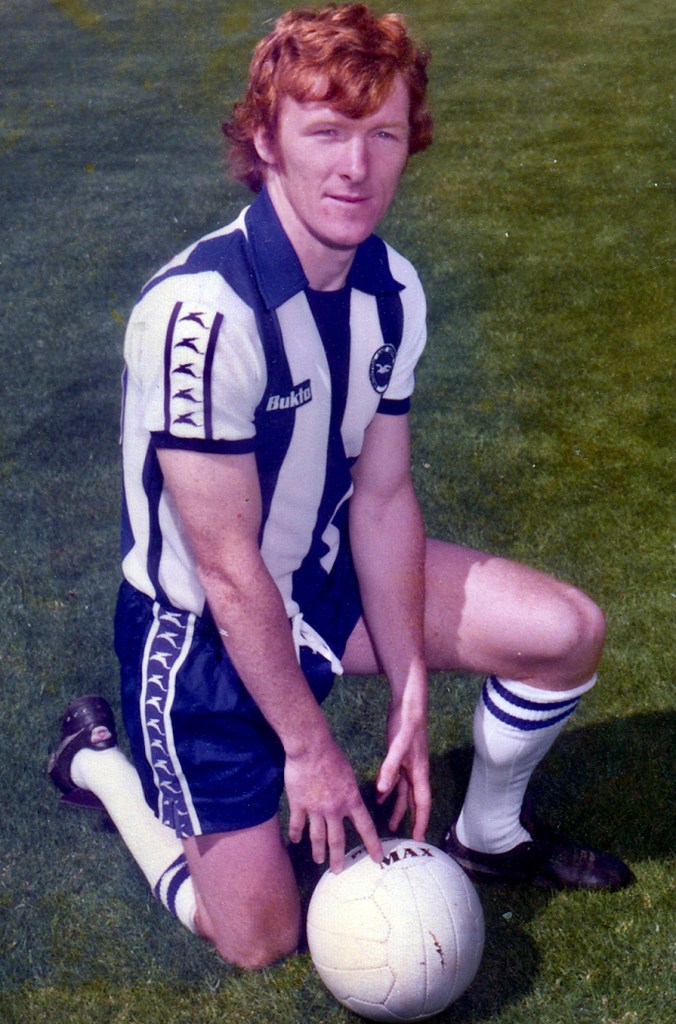
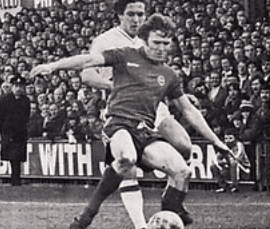
PINT-SIZED Scouser Eric Potts went from a flying owl to a soaring seagull back in the 1970s.
Ginger-headed Potts caught the eye in more ways than one and, after he’d put in a man-of-the-match performance for Sheffield Wednesday against Brighton, he earned a £14,000 move to the Goldstone Ground.
He joined Alan Mullery’s newly-promoted Seagulls in the summer of 1977 but after three months lost his starting berth to Tony Towner and went on to earn the reputation of a goalscoring supersub during his one season with the Albion.
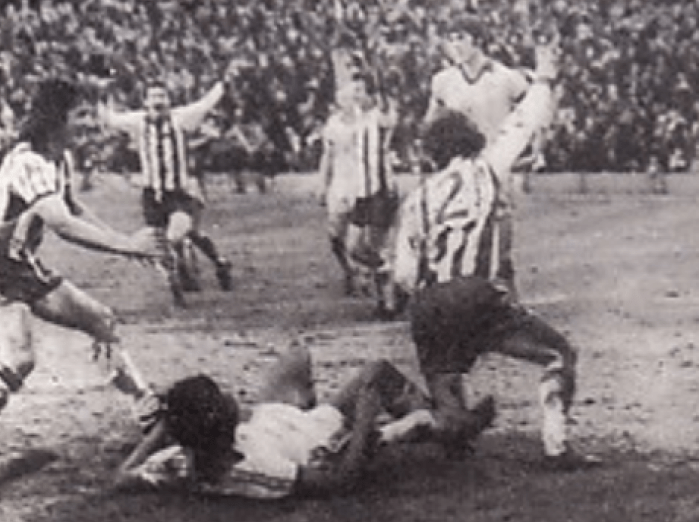
In one game at home to Sunderland, he went on for left-back Gary Williams with Albion trailing 1-0 and hit two goals in the last two minutes to turn the match in Brighton’s favour.
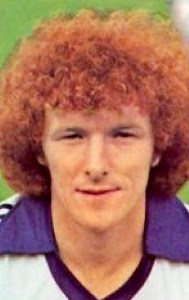
Potts moved back to his native north west, initially to Preston, before becoming a Third Division promotion winner with Burnley.
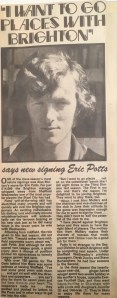
In 1977, though, football magazine Shoot! hailed Potts’ “astute” signing for the Albion in glowing terms, saying: “Potts’ will-of-the-wisp skill has electrified many crowds and will quickly win over Brighton supporters.
“An exciting individualist, his darting runs and ninety-minute wholeheartedness will undoubtedly set the terraces buzzing at his new club just as he did many times in the seven years he was with Wednesday.”
Potts had impressed when Wednesday visited the Goldstone for the last game of the season on 3 May 1977 when a crowd of 30,756 saw Albion edge a cracking match 3-2 to clinch promotion from Division 3. The next month, he was making the journey for a longer stay.
“When I met Alan Mullery and the chairman and vice-chairman of the club in June their attitude to the game was impressive enough for me to want to sign for them…they didn’t have to ‘sell; the potential of the club to me,” Potts told the magazine.
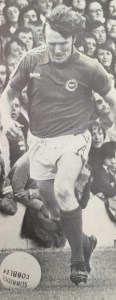
“I have played against Brighton twice and they seem to have the right blend of players. The motivation from Mullery makes their chances of success that much greater and I know I can do a good job for them.”
Somewhat ironically in view of how the season panned out, Potts declared: “I want to go places…not sit on the substitutes’ bench like I did eight times in the Third Division last season. The First is my aim and that’s the reason I’m delighted to be joining Brighton.”
Potts’ popularity at Hillsborough saw him become the first Wednesday player to be named Player of the Year twice (1974-75 and 1975-76) and the move to Brighton took him back to the second tier, a level at which he’d played under two different Owls managers, Derek Dooley and former Albion player Steve Burtenshaw.
The season began well enough for him as he lined up in the no. 7 shirt for the first 21 matches of the season. But home-grown winger Towner came back into contention in November and took over the shirt, meaning Potts had to resort to that familiar place on the bench.
He had only five more starts in the rest of the season, but, in the days of only one sub, went on 15 times between December and April and scored goals in three of them (including that double against the Black Cats).
As the history books have recorded, Albion narrowly missed out on a second successive promotion in 1978 and Potts’ short stay in the south was over. Brighton returned a decent return on their investment by selling the winger to Preston North End for £37,000.
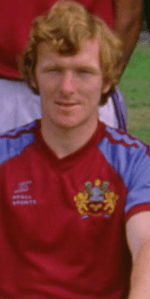
Potts spent two seasons at Deepdale under former England World Cup winner Nobby Stiles but he switched to Lancashire rivals Burnley, then in Division Three, for £20,000.
He was a regular in Brian Miller’s side throughout the 1980-81 season, featuring in 37 games plus one as a sub, and chipping in with five goals, as the Clarets finished in eighth spot.
The team improved markedly the following campaign to earn promotion as champions but Potts had lost his place as a starter to an emerging future England international, Trevor Steven.
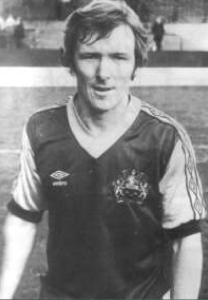
Nevertheless, his 21 appearances plus eight as a sub were enough to earn him a championship medal which he was presented with ahead of a pre-season friendly the next season after he’d already moved on again, this time to Bury, where he ended his career.
Born in Liverpool on 16 March 1950, part of Potts’ schooldays were spent at Anfield Comprehensive School, a stone’s throw from the home of Liverpool FC.
But it was at Blackpool FC where he began his football journey, starting out as an amateur.
When he wasn’t offered pro terms, he went into non-league football with New Brighton and Oswestry Town. His form at Oswestry attracted Wednesday who bought him for £5,000.
He made his debut for Wednesday in October 1970 but didn’t establish himself in the first team until towards the end of the 1972-73 season.
By the time he left for Brighton, he had scored 21 goals in 159 appearances for the Owls.
Potts returned to the non-league scene after he left Bury, turning out for Witton Albion and Clitheroe, and, after he’d hung up his boots, earned a living as a taxi driver.
Both his sons followed in his footballing footsteps: eldest Colin was initially with Preston but played all his first team football in non-league.
The youngest, Michael, started as a schoolboy with Manchester United, before moving on to become a member of the Blackburn Rovers team that reached the semi-final of the FA Youth Cup in 2008-09.
Released in 2011, he signed for York City in the summer of that year at the age of 19 and on the opening day of the 2012-13 season, as a substitute, he made his Football League debut for York in a 3-1 home defeat against Wycombe. He subsequently played for various non-league sides.
 In parallel lines