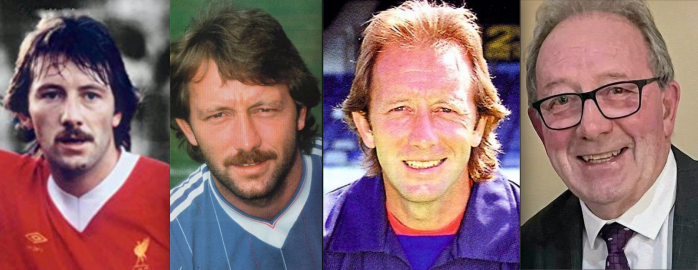
Alexis Mac Allister: the history-making World Cup winner

IF WINNING the World Cup is the pinnacle of any footballer’s career, there can be no question that Alexis Mac Allister has no equal as the greatest ever Brighton and Hove Albion player.

Several players have achieved the honour of representing their country on the back of their performances for Brighton, but never before December 2022 had the club boasted a World Cup winner, an international teammate of world-renowned Lionel Messi.

Argentinian Mac Allister has got the lot in his locker: equally adept as a holding or attacking midfielder, a great eye for pinpoint passes, deadly from the penalty spot, and with thunderbolt shots from distance to boot.

Indeed, one of the most memorable long-range strikes he scored for Brighton – against Leicester in Graham Potter’s last game in charge – would have been a goal of the season contender had it not been ruled out by the narrowest of VAR calls. It took the video assistant referee more than four minutes to chalk it off for offside which Potter conceded was “probably a millimetre or two the right decision”.

Thankfully, Mac Allister managed two that did count in that 5-2 win, converting a penalty for Albion’s fourth and then curling in an excellent 25-yard free-kick in injury time.

Potter’s input to making Mac Allister a more complete player was acknowledged in an interview with SunSport, not long after the coach departed forChelsea.

“He was very helpful — improving my versatility and physicality. I’m a much better player today because of it so I can thank him a lot,” said Mac Allister, who admitted how at first he found it difficult to transition from a more advanced player to a deeper-lying midfielder.

“The first year wasn’t easy for me. I found it very hard coming from Argentina with a different language and different way to play football. I physically wasn’t as strong as I am today,” he said.

In fact, he came close to jacking it all in at Brighton in December 2020, as he revealed in an in-depth interview with theplayerstribune.com, but was talked round in a FaceTime call with his mum in Buenos Aires.

“By that Christmas, with no fans in the stadiums, I had my bags packed. Literally, they were packed. I had two offers to leave — one from Russia and another from Spain, and my mind was made up.

“At the time, I was barely playing for Brighton. It was embarrassing, because I had the no. 10 shirt for a Premier League club, which is the dream of so many kids in Argentina, but I was a nobody. My name was nothing. I thought that I was cursed,” he said.

He got on FaceTime with his mum and he admitted: “I was sobbing. I was at my flat in Brighton, and she was back home in Buenos Aires. I had lost my head. I said, ‘Mum, I can’t do it anymore. I’m coming home. I need to get out of here’.” 

He continued: “I wanted to go home so bad. But my mum made me see the light. ‘Ale, remember how much you always wanted this?’ she said. ‘You have to be brave. You can’t quit now’.” 

In the new year, Mac Allister started many more games and eventually cemented his place in the heart of Albion’s midfield.

No longer a nobody; Mac Allister now has a staggering 8.6 million followers of his Instagram account!

“I like to play as a no. 10, I like to play as a no. 6,” he said. “The most important thing for me is to help my teammates win football games and try to be as central as I can so I can be as close to the ball to get on it as much as possible.”

Potter himself spoke highly about the way Mac Allister handled the transition, saying in January 2021: “Sometimes when players make the move there can be an assumption that it will all happen for them straight away.

“He’s moved from South America and was adapting to a new country before COVID and then picked up a couple of injuries.

“But he’s a determined individual and he’s a really good guy to work with. He reads the game really well and has a good footballing brain.”

Born in the Argentine lowland city of Santa Rosa on Christmas Eve 1998, Mac Allister started his career with Club Social y Deportivo Parque before joining the youth team of Argentinos Juniors in Buenos Aires.

He made his senior team debut there in October 2016 and a year later he and his older brothers Kevin and Francis all played in the same side. Their father Carlos, a left back known as El Colorado — “the Redhead”—  had also played for Argentinos Juniors and Boca Juniors (and won three caps for Argentina).

Alexis signed for Brighton in January 2019 on a four-and-a-half-year contract and said at the time: “The main reason I signed was because the club came to Argentina looking for me and they seemed very convinced about me.

Mac Allister liked the direction Albion saw for him before signing

“They made a big effort, told me about their project and their ideas to keep growing in this league, and I liked their ideas. I liked what they said.”

He was loaned back to Argentinos Juniors until the end of the 2018-19 season and then moved on loan again to Boca Juniors, where brother Kevin was playing, for the first half of the 2019-20 season. This was a Boca side that had one of the players he used to admire from afar – former Man Utd and West Ham striker Carlos Tevez – up front.

Mac Allister told GQ magazine in September 2025: “When I was younger, there weren’t many Argentinians in the Premier League but I used to wake up very early in the mornings to watch players like Carlos Tevez and Maxi Rodriguez.

“I was a big fan of the Premier League, so I hope the next generations are doing the same with us, not just with me but with Argentinian players in general.”

Albion recalled Mac Allister in January 2020 a couple of months before the Covid pandemic began to bite. “My time at Boca helped me mature and I learned a lot of things,” he told the Albion website.

Mac Allister made his debut as a substitute at Molineux in the last fixture before matches were halted for three months. I was at that Wolves match and even in a few short minutes on the pitch there were glimpses of what the young Argentinian was going to add to Potter’s side.

But the break hit Mac Allister hard. “Everything shut down. No football. No friends. And the worst part was that I was stuck in a country where I didn’t speak the language, he told theplayerstribune.com.

“When I first came here, I thought ‘I’ve played for Boca Juniors, one of the best teams in South America, I am ready’,” Mac Allister said in an interview on the Albion website in February 2022. “We had the Covid situation and I didn’t train for two or three months with my teammates. When we returned, I realised I wasn’t at the level I needed to be. I had to work.”

The year which would end with Mac Allister as a World Cup winner began well too when he scored twice at Goodison Park in Albion’s first ever win at Everton on 2 January. The player himself saw it as pivotal moment.

Mac Allister reckoned everything clicked for him when he scored twice at Goodison Park

The game was only three minutes old when Mac Allister latched on to Neal Maupay’s knockdown to score in the third minute before Dan Burn put Albion 2-0 up on 21 minutes.

Anthony Gordon pulled one back but Mac Allister found the top-right corner with a superb strike to make it 3-1 on 71 minutes. Gordon struck again 14 minutes from the end, but Brighton held on to win.

“When I scored two against Everton in January 2022, it felt like everything clicked for me,” he said. “That day at Goodison, I became something different.”

Admitting he had been hoping to improve on the goalscoring front, Mac Allister told the club website: “When I played in Argentina I would score and assist a lot more. I have scored a few times for Brighton now, it’s nice to get the confidence from that.

“I had a few games where I was on the bench and that’s not what I want, so I knew I had to keep working because I knew I would get my chance and when I did, I wanted to be ready. When that chance came along, I thought I took it well.

“The message from the gaffer and my teammates was to keep my head down and work hard. It’s not just the 11 who start, the people on the bench are important too.”

Always deadly from the penalty spot

The next step change in his career came with the appointment of Roberto De Zerbi as Potter’s successor. “A few months before the World Cup, it changed everything for me,” he said.

“The main thing that he helped me improve was my scanning of the field — my “profiling” of the situation. Taking little mental pictures of the chess board every two seconds. We looked at Ødegaard as an example of this. For me, he’s one of the best in the world at scanning. His head never stops moving. De Zerbi gave me this gift, and it really elevated my game.”

Mac Allister told theplayerstribune.com: “Playing every week, with the manager’s trust, the idea of the World Cup started to seem not so distant.

“I will never forget, we were away at Wolverhampton, and I was in the hotel whenI received the call of my dreams. I was in the squad. I was actually going to Qatar.”

He called his parents and they cried together. He reflected: “Two years earlier, I couldn’t get off the bench at Brighton. Now I was going to the World Cup with Argentina, trying to make history.”

When he helped his country to lift the World Cup on 18 December 2022 (beating France 4-2 on penalties after the game finished 3-3), Mac Allister’s stock had already been rising. He was man of the match after scoring for his country for the first time in a 2-0 win over Poland that took Argentina through to the last 16. In the final, he delivered an inch-perfect cross for Angel di Maria to give Argentina a 2-0 lead in the first half and De Zerbi observed how well he played alongside maestro Messi.

“Messi and Mac Allister speak the same (football) language and Messi understands very well the quality of Alexis,” De Zerbi told The Athletic. “If you watch the game, Messi was looking for Alexis lots of times and they made a lot of passes to each other. Alexis was always giving back to Messi a clean pass.”

With Mac Allister playing further forward for his country than with the Albion, it had De Zerbi pondering. “I’d like to speak to him when he comes back,” the Italian told The Athletic. “I like him a lot in the other position (deeper).

“I spoke with his father the other day and he told me he prefers the Argentina position, but in that position we have (Adam) Lallana and Lallana is a teacher.

“If a team wants to become big, the quality needs to be further back. For me the midfielder can play on the defensive line, because he’s bringing more quality.”

But he added: “Alexis can play anywhere on the pitch. I don’t know if he’s better as a playmaker or 20 metres further forward.”

Established as a kingpin in Albion’s midfield alongside Moises Caicedo — almost certainly, Albion have never had a better pairing in that area of the team — it was inevitable that they would move on.

In May 2023, De Zerbi was phlegmatic about losing them both. “I think it’s right they can leave, can change teams and play in a level higher,” he said. “If you ask me about Caicedo and Mac Allister, I love them and they are two big, big players and can be in a big, big European team.

“They can play in every competition and are ready to compete for a big team and I hope for them they can play in the best team in the world.”

The manner of their departures differed, of course, and after Mac Allister had moved to Liverpool, De Zerbi admitted: “With me and with my staff he was super correct. Before we could read it in the newspapers, in the press, the possibility he could go to Liverpool, he went into my office to communicate it in front of me and to explain the reason.

“I understood logically and I appreciated a lot because he was clear and he was honest. Not all other players were the same. Of course, he was happy to go to Liverpool and we can understand it. But, in the same way, he was sad to leave his teammates and this club.”

Mac Allister revealed how he had a secret rendezvous with Jürgen Klopp ahead of the £35m deal being done. “He flew down and we met in secret somewhere halfway to Brighton,” he said. “I was a bit shocked that he did that for me.

“I had won a World Cup, but I was not a star at all. We had a coffee, and he explained to me that he really wanted me to come to Liverpool, because I reminded him a bit of Gündogan, who he developed at Dortmund into one of the best box-to-box midfielders in the world.”

After observing how well Mac Allister had settled in with the Reds, De Zerbi maintained: “He became a great, great player. I’m happy and I’m proud for him because I worked with him and he deserves to be an important player in a big team.”

The Argentinian’s first goal for the club, in a 4-3 Premier League win over Fulham at Anfield in December 2023, turned out to be Liverpool’s goal of the 2023-24 season.

It was a perfect half-volley that dipped and swerved into the top right corner of the net from around 30 yards.

He collected his first domestic honour that season, too, when Liverpool beat Chelsea 1-0 to win the Carabao Cup (right).

Under Klopp’s successor Arne Slot, Mac Allister made 35 appearances (30 starts + five as sub) when Liverpool won the Premier League title (left) in May 2025.

The Italian job to rediscover the lost art of goalscoring

EVAN Ferguson is on a mission in Italy to rediscover the eye-catching goalscoring form that saw him burst onto the scene as a teenager at Brighton in 2022.

So far, it isn’t quite going according to plan: it took 12 games  before he managed to score his first Serie A goal for Roma.

The young Irishman had previously thought his goalscoring touch would return during a four-month loan spell at West Ham under the head coach who first gave him that early introduction to the Premier League.

To say that all ended in disappointment would be an understatement, one writer (Gary Connaughton on balls.ie) describing his goalless 152 minutes of action for the Hammers as “disastrous”.

The one game he did start for United, he was hauled off at half-time after missing a sitter.

Puzzlingly for many observers, Graham Potter kept the young striker on the subs bench for most of the time he spent at West Ham.

“Here was one of the most highly-rated young strikers in Europe desperately in need of game time after an injury-plagued 18 months which had stunted his development,” wrote Damian Charles Lewis for hammers.news.

Pointing out the chance 20-year-old Ferguson had to start every week, regain his fitness and confidence and either return to Brighton restored or join the Hammers permanently, he said: “It should have been a match made in heaven. Expectation vs reality was very different, though.Fast forward four months and Ferguson became the latest addition to a long list of West Ham striker flops.”

Lewis pointed out: “The most damning statistic of all was the fact Ferguson failed to register a single shot on target for West Ham, never mind score a goal.

“When he did get a start at Wolves, Ferguson somehow fluffed a tap-in to give the Hammers an early lead in a game they went on to lose.

“Any confidence the once £100m-rated striker did have drained from his body and he was subbed off at half-time barely to be seen again.”

Maybe expectation was simply too much in the circumstances. 

The player himself said on signing: “I can see and know how big West Ham United is. It was a big opportunity for me to come here. I know the gaffer well and look forward to working under him again. I want to come in and do my best for the club, score goals, and see where we get to.”

Even former Hammers hitman Dean Ashton lauded his signing, telling the club website: “He’s easily got the potential to become a cult hero at West Ham. We’ve seen that. He’s been highly rated and highly touted throughout his career.

“He has an opportunity here, and I think with the talent he’s clearly got, he’s going to be a massive fan favourite. I think the fans are crying out for someone like him, and I’m sure he’s got the confidence to own the shirt and be the main man.

“We’ve been waiting for a long time to have a striker who can play through the middle, that can score goals, that can be in the box ready for those opportunities that get created by the wide players and midfield players.

“The biggest thing is he knows where the goal is, and I feel as if he’s the type of player that if he gets in those areas, you think he’s going to score, and that’s quite important. He won’t realise it yet, I’m sure he will start to, but what a club and what a fanbase. 

“If he does well, he’ll soon know what an unbelievable place this is and hopefully get that first goal and really kick on from there.”

When he’d failed to make a big impact after his first six weeks at the club, there were murmurings amongst Hammers fans and Potter spoke up for the player, saying: “From our perspective that is unfair, to be honest. You have to see the context of where he was in terms of the minutes he’s played previously and how he was on his return from injury.

“We got him at the really early stages of the return-to-play stage, so to think you can just walk into a Premier League team and hit the ground running and play, that is difficult but he’s come on, he’s helped us and the last four matches we’ve picked up seven points.

“He’s been part of the team and group in that respect, so we’re happy with him. I think he is enjoying his time here, settled in well and is ready to help. It was always going to be a patient one with him.”

A delighted goalscorer for his country

Ferguson may have struggled at club level but he continued to find the net for the Republic of Ireland and when he joined up with the national squad in March 2025, assistant manager John O’Shea told the Irish media that Ferguson was so sharp in training, he couldn’t believe he was not playing more for the Hammers.

“They probably felt there was a little niggling injury where they had to build up fitness,” said the former Manchester United defender. “It’s a learning curve. And he has got to knuckle down in training and prove to us this week and to West Ham when he goes back that he deserves a start.

“If he gets the chance, whether it’s five minutes, 20 minutes or half-an-hour, that you show why you should be in the team.”

Ferguson duly ended a four-month goal drought on 23 March with a crucial equaliser in the Republic’s 2-1 win over Bulgaria and he told Irish TV: “It’s always good to score, and for your country as well. It’s my job now. I didn’t catch it as cleanly as I would have liked, but that can be the next one.

“I am in a good place, and I feel positive mentally and physically. Everyone wants to play, so when you have your chance, you have to take the minutes as you get them.

“I haven’t played as much football as I’d have liked this season, for a variety of reasons, but I’ll be aiming to continue this form after the international break and have a strong end to the season.”

When that didn’t happen, Ireland’s most-capped goalkeeper, Shay Given, proffered his thoughts on Ferguson’s prospects. “I just think he needs to go, be it a loan for a season or some club buys him, and you build the team around him. I think he’s a top player, I really do,” said Given, who played 134 times for his country.

“I did some Malaysian TV recently with Bobby Zamora. He goes into Brighton once a week and coaches the strikers. Bobby said Evan was the best finisher at the club.

“Maybe because he burst onto the scene, everyone’s been expecting so much so soon. With young players, you need to have a bit of time.”

Somewhat presciently, Given added: “I just feel he’s ready now to burst onto the scene for a full season with somebody. For us, with Ireland, it would be great too.”

It turned out that move was to the Italian capital and to the club that ousted Albion at the last 16 stage of the Europa League in 2024. Ferguson had a largely watching brief from the subs bench when AS Roma beat the Seagulls 4-1 on aggregate but it didn’t take him long to make his mark for the Giallorossi when he moved on a season-long loan in July 2025.

Ferguson scored four on his debut in a 9-0 hammering of lower league opponents UniPomezia, including a hat-trick within 24 minutes.

Even though goals were missing from his early Serie A performances, Roma’s new manager Gian Piero Gasperini seemed satisfied. For example, after their opening day 1-0 win over Bologna his hold-up play and directness impressed the fans and the manager.

“He played a great game, and his condition is improving,” said Gasperini. “He played very little last year, and needs to get used to it, but tonight he showed some important qualities for us. 

“He has a lot of potential and will give us great satisfaction in the long run.”

In another interview, Gasperini added: “Now we are trying to restore the expectations that were placed on him when he had such a strong start at a young age. He is working hard.”

After the player, with his back to goal, used his trademark strength and poise to control a pass from Paulo Dybala and laid the ball off for Matías Soulé to rifle home the winner at Pisa, Gasperini observed: “It was a beautiful piece of play up front for the goal. All three players, Dybala, Ferguson and Soulé interchanged before a beautiful finish.”

Goals hard to come by in Italy

Having subbed off Ferguson towards the end of the game, the manager added: “Ferguson needs to improve physically. He comes from the north and was used to different temperatures. As he grows, he’ll become even stronger and more useful for us.” 

The manager might have more patience than the media, though, it seems. Leading Italian sports newspaper and website La Gazzetta Dello Sport reporter Andrea Pugliese wrote: “The Irishman has played eight out of nine games, missing only the Fiorentina match and starting four times. 

“But, while his first steps were encouraging, the last month has seen him lose recognition and minutes. Gasperini expects him to be more effective in front of goal, to shoot better, and to become even more effective.” 

Corriere Dello Sport had a harsher assessment, believing Ferguson “is struggling to find confidence and score goals” and even drawing readers’ attention with the word ‘Ferguflop’in a sub-headline. 

The newspaper declared: “Gasperini is expecting him to offer something new and different, if the striker wants to become a regular upfront. The manager wants immediate answers.”

Ferguson had another fruitful spell for his country during the October international break; his goal goal against Armenia being his third in four Ireland games.

However, Corriere Dello Sport reckoned the player was returning to Italy from these breaks overweight, claiming the player himself has acknowledged it publicly and privately.

In another report from La Gazzetta Dello Sport, they claimedFerguson and Artem Dovbyk (who has shared the central striking berth) are both “on the discard list” at Roma, describing them as “lost strikers who are no longer scoring”. 

The newspaper reckoned Roma would try to sell Dovbyk and send Ferguson back early to Brighton.

However, Gasperini played down the noise, saying he had seen Ferguson “train properly for the first time this season” and added: “He’s coming to a league he’s never played in, so you have to wait. Guys this young can have periods of poor performance.”

After going on and scoring as a second-half sub away to Cremonese on 23 November – Albion teammate Jeremy Sarmiento was an unused sub for the opposition who had veteran Jamie Vardy up front – a relieved Ferguson said: “I’ve been waiting for this for a long time, now I hope to get more of them.

Ferguson celebrates his first Serie A goal

“There have been many ups and downs but now I hope to continue like this, to play and score.”

His involvement in the next match (four days after the Cremonese game) was again from the bench as Roma beat Midtjylland 2-1 in the Europa League.

Although he was restored to the starting line-up for the league game at home to Napoli three days later, he was subbed off at half-time and the Giallorossi ended up losing 1-0.

It is perhaps easy to forget Ferguson only turned 21 in October, and, if he needed any inspiration, another Irish international striker had words of comfort for him.

Shane Long, who won 88 caps for the Republic, told the Irish Mirror: “He’s only a baby. I wasn’t playing properly in the Premier League until I was 21 or 22 – Evan’s already shown us he can do it at such a young age.

“It’s just a case of giving him that confidence and letting him play freely, without the weight of the world on his shoulders.

“The crazy thing is, he’s still so young,” Long told reporter Ben Crawford. “There’s been a lot of pressure and expectation on him ever since he burst onto the scene, really – all of a sudden, all of the headlines were around a mega-money move to Chelsea, and all these teams queuing up for him.

“Watching him when he first came through, he had everything – he had size, speed, he was a good finisher.

“He was hungry to do well, and he had that youth and naivety to go out and play. But then things weren’t going so well, and he was probably getting in his own head about it.

“I was excited for Evan when he went to West Ham, because he was going to a manager he knew well – I thought he’d get the best out of him, but it’s not really turned out that way.”

Ferguson opened up on events of the past year in a lengthy interview with Irish broadcaster RTÉ in October.

“It was obviously a tough end to last season,” he told RTÉ Sport’s Tony O’Donoghue. “I had a think back and said I wanted to go away and try something new. Because I’d been in England four or five years then. And Roma came about and it’s hard to say no to a club like that.

“You knew it was a big club. But then when you get there, you realise that it’s much bigger than you think. The fans are crazy.”

Ferguson has followed in the footsteps of fellow Irish international Robbie Keane, who had a short-lived stint at Inter Milan in 2000. The journalist also spoke of the success in Italy of one-time Albion manager Liam Brady who spent seven years in Italy, winning two Serie A titles with Juventus in 1981 and 1982 and later shining for Sampdoria.

“The training is a lot different compared to England,” said Ferguson. “You do more in training, it’s a lot more intense. Days off are very rare. You’re nearly celebrating a day off. It’s full on. You’re always staying the night (in a hotel) whether it’s home or away.”

The young Irishman continued: “The game is different because it’s a lot more tactical.

“You’re nearly playing man-to-man every week with teams having different systems. That’s where it’s different to England, where it’s more back-and-forth, back-and-forth… but it’s a good change.”

Asked why he thought Scott McTominay had benefitted from moving to Naples, Ferguson suggested that getting away from the noise of the Premier League may be a factor.

“Maybe it’s the way of life,” he said. “Just getting out of England… everyone knows in England, once one thing goes bad, everyone gets on it, you know what I mean?”

Yet another former Republic of Ireland international, Kevin Kilbane, reckons it has been a good move for Ferguson and in an exclusive interview with DAZN news said: “It’s a very technical league, and Evan is very technically gifted in many ways, so I expect him to thrive there. 

“He looked a bit suffocated, and a new experience might just be what he needed. His loan at West Ham didn’t work out, and Brighton loaned him out there for whatever reason, so he clearly wasn’t in favour there.

“Gasperini is a great coach for him to have. He has developed plenty of talent, so if anyone can get Ferguson back firing, it’s him. Ferguson needs goals, and I think he will score plenty for Roma this season.” 

Ferguson played against Chelsea when he was just 14!

Born into a footballing family in Bettystown, County Meath, on 19 October 2004, Ferguson has been attracting media attention from the age of 14 when in July 2019 he was sent on as a substitute for Bohemians in a pre-season friendly against Chelsea (it was Frank Lampard’s first game in charge of the Londoners).

Ferguson was taken to St Kevin’s Football Club in Dublin (Damien Duff and Liam Brady are among its alumni) as a four-year-old by his dad Barry, who had been on Coventry’s books, and had brief spells with Colchester, Hartlepool and Northampton before spending most of his playing career in the Republic. 

St Kevin’s managed Bohemians’ academy teams and Karl Lamb, who coached Ferguson for eight years at St Kevin’s told BBC Sport in May 2023: “The Chelsea thing for me was like ‘Oh, he’s hit another milestone’, but when you take a step back, it shouldn’t be happening.

“It kickstarted the proper hype around him, taking it national and outside Ireland. That was when the madness started.”

Michael O’Callaghan, chairman of St Kevin’s, said: “Evan was put into the squad and played; we questioned that. 

“We were managing Bohemians’ academy teams – they played in our ground, trained with us, we appointed the coaches. Should a 14-year-old be in a dressing room with adults? He got a runout. We knew he was destined for good things.”

Lamb continued: “He is this thing Ireland have been crying out for, for maybe 10 or 15 years. In England, it is like ‘This lad has come out of nowhere’ whereas in Ireland it is, ‘This lad is the great hope’.”

Ferguson’s talent was evident from a young age, according to Lamb. “Physically, Evan has always been a big lad, but he played football technically, tactically and in terms of decision making, miles ahead of other people,” he said. “He rarely relied on his physique. He would see something and try it, and that followed him all the way through.”

It was in the Academy Cup, against the likes of Barcelona, Real Madrid and Arsenal, that Ferguson really began to draw attention.

“He had a touch of class; he’d be the one player you’d pick out of our team and put in the opposition’s team and he’d have been comfortable,” said Lamb.

After Brexit, British clubs were not able to sign players from the Republic of Ireland until they turned 18 but Brighton were able to bring over Ferguson at 16 because of his English mother.

Potter handed him his first team debut, in August 2021, when he was 16 and 308 days, sending him on for Enock Mwepu in the 81st minute of a 2-0 Carabao Cup win over Cardiff City. 

“It was an unbelievable feeling. It’s what every young boy wants to do – to play first-team football for a Premier League club, and I’m lucky enough to have done it,” he said.

“Just being involved in that environment, to see how it all works, was a tremendous experience and that would have been enough for me. But to then get the chance to play, it was incredible.”

His next first team appearance was in January 2022 when he went on as a 76th minute sub for Joel Veltman in Albion’s 2-1 extra-time FA Cup third round win at West Brom. The following month he went on for Jakub Moder against Spurs in a 3-1 FA Cup fourth round defeat at White Hart Lane.

The same month, he inked his way into Albion record books as the club’s youngest Premier League player when he replaced Danny Welbeck in the 68th minute of a 3-0 defeat at home to Burnley. 

He remained involved with the first team squad for the rest of the season although was a non-playing sub for several matches.

Ferguson’s first senior goal came in his first start, netting in the 94th minute of Albion’s 3-0 Carabao Cup second round win away to Forest Green Rovers early into the 2022-23 season (Deniz Undav and Steven Alzate also scored).

Ferguson became Albion’s youngest ever Premier League scorer when he netted against Arsenal on New Year’s Eve 2022 having gone on as a 77th-minute sub for Leandro Trossard. 

“Latching on to a Lewis Dunk pass, he showed quick feet and good composure to tuck home past Gunners ‘keeper Aaron Ramsdale,” reported the matchday programme. 

“I was buzzing to get the goal,” said Ferguson. “To have the record as youngest scorer is not a bad one, so hopefully I can keep going and try to get some more.”

Four days later he did just that having made his first Premier League start at Goodison Park; scoring again as Albion thrashed Everton 4-1.

Ferguson also marked his first start for the Republic of Ireland with a goal in a 3-2 win over Latvia in March 2023 (his first senior appearance had been as an 89th minute sub for Alan Browne in November 2022 when Norway ran out 2-1 winners).

After Ferguson scored the only goal of the game – his fifth goal of the season and a fourth in nine appearances – against Championship side Stoke City to send the Seagulls through to the FA Cup quarter-finals, Roberto De Zerbi said of the youngster: “He is unique for us in terms of quality, in terms of characteristic. He knows very well the way to score. I think he can and he has to improve, in the quality of play, in ball possession, to keep the ball better.

“But he is 18, he is [born in] 2004, and he will improve for sure, because I know the guy, I know his passion, his attitude. I have no doubt.”

Come the end of the 2022-23 season, Ferguson had scored 10 goals in 15 starts plus 10 sub appearances and unsurprisingly was named Albion’s Young Player of the Year.

Asked by Irish broadcaster RTE why he’d chosen Brighton rather than other suitors, he said: “When I came over, there were three or four Irish here, and since then, three or four more have come into the place.

“I’ve played with some of them before, played with Jamie (Mullins) since I was a young kid.  Having a few of the Irish boys around has helped me to settle in. You don’t really miss home, because they were your mates from home.

“Also, the feeling that the club gave me when I came over. There’s a wall that shows all the players that have come through the academy to play in the first team.

“They are not lying to you to try and get you in. There’s a pathway here, so that gives you a chance to break through earlier.”

His stand-out moment of the 2023-24 season was scoring a hat-trick in the 4-1 home win over Newcastle United in September after which De Zerbi said: “He can become big, big, big.

“His qualities are enough to become a great player. He can become one of the best, the top scorer in Europe. I don’t know how many players are young, that score like him.”

But when the goals began to dry up De Zerbi said: “For the young players, you can expect different types of performances.

“There is a time when they play very well, they score. In different moments they maybe can suffer the level of competition. I think in the last two months Evan suffered with injury, with other things. But he can play better.

“The level of Evan is higher than he is playing in this moment. But we have to help him, he has to help himself first of all to understand the play but he is very young. He is like my son. I try everything to help him become a great player for sure.”

The injury the Italian referred to was to an ankle and after surgery he was sidelined for six months. 

Contracted with the Seagulls until June 2029, Ferguson found game time hard to achieve in the early part of Fabian Hurzeler’s reign with Joao Pedro, Georginio Rutter and Welbeck ahead of him in the pecking order.

When the temporary switch to West Ham was completed, Hurzeler said: “Evan has had a frustrating 12 months with injuries and for him to get back to the level he’s capable of and to continue his development, he really needs to be playing regularly.”

When Ferguson moved to Roma with an option to buy for a reported €40m at the end of the loan, Hurzeler told the Argus: “For us it is always important the individual players have an environment where they can develop.

“We decided the loan was the best option. He is still a player of us, he still brings us quality with him, he is a target player and I am sure when he gets more game time he will one day be back and be an important player for us.”

The head coach added: “Evan had a challenging period across the past season and a half, and it has been one disrupted by niggling injury issues, which hasn’t allowed him a run of games. 

“He is over those injuries and has come back in great shape. Now he really wants to play regularly. This is an exciting opportunity in a strong league and with the prospect of European football.”

When asked in late October about Ferguson’s year-long club goal drought, Hurzeler told a media conference it was “natural” that a young player would go through “waves” in their development, and reckoned patience was the only thing that would help the player get through it.

“It’s not easy, especially for Evan, to go to another culture, it’s a completely different style of football,” he said. “We need to be patient with him, he’s still very young, he needs to adapt. I think he had a really good start.

“It’s natural, when you look at our squad, it’s the same with our young players, there are waves in the way they develop. We can’t expect that it always goes (upwards).

“Overall, the main thing is that he doesn’t regret what he’s doing, that he’s overcoming these phases because overcoming these phases means you get stronger in your personality, you become more mature, you make the next step and I’m sure long-term, this will help in his development.”

Not many of them, but Sidwell’s goals were memorable

STEVE SIDWELL was not a recognised goalscorer but when he did find the back of the net it was often memorable and headline-making.

Such was his most talked about goal for Brighton – hit from the centre circle away to Bristol City in a Championship match on Bonfire Night in 2016. 

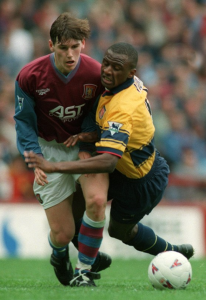
Eight years earlier, he stunned Goodison Park by rifling home from 25 yards after only 31 seconds of Aston Villa’s 7 December Premier League visit to Everton.

I was at Ashton Gate to see Sidwell’s amazing 50-yard lob over stranded Robins’ ‘keeper Richard O’Donnell (Jamie Murphy added a second in promotion-chasing Albion’s 2-0 win).

Manager Chris Hughton said: “It was a wonderful strike by Sidwell on his left foot when I would have expected it more from his right. It caught everyone by surprise, including their goalkeeper.”

I was also at the City Ground, Nottingham, seven months earlier when Sidwell went on as an 85th-minute sub and scored the winner (below) in the 91st minute to earn a 2-1 victory over Forest.

With his right foot this time, he drilled the ball in from 12 yards giving Albion a fourth win in five games which extended their unbeaten run to nine games.

“We felt that the game was becoming open and we felt we could bring players off the bench who could influence the game,” said Hughton. “One thing about Steve Sidwell is that he can break forward from midfield. I did not bring him on for that, but I am very glad he did it.”

Back to that game for Villa in 2008; moments after kick-off, Everton’s Mikel Arteta lost possession to Ashley Young. He fed James Milner who in turn found Sidwell. Finding himself with a sight at goal from 25 yards, he buried a stunning shot past Tim Howard. In an extraordinary end to the game, Young, who had scored Villa’s second, got a 94th-minute winner for the visitors after Joleon Lescott thought he’d salvaged a point in the 93rd minute, netting his second of the game. 

That opener at Goodison was a rare highlight for Sidwell in what overall was an unhappy two and a half years at Villa.

Sidwell had first caught Villa boss Martin O’Neill’s eye when he scored twice for Reading in a 2-0 home victory over Villa in February 2007.

O’Neill tried to land him before he opted to join Chelsea (the team he’d supported as a boy) and, by all accounts, predecessor David O’Leary had also tried to sign him.

So, it appeared to be a case of third time lucky when in July 2008 O’Neill took him for a reported £5million fee from being a Chelsea benchwarmer and gave him a three-year contract.

Sidwell during his first Albion spell

After success at Reading, where he had been reunited with Steve Coppell (who’d had him on loan at Brentford and Brighton as a young Arsenal player, as covered in my 2017 blog post), Sidwell had a disappointing season at Stamford Bridge, where he made just seven Premier League starts. 

Managerial change didn’t help his cause: he’d been signed by Jose Mourinho who left early in the season to be replaced by Avram Grant.

Sidwell later admitted: “I left for Aston Villa in search of regular football. In hindsight, I wished I’d stayed another six months because Luiz Felipe Scolari came in and you never know what might have happened then.”

At the time, Sidwell told Villa’s official website: “For me personally, it’s about getting back and playing. I have had a year of not playing as much as I would have liked so to get out on the pitch is the first aim.” 

Although he played in both legs of the InterToto Cup tie against Odense in July, knee and calf problems delayed his league debut until the end of October which he marked with a goal after going on as a late substitute in a 4-0 win at Wigan Athletic. That and the strike at Everton were two of four league and cup goals he scored for Villa that season when his 25 appearances (20 starts + five as sub) would ultimately amount to nearly half the total he made for the club: 37 starts + 27 as sub.

He didn’t add any more goals in the claret and blue and in the remainder of his time at Villa Park he was never really a regular, eg in 2009-10 only 14 of 33 appearances were as a starter and in 2010-11, three of six under Gérard Houllier.

Although he and O’Neill clashed on occasion, the Northern Irishman did say: “I’ve been very happy with him. It’s just that other players playing in positions all over the place have been playing brilliantly. Some people are playing out of their skin at this minute in our team. But I’ve been very pleased since he’s arrived at the football club.”

Sidwell’s former Reading teammate Nicky Shorey, who’d joined him at Villa Park, had high expectations of him ahead of his second season, telling the Birmingham Mail: “I don’t think Villa have seen the best of him yet. It’s been a strange season for Siddy. He’s been out injured for long periods and he’s picked up niggles here and there. I don’t think he’s ever had that before.

“For as long as I’ve known him, he’s never really been injured, so I think that’s something new for Siddy to try and learn from.”

Shorey said Sidwell had remained positive and upbeat around Bodymoor Heath and Villa Park and reckoned: “When he comes back for pre-season and hopefully has a good pre-season you’ll see the best of him and I think everyone will be impressed with how well he can do.

“When you know Siddy, that’s all he ever does – trains and plays with a smile. You haven’t got any worries with him on that count. He just keeps going and he’ll be fine. He’s just an all-round good midfielder and I’m sure he’ll show that before too long.”

Sidwell found himself competing for a midfield place with the likes of Milner (before his move to Manchester City), Gareth Barry, Stiliyan Petrov, Nigel Reo-Coker and Craig Gardner. He revealed later that he’d fallen out with O’Neill and at one point he went on the transfer list.

After O’Neill quit in protest at the sale of Milner to City, and ahead of Houllier’s appointment, Sidwell hoped to be given a new lease of life in claret and blue.

He overcame an Achilles’ problem and declared himself raring to go after playing 90 minutes in a 4-0 reserve team win over Blackpool at Bodymoor Heath.

“I feel I’ve shown glimpses,” he told the Birmingham Mail. “In the previous years, there have been good games and some poor games.

“If I get a run of games, I am sure I can perform to the best of my ability. Hopefully, now, whoever takes charge I will just get an opportunity and I will take it.

“It is going to be tough but it is down to individuals to perform in training, perform in reserve games and show the manager you are worthy of a start.

“Once you get that, you have to take it with both hands. Fitness wise, I’ve been training really well and looking sharp. It is just games that I need. I wasn’t unfit before the injury took place.”

When the Mail spoke to him ahead of a second city derby at the end of October 2010, Sidwell sought to exploit a two-month injury absence for Petrov saying: “It is all about opinions.

You don’t play under certain managers. Under certain managers you do get a chance.

“Once you get a chance it is about taking it and staying in the team.”

Sidwell started the game but was replaced by young Barry Bannan in the 58th minute of the dour goalless draw – and it turned out to be his last game for Villa (he was an unused sub away to Fulham the following week).

It was in a 2018 interview with Donald McRae of The Guardian that Sidwell revealed the extent of his disillusionment at Villa, telling the journalist: “When I was at Aston Villa I was on the most money in my career. But that was when I was at my unhappiest. I was living in Birmingham away from my wife and family.

“My middle son caught meningitis and was in hospital. The football never really took off and me and Martin O’Neill clashed. So, it was a combination of things.”

Released on a free transfer in January 2011, after being deemed surplus to requirements by Houllier, Sidwell joined Fulham – which is a story for another blog post.

After three years with the Cottagers, he followed ex-Fulham boss Mark Hughes to Stoke City and it was from there that he made his initial return to Brighton, on a half-season loan. 

Sidwell in action for Albion against Villa

In clinching his signing in January 2016, Hughton told the Albion website: “Steve is an experienced player who has played virtually his entire career in the Premier League. He knows this club, as well as a few of the squad and will supplement our existing midfield options.

“Beram Kayal, Dale Stephens, Andrew Crofts and others have been excellent in midfield for us this season, but we also need to make sure we have good options in every position of the team, and options which will be enough for us through until the end of the season.

“Steve brings that, and in addition, he is another experienced head; he is a player who’s proven at the very top level of English football. Brighton fans will know Steve is also a great athlete and top professional.”

Although he only made six starts, Sidwell went on as a sub 13 times in that half-season. When Albion had to endure the end-of-season play-offs after missing out on automatic promotion by only drawing (1-1) the last game of the season at Middlesbrough, it was Sidwell who stepped in to fill the boots of Stephens, who was suspended after his controversial sending off by Mike Dean at the Riverside Stadium.

Unfortunately, Sidwell was one of four Albion players who had to go off injured in the 2-0 play-off first leg defeat at Sheffield Wednesday. He suffered ligament damage but was taped up and given medication to enable him to play in the home tie, although he later admitted: “I should never have played really.”

He reckoned the Amex atmosphere for that game was the best he’d ever been involved in. In spite of a valiant effort, it ended in a disappointing 1-1 draw although Sidwell said: “I ended up playing one of my better games in a Brighton shirt, which maybe cemented a contract for the following season.”

Released on a free transfer by Stoke, Sidwell signed on a permanent basis for the Seagulls and was a key component in the side that won promotion from the Championship in May 2017. He made 29 starts plus eight substitute appearances that campaign.

“The whole reason behind my return was to help the club into the Premier League,” he said.

Sidwell was on the bench as Albion began life amongst the elite but after that “a slipped disc, surgery, and then before you know it your career’s gone.”

Sidwell later admitted: “It was really hard. I came here to do a job, to get the football club into the Premier League, and then it was time to go and enjoy it. I thought I had two or three years left, but that was cut very short.”

Recognising he was blessed to have enjoyed a 20-year career, he nonetheless said: “To not really say goodbye to football, something I’d done since I left school, and also to Brighton, was really disappointing.”

He stayed on at Albion as under-16s coach (right) for a while but increasingly his work as a pitchside pundit for live TV coverage of matches took up more of his time. He is also now a regular co-host of the popular That Peter Crouch Podcast.

Sidwell is also business development director of Box3 Projects, a company that constructs and designs office spaces to be rented out or sold.

Melton took Micky at his word – and saw red 

MIDFIELDER Steve Melton took manager Micky Adams at his word in a notorious pre-season friendly – and ended up being sent off after putting in a waist-high tackle on an opponent.

Adams subbed off a riled Richard Carpenter against Longford Town in July 2001 with instructions to former Nottingham Forest trainee Melton “to give the lad who was booting our players up in the air a taste of his own medicine. Make sure he knows you are around.”

Melton duly put in a flying lunge on Longford midfielder Alan Reynolds that saw him receive an automatic red card and the fall-out from the challenge sparked an almighty punch-up which ended up with Albion’s Charlie Oatway and opponent Alan Murphy also being sent off after an altercation.

That particular battle then led to an even bigger scrap involving coaches and even the Longford chairman who took a punch in the face from one of his own players!

The so-called pre-season “friendly” – later dubbed the Battle of Longford – was abandoned with only 44 minutes on the clock by inexperienced ref Dermot Tone, who had only stepped in to officiate because senior Irish referees were at a seminar.

For Melton, it was all a far cry from making your Premier League debut two years earlier in front of 25,353 fans at the City Ground, Nottingham, in Ron Atkinson’s last-ever game as a manager. Melton was pitched in for already-relegated Forest for an East Midlands derby against Leicester and they went down in style (Blackburn and Charlton also went down), scraping a 1-0 win against the Foxes.

Born in Lincoln on 3 October 1978, Melton first linked up with Forest when he was just 11, playing at the centre of excellence. He signed full time at 16, a matter of days after finishing his GCSEs. He progressed through the youth team and reserves and it was during that time that he first worked with Adams, who’d been assistant manager to Dave Bassett before Atkinson’s arrival. 

Before he got close to the Forest first team, 18-year-old Melton and another trainee had experienced competitive football in Finland where Bassett had sent them to play for Sami Hyypiä’s old club MyPa on a three-month loan.

“He sent us out there to toughen us up. It also got us used to playing in a proper men’s league so that we learnt to value the prize of the three points and the standing within the first team,” he explained in a matchday programme interview.

That experience followed by his Forest first team debut didn’t have the outcome he wanted and after only three games under Atkinson’s successor, David Platt, he picked up an injury and couldn’t force his way back into the first team picture.

In February 2000, he switched 50 miles west to third tier Stoke City and admitted: “It seemed a good move as I didn’t have to travel too far. 

“It was a chance for me to play for a decent-sized club that were going strong in the cup and in the league. It was either that or play reserve team games for the rest of the year at Forest and wait for a break that I didn’t think was going to come.”

As it turned out, it was mainly a watching role, making only seven appearances as a substitute. He was a non-playing bench warmer alongside Chris Iwelumo (who did get on) when City won the Football League (Auto Windscreens Shield) Trophy at Wembley, beating Bristol City 2-1.

Stoke’s new Icelandic consortium hinted that they wanted to keep him on but in the absence of a contract offer, rather than risk uncertainty, he took up Adams’ offer to join fourth-tier Albion. 

A complimentary caption in the club match day programme

On a trial in the Emerald Isle the year before the Longford incident, Melton did enough across the week of the tour to earn a one-year contract. He had a long wait before getting a start but after 11 introductions as a substitute he finally made his full debut in February 2001, stepping in for Carpenter at Torquay after the regular midfield starter pulled out with an injured ankle. 

After playing his part in Albion’s first win (1-0 courtesy of Bobby Zamora) at Torquay for 36 years, Melton told The Argus: “I’m enjoying it here. I’ve settled in with the lads and I share a house with some of them.” 

On playing for Adams, he said: “I think Micky is going to be a really good manager. I enjoy working with him. A lot of the lads do. 

“Hopefully he will take Brighton up. He’s had a taste of managing at a higher level at Forest and I think he has the potential to do it again.” 
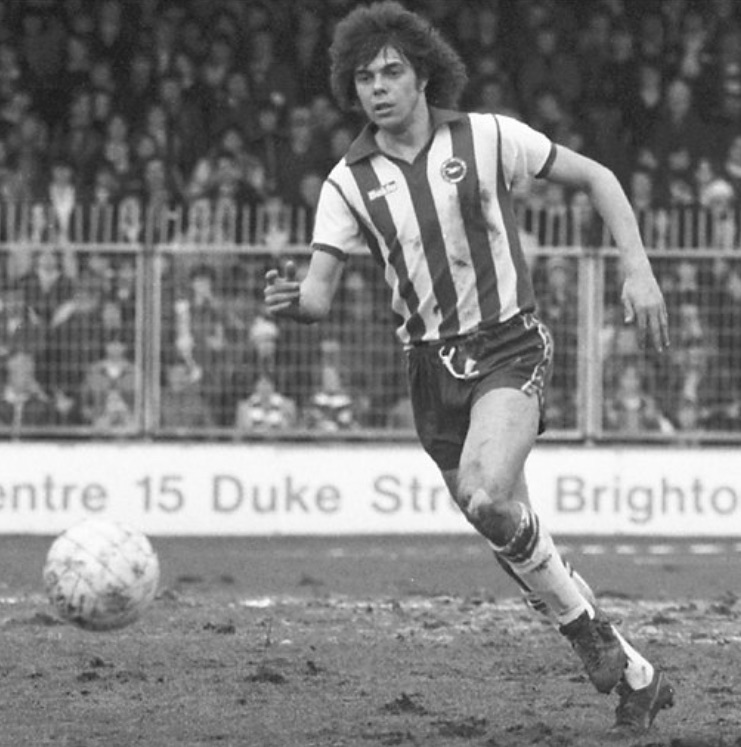
Melton’s outlook brightened the following month and he got starts in nine of the season’s remaining 15 matches as Adams led the Seagulls to promotion as champions. 

At home to his future employer Hull City, Melton made his home debut and scored his first goal for the club in a 3-0 win (Paul Watson and substitute Phil Stant also scored).

Reflecting on his involvement, he said: “It’s difficult to break in when the team keep winning every week, and they go unbeaten for 12 or 13 games, maybe drop a point but then go off on another run.

“It’s frustrating because you’re not playing, but you can’t really have too much of a case when the team is sat at the top of the league.”

Come the end of the season, he had done enough to be offered a two-year extension to his contract. As it turned out, the 2001-02 season followed much the same pattern as his first in terms of more appearances off the bench than starts.

He was on the scoresheet twice in the LDV Vans Trophy, scoring an extra time golden goal in a 2-1 home win over Wycombe Wanderers but was then inadvertently the fall guy in a 2-1 quarter-final defeat at Cambridge United.

Having given Albion a 36th-minute lead, latching on to Dirk Lehmann’s lay-off to fire a low right-footer past Lionel Perez from just outside the penalty area, he lost possession to Dave Kitson, who ran away to equalise, and then, four minutes into extra time, a shot by Armand One that was going wide took a wicked deflection off Melton’s shoulder to send United through to the next round.

A happier outing came when he made a rare start and scored as promotion-chasing Albion beat table-toppers Reading at the Withdean in February 2002. Peter Taylor’s Seagulls triumphed 3-1 on a rain-lashed night under the lights (Zamora and Junior Lewis also scored).

Goalscorers Melton and Zamora after a memorable win over Reading

“It was pleasing to start,” Melton told The Argus. “You have got to be patient and I have waited a good few months. 

“I have been on the outside for the last few weeks. Hopefully I can stay on the inside now. 

“Playing against the League leaders is a different matter completely from the LDV appearances that I made earlier in the season. 

“You can only do as well as you can when you are chosen to play and hopefully I did that. Once you have been given the shirt you have to try and keep it.” 

Melton’s goal was only the second league goal of his career and his first for 11 months. 

Taylor reckoned it was the best home performance since he took over from Adams the previous autumn and Albion won eight (and drew five) of the following 14 games to go on and clinch the third-tier title with the also-promoted Royals six points behind.

Melton scored Albion’s first goal of the 2002-03 season when he started in the 3-1 win at Burnley under his third Brighton manager, Martin Hinshelwood (Zamora and Paul Brooker also scored; Hinshelwood’s 18-year-old nephew Adam made his debut). 

Unfortunately, Melton tweaked a hamstring in the process and had to be subbed off. He only made nine more appearances (six starts plus three off the bench) as Hinshelwood’s short reign in charge ended with 10 league defeats in a row.

Incoming boss Steve Coppell brought in the likes of free agent Simon Rodger and Arsenal loanee Steve Sidwell and Melton found himself surplus to requirements.

It was in October 2002 that he moved to Hull on loan shortly after Peter Taylor had replaced Jan Molby as manager with the club about to move out of Boothferry Park and into the Kingston Communications Stadium.

Tiger Melton

Melton made 19 starts plus six appearances off the bench as the Tigers finished 13th in the old Third Division.

According to the website oncloudseven.com: “Despite his promise and Taylor’s persistence, Melton’s career at City was not a success and he showed only brief flashes of good form. Melton is, however, forever enshrined in the City record books because in December 2002 he scored the first ever goal at the KC Stadium against Sunderland, for the honour of lifting the Raich Carter Trophy.”

He found himself only on the fringes the following season and he had moved on to Boston United under Steve Evans by the time Taylor steered Hull to promotion as divisional runners up.
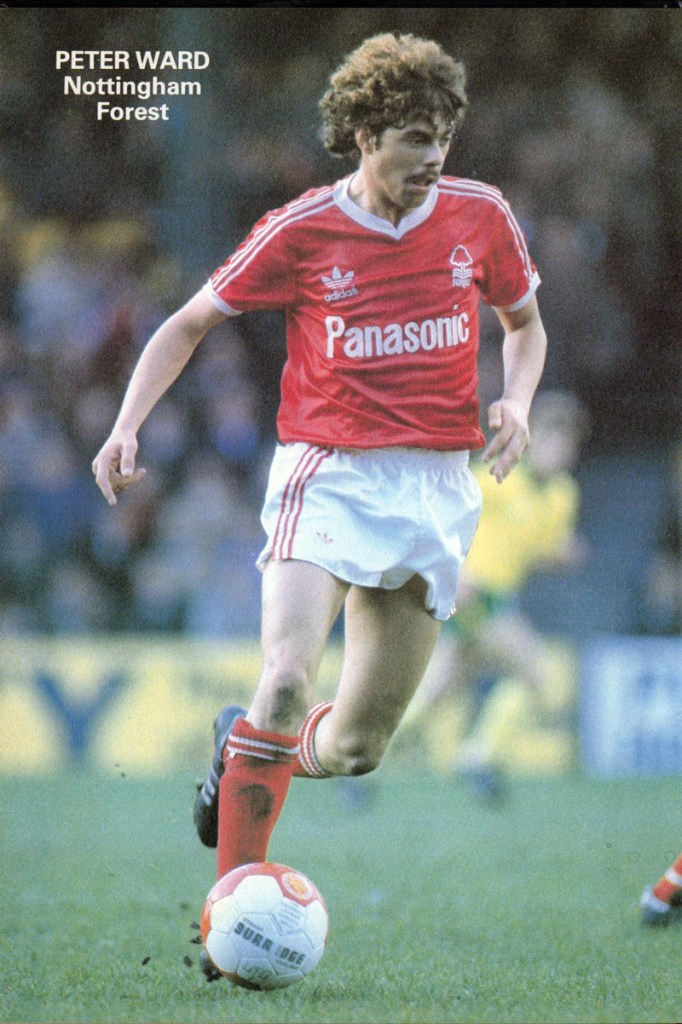
A recurring back injury restricted his playing time at Boston and during 2005-06 he was sent out on loan to Conference National side Tamworth. On his release from Boston in the summer of 2006, he switched to Southern League Premier King’s Lynn FC for two seasons.

Melton at Boston

In September 2008, he rejoined Boston with manager Tommy Taylor telling the club’s website: “Steve has great quality on the ball and that’s what we have been missing in the midfield area. 

Hopefully he will add another dimension to our team.”

But he was released at the end of the season and joined Lincoln United of the Northern Premier League Division One East, alongside his former Boston and King’s Lynn teammate Matt O’Halloran. After spells with Lincoln Moorlands Railway, Grantham Town and Worksop Town, he wound up his playing days back at Lincoln United.

In the meantime, his first job outside of football was in sales for mobile comms company Vodacom. He spent nearly seven years with the now defunct energy advice and installation company the Mark Group and since 2019 has worked for building services certification business The National Association of Professional Inspectors and Testers, where he is now commercial and compliance director.

Bees and Seagulls milestones on Michael Bennett’s wellbeing journey

IT ALMOST certainly wouldn’t have occurred to the loyal few Albion fans who followed the basement division Seagulls in exile in 1998-99 that one of the men in stripes would go on to make a difference to the lives of hundreds of footballers.

Brighton was the eighth and last league club Michael Bennett played for over the course of 12 years in which he discovered all the highs and lows that footballers can experience.

Since packing up playing, those personal insights helped him to begin a journey that led him to help huge numbers to cope with the game’s often-unseen stresses and strains.

Bennett became a psychotherapist, gained a degree and led the setting up of a counselling and mental health and wellbeing support network for the Professional Footballers’ Association, where he worked for 15 years, latterly as director of player wellbeing. In that role, he was frequently a media spokesman for the PFA.

Dr Michael Bennett

Now running his own counselling business it’s all a far cry from the days when his league playing career ended filling a variety of positions in Brian Horton’s fourth-tier Brighton team, playing home games in exile at Gillingham. In one game, he was racially abused by a Swansea City fan who ran onto the pitch to confront him (more of which, later).

It was quite a fall from career highlights that saw him play for England at under-20 level alongside the likes of Matt Le Tissier, David Batty, Neil Ruddock and Tim Sherwood, make his debut at 17 in the top division for Charlton Athletic alongside John Humphrey, Colin Pates and Steve Gritt, and feature for Brentford (with Chris Hughton and Neil Smillie) when the Bees played second-tier football for the first time in 38 years.

While Addicks fans remember Bennett fondly, Bees supporters are a lot less generous and mainly recall a training ground incident in which the player broke a teammate’s jaw with a single punch.

The internet can be – and is – many things and unfortunately for people like Dr Bennett, such past incidents are still recorded for all to read about.

Thankfully, all the excellent work he has achieved in the health and wellbeing field is also documented and, in October 2021, Andy Naylor of The Athletic did an in-depth piece which examined his journey in detail.

“The story of his rise to prominence as a leader in his field is inspirational, a demonstration that with application, determination and drive you can build a career in the game that extends well beyond playing football,” wrote Naylor.

Bennett eschewed a coaching career (even though he passed his UEFA B licence) and at college, while studying Maths and English, was urged to take up counselling. As Naylor reported: “By 2004, Bennett had his degree in it and the following year he set up his own company, Unique Sports Counselling.”

Three years later, he joined the PFA as southern region education adviser aiming to get players to prepare for life after football. He also invited attendees to his workshops to speak to him privately about emotional issues – and he discovered there were plenty who took up the offer.

Eventually he persuaded then PFA chairman Gordon Taylor of the need for a designated wellbeing department dealing with the welfare of players.

In 2015, Sam Wallace of The Independent interviewed Bennett for an article about troubles ex-Arsenal and England full-back Kenny Sansom was facing. He discovered the year before the PFA had requests for support from 197 of its members.

“That is some caseload for Bennett, a man who talks in the careful, measured tones of someone used to dealing with problems that must seem intractable,” wrote Wallace. “Last year, the PFA established a 24-hour telephone helpline for members. Safe to say, it is not underused.”

The problem, Bennett told Wallace, is that the elite-level game prepares footballers physically but not emotionally. “What we realise is players often don’t get asked how they are. They get asked about football. When they get asked about their emotions, they tend to open up.”

After a 2017 presentation by Bennett to first and second-year scholars at Norwich City, Canaries’ assistant head of education and welfare Mike Macias told Press Association Sport: “When they see it and hear it coming from someone like Mickey, who has been there, done it and bought the T-shirt, they will think: ‘This impacts me and there is someone there to help me’.”

When Bennett left the PFA earlier in 2025, he said: “I am proud of the work we have done within the department which has grown into a vital and impactful part of the PFA’s mission, ensuring that wellbeing remains at the heart of everything we do.”

Among dozens of messages of thanks for his contribution left on his LinkedIn account was one from former Albion and West Ham midfielder George Parris, who wrote: “A great stint Dr Bennett, thanks for all your help, support and encouragement not just to myself, but loads of other people along the way during your time at the PFA.”

Born to Jamaican parents in Camberwell on 27 July 1969, Bennett was raised in a block of flats near Millwall’s old ground, The Den, and it was only when he was spotted by Charlton playing Sunday League football that thoughts of a professional career in the game arose.

Young Mickey at Charlton

He went straight into the Addicks academy at 16 and made his debut in Charlton’s first team a year later. In his interview for The Athletic, he said: “You move from a youth team changing room to a first-team changing room. People don’t talk about that transition but that, for me, was pressure. I’ve gone from having jokes and banter with the boys in the youth team to the first team.

“The pressure intensifies. You put it on yourself more than anything else, because you don’t want to let anyone down.”

He continued: “The first well-being issues came when I signed for Charlton. I went from parks football, having fun, to going into a pressurised environment where results are key and you know if you have one or two bad games there’s somebody behind you waiting to take your spot.

“So, the pressure for me was constant. I wasn’t able to deal with that, I didn’t know who to talk to about it. I’d already formed my personality going into the game. I’m a very talkative person and I like to talk about stuff. There wasn’t anyone to do that with.”

Addicks action

On top of the various issues he was facing as a young player, he then ruptured his anterior cruciate ligament and crushed the cartilage in his knee against QPR in December 1988 which sidelined him for nine months. By his own admission, when he eventually returned to action he was not the same player, concerned over whether the injury would happen again.

On the fans forum Charlton Life: ‘Amos on the wing’ wrote: “One of the good guys Mickey Bennett. Good player, but was never quite the same player after his bad injury against OPR in 1988.”

Another poster, Leroy Ambrose, said: “One of my favourite players from the ‘Sellout’ era (ed: Charlton played ‘home’ games at Selhurst Park at the time). Good bloke – my mate was a mascot back when he was playing and he and his parents were thrilled at how nice he was, and how much time he took with them during the pre-match kickabout and after the game.”

And Ormiston_Addick added: “Started brilliantly for us, great pace and drive but never the same player after doing his knee. Great little period in 88-89 with our ‘Black Magic’ front line of Bennett – Leaburn – Williams – Mortimer.”

‘Home’ continued to be Selhurst Park between 1990 and 1992 after Bennett switched to then top division Wimbledon, who rented Palace’s stadium because their own Plough Lane wasn’t up to scratch for the top division. But Bennett was never a regular for the Dons and he and Detzi Kruszynski were used as makeweights in the transfer of Dean Holdsworth from Brentford to Wimbledon.

He joined just as Brentford began playing second tier football for the first time since 1954 but the elevation didn’t last long. They were relegated in bottom place come May 1993 although Bennett was a fixture in the side, playing a total of 43 league and cup matches plus six as a sub, and scoring four goals.

The Brentford fans forum bfctalk declared: “Despite losing Chris Hughton in December to a career ending injury, no real replacement was signed until March by which time the rot had well and truly set in. Mickey Bennett flattered to deceive and was a one game in four merchant, Detzi Kruszynski had an aversion to training and hard work.”

In another post, the forum said Bennett had “started out like a house on fire as a direct and goal hungry right winger and we thought we had discovered a new star, but he too flattered to deceive”.

It was what happened in November 1993 that many Bees fans of a certain vintage remember. Bennett had his contract terminated by manager David Webb after breaking transfer-listed teammate Joe Allon’s jaw in three places with one punch in a training ground incident.

But the PFA backed Bennett’s version of the incident and took Brentford to a Football League commission of appeal which decided the player should be reinstated. However, Bennett knew his position in the Griffin Park dressing room was untenable, and he was released by mutual consent.

The incident was back in the spotlight five years later when the media was pondering what fate awaited John Hartson for his infamous West Ham training ground kick in the head of teammate Eyal Berkovich.

Rising high for the Albion

Bennett, by then playing for Brighton, told a reporter: “Obviously you can’t do that sort of thing to a teammate and I would prefer to leave that memory where it belongs – in the past.”
He added: “You have to get on with life, and I have no complaints. What happened between me and Joe Allon was little more than handbags at six paces – that’s why the PFA got involved and stood my corner.”

Bennett also said: “What happened to me at Brentford was way back. Right now, I’ve got other things on my mind, like trying to score my first goal of the season for Brighton.”

However, when an enterprising journalist caught up with Allon, he said: “Mickey broke my jaw in three places with a single punch in an unprovoked attack. There had been no history of ill-feeling between us and something inside him must have snapped.

“He just flipped, I collected a punch on the chops and got carted off to hospital, where they operated on me and wired up my jaw. I was in hospital for about 10 days and out of football for three months.

“The funny thing is that Mickey was supposed to be a born-again Christian, and I couldn’t work out how such a religious bloke could just clock one of his teammates.”

For all Bennett’s desire to steer clear of headlines for the wrong reason, it was while playing for Brighton away at Swansea City on 5 February 1999 that he was in the spotlight again when he was racially abused by a home supporter who ran onto the pitch.

“I was shocked by it,” he told Naylor of The Athletic in 2021. “I knew it was bad because I couldn’t function in the game after that, my head had gone.

“The police came to me and asked what I wanted to do. For a split second I remember thinking, ‘I just want to get on the bus and go home’. The other side of me thought, ‘If I don’t do something, that person could do something to another player’.”

The case went to court and the 29-year-old assailant, who admitted racially abusing Bennett and invading the pitch, was sent to prison for a year and banned from watching in a football league ground for three years.

The player told The Argus: “All of a sudden, I turned around and saw this fan running towards me. He was coming closer and closer.

“I remember thinking to myself should I just take a punch or what do I do? Then a steward and one of their players jumped in front of him when he was about a foot away from me and hauled him off.

“For five minutes I was a bit shaky. He could have done anything to me.

“After that I just got on with the game and tried to cancel it out, but when the police came to me after the game to take a statement it brought it all back again.”

By the time of that match, Jeff Wood had succeeded Horton, the manager who’d taken on Bennett after he’d impressed enough on trial in pre-season games against Lewes and Crawley to be awarded a one-year contract.

Introduced in match programme

The matchday programme introduced him as “a versatile right sided player who can operate at anywhere down the right side or in the centre of midfield”.

He started off in central midfield alongside Jeff Minton and later was used as a central defender. That autumn, he clocked up his 150th League appearance in a 2-0 defeat to Cardiff City, where he’d spent the opening three months of the 1996-97 season. Having left Brentford, he’d gone back to Charlton briefly before barely featuring in the 1995-96 season at Millwall. On leaving south Wales, he spent a year at non-league Cambridge City, and at Christmas 1997 returned to the league at Orient under Tommy Taylor.

Before facing the Os in a first round FA Cup tie in 1998, Bennett told The Argus: “I knew Tommy Taylor from my time at Charlton and I figured in one game away to Exeter, then four or five more as a sub before I was eased out.

“I’ve got another chance to face them now because I missed the league game away with a groin injury. It’s a nice tie, but I’ve got nothing to prove to Tommy or anyone else.” (Albion lost 4-2).

Bennett in Albion’s change kit in the 1998-99 season

Bennett found himself playing for a third Albion manager when Wood’s brief and unsuccessful reign at the Albion helm was brought to an end and, although he featured under Micky Adams, he was one of eight players released at the end of the season.

His league career at an end, he continued to play at non-league level for Canvey Island and in the 2003-04 season was part of a Canvey Island squad that also included former Brighton players Junior McDougald, Peter Smith, and the aforementioned Minton.

Meanwhile, he transitioned into a mental health and wellbeing counsellor, saying: “I identified the value of offering to the side of the game that rarely grabs the headlines but is just as affecting to the people it helps.”

On his LinkedIn profile, he points out: “Playing at all levels of the football league has provided me with an invaluable knowledge of the inner workings and operational structure of football in this country, experience that I have endeavoured to apply for the benefit of my fellow pros since my retirement.”

Jamie Moralee’s pitfalls a valuable lesson for future prosperity

IT WOULD BE an understatement to say striker Jamie Moralee had mixed fortunes during his time with Brighton.

A one-time £450,000 signing, the former Crystal Palace player joined the lowly Seagulls on a free transfer when they were playing home games in exile at Gillingham in 1998-99.

His lack of goals earned a certain amount of derision from the handful of Albion followers who supported the club in those dark days.

And on one infamous occasion, in March 1999, he managed to get himself sent off within a minute of going on as a late substitute, without touching the ball.

Moralee sees red at Scunthorpe

To make matters worse, the punch he threw didn’t even catch the opponent, John Eyre, who promptly added to Albion’s woes by completing his hat-trick in a 3-1 home win for Scunthorpe United.

The Argus put Moralee’s “moment of madness” down to frustration at so regularly being on the subs bench (16 times – and only sent on in eight of them).

“He did not actually connect, but the intent was obvious and the resulting red card inevitable,” the newspaper reported.

Signed at the start of the season on a month-to-month contract, Moralee had a run of 14 starts under Brian Horton but after scoring just the one goal (in a 3-1 defeat against Mansfield), he was dropped to the bench.

Just before Horton quit to move to Port Vale, he gave Moralee a contract until the end of the season and in January, after Jeff Wood briefly took charge, the player hoped his impact as a sub when laying on a winning goal for Paul Armstrong against Scarborough would help change supporters’ views of his contribution.

“It was nice to be a bit of a hero for a change,” he told The Argus. “I was a bit unlucky with a goal which was disallowed at Chester in the game before and I just want to get on with Brighton and do my best.

“I’ll take the credit because I’ve not had much this season. Hopefully the corner has turned for me.”

Moralee said he had been asked to play several different roles and reckoned much of the criticism aimed his way was unjustified.

Moralee gets stuck in

“I feel I have done all right,” he maintained. “I don’t think the supporters really appreciate me and they let me know that when I came on, but I will just keep doing my job.

“The players give me all the support I need and I am confident enough to go out and do the business. I certainly won’t hide.”

Having missed several matches after the red mist descended at Scunthorpe, a third manager arrived in the shape of Micky Adams, and Moralee started the last seven matches of the season under the new boss, scoring once.

Moralee slides in

But it wasn’t enough to earn a new deal and Moralee was one of eight players released at the end of the season. Having played under three managers in one season for the Albion, there was swift change in the dugout at his next port of call too.

He began the next season up a division with Colchester United, whose manager Mick Wadsworth said: “I remember him as a very outstanding young player with Millwall. We watched him several times during last season.

“He is very sharp in and around the penalty box and his hold-up play is exceptional – a quality we were sadly lacking in the season just gone.

“Jamie was an outstanding prospect as a young player with Millwall and was sold on to Watford for £450,000 around five years ago before his career became blighted by injuries.

“Last season was his first full season for some time as he battled to shrug off a string of injuries and has probably used Brighton to get back to full fitness and match sharpness.”

The season was only three games old when Wadsworth resigned and was replaced by Steve Whitton who saw his United side beat Reading 3-2 in his first match (Warren Aspinall scored twice and Nicky Forster scored one for the visitors). Moralee, making his league debut for Colchester, was subbed off on 76 minutes.

After that, Colchester went on an 11-game winless run and other than a positive spell in January, had a forgettable season and finished third from bottom. Moralee made 21 starts plus eight as a sub.

Born in Wandsworth, London, on 2 December 1971, Moralee joined Palace as a YTS trainee, working his way through the levels alongside Gareth Southgate. He was a regular in the Palace reserves playing up front with Stan Collymore.

But after just two first team starts and four sub appearances under Steve Coppell, he was traded as a makeweight in exchange for Millwall’s Chris Armstrong.

Happy days in the Lions’ Den

When unveiled to Lions fans in a matchday programme article, Moralee boldly declared: “Having broken though into first team football with Palace last season and learned from strikers like Mark Bright and Garry Thompson, I feel I’m ready to come to a club like Millwall and score twenty goals a season.”

Amongst the goals for Millwall

Of the player he swapped places with, he even went as far as to say: “Chris was quick and by all accounts did very well here in the opening games this season, but I’ll score more goals than him.”

Continuing in a similar vein, he added: “I’m most effective in the box, I like the ball into my feet and, at the risk of sounding over confident, if I get the chances I’ll score goals for you.”

True to his word, Moralee did get amongst the goals for Mick McCarthy’s side and 20 goals in 63 appearances (plus 13 as a sub) over two seasons earned him a £450,000 move to Watford.

Moralee made a big money move from Millwall to Watford

But the Glenn Roeder signing had a tough time with the Hornets, only seeing his fortunes change after Graham Taylor returned to the club as manager. He explained the circumstances in a full-page piece in the Wolves v Watford matchday programme of 30 March 1996.

“Glenn bought me to play up front with a big target man, which I was used to at Millwall. But the partners I had were all smaller than me and I was now the big target man, a role that did not suit me and one that I do not enjoy.

“I had always been used to scoring, something that wasn’t happening, and this resulted in a loss of confidence.

“The intentions were there, but I needed a big target man to feed me the ball. It just did not work out.”

When Taylor took over from Roeder, Moralee got back the starting place he’d lost and learned how to play as a lone striker. “It is a lot of work but I believe I have developed into a better all-round player,” he said. “It is nice to have a manager with a little faith in me.”

After Watford were relegated to Division Two, in the summer of 1996 he moved on a free transfer to Crewe Alexandra where he didn’t register any goals and made just 13 starts and six sub appearances.

He ended the 1997-98 season with Royal Antwerp in Belgium and spent pre-season with Fulham before Horton took him on at the Albion, initially on a monthly contract basis, at the start of the 1998-99 season.

After his season at Layer Road, he linked up with former Crystal Palace colleague Peter Nicholas at Welsh Premier League side Barry Town. He spent three seasons with Barry, winning the Welsh Premier-Welsh Cup double each season. He was also involved in three Champions League campaigns with the club and netted 59 goals in 96 appearances.

Financial problems at Barry led to Moralee moving on and he had spells with Forest Green Rovers, Newport County and Chelmsford City before ending his playing career in 2006.

After retiring from playing, Moralee set up his own football agency, New Era, in conjunction with former Albion teammate Peter Smith, with Rio Ferdinand as its highest profile client.

In an interview for a webinar, Moralee said the agency aims to teach up and coming talented footballers how to avoid the pitfalls that affected his own playing career.

Describing his own “very up and down career with a couple of highs and many, many lows”, he explained to The Player, The Coach, The Person webinar: “When I got a few quid, I was spending it on all the wrong things. Buying cars and watches and going out too much; drinking too much. I wasn’t investing it.”

Hard work, application and a ruthlessness to succeed in life are aspects he’s now passing on having realised they were attributes that would have made a difference to his own career as a player.

“I needed to stay in football in some capacity,” he said. “I didn’t want to be a coach or manager.I knew that young players, if they got to the edge of the pitfalls I fell down, I could help them.”

He is particularly pleased to have helped players who had rejection in their early days who went on to have successful careers, such as Welsh internationals Chris Gunter, Neil Taylor and Ashley Williams.

Moralee spoke openly about his 20-year friendship with Rio Ferdinand in a 2018 film for the ‘Best Man Project’ of The Campaign Against Living Miserably (Calm): an initiative to celebrate the power of friendships which supports men in looking out for their mates.

Opening up on the power of friendships in football

Wembley hero Liam Dickinson’s nomadic football journey

HE’D SCORED a decisive play-off final goal at Wembley for Stockport County but a subsequent £750,000 move to Derby County didn’t work out for Liam Dickinson and Brighton signed him for £300,000 only a year after the Rams had shelled out that big money.

Dickinson didn’t even get a game for the Rams, instead being sent out on loan to Huddersfield Town, Blackpool (where he’d begun his career in their school of excellence) and Leeds United.  He was a player who didn’t stay in the same place for long; in total he featured for 23 different clubs.

Like many before and since, changes of manager were often the cause of him moving on. At Derby, for instance, he was signed by Paul Jewell, recalled from his loan at Blackpool by caretaker manager Chris Hutchings and eventually let go by Nigel Clough.

It had been intended he’d join Leeds in January 2009 but the necessary paperwork didn’t arrive until 14 minutes after the deadline! Further discussions led to a revised deal, but the move was called off because he was injured. He eventually joined up with United in the second week of March and although he scored in a behind-closed-doors friendly against Sheffield United (1-1), he didn’t get on the scoresheet in eight League One games (four starts, four as a sub) under Simon Grayson.

His first start was in a 3-2 win at Crewe and he managed three successive starts, in a 2-2 draw at Leyton Orient, a 1-0 win over old club Stockport and a 1-0 defeat at Leicester but he was not involved in the end-of-season play-offs when Leeds (with Casper Ankergren in goal) lost out to Millwall in the semi-finals.

An enclave of former Stockport teammates – James Tunnicliffe, Jim McNulty, Gary Dicker and Craig Davies – helped Dickinson to choose Brighton as his next club

After Brighton boss Russell Slade welcomed the 6’4” forward to Withdean on a three-year contract, he told the club website: “He brings something different to the table. His goalscoring record is very good and he has a good goals-per-game ratio, and like one or two of the other signings I have made this summer, he is hungry to get his career back on track. I’m sure there is a lot more to come from him.”

He scored in his third and fourth games for the Albion, but both came in defeats against former clubs: the first in a 7-1 capitulation to Huddersfield and the next in a 4-2 defeat to Stockport.

He was on the scoresheet in the home 3-3 draw against Hartlepool (Nicky Forster scored Albion’s other two goals) that spelled the end of Slade’s tenure as manager. But it is what happened two days later that many will remember him for.

Unluckily for him, he was pictured carrying a seemingly comatosed young woman in his arms in the middle of Brighton at 1am. The Sun newspaper was covering a renowned student pub crawl ritual at the time and didn’t realise who they’d snapped.

Eagle-eyed Albion supporters did, though, and, after discussion about the incident on fans’ forum North Stand Chat, The Argus picked up the story, running an article headlined ‘Samaritan Brighton and Hove striker scores an own goal’.

For his part, Dickinson told reporter Ben Parsons how he was on his way home after a meal out in the city when he helped a girl to a car waiting to pick her up.
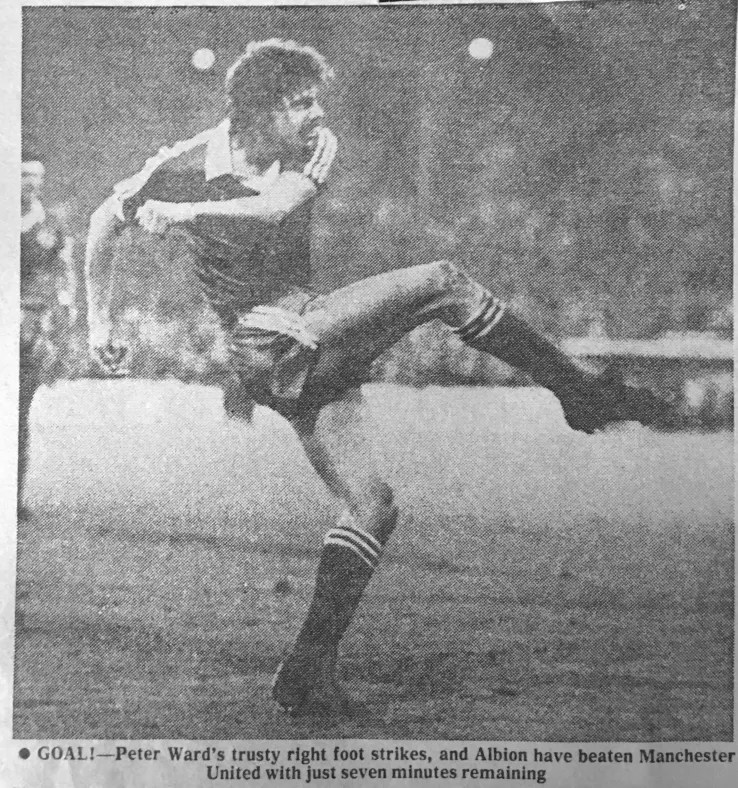
He said it was simply a coincidence that he was helping the girl when the photos were taken, adding: “I saw two girls holding another girl up. She collapsed in front of us. Her mum or her auntie picked her up in a car. I picked the girl up and put her in the car.
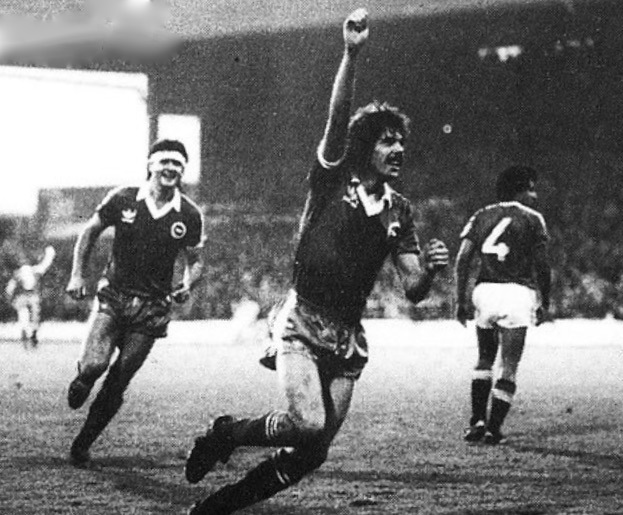
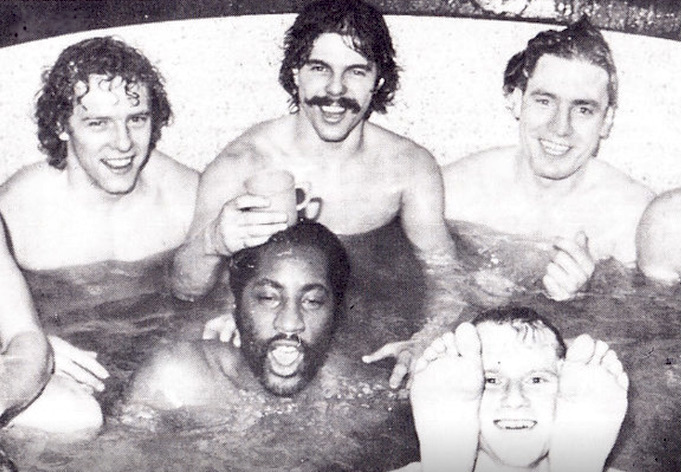
“I didn’t want to just leave her. Anybody else would have done the same thing.”

Albion said they would deal with the matter internally. Dickinson was omitted from the squad for the following game, a 4-4 FA Cup draw with Wycombe Wanderers with caretaker manager Martin Hinshelwood in charge, but he was back in the fold for Gus Poyet’s first game as Slade’s replacement.

In the televised away game at Southampton, he went on as a sub for Forster in Albion’s 3-1 win at St Mary’s. Dan Harding, Dean Hammond and Adam Lallana were in the Saints side.

Dickinson got occasional starts under Poyet but more often than not was sent on as a sub to replace either Glenn Murray or Forster.

Given a start in the FA Cup second round win over Rushden and Diamonds, he scored twice, in the third and 86th minutes, as Albion edged the tie 3-2. He was preferred to Murray in a Boxing Day clash with Leyton Orient that finished goalless but, perhaps to prove a point, two days later the restored Murray hit four at Wycombe in a 5-2 Seagulls win.

Dickinson was back on familiar territory at Edgeley Park in January 2010, but only got a half an hour run-out as a sub against his old club (replacing another former County man in Dicker) as the game finished 1-1, Andrew Crofts salvaging a point with a 90th minute equaliser.

In a 1-1 draw at Leyton Orient, Dickinson started the game and, when he was denied a penalty, incandescent Poyet was sent from the dug-out for protesting.

“If you ask anyone, they will tell you it was a penalty and a red card,” Poyet maintained afterwards. “The referee is 10 yards away and he doesn’t give it. You’ve got a chance to score a penalty and it’s 2-0. It’s a different game.”

Dickinson took to the field against another of his former clubs in Huddersfield wearing distinctive ‘banana yellow’ boots. “I don’t like dull, boring colours. I like to brighten the pitch up a bit. I’ve had a bit of stick off the lads,” he told The Argus.

The striker, who’d scored six goals in 13 games for the Terriers while on loan, didn’t manage to get on the scoresheet and was replaced by Murray as the game petered out to a 0-0 draw.

At that stage, Dickinson was deputising for Forster who was out of favour with Poyet over a contract dispute.

As the Uruguayan began to bring in his own selections, such as on-loan Kazenga LuaLua, Dickinson chose to go on loan to Championship strugglers Peterborough United, who were managed by his former Stockport boss Jim Gannon. Dickinson scored three in nine games for Posh. On his return to Brighton, he was sold to Barnsley, who were in the Championship at the time, for reportedly half the fee paid out for him just a year earlier.

Tykes boss Mark Robins declared: “He is different to the strikers we have here already and will give us something else up front.

“He is only 24 and still has room for improvement. He has a decent scoring record both in the Championship and in the lower leagues.

“Liam fits in to what we are trying to do here both in terms of on the pitch and within our budget.”

But he made just one start, in a League Cup match, and three sub appearances in the league for Barnsley when his old Derby caretaker manager, Hutchings, took him on loan to Walsall. He didn’t find the net in seven League One games.

Next stop, from January to the end of the season, was Rochdale, the side against which he had scored that 2008 League Two play-off final winner.

But a goalless run of 14 games (seven starts and seven off the bench) prompted this comment from AtThePeake on fansnetwork.co.uk in 2021: “In terms of expectation versus reality, few signings can have disappointed Rochdale fans quite like the loan signing of Liam Dickinson in January 2011.”

The supporter wrote: “Dale were looking for someone to become the fulcrum of an attack that included Chris O’Grady drifting in from the left and the emerging Matt Done playing as a second striker.

“Having seen first-hand the threat Dickinson could be with his aerial prowess, strength and touch in front of goal, Dale fans were reasonably excited that the answer to their striker problem had been found, but it quickly became apparent that the struggles with Derby and Barnsley had affected Dickinson’s confidence.

“During his spell, Dickinson was all too easy to defend against, struggled to hold the ball up and lacked any cutting edge when it came to finishing the chances he did manage to fashion for himself.”

A projected move to Plymouth Argyle was called off after just eight days, with personal reasons being cited, but the nomadic striker’s next stop was League Two Southend United under Paul Sturrock, where he netted 12 goals in 37 matches (33 starts plus four as a sub).

Dickinson scored a dozen times for Southend United

Not for the first time, he found himself in the headlines for the wrong reason when he and two others were reprimanded for a breach of club discipline over an unspecified incident at a hotel the evening before a match at Morecambe.

A broken ankle brought a premature end to his season with the Shrimpers, and it proved problematic in trying to continue his league career elsewhere.

He trained with Port Vale but even his agent Phil Sproson was quoted as saying: “Liam will admit he has been no choirboy in the past.

“He has had quite a few clubs and that’s probably because he has been no angel.

“He is loud and vocal and has had too many nights out over the years – but he has matured.

“He realises he will have to change and toe the line because he has a darker side that has dragged him down in the past.”

As it turned out, he was eventually out for a year because his broken ankle didn’t heal properly. He played two pre-season friendlies for Vale in 2013 but manager Micky Adams didn’t take him on because of ongoing problems with the ankle.

Born in Salford on 4 October 1985, Dickinson was originally a centre-half when he was on the youth books of Blackpool, Bolton and Blackburn. He stepped away from professional football at 16 and studied to be a graphic artist but continued to play in non-league sides. He appeared for Irlam, Swinton, Trafford and Woodley Sports before he was taken on as a pro by Stockport in 2005 after a successful trial.

He scored on his County debut, only five minutes after going on as a 71st-minute sub against Cheltenham Town at Edgeley Park. In three years under Jim Gannon, he hit 33 goals in 94 appearances.

The 2007-08 season was his most prolific term as a league player, netting 21 times from 32 starts and six games from the bench. It also earned him Stockport’s Player of the Year award.

It was to Stockport, then in the Conference North league, that he returned in 2013, but he only managed one goal in 13 games before returning to the non-league arena.

Between 2014 and 2019, he turned out for Stalybridge Celtic, Guiseley, Bradford Park Avenue, FC United of Manchester and finally Droylsden before calling it a day.

In an online chat with Stockport County Live towards the end of the Covid lockdown, in August 2020, Dickinson opened up about his mental health, admitting he’d been through a period when he was suffering with depression.

Post playing, he told his interviewer, he was working installing signage for a print company.

Welbeck – “something really exceptional you don’t find in many players”

DANNY WELBECK was still at school when he made his senior football debut in the League Cup.

A first-year scholar at Man Utd, and just 17 in September 2008, Welbeck made his bow against Middlesbrough in front of a 53,000 crowd at Old Trafford. United won 3-1 with goals from Ronaldo, Giggs and Nani. And they went all the way that season, beating Tottenham on penalties in the final at Wembley.

Although Welbeck had been subbed off 10 minutes into the second half, it was the first of many medals he collected and in five years at Arsenal, after his £16m 2014 transfer deadline day move from Old Trafford, he twice collected FA Cup winners’ medals (even though he missed the 2015 final through injury when Aston Villa were humbled 4-0).

When Welbeck scored the decisive quarter-final goal for Arsenal that knocked United out of the 2015 competition, manager Arsene Wenger praised the player and said: “We all want to do well when we play against our former club, to show that you are a great player, but it’s not easy to deal with the mental situation of it. 

“He focused just on his game, didn’t do anything special. He just played football like we wanted him to play. He has shown mental strength because it’s not always easy to deal with that. You have a little bit of a psychological consideration.”

Wenger continued: “Overall, I think he had a great game. He just wants to win. He’s a team player, that’s what I like about Danny. He’s intelligent and he always wants to do well for the team. 

“He’s a great talent and he has shown again that he can produce such a complete performance, defensively and offensively as he did today – he has a great future.”

Welbeck played in the 2017 final when the Gunners edged it 2-1 against favourites Chelsea, and it was a highlight of his injury-plagued five years at Arsenal.

“It was a great performance,” he said. “Every single one of us on the pitch performed really well that day. It was a deserved win.”

Welbeck scoring one of his three against Galatasary

Another highlight was scoring the first senior hat-trick of his career in a 4-1 Champions League home win over Galatasary in October 2014.

Injuries to each of his knees and a serious broken right ankle severely limited Welbeck’s availability during his time with the Gunners and he admitted in a matchday programme interview: “When I look back, the injuries I suffered really hindered my progress.

“That really disappoints me to this day because I know that if I had managed to stay fit I would have done a lot more at the club, scored more goals and made more appearances.”

Even so, he pointed out: “I look back on my time at Arsenal as a great experience; a great club. There were lots of positives, despite the negatives with the injuries.

“The fans always treated me well, showed me love, and I will always respect and remember that.”

Welbeck opened up about the impact of his many injuries in a July 2020 interview with Adam Bate of Sky Sports. “You go through a load of emotions,” he said. “There are times when you are there sat in your hospital bed and you are crying. You are just overthinking things.”

He continued: “Once you have had the surgery and your head is straight, you know what has happened, it is behind you and you have got to look forward. You try to build from where you are that day. Every single day there are steps to overcome. You just have to come through them and you find that you are getting better and better and feeling in a better state of mind.”

He also explained how the time wasn’t entirely wasted. “There are football games on TV, you can watch different players who are playing in your position, you can watch your own clips to see what you can improve on,” he explained.

“There are little apps that can help you, people who you can talk to. I think there are so many extra percentages you can gain and if you can get that extra one per cent it is always going to be a help.”

Welbeck buries one of his 32 goals for Arsenal

Wenger was certainly an admirer of what Welbeck was able to contribute. For example, speaking in February 2018 ahead of a shock 2-1 Europa League second leg home defeat against Graham Potter’s Ostersunds, Wenger said: “I want to keep him because I believe he has gone through a torrid time.

“He has come out well. I see signs in training now that are positive. If he can stay on the pitch and not be injured, I want him to stay here.”

And after the striker scored his fifth goal in five appearances to clinch a Europa League quarter final v CSKA Moscow, he said: “The qualities of Danny Welbeck… when your back’s against the wall, he looks like he has that extra special motivation in his body and in his head, that can give you something special.

“That’s something really exceptional and that you do not find in many players.”

Welbeck made 126 appearances for the Gunners (78 starts + 48 as sub) and scored 32 goals. As he had at United, he once again found himself at a club when there was an end of an era moment as Wenger left the Gunners after 22 years in 2018.

A badly-broken right ankle sustained in a Europa League match against Sporting Lisbon in November 2018 proved to be the end of his Arsenal career – he only made one Premier League start (out of seven appearances in total, plus seven off the bench) under Wenger’s successor Unai Emery.

Released at the end of that season, he joined Watford, who train next to Arsenal’s training ground in Hertfordshire, but injury struck early into his time with the Hornets, a hamstring problem putting him out for four months. After they’d got through four managers in the Covid-hit season, and been relegated from the Premier League, he left in October 2020 having scored three goals in 20 appearances (10 starts + 10 as a sub).

When Welbeck linked up with Brighton that autumn, few supporters would have imagined five years later he would still be making a huge contribution to the club.

There were a few murmurings at the beginning of the 2025-26 season but a brace in Albion’s comeback 3-1 win at Chelsea in September once again saw him grabbing headlines for all the right reasons. Two more followed at home to Newcastle and he once again scored against his first club at Old Trafford on 25 October. And long may it continue!

Speaking to The Athletic in February 2025, Welbeck said of his longevity: “I can probably thank my mum and dad for the genes. I work hard to keep myself in good condition and I am feeling fit and strong.”

Reporter Andy Naylor said: “He does not have a strict diet regime but watches what he eats, snacking on fruits or an occasional bar of chocolate between a normal three meals a day. His idea of a takeaway is a mixed grill with rice and salad.

“Another secret of Welbeck’s long-running success is a desire and determination to be the best he can be for as long as he can. He focuses on his football, turning down invites to take part in podcasts and punditry, preserving his energy for the training pitch and matchdays.”

After four seasons at Brighton in each of which he scored six or seven goals, in 2024-25 his 11 goals made him joint top scorer with Karou Mitoma from 26 starts + 10 as sub.

With five on the board before Halloween in 2025-26, the signs are looking positive for his best-ever haul.

Welbeck himself declared: “As long as I feel good, that’s how long I will go on for. If I feel good, feel like I can impact games, then I will just keep on going.”

Dat guy Danny Welbeck “a top player and a top person”

INJURY has undoubtedly caused Danny Welbeck to miss more games of football than he would have wished but the game is full of admirers for the longevity of his career.

As Gabby Logan said on Match of the Day, like a good wine, Welbeck seems to be getting better with age. He has scored more Premier League goals per game in his thirties than he did in his twenties or teens.

His 10 Premier League goals for Brighton last season was his best goalscoring campaign in the top flight and in the autumn of 2025 he has already scored two goals apiece against Newcastle and Chelsea, opponents competing in the Champions League.

“I have the passion and love for football,” he told Match of the Day after scoring the pair against Newcastle. “It’s what I want to do. I feel good. I feel strong and fit so I won’t be stopping soon.”

And as BBC Sport reporter Ciaran Kelly pointed out, Welbeck has the knack of scoring crucial goals for the Seagulls: 11 of his last 12 Premier League goals for Brighton have either put the side ahead (eight) or drawn the game level (three).

Welbeck has now played more matches for Brighton than Manchester United, the club he joined aged eight and where he spent 15 years, rising from the club’s academy, making his way through the junior sides and going on to play 142 first team games (90 starts + 52 as sub) between 2008 and 2014.

The 29 goals he scored along the way played a big part in him earning selection for the England national team for whom he collected 42 caps between 2011 and 2018 having also won 42 caps across the various junior England levels. Welbeck netted 16 times for the full England side.

That there have been calls in certain spheres for United to try to take him back to Old Trafford as he approaches his 35th birthday are a mark of the man and the quality he still exudes.

Striker-turned-pundit Tony Cascarino even urged Thomas Tuchel to recall him for England as back-up for Harry Kane. He told talkSPORT: “Welbeck contributes in various ways beyond scoring. His goal tally isn’t huge, but it’s a decent level and, above all, he is an excellent team player.

“I’ve never seen anyone speak ill of his attitude or professionalism. He is truly an exemplary veteran,”

Cascarino added: “Poland still uses superstars like Robert Lewandowski. If a team needs a veteran, I think there’s absolutely no problem calling Welbeck back,”

Graham Potter was in charge when Welbeck arrived at the Albion in October 2020 on a free transfer, signing a one-year contract.

Welbeck scores for Albion at Old Trafford

Potter moved on but in October 2024 he couldn’t speak highly enough of what the player had brought to the Seagulls, in particular as an influence on others.

“Somebody like Danny is a role model. He can teach you how to act, how to be, how to condition yourself and how to interact with your team-mates at the highest level,” said Potter, speaking on BBC Sounds’ Planet Premier League podcast.

“He is a top player and a top person. Credit to the club – they didn’t just recognise that it is about signing young players, it is also about understanding what older players can do for the environment and for the collective.

“To have someone [in your squad] that has been there and done it, and can just handle it well, I think is priceless as a coach.

“If you see what Danny has had to go through, I think he is also a resilient character. He is a good human being, so he doesn’t get carried away too much with the nonsense of football.”

Potter’s successor Roberto De Zerbi was equally effusive. “Great player, great guy,” said the Italian. Speaking in April 2024, when his own Albion future was in doubt, he said of Welbeck: “We have to keep him for a lot of years. He is playing very well and he is important for the young players, for the dressing room.”

A couple of months earlier in the season, De Zerbi’s assistant, Andrea Maldera, told Andy Naylor of The Athletic: “Danny is one of the best teachers on the pitch.

“He is always positive and he is not only a teacher on the pitch. He can speak with a young player when he is eating with them or when he is on the bus.

“He always gives a lot of advice to everybody. He is a big teacher, he has the soul of a teacher. I don’t know what he wants to do in the future in his life, but he is always very clear-minded. On the pitch, it is the same. He doesn’t speak a lot, but he’ll go close to the players, sometimes work a little with them on the training ground.”

Welbeck himself appreciated the influences of more experienced players in his own early days and told BBC Sport’s Simon Stone: “At Manchester United there were lots of players to guide me and give me advice. It meant a lot back then hearing that sort of stuff, listening to people who had been through certain situations and different experiences, who have a lot of knowledge in the game.

“I am always happy to help with the other players. It is pretty easy for them to come and talk to me. It’s nice to pass on a bit of knowledge and experience.”

Born in the Longsight suburb of Manchester on 26 November 1990, Welbeck’s first games of football were played with his older brothers Wayne and Chris when he was just four or five.

Wes Brown, who was already on United’s books, and his brothers lived nearby and the young Welbeck was inspired to follow in Brown’s footsteps.

He actually had a trial for City when he was eight but they didn’t have an age group side for him. It was while he was playing for local side Fletcher Moss Rangers that United seized the opportunity to offer him a two-week trial, and he didn’t look back.

After progressing though the academy schoolboy squads, he made his debut for the youth team in December 2006, debuted for the reserves the following October and was United Young Player of the Year for the 2007-08 season, going on to sign as a professional in July 2008.

On the ball for United

Three months later, Sir Alex Ferguson gave him his first team debut, starting up front alongside Cristiano Ronaldo at home to Middlesbrough in the third round of the League Cup, when United won 3-1.

In November, he went on as a substitute to make his Premier League debut and scored United’s fourth goal in a 5-0 thumping of Stoke City, unleashing a swerving shot from 30 yards.

Welbeck was winning his first significant medal before that season was over after he had started for United in the League Cup final, when they beat Tottenham on penalties at Wembley (although Welbeck had been subbed off 10 minutes into the second half, the BBC match report noting “youngster Welbeck was having a tough time making an impact in the face of the physical presence of Dawson and King”).

He scored twice in eight matches on loan to Preston North End in 2010 and then spent the 2010-11 season on loan to Sunderland, scoring six in 28 matches (23 starts plus five as sub) for ex-United skipper Steve Bruce’s Premier League side.

“He has always had ability but made slow progress because he had a bit of a knee growth problem, so we knew we had to wait for him,” said Ferguson in August 2011. “We put him on loan to Sunderland last season and that is when he became a man. He has grown up.”

Dat Guy (Mancunian slang for The Man), the nickname given to him by former United teammate Ravel Morrison, was part of the 2012-13 Premier League title-winning squad (23 starts plus 17 as sub) which turned out to be Ferguson’s last in the hotseat.

He scored 10 in 24 starts plus 12 as sub under David Moyes, but Dutchman Louis van Gaal preferred to bring in Colombian striker Radamel Falcao and, after only three games at the start of the 2014-15 season, Welbeck was sold to Arsenal for £16m (Ferguson putting in a good word with Gunners boss Arsene Wenger).

Plenty of iconic United names, such as Rio Ferdinand, Paul Scholes and Bryan Robson, voiced their disapproval of the decision and former coach Rene Meulensteen was adamant Ferguson wouldn’t have sold him if he’d still been in charge.

Meulensteen told talkSPORT: “We were always keen on bringing young players through and giving them a chance. I had him from when he was 8, 9 years of age and I think the best of Danny is yet to come.

“He is a very versatile player and I’m 100 per cent sure he will do very, very well for Arsenal. Danny is a perfect match for Arsenal. He is such a versatile player.

“He is very good in short, creative, combination play, showing for the ball, passing and moving, picking up different positions. At the same time, he has the pace and power to break away if they break from their own half.”

Robson said: “He came through the ranks, he has a great attitude, he’s a great lad.” And Wayne Rooney told The Mirror: “Danny’s great to play alongside. If I’m completely honest, I’d probably like to still see him here, playing for Manchester United.”

Saying United let him go too quickly, Gary Neville added: “He’s actually perfect for how Manchester United should play. Threatening space in behind, playing off front players. This idea that he’s not good enough for Manchester United is absolutely rubbish.”

In a January 2025 interview with the Manchester Evening News, Welbeck remembered: “At the time I was playing on the left-wing a lot and in a 4-4-2, which is very difficult for me because I can’t make an impact on the game.

“I can play it to the best of my ability but that’s not best for the team, and I could make a bigger impact playing in my preferred position.

Welbeck and Ashley Young at United

“You start to have thoughts but at that time you’re still going to training and I was still giving 100 per cent and giving my all in every single game – that’s just me, I’m not going to change that. But you do start to think about what’s best for you.”

Apart from anything else, Welbeck was an established member of the England set-up by then.

He had been on loan at Sunderland when he was first called up to the England senior squad (following the withdrawal of Aaron Lennon) only days after scoring for England Under-21s in a win over Denmark.

Ironically, the opponents at Wembley on 29 March 2011 were Ghana – the country his parents came from – and Fabio Capello sent him on in the 81st minute as a sub for Ashley Young. The game ended 1-1.

He ultimately featured under four different England managers (albeit Stuart Pearce only managed one game) with the majority (29) under Roy Hodgson. His final England game was as a sub for Trent Alexander-Arnold at the 2018 World Cup in a 1-0 defeat to Belgium.

When Welbeck suffered a badly broken night ankle in a Europa League match for Arsenal in November 2018, and was forced to withdraw from the England squad, Gareth Southgate revealed how the squad showed their strong bond with him by placing his photo on a TV they were watching ahead of a Nations League match.

And after he’d left Arsenal in the summer of 2019, but was still recovering from the ankle injury, the FA helped his comeback by allowing him to use all of the facilities he needed at the St George’s Park national centre.

Welbeck nets in the FA Cup against Newcastle

Another illustration of the enduring relationships Welbeck has built during his career came after he’d scored an extra-time winner for Brighton at St James’ Park in March 2025 to book an FA Cup quarter-final against Nottingham Forest.

Ferguson phoned the player after the game, and Welbeck told BBC Football Focus: “He talked about the goal and the performance. He was buzzing and to have that sort of connection, he is a manager who is always looking out for his players, always wants the best for them, and still to this day is in contact.”

At Arsenal, Welbeck played under another great manager and he told the programme: “Sir Alex Ferguson got success in his own way, Arsene Wenger had success in his way. There’s different ways to reach success. Those two managers played a huge part in my life, not just my career.”

• More about Welbeck’s time at Arsenal in my next blog post.

Toon scourge Ian Baird no stranger to red cards

A GOALSCORING scourge of Newcastle United once pulled on the famous black and white stripes – and was booked in three of the five games he played for them!

Baird, who notoriously got himself sent off in the crucial last ever game Brighton played at the Goldstone Ground, led the line in an infamously fiery New Year’s Day derby between Newcastle and Sunderland when the Toon won 3-1 courtesy of a hat-trick by Peter Beardsley.

Jeff Clarke, who’d previously spent seven years at Sunderland and had five games on loan at Brighton at the start of that season, was at the back for Newcastle and future Albion veteran Clive Walker was in attack for the visitors.

A crowd of 36,529 watched the First Division fixture on 1 January 1985 when Sunderland were reduced to nine men through the sendings off of Howard Gayle and Gary Bennett. Baird was one of five bookings made by ref David Scott.

It was Baird’s fourth match for Newcastle after England World Cup winner Jack Charlton signed him on loan from Southampton. He made his debut three days before Christmas 1984 in a 4-0 defeat away to Aston Villa when his former England Schoolboys strike partner Paul Rideout scored a hat-trick. Baird’s only goal for United came in a Boxing Day 2-1 defeat at West Brom.

Three days later, as United lost 3-1 at home to Arsenal, Baird’s involvement was from the bench as a sub for David McCreery. His last game, on 12 January, was another tonking, 4-0 away to champions-in-waiting Everton.

Five years after his Toon cameo, Baird twice stymied Newcastle’s hopes of promotion from the second tier, scoring against them for Leeds in a 1-0 win in December 1989 (it turned out to be his last goal for them) and, after he’d fallen out with manager Howard Wilkinson and been transferred to Middlesbrough in January 1990, netted twice for Boro as they beat Newcastle 4-1 in the last game of the season.

Baird nets for Boro against the Toon

Leeds finished that campaign as second tier champions (Newcastle, who by then had Mark McGhee up front, were five points behind in third place) and Baird’s goals in Boro’s win put paid to the Magpies’ hopes of automatic promotion. To add salt to the wound, Newcastle lost to Sunderland in the semi-final of the play-offs.

Six years later Baird was Brighton’s captain in the penultimate must-win game of the season, when Doncaster Rovers were the visitors.

Albion needed all three points to give themselves a chance of avoiding relegation out of the league when they travelled to Hereford the following week for the final fixture of that tumultuous season.

What they really didn’t need was for the captain to get himself sent off after just 18 minutes of the match!

Talking to The Athletic about it in a 2022 interview, Baird recalled: “I was fired up for it. Darren (Moore) had come right through me, literally in the first minute. The referee didn’t give anything.

“Then he came through me again, and the referee gave a foul. The third time, I lost it. I just turned around and tried to wallop him. There was a big melee. Everyone knew what was at stake.”

Both players were dismissed (it was one of 11 sendings off in Baird’s career) and thankfully Stuart Storer’s memorably-scrambled goal in the 67th minute settled the game in Albion’s favour, although Baird admitted: “It was nerve-racking. I felt guilty that I’d let my team-mates down, let everybody down by getting sent off. It was a massive relief when we won.”

Thankfully, disciplinary rules were different back then (bans were only applied 14 days after the offence) and Baird was able to play his part in the match at Hereford when a 1-1 draw ensured Albion stayed up and The Bulls went down.

Baird’s exploits for the Albion highlighted in the matchday programme

Brighton were the tenth and last league club Baird had played for and he had only ended up with the Seagulls because of a pre-season falling out with Plymouth Argyle manager Neil Warnock.

Living near Southampton, only a 15-minute drive from Brighton manager Jimmy Case, a move east along the coast made good geographical sense, and a £35,000 fee took him to the Goldstone at the start of the 1996-97 season.

“Whenever I’d played against Brighton, I seemed to score,” Baird told The Athletic. “I loved the Goldstone Ground and there was the lure of playing for Jimmy.”

Although born in Rotherham on 1 April 1964, Baird had moved to Southampton with his family, via Glasgow, when he was a young lad, his father having sailed from the port when he worked on the Queen Mary.

After surviving meningitis as a six-year-old, Baird’s footballing ability saw him turn out for Bitterne Saints, St. Mary’s College, Southampton, Southampton and Hampshire Schools. He joined Southampton on schoolboy terms after he’d been spotted in the same boys’ team, Sarisbury Sparks, as Lawrie McMenemy’s son, Sean.

Baird won two England schoolboy caps: he was in England’s Victory Shield team that beat Wales 2-1 at Wrexham’s Racecourse Ground on 27 April 1979, playing alongside Rideout and winger Mark Walters, who went on to star for Aston Villa, Rangers and Liverpool.

In the same competition, he also played at St James’ Park – two days after Brighton had won 3-1 on the same pitch to win promotion to the top division for the first time in the club’s history.

On 7 May 1979, young England drew 1-1 with Scotland and 14-year-old Rideout’s goal was enough to enable England to retain the Victory Shield. The following month, Baird was an unused sub when England drew 2-2 with West Germany at Wembley.

A Saint with hair!

Baird was offered pro terms by Swindon, but he chose instead to sign for his adopted home town club. However, with McMenemy preferring the more experienced Frank Worthington and Joe Jordan, Baird was restricted to 21 starts and three sub appearances for Saints, and, after that loan spell at Newcastle, he moved to Leeds.

His two spells at Leeds (sandwiched either side of an unhappy time at Portsmouth) produced 50 goals in more than 160 appearances and he was in the Leeds side alongside Mervyn Day and Micky Adams that lost the 1986-87 Division Two play-off final to a Charlton Athletic team that included his future Brighton boss Steve Gritt and teammate John Humphrey.

Baird scored 19 goals that season for Billy Bremner’s side, four of them in the FA Cup as United reached the semi-final where they were beaten 3-2 by eventual cup winners Coventry City.

He had taken Saints’ teammate Jordan’s advice to move to Leeds and his next move was to Scotland where Jordan was in charge of Hearts. He later played under the Scottish international striker at Bristol City too.

The Pilgrim who fell out with Neil Warnock

Baird scored six in 29 appearances for Plymouth before that move to Brighton. Discipline might have been a problem but Baird scored eight goals in 10 games from January 1997 as nine wins and a draw at the Goldstone went a huge way to enabling Albion to escape the drop.

As Albion began the 1997-98 season in exile at Gillingham, Baird began the campaign with a three-match ban for that red card against Doncaster — and it wasn’t long before he was seeing red again!

It came in the 13th game of the season and it was certainly unlucky for Baird, well, unlucky in that a linesman spotted his off-the-ball headbutt on a Chester defender. Gritt publicly condemned Baird’s “out of order” behaviour and stripped him of the captaincy.

The following month, with another knee operation required, a surgeon advised him to pack in the game and he left Brighton in December that year having scored 14 goals in 41 appearances in 16 months.

“At least we kept Brighton up,” he told The Athletic. “There were a multitude of problems, it was a weird period, but it was a big thing.”

Post-Brighton, Baird ended up coaching in Hong Kong and was put in charge of the national side for three Asian Cup qualifiers, playing in Jakarta in front of 75,000 people, and then in Cambodia in front of 1,200 people. “It was certainly an experience, that is for sure,” he said.

Baird eventually returned to Hampshire, developed business interests in the vehicle sales and leasing and sports gear industries, while keeping his football links going in non-league circles: at Eastleigh, Sutton United and Havant & Waterlooville.

Baird certainly never ducked a challenge