REACHING the FA Cup quarter-finals for the fourth time in seven years is music to the ears of Brighton fans of a certain vintage.
Time was when an exit far earlier in the competition was the more likely expectation and falling victim to non-league giant killers (remember Walton & Hersham, Leatherhead, Kingstonian, Canvey Island, Sudbury Town) was nothing short of humiliating.
But as each season in the exalted company of the Premier League has gone by, the last eight stage of the FA Cup has been well within reach.
As one who goes back a good many years, it was a delightful surprise to reach the quarters twice in the mid-1980s (going all the way to the final in 1983, of course, if you hadn’t heard!).
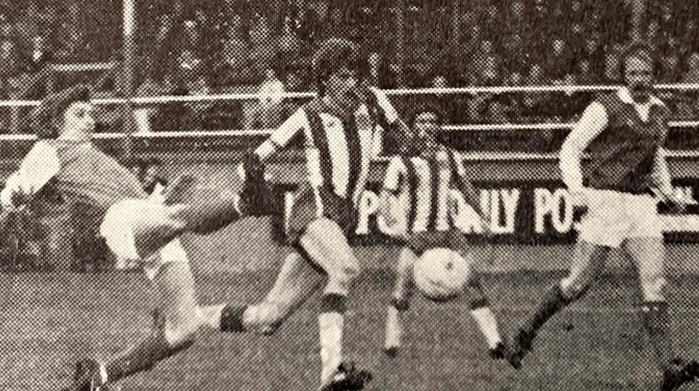
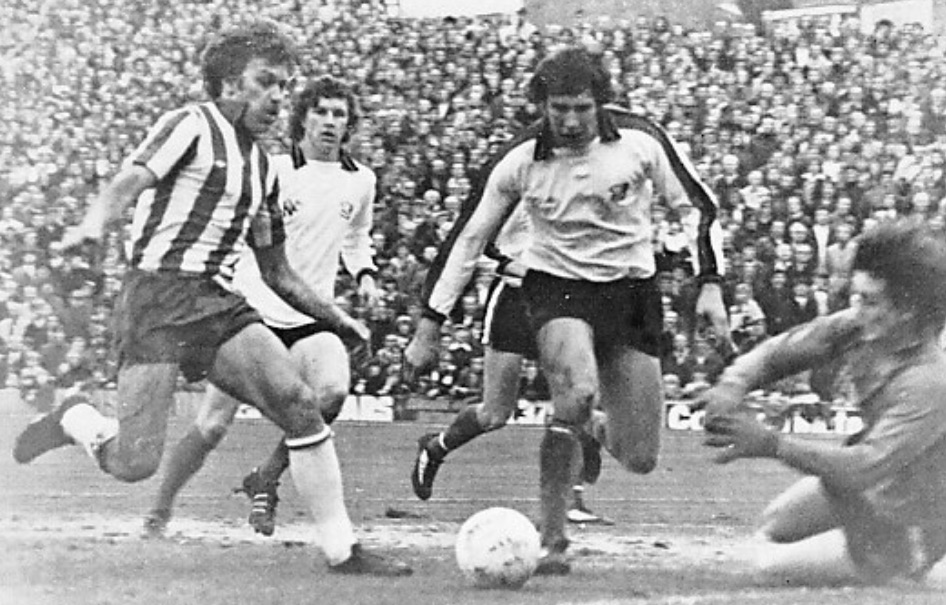
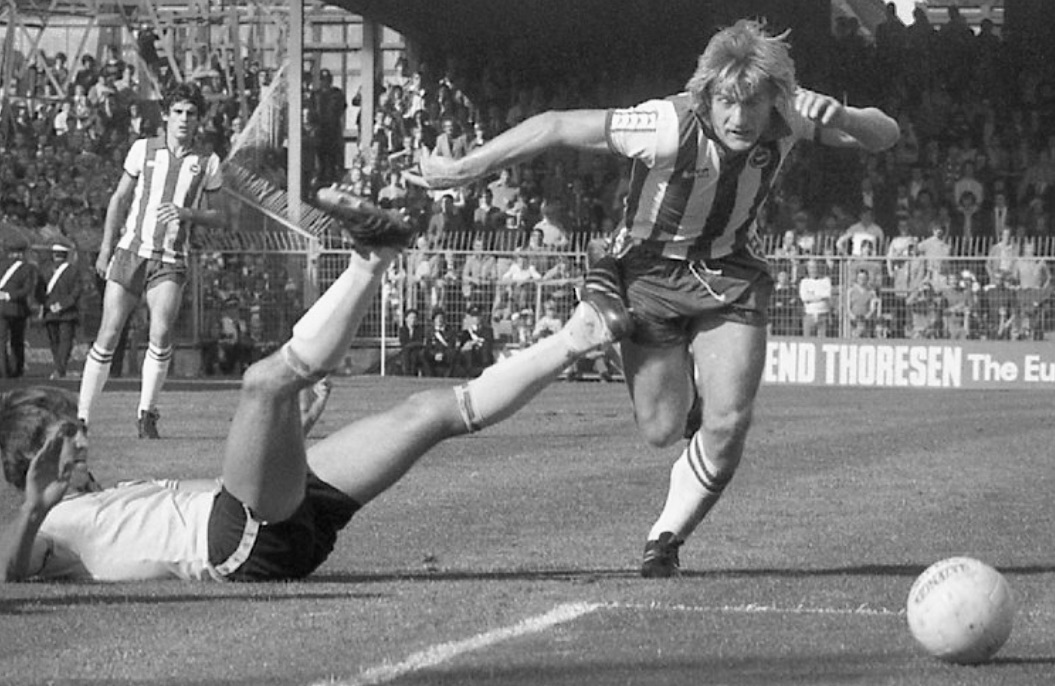
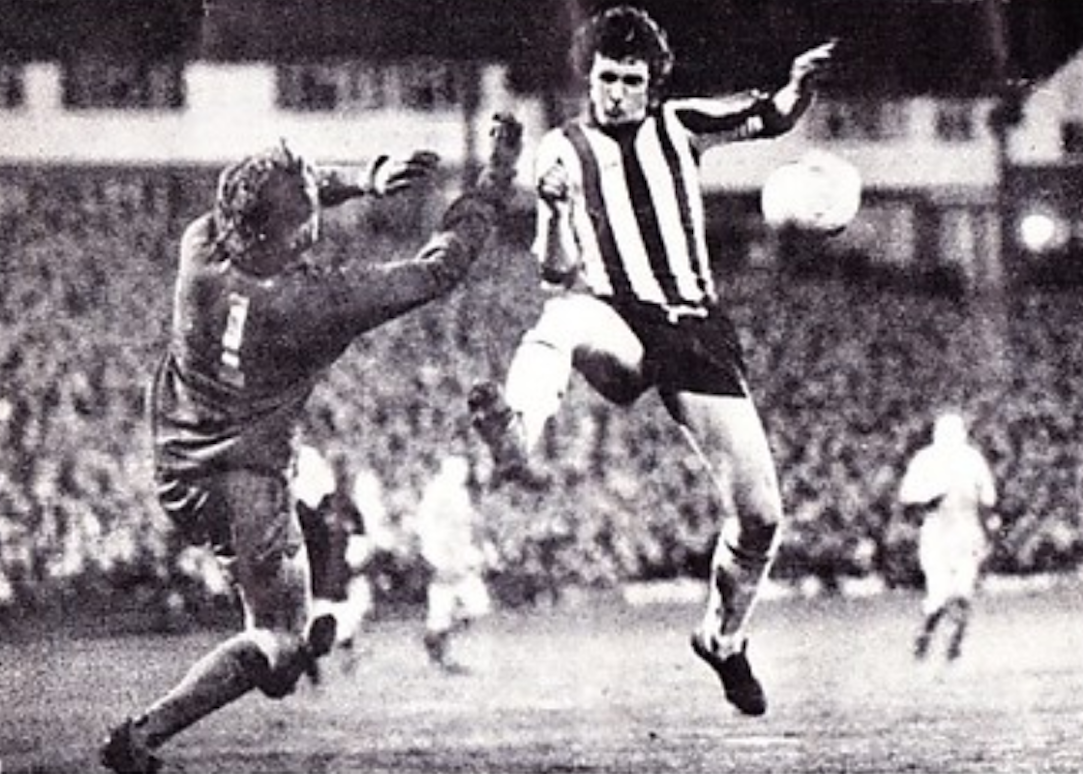
Gary Stevens tackles Mark Barham
It still pains me to say that I was one of the many locked out of the 28,800 Goldstone Crowd on 12 March 1983 when Albion played in their first ever FA Cup quarter-final.
Norwich City, under former West Ham FA Cup winner Ken Brown, were the opposition with future England goalkeeper Chris Woods in goal and Mark Barham, who joined Albion towards the end of his career, on the wing.
Jimmy Melia’s Seagulls had already beaten the Canaries 3-0 a few months earlier but the cup match proved a much tighter affair described as “bruising” by several football reporters who noted the physios were called on seven times to treat injuries – Albion’s Norwich-born Mike Yaxley twice attending to Steve Foster.
Andy Ritchie in what turned out to be his last home game for the Albion
Nonetheless, it was “marvellous entertainment for all its imperfections” reckoned the Sunday Telegraph’s Lionel Masters, who said: “Brighton full-back Chris Ramsey did more than most to inject a steely resolve. He conducted a feud with (Dave) Bennett, whom he flattened more times than a target a fairground rifle range.”
Alan Hoby of the Sunday Express wrote: “It was a tough, turbulent, physical affair with an orgy of high balls,” while the only goal of the game, from Albion’s Jimmy Case was “one of the few moments of quality in a frantic game,” according to Brian Scovell of the Daily Mail.
The less well-known quarter-final appearance of that decade came on 8 March 1986 when a Goldstone Ground crowd of 25,069 (at a time when the average often dipped below 10,000) saw Chris Cattlin’s Second Division Albion entertain First Division south coast rivals Southampton.
Albion were pleased finally to have got a home game in the competition having had to overcome away ties at Newcastle, Hull and Peterborough (who were eventually beaten 1-0 in a home replay five days before the Saints match).
Saints were managed by Chris Nicholl, Cattlin’s fellow former Burnley youth team colleague, and in the opposition line-up was Case, the talisman of Albion’s run to the final three years previously when he rifled in the winner at Anfield in the fifth round, scored that only goal v Norwich and buried a long-range rocket in the semi against Sheffield Wednesday at Highbury.
England’s Peter Shilton was in goal for Southampton and, most curiously, after a five-week absence from first team action, misfiring Mick Ferguson was selected by Cattlin to lead Albion’s attack. Not one of the 1983 Albion side started for the Seagulls.
Sadly, Brighton, in the upper reaches of the second tier at the time, didn’t do themselves justice. Saints won it 2-0 with first half goals from Steve Moran and Glenn Cockerill – and it turned out to be Ferguson’s last game for the Seagulls. Three weeks later he moved to Colchester United.
Fast forward to 2018 and another strange striker selection by a Brighton manager – this time Chris Hughton leaving top scorer Glenn Murray on the subs bench – proved costly in a quarter-final against Manchester United at Old Trafford.
New £14m signing Jurgen Locadia missed four good chances among 12 second-half Brighton efforts on goal to United’s one and Pascal Gross went close on three occasions. But BBC Sport’s Mike Whalley suggested: “He (Hughton) might have been left wondering if resting Murray caused Brighton to miss their chance of a first FA Cup semi-final since 1983.”
United topped and tailed the tie with Romelu Lukaku opening the scoring early on and Nemanja Matic sealing victory late on when he nodded in Ashley Young’s free-kick.
A year later, it looked like Albion wouldn’t be going beyond the last eight once again when Championship side Millwall led the Seagulls 2-0 at The New Den with only two minutes to go. Cue Locadia, on as a sub, to make amends for the previous season’s misses by making space for himself in the box and firing home an unstoppable shot to pull a goal back for the visitors.
Then, with 95 minutes on the clock, Solly March from way outside the box floated in a free-kick that Lions’ ‘keeper David Martin inexplicably let slip through his grasp to bring the Albion level.
Goalkeeper Mat Ryan a penalty shoot-out hero at Millwallin 2019
The momentum was in Brighton’s favour in extra time but it took a penalty shoot-out to decide the tie and when Murray missed Millwall might have thought it had turned back their way. But after three successes each, Mat Ryan kept out Mahlon Romeo’s effort, and Lions centre back Jake Cooper needed to bury his spot kick to keep the tie alive for the home side. He blazed his shot over the bar and Albion were through.
There was to be no such drama in 2023 when 18-year-old Evan Ferguson did a whole lot better than his 1986 namesake and stole the headlines by scoring twice against League Two Grimsby, who were playing in their first FA Cup quarter-final for 84 years.
The Mariners had knocked out five teams from divisions above them to reach that stage but they were well and truly put to the sword by Roberto De Zerbi’s impressive Seagulls who ran out 5-0 winners at the Amex.
As well as Ferguson’s brace, Deniz Undav, March and Karou Mitoma were also on the scoresheet and it could have been more; Mitoma missing a sitter and Adam Webster’s effort hitting the bar.
Perhaps by way of highlighting how quickly fortunes can change for young players, it’s interesting to recall that of Ferguson BBC pundit Danny Murphy said at the time: “This kid is a superstar. Honestly.
“He’s got great feet, technical ability. He’s calm, powerful and plays the role really well. You don’t see him out wide, he stays central and is always a target.
“I can’t see a weakness in his game at the moment. For 18 years old, the maturity he shows in his game is phenomenal.”
Murray, having moved into the punditry game himself by then, added: “It was the manner in which he scored those goals, he was so composed. As a young lad just coming into the first team, you can snatch at those chances but he just relaxes in that moment – and that is something that you can’t teach.
“He’s got a good stature and I think there’s big things in the future for him.”
TENACIOUS Tony Grealish earned plenty of plaudits in a 20-year professional career spanning almost 600 matches and etched his name in the record books along the way.
Thought to be the only person to play in two different sports at Wembley Stadium, Grealish was also the first Brighton & Hove Albion player to captain his country.
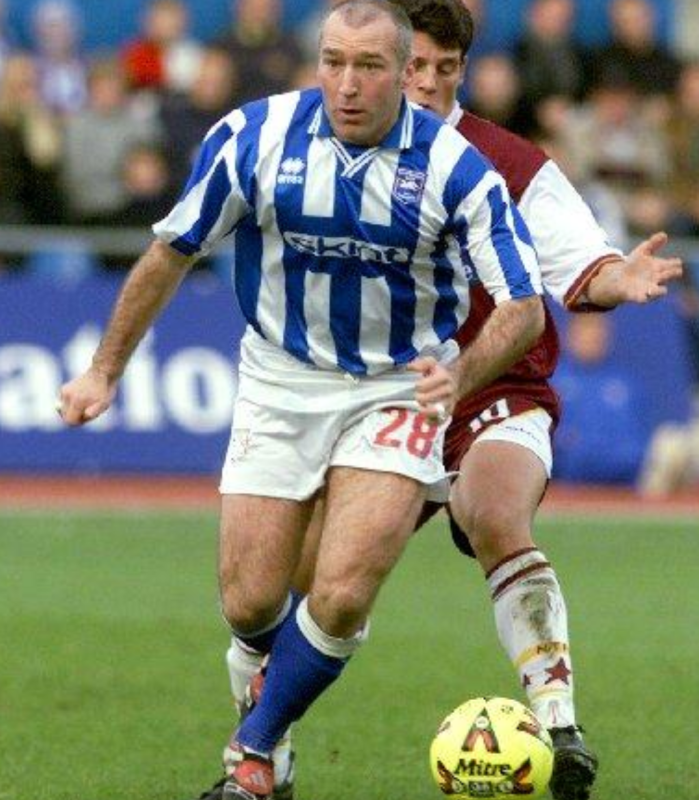
On the ball for Brighton
One statistic less favourably remembered is that he was relegated from the top level of English football with three different clubs: Brighton, West Bromwich Albion and Manchester City.
The London-born Republic of Ireland international was first relegated in the same year that he led the Seagulls out at Wembley for the 1983 FA Cup Final.
He was also part of the Throstles squad who went down in last place in 1986. And it was two relegations in a row after switching to an ailing Sky Blues side that went on to relinquish their top flight status in 1987.
When Grealish signed for Brighton from Luton Town for £100,000 in July 1981, it was a time of significant change. After only just avoiding relegation the season before, manager Alan Mullery had quit over a disagreement with chairman Mike Bamber and four key players left the club: John Gregory, Mark Lawrenson, Peter O’Sullivan and captain Brian Horton.
Grealish had quite a tall order taking over in midfield from ex-skipper Horton, who replaced him at Kenilworth Road, but Gordon Smith, another Albion teammate who later played for City, said:
“He did it with style – he was excellent. He was a very hard working player, he could tackle, but he was also classy with it – he could always pick out a pass.”
Part of the deal that saw Liverpool acquire Lawrenson saw the experienced Jimmy Case move to Brighton and he also appreciated what Grealish brought to the side. “Tony was so, so reliable. Playing with him in midfield, you knew that if the going got tough, he would be shoulder to shoulder alongside you.
“He would go in where it hurt, a tough lad, but he was not just a worker, he could play a bit as well and his enthusiasm for the game rubbed off on everyone in that changing room.”
Grealish and Case together with Mullery signing Neil McNab proved to be quite a formidable midfield trio and together they helped Mike Bailey’s side to jostle for top half of the table positions during the 1981-82 season before falling away to finish in 13th place – a record that remained in place until 2022!
Wembley gesture
Reaching the FA Cup final in 1983 under Jimmy Melia and George Aitken provided a personal highlight for Grealish when he captained the Seagulls in the absence of suspended regular skipper Steve Foster, memorably wearing the defender’s trademark white headband as a mini-protest at his exclusion.
Grealish’s departure to West Brom in March 1984 was part of the ongoing break-up of the former top level squad, Melia’s successor Chris Cattlin being tasked with trimming the wage bill to bring it into line with second tier football.
Three and a half years later, Grealish had just turned 30 when Jimmy Frizzell signed him for City in October 1986 for a modest £20,000 fee, re-uniting him with McNab.
It was only a short-term deal, though, and he continued to live in Sutton Coldfield, a commute of 90 miles each way! “We haven’t bought a place because I only signed until the end of the season,” he explained. “We’ll see what happens first.”
Frizzell had previously been assistant manager to Billy McNeill but took over the reins when the former Celtic captain, frustrated by City’s parlous financial circumstances, left for Aston Villa in September 1986.
City of the mid-1980s were a very different proposition to the modern day version: they were more than £4m in the red and struggling with crippling debt repayments after an ill-advised spending spree in the late 70s and early 80s.
“The first thing I was told when I joined and went to discuss money was that they were so skint they would sell their goalposts if they could,” a Grealish contemporary, centre-back Mick McCarthy, told Chris Bevan for BBC Sport in a 2013 article looking back at that period.
Frizzell felt the relatively youthful City needed some experienced old heads to steady the ship and Grealish joined from West Brom in the same week John Gidman joined on a free transfer from city rivals Manchester United. Both made their Maine Road debuts for bottom-of-the-league City against United in a 1-1 draw on 26 October 1986.
It was the 118th meeting between the two sides, but the first to be broadcast live on TV.
Injury-hit United took the lead through a Frank Stapleton header that crept past the diving Perry Suckling and inside the post, but McCarthy equalised with a header from a cross by McNab.
Under fire United boss Ron Atkinson only had one more game in charge of the Reds; after a 4-1 League Cup defeat by Southampton, he was sacked.
United’s plight was nothing compared to City, though. They didn’t win away throughout the whole season and, in spite of the additions of forwards Paul Stewart and Imre Varadi, scored a meagre 36 goals in 42 games.
Youngster Paul Moulden, having been a prolific goalscorer in City’s FA Youth Cup-winning side of 1986, briefly offered hope when scoring four goals in four games in November but then picked up an injury.
Frizzell blooded several other members of that youth side including Paul Lake, David White and Ian Brightwell but City were relegated. Grealish’s last game for them was in a 0-0 home draw against Newcastle in March, City’s first point in a month. They only won twice in the remaining 10 games and were relegated…along with McNeill’s Villa!
Grealish only made 15 appearances in that 1986-87 season and was an unused sub on two other occasions. He made 11 league starts, one in the FA Cup (a 1-0 defeat v Man U) and three in the Full Members Cup. He also played in City’s reserve side on 14 occasions (stats courtesy of the Gary James archive).
Born in Paddington, west London on 21 September 1956, Grealish played underage for St Agnes Gaelic football club in Cricklewood – alongside brother Brian – and represented London at various underage levels.
That special 1983 Wembley moment meant Grealish achieved the unusual claim to fame as reportedly the only person to play soccer and Gaelic football at the iconic stadium. He’d previously played there in the early ’70s for London’s Minors against New York in what at the time was an annual Whit weekend tournament.
“For a group of London lads, playing at Wembley Stadium was magnificent,” said Éamonn Whelan, a teammate of Grealish’s for St Agnes and London.
Ireland was certainly in his blood even if he wasn’t born there: his father, Packie, was from Athenry in Galway, and although his mother, Nora, was born in London, both her parents came from Limerick.
No surprise then, that Grealish represented Eire with some distinction, winning 45 caps between 1976 and 1985, and It was during Alan Kelly’s brief reign in charge, in 1980, that Grealish was first made Eire skipper – in a 2-0 win over Switzerland at Lansdowne Road, Dublin.
One of the goalscorers that day, Don Givens, said of Grealish: “He gave so much effort that he wasn’t going to accept anything less from his teammates.
“Tony was a 100 per cent tough little midfield player, and a great character off the pitch.”
Former Ireland manager Eoin Hand chose Grealish as Eire captain for the 1984 European qualifying campaign, when Ireland ended in third place behind Spain and Holland.
In his book, First Hand My Life and Irish Football, Hand said Grealish was “more Irish than the Irish themselves”.
“With his dynamic, combative style in the midfield engine room, Tony, with his tousled hair and Viking beard, was the kind of guy you were happy to go into battle alongside,” he said.
Grealish on the international stage with the Republic of Ireland
“He was a natural leader, and although known for his ceaseless industry, he was no mere artisan. Grealish could play as well and conjure up the odd goal from deep positions.”
Previous manager Johnny Giles had given Grealish his Ireland debut at the age of 19, in a friendly against Norway at Dalymount Park, Dublin on 24 March 1976.
Grealish, unusually, started at full back as Ireland won 3-0 thanks to goals from Liam Brady, Jimmy Holmes and a penalty from Mickey Walsh.
“Tony was very good for me when we played together in midfield because he was a ball winning all action player, and we had a good understanding,” said Brady, who later became Brighton’s manager.
“Around the Ireland dressing room, he was very enthusiastic, determined and very motivating – he liked to motivate everyone around him,” he told the Irish World in 2013. “He’d be up for every match.”
Brady added: “We had a strong friendship, and I haven’t met anyone who played with him who wasn’t a friend of Tony Grealish’s.
“He was a super man, and a super bloke. He made the atmosphere better wherever he was.”
Grealish took his first steps to becoming a professional footballer aged 15 in 1972 when he joined Leyton Orient as an apprentice. Manager George Petchey took him on as a professional in 1974 and he was the club’s player of the year at the end of the 1975-76 season.
In 1977-78, Orient reached an FA Cup semi-final at Stamford Bridge, where they lost 3-0 to Arsenal, although the aforementioned Liam Brady mentioned: “He man-to-man marked me that day and put me out of the game. Luckily some of our other players performed despite the fact that I didn’t.”
One of the last of his 171 appearances for Orient was in the April 1979 3-3 draw with promotion-chasing Brighton in front of The Big Match cameras (John Jackson was in goal for the Os and Martin Chivers scored his only goal for Brighton).
Grealish transferred to David Pleat’s Luton Town in the summer of 1979 for a fee of £150,000, racking up 78 Division Two appearances over two seasons before joining Brighton.
In total, Grealish played 116 games plus five as a sub for Brighton, and his last game for the Seagulls ironically saw him score in a 1-1 home draw with Manchester City.
Having known what he could bring to a side, it was Giles, when manager of West Bromwich Albion, who took Grealish to the Hawthorns in March 1984 for £75,000.
Reunited with Johnny Giles at West Brom
In one and a half seasons with the Baggies, Grealish made 65 appearances before that move to City.
He spent a brief period with Salgueiros in Portugal before former Leeds hard man Norman Hunter signed him for Rotherham United in August 1987. He made 110 appearances over three seasons, going down with them in 1987-88 and helping them to bounce straight back by winning the Fourth Division title the next year under another former Albion midfield player, Billy McEwan.
His last league club was Walsall during Kenny Hibbitt’s managerial reign before he continued playing at various non-league clubs in the Midlands: Bromsgove Rovers, Moor Green, Halesowen Harriers, Sutton Coldfield and Evesham United.
He returned to Bromsgrove Rovers as player-manager before calling it a day, and then worked in the scrap metal business. He died of cancer aged 56 in April 2013.
An obituary in Albion’s matchday programme saw tributes paid by several former teammates. Gary Stevens, who memorably scored Albion’s equaliser in the 2-2 Cup Final draw against Man Utd, said: “Off the field, Tony was the life and soul of the party.
“When he was with us, he was always laughing, joking and just enjoying life. Yet on the pitch he always gave 100 per cent, was tenacious in the tackle and he had a tremendous will to win.”
Ex-skipper Foster added: “Tony was a lovely man off the pitch and a passionate footballer on it. He was a fantastic midfielder.”
‘I’VE STARTED so I’ll Finnish’ could have summed up Antti Niemi’s season coaching Brighton’s goalkeepers.
Even though the fellow countryman who appointed the former Southampton and Fulham ‘keeper left in ignominy less than halfway through the 2014-15 season, Niemi stuck it out to the end before returning to his native Finland.
Niemi joined Albion in the summer of 2014 as part of the new backroom team put together by former Liverpool and Finland international Sami Hyypia.
“This wasn’t planned and, when Sami called me, I was working in Finland for a few years with two different clubs on a part-time basis,” he told the matchday programme. “It was a surprise.”
Seeing it as a “great opportunity” he added: “I thought about it for a couple of days, but it was not a difficult decision to make in the end. I’m obviously already familiar with the south coast.
Niemi enjoyed Albion coaching environment
“If you look at the surroundings at the training ground and the stadium, it’s a fantastic place to work each day. I seriously love the job.”
At Brighton, Niemi was responsible for the form of newly-arrived David Stockdale, emerging youngster Christian Walton and back-up ‘keeper Casper Ankergren.
Stockdale admitted it was the presence of Niemi — a former team-mate at Craven Cottage — as goalkeeping coach that was a big reason in his making the move to Sussex (as well as a chat with Bobby Zamora).
“Antti looked after me at Fulham when I first went in as a young keeper,” he said. “I know what he is about, what his training is like and what kind of person he is.”
Niemi was also the reason fellow countryman and Finland international Niki Mäenpää joined the Seagulls, although their paths ultimately didn’t cross on the training ground in Sussex because Niemi decided to return home for family reasons.
Mäenpää had been coached by Niemi back in Finland and he was first linked with the Albion when Hyypia was appointed. Although a move from Dutch second division club VVV-Venlo didn’t go through then, it eventually happened in the summer of 2015.
“Seeing as his contract is ending, he is looking forward to a new adventure and Antti has explained to him about Brighton and everything,” the player’s agent, Richinel Bryson, told The Argus.
Born on 31 May 1972 in Oulu, the northern Finnish city where there is no darkness during summer nights, Niemi remembered going to school when the temperature was –42°Cone winter.
He completed compulsory military service in his homeland, explaining in a 2003 interview with The Guardian that he found life tough for much of his 11 months at a sports military school.
“I didn’t realise this at the time but, if I wasn’t in football, I would probably be in the army,” he told reporter Joe Brodkin. “I’m very patriotic. It was fun and it’s something I would have considered, although I’m too old now.
“In some ways it’s similar to what we have in the dressing room: being together and having fun, giving stick and taking stick. In the army it was a similar situation. We had something like 20 footballers in there and it was fun. Not at the time but looking back.”
Niemi began his football journey with local side Oulun Luistinseura before moving on to Rauman Pallo and then to the country’s biggest club, HJK Helsinki, where he eventually became first choice ‘keeper and made 101 appearances over four years.
He then swapped from Finland’s capital to Denmark’s fortuitously because the Finland FA president at the time had played in Denmark as a goalkeeper and FC Copenhagen asked him for a name.
“He mentioned me and everything happened in two days,” Niemi recalled in an interview with fulhamfc.com. “I was inconsistent in my first six months in Denmark but did well in my first full season.
“I learned that Rangers had sent a scout to watch someone on the pitch when we played in a league cup semi-final; it was one of those games where I just saved everything and we won. That 90 minutes made them choose to sign me, so it was all about luck really.”
That was luck he would come to rue, subsequently, though, because he had actually agreed to sign for Gordon Strachan at then Premier League Coventry City. Rangers stepped in at the last minute to clinch his signature in 1997 but it was a period of his career that would prove to be frustrating.
Andy Goram was first choice ‘keeper and Theo Snelders was also ahead of him.
He did win the Scottish League Cup (beating St Johnstone 2-1 in 1998) but he only played in one Old Firm game and that ended in a 5-1 defeat, so he didn’t have happy memories of his time at Ibrox where Walter Smith’s successor, Dick Advocaat, was unconvinced of the Finn’s ability under pressure and suggested he needed to move on to prove himself.
Highly regarded at Heart of Midlothian
He switched from Glasgow to Edinburgh to join Hearts for £350,000 in December 1999, manager Jim Jefferies telling The Herald: “Niemi is a fine keeper and is very highly regarded by everyone.”
Niemi reflected: “They were the third best team in the country behind Celtic and Rangers, but I said to myself that sometimes you have to take a step backwards to go forward.
“That was maybe the best decision that I ever made; it felt a bit of a downgrade at the time, but I wasn’t playing and I knew it would be good for me in the long run.”
In two-and-a-half years at Hearts, he became first choice and made a name for himself as a penalty stopper.
The keeper said of himself in a 2021 interview with the Edinburgh Evening News: “The biggest strength I had in my game was quick hands and quick reactions.”
Looking back on his 106 appearances for the Jam Tarts, he revealed: “Hearts have always been THE club for me.”
In an interview with CoffeeFriend.co.uk, he said: “Don’t get me wrong. I was very lucky to play in the English Premier League with Southampton and Fulham but there was something romantic about the place.
“I went there from Rangers where I was second or third keeper and suddenly got the chance to be No.1 and be a big part of the team.
“We finished third, had some European football, memorable derbies. I hope it doesn’t sound cocky but I really can’t remember too many games I let the team down.
“I loved my time there and it’s definitely one of those places I miss now and then.”
Saint Antti
It was Strachan who persuaded Niemi, by then 30, to try his luck in the Premier League at Southampton.
“My decision to move was purely on a football basis,” he said. “I hardly get any more money than I did in Scotland. I was there for five years and for two and half years I was playing regularly. Sometimes I felt I was playing against the same teams and the same players the whole time.”
Saints paid a fee of £2m to secure his services and he made his debut against Charlton Athletic, where he had spent a month on loan before his move to Hearts.
Strachan quickly installed Niemi as his preferred ‘keeper over Paul Jones and at the end of his first season with the Saints he appeared in the FA Cup final against Arsenal at the Millennium Stadium, Cardiff – a game which I watched with my friend Andrew Setten, sitting in front of Geoff Hurst in the best seats in the house!
Arsenal’s Thierry Henry points things out to Niemi
With Arsenal retaining a 1-0 first half lead, Niemi unfortunately tore a calf muscle midway through the second half and, when replaced by Jones, became the first goalkeeper to be substituted in a FA Cup final.
In spite of losing to that solitary goal, Niemi didn’t want to miss the lap of appreciation and took a ride on a team-mate’s shoulders as they trooped around the stadium.
A series of injuries and a couple of operations limited him to 28 Premier League games in each of the next two seasons but in the opinion of goalkeeping coach David Coles (who once played on loan for Brighton), he was among the world’s top five ’keepers and he was the Saints player of the year in 2003-04.
“The Premiership has been every bit as good as I expected and even more,” Niemi said in that Guardian interview. “Everywhere you go it’s a full stadium and the pitches are perfect. It’s a fantastic league.
“I was making some good saves in Scottish football but the spotlight in the Premiership is so much bigger. There are so many cameras and every single game and situation is highlighted, so it’s easier to shine.”
Niemi’s reputation was certainly enhanced after he kept 17 clean sheets in his first two top flight seasons under Strachan at St Mary’s.
But he was also part of the Southampton side that was relegated in 2005, bringing to an end 27 years in English football’s top tier.
“The longer the season went on, the worse the results got and the more it started to affect the dressing room,” he told hampshirelive. “But overall, I can only look into the mirror and blame myself.
“My first two seasons at Saints were great, but during the third one, I just couldn’t get up to that standard any more. It was average at best.”
Niemi saw influential team-mates leave without being properly replaced and he said: “I remember looking around myself at the beginning of the campaign and thinking ‘things here aren’t as well as they should be’. The team had weakened and the contrast was huge.”
After the relegation, Niemi said: “I felt ashamed, simple as. It just felt embarrassing as hell.”
He stayed half a season after Saints playing in the Championship but returned to the Premier League in January 2006 when he moved to Fulham under Chris Coleman.
“Living in London was a big attraction.,” he told fulhamfc.com. “My wife was delighted to get a chance to move to West London and, as I’d played against them many times, I knew that it was a nice club too.”
Niemi switched to Craven Cottage in January 2006
A hamstring injury limited him to nine appearances in those first few months at Craven Cottage but he established himself as first choice the following season and went on to make 63 appearances before a wrist injury led to him calling it a day at the start of the 2008-09 season.
However, at the age of 37, he was persuaded to come out of retirement and followed his former Saints coach Coles to south coast rivals Portsmouth as back-up to first choice David James.
He left Pompey in March 2010 having earned around £450,000 over the course of eight months without having made an appearance, the Daily Mirror reported.
The newspaper said the Finn earned £14,000 a week during his time at Fratton Park and played just twice for the reserves and spent one Premier League match on the subs’ bench.
Having won 67 caps playing in goal for Finland, Niemi became his country’s goalkeeping coach from 2010 as well as working with the Finnish FA in developing the quality of goalkeeper coaching in the country. Alongside those responsibilities, he slotted in club goalkeeper coaching in various locations – including back at his old club HJK Helsinki, at another Finnish side, FC Honka, and the season at Brighton.
Joaquin Gómez, a coach he first met during that season with the Albion, subsequently called on his services at Finnish side HIFK in 2021.
Gómez, originally an academy coach with the Seagulls, stayed on as part of the first team management set-up having worked under Hyypia’s successor, Oscar Garcia., but then left to become head of tactical analysis at Derby County before teaming up with Nathan Jones at Luton Town, and then Stoke City.
In May 2019, on Niemi’s recommendation, he also started coaching Finland’s under 21 team. After leaving Stoke, he was assistant manager at Spanish Second Division side FC Cartagena, assistant coach at Finland’s SJK Seinäjoki and spent a season at Al-Qadsiah in Saudi Arabia.
On persuading Niemi to join him at HIFK, Gómez said: “He’s an outstanding goalkeeping coach and will now also assist me in other areas.
“Antti is the best Finnish goalkeeper of all time, and he has done great work in coaching after his retirement from playing. At HIFK he’ll have a more versatile role than previously, as he’ll be working more with outfield players as well.”
In the summer of 2024, Gómez persuaded Niemi to join him at Greek Super League club Volos and the Finn spoke to Tribalfootball.com about those days spent in Lancing.
“I have seen a lot of passionate people in my lifetime in football but this guy is something else; he has dedicated his life to football.
“He moved from Spain (to England) without knowing any English, he just wanted to work in English football. He was working as a waiter, he was cleaning the toilets at Brighton, he was coaching kids and eventually somebody saw that this guy is really passionate and he can coach so he got in the first team.”
Niemi continued: “He called me in the summer, he said I had a few days to decide. He is very temperamental; he is very passionate and I am the boring, steady guy who always tells him to calm down! You need that sort of personality; you don’t need a similar sort of personality as you need to balance each other out
“He offered me the job to be the assistant manager which is different as I have always been a goalkeeping coach and I still am with the Finnish national team but I took it as a challenge, as an adventure. It is going to be a learning curve for me and I am really enjoying it so far.”
Unfortunately, Gómez was sacked after only five league matches and his next appointment, in January 2025, was as the new coach of Indonesian Liga 1 club Borneo Samarinda.
BRIGHTON travel to Newcastle in the fifth round of the FA Cup with the backdrop of having won there twice in the competition in the 1980s – not to mention a 1-0 win in the Premier League this season.
The 1-0 third round win at St. James’ Park in January 1983 set Albion en route to that season’s FA Cup final – but Toon supporters of that era blamed the game’s unusually-named referee, Trelford Mills, from Barnsley, for their exit.
Think I’m exaggerating? Newcastle fans’ website themag.co.uk had this to say ahead of another FA Cup game between the two sides in 2013: “It is doubtful that anything could match the anger and frustration that many of us felt nearly thirty years ago.
“Wednesday 12 January 1983 will always be synonymous with the name Trelford Mills, etched into the consciousness of an entire generation of Newcastle fans, convinced he cheated us out of the FA Cup. Well, a chance of the fourth round anyway!”
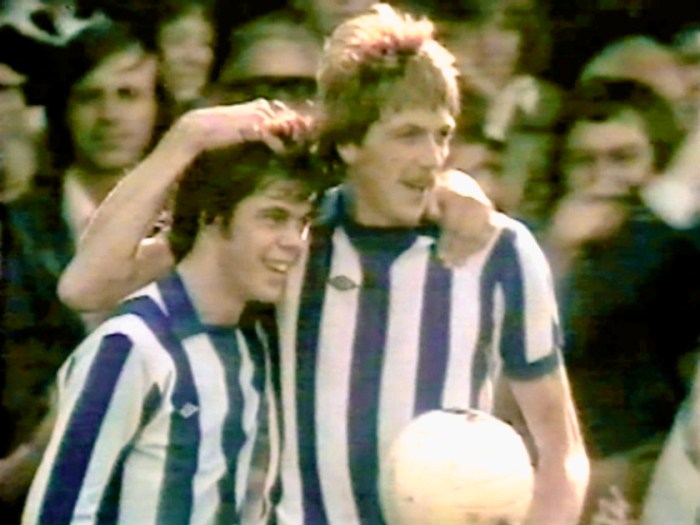
Neil Smillie, goalscorer Peter Ward, Steve Gatting, Chris Ramsey and Andy Ritchie celebrate after the 1983 win.
Mills disallowed two Newcastle ‘goals’ while Albion nicked it courtesy of a penalty area pounce by Peter Ward, back at the club on loan from Nottingham Forest, on 62 minutes. They did it without captain Steve Foster who was suspended (as, of course, he would be for the final too).
The game was a third round replay four days after the sides drew 1-1 at the Goldstone Ground when Andy Ritchie’s mis-hit shot in the 56th minute put Albion ahead and Terry McDermott (below right, with Tony Grealish) equalised on 77 minutes.
Even though the Magpies were in the old Division Two at the time, they had Kevin Keegan and Chris Waddle in their line-up, and they fully expected to win because Brighton hadn’t previously won away that season.
Albion, competing in the top division for the fourth season in a row, with joint caretaker managers Jimmy Melia and George Aitken in charge, had goalkeeper Graham Moseley to thank for some heroic stops to keep them in the first game.
The replay at St. James’s Park was in front of a typically noisy crowd of 32,687 and Newcastle did everything but score: they had shots cleared off the line and hit the woodwork and, when they thought they’d scored, Mr Mills disallowed them – twice!
In the meantime, Ward made the most of a counter attack to put the Seagulls ahead. It turned out to be the last goal he scored for the Albion, although he was in the side that pulled off a shock 2-1 win at Anfield to knock out Liverpool in the fifth round.
“I remember Brighton went one up, then Imre Varadi went through on goal, but quite clearly controlled the ball with his wrist,” said Mills.
“I think the Brighton keeper realised this, just as most of the players did, and let the ball go into the goal just to waste a bit of time. I just restarted with a free kick. I have spoken to Imre since. I think he accepts my version now.”
Mills continued: “Jeff Clarke managed to win a ball in the penalty area, but only because he had his arm around the defender’s neck. Keegan bundled the ball into the goal, but I had blown up a few seconds before it went in.
“Keegan did his Mick Channon cartwheel arm in front of the Gallowgate end, but I just jogged across to where I wanted the free kick taken from and indicated as to why I had disallowed the goal.”
Mills also recalled how he and his fellow officials needed a police escort away from the ground after the match. “When we sat in the dressing room after the match, I remember chatting to one of my linesmen, John Morley, when this police officer turns up,” he said. The copper said to him: “You’d better hang on here a while, Trelford. There are 2,000 Geordies outside and they all want your autograph!”
Three years later, the status of the teams had been reversed with Newcastle promoted back to the top division in 1984 and Albion back in the second tier, relegated the same year as the cup final appearance.
While Keegan had retired, Willie McFaul’s side had a young Paul Gascoigne in midfield and Peter Beardsley in the forward line. Clarke, who’d played four games on loan at Brighton two years earlier, was still in the centre of United’s defence and it was his foul on Terry Connor in the first minute of the game that saw Albion take a shock early lead.
Danny Wilson floated in a free kick from 30 yards out on the right which found centre back Eric Young on the far edge of the penalty box. He hooked the ball into the Newcastle net with only 50 seconds on the clock!
Albion, wearing their change strip of red, had to endure a relentless series of attacks (Toon had 23 corners to Albion’s one!) and Perry Digweed in Brighton’s goal put in a man of the match performance between the sticks, notable saves keeping out shots from John Bailey, Beardsley and Billy Whitehurst.
With five minutes left of the game, against the run of play, a quick throw-in by Graham Pearce found Dean Saunders and he rifled home an unstoppable shot past Martin Thomas for his 10th goal of the season.
Manager Chris Cattlin summed up afterwards: “It was really tough and we had a little luck on our side, but to go away to a club who have won the cup no fewer than six times and come away winners was quite an achievement.
“With the Geordie fervour up there the noise their supporters created was something special, but our efforts speak volumes for everyone connected with our club.”
There would be no fairytale ending that season, though, with Albion being dumped out of the cup 2-0 by Southampton in a quarter-final tie at the Goldstone Ground.
John Barnes and Steve Harper were on pundit duty for ESPN for the 2012 match
Younger fans will doubtless recall two more recent FA Cup meetings between Brighton and Newcastle, in consecutive seasons during Gus Poyet’s reign, at the Amex in 2012 and 2013.
The Championship Seagulls beat the Premier League Magpies on both occasions – 1-0 in the fourth round in 2012 and 2-0 in the third round the following year.
Getting to grips with Will Buckley
A Mike Williamson own goal was enough to give Albion the edge over Alan Pardew’s side in the first of those games; Will Buckley’s 76th minute shot deflecting off the defender and looping over Tim Krul for the only goal of the game. Leon Best, who would later have a torrid time at Brighton, missed two good chances for the visitors.
The 2013 fixture was a more convincing win for Brighton against a weakened Newcastle side who had Shola Ameobi sent off. Andrea Orlandi gave Albion the lead on the half-hour mark and substitute Will Hoskins added a second late on.
Andrea Orlandi hooks in Albion’s first goal
Praise for Liam Bridcutt
“This was an impressive victory for Brighton, a result that will add to the optimism that surrounds this upwardly mobile club and strengthen their resolve to host Newcastle in next season’s Premier League,” wrote Ben Smith, for BBC Sport. “The cool passing game of Liam Bridcutt at the heart of their midfield was tremendous.”
The reporter added: “Sharper to the ball, and swifter to make use of it, the Seagulls toyed with their more celebrated opponents for much of the opening 45 minutes, producing some stylish attacking moves while tackling, battling and dominating territory in their uncomplicated and effective way.”
CHRISTER WARREN played in three defeats for bottom-of-the-league Brighton against a backdrop of turmoil behind the scenes.
With a winless run stretching back six games, reluctant boss Jimmy Case had returned to his old club, Southampton, to take the youngster on loan in October 1996.
Warren joined a squad comprising several familiar faces because in the Spring of that year Paul McDonald, Craig Maskell and Derek Allan had all moved along the coast from The Dell.
Instead of his arrival meriting mention in the matchday programme, its pages were devoted to Case urging fans not to invade the pitch in protest at what the owners were doing to the club and hated chairman Bill Archer claiming their beefs should be with the local authorities for thwarting plans for a new stadium.
Christer Warren in action for Brighton
On the pitch, the introduction of Warren failed to bring about a change in fortunes: in his three matches the sorry Seagulls lost 2-1 at home to Cambridge United, 1-0 at home to fellow strugglers Hereford United and 3-0 at Doncaster Rovers.
He returned to the Saints and made one more sub appearance for the first team before making a £50,000 move to AFC Bournemouth. After scoring on his debut, he went on to net 14 goals in 127 appearances for the Cherries.
He is one of a number of players who’ve played for Southampton, Bournemouth and Brighton; others include Case, goalkeeper Alan Blayney and more recently Adam Lallana.
Born in Poole, Dorset, on 10 October 1974, Warren was playing for Dorset Schools against Gloucestershire when he caught the eye of former Bristol Rovers full-back Lindsay Parsons, scouting as Cheltenham Town’s youth development officer.
Warren subsequently joined the Whaddon Road outfit and rose through the YTS ranks to become a first team regular in a side that was often close to the top of the Southern League and on 5 December 1992 he scored Cheltenham’s goal in a 1–1 second round FA Cup game against future employer Bournemouth.
His performances playing wide on the left side of the midfield attracted the attention of League clubs and just as he was about to attend a trial at second-tier Derby County, Premier League Southampton’s boss Alan Ball stepped in to sign him for £40,000 (plus appearance-related add-ons) – a record fee for Cheltenham at the time.
He made his Saints debut as a substitute away to Arsenal on 23 September 1995, going on for Neil Shipperley in the 78th minute in a 4-2 defeat. Dave Beasant was in goal for Saints and Jason Dodd at right-back.
Warren started a 2-1 League Cup defeat to Reading on 28 November 1995 but his only league start under Dave Merrington was in a 3-0 defeat at QPR on 30 March 1996. He also made six sub appearances for Saints that season.
The temporary Albion move was one of two loan spells away from The Dell; he also spent time at Fulham in the final months of the 1996-97 season, helping them gain promotion from Division 3 under Micky Adams.
Saints recouped £50,000 of Ball’s outlay when Warren dropped two divisions and made the switch to the Cherries in October 1997. He was in the Bournemouth side that lost 2-1 to Grimsby Town in the 1998 Auto Windscreens Shield final – the club’s only Wembley appearance.
His versatility meant Bournemouth boss Mel Machin used him as a midfielder or striker, but he later settled into a left wing-back role.
A free transfer to QPR in June 2000 saw him move up a division and he was full of optimism about the move, telling the Rangers website: “It came totally out of the blue and I just can’t wait to get started now. “Obviously, Rangers are a division above Bournemouth, so it is a great move and hopefully I can adapt to Division One football.
“I started my career as a centre-forward. Then I went to left midfield before moving back to left-back. I think my game is mostly about my speed.
“I’m quite fast and I like to get at people. I played at left back all last season, so obviously I didn’t get the chance to get forward and get at people as much as I’d like. But at QPR you play wing-backs, so it is a better position for me to play.”
Warren said he was relishing the chance to work under former QPR and England captain Gerry Francis. “You only have to look at the players that he’s brought through, so obviously he must be a good coach. Hopefully, he can make me a better player as well.
“Everyone’s main ambition is to get as high as you can and get into the Premiership. Last time I was in the top flight, I was at Southampton but I think I was too young then.
“Hopefully, I can get a chance to play for Rangers in the Premier League and hopefully this time around I’ll be better equipped for it.”
Sadly it all went pear-shaped for Rangers who won only seven games all season. Francis was sacked in February 2001 (and replaced by Ian Holloway) and the side was relegated to the third tier for the first time since 1967.
After occasional appearances for them at left-back in 2001-02, Warren was released at the end of his two-year contract and was offered the chance to train with Bristol Rovers by former Southampton youth coach Ray Graydon.
He spent a month with the Gas, making two substitute appearances, but preferred to drop into non-league to play football closer to his Bournemouth home.
He played in Hampshire with Eastleigh and Winchester City and Dorset with Lymington & New Milton and Wimborne Town, while working for Snows, an industrial stationery company in Southampton.
Warren briefly ventured into management at Wimborne but reverted to playing – in lower-division football, in western France for FC Boutonnais and US Melle – before returning to the UK and playing for Sydenhams Wessex One club Christchurch and then Verwood, where he coached.
Christchurch manager Adie Arnold told Andy Mitchell of the Bournemouth Daily Echo in 2015: “He has been playing in France at a reasonable level but recently decided to come back to England.
“I go back a long way with Christer and he wants to continue playing. He is as fit as a flea and can play a number of positions so his experience, football knowledge and, most importantly, ability will be a massive asset to us.”
Arnold pointed out: “He has played at the highest level and everyone can learn from him, particularly the youngsters at the club. He is a role model and the sort of player you should look up to, watch and see how he handles himself.”
NAPOLI might well be riding high in Serie A but it’s mainly a watching brief for midfielder Billy Gilmour who moved to the Italian club from Brighton in August 2024.
The former Chelsea midfielder has found game-time harder to come by than fellow countryman Scott McTominay, who has shone in midfield as Antonio Conte’s side have been involved in an intriguing Italian title race with Atalanta and Inter Milan.
Most of Gilmour’s involvement has been from the bench apart from during October and November 2024 when he started five consecutive league matches. Stanislas Lobotka has more often been Conte’s pick for the no 6 role.
Nonetheless Conte said: “I’m happy that we have him here, he is a great player. He is an important option for us.”
While some Brighton supporters lamented Gilmour’s departure, it could be seen as a shrewd piece of business considering the Seagulls received a reported fee of £12m plus £4m in add-ons, turning a profit on the £9m paid to Chelsea two years earlier.
Veteran Albion watcher Andy Naylor reckoned Gilmour was a key player, citing Opta stats highlighting Gilmour’s 92.15 per cent passing accuracy in 2023-24 to back up his view. “He helps to control games and dictate the tempo with slick and reliable passing,” he wrote for The Athletic.
Indeed, after Gilmour had once again earned plaudits playing for his country at the 2024 Euros tournament, Naylor declared that the player “is going to become increasingly important to Brighton” even going so far as to say: “The midfielder is the future for his club under new head coach Fabian Hurzeler.” As it happened, that couldn’t have been more wrong.
The arrival of two £25m signings in Dutch international Mats Wieffer from Feyenoord and Danish international Matt O’Riley from Celtic, together with the emerging influence of young Carlos Baleba must have sounded a warning signal to the Scot. And a central midfield starting berth for veteran James Milner meant Hurzeler had something quite different in mind. Not to mention other midfield options of Jack Hinshelwood and Yasin Ayari.
Although Gilmour went on as a sub in the opening day 3-0 win at Everton and started alongside Milner in the 2-1 home win over Manchester United, the growing rumours of his imminent departure to Italy proved true as former Chelsea manager Conte signed him along with McTominay from Manchester United.
Gilmour admitted in an interview with AreaNapoli: “Scott arrived here before me, and we were texting each other, in the days when I was also hoping to move to Naples.
“When Scott told me he was on the plane to come here, all that was left to do was close my transfer. The day I arrived in Naples was something incredible. I got off the plane, ran to do the medical and then went to the stadium.”
Gilmour and McTominay together at Napoli
Gilmour added: “My dream as a footballer is to reach the highest levels and win trophies here in Naples. That’s what I will try to do.”
Apart from starting one cup match, and the autumn run referred to earlier, Gilmour’s had to reprise the situation he found himself in at Brighton when he first arrived – he only made six starts plus seven appearances off the bench as Moises Caicedo, Alexis Mac Allister and Pascal Gross lorded it in midfield.
Gilmour heard only good things about Brighton from former Chelsea teammate Tariq Lamptey before making the move south, and on arrival there was also a familiar face behind the scenes in David Weir, who he’d known from his days at Glasgow Rangers.
After that low key start to life with the Seagulls, in April 2023 Roberto De Zerbi decided to rest key players for the home game with Wolves and give Gilmour and striker Deniz Undav starts. Albion won 6-0 and the manager confessed afterwards: “Gilmour, I think, was the best player on the pitch and I must admit possibly in the past I made some mistakes with him and with Undav because I didn’t give them many possibilities to play.
“But for me it’s difficult. To play without Mac Allister, Mitoma, Solly March, Moises Caicedo, it’s difficult.”
Once Mac Allister and Caicedo had flown the Seagulls nest, De Zerbi showed his faith in Gilmour, giving him 32 starts and nine appearances off the bench as Albion competed in the Europa League for the first time.
“Billy is a unique player,” reckoned De Zerbi. “We have only one playmaker in our squad and he is Billy Gilmour.”
Gilmour in action for the Albion v Arsenal
In early December 2023, he was full of praise for the young Scot, telling the media: “The improvement of Gilmour is incredible. I completely love him, because now he is playing very much like a leader on the pitch.
“Big quality, big attitude, big player. He is improving in the quality of the pass, in the personality, how he can drive and control the game, drive the team. To understand the play before he receives the ball.
“He understood when he has to play a long ball and a short pass because the defensive space starts from how long is the pass. In his reaction, when we lose the ball. I am very pleased for his performances.”
Born on 11 June 2001 in Irvine, Ayrshire, Gilmour grew up in the county’s coastal town of Ardrossan where he went to Stanley Primary School. He moved on to Grange Academy in Kilmarnock which was part of the Scottish FA performance school programme.
When he and fellow graduate Nathan Patterson made it into the full international squad, programme director Malky Mackay told The Scotsman: “Billy is someone I’ve been impatient about for a number of years now. We took him to the Toulon tournament with Scotland under-21s when he was 17 because I had a firm belief this kid is something special.
“He ended up playing, becoming the breakthrough player at a tournament of that esteem, scoring a goal and captaining the team. It was only a matter of time but it’s terrific he and Nathan have been picked for the squad. That makes me more happy than you could ever know.”
At a young age, Gilmour spent three months at Celtic (his dad supported the Hoops) but switched to Rangers (who his mum supported) because it was easier to get to training.
He progressed through the youth ranks and was still only 15 when he was called up to train with the first team squad during Mark Warburton’s reign as manager.
“I came on the scene at a young age and there was a lot of talk, a lot of people putting my name out there, but you have to learn to live with that – and the best way is by playing well and keeping your consistency,” Gilmour told the Albion matchday programme.
It was a disappointing snub by Rangers caretaker manager Graeme Murty that led to his £500,000 departure from Glasgow to London, as recounted by sports writer Ewan Paton in rangersreview.co.uk.
Gilmour was due to become Rangers’ youngest-ever player at 15 years old in a Scottish Cup tie against Hamilton in March 2017; Murty indicating the teenager would be on the bench and would get the chance to fulfil his lifelong dream of playing for Rangers.
But, just hours before kick-off, Murty changed his mind, with Gilmour being left out of the matchday squad.
“I felt like I was going to be on the bench and maybe even come on that game. It works in its weird ways, so it does, football,” said Gilmour.
Two months later, when he was eligible to turn professional aged 16, the incident was in the back of his mind and he opted to move to Chelsea.
“Of course, I would’ve loved to have played for Rangers,” he said. “But I ended up moving on and maybe it’s a wee part of my journey that made the decision a bit easier.”
Remarkably, Gilmour scored in each of his first three games for Chelsea’s under 18 side and he signed a professional contract aged 17 in July 2018.
A year later, it was newly-appointed manager Frank Lampard who gave him his senior debut in a pre-season friendly. His league debut was as a late substitute for Tammy Abraham against Sheffield United and his first start was shortly afterwards in a 7-1 EFL Cup thrashing of Grimsby Town, a game in which Reece James made his debut.
Lampard said afterwards: “I thought Billy Gilmour ran the game from midfield, and Marc Guehi was solid. They’ve been outstanding this year.”
After making 11 league and cup appearances for Chelsea in each of 2019-20 and 2020-21, Gilmour went on a season-long loan to Norwich City where, although he got more games (23 starts, five off the bench), he didn’t enjoy the experience and wasn’t a permanent fixture in the struggling Canaries side that eventually ended up being relegated.
Gilmour didn’t enjoy his time at Norwich
“Things had been going so well and then I went on loan to Norwich which I thought would be good for me,” Gilmour told Men’s Health. “It turned out to be a fight, a battle. I learned a lot.”
He continued: “I was just a young kid and it was a low time for me.
“I learned how strong I was. I put a smile on my face, even though I was hurting, especially when I was living on my own in Norwich. Some nights, I’d be sitting there thinking, ‘This is c**p’, but that’s where my family helped me. You can only learn from that.”
Gilmour, when aged just 20, was named man of the match in his first full start for Scotland as they held England to a 0-0 draw at Wembley in a Euro 2020 match (played in June 2021 because of Covid).
“The ease with which he has transitioned into international football implies that he possesses some very special skills,” reckoned Ewan Murray, writing in The Guardian.
“It was his big moment and he didn’t let us down,” said Scotland manager Steve Clarke. “Nobody is surprised by that. Not in our camp.”
But a word that has hung heavy around Gilmour’s neck is expectation. When the permanent move to Brighton came about, Tuchel admitted that Chelsea hadn’t wanted to let him go and would rather he had only left on loan.
He told reporters: “We had high hopes [for him] and he played for us in the first half a year when I was at Chelsea. He played some important matches for us and looked for a new challenge that did not go so well for him with Norwich.
“We expected more, he expected more so it was like, without pointing a finger, but it is difficult also for him and for us to not succeed, to not play at Norwich, to be relegated and then suddenly be a central midfielder for Chelsea and competing for top four and for every title.
“There’s a huge step in between so we were looking. The ideal solution would have been maybe that he goes again on loan as the concurrence is huge for us in central midfield and we felt like he is not the age where he can live again with five or six or seven matches during a whole season to fulfill his own potential so, ideally, it would have been another loan.
“Billy did not want to go on loan, it was a no-go for him so in the end, we agreed to a sale.”
Gilmour’s version of events differed a little, as he revealed in an interview with talkSPORT in September 2023, saying that after his season-long loan at Norwich, he was told he wasn’t part of the first-team plans at Chelsea and would have to be content with playing in the reserves.
That was despite Chelsea exercising an option to extend his contract to the end of the 2023-24 season earlier that summer.
“When I came back from my loan from Norwich, I came back and had pre-season and I just wasn’t in the plans,” Gilmour told talkSPORT host Jim White. “At that point I was thinking, well, I want to be at a club that really appreciates me and I want to be part of the team.
“I want to play first-team football. I’ve had a taste for it. I’ve played for my country, so I want to try and push on now. For me, it was the right time to leave. I spoke with the manager at the time, and he thought the same.
“I want to play football, I want to really settle down and try and find a house and home and be here and give my all.”
It remains to be seen where the young Scot’s career goes next but even though his playing time in Italy hasn’t quite lived up to expectations, the midfielder told broadcaster DAZN: “I am fit and well, I’m enjoying it. Of course, we are doing well as a team, so we want to keep building on that.”
BRIGHTON v Chelsea in the FA Cup sparks memories for supporters of my generation stretching back several decades.
Many began as Albion followers the day the then First Division side from Stamford Bridge visited the Goldstone Ground in February 1967 when a dubious refereeing decision denied Third Division Brighton a shock win.
Others, me included, recall a fiery encounter in Hove six years later when Second Division strugglers Brighton were beaten 2-0 courtesy of two Peter Osgood goals in a game marred by violence on and off the pitch.
That third-round tie in January 1973 was dubbed “a day of shame” in the newspapers after two players were sent off, five were booked and crowd trouble erupted.
The chance for lower ranked teams to pitch their lesser talents against the big boys has always been at the heart of the FA Cup’s appeal.
That was certainly the case when Archie Macaulay’s mid-table Albion hosted Tommy Docherty’s top 10 Chelsea on 18 February 1967. To give it musical context, Georgy Girl by The Seekers had just taken over from The Monkees’ I’m A Believer at no.1 in the pop charts!
At a time when home crowds were normally 12,000 – 13,000, a sell-out gate of 35,000 packed into the Goldstone.
Cup fever had certainly captured the imagination of the Sussex public. In the previous round, 29,208 watched Albion beat Aldershot 3-1 in a third-round replay for the chance to take on the top division Pensioners (as Chelsea were called back then).
The two clubs hadn’t met in any other competition for 34 years – back in January 1933 Brighton beat the London side 2-1 in a third round FA Cup tie.
After such a long gap, maybe it was understandable that Albion’s young captain, Dave Turner, at 22, fell off the settee at home in excitement when he saw the cup draw made on the television.
Canny Brighton decided to sell tickets for the game at a reserve home fixture against Notts County, meaning a stunning 22,229 paid to watch the second string win 1-0 in order to secure their entry to the big game.
The matchday programme revealed how Docherty and several of his players had watched the Aldershot match to check out what would be in store for them.
Docherty meanwhile was very complimentary in his programme notes, declaring: “Chelsea know that we have a hard and difficult task today, and are not facing it in a complacent manner.”
He added: “We know that there is great potential for the Albion club. They have a First Division set-up at the Goldstone Ground, and First Division ideas, as well as a first-class pitch.
“The day cannot be very far away when they become one of our top clubs, and I am just one of many people in the game who will welcome their promotion to a higher class.”
However, the game was only five minutes old when Bobby Tambling gave Chelsea the lead. But before half-time, Chelsea’s John Boyle (who would several years later joined Albion on loan) was sent off for kicking Wally Gould. And just four minutes into the second half, Turner gave Albion parity.
Goalkeeper Tony Burns, who had top flight experience with Arsenal, made several decent saves in the game and, with the clock ticking down, a cracking strike by winger Brian Tawse in the closing minutes of the game looked to have won it for the Third Division side.
“I smashed a volley past Peter Bonetti from 20 yards out with the score at 1-1 and thought I’d got the winner,” Tawse told Brian Fowlie of the Sunday Post in 2015. “It was a goal that could have made my career – but the referee chalked it off.”
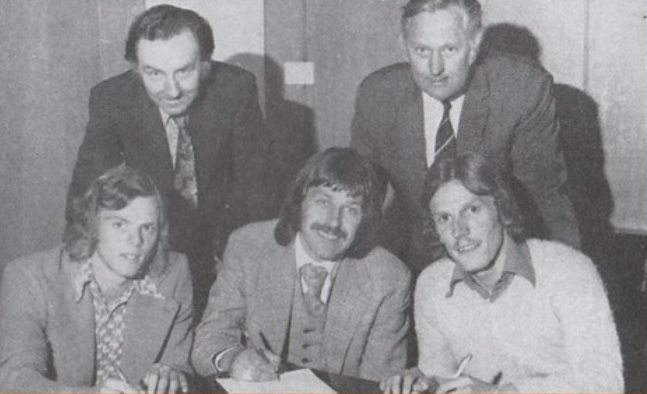
Unfortunately, the official had spotted an infringement by Kit Napier and the ‘goal’ was disallowed.
As Brighton would discover again only too painfully in the 1983 final, these winning chances rarely happen twice, and, sure enough, in the replay at Stamford Bridge Chelsea ran out 4-0 winners in front of a massive crowd of 54,852.
Chelsea went on to reach that season’s final at Wembley only to lose 2-1 to a Spurs side that had Joe Kinnear at right-back and Alan Mullery in midfield.
Hardman Ron ‘Chopper’ Harris, their captain in 1967, was still leading the side by the time of the 13 January 1973 game and John Hollins and Tommy Baldwin also played in both. The dismissed Boyle was on the Chelsea bench in 1973. Only John Templeman (right) played in both games for Brighton.
The UK had just joined the European Economic Community (as it was then called) and You’re So Vain by Carly Simon was no.1 in the charts. Albion had moved up a division under Pat Saward having won promotion the previous May, but the side was struggling at the foot of the Second Division, unable to cope at the higher level.
Nevertheless, there were two players looking forward to the cup tie: Bert Murray and £28,000 signing Barry Bridges had both won silverware at Chelsea in the 1960s.
Barry Bridges slots home for Chelsea in a FA Cup tie v Peterborough and, pictured by the Daily Mirror’s Monte Fresco, ahead of the 1973 match against his old club.
“It’s a tremendous draw for the club and a dream draw for Bert Murray and myself who both started our careers at Chelsea,” Bridges told Goal magazine. “Personally, it will be nice to see most of the Chelsea lads again. I grew up with Peter Bonetti, Ron Harris and Ossie (Peter Osgood).”
Unfortunately the Albion game was one of several former Worthing schoolboy Bonetti missed through injury and illness in the 1972-73 season, John Phillips deputising in goal at the Goldstone.
How this young supporter recorded the team info in his scrapbook
Dave Sexton, a promotion winner with Brighton in 1958, saw his Chelsea side put the ball in Albion’s net within the first 10 seconds of the game but Bill Garner’s effort was ruled out for offside, to the bemusement of the football writers watching. As the game unfolded, not only did it end in defeat for the Albion but it attracted ugly headlines for all the wrong reasons as Harris and Brighton left back George Ley were sent off.
Ley was dismissed in the 85th minute for bringing down Baldwin from behind and then getting involved in a punch-up with England international Osgood, the scorer of Chelsea’s goals in the 17th and 60th minutes, who himself was booked for his part in the altercation.
Albion’s Eddie Spearritt had been the first to go in the book on 23 minutes (for a foul on Alan Hudson) and on 73 minutes was involved in the incident which led to Harris being sent off for the first time in his career.
Esteemed football writer Norman Giller recorded it like this: “Harris got involved in a tussle with Spearritt, and, as he pushed him, Spearritt went down holding his face as if he had been punched. The referee directed Ron to an early bath. All the bones he had kicked, and here was Harris being sent off for a playground push.”
1970 Cup winner Dave Webb went in the book for wiping out Spearritt, joining colleague Steve Kember who was cautioned for fouling Steve Piper. Albion’s Graham Howell also went into referee Peter Reeves’ notebook for taking down Baldwin.
The kicking and aggression on the pitch led to fighting on the terraces with 25 people arrested. And Leicester referee Reeves had to be given a police escort off the pitch.
Former Spurs captain-turned-journalist Danny Blanchflower, writing in the Sunday Express: declared: “This FA Cup third-round tie was as disgraceful as any match I’ve ever seen.”
In the opinion of Albion scribe John Vinicombe in the Evening Argus: “Football anarchy gripped the Goldstone during the last 20 minutes of Albion’s FA Cup tie with Chelsea.
“In the frenzy, players fought one another, hacked and kicked, and the violence tiggered an all-too-predictable chain reaction on the terraces where rival factions became one mass of writhing, mindless hooligans.”
Interestingly, Harris’ dismissal was subsequently overturned, Giller recording: “A Brighton-supporting vicar, with a pitchside view, wrote to the Football Association telling them what he had witnessed, and ‘Chopper’ was vindicated.”
Chelsea made it through to the quarter-finals of that season’s tournament before losing 2-1 to Arsenal in a replay. Arsenal lost in the semis to Sunderland, the Second Division side who stunned the football world at the time by beating Leeds United in the final.
TRANSFER makeweight Matt Thornhill fell foul of managerial changes and debilitating injury which together brought a promising professional playing career to an early end.
Brighton’s former assistant manager Colin Calderwood believed in the midfielder but his successor as Nottingham Forest manager, Billy Davies, didn’t.
Surplus to requirements at the City Ground, Thornhill was Russell Slade’s seventh signing of the summer in 2009, heading to Sussex as part of the deal that saw Albion academy graduate Joel Lynch move to Forest for £200,000 (having spent the previous season on loan there).
Thornhill initially joined on a six-month loan and he was full of optimism, telling the Argus: “They (Brighton) are looking to go for it this season and hopefully I can be a part of that team and help them strive for the top five of the table and the play-offs.
“My target is to play as many games as I can for Brighton and see what happens. If everything goes well then I could extend it to a year, but we’ll just see.”
Although he started the first game of the season at home to Walsall, he was subbed off at half-time as the Seagulls lost 1-0. Three days later, he was in the side beaten 3-0 by Swansea City in the League Cup (Andrea Orlandi was playing for the Swans and Stephen Dobbie scored his first two goals for City in the Liberty Stadium clash).
But it was another two months before he started another game. Other new arrivals at Withdean (like big money signing Elliott Bennett) at the start of that 2009-10 season and niggling injuries limited Thornhill’s involvement, and, at the end of October, Slade was sacked and replaced by Gus Poyet.
Thornhill, who turned 21 during his time with the Seagulls, only started five games, made four appearances off the bench, and was an unused sub for eight matches.
Poyet had his own ideas about the squad he wanted and swiftly Thornhill and fellow Forest loanee midfielder Arron Davies, who’d played under Slade at Yeovil, were sent back to the City Ground.
Born in Nottingham on 11 October 1988, Thornhill was only eight when he was first offered the chance to sign for Forest, but his father said he was too young.
They went back in for him when he was 14, and, despite other interest from Derby County and Notts County, as a Forest fan it was an easy decision to make.
He was initially coached by former Forest defender Chris Fairclough. When he left school at 16, he became a scholar under John Pemberton, and signed a pro contract a year later.
Calderwood gave him his first team debut at Chester City in the Carling Cup in August 2007, a game Forest won on penalties.
Thornhill made five starts and 11 sub appearances across that 2007-08 season as Forest went up from League One and he scored his first goal for the club in a 4-0 win over Leyton Orient. He featured in 28 league and cup games (16 starts, 12 from the bench) on their return to the Championship.
“Calderwood was really good,” said Thornhill in an extended interview with the Nottingham Evening Post in 2018. “He came and watched the young lads and gave us confidence,” he told reporter Matt Davies.
“He said that if you were good enough, he’d give you a chance with the first team. Some managers don’t go with the academy players.
“They bring players they know in. I saw Lewis McGugan get his chance though and that spurred me on.
“When I got in the team I never thought far ahead. I took every week as it came. I knew the manager believed in me.
“I tried to make the most of it. Playing for Forest meant a lot to me and my family.
“It was massive. I knew growing up how big the club was.”
Thornhill was still only 19 when he played in the biggest game of his career, a 3-0 FA Cup third round win at Manchester City in January 2009.
Forest were floundering at the wrong end of the Championship and had just sacked Calderwood. Pemberton took caretaker charge and it was the biggest cup upset of the round when Forest beat the newly-enriched City so convincingly.
“City were spending loads of money,” said Thornhill. “We had nothing to lose, but wanted to impress the new manager (Billy Davies was watching from the stands).
“I should have scored. I shanked it to Robert Earnshaw and he scored in the end.”
Two days later, Davies took over as manager and Thornhill said he made it quite clear he was going to send out on loan all the young lads who did well under Calderwood.
After his foreshortened Albion loan spell came to an end, he then joined League Two Cheltenham Town on a similar basis, helping them to narrowly avoid dropping out of the league.
Back at Forest for the new season, Thornhill thought he had changed Davies’ opinion, telling the Nottingham Evening Post: “I had a really good pre-season. He told me I’d done well and that I’d be in his plans for the season.
“I was buzzing. The first league game he named me on the bench.”
In the second game of the season, he was a starter in a 2-1 Carling Cup defeat at Bradford City
“I scored and felt I did really well,” said Thornhill. It turned out to be his last game for the club.
“I’d have loved to have got the opportunities Billy said he would give me but there was nothing I could do about it,” he said.
“It annoyed me that he told me I was in his plans and never got the chance when I was at my fittest.”
By Christmas 2010, he was told he had no future at Forest. And he never played in the Football League again.
Former boss Calderwood took him to Scottish Premier League Hibernian in January 2011, but after only nine matches for the Edinburgh side he damaged medial knee ligaments and missed the rest of the season.
Thornhill told Davies of the Post: “I believed in myself still when Forest let me go and Colin Calderwood gave me another chance at Hibs.”
As well as the knee issue, Thornhill contracted a stomach condition which kept him out for eight months. By the time he was fit again, Calderwood had been sacked.
New boss Pat Fenlon did not see a role for him; he was sent to train with the youth team, and was eventually released after making only 15 appearances for Hibs.
Still only 23, he joined Northern Premier League side Buxton (‘The Bucks’) while hoping he would get the chance to resurrect his league career. It never came and instead, after two years at Buxton, he moved on (left) to Barnsley-based Shaw Lane Aquaforce ‘The Ducks’), whose head coach Craig Elliott said: “It is a massive coup for the club.”
Elliott told Non League Yorkshire: “He’s one I didn’t think we would get as a couple of other clubs were after him, but I convinced him to be part of our project. “He has a fantastic CV and he did well at Buxton last season. Everyone at the club is pleased to have him.”
He helped the club to win promotion to the Northern Premier League Division One South in 2014-15 and was club captain the following season when they reached the divisional play-off final, only to lose 3-1 to Coalville Town.
He then moved up two levels in the football pyramid and spent a season with National League North side Gainsborough Trinity, where he was appointed captain.
The player told Non League Yorkshire: “I am really pleased to be a part of what (Gainsborough manager) Dominic (Roma) is building at Trinity this season and am glad to be signed early, so I can get a good pre-season under my belt. I really feel I can help the team and channel my experience in a positive way.”
In 2017, Thornhill switched to his local club Basford United and he is still playing for the Northern Premier League Premier Division outfit.
A key figure for Basford United
When he signed a new two-year deal with Basford in 2021, then manager Steve Chettle (himself a former Forest player) told the Hucknall Dispatch: “It is vitally important that we set out to continue where we have been for the last two [incomplete] seasons and Matt has been a massive part of that, and he has a been a key figure in the success of this club in the last five years.
“His attitude to all parts of the games and training is an example to all and his contribution in assists and goals over the years has been fantastic. He is a fans favourite and for the captain to re-sign really shows our intentions.”
Chairman Chris Munroe added: “Matt has shown the club, Steve and myself a great deal of loyalty over the years and my dream is that he finishes his playing career with us at Basford, which is now a real possibility.
“There is nothing better for our fans than to see Matt scoring goals or contributing numerous assists and we hope that continues in good supply moving forward as we enter an exciting phase for the football club.”
In that 2018 interview with the Nottingham Evening Post, Thornhill said: “I never really got back where I wanted. I started so well and since Billy let me go I’ve been hampered by injuries.
“I do think I’d have kicked on but for injuries. I might still have been a pro now. It’s football though. It’s what can happen.”
The article said Thornhill was working for a company supplying paint to the car repairs industry and he said philosophically: “My job now is different to football obviously. You’ve got to do what you’ve got to do to get by in life.
“Anyone that knows me knows I get on with things. I see it that I was lucky to play for Forest.
“I was lucky to play for a club that big. There’s no point having regrets and always looking back.”
A FIERY LATINO temperament acquired from his Argentinian mother led Neal Maupay to become one of football’s love-hate characters.
His audacity and impudence – some call it ‘shithousery’– brought smiles to the faces of plenty and fury to others.
From an early age, the diminutive French centre forward thought nothing of tangling with strapping centre backs who towered over him.
And verbal exchanges in the heat of the battle were all part of the game as far as he was concerned.
Few would forget the lockdown clash when Maupay’s nudge on Arsenal ‘keeper Bernd Leno led to a knee injury for the irate Arsenal goalkeeper, nor his running battle with midfielder Matteo Guendouzi, who grabbed Maupay by the throat after the final whistle, the 5’7” striker having scored a late winner against the Gunners to seal the Seagulls’ first win of 2020.
Maupay on the ball v Liverpool
“I have always been like this. I’m a winner, that’s it,” he told The Athletic’s Andy Naylor. “I’m ready to fight, I’m ready to compete, I’m ready to do whatever it takes to win and to help my team to win.”
Referring to the origins of that competitive streak, he said: “With my mum (Liliana) we’ve always had this kind of relationship. She has that fire in her and so do I. Sometimes it just clashes, like mother and son. I’m so happy she gave me that part from her.”
There were other key goals along the way too, of course: memorable late strikes against Crystal Palace Southampton, West Ham and West Brom which raised his popularity amongst Brighton fans.
Celebrating his late equaliser at Selhurst Park
But there were plenty of misses too, incurring the wrath of certain sections of supporters, particularly during his season at Everton.
It’s not easy to define Maupay or to decide where he fits in the popularity stakes at his various clubs. Well, perhaps, it is easier to say that at Everton he was never seen in a good light.
But at Brighton he had several highs and also plenty of frustrating lows.
“He is a good presser and holder up of the ball,” wrote Ryan Adsett in The Argus in May 2022, in a piece debating why ‘Marmite’ Maupay divided opinion so much.
“Maupay uses his body very well in and out of possession, and is a decent ball carrier too,” said Adsett, suggesting he struggled to adapt to often playing as a lone striker for the Seagulls having scored a lot more for Brentford, the club who brought him to England and partnered him with Ollie Watkins, and who welcomed him back into the fold on loan when it went wrong at Goodison Park.
Scoring 41 goals in 95 games for the west London side in the Championship unsurprisingly endeared him to the Brentford faithful. Interestingly, the Bees love-in may never have happened had Albion acted more decisively when weighing him up as a prospect.
Brentford had wooed him when he was playing Ligue Two football in France, on loan to Brest from Saint Etienne. He scored 12 times in 31 appearances for Brest.
After Brentford first approached him, Maupay also had a conversation at Brighton, who were newly-promoted to the Premier League, and the Bees feared they were going to be gazumped by the Seagulls.
“Luckily, they didn’t quite grasp the fact that all Neal wanted to do was play football,” said Brentford’s head of recruitment, Andy Scott. “They said to him come in pre-season and if you don’t get in the side we’ll send you out on loan.
“It was quite ironic that he ended up going to Brighton from Brentford,” Scott told The Athletic.
Scott was behind Watkins’ £1.8m move from Exeter three days after Brentford bought 20-year-old Maupay for £1.6m in July 2017 to pair them in the Bees attack.
“Neal was just a proper nuisance of a No 9,” he said. “At Brest, he was continually getting into fights and arguments with 6ft 5in centre-halves, smashing goalkeepers, but getting in really good goal scoring positions without getting the ball. He still had a really good work ethic and showed a real desire to want to score goals.”
Scott continued: “I always believed Neal would score goals if you gave him the chances. There is footage of him missing a clear chance, but you listen to all the outstanding goalscorers throughout the years – Tony Cottee, Gary Lineker, Alan Shearer – they didn’t care about missing, they just wanted chances and he is very much like that.”
Referring to that fiery personality, Scott pointed out: “He’s a winner, hates losing, moans like anything about decisions that are made and stomps off, but he’s got a heart of gold.”
Scoring for the Seagulls
Maupay joined Brighton for £16m – ten times what Brentford paid for him! – in August 2019 and he couldn’t have got off to a better start when he scored in the opening day 3-0 win at Watford.
His strike rate for the Seagulls totalled 27 in 109 games and although he could count a number of vital finishes amongst that number, many will remember him for some glaring misses too.
In his first season with Brighton, he told The Athletic’s Andy Naylor: “I feel like I’m still learning and with the work I am putting in every day and a bit more confidence I will only get better.
“I don’t think I’m playing at my best level. Last season I was more clinical. This season I’ve been missing chances that were not easy but doable. Defenders are better, keepers are better and there is more pressure in the Premier League.”
When Maupay netted in another win at Watford – 2-0 on 12 February 2022 – he equalled Glenn Murray’s record of 26 Premier League goals for Brighton and promised to go on to beat it. But he missed a golden chance to do so from the penalty spot in a 0-0 home draw with Norwich City, also hitting the side-netting from close range and steering another effort wide late on.
Striking in black for the Albion
Subbed off by Graham Potter after the third miss, the striker nonetheless was given a round of applause by the Amex crowd as he trudged round the pitch back to the dugout, a reaction the manager described as “fantastic”.
“A huge thank you to them for that because he gave everything in the game but it just wasn’t his day. That happens but it will be his day another day.”
However, he was dropped for the following two matches when his friend and Belgian international Leandro Trossard stepped up to score in both the 2-1 win at Arsenal and the 1-0 win at Tottenham Hotspur.
Instead of beating Murray’s record, Maupay’s final chance came and went in a 3-1 last game home win over West Ham when all he picked up was a yellow card after going on for the second half in place of Yves Bissouma.
With the arrival of Julio Enciso, Deniz Undav and Kaoru Mitoma for the start of the 2022-23 season, competition for places was hotting up, and Maupay only had a year left on his contract.
A move was inevitable and, having been an unused sub for two of the opening league games of the season, he made a £15m deadline day move to Everton.
“Neal is a player who has proven himself in the Premier League over the past three seasons and he is hungry to hit the ground running with Everton,” said the club’s director of football, Kevin Thelwell.
“We believe he will add an extra dimension to our attack and complements the existing players we have at the top end of the pitch.”
A point to prove at Everton
Frank Lampard was in the Everton hotseat at the time and he spoke of Maupay’s blend of dynamic attributes and his tireless work ethic.
“We wanted to strengthen our attacking options and Neal provides a goalscoring threat, as well as bags of energy and a fighting spirit that are vital to what we’re building at the club,” he said.
An enthused Maupay told evertontv: “Everton is a great club with unbelievable fans and I am so, so happy to be here.
“It feels amazing. It was an easy choice for me when I started to talk with the club. I knew straight away I wanted to play for Everton and help the club to succeed.
“I’m excited and it’s a new challenge for me.
“I will do everything I can for Everton. That’s what the fans want – they want players that are ready to give their best, and ready to fight
“When I step on the pitch, I will run, I will tackle, I will try to make assists and score goals. Whatever the team needs, I will do it, because I want to be successful and I want my team to win.”
Born in the Paris suburb of Versailles on 14 August 1996, Maupay was only five when the family moved to the Cote D’Azur in the south of France because of his father’s work.
Within a year, Maupay started playing football at weekends for a small local club, Valbonne Sophia-Antipolis, where he stayed until he was 11.
Ligue 1 side OGC Nice signed him up to their youth academy and he progressed so well that he was given his professional debut against Brest on 15 September 2012, only a month after his 16th birthday, making him the third youngest player in Ligue 1 history.
Three months later, he became the second youngest ever goalscorer in Ligue 1, netting in the final seconds of a game against struggling Evian.
His promise was also spotted by the international selectors and he gained French caps at under 16, 17, 19 and 21 levels.
Early career in France had its ups and downs
But a torn cruciate knee ligament injury aged 16, sustained in a reserve match, held up his progress at Nice and when opportunities under Claude Puel (later Southampton and Leicester manager) were limited, he moved 300 miles to Saint Etienne.
The move was meant to get his career back on track but he was often left out of squads by the coach Christophe Galtier and he told The Athletic’s Naylor: “When you are 19 or 20 it is hard to deal with. I just wanted to play. At that time, I had lost my happiness, my desire to play football. Football is supposed to be fun.”
Fortunately, another manager’s belief in him proved to be a turning point. Jean-Marc Furlan was in charge of Ligue 2 Brest and took the young striker on loan.
“When I arrived there, I was like his son,” he told Naylor. “I was in his office every single day. He was talking to me, calling me, made me realise a lot of things and made me progress on the pitch, off the pitch.”
Bees happy for the Frenchman
Goals followed and led to the move to Brentford where fans quickly took to him. For example, Nemone Sariman writing on fan website Beesotted, described the player’s reaction as he walked along a road near their ground after a game.
“He was mobbed by fans as if he were one of the Kardashians, yet his smile was unwavering and he posed for photos with every single one of us who asked.”
Noting Maupay’s restrained celebration after scoring for Brighton in the Boxing Day 2021 2-0 win over Brentford, Sariman added: “However one might feel about Neal as a player, his passion for Brentford is palpable; despite being fearsome on the pitch, he has always treated us with respect, even since leaving us.”
Within less than three weeks of joining Everton, Maupay scored the only goal of the game as the Toffees beat West Ham on 18 September 2022. Alas, it was the only goal he scored for them in 11 starts and 17 appearances off the bench, in particular suffering when Lampard was replaced by Sean Dyche who generally preferred Dominic Calvert-Lewin on his own up front.
After Maupay had secured a loan back to Brentford, he said in an interview with The Times: “It was a really hard year team-wise. People don’t see that. They just go online, check the stats and say ‘You’re rubbish. You’re not worth the shirt’.”
He continued: “We were losing every week, which affects the mood in training, we changed managers and playing styles which wasn’t easy, and the fans were upset because they love the club.
“I can understand that but it’s not like I am trying to miss chances on purpose. I would be on a day off with my kids and people in the park would swear at me like I owe them something because I’m a footballer.
“After the games, fans would smash on the window of the car when my kids were in the back saying, ‘Leave our club’. I understand if you don’t think a player is good, fair enough, but there’s a way to do it.”
When a previously winless-for-seven-games Everton pulled off a remarkable 5-1 win at Brighton on 8 May 2023, Maupay only got on for Calvert-Lewin as an 87th minute sub.
Back at his spiritual home in west London on loan for the 2023-24 season, Maupay scored eight times as he made 13 starts and 16 appearances as a sub.
At the end of the season, he posted a video on his X account in which he said: “I’m going to miss the club, I can’t lie. It’s a long story for me with Brentford. I came here when I was 20, seven years ago. I was a kid then – I didn’t know too much about the club or English football.
“But here I am, seven years later, in the Premier League. I’ve played a few teams but I’ve never received love like I have here. From day one, people loved and appreciated me. They saw that I was a fighter on the pitch and that I would give everything for the shirt.
“I think that straight away, we had that connection. Honestly, I’m going to miss them.
“The good moments I’ve had during my time here have been absolutely amazing. I wish everyone could experience that because it’s very special.
“I’m not scared about the future. I know whatever comes next, I’ll be ready for it. So, stay tuned and we’ll see…”
As it turned out, Maupay, still officially an Everton player, joined Albion’s Europa League opponents Olympique de Marseille on a season-long loan, playing under the Seagulls’ former boss Roberto De Zerbi.
The player’s antipathy towards his parent club couldn’t have been more stark when, after a recent home defeat for the Toffees to Nottingham Forest, Maupay posted on his X account: “Whenever I’m having a bad day, I just check the Everton score and smile.”
DEFENSIVE midfielder Toby Collyer can genuinely be placed in the ‘one that got away’ category as far as Brighton are concerned.
Worthing-born Collyer excelled as a teenager in Albion’s youth set-up but chose to move on to Manchester United when he was 18.
He has since made it through to United’s first team, getting on as a sub in the last two matches under Ruben Amorim having been blooded by former boss Erik Ten Hag.
After involvement with the first team squad from February 2024 as a non-playing sub, he impressed in pre-season games and played in the Community Shield match at Wembley against Manchester City.
He made his Premier League debut as a half-time substitute for Casemiro when United lost 3-0 to Liverpool at Old Trafford and his first competitive start was in the 7-0 beating of Barnsley in the Carabao Cup, when he played at left-back.
Born in Worthing on 3 January 2004, Collyer’s talent began to be honed when he was only 11 playing for Albion’s under-12s squad.
He attended Angmering School and Ian Gooding, his former teacher, told the BBC: “Toby was the epitome of dedication. Even as a young student, he had an undeniable mentality and drive to succeed in top-level sport.
“His commitment to his studies and football was evident in everything he did.” Gooding said, “It was clear from the beginning that Toby wasn’t just a talented athlete; he was someone who truly wanted to excel and make a mark in the world of sports.”
Collyer made his debut for Brighton’s under-18s just a few weeks after turning 15 and never looked back.
“Even though he didn’t play a great deal at under-16 he still trained,” former Albion under-18s coach Mark Beard told Sussex Live. “You could see he was going to be a top-class player.
“He is a pleasure to coach. He is so low maintenance, what I mean by that is you don’t know he is there. He gets on with his job. He regularly put in displays of 8/10 at the least.
“You want 11 of these type of players in the team. You know what you’re going to get in training, he works hard, he wants to improve, he’s intelligent. He’s a good all-round kid.”
A defensive midfielder happy to tackle and control play from deep, he also showed his versatility by filling in at centre-back with Albion’s under-18s. He also captained England at under-16 and under-17 level, highlighting his leadership qualities and tendency to lead by example.
In an extended interview with the Manchester Evening News, Beard said: “I was made aware of Toby probably from around the age of under-14s. I was the u18 manager and he used to come up and train with us, despite being much younger and I gave him his debut toward the end of his under-15 year. He was always a little bit smaller back then and he seemed to shoot up in height suddenly when he became a scholar.
“Everyone would say he was the best player in the age group every year, but he was just one of them that you hardly noticed. He just got on with his job, there was no trouble and he worked hard.
“He took everything on board like a sponge. There were obviously a few things as he got older that we needed to work on and as he shot up a bit and he needed to redevelop.
“Toby sort of changed the way he played, so different types of passing, defending and he became a real good all-round midfielder once he’d learnt those two of three key areas.”
The coach admired the youngster’s ability to cover left and right from a central position, closing players down and winning the ball. “His ball retention was different class,” said Beard.
“I had such a good team at Brighton, with Evan Ferguson and players like that, and everyone would say Evan was unbelievable, but he’d touch the ball 10 times, score a goal and run about 8km.
“Toby would run around 13km every single game, he’d have 200 touches of the ball and have the best defensive duel win-rate. His stats would be astronomical, honestly, absolutely ridiculous.
“You really don’t get that with many players. He’d be under the radar, but those are the players you want in your team more than anyone else.”
Collyer captained England at under-16 and under-17 level and played 25 games for Albion’s under-18s and under-21s in the 2020-21 season. But he couldn’t agree terms on a new deal at Brighton, after which he was frozen out and given only one game in the 2021-22 season.
The teenager had a successful trial period with United, appearing in a friendly game for the club’s under-23s against Huddersfield Town, and impressed the coaching staff sufficiently to be offered a three-year contract.
There had been no shortage of suitors eager to take him on and Beard encouraged him to join United over the likes of Chelsea and Spurs. As things transpired, he was the first (and only) signing of the Ralf Rangnick era and became a regular in United’s under-18s and under-21s.
Originally given a three-year contract, in July 2024 he had it extended to 2027 with an option to extend to 2028.
Injuries hampered his early days at United but under-21s manager Travis Binnion told the Manchester Evening News: “We’re talking about a really good young player with high potential. “When you have a spell out of the game and have a couple of injuries that stop you playing, it takes a while to get going, but when we signed him, we had no doubts about what he was capable of – he’s a fantastic athlete and effective without the ball.
“Toby is also making great strides with the ball, so we’re talking there about someone who can be really effective in all moments of the game.”
It was in pre-season ahead of the 2024-25 season that Collyer saw action for the first team for the first time, being handed the captain’s armband when part of a complete half-time team change in a 1-0 defeat to Rosenborg in Norway.
He then started the 2-0 win over Rangers before getting another 45 minutes against Arsenal in Los Angeles.
Interviewed by United media’s Sam Carney about his first experience of an overseas tour with the first team, he said: “It’s really, really, really valuable. Everyone wants to be able to play in the first team. So I think getting experiences like this in a stadium like this as well, it’s the top level, and obviously the opposition [was top level] as well today.
“I’m taking everything step by step and hopefully I’ll get many more opportunities to show what I can do.”
Although United lost 2-1 to the Gunners, Collyer said: “I thought I had an okay game. I thought there was a lot of things I could have done better, but it’s great to experience a game like today and I can take it into the next game, and even into training tomorrow.”
United writer for The Athletic, Carl Anka, liked what he saw, observing: “Collyer is a calm operator on the ball, favouring safe, short passes either sideways or backwards, while showing himself capable of occasional long switch passes.
“He is also skilled at receiving the ball on the half turn, letting passes come across his body before swinging his hips around to protect the ball from opponents looking to pressure him.
“Tall, strong and with a good sense of how to delay opposition counter-attacks, there are moments where his play can resemble Declan Rice when he broke into West Ham United’s first-team squad.”
The reporter added: “Athletically gifted, Collyer can cover 20-30 yards quickly — but rather than sprint around with wild abandon in search of the ball, Collyer works to disrupt easy passes inside the opposition half. Collyer’s defensive work centres on blocking off the more obvious passes opponents can make before looking to intercept the ball for his team.”
Interviewed for United’s matchday programme, United Review, Collyer talked about sharing the field with the likes of Casemiro, Christian Eriksen and Bruno Fernandes.
“Without them, I wouldn’t be able to reach the level I’ve got to at the minute. I think as much as I’ve done hard work, they’ve worked hard with me as well to help me and give me tips. It’s massive for me.”
Collyer earned a call up to the England under-20 squad in October 2024, and United’s Binnion said: “He’s a fantastic lad. He’s got a superb attitude and he’s getting what he deserves.”
He was on the bench for United’s 3-3 Europa League draw with FC Porto at the beginning of October but, later that month, was ruled out by injury; reports reckoning he would be sidelined for a month.
Shortly after Ruud Van Nistelrooy took over as manager at Leicester, The Sun reported the former United assistant manager was keen to take Collyer on loan. The newspaper also reported that former Albion midfielder Steve Sidwell had tipped Collyer to be a “shining star just like Kobbie Mainoo.”
Collyer was plunged into the heat of battle as a substitute in United’s dramatic FA Cup third round win at Arsenal on 12 January 2025, and Steven Railston, Manchester United writer for the Manchester Evening News, liked what he saw.
“Toby Collyer made his first appearance under Ruben Amorim against Arsenal and took his chance with both hands,” wrote Railston.
“The youngster was introduced to the game with nine minutes of normal time remaining and deserves praise for the maturity he demonstrated under immense pressure.”
The reporter noted that Amorim chose to introduce Collyer over the more experienced Casemiro, who was available on the bench and wrote: “The 21-year-old embraced the occasion when it was possible to be overawed, seemed to cover every blade of grass and proved to United’s new head coach that he can provide value to the squad.”