Chirpy as a Canary but Mark Walton squawked as a Seagull

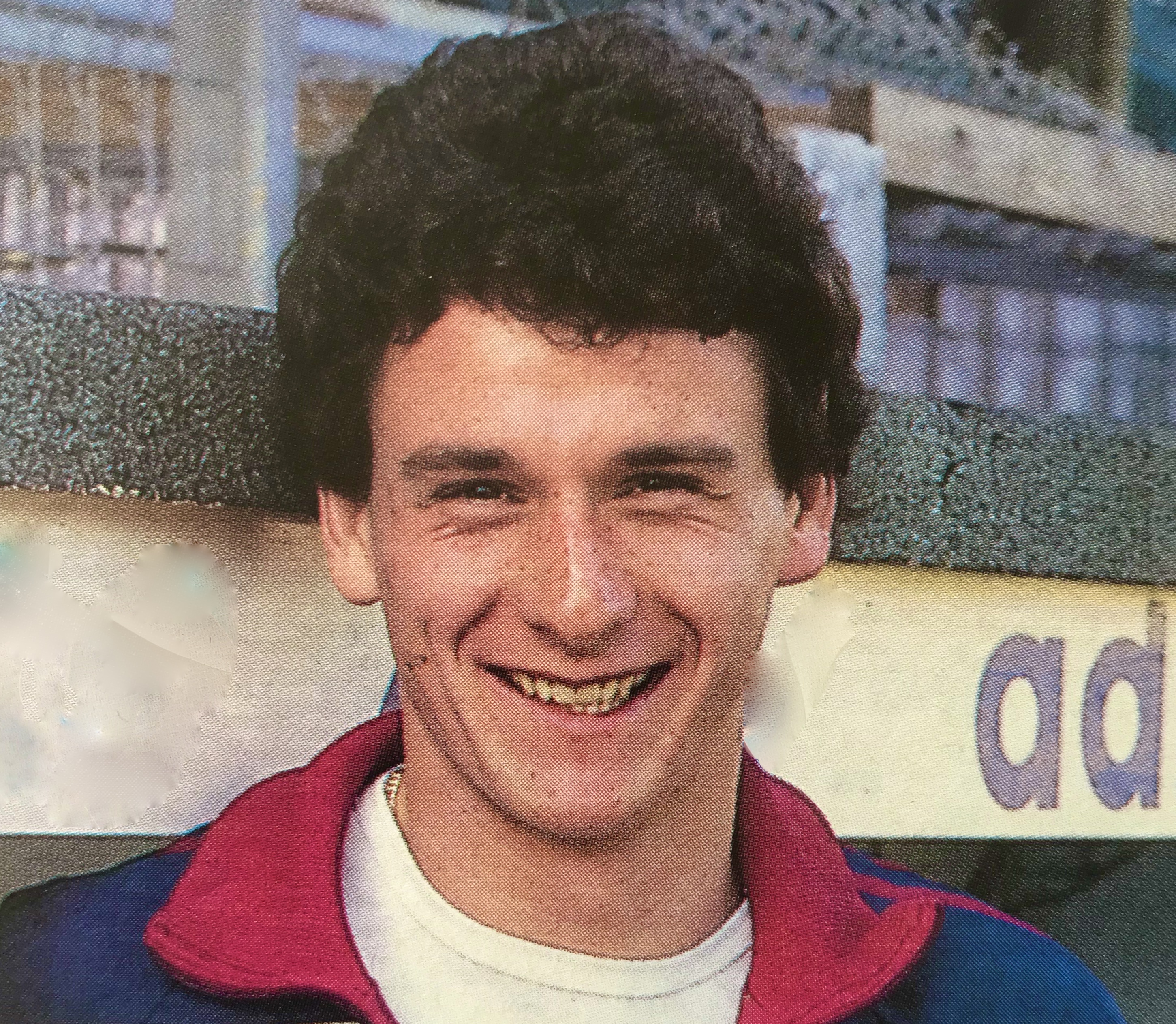
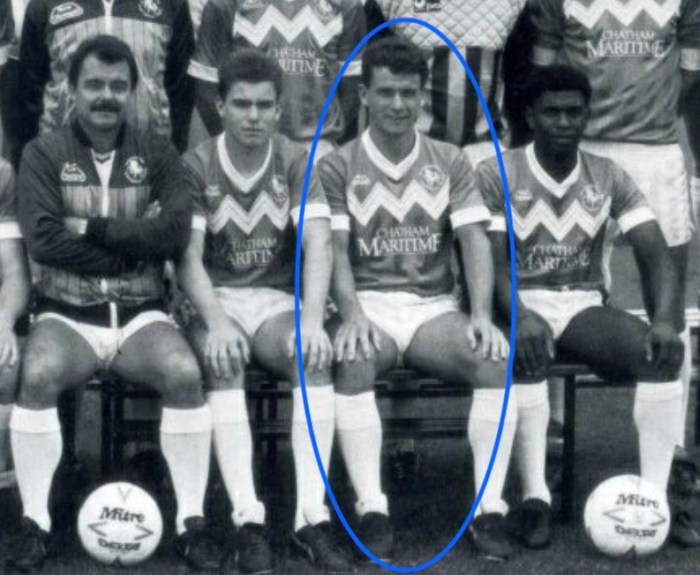
A CAREER highlight saw Welshman Mark Walton keep goal for Norwich City in a FA Cup semi-final in front of 40,000 at Hillsborough but his time with the Seagulls was marred by Brighton’s boo boys.

Walton’s first action in an Albion shirt was in front of only a few Albion followers because Brian Horton signed him in the summer of 1998 when the side was playing in exile at Gillingham’s Priestfield Stadium.

Walton, who’d been part of Micky Adams’ fourth tier Fulham promotion side in 1996-97, found himself out of favour at Craven Cottage once Kevin Keegan had been installed as manager following the club’s takeover by Mohamed Al-Fayed.

Not wishing to play second fiddle to Northern Ireland international Maik Taylor, Walton moved for £20,000 to Brighton, who were a ‘keeper light after Nicky Rust’s departure to Barnet. Walton was Horton’s first choice between the sticks in the opening 16 games of the season.

“When Maik arrived, it was a matter of when I went rather than anything else,” he told fulhamfocus.com.  “I was at a stage in my career that I just wanted to play, so moving was a necessity. In retrospect, I probably should have thought harder about my decision to join Brighton.”
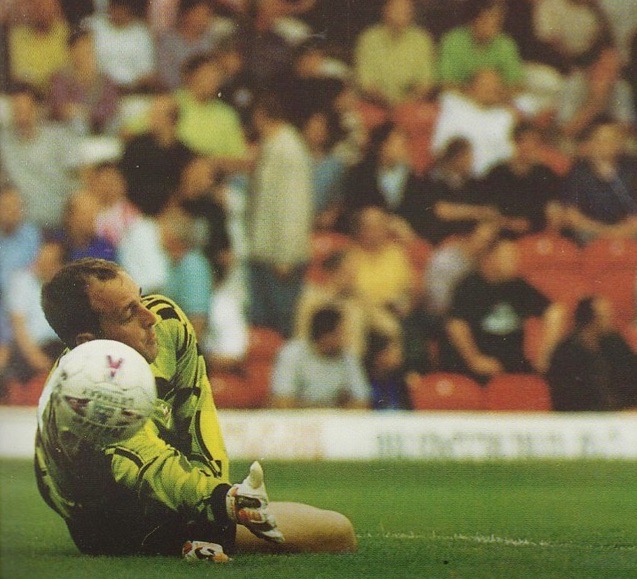
After he’d shipped six goals in two successive 3-1 defeats in October, young Mark Ormerod took over and kept the ‘keeper’s jersey until Horton quit to take over at Port Vale shortly into the new year.

Caretaker boss, Jeff Wood, who’d been a goalkeeper himself, reinstated Walton to the starting line-up for five matches, but he damaged a hamstring in a 3-0 defeat at Southend on 20 February and didn’t play again that season.

Walton must have been encouraged when his old boss Adams took over from Wood, and he shed a stone and a half during the summer to get back into shape. Although Ormerod started the first five games of the new season back in Brighton, Walton was then reinstated as first choice ‘keeper.

But a gaffe — wearebrighton.com recounted how Walton’s attempted clearance from a back pass cannoned into the back of Paul Watson and into the net for an own goal — as Albion succumbed 3-2 to previously winless Chester City on 18 September (despite a goalscoring debut for Danny Cullip) saw feelings running high.

Adams had the players in for an extra training session the following day and Walton was dropped for the next match. Before the month was over, he submitted a transfer request citing the stick he was receiving as his reason for wanting to go.

“It’s one of those things you cannot really do too much about,” he told The Argus. “I am not the first and I won’t be the last. Everybody hears it. It’s just general abuse from boo boys and it’s the same home and away.

“It is obviously not the best feeling in the world, but you are paid to do a job and you go out and give your best.”

The manager was clearly upset that Walton felt he had to leave because of criticism from supporters.

“I’m immensely disappointed that a boy has come in to see me and wants to leave the club because he feels he is not being given a fair crack of the whip by the fans,” Adams told The Argus. “I am disappointed it has come to this and that he feels he has got to bow to fan pressure.

“Mark is a great lad. Whichever eleven lads I put out on the pitch in the blue and white stripes, they are representing Albion and the fans have got to get behind them. They are going out to give their best for the supporters and the club.”
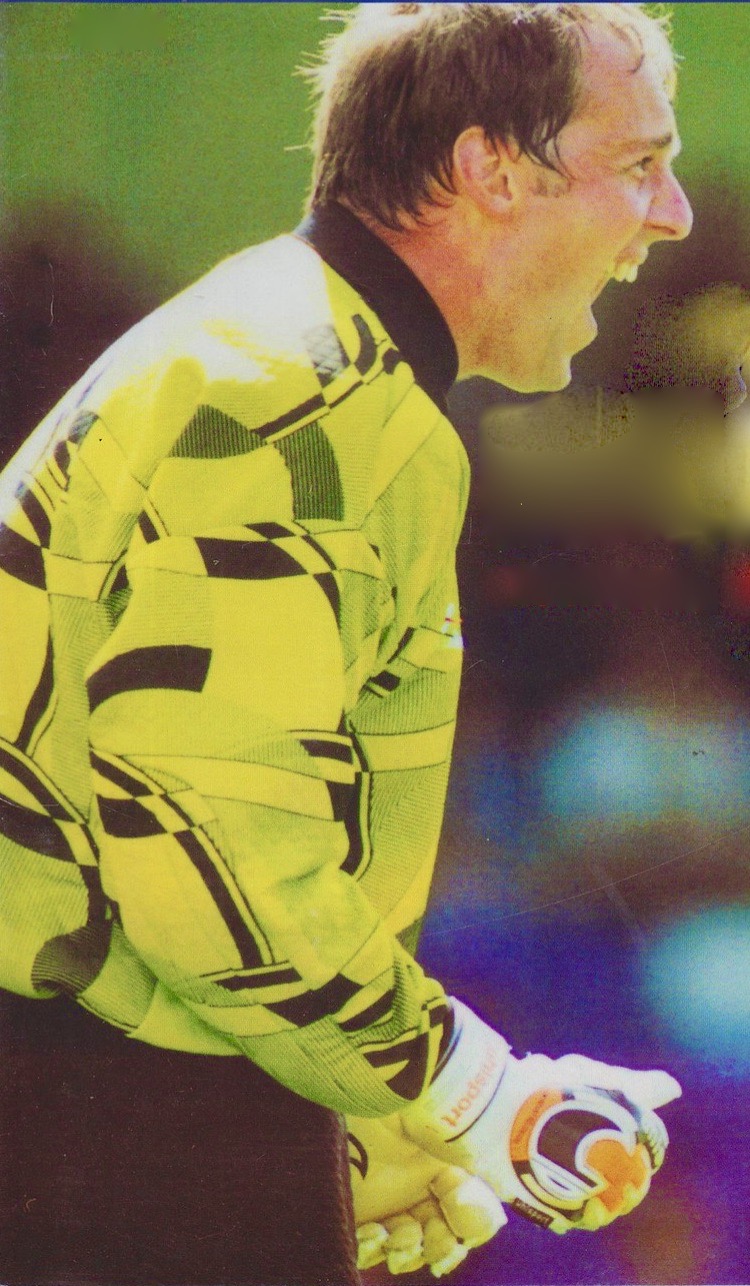
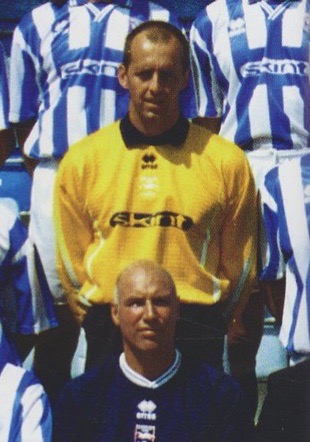
Support came too from part-time goalkeeping coach John Keeley, who said: “Mark looks ever so fit now and the way he has trained and looked after himself in the summer shows he wants to prove to people he is a good goalie.

“As a goalkeeper you want the crowd on your side because it gives you a certain amount of confidence, especially when you are playing at home.”

Adams showed his faith in Walton by restoring him to the starting line-up and he was rewarded for his loyalty by two shut-outs on the road as Albion drew 0-0 at Peterborough and beat Carlisle United 1-0.

The matchday programme noted of the big ‘keeper’s performance at London Road: “Walton didn’t put a foot, or should that be hand, wrong during the 90 minutes, prompting praise from supporters, who chanted his name at the final whistle.”

Adams added: “Mark was terrific. I cannot speak highly enough of him. He is a good, honest pro and he answered his critics.”

Walton collected a player of the month award for conceding only one goal in five matches during October. He kept the shirt for the rest of the season, only missing two games towards the end, and playing a total of 45 games.

But the last-day 1-0 home win over Carlisle United turned out to be his last for the Seagulls. It was reported he’d verbally agreed a new contract but just before the start of the new season he chose to move on to Cardiff, along the road from where he was born in Merthyr Tydfil on 1 June 1969.
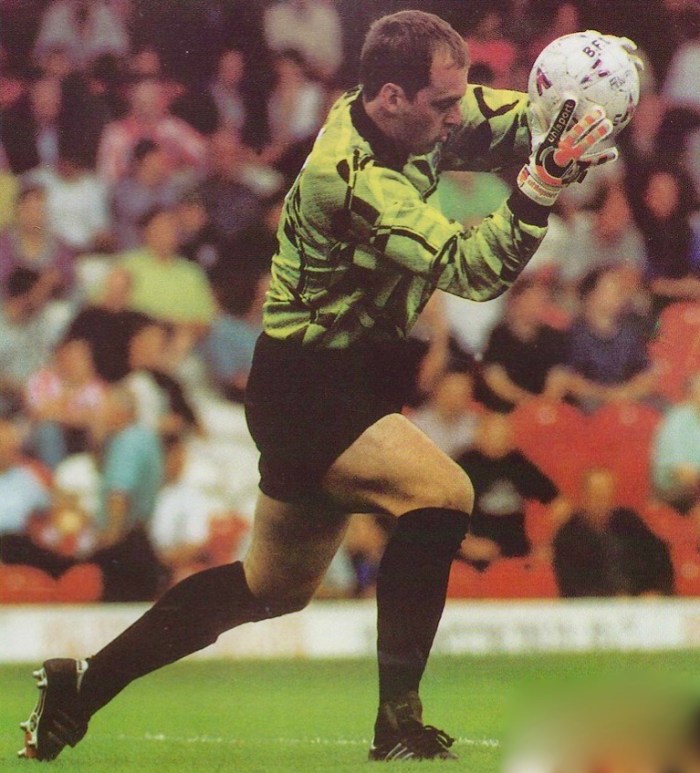
As it turned out, the move worked out well all round because Walton helped the Bluebirds win promotion from Division Three as runners up behind the Seagulls in top spot, Adams having unearthed a more than capable replacement in Michel Kuipers.

In an interview with Dan Smith in 2018 for fulhamfocus.com, Walton explained how his footballing life began at South Wales valleys village side Georgetown Boys Club and, because he suffered from severe asthma when he was 12, he decided it would be better to play in goal than in an outfield position. He was inspired by Phil Parkes of West Ham, Jimmy Rimmer of Aston Villa and Everton’s Neville Southall.

Walton played youth team football for Swansea City but his first senior professional club was Luton Town, where he spent six months. With the experienced Les Sealey and Andy Dibble ahead of him, he wasn’t able to break through to the first team. He moved initially on loan to Colchester United, managed by Mike Walker, who’d previously kept goal for the Us after a distinguished career at Watford.

Walker gave him his debut at Layer Road as an 18-year-old in August 1987 and he went on to make a total of 56 appearances for United, having moved permanently for £17,500 in December 1987, by which time Roger Brown was in charge.

Walker, meanwhile, had moved on to take charge of Norwich’s reserve side and, on his recommendation, City signed the Welsh goalkeeper for £75,000 in 1989.

“I owe Mike Walker a debt of gratitude to this day, as he basically taught me from scratch and helped develop me into a solid keeper with a sound technique,” Walton told Ed Couzens-Lake in a 2013 article for myfootballwriter.com.

Walton spent most of his three years at Carrow Road as understudy to first choice Bryan Gunn. It was because of a serious back injury to Gunn that Walton found himself facing Sunderland in the 1992 FA Cup semi-final, when a single goal from John Byrne settled the tie.

Looking back on his time with the Canaries, Walton told Couzens-Lake: “I loved my football and I loved Norwich, and, for me, it is still ‘my club’. The camaraderie of the dressing room was fantastic – indeed, whilst I don’t miss playing one bit, I do miss the changing room banter, all the characters, bad and good, and those shared triumphs, disasters and the shared sense of humour.”

The admirable Flown From The Nest website notes Walton made 28 appearances for the first team and 114 for their reserves. He had loan spells with Wrexham and Dundee United, trials with St Johnstone and West Ham, but it was Bolton Wanderers during Bruce Rioch’s reign that he next saw first team action, playing three games for the Trotters.

After his release from Norwich, a bizarre series of circumstances which he explained to fulhamfocus.com saw him spend two years out of the game before a Fulham fan, who was a member of the Norfolk cricket club he’d been playing for, wrote to Adams and suggested he give Walton another crack at league football.

“Micky telephoned and invited me for a trial. After three weeks, I was offered a year’s contract,” he said.

When ousted by the upheaval at the Cottage, Walton went on loan to Gillingham in March 1998 but couldn’t agree terms for a permanent move and on transfer deadline day ended up back at Norwich on loan as cover for Andy Marshall.

After his stint with the Albion and initial success at Cardiff, Walton slipped down the pecking order and briefly tried his luck with a semi-professional side in Melbourne, Australia.

He returned to South Wales after retiring from playing and went on to gain a first-class sports psychology degree at Cardiff Metropolitan University, a Masters degreeand a Postgraduate Certificate in Education (PGCE) which led him to become a teacher for 10 years.

He also worked for Cricket Wales as a researcher and community coach and in January 2021 joined the cricket staff of Glamorgan.

“Cricket has always been a passion of mine,” he told his new employers’ website. “I’ve always played but that became more sporadic when I focused on football, but I always tried to sneak in the odd game here and there which was often in midweek.

“I played some league cricket in Norfolk, Essex and Wales and was able to represent Wales Minor Counties. Then about 20 years ago I fell into coaching and it’s prospered from there and I’ve coached every age group within Cricket Wales.”

• Pictures from the Albion matchday programme and online sources.

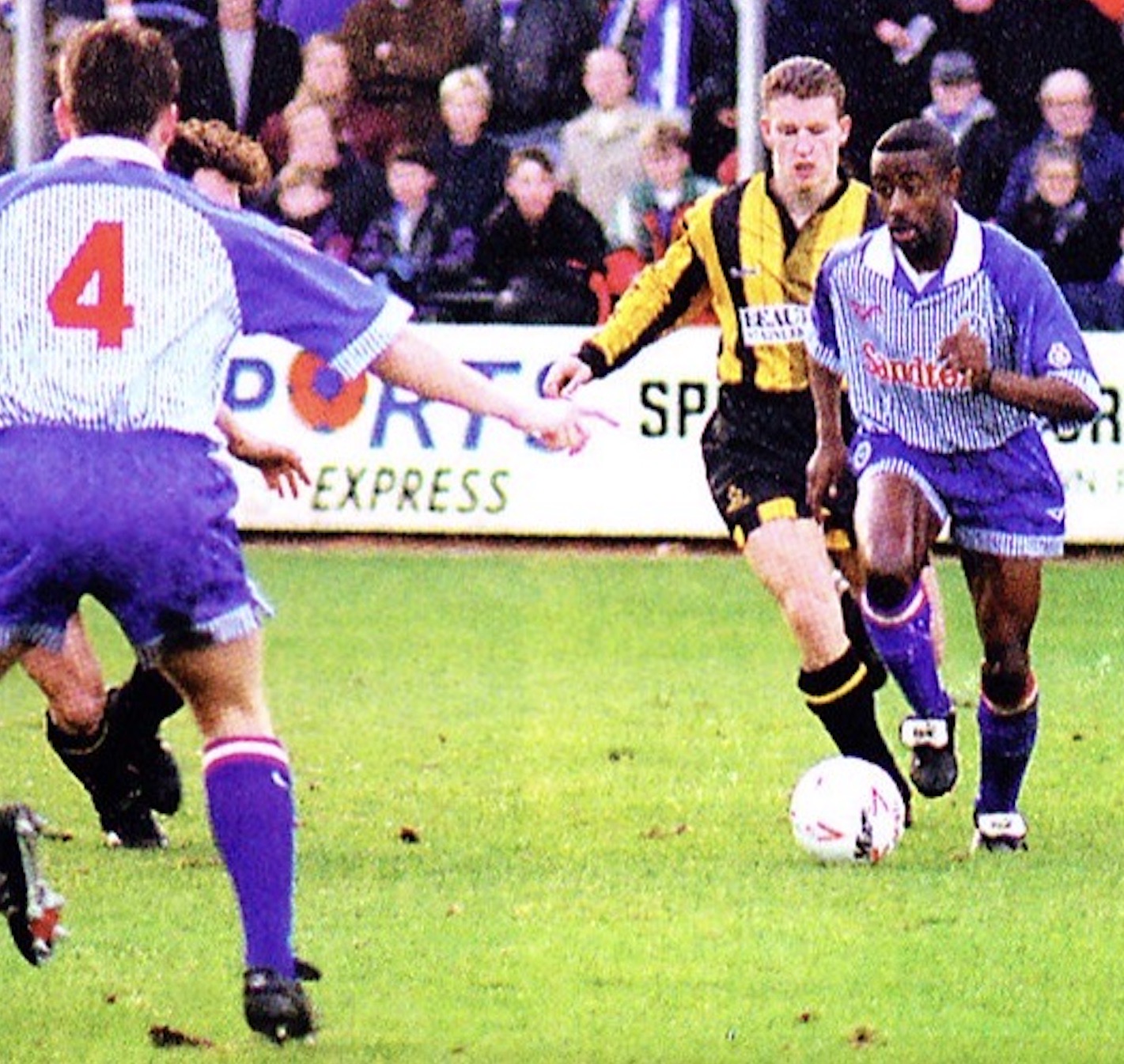
How the career of high rise Flatts came tumbling down

MARK FLATTS was destined for a glittering career after breaking into Arsenal’s first team when only eighteen.

It was the season when George Graham’s side finished in a disappointing 10th place in the league but won the League Cup and the FA Cup, beating Sheffield Wednesday in both competitions.

Flatts got seven starts plus four appearances off the bench and the following season, after he’d been troubled with a few injuries, Graham sent him out on loan to get some games under his belt.

His first loan was at Cambridge United, then in January 1994 Flatts joined forces with former Gunners legend Liam Brady at Brighton.

The former midfield maestro who’d graced the game at the highest level as a player had not long arrived at the Goldstone Ground, creating a buzz of anticipation amongst the largely disillusioned Albion faithful.

Brighton were bumping along around the foot of the third tier table when he arrived and it augured well that Brady could use his connections with his former club to secure the services of a prodigious young talent who’d already played a handful of matches in the Premier League.

He made his debut in a cracking 4-1 New Year’s Day home win over Cambridge United when Kurt Nogan scored a hat-trick and he was only on the losing side twice during his two months at the club, helping the Albion move away from the relegation zone.

Brady wrote about it in his autobiography Born To Be A Footballer, describing how “livewire” Flatts had heated up “a freezing Goldstone” on that debut day. “He’s a lovely young kid off the field but on the park there’s a strut about him. That’s exactly what we need. He’s full of tricks.”

Flatts started nine matches, came on as a sub once, and scored one of Albion’s goals in a 3-2 home win over Blackpool, but it was his skill on the ball and pace that fans enjoyed most.

After he had returned to Highbury, Brady thanked him for his contribution and said in his programme notes: “He gave the place a tremendous lift. He’s a very confident lad and he did us a real favour and hopefully he’s got something out of it as well. I think he has and I think he enjoyed his time with us.”

Flatts confirmed as much recently. Although he has kept a low profile for many years, in 2020, online from his home in Norfolk, he appeared in two podcasts talking about his career.

On the Shoot the Defence podcast in April 2020, Flatts talked admiringly of his time under Brady at Brighton – “He still had it in training” – as well as the experience of playing alongside senior pros Jimmy Case and Steve Foster at the Goldstone Ground.

“Loyal fans as well. It was a good time,” he said. “I got on well with the fans and a few of them still text me, so that’s nice. Liam Brady and Jimmy Case had seen me in a few games, said they wanted me on loan, and I went there and enjoyed it.”

Born in Islington on 14 October 1972 and brought up in Wood Green, Flatts played for Haringey Borough and Middlesex County school teams and he was playing for Enfield Rangers when he caught the eye of professional clubs.

He spent time training with Watford and West Ham, but his mum and older brother were Arsenal fans so, when they invited him to join them, it was no contest. The scout responsible for picking him up for the Gunners was the former Brighton wing-half, Steve Burtenshaw.

Flatts was one of the country’s top talented 14-year-olds who went through the FA National School of Excellence at Lilleshall before becoming a trainee at Highbury after graduating.

In the first edition of a new fans’ podcast Over and Over and Over Again on 20 August 2020, Flatts talked about how he, Andy Cole and Paul Dickov up front, Ray Parlour and Ian Selley in midfield, Scott Marshall at the back and Alan Miller in goal were all going through from youth team to reserves at the same time. “It was a good strong youth team,” he said. “Pat Rice was the youth team manager who brought us through. He was a good coach.”

Flatts signed professional in December 1990 and he progressed to the reserve side who were managed by another Arsenal legend, George Armstrong.

One particular reserve match stands out as memorable – but not because Flatts scored a goal in a 2-2 draw. Ordinarily, Flatts was accustomed to playing in front of a few hundred supporters for the second string, but on 16 February 1991 it’s reckoned more than 10,000 turned up.

The Ovenden Papers Football Combination game against Reading was originally scheduled to be an away fixture but freezing conditions meant the game was swapped to Highbury because it had undersoil heating.

The reason for the surge of interest was the match saw the return to playing of Tony Adams after his release from prison, having served half of his four-month sentence for drink driving. The amazing response of the Arsenal faithful was remembered in this football.london article in February 2018.  

Often niggled by injuries, Flatts was sidelined by one he hadn’t even been aware of, other than what felt like a small discomfort. “I got a stress fracture on my ankle and was playing on it for a month without realising,” he said.

Physio Gary Lewin arranged for him to see a Harley Street specialist and it was only after he was put through tests on a running machine that the problem was diagnosed. The injury required surgery that put him out of action for over a year.

Flatts got his first real involvement with the first team on a pre-season tour of Norway ahead of the 1992-93 season, getting on as a substitute against Stabaek and Brann Bergen. He was a non-playing sub in two subsequent pre-season friendlies away to Wolves and Peterborough.

It was back to reserve team football at the start of the season but Graham selected him to travel with the squad for an away game at Sheffield United on 19 September and he made his competitive debut as a 71st minute substitute for Anders Limpar, shortly before Ian Wright netted an equaliser for the Gunners.

His next involvement came in a third round League Cup encounter with Derby County. He was a non-playing sub in the away tie but started in Limpar’s place for the replay on 1 December 1992, when Arsenal edged it 2-1.

Flatts (right) celebrates Arsenal’s League Cup win with some familiar faces

He kept his place for the league game which followed four days later but was subbed off as Arsenal lost 1-0 at Southampton.

At one point, the Islington Gazette declared Flatts, Neil Heaney, Parlour and Dickov as the “next crop of Arsenal starlets who will take the club forward”.

As the year drew to a close, on 19 December, Flatts earned rave reviews for his showing in a 1-1 home draw against Lennie Lawrence’s Middlesbrough.

“It’s very unusual to have a quick player with a brain,” said manager Graham. “Mark has skill but he also has the application to go with it.”

Writing about how brightly Flatts shone in the game, Trevor Haylett, of the Independent, said: “He possesses an easy and deceptive running style which frequently carried him away from markers, and has a confidence that few of his colleagues shared in a desultory first 45 minutes.”

Haylett observed: “The problem for Graham is that his most productive line-up, with Merson in the ‘hole’ to distribute and ghost into scoring areas, leaves no room for Flatts, who amply justified his manager’s contention that he has a ‘very big future in the game’.”

Flatts kept his place for the following match, a goalless Boxing Day home draw against Ipswich Town, and was back on the bench away to Aston Villa three days later but came on for the second half in a game Arsenal lost 1-0.

The game he remembers most fondly came just over a fortnight later away to Manchester City at Maine Road. He sped past two players and crossed it for Paul Merson to score with a near post header that gave Arsenal a 1-0 win.

But competition for places was intense and he didn’t next get a start until 1 March against Chelsea at Stamford Bridge, another game that finished goalless.

He had to wait until May for his next involvement, as a sub in a 1-0 defeat away to Sheffield Wednesday, who his teammates would play twice in the space of five days later that month to win the FA Cup on penalties, both games having ended in draws.

With the first of those matches only four days away, Graham put out a young side to face Spurs in the last league game of the season, and Flatts was part of a side who lost the north London derby 3-1, Dickov getting the Arsenal goal.

After his loan spell at Brighton, Flatts got back into the first team picture at Arsenal towards the end of the 1993-94 season, featuring in three successive league games: as a sub in a 1-1 draw with Wimbledon and starting in a 2-1 win at Villa and a 1-1 home draw against QPR.

While he travelled to Copenhagen with the squad for the European Cup Winners’ Cup Final on 4 May 1994, he didn’t play in the Gunners’ 1-0 win.

Flatts wasn’t back in the Arsenal first team set-up until December 1994, when he had a four-game spell, starting in a 2-2 draw away to Nottingham Forest, being a non-playing sub away to Manchester City and then coming on as a sub in a 3-1 defeat at home to Leeds on 17 December and in the goalless Boxing Day home match with Aston Villa.

He came off the bench in a third round FA Cup replay defeat to Millwall on 18 January 1995 but the following month the manager who had supported his development was sacked, and the young wideman went out on loan to Bristol City.

Flatts didn’t reckon much of the man management skills of Graham’s temporary successor, Stewart Houston, but it was the manager who eventually succeeded him who showed the youngster the door.

“Bruce Rioch took over, and said: ‘No, you’re not good enough’ and that was it,” Flatts recalled. He had another short loan spell, this time at Grimsby Town, in the 1995-96 season, but when his contract was up in 1996, he was given a free transfer.

When Flatts left the famous marble halls of Highbury, all that early promise rapidly evaporated and despite a handful of trials at several clubs, his career fizzled out, the player admitting he fell out of love with the game.

Initially, he headed off to Italy to try his luck with Torino in Serie B. He said while he enjoyed his few months there, a limit on the number of foreign players who could play at any one time edged him out of the picture.

According to arseweb.com, back in the UK he had trial periods with Manchester City (September 1996) and Watford (October 1986), although the scathing Hornets fans website, Blind, Stupid and Desperate has a less than flattering summary of his efforts to impress at Vicarage Road. He was briefly at Kettering Town in December 1996, then Barnet (1997-98 pre-season) and Colchester United (1999-00 pre-season) but none of them took him on.

Former Arsenal striker Martin Hayes, manager at Ryman League Division One side Bishop’s Stortford, signed him during the 1999-00 season.

And his last appearance on a team-sheet was as an unused substitute for Queens Park Rangers in a 2000-01 pre-season 4-2 away defeat at Dr Martens League Premier Division side Crawley Town.

Flatts told host Richie Wakelin on Over and Over and Over Again that he kept on picking up niggling injuries too regularly. “With fitness concerns, I just lost interest,” he said. “I ain’t got no regrets. I loved it at Arsenal. I loved playing football. George Graham had faith in me and he gave me a go.”

He said his teenage son and daughter both play football and he has done some coaching at a local level and has considered setting up his own coaching school. He has also done some scouting work for Cambridge United and Norwich City.

Flatts looks back at his football career during a 2020 podcast

Pictures from Albion’s matchday programmes and various online sources.

Eventful Albion stopover for on-loan Calvin Andrew

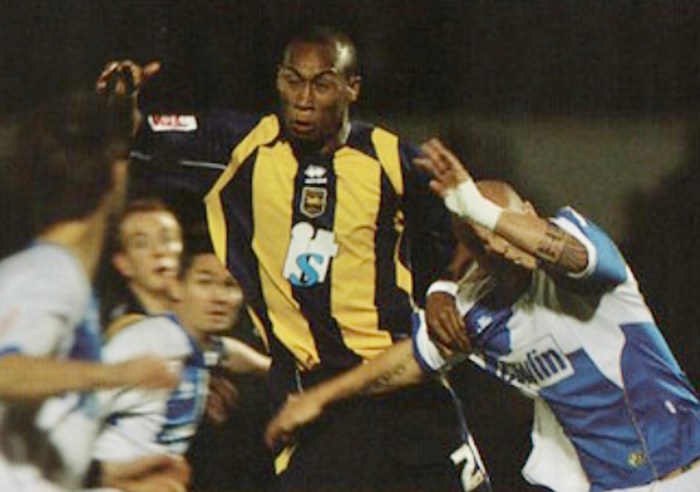
JOURNEYMAN striker Calvin Andrew is unlikely to forget his eventful months playing for the Seagulls on loan from Crystal Palace.

The Luton-born forward got off to a great start in January 2009 when he scored a 90th-minute winner on his debut for the Seagulls.

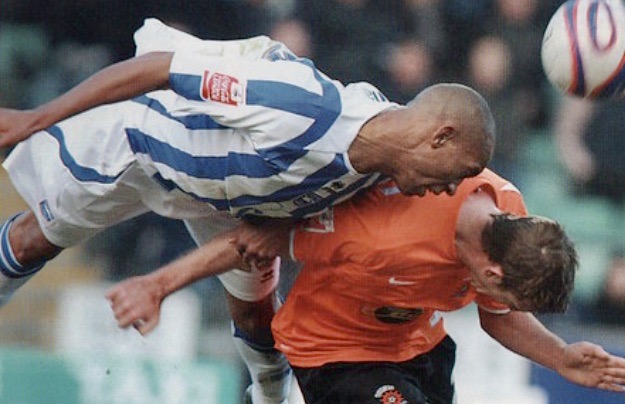
In only his fourth game, he damaged a hamstring against his hometown club – a match that turned out to be the last for the manager who’d brought him in on loan.

While Andrew was back at Selhurst Park recovering from the injury, a new boss – but familiar face – took charge at the Withdean.

Andrew rejoined the Seagulls but couldn’t force his way into the starting line-up because Lloyd Uwusu had arrived to take centre stage. However, the loanee scored two vital goals in Albion’s ‘Great Escape’ when going on as a substitute.

To cap it all, in the nail-biting last game of the season, when Brighton just preserved their League One status with a 1-0 win over Stockport County, Andrew suffered a horrific injury which sidelined him for six months.

Andrew, who had lost his place at Palace after picking up an injury at the start of the season, had joined the Seagulls as part of a major January transfer window overhaul Micky Adams oversaw in an attempt to revive the club’s flagging League One fortunes.

When he signed, Adams said: “Calvin is a young centre-forward and will complement our existing forwards by giving us an added physical presence up front.

“He is over six-foot tall and the type of striker who makes things happen and can be a real handful for opposing defenders.”

The player himself, who had only joined Palace the previous summer for a £30,000 fee, said: “I went there and at the start of the season I was playing games and I was doing well. But then the situation changed. I got injured and since then I haven’t been able to get back in the team.

“The team has been doing really well and it’s totally understandable from my point of view. Neil Warnock still rates me highly, but he wants me to go out and get some games and get myself ready for when my chance does come.

“It was quite an easy decision. There were a few clubs in for me, but Brighton is relatively close to where I’m living so it was an easy choice. It’s a good club.

“I didn’t know any of the players, but I knew the manager. He’s a great manager and I’m looking forward to playing for him. Everybody knows about Nicky Forster. He’s an experienced player and there’s always something to learn as well as forming a good partnership.”

With Forster scoring Albion’s first against Hartlepool United at the Withdean on 31 January 2009, the script looked like it had been perfectly written when Andrew netted a winner in the last minute to seal a 2-1 victory.

Unfortunately, successive home defeats – 4-2 to Peterborough United and 2-0 to Carlisle United – in five days followed by elimination from the Johnstone’s Paint Trophy at Luton the following week was too much for Adams to stomach and he decided to quit after meeting chairman Dick Knight the day before the next match, which ironically saw Albion win 1-0 at Millwall.

Andrew wasn’t involved because he’d picked up a hamstring injury at Kenilworth Road, a ground where he’d made a first team debut as a 17-year-old in the 2004-05 season. Born in Luton on 19 December 1986, Andrew was a prolific goalscorer as a youth player at his hometown club.

When he was sent out on loan to gain experience at League Two Grimsby Town in 2005, he played nine matches under manager Russell Slade.

And it was Slade who was parachuted in at the Withdean to try to steer Albion away from the League One relegation trapdoor in the Spring of 2009.

Even though Albion picked up only four points from Slade’s first seven games in charge, the former Yeovil boss slowly turned things around with four wins in the next five games to lift the Seagulls out of the bottom four.

Andrew spoke about the change in fortunes in an Argus interview. He told reporter Steve Hollis: “We have shown different qualities which I don’t think we had when I was at the club before my injury. There is some real resilience now.

“I know Russell Slade quite well and he asks all of his teams to show some grit when the going gets tough. He demands you stick in there when you are struggling and to keep going.”

Andrew was buoyant having headed the winner from Gary Hart’s cross in the 52nd minute at Bristol Rovers after leaving the bench before half-time to replace the injured Dean Cox.

“That was a big goal,” he said. “It was important for me because I am coming back from injury but it was more important for the club and the town.

“I usually hang around the back post when I am playing on the left but Dean White told me to get into attacking positions and it was a cross you dream about from Hart.”

He told Hollis: “When I initially had the injury, my fear was that I wouldn’t play again this season. I had a very bad tear in two places in the hamstring and was told it would take a very long time to repair.

“Fortunately, I seem to recover pretty quickly, and I am glad because I want to play a part in helping Albion stay up. It means a lot for me that Brighton stay up, even though I am only on loan.

“I have been made to not only feel part of the team but part of the town and it would be awful to go down.

“The supporters have been great and welcomed me even though I am from a rival team, so it is my duty to give 110 per cent. Just because I am on loan doesn’t make any difference.”

Andrew had to contend himself with another appearance from the bench in the following match but, again, he made a positive impact after replacing Hart, who limped off injured after only nine minutes of the game at Huddersfield.

The young striker levelled up the game after Town had taken the lead and Owusu continued his purple patch of form by netting a second equaliser to give Albion a share of the spoils.

Palace boss Warnock had been contemplating recalling Andrew but was told he would start in Albion’s crunch final home game against Stockport County. In fact, Slade once again opted to use Gary Hart in the starting line-up instead but Andrew was sent on in injured Hart’s place after only 17 minutes and went close to breaking the deadlock with a header that hit the top of the bar.

Forster, who had also been troubled by injury throughout the season, had to replace Andrew for the second half because he picked up an anterior cruciate knee ligament injury which ultimately prevented him playing for six months.

It wasn’t until October 2009 that Andrew got back playing for Palace reserves, and their assistant manager, Mick Jones told the club’s website: “Calvin played for half-an-hour on Monday. He is miles ahead of schedule following one of the worst injuries I have ever seen.”

The 2009-10 season saw Palace in all sorts of trouble: going into administration, Warnock departing as a result, Paul Hart taking over as manager, and the side only narrowly avoiding relegation. Andrew got 13 starts as Palace battled at the wrong end of the Championship, but he was more often a substitute, coming off the bench on 19 occasions.

With game time limited under new boss George Burley the following season, Andrew once again went out on loan: briefly to feature in three games for fellow Championship side Millwall in November, and in the New Year to League One Swindon Town, where his old Palace boss Hart was in charge.

Although he was involved in the Palace set-up at the start of the 2011-12 season, by the following March he went out on loan again, this time reuniting with Slade at Leyton Orient. He only started two matches, though, and didn’t score in any of the 10 games played while he was at Brisbane Road.

At the end of the season, Palace boss Dougie Freedman didn’t offer Andrew a new contract. His next stop saw him link up with League Two Port Vale on a two-month deal under former Albion boss Adams.

While he managed to earn a contract until the end of the season, he only started eight matches and was used as a substitute on 15 occasions.

With no new deal in the offing, he then switched to another League Two side, Mansfield Town, for the first part of 2013-14 before joining York City in the closing months.

It was in the summer of 2014 that he finally found a more permanent berth, at Rochdale, who’d been newly promoted to League One.

In six seasons at Spotland, Andrew scored 28 goals in 231 appearances and over four years was recognised as a ‘community champion’ for the amount of work he did in the local community, including school visits and involvement with the club’s women’s teams. In 2020, he was declared the League One PFA Community Champion.

One blot on his copybook came in 2016 when he was handed a 12-match FA ban (later reduced to nine games) after video evidence found him guilty of elbowing Oldham’s Peter Clarke in the face in an incident the referee missed.

After leaving Rochdale, he didn’t get fixed up with a new club until March 2021, when he joined Barrow AFC until the end of the season.

Pictures from matchday programmes.

‘Talent in his boots and balance sheets in his briefcase’

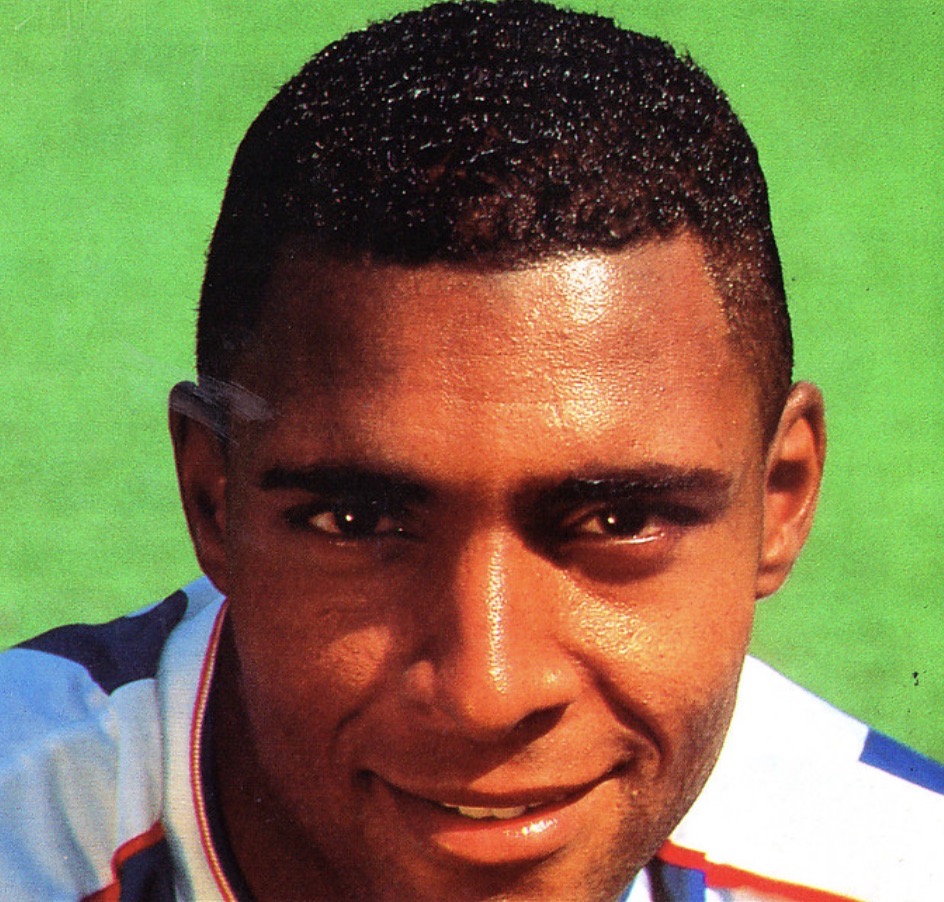
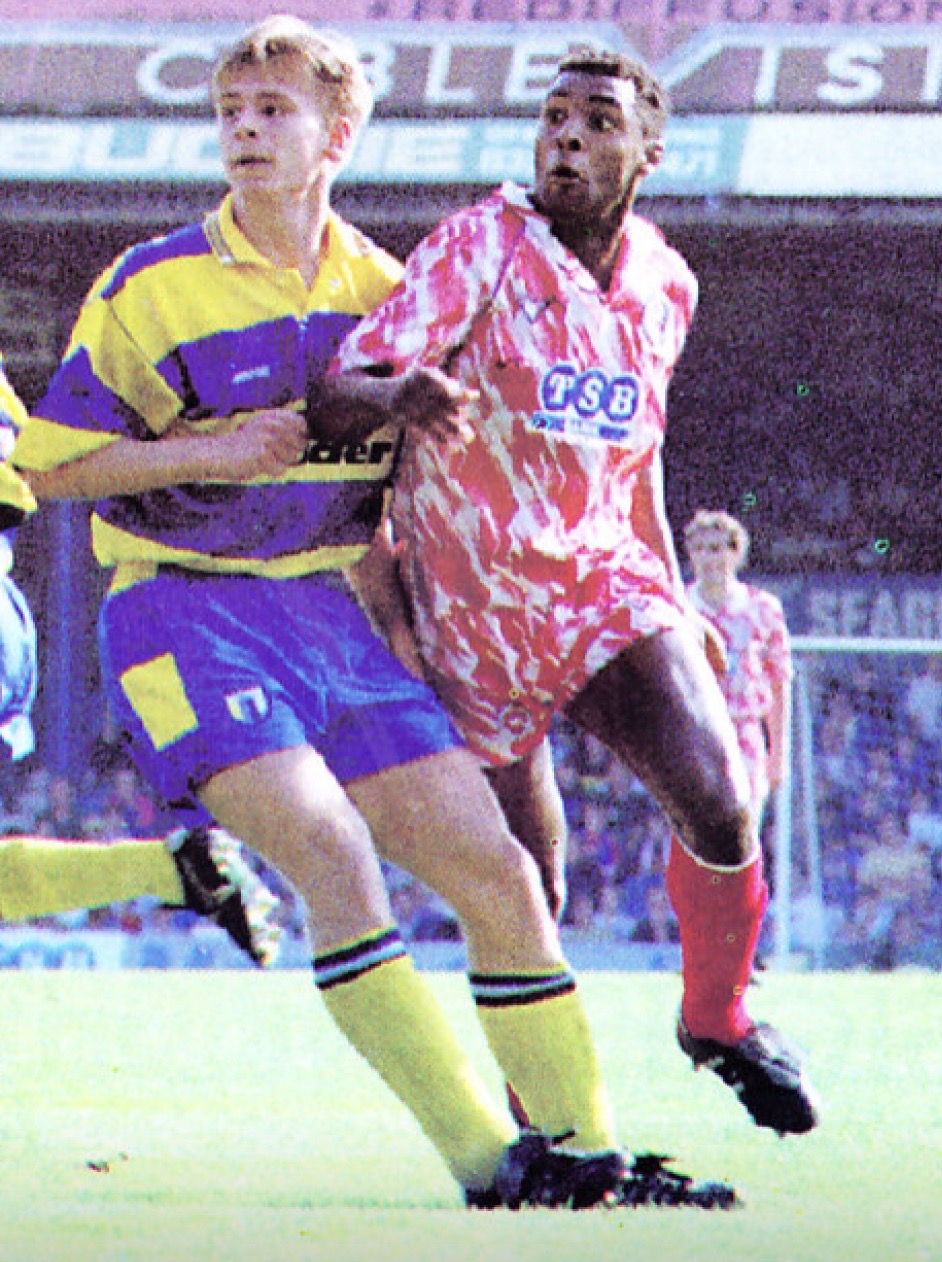
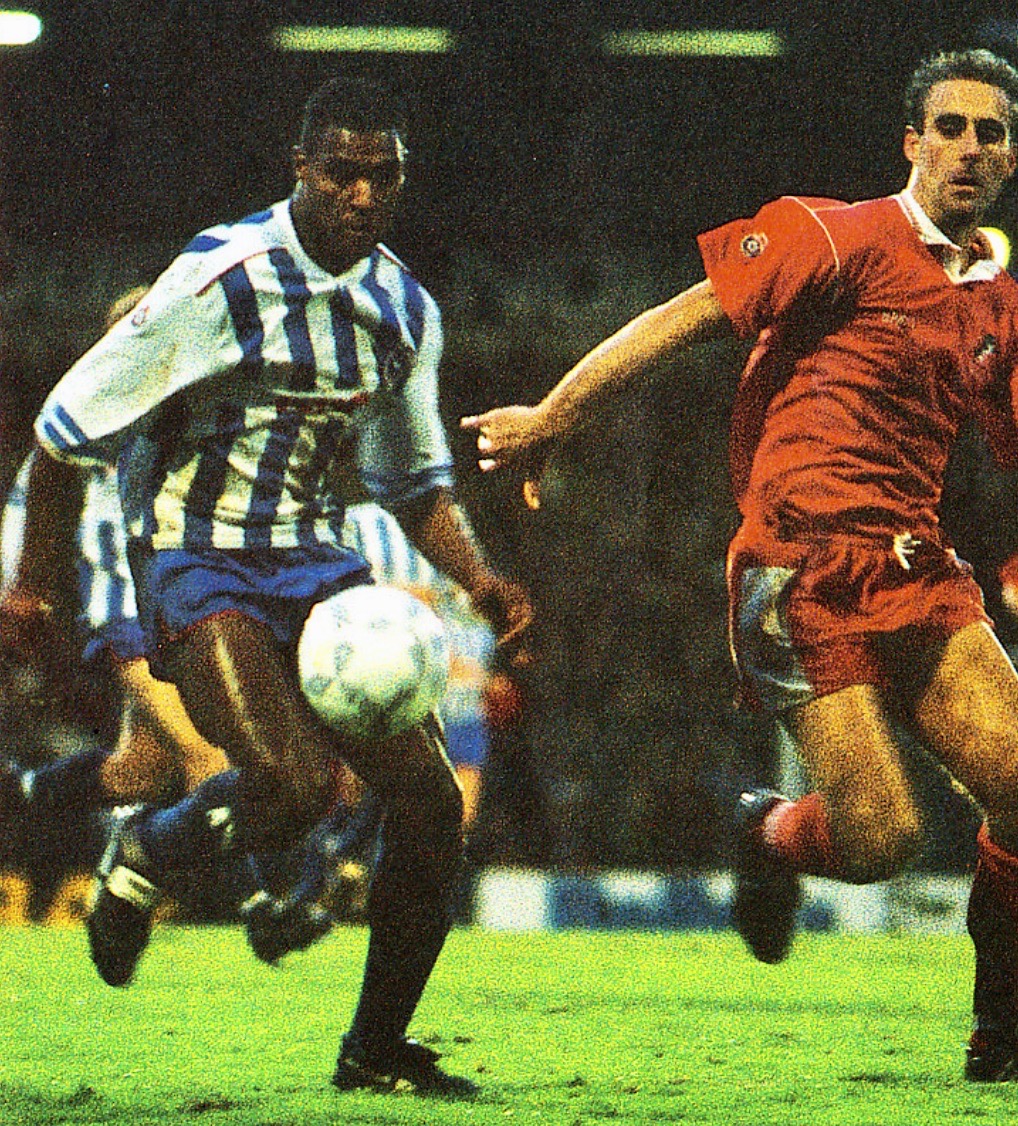
ROBERT CODNER, Brighton’s first black captain in the early ‘90s, was an enigma for plenty of managers throughout his playing days but, by his own admission, the much-maligned Barry Lloyd got the best out of him.

A dynamic midfielder with a terrific shot in his locker, Codner made way more appearances for the Albion than any other club he went to and his attachment to the Seagulls continued into the modern era when he was Solly March’s agent.

Of Lloyd, he told Albion’s matchday programme: “Barry Lloyd was good for me and I don’t think he gets the acknowledgement he deserves as he steered the club through some difficult times. I know I had my moments on and off the pitch, but he always stood by me and backed me all the way.”

Born in Walthamstow on 23 January 1965, nearby Tottenham Hotspur were Codner’s first club and, although he featured in their youth team alongside future first-teamers Ian Crook, Mark Bowen and Tony Parks, he didn’t take the next step with them.

“It is very difficult to come through at White Hart Lane, they always seemed keener to go and buy someone than risk a youngster,” Codner told Shoot! magazine.

And in a matchday programme interview with Dave Beckett, he said: “At 18, Tottenham told me that they wouldn’t put me on a professional contract, so I ended up at Leicester under Gordon Milne for about 18 months.

“I never managed to make a break into the first team which I thought I deserved, and that’s why I left in the end.”

In a slightly different telling of the story, he said: “At the end of my contract he (Milne) didn’t offer me another one which was a bitter disappointment. I felt let down and was disillusioned with the game.”

After a spell working on a building site, he tried to get fixed up with Luton Town but their manager, David Pleat, urged him to get experience playing non-League football while they kept tabs on him.

“That’s why I joined Dagenham for four or five months, but I didn’t particularly like it there, so when Barnet offered me a good deal and Luton said they couldn’t top it, I switched clubs,” he said.

His form for Barnet brought him selection for the England semi-professional side; Wimbledon showed some interest but in a pre-season game in August 1988, as a triallist for Millwall, he played against the Albion.

Brighton boss Lloyd was sufficiently impressed that he was prepared to fork out what at the time seemed like an amazing sum of £115,000 for a non-league player to give him another chance to make it as a professional. (Only a matter of days previously, Lloyd paid the same sum to secure the services of centre back Nicky Bissett from Barnet).

The ebullient Barry Fry, Barnet manager at the time, said: “Codner is a super athlete with two good feet, pace and an ability to score goals.”

The conundrum at the time was that away from football Codner had begun to pursue a successful career in the City, having turned the tables on a would-be finance salesman suggesting he could do a better job.

The salesman’s employers agreed and Codner was suddenly thrust into the world of advising on unit trusts, pensions, mortgages and insurance.

It prompted a description of him in that Shoot! article as the ‘City whizz-kid with talent in his boots and balance sheets in his briefcase’.

In an interview with John Vinicombe in the Argus, Codner denied he was not utterly dedicated to playing.

“That is not so,” he said. “I’m more dedicated because I choose to play. I always believed I would get a second chance after what happened at Leicester, and Brighton have given me that chance.

“Players have to look ahead, and, ten years from now, I want to be comfortably off.

“Of course, I’m ambitious. I want to be a millionaire as a footballer and be a millionaire financial consultant too.

“I’m lucky because I don’t have football as the be all and end all, I play because that’s what I enjoy doing.”

He added: “People may ridicule me sometimes for carrying on in business as well, but a lot of footballers end up on the scrapheap; I’m determined not to be one of them.

“Having been given a second bite of the cherry, I’ll make sure I don’t end up with nothing.”

His time with the Seagulls was certainly not a smooth ride, however, and even the club’s own mouthpiece – ie the matchday programme – said: “His time at the Goldstone has not been without controversy. Earlier this season he failed to report on time for the game at West Bromwich Albion.

“At the beginning of the season the manager said he was hoping that Robert would be one of those players who, having benefited from the experience of more than a season in the league, would play a prominent part in the club’s performances this campaign. However, he is still striving to reach a high level of consistency and his name has now been circulated to other clubs as being available for transfer.”

A retrospective article in a subsequent matchday programme also didn’t spare the midfielder’s feelings. “Codner made an immediate impact and went on to score some brilliant goals, but his relationship with the supporters, like his form, eventually blew hot and cold.

“Several clubs were interested in Codner during his time with the Albion, including West Ham, who were reported to have bid £500,000 for the player in 1991.”

Codner was almost a permanent fixture in the no.10 shirt as Albion reached the 1990-91 end-of-season play-offs with the chance to return to the top tier. He scored in both the home and away semi-final legs against Millwall as the Seagulls guaranteed a place in the Wembley final v Notts County with a 6-2 aggregate win.

After the disappointment of losing 3-1 to Neil Warnock’s County, Codner said: “We’d put in so much to get to the final and unfortunately we didn’t really turn up when it mattered most. We had phenomenal support that day at Wembley but it just didn’t happen for us.”

Albion began to implode financially and were relegated at the end of the next season. Codner was still a mainstay of the midfield, though, making more appearances than any other player, and it was a spot he shared with Mark Beeney and Gary Chivers in the 1992-93 campaign.

Perhaps it was fitting that both Codner and Bissett should be the scorers in the first game after Lloyd parted company with the Albion (Martin Hinshelwood was in temporary charge). Bissett’s 89th-minute goal salvaged a point in a 2-2 draw at Hartlepool on 11 December 1993 but Albion supporter The Groundhog remembered Codner’s 54th-minute goal for the Seagulls thus: “You can’t not love a guy who, at Hartlepool’s Victoria Ground in 1993, while the away fans were shielding themselves from freezing sideways daggers of rain blowing in off the North Sea onto the exposed corner terrace, unleashes a 35-yard thunderbolt thwang-er-wang-er-wanging off the underside of the bar to score. You just can’t.”

While Codner appeared in new manager Liam Brady’s first game in charge, a 1-0 defeat at home to Bradford City, his off-field demons caught up with him when he had to serve three weeks in Lewes Prison for driving offences.

Codner was restored to the side towards the end of January and retained his place through to the end of the season.

A subsequent matchday programme noted: “He emerged from prison a more focused player, but, after an alleged bust-up with (Liam) Brady, was dropped in early 1995 and then released at the end of the season.”

Although Codner had been a regular under Brady in the first half of the 1994-95 season, he didn’t play for the first team again after being part of the side thrashed 4-0 at Crewe Alexandra on 14 January. Brady maintained in his programme notes: “The attitude on the day was not what we were looking for and that’s what contributed largely to losing as badly as we did.”

After finally leaving the Albion with more than 260 appearances for the club under his belt, Codner popped up at a multitude of clubs subsequently (Wikipedia lists 17 he was associated with), playing a handful of games for Reading, Peterborough and Southend United, and having a slightly longer spell back at Barnet in the 1996-97 season.

Codner now operates his own Epsom-based football agency, RC Ballers Ltd.

Putney printer Pearce went to Wembley with the Albion

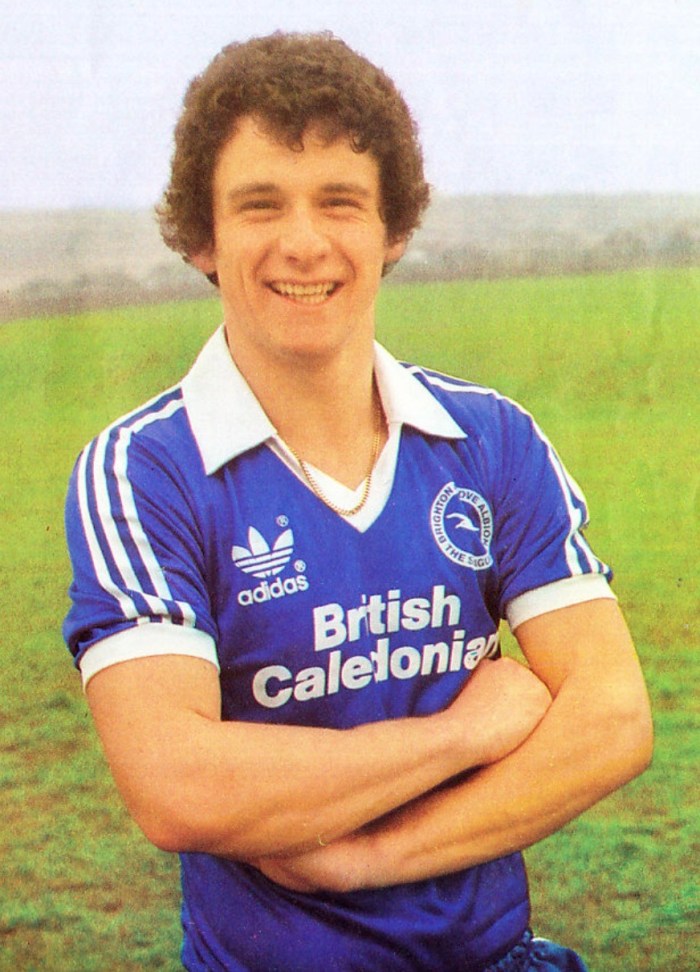
HE took a circuitous route back to his hometown club but full-back Graham Pearce eventually made it to Brentford’s first team after Brighton had resurrected his career and given him a chance to play at the top level of the English game.

Pearce was first on Brentford’s books as a teenager between 1971 and 1976, but he didn’t make it as a pro with the Bees and, after also being turned down by QPR, he went non-league, initially with Hillingdon Borough for three years and then Barnet.

When Pearce lined up for Barnet in a FA Cup third round tie on 2 January 1982, it must have been beyond his wildest dreams to imagine just over a year later he’d be playing in that competition’s final at Wembley.

But the steady, assured performances 21-year-old Pearce put in as Alliance Premier League Barnet held Brighton 0-0 before losing 3-1 in a replay at the Goldstone impressed the watching Albion boss Mike Bailey sufficiently to sign him up for the Seagulls.

Although he was itching to join, he had to serve a week’s notice with the Putney printer where he had a full-time job because they weren’t in a position to release him sooner.

Just over a year later, when injuries depleted Jimmy Melia’s cup hopefuls the closer they got to a dream Wembley date, Pearce seized his chance to put his own name in print. Circumstances fell just right for him, but it might not have happened if the experienced left-back Sammy Nelson hadn’t been sidelined.

A packed East Terrace at the Goldstone the backdrop as Pearce faces Newcastle in the FA Cup

Pearce played in the third round 1-1 Goldstone draw with Newcastle – one of six games he played in January 1983 – but he missed the 4-0 demolition of Manchester City in the fourth round and didn’t feature again until 22 March when he was sub for the 2-2 home draw with Liverpool.

Because versatile Gary Stevens was more than capable of playing alongside Steve Foster, normal centre back partner Steve Gatting was preferred at left-back for 14 matches from the end of January.

But when right-back Chris Ramsey was suspended for the semi-final against Sheffield Wednesday, Stevens took his spot, Gatting returned to the middle and Pearce slotted in at left-back.

Because Foster was suspended for the final against Man Utd, Stevens paired up with Gatting in the middle and Pearce retained his place.

Even when Foster returned for the replay, Pearce kept his place because Ramsey had been crocked in the first match and wasn’t fit to play (Melia making the mistake of putting left-footed Gatting at right-back instead of Stevens).

In a pre-match interview with the Daily Mail, Pearce said: “There’s money to be made from appearing at Wembley but the thrill for me is just being there – a player from non-League who thought his chance of playing league football had gone.”

Pearce retained the no.3 shirt at the start of the 1983-84 season back in the second tier but, when Chris Cattlin took over from Melia, he made it clear he wanted someone with more experience in that position.

In his matchday programme notes he wrote: “With Kieran (O’Regan), Eric Young and Graham Pearce all playing together, we have three players who haven’t been long out of non-League football.

“Normally these players would have been blooded slowly into the side, instead of being plunged in the deep end. They have done well and shown the right attitude, but when we play against aggressive sides away from home, some of their inexperience has been exposed.”

Until a suitable replacement could be found, Pearce remained in the side and even poked home his first Albion goal in a 4-3 win away to Cambridge United on 29 October 1983.

But four weeks later, after a 2-2 draw at home to Shrewsbury Town, Cattlin was typically forthright in his next programme notes, declaring: “I was unhappy with our defence and our failings in this department cost us the game.”

Pearce and fellow full-back Ramsey were promptly dropped; the left-back berth going to new signing Chris Hutchings from Chelsea.

Cattlin had high praise for his new recruit as he said: “Chris Hutchings is an enthusiastic, strong and determined defender and has a lot to offer, he’s also a fine footballer.”

After 18 consecutive games, Pearce found himself out of the side for the rest of the season.

It’s interesting to note that the reserve side for the 1 May 1984 fixture at home to Southampton featured five players (Pearce, Ramsey, Gary Howlett, Gerry Ryan and Neil Smillie) who’d been in the FA Cup Final squad a year earlier.

The new season was almost three months’ old before Pearce was seen in the first team again, and, ironically, the opponent was once again Shrewsbury.

The game at the Goldstone finished a goalless draw and, with Hutchings having been switched to right-back, Pearce got a run in the side extending to 19 matches.

Unluckily for him, he was then left out of the side in favour of Martin Keown, who Cattlin managed to bring in on loan from Arsenal, and the future England international quickly proved his calibre.

Pearce made one further appearance, in a 2-1 defeat at Middlesbrough, before the end of the season but in the 1985-86 season he finally cemented his place in the side and played a total of 41 matches.

Three days after Christmas 1985, he scored a rare goal as the Seagulls beat Leeds 3-2 at Elland Road. Ian Baird – later to play for the Albion in the old Fourth Division – missed a penalty but scored one of Leeds’ goals and Pearce clinched the winner on a pitch rutted by a rugby league game played on it only two days earlier.

The matchday programme described the goal thus: “Pearce played a one-two with (Steve) Jacobs and found himself with only Mervyn Day to beat and Leeds screaming for offside. The trusty left foot of the Londoner lobbed goalwards, Day was stranded, and Pearce had scored his first goal in 26 months to give Albion another three valuable points.”

Not such a memorable game came in a 3-0 defeat away to Norwich City on 5 April 1986. The full-back went into the referee’s notebook for a foul on future Albion winger Mark Barham, who was substituted shortly afterwards. Albion had a great chance to pull a goal back when Pearce was through one-on-one with Chris Woods, but the England ‘keeper saved his effort comfortably. Then, eight minutes from time, Pearce fouled Wayne Biggins in the penalty area and Welsh international David Williams buried City’s third from the penalty spot.

Pearce played in Albion’s final game of the season, a 2-0 defeat at Hull City under George Petchey, following Cattlin’s sacking, and it turned out to be his last match in a Brighton shirt.

The returning Alan Mullery explained in his programme notes for the opening game of the new season that he released Jacobs and Pearce because “I felt we had too many defenders”.

Pearce switched to Third Division Gillingham under Keith Peacock and played a total of 48 matches as the Gills narrowly missed out on promotion when losing a play-off final replay against Lou Macari’s Swindon Town in 1987.

Following a disappointing second season with the Gills, when they finished mid-table, Pearce returned to hometown club Brentford where he played 14 times (+ 8 as sub) in Steve Perryman’s 1988-89 side. One of his teammates was fellow former Albion cup star Smillie.

Pearce joined up with Peacock again for Maidstone United’s debut season (1989-90) in the Fourth Division, which culminated in a play-off semi-final defeat at the hands of a Cambridge United side featuring Dion Dublin up front.

The following season, under Phil Holder, Pearce was back at Brentford as first team and reserve coach. He subsequently had spells as player-manager with Isthmian League clubs Enfield and Molesey. He later became a PE teacher at Homefield Preparatory School in Sutton.

Born in Hammersmith on 8 July 1959, Pearce was one of seven children (five boys, two girls) and attended Grove Park Primary School, where he was captain of their under-9 football side. He went on to play for the Middlesex County side and Middlesex Wanderers before his stop-start professional career began.

• Pictures from my scrapbook and matchday programmes.

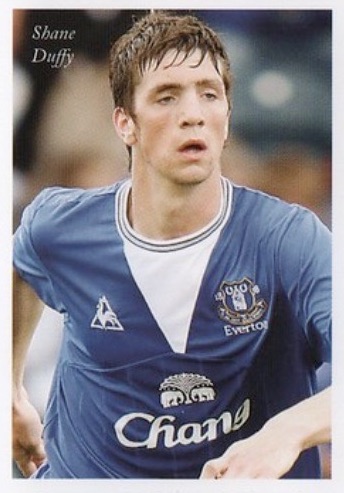
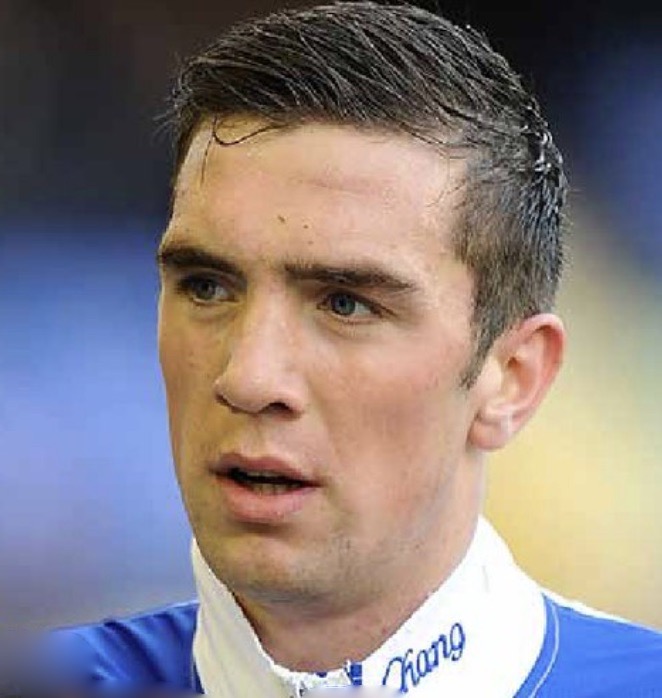
Why Shane Duffy is forever grateful to Everton

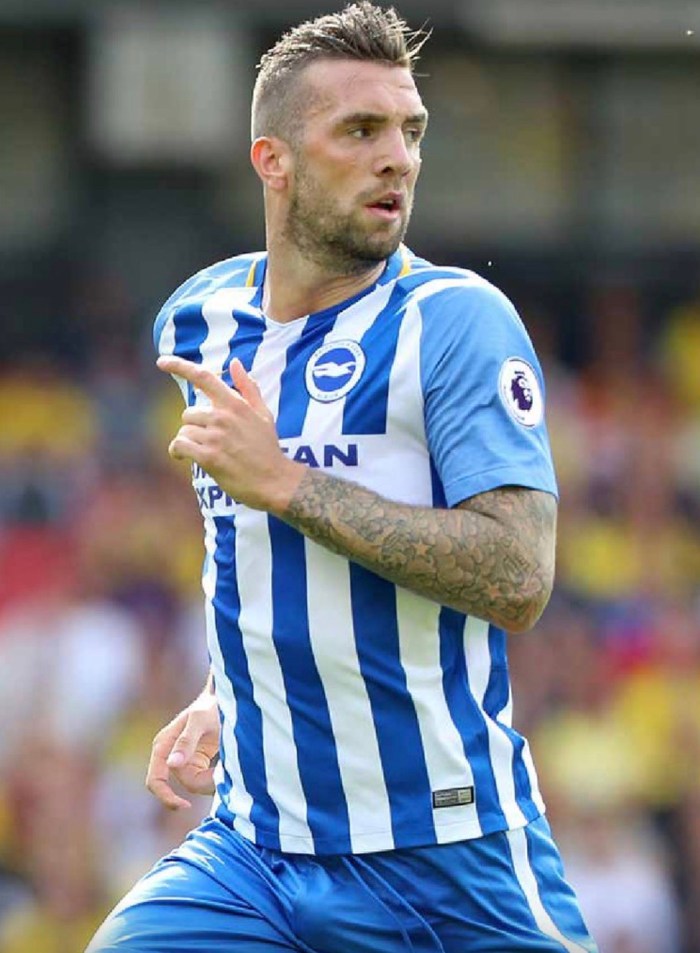
SHANE DUFFY has seized the opportunity to re-establish himself at the heart of Brighton’s defence to the obvious delight of the manager who appeared to have shunned him.

With injury sidelining Dan Burn and Covid-19 isolation protocol ruling out Joel Veltman, Duffy stepped up with a solid performance in the season-opener at Burnley, and a goalscoring return to the Amex in the 2-0 win over Watford.

“It was a fantastic header from Duffy, he’s a monster in the box,” boss Graham Potter told the BBC after the televised Watford match. “He is so big and strong to stop – it was a great goal.”

Duffy’s form has been a reminder of the solid centre-back partnership he formed with Lewis Dunk as the bedrock of Brighton’s promotion from the Championship in 2017.

Although a metatarsal injury in a 3-0 defeat at Nottingham Forest meant he missed out on the run-in, Duffy was obviously confident of being restored to the line-up when the Premier League season got under way.

“I’m looking forward to going back to Everton to see a few mates but they’re all going to be big games,” Duffy said in a matchday programme article. “I feel more ready for it than I was four or five years ago at Everton, and I deserve another crack at it, but I know I’ve got to work hard.”

While additions to the squad were to be expected as the Albion sought to stay among exalted company, the Duffy-Dunk pairing at the back didn’t look much like being broken up. Certainly not under Chris Hughton.

Happy with his mainstays at the heart of the defence, Hughton allowed Connor Goldson to leave for Glasgow Rangers and Uwe Hünemeier to return to Germany and Duffy was comfortable alongside Dunk as Albion retained their top division status. And so it remained for Albion’s two first two seasons back amongst the elite.

But when Potter replaced the popular Hughton in 2019, it soon became apparent Duffy didn’t fit the mould of the sort of ball-playing centre-back he wanted in the side.

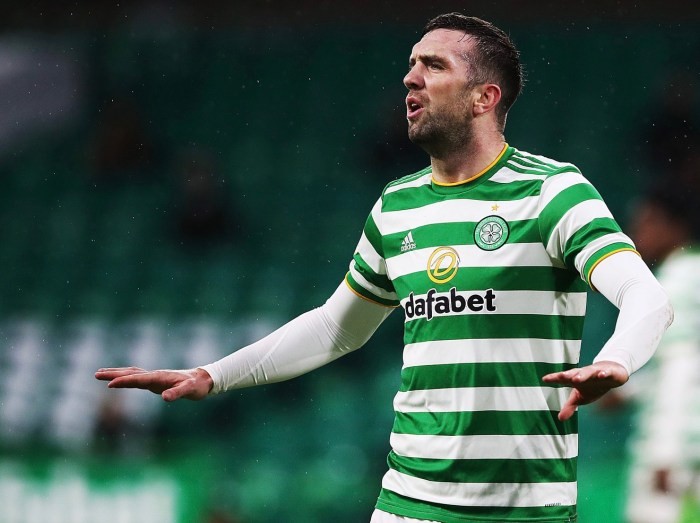
Although he started the season under Potter, his place was gradually taken over by big money signing Adam Webster. Duffy invariably ended up warming the bench and at the start of the 2020-21 season, with Ben White preferred alongside Dunk and Webster, he jumped at the chance to go on loan to Glasgow giants Celtic, the team he’d supported as a boy.

Unfortunately, it didn’t turn out to be quite the dream move Duffy had hoped for, with criticism arrowing in from all quarters as the Republic of Ireland international underwhelmed in the centre of the Hoops defence, and Celtic could only watch as city rivals Rangers won the Scottish title.

Doubtless the irony wasn’t lost on Duffy that his first match back in a Seagulls shirt saw him up against Rangers in a pre-season friendly, when the home fans ensured he was given a ‘warm’ reception.

But let’s go back to where it all started.

Born in Derry, Northern Ireland, on 1 January 1992, Duffy was playing for Northern Ireland Under-16s against England in the Victory Shield when he caught the eye of watching Everton boss David Moyes.

Duffy had been playing for his local side, Foyle Harps, at the time and, although Arsenal took him on trial and offered him a scholarship, Everton invited him to train with them and offered him a professional contract immediately.

“Of the two clubs, I just had a good feeling about Everton; obviously it was more of a family club, and there’s also the Irish connection with the city of Liverpool, so it was easy for me to settle in,” Duffy told the matchday programme.

In his second season at Goodison Park, he made his first team debut aged just 17 in a Europa League match against AEK Athens.

“David Moyes handed me my debut and I owe him a lot because he always had belief in me, whereas I could have gone somewhere else and maybe ended up back in Ireland,” he said. “I was raw as I hadn’t been with an academy before, but he was patient with me, as were all the coaches, and I came through the youth team and reserves before I got my break in the Europa League and then later in the Premier League.”

Duffy played against Brighton when the third-tier club’s youngsters (with Dunk in defence) acquitted themselves brilliantly in the fourth round of the FA Youth Cup against Everton at the Withdean on 21 January 2010 before eventually losing 2-0. The programme pen picture said of him: “Strong in the tackle and dependable in the air, Shane is considered a ball-playing defender.”

Duffy recalled: “I’d just turned 18 and had recently broken into the Everton team in the Europa League. I do remember Dunky a little bit because we were marking each other at corners.”

A month after his visit to Withdean, Duffy decided to switch allegiance to the Republic having previously captained Northern Ireland’s Under-19s. It came just as he was selected for the full international squad to face Albania in a friendly in Tirana where he was expected to receive his first cap in the absence of captain Aaron Hughes (who later spent a season with Brighton) and Chris Baird.

Disappointed Northern Ireland boss Nigel Worthington told The Guardian: “There is a loophole where a player can walk away after a lot of time and investment has gone in. Until it is resolved, that’s where we are. Shane has represented Northern Ireland all the way through from a very early age to the Under-21s.

“I am a big admirer of Shane. I like him as a player and a lot of work has gone in with different coaches. I am disappointed with the situation as he is going to be a very good player. Shane has decided, after discussing the matter with his family, to represent the Republic. As a manager, I have got to respect that.”

Duffy, who had close family ties to Donegal in the Republic, said the decision to switch his allegiance from Northern Ireland was the right thing to do to help his international career.

Speaking to evertontv, Duffy said:“It was difficult for me to leave because of what they’ve done for me in Northern Ireland since I was young. They brought me through the ranks which gave me the chance to come to Everton.

“It was hard to leave all the coaches and all the players, but it was always a case of wanting to come to my own country. I spoke to a couple of people about it because I didn’t want to disrespect Northern Ireland, but I just had to do what was best for me and I thought it would be best for me to switch.”

Astonishingly, in his first-ever training match with the Republic, under manager Giovanni Trapattoni, he was involved in a freak collision that lacerated his liver and emergency surgery was required to save his life as he lost a huge amount of blood.

After a speedier-than-expected recovery, Duffy was soon lining up for the Republic’s Under-19s and Under-21s and he went on to make 20 appearances for the Under-21s.

In 2012 he was called up to the senior squad to replace the injured Richard Dunne but missed out on the squad for the 2012 Euros. He had to wait until June 2014 to make his full debut and it was another two years before he was next involved.

He was called up to the side who famously beat Italy in a 2016 Euros group match to qualify for the final 16 but was then sent off as the Republic bowed out 2-1 against France. Nevertheless, under Martin O’Neill, Duffy became established in the side and in March 2018 was named his country’s Player of the Year. He told the matchday programme: “When I heard the news, I was shell-shocked, but when it sunk in it gave me time to reflect on how far I’ve come in a short space of time.

“So much has happened: the Euros, failing to reach the World Cup in the play-offs, winning promotion with Brighton, playing in the Premier League.

“The manager noticed a difference in me when he brought me back into the side two years later, and that’s because I went away, played games and I worked hard. I got myself properly fit, dedicated, and I feel like I’ve benefited from that.”

Reflecting on the experiences given to him by Hughton and O’Neill, Duffy pointed out: “Chris has given me the chance to play in the Premier League where I’m developing, and Martin has given me the chance to play on the big stages and in a big tournament.

“You take little things out of each one of them and it’s coming together a bit now, and hopefully there’s more to come. I’m still a bit raw in some things I do but I’m getting better and it’s a nice feeling to go out knowing you can compete with top players and feel comfortable.”

Duffy went on to captain the Republic for the first time in a 1-1 draw against Denmark in November 2019 and retained the captaincy in Stephen Kenny’s first game in charge, in September 2020; a 1-1 draw against Bulgaria.

As an established international, Duffy has nearly 145,000 followers on Twitter.

Looking back, by his own admission, Duffy had realised his early exposure to senior football at Everton was going to be short-lived, telling the club’s website at the time: “I know I’m not ready to play in Everton’s first team yet as I’m so young but if I’m needed I’ll do my best for the team. A loan would obviously make me better and make me more mature on the pitch.”

Initially that loan came at Burnley in the Championship, but he only played one game under Eddie Howe and, in 2011-12, he had a more fruitful loan at League One Scunthorpe United, playing 19 games under Alan Knill.

An injury to Phil Jagielka prompted Everton to recall Duffy from Scunthorpe in January 2012 and a week after playing against Hartlepool he found himself going on as a substitute for Sylvain Distin against Spurs at White Hart Lane.

Spurs had Gareth Bale, Luka Modric and Emmanuel Adebayor in their line-up but Duffy said: “I refused to get overawed by the occasion. I just treated it as another football match, another opponent, and only afterwards did I take in what had happened.”

He said: “Everton are a club that will always mean a lot to me because they gave me my chance as a professional and shaped the player I am today. David Moyes was a big influence on my career; he helped me a lot.”

Duffy spent the 2013-14 season on loan at Yeovil – “another fantastic learning curve for me” – when Gary Johnson’s side were in the Championship and although Moyes’ successor Roberto Martinez offered Duffy a new contract at Everton, he was warned he would have to wait to establish himself because he was still young and inexperienced.

So, in the summer of 2014, he decided to join Paul Lambert’s Championship side Blackburn Rovers and, while a knee injury restricted his appearances in his first season at Ewood Park, he became a permanent fixture alongside Grant Hanley in 2015-16.

When Gordon Greer’s imposing reign as Brighton centre-back and captain came to an end in 2016, Hughton turned to Duffy as his replacement (Greer went back to Rovers). The fee was undisclosed but was reported in The Mirror to be £4m.

It remains unclear where Duffy’s future lays although his performances in the opening two games of the season suggest there could yet be a future for him under Potter. The manager didn’t hold back in his praise for the big Irishman, but the defender didn’t get carried away.

Duffy opened up to the media after the win at Burnley, talking about what he’d been through over the previous 12 months, but he pointedly added: “It is only one game and a lot can still happen, but as long as I am here I’ll try and help the team whether that’s on the pitch or off the pitch with the younger lads. That is what I am here to do.”

He said he had “hit rock bottom” when affected by off-field problems (for example, his father Brian died aged 53 in May 2020), but he praised the Seagulls for continuing to offer him support and he added: “I am still taking it day by day and be like an 18-year-old try and impress every day, try and improve and try and help as much as I can. I feel like if you do that you get the reward sometimes when maybe you don’t expect it.”

Duffy also spoke openly and honestly to Sky Sports as part of the build-up to the game against Watford.

Pictures from Albion’s matchday programme and online sources.

Malcolm in the middle was moustachioed marksman Poskett

MALCOLM POSKETT’s goals helped Brighton to win promotion from the second tier after he’d made a terrific start to his Albion career.

Only two days after putting pen to paper in Hove, Poskett netted the equaliser in a 1-1 draw away to Hull City on 4 February 1978 and a week later he marked his home debut with a goal in Albion’s 2-1 win over Burnley.

The game at Boothferry Park was only six minutes old when the home side went ahead but Poskett levelled it up just before half-time after a Tony Towner corner was headed goalwards by Andy Rollings and the new arrival diverted it into the net.

A £60,000 signing from fourth tier Hartlepool United, Poskett had taken over the no.9 shirt from Ian Mellor, who had only been in the side for one game in the injury absence of Teddy Maybank.

Maybank’s big money signing from Fulham four months earlier had broken up the highly successful Mellor-Peter Ward partnership that earned Albion promotion from the old Third Division, and Poskett’s arrival only served to illuminate the Goldstone exit door even brighter for Mellor, who swiftly departed for Chester.

A crowd of 22,694 saw the new man’s Division Two debut on an icy Goldstone Ground pitch. Poskett once again profited from a Towner pass to score. Skipper Brian Horton scored Albion’s other goal.

It all must have felt very showbiz to the lad from Teesside, used to playing in front of 5,000 crowds in the Fourth Division, especially when prior to kick off against the Clarets, Slade, a famous chart-topping pop group of the time, recorded a single on the pitch in front of the North Stand.

While Maybank reclaimed his starting berth from Poskett for six matches, he was troubled by a knee injury and Poskett got the nod for the remaining seven games of the season as Albion chased automatic promotion, which at that time was earned by the top three sides in the division. There were no play-offs.

Poskett repaid Mullery’s faith in him with a hat-trick in a 4-0 win away to Bristol Rovers and by netting the only goal of the game in the penultimate fixture at home to Charlton Athletic in front of 31,203 fans.

What happened next has been well documented: Albion missed out on promotion when Southampton (in second) and Spurs (third) conveniently drew 0-0 in the final match of the season; Spurs edging out the Seagulls on goal difference.

Maybank had a successful cartilage operation during the summer break and was initially the preferred partner for Ward as the new season got under way.

Poskett banged in a transfer request as a mark of his frustration but, after Mullery persuaded him to withdraw it, he got his chance back in the side and made the most of opportunities that came his way.

Mullery admitted in Matthew Horner’s biography of Ward (He Shot, He Scored, Sea View Media) that he wasn’t always fair on Poskett when reverting to the Ward-Maybank partnership.

He pointed out: “Malcolm Poskett did a terrific job when we signed him. He was one of the most under-rated goalscorers – absolutely brilliant.

“He was really similar to Wardy, very sharp and very quick but a bit taller and a bit stronger.”

By the end of the season that ended in promotion to the top tier of English football for the first time, Poskett had contributed 10 goals in 24 games (plus eight sub appearances). He was the substitute in the famous 3-1 win back in his native north-east when Newcastle were beaten by the Seagulls on 5 May 1979.

Brighton struggled to find their feet in more exalted company and Poskett barely got a look-in, coming on as a sub twice and only starting three matches, the last of which was in the resounding 4-0 defeat to Arsenal in the League Cup on 13 November 1979.

He scored twice, though: netting the only goal in an away League Cup win over Northampton Town, and four days later scoring along with Peter O’Sullivan as Albion pulled back a 2-0 deficit to draw 2-2 at West Brom.

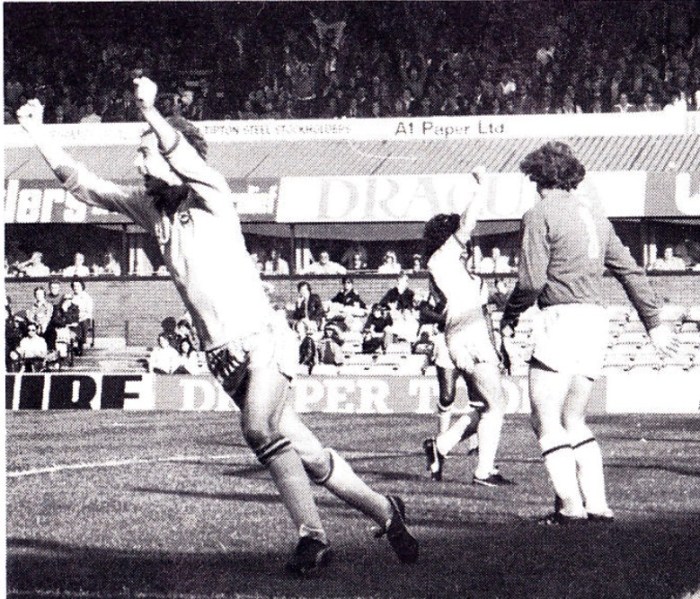
Poskett wheels away to celebrate his only top flight goal, away to West Brom

However, with the arrival of Ray Clarke from Ajax, it was clear Poskett’s chances at the Albion were going to remain limited, so he dropped back down a level to join promotion-seeking Watford under Graham Taylor. Albion goalkeeper Eric Steele had already made a similar switch in the autumn of that season shortly after a famous spat with Gary Williams at Old Trafford. Mullery also secured a £120,000 fee for Poskett, so Albion did very nicely out of the deal.

“I would have loved to stay at Brighton for the rest of my career, but it wasn’t to be,” Poskett told Spencer Vignes in a retrospective matchday programme article. “One week I was partnering Peter Ward, the next it would be Teddy with Peter. I never got a run in the team, even though I scored a couple of goals when I did play.

“At least with Watford I got the chance to start games. People called us kick and run, a long ball side, but we had a lot of talented players like Ross Jenkins, John Barnes and Nigel Callaghan.”

Poskett struck up a friendship with fellow new boy Martin Patching and both were on the scoresheet (Poskett scored twice) in a memorable 7-1 League Cup thrashing of Southampton on 2 September 1980.

Although being Watford’s top scorer with 21 goals in the 1980-81season, when the Hornets finished ninth, the following season he found himself in the reserves after a three-game barren spell.

In a Watford matchday programme article, he mused: “It’s a strange profession – one minute you’re up and the next down.

“I played in the first three league games of the season without scoring and was dropped. But I’m scoring fairly regularly in the reserve side and my chance will come if I keep on hitting the net. I’m a battler and not the type of player to give less than 100 per cent, no matter what grade of football I’m playing in.”

Watford won promotion as runners up behind close rivals Luton Town but Poskett couldn’t shift Luther Blissett or Jenkins, who were the preferred strike pairing, and Gerry Armstrong, later to join Brighton, was invariably the back-up option.

Born in Middlesbrough on 19 July 1953, Poskett went to Beechwood Junior School and then on to Brackenhoe Secondary Technical. His footballing ability in school sides eventually led to him being selected for North Riding Schools.

He was a decent all-round sportsman – a useful cricketer who played for Middlesbrough Schools, he also featured in local leagues at table tennis, and enjoyed tennis and badminton too.

But at 16 the budding sportsman started out as an apprenticeship plater at Cargofleet Steelworks, only playing football for the local Beechwood Youth Club and then South Bank in the Northern League.

His performances for South Bank caught the eye of Middlesbrough and he was taken on as a professional. But after 18 months in their reserves, manager Jack Charlton gave him a free transfer and he opted to become a plater on North Sea oil rigs to earn a wage.

He didn’t turn his back on football altogether, turning out part-time for Whitby Town in the Northern League. Scoring an incredible 98 goals over two seasons was bound to attract attention.

George Aitken, later a Watford coach and then a coach under Mullery at Brighton, was Workington manager at the time and tried to sign Poskett, but, disillusioned by his Boro experience he chose to stick with Whitby until Hartlepool manager Billy Horner convinced him he could still make it in the professional game.

For a £25 transfer fee, Horner took him on and devoted hours of extra time working on the youngster’s skills and sharpness. It paid off.

“My work rate was non-existent, but Billy Horner really worked on me and got me going,” Poskett told Shoot! magazine. “If it wasn’t for him, I don’t think I would have got anywhere – I’d still be in non-League soccer. It was so hard at first, I felt like packing it in, but he kept me at it and I’m very grateful now.”

His goalscoring at Hartlepool caught the eye of Ken Craggs when he was a coach at Fulham and when Craggs switched to become Mullery’s no.2 at the Goldstone, Poskett followed soon after, the £60,000 fee representing a tidy profit for the struggling North East minnows.

In an interview with The Argus in 2017, Poskett recalled: “Brighton was one of the best times of my life.

“I came in during the season when we just missed out on promotion and the lads were fantastic. It was a fabulous place to live as well.

“I had to come from one end of the country to the other but, once I got there, there were lads from up north, the Midlands, so it was a good mixed bunch and I felt right at home.”

After helping Watford to promotion in 1982, Poskett headed back north and played for Carlisle United for three seasons, thriving under the managership of Bob Stokoe, who’d led Sunderland to FA Cup glory in 1973.

In the penultimate game of the 1983-84 season, Poskett scored his 100th career goal – and his 101st – as Carlisle  drew 2-2 at home to Crystal Palace in front of a paltry crowd at Brunton Park of just 3,038.

Poskett subsequently had six months at Darlington, before switching to Stockport County in January 1986.

Appearances were few and far between and he went on loan to his old club Hartlepool in March the same year before moving back to Carlisle in August 1986. He finally hung up his boots at the end of the 1987-88 season.

He remained in the town and in 2017 was working as an examiner at Pirelli, the tyre manufacturer.

Pictures from Albion matchday programmes and online sources.

Kiwi Chris Wood took off with the Seagulls

TWO former Chelsea teammates were instrumental in enabling fledgling Kiwi international striker Chris Wood to develop his goalscoring craft with the Seagulls.

Roberto di Matteo allowed Wood to leave West Brom on loan in the 2010-11 season to add attacking options to Gus Poyet’s promotion-seeking Seagulls.

It was a temporary move that not only bolstered Division 1 Brighton’s goalscoring threat that season but also sowed the seeds of a partnership with Ashley Barnes that Burnley have profited from in the Premier League.

The pair dovetailed well with Glenn Murray (during his first spell at the Albion) and it is testimony to just how good the third-tier trio were that they all went on to score goals at the highest level.

Wood, who only scored three times in 27 games for the Baggies, scored nine in 24 matches (plus seven as sub) for the Albion, who he joined after an expected 93-day loan stint with Barnsley had been cut short.

Described by The Argus as “a fresh-faced teenager in a man’s body”, towards the end of the season, Wood told Andy Naylor: “It has been a big experience. I have been playing week in and week out. That is something I needed to do at my age.

“You don’t know if you really want to drop down that many levels, but I thought I could start scoring some goals, kick on my season and hopefully push my career up. It’s worked out very well.”

He somewhat presciently added: “I want to play in the Premier League one day, hopefully consistently.”

While that time would still be a little way off, Wood’s role in Brighton’s promotion squad earned him a League One winners’ medal and Poyet reckoned he left the south coast a much better player than the one who arrived six months previously.

“We helped him a lot,” Poyet told The Argus. “When he was here, he was one type of player and, when he went back, he was in shape, he was quicker, more mature, he scored ten (sic) goals, he did well.”

Wood went on to become something of a nemesis for Brighton, often scoring against the club for various other sides he played for on loan or on a permanent basis.

After he scored twice against the Seagulls in December 2012 while on loan at Millwall, Poyet sang his praises to the media, declaring: “He is the kind of player we would like to bring in. He’s only 21 and I feel he will be a top, top player.

“When he was with us on loan, he was a baby but now he is maturing. He’s a man now.

“He’s clinical and brave and we have played a part in helping him on his way.”

Di Matteo’s successor at West Brom, Roy Hodgson, had also sent the young striker out on loan, the shorter distance to Midlands neighbours Birmingham City, during Chris Hughton’s tenure as manager. He scored 11 in 15 games (+ 14 as a sub) for the Blues before spending the second half of the 2011-12 season at Bristol City.

Next up was Millwall for the first half of the 2012-13 season but WBA curtailed that stay because they wanted to sell him, and he joined Leicester in a permanent deal.

At Leicester, Wood was mainly involved off the substitutes’ bench as Nigel Pearson’s Foxes won the Championship in 2014, but one of his most memorable goals was a stunning long-range volley against his future employers, Burnley, in a 2-0 win at Turf Moor. “That was a nice one,” he said. “It kind of clinched Leicester’s championship. It was a ‘make or break’ game for who was going to win the league that year.”

Wood found his chances of Premier League football stymied by the arrival of Leonardo Ulloa from Brighton and after only seven substitute appearances ended the season on loan at Ipswich Town. Before Leicester’s famous title-winning season was under way, Wood had moved on to Leeds for £3m.

Wood felt he wasn’t given a fair crack of the whip at the King Power Stadium, telling the Leicester Mercury: “I was disappointed that I didn’t get more of a chance.

“I did well and felt I deserved at least an opportunity with the way I had played. That’s football at the end of the day, managers make the decisions, you have to live by them and move on.

“I think that experience has made me into a better player. It helped me to adapt and do things in a different way. It helps you prepare mentally, to understand and control.

“Not everything is going to be rosy along the way in your career. You’ll always have your ups and downs and it’s about how you deal with the downs which helps you become so much better.

“I don’t like sitting in the stands. I just wanted to get out, play football and progress my career.”

Wood scored 27 goals in Leeds’ 2016-17 Championship season under Garry Monk but, after beating Brighton 2-0 on 18 March, they fluffed their lines in the run-in, winning only one of the remaining eight matches and missing out on the top six as Brighton went up with Newcastle. To rub salt in the Yorkshire wounds, Huddersfield were promoted via the play-offs.

Wood, though, had the chance finally to make it to the elite when Burnley dangled a £15m fee to take him to Turf Moor, where he was to be reunited with Barnes.

Explaining his decision to make the move, Wood told The Times: “It had been my dream since I was a kid to play in the Premier League.

“I had spent seven years in the Championship waiting to get that break and I couldn’t guarantee that I would get another chance.”

The success of the Wood-Barnes partnership was analysed in a 2019 article by Benedict O’Neill for planetfootball.com in which Murray harked back to the 2010-11 season.

“I was the older head when they came in as two young lads,” he said. “We forged quite a formidable trio. It was good because they were just young and learning their trade – they got valuable game time and scored plenty of goals in that season.

“They’ve both gone on to have fantastic careers.”

Wood ended the 2020-21 season as Burnley’s top goalscorer with 12 goals (his fourth consecutive season in double figures) and he also collected their Player of the Season and Players’ Player of the Season accolades.

After netting a hat-trick against Wolves in April 2021, Andy Jones, for The Athletic, purred: “Unstoppable, unplayable. This was Wood at his best.

“Burnley’s big No 9 epitomised all the key components of the display, setting the tempo, pressing with energy, intensity and importantly, intent. No ball was a lost cause, no pass was going to be easy for Wolves.”

Burnley boss Sean Dyche told the Burnley Express: “His hold up play is improving all the time, his physicality is improving – he can be a real handful as well as being a talented player.

“I’ve been very impressed with him over the season for sure.”

In January 2022, Wood made a £25m move to Newcastle United but after finding his first team starts limited moved on to Nottingham Forest a year later, initially on loan until the end of the season. The move was made permanent in the summer of 2023.

He was Forest’s top scorer with 15 goals in 35 appearances in the 2023-24 season and when he scored the winner in Forest’s 3-2 win over Manchester United at Old Trafford in December 2024, his header meant he became Forest’s record Premier League scorer, overtaking Bryan Roy, by moving to 25 in the competition.

Born in Auckland, New Zealand, on 7 December 1991, Wood swiftly showed great promise in his homeland before his coach over there, Roger Wilkinson, switched to West Brom and recommended the youngster be taken on at Albion’s academy.

Wood’s English mother, Julie, had been instrumental in him taking up football rather than the oval-shaped ball game Kiwis are more accustomed to.

“I came over and they liked what they saw and offered me a scholarship,” he told the Birmingham Mail.

After he proved successful at youth team and reserve level, Wood made his West Brom first-team debut in 2009 away to Portsmouth.

In the same year, he made his international debut and, aged just 18, was in the New Zealand squad at the 2010 World Cup in South Africa. He has gone on to play nearly 60 times for his country. He also became the youngest captain of New Zealand when he led the side for the first time in November 2014.

A goal by over-age Wood against South Korea helped New Zealand secure their first ever men’s football win at an Olympic Games in Tokyo but the host nation beat them in a penalty shoot-out to deny the striker the chance of a medal.

Cobblers hero Mike Everitt started out with the Gunners

CONTACTS made as a youngster at Arsenal stood versatile Mike Everitt in good stead for the rest of his career.

He went on to play under his former Gunners teammate Dave Bowen at Northampton Town as part of one of football’s most remarkable stories and earned a place in the Cobblers’ ‘team of the century’.

Later, he joined a small enclave of former Arsenal players at Brighton. Everitt swapped Devon for Sussex in March 1968 when he moved from Plymouth Argyle for a £2,500 fee.

The man who signed him, Archie Macaulay, was a former Arsenal man himself who’d already brought three other ex-Gunners to Hove in goalkeeper Tony Burns, Irish international full-back Jimmy Magill and winger Brian Tawse.

Everitt started the new season as first choice left-back in Macaulay’s side and an uninterrupted 14-game run in the team as autumn turned to winter straddled Macaulay’s departure and the arrival of new boss Freddie Goodwin.

Everitt slotted home a penalty as Albion drew 1-1 away to Bristol Rovers on 18 January 1969 but the 3-1 home win over Crewe Alexandra the following Saturday was his last outing of the season.

Everitt, Howard Wilkinson and Dave Turner from this Albion line-up all went on to become coaches

He picked up an injury and, with Goodwin having signed his former Leeds teammate Barrie Wright from New York Generals, local lad John Templeman able to fill either full-back slot, not to mention the addition of Eddie Spearritt from Ipswich Town, Everitt couldn’t win back his place in the starting line-up.

Competition for a starting place only intensified in the summer of 1969 when Goodwin’s former Leeds teammate, Willie Bell, arrived from Leicester and was installed as the regular choice at left-back, while Stewart Henderson cemented the right-back slot to the extent he was named Player of the Season.

While Everitt deputised for Bell on a couple of occasions and filled Bobby Smith’s midfield spot for four matches, his only other involvement was as sub on a handful of occasions. He was a non-playing sub in the final game of the season (a 2-1 home defeat to Mansfield Town) and then left the club during the close season.

Born in Clacton on 16 January 1941, Everitt represented Essex Schoolboys and London Schoolboys before being taken on as an apprentice by Arsenal in 1956. He turned professional in February 1958 and, thanks to the excellent records of thearsenalhistory.com, we know that he first played in the first team in the Harry Bamford Memorial match at Eastville against a Bristol XI on 8 May 1959.

He then went on Arsenal’s end-of-season tour to Italy and Switzerland. He was an unused sub for friendlies against Juventus and Fiorentina but came on as a substitute in a 4-1 win over Lugano of Switzerland on 24 May 1959.

Everitt (circled back row) lines up for Arsenal – with (left to right trio in centre of front row), David Herd, Tommy Docherty and Jimmy Bloomfield

It wasn’t until Easter 1960 that he made his competitive first team breakthrough, but when he did it was a baptism of fire in George Swindin’s side.

He made his first team debut in front of 37,873 fans packed into Highbury on Good Friday (15 April 1960) as the Gunners beat a Johnny Haynes-led Fulham side 2-0.

Modern day players might not be able to comprehend it but Everitt also played the following day when Arsenal travelled to Birmingham City, and lost 3-0. Two days later, away to Fulham this time, Everitt was again in the starting line-up as Arsenal lost 3-0.

He kept his place for the following Saturday’s match – at home to Manchester United – and in front of 41,057 he was part of the side that beat United 5-2. Future Albion teammate Alex Dawson led the line for a United team that included Bobby Charlton and Johnny Giles.

That was the penultimate game of the season and Everitt retained his place for the final game, which ended in a 1-0 defeat to West Brom at The Hawthorns.

The 1960-61 season got off to a good start for him too as he played in the opening four matches and, into the bargain, scored Arsenal’s only goal as they beat Preston North End at home on 23 August. Unfortunately for him, a tigerish Scot called Tommy Docherty edged him out of the first team picture and in February 1961 he moved to Fourth Division Northampton Town (for a fee of £4,000) who were managed by the aforementioned Bowen.

His stay with the Cobblers spanned one of the most remarkable stories in football history as they were promoted season on season from the Fourth to the First….and then relegated all the way back down again (although Everitt had left for pastures new before they reached the basement again).

What he was part of, though, was achieving three promotions in five years. Glenn Billingham recalled that heady era in a 2017 article for thesefootballtimes.co.

In 1961-62, Everitt was a regular at wing-half and scored five goals in 41 appearances. He switched to left-back the following season and played 30 matches as Town went up as champions.

A season of consolidation in 1963-64 saw Town finish 11th in Division Two, when Everitt played 45 matches. He played in 43 games in the 1964-65 season which culminated in the historic promotion to the top-flight courtesy of finishing in runners up spot, a point behind champions Newcastle United.

Necessary investment in improving the squad was slow to materialise and Bowen initially had to rely on the same squad of players who’d got them up. Everitt was one of only five Town players who had previously played at that level.

A 5-2 defeat away to Everton in the opening fixture was perhaps a portent of what was to follow for the rest of the season. They didn’t record a win until their 14th game, at home to West Ham (when they won 2-1), but the underdogs performed heroics in their first two home matches. It must have been quite an occasion when in only the second game of the season Everitt lined up in the Northampton side to face Arsenal.

The game finished 1-1, although Everitt had to be replaced at half-time. However, he also played in the return fixture at Highbury which also finished in a 1-1 draw.

Town also drew 1-1 at home to Manchester United, stifling the attacking threat of Best, Law and Charlton, although United exacted revenge at Old Trafford where they dished out a 6-2 thrashing. Charlton got a hat-trick, Law scored a couple and John Connelly was also on the scoresheet.

Everitt made 34 appearances (plus one as sub) that season and scored two goals, one in a rare win, in the penultimate game, when the Cobblers beat Sunderland 2-1 (the Wearsiders scorer was Neil Martin, who later played for the Albion). Graham Carr (father of comedian Alan Carr) played 30 times for the Cobblers that season.

Back in the second tier, Everitt featured in 17 games but as Town plummeted straight through the division, he moved on to Plymouth Argyle in March 1967, where his former Arsenal teammate Jimmy Bloomfield had moved to from West Ham. Everitt was still only 26 when he made his debut in a 1-0 home defeat to Wolverhampton Wanderers. After 31 games for Argyle, he made the move to Brighton.

Everitt had already gained his preliminary coaching badge when still a player and after leaving Brighton in 1970 he initially moved to Plymouth City as player-manager. Within months, he seized the opportunity to move up a level when he landed the player-manager role at then Southern League Wimbledon.

In a January 2010 interview in The Guardian, it was revealed the two candidates he beat to land the position were David Pleat, who went on to manage Luton, Leicester and Spurs, and his former Albion teammate Howard Wilkinson, who won the league title with Leeds United.

Pleat recalled: “The director, Stanley Reed, went for Mike and Howard ended up at Boston United while I was eventually appointed by Nuneaton Borough in the Southern League.”

A few eyebrows were raised in 1973 when Everitt was appointed manager of newly-relegated Brentford just seven days before the start of the 1973-74 season, taking over from Frank Blunstone, who’d left to become youth team manager at Manchester United.

Greville Waterman, on a Bees fan blog, said Everitt polarised opinion, declaring: “He was undoubtedly a cheap option and received little support from the directors (now where have we heard that before) and did his best with a wafer thin squad.”

A classic example saw defender Stewart Houston sold to Manchester United for a club record £55,000 in December 1973, but the money wasn’t immediately reinvested in the squad.

Nevertheless, Waterman pointed out: “His approach did not go down well with some of his players and he brought in a number of tough bruisers. Under his management, Brentford declined rapidly, fell to the bottom of the Football League and barely escaped the need to apply for re-election.”

Legendary Brentford defender Alan Nelmes was particularly disparaging about Everitt. He didn’t have the technical expertise that Frank had and you felt as if the club wasn’t going anywhere with him. Frank was very advanced in his thinking, ahead of his time, really, and it was a step backwards to have Mike.”

Everitt finally got some backing from the boardroom on transfer deadline day. Experienced forward Dave Simmons was brought in from Cambridge United and former Everton and Southampton defender Jimmy Gabriel from Bournemouth and a 10-match unbeaten run from mid-February to early April did enough to assure the Bees avoided bottom spot even though their finishing position of 19th was their lowest position for nearly 50 years. Crowds were hovering around only 5,000 too.

It didn’t get much better the following season and in spite of getting a vote of confidence in November 1974 from new chairman Dan Tana, Everitt only lasted a few more weeks in the hotseat.

Ironically, after a poor start to the campaign, he’d begun to turn results round and lifted the side to a mid-table position on the back of four wins and a draw in a seven-game spell between late November to mid-January, but he was sacked on 16 January and replaced with John Docherty, who’d only packed up playing for the Bees the previous summer.

Everitt’s next role came as a coach (pictured above) under his old Arsenal pal Bloomfield at Leicester City, and former winger Len Glover came up with an amusing reminiscence on lcfc.com.

Glover recalled when he was 17 playing against Everitt for Charlton Athletic against Northampton.

“He had massive thighs, and had his sleeves rolled up. In the first five minutes he had kicked me when the ball was nowhere near, and now he was our coach!

“He was just the same when he was our coach. When he started, he gathered us round at the training ground. His opening gambit was, ‘You don’t know me, and I don’t know you, but we will soon change that!’

“Then he noticed Frank Worthington who was not with the group but was with the apprentices who were crossing the ball for him to volley like they did every morning. He went, ‘Oi, get over here!’ Frank went, ‘Yeah, in a minute’. Instead of saying, ‘Over here, now!’ Everitt just went, ‘Well, hurry up then’.

“Before Everitt left we went to Leeds and we got stuffed 3-0. After the game Birch (Alan Birchenall) was doing his hair with his hair dryer. Win or lose he would always do his hair. Mike Everitt came in and said, ‘It’s a pity you’re not as good with the ball as you are with that hair dryer!’ Birch replied, ‘If I was as good with the ball as I am with the hair dryer, I wouldn’t be playing for Leicester!’”

After leaving Leicester, Everitt managed Kuwaiti side Al-Shabab when another former Arsenal teammate, George Armstrong, was manager of the Kuwaiti national side (Armstrong’s daughter, Jill, posted a picture of them in Kuwait on Twitter in 2019).

Jill Armstrong posted this picture on Twitter of her with dad George and Everitt in Kuwait

After Kuwait, Everitt managed Cairo-based Egyptian teams Al Mokawloon and Al Ahly, the club Percy Tau joined in the summer of 2021.

According to Wikipedia, Everitt had particular success at Al Mokawloon, winning the 1982-83 Egyptian Premier League title and two African Cup Winners Cups.

• Pictures from matchday programmes and online sources.
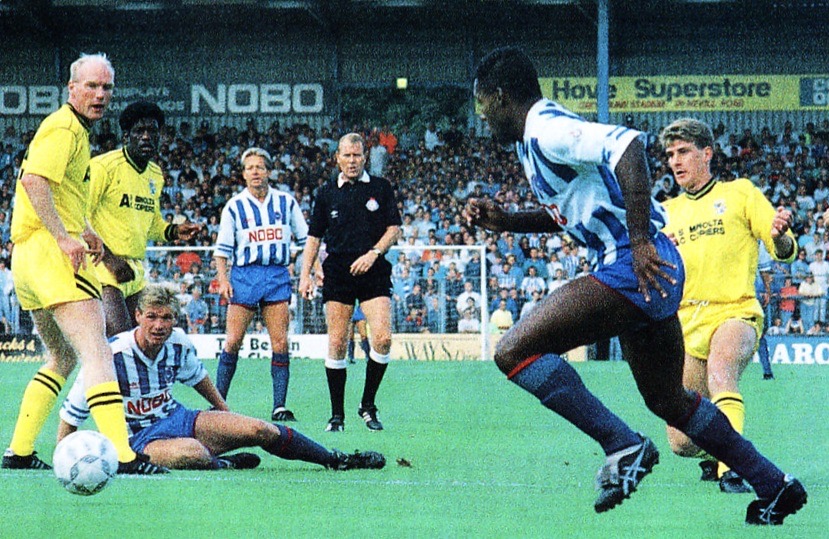
City reject Graham Howell a victim of the ‘Clough clear-out’

FULL-BACK Graham Howell spent two and a half years as a professional at Manchester City but was released without making the first team.

Eighteen months after leaving Maine Road, he was one of several new signings made by manager Pat Saward in an effort to strengthen his newly-promoted Brighton side.

Recent players-of-the-season Stewart Henderson (1969-70) and Bert Murray (1971-72) had previously occupied the right-back berth but Saward believed a change was needed at the higher level.

At only 21, Howell was certainly a younger model who’d been trying to make his way at City when they won the league in 1968 and the FA Cup in 1969. After his release, he had played 43 games for Bradford City in the Third Division, which Albion had triumphantly left in runners-up spot in the spring of 1972.

Howell unveiled to the press by Pat Saward

A fee of £18,000 – the equivalent of just over £200,000 in today’s money – prised him from Valley Parade.

“Only 18 months ago, I was released by Manchester City. I thought the bottom had fallen out of my world,” Howell told the matchday programme shortly after signing that August. “I had no hesitation in deciding to join Brighton. It meant Second Division football and was just the chance I wanted.”

He said he’d thought Brighton were “a very useful outfit” in the two games he’d played against them for Bradford (he made his debut for the Bantams in the opening day fixture at the Goldstone when Albion won 3-1 and played in the Valley Parade match on 18 March 1972 when Bradford won 2-1) and said he was determined to prove City had been wrong to let him go.

“I am looking forward to helping Brighton move forward to the First Division. It has always been my ambition to play First Division football.

“I had hoped to achieve this with Manchester City, but it was not to be.”

He pointed out: “I could see that my way forward was limited because of Tony Book, Arthur Mann and several other youngsters like Willie Donachie.

“It was a tremendous blow when I had to leave Manchester City. But I can look back on that all now believing that it was all a blessing in disguise.

“I know that it made me try much harder at Bradford City. And I intend to go on playing it hard for Brighton.

“I am very ambitious, and I want to do really well in football.”

Unfortunately for Howell, Saward struggled to find the right formula for success in the higher division, chopping and changing the line-up and bringing in too many players on short-term loans.

Howell made his debut in a 2-2 home draw against Sunderland on 26 August but, after 15 games at right-back, Saward moved him into midfield and, according to my scrapbook of the time, he became “a destroyer in the Peter Storey mould”.

John Templeman, who’d started the season in the no.2 shirt, reverted to that position as Saward shuffled his pack trying to end a losing streak that eventually extended to 13 matches.

Howell was dropped to the subs bench for the home game against Luton Town on 10 February – and Albion promptly won 2-0, their first win since 14 October the previous year!

He continued as no.12 in the following two matches (both defeats) and was restored to the side at home to Huddersfield, a game which ended in a 2-1 win for the Albion.

In the final game of the season, by which time relegation was confirmed, Howell was once again selected at right-back as Brighton drew 2-2 with Nottingham Forest.

Stern-faced Howell in the pre-season line-up photo

He retained the shirt at the start of the following season back in the third tier but as Saward’s tenure of the hotseat moved into its final days, so did Howell’s game time.

He was out of the side when Brian Clough and Peter Taylor arrived at the Goldstone at the start of November although he has a somewhat unwitting claim to fame by appearing in an oft-used photo of Clough sitting on a park bench at the Stompond Lane ground of non-league Walton & Hersham.

Howell looks rather awkward next to the centre of attention!

Albion had been drawn away to them in the FA Cup first round and the park bench was the somewhat primitive and squashed pitchside seating arrangement for the visiting manager, trainer and substitute – who that day was Howell.

In the picture, he looks rather awkward to be sharing the perch next to the man who only a few months earlier had led Derby County to the top division title. The park bench image was ideal ‘fodder’ for the newspapers, depicting as it did how far from previous glory Clough had descended.

Howell didn’t get on in that game (Albion drew it 0-0 and ignominiously lost the replay at the Goldstone 4-0) and his first action under the dynamic duo came in the infamous 8-2 defeat to Bristol Rovers.

He was sent on as a substitute for left-back George Ley and got his first start under the pair when he took over from John Templeman at right-back in the following game, a 4-1 defeat at Tranmere Rovers.

That match proved to be Ley’s last game in an Albion shirt – and when Howell replaced the former Portsmouth player away to Watford (a 1-0 defeat), it would be his own last outing for Brighton.

By Boxing Day, Clough and Taylor had brought in young midfielder Ronnie Welch and left-back Harry Wilson from Burnley, and they both made their debuts against Aldershot. Howell was an unused sub that day and he didn’t feature for the first team again.

More new faces arrived at the Goldstone as Clough and Taylor brandished chairman Mike Bamber’s chequebook with abandon: the likes of Paul Fuschillo and Billy McEwan increasing the competition for places.

Come the end of the season, Clough made no apologies for clearing out a number of players signed by his predecessor along with long-servers like Brian Powney and Norman Gall. Howell was one of twelve players released.

Howell had made 40 appearances (plus four as sub) for Brighton and he moved on to Cambridge United where he played 71 matches between 1974 and 1976.

Born in Salford on 18 February 1951, Howell grew up a fan of Manchester United and hoped to play for them. “But when City showed interest in me while I was playing for Altrincham and Sale Boys I was happy enough to go on the Maine Road apprentice staff,” he said.

After signing as a professional, Howell spent two and a half seasons playing in City’s Central League side

There were certainly plenty of positive signs for Howell to think he might make it at City.

In January 1969, their matchday programme reported how he’d been for trials for the England Youth side with Tony Towers and Ian Bowyer but was unluckily left out when the squad was selected.

Elsewhere in the programme, a mid-season report on the progress of Dave Ewing’s reserve side declared: “Players like Graham Howell, Tony Towers and Derek Jeffries made great strides.”

It explained that because of injuries to more experienced reserves, several youth team players had been promoted to turn out for the Central League side.

Although they lost eight of their opening 11 matches, they’d turned things round and the report said: “By the end of September, the policy of putting faith and responsibility on the younger players began to pay off.”

While they were bolstered by the return of experienced goalkeeper Ken Mulhearn and George Heslop, youngsters like Bowyer and Stan Bowles were contributing to a turnround in fortunes.

There’s a photo to be found on the internet (above, left) of a young Howell with Paul Hince who played a handful of games for City in 1967-68 and later reported on the side for the Manchester Evening News.
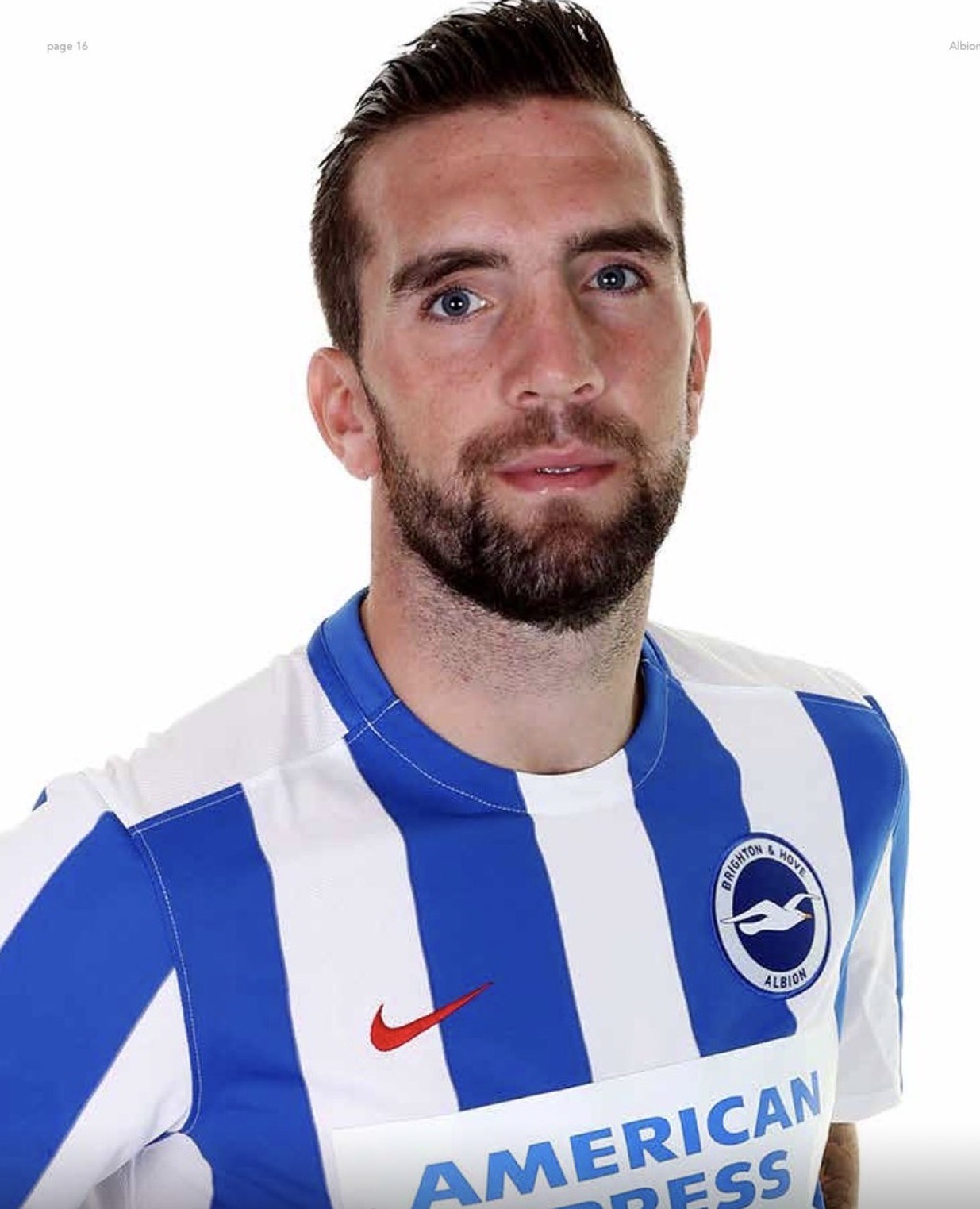
After leaving Cambridge, Howell quit the UK and continued his career in Sweden. He spent six seasons with Swedish club Västerås SK and also played for Irsta IF. He remained in Sweden after his playing career finished.

Pictures from my scrapbook and online sources.