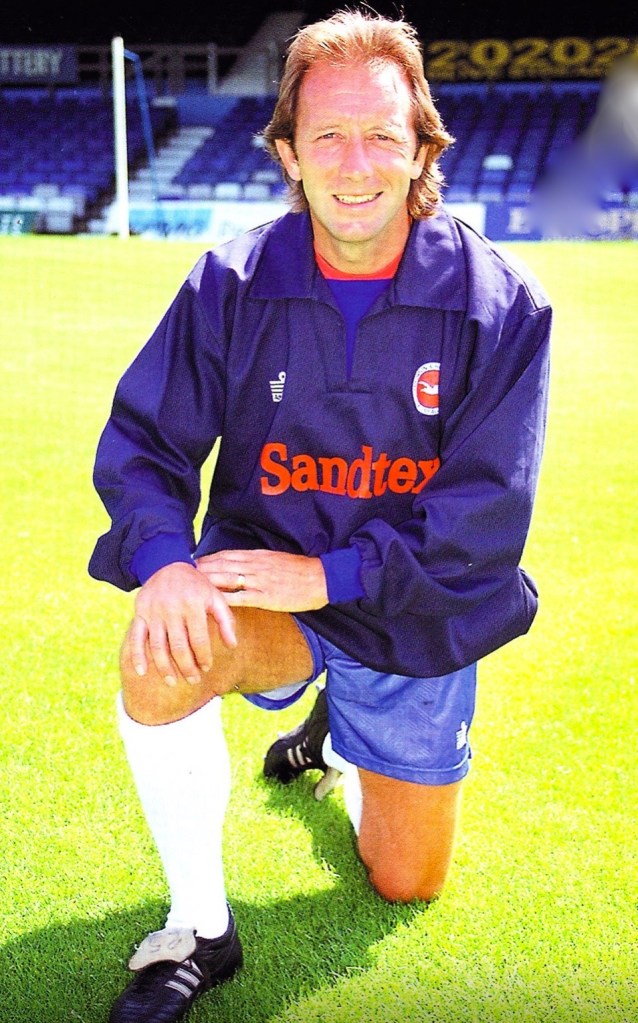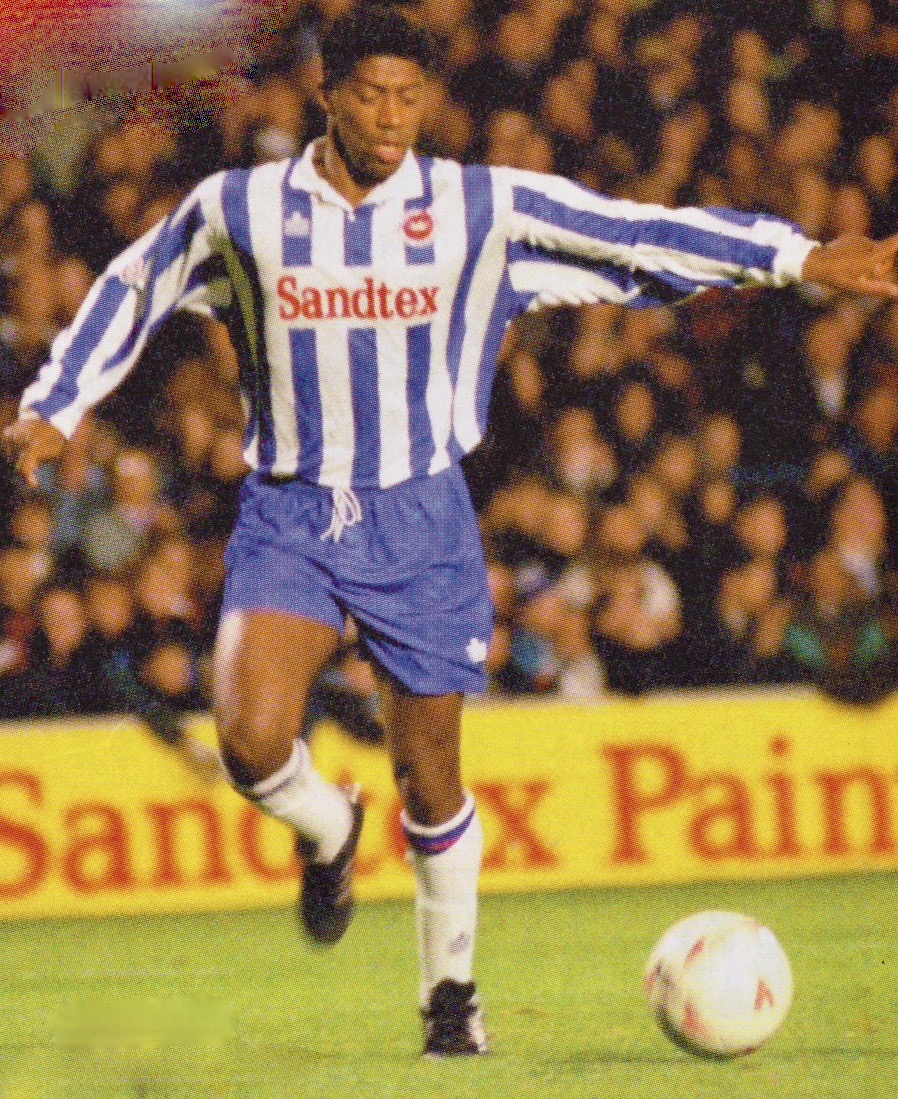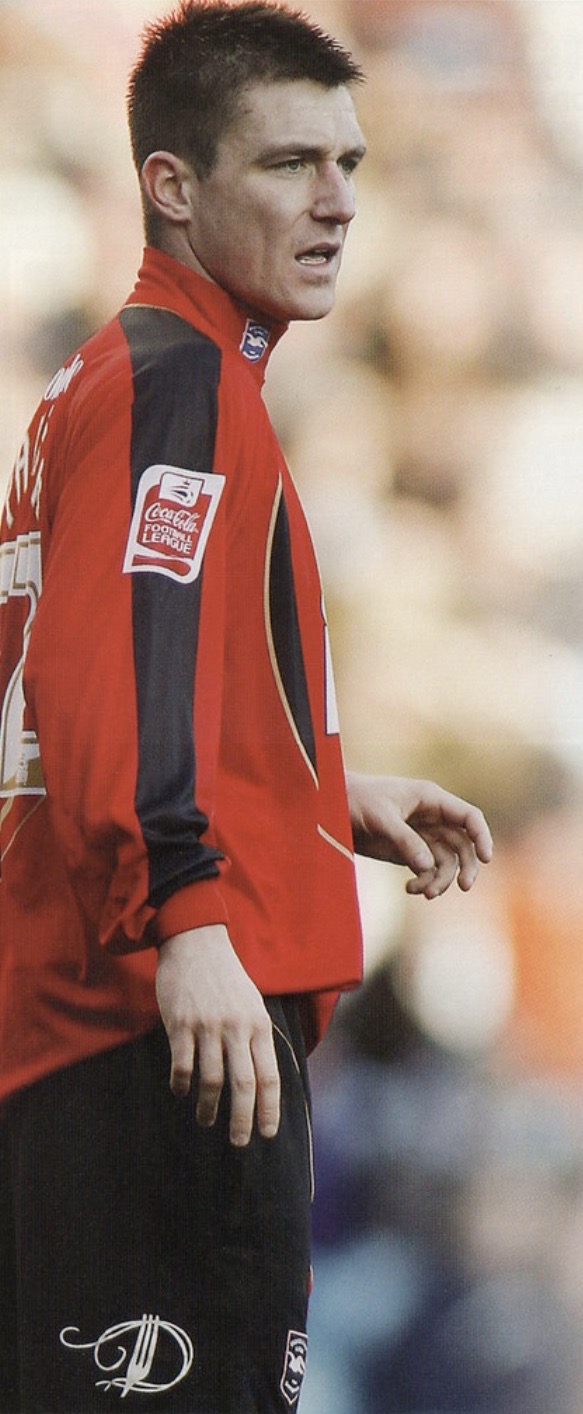
Goalkeeping guru Eric Steele: a promotion talisman at Brighton

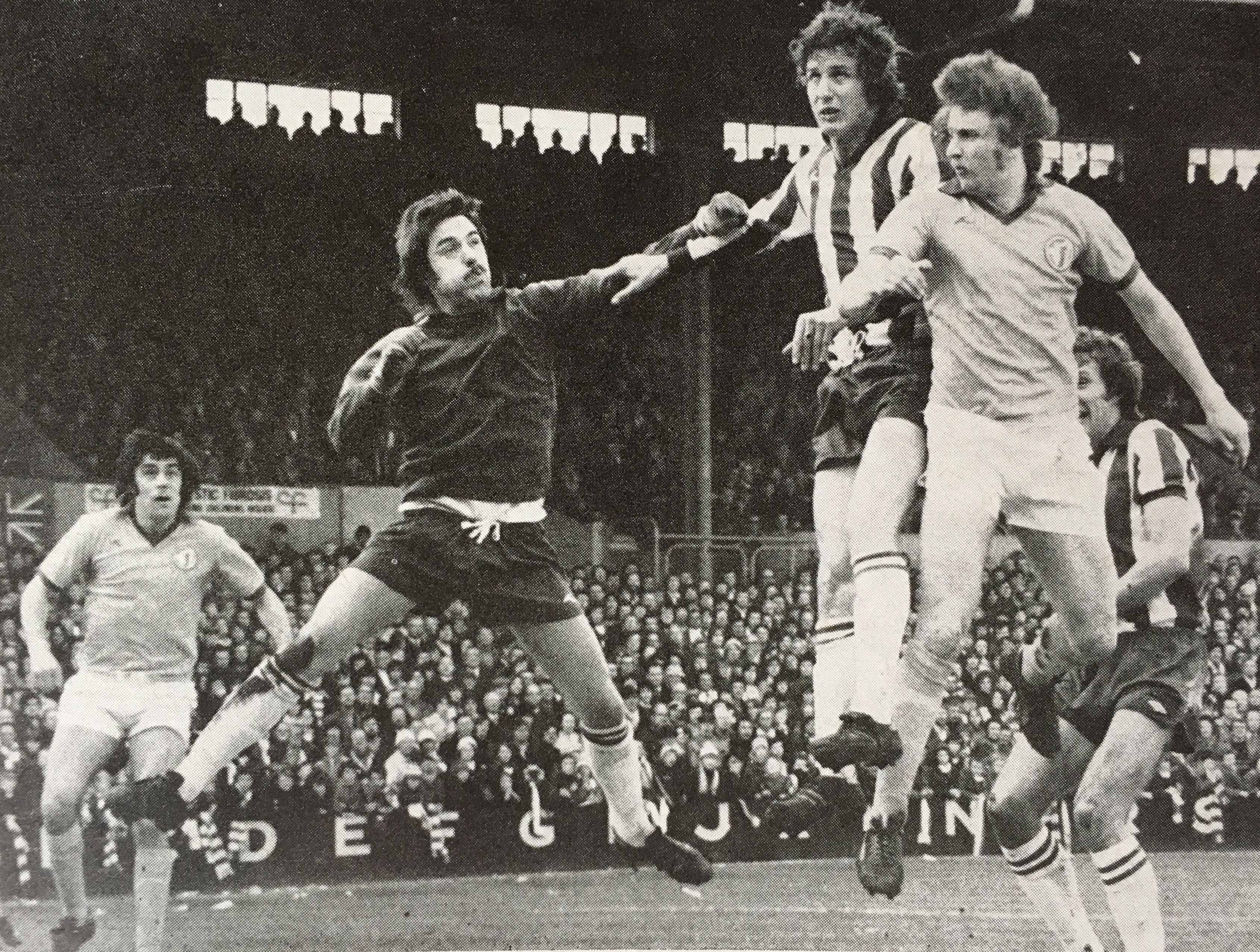
1 ES action v Mansfield

GOALKEEPER Eric Steele was involved in an incredible six promotions as a player before becoming one of the country’s top goalkeeping coaches.

Two of those promotions came in his three years with Brighton & Hove Albion and another during a five-year spell at Watford.

His penchant for coaching began during his time at Brighton who he joined in February 1977 for £20,000 from Peterborough United.

As a replacement for the injured Peter Grummitt, Steele made his debut in a 3-1 defeat away to Crystal Palace but the season was to end in triumph. With Peter Ward making the headlines at one end, Steele kept the ‘keeper’s jersey to the end of the season as Albion won promotion to the old Second Division in runners up spot behind Mansfield Town.

As Albion chased a second successive promotion in 1977-78, Steele’s terrific form meant new signing Graham Moseley had to wait five months to make his debut. Steele played 38 matches but Moseley took over for the final four games of the season, as Albion just missed out.

The following season, manager Alan Mullery opted for Moseley as his first choice but the accident-prone former Derby ‘keeper twice caused himself damage – once with a hedge trimmer and then by falling through a plate glass window – which opened the door for Steele, who, by the season’s end, played 27 times compared to Moseley’s 20.

Steele 4 AlbionSteele was between the posts as the Seagulls won 3-1 at St James’ Park to win promotion to the elite for the first time in their history, a particularly sweet moment considering Newcastle had discarded him early on in his career.

“It was important to go back as part of something, to show that I should have been given a chance,” he said in a 2019 Albion matchday programme article. And rather than join the infamous promotion party train ride back to Brighton, after the match Steele stayed over in Newcastle.

“I wanted to be with my family,” he said. “They’d supported me all the way from when I was a kid. To actually do it at my hometown club as well was a bit special. It was a great day for me, a really great day.”

In Spencer Vignes’ excellent book A Few Good Men, it’s interesting to hear Moseley’s view about his rival for the shirt. “He was very dedicated, much more so than I ever was. He would train every day after everybody else had finished.”

Nevertheless, at the higher level, it was not long before Mullery decided to dispense with Steele’s services, and it came within a matter of days of an amazing incident at Old Trafford when Steele exchanged punches with his own defender, Gary Williams, in a 2-0 defeat.
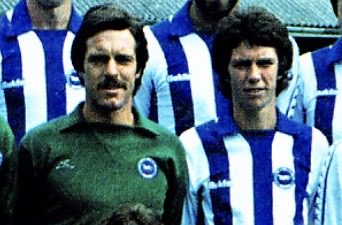
Steele and Williams together in the 1979-80 Albion squad photo

Argus reporter John Vinicombe produced a book (Super Seagulls) to document the history of Albion’s memorable first season in the first tier and covered in detail Steele’s somewhat acrimonious departure.

“Mullery knew from the beginning that one day he would have to choose between the lightning-on-the-line reflexes of Steele and the aerial domination of his great rival, Moseley,” said Vinicombe.

Mullery told the reporter: “Eric is an exceptionally good goalkeeper on the line, there’s no doubting that. But I feel he is not as commanding in the air as Graham, especially on crosses.”

Steele’s departure was felt quite keenly by the fans who, as much as his contribution on the pitch, had applauded his coaching in local schools and support for Sussex charities, in particular Chailey Heritage.

Regardless of that, in October 1979, Mullery turned a sizeable profit on his original investment and sold Steele to Second Division Watford for £100,000.

The articulate Steele shared his thoughts with the readers of Shoot! magazine.

“I didn’t want to leave Brighton,” he said. “That’s the first and most important point. It wasn’t my decision, it was Alan Mullery’s. I think he was wrong and I’ll be proved right in time. Once he’d made up his mind, I had to resolve myself to leaving.

“But it hurt. It took me a long time to get to the First Division and I think that in the ten games I played, I proved I was good enough to keep my place at that level. But once I knew I was on the move, I wanted to get away as quickly as I could.

“I went on the list on a Thursday and Watford came straight in for me the next day. I’d signed for them within a week. I was very happy to join such a progressive club. I would never have come here if I didn’t believe we would be a First Division side in a couple of years.”

Steele maintained he was taking one step back to take two forward and must have remembered those thoughts when Watford won promotion to the top division for the first time in their history in 1981-82.

However, vying for the no.1 jersey with Steve Sherwood, he made just 65 appearances in five years and said it was when watching from the stands as Watford played in the 1984 FA Cup Final that he realised he needed to move on.

Born on 15 May 1954, Steele’s path to professional football was the one taken by many talented Geordies – via Wallsend Boys Club to Newcastle United.

He never made it to the first team at St James’ Park but put that right when he joined Peterborough, setting a record of 124 consecutive appearances, including being part of the side that won the Fourth Division championship in 1974.

After those spells with Brighton and Watford, he linked up with former Newcastle United boss Arthur Cox at Derby County, and was part of their promotions from the third tier through to the first.

When he retired in 1988, it was to run a pub, but he also set up Eric Steele Coaching Services and began an illustrious career in which he has been instrumental in the development of some of the country’s top goalkeepers, working with ‘keepers at Manchester City, Aston Villa, Leeds United, Derby County, and Barnsley, as well as overseas in Australia, Switzerland, Norway, Germany and the United States.

When another former Watford ‘keeper, Tony Coton, was forced to retire as Manchester United’s goalkeeping coach because of injury, he recommended Steele as his successor.

Coton told the Republik of Mancunia website: “Eric Steele was my goalkeeping coach when I was a player at Manchester City, and it soon became evident after just a couple of training sessions that Eric was a unique and talented coach.

“Eric was different due to his innovative teaching style. Every session was challenging and interesting, and his breadth and depth of knowledge was second to none. Because of this I decided to call Eric ‘The Guru’, a name that he is now known by throughout the Premier League.”

As well as former Brighton ‘keeper Wayne Henderson at Villa, Steele also coached Kaspar Schmeichel at Manchester City. And at Man Utd, he famously played a part in Ben Foster successfully saving a penalty in the 2009 League Cup Final penalty shoot-out after the game ended 0-0.

Foster explained: “We went into the shootout as well prepared as possible. We have had things to look at over the last couple of days and before the shootout you can see me looking at an iPad with Eric Steele.

“It had actual video on it and showed where players put things. It is a new innovation for us. Eric brought it when he came to the club. I have never seen anything like it. It is a fantastic tool for us.”

Steele was part of Sir Alex Ferguson’s team at United between 2008 and 2013 and helped to recruit long-standing no. 1 David de Gea.

When Ferguson stood down at Old Trafford, Steele returned to Derby – where he’d previously worked as a coach for four years – under Steve McLaren and then went on to coach young goalkeepers for the English FA. He’s also an ambassador for Evolution Goalkeeper Coaching.
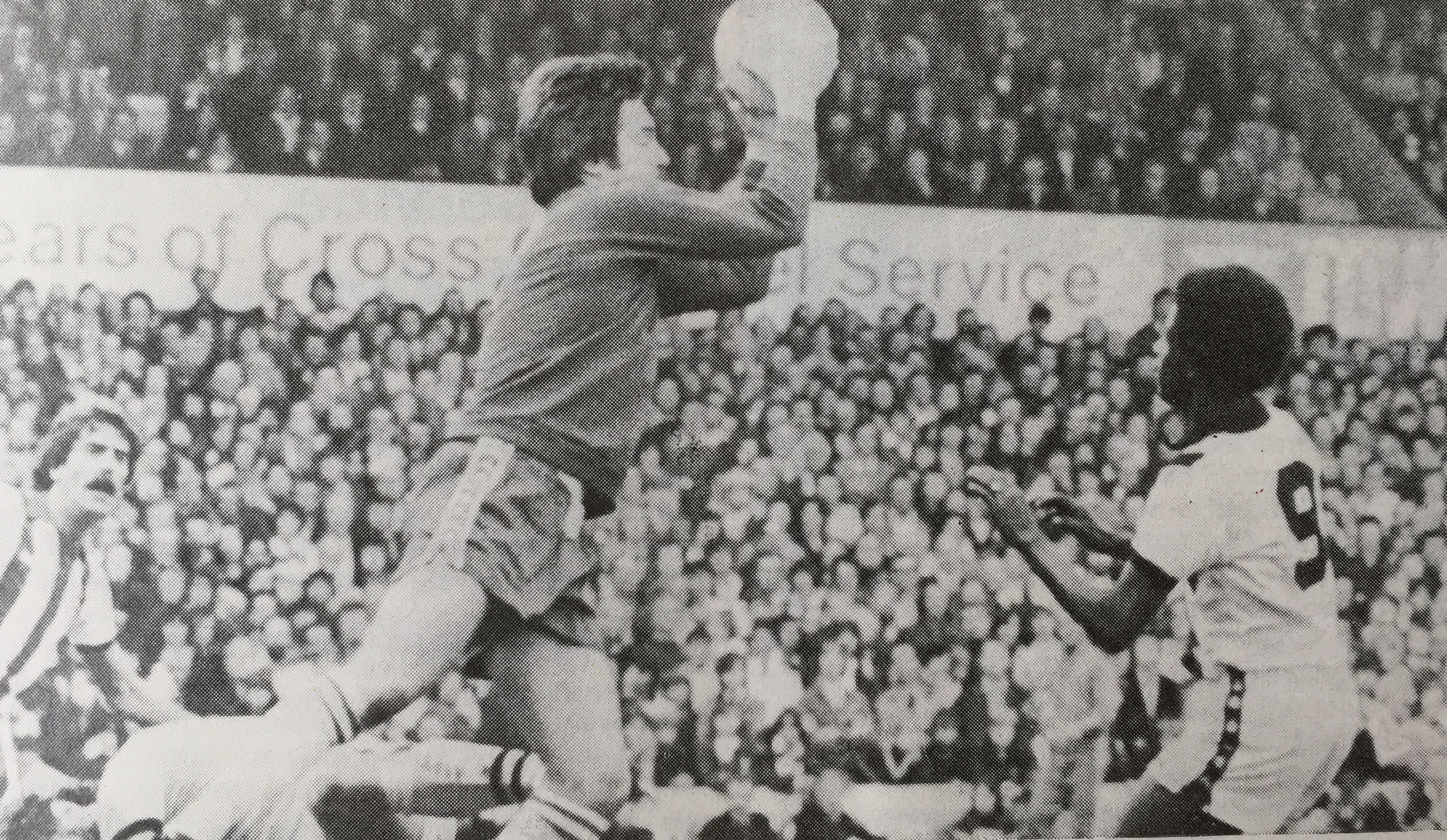
2 Steele claims v Palace
3 Steele Pat Partridge Pipes
4 steele farewell
5 Steele + De Gea
Steele has coached young England goalkeepers

Scrapbook photos from the Albion matchday programme, the Argus, and the republikofmancunia.com.

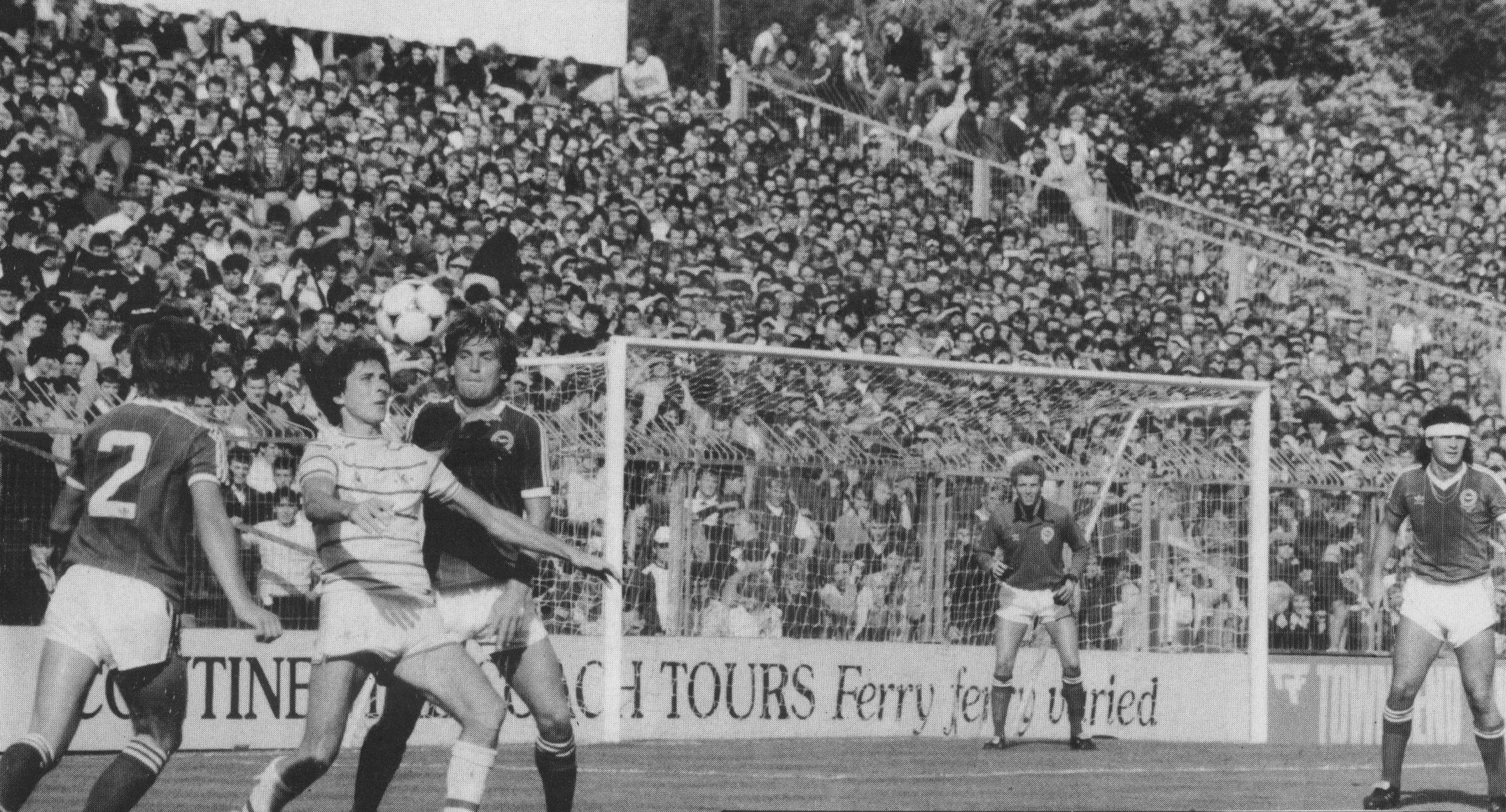
  • Top one shows Steele in action in one of his early Albion matches, a top-of-the-table clash against Mansfield Town in front of a packed Goldstone. I am one of those supporters crammed into that south west corner terrace!
  • Peter O’Sullivan (left) looks on as Steele claims a cross in a home game against Crystal Palace.
  • Steele and ref Pat Partridge see the funny side of it as spongeman Glen Wilson fixes a facial injury to Steve Piper.
  • A thumbs up to the crowd as Steele says his farewell at the Goldstone.
  • Steele working at Man Utd with David de Gea.
Booed on his Burnley debut, Gifton Noel-Williams was the centre forward Brighton craved

GNW DackFOR ALMOST the whole of Championship seasons 2004-05 and 2005-06, Albion manager Mark McGhee spoke about how the side desperately needed an old-fashioned hold-up centre forward.
In the first season, he converted defender Adam Virgo to the role with some degree of success, but after Virgo’s summer 2005 departure to Celtic, the problem returned, in spite of the occasional promise of the inexperienced Colin Kazim-Richards.

It wasn’t until March 2006 that McGhee finally landed his man in the shape of 6’ 3” Gifton Noel-Williams, on loan to the end of the season from Burnley.

The omens were good when he made his debut against Luton on 25 March because he had scored on his debut for both Burnley and previous club Stoke City. Sure enough, he did it again, netting with a brave diving header from an Adam Hinshelwood cross after 18 minutes.

It demonstrated only too emphatically what Albion had been missing for so long.

Unfortunately a glaring miss by midfielder Dean Hammond saw the chance to go 2-0 up squandered and Luton went straight back down the other end and equalised when ‘keeper Wayne Henderson could only parry Warren Feeney’s shot and the rebound went into the open net off on-loan defender Paul McShane running back.

Luton were destined to join Albion and Leeds as the fall-guys from the division but they hung on that afternoon on a quagmire of a pitch to earn a point.

GNW BHAGary Hart came close to nicking it for the Albion with a volley that struck a post but the points were shared, which was no good for either side.
McGhee was philosophical after the game, recognising it would “take something astonishing” for Albion to stay up with only six games remaining. It would. They didn’t.

Nevertheless, before the inevitable happened, Noel-Williams scored again  – on Easter Saturday 2006.

Brittle old Ipswich, with Joe Royle in charge, stood in the way of Albion notching some desperately needed points, but somehow I just fancied their chances that day and I made a late decision only on the morning of the match to travel up to Ipswich with my son Rhys.

Wearing the all-burgundy away strip, Albion had a new-found confidence in their play thanks to the arrival of Noel-Williams, who, after scoring against Luton, had got an assist by laying on a goal for Paul Reid in a 2-0 win at Millwall two weeks before.

McGhee made an interesting choice in playing Hart at right back rather than Reid, who slotted in ahead instead. The decision was justified when Hart’s strong challenge on Alan Lee midway inside the Albion half enabled Hammond to release Kazim-Richards down the right.

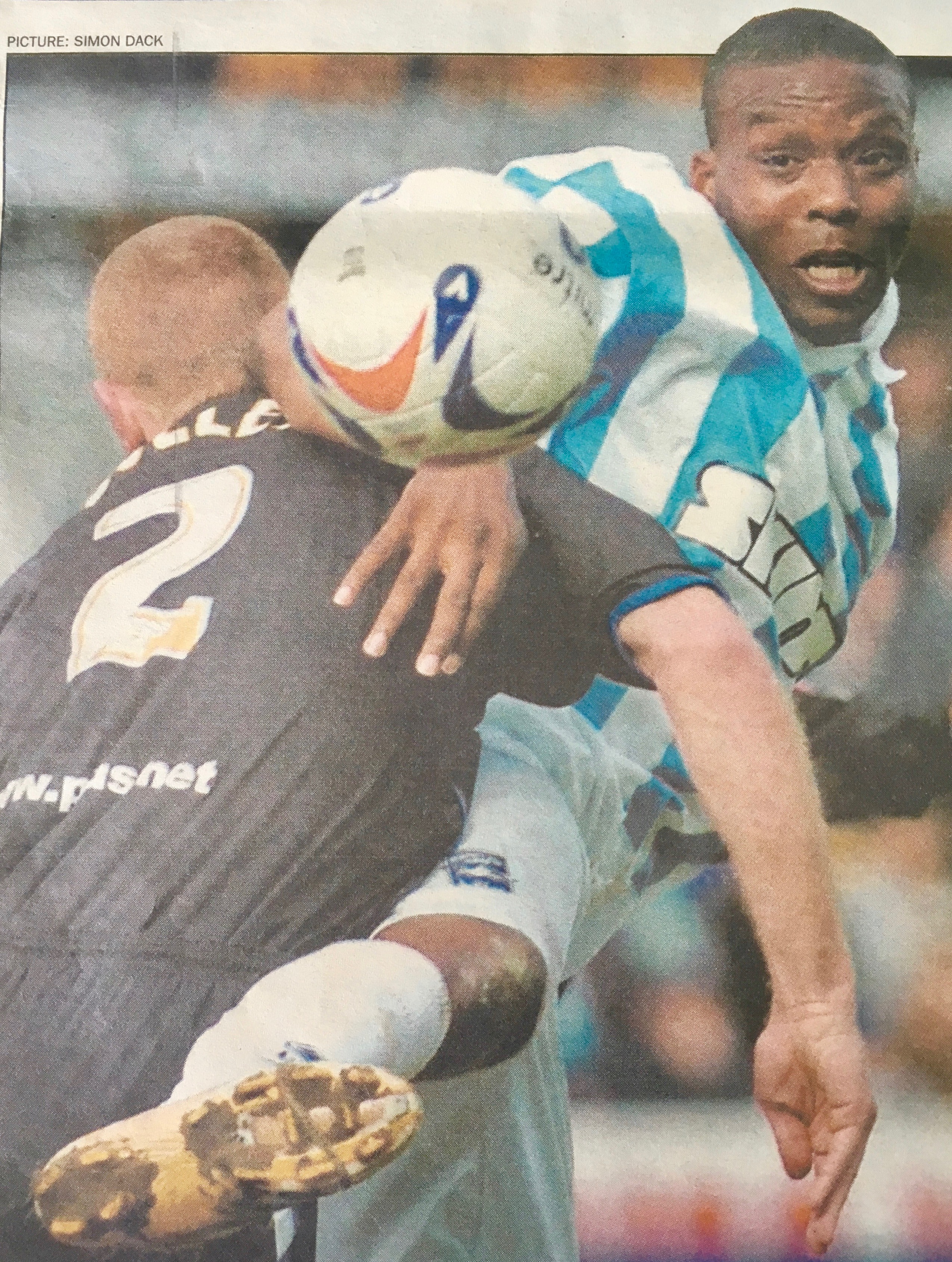
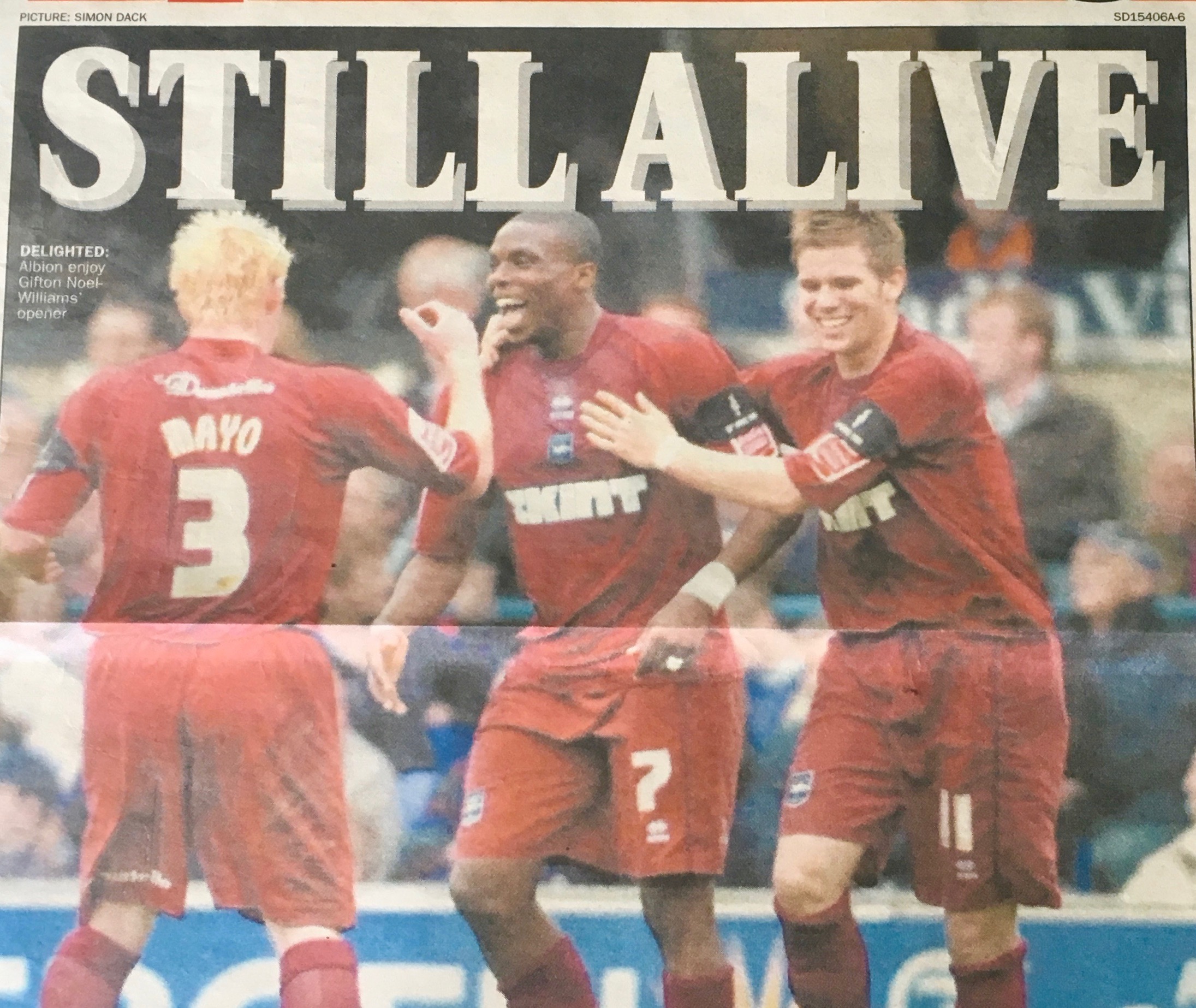
He crossed into the left back area, where the lurking Noel-Williams seemed to have acres of space to turn on the cross and drive the ball home from ten yards. Photographer Simon Dack captured the goal celebration for the front page of the Sports Argus (below).

GNW IpsIf that delight was not enough, teenage defender Joel Lynch made sure our trip was a memorable one by scoring his first-ever goal for the club.
Albion, never wanting to make life too easy for themselves or their fans, allowed Ipswich to pull a goal back when Lee flicked on from former Seagull Darren Currie’s cross for substitute Nicky Forster – a future £75,000 signing for Albion – to score. But thankfully it was too late for Ipswich to salvage anything from the game.

It was all to turn pear-shaped on the Easter Monday at home to Sheffield Wednesday, but for a couple of days at least the Great Escape still seemed a possibility.

Nevertheless, Noel-Williams seemed to enjoy his brief time with the Seagulls, telling Andy Naylor in The Argus: “I like the way the team plays football. They play my type of football.

“It is not only in the air for me to flick it on, they get the ball on the deck and want to knock it about a bit as well. That suits me, that’s what I like.

“The manager hasn’t asked me to be tearing around the pitch, he’s asked me just to use my movement and get into the channels when I have to. I appreciate that, so I’m enjoying my football, and, when I’m enjoying my football, I think I’m not a bad player.”

The downside of not having played regularly at Burnley was a lack of match fitness, and he admitted: “I play all right for maybe the first hour and then that’s it, my legs are gone.”

Certainly a fascinating character, Noel-Williams was still only 26 when he pitched up at the Albion, and was already a father of six children.
But how did he end up at Brighton?

An article on the excellent Burnley supporters website,claretsmad.co.uk, gives a great insight into the background. Published in June 2013, Tony Scholes wrote: “There was heavy criticism of his signing and he was booed by his own fans during his league debut for us at Crewe on the opening day of the 2005-06 season.

“He was one of Steve Cotterill’s five summer signings during that 2005 summer, and the plan was to partner him up front with his old Stoke City team mate Ade Akinbiyi, a partnership people were quick to say hadn’t worked when they had played together for Stoke.”

Scholes continued: “He must have wondered what he’d come to when he was roundly booed in that first match of the season at Crewe. He scored our equaliser, then hit the woodwork in the last minute which would have earned us a point.”

A week later, he missed a penalty against Coventry, and, even though he scored in a home draw against Derby, the poor start to the season saw Cotterill tinker with the line-up, and he lost his place.

He was then a peripheral figure and, just before the end of the loan window in March, Cotterill, who had once been on loan to Brighton himself, loaned him to struggling Albion.

Burnley fans thought they had seen the last of him but, despite being placed on the transfer list, and missing the club’s pre-season trip to Italy, he was still a Burnley player when the season began.

Then, remarkably, he went from zero to hero during the space of a few days in September. When he came on as a substitute against Colchester, yet again he was met by a chorus of boos from the Burnley faithful.

Scholes said: “The booing that greeted him was shameful. How he could go on and play in those circumstances is hard to believe, but he did and by the end of the game he’d turned those boos to cheers. We lost, but he’d played well.

“Three days later we went 2-0 down against Barnsley and he was brought on to replace the injured Alan Mahon. This was without doubt Gifton’s night. He never turned in a better performance for Burnley, and after Jon Harley pulled one back to give us hope, he scored a hat trick as we ran out 4-2 winners.”

Taken off the transfer list, over the next couple of months he became one of the most influential players in the side as Burnley climbed to third in the table.

Sadly, it didn’t last. The team and player’s form dipped from November.

“As the results went against us, the rumblings of discontent about him were being heard in the stands again,” said Scholes.

Meanwhile, Akinbiyi returned to the club which further reduced the chances of his former strike partner getting games. As the January transfer window came to a close, Noel-Williams was sold to Real Murcia in Spain for £50,000.

“Burnley fans will remember him as a player who struggled with pace and movement, a player who didn’t score enough goals, and a player they just loved to criticise,” said Scholes.

How different it all was from the early promise he had shown when blooded in the Watford first team at the tender age of 16.

Born in Islington on 21 January 1980 to Jamaican parents, the young Noel-Williams played for district and county representative sides and Carl Dixon, a coach at his local Sunday side Apex Arvensdale, recommended him to Watford.

When he played in a national cup final fo Islington and Camden at Highbury, he scored a hat-trick in front of the Sky Sports TV cameras and Arsenal, Spurs and Chelsea all took an interest in him but he stuck with Watfod, and it paid off when, in 1996, Kenny Jackett gave him his first team debut at just 16.

A serious knee injury sustained in a tackle by Sunderland’s Paul Butler in 1999 put him out of the game for the best part of 18 months and he subsequently developed rheumatoid arthritis in both knees.

In an interview with itv.com on 4 April 2016, the striker revealed how he might never have had a career at all if it hadn’t been for former Watford chairman Elton John.

GNW WatHe was told he would have to give up the game, but Watford’s pop icon chairman was living in America at the time and saw an article about a drug that could save his career. He contacted Graham Taylor and they paid for him to get the necessary treatment.
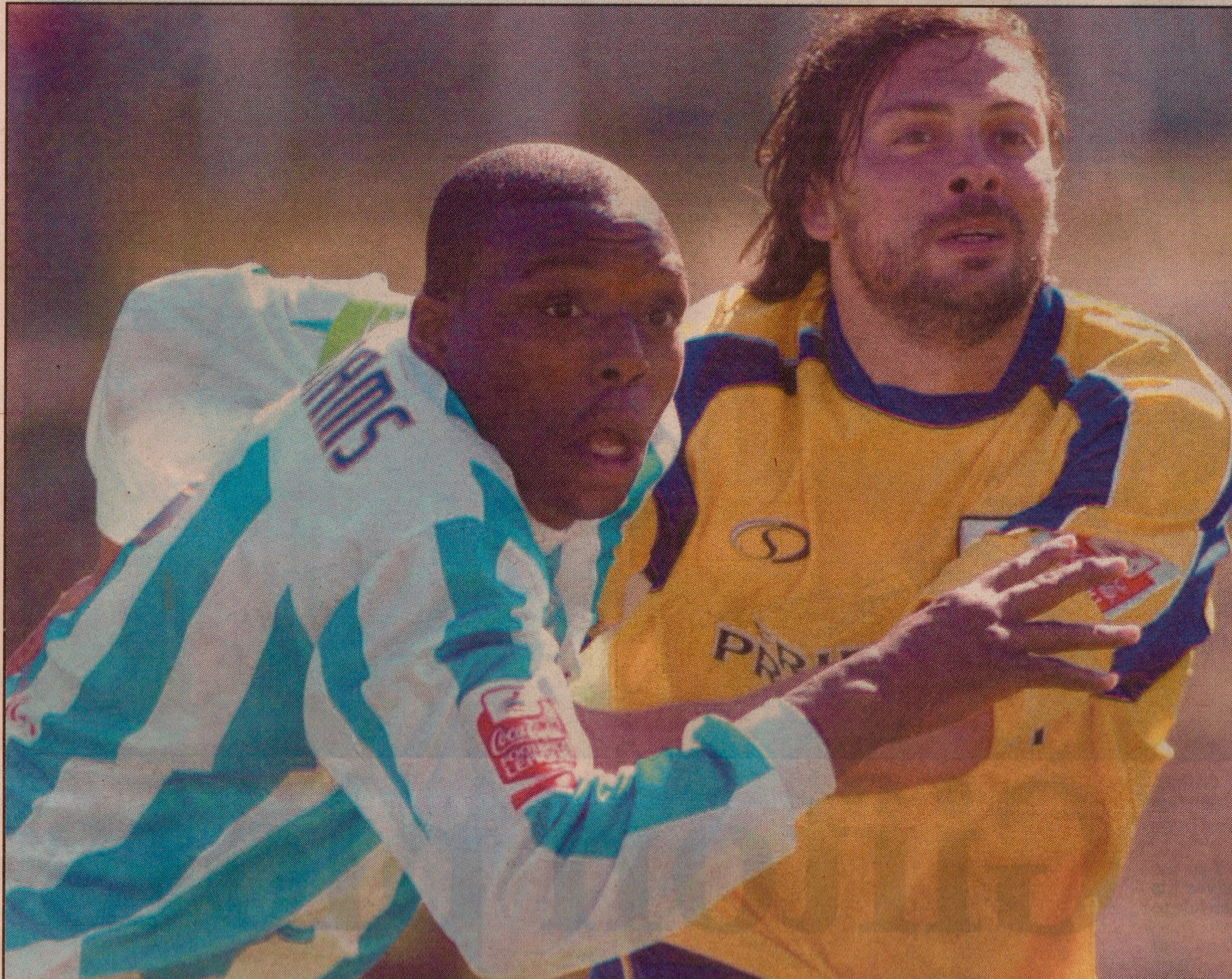
The injury and illness came just as Noel-Williams had received a call-up to the England Under-21 squad. At 18, he had been playing in junior England teams alongside Michael Owen and Michael Bridges.

Noel-Williams told interviewer Will Unwin: “Even though I had rheumatoid arthritis I was still able to play at Championship level and abroad.”

After seven years and 33 goals in 169 appearances for Watford, Noel-Williams signed for Stoke City; Tony Pulis taking him on a Bosman free transfer in 2003.

Across two seasons, he scored 23 goals in 88 games for The Potters banishing all thoughts that he wasn’t fit to play.

Then, in 2005, he joined Burnley because he was encouraged to by his former Stoke teammate, Akinbiyi (another striker who had impressed on loan from Norwich to Brighton earlier in his career, when he scored four times in seven games).

As an aside, Akinbiyi had distinctly mixed fortunes throughout his career and after he completed a £600,000 move to Burnley was sent off on his debut within two minutes for head butting Sunderland’s George McCartney!

But back to Noel-Williams, who told itv.com: “I did not want to go to Burnley, to be honest. What happened was that Tony Pulis left Stoke at the end of the season, he went to Plymouth – so as he was leaving and a new manager coming in, I didn’t want to stay at Stoke.

“Ade Akinbiyi was at Burnley at the time and he was with me at Stoke so he kept phoning me, saying ‘come to Burnley, they want us to play up front together’, so that’s why I went to Burnley, but then six months later Ade left to go to Sheffield United, so my time at Burnley crashed a little bit and that’s why I didn’t stay there for so long.”

Noel-Williams said he didn’t really see eye-to-eye with Cotterill, which hastened his departure to Spain.

The Spanish lifestyle suited him but his game time was restricted mainly to substitute appearances and when Real Murcia were promoted he was told he would not be guaranteed a place.

So he switched to Elche, where he said he enjoyed his football but they didn’t pay him for a year because of financial issues. He ended up having to take action via FIFA to get the money he was owed, and left after just one season.

His old Watford mentor, Jackett, gave him a short-term contract with Millwall, but he played just the one game whilst Tresor Kandol and Neil Harris were unavailable. On 5th November 2008, he signed for Yeovil Town on a month’s loan.

He played eight times for Yeovil, the last coming on the Saturday before Christmas. But 2009 saw him once again without a club and on 8th January it was confirmed that he was signing a two-year deal with American USL club Austin Aztex, a club managed by former Burnley boss Adrian Heath.

He was released at the end of the 2009 season and signed for American fourth-tier side DFW Tornados (based in Dallas).

After he packed up playing in 2010, he became a coach at the Brentwood Christian School in Austin, Texas.

He returned to the UK and linked up with his former Watford teammate Allan Smart at Daventry Town and subsequently had various coaching and managing roles with non-league sides – Northwood, Burnham and Codicote. In November 2017, he was sacked after Hertfordshire-based Codicote, who play in the 10th tier of English football, lost 12 of their first 14 league matches.

1 GN-W Argus2 GN-W Argus main3 G N-W PA (watford)

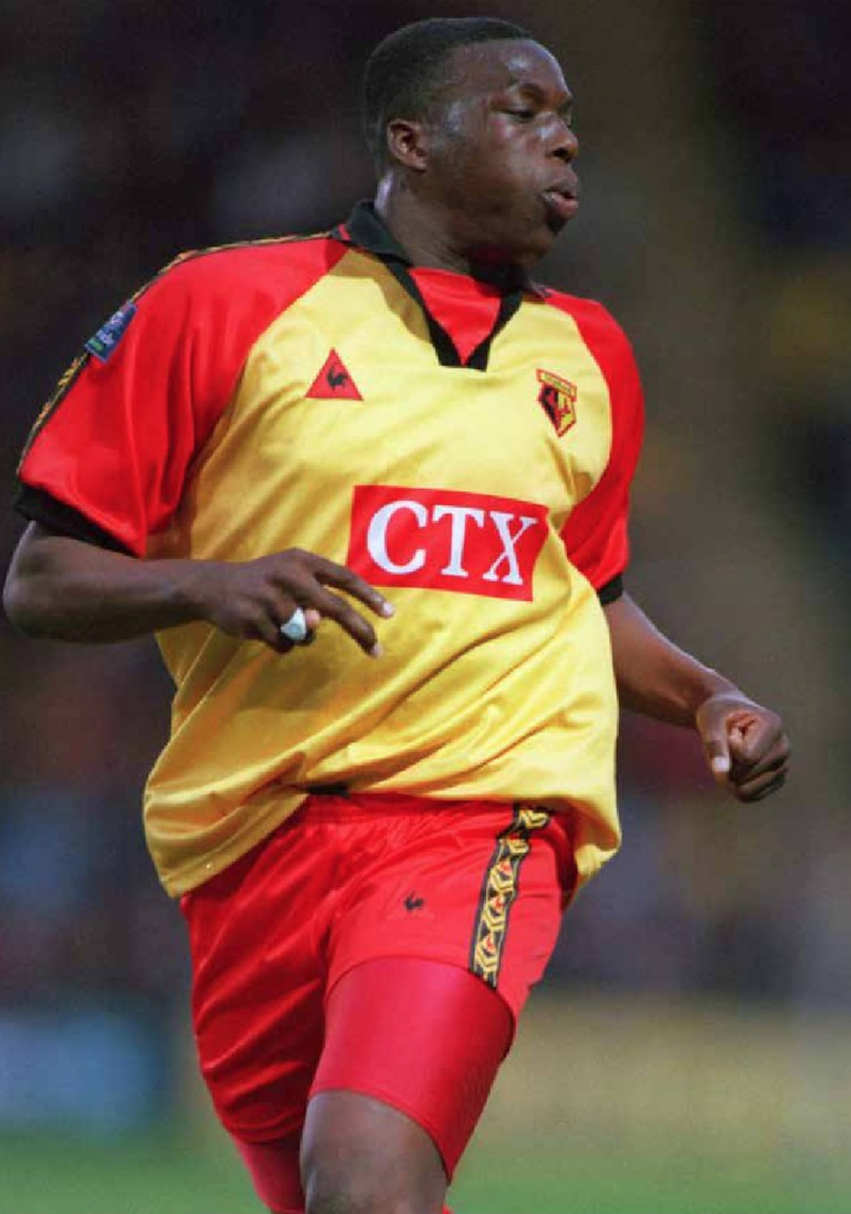
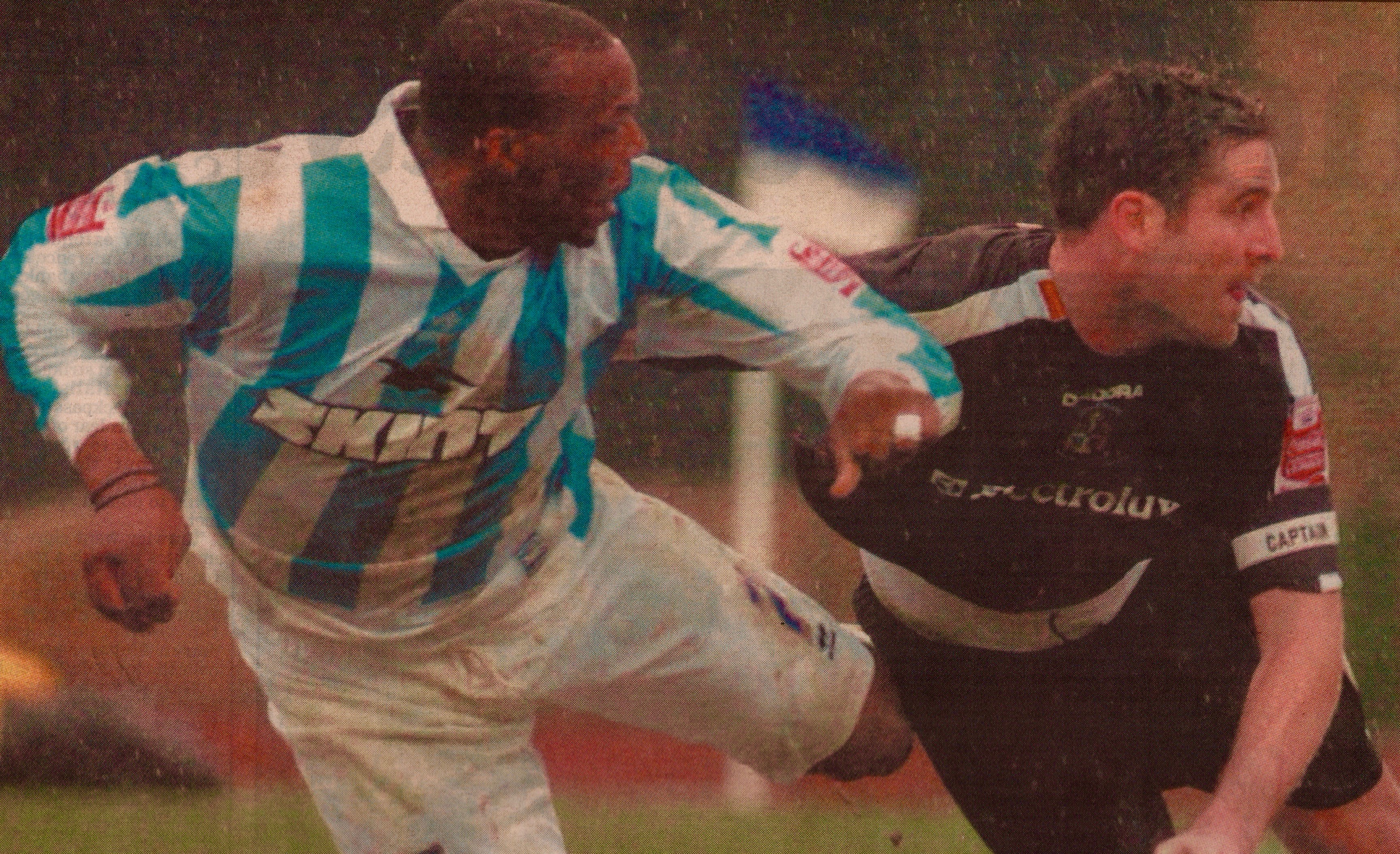
Pictures published by The Argus show THAT diving header to score on his Albion debut, and a study in determination to get to the ball. Also a Press Association image of a youthful Gifton in Watford colours.


Brighton move turned sour for Tottenham legend Phil Beal

1 Beal portrait

PHIL BEAL was a Tottenham Hotspur legend so it seemed like quite a coup when in 1975 Third Division Brighton signed a player who had played at the top level for over a decade.

However, in a fairly recent interview, Beal said signing for Brighton was “the worst thing I’ve ever done”. At the time he certainly had a different outlook. Shoot incorporating Goal began an article about him: “A gladiatorial display by Phil Beal for his new club Brighton against Rotherham was loudly acclaimed by the supporters who revelled in the strength and guile the ex-Spurs player had brought to their side.

“The immensely experienced Beal had wielded a pattern of play that sent the supporters home humming happily, relishing the 3-0 win and calculating the prospects of the new season.”

Beal told the magazine: “It’s a great feeling to have a crowd behind you like that. Their reaction impressed me just like everything else did when I visited the club for the first time to meet manager Peter Taylor.

“I knew nothing at all about the club and, to be honest, I thought it might be a tin-shed type of place. What an eye opener it turned out to be.

“I had imagined the Third Division to be a big step down, not just in terms of football but in terms of everything else too. But I found they had new offices, new dressing rooms and medical rooms and when they travel they go first class, stay in first class hotels and even use the same coach company as Spurs.

“The set-up is easily as good as many First Division clubs. The pitch, for instance, is a nice size and allows you to make room to play. Some pitches are tight and cramped but not at the Goldstone Ground.

“When I saw how great things were off the field I felt they must want the same quality on it and that persuaded me. Like Tottenham, Brighton aim to play football….which is what I am all for. I don’t want to know about kick and rush…the big boot up the field, a challenge and then back it comes….that’s not for me.”

But let’s go back to where it all began. Born in Godstone, Surrey, on 8 January 1945, Beal joined Spurs at 15 after impressing Bill Nicholson’s assistant manager, Harry Evans, while playing for Surrey Schoolboys v Kent at The Valley (Charlton) in 1960.

The website spursforlife.com detailed his rise to the first team, saying he was “the first of the modern youth team to climb through the ranks of the trainees, juniors and reserves to claim a first team place.”

In those days apprentice footballers were responsible for cleaning the senior players’ boots as well as the balls, dressing rooms and gym. Beal said it was a great time to be involved at Spurs because they clinched that historic first double in 1961 and, as a 16-year-old, he felt part of it.

In a tottenhamhotspur.com feature, Beal paid tribute to the great Dave Mackay’s influence on his fledgling career.

“The first team players involved the apprentices, and when they won the Cup to clinch the Double we were invited to all the functions afterwards,” he said. “I had my picture taken with Jimmy Greaves. Also, because I lived so far away, John White used to let me stay at his place in Southgate after we’d played youth or reserve matches.

“The player who has always stood out in my mind, however, on how to be a professional footballer and make it to the top, was Dave Mackay.

“When we used to train in the afternoons, Dave would always come and train with the youngsters. He’d train with the first team in the morning, have lunch and then come back.

“We’d have 5-a-sides and Dave was very competitive. He didn’t stand any messing around – you had to win. He’d encourage, but if you did something wrong he’d have a go.

“His dedication really opened my eyes to what it would take to make it and, looking at the Double team, I knew how hard it was going to be.”

Phil made a winning First Division debut at Aston Villa on 16 September 1963 when he deputised for the legendary Danny Blanchflower, who by then was 37. But it took a further two years before he earned the chance to establish himself at right back after Maurice Norman was seriously injured at the start of the 1965-66 season.

My main memories of him at Spurs were as a sweeper alongside Welsh international Mike England but he played in eight different positions for them during the earlier part of his career.

A broken arm sustained against Manchester City prevented him being part of the 1967 FA Cup winning team against Chelsea, ironically opening the door for future Brighton teammate Joe Kinnear to establish himself at right back.

It was on his return to the side that he stepped into that role alongside England, and where he enjoyed a lot of success.

Beal played in the League Cup winning teams of 1971 and 1973, the UEFA Cup winning team of 1972 and was on the losing side in the final of the same competition in 1974. He was awarded a testimonial against Bayern Munich in December 1973.

Recalling that 1972 European win in a recent interview with tottenhamhotspur.com, Beal said: “We beat some good teams along the way and nothing was better than beating AC Milan in the semi-final. I remember walking out at the San Siro in front of 70,000 hostile people and an iron bar landed right by my foot.

“They had a midfielder called Bonetti who spat in my face. I hated that, so I chinned him. He laid down and Mike England said: ‘You’d better get down Bealy’. So I went down and held my ankle.

“The ref came over and booked us, but he put Steve Perryman’s number 10 down instead. I got booked later and didn’t get sent off! Because they got beat they were rocking our coach on the way out.”

The website said Beal was known “for his calm, safety-first approach in a Spurs defence that provided the platform for the flair players to perform in the opposition’s half”.

Spurs’ captain through much of that time, and future Brighton manager, Alan Mullery, spoke highly of Beal in his autobiography. “Phil Beal was very underrated. He had the tough task of taking over from Mackay when he went to Derby and I never thought Phil got the credit he deserved,” he said.

When Bill Nicholson resigned in 1974, it was to hasten his own departure from the club a year later. Together with Martin Peters he sought to persuade Nicholson to change his mind, but without success. “I liked him as a man. He respected us and used to listen to people,” said Beal.

New manager Terry Neill brought in Don McAllister to play at the heart of the back four and, at the end of the 1974-75 season, Beal was given a free transfer as part of a clear out of some of the experienced players. He had clocked up 479 appearances for Spurs plus four as a sub.

While the move to Brighton had initially all seemed positive, perhaps his view in hindsight relates to the fact Peter Taylor wasn’t afraid to shuffle the pack and bring in new people, and adding Dennis Burnett after the opening five games stymied Beal’s chances of lining up alongside Andy Rollings.

Ken Tiler was ensconced as the first choice right back, although fellow ex-Spur Kinnear, who’d signed for Brighton as well, took over the spot when injury kept Tiler sidelined in the final third of the season. Beal began in Albion’s midfield, but Ernie Machin, Peter O’Sullivan and Ian Mellor were preferred as the season progressed; Machin eventually being replaced by new signing Brian Horton in March.

Beal actionThese were the days, of course, of only one sub and, by the season’s end, Beal had played just nine games plus one as sub, and was a non-playing sub on another occasion.

Off the pitch, Beal had clearly taken heed of the way the old pros looked after the youngsters at Spurs and applied similar principles when he joined Brighton. He arrived on the south coast a fortnight after Peter Ward signed as a 20-year-old and Ward briefly shared a club house in Rottingdean with Beal and Neil Martin, and one or other of the senior pros would give Wardy a lift into training.

With Brighton narrowly missing out on promotion, the competition for places intensified for Beal and Kinnear when Taylor signed experienced defenders Graham Cross and Chris Cattlin before quitting to rejoin Clough at Forest.

However, when it was announced Taylor’s replacement was former Spur Mullery, they might have been forgiven for thinking their fortunes with Brighton were going to change. How wrong they would be.

Mullery was in a quandary. He had only just finished playing and he inherited a squad of 36 professionals, two of whom were his former teammates, and many who were much the same age as him. Any display of favouritism would not have gone down well amongst the group, and he consulted Nicholson for some advice. Nicholson told him that regardless of who they were, if Mullery didn’t think they were up to the job he would have to respond accordingly.

Kinnear never did play a game under Mullery having been told he wasn’t fit enough while Beal managed just two games at right back.

One of them came in the memorable 2-1 League Cup second round defeat of Bobby Robson’s First Division Ipswich Town, but Beal was stretchered off with an ankle injury – and never played for the Albion again.

Argus reporter John Vinicombe was full of praise for Beal who had been nursing an ankle injury ahead of the game.

“Beal would have been well within his rights in declaring himself unfit,” wrote Vinicombe. “Such selfless courage brought cruel reward when he went down and he was on his way to hospital when Cross muscled through for the winner.” An x-ray later revealed Beal had suffered deep bruising of his right ankle.

By the time Mullery steered the side to promotion at the season’s end, Beal had left the club. In early February 1977, together with Burnett, he reached a financial settlement with the club and played non league with Ilford for the remainder of the season before heading to the United States to play for Los Angeles Aztecs alongside George Best, Ron Davies, Terry Mancini and Charlie Cooke.

The following season he played for Memphis Rogues, coached by former Chelsea full back Eddie McCreadie, where, amongst his teammates, was Neil Smillie, later to join Albion from Crystal Palace, and the former Everton and Luton Town striker, Jimmy Husband. The goalkeeper was Tony Burns, who’d played for Brighton in the mid 1960s, and the team also included Arsenal cup winner Eddie Kelly and the colourful Alan Birchenall.

Back in England for the 1979-80 season, Beal turned out four times for lowly Crewe Alexandra, but when the legendary Bobby Moore took over as manager of non-league Oxford City in December 1979, Beal was one of a flurry of new signings the former England captain made, and he appeared 12 times before finally hanging up his boots.

Beal dropped out of football once his playing days were over and moved with his family to Cornwall. But he returned to Spurs as a corporate hospitality host on matchdays, working alongside Pat Jennings.

“I enjoy my work at Spurs because I’m Tottenham through and through and enjoy going back,” he said. “I’ve no regrets. I played over 400 games for Tottenham and enjoyed every minute of it. If I had my time again I would do exactly the same.”

Further reading:

http://spursforlife.com/phil-beal/

http://www.tottenhamhotspur.com/history/past-players/phil-beal/

Brighton and Huddersfield full back Chris Hutchings went on managerial merry go round

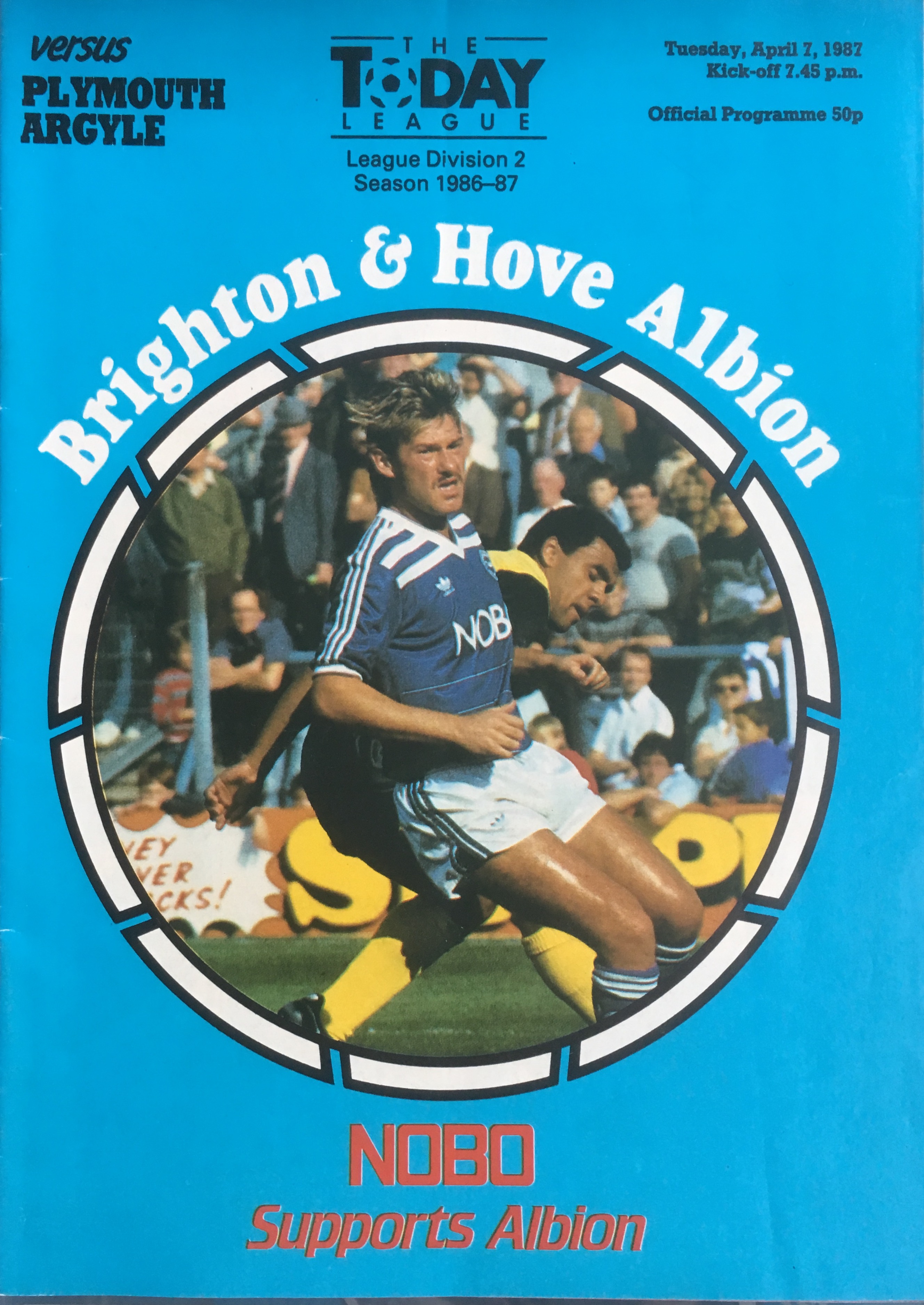
Hutch prog cover 1987

CHRIS Hutchings is better known to today’s football followers as a manager or, on no less than four occasions, assistant manager to Paul Jewell.

Back in the 80s, though, he played full back for Brighton for four years before moving on to Huddersfield Town for a three-year spell.

Born in Winchester on 5 July 1957, Hutchings was on Southampton’s books as a youngster but they didn’t keep him on and he became a bricklayer while playing part-time football with Harrow Borough. Chelsea manager Geoff Hurst saw him play well in a friendly match against Tottenham Hotspur and a £10,000 fee took him to Chelsea in 1980.

He played 101 games for them over three years, and told Richard Newman’s Football the Albion and Me podcast how Chelsea legend Alan Hudson took him under his wing and showed him the ropes of the professional game. In an interview in an Albion matchday programme, Hutchings recalled his Chelsea debut as a favourite football moment.

“We were away to Cardiff and I travelled with the team as sub,” he said. “One of the lads got injured in the first half and I was straight into the action. It was a great day for me. Everything seemed to go right. I was playing in midfield. We won 1-0. I scored the winner and I even had another ‘goal’ disallowed. I’ll never forget that match.”

It was in November 1983 that he signed for Brighton for £50,000 and he has a place in the Albion history book Seagulls, The Story of Brighton & Hove Albion FC (by Tim Carder and Roger Harris) for an incident when playing for Chelsea in their first ever league visit to The Goldstone earlier that season.

There had been trouble in Brighton the night before the game when rival fans clashed and 8,000 Chelsea fans swelled the crowd to 20,874, infiltrating all parts of the ground (the picture shows how tightly packed fans were in the North Stand).

albion v chelsea

“At the final whistle the hooligans invaded the pitch from all unfenced areas to launch a vicious assault on the hopelessly outnumbered police,” the history book recalls.

It was only the arrival of a police horse that finally managed to quell the disorder by which time seven policeman were injured and the North end goal broken.

The Sports Minister of the time ordered an inquiry and both clubs were cleared of blame. But Hutchings was charged with threatening and abusive behaviour for swearing at police trying to clear the pitch.

Two months later, after Chris Cattlin had taken over from Jimmy Melia, Hutchings was one of three new players he brought in (Steve Penney and Danny Wilson were the others).

He had yet to appear before Hove magistrates. And he was in further trouble on the pitch when he was one of five Albion players sent off before the New Year.

Eventually the court fined him £250 although Hutchings’ version of events was that all he did was to applaud the Chelsea fans and when a policeman told him to get off the pitch he told him to f**k off!

Like his manager, Hutchings was able to play right or left back. Generally he featured on the left side, although in the 1985-86 season Graham Pearce had a long run as no.3 and Hutchings wore no.2.

In a Tony Norman interview for the programme in 1985, it was revealed Hutchings was quite the handyman about his house in Rottingdean. He was into painting and decorating, and wasn’t averse to a spot of simple car maintenance either.

When Cattlin – and Pearce – left the Albion in the summer of 1986, Hutchings returned to the left back spot under Alan Mullery and carried on there when Barry Lloyd took over.

In January 1987, just days after Lloyd had taken over from Mullery, Albion were in the lower half of the third tier and the crowds had slumped to below 10,000.

Hutchings told interviewer Tony Norman: “Nothing would make me happier than to see the side playing to its full potential and big crowds returning to the Goldstone.

“When the stadium is packed, it’s a great place to play football.”

However, as part of the wholesale changes brought about by Albion’s relegation, Lloyd signed Keith Dublin from Chelsea as his first choice left back, and Hutchings was put on the transfer list.

He wasn’t done with the Albion quite yet, though, and played the first four months of that Third Division season in midfield before eventually moving on to Huddersfield, who were managed at the time by the former Newcastle, Arsenal and England centre forward, Malcolm Macdonald.

Hutchings played more games for Albion – 174 – than any of the other clubs he represented. One of his teammates at Huddersfield was a familiar face from his Goldstone career: Kieran O’Regan, who was a Town regular for six seasons. O’Regan stayed with Hutchings when he initially moved to Yorkshire and the pair still stay in touch and play golf together.

After making 110 appearances for Huddersfield, Hutchings joined Walsall for a season, in 1990-91, when another former teammate, Tony Grealish, was a coach. Hutchings played 40 games for the Saddlers but travelling to and from his home in Holmfirth meant it wasn’t an ideal arrangement.

Next stop, between 1991 and 1994, he played 78 times for Rotherham United under manager Phil Henson and John Breckin, who, as he wound down his playing days, encouraged him to take on coaching duties. He started coaching the Millers youth team but when Archie Gemmill and John McGovern took over as joint managers, he was a victim of the wage bill being cut.

He then had a spell out of the game, becoming a second hand car salesman temporarily, before he took his first step into management at Bradford City, becoming assistant to Chris Kamara, the Sky TV pundit who was manager of the Yorkshire club at the time.

When Kamara was replaced by Jewell, Hutchings stayed on as part of a duo who would subsequently crop up at a variety of clubs in the coming years.

Arguably the pair’s greatest success was getting Bradford promoted to the Premier League. During the 2000-01 season, when Jewell moved to Sheffield Wednesday, Hutchings briefly took charge and must have enjoyed securing a 2-0 win over Chelsea (although the result was too much for the Stamford Bridge hierarchy, who promptly sacked their manager, Gianluca Vialli).

However, the joy was shortlived because it was the only win in 12 Premier League games and Hutchings was sacked after being in charge for just 137 days.

As several media outlets pointed out earlier this season, it might have been a brief tenure but it wasn’t as short as Frank de Boer’s at Palace!

Next stop for Jewell and Hutchings was Premier League Wigan Athletic between 2001 and 2007. As happened at Bradford, when Jewell resigned in May 2007, Wigan chairman Dave Whelan handed over the managerial reins to Hutchings.

“He’s one of the best and most knowledgeable coaches in the Premiership,” said Whelan.

But after six successive defeats, and Wigan floundering in the bottom three, he was sacked in November 2007 – a 2-0 loss to Chelsea being the final straw for Whelan.

His route back into football, in January 2008, was briefly to assist caretaker manager Chris Brass at Bury on a voluntary basis, but, by April, he was linking up with Jewell once again, this time at Derby County.

The pair were with the Championship club less than a year, however, and when Jewell went in December 2008, Hutchings had just one game as caretaker before Nigel Clough took over the helm, and Hutchings left the club.

He wasn’t out of work for long, though, because one of his old clubs, Walsall, took him on as no.1 in his own right in January 2009. With Martin O’Connor as his assistant, the pair had two years with the League One club.

The chop came in January 2011 with The Saddlers bottom of League One, eight points adrift from safety.

Chairman Jeff Bonser told the Walsall website: “Their preparation and professionalism has been second to none but we are in a results business.

“Chris and Martin have both worked extremely hard during their time at the club.

“They have both been professional throughout and conducted themselves with great dignity in what have been difficult times.”

A fortnight later, Hutchings was back in work, linking up once more with Jewell, this time at Ipswich Town, who had parted company with Roy Keane.

The pair managed to steer Town clear of relegation but the 2011-12 season was one of struggle and they finished in a disappointing 15th place.

Jewell was unable to bring in the players he wanted during the summer and instead signed eight on loan. It was not a recipe for success and, by October 2012, Ipswich were bottom of the Championship.

Jewell departed and Hutchings remained in caretaker charge until Ipswich appointed Mick McCarthy and Terry Connor.

In July 2013, with Hutchings not having found a route back into league football, he took on the role of no.2 at Shropshire non league outfit Market Drayton Town.

When Shrewsbury Town replaced Graham Turner with caretaker manager Mike Jackson in February 2014, Hutchings was recruited as a coach to assist with training.

However, a month later his old Brighton teammate Danny Wilson, who had taken over as manager at League One Barnsley, took Hutchings to Oakwell as his assistant manager.

Wilson told the club website: “Chris has been a friend and confidant over many years since playing together. Chris has done very well with clubs at all levels that he has worked at.

“His experience will be invaluable as we go into the final ten games of the season and I am delighted that he has come to help us out.”

On Valentine’s Day the following year, the pair were chopped. The club were 17th in League One having won only 10 of their 29 games at that point.

Hutchings was a popular subject for the Brighton matchday programme producers, often appearing on covers and featuring in the player profile feature. The pictures are a selection of these. Plus a couple of headlines from his managerial career.

Liverpool legend Jimmy Case became a Seagulls favourite too

Case 4 imagesJIMMY Case remains one of my all-time favourite Albion players.
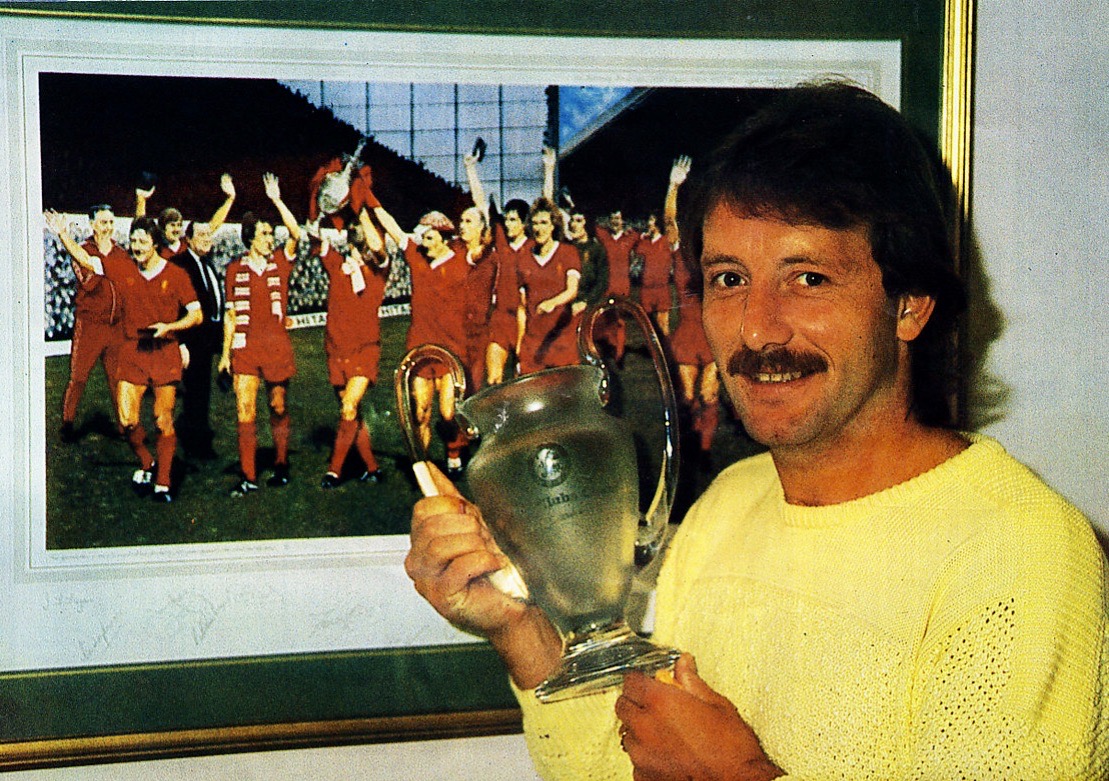
Several of the best moments I can recall as an Albion supporter involve Case: the 1983 FA Cup semi-final belter against Sheffield Wednesday at sunny Highbury perhaps the most memorable.

The biggest disappointment was that Albion let him go so easily.

Younger readers may only remember his unhappy stint as manager when the misdirected club was in turmoil, and he ended up holding the reins when Liam Brady just couldn’t take any more.

But rather than remember him as the man who took Brighton down to Division 3 in 1996, I remember the class act who arrived at the Goldstone in 1981 with a trophy cabinet the envy of many a footballer.

Although Brighton lost the sublime Mark Lawrenson to Liverpool as part of the deal that saw Case move to Brighton, they gained a player who had already got three European Cup winners’ medals, four Division 1 (Premiership equivalent) winners’ medals plus one each for winning the UEFA Cup, European Super Cup and the League Cup.

Case, born in Liverpool on 18 May 1954, was one of four children David and Dorothy Case raised in a council house in the city’s Allerton district.

He learned how to handle himself on a football field playing in a tough dockers’ team but Liverpool picked him up from the local non-league club, South Liverpool. By then, Case had left school and was training to be an electrician.

He carried on those studies but after two years on Liverpool’s staff he made his first team debut in April 1975 in a 3-1 win over QPR.

He scored his first goal in a 3-2 home win over Spurs at the beginning of the following season and, in what must have seemed a dream start, completed his first full season as part of a championship winning team, as well as scoring in the two-legged UEFA Cup Final win over FC Bruges.

Case EuropeThe triumphs and trophies kept coming with Case enjoying the ride but by 1980-81 he was beginning to be edged out by Sammy Lee, and manager Bob Paisley didn’t look kindly on some of the off-field escapades Case was involved in with fellow midfielder Ray Kennedy.

Paisley said: “He had lost his appetite for the game in his last year at Anfield. It’s a hard stint working the right flank in our team and Jimmy had stopped getting forward and was looking to play early passes from deep positions. I think his legs had become tired.”

The move to Brighton might never have happened if Alan Mullery had got his way because he had already done a deal with Ron Atkinson to sell Lawrenson to Manchester United in exchange for two of their players.

But when chairman Mike Bamber pulled rank and forced through the Liverpool deal he had negotiated, Mullery quit and Case arrived on a five-year contract to find a new manager in charge in Mike Bailey.

It felt to me that Brighton were stepping up to a whole new level bringing in someone of Case’s stature, and so it proved.

In his first season at the Goldstone, Albion recorded their highest-ever finish among the elite – 13th.

I recollect heading to Upton Park for the opening game of the season to see Case make his debut against West Ham and Albion earned a 1-1 draw despite having Gerry Ryan sent off.

Case found himself in trouble with referees on way too many occasions that season. Although he came to the club with a hard man image, amazingly he had never previously been suspended for accumulating bookings.

But by December he had to sit out a two game ban, and when his bookings total reached eight by March, he missed another three games.

Case told John Vinicombe of the Evening Argus: “I am a face, and there is nothing I can do about that. I am known, and that might explain some of the things that have happened to me on the pitch.

“The last thing I wanted on coming to Brighton was to get suspended. Brighton didn’t give me a contract to miss games.”

For anyone who has not yet read it, Case’s autobiography, Hard Case (John Blake Publishing) is well worth a read, detailing through writer Andrew Smart a fascinating career.

Disappointingly, it has a few factual errors that doubtless the distance of time brought about. Nevertheless, Case says: “I enjoyed every minute of my time with Brighton.”

Particularly pleasing for him was to score with a thumping header past Bruce Grobelaar in a 3-3 draw with Liverpool at the Goldstone, and to be on the right end of Albion’s 1-0 win at Anfield that season.

Case enjoyed life off the field as well and admits in his book: “The inhabitants of Brighton and Hove were just a little more sophisticated than the Allerton of the 1970s and I was introduced to the many and varied attractions of decent food and fine wine. It was an education I really appreciated.”

His second season was to end in relegation, but, more famously, with Brighton’s one and only appearance in an FA Cup final. Case scored goals in the fourth, fifth and sixth rounds, as well as the semi-final.

The newspapers had a field day when Case’s winner for Brighton in the fifth round of the Cup at Anfield denied his old boss Bob Paisley the chance to wipe the board with trophies that season.

It seemed every national and local newspaper headline revolved around the likeable Scouser: ‘It’s Case for Champagne’, ‘Jimmy sets out his case’, ‘Old boy Case kills off Liverpool hopes’, ‘Amazing Case’, ‘Killer Case’, ‘Case packs a super Cup punch’, ‘Case for Cup win’.

The Daily Mirror made him their footballer of the month for February on the back of that goal with reporter Harry Miller declaring: “No single act did more to capture the imagination of the public than midfielder Case’s dramatic 71st minute winner on Sunday, February 20.”

Case himself had mixed emotions about it all, saying: “I had ten fantastic years at a remarkable club. That’s something that goes deep down.”

He also revealed how a good friend of his had been out of the country at the time of the game and sent him a postcard with only two words as its message: ‘You bastard’.

When he scored the only goal of the game in the quarter final win over Norwich, the headlines continued: ‘Case of bubbly’, ‘The odd Case of hero and villain’, ‘Seagulls have landed with champagne Jim’.

That belting free kick in the Highbury sunshine set Albion on their way to the 2-1 win over Sheffield Wednesday, earning a first ever  – and only – place in the FA Cup final.

He was no stranger to Wembley, of course, having previously scored Liverpool’s goal in the 1978 2-1 defeat to Manchester United, but unfortunately he didn’t repeat his earlier goalscoring feats in the 1983 final.

He played a key part in Albion’s brave effort to earn a draw against Man U and then had the agony of returning home that Saturday evening to discover his mother, who had been a visitor, had died in her sleep at the age of just 63.

It was to Case’s immense credit that he took his place in the side for the replay just five days later.

While relegation brought the inevitable break-up of the team, with Gary Stevens and Michael Robinson departing before the new season began, Case publicly declared his intention to stay and try to get the team back up to the elite.

However, once fellow Scouser Jimmy Melia had been replaced by Chris Cattlin, there was probably only going to be one outcome and eventually Case was sold to Southampton for £30,000 in March 1985.

For him, it was a great move because he was returning to the top division again. It turned out that he was Lawrie McMenemy’s last signing for Saints, but, on this occasion, the change of manager was to cement his place in the side. Chris Nicholl made him the club captain the following season.

In 1985-86, Saints reached the semi-final of the FA Cup (beating Brighton 2-0 in the quarter-final!) losing 2-0 to Liverpool after extra time. If Saints had won, Case would have been the first player to appear in three FA Cup finals with different clubs.

Over his six years at The Dell, Case played alongside Glenn Cockerill and Barry Horne and helped to bring on the careers of youngsters such as Matt Le Tissier, Alan Shearer and Jason Dodd.

But when Ian Branfoot took over as manager in June 1991, he dispensed with Case’s services within a matter of days and transferred him to Bournemouth, who were managed by Harry Redknapp.

After 40 league games for Bournemouth in 1991-92, he moved to Halifax Town managed by former Saint and, one-time Albion loanee, John McGrath, who was being assisted by another ex-Albion man, Frank Worthington.

But Case only played there for six months, moving on to Wrexham, where he helped them gain promotion from the 3rd Division at the end of the 1992-93 season.

He then turned out for non-league side Sittingbourne until, at the ripe old age of 39, Liam Brady brought him back to Brighton in December 1993, as a player/coach. It was during that spell that he played in his 600th league game, the club chief executive David Bellotti presenting him with a silver salver on reaching that milestone

As a mark of the esteem in which Case was held, a testimonial game for him at the Goldstone Ground on 17 October 1994 had to be delayed 10 minutes because so many people wanted to get in to pay tribute. The capacity of the grand old ground was much reduced by then but still 15,645 packed in to see Case’s old club Liverpool do him the honour of providing the opposition.

Albion featured Matt Le Tissier in their line-up and even Ryan and Brady made substitute appearances as Liverpool emerged 2-1. The result, of course, was immaterial, and an emotional Case said afterwards: “I can’t thank the supporters enough. This was the only game I’ve ever been nervous about. I’ve never really asked for anything from the game, I just wanted everyone to enjoy it.

“It’s all been quite embarrassing really. I like to go to parties, I just don’t like them being my own.”

After his unhappy time as Albion manager, Case later managed non-league Bashley but is more often seen and heard these days on the after dinner speaking circuit or on regional football programmes. He also contributes to Southampton’s in-house radio station “The Saint”.

In July 2007, he once again donned a Brighton shirt, playing a cameo role alongside other past heroes in a brief curtain-raiser to Kerry Mayo’s testimonial game against Reading.

Eric Young went from non league to the international stage via Brighton and Crystal Palace

1 Y strollingERIC YOUNG went on to have a lengthy career as a dominant centre back, and even made it onto the international stage, although he never really looked like achieving such heights in five years at the Albion.

His performances for Isthmian League side Slough Town between 1979 and 1982 drew the attention of plenty of league scouts – he played 144 games and scored an impressive 23 goals.

Albion manager Mike Bailey signed him from Slough in 1982 but he didn’t break through into the first team until the start of the 1983-84 season, making his full debut away to Blackburn Rovers in September 1983.

He took over Steve Foster’s number 5 shirt for 10 games and, although he subsequently had a spell playing alongside Foster, it’s clear he was viewed as his long-term replacement.

Relations between manager Chris Cattlin and Foster were strained and he eventually sold the iconic club captain to Aston Villa in March.

In the same month, Young scored his first goal in a 3-0 home win over Leeds United. In an eventful first season, he completed 35 games, scored twice and was sent off.

It was the experienced Jimmy Case who Young appreciated most in those early days. He told the matchday programme: “All the lads were great but Jimmy Case really helped me to settle down. Jimmy is very subtle. He’ll just say a few words to you and it makes all the difference. I appreciated that in those early days.”

In Cattlin’s first full season in charge, 1984-85, Young consolidated his place in the back four, missing only a handful of games as he completed 39 league and cup appearances.

Young’s centre back partner more often than not was Gary O’Reilly, who also ended up going to Crystal Palace, before returning to Brighton for a second spell.

In that 1984-85 season, though, when the pairing was in its fledgling stages, Cattlin admitted he played Graham Pearce in between them “to allow the central defensive pair to learn their trade and settle down into a partnership”.

There must be something about Albion playing Newcastle in the FA Cup; in the 1985-86 season, Young scored in the first minute of the third round match at St James’ Park against a Magpies side that included Peter Beardsley and Paul Gascoigne. With Perry Digweed performing heroics in goal, the Seagulls won the tie 2-0 with a late goal from Dean Saunders.

Young was virtually ever present that season, playing 42 games in total.

In a 1-0 away win at Sheffield United in 1986 which I went to watch with @SnowyywonS, Young put in a sterling performance at the back.

Although he was booked for a challenge on Peter Beagrie, he had such a fine old tussle with that veteran striker Peter Withe that when the ex-Villa and Forest man was substituted 20 minutes from the end, Withe stopped to shake Young’s hand before leaving the pitch.

By then Young was playing under yet another manager; Alan Mullery having returned for what turned out to be only an eight-month spell.

young youngWith Albion finishing rock bottom of Division 2 in 1987, new manager Barry Lloyd was forced into a fire sale of the highest assets and Young went to Wimbledon for £70,000 (Danny Wilson and Terry Connor were also sold). Young had made a total of 147 league and cup appearances.

Although he missed out on Albion’s run through to the 1983 FA Cup Final, Young went one better by being part of Wimbledon’s winning team in 1988 as they beat Liverpool 1-0.

His central defensive partnership with Andy Thorn was highly effective but after 99 appearances for the Dons, he was sold to Crystal Palace for £850,000, where he subsequently resumed his partnership with Thorn.

He was at Palace for five years, making 204 appearances. After a falling-out with Palace manager Alan Smith, he joined Wolves on a free transfer where he played 31 games over two seasons.

Following a brief return to Palace, when he didn’t return to first team action, he returned to his non-league roots and spent four seasons at Egham Town before retiring at the age of 41 in 2001.

Born in Singapore on 25 March 1960, because of his British citizenship Young was able to choose which home country to play for. He chose Wales, not making his debut until the comparatively late age of 30, but going on to earn 21 caps. All but his first and last caps came during his time with Palace.

Young attributed his introduction to the world of football to a former schoolteacher in Staines. “His name was Dennis Richards and he helped me a lot,” he said. “He was into football and, if anybody showed promise, he did all he could for them. He gave me a great deal of encouragement.”

A number of clubs showed interest in the young Young when he left school but he insisted on completing a college course before turning professional. He qualified as an accountant and that’s the job he took on after his playing days had ended, working with a Heathrow-based construction company.

Eric Young was often a subject for the Albion matchday programme front cover. Black and white shots show him in action and, after his move to Wimbledon, a FA Cup winner alongside goalscorer Lawrie Sanchez and goalkeeper Dave Beasant.

Tomasz Kuszczak took ‘Pole’ position in Brighton’s goal

Albion matchday programme image of Kuszczak

TOMASZ Kuszczak may only have been a back-up ‘keeper for Manchester United but in two seasons with Brighton & Hove Albion he established himself as one of the club’s best ever between the sticks.

Born in Krosno Odrzańskie in western Poland on 20 March 1982, the son of a Polish amy colonel, he began his career with one of his country’s top teams, Śląsk Wrocław before crossing over the border to Germany to play for KFC Uerdingen 05 and Hertha Berlin.

He was capped at under 16, under 18 and under 21 level (14 caps) by Poland and, while never first choice ‘keeper for the senior international side, he made his debut in 2003, in a 4-0 win over Malta, and played 11 times for his country, the last time in 2012. He initially took over from Liverpool keeper Jerzy Dudek but, invariably, Artur Boruc and Wojciech Szczesny were picked ahead of him.

While visiting Krakow in 2015, in conversation with a taxi driver, I discovered Polish football followers were brutally unforgiving of a massive blunder Kuszczak made in a World Cup warm-up match between Poland and Columbia on 30 May 2006 when he conceded a goal directly from a long punt by the opposition goalkeeper, Luis Enrique Martinez.

By then, he had been playing in England for two years, Gary Megson having signed him for West Brom in 2004. He was reserve ‘keeper behind firstly Russell Hoult and then Chris Kirkland, and played just 31 games for The Baggies over two years.

However, when he did get a chance, in a game against Wigan Athletic in January 2005, he pulled off a spectacular save to deny Jason Roberts, which was subsequently voted Save of the Season by Match of the Day viewers.

In a curiously complicated transfer deal, Man U signed Kuszczak in the summer of 2006 in exchange for United’s former Albion loanee, Paul McShane, and young goalkeeper Luke Steele, but the first year of the arrangement was on a loan basis.

At United, he was behind Edwin van de Sar in the pecking order and typically mainly played cup matches or deputised when the regular no.1 was injured. In 2010, he collected a League Cup winners’ medal when United beat Aston Villa 2-1.

In five seasons at United, he played a total of 61 games but, by the time the 2011-12 season came round, Kuszczak was way down the list of United custodians, with David de Gea first choice, and Anders Lindegaard and Ben Amos ahead of him.

In February 2012, Kuszczak was loaned to then Championship side Watford, where he made 13 appearances. On his release from United in June 2012, he moved to Brighton.

“When I played against this team while I was on loan at Watford I was very impressed; I particularly liked the way the team played – it was totally different to the rest of the Championship and more like what I was used to at Manchester United,” Kuszczak told the Albion matchday programme.

“Everything from the manager and coaching staff, the team, the stadium, the fans, through to the plans for the new training ground, it was clear to me that it is all geared up to be playing at the highest level – I could sense that ambition to be a top club straight away. I had other clubs who wanted to sign me but my heart told me that this was the right choice.”

Over two seasons with the Seagulls, he finally got regular playing time and completed 89 appearances in the two successive play-off promotion campaigns, initially under Gus Poyet and then Oscar Garcia.

One of the best insights into his time at Brighton and United came in a December 2013 article. Speaking to Sportsmail on behalf of Sky Bet, he told The Footballers’ Football Column: “I miss the Premier League a lot. The idea around moving to Brighton was to get more games and put myself on the market. That was important after six years at Manchester United where I didn’t play a key role in the team.

“I did have my chances there, but I sacrificed my time sometimes. I was sitting on the bench a lot. Ten matches a season wasn’t enough for me. I was really hungry for football and decided to change something in my life.

This move was all about giving me the opportunity of playing in the Premier League in the future. I would love to go with Brighton – that’s the aim. We’re ambitious and want promotion.

“It may sound arrogant but my place is in the Premier League. I came to England with West Bromwich Albion and enjoyed my time there, as I did at United. I want to be back in business in front of great crowds. I want my friends to be watching me on TV every week and have a chance of challenging the best in the world.

“People were interested in me when I wanted to leave Old Trafford, but that’s not surprising as a Manchester United player. There will always be interest.

“If you play for them it’s not an accident. If you join that club you’re talented.”

Of his time at United, he said:I knew I’d get my chances and Sir Alex Ferguson did give me them. They maybe weren’t regular games but I was part of some in the big competitions. Ferguson would always remember me and trust me.

“I came from Poland, where we always work hard and be positive. Lazy people never achieve anything. There is always enough time to improve yourself and you can achieve something every single morning. Yes it was frustrating, but I managed to control that.

“At Brighton the expectations at the start of the season were high. We’re slowly getting there now but there is still a lot of work to do.

“Oscar Garcia was brought in as our new manager over the summer and it takes a while for everyone to settle. Players need to understand new tactics and approaches – that is always the same when you have a new boss.”

Within days of Garcia’s resignation after the play-off defeat to Derby, it was announced Kuszczak was being released.

There were a number of unsubstantiated and colourful reasons as to why he wasn’t retained by Brighton, but Andy Naylor in The Argus said neither Garcia nor his replacement, Sami Hyypia rated his ability with his feet or his distribution skills.

For around six months, Kuszczak was unable to find a new club but then Kenny Jackett took him to Wolverhampton Wanderers where he played 13 games deputising for the injured Carl Ikeme.

Midlands rivals Birmingham City swooped to sign him in the summer of 2015, Even though Harry Redknapp signed Brighton’s David Stockdale as first choice ‘keeper at St Andrew’s in 2017, Kuszczak found himself back in the first team after Steve Cotterill arrived as manager.

He spent four years at St Andrews, finally leaving in 2019 having made 89 appearances for the Blues.

After hanging up his gloves, he returned to Poland and started up his own constuction company. He coached the Polish national team goalkeepers for six months between September 2023 and March 2024.

Pictures sourced from the internet show a shot that appeared in the Daily Mirror of Kuszczak with Man U boss Sir Alex Ferguson; skysports.com’s shot of him in Brighton colours and a Birmingham Mail image of the ‘keeper in an alternative Brighton kit. Other pictures are from the Albion matchday programme.


England international winger Mark Chamberlain didn’t fit in at Brighton

FORMER Liverpool and England international Alex Oxlade-Chamberlain can look to his dad for his footballing genes.

Mark Chamberlain represented England himself – and also played for Stoke City and Brighton in a 20-year career that saw him feature in more than 600 games.

Mark and brother Neville (also a professional footballer) were born in Burslem of British Jamaican parents, Banny and Anastasia, who had moved to England in the early 1960s.

The brothers both started out with Port Vale and in August 2013 onevalefan.co.uk looked back on their involvement with the Valiants.

“The younger of the two brothers, Mark progressed through the junior ranks to make his debut as a substitute aged just 16 years and 274 days,” the site recalled. “It soon became clear that the winger was a special talent and he made his full debut later that season. Two days later he scored his first senior goal. His breakthrough as a first-team regular came in the 1980-1981 season when he managed ten goals in 36 games.”

Apparently, in their early Vale career, the brothers used to swap shirts at half-time to confuse the opposition. Neville, a striker, had a less illustrious career than Mark but was the club’s top scorer in the 1979-80 season.

Robbie Earle, one of Vale’s favourite sons, wrote of Mark: “He could do it all: Run, pass, shoot, make goals and score them.”

Vale’s boss during Chamberlain’s introduction to league football was former Southampton and Newcastle defender John McGrath, who had a brief loan spell with Brighton when they were struggling in the old Division 2 after the 1972 promotion.

Anyway, Chamberlain was beginning to get noticed in the fourth tier and in 1981-82 he was chosen in the PFA Fourth Division team of the year.

Chamberlain told the Daily Mail’s Matt Barlow in a 2011 interview how he ended up switching Potteries clubs and joining Stoke.

“John McGrath sent me in to speak to Stoke manager Richie Barker and told me to ask for a £15,000 signing-on fee and £200 a week,” said Chamberlain. “So in I went and Richie shakes my hand and says, ‘I’m going to offer you £200 a week and a £15,000 signing on fee’.

“I said, ‘No, you two have been talking.’ They started laughing, and said: ‘What do you want?’ I said: ‘Well, we’re fourth division. You’re first division. I’m on £90 a week, so let’s multiply it by four.’ It was quite basic in those days.”

Stoke paid £180,000 for Chamberlain (and goalkeeper Mark Harrison) in 1982. When his son joined Arsenal from Southampton the fee was £12million and on transfer deadline day this year, Liverpool paid Arsenal £35million for his services.

MC Eng v RusBut back to 1982 and, in December that year, Chamberlain senior made his debut for England. Manager Bobby Robson sent him on as a substitute for Steve Coppell and he scored in a 9-0 rout of Luxembourg. Luther Blissett got a hat-trick and Coppell, Glenn Hoddle, Tony Woodcock and Phil Neal were also on the scoresheet, the other being an own goal.
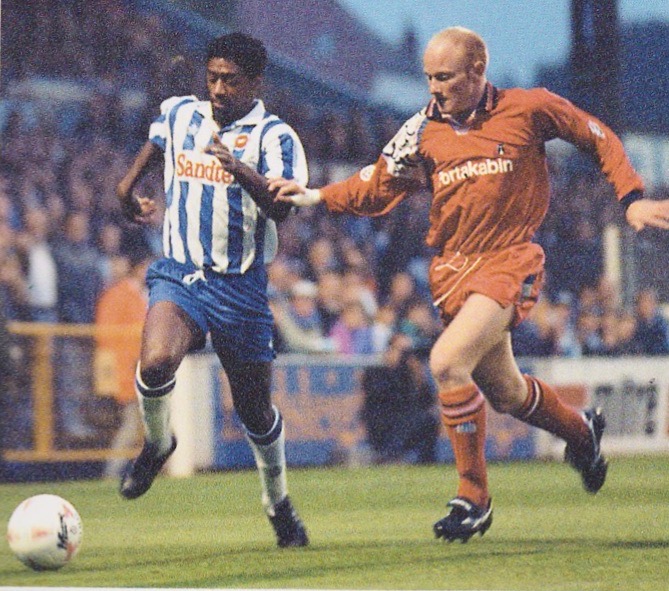
His next outing for the national side didn’t come until September the following year, when he was again a substitute, this time replacing John Barnes in a 1-0 Wembley defeat to Denmark.

In the summer of 1984, he got five successive starts on a South American tour – one of which was the famous occasion when England beat Brazil 2-0 in the Maracana Stadium.

Barnes grabbed the headlines with that famous mazy dribble and goal, but the guy playing on the other wing for England was Chamberlain!

“’I didn’t do bad,” said Mark, interviewed many years later. “The pitch was poor and the Maracana was only half full, but that’s still about 80,000. Junior was at left back and Leandro was right back. They bombed forward but weren’t the best defenders and we both had good games.

“On the pitch, after the game, the Brazilian press were asking me and Barnsey if we wanted to come and play in Brazil. ‘You play like Brazilians,’ they kept saying.”

On a more sober note, in John Barnes’ 1999 autobiography, he describes how he, Chamberlain and Viv Anderson were racially abused on that tour by four National Front members who had booked the same flight as the England squad.

In the independent.co.uk, Alex Oxlade-Chamberlain said of his dad: “He used to tell me that he’d walk home from school with his sisters, they used to get stones thrown at them. They had to fight and protect themselves, but you have to get on with it.

“That’s what he did. He used to go to England trials on his own, not knowing anyone. The other boys were at Aston Villa, Arsenal and Everton. He was at Port Vale. He had to overcome loads of stuff like that. That’s the sort of character he is. He just gets on with what he’s got to do and doesn’t worry too much about what everyone thinks.”

Chamberlain senior was interviewed about the Brazil game in June 2013, 29 years after he’d played there, because Alex was playing for England against Brazil to mark the official opening of the refurbished Maracana.

And he went one better than dad and got on the scoresheet in a 1-1 draw after coming on as a second half substitute. Not that dad saw it: he admitted to the press that he had dozed off in his chair in front of the telly and missed it!

“Playing for England and beating the mighty Brazil was a fantastic experience,” Mark told sponsor Vauxhall. “I’d have liked to have played a lot more for my country but I didn’t, but I enjoyed every moment of it.”

His eighth and final cap came as a sub for Bryan Robson in a 5-0 win over Finland at Wembley in October 1984.

The emergence of Chris Waddle and Trevor Steven brought his international career to an end and it’s interesting to observe from an interview he gave to mirror.co.uk, that he actively urged his son to leave Southampton for Arsenal because he didn’t want him to miss out on the opportunities he felt eluded him by not moving to a big club.

There was talk of him going to Arsenal himself, but it never happened and, he told reporter Darren Lewis, he blamed being with a club like Stoke for his only winning eight caps. He felt he was overlooked for players at bigger clubs.

He was certainly a fans’ favourite at Stoke. On the Stoke fans’ website, oatcakefanzine, one with the handle March said: “Chambo was probably the second most talented player in our club’s history after Sir Stan (Matthews). His skill, pace and crossing were all top notch.

“I organised a football tournament for young players in 1980. Chambo was a part of one of the teams taking part. He was so good it was unbelievable. I remember a game away at West Ham where he ran straight past the whole West Ham defence and the home crowd went silent in awe. I don’t remember that reaction to any other player from any club.”

However, in the 1984-85 season, Stoke finished bottom of the top division, 23 points off safety. Manager Barker went and new manager Mick Mills wanted to rebuild the side, so Mark was sold to Sheffield Wednesday for £350,000.

“There had been talk about Everton, Arsenal and Chelsea but that never happened,” said Chamberlain. “When I left Stoke, I went to Sheffield Wednesday and met Howard Wilkinson, and we never got on. I don’t know why he bought me.

“I was the best right winger in the country and he told me I couldn’t play. If I’m honest, I fell out of love with football after that.”

He scored 10 times in 88 games for the Owls but he was to enjoy much greater success when he headed south in 1988, to join Jim Smith’s Portsmouth. Former Albion defender Guy Butters, who was also at Portsmouth at the time, speaks highly about the contribution ‘Chambo’ made to the side.

In six years at Pompey, Chamberlain played 198 games and scored 22 goals.

When Second Division Portsmouth got to the FA Cup semi finals in 1991-92, Chamberlain played in the 1-1 draw against Liverpool at Highbury but not in the replay at Villa Park.

His last year at Portsmouth was dogged by injuries and, having been out injured for six months, Smith offered him a coaching post. But Chamberlain wasn’t ready to give up playing and former Albion boss Mike Bailey, who was in charge of Pompey reserves, recommended him to Gerry Ryan and Jimmy Case.

In August 1994, Liam Brady offered him a trial and he made his debut in a testimonial game for Mick Fogden at Southwick. In his programme notes, Brady said: “We have signed Mark Chamberlain because I think we needed a wide player with pace. Although Mark is the wrong side of 30, I think he has shown that he doesn’t lack pace.

“He has had his problems with injuries at Portsmouth over the last year but I think he has already demonstrated that he is still a very good player.

“We are looking at how he gets on over the next two or three weeks with a view to taking him on for the remainder of the season.”

Chamberlain made his league debut when he went on as a half-time substitute for Ian Chapman against Plymouth Argyle on 20 August and he scored Albion’s goal in a 1-1 draw. He signed a season-long contract the following month.

The campaign was barely a couple of months old before he was sidelined for a month with injury, but Chamberlain played 19 league games and five cup games. He scored twice, but it transpired it was not the happiest time in his career.

In a Stoke matchday programme article in March 2003, Chamberlain told Dave Coxon: “In truth I never enjoyed my time there. I didn’t seem to fit in, either on or off the field. After games I would sit there in the bar and nobody would come over to me. I think it was probably because I was not in the clique.”

After the unhappy spell at Brighton, Chamberlain moved the other direction from his Port Solent home and had two seasons with Exeter City, playing 67 games and scoring four times.

He went non-league and spent a season as player-manager of Fareham Town before taking up coaching at Southampton, and at a special needs school.

It was while he was a part-time academy coach at Southampton that he first introduced Alex to the Saints. He later became a coach at Portsmouth.

The younger of his two sons, Christian, 19, is on Portsmouth’s books, although he’s currently out on loan. Last season he played for Eastbourne Borough and this season he’s had spells with Poole Town and Oxford City.

If, like me, you wondered why the boys are Oxlade-Chamberlain, it’s because they use their mother’s maiden name at her request.

“She had a brother who died in a car accident and there were no more Oxlades so she was very keen to keep the name going and that was fine by me,” said Mark. “The boys have always been Oxlade-Chamberlains. I think they came from Norway, the Oxlades.”
Read more: http://www.dailymail.co.uk/sport/football/article-2045303/Alex-Oxlade-Chamberlain-Father-Mark-Arsenals-12m-wonderkid.html#ixzz4sj4JImUp

Pictures show onevalefan.co.uk’s shot of Chamberlain and his brother in their early Port Vale days, in Stoke’s kit, wearing England’s change strip, a Daily Express shot of him playing for Pompey, and a still from a YouTube interview.

Swans and Seagulls trophy wins gave Painter happy memories of Withdean

WHEN the Championship club you play for brings in an established Premier League player with 35 England caps to his name, chances are you’ll realise quite quickly your playing time is going to be limited.

Thus was the situation facing Marcos Painter after he had previously been the established left back in Gus Poyet’s Brighton side.

Born in Solihull on 17 August 1986, Painter was a bright lad at school and acquired nine GCSEs. He grew up supporting Birmingham City and joined the academy when he was just eight.

In 2005, he made it through to the first team group under manager Steve Bruce, playing five Premier League matches and four cup games in his first full season.

It was a similar pattern at the start of the 2006-07 season and, after he’d played only two games by November, Kenny Jackett took him on loan at then League One Swansea City. He played 22 games and two as a sub by the end of a season which saw Swansea just miss out on the play-off places.

Painter’s loan was made permanent in January 2007 and he went on to establish himself as the Swans’ first choice left back, playing 31 games as they romped to the League One Championship under Roberto Martinez in the 2007-08 season.

A former Blue, and briefly a Brighton player, Steve Claridge, wearing his pundit’s hat for The Guardian in October 2007, did a detailed analysis of a player who he said Steve Bruce had “raved about” in terms of his attitude.

“Painter is not overly blessed with natural ability,” said Claridge. “When he was isolated in the final third, one-on-one with an opponent, he struggled to beat him while he must have forgotten to pack his shampoo, so reluctant was he to head the ball.

“In the main, though, he defended well, rarely getting exposed and still finding the time to overlap his winger

“Painter, a Republic of Ireland Under-21 international, might not boast great skill but I like players who think about the game and how best to use the attributes they have, even if they are more limited than others. Making it back to the Premier League, however, might be a step too far.”

Painter continued in the left back spot in Swansea’s Championship side but in October 2008 he sustained a cruciate knee ligament injury to his right knee in a 3-0 win over Southampton, and he was sidelined for the rest of the season.

He returned to first team action for the 2009-10 season but Martinez had departed for Wigan and his successor Paulo Sousa only gave Painter six starts. In January 2010, Brighton stepped in and took him on loan until the end of the season.

He was one of three signings made by Poyet on the same day (Arsenal defender Gavin Hoyte on loan and winger Seb Carole returning were the others) and he wasn’t fazed by Withdean because he’d got happy memories of the place.

“The last time I was there we won the league and were presented with the League One trophy,” he recalled. “I’ve missed a lot of football with a cruciate injury so I’m keen to play as much as I can. Roberto Martinez recommended me but the manager has said there is no extra pressure on me.”

When his two-year deal with Swansea expired in July 2010, he joined Albion permanently on a two-year contract.

Painter was ever-present at left back in the promotion winning team of 2010-11, his total of 54 league and cup appearances being the highest of any in the squad.

Unfortunately, a recurring hamstring injury meant he missed three months of the 2011-12 season, Albion’s first in the Championship, and first at the Amex.

Painter deepPainter managed 22 appearances but Joe Mattock joined on-loan in January 2012 and occupied the left back berth until the end of the season. Prior to that, Romain Vincelot and Gus Poyet’s assistant Mauricio Taricco had slotted in at left back.

Ahead of the 2012-13 season, there was much excitement when Poyet unveiled the signing of Wayne Bridge on a season-long loan from Manchester City.

Painter revealed his feelings in an interview published on BBC Sport when he had a brief return to the first team to replace the injured Bridge.

“Maybe it’s had a good effect on me, not being the number one and having to up my game,” he said. “The manager said to me at the start of the season that Wayne would play but I had to be there to step in.

“He’s been honest and said ‘If you deserve to play, you’ll play’. Wayne will play if he is fit and I accept that. It’s still not a nice feeling but let’s be realistic; he has Premier League and international quality.”

Painter admitted that, on occasions, it was difficult to come to terms with not playing regularly. “It’s horrible,” he said. “That’s one thing when your family play a big part and try and keep your head up.

“When you’re not travelling [to away games] and training with the reserves it’s difficult. You have to try and stay as professional as possible.

“You want to play football or be involved. No player likes to be sitting at home or just trying to keep fit.”

During that final season as an Albion player, Painter had a brief loan spell along the coast at Bournemouth and after he was released by Brighton, he joined Portsmouth in the summer of 2013.

Their manager at the time, Guy Whittingham, told the club website: “Marcos is an experienced player, who has competed at a high level. He’s a good out-and-out defender and we’re pleased he’s come here.

“I think he was impressed with the vision of what we want to achieve here, while we were impressed with his attitude.” Painter said: “I’m used to life down on the south coast and I’m excited to be joining a great club like Pompey, who have such a fantastic fanbase.

“This club is an attractive proposition whatever league they’re in. There’s a lot of work to be done and it’s up to the players to take Pompey back up.

“I enjoy defending and hopefully I’ll be able to use my experience to help the team do well this season.” After his debut resulted in a win over Morecambe, Painter told the club website: “A 3-0 home win and a clean sheet in my first game – it couldn’t have started any better really.

“We moved the ball quickly and penetrated from the wide areas. We’ve got a lot of quality up front and caused them problems.

“The gaffer said that he brought me in to help the side keep clean sheets and we did our job at both ends.”

But he fell out of favour with Whittingham and his injury issues returned before Whittingham’s replacement in the hotseat, former Albion forward Richie Barker, arrived at Fratton Park and restored Painter to the first team. However, he made just 18 appearances for Pompey between August 2013 and February 2014.

Since July 2015, he has been back at his first club, Birmingham, working as an academy coach.

When Albion visited St Andrew’s on 5 April 2016, Painter was interviewed pitchside during the half-time break,  reminiscing about his time with the Seagulls.

Pictures from my scrapbook show a Simon Dack action picture of Painter from The Argus; a back page headline from The Argus; in the matchday programme, and Joe Pepler’s shot of Painter in Pompey colours (from The News, Portsmouth).

England international Wayne Bridge learned his poker skills at Brighton

Wayne Bridge celebrates scoring for Brighton against Sheffield Wednesday with Liam Bridcutt

IN DEBATES over people’s all time top Albion XI, few would argue the left back spot would belong to Wayne Bridge.

The former England international played 37 games for the Seagulls in the 2012-13 season and showed he was different class to players who’d previously filled that position.

Gus Poyet gave him the chance to play when Manchester City could no longer find a starting place for him, even though they were reportedly paying him £90,000 a week.

It was another former Brighton manager who takes the credit for discovering Bridge and setting him on the path to stardom. That was Micky Adams, a decent left back himself, who in 1994 spotted Bridge playing for Southampton and District Tyro League side Oliver’s Battery, a small parish near Winchester, and recommended him to Adams’ old club, Southampton.

“He was taking the Saints’ School of Excellence at the time and was watching his friend’s son play,” Bridge explained. “He seemed to think I stood out and that was it, I didn’t look back from there. I trained with the club once a week, from there I went on to the schoolboys, then became a YTS.”

Born in Southampton on 5 August 1980, Bridge came through the famed academy at Saints where former Albion right back Stewart Henderson was one of the coaches producing a conveyor belt of stars, including Chris Baird, Gareth Bale, Theo Walcott and Adam Lallana.

Bridge made his reserve team debut for Saints in August 1997, turned professional five months later, and made his first team debut on the opening day of the 1998-99 season. Dave Jones, the manager at the time, converted him from a winger into a full back and, two seasons later, he was Southampton’s player of the year.

Remarkably he played 113 consecutive games between March 2000 and January 2003, and at the end of that season played for Saints in the FA Cup Final at the Millennium Stadium in Cardiff, which they lost to Arsenal.

Just as an aside, I went to that game with my old friend @andrewsetten hobnobbing it in the VIP area with the FA bigwigs and various star players of yesteryear. One abiding memory was seeing that old warhorse of a former England centre half, ex-Saints stopper Dave Watson, queuing up with other lesser lights, including me, to get Trevor Brooking’s autograph for his son!

Four years later, Bridge did collect a winners’ medal as part of the Chelsea side who beat Manchester United 1-0 in the first Cup Final back at the rebuilt Wembley Stadium, and a League Cup winners’ medal in a 2-1 win over Arsenal.

Bridge had joined Chelsea for £7million at the end of 2003. In Chelsea’s Premier League-winning 2005-06 season, Spaniard Asier del Horno was the first choice left back and Bridge was loaned out to Fulham.

When Chelsea brought in Ashley Cole for the 2006-07 season, he was understandably first choice but Bridge got his chance to get games under his belt when Cole was injured.

His Stamford Bridge career came to an end after six years, largely to do with off-field matters luridly reported at the time, allegedly involving his former girlfriend and Chelsea captain John Terry.

On the pitch, it was more to do with Cole being the established first team choice at left back.

Although generally also considered as a deputy for Cole at international level, Bridge nevertheless earned 36 caps for his country.

Sven-Göran Eriksson gave him his first cap against the Netherlands in February 2002 and he was part of the set-up on and off for seven years, announcing his retirement following the allegations involving the then England captain Terry.

It was Mark Hughes who took Bridge to Manchester City in 2009 for a reported £12m fee but, only a year later, with Roberto Mancini having taken over in the manager’s chair, he preferred Aleksandar Kolorov or Gael Clichy at left back, and Bridge was once again on the fringes.

He went to West Ham for half a season, playing 18 games for them in 2011, and the following season had a similar length spell at Sunderland.

Then, to the delight of Brighton manager Gus Poyet and the Brighton faithful, somehow or another a deal was worked out to bring Bridge to Brighton for the 2012-13 season.

At the time, Poyet told the club website: “It’s difficult to say how happy I am because it’s not easy to get top-class players.

“I’m absolutely delighted to have Wayne with us. He’s been one of the top three left-backs in this country for many years.

“There were a lot of things that had to come together to make it happen. Firstly, David Platt has been great at Manchester City, and then Wayne and his agent have helped a lot too.

“It was not an easy one to secure, but this is what we want at this club. He’s a quality player with lots of international experience.”

During his season with Brighton he made his 400th club career appearance. It came in the 2-2 draw away to Birmingham in January 2013 and he celebrated with a great cross for David López to volley past on-loan goalkeeper Jack Butland to put the Seagulls 2-1 up.

In a programme feature on Bridge, he spoke of how much he was enjoying playing for the Seagulls, and at the Amex: “The fans here have been terrific. I like stepping out on that pitch; it’s a great surface and a great atmosphere,” he said.

After Bridge returned to the side following an absence with a calf injury, and kept Palace widemen Wilfried Zaha and Yannick Bolasie quiet in the Albion’s 3-0 home win, Poyet was in typically ebullient form when he told the Argus: “Sometimes I need people to stop me, calm down, relax and look back three years ago at where we were, the kind of football we were playing, the players who were at this football club and that are here now.

“If, three-and-a-half years ago you had said to me Wayne Bridge was going to be playing for Brighton I’d have said, ‘yeah funny’, but he is.”

It’s recent enough history for everyone to remember the painful play-off finish to that season, ending too Poyet’s time as manager. Nevertheless, Bridge told The Independent on 19 May 2013: “Brighton have been great to me. I just want to say a big thank you to the chairman and the fans. Gus has revitalised my love for football after I was in the wilderness at Manchester City.

“He got me to focus and enjoy my football. He is a top-class manager both tactically and on the man-management side, one of the best I have worked with. I hope he and Brighton can get their problems sorted.”

Although it was reported Brighton wanted to sign him permanently for the 2013-14 season, I have it on good authority they knowingly “dodged a bullet” because there were doubts about his fitness and, so it proved, because when he went to Reading instead he managed only 12 games in the whole of the season before deciding to retire.

One of the more leisurely pursuits Bridge has taken up since retiring is playing poker, and it was interesting to read that his thirst for it was developed while at Brighton – but not from the chairman!

In April this year, he spoke to PokerStars about the card school operated on the players’ coach and in hotels during away games.

Bridge said that his toughest opponent was David López because he was hard to read and spoke Spanish, “so you never knew what he was saying”. The biggest fish in the game was Adam El-Abd because “you always knew when he had a good hand”.

In retirement, of course, Bridge has not exactly drifted into obscurity, bearing in mind he married The Saturdays singer, Frankie Sandford, and in 2016 was a contestant in I’m A Celebrity Get Me Out of Here.

In an article published on squawka.com earlier this month, Bridge told Planet Football: “Even I pinch myself at the career I had and the money you can earn, but I almost find it embarrassing to talk about.”

main Bridge in 03 CF prog w Beattie

Main picture, from the 2003 FA Cup Final programme, shows a young Bridge with teammate James Beattie; and (below) online images of him variously in Chelsea, Manchester City, Sunderland and England colours; an Argus shot of him in Albion’s stripes, and a Guardian headline on his retirement.