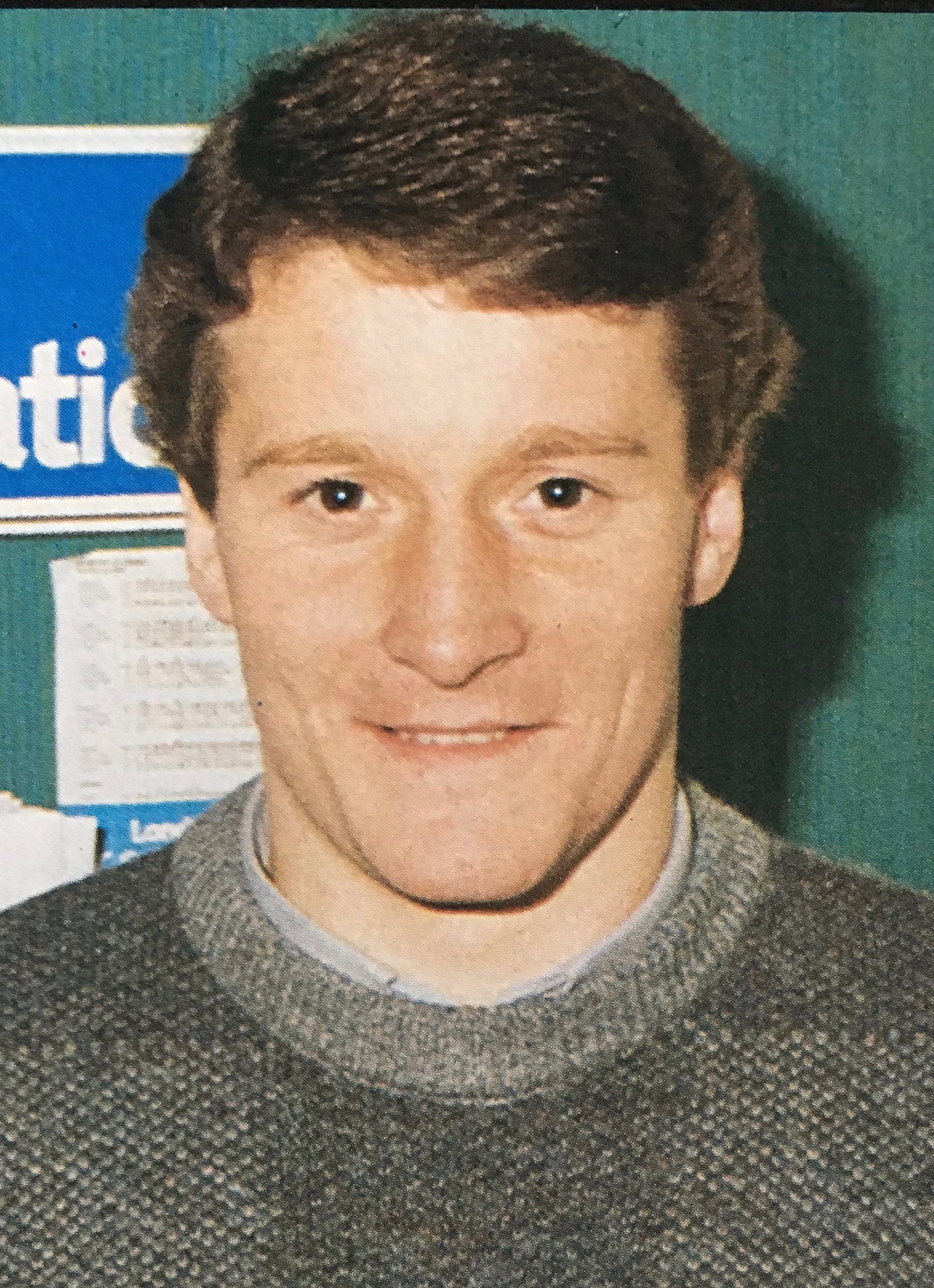
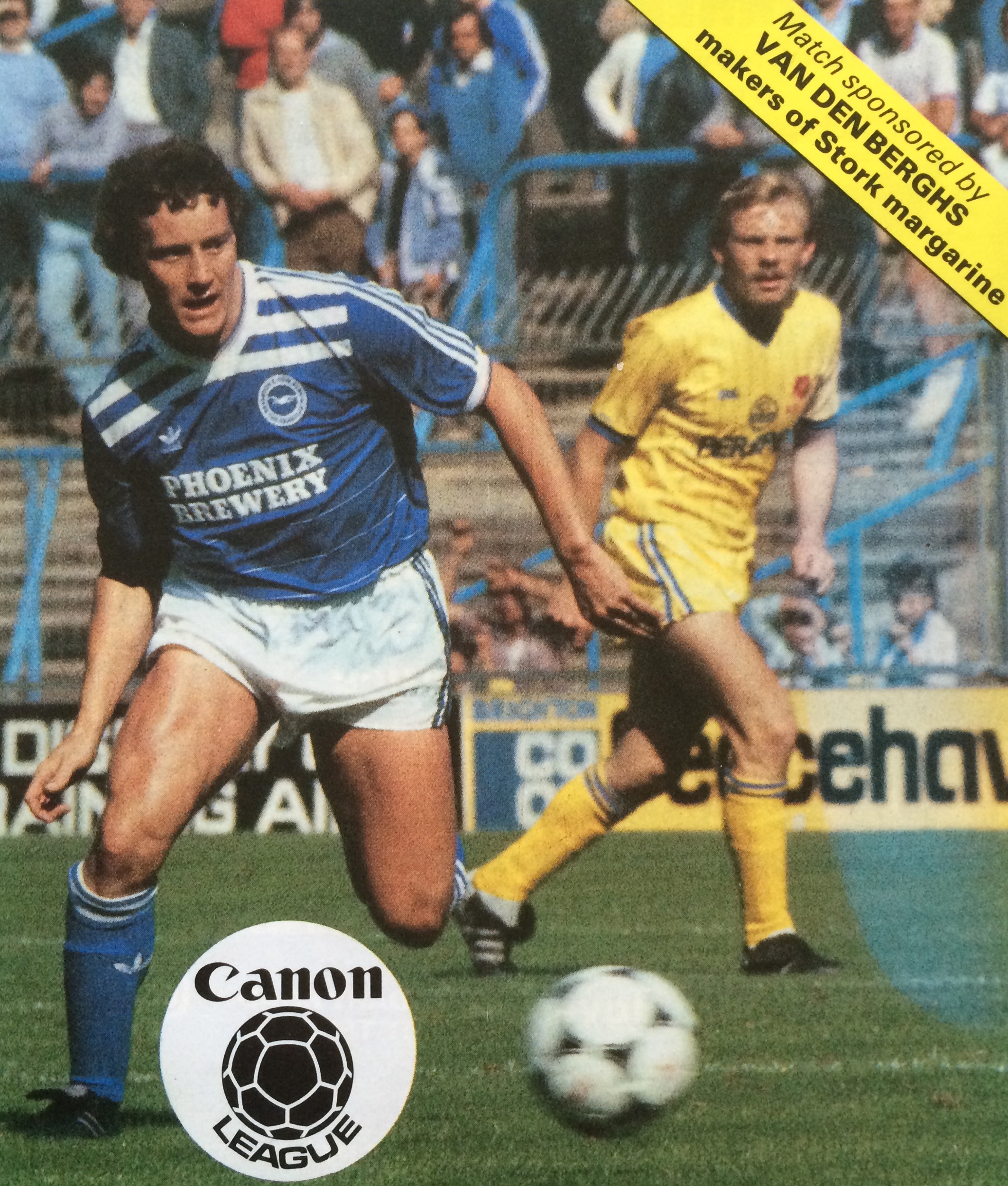
When Chris Cattlin rocked up to play for and manage Brighton

1-cat-in-goalIT MUST BE difficult for today’s reader to imagine a player with the opportunity to sign for either Coventry City or Chelsea choosing the Sky Blues over the London giants.

But in 1968, when the choice faced Huddersfield Town’s Cattlin, he moved to Highfield Road because the following day they were playing a star-studded Manchester United side and, as the full-back who’d be marking the legendary George Best, he couldn’t resist pitting his ability against the Irish wizard.

It was one of several career insights Cattlin revealed in an excellent interview by Doug Thomson in the Huddersfield Examiner in June 2013.

Huddersfield were happy to collect a £70,000 transfer fee when Coventry bid for Cattlin, but he told the Examiner: “Chelsea also came in for me and I was due to speak to them in the afternoon after talking to Coventry in the morning.

“City were playing Manchester United the next day and the manager, Noel Cantwell, told me I would definitely be in the team.

“I knew that if I could say I’d played against George Best, Denis Law and Bobby Charlton, I could die a happy man, so I never got as far as Stamford Bridge!

“I signed for £65 a week when the man in the street was probably getting £20, so to be paid like that for playing football made me more than happy!”

As it turned out, Cattlin marked Best out of the game and his new team won 2-0 with goals from Ernie Machin (who later left the Albion at the same time Cattlin arrived at the Goldstone) and Maurice Setters, against his old team.

Cattlin went on to play more than 250 league and cup games for Coventry, (then in the equivalent of today’s Premier League), before moving to Brighton in 1976, where his playing career finished, but he returned as manager between 1983 and 1986.

Going back to the beginning, though, Cattlin was born in Milnrow, Lancashire, on 25 June 1946, the son of a rugby league player, Bob, and his early school days were spent at Milnrow Parish School. He moved on to Ashton-under-Lyne Technical College (Geoff Hurst was three years his senior there) and then took a job in textile engineering.

In the meantime, he trained and played for Burnley’s youth team but he struggled with the 40-mile round trip travelling from his home. A Huddersfield Town scout, Harry Hooper, had spotted his potential and he was offered a professional contract with the Terriers in the summer of 1964 which allowed him to carry on working two days a week at the textiles factory.

“I went across to Leeds Road, and just fell in love with the place. It was far from luxurious, but there was just a feel about the ground and the people there,” he recalled.

Maybe it was also a feeling that Huddersfield knew a thing or two about decent left backs. Cattlin took over from Bob McNab, who later made a name for himself at Arsenal, and played four games for England, and McNab had replaced England World Cup winner Ray Wilson, who Town transferred to Everton.

Cattlin was signed by Eddie Boot only for the manager to resign the day after, following a 2-1 home defeat by Plymouth. Boot’s successor was Tom Johnston and he insisted on Cattlin becoming a full-time pro, which caused a degree of angst with Cattlin’s concerned parents, but he went for it and didn’t look back.

It was emerging coach Ian Greaves, a former Manchester United player (who later took Town to the top flight as manager), who was to have a lasting effect on Cattlin. “Ian lived in Shaw, the next village to Milnrow, and he’d give me a lift to Leeds Road each day, in the days before the M62, on that winding old road over the moors,” he explained.

“He was a great coach and later manager, and a superb motivator, just a football man through and through.”

Cattlin made his debut in a 3-1 home win over Derby on the final day of the 1964-65 Division 2 (now Championship) campaign but didn’t fully establish himself in the side until the 1966-67 campaign.

In total, he played 70 times for Huddersfield and, for a while, he was playing for the town’s football team while dad Bob was playing for its rugby league side. “My dad played for Huddersfield at rugby league, I played for Huddersfield Town at football. I think we’re the only father and son to have done that,” he said.

After that 1968 transfer to Coventry, Cattlin became a firm favourite at Highfield Road and although he didn’t quite emulate Wilson and McNab, he did play twice for England Under 23s. He made his debut on 2 October 1968 in a 3-1 win over Wales at Wrexham in a side that also included Peter Shilton in goal, West Ham’s Billy Bonds and John Sissons and Everton’s Howard Kendall and John Hurst.

Six weeks later he won his other cap in a 2-2 draw with the Netherlands at Birmingham’s St Andrews ground, when Arsenal’s John Radford and Hurst were the scorers. Cattlin also represented the Football League v the Scottish Football League.

Cattlin was part of the only Coventry side ever to qualify for Europe (in 1970-71) and remembered relative success, only eventually getting knocked out by a Bayern Munich side that included the likes of Franz Beckenbauer and Gerd Muller.

On another occasion, in a tour match, he played in a 2-2 daw against Santos of Brazil, with Pele in their team, in front of an 80,000 crowd. “Pitting your wits against those kinds of players was a fantastic education,” he said.

When manager Gordon Milne decided to give Cattlin a free transfer after nine years and 239 matches for Coventry, fans organised a petition to keep him at Highfield Road.

But there was no turning back and Peter Taylor signed him for Brighton – along with another experienced defender, Graham Cross (from Leicester City) – a short time before quitting the club to rejoin Brian Clough at Nottingham Forest.

CC76

It was Alan Mullery’s good fortune to inherit a squad that would take Division 3 by storm to earn promotion and Cattlin was able to contribute in both full back positions although mainly at left back, having the edge on Harry Wilson.

With the arrival of Gary Williams from Preston, Cattlin switched to the right and vied with Ken Tiler for the shirt, regaining the upper hand for the final two thirds of the season which ended with promotion from the old Division 2 in 1978.

“That Brighton promotion team – what a fantastic set of lads, with no little ability,” he said. “They could all play and were great characters. I was a very lucky lad to come along at the end of my career and join a dressing room like that.”

Although he made just one appearance (in the disastrous 4-0 League Cup defeat at Arsenal) during the 1979-80 season, he notched up a total of 114 games for Brighton.

And he obviously liked the place so much that once his playing days were over he opened a rock shop on Brighton seafront, as well as investing in property. However, three years after quitting as a player, he returned to the Goldstone as a coach, appointed in the summer of 1983 by chairman Mike Bamber to assist manager Jimmy Melia – without Melia’s knowledge!

It all got rather messy with Melia and Cattlin clearly not getting on and talk of a takeover rumbling on in the background.

By the middle of October, Melia quit and Cattlin took over as manager, with another well known former left back, Sammy Nelson, elevated from reserve team manager to assistant manager.

Cattlin then began to shape his own squad and among notable signings who served Albion well were Steve Penney, Danny Wilson and Dean Saunders while there were some memorable cup games, including beating Liverpool in what I believe was the first FA Cup tie – other than finals – to be shown live on TV.

One of TV’s pundits of today, Martin Keown, was another Cattlin signing, joining on loan from Arsenal and beginning with Brighton what was a memorable career with the Gunners, Aston Villa, Everton and England.

Cattlin admitted in 2010: “I had to sell a lot of the popular, best players for financial reasons and bring other ones in to keep the show on the road and make it interesting for the crowd. That was my job.” The likes of Steve Foster (to Aston Villa), Jimmy Case (to Southampton), Tony Grealish (to West Brom) and Gordon Smith (to Manchester City) were all sold by Cattlin.

In 1984, Cattlin certainly found an entertainer when he brought to the Albion a former teammate from his days at Leeds Road, the mercurial Frank Worthington, who moved along the south coast from Southampton.

By that time, Worthington wasn’t too mobile but he’d lost none of his skill and flamboyance and Cattlin told his 2013 interviewer: “He did a good job for me.

“Frank wasn’t only a great player, but a great bloke as well, a dedicated trainer and a great bloke to have around a club.”

Catt dog
Barking up the wrong tree? Cattlin couldn’t quite restore Albion to the elite when he returned as manager

Cattlin stayed in the manager’s chair until April 1986, overseeing finishes of ninth, sixth and 11th in the second tier, although he clearly felt the writing was on the wall as far as his job was concerned when the Albion board wouldn’t give him £6,500 to sign the experienced defender Jeff Clarke from Newcastle, as Cattlin explained at the Albion Roar live show in December 2018 (skip to 28 minutes in).

Distractions and changes in the boardroom were an uncomfortable backdrop to much of his time in charge and it was evident that the fans didn’t perceive Cattlin to be to blame for the failure to finish higher.

When he was sacked, there were protests from supporters, a 2,000-signature petition calling for his reinstatement and Cattlin himself addressed a 200-strong rally in Hove.

But it was all to no avail. His former boss, Mullery, returned and Cattlin went back to his non-football business interests.

In a 2010 interview in the matchday programme, Cattlin said: “I think I deserved another season at least to get them back into what is now the Premiership.

“If it had gone wonky then they wouldn’t have had to fire me – I’d have gone myself. Nevertheless, to play, coach and manage Brighton and Hove Albion made me a very proud man. But I wish I could have put them back where I felt they belonged.”

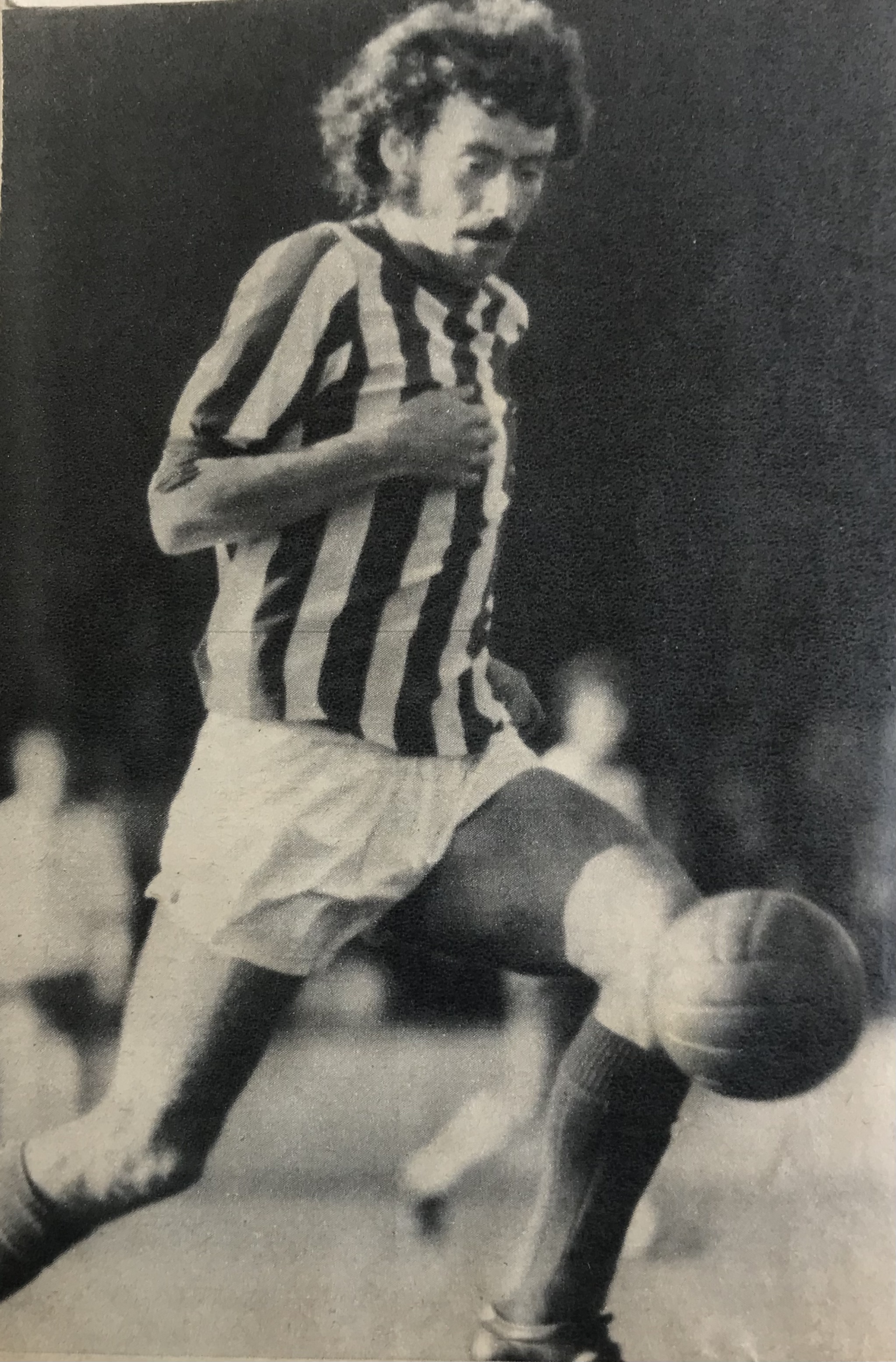
  • Pictures show (top) Chris Cattlin pictured in Goal magazine in Coventry’s sky blue; in an Evening Argus shot alongside new manager Alan Mullery and fellow close season signing Graham Cross; how the Albion programme headed his managerial notes.

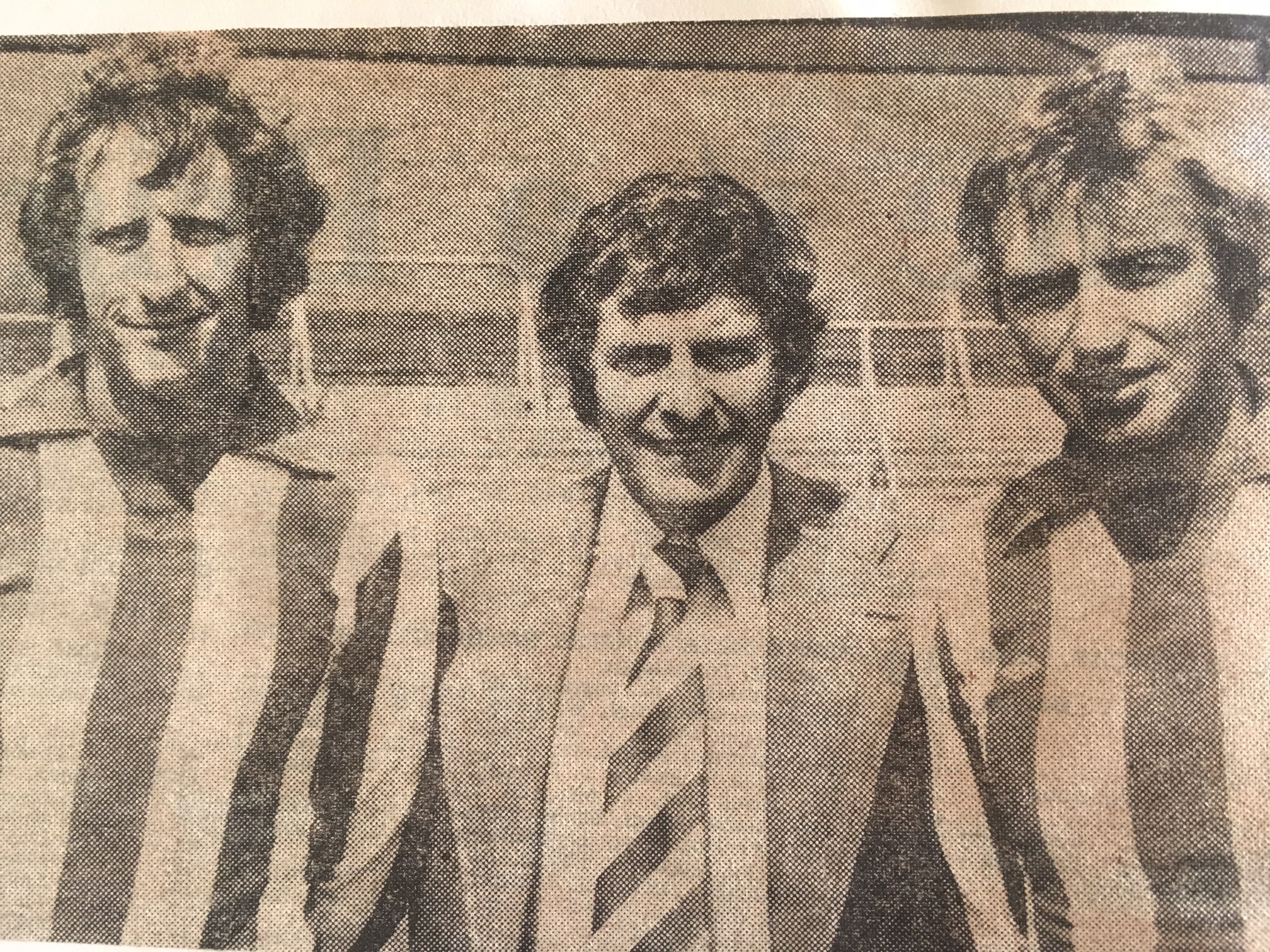
Cattlin pictured in 2010

Why centre forward Alex Dawson’s boots were kept spotless by George Best

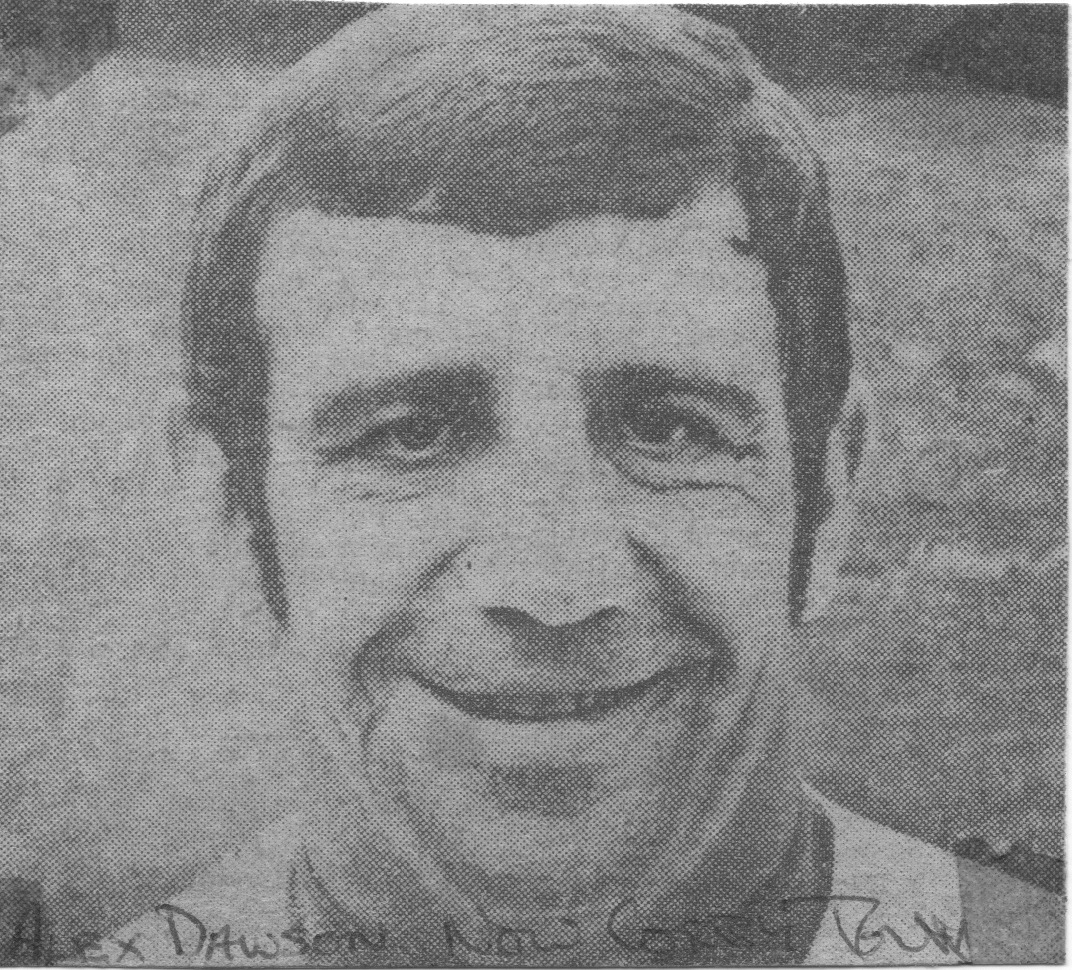
Dawson BHAThe mercurial footballing genius George Best used to clean the boots of the centre forward who scored twice in the very first Albion game I saw.

By the time of that 3-0 win v Walsall in 1969, Alex Dawson was on his way down the footballing pyramid, just over a decade after he came mighty close to perishing with some of his Manchester United teammates in the Munich air disaster.

Only five years earlier the swashbuckling centre forward had scored twice in the FA Cup Final at Wembley as his Preston North End side lost 3-2 to a Bobby Moore-led West Ham United.

The former Manchester United centre forward arrived at the Goldstone through a connection made at Old Trafford in that post-Munich era. Freddie Goodwin, another pitched from the United reserves into the first team as a consequence of the tragedy, made Dawson his first signing when he took over as Brighton manager in December 1968. A £9,000 fee brought him to Sussex from Bury.

At the Albion, he linked up with another familiar face in Nobby Lawton, a tenacious midfield player who had also been at Man U with him and then captained Preston in the aforementioned cup final.

Lawton, now sadly no longer with us, mentioned “that great striker Alex Dawson” in an interview he gave to the Lancashire Evening Post, published in May 2004.

“I’d known Alex since we were both on the groundstaff at Old Trafford,” Lawton recalled. “He was a bull of a centre-forward and was a Deepdale hero.

“He’s a lovely man and I was best man at his wedding. He hasn’t changed at all, and we are still great friends.

“Alex and the rest of the team would have graced any Premiership side today.”

Dawson certainly arrived with a bang on the south coast finding the net no fewer than 17 times in just 23 games, including three braces and four in an away game at Hartlepool.

The following season, Goodwin added Alan Gilliver to the strikeforce and he outshone Dawson in the scoring stakes, although the Scot still scored 12 in 36 games.

As is so often the case, it was a change of manager that marked the end of his time with the Albion. With Goodwin departed for Birmingham, replacement Pat Saward didn’t give him much of a look-in and he went out on loan to Brentford where he showed he could still find the back of the net with familiar regularity.

Greville Waterman, on bfctalk.wordpress.com in July 2014, shared a great magazine front cover featuring Dawson and recalled: “He was a gnarled veteran of thirty with a prominent broken nose and a face that surely only a mother could love, but he had an inspirational loan spell at Griffin Park in 1970 scoring seven times in eleven games including the winner in that amazing late, late show FA Cup victory against Gillingham. Typical of the times at Griffin Park, he departed after his loan spell as apparently the club was unable to agree terms with him. A classic example of both parties suffering given that Dawson never played another Football League game and Brentford lacked a focal point in their attack until the arrival of John O’Mara later that same season.”

Released by the Albion at the end of the 70-71 season, Dawson’s final footballing action was with non-league Corby Town.

Nevertheless, he could look back on a fantastic career as a goalscorer, with a strike rate the envy of many a modern day forward.

To this day, he is still the youngest player (at 18 years and 33 days) to have scored a hat-trick in a FA Cup semi-final (in Man U’s 5-3 1958 win over Fulham) and he is one of only nine players to score in each of his first three Man U games.

Originally from Aberdeen (he went to the same school as that United legend Denis Law), his parents had moved down to Hull and Dawson joined United straight from Hull Schoolboys. He made his United debut in April 1957 aged just 17.

On redcafe.net, Julian Denny recalled how Dawson once scored three hat-tricks in a row for a Man U reserve team that was regularly watched by crowds of over 10,000!

In researching for this piece, I’ve read some views that Dawson’s career with United may have panned out differently if he hadn’t been thrust into first team action at such a young age.

But that was one of the consequences of the Munich air disaster, which he has spoken about in several interviews since, usually around notable anniversaries of the tragedy.

It’s difficult to tell whether there were mental scars from the trauma of the crash but Dawson was just short of his 18th birthday when several of his close mates died. In an interview with Chris Roberts in the Daily Record (initially published 6 Feb 2008 then updated 1 July 2012), he recalled: “I used to go on those trips and had a passport and visa all ready but the boss just told me I wasn’t going this time. I had already been on two or three trips just to break me in. I know now how lucky I was to be left in Manchester. The omens were on my side.”

Dawson went on to describe the disbelief and the feelings they had at losing eight of the team, including Duncan Edwards several days later. “We were all so close and Duncan was also a good friend to me before the accident,” said Dawson. “Duncan was such a good player, there is no doubt about that.

“He was a wonderful fellow as well as a real gentleman.

“I will never, ever forget him because he died on my birthday, February 21, and before that he was the one who really helped me settle in.”

Just 13 days after the accident, Dawson took his place beside survivors Bill Foulkes and Harry Gregg as United faced Sheffield Wednesday in the fifth round of the FA Cup – and won 3-0.

That 5-3 semi-final replay win against Fulham was not surprisingly an early career highlight and when talking about it in 2013 (on the 55th anniversary of the disaster), Dawson told manutd.com: “In our first game with Fulham, Bobby Charlton scored twice in a 2-2 draw, and I was put on the right wing. I was a centre-forward really and when we played the replay at Highbury four days later, I was back in my normal position. Jimmy (Murphy) said before the game: ‘I fancy you this afternoon, big man. I fancy you to put about three in.’ I just said: ‘You know me Jim, I’ll do my best,’ but I couldn’t believe it when it happened.

“The first was a diving header, I think the second was a left-footer and the third was with my right foot.

“Nobody can ever take that afternoon away from me. It was a long time ago, of course, and it’s still a club record for the youngest scorer of a hat-trick in United’s history. Records are there to be broken and I’m surprised that it’s gone on for over half a century.

“I’m a proud man to still hold this record. Even when it goes, nobody can ever take the achievement away from me – I’ll remember that afternoon for as long as I live.”

In the two seasons following Munich, Dawson became a more established first team player although it would be wrong to describe him as a regular.

Another Scot, David Herd had scored a hat-trick for Arsenal against United and Matt Busby took him to Old Trafford in July 1961. It signalled the end of Dawson’s time with United.

Nevertheless, by the time he was sold to Preston in October 1961 for £18,000, he’d scored 54 goals in 93 United appearances.

And what about Best and his boots? It was the job of apprentices to look after the footwear of United’s first team players, and it was the young Best, who became a United apprentice in August 1961, who was detailed to keep Dawson’s scoring boots in good order.

In his 1994 book, The Best of Times (written with Les Scott), Best said: “Alex Dawson was a brawny centre forward whose backside was so huge he appeared taller when he sat down. To me, Alex looked like Goliath, although he was only 5’10”. What made him such an imposing figure was his girth.

“He weighed 13st 12lbs, a stone heavier than centre half Bill Foulkes who was well over 6ft tall. What’s more, there wasn’t an ounce of fat on Alex – it was all muscle.”

During a prolific time at Preston, Dawson scored 114 goals in 197 appearances, with the highlight that FA Cup Final in 1964.

Albertan on pne.net in 2012 said: “Alex Dawson was a super player … He was the complete centre forward – powerful, mobile and lethal with either foot or his head. He was also brave, committed and characterful.” While sliper on the same forum added: “In his prime Dawson was a powerhouse and great to watch.. I can safely say I’ve never seen a better header of a ball at Deepdale.”

Curlypete recalled: “You could literally see goalkeepers tremble when Dawson was running at them, it was either the ball, ‘keeper or more likely both who ended up in the net.”

Pictures:

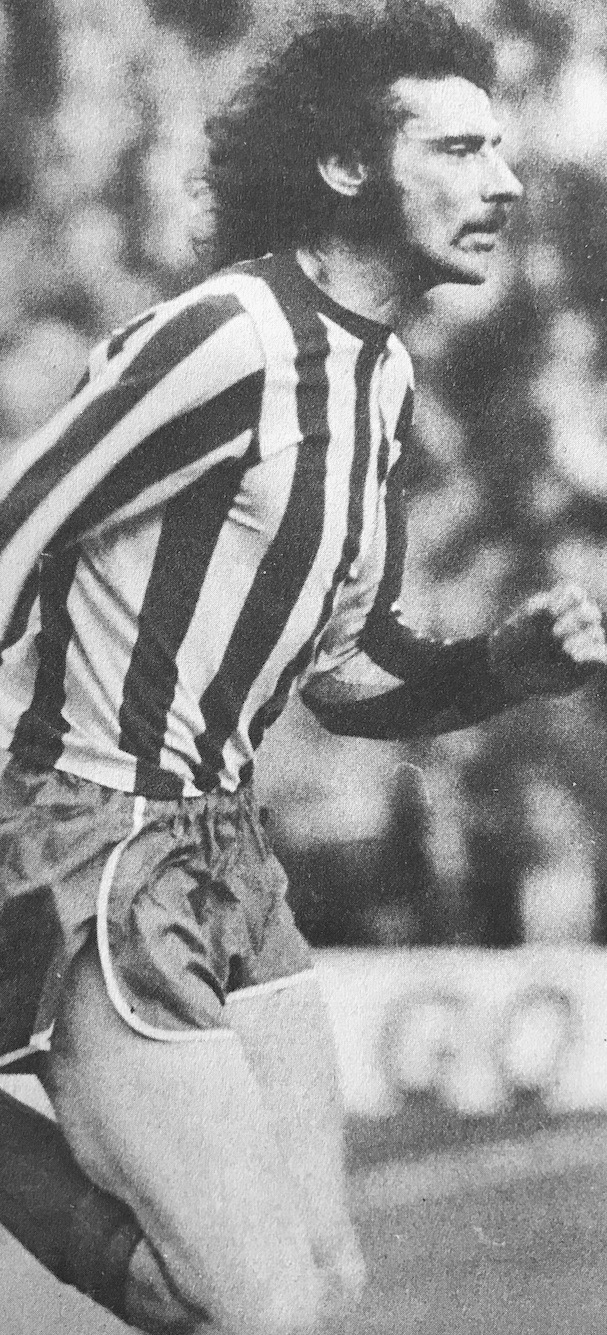
Top, pictured wearing the 1970-71 kit.

• Kneeling, from a 1969 Albion line-up.

• A magazine front cover.

• Brighton Herald’s black and white photograph in a 1969 Albion programme shows Dawson in goalmouth action watched by colleague John Napier (no.5).

Kit Napier top scorer for Brighton in five of six seasons

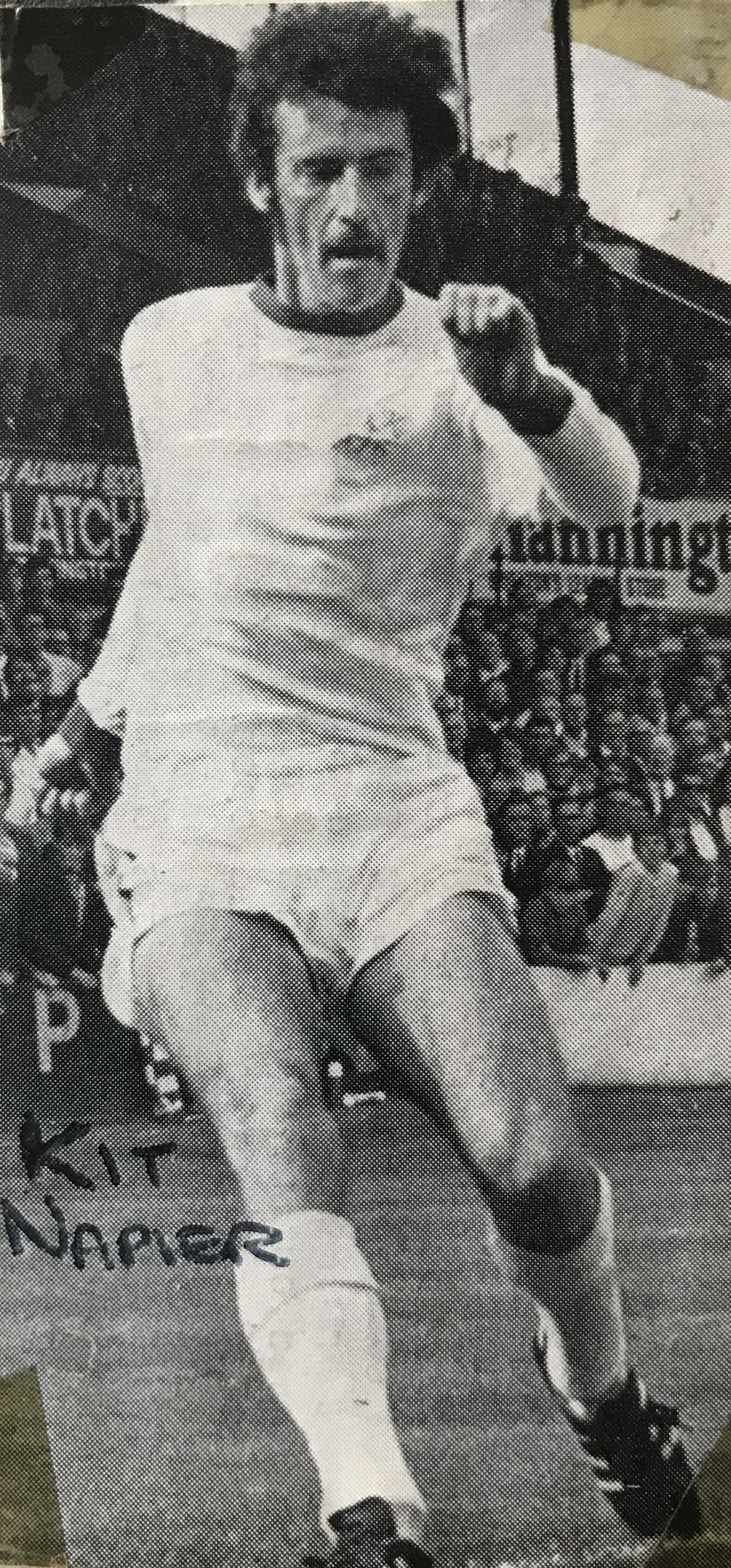
FORMER Newcastle United centre forward Kit Napier, who moved from the Magpies to Brighton in 1966, was playing up front alongside Alex Dawson when I first started watching the Albion (in 1969).

Kit Napier at full stretch to score against Bournemouth in front of a packed Goldstone Ground on Boxing Day 1971

Born in Dunblane on 26 September 1943, Kit’s promise as a schoolboy prompted his headmaster to put his name around as a future footballing talent and he left Scotland to join Blackpool (then playing in the top tier) as a junior before turning professional in 1960. But he only played twice for the Tangerines before moving on to Second Division Preston North End in 1963-64. Things didn’t work out there either, though, and he dropped down a further division to Workington, where it all started to click.

Workington were newly-promoted to the Third Division and Napier was on the scoresheet during what has been described as the club’s proudest night, a 5-1 win in a Football League Cup 3rd round replay against First Division Blackburn Rovers on 22 October 1964.

In a team managed by Ken Furphy, who later enjoyed success as manager of Watford, one of Napier’s teammates was Keith Burkinshaw, who several years later would become manager of Tottenham Hotspur.

The Workington archive also recalls the fifth round tie, on 25 November 1964, when Workington hosted Chelsea at Borough Park.  At the time, Chelsea were riding high in the top flight of English football and were unbeaten on their travels when they arrived in west Cumbria.  Reds were fourth in the old Third Division at the time.

“In front of a record League Cup attendance (17,996), Reds gave Tommy Docherty’s Chelsea the fright of their lives by holding them to a 2-2 draw having been 0-2 down early in the game,” the archive records.  “Dave Carr and Kit Napier scored for the Reds and we had a ‘goal’ disallowed late in the game for an offside offence.

“We eventually lost the replay, 0-2, but the crowd at Stamford Bridge was 10,000 fewer than the gathering at Borough Park.”

Napier scored 25 goals in 58 games for the Cumbrian side which attracted the attention of the Geordie giants at St James’ Park. He was still only 22 when they paid £18,000 for him.

KN NUFCHe made his Newcastle debut on 6 November 1965 in a 2-0 home win over Blackpool. But it probably didn’t help his cause that Newcastle lost six of his seven other games, and drew the other!

His last game was in the Tyne-Wear derby game on 3 January 1966 when Sunderland triumphed 2-0.

Toon1892.com, a veritable mine of Newcastle history, says of Napier: “He was seen as a forward who had great potential. Unfortunately, he struggled to come to terms with the First Division and despite having all the ‘tricks’ he could not put the ball into the net.

An autographed Evening Argus photograph of Kit Napier from the 1970-71 season

“Being given only eight games to prove himself, one wonders whether he was given a real chance or not, but the arrival of (Welsh international) Wyn Davies settled any argument and Kit was off to Brighton.”

That move came early in the 1966-67 season when Brighton – bottom of the league table at the time – paid £9,000 to bring him south. He made an instant impression, scoring twice on his debut in a 5-2 win over Peterborough.

It was the perfect start to what was to be the most successful period of his career.

Over Easter in 1971, Napier scored in all three of Albion’s matches – a 1-0 home win over Aston Villa on Good Friday, a 2-0 home win over Reading the following day, and a 3-2 away win at Bradford City on Easter Monday.

The matchday programme for the following home game declared: “This gift of marksmanship blends very nicely with his ball control and general skill in possession. Not to mention the times when he lets fly at goal from outside the penalty area.

“We’ve seen some thrilling thunderbolts from him, including several during 1967-68 season when he broke Albion’s post-war individual scoring record with 30 goals, 24 of them in the league.”

He was top goalscorer in five of his six seasons with the club and, by the time he left, he’d netted 99 goals in just short of 300 appearances, including 19 in the 1971-72 promotion-winning side. Against Shrewsbury at the Goldstone, on 30 October 1971, he netted his 100th career league goal (see below). At that time, his Albion tally was 75.

IMG_4445

The superb The Goldstone Wrap blog did an extended piece on him in which they said: “Kit Napier is rightly considered an Albion legend. He was a ball-playing attacker, skilful with both feet, and with tremendous talent for goalscoring. At the Goldstone, Napier’s class and quick-witted play endeared him to the crowds.”

Aside from the goals, three things about him stand out in my memory:

• Kit had an amazing talent for scoring direct from corners: quite some skill. The first came in a 2-0 home win over Bury on 27 December 1969.

• In a game against Preston, on 27 February 1971, when Napier was shaping to take a penalty in front of the South Stand, Alan Duffy, promptly stepped forward, pushed his teammate out of the way and took the penalty himself – and missed!

• The following season, in a home game against Wrexham, Napier had been having a bit of an off day and the crowd were getting on his back. Eventually manager Pat Saward subbed him off and, as he trudged towards the tunnel, rather than the polite applause that tends to accompany today’s substitutions there were lots of ironic cheers to greet his withdrawal. Napier responded by waving a two-fingered salute to all corners of the ground! I’m pretty sure nothing came of it although, of course, in this day and age he’d no doubt have been hauled before the powers that be.

irvine napier saward

Kit Napier celebrates promotion with Willie Irvine, left, and manager Saward.

With Albion promoted, Saward knew he needed to strengthen the side and he clearly didn’t think Napier was up to playing at the higher level and put him on the transfer list.

Although he made a handful of starts in the 1972-73 Second Division campaign, by the end of August he’d been sold to Blackburn Rovers (who were in the Third Division at the time) for £15,000 as Albion sought to recoup some of the £29,000 record fee they spent bringing former England international Barry Bridges to the club from Millwall.

Napier had two seasons at Ewood Park and brought down the curtain on his English league career with a further 10 goals in 54 appearances. When he returned to the Goldstone with Rovers, he was made captain for the day. “I still get goosebumps and feel emotional at how the whole crowd gave me a standing ovation,” Kit remembered many years later.

He moved to South Africa to play for Durban United and, after packing up playing, had a very successful career as a Ford car salesman in the city (he was national sales manager of the year seven years in a row) alongside his former Albion teammate Brian Tawse. An Albion matchday programme reported how they both also turned out for a local Sunday league side in Durban.

Napier’s later years were blighted by emphysema and he died in Durban on 31 March 2019 at the age of 75.

6F15B25C-FBBC-4A75-8119-94BA0BDC7DBC_1_201_a

TV pundit Dean Saunders was a top goalscorer after release by Swansea

progcoversaunders

YOUNGER readers will be familiar with Dean Saunders as a TV pundit but in the mid 1980s he was knocking in goals for the Albion.

Oxford United was his next club in a football career that ultimately saw him transferred for millions, play for a total of eleven clubs and manage five.

I have watched Brighton in pretty much all corners of the country and been through the inevitable highs and lows across the decades.

But a winning goal scored by Saunders in Sheffield is amongst my forgettable footballing moments – simply because I missed it!

On November 29 1986, the former Albion midfielder Billy McEwan was the manager of a Sheffield United side beaten 1-0 by the Seagulls.

Saunders netted what would turn out to be the decider but, as he was burying the ball in the back of United’s net, I had my back to the action buying a warming cup of Bovril for me and pal Colin Snowball. I had made a 436-mile round trip to Bramall Lane and I had missed the only bloody goal of the game!

After a slow start to his career in his native Wales, where he’d begun with Swansea City and been out on loan to Cardiff City, Saunders began to make a name for himself after Chris Cattlin had snapped him up for Brighton on a free transfer in the summer of 1985.

By the end of his first season he’d scored 19 goals in 48 league and cup games and was voted player of the season. His performances in the second tier for the Albion caught the eye of the Welsh national team manager, Mike England, and in March 1986 Saunders made his full international debut for Wales; the first of 75 caps.

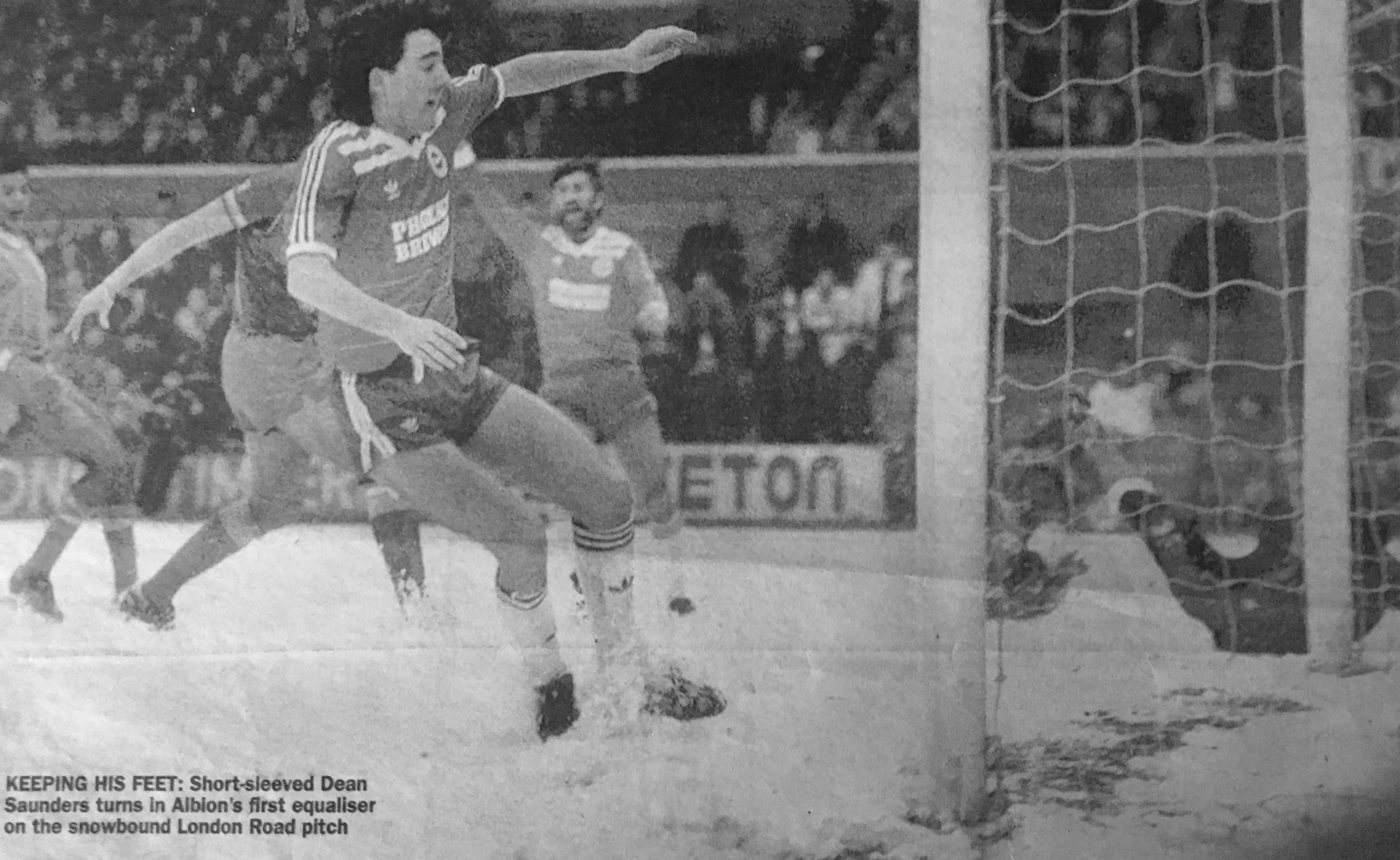
DS v PoshSaunders scored in a memorable FA Cup tie on a snow-covered pitch at Peterborough

Albion, though, could manage only a mid-table finish; Cattlin was sacked and there were rumblings of financial issues beginning to reverberate around the corridors of the Goldstone. Alan Mullery returned as manager but had limited funds to invest in the team. After his unseemly swift departure, former Worthing boss Barry Lloyd took over and fans were completely mystified as to how Lloyd could leave out Saunders in favour of Richard Tiltman, who Lloyd had plucked from local football. Since then, it has emerged that his omission was more to do with money than football ability.

An even more astonishing thing that happened to Saunders during his time with the Albion centred on a team photograph.

In the traditional pre-season team line-up, Saunders, sitting in the front row, had very evidently forgotten to wear a jockstrap under his shorts and, when the camera clicked, his manhood was captured for posterity – and a large number of female fans saw to it that sales of the photograph reached much higher levels than in other seasons. Ironically, the team’s shirt sponsor at the time was Nobo!

There was great consternation when Albion collected only £60,000 for Saunders when he was sold to Oxford, especially when his next transfer saw him move for £1million to Derby County. That deal saw the then Oxford manager Mark Lawrenson quit in protest.

At Derby, Saunders got off to a great start with 14 goals which helped County to a fourth-placed First Division finish in the 1988-89 season. He scored 24 for them in 1990-91, but the side was relegated and Saunders was quickly snapped up by Liverpool for a cool £2.9million as a strike partner for his fellow Welsh international Ian Rush. His signing by Graeme Souness was the start of a long-standing relationship as Souness also signed him for Galatasaray and Benfica and then had him as part of his management team at Blackburn Rovers and Newcastle United.

When things didn’t work out for Souness at Liverpool, Saunders was on the move again and Aston Villa splashed out what was a record fee at the time of £2.5million to take him to Villa Park.

Initially he formed a formidable strike partnership with the late Dalian Atkinson, and then paired up with Dwight Yorke. Saunders’ brace in the 1994 League Cup final helped beat Manchester United 3-1.

Another change of manager saw Saunders move on when Brian Little succeeded Ron Atkinson and he linked up once more with Souness in Turkey, for a £2.35million fee.

After only a year, he was back in the UK with Nottingham Forest, but the season ended in relegation and Saunders’ next port of call was South Yorkshire, where he spent two years with Sheffield United and three years with Bradford City.

His 19-year playing career finally came to an end in 2001 and then worked as a coach for old boss Souness for five years.

After losing his coaching job at Newcastle, he was assistant manager of Wales under John Toshack for three years (2007-10).

He became a manager in his own right, taking the helm at Wrexham when they were in the Conference. He stepped up to league management with Doncaster Rovers in 2011 but they lost their Championship status and in January 2013 he took over as manager of Wolverhampton Wanderers, only to see them drop out of the same tier after a last game heavy defeat to Brighton at the Amex, which also led to his departure.

Saunders was to pop up in Sussex again, though, when he took temporary charge of League One Crawley Town, from December 2014 through to the end of the season.

Next stop was Chesterfield but once again his tenure was shortlived as he was relieved of his duties after only five months in the hot seat.

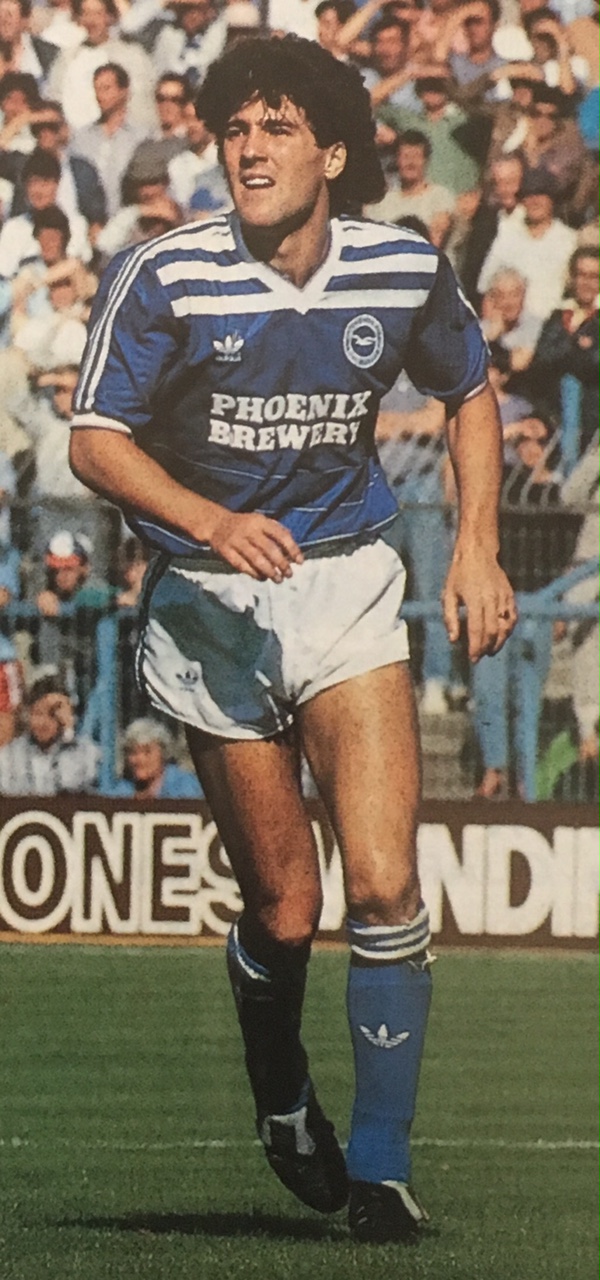
  • Pictures of Dean Saunders in action from the 1985-86 season matchday programme.

Tidy full back Stewart Henderson polished Saints diamonds

1 SH monoALBION’S right back when I first started watching them in the late 1960s was someone who would go on to make much more of a mark as a coach.
Gareth Bale, Theo Walcott and Adam Lallana were among the players developed by Stewart Henderson. Wayne Bridge and Chris Baird, too.

That was all to come for Stewart when I first saw him wearing the number 2 shirt in Freddie Goodwin’s Division 3 side.

hendo biog

Henderson, who shares the same June birthday as me, albeit he was born 11 years earlier, was only 5’6″ tall but he had noticeably muscular thighs. Hailing from Bridge of Allan in Scotland, his stature didn’t stop him earning Scottish schoolboy international honours and he was on the winning side in three matches.

The Scots beat Northern Ireland 5-1 at Windsor Park, Belfast – when future Albion teammate John Napier was playing for the home side – Wales at Ninian Park, Cardiff, and England at Ibrox Park where a 30,000 crowd watched.

That recognition followed his success playing for his school team, St Modans High School in Stirling, and Stirlingshire Schoolboys. It eventually took him to England at the age of 17 in 1964 to join Chelsea.

Tommy Docherty was their manager at that time and he obviously wasn’t convinced Henderson was good enough for the First Division, so he dropped down to the Third with Brighton where, for a couple of seasons, he had the unenviable task of trying to oust captain and Northern Irish international Jimmy Magill from the right back slot.


Stew Hendo blue

He made his debut on 3 May 1966 away to Exeter a month before his 19th birthday and didn’t make his home debut until 1 October that year, stepping up when Magill was injured and helping Albion to a 5-2 win over Peterborough.

It wasn’t until March 1968, though, that he eventually cemented his place in the side. But when he did, he became a near-permanent fixture for the next four years. He only scored once in 199 appearances, that coming in a 6-0 drubbing of Oldham Athletic on 24 August 1968.

Stew Hendo PoYIn the 1969-70 campaign, he missed only one game and the supporters chose him as player of the season. He played 36 league games in Pat Saward’s first season in charge and in the 1971-72 promotion campaign was a regular in the line-up right through until the famous televised Aston Villa home game in March 1972 when Saward made two shock changes and left out both Henderson and captain John Napier for the top of the table clash.

It was the beginning of the end for Henderson and he cuts a rather-forlorn looking figure in a picture of the newly-promoted team captured in the Goldstone dressing room after gaining the necessary point against Rochdale, standing fully-clothed alongside his team mates in their kit, taking a sip of champagne.

Saward made him available for transfer at the end of the season and although he stayed with the club, he played only two more league games, and a league cup game, in the following season before being transferred to Reading in June 1973.

Henderson had chalked up 198 league games and 14 cup games during his time with Brighton but the move to Berkshire was by no means a petering out of his career.

I am grateful to the website of the Reading FC Former Players Association (readingformerplayers.co.uk) to discover how, although manager Charlie Hurley signed Stewart initially as a full-back, in 1975 he pushed him into a midfield role with immediate success: Stewart scored twice in the first 17 minutes at Bradford City.

He went on to be an influential member of Reading’s 1976 Fourth Division promotion winning side. In May 1977, he was made club coach and worked closely with manager Maurice Evans helping the club win the 1978/79 Fourth Division Championship.

Amazingly Stewart was recalled to the playing squad at the beginning of the 1979/80 season, at the age of 32, and continued playing intermittently until May 1983 when he played the last of his 186 games for the Royals and became Reading’s first Centre of Excellence director.

Coaching became his new direction and he was at manager Ian Branfoot’s side when Reading beat Luton at Wembley to win the Simod Cup in 1988 (a game incidentally in which former Albion winger Neil Smillie was one of the goalscorers for the Royals and Steve Foster and Danny Wilson were playing for Luton).

Henderson left Elm Park in 1989 to take up the role of youth development officer at Southampton, where his work began helping to produce some of the finest footballing talent in the country.

He was to spend over 20 years at Southampton in various roles working with the youth and academy teams, the reserve side and even had a short spell as first team manager.

It’s worth quoting an article from the Mirror in October 2012, when Matt Law reckoned Southampton owed a £55million debt of gratitude to Malcolm Elias, Steve Wigley, Huw Jennings and Stewart ­Henderson who spotted and coached the incredible Southampton Fame Academy, which through transfer fees effectively saved the club from extinction.

Gareth Bale, Theo Walcott, Alex Oxlade-Chamberlain, Wayne Bridge, Kenwyne Jones, Adam Lallana, James ­Ward-Prowse and Luke Shaw were all named as coming under the influence of the quartet who, after being released by Southampton moved on together to Fulham.

Henderson was a guest at an Albion raceday in 2006 and met up with former teammate Ian Goodwin

Clough chose Billy McEwan to add steel to Albion’s midfield

McEwan H and SBILLY McEWAN was part of a £15,000 double signing made by Brian Clough in his brief reign as manager of the Albion in the 1973-74 season.
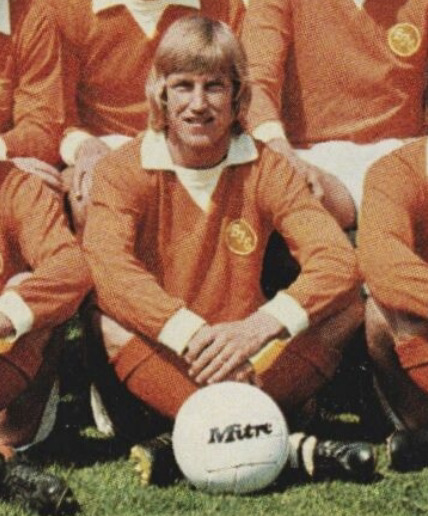
Together with gritty defender Paul Fuschillo, McEwan arrived on the south coast from Blackpool in February 1974.

Born in Cleland, a village near Motherwell and Wishaw in Lanarkshire, on 20 June 1951, McEwan had begun his career at Pumpherston Juniors in his home country and played 60 times for Hibernian (see Shoot! picture below) before moving to Blackpool to join his younger brother Stan. But he only managed four games for the Tangerines before Clough came calling.Foot ret + McEwan

McEwan hibAlbion were flirting dangerously close to the relegation places as Clough struggled to find the right formula with players nowhere near the quality he had been used to working with at Derby.
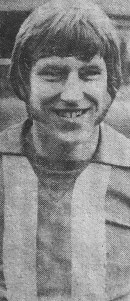
McEwan recalled in his programme notes when managing Sheffield United against Albion in 1986: “Brian Clough bought me because he said he wanted some Scottish steel in the side.”

He featured in only 27 games for the Albion, getting on the scoresheet on three occasions, all at the Goldstone, but he was also made captain as Clough chopped and changed the line-up.

In the way players were traded like horses in those days, just nine months after his arrival he was moved on to Chesterfield (together with Ronnie Welch) in exchange for the right back Ken Tiler. Tiler himself would subsequently leave Albion for a £15,000 fee in 1979 – to join Rotherham.

From Chesterfield, a £15,000 fee took McEwan to Mansfield Town in January 1977, and he helped them to win the Division Three title that season.

Next up was Peterborough United, where one of his teammates for half a season was Lammie Robertson (pictured together below) before he moved to Rotherham for £30,000 in July 1979. A serious spinal injury forced him to miss the whole of the 1980-81 season but he finishing his playing career having scored 10 goals in 95 games for the Millers between 1979 and 1983.

rob billyHe moved onto the coaching staff at Millmoor and subsequently managed the side between 1988 and 1991. In his first season in charge (1988-89) he guided them to the old 4th division championship with a side featuring Tony Grealish in midfield.
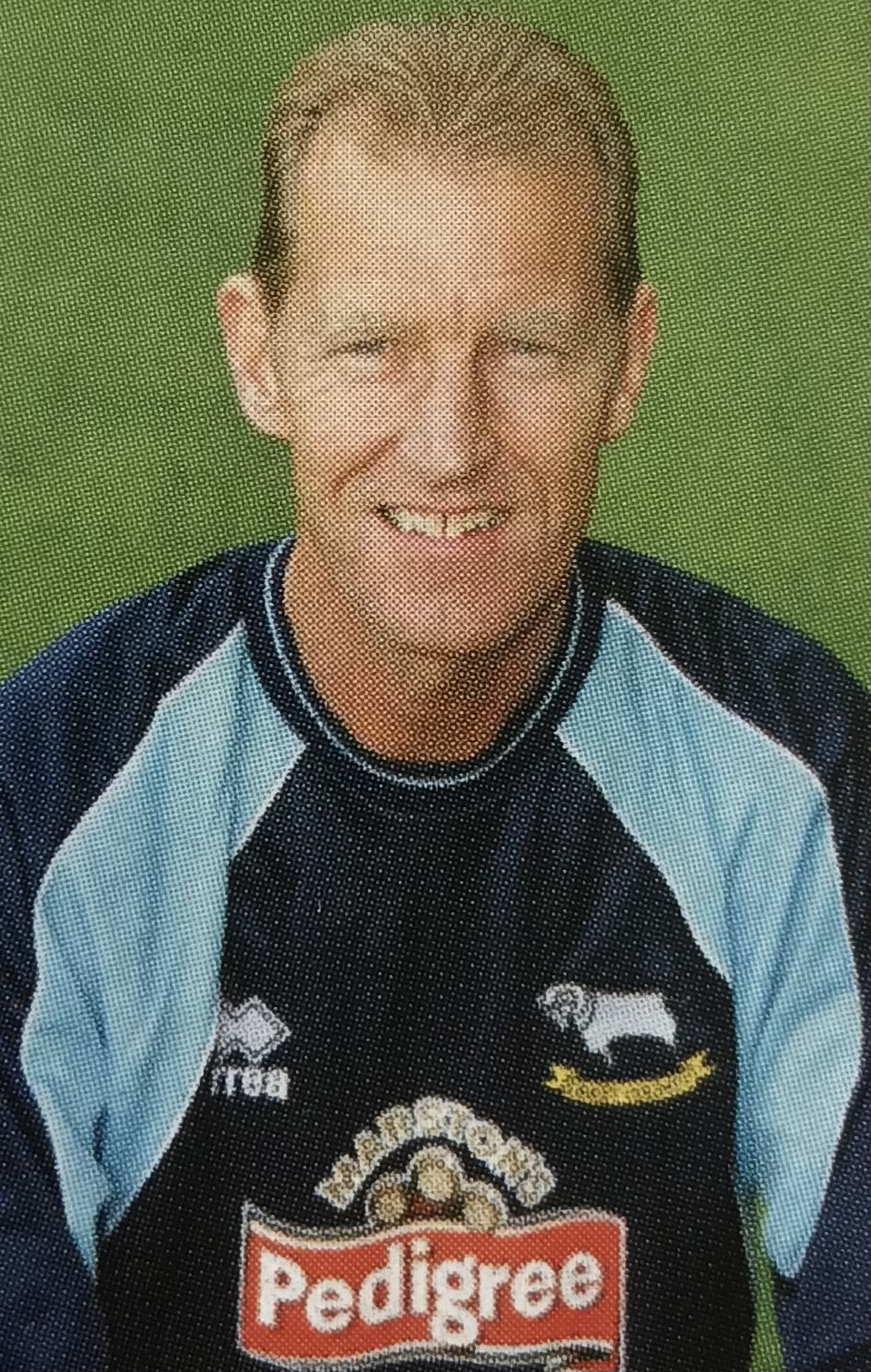
In fact the 141 games they played under his stewardship proved to be his longest managerial reign, and McEwan was well known in football circles in Yorkshire and the East Midlands.

Remarkably he was a coach at Derby County under five different managers. Inevitably he was caretaker manager there too – on two separate occasions, seven years apart.bill derby

The first was on the final day of the 1994-95 season for an away game at Watford, following Roy McFarland’s departure the previous weekend.  He also had a spell in charge in the 2001- 02 Premier League season, for a home game against Ipswich Town and a trip to Charlton Athletic, after Colin Todd’s departure and before John Gregory was appointed.

“Derby are a great club, playing in a  great stadium with a wonderful fan base,” McEwan told Stuart Clarkson of themillers.co.uk. “Since John Gregory arrived I have been promoted to assist him in rebuilding and guiding the team back to the Premier League. Football is my life and I still appreciate getting paid for doing something that I love.”

His most successful time as a manager (in terms of wins ratio) was in charge of Conference side York City but his last league spell as a boss, with Mansfield Town in 2008, was somewhat ignominious and lasted only five months.

In March 2010, McEwan was appointed technical director of the Antigua and Barbuda Football Association and he was later manager of Antigua Barracuda FC, a position he held until March 2011.

It was reported McEwan was diagnosed with Parkinson’s disease in 2014 and he died aged 70 on 17 February 2022.

Seagulls.co.uk revealed in April 2015 that Albion ‘keeper David Stockdale began his career under McEwan at York – only to be released!

It didn’t damage his career though and Stockdale later had eight games on loan to the Millers from parent club Fulham.

• Pictures from my scrapbook, Albion matchday programmes and online sources.

100 goals in Scotland and England for Neil Martin

2 MartinSCOTTISH international Neil Martin remains a legend at one of his homeland clubs but his brief time at Brighton was more like a bad dream after a goalscoring start.
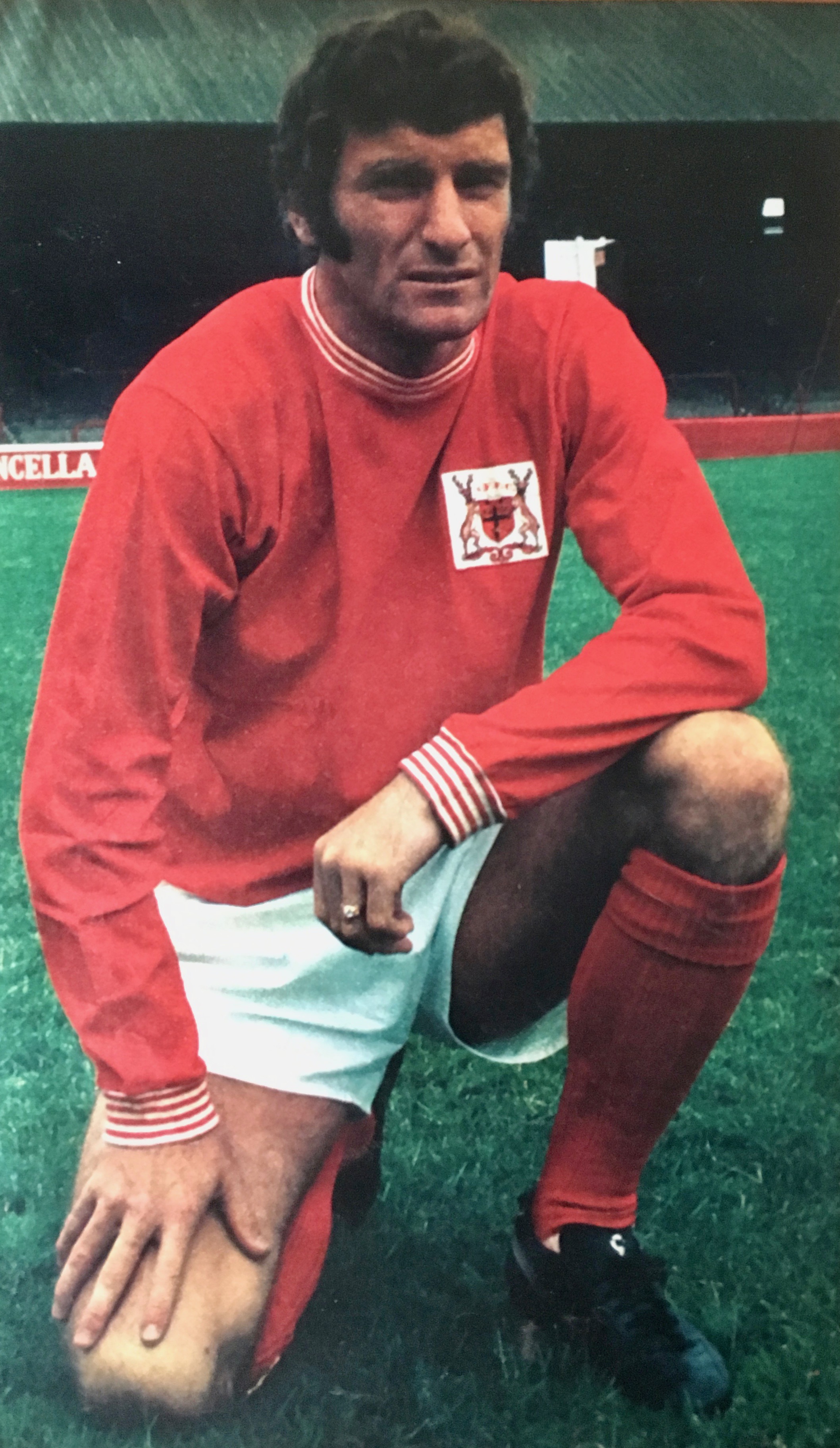
QoS Martin

The striker’s youthful picture can still be found on the legends section of Queen of the South FC’s website where it notes he was among the first players to score 100 league goals in both Scotland and England.

It was while playing for the Wearsiders that he gained three Scotland international caps, all in 1965.

IMG_5147Martin scored 28 goals in 119 games for Nottingham Forest having moved down from Scotland in the 1960s and begun his English league career with Sunderland.

Martin partnered the legendary Denis Law up front in World Cup qualifiers against Poland and Finland and his third and final cap was earned in a 1-0 win over Italy playing alongside Tottenham’s Alan Gilzean.

IMG_5146One of his most prolific spells was at Coventry City (above) where, in three years, between 1968 and 1971, he scored 40 goals in 106 appearances.

He was slightly less prolific for Forest (although he was on the scoresheet in Clough’s first game in charge) before Peter Taylor brought him to the Albion on 26 June 1975.

Four new players were presented to the assembled press that pre-season and standing alongside Martin was one Peter Ward.

Martin scored on his league debut for Brighton as Rotherham United were dispatched 3-0 but he didn’t stay in the side long because Taylor brought in loan signing Barry Butlin, also from Forest, for five games to play up front alongside Fred Binney and Gerry Fell.

Martin did get a run back in the side during the autumn, when he added to his goals tally. But Taylor obviously felt the attack needed something extra and the £30,000 arrival of Northern Ireland international Sammy Morgan from Aston Villa spelt the beginning of the end of Martin’s short spell at the club.

He scored eight league goals and one in the FA Cup in 18 starts (plus four substitute appearances) but it all ended somewhat acrimoniously.

The Argus reported on February 13 1976 that the 32-year-old former Scotland international had been transfer listed and banned from the Goldstone.

Words had evidently been exchanged after Martin had been subbed off in a reserves game and, try though he did, reporter John Vinicombe couldn’t find out exactly what had gone on.

Taylor was renowned for his tough stance with players. He suspended six players in the September that season and he had fallings out with Ian Mellor, Joe Kinnear and reserve ‘keeper Derek Forster.

Martin didn’t play for the club again, instead being moved on to Crystal Palace where he scored just the once in nine appearances.

At the end of the season, he joined what was a familiar exodus for ageing English league players at the time and played alongside England’s World Cup winning captain Bobby Moore, and ex-Arsenal full back Bob McNab, for San Antonio Thunder in America.

It wasn’t unfamiliar territory for Martin because, in the summer of 1967, he was part of the Sunderland contingent who played in the NASL as Vancouver Royal Canadians. The 16-man squad also included the above-mentioned Forster.

After Martin’s 1976 stint at San Antonio, he didn’t play in England again. His final playing days were in the Republic of Ireland, interestingly being given a lifeline by another former international striker who’d played for Brighton – Barry Bridges.

The former Chelsea, Birmingham, QPR and Millwall striker had a couple of seasons managing Dublin side St Patrick’s Athletic, where Martin joined him.

The Scot had a brief managerial foray with Walsall, mainly in tandem with Alan Buckley, but it didn’t end well and he left the club in 1982.

Born in Tranent, just east of Edinburgh, on 20 October 1940, Martin’s break into the professional game came at Alloa Athletic. His 25 league and cup goals in the 1960-61 season brought about a move to Queen of the South where he continued to score plenty of goals – 33 in 61 appearances.

A £7,500 transfer fee took him to Hibernian in 1963. He’d supported them as a boy and after Jock Stein took over as manager in 1964, Martin netted 29 league and cup goals in the 1964-65 season. He said later that Stein was the biggest influence on his career.

It was top-tier Sunderland who paid £45,000 to take Martin south of the border. His goalscoring in his first taste of English football wasn’t quite as prolific as it had been in Scotland, mainly due to the Wearsiders not being able to decide on the best strike partner for the Scot.

Eventually, in 1968, he moved on to Coventry City, newly-promoted to the old First Division. He spent three years at Highfield Road, developing good partnerships with Ernie Hunt and John O’Rourke, with the emerging talents of Willie Carr and Dennis Mortimer providing good service from midfield.

His switch to Nottingham Forest towards the end of the 1970-71 season helped them survive the drop, but they went down the following season and that was the last Martin saw of top-flight football.

1 Martin
3 Martin

Reflections, speculation and next season

Still hurting from the injustice of the narrowest of margins preventing Brighton from gaining automatic promotion, I have nonetheless decided to put a very practical head on.

There were so many ‘what ifs’ to look back on over the season and while tempting to dwell on the final agonising three games (Boro away and the Wednesday play off games), there can be little doubt that Brighton could – and should – have been in an unassailable lead at the top of the division before it came to all of that.

For sure there were some narrow scrapes when Brighton managed to salvage draws when defeat seemed inevitable (home to Derby especially springs to mind) but the reality is that over the course of the season there were too many draws.

And, as we now know, if just one of those draws had been converted into a win, we would be looking forward to competing amongst the elite.

Go back as far as the end of September and hapless Bolton forced an equaliser in the fourth minute of added on time at the end of the game at the Macron Stadium.

Charlie Austin for QPR and Chris Martin for Derby both scored 88th minute equalisers to deny Albion all three points in those away games.

Six points snatched from the jaws of victory – what a different ending there could have been to the season.

Of course either one of the five defeats, especially the unjust home slip-ups to Ipswich and Wolves, would have made a palpable difference too. But it’s almost unheard of to be invincible through 46 games so there’s no point dwelling on those.

My fervent hope now is that the hurt of coming so agonisingly close and yet missing out will give Albion the steely edge to make absolutely certain next season.

It has already been said that it’s not going to be easy, with Newcastle, Villa and Norwich having plump coffers to reward good players. Brighton must defy the odds once again through shrewd dealings in the transfer market.

Chris Hughton has declared there won’t be as large a turnaround in playing personnel as in the summer of 2015, but it looks to me like at least 12 players could be on their way.

The release of Greer, Calderon, Zamora, Crofts and Chicksen has already been announced, together with Wilson and Sidwell returning to their parent clubs. Ince, Forster-Caskey, Holla, Manu and O’Grady would appear to be surplus to requirements so season-long loans away from the club for them would create more space for better replacements.

Even if they aren’t all replaced, or moves don’t happen, there is going to be a significant freeing up of funds that presumably will be reinvested in the squad.

While Sidwell in for Crofts looks a distinct possibility, it has to be hoped that two of those departing strikers will be replaced with better and more reliable options.

The surprise last summer was that it took so long to get Zamora’s signature on the dotted line: wouldn’t it be great this time round if we could land a similar marquee signing earlier to give a proper signal of intent?

I make no apologies for advocating the return of Glenn Murray. I am convinced Brighton would already be looking forward to the Premiership if his services had been secured earlier this year. However, if it is not to be, how about Rickie Lambert or Peter Crouch?

The Zamora gamble in 2015-16 was well worth taking and it came off to a degree with some important contributions. The shame was that injury deprived us of that missing spark of genius at a time we needed it most.

I truly hope James Wilson goes on to do great things, be it for Man Utd or someone else, just like Jesse Lingard did in netting a Cup Final winner, but I would rather Brighton brought through one of their own talented youngsters than nurtured the fledging skills of another club’s prospects.

Maybe the time is right for one or two of our under 21 players to make that big step up and seize the opportunity. Will we hear more of Vahid Hambo, Jack Harper, Jonah Ayunga, James Tilley, Jordan Maguire-Drew, Henrik Bjordal or Jason Molumby in 2016-17?

The final Championship table has shown exactly how good the Albion squad has been in the 2015-16 season so, although there is no need for wholesale changes to the core team – other than up front – the departures mentioned above would indicate the squad can be bolstered significantly.

The hope, of course, is that the club can resist any predators who may come calling for some of the stand-out players. Keeping Stephens and Kayal together as the heartbeat of the side could be the toughest task.

However, if that can be done and quality additions are made to the strikeforce, I see no reason why Brighton can’t go one step better next season. Bring it on!


Well-travelled Wilson’s highs and lows as player and manager

IMG_5140DANNY WILSON, a Brian Clough signing for Nottingham Forest who struggled for games at the City Ground, hit the ground running when he joined the Albion, initially on loan, in November 1983.

He scored twice on his debut – one a cheeky back-heel (below) – when Cardiff City were beaten 3-1 at the Goldstone, and manager Chris Cattlin was swift to praise the newcomer, writing in his matchday programme notes: “I think that this lad, in the right setting, will be a great asset to this club.” Prophetic words. By the end of the season, he’d scored 10 times, four of them penalties, in 26 appearances.

backheel“It was a fantastic move for me,” Wilson said in a retrospective matchday programme article. “I’d gone from being a regular at Chesterfield to being a bit part at the City Ground, surrounded by all these players who had won European Cups, people like Garry Birtles and Viv Anderson. But with the likes of Ian Bowyer ahead of me, I was never going to get first team football.

“That all changed at Brighton. There was a great feeling about the place, and with players like Jimmy Case and Joe Corrigan, no shortage of talent. Fortunately, I got off to a good start, and things went from there.”

Not long after Wilson made the temporary move permanent, in exchange for a fee of £45,000, he played in a memorable 2-0 FA Cup fourth round victory over Joe Fagan’s Liverpool at the Goldstone.

Liverpool went on to win the league, the League Cup and the European Cup that season but goals from Gerry Ryan and Terry Connor denied the Reds achieving the quadruple.

“That has to be my favourite memory from all my time at the Goldstone,” he said. “Back then, Liverpool were just awesome, and to beat them like we did was virtually unheard of. It was the first-ever FA Cup tie to be screened live on television which made it even more special.”

Born in Wigan on New Year’s Day 1960, Wilson hoped to begin his career with Sunderland, but he was released as a boy and instead started out with his hometown club, who were then non-league. He stepped into league football with Bury before moving on to Chesterfield (right).Wils -Chest

His performances for the Spireites earned him a step up to Brian Clough’s Nottingham Forest but he struggled to make it as a regular.

It was after a brief spell on loan to Scunthorpe that he joined the Albion.

Towards the end of his spell with Brighton, Wilson earned his first cap for Northern Ireland (courtesy of his mother having been born in Londonderry) and over the next five years he collected 24 caps for them .

Wilson scored 39 times in 155 games for the Albion before the cash-strapped Seagulls, relegated to Division Three in 1987, cashed in on someone who had become a valuable asset and captain of the side.


The midfielder was sold to Luton Town for £150,000 where, alongside former Albion teammate Steve Foster in 1988, he won the League Cup, scoring a late equaliser (below left) as the Hatters beat Arsenal 3-2 at Wembley.

It was from Luton that he moved on to then recently-relegated Sheffield Wednesday – a £200,000 signing by Ron Atkinson –  in the summer of 1990. He continued to contribute his fair share of goals, netting 11 in 98 appearances for the Owls, as well as being a League Cup winner again in 1991.

Wednesday were the penultimate and eighth club of his playing career, before he embarked on what would become a multiple-club managerial career of varying success. Over the course of 25 years, Wilson’s teams won trophies, promotions, and narrowly escaped relegation, and he managed more than a thousand games.

His first post in the hotseat was as a player-manager at Barnsley, who he steered into the Premiership and earned the Managers’ Manager of the Year award. Unfortunately he could not deliver the same degree of success when he returned to Oakwell between 2013 and 2015, although that spell did mark his 1,000th game as a manager.

His second managerial job had also involved a return to scenes of past glory when he returned to Hillsborough in the top tier between 1998 and 2000. The spell ended ignominiously in the sack, though, after pressure was applied by local MPs for his removal, shortly before Wednesday’s relegation from the Premier League.

After what he felt was an unjust sacking by Wednesday, he was given a four-year contract to take charge of Bristol City. That spell came to an end after Mark McGhee’s Brighton beat the Robins to win the Third Division play-off final in Cardiff.

Six months later, he was back in the game for MK Dons’ inaugural campaign in League One, but he couldn’t save them from relegation to League Two at the end of the 2005-06 season and was once again looking for a new employer.

Within a month, he took over the reins of Hartlepool United, who’d been relegated with MK Dons, and in 2007 led them to promotion back to League One.

After leaving Hartlepool in December 2008, he began a three-year spell as manager of Swindon Town. Amongst his many signings were Gordon Greer, who went on to become Albion captain, and prolific striker Charlie Austin, who had a knack of scoring for Southampton against Brighton.

In May 2011, Wilson controversially crossed the great Sheffield city divide to take charge of United – which didn’t go down too well with Blades followers. During his reign, he helped to turn a young Harry Maguire from a midfielder into a defender. Wilson led United to the League One play-off final in 2012 where they agonisingly lost on penalties to Huddersfield Town.

His era at Bramall Lane came to an end in April 2013 after a string of poor results but by the end of that year he was back in the game for that second spell at Barnsley.

When Wilson left Oakwell in February 2015, he was out of work for 10 months but had an early Christmas present that year, once again returning to one of his old clubs in a managerial capacity. It was on Christmas Eve that he was appointed manager of Chesterfield, then in League One, where he took over from his old Brighton teammate Dean Saunders.

He managed to keep the Spireites in the division but a final parting of the ways came in January 2017, and that was his last managerial post.

Wilson tells his footballing life story in I Get Knocked Down (Morgan Lawrence Publishing Services, 2022).

IMG_6054

Wilson close

IMG_6052

Wilson cover

Wilson prowled many a touchline as a manager

Pictures from Albion matchday programmes.

Ian Mellor – the postman who delivered for Peter Ward

Mellor BHATHE SONGS still sung today that immortalise Peter Ward sadly fail to recognise the man who laid on so many of the nimble striker’s goals.

But fans of a certain vintage will never forget the contribution of former postman Ian ‘Spider’ Mellor.

Nicknamed because of his long-legged build, the beanpole midfielder-turned-striker, scored 31 goals in 122 appearances for Albion between 1974 and 1978.

Born in Wythenshawe on 19 February 1950, Mellor grew up supporting Manchester City and dreamt of playing for them. He went to Sale Moor Secondary School in the city and, aged 15, he was offered a trial at Maine Road but he didn’t get taken on. Undeterred, two years later he got a second chance after bombarding the club with cuttings of his exploits playing Sunday league football in the area.

He lapped up the experience of being coached by Malcolm Allison. It was towards the end of the Bell, Summerbee, Lee era and Mellor managed 40 appearances for City. In March 1973, however, while Allison was ill, chairman Peter Swales sold him to Norwich City for £60,000.

“Malcolm said he left Maine Road because I’d been sold without his permission when he was ill in hospital,” Mellor told the Manchester Evening News.

“I didn’t really stop to think what I was letting myself in for,” he said. “I should have stayed at City and then, to make it even worse, soon after I’d left, Denis Law rejoined the club. I could have been playing in the same team as my idol.”

After Mellor scored the only goal of the game in Albion’s 1-0 win over Allison’s Crystal Palace at the start of the 1974-75 season, Allison said: “I remember Spider when I was at Manchester City.

“I didn’t want to see him leave for Norwich. Directors force you to do that sort of thing, then they sack you. Spider was a late developer, but his timing is so good now.”

Norwich were struggling at the wrong end of the old First Division when Mellor moved to Norfolk and although he agreed to the deal, he reflected years later that he regretted it.

Perhaps, therefore, it was no surprise when Brian Clough arrived at Carrow Road in the spring of 1974 with the promise of making him Brighton’s record signing for a fee of £40,000, he jumped at the chance to play for the league title-winning manager.

Mellor was part of a triple signing from Norwich as Clough persuaded him and centre backs Andy Rollings and Steve Govier to drop down a division to play for Brighton.

Ironically, he never played competitively under Clough because of ol’ Big Ed’s move to Leeds that summer but under Peter Taylor he played mainly in a left-sided midfield role.

It was Taylor’s successor, Alan Mullery, who changed him from a wide midfield player to a centre forward, a position from which he contributed so many ‘assists’ for Ward. Those in the know certainly recognised his contribution.

In Matthew Horner’s excellent biography of Ward, He shot, he scored, Mullery is quoted as saying: “Ian Mellor had the ability: he was a big tall lad and he had super pace and a great left foot. I thought that they would form a terrific partnership.

“In my opinion, Mellor was wasted in midfield. He could hold on to the ball and he’d learnt his skills from Malcolm Allison and Joe Mercer at Manchester City, who were both great coaches. He shouldn’t really have been playing at the level we were at – he was too good – but he was and that was great for us.

“Spider would get the ball to him and Peter would go on these mazy runs and, nine times out of 10, would knock the ball into the back of the net.

“The partnership is history now but they were absolutely fantastic together.”

Former Albion colleague, now BBC pundit, Mark Lawrenson said of him: “Playing Ian Mellor alongside Ward was the masterstroke really – Mellor was an out-and-out footballer and a perfect partner for Wardy.”

Club skipper at the time, Brian Horton, added: “In the first year Ward and Spider were unbelievable. We didn’t have a big target man but the movement with those two was fantastic. They got about 50 goals between them and I chipped in with about a dozen more.”

Ironically one of the stand-out games of his Albion career, on 3rd May 1977, came against Albion’s play-off opponents, Sheffield Wednesday, in front of 30,756 fans at the Goldstone.

Argus reporter John Vinicombe named him his Albion man-of-the-match as Wednesday were beaten 3-2 to earn promotion.

Not long into the following season, Mullery splashed £238,000 on centre forward Teddy Maybank from Fulham and he went straight into the team alongside Ward, which unsurprisingly didn’t go down well with Mellor.

“I knew I was better than him, but they had to justify his price and that’s why I got dropped,” Mellor maintained in a an Albion matchday programme interview with Spencer Vignes. Mellor requested a transfer in spite of chairman Mike Bamber urging him to stay.

“In hindsight, of course, I should have stayed,” said Mellor. “I was still good enough. I was 29, with two good seasons left in me.”

Instead, in February 1978, he moved back to his native north west from Brighton to play for Chester for two years but then had three years at Sheffield Wednesday where he managed 11 goals in 70 games and, like his spell alongside Ward, provided a perfect foil for Terry Curran to bang in the goals.

He ended his career at Bradford City and later worked as a commercial executive for the PFA. He also worked for football boot supplier Puma and was a representative for football kit supplier Pelada.

Younger readers will be more familiar with the former Liverpool striker Neil Mellor, who now works in the media, who was one of Ian’s sons.

Ian Mellor died aged 74 in Cheadle on 1 May 2024 after a long battle with amyloidosis.

  • Pictures from my scrapbook and Albion matchday programmes show headlines Mellor made and the player in action.

scrapbok mellor

A little less hirsuit than in his playing days…