
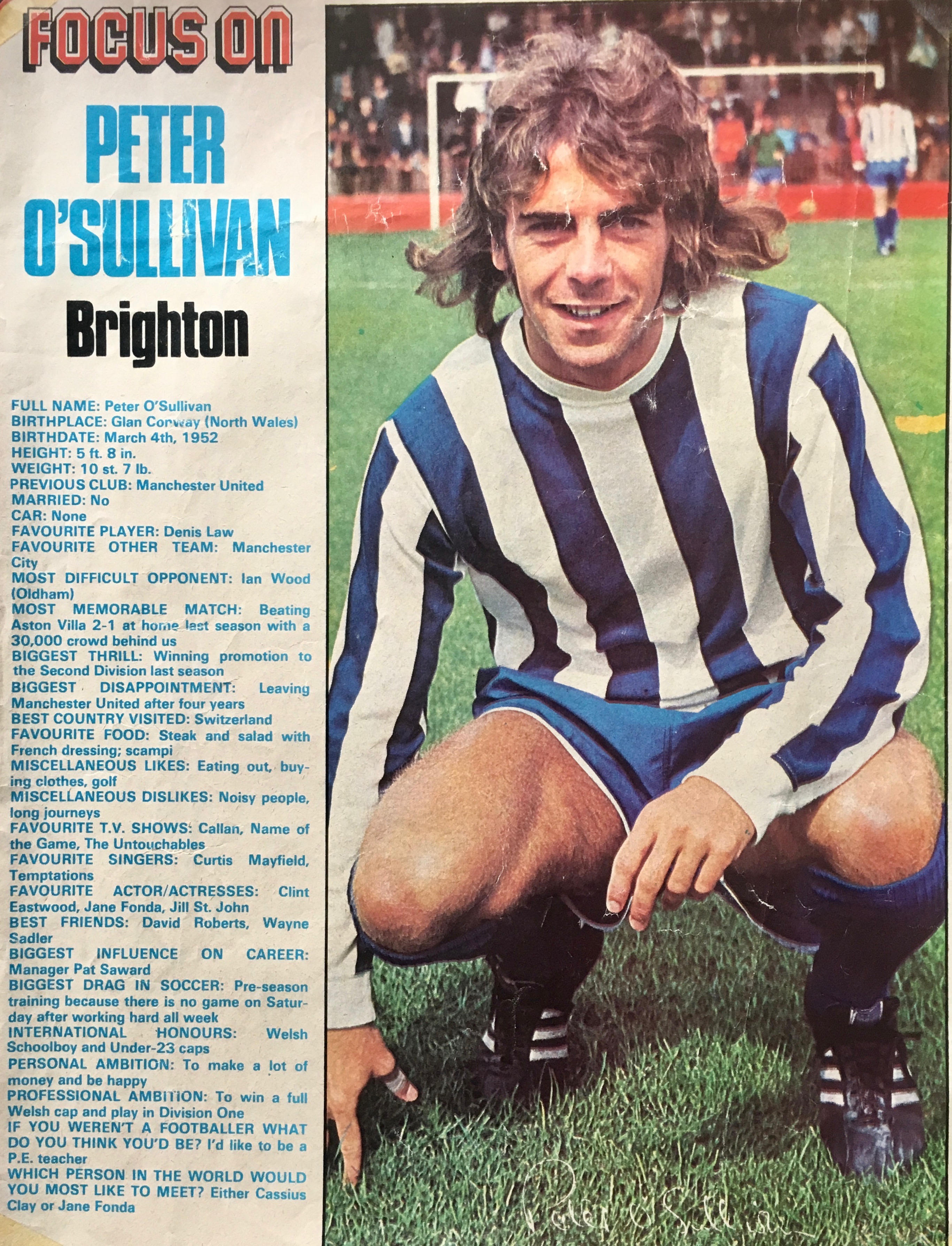


WHILE Peter Ward rightly attracted much of the attention during Albion’s rise to the top in the late ‘70s, few would deny that midfield maestro PETER O’SULLIVAN also deserves a place amongst the club’s all-time greats.
Sully had a long career with the Seagulls before a short stint with Fulham towards the end of his playing days.
The statisticians of the modern football era would have needed their calculators to record the ‘assists’ racked up by Sully, who, from the left wing or left midfield, found goalscoring teammates with unerring accuracy throughout a remarkable 11 years with the Albion.
Managers came and went, a huge swathe of teammates were discarded, but Sully stayed put, showed his worth to whoever sat in the manager’s chair, and entertained the watching faithful.
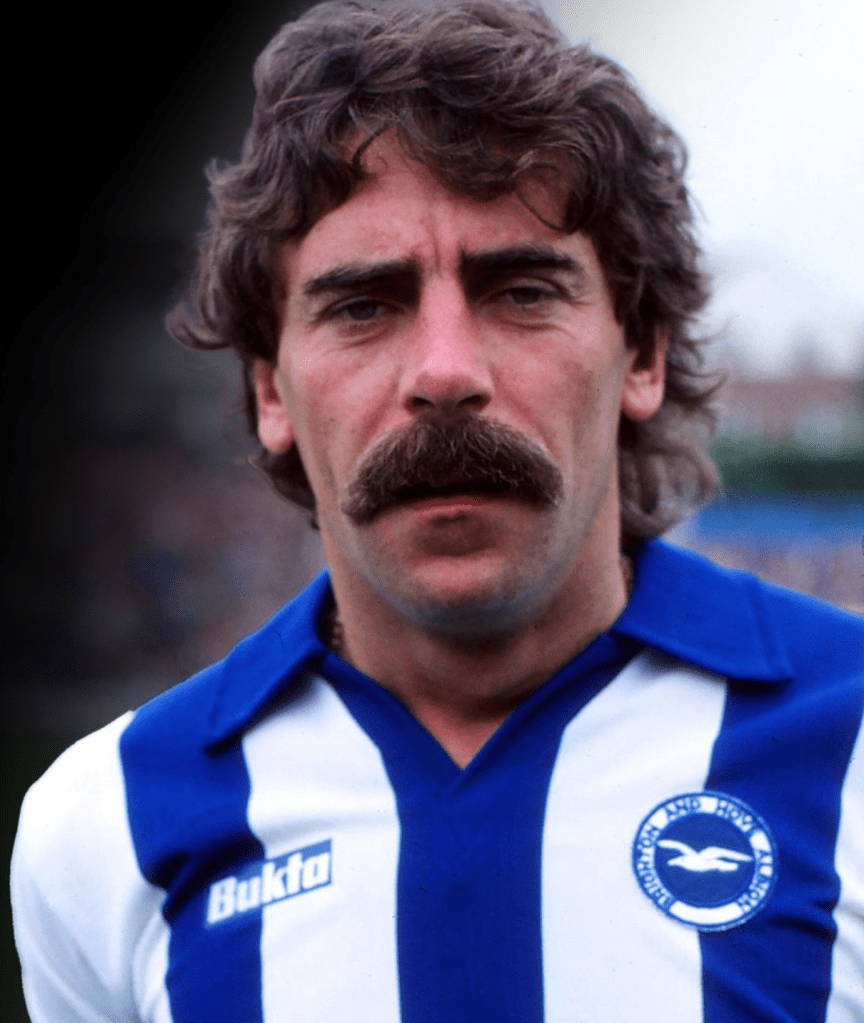
He played in the same position as the Brazilian genius Rivelino and even sported the same style of moustache in homage to him.


As Brighton rose through the footballing pyramid, Sully was a constant, displaying the talent to make an impact in the third, second and top tiers. One of his former teammates, Andy Rollings, maintained: “He should have played at the top level all the time, he was that good a player.
“He had natural ability and great fitness,” Rollings told freelance journalist Spencer Vignes. “What he did at this club was incredible, and as an individual player he was one of the best I ever played with. He’s a lovely, smashing guy.”
In the excellent Vignes’ book A Few Good Men (Breedon Books Publishing), Sully admitted there had been occasions when he couldn’t wait to get away from Brighton, and he had some serious arguments with all of the managers he played under.
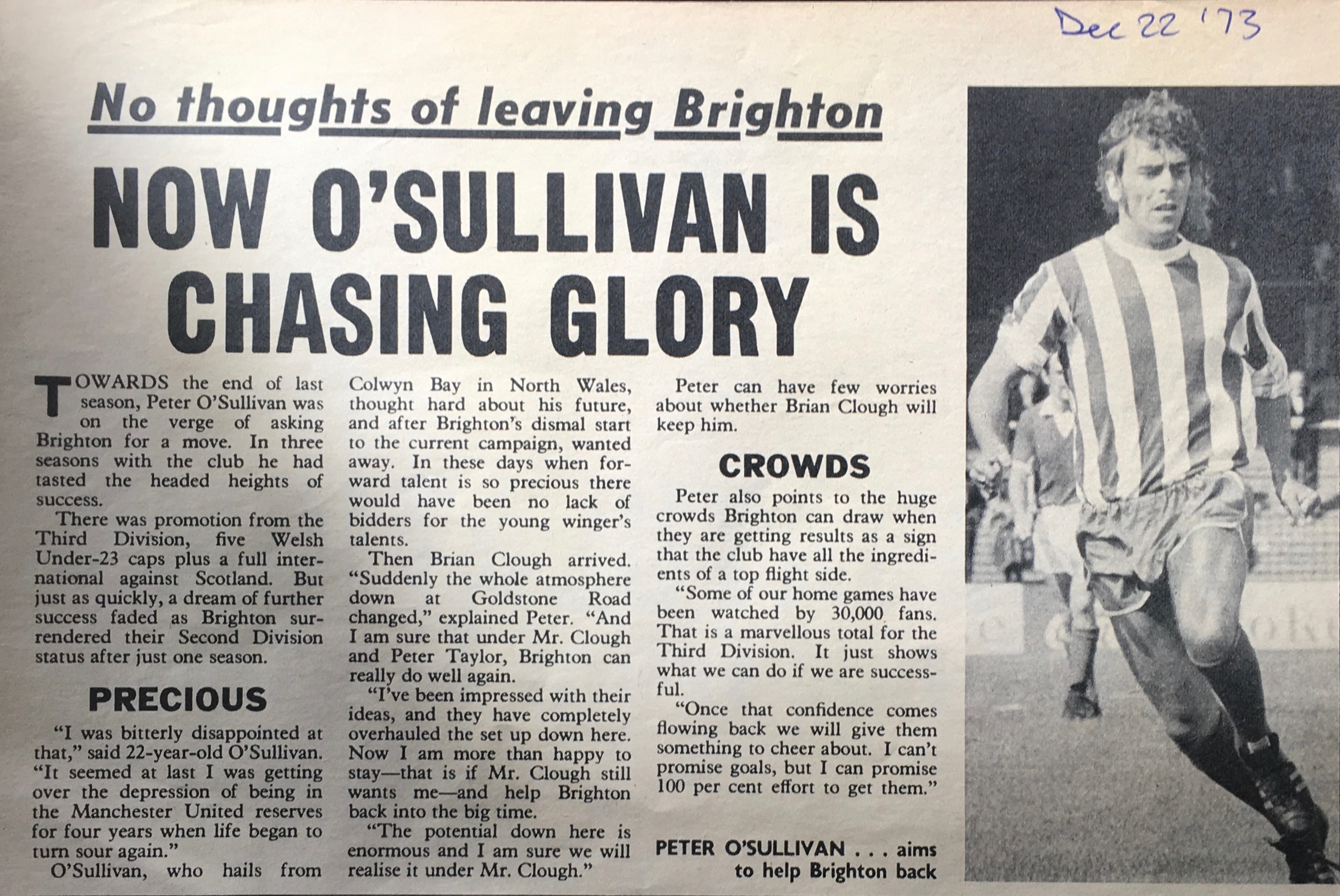
Sully shared his thoughts in a Goal magazine article of 22 December 1973, a couple of months after the arrival of Brian Clough and Peter Taylor. Having won promotion from the Third Division, won five Wales under 23 caps and made his full international debut against Scotland, he was disillusioned after relegation from Division 2.
“I was bitterly disappointed at that,” he said. “It seemed at last I was getting over the depression of being in the Manchester United reserves for four years when life began to turn sour again.”
However, with the arrival of Clough and Taylor, O’Sullivan changed his outlook and told the magazine: “I’ve been impressed with their ideas and they have completely overhauled the set up down here. Now I am more than happy to stay – that is if Mr Clough still wants me – and help Brighton back into the big time.
“The potential down here is enormous and I am sure we will realise it under Mr Clough.”
Vignes’ 2007 interview with Sully explained exactly how he ended up at Brighton having been given a free transfer from Manchester United. None other than the great Bobby Charlton was responsible.

Young Peter crouches alongside George Best in a Manchester United team photo
Born in Colwyn Bay, north Wales, on 4 March 1951, Sully had trained alongside the United legend while at Old Trafford as a youngster and, on being released on a free transfer in 1970, was considering offers from several different clubs.
He’d gone to Bristol to have a trial with Bristol City when, on a neighbouring pitch, Charlton was taking part in an England training session prior to the 1970 Mexico World Cup.
The kindly maestro exchanged the time of day with his recently departed colleague and asked which clubs were in for him. On hearing that one of them was Brighton, managed by his former Busby Babe teammate, Freddie Goodwin, Charlton advised him to link up with his old pal……and the rest, as they say, is history.
What Charlton and Sully didn’t know, however, was that no sooner had he arrived on the south coast than Goodwin was heading for the exit, en route to Birmingham City. Sully hadn’t even kicked a ball in anger for him.
“I was a little apprehensive about joining Brighton and it was unsettling when Freddie Goodwin left the club before I had even played for Albion,” he said. “I wondered what was going on and how it would affect me.
“But then Pat Saward arrived and I was overjoyed when he put me in the team. My hopes were quickly dashed again, though, when he dropped me after about six games.”
A homesick Sully struggled to settle at first but he stuck at it and went on to cement his place in the side. He ultimately featured under four different managers, Saward, Clough, Taylor and Alan Mullery.
He was part of the promotion-winning teams in 1972, 1976 and 1979, and was player of the season in 1978. He won promotion with Fulham too, going up to the old Division 2 in 1982 when the former Newcastle, Arsenal and England centre forward Malcolm MacDonald was in charge.
Sully had one amazing period with the Albion in which he made 194 consecutive appearances, an Albion record for an outfield player.
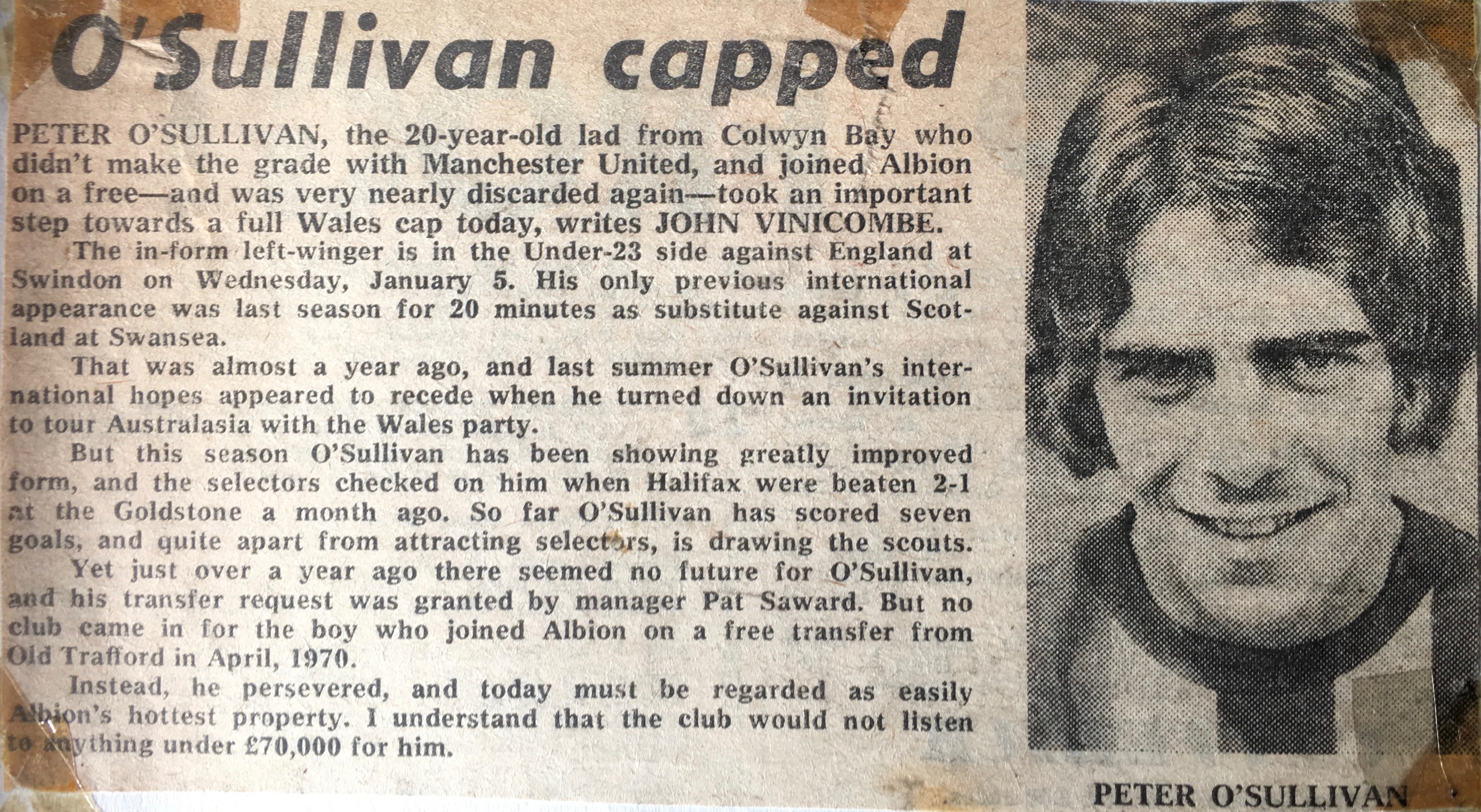 The performances of the lad from Colwyn Bay also saw him earn three international caps for Wales, two against Scotland and one in a rout against Malta when he also got on the scoresheet. Unfortunately for him, during the same period, a superb left-sided player called Leighton James was the first choice for the national side.
“When I joined Manchester United from school it was always one of my ambitions to play for Wales,” he told the Albion matchday programme. “But I thought those hopes had been dashed when Manchester United released me.”
Sully’s 491 appearances for Brighton made him the club’s longest-serving post-war player. He actually left the club in 1980 to play in America for San Diego Sockers but a £50,000 transfer fee saw him return just five months later.
Eventually Sully moved on to Fulham in 1981 and notched up 46 appearances. There were short loan spells with Reading and Charlton in 1982-83 and his Football League career came to an end when he made 14 appearances for Aldershot in the following season.
 In parallel lines