Competition for places edged out midfielder Jamie Smith

DIMINUTIVE midfielder Jamie Smith spent 11 years at Crystal Palace, going through the youth ranks before signing as a pro, but didn’t play league football until he joined Brighton.

Russell Slade took on the 19-year-old during his brief reign in charge of the Seagulls (and signed the player again when he was in charge at Orient).

Albion picked up the discarded 5’6” Smith in the summer of 2009 and he did enough as a triallist in pre-season friendlies to be awarded a contract by the Seagulls.
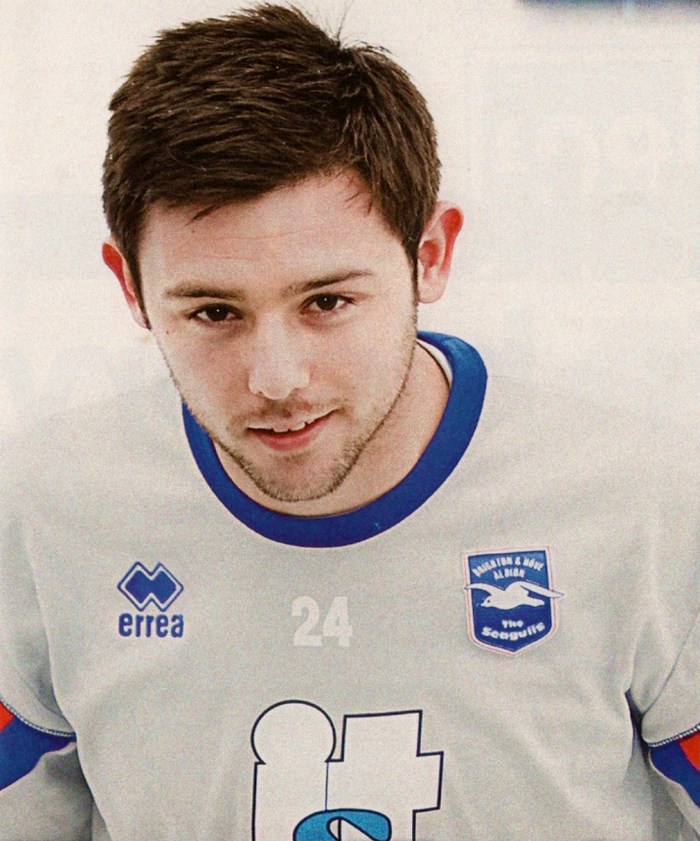
Slade said: “Jamie has done exceptionally well throughout pre-season. He’s worked hard to convince us he is worth a contract and he has the potential to be a very good player.”

His first league start was memorable for all the wrong reasons. In only the third league game of the season, he was selected in midfield away to Huddersfield Town.

But when regular no.1 ‘keeper Michel Kuipers was sent off six minutes before half time, the young midfielder was sacrificed to allow substitute goalkeeper Graeme Smith to take over between the sticks. Depleted Albion then went on to succumb to a 7-1 battering.

“I had mixed feelings really,” he told the matchday programme. “It was great to make my debut and I thought we started the game well, but the sending off changed everything and it was all downhill from then on.”

It was Smith’s only start of the whole season. He was on the subs bench on half a dozen occasions but only went on in one of them, away to Wycombe Wanderers at the end of the year.

Gus Poyet had succeeded Slade by then and with Albion coasting at 5-2 – Glenn Murray having scored four of them – Smith replaced Dean Cox in stoppage time.

During the close season, Andrew Crofts was sold to Norwich City and Cox left for Orient, but new arrivals Radostin Kishishev and Matt Sparrow provided new competition for midfield places.

But Poyet reckoned there was something about Smith and enthused about an “outstanding” performance he’d delivered in a pre-season friendly at Burgess Hill. He told the Argus: “We really like him. He could be an interesting player for the future, I’m telling you. He has got some qualities we need to use a bit better.”

After also impressing in a pre-season game against Aberdeen, Smith was in the starting line-up for the opening game of the 2010-11 season, when Albion won 2-1 at Swindon (Sparrow scored twice on his debut).

He played the following two league matches too: a 2-2 draw home to Rochdale (although Smith was sacrificed on 54 minutes after Gordon Greer was sent off for punching Anthony Elding and Adam El-Abd was sent on to play in the centre of defence).
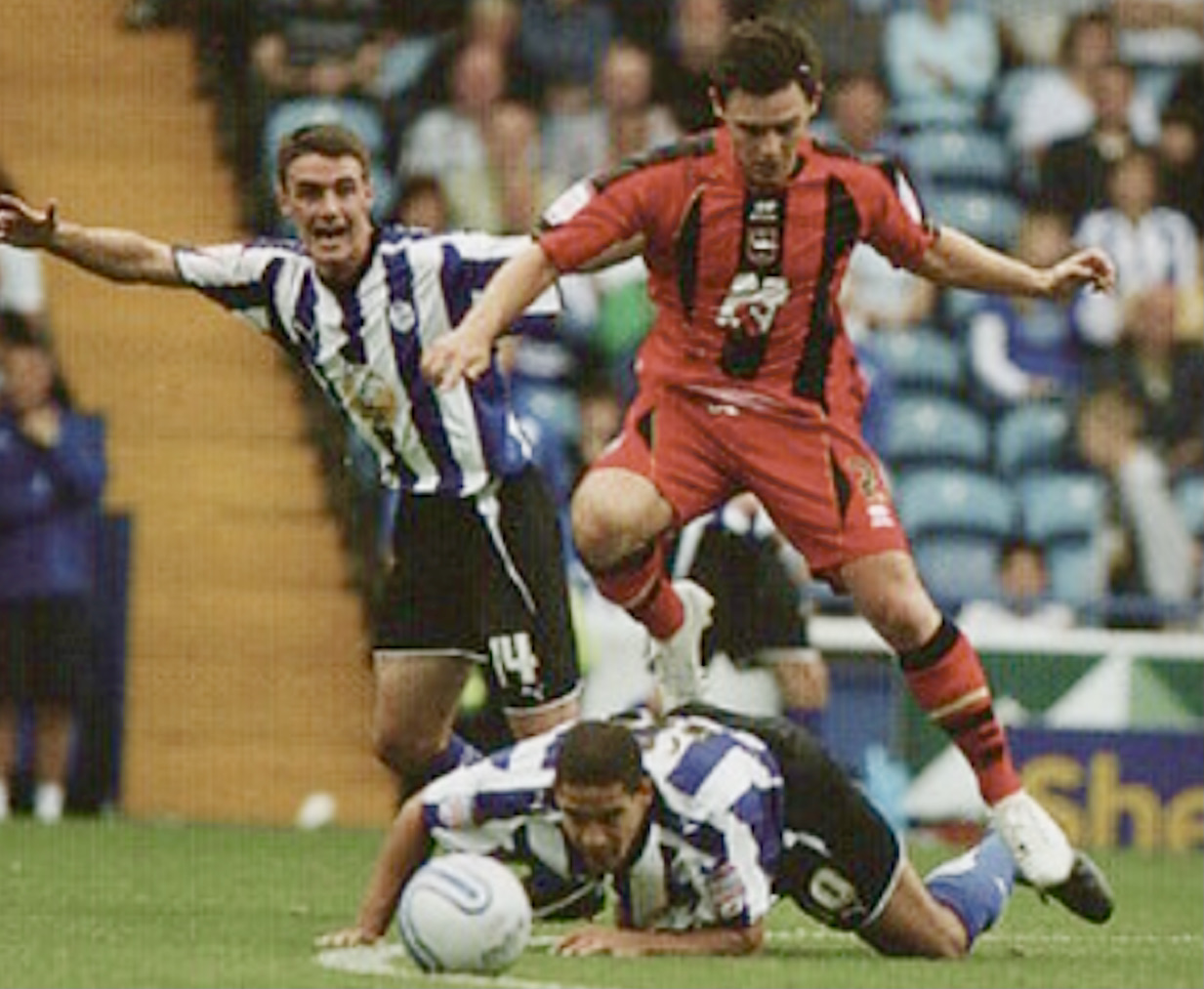
I was sat in the Leppings Lane end at Hillsborough seven days later when Smith retained his place in midfield against Sheffield Wednesday (above left).

The youngster even came closest to netting an equaliser for the Seagulls; his shot from Ashley Barnes’ cutback clipped the bar.

However, Albion then re-signed Kazenga LuaLua and Poyet reckoned Smith didn’t do enough to show he wanted it more than the explosive winger. “Because he is young, maybe he took it too nicely,” Poyet told the Argus. “I need people to react, to show me I have made a mistake or even to put me under pressure. He was just normal, not at his best to give me a headache to have to play him.”

Smith himself admitted: “When LuaLua)was playing I seemed to take it that he would be playing instead of me.

“Sometimes, when we were both on the bench, I used to think he would go on, not me, whereas I should have been doing everything I could to make sure I was involved. If I had the time again, I would have done things differently.

“I wouldn’t be one to go in and moan and stuff because there are always ups and downs in football but you can always go out every day and do your best and work hard.

“The season started really well for me, a lot better than I expected. I didn’t expect to be playing as much as I was but when that happens you just want more and I just want to be playing every week.

“Maybe when the team was doing really well, on a long unbeaten run, I was slacking off in training and things like that.”

The door opened ajar again after LuaLua suffered a broken leg and Smith impressed after going on as a 53rd-minute sub away to Southampton (below, left).

Smith told Andy Naylor: “LuaLua was class. He changed games when he came on and when he started he was really good. Hopefully I can do as well, if not better, than he was doing if I get the chance.

“We are really different players. He is really explosive with pace and loads of ability. I like trying to play clever little passes and making space for myself and my team-mates.”

One such cute pass at St Mary’s let in Glenn Murray to earn the Seagulls a penalty and the longstanding Albion reporter said: “The door is ajar for Smith again after that Southampton cameo and now he has to walk through it. His Albion future depends on it.”

Smith told the matchday programme: “I feel I’ve done well in most of the games I’ve played in and want to use the Southampton game as a platform for the rest of the season.

“The manager told me after that game that he wants me to give him performances like that all the time.”

Enjoying time in the limelight, the player explained: “I love to get the ball, drive forward and create chances.

“I am slight in size and most managers from the Championship downwards want strong, athletic midfielders but our manager wants footballers, players who get the ball down and play.

“As long as I’m on the ball and doing a job for the team, then the manager will be happy.”

Smith added: “I knew that if I didn’t progress this season there’s every chance I would be let go in the summer so I’ve been using that as an incentive.

“With the way the club has been progressing on the pitch and off it, there’s no way I want to leave. I want to stay here for years to come because I’m happy at the club.”

Unfortunately, the new year wasn’t even three weeks old when an accidental collision in training saw Smith sidelined for two months.

He sustained a fractured metatarsal after colliding with teammate Jake Forster-Caskey and, with his contract due to expire at the end of the season, the outlook was bleak.

But Poyet said: “I have already had a good chat with him. I told him not to worry and that we will look after him.

“He will be out until March but it is important he doesn’t feel under pressure to rush back because of his contract situation.

“I want him to make sure his foot is properly healed first, and then I expect we will see him back to fitness before the end of the season.”

Come the end of the season, Poyet was as good as his word and gave Smith a six-month contract to prove his worth.

But he wasn’t able to capitalise on the opportunity, Poyet saying: “Jamie was a revelation at the beginning of last season before we got Kazenga (LuaLua) back.

“Then he was injured for months and we were established at the top of the table, so he didn’t get the chance to play.

“I thought I would give him the chance to prove himself but it hasn’t really happened for him.”

Albion supporter ‘The Phantom’ on an Argus report of Smith’s imminent departure from the club wrote: “Shame it hasn’t worked out for Jamie Smith as showed at times that he had what it takes to be an influential attacking midfielder.

“Way too much competition in the squad now so best that he moves on. Surprised he has not been able to pick up a club so far.”

Eventually, former boss Slade offered him a chance at Orient, but he made just the one substitute appearance for the Os before dropping out of league football with Dover Athletic.

Born in Leytonstone, East London, on 16 September 1989, Smith was on Palace’s books from the age of eight to 19 and although he progressed through the ranks he didn’t get to make a competitive first team appearance.
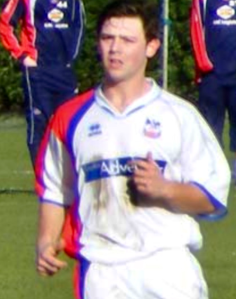
Nevertheless, Palace under 18 coach Gary Issott said: “Jamie Smith is a diminutive attacking central midfielder in the mould of Eyal Berkovic.

“He is very clever and improved after a frustrating first year. He started this season well and, up until Christmas, his form was electric.”

He was involved in pre-season friendlies ahead of the 2008-09 season and scored the winner from the penalty spot after going on as a substitute in a 4-3 win over Aldershot. (Calvin Andrew, later an Albion loanee, made his debut for Palace in the same match).

But while Smith saw several of his contemporaries make it through to competitive first team action, such an elevation remained elusive for him.

“That was disappointing but we had the likes of Nick Carle and Neil Danns in my position and it was hard to break through,” he said. 

A year below him, the likes of Victor Moses and Nathaniel Clyne did progress. Smith said: “I spoke to Neil Warnock but he said there were experienced players ahead of me and couldn’t see me breaking into the team. We agreed it would be best for me to move on.”

Smith had a spell at Doncaster Rovers but returned to Palace to keep his fitness up before joining Brighton for pre-season training, and then being taken on after a successful trial of three or four weeks.

Ups and downs of medal-laden Mark McGhee’s career

MARK McGHEE saw highs and lows as Brighton & Hove Albion manager after a medal-laden playing career that took him from his native Scotland to England and also to Germany.

McGhee was in charge when the Seagulls memorably won the 2004 play-off final to gain promotion from the third tier, beating Bristol City at the Millennium Stadium, Cardiff.

Play off final boss

Keeping the Seagulls up the following season was arguably an even greater achievement considering at the time playing home games at the crowd-restricted Withdean Stadium meant the club was at a huge disadvantage compared to most clubs in the division.

With the Amex still a distant dream, relegation came at the end of the 2005-06 season, and it wasn’t long into the following season that Dick Knight wielded the axe on the Glaswegian’s time in charge.

“It was hard to sack Mark, but we had to have a change,” Knight wrote in his autobiography, Mad Man: From the Gutter to the Stars. “Everyone recognised what he had done in taking up and keeping up a team that was not that great, to be honest. Hats off to him, he had done a terrific job. And he is a very intelligent, personable guy.”

Knight took decisive action when part of the crowd became vociferous in wanting McGhee out, and the chairman also felt some of the young players drafted into the team weren’t responding to him.

He was finally toppled over lunch at Topolino’s, and Knight admitted: “It was a difficult decision. There was strong vocal opposition to McGhee, but also a large, less noisy element who were behind him.”

McGhee liked Brighton so much he made it his home despite subsequently taking on a series of other roles the length and breadth of the country.

It’s probably fair to say the Scot has never been afraid to speak his mind, which his former Newcastle boss Bill McGarry mentioned to him. McGhee recounted in an interview with theleaguepaper.com: “I was managing Wolves at the time. He said ‘Mark, you talk too much. Tone it down a bit’. I tried to take his advice, give nothing away in media briefings. Then, somebody would say something interesting and I wasn’t able to stop myself.”

It’s probably what helped him gain a place on the Sky Sports Soccer Saturday panel when he was in between management jobs.

McGhee would most likely look back on some jobs he’d perhaps have been wiser to stay away from, for example taking temporary charge of Eastbourne Borough in 2018, although his enthusiasm was undimmed as he revealed in an interview with thenonleaguefootballpaper.com.

Born in Glasgow on 20 May 1957, his father was an electrical engineer and his mother a fertility consultant at Glasgow Royal Infirmary. McGhee was on the books of Bristol City at the start of his long career but he returned to Scotland and became a part-timer with Greenock Morton while also training to be an architect.

Aforementioned manager McGarry signed him for Newcastle for a £150,000 fee on 30 December 1977 and he made his debut on 2 January 1978.

His face didn’t fit after Arthur Cox took over as boss, but Alex Ferguson took a punt on him in March 1979 and signed him for Aberdeen, and it proved to be one of many shrewd decisions the esteemed Scot would make in his career.

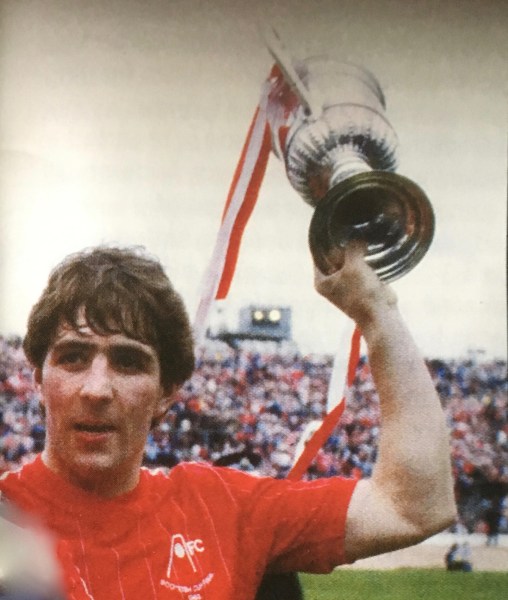
McGhee was named Scottish PFA Players’ Player of the Year in 1982, and the following year was part of the Aberdeen side who beat Real Madrid 2–1 to lift the 1983 European Cup Winners’ Cup in Gothenburg.

mcg cup

He also scored the second goal as Aberdeen defeated Hamburg 2-0 to win the UEFA Super Cup in the same year.

Asked about the best goal he scored, he said: “Probably the winning goal in my last game for Aberdeen.”

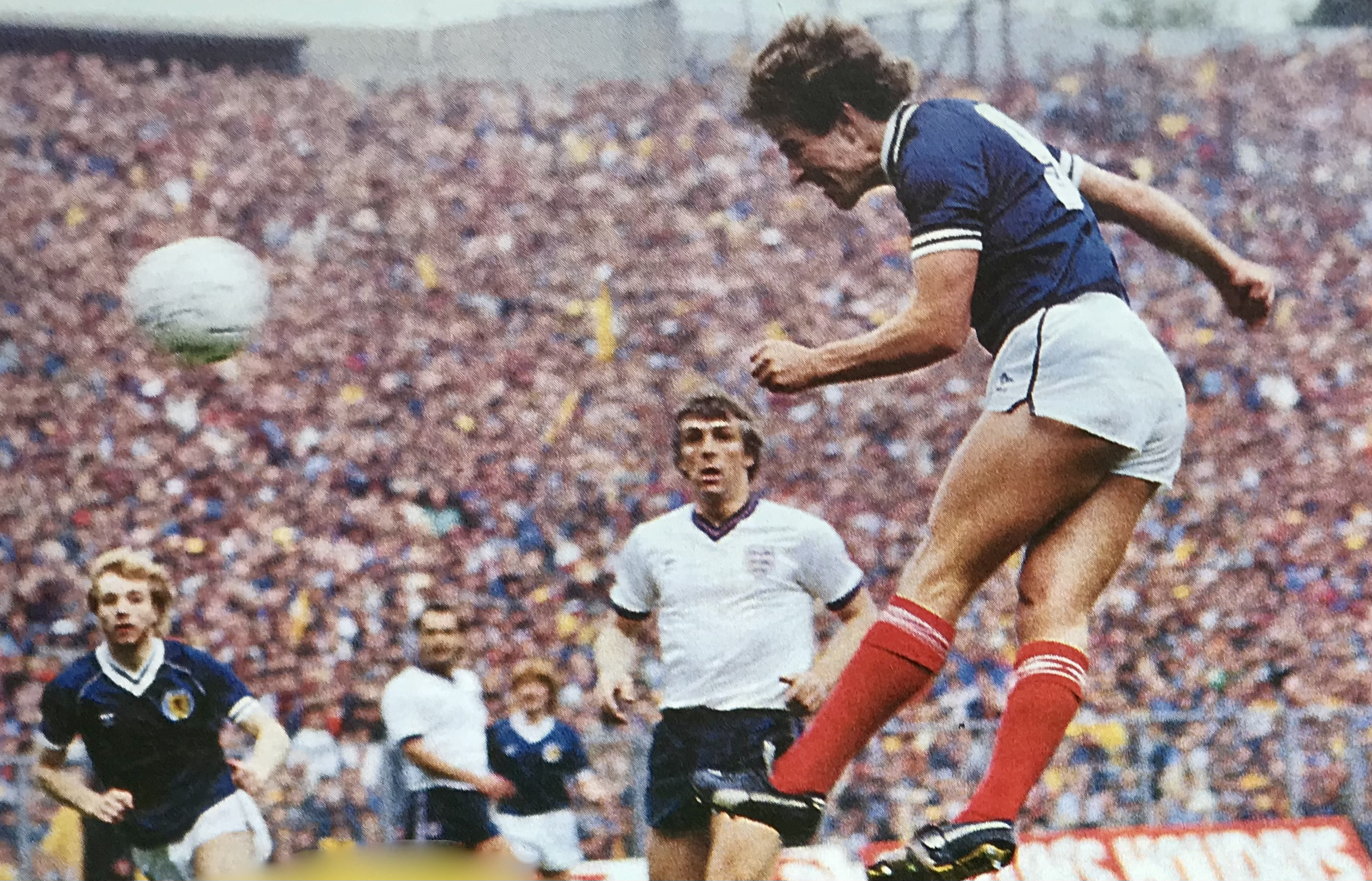
McGhee reckoned his best moment in football came on 26 May 1984 when he scored against England at Hampden Park. He headed in a cross (as pictured) from his great pal Gordon Strachan past Peter Shilton.

McG v Eng

“It put us 1-0 up but Tony Woodcock equalised to make the final score 1-1.”

It was one of four caps he won for his country. Nearly two decades later, in January 2013, Strachan appointed him as his no.2 with the Scottish national side.

M McGhee Old Football PhotosBut back to those playing days, and with two Scottish league titles and three Cup wins behind him, McGhee tried his hand at European football and spent 16 months at Hamburg. The spell was probably more of an education than a success, with injuries limiting his game time.

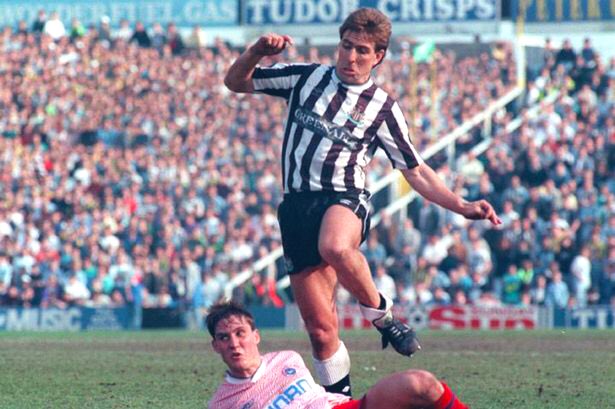
A £170,000 fee took him back to Scotland, to Celtic, where he had mixed fortunes during four years with the Glasgow giants. He was, though, part of the squad that won a League and Cup double in their centenary season.

After winning another Scottish Cup winners’ medal in 1989, he was on the move again, back to Newcastle.

Now with Jim Smith in charge, Newcastle paid £200,000 to take McGhee back to St James’ Park, where he formed an impressive strike partnership with the legendary Micky Quinn as Toon finished third in the old Division Two.

“We were good friends, but we didn’t blend on the pitch like Toshack and Keegan, Quinn told theleaguepaper.com. “Mark was a free spirit. He’d get the ball and drift left or right and drop deep.

“He’d turn defenders and drag them out of position. He would hold the ball up well for me to get into the box and score goals. He went where he wanted, but it worked.”

football back then McGhee

This Football Back Then picture shows McGhee in action for Newcastle against Albion’s Nicky Bissett.

His farewell performance came on 6 April 1991, not long after Ossie Ardiles had taken over as manager, and McGhee departed having scored a total of 36 goals in 115 appearances for the Magpies.

Next stop was Sweden, where he played briefly for IK Brage, but he seized the opportunity to try his hand at management by taking up the role of player-manager at Reading in the summer of 1991.

He’d been recommended for the role by his old boss Ferguson, and, after quitting playing through injury in 1993, he led the Royals to promotion from the third tier the following year.

A struggling Leicester City gave him a chance to manage in the Premier League but he was unable to keep them up and, less than a year after joining, decided to switch to Wolverhampton Wanderers, to succeed Graham Taylor.

Wolves just failed to gain promotion in 1996-97 (they lost in the play-off semi-finals) and were ninth the following campaign. Four months into the 1998-99 season, following a string of poor results, McGhee was fired.

It would be 20 months before he gained his next opportunity, this time at Millwall where he enjoyed initial success, leading them to promotion from the third tier, and then narrowly missing out on another promotion when they lost in the play-off semi-finals to Birmingham City.

McGhee apptWhen he parted company from Millwall in October 2003, he wasn’t out of work long because Brighton needed a replacement for Steve Coppell, who’d been wooed to take over at Reading (pictured above, with chairman Dick Knight, at his unveiling as Albion manager).

Those Albion fans who stuck by the team in the humble surroundings of the Withdean Stadium enjoyed some good moments during McGhee’s time as manager, in particular promotion via the play-off final in 2004.

He certainly found a formula to get the best out of certain players, as Adam Virgo, converted from defender to goalscorer, observed in that theleaguepaper.com article. “Mark is a very good communicator and very experienced,” he said. “He can make you feel ten feet tall. He’s very good at being honest, at analysing your game and telling you what you’re good at.”

After his departure from the Albion, McGhee was out of the game for nine months but got back in at Motherwell, turning them from near relegation candidates to qualifiers for European competition.

The lure of his old club, Aberdeen, proved too strong in the summer of 2009, but his tenure proved to be disastrous – and brief.

He spent the majority of 2012 as manager of Bristol Rovers, where one of the squad he inherited was former Brighton defender-turned-striker, Virgo. The following year, his old pal, Strachan, appointed him as assistant coach to the Scottish national side.

He later combined the role part-time when he returned to Motherwell but there were mixed fortunes second time round, and he left them again in early 2017. Towards the end of that year, he popped up at League Two Barnet, but the arrangement lasted only two months before he was moved to a ‘head of technical’ role, and then dismissed in March 2018.

McGhee was ‘slaughtered’ on Twitter when he took over as interim manager of National South side Eastbourne Borough in the spring of 2019, after being beaten 3-0 by Wealdstone in his first match in charge, his new side reduced to nine men after two players were sent off. Borough won just once in 11 matches.

When Albion under 23s coach Simon Rusk was appointed manager of Vanarama National League side Stockport County in January 2021, McGhee was appointed as one of his assistants.

His final managerial post was at Dundee in February 2022 when he took temporary charge of the Scottish Premiership side until the end of the season (with Rusk as his assistant), but they couldn’t avoid them being relegated, overseeing just one win in 13 matches.

McGhee finally announced his retirement from the game in September 2022 at the age of 65, telling the Sunday Post: “I won’t be pursuing any other managerial vacancies, and nor would I want to be a director of football or a head of recruitment. That’s not what I am – I’m a manager.

“I feel that players now deserve a young manager who can give them the energy I was able to when I started out. They don’t need a 65-year-old with a dodgy ankle.”

Halford’s timely role in helping Albion avoid the drop

TIME was of the essence when utility player Greg Halford agreed to make a temporary move to Brighton.

He penned a deal to join the Seagulls temporarily at Nottingham Forest’s training ground at 12.30pm and then got in his car to drive to Brighton for 6pm in time to be involved in the squad for that evening’s game at the Amex against Wigan Athletic.

It was 4 November 2014 and he was Sami Hyypia’s sixth loan signing – even though only five were eligible to play in any matchday squad (emergency loan goalkeeper Ali Al-Habsi only played one game).

Regular centre backs Gordon Greer and Lewis Dunk were perilously close to suspension and deputy Aaron Hughes was sidelined with an ankle injury, so Hyypia moved to bring in an experienced back-up.

Albion hadn’t registered a win in the previous 11 league matches but the 29-year-old Halford proved to be a lucky charm as the side finally reacquainted themselves with the taste of victory. Fellow loanee Gary Gardner got the only goal of the game and Halford made an appearance off the bench towards the end of the game.

“I wasn’t really expecting to get any game time. I thought I’d just be in and around the lads, to get a feel for how everything works,” he told the club programme. “But I’m glad I got a few minutes at the end.”

Halford explained how he’d agreed to join the Seagulls because he’d been frozen out at Forest after Stuart Pearce took over as manager.

The player said he was familiar with the south coast having previously played for Portsmouth.

Asked what he could bring to the side, he added: “I can add a bit of height, I can score goals and obviously I can defend, which is my main attribute. I’m here to help the team and manager in any way I can.”

It wasn’t long before he was helping out a different manager as the side’s run of poor form brought a premature end to Hyypia’s brief time in charge.

Halford, though, hung around at the Amex, his loan extended by Hyypia’s successor, Chris Hughton, and he had made 14 starts and five substitute appearances by the season’s end, when the Seagulls narrowly escaped the drop back to the third tier.

Born on 8 December 1984 in Chelmsford, Essex, Halford began his professional career at nearby Colchester United. I well remember a Chelmsford-based work colleague telling me about this talented young footballer who’d been head and shoulders the best player in a local schoolboy football team his son had played for.

That player was Halford, who progressed from Colchester’s youth team and made his first team debut in April 2003. Loan spells at non-league Aylesbury Town and Braintree Town were part of his development, but he eventually made his mark at Colchester and was named in the PFA League One team of the year in 2005-06.

Played mainly at right-back, Halford’s speciality was his ability to deliver searching long throws which led to a good proportion of goals for Colchester.

After playing more than 150 games in five years for the Us, Halford wanted to prove himself at the highest level. He got a move to Premier League Reading in January 2007 but he couldn’t make the breakthrough there and ended up switching to Sunderland, signed by Roy Keane.

Just six months later, Sunderland made him available on loan and he joined Championship side Charlton until the end of the season. Then he spent the whole of the 2008-09 season on loan to Sheffield United, featuring in 49 of their 56 games that season.

His personal highlight was scoring the only goal of the game as United beat Preston to reach the 2008-09 play-off final.

Unfortunately, United lost the final 1-0 to Burnley, and that summer Halford was on the move again, this time to newly-promoted Wolverhampton Wanderers. Although he featured in 20 games, a regular starting berth eluded him and, in October 2010, he joined Championship side Portsmouth. Initially on loan, he eventually joined Pompey on a permanent basis but relegation to the third tier brought with it the need to trim budgets and in July 2012, they offloaded Halford to Nottingham Forest.

GH ForestUnder Billy Davies, Halford was generally deployed as a striker but when Pearce took over at the City Ground, he didn’t get close to the first team. On his return from Brighton at the end of the 2014-15 season, he was released by Forest and joined Rotherham United on a free transfer.

Manager Steve Evans appointed him captain but, after a winless run of five games, he was deposed and only played one more game for the Millers before joining Birmingham City on loan.

GH CardThat spell was also brief and although he returned to Rotherham and played 15 games for them in the 2016-17 season, he then joined Cardiff City and made 33 appearances in two seasons for Neil Warnock’s side.
Without a club for six months, in February 2019, he joined Scottish Premiership side Aberdeen as defensive cover but only made two appearances.

Stop-gap big Willie given runaround in Brighton’s colours

W Young Joe JordanA TOWERING Scottish defender who played in three consecutive FA Cup finals for Arsenal was a temporary centre-back stand-in for Brighton in 1984.

Willie Young had moved on from the marble halls of Highbury by the time Albion boss Chris Cattlin borrowed him to plug a gap.

Young was nearing the end of a 14-year career and had switched to Norwich City but was made available to help the Seagulls out of a hole.

Another former Gunner, Steve Gatting, was suspended for three matches in March 1984 and former club captain Steve Foster had just been sold to Aston Villa to raise some much-needed funds.

So Cattlin brought in flame-haired Scot Young to play alongside inexperienced namesake Eric Young. His first game, at home to Manchester City on 10 March, finished in a 1-1 draw.

A week later, Albion triumphed 3-0 away to Derby County and won by a similar margin at home to Leeds United on 24 March.

So far, so good, but in what turned out to be Young’s final game, the wheels came off big time and Albion succumbed 5-1 away to Portsmouth, despite taking the lead.

The line-up saw Eric Young unable to play through suspension and Willie partnered by the returning Gatting. They were no match for Pompey’s prolific centre forward Mark Hateley.

Young found himself in the book with 15 minutes of the first half still to play following a foul on Hateley. Evening Argus Albion reporter John Vinicombe said: “Young was lucky not to be sent off when he bowled Hateley over from behind. Hateley was in a goalscoring position, and, at the time, Albion were still in front.”

The club’s official report added: “On 65 minutes, Hateley outpaced Young and moved smoothly in to net his 22nd goal of the season for Portsmouth.”

Vinicombe gave a brutal assessment: “Out of the shambles may come some good. If Cattlin had been undecided about taking Willie Young on contract, this performance may well have made up his mind.

“Hitherto, Young had not let the side down in his previous three loan appearances, but Mark Hateley, ten years his junior, gave him a terrible runaround.”

So, an ignominious end to his short spell and he was subsequently sacked by Norwich for misconduct.

After a short spell with lowly Darlington, Young called time on his playing career later that year and ran a pub and restaurant, Bramcote Manor, in Nottingham, before it was demolished to be replaced by a religious meeting place.

He subsequently took over the running of the Belvoir kennels and cattery in Bottesford, Leicestershire, while also being a part-time pundit for Scottish television.

Born in the Midlothian village of Heriot on 25 November 1951, Young went to school at Ross High in Tranent and was more noted for rugby than football – he was a talented hooker who had a trial for the South of Scotland Schools’ team.

However, he was playing football for amateur side Sefton Athletic when Hearts offered him a trial – but as a Hibernian supporter he turned them down! Falkirk then gave him a trial but a change of management meant it wasn’t followed up and eventually Aberdeen stepped in to sign him in 1969.

After making 187 appearances for the Dons in five years, initially under Eddie Turnbull and then Jimmy Bonthrone, Tottenham Hotspur boss Terry Neill signed the defender after he’d impressed in a UEFA Cup tie between Aberdeen and Spurs. He played 64 times for the Lilywhites in two seasons.

Neill’s successor Keith Burkinshaw dispensed with his services and he joined Neill at Arsenal when the Northern Irishman switched to manage the side he used to play for. According to The Scotsman, Neill described Young as “a big awkward bastard who liked a drink”.

Before the move, he’d been sent off in a Spurs v Arsenal clash following what was described as a kung fu style kick on Frank Stapleton.

W Young Gerry RyanYoung (pictured above launching into a tackle on Albion’s Gerry Ryan) became something of a Gunners cult hero for making the controversial switch from the north London rivals and fans inevitably enjoyed the chant: “We’ve got the biggest Willie in the land.” In four years, he made a total of 236 appearances, chipping in with 19 goals as well.

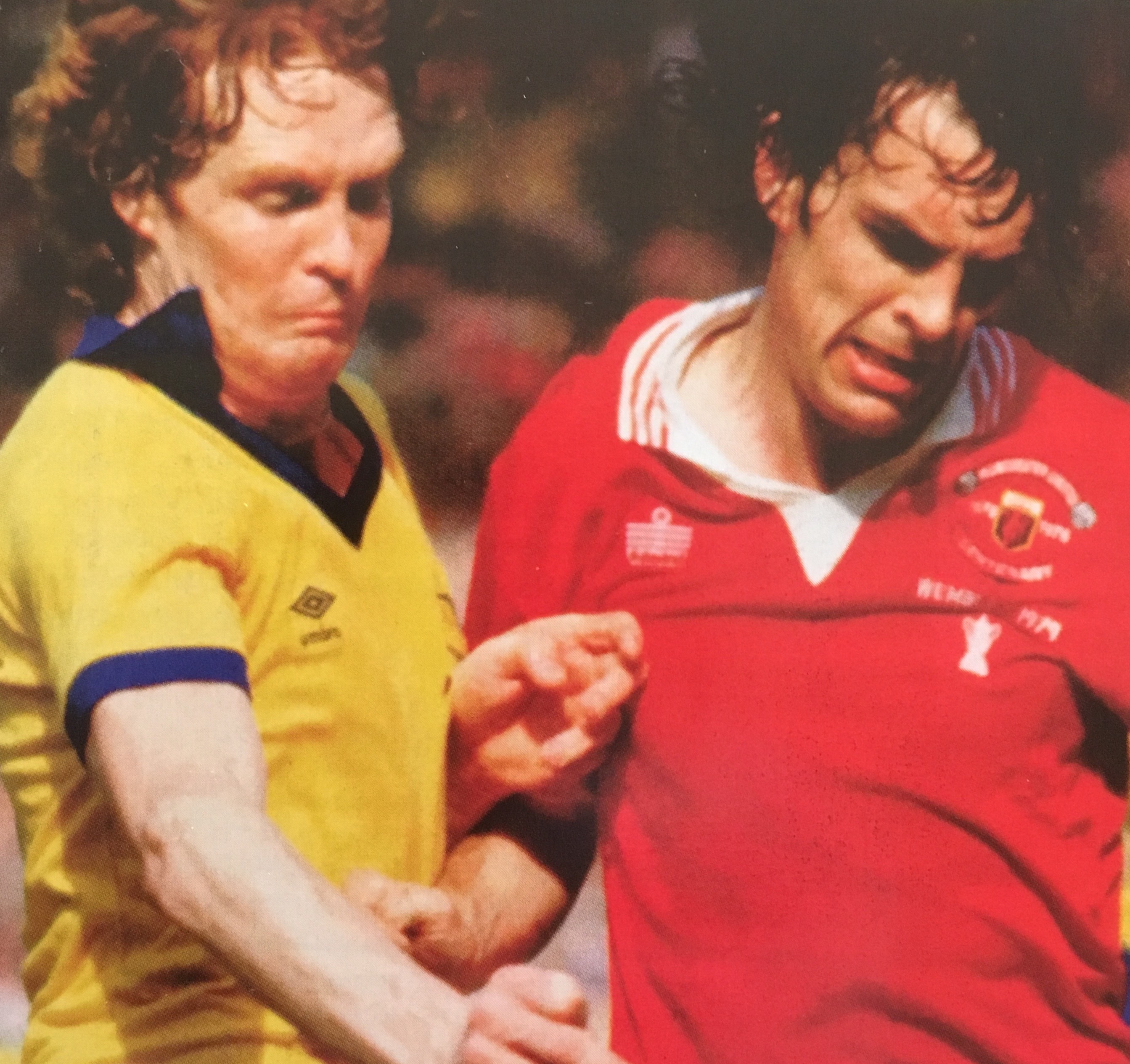
His three FA Cup Final appearances came in 1978, 1979 and 1980, only collecting a winners’ medal in 1979 when the Gunners beat Manchester United 3-2.

The consensus view was that Young did well in that game, suppressing the threat of fellow Scot Joe Jordan, who led the line for United. In 1980, Young famously committed a professional foul on Paul Allen as he looked like he would score as the youngest player in a FA Cup Final.

Young said in that piece in The Scotsman: “I was the last man and only got booked. After that the rules were changed and the ‘professional foul’, as it started to be called, became a red card offence. Paul was going to score so I had to take him down. Afterwards he said: ‘Don’t worry, big man, I’d have done the same.’ But everyone else was appalled. He was only 17, the youngest to play in an FA Cup final, and I’d ruined the fairytale. Big, bad Willie had done it again.”

Hammers won the game 1-0 with a rare Trevor Brooking header.

W Young ForestAfter Young lost his first team place at Arsenal to Chris Whyte, he moved on to Nottingham Forest (pictured above), where he spent a couple of seasons, playing 59 games.

He then joined Norwich in 1983 but, dogged by injuries, he failed to command a regular place in their side.

Young won five Scotland under 23 caps but his involvement in some over-exuberant revelry in Copenhagen in 1975 brought about a life ban from the international set-up, which he spoke about in the 2015 interview with The Scotsman.

Post-playing, Youngr settled in the Nottingham area with his wife Lynda, and ran a pub for many years. His death at the age of 73 was announced on 31 October 2025.

‘Bright prospect’ James Wilson faded after great start

JW v WolvesGREAT things were expected of James Wilson after he scored two goals on his Manchester United debut.

Caretaker manager Ryan Giggs gave the 18-year-old the opportunity to prove himself at first-team level in a home game against Hull City in 2014 and he was instantly repaid.

Wilson UtdA few months later, Wilson signed a four-year contract, with new manager Louis van Gaal describing him as “one of the brightest young English prospects”.

But that early promise evaporated as injury problems and the emergence of the talented Marcus Rashford overshadowed his progress.

“I wanted to get out of my comfort zone on loan at Brighton and while I was there Rashford came through,” Wilson told ESPN. “I came back and never really got that chance again. Injuries were a big thing.”

The Biddulph-born striker eventually severed ties with Old Trafford in the summer of 2019 having first joined United in 2002 aged only seven.

In the season after his impressive debut against Hull, he made a further 17 appearances for United and scored two more, but he appeared in only one Premier League game and one League Cup game in 2015-16, and didn’t feature for United’s first team again.

JW England u21Wilson represented England at under 16, under 19, under 20 and under 21 levels but a career in England’s top-flight proved elusive and he is now playing for Scottish Premiership side Aberdeen.

One of several loan spells Wilson had away from United saw him join Brighton’s ultimately unsuccessful bid for promotion from the Championship in November 2015.

Although he showed glimpses of real quality, and scored five goals, he often seemed to be fatigued and ended up making just 12 starts plus 15 more from the bench.

Perhaps, rather unfortunately, he is best remembered for being caught by the TV cameras vomiting on the pitch immediately before a game against Wolves on New Year’s Day.

Wilson’s start for the Seagulls was impressive enough: a goal on his full debut in a 3-2 win over Charlton Athletic. “I remember picking the ball up on the edge of the D and just drove at the centre backs. They backed off, I managed to get my shot away and it went through their ‘keeper’s legs,” he said in a subsequent Albion matchday programme.

He followed that one with the opener in a 2-2 draw away to Derby County.

Tomer Hemed and Sam Baldock were more often than not manager Chris Hughton’s preferred selection up front although Wilson rewarded Hughton’s decision to give him his first start for two months in place of Hemed in a home game against Reading on 15 March. He scored the only goal of the game and Albion edged into second place as the promotion race hotted up.

JW scores v DerbyHe also scored (above) in the fifth minute of added on time to secure Albion a point in their penultimate league game at home to Derby, but when runners-up spot eluded the Seagulls courtesy of the last-game 1-1 draw at Middlesbrough, and when Albion failed to overcome Sheffield Wednesday in the Championship play-offs, Wilson returned to Old Trafford.
At the start of the following season, he was on his travels again, this time to Derby, but his season-long loan ended prematurely in October 2016 when he sustained an anterior cruciate ligament knee injury that sidelined him for months.

While he eventually returned to action in United’s under 23 side, he didn’t get a first team chance under Jose Mourinho and instead spent the second half of the 2017-18 season on loan to Sheffield United where he scored once in nine appearances.

He spent the whole of the 2018-19 season on loan at Aberdeen, scoring four goals in 32 games and then signed for them permanently in the summer of 2019, aiming to reignite his career. But having not scored in 16 games in the latter part of 2019, he was allowed to return to the Manchester area, signing on 31 January 2020 for League Two Salford City.

James Wilson Aberdeen

Goalscoring Busby Babe Alex Dawson my first Brighton hero

ALEX DAWSON remains the youngest player to have scored a hat-trick in a FA Cup semi-final.

He was just 18 years and 33 days on 26 March 1958 when his perfect treble (header, right foot and left foot shots) for a makeshift post-Munich Manchester United helped to secure a 5-3 win over Fulham in a replay in front of 38,000 fans at Highbury.

Eleven years later he scored twice for Brighton & Hove Albion in what for many might have been a meaningless Third Division match against Walsall.

But for me, it was the beginning of a lifelong journey supporting the Albion. It was the very first Brighton game I saw and the burly Dawson, wearing number 9, became an instant hero to an impressionable 10-year-old.

Little did I know then of the famous background of the man who played a big part in Brighton’s 3-0 win over the Saddlers that afternoon.

What I’ve learned since makes him even more of a hero, and it’s evident that fans of other sides he played for remembered him with great fondness when learning of his death at the age of 80 on 17 July 2020.

Returning to that 1958 match, it was just six weeks after the Munich air disaster that claimed the lives of eight of United’s first choice team – Dawson’s pals – so youngsters and fringe players had to be drafted into the side to fulfil the remaining fixtures that season.

Thirteen days after the accident, Dawson took his place beside survivors Bill Foulkes and Harry Gregg and scored one of United’s goals as they beat Sheffield Wednesday 3-0 in the fifth round of the Cup. He scored again as United drew 2-2 with West Brom in the sixth round, before winning through 1-0 in a replay to go up against Fulham in the semi-final.

Dawson told manutd.com: “In our first game with Fulham (played at Villa Park), Bobby Charlton scored twice in a 2-2 draw, and I was put on the right wing. I was a centre-forward really and, when we played the replay at Highbury four days later, I was back in my normal position.

“Jimmy (Murphy) said before the game: ‘I fancy you this afternoon, big man. I fancy you to put about three in.’ I just said: ‘You know me Jim, I’ll do my best,’ but I couldn’t believe it when it happened.

“The first was a diving header, I think the second was a left-footer and the third was with my right foot.

“It was a long time ago, of course, and it’s still a club record for the youngest scorer of a hat-trick in United’s history. Records are there to be broken and I’m surprised that it’s gone on for over half a century.

“I’m a proud man to still hold this record. Even when it goes, nobody can ever take the achievement away from me.”

Also in the United side that day was Freddie Goodwin….and he was the manager of that Brighton side I watched for the first time v Walsall in February 1969.

Born in Aberdeen on 21 February 1940, Dawson went to the same school as United legend Denis Law, but his parents moved down to Hull where he went to Westbourne Street School. Dawson joined United straight from Hull Schoolboys.

Dawson and future Preston and Brighton teammate Nobby Lawton were both on the scoresheet as United beat West Ham 3-2 in the first leg of the 1957 FA Youth Cup Final and Dawson scored twice in the 5-0 second leg win. West Ham’s side included John Lyall, who later went on to manage them.

On redcafe.net, Julian Denny recalled how Dawson once scored three hat-tricks in a row for a United reserve team that was regularly watched by crowds of over 10,000.

He scored on his United first team debut against Burnley in April 1957, aged just 17, and in each of the final two matches that season (a 3-2 win at Cardiff and a 1-1 draw at home to West Brom) to help win the title and secure United’s passage into Europe’s premier club competition.

They were the first of 54 goals in 93 United appearances, but was it all too much too soon? Some say Dawson’s career with United may have panned out differently if he hadn’t been thrust into first team action at such a young age.

Was he mentally scarred by the loss of those teammates, in the knowledge he could well have been with them on that fateful journey?

Let’s not forget he was just short of his 18th birthday when the accident happened. In an interview with Chris Roberts in the Daily Record (initially published 6 Feb 2008 then updated 1 July 2012), he recalled: “I used to go on those trips and had a passport and visa all ready but the boss just told me I wasn’t going this time. I had already been on two or three trips just to break me in. I know now how lucky I was to be left in Manchester. The omens were on my side.”

Dawson went on to describe the disbelief and the feelings they had at losing eight of the team, including Duncan Edwards several days later.

A Daws MU BW“We were all so close and Duncan was also a good friend to me before the accident,” said Dawson. “Duncan was such a good player, there is no doubt about that. He was a wonderful fellow as well as a real gentleman.

“I will never, ever forget him because he died on my birthday, 21 February, and before that he was the one who really helped me settle in.”

Dawson gradually became an increasingly bigger part of the first-team picture at United, making 11 appearances in 1958-59 and scoring four times. The following season he scored 15 in 23 games then went five better in 1960-61, scoring 20 in 34 games.

He was at the top of his game during the last week of 1960 when he scored in a 2-1 away win at Chelsea on Christmas Eve, netted a hat-trick as Chelsea were thumped 6-0 at Old Trafford on Boxing Day, and then scored another treble as United trounced neighbours City 5-1 on New Year’s Eve.

A fortnight later he had the chance to show another less well-known string to his footballing bow…. as a goalkeeper!

It was recalled by theguardian.com in 2013. When Tottenham were on their way to the first ever double, and had an air of near-invincibility about them, they arrived at Old Trafford having lost only once all season, and had scored in every single game.

Long before the days of a bench full of substitutes, when ‘keeper Harry Gregg sustained a shoulder injury, Dawson had to take over in goal.

Dawson excelled when called upon, at one point performing, according to the Guardian’s match report, “a save from Allen that Gregg himself could not have improved upon”.

The article said: “Tottenham’s attempts to get back into the game came to nought and Dawson achieved what no genuine goalkeeper had all season: keep out Tottenham’s champions-elect. In the end, there were only two games all season in which Spurs failed to score, and this was one of them.”

Tottenham’s north London neighbours, Arsenal, finished a disappointing 25 points behind Spurs in 11th place, but United manager Matt Busby had been keeping tabs on the Gunners’ prolific centre forward David Herd (Arsenal’s top scorer for four seasons), and in July 1961 took him to Old Trafford for £35,000. It signalled the end of Dawson’s time with United.

When the new season kicked off, Dawson had a new apprentice looking after the cleaning of his boots….a young Irishman called George Best. In his 1994 book, The Best of Times (written with Les Scott), Best said: “Alex Dawson was a brawny centre forward whose backside was so huge he appeared taller when he sat down. To me, Alex looked like Goliath, although he was only 5’10”. What made him such an imposing figure was his girth.

“He weighed 13st 12lbs, a stone heavier than centre half Bill Foulkes who was well over 6ft tall. What’s more, there wasn’t an ounce of fat on Alex – it was all muscle.”

Best’s responsibilities for Dawson’s boots didn’t last long, however, because in October that year, Busby sold the centre forward to Preston for £18,000.

During a prolific time at Preston, Dawson scored 114 goals in 197 appearances, and became known as The Black Prince of Deepdale. In the 1964 FA Cup Final at Wembley, Dawson scored in the 40th minute but Preston lost 3-2 to a Bobby Moore-led West Ham United.

The Preston captain that day was his former Man Utd teammate Lawton, who he subsequently joined at Brighton.

Lawton, now no longer with us, mentioned “that great striker Alex Dawson” in an interview he gave to the Lancashire Evening Post, published in May 2004.

“I’d known Alex since we were both on the groundstaff at Old Trafford,” Lawton recalled. “He was a bull of a centre-forward and was a Deepdale hero.

“He’s a lovely man and I was best man at his wedding. He hasn’t changed at all, and we are still great friends.

“Alex and the rest of the team would have graced any Premiership side today.”

Clearly Preston fans felt the same way. ‘Albertan’ on pne.net in 2012 said: “Alex Dawson was a super player … He was the complete centre forward – powerful, mobile and lethal with either foot or his head. He was also brave, committed and characterful.”

While ‘sliper’ on the same forum added: “In his prime Dawson was a powerhouse and great to watch. I can safely say I’ve never seen a better header of a ball at Deepdale.”

‘Curlypete’ recalled: “You could literally see goalkeepers tremble when Dawson was running at them, it was either the ball, ‘keeper or more likely both who ended up in the net.”

In 1967, Dawson took the short journey to Bury FC where his goalscoring exploits continued with 21 goals in 50 appearances. I was intrigued to see in a team photo of the Bury squad before the 1968-69 season, a young Lammie Robertson sitting at Dawson’s feet.

In December 1968, the aforementioned Freddie Goodwin had just taken over as Brighton manager and he paid Bury £9,000 to make his old United teammate his first signing at the Goldstone. An early programme profile revealed the surprising news that Dawson also had a sideline as a men’s hairdresser.

He certainly added a cutting edge to Albion’s attack, finding the net no fewer than 17 times in just 23 games, including three braces and four in an away game at Hartlepool. Dawson was no mean cricketer, either. An all-rounder who used to play for the Newton Heath club, as well as a collection of half-centuries to his credit, he once took eight wickets for 35 runs as a lively fast-medium bowler.

The following season, Goodwin added Allan Gilliver to the strikeforce and he outshone Dawson in the scoring stakes, although the Scot still scored 12 in 36 games.

As is so often the case, it was a change of manager that marked the end of his time with the Albion. With Goodwin departed for Birmingham, replacement Pat Saward didn’t give the old-timer much of a look-in and he went out on loan to Brentford where he showed he could still find the back of the net with familiar regularity.

Greville Waterman, on bfctalk.wordpress.com in July 2014, recalled: “He was a gnarled veteran of thirty with a prominent broken nose and a face that surely only a mother could love, but he had an inspirational loan spell at Griffin Park in 1970 scoring seven times in eleven games including the winner in that amazing late, late show FA Cup victory against Gillingham.

“Typical of the times at Griffin Park, he departed after his loan spell as apparently the club was unable to agree terms with him. A classic example of both parties suffering given that Dawson never played another Football League game and Brentford lacked a focal point in their attack until the arrival of John O’Mara later that same season.”

Released by the Albion at the end of the 1970-71 season, Dawson’s final footballing action was with non-league Corby Town.

Nevertheless, he could look back on a fantastic career as a goalscorer, with a strike rate the envy of many a modern day forward.

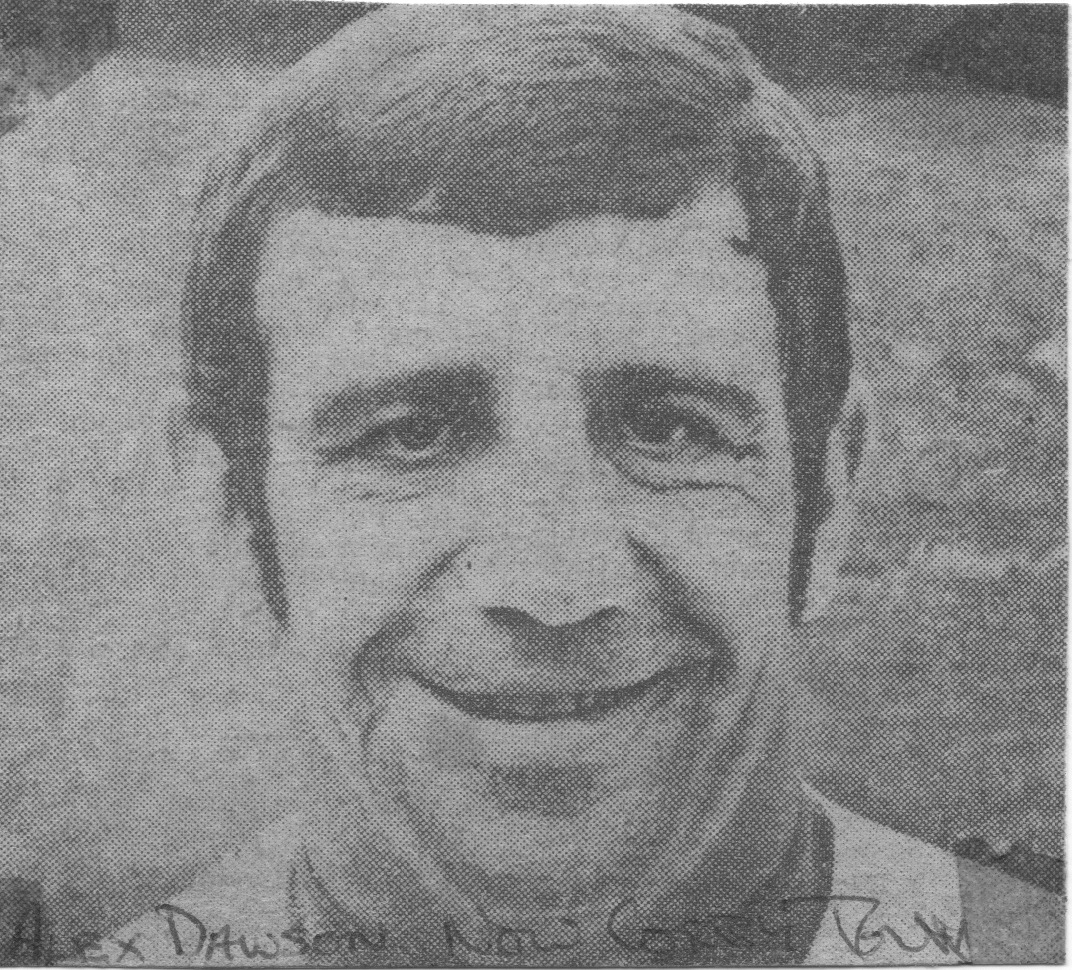
Pictures: Top: Alex Dawson portraits – in the 1969-70 and 1970-71 kits.

  • A montage showing Dawson:
    • scoring the first of his goals in the 1958 FA Cup semi final
    • in a Bury line-up (from the Bury Times) with future Albion forward Lammie Robertson also encircled.
    • powering a header for the Albion.
    • in a portrait from pnefc.net.

Why centre forward Alex Dawson’s boots were kept spotless by George Best

Dawson BHAThe mercurial footballing genius George Best used to clean the boots of the centre forward who scored twice in the very first Albion game I saw.

By the time of that 3-0 win v Walsall in 1969, Alex Dawson was on his way down the footballing pyramid, just over a decade after he came mighty close to perishing with some of his Manchester United teammates in the Munich air disaster.

Only five years earlier the swashbuckling centre forward had scored twice in the FA Cup Final at Wembley as his Preston North End side lost 3-2 to a Bobby Moore-led West Ham United.

The former Manchester United centre forward arrived at the Goldstone through a connection made at Old Trafford in that post-Munich era. Freddie Goodwin, another pitched from the United reserves into the first team as a consequence of the tragedy, made Dawson his first signing when he took over as Brighton manager in December 1968. A £9,000 fee brought him to Sussex from Bury.

At the Albion, he linked up with another familiar face in Nobby Lawton, a tenacious midfield player who had also been at Man U with him and then captained Preston in the aforementioned cup final.

Lawton, now sadly no longer with us, mentioned “that great striker Alex Dawson” in an interview he gave to the Lancashire Evening Post, published in May 2004.

“I’d known Alex since we were both on the groundstaff at Old Trafford,” Lawton recalled. “He was a bull of a centre-forward and was a Deepdale hero.

“He’s a lovely man and I was best man at his wedding. He hasn’t changed at all, and we are still great friends.

“Alex and the rest of the team would have graced any Premiership side today.”

Dawson certainly arrived with a bang on the south coast finding the net no fewer than 17 times in just 23 games, including three braces and four in an away game at Hartlepool.

The following season, Goodwin added Alan Gilliver to the strikeforce and he outshone Dawson in the scoring stakes, although the Scot still scored 12 in 36 games.

As is so often the case, it was a change of manager that marked the end of his time with the Albion. With Goodwin departed for Birmingham, replacement Pat Saward didn’t give him much of a look-in and he went out on loan to Brentford where he showed he could still find the back of the net with familiar regularity.

Greville Waterman, on bfctalk.wordpress.com in July 2014, shared a great magazine front cover featuring Dawson and recalled: “He was a gnarled veteran of thirty with a prominent broken nose and a face that surely only a mother could love, but he had an inspirational loan spell at Griffin Park in 1970 scoring seven times in eleven games including the winner in that amazing late, late show FA Cup victory against Gillingham. Typical of the times at Griffin Park, he departed after his loan spell as apparently the club was unable to agree terms with him. A classic example of both parties suffering given that Dawson never played another Football League game and Brentford lacked a focal point in their attack until the arrival of John O’Mara later that same season.”

Released by the Albion at the end of the 70-71 season, Dawson’s final footballing action was with non-league Corby Town.

Nevertheless, he could look back on a fantastic career as a goalscorer, with a strike rate the envy of many a modern day forward.

To this day, he is still the youngest player (at 18 years and 33 days) to have scored a hat-trick in a FA Cup semi-final (in Man U’s 5-3 1958 win over Fulham) and he is one of only nine players to score in each of his first three Man U games.

Originally from Aberdeen (he went to the same school as that United legend Denis Law), his parents had moved down to Hull and Dawson joined United straight from Hull Schoolboys. He made his United debut in April 1957 aged just 17.

On redcafe.net, Julian Denny recalled how Dawson once scored three hat-tricks in a row for a Man U reserve team that was regularly watched by crowds of over 10,000!

In researching for this piece, I’ve read some views that Dawson’s career with United may have panned out differently if he hadn’t been thrust into first team action at such a young age.

But that was one of the consequences of the Munich air disaster, which he has spoken about in several interviews since, usually around notable anniversaries of the tragedy.

It’s difficult to tell whether there were mental scars from the trauma of the crash but Dawson was just short of his 18th birthday when several of his close mates died. In an interview with Chris Roberts in the Daily Record (initially published 6 Feb 2008 then updated 1 July 2012), he recalled: “I used to go on those trips and had a passport and visa all ready but the boss just told me I wasn’t going this time. I had already been on two or three trips just to break me in. I know now how lucky I was to be left in Manchester. The omens were on my side.”

Dawson went on to describe the disbelief and the feelings they had at losing eight of the team, including Duncan Edwards several days later. “We were all so close and Duncan was also a good friend to me before the accident,” said Dawson. “Duncan was such a good player, there is no doubt about that.

“He was a wonderful fellow as well as a real gentleman.

“I will never, ever forget him because he died on my birthday, February 21, and before that he was the one who really helped me settle in.”

Just 13 days after the accident, Dawson took his place beside survivors Bill Foulkes and Harry Gregg as United faced Sheffield Wednesday in the fifth round of the FA Cup – and won 3-0.

That 5-3 semi-final replay win against Fulham was not surprisingly an early career highlight and when talking about it in 2013 (on the 55th anniversary of the disaster), Dawson told manutd.com: “In our first game with Fulham, Bobby Charlton scored twice in a 2-2 draw, and I was put on the right wing. I was a centre-forward really and when we played the replay at Highbury four days later, I was back in my normal position. Jimmy (Murphy) said before the game: ‘I fancy you this afternoon, big man. I fancy you to put about three in.’ I just said: ‘You know me Jim, I’ll do my best,’ but I couldn’t believe it when it happened.

“The first was a diving header, I think the second was a left-footer and the third was with my right foot.

“Nobody can ever take that afternoon away from me. It was a long time ago, of course, and it’s still a club record for the youngest scorer of a hat-trick in United’s history. Records are there to be broken and I’m surprised that it’s gone on for over half a century.

“I’m a proud man to still hold this record. Even when it goes, nobody can ever take the achievement away from me – I’ll remember that afternoon for as long as I live.”

In the two seasons following Munich, Dawson became a more established first team player although it would be wrong to describe him as a regular.

Another Scot, David Herd had scored a hat-trick for Arsenal against United and Matt Busby took him to Old Trafford in July 1961. It signalled the end of Dawson’s time with United.

Nevertheless, by the time he was sold to Preston in October 1961 for £18,000, he’d scored 54 goals in 93 United appearances.

And what about Best and his boots? It was the job of apprentices to look after the footwear of United’s first team players, and it was the young Best, who became a United apprentice in August 1961, who was detailed to keep Dawson’s scoring boots in good order.

In his 1994 book, The Best of Times (written with Les Scott), Best said: “Alex Dawson was a brawny centre forward whose backside was so huge he appeared taller when he sat down. To me, Alex looked like Goliath, although he was only 5’10”. What made him such an imposing figure was his girth.

“He weighed 13st 12lbs, a stone heavier than centre half Bill Foulkes who was well over 6ft tall. What’s more, there wasn’t an ounce of fat on Alex – it was all muscle.”

During a prolific time at Preston, Dawson scored 114 goals in 197 appearances, with the highlight that FA Cup Final in 1964.

Albertan on pne.net in 2012 said: “Alex Dawson was a super player … He was the complete centre forward – powerful, mobile and lethal with either foot or his head. He was also brave, committed and characterful.” While sliper on the same forum added: “In his prime Dawson was a powerhouse and great to watch.. I can safely say I’ve never seen a better header of a ball at Deepdale.”

Curlypete recalled: “You could literally see goalkeepers tremble when Dawson was running at them, it was either the ball, ‘keeper or more likely both who ended up in the net.”

Pictures:

Top, pictured wearing the 1970-71 kit.

• Kneeling, from a 1969 Albion line-up.

• A magazine front cover.

• Brighton Herald’s black and white photograph in a 1969 Albion programme shows Dawson in goalmouth action watched by colleague John Napier (no.5).