The Maldera name is part of Giallorossi history

WHILE I’ve not found a direct link between Brighton and Europa League last 16 opponents AS Roma, there is an indirect one via Roberto De Zerbi’s assistant, Andrea Maldera.

Maldera’s uncle Aldo – a left-sided full-back or midfielder who was in the Italy squad at the 1978 World Cup – spent three years playing for Roma between 1982 and 1985.
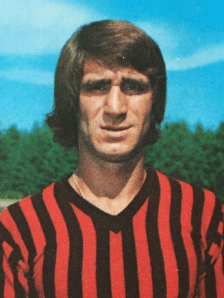
Aldo Maldera

The majority of his career was spent at AC Milan but as well as Roma he also played for Bologna and Fiorentina and won 10 caps for his country.

Maldera won Serie A with them in 1983 – only the second time they’d won the Scudetto with a 41-year gap in between.

Nicknamed the Giallorossi after the club’s kit colour of carmine red and golden yellow (that’s how it is described!), the club’s official history gives Aldo a special mention.

“The team put together by Nils Liedholm turned out to be a perfect machine: an impenetrable defence with pillars such as Tancredi, Vierchowod, Nela and Maldera, an admirable midfield with Di Bartolomei, Falcao, Ancelotti and Prohaska and an explosive attack with striker Pruzzo and winger Bruno Conti.”

Before you ask, yes, that was Carlo Ancelotti, later a successful manager with the likes of AC Milan, Chelsea, Paris Saint-Germain, Real Madrid and Bayern Munich.
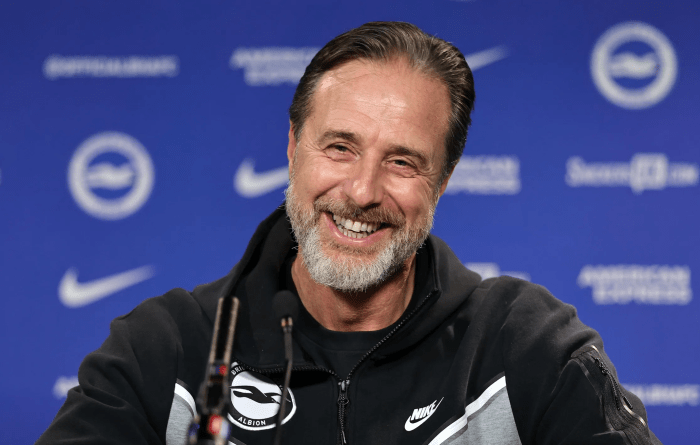
Brighton’s likeable assistant manager (pictured above), who was thrust into the media spotlight in early February 2024 when De Zerbi was absent following dental surgery, didn’t follow in Aldo’s playing footsteps, nor his dad Luigi, a centre-back who won the European Cup with Milan in 1969. Another uncle, Attilio, was also a professional at Milan, and later coached the club’s youth players.
Luigi Maldera
Attilio Maldera

Born in Milan on 18 May 1971, although young Andrea went through Milan’s academy system, his playing days were in lower leagues of Italian football with Leffe.

It was as a coach that he found his niche, starting out with Milan’s under-19s and then stepping up to be technical coach for the first team.

He worked under Massimiliano Allegri when they won the league title in 2010-11 and the Italian Supercup. And De Zerbi need look no further than his no.2 for someone with experience of European football because Maldera was part of Milan’s set-up when they reached the quarter-finals of the Champions League in 2012, where they lost to Barcelona. They’d beaten Arsenal 4-3 over two legs in the previous knock-out round.

Maldera reverted to head of video analysis for the under-19s after Filippo Inzaghi took charge in 2014 and the following year linked up with former Milan and Chelsea striker Andriy Shevchenko as head of analysis for the Ukraine national team.

It was in Ukraine that De Zerbi and Maldera talked together a lot about Ukrainian players and the assistant explained a little more of their background ahead of Brighton’s February game versus Spurs.

“My father was his coach when Roberto was in the academy of AC Milan and I worked for a lot of seasons at AC Milan and after that I worked with the national team of Ukraine.

“We spent a lot of time on the phone talking tactics because for me he’s one of the best coaches in this moment. When he was a coach at Foggia or Sassuolo, I was working at AC Milan and we spoke a lot about football and I studied his idea a lot.

“When he went to Shakthar Donetsk we spoke about the Ukrainian players and we always had a big discussion about football. Two years ago he changed some people on his technical staff, he called me and I was very happy.

Andrea Maldera relishing his role working alongside Roberto De Zerbi

“For me it’s a dream. I am 53 but I am young for a second time with him and working in the Premier League. Roberto he has a big energy, a big passion, he involves you a lot. I become younger with him.”

Another big fan of De Zerbi is former Brighton player Andrea Orlandi, who first saw the head coach at work when he was in charge of Italian third tier side Foggia. Although born in Barcelona, Orlandi’s parents were both Italian: a Juventus-supporting dad and an AC Milan-supporting mum!

He was winding down his playing career in Italy’s Serie B with Novara when he first saw De Zerbi taking training sessions. He told the Albion podcast in November 2023: “When you saw the clips of his Foggia team play, you knew the coach was going to be amazing. Then he went to Benevento and Sassuolo. In Serie A he was able to play a style of football that they would usually say no to – “this isn’t how you should play” – attacking and looking after the ball.

“In Italy, 80 per cent of the teams play the same style; the same pattern of play ‘give the ball to the wing-back and he will run…’ every team does the same.

“By being provocative at times is how he became successful at Sassuolo.”

There can be little doubt De Zerbi will feel he has an incentive to get one over on Roma because in 2021 the Giallorossi pipped his eighth-placed Sassuolo side to UEFA Conference League qualification on a narrow two-goal difference; both sides having finished the Serie A season on 62 points – six points behind sixth-placed Lazio.

Continuing his appreciation of Albion’s head coach, Orlandi said: “He’s a fantastic motivator and coach, he’s the next big thing in football. It’s great to have him at the club and hopefully Albion will be able to keep him for a long while. He’s impressed me, but he has probably gone beyond my early expectations.”

De Zerbi’s qualities as a coach are something Orlandi says were a part of the Italian’s makeup as a player. “He as a player was a number ten, he was left-footed player and he had this magic about him, they would call him anarchic. Managers wouldn’t play him because ‘he doesn’t fit the system’ and he probably thought, ‘well, I am going to be a coach and I am going to be different.’

“He was different as a footballer, he has the same magic and charisma in coaching.”

Although De Zerbi was on AC Milan’s books as a young player, the majority of his playing days were spent with lower league clubs in different regions of Italy.

The only way was up after Tomori’s awkward Albion debut

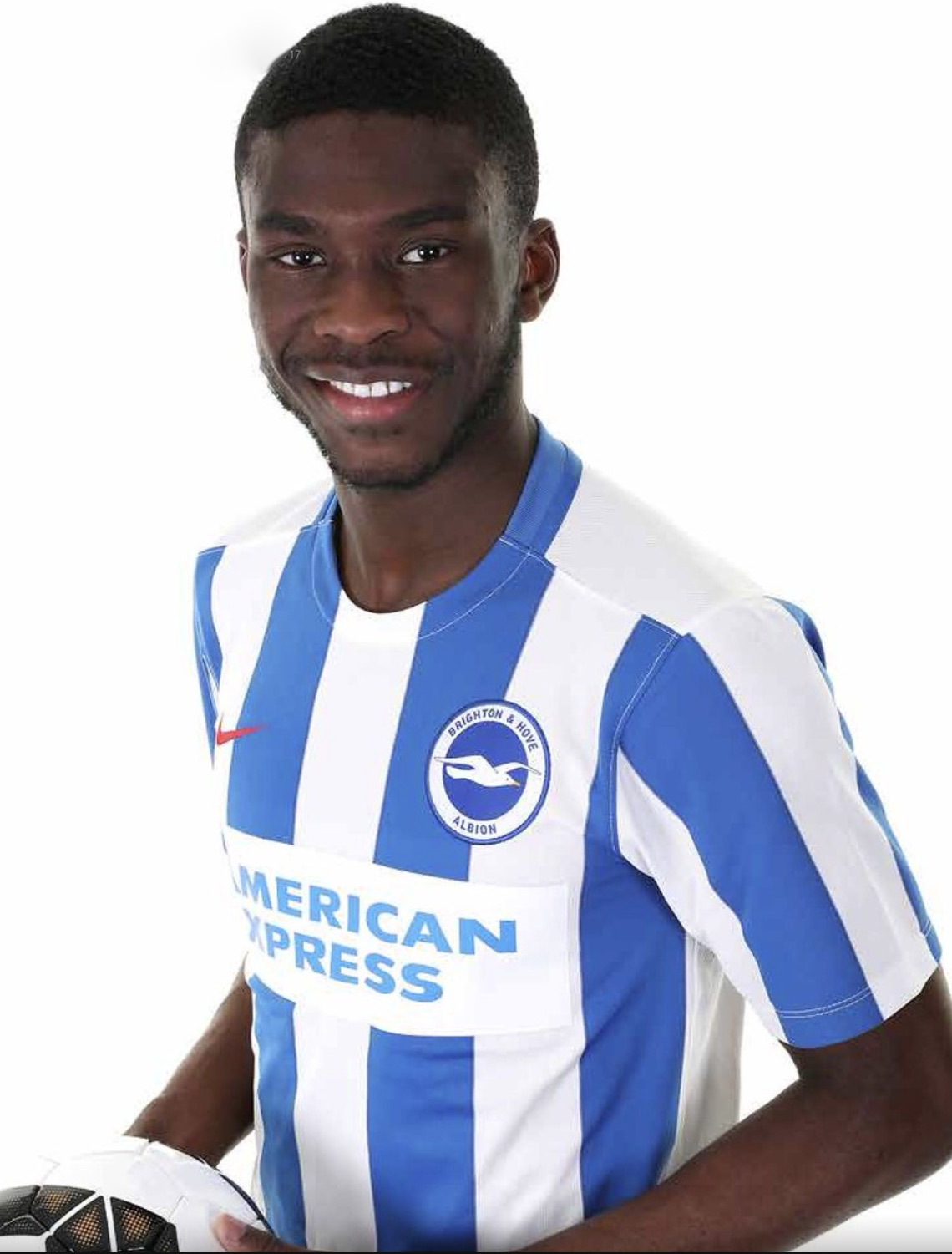
FIKAYO TOMORI couldn’t have had a worse debut for Brighton.

The teenage defender on loan from Chelsea was booked on 37 minutes and scored an own goal in the 62nd as Brighton were humiliated 3-1 in the FA Cup by non-league opponents, National League Lincoln City.

Tomori, playing at right back, sliced Nathan Arnold’s cross past a startled Casper Ankergren who’d only just come on as a sub for the injured Niki Mäenpää.

In fact, Tomori wasn’t on the winning side in any of the three matches he started for the Seagulls.

However, he saw plenty of action when making seven appearances off the bench. For example, he played an hour in Albion’s 3-1 home win over Birmingham City when sickness forced off Lewis Dunk on the half-hour mark and slotted in alongside Uwe Huenemeier, who himself was deputising for injured Shane Duffy.

“We knew Lewis wasn’t quite right before the game and everyone had told me to be ready,” he said later. The matchday programme observed: “Tomori looked as if he’d been playing all season alongside Uwe, such was their understanding.”

The two were also paired together in the second half of the 2-1 win away to QPR when Tomori replaced Dunk at half-time. And Tomori lined up alongside Dunk in the centre of defence for the last game of the season at Villa Park when Jack Grealish’s last-minute equaliser denied Albion the Championship title.

Nevertheless, the talented youngster, who went on to be capped by England, was recognised as having played his part in the Albion winning promotion that 2016-17 season.

“I would have liked to play more football but this team’s pushing for promotion and I knew before I came here that getting in the side was going to be difficult,” he said in a matchday programme interview.

“I’ve had to be make sure I’ve been ready when called upon and take any opportunities that have come my way. It’s a challenge I’ve embraced. The manager has been really good to me and I’ve taken a lot of confidence from the fact that when we have had injuries in defence, I’m pretty much the first player to come on.

“I’ve really enjoyed it here. Being involved with a club that’s going for promotion has been a different sort of challenge to what I’ve been used to.”

Reflecting on that period a few years later, Tomori said: “It was a big part of my development, playing every day with professionals who have been playing the game for 10, 15 years.

“That focus, will to win and need to be at the top of your game every game was something I had to learn, and it was really important for my development.”

He added: “They were trying to get their first promotion to the Premier League. The team was really together and focused, and when the games came, they were really on it.

“It was my first taste of senior football and being in a senior changing room and being part of a matchday and stuff like that. It was a great learning experience and obviously we got promoted which was great.”

Born in Calgary, Canada, on 19 December 1997 to wealthy Nigerian parents, Yinka and Mo, who originate from Osun in the south west region of Nigeria, Tomori was less than a year old when the family moved to England.

The family home was in Woolwich and he enjoyed a kickabout with his friends from the age of five or six before starting organised football with Riverview United. The youngster admitted he modelled his game on Thierry Henry.

“I wore my socks above my knees like him, I wore gloves like him even if it wasn’t cold, and I celebrated like him,” he said. “I loved everything about him. Back then it was all about having fun and never did I think that one day I would end up playing for Chelsea.”

Tomori was taken on by the Chelsea academy as a seven-year-old but it wasn’t all about football and, after passing his 11+ exams, he attained 10 GCSEs (six As, three Bs and a C) at Gravesend Grammar School, where he was a pupil between 2009 and 2014.

Assistant head James Fotheringham told The Sun Tomori was the first Gravesend pupil to “really make it” as a footballer, pointing out: “We’ve had a number of boys promised the world by different football clubs and then they get dropped and end up nowhere.

“I asked Chelsea, ‘What makes Fikayo different?’ The guy said, ‘Because he’s got all the attributes of a footballer’s skills but he’s incredibly bright and he just reads the game. He’s got a couple of yards on people because he’s so bright’.”

At Chelsea, Tomori bonded with Tammy Abraham from an early age. They became good friends and made their way through the ranks and were part of the team that recorded back-to-back wins in the UEFA Youth League and the FA Youth Cup in 2015 and 2016.

The 2015-16 season saw Tomori named the Chelsea Academy Player of the Year and he rounded it off by making his first team debut as a substitute against Leicester City on the final day. He described it as “the proudest moment of his career” and explained: “To be out there playing with the likes of Eden Hazard and Willian was a fantastic feeling for me and my family.”

As Albion adjusted to the demands of the Premier League, Tomori remained in the Championship having gone on loan to a Hull City side battling to avoid the drop – a very different experience to his time with the Seagulls.

“My first full season on loan was at Hull and it was my first time away from home too,” he said. “We were hovering over the relegation zone for the whole season, so that was a different kind of challenge mentally.

“You weren’t sure if you were going to be in the team the next week if we had lost the game, because the club needed the points to stay up.

“Those loans really gave me a good outlook on football. Coming from Chelsea, you’re winning a lot of games and trophies, and are protected in a way. Those loans were what moulded me as a person and as a man and made me grow up a lot quicker.”

Tomori’s rapid progress earned him England international recognition and, in 2017, he was in the England under 20 team who won the World Cup in South Korea and in 2018 was with the under 21s when they won the Toulon tournament.

As a forerunner to his breakthrough at Chelsea, Tomori spent the 2018-19 season on loan at Derby County, where Frank Lampard had taken over as manager.

Fikayo played a total of 55 league and cup matches as County made it all the way to the play-off final where their tilt for promotion to the Premier League was finally quashed when Aston Villa beat them 2-1 at Wembley.

Nevertheless, the young defender was named as Derby’s Player of the Year, and perhaps it was no surprise that when Lampard’s next move was to become manager of Chelsea, he was quick to put Tomori into the first team at Stamford Bridge.

The majority of his 27 matches for Chelsea came in that 2019-20 season, and, although defending might have been his priority, he popped up with a couple of goals. A long-range screamer he scored against Wolves was voted Chelsea Goal of the Year.

The same season, Tomori stepped up to the full England side and made his debut as an 84th-minute substitute for Trent Alexander-Arnold in the 4-0 away win against Kosovo in a Euro 2020 qualifier in November 2019. In doing so, he became the 50th Chelsea player to be capped by England.

However, it was another two years before Gareth Southgate selected him again, by which time he had moved to AC Milan.

After falling out of contention at Chelsea, he joined the Italian side on loan initially in January 2021 but then made the move permanent in June 2021, signing a four-year deal.

In a lengthy interview with Sky Sports, he spoke about how his career had turned round after the disappointment of losing his place at Chelsea.

“It was a difficult time – every footballer wants to play, and every footballer wants to show themselves on the pitch,” he said.

“When you are not able to do that, it is difficult – and being able to overcome and forget about that is part of the reason why it is now going so well.

“I didn’t really dwell on it and just moved on and put it as part of football, part of life.

“I had a really good support system with my family and my friends – and now I’ve overcome that I want to take it further and keep progressing.”

On 9 October 2021, Tomori was a 60th minute substitute for John Stones in England’s 5-0 thrashing of Andorra, when his good friend Abraham was among the scorers.

The pair were up against each other 22 days later when Tomori’s Milan beat Abraham’s AS Roma 2-1 in a Serie A clash. Zlatan Ibrahimovic scored his 400th league goal (and 150th in Italian football).

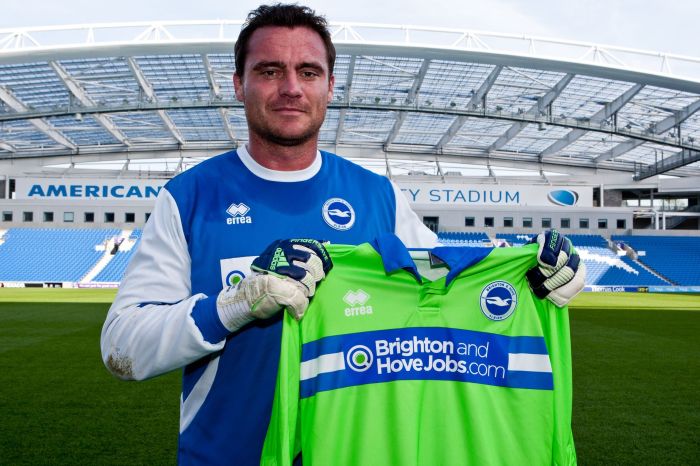
Steve Harper’s part in the Seagulls-Magpies goalkeeping ‘trade’

BRIGHTON and Newcastle United clearly have a similar eye for goalkeepers with a string of custodians having played for both clubs.

A few years before I started watching, Dave Hollins, older brother of ex-Chelsea midfielder John, moved to Tyneside in 1960 after three years with the Albion, and played twice as many games for Newcastle in the early part of that decade than he had for Brighton.

Back in the first Alan Mullery era, Eric Steele, who went through the Newcastle ranks without making the first team, arrived at Brighton to replace the injured Peter Grummitt in 1977 and was in the side that won promotion to the elite via a 3-1 win at St James’ Park in 1979.

Dave Beasant, who Newcastle bought from Wimbledon for £850,000 in 1988 – although he only played 20 games for the Magpies – was between the sticks for the Albion for 16 games in 2003.

More recently, Dutchman Tim Krul – who’d been at Newcastle a decade – spent a couple of seasons as back-up to Mat Ryan and would probably be disappointed he didn’t get more game time.

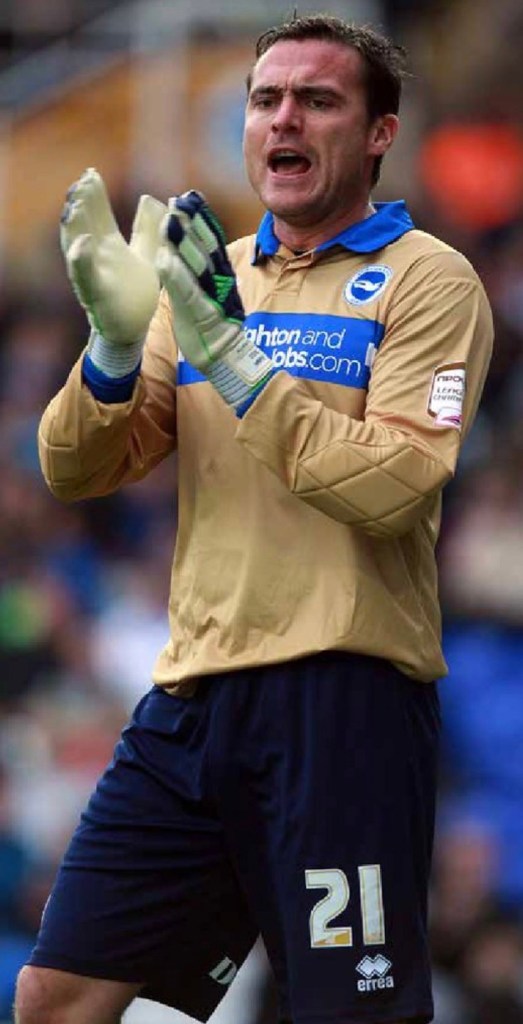
My post on this occasion, though, is about Steve Harper, United’s longest-ever serving player having been there 20 years. He later went back as one of the coaches working with Steve Bruce, as well as being goalkeeping coach to the Northern Ireland international side.

Harper is a qualified UEFA A coach and UEFA A goalkeeping coach, and holds a Masters degree in Sport Directorship.

Back in 2011, Harper was happy to lend his experience to the second tier Seagulls during Gus Poyet’s tenure as manager, a decision applauded by Alan Pardew, Toon boss at the time.

“He just wanted to play,” Pardew told the Chronicle. “Not all the top players in the country would have gone on loan – you’re vulnerable.

“You’re going down a division, but he was prepared to do that, and fair play to him.”

For his part, Harper told BBC Sport: “Everybody knows I haven’t played enough football until the last two-and-a-half years.

“I hadn’t played a competitive game for about six months so it was nice to blow the cobwebs out.”

In his first Seagulls match, unfortunately Albion lost against West Ham to a single goal from Harper’s former teammate Kevin Nolan, and he said: “It was disappointing to lose against West Ham with the possession we had.

“Now I’m here, it’s time to get stuck in. We want Brighton to consolidate and finish as high as we can. People tell me it’s a lovely city. I’m looking forward to seeing more of it.”

Harper recalled the time fondly in an interview for the Albion website in 2019.

He featured in five games for the Seagulls, keeping two clean sheets. While he conceded five goals, three came away to Southampton when the Seagulls were unjustly punished by referee Peter Walton.

Harper told journalist Nick Szczepanik: “I would have stayed longer given the opportunity. They made me feel very welcome.”

He even managed to give two of his new teammates a surprise when he started speaking to them in Spanish. Playing behind Spanish speakers Inigo Calderon and Gonzalo Jara Reyes, he explained to Andy Naylor, then of The Argus: “After five years of Bobby Robson and his multi-lingual team talks my Spanish is okay.

“Calde got quite a shock with how much Spanish I know, but I had Colocinni and Enrique in the team with me at Newcastle.”

After his brief spell with the Albion, Harper returned to Newcastle and played nine more games for them the following season before moving on to Hull City (at the time managed by current Toon boss Bruce), where he played alongside Liam Rosenior.

Born in Seaham on 14 March 1975, Harper grew up in the County Durham mining village of Easington and went to its local comprehensive school. Originally a striker at local Sunday league level, he only started playing in goal from the age of 17 and he turned out for Newcastle’s youth team while he was still at college doing A levels.

In fact he was offered a place at John Moores University in Liverpool to study for a Sports Science degree but he deferred it when Newcastle offered him a one-year contract. He signed in 1993 as a back-up for first choice Pavel Srnicek, later Shaka Hislop and subsequently Shay Given.

Much of his time at Newcastle was as a more than capable deputy to whoever was first choice although in United’s 2009-10 season in the Championship, under Chris Hughton, he was the main man and played 45 matches.

Harper had nothing but praise for Hughton, telling chroniclelive.co.uk: “He came in at an incredibly difficult, turbulent time after relegation.

“Chris was the man at the centre of a perfect storm who steered us through some very choppy waters.

“He did a wonderful job and I don’t think he got enough credit. It was no surprise to me to see him go on to do an excellent job at Birmingham City and then at Brighton.”

In total, Harper played 199 games for Newcastle, featuring under nine different managers – Kevin Keegan and Bobby Robson being his favourites.

Periodically over the years, he went out on loan to gain first-team action, appearing between the sticks for Bradford City, Gateshead, Stockport County, Hartlepool and Huddersfield. The Brighton move was his sixth spell out on loan.

Harper’s long service for Newcastle was rewarded with a testimonial against AC Milan in 2013 before he left the club to join Hull, where he spent two seasons.

Six months after his departure from Hull, he was taken on by then Premier League Sunderland as cover for Jordan Pickford and Vito Mannone, but he didn’t make a first-team appearance and was released at the end of the season.