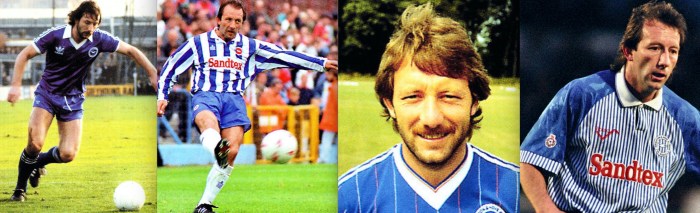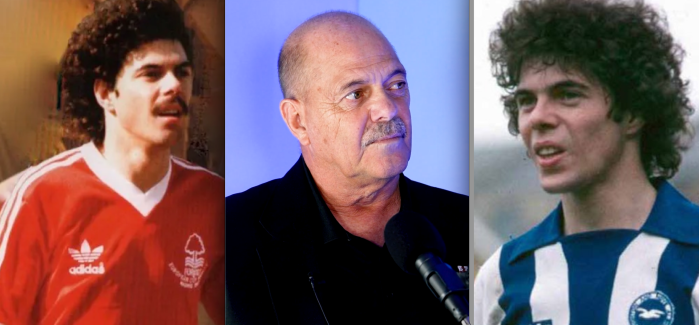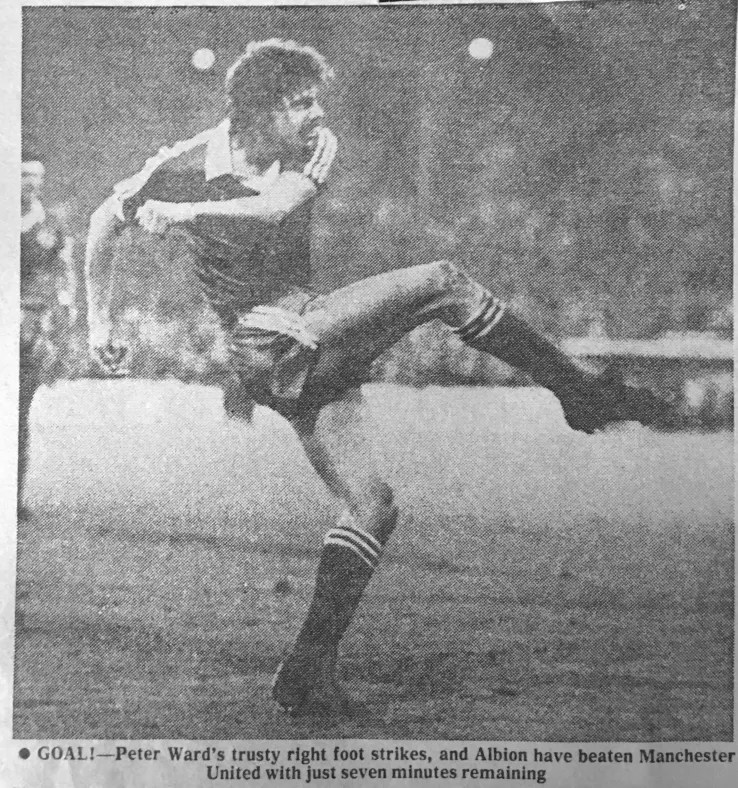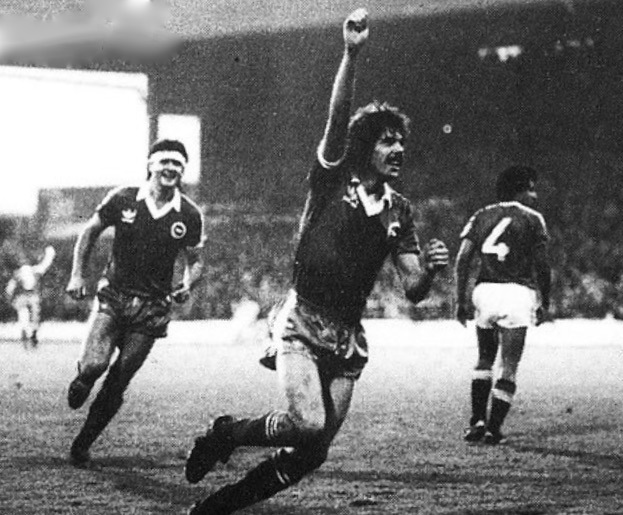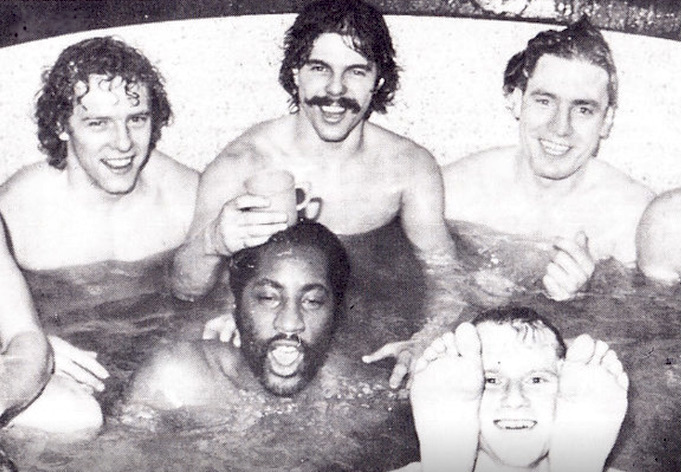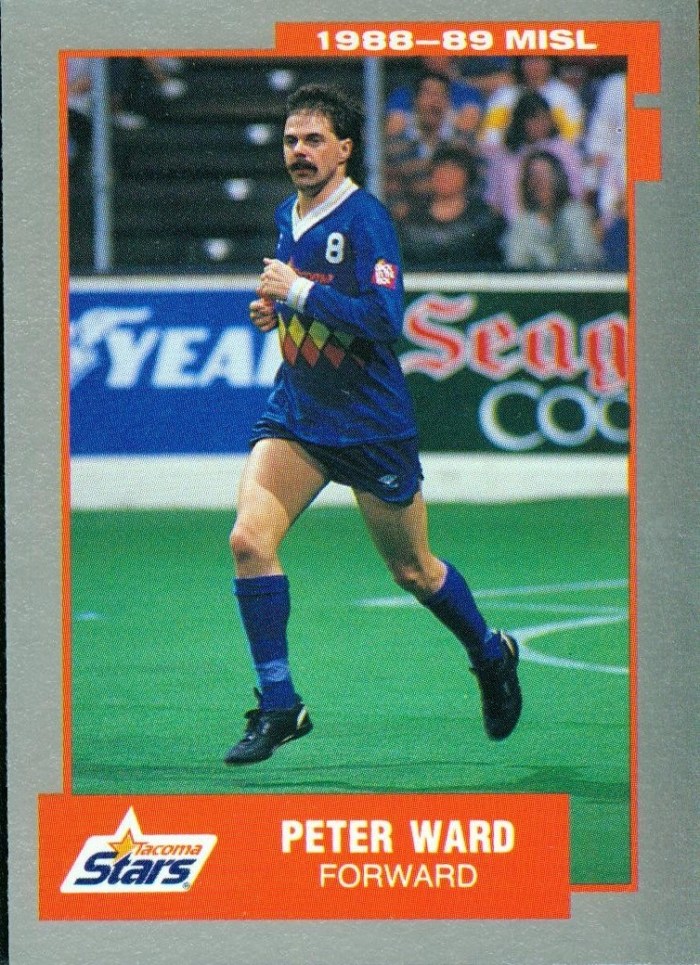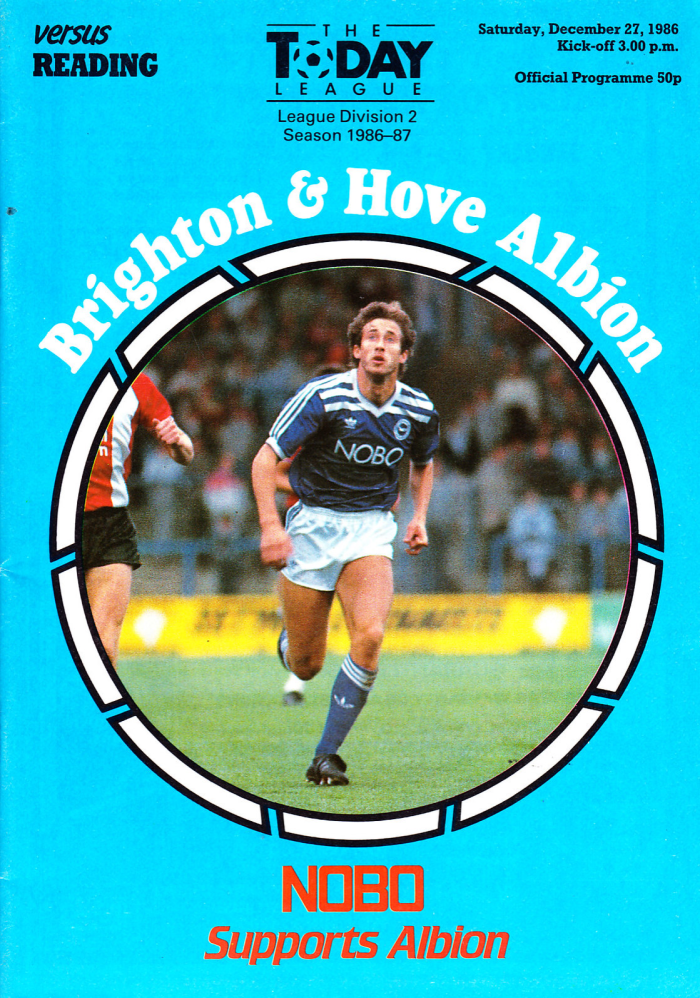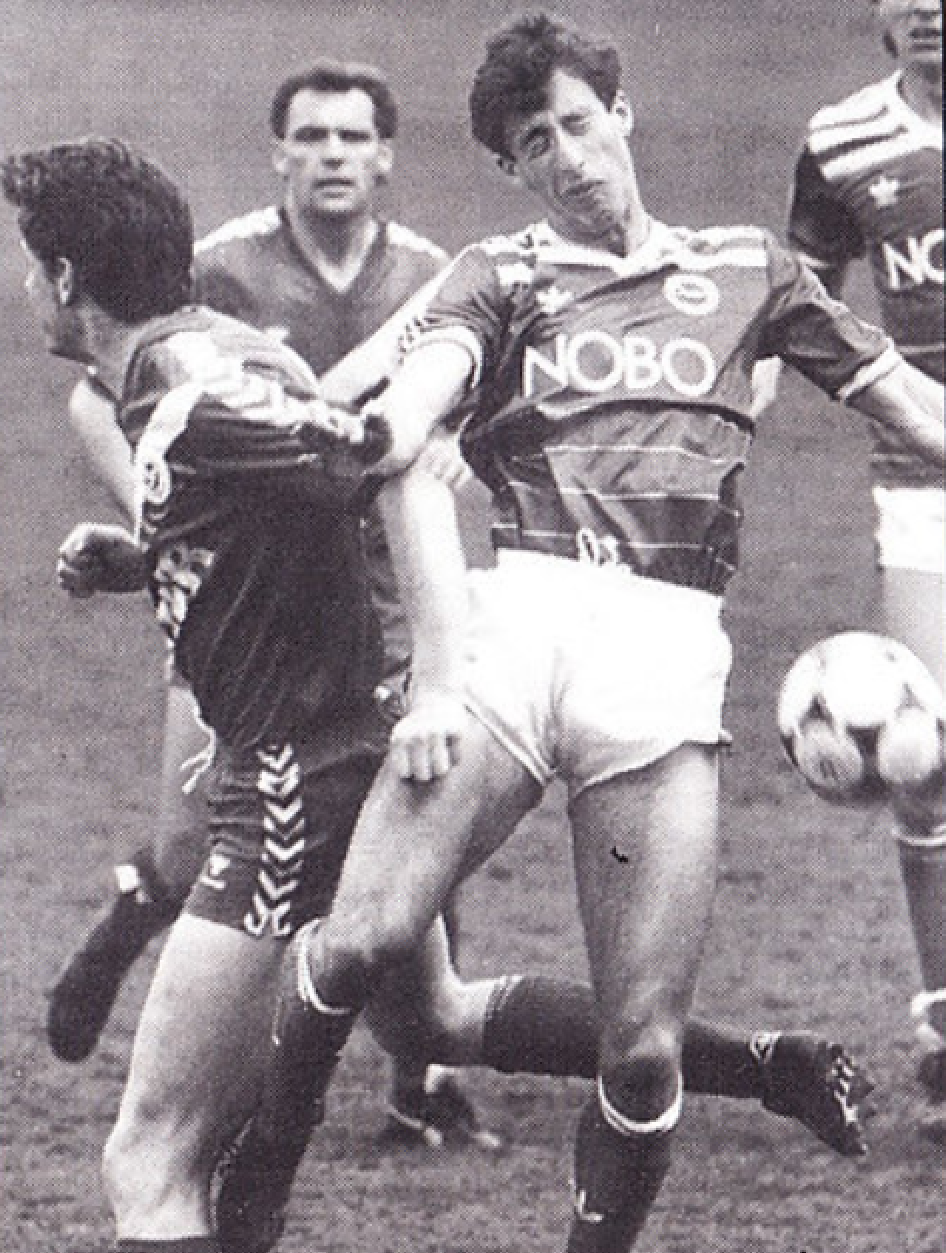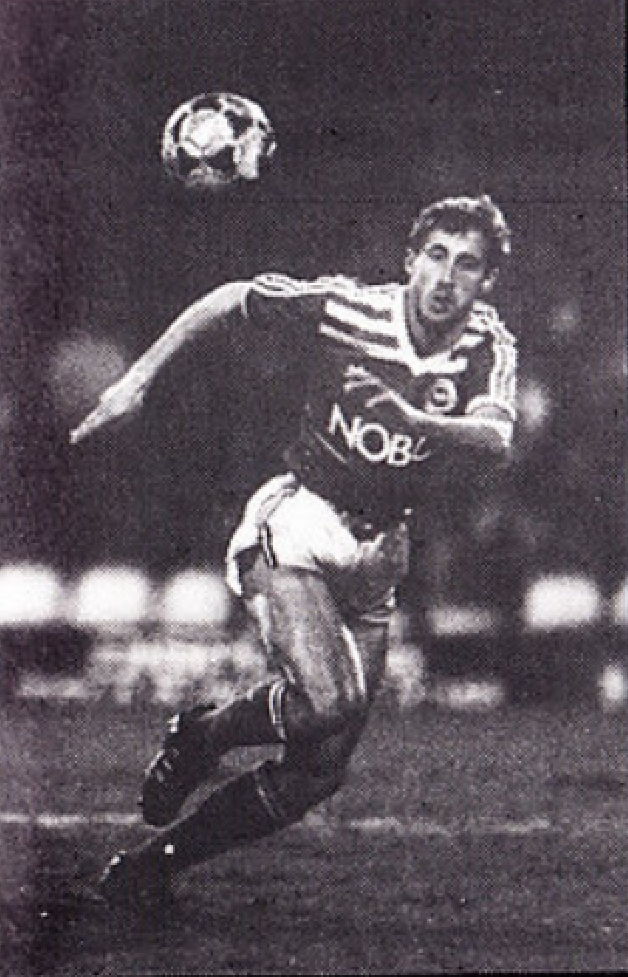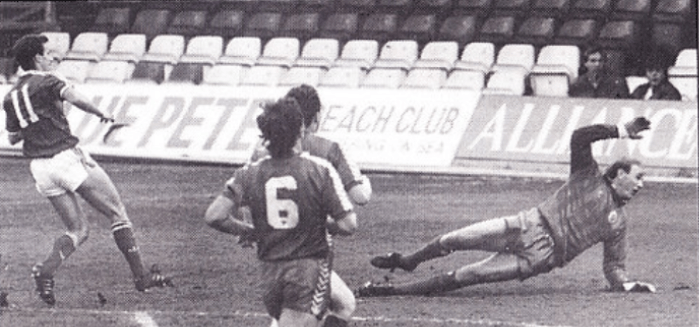
‘Spider’ Mellor’s first Albion goal was painful for his old boss

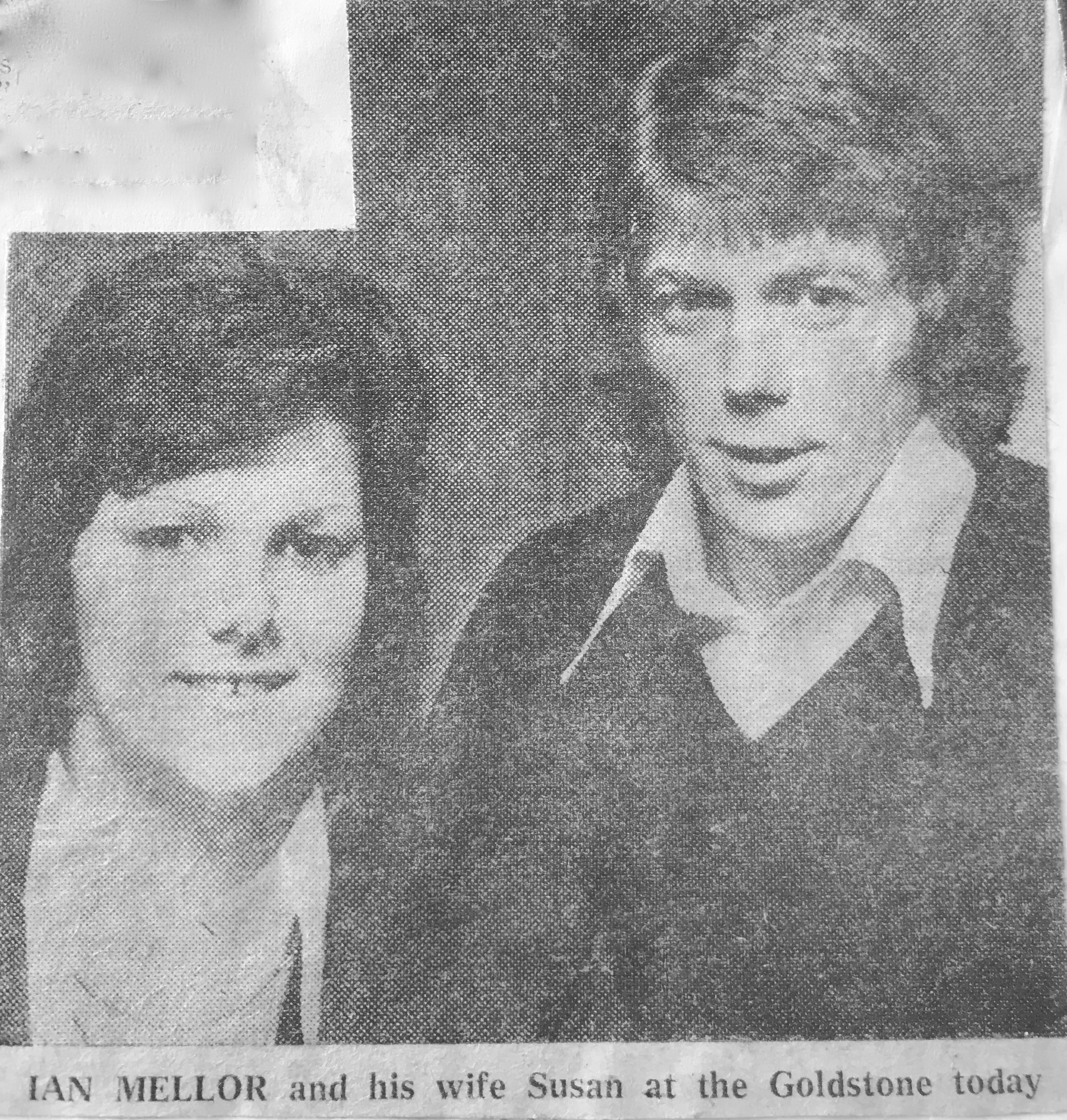
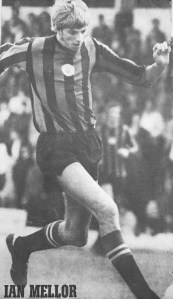
IAN MELLOR became a hero strike partner to the mercurial Peter Ward at Brighton after beginning his professional career at Manchester City.

Mellor, who I first featured in this blog in 2016, died in 2024 aged 74 from amyloidosis, a rare disease which also afflicted City legend Colin Bell.

Affectionately known as Spider because of his thin, long legs, it was a nickname given to him by City goalkeeper Ken Mulhearn who playfully likened him to the Spiderman character players would watch on TV if away in a hotel on a Saturday morning before a game.

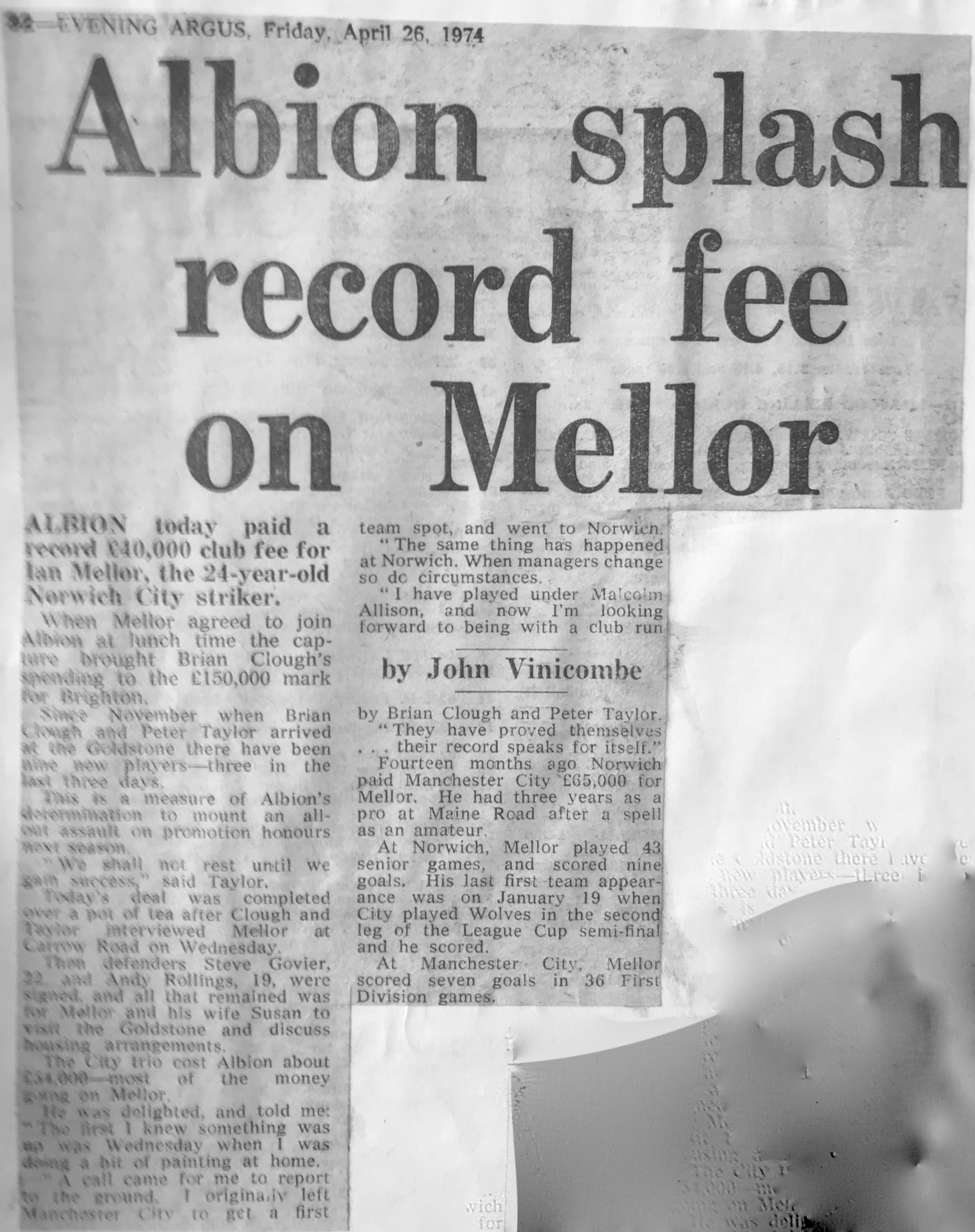
Signed for Brighton by Brian Clough for what at the time was a record £40,000 fee for the club (fellow Norwich youngsters Andy Rollings and Steve Govier joined at the same time), the opinionated manager had quit for Leeds before Mellor had kicked a ball in anger for the Albion.

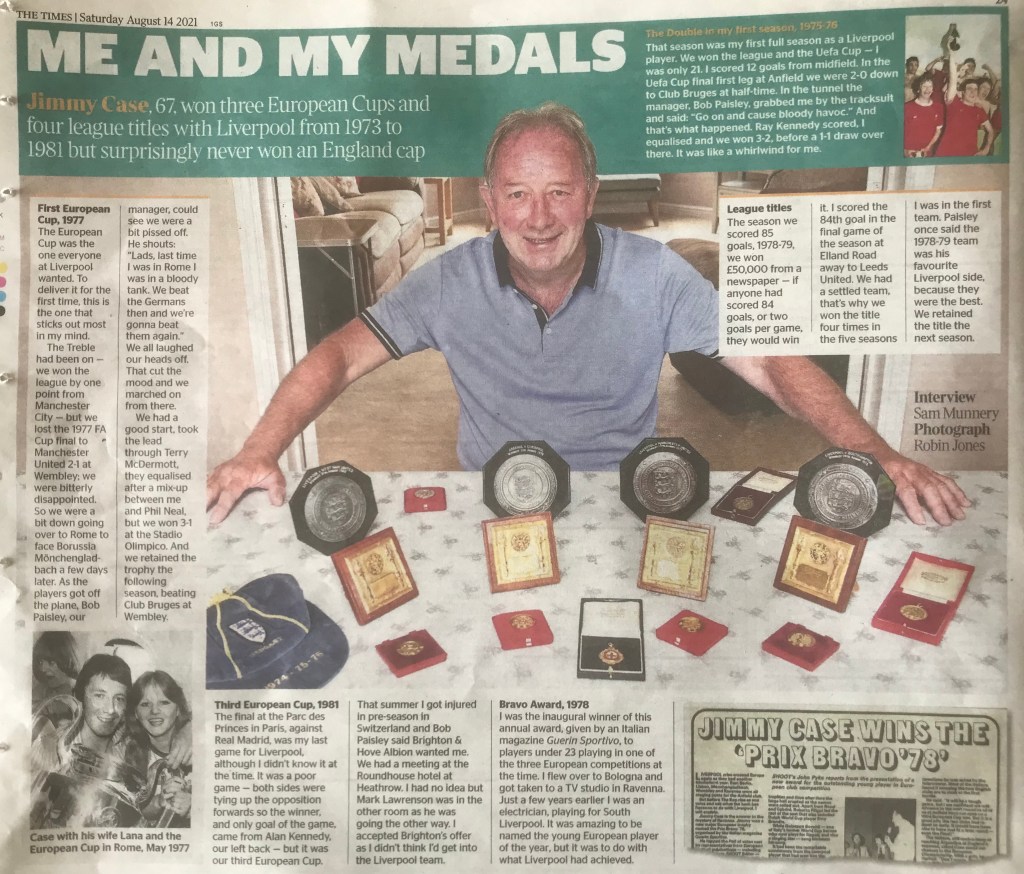
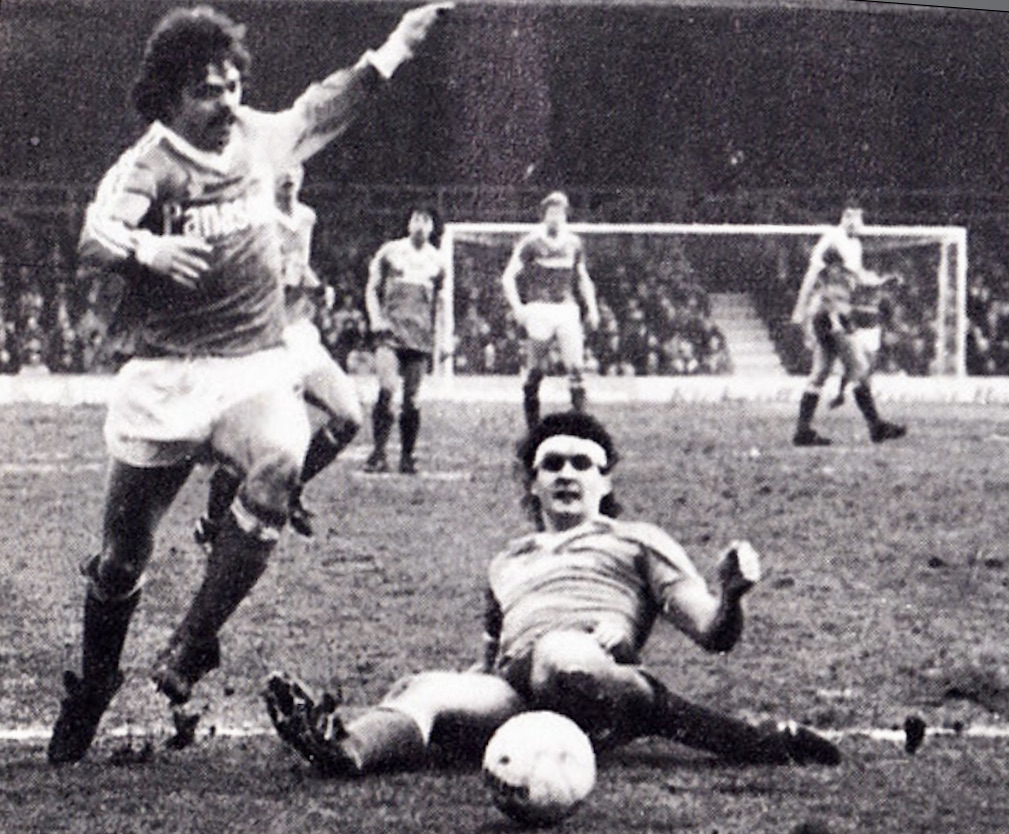
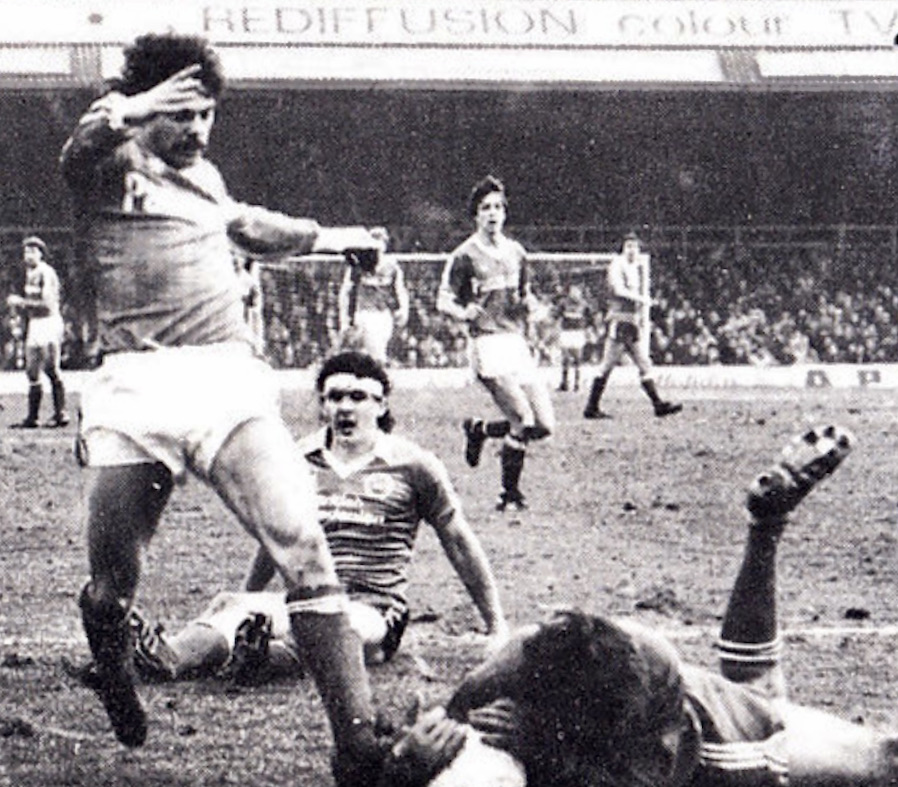
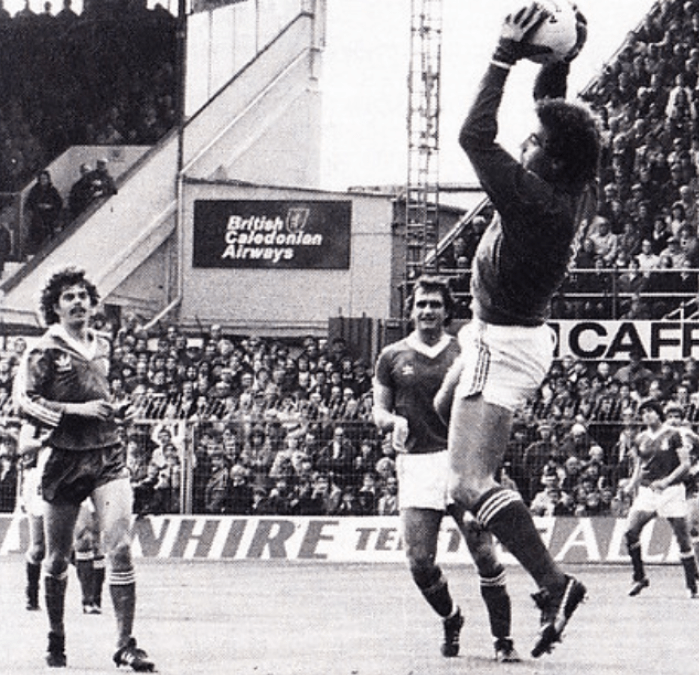
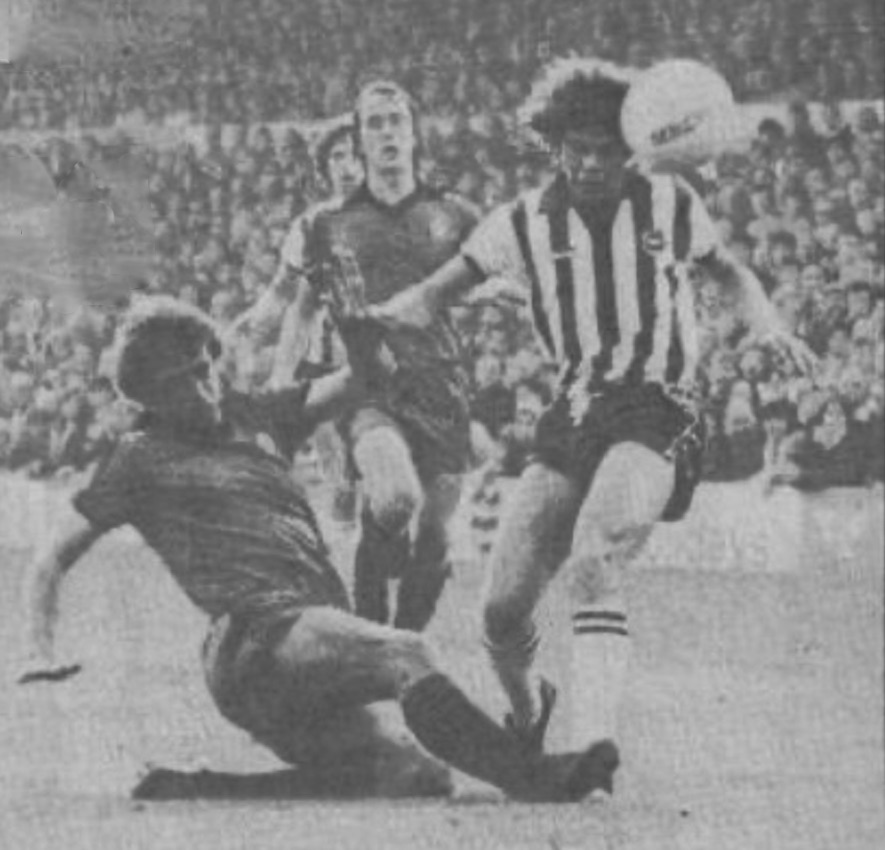
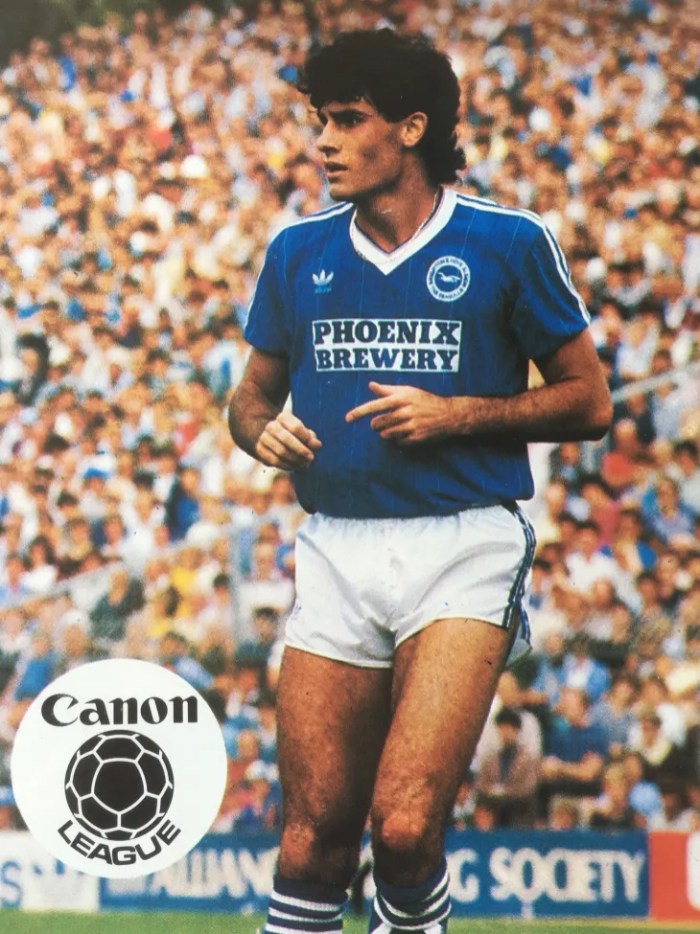
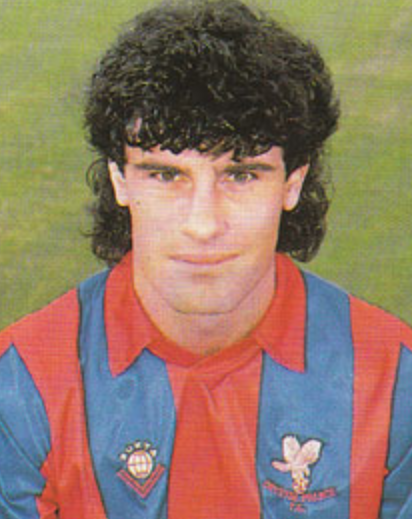
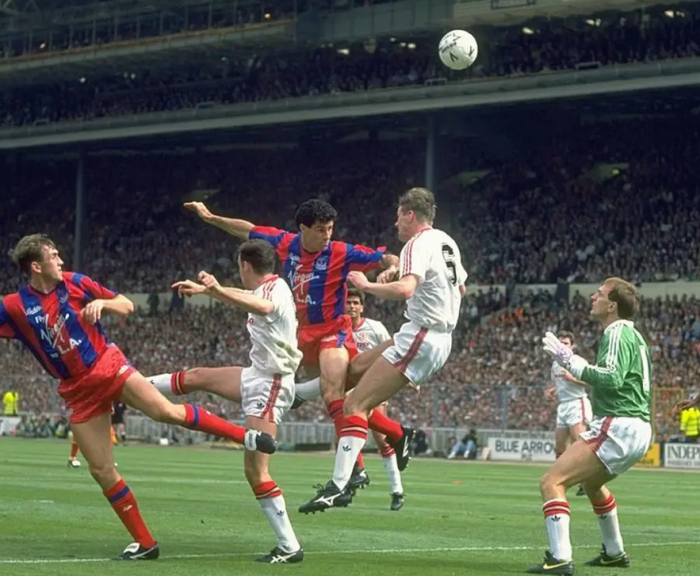
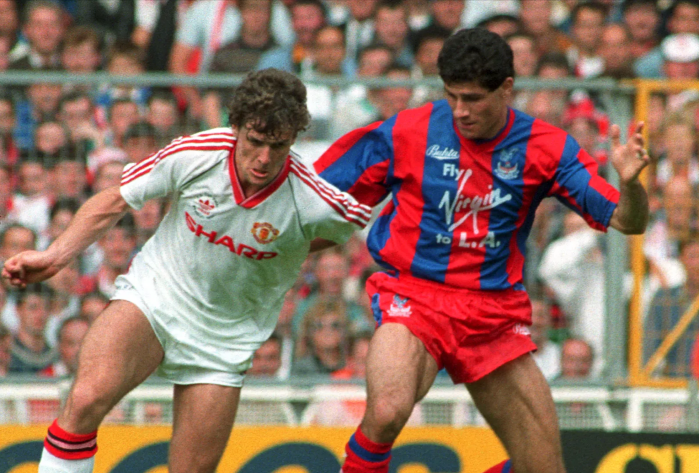
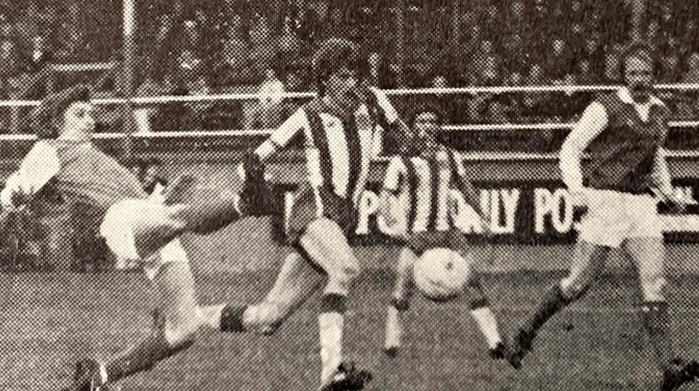
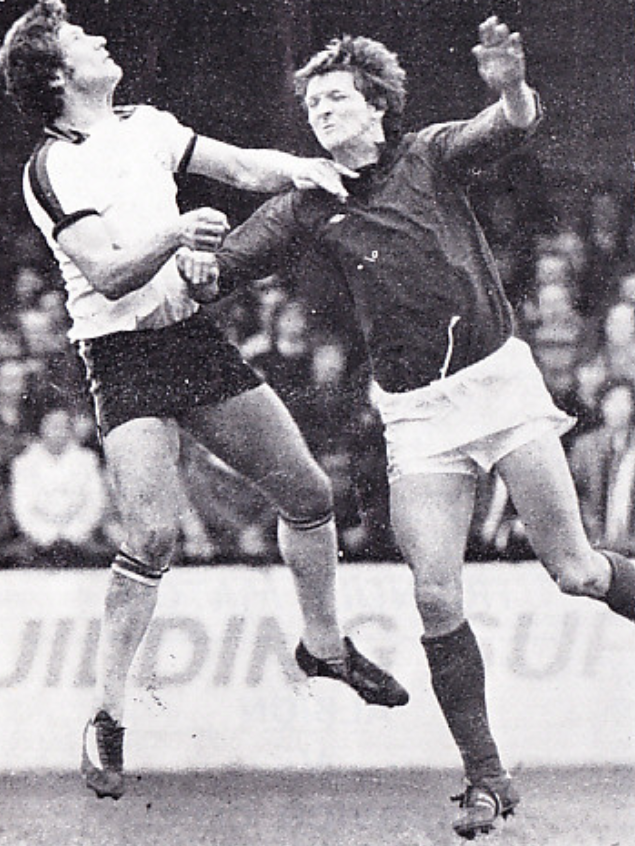
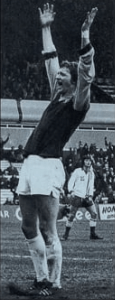
Clough’s sidekick Peter Taylor stuck around for two seasons and Mellor made a goalscoring start for him, netting against his old boss Malcolm Allison’s newly-relegated Crystal Palace side in the season’s opening game.

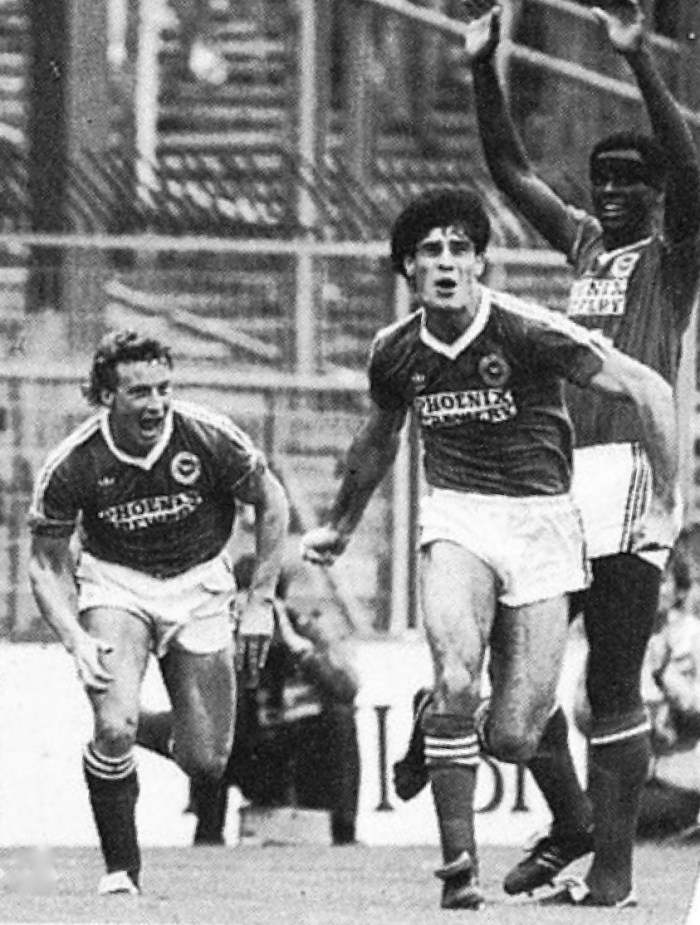
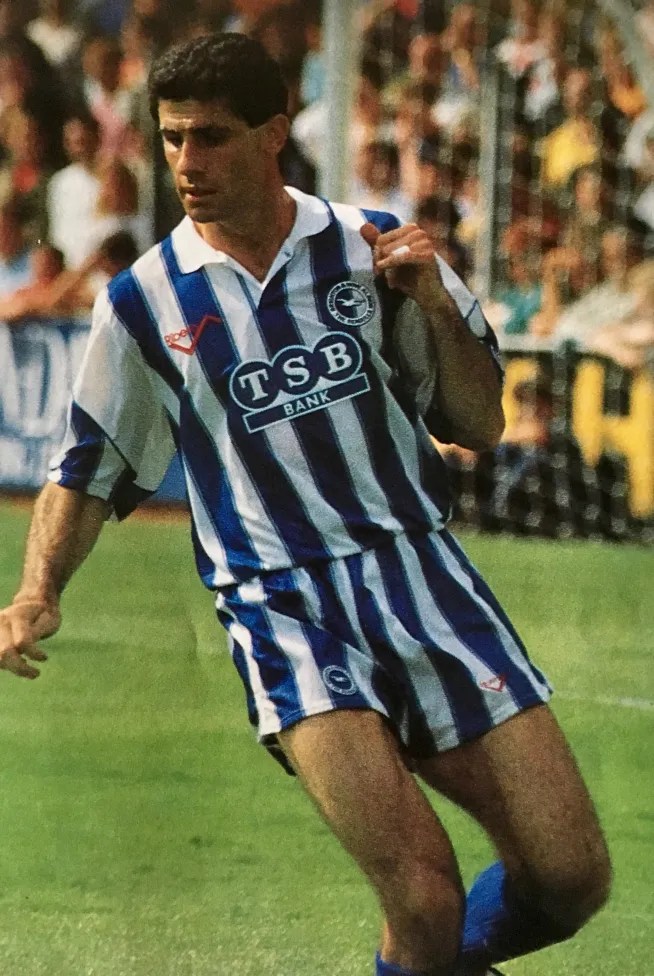
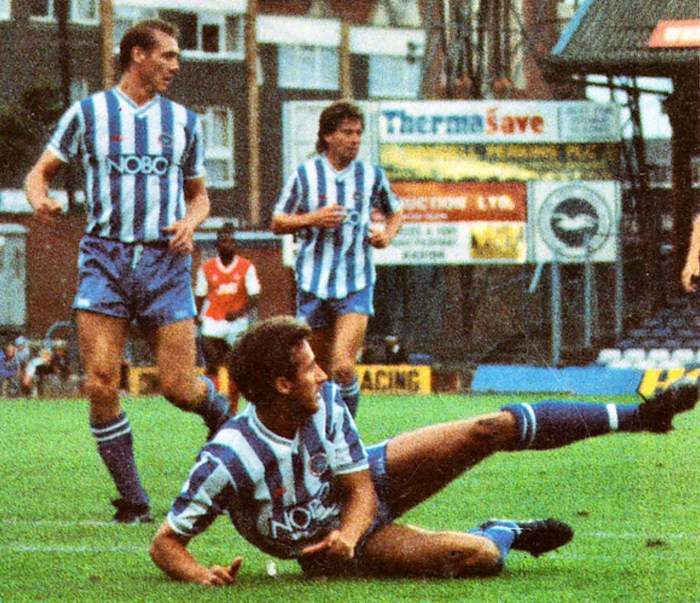
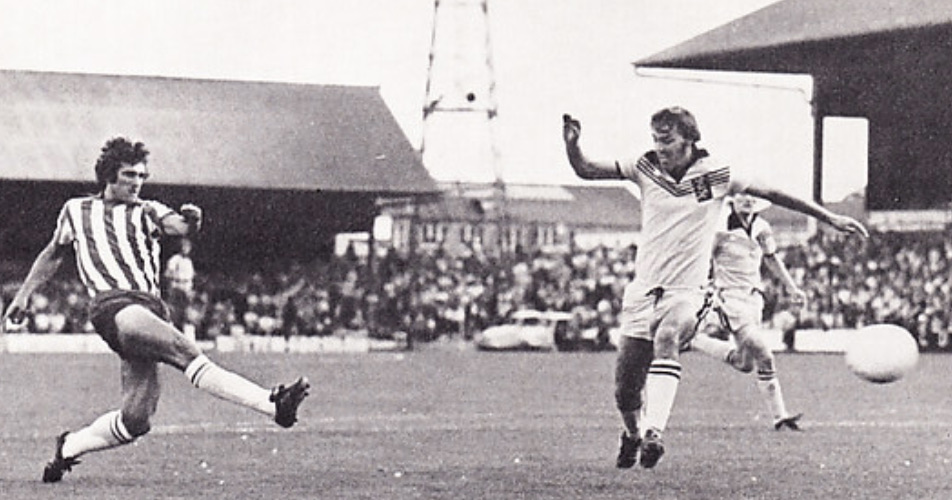
Mellor’s left-foot volley (above) in the 69th minute proved to be the only goal of the game in front of a 26,123 Goldstone Ground crowd. It was the first time in ten seasons that Albion had started with a win.

Mellor later admitted: “Palace were running all over us. It was remarkable that they weren’t about three goals up. Then in the second-half I got the ball some 35 yards out, went on a run, beat a couple of players and scored probably the most memorable goal of my life.”
A frustrated Allison said: “I remember Spider when I was at Manchester City.

“I didn’t want to see him leave for Norwich. Directors force you to do that sort of thing, then they sack you. Spider was a late developer, but his timing is so good now.”

Allison had played a big part in Mellor’s early development and when City chairman Peter Swales’ sold the youngster for £65,000 to Norwich City to bring in some money, he did it behind the manager’s back (he was ill in hospital at the time) and Allison quit Maine Road in protest.

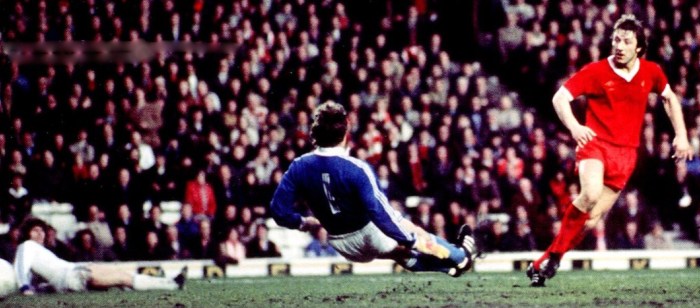
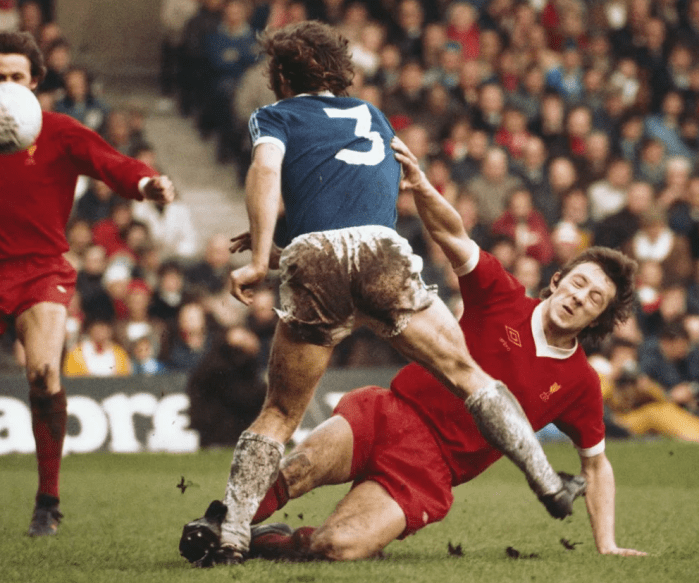
Interviewed in Goal! magazine in June 1973, Mellor said: “It was a wrench leaving the Manchester area. After all, I’d lived all my life within a few miles of City’s ground, and I would never have left Maine Road if things had been left to me, even though I hadn’t nailed down a regular first team place.

“But when I was asked if I would have a chat with Ron Saunders about moving to Norwich, I was ready to go anywhere. After all, if someone tells you that they are prepared to let you go, you know that you are expendable.”

Thirty years later, in an interview with football writer Gary James, Mellor admitted: “I should never have gone to Norwich.  I went from a top five side to a bottom five side overnight and it was such an alien environment. 

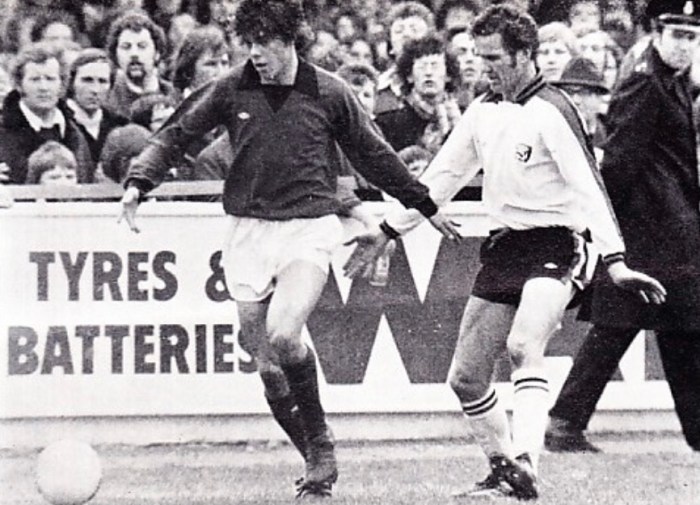
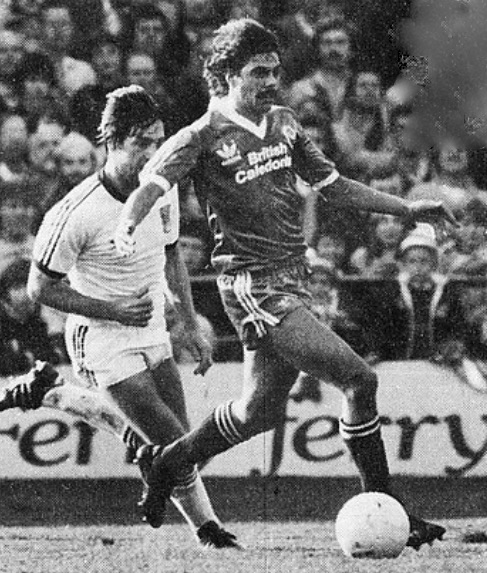
In action for Norwich City

“Norwich is a nice place, and a good club, but at that time the move was totally the wrong move to make.  Because they were struggling there was no confidence.  The contrast with City was unbelievable.”

And he said of Allison: “He was the best as a coach and motivator and I learnt so much from him. He could be tough, but you listened because he had already delivered so much by the time I got into the first team.”

Before Allison, Mellor had come under the wing of a trio of notable coaches in City’s backroom: Johnny Hart, Ken Barnes and Dave Ewing. “They were very knowledgeable and men of real quality,” he told James. “They knew what they were talking about and they also cared passionately about the game and the club.  They’d all had great careers and as a young player you listened and learned.”

Mellor was certainly dedicated to the cause having been given a second chance by City after being shown the door following a trial when he was 15. City’s chief scout Harry Godwin told Goal! magazine: “You could see something there, a useful left peg for instance, and other things, but there wasn’t much of him and, frankly we felt it best to leave it a while.

“We suggested he went away, found himself a local club but kept in touch with us. He did, with a letter asking for another trial. We open all letters we receive, of course, but you could say this is one we are particularly glad about looking into.”

Mellor explained to the magazine: “After that first City trial I had about four games with the Blackpool B side and about a season with Bury as an amateur. Nothing came of it, though I was playing in a local Manchester Sunday league.

“Then I had a particularly good game and got a few good write-ups in a local paper near Manchester. So, I cut them out and sent them to City asking ‘What about another trial?’ They gave me one.”

He first signed as an amateur (in July 1968) and shortly before signing on as a professional at the relatively late age of 19 in December 1969, City loaned him (and goalkeeper Ron Healey) to Altrincham and he played in a 2-1 win at Buxton in the North West Floodlit League on 15 October 1969.

Back at City, he made his reserve team debut in October 1970 away at Aston Villa and six months later stepped up to the first team. It was 20 March 1971 when a nervous Mellor made his City first team debut in a 1-1 draw at home to Coventry City. Ironically, Wilf Smith, the full-back he was up against in the first half of that match, was temporarily a teammate during his first season at Brighton – he had five games on loan to the Albion.

Three years earlier, though, Mellor admitted: “I became a nervous wreck, and in the first half I think that was obvious.  I just wasn’t right.  Malcolm Allison had a real go at me at half time and warned: ‘If you don’t pull your finger out, you’ll be off!’  So that got me playing!  The second half I really worked hard and played my normal game.”

Incidentally, that Coventry side also had Mellor’s future Albion teammate Ernie Machin in midfield alongside Dennis Mortimer, who spent the 1985-86 season with the Seagulls.

Four days after Mellor’s debut, he scored in a European Cup Winners’ Cup quarter-final against Gornik Zabrze, as City won 2-0 (Mike Doyle the other scorer). He was also on target in an end-of-season Manchester derby match when City lost 4-3 to United. “As a City fan, the derby meant an awful lot and scoring your first league goal in a derby is something special, especially for a local lad,” Mellor told Gary James.

It was in the 1971-72 season that Mellor got more of a look-in at first team level, the majority of his 23 starts (plus one as a sub) coming in the first part of the season, before Tony Towers got the nod ahead of him.

In a departure from the pre-season Charity Shield (now Community Shield) norm of League champions playing FA Cup winners at Wembley – Derby and Leeds chose not to be involved – fourth-placed City played Third Division champions Aston Villa 1-0 at Villa Park in August 1972. Mellor might have missed out on a chance to play at Wembley but he was part of history as two subs were allowed for the first time and he went on for Wyn Davies (other sub Derek Jeffries replaced Willie Donachie).

In the season that followed, cut short by his March 1973 sale to the Canaries, he started 13 games and went on as a sub six times. In both seasons he scored four goals.

In all competitions, Mellor made 42 starts for City, plus eight appearances as a sub and scored a total of 10 goals.

In spite of his goalscoring start at Brighton, Mellor was one of several players who didn’t hit it off with Taylor and he was suspended for a fortnight after missing training and returning to Manchester without the manager’s permission.

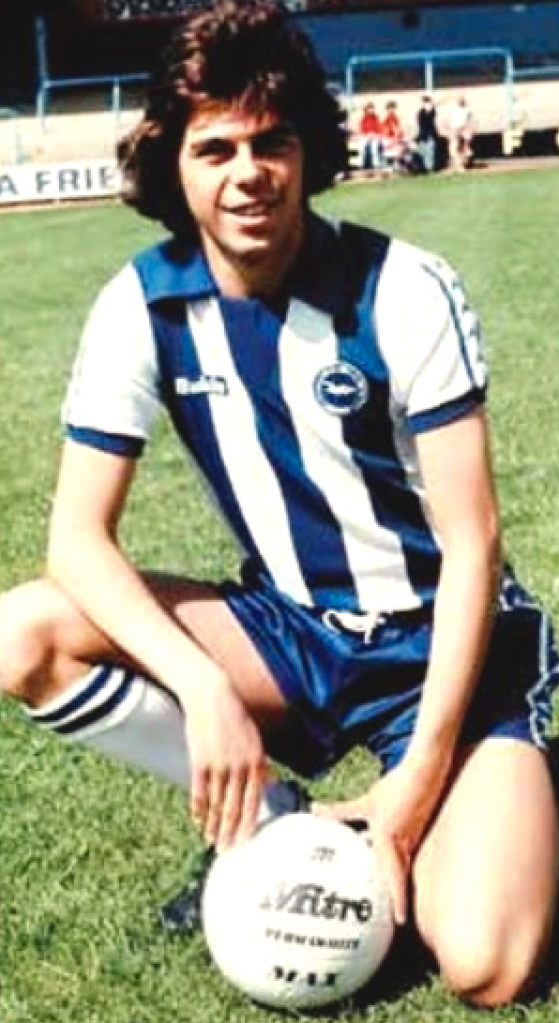
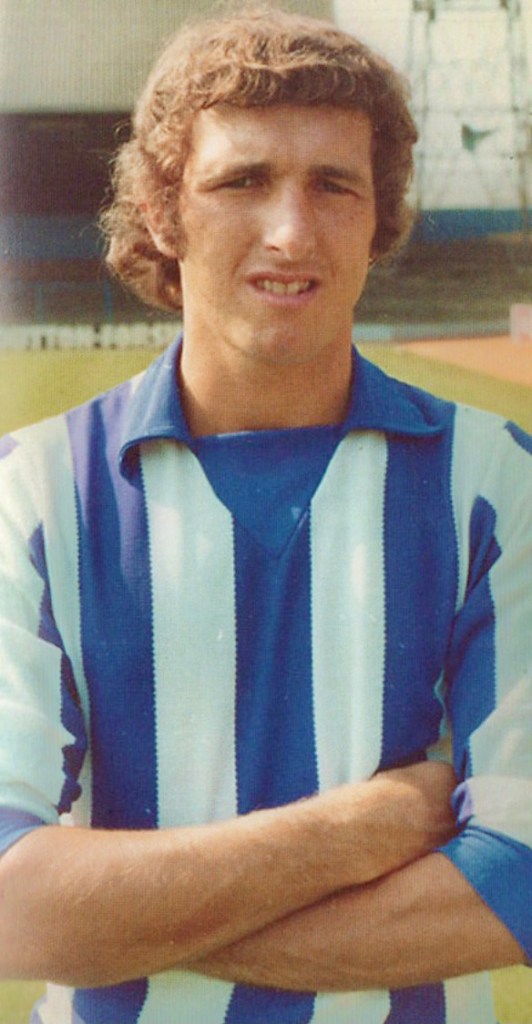
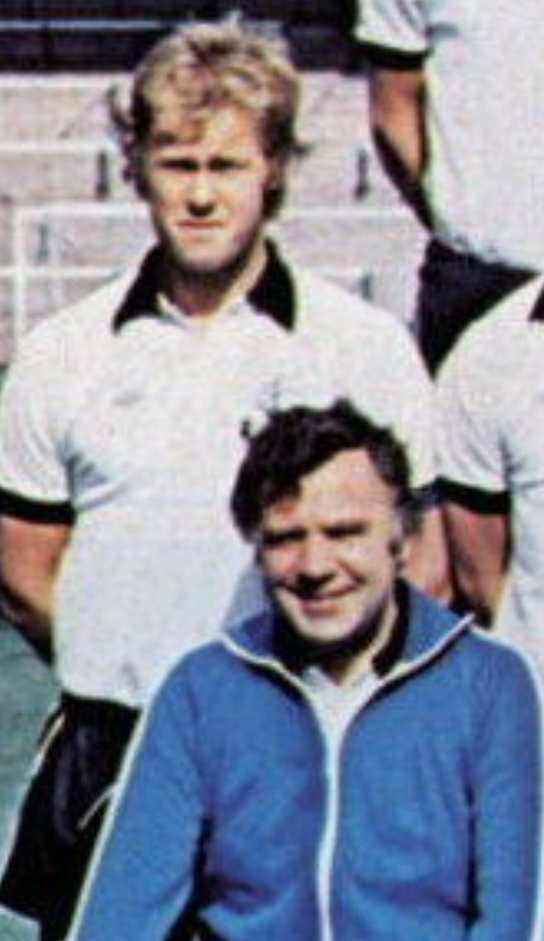
Photo call ahead of his debut for the Albion

Perhaps the almost wholesale change in the make-up of the squad was the cause of an indifferent season which saw the side finish uncomfortably close to the relegation places.

Mellor scored six more goals but between the second week of January and the end of the season he only made one start and two sub appearances.

In his end of season summary, John Vinicombe, the Albion reporter for the Evening Argus, said: “Most puzzling aspect of the season was Ian Mellor’s decline.”

The scribe maintained: “There is no satisfactory explanation for what went wrong with Mellor, and his role passed to Gerry Fell, who turned out quite a find considering that he cost only £250 from Long Eaton and had not kicked a ball in the League until the age of 23.”

It wasn’t until the end of November of the 1975-76 season that Mellor resumed a regular starting spot in the side but from then on he was almost ever present and notched nine goals in 33 games playing wide on the left as Albion just missed out on promotion.

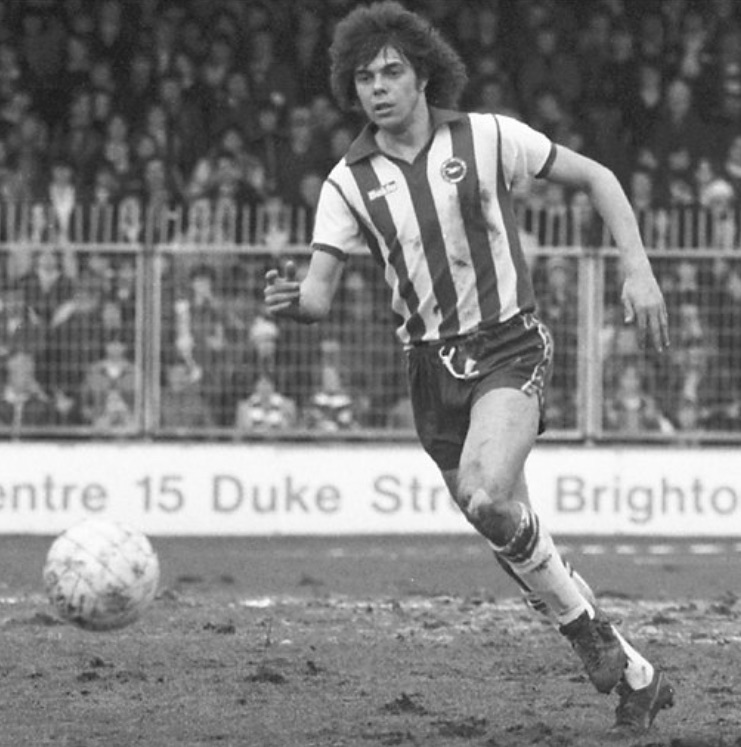
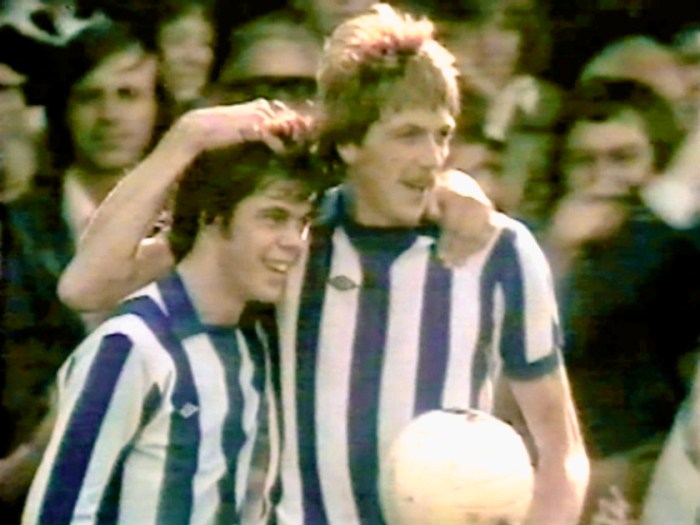
The story of what happened next has been told many times: Alan Mullery saw Mellor as a central striker to play in tandem with the nippy newcomer, Peter Ward, and they swiftly developed a partnership which saw Albion win promotion from the Third Division as runners up behind Mansfield Town.

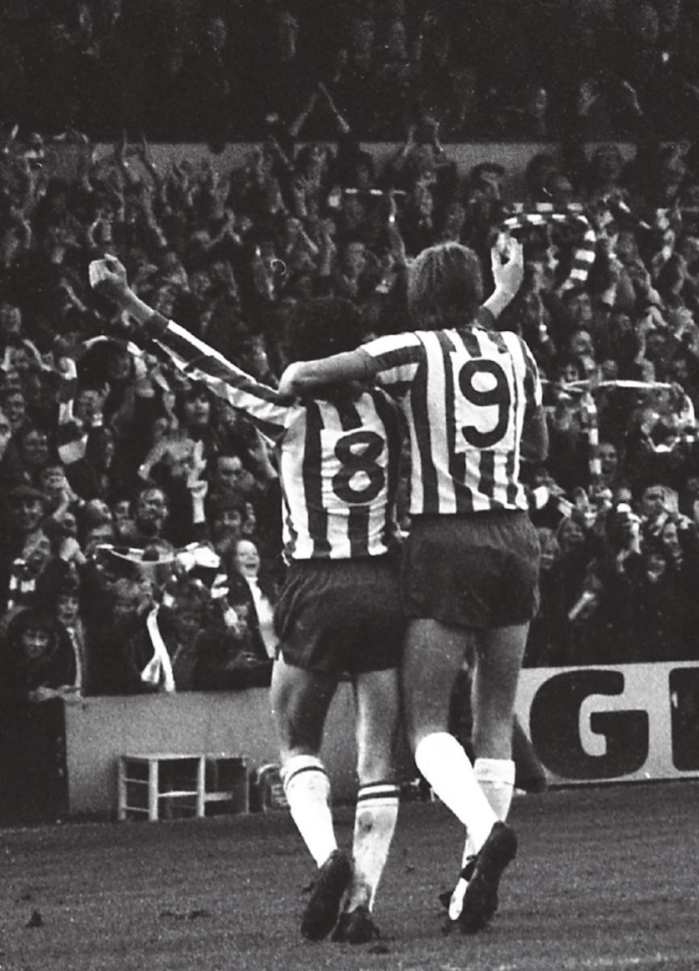
Prolific goalscoing partnership with Peter Ward

The aforementioned Vinicombe gave Mellor man-of-the-match as Albion beat Mellor’s future employer Sheffield Wednesday 3-2 to clinch promotion on 3 May 1977 in front of 30,756 fans at the Goldstone.

“The Goldstone fans were so good to us,’ Mellor remembered, “and that year was the happiest in my playing career.”

In a similar vein to his retrospective view of regretting leaving City, Mellor also said in hindsight he should have stayed longer with the Seagulls, where he had lost his place to big money signing Teddy Maybank.

“I knew I was better than him, but they had to justify his price and that’s why I got dropped,” Mellor told Spencer Vignes in an Albion matchday programme. “In hindsight, of course, I should have stayed. I was still good enough. I was 29, with two good seasons left in me.”

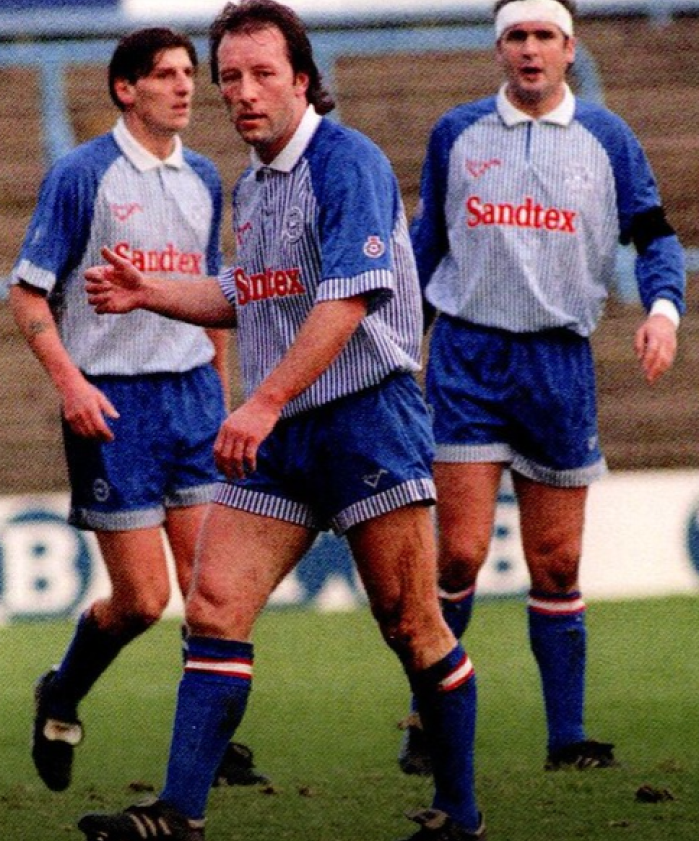
He moved back to his native north west in February 1978 to play for Chester for two years. Their player-manager was former City legend Alan Oakes and his teammates included the aforementioned fellow Charity Shield sub Derek Jeffries and former Albion teammate Jim Walker. Chester FC Memories said of him on Facebook: “His time at the club included scoring in the memorable derby win at Wrexham (2-1) and in the League Cup victory over First Division side Coventry (2-1) early the following season.”

Leading the line for Chester

His last Chester goal came in a 2-2 home draw with Sheffield Wednesday who he went on to join under Jack Charlton the following season. Mellor spent three years and scored 11 goals in 79 matches for Wednesday. One of the most memorable was recalled by The Yorkshire Post who reported in 2021: “Mellor made himself a lifelong hero with Wednesdayites midway through his debut season at Hillsborough, when he opened the scoring in the 1979 ‘Boxing Day massacre’ 4-0 home win over neighbours United with a goal from 25 yards. He also hit the woodwork in that game.

Boxing Day glory in Sheffield

“Despite being played in Division Three, the match was watched by over 49,000 fans – a record for third-tier football. The goal is still occasionally sung about to this day.”

Mellor himself told The Sheffield Star: “It’s stange to me, considering it’s 40-plus years ago but it remains such a strong feeling among Wednesday supporters. It’s flattering but crazy!

“You’re only remembered so many years on if you’re a good player and luckily for me I scored a good goal in such an important game.”

Mellor’s final two seasons in league football were spent at Bradford City, managed by former Leeds and England defender Trevor Cherry, and he ended his playing days with Hong Kong club Tsun Wan, Worksop Town, Matlock Town and Gainsborough.

After he had stopped playing, he worked for Puma and Gola, encouraging players to wear their brands of football boots, and he was also a commercial executive for the Professional Footballers Association.

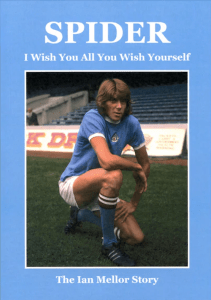
Following his death at St Anne’s Hospice in May 2024, it was announced that his family were to donate proceeds from his autobiography Spider to get a bedroom named in his honour at the charity’s new hospice in Heald Green, Stockport.

His widow Sue said: “It was Ian’s wish that we raise funds for St Ann’s Hospice as a thank you for the wonderful care he received. Ian was proud of his football career and all proceeds from his book will go to charity.”

Bank clerk Fell on his speedy feet at the Albion

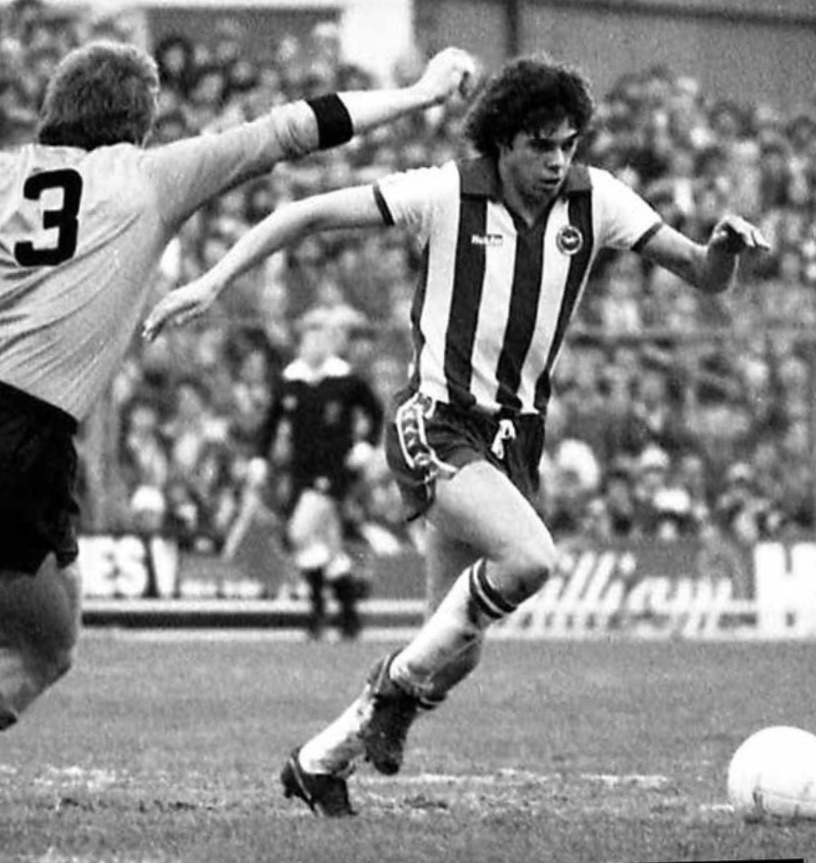
In full flight for the Albion

NOT TOO many professional footballers start out as bank clerks, but Gerry Fell broke that mould when he signed for Brighton.

Six-foot winger Fell had worked at the Newark branch of NatWest for five years, combining bank clerk duties with playing semi-professional football for Lincolnshire-based Stamford in the United Counties League.

In the latter part of 1973, Stamford played Long Eaton United in a FA Trophy second round qualifying match and Long Eaton’s manager, Brian Daykin, having liked what he saw, signed Fell for the Derbyshire side the following summer.

Within weeks, Daykin left Long Eaton to become no.2 to Peter Taylor at the Albion – and one of his first moves was to persuade Taylor to sign Fell. Taylor watched the player a couple of times and endorsed his assistant’s opinion.

Fell was 23 when he packed up his NatWest job to move to Sussex and turn professional.

“I loved Brighton from the moment I arrived, absolutely loved it, especially considering where I came from,” he said. “It was a totally different ball game to Newark and I loved the idea of living by the sea. It was so cosmopolitan and a massive eye-opener for me.”

In a matchday programme article, Fell told Spencer Vignes: “I was always very fit and a good trainer, so I didn’t find the training difficult at all. But obviously the step up in terms of actually playing took a bit of getting used to.

“I thought it was great because, as you can imagine, it was a stars-in-my-eyes job for me. I got into the first team within three months of arriving, so it was fantastic. I’ve never regretted any of it.”

Pointing out that he wasn’t the only member of that squad who was late to the game and from non-league (Peter Ward and Brian Horton were too), he said: “You had a few of us who’d experienced the outside world and perhaps appreciated what it meant to be a professional footballer that little bit more because of it.”

Born in Newark on 1 March 1951, Fell’s first football memory was as the mascot for Newark Central, a local team that his grandfather ran. He was educated at Magnus Grammar School in Newark where he earned a reputation for athletic achievements, gaining honours in high jump and 800 metre running.

Fell certainly hit the ground running at the Albion as a pacy goalscoring winger, netting five goals in 20 appearances in the season he arrived plus eight in 28 the following season (1975-76).

His initial first team involvement was as a non-playing sub for a 2-0 home win over Southend United on 7 December 1974 (Tommy Mason and Jim Walker the scorers), but once he’d made his debut at the end of the following month in a 2-0 win over Colchester United, he kept the shirt previously worn by Ian Mellor through to the end of the season (bar one game when Mellor replaced him).

In 1975-76, when Taylor’s much-changed side only narrowly missed out on promotion, Fell twice hit braces in 6-0 wins at the Goldstone, the first pair against Chester in September (Fred Binney 2, Peter O’Sullivan and Mellor also scorers), the other when Colchester United were dispatched by the same scoreline in January 1976 (Binney another two, Andy Rollings and Mellor also scoring).

He revelled in switching from playing in front of 200-300 people to turning out at the Goldstone where crowds could often be more than 20,000 – even for Third Division games.

“To play in front of that amount of people on that ground, well, it was a dream come true,” Fell told Vignes. “The Goldstone was a bit of a fortress at that time and the players in the team were so confident.”

Apart from that first half-season, Fell generally competed with Brighton-born Tony Towner for the no.7 shirt and Taylor’s successor Alan Mullery went with Fell for the final run-in to promotion from the third tier in the spring of 1977. He started 11 games and scored the only goal of the game as top-of-the-table Albion secured a vital 1-0 win over Port Vale in their penultimate home game.

“It wasn’t easy being on the sidelines looking on, but Gerry was a breath of fresh air,” Towner said in a matchday programme interview. “He was the opposite of me; though still a winger, he had loads of pace, though not too much skill!

“He’d knock the ball ahead of him and run past the defender to get it. I’d try to trick my way past.”

Ironically, although Brighton secured promotion by beating Sheffield Wednesday 3-2 in the last home game, the man of the match was the visitors’ Eric Potts – and his next game at the Goldstone was in Albion’s colours… as a replacement for Fell and Towner!

Having liked what he saw in that exciting encounter under the lights in front of a bumper crowd of 30,756, Mullery promptly signed Potts for £14,000 in the close season.

The diminutive winger had previously played for Wednesday at the level of today’s equivalent of the Championship and he was installed in the no.7 shirt for the first 21 games of the season.

Fell played and scored in his first start of the season (a 2-0 home win over Hull City) in September and the following game, his last start in an Albion shirt, was in a 2-2 League Cup second round replay draw at Oldham Athletic.

But Fell wasn’t done with the Seagulls just yet. He proved to be a matchwinner after going on as a 57th minute substitute for the injured Steve Piper in the last league game of September, a 3-2 night game win over Luton Town in front of a Goldstone crowd of 25,132.

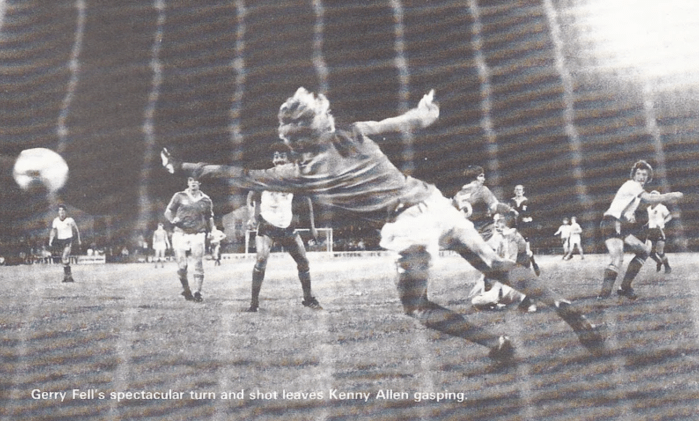
The game was finely poised at 1-1 (Ward and Ron Futcher on target) when on 84 minutes Fell, unmarked at the far post, headed in a second Albion goal when Mellor flicked on a corner by Potts. Three minutes later, Fell was once again played in by Mellor and a turn-and-volley into the top corner from the edge of the box put Albion 3-1 up. There was still time for Jimmy Husband to pull one back for the Hatters, but Albion held on to take all the points.
Those goals didn’t earn him a starting place, though. On six further occasions Fell was sub (three playing, three not getting on) before Mullery traded him as a makeweight in the signing of 19-year-old powerhouse midfielder Paul Clark from Southend United.

In the three years between his first involvement with the first team as a non-playing sub at home to those future employers and his last, going on for Potts in a 1-0 defeat away to Notts County on 5 November 1977, only three other players were involved in both fixtures: Graham Winstanley, O’Sullivan and Mellor. Fell departed with the impressive record of 20 goals in 72 starts plus 19 sub appearances.

In his first season in Essex, he helped Dave Smith’s Shrimpers to promotion from Division Four when they were runners up behind Watford. Third-placed Swansea City and Brentford in fourth also went up.
The next season, while his old Albion teammates were celebrating promotion to the elite for the first time in the club’s history, Fell’s Southend finished mid-table in the third tier, although they did have the excitement of a memorable FA Cup third round encounter with mighty Liverpool: he was part of the Southend team that memorably held the European champions to a 0-0 draw in the FA Cup in January 1979 when 31,033 crowded into Roots Hall.
“It was snowy and frosty and we could’ve beaten them on the night,” United manager Smith later told the local Echo newspaper.

“Derrick (Parker) missed a sitter at the end but I remember turning to one of my coaches and saying I was glad he missed. They thought I was mad but it meant we got to go to Anfield and I’d never managed a team there before.”

How did Southend manage such a result against a full-strength Liverpool side captained by Emlyn Hughes with Ray Clemence in goal, Jimmy Case and Graeme Souness in midfield and Kenny Dalglish up front?

In the lead-up to the game, Smith said: “We couldn’t find anywhere to train so we went to the bottom of the pier. We ended up in a pub there drinking hot port and this was only a few days before the game. Maybe that’s the answer to playing so well.”

Liverpool made up for it in the replay a week later when they won 3-0 (goals from Case, Dalglish and Ray Kennedy) and Fell was subbed off on 75 minutes.

The last season of the decade would end in the disappointment of relegation, and Fell’s departure from the club, but they once again had excitement in a cup competition against higher level opposition, winning 2-1 away at Bolton Wanderers (and drawing 0-0 at home in the second leg) in the second round of the League Cup and then twice forcing draws against West Ham in the third round, before losing 5-1 in a second replay.

When it came to the FA Cup though, United were on the wrong end of a giant killing as Isthmian League Harlow Town beat them 1-0 in the second round.

Not long after joining Southend in 1977, Fell had helped them beat Torquay United 2-1 in the first round of the FA Cup and it was to Plainmoor that he headed in July 1980 on a free transfer.

That cup match was remembered in Torquay’s Into The Eighties pre-season magazine which said: “The pace and power of Gerry Fell left a painful memory with us when he helped Southend knock us out of the FA Cup here at Plainmoor three years ago. He had cost the Shrimpers £20,000 then but now he arrives on the south coast on a free transfer and has already impressed in pre-season training. Gerry certainly knows how to score.”

United supporter and programme statistician John Lovis added: “A complete forward who’s got the lot.”

Alongside big-name new arrival Bruce Rioch as a player-coach, Fell had a terrific first season scoring 17 league and cup goals, seven of them from the penalty spot.

Delighted manager Mike Green said in his matchday programme notes: “We certainly look forward to free kicks now because in Gerry Fell and Bruce Rioch we possess two of the hardest and most accurate dead ball kickers in the game.”

Although he was in the side as the 1981-82 season began under ex-Manchester United boss Frank O’Farrell’s third stint as Gulls manager, he lost his starting berth and later that season had a loan spell at York City, where a young John Byrne was finding his feet in a struggling side.

He briefly joined a mini-exodus of ex-Football League pros in Hong Kong at Happy Valley – future Brighton coach and manager Jeff Wood also played for them – but he returned to Brighton and played non-league football with Sussex County League Whitehawk, finishing the 1983-84 season as leading goalscorer with 35 goals, captaining them to the league championship and also representing the Sussex county side.

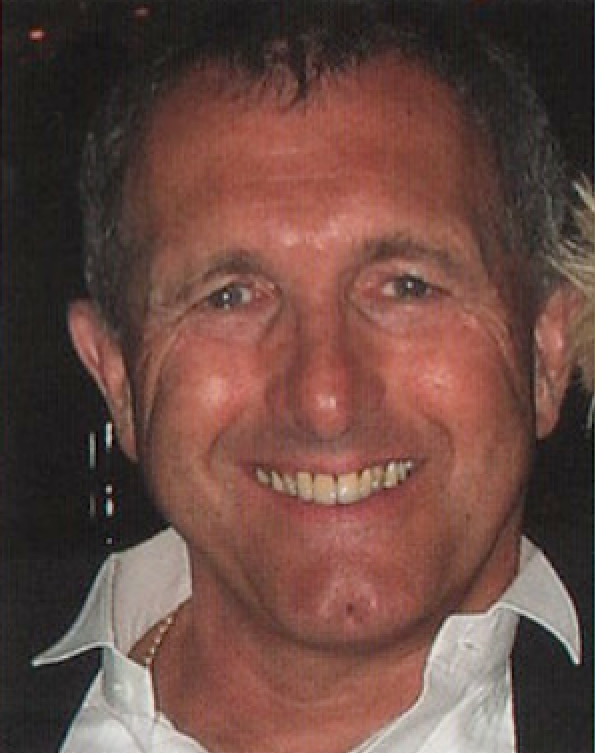
He finally hung up his boots in 1986 and was a partner for an independent financial adviser before setting up his own financial services company. He remained in Brighton until 2004 before heading back north and settling in Broom Hills, a Lincolnshire rural farming community to the north west of the city of Lincoln.

Fell died from cancer at the age of 74 in May 2025.

Mullery’s deputy Ken Craggs had a keen eye for football talent

ONCE A PROMISING Newcastle United youth team footballer, Ken Craggs didn’t make it as a player but went on to serve Albion as a ‘backroom boy’.

Indeed, he had three separate spells with the club, the first being the most prominent. Having joined the Albion in 1978, Craggs was at Alan Mullery’s side as assistant manager when Brighton first climbed to the top of English football.

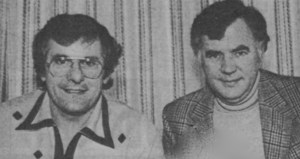
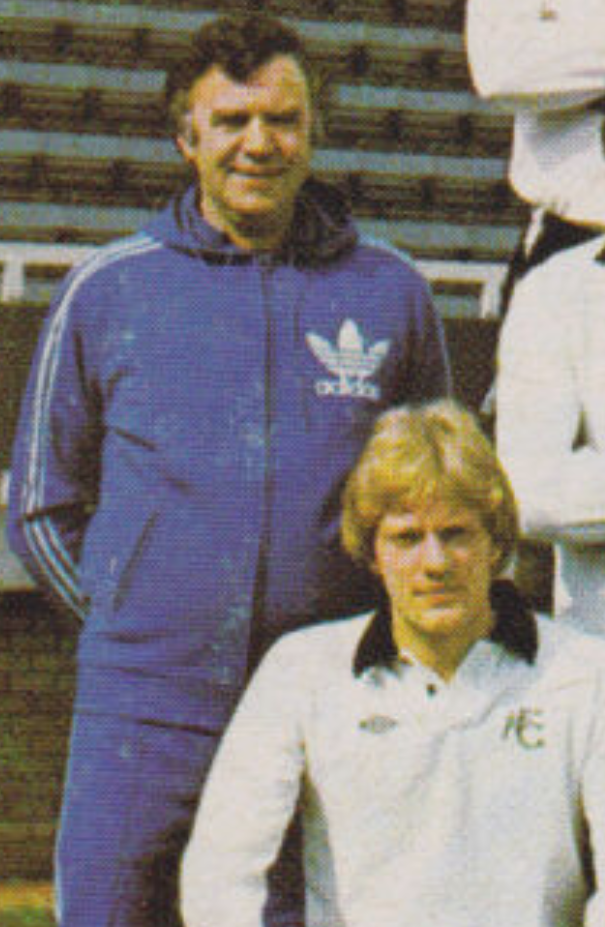
In partnership with Alan Mullery

He later worked as a scout for Jimmy Melia, who himself had been a scout for the Albion under Mullery.

And Brian Horton, the captain who led the Seagulls all the way from the Third Division to the First, appointed Craggs as a scout when he managed the Albion between 1998 and 1999.

Craggs had also worked for Horton when he was the manager at Manchester City, Huddersfield Town and Hull City.

Horton viewed Craggs as a mentor and kept in touch with him long after their footballing days were over.

When Craggs died aged 85 in July 2021, Horton told Brian Owen of The Argus: “Ken knew an awful lot of people in the game. We got on great. He was just fun to be around.”

In a team line-up

Referring to how Mullery and Craggs worked together, he said: “Mullers was a hard task master, which I enjoyed. I like people who demand more. Ken was his back stop.

“He would be the buffer between manager and players. They would work in tandem and they were good for each other.”

It was chairman Mike Bamber’s instruction for Mullery to sack Craggs, Melia and coach George Aitken as a cost-cutting measure that prompted the ebullient ex-Spurs and Fulham captain to quit the club in 1981.

“He even wanted to get rid of the kit-man Glen Wilson, who had been at Brighton for years,” Mullery wrote in his autobiography. “The club meant the world to him. I couldn’t have lived with myself if I’d fired these people.”

Mullery swapped managerial chairs with Mike Bailey and moved to newly-promoted Charlton Athletic and Craggs went with him. When Mullery left the club after a year, his assistant took over the Second Division side.

Craggs was in the job for six months and the club history books record how he was the manager when the Addicks pulled off something of a coup in October 1982 by signing former European footballer of the year and Danish international Allan Simonsen from Barcelona for £324,000 after he had been forced out by the signing of Diego Maradona. It had been thought Simonsen would either go to Tottenham or Real Madrid but he revealed publicly that he wanted to play for a club at a less stressful level.

With only five wins in 16 league matches, Craggs’ last game in charge at The Valley saw Rotherham United wallop the home side 5-1 with ex-Brighton winger Tony Towner proving a handful on the right and scoring one of the goals and Ronnie Moore hitting a hat-trick.

Craggs was born on 10 April 1936 in Quarrington Hill, a small mining community in County Durham, close to Cassop Colliery, where his father worked and he expected to follow him.

But he was noticed playing for the local village school football team and he was selected to play inside forward for the Durham Schools representative side. That got him noticed by Newcastle United.

He joined them as an amateur and played in the club’s youth team, although it wasn’t uncommon for him to play two games in a day, turning out for United and then his local youth club side as well.

Young Craggs was invited to have a trial for the England Youth team and it was during one of these sessions that he was spotted by Fulham scout Bill Rochford.

At the tender age of 17, he seized the chance to leave home and head for the bright lights of London and a career as a professional at Fulham.

Craggs shared digs with Bobby Robson, another miner’s son from Durham who had joined Fulham.

“Ken never won a first team place, but he was a powerful centre-half for the reserves,” Mullery remembered.

Craggs spent seven years on the playing staff without breaking into the first team.

He dropped into non-league football, initially with King’s Lynn in the summer of 1960 and later played for Folkestone, Tunbridge Wells United, Dartford and Hounslow, where he was the player-coach.

He then returned to Fulham in September 1968 as a part-time youth team coach and scout under Robson. He found and developed the likes of Brian Greenaway, Les Strong, Tony Mahoney, Terry Bullivant and goalkeeper Perry Digweed, who later moved to Brighton for £150,000.

He eventually joined Fulham in a full-time coaching capacity and Robert Wilson, who went on to make 256 appearances for the Cottagers, recalled: “I joined Fulham as a 16-year-old in 1977, when Ken Craggs was in charge of the youth side and from there the likes of Tony Gale, Dean Coney, Paul Parker, Jeff Hopkins, Jim Stannard, Peter Scott, John Marshall and many others all progressed to the league team.”

Team line-ups of that time show Craggs pictured alongside Barry Lloyd and Teddy Maybank, who later followed Craggs to the Goldstone for a fee of £238,000.

Another striker who caught Craggs’ eye when he was a coach at Fulham was Malcolm Poskett. After Craggs moved to Brighton, the player’s goalscoring form at Hartlepool eventually led to a transfer to the Goldstone, the £60,000 fee representing a tidy profit for the struggling north east minnows.

Clothes modelling with Gary Stevens and Mark Lawrenson

Others who benefited from his acumen included Gary Stevens, who was released by the aforementioned Robson when he was manager at Ipswich Town, but picked up by Brighton.

Stevens said: “Ken played a huge part in many of our careers. He was the main reason I came to Brighton as a 16-year-old and I will always be grateful for his contribution.”

Giles Stille was a part-time player at Kingstonian when Craggs spotted him and after turning pro he made his top flight debut against Manchester City in December 1979 when going on as a sub for Horton in Albion’s 4-1 win. Unfortunately, his time at Brighton was beset by injuries and illness and he was forced to retire prematurely when only 26.

The Albion was quite a different club when Craggs returned for a third spell in 1998, not least because the side was playing home games in exile at Gillingham. His role was to help Horton and his no.2 Jeff Wood to look for bargain signings.

For instance, Craggs and Wood unearthed Gary Hart, who signed from Stansted for £1,000 and a set of playing kit and he went on to become something of a club legend.

“Ken and Jeff knew more players from down south than me ,” said Horton. “He would have definitely gone to watch him on Jeff’s recommendation.

“We put him into a reserve game at Worthing and he only needed one game for me and that was it, we were doing the deal.”

Hero and Villain Sammy Morgan got off Albion mark v Palace

FEARLESS NORTHERN Ireland international centre forward Sammy Morgan and his former Port Vale teammate Brian Horton were bought to win promotion for the Albion.

The gamble by manager Peter Taylor didn’t quite pay off and although midfield dynamo and captain Horton went on to fulfil that promise under Alan Mullery, Morgan’s part in the club’s future success was eclipsed by the emergence of Peter Ward.

Morgan, who was in the same Northern Irish primary school year as George Best, was the first to arrive, a £35,000 signing from Aston Villa in December 1975, replacing the out-of-favour Neil Martin alongside Fred Binney. He wasn’t able to find the net in his first seven matches but when he did it was memorable and went down in the annals of Albion history.

Morgan opens his Albion account in style against Crystal Palace

He scored both goals in a 2-0 win over Crystal Palace in front of a 33,000 Goldstone Ground crowd that took Albion into second place in the table, manager Taylor saying afterwards: “I am delighted for Morgan. It must have given him a great boost to get a couple of goals like this.”

That breakthrough looked like opening the floodgates for the aggressive, angular forward who went on to score in five consecutive home games in a month.

And when Horton arrived in March 1976, with Albion still in second place and only 11 games to go, promotion looked a strong possibility.

But an Easter hiccup, losing 3-1 to rivals Millwall, followed by three 1-1 draws to end the season, saw Albion drop to fourth, three points behind the south London club, who went up behind Hereford United and Cardiff City.

Short-sighted Morgan – he wore contact lenses to play – might not have seen it coming, but it was something of a watershed moment for him too.

The man who signed him decided to quit, saying: “I signed two players gambling on them to win us promotion. We didn’t get it, and the only consolation I have in leaving is I feel I have helped build a good team which is capable of going up next time.”

Before he managed to kick a ball in anger under new boss Mullery, Morgan suffered a fractured cheekbone in a collision with Paul Futcher in a pre-season friendly with Luton in August 1976. The injury sidelined him for months.

Morgan shares a training ground joke with Peter Ward

By the time he was fit to resume towards the end of November, young Ward and midfielder-turned-striker Ian Mellor had formed such an effective goalscoring partnership that Morgan could only look on from the substitute’s bench where he sat on no fewer than 29 occasions.

He got on in 18 matches but only scored once, in a 2-1 home win over Chesterfield. Of his two starts that season, one was a New Year’s Day game at Swindon in which Albion were trailing 4-0 when it got abandoned on 67 minutes because of a waterlogged pitch (and he was back to the bench for the rescheduled game at the end of the season).

Nonetheless, Taylor’s promotion premonition was duly achieved at the completion of Mullery’s first season, and Ward had scored a record-setting 36 goals.

Morgan wasn’t involved in Albion’s first two games of the new season – consecutive 0-0 draws against Third Division Cambridge United, in home and away legs of the League Cup – and, by the time of the replay, he had signed for the opponents, who were managed by Ron Atkinson.

So, in a strange quirk of fate, £15,000 signing Morgan’s first match for the Us saw him relishing a bruising encounter up against former teammate Andy Rollings, although Albion prevailed 3-1.

Morgan spoke about the encounter and his long career in the game in a fascinating 2015 televised interview for 100 Years of Coconuts, a Cambridge United fans website.

Morgan’s easing out at Brighton followed a similar pattern to his experience at Aston Villa who replaced him with 19-year-old Andy Gray, a £110,000 signing from Dundee United. Morgan only made three top flight performances for Villa after a pelvic injury had restricted his involvement in Villa’s second tier promotion in 1975 to just 12 games (although he did score four goals – three in the same match, a 6-0 win over Hull City early in the season). He was injured during a 1-1 draw at Fulham in November and subsequently lost his place in the team to Keith Leonard.

Villa scorer

Morgan had been 26 when Vic Crowe signed him from Port Vale as a replacement for the legendary Andy Lochhead. The fee was an initial £22,222 in August 1973 with the promise of further instalments of £10,000 for every 10 goals up to 20. Vale’s chairman panicked when the goals tally dried up with the total on nine but Morgan eventually came good and Villa ended up paying the extra.

He made his Villa debut on 8 September 1973 as a sub for Trevor Hockey on the hour in a 2-0 home win over Oxford United, the first of five sub appearances and 25 starts that season, when he scored nine goals.

Villa writer Eric Woodward said of him: “Sammy was never a purist but he was a brave, lively, enterprising sort who put fear into opposing defences.”

He carved his name into Villa legend during a fourth round FA Cup tie against Arsenal at Highbury in January 1974 when he was both hero and villain.

Morgan put the Second Division visitors ahead with a diving header in the 11th minute but in the second half was booked and sent off for challenges on goalkeeper Bob Wilson. After his dismissal, Arsenal equalised through Ray Kennedy.

Esteemed football writer Brian Glanville reckoned: “Morgan had scored Villa’s goal and had played with fiery initiative but, alas, he crossed the line dividing virility from violence.

“He should have taken heed earlier, when booked for fouling Wilson. But a few minutes later, going in unreasonably hard and fractionally late as Wilson dived, he knocked the goalkeeper out and off he went.”

An incensed Morgan saw it differently, though, telling Ian Willars of the Birmingham Post: “Neither my booking nor the sending-off were justified. I never touched Wilson the first time and the second time I was going for the ball, not the man. It was a 50-50.

“I actually connected with the ball not Wilson. I went over to check if he was hurt and, in my opinion, he was play-acting.”

Morgan had sweet revenge four days later. No automatic ban meant he was able to play and score in the replay at Villa Park which Villa won 2-0 in front of a bumper crowd of 47,821.

Randall Northam of the Birmingham Mail wrote: “Providing the sort of material from which story books are written, the Northern Ireland international Sammy Morgan, who was sent off on Saturday, scored in the 12th minute.

“He had scored in the opening game in the 11th minute and to increase the feeling of déjà vu it was another diving header.” Fellow striker Alun Evans scored Villa’s second.

Northam added: “It was never a great match but the crowd’s enthusiasm lifted it to a level which often made it exciting and they had their reward for ignoring the torrential rain in a driving Villa performance which outclassed their First Division opponents.”

For his part, an unrepentant Morgan said: “It was obvious that we had to put Wilson under pressure as anyone would have done in the circumstances. My goal could not have happened at a better time.”

How heartening to hear in that 100 Years of Coconuts interview that when Morgan was struck down with cancer 40 years later, one of several well-wishing calls he received came from Bob Wilson.

Best and Morgan (back row, left) in the same Belfast school photo

Born in East Belfast on 3 December 1946, Morgan went to the same Nettlefield Primary School as George Best and the first year at Grosvenor High. But Morgan left Belfast as an 11-year-old with his family, settling in Gorleston, near Great Yarmouth (his mother’s birthplace).

His Irish father, a professional musician, took over the running of the Suspension Bridge tavern in Yarmouth and Morgan’s footballing ability continued to develop under the watchful eye of his teacher, the Rev Arthur Bowles, and he went on to represent Gorleston and Norfolk Schools.

Morgan went to the same technical high school in Gorleston that also spawned his great friend Dave Stringer (a former Norwich player and manager), former Arsenal centre back Peter Simpson and ex-Wolves skipper Mike Bailey, who managed Brighton in the top flight in 1981 and 1982.

Morgan’s early hopes of a professional career were dented when he had an unsuccessful trial at Ipswich Town. Alf Ramsey was manager at the time and the future England World Cup winning boss considered him too small. He also had an unsuccessful trial with Arsenal.

Morgan continued to play as an amateur with Gorleston FC and although on leaving school he initially began working as an accountant he decided to study to become a maths and PE teacher at Nottingham University. It was Gorleston manager Roger Carter who recommended him to the then Port Vale manager Gordon Lee, who was a former Aston Villa colleague.

“I loved my time under Roger and my playing days under him were the most enjoyable years of my footballing career even though I went on to play at a higher level,” said Morgan.

He was the relatively late age of 23 when, in January 1970, he had a successful trial with Vale and signed amateur forms. But by July that year he was forced to make a decision between full-time professional football or teaching. He chose football and made a scoring Football League debut against Swansea in August 1970.

However, that summer he was spotted as a future talent by Brian Clough and Peter Taylor when he played against their Derby County side in a pre-season friendly. Clough inquired about taking him on loan but he cemented his place in the Vale side and it didn’t go any further.

nifootball.blogspot.com wrote of him: “The burly centre-forward, he weighed in at up to thirteen and a half stone during his career, proved highly effective in an unadventurous Vale side.”

His strength and aggression in Third Division football caught the attention of Northern Ireland boss Terry Neill and he scored on his debut for his country in a February 1972 1-1 draw with Spain, played at Hull because of the troubles in the province, when he teamed up with old school chum Best.

Morgan remembered turning up at the team hotel, the Grand in Scarborough, and encountering a press camera posse awaiting Best’s arrival – and he didn’t show! The mercurial talent did make it in time for the game though, when another debutant was Best’s 17-year-old Manchester United teammate Sammy McIlroy, who earned the first of 88 caps.

In the home international tournament that followed, Morgan was overlooked in favour of Derek Dougan and Albion’s Willie Irvine who, having helped Brighton win promotion from Division Three (and scored what was selected as Match of the Day’s third best goal of the season against Aston Villa) earned a recall three years after his previous appearance.

In October of 1972, though, Morgan was selected again and took his cap total to seven while at Vale Park, for many years a club record.

While at Brighton, he earned two caps during the 1976 home international tournament, starting in the 3-0 defeat to Scotland and going on as a sub in a 1-0 defeat to Wales.

He earned his 18th and final cap two years later during his time at Sparta Rotterdam in a 2-1 win over Denmark in Belfast. The legendary Danny Blanchflower was briefly the Irish manager and he selected Morgan up front alongside Gerry Armstrong but he reflected that he didn’t play well, was struggling with a hamstring injury at the time, and was deservedly subbed off on the hour mark.

Morgan’s knack for helping sides win promotion had worked at Cambridge too, where he partnered Alan Biley and Tom Finney (no, not that one!) in attack, but after Atkinson left to manage West Brom, he fell out with his successor, John Docherty, and in August 1978 made the switch to Rotterdam.

After one season there, he moved on to Groningen in the Eeste Divisie (level two) and although he helped them win the title, he suffered a knee injury and called time on his professional playing days.

He returned to Norfolk to teach maths and PE in Gorleston, at Cliff Park High School and then Lynn Grove High School, and carried on playing with his first club, Gorleston, where, in 1981, he was appointed manager.

As well as coaching Great Yarmouth schoolboys, he also got involved in coaching Norwich City’s schoolboys in 1990 and in January 1998 he left teaching to work full-time as the club’s youth development manager. As the holder of a UEFA Class A licence, he went on to become the club’s first football academy director, a position he held until May 2004.

In October that year, Morgan was unveiled as Ipswich Town’s education officer, a role that involved ensuring Town’s young players received tuition on more than just football as they went through the academy system. In 2009, he became academy manager and during his three years notable youngsters who made it as professionals included strikers Connor Wickham and Jordan Rhodes.

He admitted in an interview with independent fan website TWTD: “If I’ve contributed to anybody in particular it probably would be the big number nine [Wickham] and Jordan because I was a number nine, and I kick the ball through them – I play the game through the number nines.”

He went on: “I’m very proud to have played a part in the development of a lot of young players. I’m equally proud of those lads who haven’t quite got there in the professional ranks but have maybe gone on to university and have forged other careers and are still playing football at non-league level, still enjoying their football. That means a lot to me as well.”

Morgan continued: “I finished playing in 1980 and I’ve been in youth development since then. I did the Norfolk schools, Great Yarmouth schools, representative sides and the Bobby Robson Soccer Schools. That’s 32 years, I’ve given it a fair crack and I love my football as much now as I ever did.

“I’ve been privileged to work with young people, very privileged. It’s kept me young, kept my passion and kept my enthusiasm going. One thing you could never accuse me of is not having any enthusiasm or passion for the game, and that will remain.”

In 2014, Morgan was diagnosed with stomach cancer and underwent chemo to tackle it. Through that association, in September 2017 he gave his backing to Norfolk and Suffolk Youth Football League’s choice of the oesophago-gastric cancer department at the Norfolk and Norwich University Hospital (NNUH) as its charity of the year.

Even when he could have had his feet up, he was helping to coach youngsters at independent Langley School in Norwich.

Morgan was on good form in this interview for 100 Years of Coconuts TV

Sparks flew in Brighton v Chelsea FA Cup clashes

BRIGHTON v Chelsea in the FA Cup sparks memories for supporters of my generation stretching back several decades.

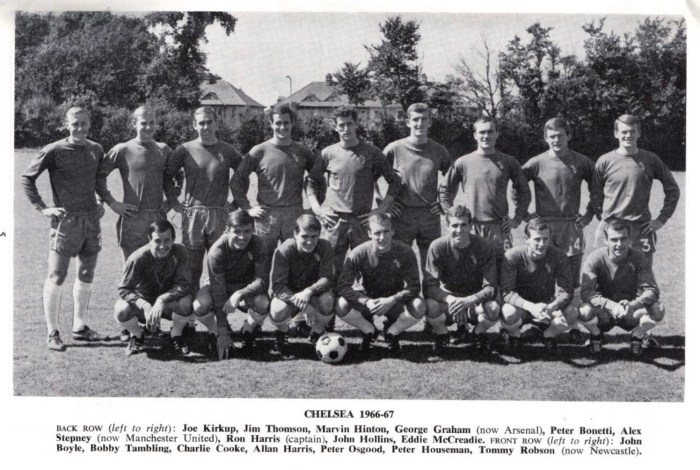
Many began as Albion followers the day the then First Division side from Stamford Bridge visited the Goldstone Ground in February 1967 when a dubious refereeing decision denied Third Division Brighton a shock win.

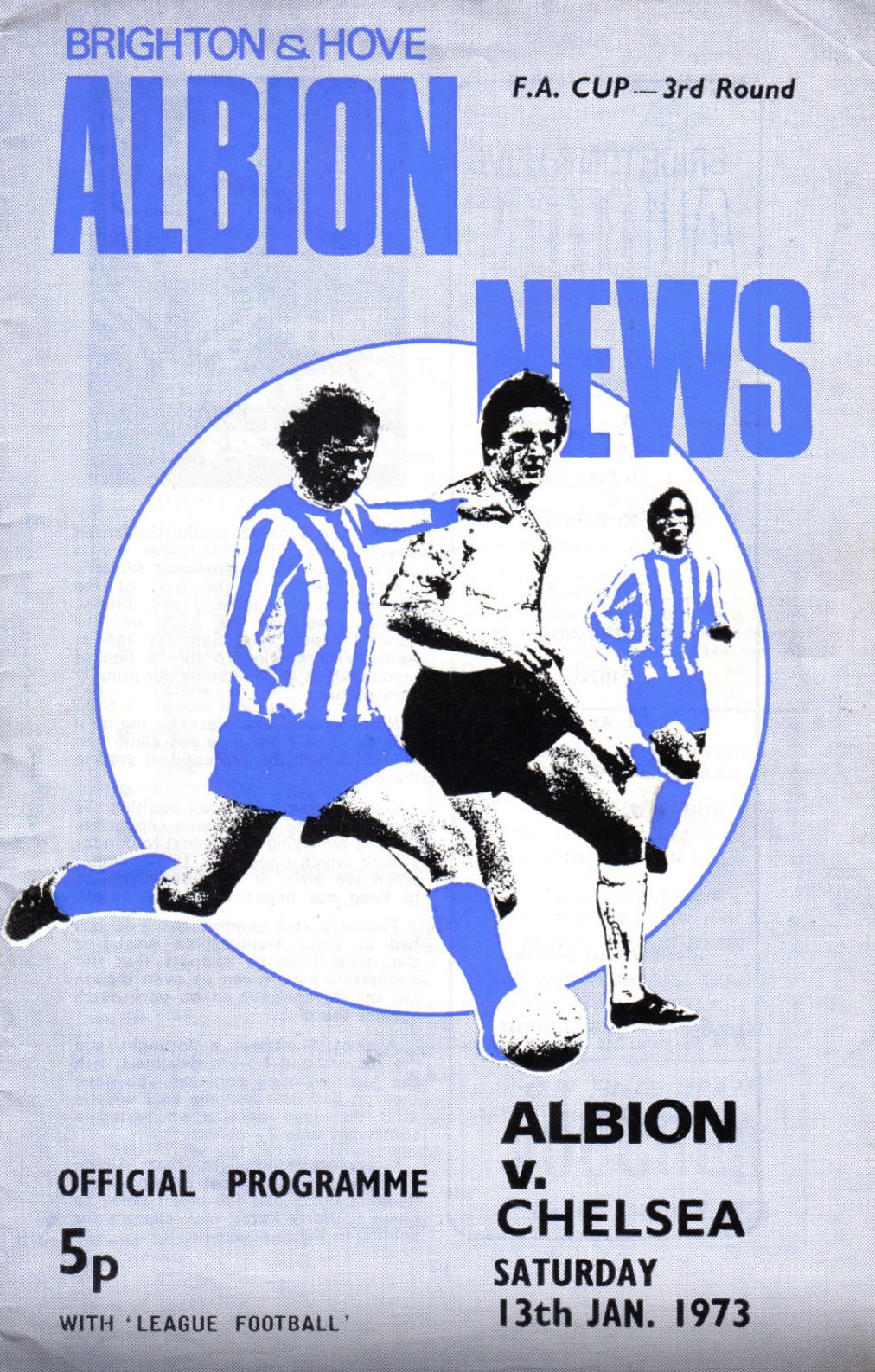
Others, me included, recall a fiery encounter in Hove six years later when Second Division strugglers Brighton were beaten 2-0 courtesy of two Peter Osgood goals in a game marred by violence on and off the pitch.

That third-round tie in January 1973 was dubbed “a day of shame” in the newspapers after two players were sent off, five were booked and crowd trouble erupted.

The chance for lower ranked teams to pitch their lesser talents against the big boys has always been at the heart of the FA Cup’s appeal.

That was certainly the case when Archie Macaulay’s mid-table Albion hosted Tommy Docherty’s top 10 Chelsea on 18 February 1967. To give it musical context, Georgy Girl by The Seekers had just taken over from The Monkees’ I’m A Believer at no.1 in the pop charts!

At a time when home crowds were normally 12,000 – 13,000, a sell-out gate of 35,000 packed into the Goldstone.

Cup fever had certainly captured the imagination of the Sussex public. In the previous round, 29,208 watched Albion beat Aldershot 3-1 in a third-round replay for the chance to take on the top division Pensioners (as Chelsea were called back then).

The two clubs hadn’t met in any other competition for 34 years – back in January 1933 Brighton beat the London side 2-1 in a third round FA Cup tie.

After such a long gap, maybe it was understandable that Albion’s young captain, Dave Turner, at 22, fell off the settee at home in excitement when he saw the cup draw made on the television.

Canny Brighton decided to sell tickets for the game at a reserve home fixture against Notts County, meaning a stunning 22,229 paid to watch the second string win 1-0 in order to secure their entry to the big game.

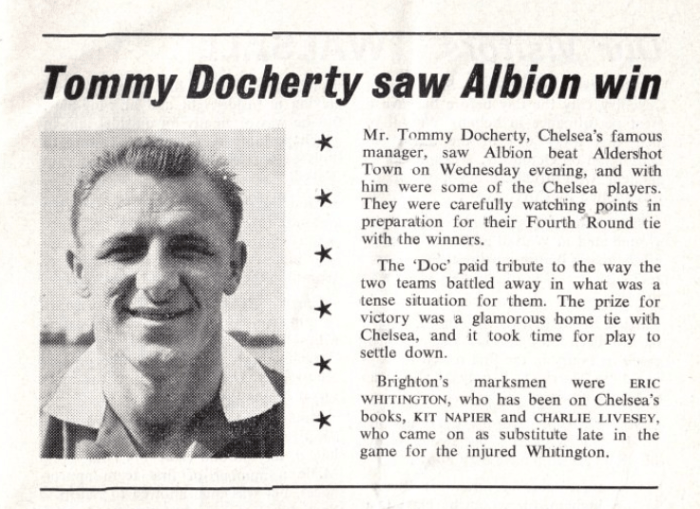
The matchday programme revealed how Docherty and several of his players had watched the Aldershot match to check out what would be in store for them.

Docherty meanwhile was very complimentary in his programme notes, declaring: “Chelsea know that we have a hard and difficult task today, and are not facing it in a complacent manner.”

He added: “We know that there is great potential for the Albion club. They have a First Division set-up at the Goldstone Ground, and First Division ideas, as well as a first-class pitch.

“The day cannot be very far away when they become one of our top clubs, and I am just one of many people in the game who will welcome their promotion to a higher class.”

However, the game was only five minutes old when Bobby Tambling gave Chelsea the lead. But before half-time, Chelsea’s John Boyle (who would several years later joined Albion on loan) was sent off for kicking Wally Gould. And just four minutes into the second half, Turner gave Albion parity.

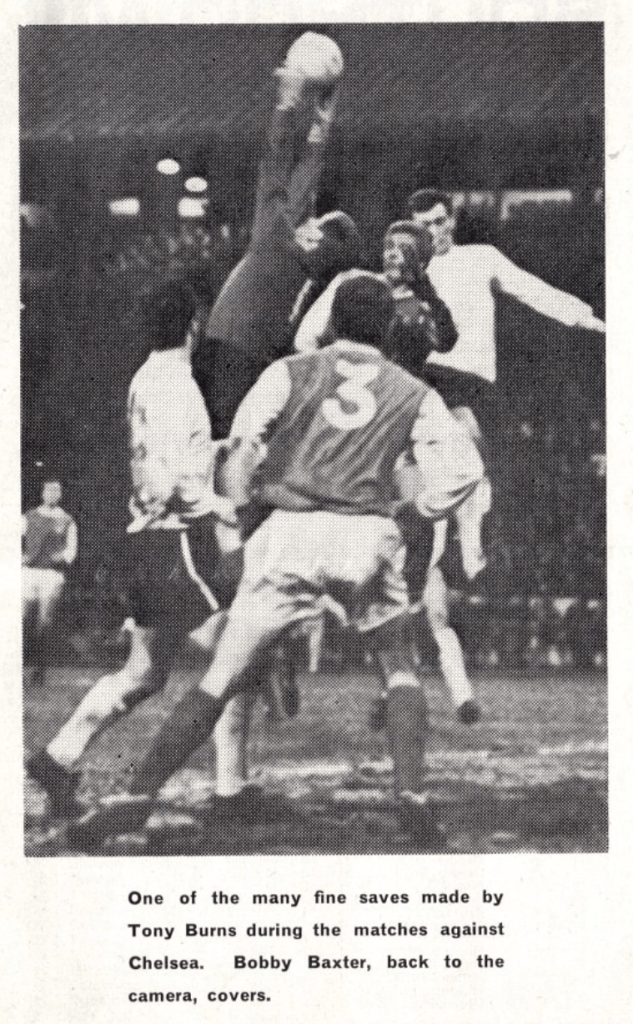
Goalkeeper Tony Burns, who had top flight experience with Arsenal, made several decent saves in the game and, with the clock ticking down, a cracking strike by winger Brian Tawse in the closing minutes of the game looked to have won it for the Third Division side.

“I smashed a volley past Peter Bonetti from 20 yards out with the score at 1-1 and thought I’d got the winner,” Tawse told Brian Fowlie of the Sunday Post in 2015. “It was a goal that could have made my career – but the referee chalked it off.”

Unfortunately, the official had spotted an infringement by Kit Napier and the ‘goal’ was disallowed.

As Brighton would discover again only too painfully in the 1983 final, these winning chances rarely happen twice, and, sure enough, in the replay at Stamford Bridge Chelsea ran out 4-0 winners in front of a massive crowd of 54,852.

Chelsea went on to reach that season’s final at Wembley only to lose 2-1 to a Spurs side that had Joe Kinnear at right-back and Alan Mullery in midfield.

Hardman Ron ‘Chopper’ Harris, their captain in 1967, was still leading the side by the time of the 13 January 1973 game and John Hollins and Tommy Baldwin also played in both. The dismissed Boyle was on the Chelsea bench in 1973. Only John Templeman (right) played in both games for Brighton.

The UK had just joined the European Economic Community (as it was then called) and You’re So Vain by Carly Simon was no.1 in the charts. Albion had moved up a division under Pat Saward having won promotion the previous May, but the side was struggling at the foot of the Second Division, unable to cope at the higher level.

Nevertheless, there were two players looking forward to the cup tie: Bert Murray and £28,000 signing Barry Bridges had both won silverware at Chelsea in the 1960s.

Barry Bridges slots home for Chelsea in a FA Cup tie v Peterborough and, pictured by the Daily Mirror’s Monte Fresco, ahead of the 1973 match against his old club.

“It’s a tremendous draw for the club and a dream draw for Bert Murray and myself who both started our careers at Chelsea,” Bridges told Goal magazine. “Personally, it will be nice to see most of the Chelsea lads again. I grew up with Peter Bonetti, Ron Harris and Ossie (Peter Osgood).”

Unfortunately the Albion game was one of several former Worthing schoolboy Bonetti missed through injury and illness in the 1972-73 season, John Phillips deputising in goal at the Goldstone.

How this young supporter recorded the team info in his scrapbook

Dave Sexton, a promotion winner with Brighton in 1958, saw his Chelsea side put the ball in Albion’s net within the first 10 seconds of the game but Bill Garner’s effort was ruled out for offside, to the bemusement of the football writers watching. As the game unfolded, not only did it end in defeat for the Albion but it attracted ugly headlines for all the wrong reasons as Harris and Brighton left back George Ley were sent off.

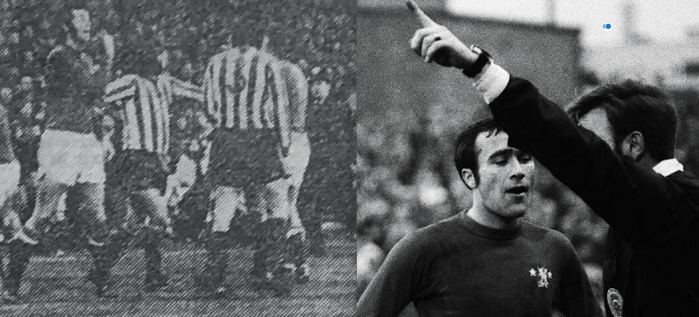
Ley was dismissed in the 85th minute for bringing down Baldwin from behind and then getting involved in a punch-up with England international Osgood, the scorer of Chelsea’s goals in the 17th and 60th minutes, who himself was booked for his part in the altercation.

Albion’s Eddie Spearritt had been the first to go in the book on 23 minutes (for a foul on Alan Hudson) and on 73 minutes was involved in the incident which led to Harris being sent off for the first time in his career.

Esteemed football writer Norman Giller recorded it like this: “Harris got involved in a tussle with Spearritt, and, as he pushed him, Spearritt went down holding his face as if he had been punched. The referee directed Ron to an early bath. All the bones he had kicked, and here was Harris being sent off for a playground push.”

1970 Cup winner Dave Webb went in the book for wiping out Spearritt, joining colleague Steve Kember who was cautioned for fouling Steve Piper. Albion’s Graham Howell also went into referee Peter Reeves’ notebook for taking down Baldwin.

The kicking and aggression on the pitch led to fighting on the terraces with 25 people arrested. And Leicester referee Reeves had to be given a police escort off the pitch.

Former Spurs captain-turned-journalist Danny Blanchflower, writing in the Sunday Express: declared: “This FA Cup third-round tie was as disgraceful as any match I’ve ever seen.”

In the opinion of Albion scribe John Vinicombe in the Evening Argus: “Football anarchy gripped the Goldstone during the last 20 minutes of Albion’s FA Cup tie with Chelsea.

“In the frenzy, players fought one another, hacked and kicked, and the violence tiggered an all-too-predictable chain reaction on the terraces where rival factions became one mass of writhing, mindless hooligans.”

Interestingly, Harris’ dismissal was subsequently overturned, Giller recording: “A Brighton-supporting vicar, with a pitchside view, wrote to the Football Association telling them what he had witnessed, and ‘Chopper’ was vindicated.”

Chelsea made it through to the quarter-finals of that season’s tournament before losing 2-1 to Arsenal in a replay. Arsenal lost in the semis to Sunderland, the Second Division side who stunned the football world at the time by beating Leeds United in the final.

Lift engineer Hughton took Seagulls to a different level!

TOTTENHAM HOTSPUR was a key part of Chris Hughton’s life for more years than any of the other clubs he went on to serve.

While Brighton fans will always appreciate his four-year tenure taking the Seagulls from the Championship into the Premier League, he spent the first 19 years of his playing career at Spurs as well as 14 and a half years as a coach (and occasional caretaker manager) at White Hart Lane.

Hughton joined Tottenham’s youth set-up at the tender age of 13 in 1971, as he recounted in an In The Spotlight feature in the Spurs matchday programme for their September 2024 game v Brentford. It was the year the club won the League Cup captained by Alan Mullery with a side that included Phil Beal, Joe Kinnear and Martin Chivers, who scored both goals in the 2-0 victory over Aston Villa.

Hughton attended inner city school St Bonaventure’s in Newham, many years later attended by loanee striker Chuba Akpom who told Andy Naylor in an exclusive for the Argus: “When I was in school there used to be pictures of the gaffer there. The kids used him like an inspiration and motivation. I did as well: seeing someone come from the same area and the same school as me to become such a big and successful person.”

Other footballing St Bon’s alumni included Hughton’s brother Henry, John Chiedozie, Jermaine Defoe and Martin Ling (briefly an Albion player under Micky Adams).

Hughton’s progress as a youngster took a slightly unconventional turn when, at 16, Spurs told him he hadn’t done quite enough to be taken on as an apprentice.

“There was still that chance, though – a small window of opportunity,” he recounted to coachesvoice.com. “So, while I started a four-year apprenticeship as a lift engineer, I stayed on at Tottenham as an amateur.

“That meant working all day, then on two nights a week getting the bus or train to the training ground – apart from those days when I ended up working late and just couldn’t get there in time. Then, on Saturdays, I’d play for the youth team. I lived that life for two years.”

Football-wise, by the age of 18 Hughton had done enough to persuade Spurs to offer him a professional contract – but he didn’t want to cut short his lift engineer apprenticeship, so he turned them down but continued playing for the club as an amateur.

“I was fortunate,” he said. “My window of opportunity stayed open, and at 20 I finally became a professional footballer for Tottenham… as well as a qualified lift engineer.”

It was during Keith Burkinshaw’s eight-year reign as manager that Hughton enjoyed most of his success as a Spurs player, usually filling the left-back spot of a side that won the FA Cup in 1981 and 1982 and the 1984 UEFA Cup.

“It was a period that had a big impact on me, and on who I became,” said Hughton, who played alongside the likes of World Cup winners Ossie Ardiles and Ricky Villa, the gifted Glenn Hoddle and goalkeeper Ray Clemence, and Steve Perryman, “the best captain I played under”.

Born in Forest Gate, east London, on 11 December 1958, it might have been West Ham territory but it was Spurs that took on trial a group of five lads who had been playing in the district of Newham side.

“I ended up staying there,” he told the Argus in a November 2017 interview. “My upbringing was different. I was always playing. Although my dad is very much now a football fan, I didn’t have a family background of football.

“I think I went to West Ham once, a family friend took me. I was a football fanatic but always playing. I never really had an allegiance to any team. But I’m very much a West Ham lad.”

Hughton qualified to play for the Republic of Ireland – home of his mother Christine. His father Willie was Ghanaian (Hughton later became that country’s coach).

He made his debut for Eire in 1979 and won 53 caps over the next 12 years, including playing in three matches at the 1988 Euros. Although he was in the 1990 World Cup squad, he didn’t play any matches. He was the Republic’s assistant manager to Brian Kerr between 2003 and 2005.

Being of mixed race, Hughton suffered plenty of racial abuse both from the terraces and from opposition players, as he revealed in an interview with broadcaster Ian ‘Moose’ Abrahams for whufc.com in November 2023.

“You suffered it by yourself because you were the only one who was receiving that type of abuse, you were the only one that almost understood it, and being the only black player in the team you took all of that on your own shoulders,” he said.

“Sometimes it’s hard to think back now and comprehend how you coped with that, and the coping mechanism is because firstly you are used to it, and secondly your mentality had to be that you’re better than that. You generally suffered by yourself.”

Hughton continued: “There were numerous times over that period, especially in the reserve team, and yes, even in the first team that I suffered racial abuse [from opposing players].

“I reacted to it, but I knew the boundaries, because you knew if you went too far you were going to get sent off.”

A knee injury at the age of 28 was a signal for Hughton to begin to consider what he might do once his playing days were over, and he did some coaching sessions at soccer schools. “I started to think this was what I wanted to do,” he said.

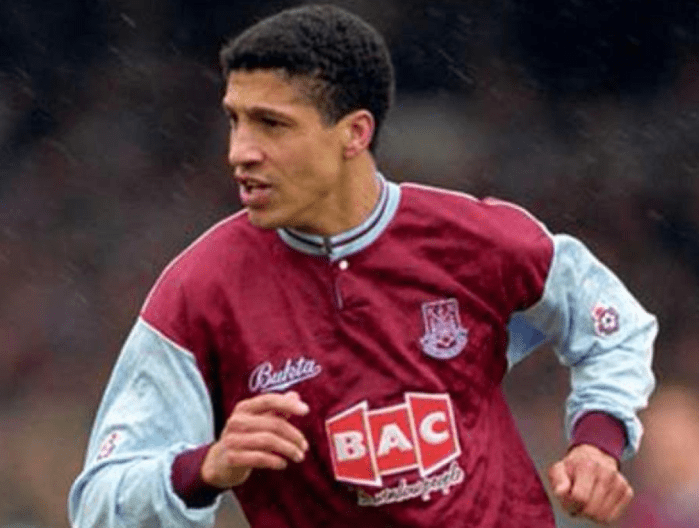
When he was no longer guaranteed a starting berth at Spurs, Hughton moved across London to the club closest to where he grew up: West Ham. Hughton signed for the Hammers initially on loan in November 1990 to cover for the injured Julian Dicks, and then permanently on a free transfer.

“My parents still live in Upton Park, so I was born and brought up very close to the stadium,” Hughton recalled in a November 2017 Argus interview.

Signed by Billy Bonds, he was with the Hammers for just over a year, helped them win promotion from the old Division Two in 1990-91and played a total of 43 matches (plus one as a sub).

“It was a really enjoyable period of time,” he said. “Billy Bonds was the manager. He was not only a great manager but a great individual.”

In February 1992, he moved on a free transfer to then Third Division Brentford, whose squad included Neil Smillie and Bob Booker. Graham Pearce was a coach. They won the divisional title but the following season Hughton’s troublesome knee forced him to retire at the age of 34.

“By the time I signed for Brentford at the age of 33 I was certain that I wanted to coach,” Hughton told coachesvoice.com. “I was taking far more interest in things like tactics and the thinking behind training sessions. Brentford’s manager at the time, Phil Holder, even allowed me to take a few sessions.”
Hughton added: “It actually set me up for my coaching career as I learned a lot in that time.”

After he’d called time on his playing days, he didn’t have to wait long for an opportunity to open up for him as a coach because his former teammate Ardiles, who’d not long since taken over as Spurs manager, invited him to help out back at White Hart Lane.

“We’d been good friends since our days playing for the club, so he knew all about my coaching aspirations and brought me in as the under-21s’ and reserve team coach,” Hughton explained. “I’ve always been very grateful to him for giving me that first opportunity.”

For the first year or so, he worked alongside the former West Ham player Pat Holland, who he described as “an excellent tactical and technical coach”.

Hughton explained it was a period in which he discovered how to transition from being a player to a coach. “As much as you’ve been part of a changing room thousands of times as a player, taken part in countless training sessions and listened to more team talks than you can remember, none of those things have ever been your responsibility before.

“In that respect, football is no different to any other aspect of life. If someone has spent years working on a shop floor, then moves up to management and has to govern a group of people, they have to make that same transition. It’s not easy.”

As managers came and went, Hughton remained on the coaching staff. After Ardiles came Gerry Francis and Christian Gross. Hughton was in caretaker charge for six matches before George Graham took over from Gross. Next in the hot seat was Glenn Hoddle, followed by Jacques Santini and then Martin Jol.

“Such a long apprenticeship might not be for everyone and some can go straight from player to manager at a young age, but I wouldn’t have been ready,” said Hughton.

“There was always something new to learn and experience. It was exciting to see what each new manager would be like, how he would involve me and what I would learn.

“The club could easily have said, ‘Now that the manager has left we won’t be keeping you on’, but they showed faith in my abilities and, in return, I provided some continuity.”

Hughton was assistant manager to Jol and said: “We had three years together, and in terms of league positions they were successful ones.”

By the time he was shown the door at Spurs, along with Jol, after a difficult start to the 2007-08 season, he felt ready to become a manager in his own right.

But before that happened, a different proposition emerged when Kevin Keegan asked him to become first team coach at Newcastle United.

“I’d spent my entire playing and coaching career in London, but any apprehension I felt at relocating to another part of the country was outweighed by the excitement,” he told leadersinperformance.com.

“I was going to a legendary club with an incredible tradition, rich history and great fan base and I was going to assist Kevin Keegan. I learned a lot from him during our time together, especially from his strengths in man-management.”

• What happened next in Hughton’s career is the subject of my next blog post. Thanks for reading!

Byrne made Hoops happy before taking flight with the Seagulls

JOHN BYRNE, who had three different spells as a Brighton player, is viewed as an all-time-great by QPR fans where he scored 36 goals in 149 appearances.

Through his Irish father Jim, Wythenshawe-born Byrne qualified to play for the Republic of Ireland and he won 13 of his 23 Republic of Ireland caps while a QPR player playing in the old First Division.

His place in the annals of QPR’s history was etched courtesy of following two other greats (Rodney Marsh and Stan Bowles) into the no. 10 shirt.

“I was always conscious of the traditions at Rangers and so I was dead proud to wear the Number 10,” he told qprreport in 2008. “I think I did the shirt justice most of the time.”

In the same way Brighton fans remember his highly effective striking partnership with Mike Small in the 1990-91 season, so QPR supporters recall his combination up front with Gary Bannister.

Bannister and Byrne

“I enjoyed playing up front with ‘Banna’,” he said. “He was a great centre-forward, right out of the top drawer. I don’t know how our partnership worked but we just seemed to have a good understanding.

“He was more of a prolific goalscorer than I was. He also had superb quality and awareness for bringing people into the game.”

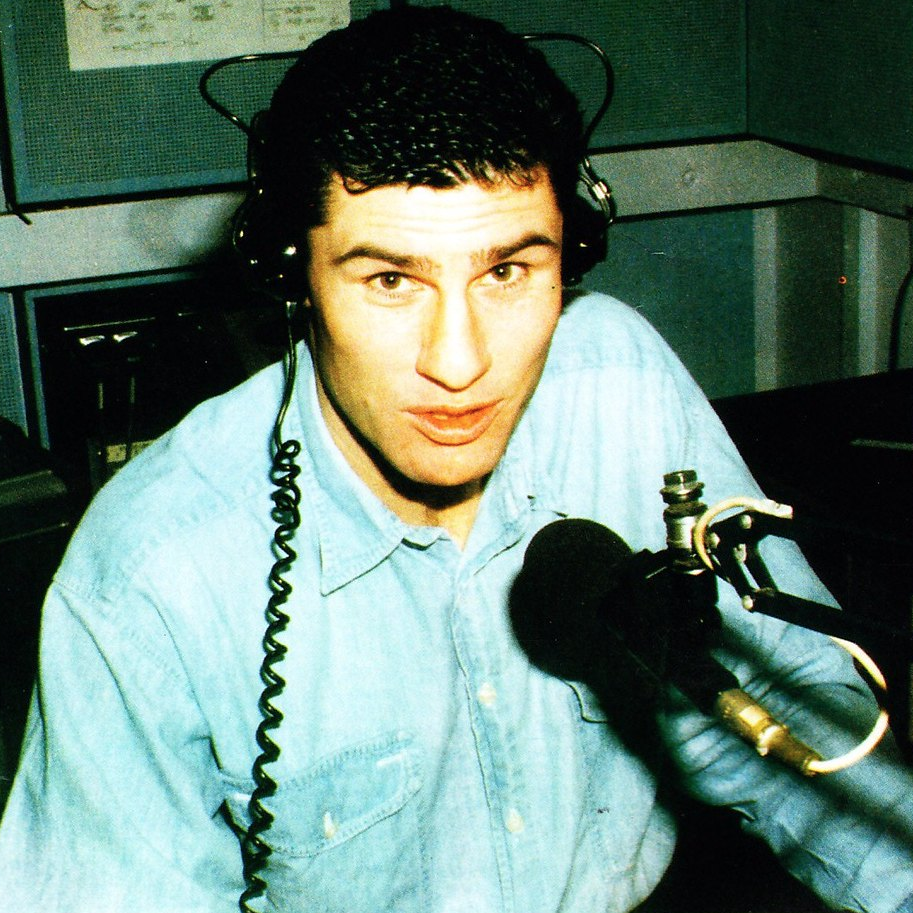
Byrne, who later became a familiar voice as an expert summariser for BBC Radio Sussex coverage of Albion matches, has always been happy to indulge requests from Rs writers to look back on his four years at Loftus Road.

As would become something of a pattern in his career, it was an impressive performance playing against QPR that led them to sign him. He featured in a two-legged League Cup game for York City against Rangers, and he recalled the game at Loftus Road when talking to qprnet.com in 2013:

“It was so brilliant to play in that stadium under the floodlights and coming from York to run out at QPR was something to remember.

“Afterwards I said to our assistant manager Viv Busby that I would love to play here every week. Lo and behold a couple of weeks later I was!”

The man who took him to west London was none other than Alan Mullery, the former Brighton manager, during his unhappy six months as QPR manager.

It’s now generally recognised that some of the senior pros at the club were none too pleased with Mullery taking over from Terry Venables, who had moved to Spain to manage Barcelona. Byrne admitted: “It was difficult for me to fully understand having been signed by Mullery but you could feel it with some of the senior pros.

“The likes of Terry Fenwick, John Gregory and Steve Wicks were big Venables men and, understandably, as he was obviously a great coach. You got a feeling that a few of them weren’t overly impressed with Mullers at the time.”

As it turned out, Mullery’s time in charge came to an abrupt end and Byrne remembered playing under caretaker manager Frank Sibley before Jim Smith got the job permanently.

Frank was lovely; he was a really nice man and probably too nice for football management,” said Byrne. “He really helped me a lot, he would always welcome a chat with you and put his arm round you to talk about your game. I had a lot of time for Frank.”

And of the former Birmingham and Oxford boss Smith, who went on to manage Newcastle and Portsmouth, among others, he said: “Smithy was brilliant. I loved playing for Jim. He loved you, he hated you but he would never ignore you or freeze you out.”

It was in 1986 when Byrne suffered the first of three losing experiences in Wembley finals. QPR went down 3-0 to Smith’s former club Oxford United

“Unfortunately we never turned up for the final,” Byrne told QPRnet. “I just remember that after we were introduced to the dignitaries I went off for the warm up and I had nothing in the tank. I had heavy legs before the game and I think a lot of the players felt like that.

“At the end of the day we didn’t perform and Oxford were better than us but there should be no excuses we were a better side on paper and we should have won.”

A far happier memory from that spring of 1986 happened three weeks previously when the Rs thrashed Chelsea 6-0 and Byrne scored twice (Bannister netted a hat-trick and Michael Robinson the other).

“I’ll never forget that day,” said Byrne. “It was just one of those occasions when everything went right for us.

“I remember one of my goals where I picked up possession on the halfway line. It was funny on that plastic pitch, because bodies would fall all around you if you got into your stride. So eventually I wriggled free and slotted a shot into the bottom corner.”

Another of his favourite QPR memories was scoring in two home games against Manchester United, the team he had supported as a boy. Recalling a 1-0 win in March 1986, he said: “I remember lobbing the ball over two defenders’ heads in the box. Then I flicked it back before shooting past Chris Turner in goal at the Loft End. It was great for me – especially being a Manchester lad as well.”

In much the same way as his move to QPR came about, it was in a couple of friendly matches against Le Havre that the French side liked what they saw of him and QPR were happy to accept their bid for the player.

“It was disappointing to leave QPR but I think it was probably the right time to go,” he recalled. Unfortunately, he broke a leg only three weeks into his stay with Le Havre. But when he was fit again, a few English clubs started watching his recovery with interest.

And it was following a friendly Brighton played against Le Havre that prompted Albion boss Barry Lloyd to bring Byrne back to England to play in early September 1990. He made his Seagulls debut for the reserves in a 1-1 draw with Charlton Athletic and then went on as a sub for the first team in Albion’s 3-2 home win over the same opponent 10 days later.

He scored on his first start, in a 2-1 win away to Blackburn Rovers, and on his first start at home he netted in a 3-3 draw with Swindon Town, who were managed by Ossie Ardiles.

Crocked in the last game of the league season against Ipswich

How the rest of that season panned out was covered in my previous post about Byrne, as were his subsequent moves, the most successful of which saw him play for Sunderland in the 1992 FA Cup final when Liverpool beat the Wearsiders 2-0.

“I scored in every round except the final then missed a sitter on roughly thirteen minutes twenty seconds; I see that one every day!” he told QPRnet.

Byrne’s future work as a podiatrist came about largely through the network provided by the Professional Footballers’ Association.

“When I finished playing football in the late 1990s, I was hoping to become a physio but couldn’t get a place at university to study it,” he explained. “Then the ex-Manchester United star Norman Whiteside advised me to look at the PFA’s course for podiatry, because he was a podiatrist himself. The PFA said they would help me with finance and backing.”

He went on to graduate from university in 2001 – gaining his BSC Honours degree was the hardest thing he’d done in his life, he said.

“My brain had been dormant for twenty years playing football, but I’ve been qualified now for nearly 10 years,” he said in a 2010 interview with Sussex Life. “I love my NHS career and also the private work I do and I get a lot of job satisfaction improving patients’ foot problems.”

And in his interview with QPRnet, he added: I was lucky, I look back now and I had a good career, I played for some great clubs and whilst I might have had disappointments with finals I have got plenty of great memories.”  

Should Mike Bailey have had longer to realise his ambition?

FOR 40 YEARS, Mike Bailey was the manager who had led Brighton & Hove Albion to their highest-ever finish in football.

A promotion winner and League Cup-winning captain of Wolverhampton Wanderers, he took the Seagulls to even greater heights than his predecessor, Alan Mullery.

But the fickle nature of football following has remembered Bailey a lot less romantically than the former Spurs, Fulham and England midfielder.

The pragmatic way Brighton played under Bailey turned fans off in their thousands and, because gates dipped significantly, he paid the price.

Finishing 13th in the top tier in 1982 playing a safety-first style of football counted for nothing, even though it represented a marked improvement on relegation near-misses in the previous two seasons under Mullery, delivering along the way away wins against Tottenham Hotspur, Liverpool and then-high-flying Southampton as well as a first-ever victory over Arsenal.

Bailey’s achievement with the Albion was only overtaken in 2022 with a ninth place finish under Graham Potter; since surpassed again with a heady sixth and European qualification under Roberto De Zerbi.

Fascinatingly, though, Bailey had his eyes on Europe as far back as the autumn of 1981 and laid his cards on the table in a forthright article in Shoot! magazine.

Bailey’s ambition laid bare

“I am an ambitious man,” he said. “I am not content with ensuring that Brighton survive another season at this level. I want people to be surprised when we lose and to omit us from their predictions of which clubs will have a bad season.

“I am an enthusiast about this game. I loved playing, loved the atmosphere of a dressing room, the team spirit, the sense of achievement.

“As a manager I have come to realise there are so many other factors involved. Once they’re on that pitch the players are out of my reach; I am left to gain satisfaction from seeing the things we have worked on together during the week become a reality during a match.

“I like everything to be neat – passing, ball-control, appearance, style. Only when we have become consistent in these areas will Brighton lose, once and for all, the tag of the gutsy little Third Division outfit from the South Coast that did so well to reach the First Division.”

Clearly revelling in finding a manager happy to speak his mind, the magazine declared: “As a player with Charlton, Wolves and England, Bailey gave his all, never hid when things went wrong, accepted responsibility and somehow managed to squeeze that little bit extra from the players around him when his own game was out of tune.

“As a manager he is adopting the same principles of honesty, hard work and high standards of professionalism.

“So, when Bailey sets his jaw and says he wants people to expect Brighton to win trophies, he means that everyone connected with Albion must forget all about feeling delighted with simply being in the First Division.”

Warming to his theme, Bailey told Shoot!: “This club has come a long way in a short time. But now is the time to make another big step…or risk sliding backwards. Too many clubs have done just that – wasted time basking in recent achievements and crashed back to harsh reality.

“I do not intend for us to spend this season simply consolidating. That has been done in the last few seasons.”

Mike Bailey had high hopes for the Albion

If that sounds a bit like Roberto De Zerbi, unfortunately many long-time watchers of the Albion like me would more likely compare the style under Bailey to the pragmatism of the Chris Hughton era: almost a complete opposite to De Zerbi’s free-flowing attacking play.

It was ultimately his downfall because the court of public opinion – namely paying spectators who had rejoiced in a goals galore diet during Albion’s rise from Third to First under Mullery – found the new man’s approach too boring to watch and stopped filing through the turnstiles.

Back in 2013, the superb The Goldstone Wrap blog noted: “Only Liverpool attracted over 20,000 to the Goldstone before Christmas. The return fixture against the Reds in March 1982 was the high noon of Bailey’s spell as Brighton manager.

“A backs-to-the-wall display led to a famous 1-0 win at Anfield against the European Cup holders, with Andy Ritchie getting the decisive goal and Ian Rush’s goalbound shot getting stuck in the mud!”

At that stage, Albion were eighth but a fans forum at the Brighton Centre – and quite possibly a directive from the boardroom – seemed to get to him.

Supporters wanted the team to play a more open, attacking game. The result? Albion recorded ten defeats in the last 14 matches.

At odds with what he had heard, he very pointedly said in his programme notes: “It is my job to select the team and to try to win matches.

“People are quite entitled to their opinion, but I am paid to get results for Brighton and that is my first priority.

“Building a successful team is a long-term business and I have recently spoken to many top people in the professional game who admire what we are doing here at Brighton and just how far we have come in a short space of time.

“We know we still have a long way to go, but we are all working towards a successful future.”

Dropping down to finish 13th of 22 clubs, Albion never regained a spot in the top half of the division and The Goldstone Wrap observed: “If Bailey had stuck to his guns, and not listened to the fans, would the club have enjoyed a UEFA Cup place at the end of 1981-82?”

Bailey certainly wasn’t afraid to share his opinions and, as well as in the Shoot! article, he often vented his feelings quite overtly in his matchday programme notes; hitting out at referees, the football authorities and the media, as well as trying to explain his decisions to supporters, urging them to get behind the team rather than criticise.

It certainly didn’t help that the mercurial Mark Lawrenson was sold at the start of his regime as well as former captain Brian Horton and right-back-cum-midfielder John Gregory, but Bailey addressed the doubters head on.

“I believe it was necessary because while I agree that a player of Lawrenson’s ability, for example, is an exceptional talent, it is not enough to have a handful of assets.

“We must have a strong First Division squad, one where very good players can come in when injuries deplete the side.

Forthright views were a feature of Bailey’s programme notes

“We brought in Tony Grealish from Luton, Don Shanks from QPR, Jimmy Case from Liverpool and Steve Gatting and Sammy Nelson from Arsenal. Now the squad is better balanced. It allows for a permutation of positions and gives adequate cover in most areas.”

One signing Bailey had tried to make that he had to wait a few months to make was one he would come to regret big time. Long-serving Peter O’Sullivan had left the club at the same time as Lawrenson, Horton and Gregory so there was a vacancy to fill on the left side of midfield.

Bailey had his eyes on Manchester United’s Mickey Thomas but the Welsh wideman joined Everton instead. When, after only three months, the player fell out with Goodison boss Howard Kendall, Bailey was finally able to land his man for £350,000 on a four-year contract.

Talented though Thomas undoubtedly was, what the manager didn’t bargain for was the player’s unhappy 20-year-old wife, Debbie.

She was unable to settle in Sussex – the word was that she gave it only five days, living in a property at Telscombe Cliffs – and went back to Colwyn Bay with their baby son.

Thomas meanwhile stayed at the Courtlands Hotel in Hove and the club bent over backwards to give him extra time off so he could travel to and from north Wales. But he began to return late or go missing from training.

After the third occasion he went missing, Bailey was incandescent with rage and declared: ”Thomas has s*** on us….the sooner the boy leaves, the better.”

At one point in March, it was hoped a swap deal could be worked out that would have brought England winger Peter Barnes to the Goldstone from Leeds, but they weren’t interested and so the saga dragged out to the end of the season.

After yet another absence and fine of a fortnight’s wages, Bailey once again went on the front foot and told Argus Albion reporter John Vinicombe: “He came in and trained which allowed him to play for Wales.

“He is just using us, and yet I might have played him against Wolves (third to last game of the season). Thomas is his own worst enemy and I stand by what I’ve said before – the sooner he goes the better.”

Thomas was ‘shop windowed’ in the final two games and during the close season was sold to Stoke City for £200,000.

In his own assessment of his first season, Bailey said: “Many good things have come out of our season. Our early results were encouraging and we quickly became an organised and efficient side. The lads got into their rhythm quickly and it was a nice ‘plus’ to get into a high league position so early on.”

He had special words of praise for Gary Stevens and said: “Although the youngest member of our first team squad, Gary is a perfect example to his fellow professionals. Whatever we ask of him he will always do his best, he is completely dedicated and sets a fine example to his fellow players.”

The biggest bugbear for the people running the club was that the average home gate for 1981-82 was 18,241, fully 6,500 fewer than had supported the side during their first season at the top level.

“The Goldstone regulars grew restless at a series of frustrating home draws, and finally turned on their own players,” wrote Vinicombe in his end of season summary for the Argus.

He also said: “It is Bailey’s chief regret that he changed his playing policy in response to public, and possibly private, pressure with the result that Albion finished the latter part of the season in most disappointing fashion.

“Accusations that Albion were the principal bores of the First Division at home were heaped on Bailey’s head, and, while he is a man not given to altering his mind for no good reason, certain instructions were issued to placate the rising tide of criticisms.”

If Bailey wasn’t exactly Mr Popular with the fans, at the beginning of the following season, off-field matters brought disruption to the playing side.

Steve Foster thought he deserved more money having been to the World Cup with England and he, Michael Robinson and Neil McNab questioned the club’s ambition after chairman Bamber refused to sanction the acquisition of Charlie George, the former Arsenal, Derby and Southampton maverick, who had been on trial pre-season.

Robinson went so far as to accuse the club of “settling for mediocrity” and couldn’t believe Bailey was working without a contract.

Bamber voiced his disgust at Robinson, claiming it was really all about money, and tried to sell him to Sunderland, with Stan Cummins coming in the opposite direction, but it fell through. Efforts were also made to send McNab out on loan which didn’t happen immediately although it did eventually.

All three were left out of the side temporarily although Albion managed to beat Arsenal and Sunderland at home without them. In what was an erratic start to the season, Albion couldn’t buy a win away from home and suffered two 5-0 defeats (against Luton and West Brom) and a 4-0 spanking at Nottingham Forest – all in September.

Other than 20,000 gates for a West Ham league game and a Spurs Milk Cup match, the crowd numbers had slumped to around 10,000. Former favourite Peter Ward was brought back to the club on loan from Nottingham Forest and scored the only goal of the game as Manchester United were beaten at the Goldstone.

But four straight defeats followed and led to the axe for Bailey, with Bamber declaring: “He’s a smashing bloke, I’m sorry to see him go, but it had to be done.”

Perhaps the writing was on the wall when, in his final programme contribution, he blamed the run of poor results simply on bad luck and admitted: “I feel we are somehow in a rut.”

It didn’t help the narrative of his reign that his successor, Jimmy Melia, surfed on a wave of euphoria when taking Albion to their one and only FA Cup Final – even though he also oversaw the side’s fall from the elite.

“It seems that my team has been relegated from the First Division while Melia’s team has reached the Cup Final,” an irked Bailey said in an interview he gave to the News of the World’s Reg Drury in the run-up to the final.

Hurt by some of the media coverage he’d seen since his departure, Bailey resented accusations that his style had been dull and boring football, pointing out: “Nobody said that midway through last season when we were sixth and there was talk of Europe.

“We were organised and disciplined and getting results. John Collins, a great coach, was on the same wavelength as me. We wanted to lay the foundations of lasting success, just like Bill Shankly and Bob Paisley did at Liverpool.

“The only problem was that winning 1-0 and 2-0 didn’t satisfy everybody. I tried to change things too soon – that was a mistake.

“When I left (in December 1982), we were 18th with more than a point a game. I’ve never known a team go down when fifth from bottom.”

Bailey later expanded on the circumstances, lifting the lid on his less than cordial relationship with Bamber, when speaking on a Wolves’ fans forum in 2010. “We had a good side at Brighton and did really well,” he said. “The difficulty I had was with the chairman. He was not satisfied with anything.

“I made Brighton a difficult team to beat. I knew the standard of the players we had and knew how to win matches. We used to work on clean sheets.

“With the previous manager, they hadn’t won away from home very often but we went to Anfield and won. But the chairman kept saying: ‘Why can’t we score a few more goals?’ He didn’t understand it.”

Foster, the player Bailey made Albion captain, was also critical of the ‘boring’ jibe and in Spencer Vignes’ A Few Good Men said: “We sacked Mike Bailey because we weren’t playing attractive football, allegedly. Things were changing. Brighton had never been so high.

“We were doing well, but we weren’t seen as a flamboyant side. I was never happy with the press because they were creating this boring talk. Some of the stuff they used to write really annoyed me.”

Striker Andy Ritchie was also supportive of the management. He told journalist Nick Szczepanik: “Mike got everyone playing together. Everybody liked Mike and John Collins, who was brilliant. When a group of players like the management, it takes you a long way. When you are having things explained to you and training is good and it’s a bit of fun, you get a lot more out of it.”

Born on 27 February 1942 in Wisbech, Cambridgeshire, he went to the same school in Gorleston, Norfolk, as the former Arsenal centre back Peter Simpson. His career began with non-league Gorleston before Charlton Athletic snapped him up in 1958 and he spent eight years at The Valley.

During his time there, he was capped twice by England as manager Alf Ramsey explored options for his 1966 World Cup squad. Just a week after making his fifth appearance for England under 23s, Bailey, aged 22, was called up to make his full debut in a friendly against the USA on 27 May 1964.

He had broken into the under 23s only three months earlier, making his debut in a 3-2 win over Scotland at St James’ Park, Newcastle, on 5 February 1964.He retained his place against France, Hungary, Israel and Turkey, games in which his teammates included Graham Cross, Mullery and Martin Chivers.

England ran out 10-0 winners in New York with Roger Hunt scoring four, Fred Pickering three, Terry Paine two, and Bobby Charlton the other.

Eight of that England side made it to the 1966 World Cup squad two years later but a broken leg put paid to Bailey’s chances of joining them.

“I was worried that may have been it,” Bailey recalled in his autobiography, The Valley Wanderer: The Mike Bailey Story (published in November 2015). “In the end, I was out for six months. My leg got stronger and I never had problems with it again, so it was a blessing in disguise in that respect.

“Charlton had these (steep) terraces. I’d go up to them every day, I was getting fitter and fitter.”

In fact, Ramsey did give him one more chance to impress. Six months after the win in New York, he was in the England team who beat Wales 2-1 at Wembley in the Home Championship. Frank Wignall, who would later spend a season with Bailey at Wolves, scored both England’s goals.

“But it was too late to get in the 1966 World Cup side,” said Bailey. “Alf Ramsey had got his team in place.”

During his time with the England under 23s, Bailey had become friends with Wolves’ Ernie Hunt (the striker who later played for Coventry City) and Hunt persuaded him to move to the Black Country club for a £40,000 fee.

Thus began an association which saw him play a total of 436 games for Wolves over 11 seasons.

In his first season, 1966-67, he captained the side to promotion from the second tier and he was also named as Midlands Footballer of the Year.

Wolves finished fourth in the top division in 1970-71 and European adventures followed, including winning the Texaco Cup of 1971 – the club’s first silverware in 11 years – and reaching the UEFA Cup final against Tottenham a year later, although injury meant Bailey was only involved from the 55th minute of the second leg and Spurs won 3-2 on aggregate.

Two years later, Bailey, by then 32, lifted the League Cup after Bill McGarry’s side beat Ron Saunders’ Manchester City 2-1 at Wembley with goals by Kenny Hibbitt and John Richards. It was Bailey’s pass to Alan Sunderland that began the winning move, Richards sweeping in Sunderland’s deflected cross.

Bailey lifts the League Cup after Wolves beat Manchester City at Wembley

This was a side with solid defenders like John McAlle, Frank Munro and Derek Parkin, combined with exciting players such as Irish maverick centre forward Derek Dougan and winger Dave Wagstaffe.

Richards had become Dougan’s regular partner up front after Peter Knowles quit football to turn to religion. Discussing Bailey with wolvesheroes.com, Richards said: “He really was a leader you responded to and wanted to play for. If you let your standards slip, he wasn’t slow to let you know. I have very fond memories of playing alongside him.”

In a lengthy tribute to Bailey in the Wolverhampton Express & Star to mark his 80th birthday, journalist Paul Berry interviewed several of his former teammates.

“He gave me – just as he did with all the young players coming into the team – so much help and guidance in training and matches on and off the pitch,” said Richards.

“There were so many little tips and pieces of advice and I remember how he first taught me how to come off defenders. He would say ‘when I get the ball John, just push the defender away, come towards me, lay the ball off and then go again’.

“There was so much advice that he would give to us all, and it had a massive influence.”

Midfielder Hibbitt, another Wolves legend who made 544 appearances for the club, said: “He was the greatest captain I ever played with.”

Steve Daley added: “Mike is my idol, he was an absolute inspiration to me when I was playing.”

Winger Terry Wharton added: “He was a great player…a bit of a Jekyll and Hyde character as well. On the pitch he was a great captain, a winner, he was tenacious and he was loud.

“He got people moving and he got people going and you just knew he was a captain. And then off the pitch? He could have been a vicar.”

When coach Sammy Chung stepped up to take over as manager, Bailey found himself on the outside looking in and chose to end his playing days in America, with the Minnesota Kicks, who were managed by the former Brighton boss Freddie Goodwin.

He returned to England and spent the 1978-79 season as player-manager of Fourth Division Hereford United and in March 1980 replaced Andy Nelson as boss at Charlton Athletic. He had just got the Addicks promoted from the Third Division when he replaced Mullery at Brighton.

In a curious symmetry, Bailey’s management career in England (courtesy of managerstats.co.uk) saw him manage each of those three clubs for just 65 games. At Hereford, his record was W 32, D 11, L 22; at Charlton W 21, D 17, L 27; at Brighton, W 20 D 17, L 28.

In 1984, he moved to Greece to manage OFI Crete, he briefly took charge of non-league Leatherhead and he later worked as reserve team coach at Portsmouth. Later still, he did some scouting work for Wolves (during the Dave Jones era) and he was inducted into the Wolves Hall of Fame in 2010.

In November 2020, Bailey’s family made public the news that he had been diagnosed with dementia hoping that it would help to highlight the ongoing issues around the number of ex-footballers suffering from it.

Perhaps the last words should go to Bailey himself, harking back to that 1981 article when his words were so prescient bearing in mind what would follow his time in charge.

“We don’t have a training ground. We train in a local park. The club have tried to remedy this and I’m sure they will. But such things hold you back in terms of generating the feeling of the big time,” he said.

“I must compliment the people who are responsible for getting the club where it is. They built a team, won promotion twice and the fans flocked in. Now is the time to concentrate on developing the Goldstone Ground. When we build our ground, we will have the supporters eager to fill it.”

Pictures from various sources: Goal and Shoot! magazines; the Evening Argus, the News of the World, and the Albion matchday programme.

Stockdale’s key role in Albion’s rise to the Premier League

DAVID STOCKDALE kept 20 clean sheets as Brighton were promoted from the Championship to the Premier League.

He was chosen by his peers in the PFA Championship team of the year and was runner up to Anthony Knockaert as player of the season.

What seemed like a mystery at the time, though, was that he then remained in the Championship by signing a three-year contract with Birmingham City (at the time managed by Harry Redknapp).

“I’m not ashamed to say I put my family first and football second for a change,” Stockdale explained, referring to his desire to sign a longer term deal than the Seagulls offered because he didn’t want the upheaval of a move that might have unsettled his daughter’s education at a time she was about to take exams.

Stockdale had joined the Seagulls from Fulham in the summer of 2014 and was first choice ‘keeper for three seasons, playing a total of 139 matches for the club.

Remembered for some notable performances between the sticks, Stockdale impressed off it too. In the wake of the Shoreham air crash, he showed great compassion for the victims.

Before the next game, away to Ipswich Town, he wore personalised gloves and a training top bearing the names of two of them, Albion groundsman Matt Grimstone, who was Worthing United’s goalkeeper, and his teammate Jacob Schilt.

He also spent time talking to Matt’s family, visiting with Albion ambassador Alan Mullery. “We are all guilty of complaining about the little things in life but there are far more important things to worry about and I wish more people realised that,” he told the matchday programme.

At the end of the season, Stockdale’s support was recognised by the award of the PFA Community Champion trophy. “A lot of tears were shed,” he told Albion reporter Andy Naylor, when he got the inside track on Stockdale’s story in an interview for The Athletic on 17 November 2019.

“I’d spoken to Matt a few times, with him being a goalkeeper. We used to shout across at each other. I’d joke, ‘You come and train with us and I’ll do that (groundskeeping)’.”

The way the club rallied round didn’t surprise the goalkeeper because he’d heard good things from Fulham teammate and all time Albion legend Bobby Zamora when he was mulling over the move.

“I knew it was a good club, a very progressive club, but when Bobby told me it was the best club, that was good enough for me,” he said.

There was a familiar face waiting for him at training too because the goalkeeping coach when he arrived was Antti Niemi, who had taken him under his wing in his early days at Fulham.

“I was only 21 at the time, at a big Premier League club, and he spoke to me a lot in those early days,” he said. “Although he’s the goalkeeping coach here now, it sometimes feels the same as it did back then.

“He’s the one putting on the sessions now, and I’ve enjoyed them like I did when I trained with him before,” he said.

Even so, Stockdale was even more impressed by Niemi’s successor, Ben Roberts. “There’s no better goalkeeping coach than him,” he said. “Ben and I had tried to work together at previous clubs and it hadn’t come off. So, when we finally did at Brighton, he said ‘this is what I want you to work on, stay with me and trust me and the process’.

“It wasn’t always easy, I was 30 at the time trying to adapt my style, sometimes it’s hard. But I trusted him and it worked. He’s shown with numerous keepers that he can help anyone improve. That’s why people hold him in such high regard.”

A personal highlight for Stockdale came in January 2017 at the Amex when he made a double save from a Fernando Forestieri penalty against Sheffield Wednesday that helped put Brighton top of the division.

Less memorable were two own goals in a 2-0 defeat at Norwich City when Alex Pritchard shots rebounded off the woodwork, hit him and went in.

And when Albion had a chance to clinch the Championship title at Villa Park, Stockdale fumbled a long-range Jack Grealish shot to concede a late equaliser which meant Newcastle finished top instead.

“I left with great memories, on a high, apart from the Villa game,” Stockdale told Naylor. “It was one of those when everyone knows it was a mistake. It just wasn’t meant to be, but as a player you feel the responsibility.

“We got what we wanted, got promoted, but I think it left a bit of a bad feeling.”

Born in Leeds on 20 September 1985, Stockdale stayed in Yorkshire in the early part of his career, initially in the youth sides of Huddersfield Town and York City.

It was York who took him on as a trainee, in 2000, and in the last game of the 2002-03 season, aged just 17, Terry Dolan gave him his first team debut as a half-time substitute for Michael Ingham, who was suffering a shoulder injury, although City lost 2-0 to Oxford United.

By then in the Conference, Stockdale made 19 consecutive appearances for the Minstermen between August and December 2004 before being dropped by caretaker manager Viv Busby.

It was during that run of games that Stockdale first gained international recognition, being selected for the England C (non-league) squad for a friendly v Italy (he went on as a sub for Nikki Bull).

After his club disappointment, he told the York Evening Press: “I was gutted when I was taken out of the team but I’ve just gone back to the training ground and worked as hard as I can.

“I have got my best years to come. I am only 19 and I hope I can get a contract for next year and stay at the club.”

When former Albion midfielder Billy McEwan took charge, he offered Stockdale his first professional contract, although the youngster prevaricated over signing it, much to the manager’s dismay.

McEwan told the York Evening Press: “If the players don’t want to sign, then it’s up to them. They can go because I want players who want to play for York City Football Club.

“But David Stockdale is the biggest disappointment to me and I have told him that. He’s a young apprentice getting his first professional contract and the last thing in his mind should be money. That should be of secondary importance and he should be grateful York City are offering him a contract.

“On the evidence of his last performance of the season, he has to do better if he wants to get into the team.

“At the moment, he has potential but so have a lot of players. Maybe he feels he can get an automatic number one spot but that’s up for grabs this summer.”

Shortly after signing the contract, Stockdale went on loan to Northern Premier League club Wakefield-Emley and the following March joined Worksop Town on a temporary basis.

Stockdale was released by York at the end of the 2005-06 season with some more harsh words from McEwan about his weight ringing in his ears. After signing for League Two Darlington, Stockdale told the York Evening Press being released had been the incentive he needed to save his career.

“I have done well in pre-season and got back into shape after letting myself go at York, which was well-documented,” he said. “I accept now that was the case and agree with the manager but I would have preferred not to have been criticised in public.

“It has probably given me a kick up the backside though to get me going again and I feel a better person now. I would have loved to have stayed at York because I was there for a long time and have a great affection for the club.

“I would like to thank everybody there for all the help they have given me. The fans were always great and I learnt everything there so it was a bit of a shock to go.”

Clearly benefiting from full-time goalkeeping coaching from former Darlington, Bristol Rovers and Middlesbrough no.1 Andy Collett, Stockdale became manager Dave Penney’s preferred first choice ‘keeper, ousting former Derby and Bolton stopper Andy Oakes.

Scouts from Birmingham and Newcastle were said to be monitoring his development but it was Fulham who stepped in and signed him in April 2008 for an undisclosed sum (thought to be £350,000 rising to a possible £600,000). He was loaned back to Darlo to finish the season when they lost out in the League Two play-off semi-finals.

Although he was at Fulham for six years, much of Stockdale’s time on their books was spent out on loan: in League Two with Rotherham United, League One at Leicester City, and in the Championship with Plymouth Argyle, Ipswich Town and Hull City.

Temporary Tractor Boy

Nevertheless, his parent club did give him a reasonable sprinkling of first team outings: he played a total of 52 games, 39 in the Premier League.

Indeed in 2011, when he was covering for the injured Mark Schwarzer, Fabio Capello, the England boss at the time, called him up for international duty, although he didn’t get to play.

His best run of games for Fulham in the Premier League came in the 2013-14 season when he made 21 appearances (he also played five cup games).

After he left Brighton, Stockdale was Birmingham’s first choice ‘keeper throughout the 2017-18 season (apart from two months out with an injured wrist). He played 39 games, having replaced the previous season’s no.1, Tomasz Kuszczak, who had also moved to City from Brighton.

Blues only narrowly avoided relegation from the Championship with Redknapp only lasting until mid-September as manager; Lee Carsley briefly in temporary charge, Steve Cotterill for five months and then Garry Monk.

Monk brought in Lee Camp as his first-choice ‘keeper and Stockdale was sent out on loan to three different League One clubs: Southend United (on an emergency seven-day arrangement), Wycombe Wanderers and Coventry City.

After making a single appearance for Birmingham under Monk’s successor Pep Clotet at the start of the 2019-20 season, Stockdale rejoined Wycombe in January 2020 on a half-season loan.

He then moved to Wycombe on a permanent contract in September 2020 but only played twice, with Ryan Allsop the preferred no.1. In February 2021, he linked up with League Two Stevenage on loan and played five matches before having to return to Wycombe when Allsop was injured.

He kept the shirt until the end of the season, when Wanderers were relegated to League One, and, with Allsop having been released, Stockdale stepped up and was ever-present throughout the 2021-22 season. His 18 clean sheets earned him the League One Golden Glove award, jointly with Michael Cooper of Plymouth.

Nevertheless, with his contract up, he then returned to Yorkshire, signing for Darren Moore’s Sheffield Wednesday, where he played 27 games in the 2022-23 season.

They say what goes around comes around, and at the start of the 2023-24 season Stockdale went back to York City, although he sustained an injury early on in the season that caused him to be sidelined from the National League team.

As well as his familiar playing role, Stockdale began to look towards a time when he hangs up the gloves by also being appointed York’s head of recruitment. However, he was let go from the role in April 2024.

Away from his direct involvement in club football, he began a postgraduate diploma in Global Football Sport Directorship with the PFA Business School.

John Ruggiero scored on his Brighton league debut

JOHN RUGGIERO was one of four signings Alan Mullery made for newly promoted Albion in the summer of 1977.

That one of the quartet was Mark Lawrenson from Preston North End for £115,000 rather eclipsed Ruggiero’s arrival from recently relegated Stoke City for £30,000.

Nonetheless, Ruggiero made an immediate impact, scoring on his league debut as a substitute for Peter O’Sullivan to earn the Seagulls a 1-1 draw at Southampton.

Ruggiero had begun the season in the starting line-up in Albion’s home and away goalless draws against Ron Atkinson’s Cambridge United in the League Cup before relinquishing a starting berth for the opening Division Two fixture at The Dell.

His 77th minute equaliser, after Alan Ball had put the home side ahead just before half time, was added to a fortnight later and, for a brief moment, he was joint top scorer with Steve Piper – on two goals.

The pair were both on the scoresheet to help the Seagulls to a 2-1 win at Mansfield Town on 3 September; the home side’s first defeat at Field Mill in 38 matches.

Shoot! magazine previewed Ruggiero’s eager anticipation at returning to the Victoria Ground for a league game on 15 October but he was only a sub that day and, although he went on for fellow summer signing Eric Potts, Albion lost 1-0.

A young Garth Crooks taking on Chris Cattlin the day Ruggiero returned to Stoke

After only seven league and cup starts (and three appearances off the bench), Ruggiero then had to wait six months for another sub appearance.

He went on as a second half substitute for injured Paul Clark in a 1-0 win at Blackburn, combining with Potts who went on to score the only goal of a game described by Argus writer John Vinicombe as “the most exhilarating match I have seen for years”.

Ruggiero didn’t make another start until the very last game of the season; but what a match to play in. A crowd of 33,431 packed in to the Goldstone to see the Seagulls take on Blackpool, with another possible promotion finely poised.

Albion dutifully won the game 2-1 (sending Blackpool down) with goals from Brian Horton and Peter Ward but their hopes of going up were cruelly dashed when Southampton and Spurs, who each only needed a draw to go up, lo and behold ground out a 0-0 draw playing each other.

As the Argus reported: “When news came of the goalless draw at The Dell there were cries of ‘fix’ and Albion had to suffer the bitter disappointment of missing promotion by the difference of nine goals.”

Before his recall for that clash, Ruggiero had continued to find the back of the net for the reserves – indeed he was the side’s top scorer for two seasons.

The Albion matchday programme reported his scoring exploits in some detail. For instance, in a 4-1 win away to Portsmouth. “John Ruggiero was the star of our win at Fratton Park with two fine goals and might have scored a hat-trick,” it said.

And in a 5-2 Goldstone win over Charlton Athletic, Ruggiero opened the scoring with a header from a Gary Williams cross, Steve Gritt pulled one back for the Addicks and Ruggiero volleyed in a fourth goal from the edge of the box.

Ruggiero, who lived in Shoreham with his wife Mary, discovered competition for a first team spot intensified after his summer signing: Clark from Southend adding steel to the midfield and Fulham’s Teddy Maybank taking over from Ian Mellor as Ward’s striking partner. O’Sullivan, meanwhile, comfortably stepped up to the higher level and kept his place.

When Albion were on course for promotion to the elite the following season, Ruggiero’s first team involvement was almost non-existent (a non-playing sub on one occasion).

He was sent out on loan to Portsmouth, then in the old Division 3, where he was a teammate of Steve Foster. Ruggiero scored once in six appearances, netting in a home 2-2 draw with Cambridge United on 27 December 1977.

He was released before Albion took their place amongst the elite and moved on to Chester City, signed by player-manager Alan Oakes, the former Manchester City stalwart.

Ruggiero joined just as ex-Albion teammate Mellor was moving on from Sealand Road, but, in a Chester team photo (above right), Ruggiero is standing alongside Jim Walker, who’d played at the Albion under Peter Taylor, and in the front row is a young Ian Rush.

Ruggiero scored within three minutes of his first league game for Chester, setting them on their way to a 3-2 win over Chesterfield. But he only made 15 appearances for them before dropping into the non-league scene.

The legendary England World Cup winner Gordon Banks, formerly of Stoke, signed Ruggiero for Telford United in the 1979-80 season when he was briefly manager of the Alliance Premier League side.

Born in Blurton on 26 November 1954 to Italian parents, the young Ruggiero went to Bentilee Junior School then Willfield High School. His prowess on the football field saw him represent Stoke Boys and the county Staffordshire Boys side and he was one of 24 young players who had a trial at Middlesbrough for the England Schoolboys side but missed the final cut.

He had the chance to join Stoke City at 15 but stayed on at school and passed five O levels: English Language, English Literature, Technical Drawing, History and Art.

“I had a lot of interest from many clubs: Blackpool, Leicester City, Derby County, Blackburn Rovers, Bolton Wanderers, Coventry City, West Brom and I even had a letter from Arsenal inviting me to go training with them,” Ruggiero told Nicholas Lloyd-Pugh for the svenskafans.com website in an April 2011 interview.

“I nearly signed for Coventry but the very last club to ask me was Stoke City and, once this happened, I knew where I would go. I joined as an apprentice when I was 16 in 1970.”  

Ruggiero explained how he started in the A youth team, progressed to the reserve side and finally made his first team debut under Tony Waddington on 5 February 1977, in a home 2-0 defeat against league leaders Manchester City.

He had made his league debut the previous season during a short loan period with Workington Town, playing three games in Division Four, which gives him the relatively rare distinction of having played in all four divisions of English football.

Even as a reserve team regular at Stoke he got to play at big stadiums like Old Trafford, Anfield, Elland Road, Hillsborough and Goodison Park. “It was great for the young players but you always hoped to make the first team at some point,” he said.

“It was a real dream for me to have players like Gordon Banks, Geoff Hurst, Alan Hudson, Peter Shilton and many more being part of your life.

“Tony Waddington loved his team and he always went for experience, so the younger players found it really hard to make the first team. However, a few younger players did well such as Alan Dodd, Sean Haslegrave, Stewart Jump, Ian Moores and Garth Crooks.”

He continued: “Players like Terry Conroy and John Mahoney were really friendly and always had a word of advice for you. I really liked Alan Dodd; he was a much underrated player and would have played for England at a bigger club.”

Ruggiero also spoke warmly of Alan A’Court, Stoke’s first team coach who had played for Liverpool, who took him on a football holiday to Zambia in 1973 where he played for Ndola United. A’Court was Zambia’s national coach at the time.

Two years later, Ruggiero earned a ‘Player of the Tournament’ accolade while playing for Stoke in a youth tournament in Holland.

Waddington’s successor as manager, former player George Eastham, also played a part in Ruggiero’s development by arranging for him to play in South Africa for eight months in 1975 where he was a league and cup winner with Cape Town City.

“I knew that George liked me as a player so I felt that this could be good for me when he took over the team,” Ruggiero told Lloyd-Pugh. “He had already played me in a friendly match against Stockport which was a showcase for the return of George Best from America.

“Whilst Best, Hudson and Greenhoff were doing their party tricks, I was quietly having a good game and it was clear that I was ready for another chance.”

That came in a home game against Liverpool, Ruggiero playing in midfield. “The next 90 minutes was my best of all time,” he said. “We drew the game 0–0. I would like to think I was the man of the match and George spoke very highly of me to the press after the game. The Liverpool team included Kevin Keegan, Ray Kennedy, Ray Clemence and many other big names.”

Stoke had turned to youngsters like Ruggiero because big name players had been sold off to pay for a replacement Butler Street stand roof at the Victoria Ground.

And while the youngster kept his place after that impressive display v Liverpool, they only won one of their remaining nine games and were relegated. It was little consolation that he scored twice away to Coventry because they lost 5-2.

“After the Liverpool game I was on a high, I really thought I’d made the big time and would be a first team player at Stoke for years to come,” he said. “I played nearly all the games left that season and was pretty consistent in all of the games.

“I was just enjoying my time and never really thought about relegation.”

But the 1-0 last day defeat at Aston Villa would prove to be his last game for Stoke because Brighton, who had gained promotion from the third tier, were bolstering their squad to compete at the higher level.

Ruggiero signed for the Seagulls along with Lawrenson and Williams, who moved from Preston (swapping places with Graham Cross and Harry Wilson), and Sheffield Wednesday winger Potts.

While Lawrenson was on the path to greatness, and Williams established himself in Albion’s left-back spot, Potts found his involvement was mainly from the bench and Ruggiero’s early promise faded.

After his short football career was over, Ruggiero joined the police, serving in the Cheshire force, rising to the rank of detective sergeant and mainly working in the Crewe area.

When the Goldstone Wrap blog checked on him in 2014, they unearthed a Facebook message in which he said: “Loved my short time in Brighton. Would have liked to have played a few more games but still love the place and the team were buzzing at that time.”

And in 2020, a former police colleague, Steve Beddows, informed the Where Are They Now website that Ruggiero had retired and was continuing to live in the Stoke area.

“He remains a very fit man with a keen eye for precise action posed wildlife photography and undertakes huge amounts of charitable work,” said Beddows. “A great sense of humour but very dogged, smart and highly professional. He does masses for charity with Stoke City Old Boys Association still and had the nickname ‘Italian Stallion’ because of his good looks.

“I never heard a bad word about him from anyone and he can still run marathons and plays lots of golf.”