

A CAREER-ENDING leg break led one-time international hopeful George Dalton into a new career as a football physio.
Geordie-born Dalton was an emerging left-back at Newcastle United being watched as a possible candidate for a call-up to the England Under-23 side.
But he was never the same player after breaking a leg in a tackle with Leeds United’s Johnny Giles.
Then, only seven months after trying to resurrect his career with third tier Brighton, unlucky Dalton sustained a double fracture of the same leg in a freak collision and never played professionally again.
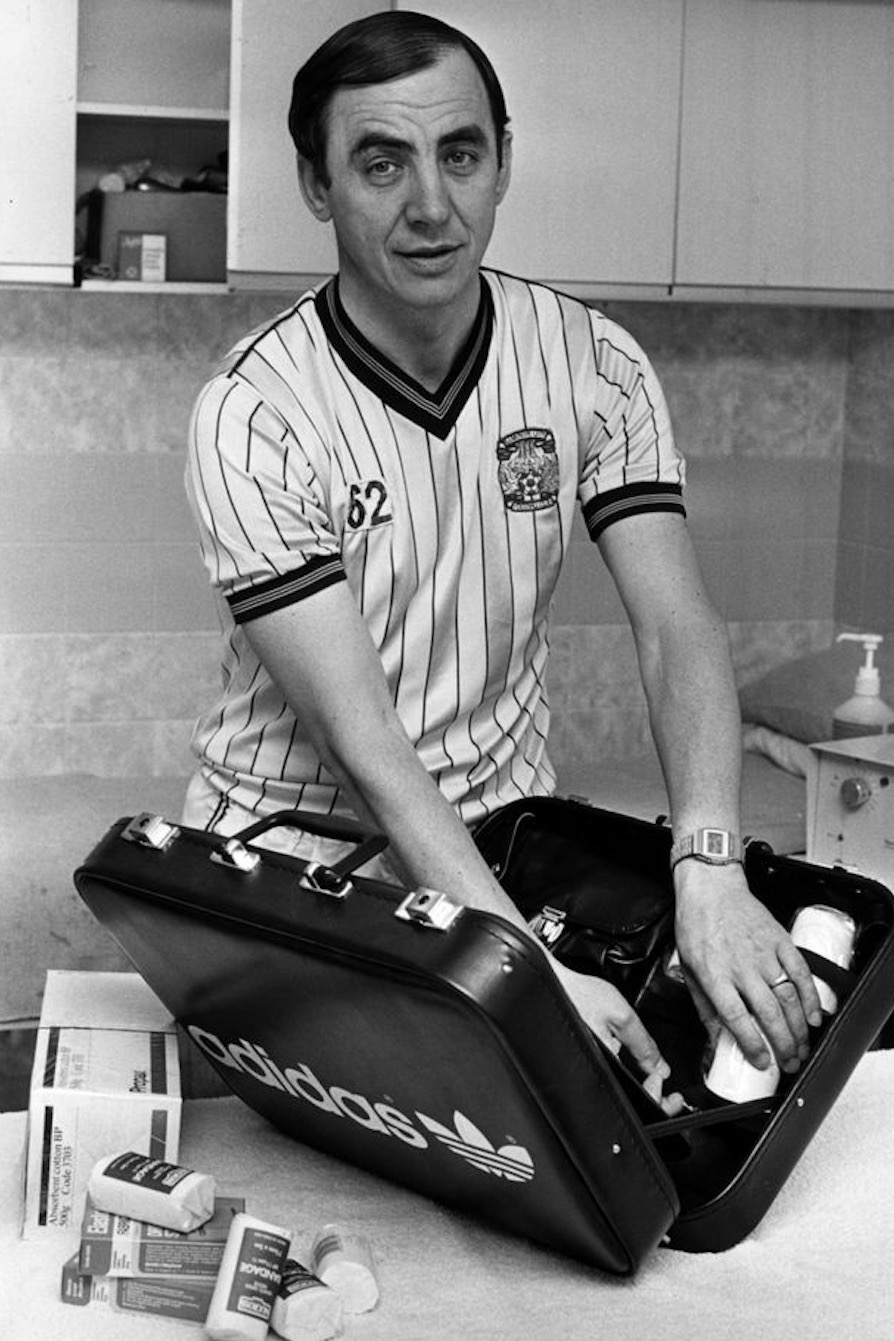
However, he turned his familiarity with the treatment table to good use and he later became Coventry City’s physio for the best part of 20 years.
Born in Dilston, Northumberland, on 4 September 1941, Dalton went through the junior ranks at Newcastle and turned professional at St James’s Park in 1958.

He made his Toon debut on 10 October 1960 in a 4-1 League Cup defeat away to Colchester United, and made his First Division debut the following February, ending up on the losing side in a 5-3 defeat away to Leicester City.
After Newcastle’s relegation to the old Division Two, Dalton made a lot more appearances (including being in the Toon side who thumped Brighton 5-0 at St James’ on 21 October 1961).
He was in and out of the side over the next two years but became a regular from March 1963 and, in January 1964, eagle-eyed Ken McKenzie, reporter for Newcastle’s The Journal, spotted England Under-23 selector Mr E.Smith in the stands at St James’s.
“This visit can only mean imminence of England Under-23s selection to meet Scotland at St James’s Park on Wednesday evening, February 5, and check up, particularly on George Dalton and Alan Suddick, of United,” he wrote. “On this basis, I feel that Mr Smith’s trip to Tyneside holds out very bright prospect of Forest Hall, Newcastle, product, Dalton, gaining his first representative honour on February 5.
“I know that Dalton has been recommended to the England selectors for some time by United directors and manager, and his consistency and clean, strong play has been commented on by influential observers at several away games.”
Unfortunately, the call-up didn’t happen, and revered reporter Ken Jones wrote in the Daily Mirror: “Despite local claims for left back George Dalton and inside forward idol Alan Suddick; neither has been chosen by the England team manager, and clearly they have no place in his ideas at present.”
Interestingly, the left-back berth went to Keith Newton, who later went with England to the 1970 World Cup in Mexico. Mike Bailey and Graham Cross both played in the Under-23s’ 3-2 win over Scotland, while the reserves that day were Peter Grummitt, Alan Mullery and Martin Chivers.
Within a matter of weeks, Dalton’s football fortunes were turned upside down when, in his 40th game of the season, on 30 March 1964, three days after Newcastle had surrendered an eight-game unbeaten run losing 1-0 at home to promotion-chasing Leeds on Good Friday, the full-back suffered a leg break that virtually finished his Newcastle career.
The Journal saw it thus: “This is the tale of a noble resistance by a Newcastle side who had Alan Suddick crippled in the 17th minute and lost George Dalton with a broken right leg (just above the ankle) with 14 minutes to go.”
mightyleeds.co.uk recorded it like this: “Newcastle finished with one man in hospital and another limping, but Leeds just about deserved to win their third hard match in four days. For once, however, there was no malice attached to the game and left-back Dalton confirmed he had broken his right tibia after himself kicking the sole of Giles’ boot.”
Dalton didn’t play his next Newcastle first team game for nearly two and a half years, and then it was just the one game. After that solitary appearance – his 94th for Toon – on 27 August 1966, when they lost a Division One match 2-1 at home to Spurs, he was cast into the shadows and eventually given a free transfer in May 1967.

Third Division Brighton gave the player the chance to salvage his career and he arrived on the south coast in June 1967 together with a young centre forward, Bob Fuller, who went on to score regularly for Albion’s reserves but subsequently moved to South Africa and in later life became a senior executive at mobile phone companies Orange and 3.
There were a couple of familiar faces amongst Dalton’s new teammates: Dave Turner, had been a fringe player at Newcastle before joining Brighton in December 1963, while forward Kit Napier had moved to the south coast the previous summer.
Stewart Ogden also joined straight from school in the north east in the summer of 1967 and the matchday programme declared: “Instead of Sussex by the Sea, Albion’s rousing signature tune, they may be playing The Blaydon Races this season, with so many Geordies on the staff.”
Dalton took over the no.3 shirt from Bobby Baxter, who had moved on to Torquay United, and went straight into Albion’s starting XI alongside new £25,000 record signing John Napier from Bolton Wanderers.
The matchday programme acknowledged Dalton’s past injury misfortune and said: “We all hope the change of club will see this fine defender recapturing his old form. He is married and recently moved into a pleasant club house at Portslade.”
Dalton made 28 appearances in the first half of that 1967-68 season under Archie Macaulay before tragically suffering a double fracture of his right leg in a 0-0 draw at home to Oxford United.
It was on 27 January 1968 that Dalton was involved in a heavy collision with United’s Graham Atkinson (big Ron’s brother) and Albion goalkeeper Brian Powney.
The cruel blow came almost four years after the injury he’d sustained at Newcastle and the Albion matchday programme commented how he had “completely shaken off the effects and was playing with great confidence” adding: “Albion’s popular left-back has played some fine games this season and his stylish work has been admired by supporters of other clubs, as well as the Albion fans.”
In its Albion Postbag column, a correspondent from Newhaven, calling himself ‘Veteran Player’, wrote: “George Dalton has had two unlucky accidents and we all hope he comes back fit and well and able to continue to delight us with his polished full-back play.
“Brighton have nearly always been lucky with their left-backs, and we have had a string of really fine players in that position. George Dalton can be included in that impressive list.”
Macaulay was optimistic the player would recover and in October 1968 the programme told supporters: “George is doing light training, jogging round the pitch, up the terracing also carrying out weight training exercises.”


In the meantime, Mike Everitt had been brought in to fill the gap and, by the time Macaulay was succeeded as manager by Freddie Goodwin, as 1968 drew to a close, Dalton still wasn’t in contention.
It looked even less likely he’d get back in when Goodwin signed his former Leeds teammate Willie Bell from Leicester City, but his next career step was closely linked to both of them.
In the summer of 1970, Dalton, who’d combined studying physiotherapy with coaching the Albion junior team in the latter part of his contract, joined Goodwin and Bell as part of the new management team at Birmingham City.
Albion took serious umbrage at the exodus and the matter ended up with City having to pay £4,500 compensation for Goodwin (who still had 18 months of his contract remaining) and a £5,000 fine for illegally approaching Bell.
Dalton’s situation was viewed differently because he’d technically been a player out of contract thus free to make a move.
When Goodwin left City in 1976 and returned to manage in America, Dalton moved on to Midlands neighbours Coventry City, taking over as physio from Norman Pilgrim, and he retained the position for two decades.
Several former players had nothing but good things to say about him when interviewed in Steve Phelps’ book 29 Minutes From Wembley. Striker Garry Thompson spoke highly of the care with which Dalton treated him when he suffered a broken leg that put him out of the game for 11 months.
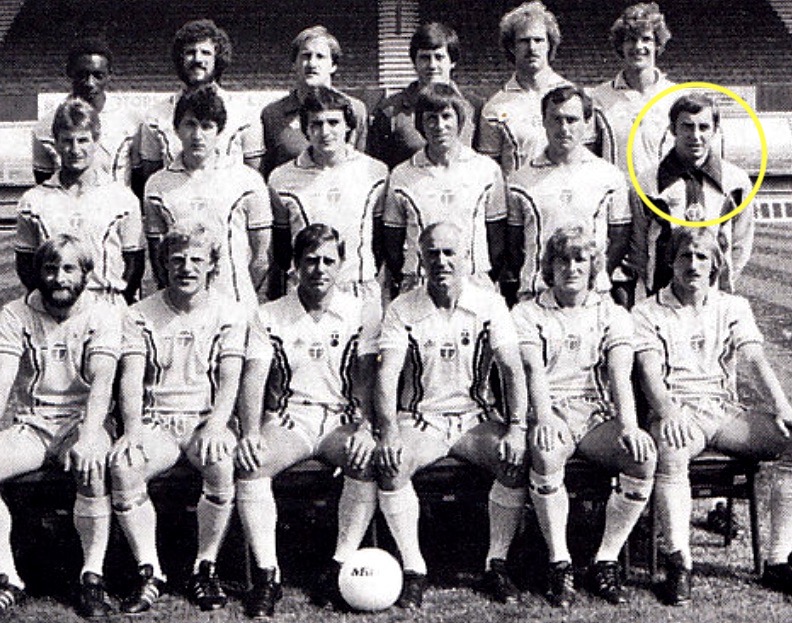
“George Dalton, our physiotherapist, was magnificent with me,” he said. “He kept saying my leg was going to be like a twig and I’d have to rebuild the muscles and learn to walk again.
“My Mum and Dad thought it was career over, but, the way I think about it now, I was so lucky because there weren’t that many options for me and I had to play football.
“George’s own career was ended by injury. He was a very good footballer when he trained with us so, when I broke my leg, he really took care of me and was superb.
“I couldn’t thank him enough and all George had was the sponge and two machines in the treatment room, the electric currents and the ultrasound, that was it.
“He worked miracles down the years with players and, if it wasn’t for him, I would not have played until I was 37. I owe him a lot.”
Garry’s praise for Dalton was echoed by Paul Dyson, who spent prolonged periods in the treatment room with ankle and back injuries during his teenage years. “George was a real character. We all had a lot of time for him and he tended a lot of us through our respective injuries.
“He used to drive us to the hospital in his Morris 1100 and had a great left foot. He’d played left-back for Newcastle United before his own career was ended by injury. There were the two machines in his room and he used to have ice cubes on sticks in his freezer.”
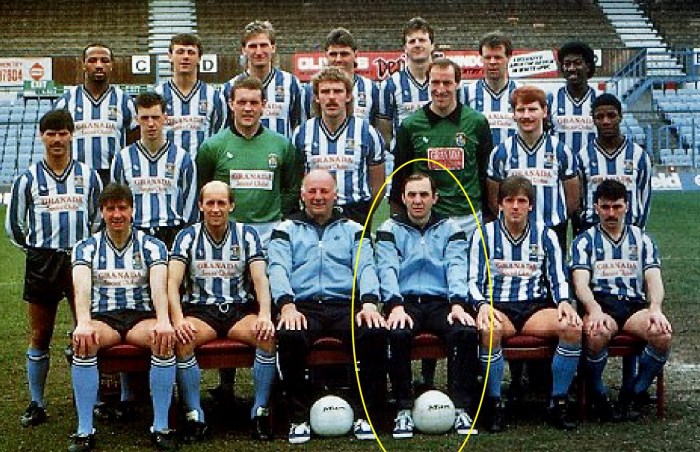
Scottish international winger Tommy Hutchison was another admirer. “He was a smashing lad, George, very old-school. He suffered no fools and could always tell if a player was injured or not.
“In our days broken legs did finish careers, along with knee ligament injuries, and George rehabilitated so many players at Coventry. There was no squad rotation as you wanted to stay in the team and play every week because if you didn’t someone else would step in to take your place and you wouldn’t be able to get back in.”
Midfielder Andy Blair added: “George was a great physiotherapist, a terrific calming influence and a great man to have around.”
Experienced full-back Mick Coop was another who appreciated the physio. “George really was a lovely man who worked injured players very hard in the gym to get them back on to the pitch,” he said. “He was very quiet but did his job well and garnered a lot of respect off the playing squad. I can’t speak highly enough of him.”
Dalton keeps in touch with many of his former colleagues through the Coventry City Former Players’ Association, which has reported how he returned to live in Newcastle in retirement.
* Pictures from matchday programmes and various online sources.




 In parallel lines