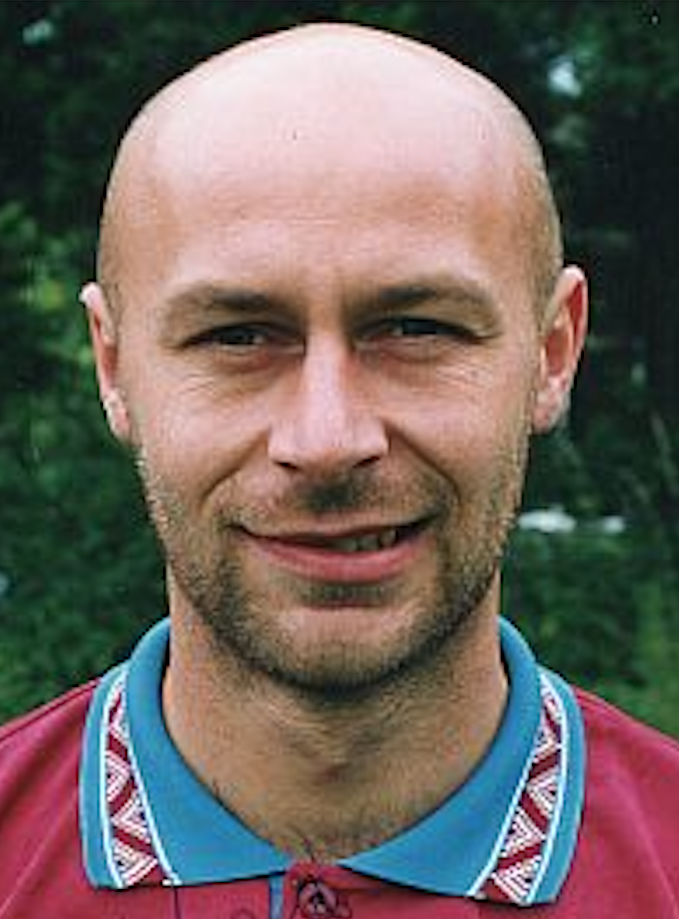
Cattlin bust-up didn’t stop goalscoring ‘Rooster’ Russell

BEING LET GO by the Albion as an apprentice didn’t stop Kevin Russell from going on to enjoy a multi-club league career as a player and a coach involved in no fewer than eight play-off finals and promotions.

A talented teenager good enough to earn selection for the England Youth team, Russell didn’t progress beyond Brighton’s youth and reserve sides between 1982 and 1984.

Although he was a regular goalscorer in the junior sides, a falling out with manager Chris Cattlin saw him depart the club without earning a competitive first team call-up.

Hailing from Paulsgrove in north Portsmouth, Russell returned home and linked up with his hometown club to complete his scholarship under World Cup winner Alan Ball.

Ball also gave him his first team debut but he only had eight first team outings for Pompey. It wasn’t until he joined Fourth Division Wrexham for £10,000 that his career began to take off and he was in the Wrexham side that reached the 1989 play-off final where they lost 2-1 to Frank Clark’s Leyton Orient. In the first of two spells in north Wales, playing at centre forward, Russell scored an impressive 47 goals in 102 games.

Prolific goalscorer for Wrexham

An ever-present in the 1988-89 season, his 25 goals in a total of 60 league and cup matches was recognised by his peers when he was selected in the PFA divisional team of the year.

That caught the eye of David Pleat at Leicester City, then playing in the ‘old’ Second Division, and a fee of £175,000 took him to Filbert Street.

At Leicester he played wide right rather than in the centre but he still had a knack for scoring goals and he eventually became something of a cult hero with Foxes supporters for the goals he scored in City’s escape from second tier relegation in 1991 and in their run up to the 1992 play-off final.

However, only a month after joining Leicester he had to undergo a hernia operation that put him out of action for eight weeks. When fit, he was sent out on a month’s loan to Peterborough …and suffered a broken leg!

When ready to play again, his effort to resume match fitness saw him go on another month’s loan, to Fourth Division Cardiff City. In the meantime, Pleat was sacked and Gordon Lee took over. Russell returned as the Foxes fought to avoid relegation to the third tier.

Perhaps inevitably one of the vital goals he scored (on 6 April 1991) was against promotion-seeking Albion in a 3-0 win that helped the Foxes in the hunt to stave off the dreaded drop.

Two years later, after he had moved on to Burnley via Stoke City, Russell’s first goals for the Clarets (above) were also scored in a 3-0 win over the Seagulls.

Born in Portsmouth on 6 December 1966, the nickname Rooster was coined at an early age because his hair formed something of a quiff when he was a boy – ironically, he went prematurely bald but the name stuck.

Russell’s first appearances in Albion’s colours came in the early autumn of 1982 playing in the junior division of the South East Counties League. He was still a 15-year-old schoolboy at the time.

By the spring of 1983, while the Albion first team were edging towards the FA Cup final at Wembley, Russell had stepped up to the reserves, as the matchday programme reported after he’d been involved in a close game against an experienced West Ham second string.

“Kevin Russell is just sixteen and he doesn’t leave school until he has taken his examinations next month,” it said. “But at Upton Park he found himself playing against such experienced men as Trevor Brooking and Jimmy Neighbour.

“Many schoolboys would have given their right arm to play on the same field as Brooking and there was Kevin playing on equal terms.

“Although we lost 2-1, it should be remembered that in Kieran O’Regan, Mark Fleet, Matthew Wiltshire, Gerry McTeague, Gary Howlett, Chris Rodon and Kevin Russell we had seven players under 20, while the Hammers had Paul Allen, Paul Brush and Pat Holland, all of whom have played in European competition, as well as Neighbour and Brooking in their line-up.”

John Shepherd was in charge of the side, aided by John Jackson, who had been signed as goalkeeping cover and was helping out with coaching too.

Russell’s official arrival as an apprentice at Brighton earned a mention in the matchday programme for the home game with Chelsea on 3 September 1983 and he was one of five apprentices on the staff that autumn, together with Dave Ellis, Darron Gearing, Gary Mitchell and Mark Wakefield. Martin Lambert had stepped up to sign as a full professional that summer.

In those days, the youth team played home matches at Lancing College and were looked after by Shepherd and Mick Fogden before experienced George Petchey was brought in to oversee youth development and run the reserves.

It was while a Brighton player that Russell won the first of six England under-18 caps (five starts plus one as sub), and he scored in the first of them – a 2-2 draw with Austria on 6 September 1984 – and in his fourth game, six days later, which England lost 4-1 to Yugoslavia. His strike partner in that side was Manchester City’s Paul Moulden, later an Albion loanee.

With the likes of Terry Connor, Alan Young and Frank Worthington in the first team, and promising youngsters in the reserves, such as Lambert, Rodon and Michael Ring, it is perhaps not surprising that Russell couldn’t break through.

He did have one outing in first team company, though, in a testimonial match for Gary Williams: he scored (along with Young and Connor) in a 3-3 draw against an ex-Albion XI.

The same game saw defender Jim Heggarty appear: like Russell he also went on to play for Burnley without playing a competitive first team game for the Albion.

While on that theme, a frequent partner of Russell’s in the reserves was Ian Muir, another striker who slipped through Albion’s net and ended up scoring goals for Burnley.

After his departure from the Albion in October 1984, Russell made the most of the opportunity Portsmouth presented him to learn from the former Everton, Arsenal and Southampton midfield dynamo Ball.

“I had three years there under him which was fantastic,” Russell told Leicester City club historian John Hutchinson in March 2018. “He was brilliant as a coach and it was very educational. I got the rest of my (under-18) caps at Portsmouth.

“Alan Ball treated us well. I was playing men’s football at 18. I played a few games in the first team and we managed to get promoted into what is now the Premier League.”

Although disappointed to be advised to move on to get more games, Russell’s switch to north Wales was the launchpad for his career, and the beginning of an association with Wrexham that lasted many years.

“It was a gamble worth taking because it meant first team football,” said Russell. “Dixie McNeill was the manager. He used to be a famous striker for them. He was fantastic for me and was an old school kind of manager; a proper man’s manager. It was a good time.”

Mixed fortunes at Leicester City

After Russell’s part in keeping Leicester in the second tier in 1991, he found himself on the outside looking in when Brian Little replaced Gordon Lee as manager and to get some playing time went on a month’s loan to Hereford United and then spent a month at Lou Macari’s Stoke City.

But Little recalled him in February and in his first game back he once again found the net against a former club, scoring in a 2-2 draw with Portsmouth. He kept his place through to the play-off final at Wembley, where they faced Kenny Dalglish’s Blackburn Rovers, and lost to a “dodgy penalty” scored by ex-Leicester player Mike Newell.

“It was a very scrappy game. Both teams were under a lot of pressure and never really got into their rhythm,” said Russell. “We had worked so hard that season to get to where we did get to. The result was a big disappointment, but it was an occasion that I’ll never forget.”
A promotion winner with Stoke City

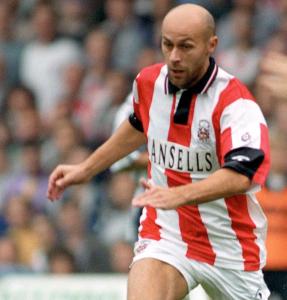
It also turned out to be his last game for Leicester because that summer he returned to third tier Stoke on a permanent basis. He is fondly remembered for his part in Stoke winning promotion in 1992-93, scoring six goals in 39 league and cup matches (plus 11 as a sub), but he moved on again, this time to Burnley.

Third-tier Burnley signed him from Stoke for £150,000 (or was it £95,000 – I’ve seen both prices quoted) in June 1993 and, although he only stayed for eight months at Turf Moor, he scored eight goals in 35 games (plus two as sub) in Jimmy Mullen’s Clarets side.

Two of those goals – his first for Burnley – were scored against the Albion. I was at Turf Moor for a midweek game on 14 September 1993 when Russell scored with only a minute on the clock and he got a tap-in on 47 minutes in a 3-0 stroll for the home side. Steve Davis got Burnley’s third.

Brighton were a very different club to the one Russell had left in 1984, though. With a win in a League Cup match their only victory in the opening eight matches, it was the beginning of the end of Barry Lloyd’s tumultuous reign in charge, against a backdrop of financial hardship and boardroom mismanagement off the pitch.

Russell’s habit of scoring against his former clubs manifested itself again two days after Christmas, when he netted in a 2-1 home win over Wrexham. He scored again five days later in a New Year’s Day 3-1 home win over Lancashire rivals Blackpool.

But he was not around to be part of the side promoted via the play-offs, having moved back south, to Bournemouth, for £125,000 in March 1994.

• Another move, a return to north Wales and a career in coaching as Russell’s story continues.

The goalscoring legend who slipped through Brighton’s net

ONES that got away always make for fascinating stories and a striker who went on to become a goalscoring legend slipped through the net at both Brighton and Burnley.

Ian Muir is hailed an all-time hero by fans of Tranmere Rovers for whom he scored 180 goals in all competitions during what many regard as the best period in Rovers’ history. If it hadn’t been for injury, he could have played in the Premier League and Europe for Leeds United.

But he’s barely remembered for the struggles he had to get games at Brighton, let alone in a month with the Clarets.

Success could have eluded himf it hadn’t been for the time he spent at Brighton alongside the legendary Frank Worthington. He was considering a move to non-league Maidstone United, but, when Worthington quit Brighton in the summer of 1985 to take his first step into management on the Wirral, he made Muir his first signing.

“Ian Muir was a fantastic forward with great touch,” Worthington told Spencer Vignes in an Albion matchday programme interview. “He did things in training you just wouldn’t believe, yet he wasn’t even making the side at Brighton under Chris (Cattlin).”

Cattlin had taken the youngster on after he had been given a free transfer by Birmingham City where he’d made just one League Cup appearance in the 1983-84 season under Ron Saunders. But competition for forward places was intense with the likes of initially Alan Young and Terry Connor, then Worthington, Mick Ferguson and later Alan Biley.

Muir’s first involvement with the Albion first team was as a non-playing substitute for the home 3-0 win over Leeds on 24 March 1984. He made his debut the following Saturday at Fratton Park in place of the injured Young and was brought down in the penalty area only 20 minutes into the game to earn Brighton a spot kick, which Danny Wilson successfully buried to put the Seagulls ahead.

Muir in his Brighton days

Connor had a chance to put Albion further ahead and, as the matchday programme reported, “Muir sliced wide as Connor made the opening” before Pompey began a devastating fight back.

Albion had been hoping to complete a fourth win in a row for the first time in six years, but it wasn’t to be, and, into the bargain, Muir couldn’t cap his debut with a goal, instead firing wide when set up by winger Steve Penney.

Unfortunately, this was the game when former Spurs and Arsenal centre back Willie Young, on loan from Norwich City, was given the runaround by Pompey centre forward Mark Hateley, and, courtesy of a second half blitz, the home side ran out 5-1 winners.

Alan Young was restored to the no.9 shirt in the next match and scored twice as Albion beat Grimsby Town 2-0 at the Goldstone, but Muir was drafted in to take Connor’s place in the away game at Shrewsbury Town.

That match ended in a 2-1 defeat, but the News of the World angled its report on an unlucky afternoon for the young forward.

“It just wasn’t Ian Muir’s day,” wrote reporter Brian Russell. “The Brighton teenager (actually he was 20) playing only his second league game could so easily have taken the limelight from Shrewsbury two-goal hero, 17-year-old Gerry Nardiello.

“Young Muir headed the ball home in the eighth minute from Jimmy Case’s corner, but it was ruled out (for a foul by centre-half Eric Young).”

Alan Young produced a powerful header from a Muir cross that Steve Ogrizovic (later of Liverpool and Coventry City fame, of course) saved brilliantly.

Russell continued: “With Brighton battling to cancel out Nardiello’s 23rd-minute opportunist goal, striker Muir suffered. His delicate chip left the ‘keeper clutching thin air, but Shrewsbury skipper Ross McLaren headed out.

“Brighton levelled it with 15 minutes to go (through Eric Young). But, five minutes later, Nardiello pounced on Chick Bates’s chested pass to beat Joe Corrigan.”

Muir was on the scoresheet when Albion’s reserve side began the 1984-85 season with a 1-0 win over reserve team boss George Petchey’s old club, Millwall. It was a very experienced team featuring Corrigan in goal, full-backs Chris Ramsey and Graham Pearce – who had both played for the Seagulls in the FA Cup Final the year before – along with Steve Gatting and Neil Smillie. Giles Stille and Alan Young were also in the line-up.

Muir had to wait until 13 October for his next first team opportunity when he was a non-playing sub as Albion went down 2-1 at Oxford United. He then got on as a sub for Connor in a 0-0 home draw with Barnsley, but the game was so dire that Cattlin very publicly forfeited a week’s wages.

After three goalless games straddling October and November 1984, Cattlin paired Muir with Worthington away to Blackburn on 10 November but still the drought couldn’t be breached, and Albion went down 2-0. The next game, Cattlin tried Ferguson and Connor as his front pair – same outcome: a 1-0 defeat at Leeds.

Muir didn’t get another chance with the Albion but in the spring of 1985 was sent out on loan to Lou Macari’s Swindon Town, where he played in three matches (and his teammates included Ramsey, who’d been released by Cattlin, and Garry Nelson, who would later become a promotion winner with the Seagulls).   

Somewhat curiously, when commenting on Muir’s departure from the club that summer, Cattlin said in the matchday programme: “I am sure Ian will get goals at whatever level he plays.”

Sure enough, Prenton Park eventually became his spiritual home and, although Tranmere struggled to stay in the fourth tier initially, Muir’s goalscoring exploits were synonymous with four years in which Rovers were promoted twice and appeared at Wembley five times. Highlights saw Muir score in the FA’s centenary celebrations in 1988 and an acrobatic and precise volley in Tranmere’s Leyland DAF Trophy victory over Bristol Rovers in 1990.

Muir and strike partner Jim Steel

He particularly began to prosper after Worthington’s successor, Johnny King, brought in tall target man Jim Steel alongside him in 1987.

Steel, who later became a police officer on Merseyside, said King, a Bill Shankly devotee, would compare him and Muir to John Toshack and Kevin Keegan. “That’s the way football was at the time,” he told the Liverpool Echo. “You looked for a little mobile player to feed off a tall striker.

“Muiry was one of the best finishers in the game at the time. If I’m honest, the intelligence of the partnership was down to Muiry, who was very good at reacting to things off me,” he said.

“I wasn’t the most technically gifted of players compared to the likes of Johnny Morrissey and Jim Harvey. But things happened around me and Muiry was very good at picking up the crumbs.”

Muir was Tranmere’s leading scorer from 1986 to 1990 and, in the 1989-90 season, he scored 35 goals in 65 games.

Such is the esteem in which Muir is held in those parts that a mural depicting him and all-time-appearances record holder Ray Matthias adorns the side of a house close to Prenton Park. A lounge at the ground is also named after him.

Born in Coventry on 5 May 1963, Muir played for the City’s schools side and Bedworth Juniors and won four England Schoolboy caps (against Wales, Scotland and two v West Germany) featuring alongside the likes of Tommy Caton, Ian Dawes, Terry Gibson and Kevin Brock.

He joined QPR as an apprentice aged 17 in 1980 and was a Hoops player for four years in total during Terry Venables’ reign as manager. In October 1982, he went on a one-month loan to Burnley. The respected all-things-Burnley writer, Tony Scholes, takes up the story.

“When Burnley played on QPR’s plastic pitch at Loftus Road in 1982 we came home with more than we’d bargained for. Two Trevor Steven goals in front at half time, we’d suffered a 3-2 defeat in the end although we managed to acquire a striker.”

Scholes pointed out how Muir had progressed into the first team squad at Loftus Road, but after a goalscoring start had fallen out of favour.

“He made a dramatic start to his first team career, scoring twice on his debut in a 5-0 thrashing of Cambridge United in April 1981,” said Scholes. “He kept his place for the one remaining game of the 1980-81 season but by the time he arrived at Turf Moor, well over a year later, he was still looking for his third game.”

It eventually came with Burnley, when he went on as a substitute in a 2-1 defeat at Charlton, replacing skipper Martin Dobson. He then started and scored Burnley’s goal in a 3-1 defeat at Leeds.

“He impressed, but the home fans never saw him and. at the end of the month, he was dispatched back to West London, his Burnley career over,” said Scholes.

Ian Muir alongside Terry Fenwick when Terry Venables managed QPR

Unable to get back into Terry Venables’ side at Loftus Road, Muir joined Birmingham and subsequently Brighton.

Finally given a platform to shine, the striker scored the majority of his 180 Tranmere goals between 1985 and 1991 and spearheaded the side that vaulted two divisions in three seasons between 1988 and 1991, before eventually being edged out by the arrival of John Aldridge.

The Liverpool Echo remembered: “It was inevitable his subtle skills and clinical finishing would make him a target for a larger club. Muir knew of Leeds’s interest as Tranmere campaigned to secure a place in the Third Division playoffs in 1990-91.

Muir told the newspaper: “Howard Wilkinson was sending scouts to watch me and coming along himself. When I went along to the ticket office before games, the Leeds scout was sometimes at the kiosk and I’d chat to him. He told me what was happening.

“Mark Proctor, who joined us from Middlesbrough the following season and worked under Wilkinson, knew about the deal and told me.”

Muir was arguably in his prime at the age of 27, but he suffered what would be a fateful knee ligament injury in a game against Chester City on 23 March 1991.

When Tranmere visited Leeds in a League Cup tie early in the following season, Muir hobbled into Elland Road on crutches. Muir recalled: “Before the game Gordon Strachan asked our midfielder, Neil McNab, where I was. Neil pointed to me standing there on crutches.

“Then Strachan said: ‘Ian is the unluckiest man in the world because we were going to sign him’. Leeds went on to win the league that season and I could have been with them, playing at the highest level playing in Europe the following season.

“I was gutted. I was so close and the injury changed everything. But that’s football. You get your ups and downs.

“I could never complain about the fantastic career I had at Tranmere and I wouldn’t swap my memories of the years at Prenton Park for anything.”

He wasn’t granted a testimonial after a decade with Rovers, but in 2020 there were moves afoot amongst their supporters to help him publish his autobiography.

Adulation has not waned and a young writer who didn’t even get to see him play wrote warmly about the striker’s achievements in this tribute.

In 1995, Muir returned to Birmingham City for a £125,000 fee but he played only twice before he suffered a groin injury. In an effort to get fit, he spent a month on loan at Darlington, and scored a goal, but his league career was over.

He went to play in Hong Kong, scoring a hat-trick on his debut for Sing Tao, and later played for Happy Valley. In June 2011, he recalled in an interview with the Liverpool Post: “The warm climate was a big help. Then the medical people found the cause of the groin problem was my spine. The pelvis wasn’t lined up properly. It could get out of joint just by lying in bed.

“One of the lads on the medical side was able to click me back into place. I have to say I have not had many problems with it since.”

Muir returned to the UK, and his native West Midlands and joined Nuneaton Borough.

“We won the league by 20 points and got into the Conference,” Muir told the Post. “We were top of the league after three months of the following season then it all went pear-shaped.”

The newspaper reported that Muir stepped down a level to Stratford Town, where his football days finished.

He did some voluntary coaching in schools and took a job in a factory for a year, and subsequently joined a friend in a business fitting out pubs and shops.

• Pictures from various online sources.

Mis-firing Mick Ferguson couldn’t repeat goalscoring prowess for Everton or Brighton

MICK FERGUSON was a prolific goalscorer for Coventry City but the goals dried up in spells with Everton and Brighton & Hove Albion.

Ferguson’s arrival at the Goldstone in the early autumn of 1984 was certainly not amid a great fanfare. The Albion, under new chairman Bryan Bedson, were wrestling with debt and, to bring in some much-needed funds, sold striker Alan Young to Notts County for £50,000 and full-back Mark Jones to Birmingham for £30,000.

Needing a cut-price replacement for Young, and with Ferguson unwanted at Birmingham having been responsible for getting them relegated (see below), he came to the Goldstone as part of the deal that took Jones to St Andrews.

In modern-day football, loan players don’t generally play against their parent clubs but, amazingly, at the end of the previous season, Ferguson was allowed to play against Birmingham while on loan at his old club Coventry, and ended up scoring a goal that kept the Sky Blues in the top division but sent Birmingham down.

It was such an unusual saga that as recently as May 2017, the Guardian revisited the tale, catching up with Ferguson to explain the circumstances.

As the article explains, shortly before the player’s 30th birthday, manager Ron Saunders offloaded him to Brighton, where the manager was Ferguson’s former Coventry teammate, Chris Cattlin. Just to prolong Saunders’ agony, Ferguson made his Seagulls debut in a 2-0 home win… over Birmingham! This time he didn’t score. And, for Brighton, that state of affairs existed for several months.

I remember his second game quite vividly. It was a midweek league cup tie away to Fourth Division Aldershot and I went to the game with my pal Colin Snowball, who at that time was living in nearby Bagshot. There wasn’t anything subtle about Albion’s tactics that night. Goalkeeper Graham Moseley would kick the ball long for Ferguson to get on the end of it.

But, as the striker tried to lay it off, all he succeeded in doing was heading it into touch – repeatedly. The new signing did not impress! Despite their superior status in the league, Albion succumbed 3-0 in what was a pretty humiliating exit. Ferguson was remarkably selected for the following Saturday’s game, an away defeat to Oxford, after which he was omitted for four games. Cattlin gave him another chance with a four-game spell but still the dismal form continued and he didn’t get another look-in for four months.

Freelance journalist Spencer Vignes did a retrospective article about Ferguson for the Albion matchday programme and discovered the striker didn’t have a high opinion of his former playing colleague. “Several of the players just didn’t get along with him, and I was one of them,” he said. “His man-management skills  left a lot to be desired. As a manager you need to have the players on-side. Chris certainly didn’t have us on-side.”

Ferguson admitted to being frustrated by Cattlin chopping and changing the side and said there were times he turned out when only 80 per cent fit, which didn’t do justice to himself, the team or the supporters. “My ankles weren’t great and towards the end I did struggle with my back, but I felt when I was fit I could certainly do a good job.”

The striker felt with the ability in the squad at the time they should have achieved more but pointed the finger at Cattlin for it not happening. “Some people aren’t cut out for management and I don’t think Chris was. It doesn’t surprise me that he never worked as a manager again.”

The history books (many thanks to Tim Carder and Roger Harris) recall him as the goalscorer in a 1-1 draw away to Portsmouth on 6 April 1986 but, having been to that game too, I seem to recall it was a rather desperate claim for what looked more like an own goal by Noel Blake.

The start of the following season saw the arrival of former £1m striker Justin Fashanu from Notts County and Dean Saunders, a free transfer from Swansea City, so Ferguson’s prospects of a starting place looked bleak.

However, the 1985-86 season was not very old before Cattlin had a striker crisis on his hands. Gerry Ryan was out long-term with the horrific leg break from which he never recovered, Terry Connor and summer signing Fashanu were also sidelined with injury and a big man was needed to play alongside Alan Biley.

Cattlin had little choice but to bring back the previously mis-firing Ferguson, and to everyone’s surprise and delight his goal touch returned, albeit briefly.

“I was virtually forced into the team through injury,” Ferguson admitted in a matchday programme interview. “But, fortunately, things turned out quite well. It was nice to get a goal against Blackburn in my first match back. That seemed to pave the way.”

The programme article had tried to give some perspective to the dismal form when he had first arrived. It said: “Mick’s confidence was affected by his loss of form, but he never lost an inner belief that he would pull himself out of the bad patch. And what a difference the goals make. He has shown great character this season and did a marvellous job for the team while Justin Fashanu was out with injury.”

Ferguson himself said: “It took us quite a while to settle down. We were in a flat at first and I was having a lot of problems, one way and the other, so it wasn’t an easy time.”

Eventually Ferguson, his wife and two daughters settled into a house in Hove, and the striker admitted: “When you’re having a bad time there is a tendency to bring your problems home. It’s unfair on your family. I didn’t notice at the time, but, looking back, I think I probably was a little snappy with my wife and children.

“I think you can reach the stage where you really start to wonder, but I always knew I could score goals for Brighton. I’ve scored goals everywhere else I’ve played. It was just a question of time and waiting for the right break.”

Indeed, Ferguson scored in three successive matches in September 1985, prompting Cattlin to give him a special mention in his programme notes for the league cup game at home to Bradford City. “The form of Mick Ferguson is bound to improve even more with the confidence he is gaining through his three goals in three games,” wrote the manager. “His header against Wimbledon was a true indication of his ability; it was of the highest class.”

The renewed confidence saw him add another consecutive pair the following month – before on-loan Martin Keown took over the no.9 shirt and demonstrated he could score goals as well as defend!

Sadly, the revival in Ferguson’s fortunes were not to last. When Fashanu was fit again, Ferguson was dropped and only stepped in a couple more times. His goal in a 4-3 home win over Huddersfield on 16 November was the last he scored for the club.

Apart from a lone outing in January, in a 3-0 defeat at Sheffield United, Ferguson was on the outside looking in until, to everyone’s astonishment, after a five-week absence from first team action, he was selected by Cattlin to lead the line in a FA Cup Sixth Round tie against First Division Southampton on 8 March 1986.

Ferg action Shilts Bond CaseFerguson, sandwiched between Kevin Bond and Jimmy Case, is foiled by Southampton goalkeeper Peter Shilton in what turned out to be the striker’s final Brighton game.

A crowd of 25,069 packed into the Goldstone – when the average attendance at the time often dipped below 10,000 – but it ended in a disappointing 2-0 defeat and the manager admitted he had made a mistake with his selection. It turned out to be Ferguson’s last game for the club.

Just over three weeks later, he moved to fourth-tier Colchester United – whose manager Cyril Lea was promptly sacked!

United’s reserve team manager, Mike Walker (who would later manage Everton) took over the first team as caretaker and, as the team went on an unbeaten run of eight games, Ferguson scored seven times, the first of which came in a 4-0 win over Leyton Orient on 8 April.

The following season he played 19 games and scored four times before leaving on 7 November 1986 to join non-league Wealdstone.

It was quite a fall from the heady days of the early Seventies.

Born in Newcastle on 3 October 1954, Ferguson was picked up by Coventry City’s youth scheme in 1970 and, although he made his debut in 1975, shortly after the sale of Scotland international Colin Stein, it wasn’t until the start of the 1976-77 season that he became a Highfield Road regular.

In tandem with Ian Wallace (who was later a strike partner of Peter Ward’s at Nottingham Forest), he really started to attract attention, as the Coventry Telegraph recounted when describing him as a “truly great goalscorer”.

The article reckoned he was strongly tipped for international honours at one point but injury and loss of form affected him over the next two seasons. Forest, Villa and Ipswich were all supposedly keen to sign him, with Brian Clough agreeing a £500,000 deal, then pulling out.

However, in the summer of 1981, he finally left City having scored 57 goals in 141 games (plus eight sub appearances) all in the top flight when Everton paid £280,000 for him. Ferguson scored six times in his first eight games – but the goals dried up after that and he was gone within less than a year having made only made 10 appearances (plus two as a sub).

In 2007, David Prentice, in the Liverpool Echo, sought out Ferguson for an explanation of his less than happy time on Merseyside.

Manager Howard Kendall initially loaned him to Birmingham City, before making the deal permanent, but injury disrupted his chances at St Andrews, hence the loan move back to Coventry.

After retiring from playing in 1987, Ferguson stayed in the game working in community development roles for Sunderland – for 10 years, until he fell out with manager Peter Reid – Newcastle United and Leeds United, where he was head of Football in the Community.

Pictures from Albion matchday programes and, via YouTube, from Coventry City’s Sky Blues TV.

Desk job at Leeds in later life

Irish international pals brought wing wonder Steve Penney to Brighton

BRIGHTON & Hove Albion can thank former Middlesbrough goalkeeper Jim Platt for landing one of the most exciting players ever to play for the Seagulls.

Platt was the Teesside club’s man between the sticks for 12 years. During his call-ups on international duty with Northern Ireland, he struck up a friendship with Arsenal defender Sammy Nelson, who joined Brighton towards the end of his career.

When Platt took over as manager of Ballymena United, he quickly recognised that a talented teenage winger at his disposal –  Steve Penney – could make a career for himself in England.

Platt tipped the wink to his old pal Nelson, newly-appointed as Albon’s assistant manager to Chris Cattlin at the time, and the youngster was invited for a trial.

Penney was put up in a house near the Goldstone recently vacated by the sacked Jimmy Melia. His housemate was another young triallist: Ian Wright! Penney was taken on while Wright was released. Whatever happened to him?!

Penney’s Albion story is told in fine detail by journalist Spencer Vignes who devotes 12 pages of his excellent book A Few Good Men (Breedon Books) to a player who, for the record, played 148 games (plus 14 as sub) in eight years with Brighton.

Unfortunately, that rather low figure tells its own story, a succession of injuries robbing him of probably twice as many games as you might have expected him to have played over that length of time.

“He was, in short, a breath of fresh air, a flying winger whose close control and devastating pace left opponents and spectators alike lost for words,” said Vignes.

Among former teammates who voiced their appreciation of Penney, full back Graham Pearce told Vignes: “I always thought of Steve as a bright young winger, very naturally talented, who had all the attributes you need in that position, especially pace.”

Born in Ballymena on 6 January 1964, the son of a teacher and a nurse, although he played football at primary school, he went to what he described himself as “a fairly posh grammar school” where rugby was the preferred sport for boys, and he was a scrum half.

He got the chance to play football in the Boys Brigade, where Nigel Worthington, who later managed Northern Ireland, also played.

“I had to choose between rugby and football and when I decided to join Ballymena United, the school were so furious they suspended me,” he told interviewer Dave Beckett in a matchday programme feature.

“Playing for my home town was excellent, although I had the chance to join Linfield who were one of the best teams in the country.

“I guested for them in Holland a couple of times so I knew they were interested and that’s where I expect I’d have ended up if I hadn’t moved abroad.”

Instead, Platt alerted Nelson and, bearing in mind Albion’s high profile having only recently played against Manchester United in the Cup Final, Penney didn’t take much persuading.

Beckett recounted: “Penney, at 19 years old, made his debut in a 3-1 defeat by Barnsley but was soon a hot favourite on the terraces. Even in his opening match he set up the goal goal for Alan Young, and John Vinicombe wrote in the Evening Argus: ‘The eye for an opening that Penney unquestionably has will serve Albion well. The Goldstone are going to like him’.”

It wasn’t long before he was playing to a much bigger gallery when he was part of the Albion side who toppled Liverpool in the FA Cup (for the second season running), winning 2-0 in front of a live television audience.

Penney tormented the experienced Liverpool left-back Alan Kennedy and his perfectly-flighted pass over the top of the Liverpool defence played in Terry Connor to score the decisive second goal.

His first goal came in a 3-0 win at Derby County in March 1984 and such was his impact in that first season that he was voted runner-up to Jimmy Case as player of the season.

Away from football, Penney was a decent golfer, his regular companions on the golf course being Dean Saunders, Chris Hutchings, Steve Gatting and former Albion favourite Peter O’Sullivan.

During the winter, he loved nothing more than playing snooker at a club in Hove, especially taking on Saunders and competing for a trophy awarded each week to the winner.

So, life was sweet for the young Irishman and it got even better when his form with Brighton led to full international honours.

SP w Irish shirt

At the time of writing, he remains the highest-capped Albion player, all of his 17 caps for Northern Ireland being won while with the Seagulls.

After making his debut on 16 October 1984 in a 3-0 friendly win over Israel in Belfast, he was a regular for four years, playing his last game on 21 December 1988 in a 4-0 defeat to Spain in a World Cup qualifying match. He scored twice for his country, in a 1-1 draw with Israel on 18 February 1987 and in a 3-0 win over Malta on 21 May 1988.

The highlight of his international career was playing for Northern Ireland at the 1986 Mexico World Cup.

“The whole experience of going to the World Cup was something I’ll never forget,” he said three months later, in a matchday programme interview.

“Six weeks away from home is a long time, but the spirit in the squad was very good and I wouldn’t have missed it for the world.”

Steve had been in the side that qualified for that World Cup by drawing 0-0 against England at Wembley. “We only needed a draw to get to Mexico and we got it,” he said.

“(Manager) Billy Bingham had been a right winger and obviously appreciated what I could do, which was a source of great strength to me. He’d been part of the team that had played in the World Cup in Sweden in 1958, a lovely man who was very good at getting the best out of his players and encouraged me no end, something I’ll always be grateful to him for.”

Unfortunately, Steve’s World Cup came to a juddering halt after Spain’s hard man Emilio Butragueno went over the top in a tackle and did his ankle in only the second group game.

On his return to Brighton, Penney found himself sufficiently impressed by Cattlin’s successor, Alan Mullery, that he was persuaded to sign a new, three-year contract.

However, it wasn’t long afterwards that Penney started having problems with his left knee and, although he played through the pain barrier, in a game against Derby County in March 1987 a bad tackle damaged his ankle ligaments, sidelining him for the rest of the season.

Barry Lloyd had succeeded Mullery and Penney was in the team at the start of the next season but, after only two games, found himself back on the treatment table after a chip of bone was found floating in a knee.

That kept him out for an agonising seven months before he was able to return to the side in March 1988 to play a crucial part in the final 11 games, scoring three times as the Seagulls earned promotion in second place behind Sunderland.

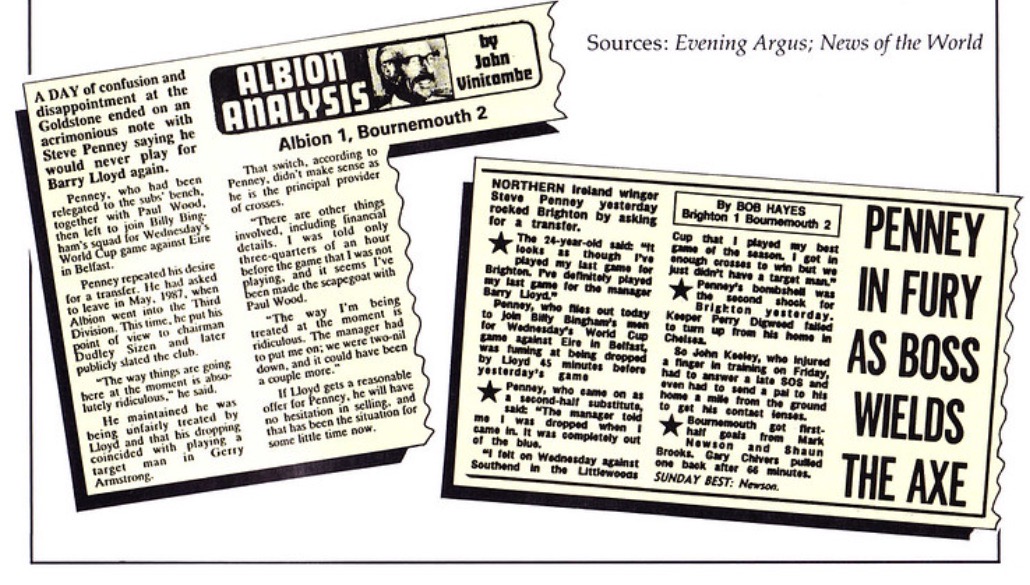
Penney told Vignes: “At that time, playing for Barry was great. The two of us were getting on even though I always thought there was something not quite right between us. To be honest, he had to play me because I strengthened the team and made a difference.”

Halfway through the 1988-89 season, Crystal Palace tried to sign Penney but weren’t prepared to meet Albion’s £175,000 asking price. And then his left knee went again.

Vignes tells the whole gory story in detail, which I won’t repeat here, but, suffice to say, the wrong treatment by one doctor had to be put right by a Harley Street expert.

Penney rowManager Lloyd and Penney also fell out, principally over Penney putting country before club. “He’d play for them, then come back injured. That didn’t please me,” said Lloyd. “It was a crying shame. He just wanted to play but was so plagued with injuries it was beyond belief.”

The split came in 1991 when Lloyd clearly thought the player’s level of fitness didn’t merit a new contract. Interest was shown in him by Heart of Midlothian, managed by Joe Jordan, and Charlton Athletic, where the joint manager was his ex-Albion teammate Alan Curbishley.

Having played a couple of trial games for Hearts, he plumped for them but suffered a groin strain early on and only played 14 games all season.

A 15th game would have triggered the award of another one-year deal – and it quickly became apparent that it wasn’t going to happen. Freed at the end of the season, he signed for Burnley, newly-promoted from the old Fourth Division, in August 1992. Continue reading “Irish international pals brought wing wonder Steve Penney to Brighton”

Gary Lineker cleaned defender Larry May’s boots

larry may wednesINJURY cut short Larry May’s playing career at Brighton but, during a purple patch of his four-year spell at Barnsley, he impressed his peers to the extent he was in the 1986-87 PFA team of the year.
Alongside him in that selection were Lee Dixon, the ITV football pundit who in those days played for Stoke City prior to his move to Arsenal, and former Albion full back John Gregory, who was playing in midfield for Derby County at the time.

Centre back Larry began his career with Leicester City and played over 200 games for them between 1977 and 1983. When given a run in the first team by former Rangers manager Jock Wallace, Larry’s boots were looked after by none other than Gary Lineker: the Match of the Day host being a Filbert Street apprentice at the time.

Leicester’s club historian John Hutchinson – who said of May: “He was very strong in the air, a powerful tackler and had pace” – drove down to Brighton in 2015 to interview Larry about his time with the Foxes and published the story on foxestalk.co.uk.

Leicester had spotted him playing for a local youth team in Birmingham and invited him for a trial. Aged 17, he made his debut in the top division against Bristol City when one of his teammates was Frank Worthington, another who later played for the Albion.

In the following season, Jimmy Bloomfield, the manager who gave him his debut, departed and was replaced by Frank McLintock, who didn’t give May much of a look-in.

Screenshot
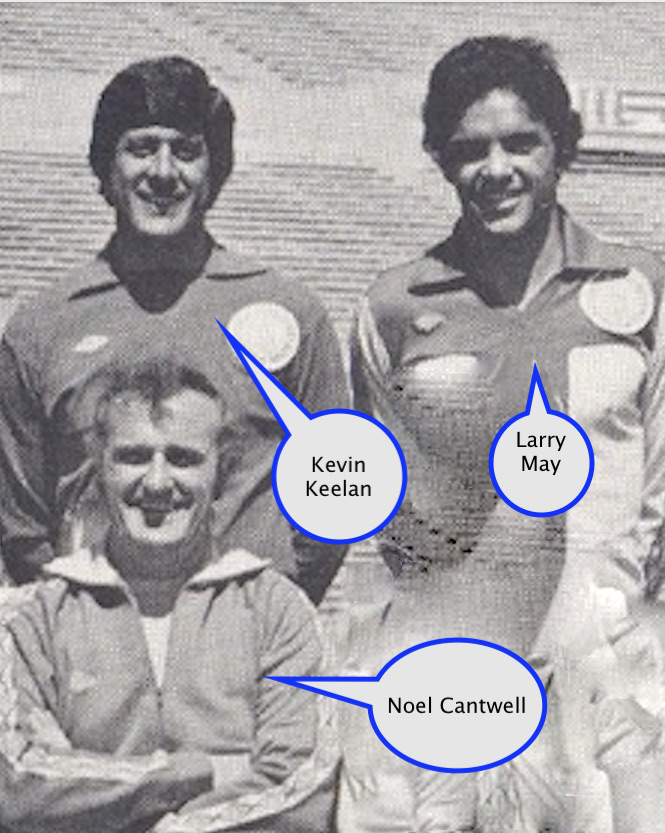
May played in front of ex-Norwich goalkeeper Kevin Keelan for the Tea Men

He went to play for New England Tea Men (a franchise owned by the Lipton tea company) in America under ex-Coventry manager Noel Cantwell to get some games but ruptured a cruciate ligament which some thought might end his career before it had even got off the ground.

Back at Leicester, McLintock was succeeded by Wallace and he paired May at the back with John O’Neill – a partnership that endured for the best part of five years.

In those early times, though, May admitted he had to play through pain and regularly ice his knee.

Not only was May ever-present in the 1979-80 side that won promotion from Division 2, he headed the only goal of the game at Leyton Orient on the last day of the season to clinch the title. Striker Alan Young, who played for Albion in the 1983-84 season, was another ever-present.

Leicester only survived a season in the top flight and following relegation Gordon Milne replaced Wallace as manager, guiding them to promotion in his first season. May, though, didn’t see eye to eye with the former Liverpool midfielder and ended up handing in a transfer request.

In an Albion matchday programme, May said: “”We fell out over something and nothing really but at 24 you think you know it all and there was no future for me once I’d asked for a transfer. “Thinking back, I realise that I should have got on with it.”

As it was, in August 1983 he dropped a division and joined Barnsley for a fee of £110,000, signed by the legendary former Leeds hard man, Norman Hunter.

larry may bw“For a man with a reputation of being one of the fiercest characters in football it was unbelievable – I’d say he was definitely the nicest fellow I’ve ever played for,” said May.
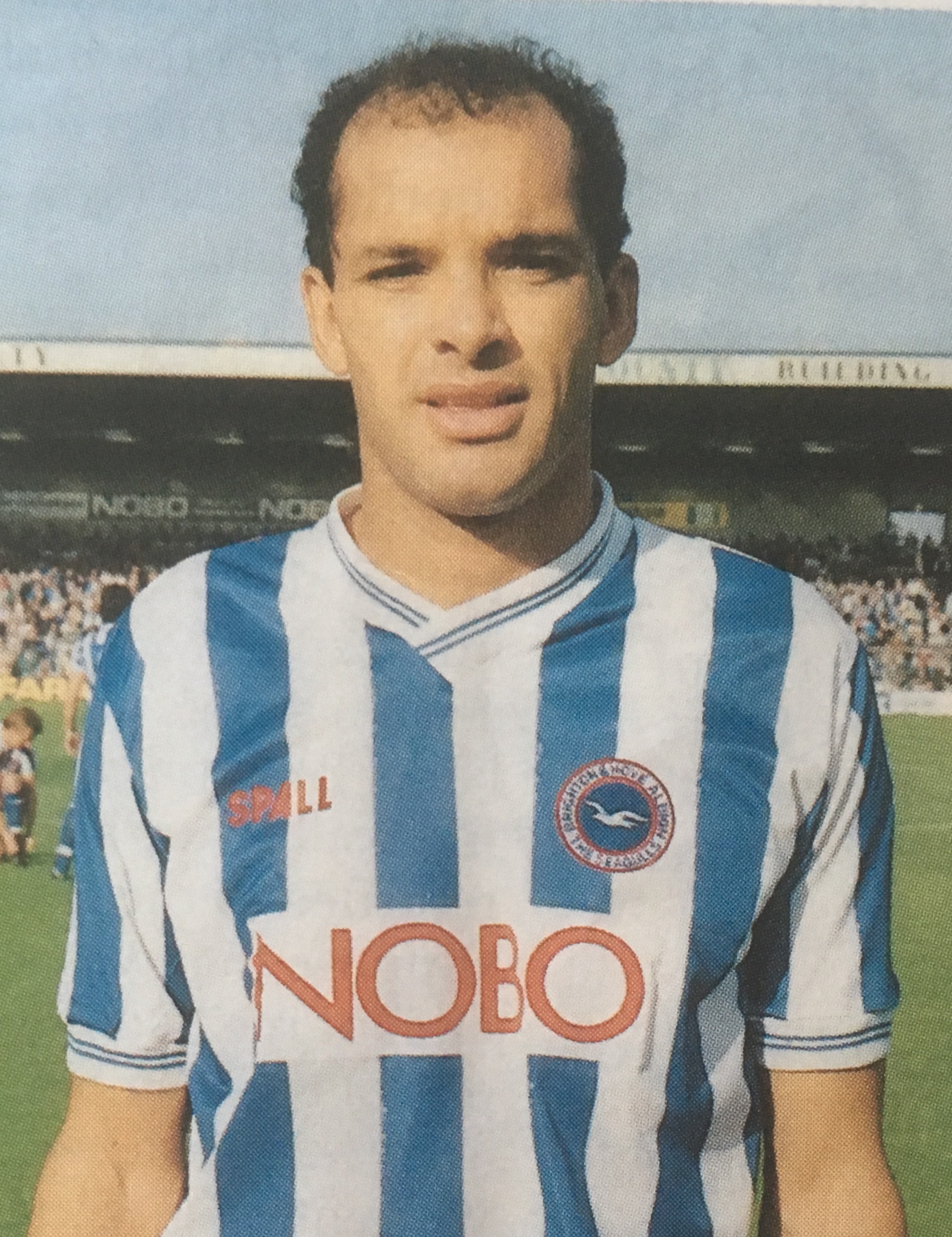
While on the books at Oakwell, with a nod towards a longer future in the game, May took his full FA coaching badge.

He told foxestalk.co.uk: “I was happy at Barnsley but, in retrospect, I should have bided my time and stayed at Leicester really. But I was a bit young and naïve. I loved it at Leicester. Leicester were the best club I ever played at. It was my best time in football and I loved it there.”

After three years with Barnsley, former Albion winger Howard Wilkinson took May to Sheffield Wednesday. He had just turned 28 and the move represented a step back up in standard.

“It was an important move at that stage in my career but looking back it was never brilliant for me at Hillsborough,” he said.

Amongst the competitors for his place was Nigel Pearson, later to be better known for some eccentricities in management with various clubs.

At the start of the 1988-89 season, a move south to Brighton was mooted but Wilkinson held onto him because of some early season injury problems. However, Barry Lloyd got his man towards the end of September 1988 and May joined Brighton for £200,000.

His debut in a 2-1 Goldstone win over Leeds brought to an end a run of eight defeats at the beginning of the season but it was back to losing ways – both 1-0 – in the following two games which, ironically, were against his former clubs, Barnsley, at home, and Leicester, away.

monoMay

The return fixture with Leicester was a happier outcome for May, though, because he was the sponsors’ man of the match in a 1-1 draw.

In his programme notes for the Barnsley game, manager Lloyd said: “I know he’ll have a big impact on the way we play….at 29, we know he has a lot of football left in him.”

Captain Steve Gatting had a programme column that season and he also welcomed the central defender, adding: “His experience in the top two divisions is bound to rub off onto some of younger players. When we’ve played against Larry in the past he’s tended to be the man of the match and I’m sure everyone at the Goldstone wishes him and his family every success.”

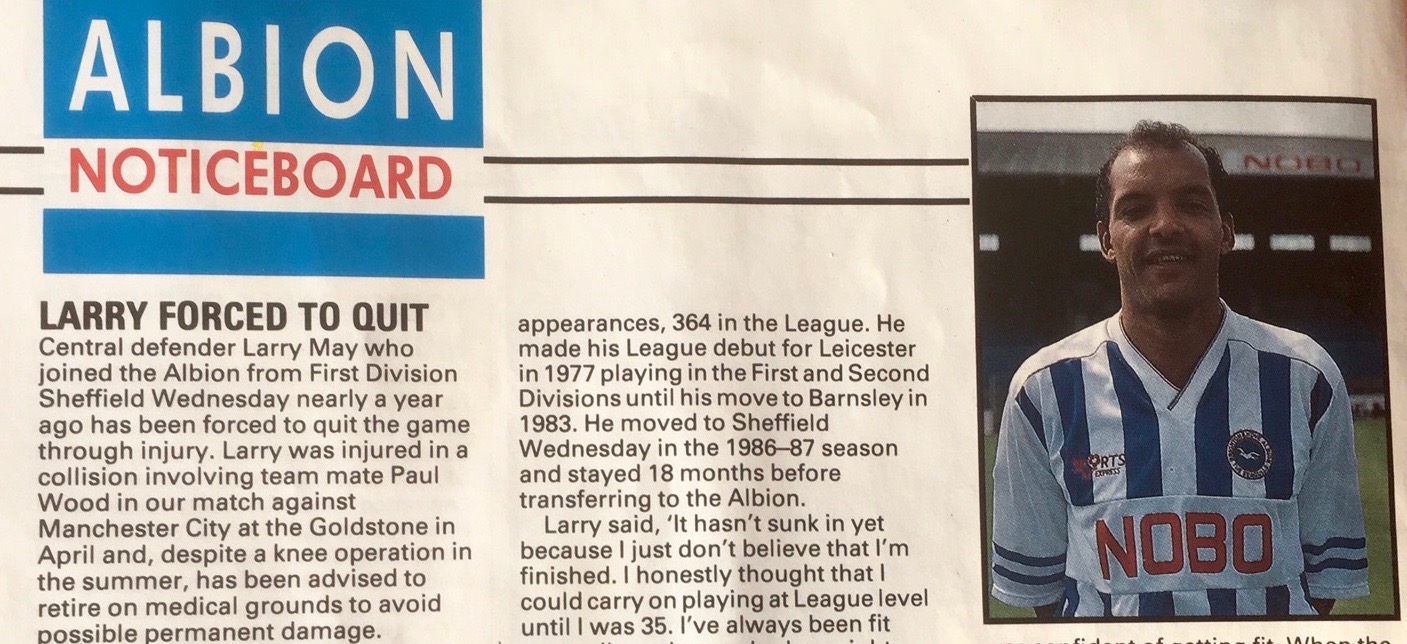
Understandable sentiments, of course, and such a shame that before the season’s end, after only 25 games, the cruciate ligament in his right knee was shattered in an accidental collision with teammate Paul Wood during a magnificent 2-1 home win over Man City.

“I knew straight away, having had knee trouble before, how serious it was,” he said. “It wasn’t Paul’s fault. It was just one of those things.” He was carried off on a stretcher and it was his last game for the club.

It was in the matchday programme for Albion’s game v Ipswich Town on 27 September 1989 that news of his forced retirement was announced.

“The sudden decision has stunned 30-year-old Larry and his family who were beginning to settle in the Brighton area after moving from Wakefield last year,” the announcement read. “In a 12-year career in the game, Larry has made more than 400 senior appearances, 364 in the league.”

A dejected May told the programme: “It hasn’t sunk in yet because I just don’t believe that I’m finished. I honestly thought that I could carry on playing at league level until I was 35. I’ve always been fit generally and never had a weight problem and this has really hit me.

“When the specialist told me that I shouldn’t play again my first reaction was that it had to be wrong. Now I’ve got to rethink and I’m not really sure about my future.”

Manager Lloyd added: “The announcement that Larry May had been forced to retire from playing was a particularly sad one. He performed very well for us last season and put heart and soul into everything around the club.”

Thankfully Larry was able to put that coaching badge to good use when Lloyd made him reserve team coach and, after a time working for the Surrey FA, he later returned to the club as Head of Sports Participation for Albion in the Community.

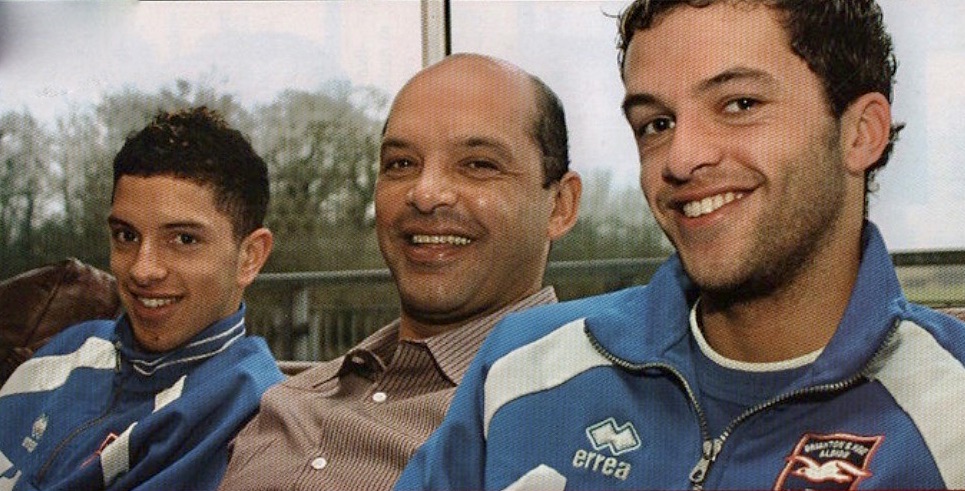
His links to the club also extended to his sons: Chris was a young goalkeeper who once had to replace the injured Michel Kuipers during a game and Steve was a centre-back who was in the youth set-up.

1-larrymaystripes2-argusmayintheface3-may-quits4-coach-may

Larry and his sons Steve (left) and Chris

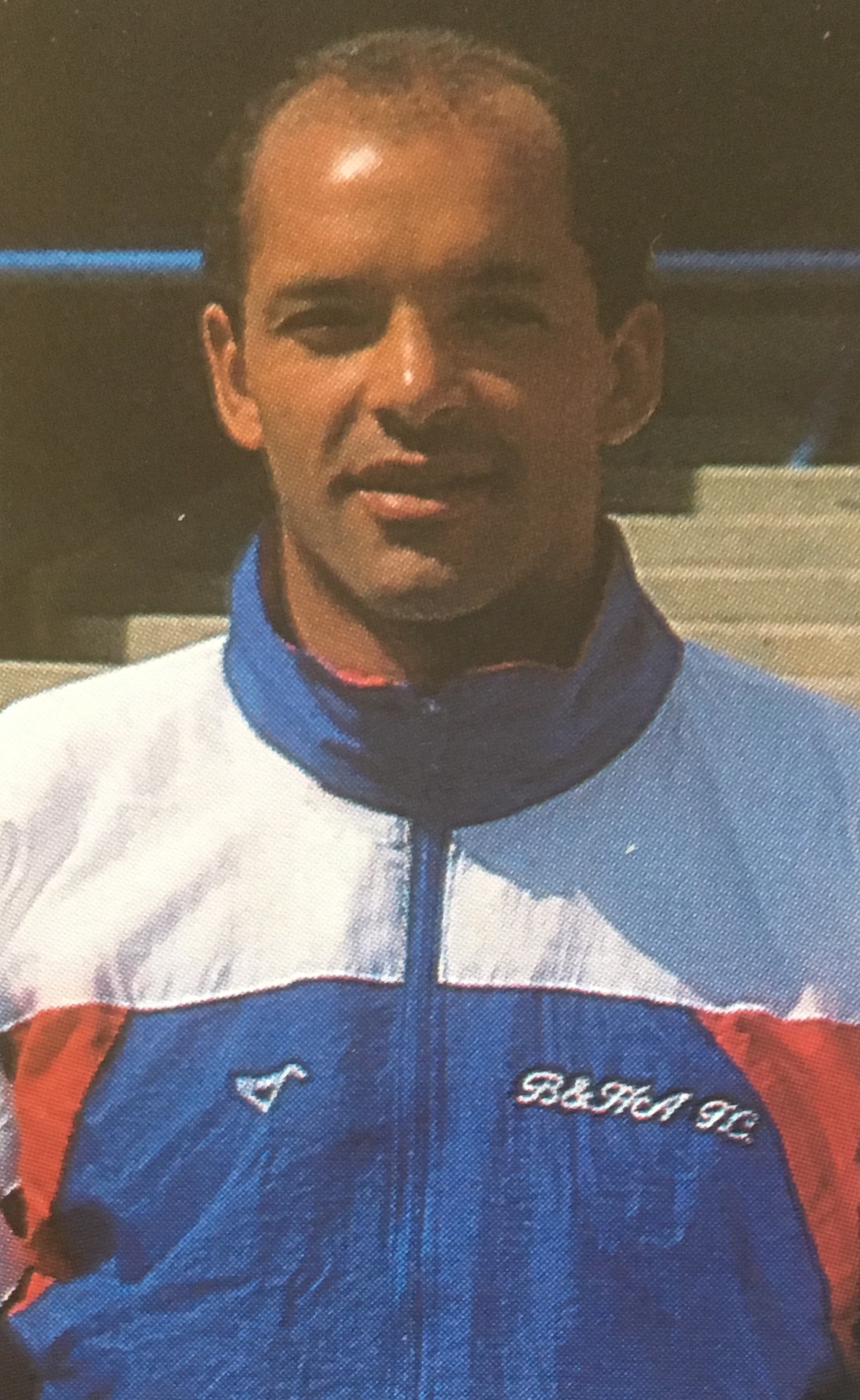
Pictures include Larry May in matchday programmes; captured by an Evening Argus cameraman getting a hand in the face; the programme announcement of his retirement; in an Albion team line-up as a coach, and with his sons.