Andy Arnott’s United dream dashed by injury

A PLAYER who was on the brink of signing for Man Utd for £100,000 ended up playing for the Albion in exile.

But for an untimely hernia injury, Andy Arnott would have been an Alex Ferguson signing at Old Trafford.

As it turned out, the moment passed and the opportunity didn’t arise again. He later made 28 appearances for the Seagulls during the 1998-99 season when home games were played at Gillingham’s Priestfield Stadium.

It was a ground Arnott was familiar with. Born in nearby Chatham on 18 October 1973, he joined Gillingham as a trainee and had only served one year of his apprenticeship when he was taken on as a professional.

Manager Damien Richardson gave him his debut for the Fourth Division club only four games into the 1991-92 season when he was just 17.

It couldn’t have gone better because he scored the Gills’ opening goal in a 2-0 home win over Scarborough.

This was a Gillingham side that included summer signing Paul Clark, who had been part of Alan Mullery’s successful Brighton side in the late 1970s, and Mike Trusson, who’d won promotion from the Third Division with the Seagulls under Barry Lloyd. A young Richard Carpenter was also breaking through.

Arnott scored three goals in 23 appearances by the season’s end although one goal and two appearances against Aldershot were later expunged from the records because the Shots were expelled from the league.

Nonetheless, the youngster’s emergence hadn’t gone unnoticed higher up the football pyramid and the offer of the chance to join United came along, ostensibly so that he could feature in their youth team’s involvement in the end-of-season Blue Star youth tournament in Zurich.

This was the era of the famous ‘Class of 92’ and Arnott found himself playing alongside David Beckham, Paul Scholes and Nicky Butt.

“After impressing during his spell with United, Ferguson made a £100,000 offer to Gillingham which was turned down by the then manager Damien Richardson,” Albion’s matchday programme noted.

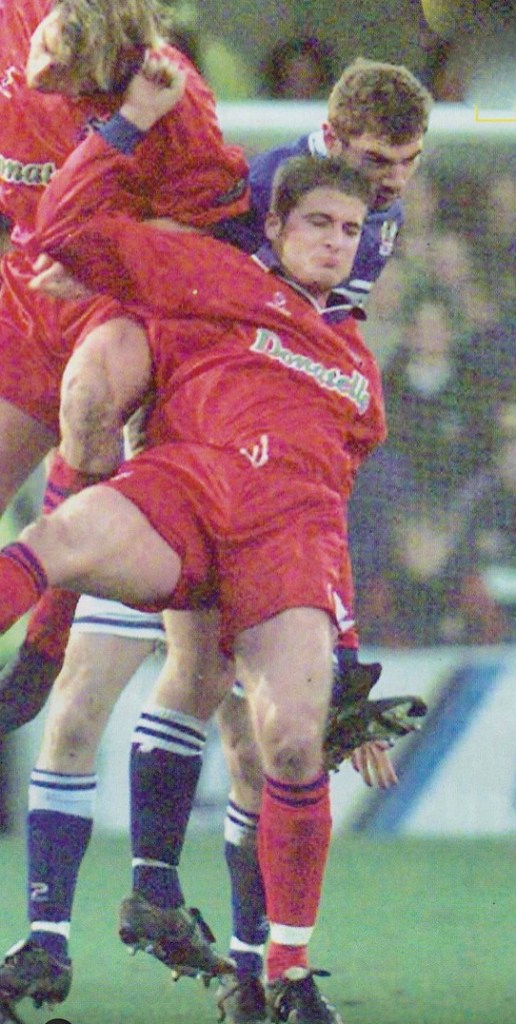
In action for Gillingham against Albion’s Nicky Bissett

The player then suffered a hernia injury that put him out of the game for a year, putting paid to any further interest from United.

“I was gutted at the time, but it was a case of just getting on with returning to fitness and playing football,” Arnott said.

Back at Gillingham, he played 50 matches and scored 12 goals but then, in January 1996, got a £15,000 move to Leyton Orient. He spent a season and a half with the Os under manager Pat Holland and played in every position to help out the team, including goalkeeper in one emergency.

Arnott played under Micky Adams at Fulham

In the summer of 1997, after Fulham’s promotion from Division Three under Micky Adams, Arnott moved to Craven Cottage for an undisclosed fee (thought to be £25,000).

Within a few months, Mohammed Al Fayed took over the club and sacked Adams.

“All of a sudden Fulham went from being an ordinary Second Division outfit to a multi-million pound club,” he said. “I felt sorry for Micky as he had done a fantastic job, but he did foresee what was coming and sorted out long term contracts for most of the players.”

The new management duo of Ray Wilkins and Kevin Keegan brought in their own players and Arnott found himself confined to the reserves with the likes of Mark Walton, winger Paul Brooker, and forward Darren Freeman.

He scored twice for Fulham Reserves in a 3-0 win over Albion’s reserve side on 21 October 1998, and that persuaded Brian Horton to take him on.

“A few clubs had shown an interest around that time, but Brighton were the first that I spoke to and I liked what I was hearing so I signed straight away,” he said.

Horton signed him by the end of the same month for £10,000, plus another appearance-related £10,000, and said in the matchday programme he was “absolutely tremendous” on his debut. It came in a 1-0 win in pouring rain at Barnet when Charlton loanee defender Emeka Ifejagwa scored the only goal of the game on his debut. “He (Arnott) and Jeff Minton forged a good partnership and I am looking for that to flourish,” said Horton.
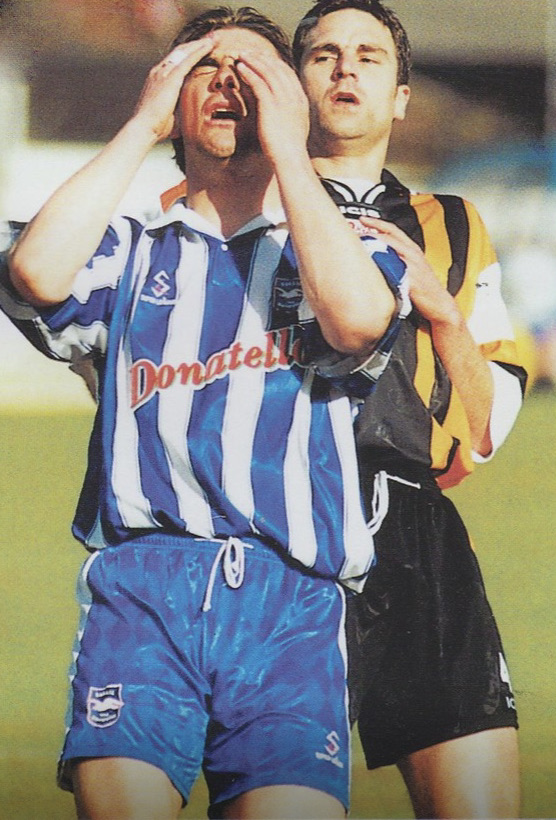
In his player-by-player commentary of performances, programme columnist Paul Camillin said: “Brilliant debut. He showed a good array of passing skills and he might have the bite we’ve been lacking.”

It was the wrong kind of bite he displayed in only his fourth game, though, when he was shown a red card in the 55th minute of Albion’s 2-0 win at Horton’s old club Hull City.

Defender Ross Johnson also went for an early bath for a second bookable offence but Albion’s nine men hung on for 35 minutes to complete their fourth successive away League win: the best such run for 62 years!

There’s little doubt Arnott’s arrival coincided with an upturn in the side’s form and in the matchday programme he took time to praise Albion’s loyal followers. “It is a fantastic advantage to have the number of away supporters we do,” he said. “It makes you want to play that little bit more to give them something back. They are absolutely magnificent.”

Arnott and Jamie Moralee

In the absence of Gary Hobson and Ian Culverhouse, Arnott was given the captain’s armband although that discipline was a bit questionable at times. He saw red for a second time, after Jeff Wood had taken over from Horton, for a second bookable offence at home to his old club Orient – Os captain Dean Smith (manager of relegation-threatened Leicester) also went for a second yellow – although Wood and Orient boss Tommy Taylor both slammed referee Rob Styles for his officiating.
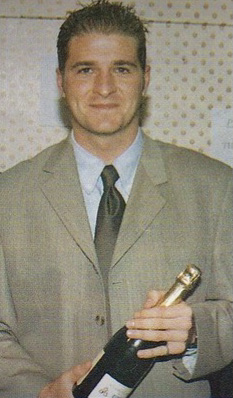
Man of the Match

Wood declared: “Too many officials want to stamp their authority on the game early and flash cards like they are going out of fashion.”

Although Arnott saw out the season in the starting line-up, when his old boss Adams took over from Wood, by the time the new season got under way back in Brighton, Adams had signed Paul Rogers and Charlie Oatway as his preferred midfield pair.

By the end of September, Arnott had been snapped up by Second Division Colchester United; initially on loan and then permanently when their new boss Steve Whitton completed a direct swap that saw Warren Aspinall join the Seagulls.

However, Arnott made only four starts plus eight appearances off the bench in that first season and his time with United was blighted by a long-standing groin injury.

“The whole thing has been an absolute nightmare. I have been struggling with the injury for 14 months and despite loads of rest, two operations and four cortisone injections, the problem is as bad as ever,” he told Colchester’s Daily Gazette in January 2001.

“I was really struggling just before Christmas and I visited the specialist who told me I’m pretty near to exhausting my options.

“When it’s at its worst the injury is unbearable, especially when I turn or attempt to hit a long ball.

“I’m still only 27 with what should be many years left in the game.”

Unfortunately, though, he was forced to call time on his professional playing career and dropped into non-league initially with then-Conference side Stevenage, then Dover Athletic, where he was captain, Welling United and Ashford Town.

After his playing days were over, he settled in Rochester and became a project manager for Dryspace Structures while retaining his football links as a coach for Ebbsfleet United’s under 16 team.
Wilf’s son Paul helped develop a string of top players

A HIGHLY RESPECTED coach who guided a succession of young hopefuls from Manchester United’s youth ranks through to their first team once aimed to re-ignite his playing career at Brighton.

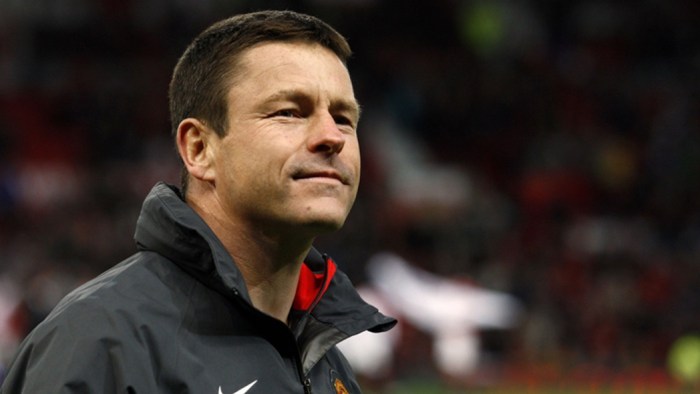
Paul McGuinness, son of former United player and manager Wilf, was in charge of the United side (that included Paul Pogba, Jesse Lingard and Michael Keane) who won the FA Youth Cup in 2011, and Danny Welbeck and Tom Cleverley also emerged under his guidance.

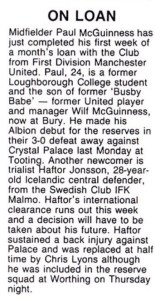
Wind the clock back to the autumn of 1990, though, and McGuinness, the 24-year-old captain of United’s reserve side in 1989-90, arrived on loan on the south coast.

Albion boss Barry Lloyd would go on to take Albion to Wembley for a play-off final against Neil Warnock’s Notts County the following May.

But in October and November Lloyd was still casting around to see who might supplement Albion’s efforts to get among the division’s pacesetters, and McGuinness had lost his starting berth in United’s Central League side.

McGuinness made his debut for the reserves in a 3-0 defeat away to Crystal Palace. He also played right-back in a 2-1 defeat against QPR Reserves at the Goldstone, in a side in which Soviet international Igor Gurinovich (playing up front with new arrival Bryan Wade) scored Albion’s goal.

In those days of two subs, McGuinness was selected on the bench for five first team games in succession. But he was never put on and, after a 2-1 defeat away to West Ham, he went back to United.

Born in Manchester on 2 March 1966, McGuinness aspired to follow in his dad’s footsteps, but he found him a hard taskmaster and an ultimate competitor, something he reckoned dated back to an upbringing by Sir Matt Busby’s right-hand man Jimmy Murphy.

“The standards were relentless,” McGuinness told manutd.com. “In a primary school match, I scored 10 goals and my main memory of the day is getting an absolute b******ing for leaving mud in the bath afterwards and not sticking to the right standards. To this day, I rinse the bath and shower down afterwards, every single time!

He continued: “I scored a hat-trick in a cup final and when I came off, he told me off for remonstrating with the referee during the game.”

McGuinness declared: “I didn’t want to be a manager because, over time, dad’s experiences really put me off it, but every school holidays I’d be with him at whatever club he was with at the time.

“At York, Hull and Bury, I’d go and join in with the apprentices while he worked. I’d be 12 playing with 16-year-olds, 14 playing with the reserves, 16 training with the first team.

“Just having him as my dad gave me a massive head start when it came to coaching. He’d take me to games and tell me to pick out the best players and explain why, and he’d always study what was happening in the game, and tell me what was going to happen next, and he was always right.

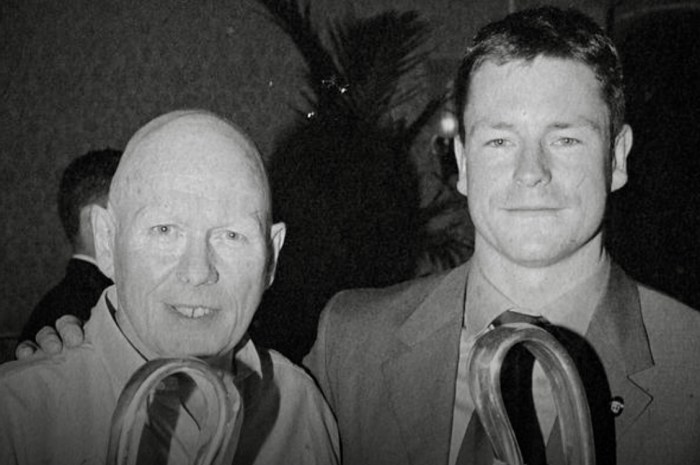
Wilf McGuinness and son Paul

“He’d tell me who was going to get booked, or if a team was over-committing and leaving themselves prone to conceding, and he was always right. That really helped me learn the game at a young age.”

Not to mention the unbelievable experience of getting to play alongside some of United’s biggest household names from their golden era.

“When I was a teenager, there used to be charity games with United, City, Piccadilly Radio and all sorts,” McGuinness recalled. “The ex-players were all in their 40s, and dad would tell me to come along and bring my boots.

“I’d almost always get some playing time, and I ended up playing with Bobby Charlton, George Best, Nobby Stiles, Paddy Crerand, David Sadler, Alex Stepney, but also the City legends too, like Colin Bell, Mike Summerbee, Franny Lee, Tony Book, Glyn Pardoe. It was just incredible.

“This was sometimes just on school fields or non-league grounds, and Bobby was just awesome in every single game. He scored three or four every time.”

Eventually the young McGuinness got the chance to fulfil his dream when he got taken on by United. He was a youth team player between 1982 and 1984 and then spent two years as a professional at Old Trafford, playing alongside Paul McGrath, Kevin Moran, Mark Hughes, Clayton Blackmore, Frank Stapleton and Alan Brazil.

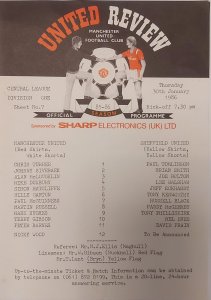
On the teamsheet with some big names

He recounted the circumstances when paying tribute to Eric Harrison, the acclaimed founder of United’s ‘Class of ‘92’, who died in February 2019. “Eric was fundamental in my career as both a player and then for many years as a coach,” McGuinness told traininggroundguru. “I can still vividly remember the moment I convinced him I should get a first pro contract with Manchester United.

“We were playing 6 v 6 on a full-length pitch at The Cliff with no goalkeepers. You could only score if you were inside the six-yard box, which made it a real test of character.

“A player on the opposition team broke free from deep and I chased him all the way back and slide tackled him before he was about to shoot.

“Eric stopped the game. ‘Now that is what we want.’ That got me a two-year contract at the age of 17.”

Perhaps somewhat unusually at that time, McGuinness was also determined to get an education as well as pursue his professional football dream, and he took a degree in PE and Sports Science at Loughborough University.

Having studied under the tutelage of Mike ‘Doc’ Holliday, McGuinness showed his gratitude in subsequent years by taking United academy teams to play matches against the university’s football side.

When that first United contract came to an end in 1986, McGuinness tried his luck with Crewe Alexandra and he played in 13 matches for Dario Gradi’s side in the 1986-87 season.

His studies completed, McGuinness admitted his return to United happened almost by chance.

“This was the time of the ‘Fergie Fledglings’ and I popped into the training ground one day to say hello,” he told traininggroundguru. “ ‘You could have played for the reserves last night,’ Eric said, and I ended up playing the next few games for them. It went from there and Sir Alex Ferguson gave me another contract for a couple of years.”

It was during the second year of that deal that he joined the Albion on loan and the following year he switched to Bury, although he didn’t play any league games for them. Eventually he moved on to Chester City and played in seven matches for Harry McNally’s side.

“Eric got me back in at United after that, first as the club’s welfare officer and then as Centre of Excellence Director,” McGuiness recounted. “He was a constant mentor and you couldn’t help but learn from him.”

He also worked with Nobby Stiles and took over as head of the centre of excellence from the World Cup winner in 1994.

McGuinness has clearly spent a long time absorbing advice and in that manutd.com interview recounted another anecdote about his father.

“When I was a kid, dad would have me shoot from the halfway line, time after time. Eventually, in a university game, I scored from the kick-off with one of those shots and he was there. I was so made up with that.

“He was forever trying to get you to try something different and that stuck with me in my coaching. I had Ollie Norwood trying that from the kick-off, or I’d tell Fraizer Campbell or Marcus Rashford to dribble towards goal straight from the kick-off. Just try something different.

“For me, it was about the spirit of football, something which I talk about a lot to this day, and that’s something that my dad has always embodied.”

It was obviously quite an emotional moment when United finally parted company with McGuinness in February 2016. He told the Manchester Evening News: “It has been an honour and a privilege to follow in my father Wilf’s footsteps and to serve Manchester United in a variety of roles for a total of 28 years.

“To have seen 86 Academy players develop to make their debut for the first team and 23 to become full internationals has been thoroughly rewarding.

“I have especially enjoyed working behind the scenes with devoted colleagues, nurturing and coaching young players to reach their potential.

“I will be forever grateful to Sir Alex Ferguson for making my dreams come true and inviting me to represent Manchester United as a player and for the last 23 years as a proud member of staff.”

McGuinness has frequently shared his knowledge and coaching experience at seminars and online in interviews and podcasts. For example, he told fourfourtwo.com: “One of the first things we look at in young players is how they move with and without the ball.

“You can never be certain, but it gives us a good idea whether they will go on to become athletic. I have seen many talented youngsters who are technically very good but are finished by 12 or 13 because athletically they are not quite good enough.”

Not the case with Rashford, though. “Marcus was a great mover, he was very quick and had a great flow about him,” said the coach.

United built several cage pitches to recreate school playground learning, where older and younger players would compete in small spaces. “They would play 8v8 or 7v7 to increase their speed of thought and improve their skills,” said McGuinness. “At 12, Rashford was playing cage football with Paul Pogba, Jesse Lingard and Ravel Morrison, who were 16.

“He learned from them, but he could also express himself more. With his own age group he might only play a single one one-two, but with Pogba, he could play two or three.”

Scott McTominay is among the current crop of United players to have acknowledged McGuinness’ influence on his career. “We were always brought up to have an elite mentality,” he told manutd.com. “That’s one of the most important things for Paul McGuinness and Warren Joyce – how strong you are in games when it might not be going so well. You have to keep all the right habits off the pitch as well, which I’ve completely bought into from Paul and Warren.

“That was probably one of the best things I’ve done: listening and learning from everything they’ve said and trying to put it into the first team.”

In October 2017, McGuinness was appointed national coach developer by the FA and in December 2021 he became head of academy player development at Leicester City.

He had overall responsibility for players from the under nines through to the under 18s, with a brief to ensure players were ready for the transition to the under 23s and the first-team squad. But in September 2022, it was reported he had stepped down from the role to help care for his father who, like several players of that generation, had dementia.

More than 19,000 followers on Twitter can see on McGuinness’ timeline an appreciation of the finer arts of football and memories of his dad Wilf’s playing and coaching career.

Ups and downs of medal-laden Mark McGhee’s career

MARK McGHEE saw highs and lows as Brighton & Hove Albion manager after a medal-laden playing career that took him from his native Scotland to England and also to Germany.

McGhee was in charge when the Seagulls memorably won the 2004 play-off final to gain promotion from the third tier, beating Bristol City at the Millennium Stadium, Cardiff.

Play off final boss

Keeping the Seagulls up the following season was arguably an even greater achievement considering at the time playing home games at the crowd-restricted Withdean Stadium meant the club was at a huge disadvantage compared to most clubs in the division.

With the Amex still a distant dream, relegation came at the end of the 2005-06 season, and it wasn’t long into the following season that Dick Knight wielded the axe on the Glaswegian’s time in charge.

“It was hard to sack Mark, but we had to have a change,” Knight wrote in his autobiography, Mad Man: From the Gutter to the Stars. “Everyone recognised what he had done in taking up and keeping up a team that was not that great, to be honest. Hats off to him, he had done a terrific job. And he is a very intelligent, personable guy.”

Knight took decisive action when part of the crowd became vociferous in wanting McGhee out, and the chairman also felt some of the young players drafted into the team weren’t responding to him.

He was finally toppled over lunch at Topolino’s, and Knight admitted: “It was a difficult decision. There was strong vocal opposition to McGhee, but also a large, less noisy element who were behind him.”

McGhee liked Brighton so much he made it his home despite subsequently taking on a series of other roles the length and breadth of the country.

It’s probably fair to say the Scot has never been afraid to speak his mind, which his former Newcastle boss Bill McGarry mentioned to him. McGhee recounted in an interview with theleaguepaper.com: “I was managing Wolves at the time. He said ‘Mark, you talk too much. Tone it down a bit’. I tried to take his advice, give nothing away in media briefings. Then, somebody would say something interesting and I wasn’t able to stop myself.”

It’s probably what helped him gain a place on the Sky Sports Soccer Saturday panel when he was in between management jobs.

McGhee would most likely look back on some jobs he’d perhaps have been wiser to stay away from, for example taking temporary charge of Eastbourne Borough in 2018, although his enthusiasm was undimmed as he revealed in an interview with thenonleaguefootballpaper.com.

Born in Glasgow on 20 May 1957, his father was an electrical engineer and his mother a fertility consultant at Glasgow Royal Infirmary. McGhee was on the books of Bristol City at the start of his long career but he returned to Scotland and became a part-timer with Greenock Morton while also training to be an architect.

Aforementioned manager McGarry signed him for Newcastle for a £150,000 fee on 30 December 1977 and he made his debut on 2 January 1978.

His face didn’t fit after Arthur Cox took over as boss, but Alex Ferguson took a punt on him in March 1979 and signed him for Aberdeen, and it proved to be one of many shrewd decisions the esteemed Scot would make in his career.

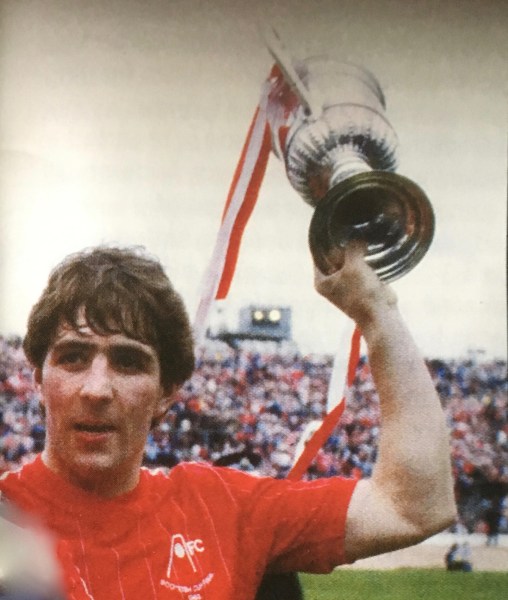
McGhee was named Scottish PFA Players’ Player of the Year in 1982, and the following year was part of the Aberdeen side who beat Real Madrid 2–1 to lift the 1983 European Cup Winners’ Cup in Gothenburg.

mcg cup

He also scored the second goal as Aberdeen defeated Hamburg 2-0 to win the UEFA Super Cup in the same year.

Asked about the best goal he scored, he said: “Probably the winning goal in my last game for Aberdeen.”

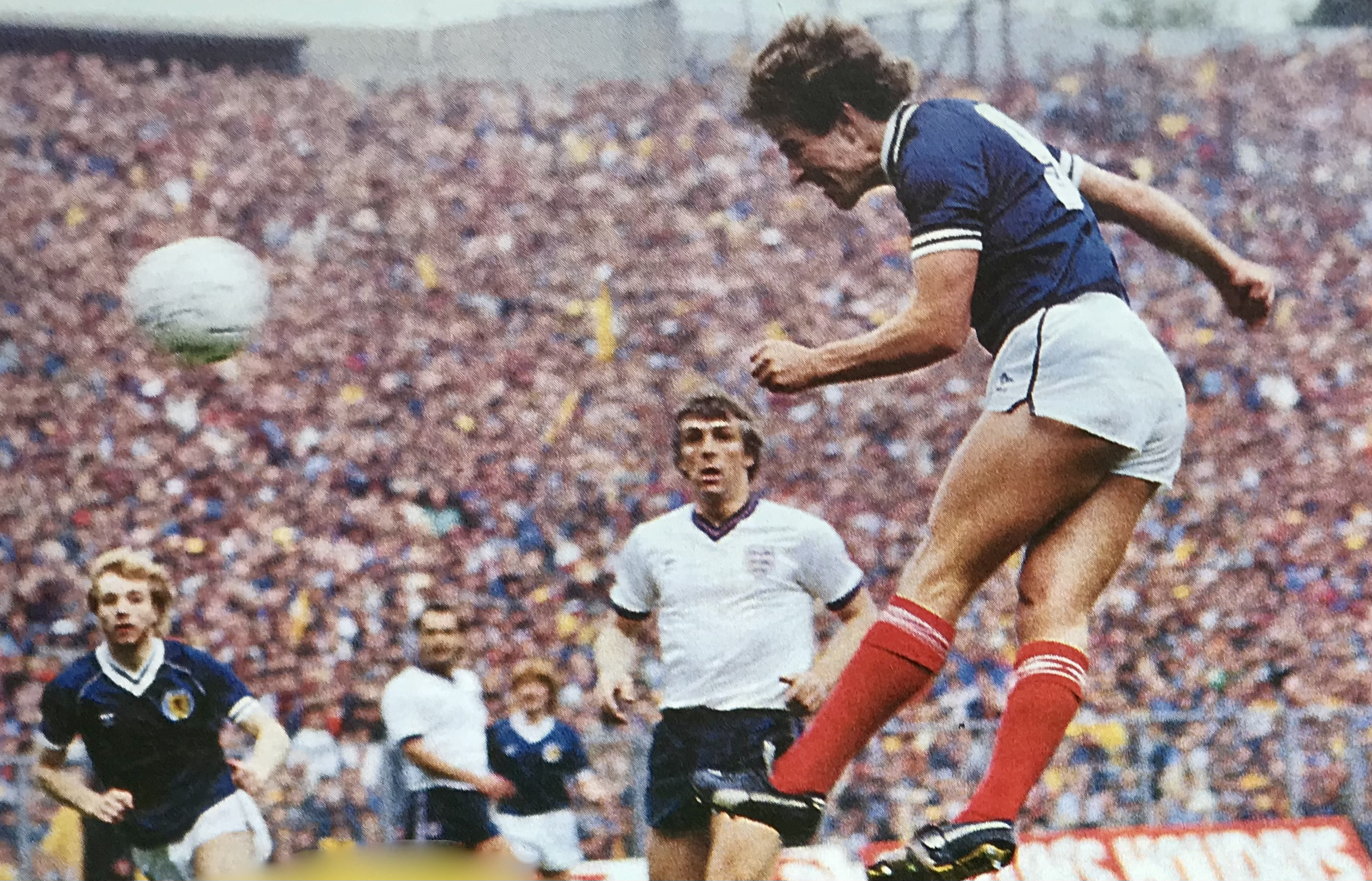
McGhee reckoned his best moment in football came on 26 May 1984 when he scored against England at Hampden Park. He headed in a cross (as pictured) from his great pal Gordon Strachan past Peter Shilton.

McG v Eng

“It put us 1-0 up but Tony Woodcock equalised to make the final score 1-1.”

It was one of four caps he won for his country. Nearly two decades later, in January 2013, Strachan appointed him as his no.2 with the Scottish national side.

M McGhee Old Football PhotosBut back to those playing days, and with two Scottish league titles and three Cup wins behind him, McGhee tried his hand at European football and spent 16 months at Hamburg. The spell was probably more of an education than a success, with injuries limiting his game time.

A £170,000 fee took him back to Scotland, to Celtic, where he had mixed fortunes during four years with the Glasgow giants. He was, though, part of the squad that won a League and Cup double in their centenary season.

After winning another Scottish Cup winners’ medal in 1989, he was on the move again, back to Newcastle.

Now with Jim Smith in charge, Newcastle paid £200,000 to take McGhee back to St James’ Park, where he formed an impressive strike partnership with the legendary Micky Quinn as Toon finished third in the old Division Two.

“We were good friends, but we didn’t blend on the pitch like Toshack and Keegan, Quinn told theleaguepaper.com. “Mark was a free spirit. He’d get the ball and drift left or right and drop deep.

“He’d turn defenders and drag them out of position. He would hold the ball up well for me to get into the box and score goals. He went where he wanted, but it worked.”

football back then McGhee

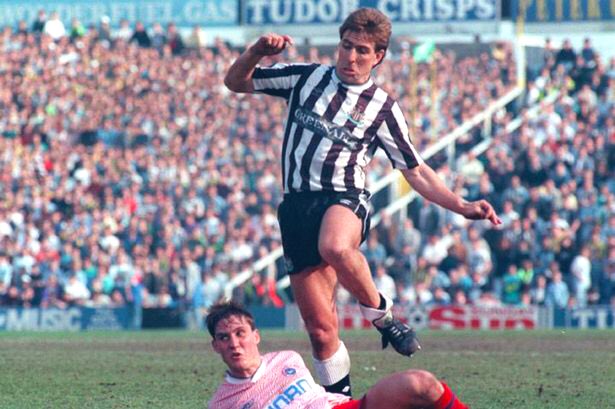
This Football Back Then picture shows McGhee in action for Newcastle against Albion’s Nicky Bissett.

His farewell performance came on 6 April 1991, not long after Ossie Ardiles had taken over as manager, and McGhee departed having scored a total of 36 goals in 115 appearances for the Magpies.

Next stop was Sweden, where he played briefly for IK Brage, but he seized the opportunity to try his hand at management by taking up the role of player-manager at Reading in the summer of 1991.

He’d been recommended for the role by his old boss Ferguson, and, after quitting playing through injury in 1993, he led the Royals to promotion from the third tier the following year.

A struggling Leicester City gave him a chance to manage in the Premier League but he was unable to keep them up and, less than a year after joining, decided to switch to Wolverhampton Wanderers, to succeed Graham Taylor.

Wolves just failed to gain promotion in 1996-97 (they lost in the play-off semi-finals) and were ninth the following campaign. Four months into the 1998-99 season, following a string of poor results, McGhee was fired.

It would be 20 months before he gained his next opportunity, this time at Millwall where he enjoyed initial success, leading them to promotion from the third tier, and then narrowly missing out on another promotion when they lost in the play-off semi-finals to Birmingham City.

McGhee apptWhen he parted company from Millwall in October 2003, he wasn’t out of work long because Brighton needed a replacement for Steve Coppell, who’d been wooed to take over at Reading (pictured above, with chairman Dick Knight, at his unveiling as Albion manager).

Those Albion fans who stuck by the team in the humble surroundings of the Withdean Stadium enjoyed some good moments during McGhee’s time as manager, in particular promotion via the play-off final in 2004.

He certainly found a formula to get the best out of certain players, as Adam Virgo, converted from defender to goalscorer, observed in that theleaguepaper.com article. “Mark is a very good communicator and very experienced,” he said. “He can make you feel ten feet tall. He’s very good at being honest, at analysing your game and telling you what you’re good at.”

After his departure from the Albion, McGhee was out of the game for nine months but got back in at Motherwell, turning them from near relegation candidates to qualifiers for European competition.

The lure of his old club, Aberdeen, proved too strong in the summer of 2009, but his tenure proved to be disastrous – and brief.

He spent the majority of 2012 as manager of Bristol Rovers, where one of the squad he inherited was former Brighton defender-turned-striker, Virgo. The following year, his old pal, Strachan, appointed him as assistant coach to the Scottish national side.

He later combined the role part-time when he returned to Motherwell but there were mixed fortunes second time round, and he left them again in early 2017. Towards the end of that year, he popped up at League Two Barnet, but the arrangement lasted only two months before he was moved to a ‘head of technical’ role, and then dismissed in March 2018.

McGhee was ‘slaughtered’ on Twitter when he took over as interim manager of National South side Eastbourne Borough in the spring of 2019, after being beaten 3-0 by Wealdstone in his first match in charge, his new side reduced to nine men after two players were sent off. Borough won just once in 11 matches.

When Albion under 23s coach Simon Rusk was appointed manager of Vanarama National League side Stockport County in January 2021, McGhee was appointed as one of his assistants.

His final managerial post was at Dundee in February 2022 when he took temporary charge of the Scottish Premiership side until the end of the season (with Rusk as his assistant), but they couldn’t avoid them being relegated, overseeing just one win in 13 matches.

McGhee finally announced his retirement from the game in September 2022 at the age of 65, telling the Sunday Post: “I won’t be pursuing any other managerial vacancies, and nor would I want to be a director of football or a head of recruitment. That’s not what I am – I’m a manager.

“I feel that players now deserve a young manager who can give them the energy I was able to when I started out. They don’t need a 65-year-old with a dodgy ankle.”