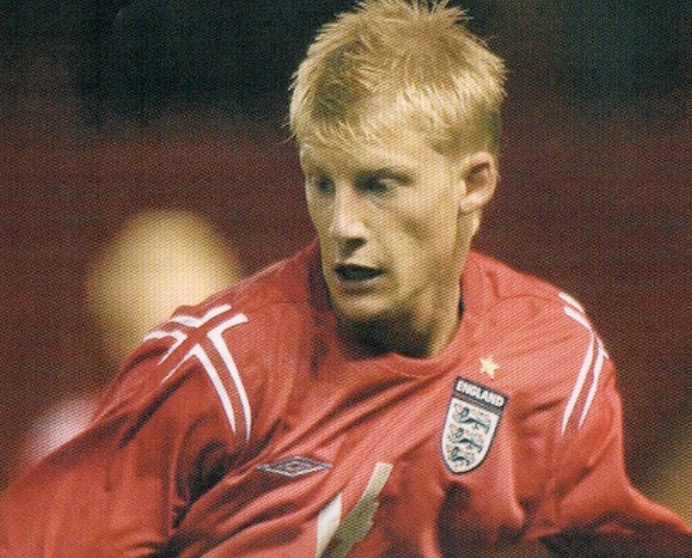
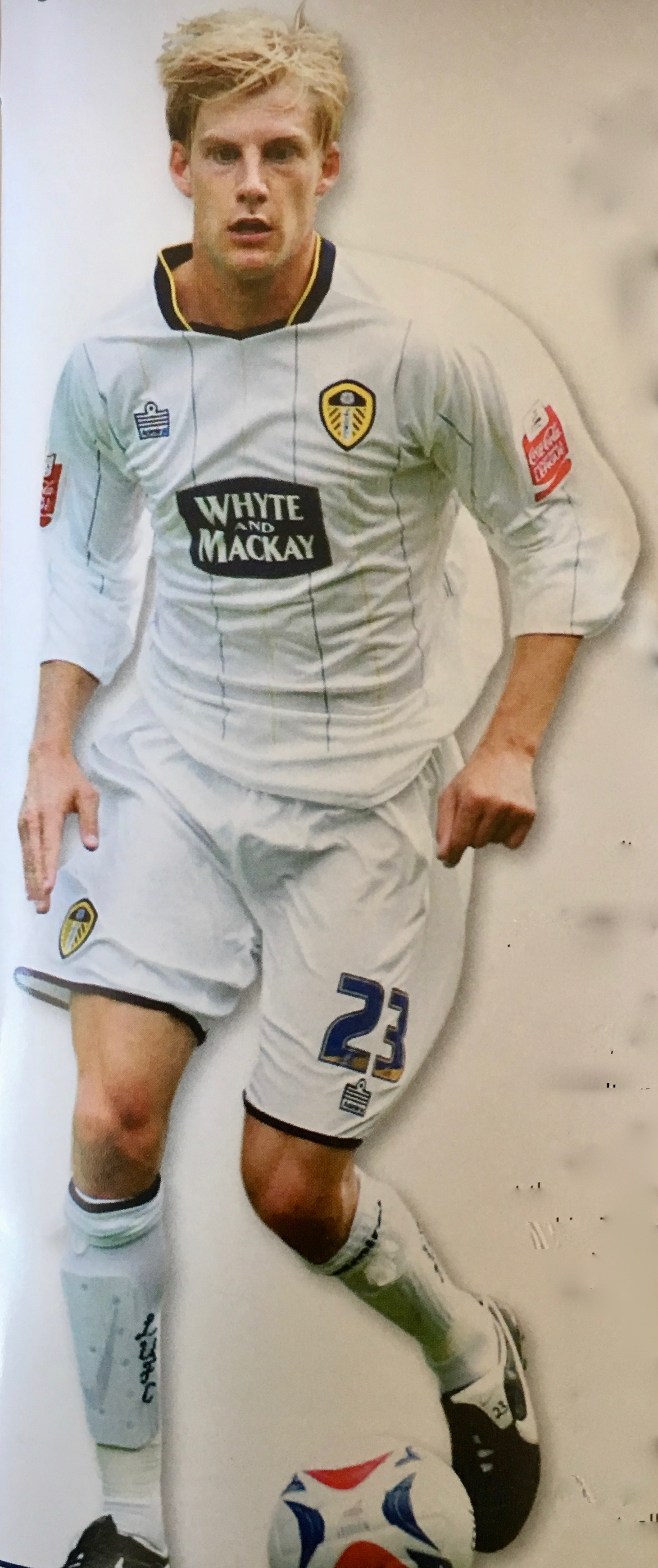
Andy Crosby enjoyed the taste of success with Brighton

ROCK-solid centre-half Andy Crosby won a Division 3 Championship medal with the Albion in 2001 before experiencing two frustrating near-miss seasons as captain of Oxford United.

Brighton’s achievement provided him with his first-ever promotion, but it didn’t turn out to be his last: he climbed out of the same division with Scunthorpe United and then, against all the odds, reached the Championship with the Iron – twice.

Micky Adams, who was a player at Leeds when Crosby was in their youth ranks, had been unsuccessful in trying to sign the defender when he was in charge of Brentford.
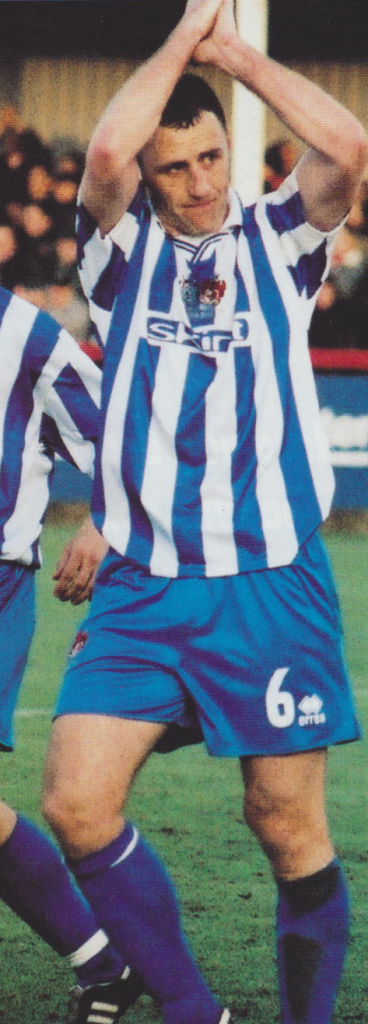
But as Adams set about building his first squad at the Albion, he managed to secure Crosby’s services for a £10,000 fee in the summer of 1999.

“I didn’t need any convincing at all to sign,” said Crosby. “It was good timing for me and it worked out fantastically well,” he told Richard Walker. “Sometimes it’s hard to see where you’re going when you’re just keeping your head down and working hard at a struggling club so the Albion did wonders for my career.”

In a matchday programme interview with Spencer Vignes, he added: “I couldn’t wait to sign. Even at that level, I still thought of them as a big club.

“My only reservations were that I’d never lived down south and that we’d just bought a house. We also had a one-year-old daughter. But in the end the pros outweighed the cons.”

The family moved into a house at Stone Cross, near Eastbourne, and Crosby made his debut (albeit with a broken toe!) in the 6-0 Withdean win over Mansfield (as featured in my recent blog post about Darren Freeman).

He developed an effective central defensive partnership with Danny Cullip, and he said: “Although we were very different characters away from the 90 minutes, something really clicked between us and everyone knows how vital it is to have a good centre-half pairing, just as much as a good front two working for each other.

“Our paths have crossed since, and the talk’s always of great memories from Brighton days.”

Hired as a stopper rather than a scorer, Crosby helpfully weighed in with five goals as Albion found their feet back in Sussex.

Then in the following season, Crosby was at the heart of the defence when Albion won the league. “That win down at Plymouth and the home game against Chesterfield where we sealed the Championship will stay with me forever,” he said. “It was just an amazing ride.”

Crosby continued: “We had this great spirit, a team desperate to do really well.
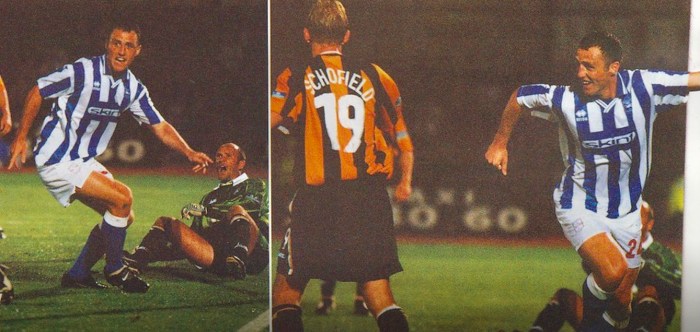
Pouncing to score and celebrate against future employer Hull City

“I’ve got nothing but good memories of the place. It was the first time I’d ever been involved in a promotion campaign as a player. For the first time in my life, I was seeing on a day-to-day basis what it takes to be successful.

“We played some great football and the fans were fantastic. I’ve said it before but if you can’t play for them you can’t play for anyone.”

He added: “Withdean was a funny place but somehow we were able to use it to our advantage. Other clubs didn’t like playing there.”
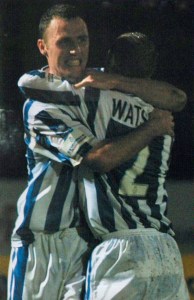
Getting to grips with Paul Watson

Once elevated to the higher level, Crosby lost his starting place to Simon Morgan and Adams’ successor Peter Taylor continued with Cullip and Morgan as his preferred centre-back pairing.

By then 28, Crosby didn’t fancy a watching brief and in December 2001 he moved on a free transfer to Oxford, the first United signing made by Ian Atkins. He said: “I didn’t want to go, and Peter said he wanted me to stay, but I wanted to play. Going to Oxford meant first team football.”

Although Crosby’s first half season with Oxford saw them struggle near the foot of the division, the 2002-03 campaign ended with them only a point off the play-off places and the central defender scored winning goals in four of the 53 matches he played.

It got better for him on a personal level the next season when his fellow pros named him in the 2003-04 PFA team of the year, but United missed out on the play-offs by three points.

Another string to Crosby’s bow at Oxford was being an accomplished penalty taker. He never missed a spot kick in normal play and, in 2003-04, one of the five he buried was at Scunthorpe’s Glanford Park.

In the summer of 2004, he declined a new contract believed to have been on worse terms than the previous one and chose to move back to the north to join Scunny.

Nonetheless, the Oxford Mail said of him: “The 31-year-old centre back has been a model of consistency in his time at the Kassam Stadium.

“Ideally suited to the Third Division with his uncompromising, no-nonsense style, the hard-tackling defender, who is also good in the air, was also greatly respected by his teammates for his cool professionalism.”

He may have started out in the basement division with Scunthorpe, but what followed was the stuff of dreams. Crosby himself later admitted: “When I joined, if someone had told me I’d be playing for Scunthorpe in the Championship, I would have called them a doctor.

“But it reaffirms your belief in football a little bit, especially when you’re involved first-hand, to see a club of Scunthorpe’s size still being able to pull off what was nothing short of a minor miracle.”

In an interview with the Scunny website, Crosby pointed out: “I was 31 when I arrived at Scunthorpe and I had to use my knowledge and experience in whatever capacity I could, and set standards on and off the pitch. It was something I enjoyed doing and I think it’s something that’s either in you or it’s not.

“My whole time at Scunthorpe was great and I never thought when I signed that we’d get to the Championship twice. It was fantastic and the highlight of my career without a shadow of a doubt.

“I was captain of a promotion-winning team from League One to the Championship, playing at some massive stadiums.”

Although knee injury issues limited him to nine appearances in the 2008-09 season, he was restored to the side for the play-offs and led Scunny to a 3-2 League One play-off final win over Millwall at Wembley in May 2009 (Matt Sparrow scored twice for Scunny).

“It was a great way to end playing,” he admitted. “I have some fantastic memories and look back at my time at the club with nothing but fondness.”

By then he had already been working as assistant manager to Nigel Adkins, the former Iron physio and after playing a total of 715 games for six league clubs he was also Adkins’ assistant manager at Southampton, Reading, Sheffield United, Hull City and Tranmere Rovers.

Crosby, who took over from Adkins as manager of League Two Tranmere in February 2025, said “I’ve got a fantastic relationship with Nigel. He’s been fantastic for me, changed me as a person and polished off a few of the rough edges. I’ve got nothing but great words to say about him.”
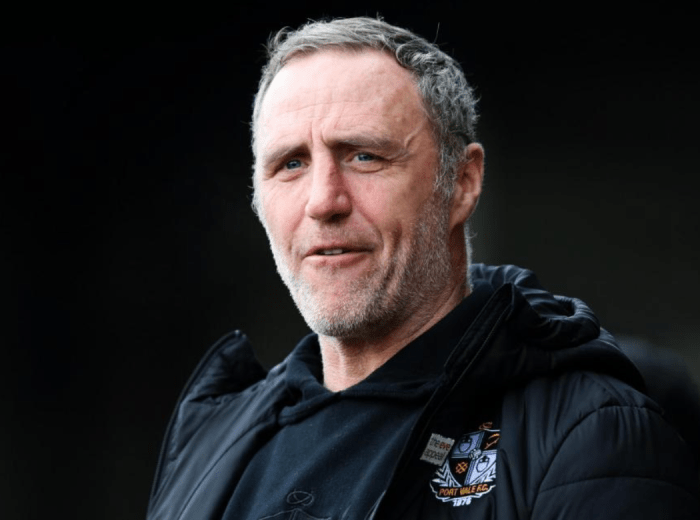
Into the manager’s chair

In an interview with tribalfootball.com, he said: “My coaching journey has been full of learning experiences, and I’m a much better coach now than when I started. I was fortunate to work with some fantastic players.

“My best experience was at Southampton, where we achieved back-to-back promotions from League One to the Premier League, working with incredible players like Lallana, Lambert, and Schneiderlin. Even the difficult moments teach you a lot, though. Results didn’t always go our way, but even then, those experiences helped me grow as a coach.”

Crosby also saw the development of the likes of Alex Oxlade-Chamberlain, James Ward-Prowse and Luke Shaw during nearly two and a half years at Southampton. While at Bramall Lane, he also worked with future England internationals Aaron Ramsdale and Dominic Calvert-Lewin.

Even at Hull, he had the fortune to work with Fikayo Tomori, on loan from Chelsea, and Jarrod Bowen.

Born in Rotherham on 3 March 1973, miner’s son Crosby was raised in the village of Maltby. He supported the Millers as a youngster but was rejected by them as a player when he was 11. At 14, though, he was taken on at Leeds.

When he didn’t progress beyond the youth team at Elland Road, former Leeds captain and manager Billy Bremner took him on at Doncaster Rovers and gave him his league debut aged 18.

He played 60 times for Donny over a couple of seasons (and spent a month on loan at Conference side Halifax) before moving to the north east and spending five years at Darlington, notching up a total of 211 appearances.

He was captain of the losing side in the 1996 Third Division play-off final at Wembley when Jim Platt’s Darlo lost by a single goal to Neil Warnock’s Plymouth Argyle.

Off-field financial issues marred his time at Chester City in the 1998-99 season, so his move to Brighton was a welcome change.

Reflecting on that time with the Seagulls, he said: “In any walk of life, if you get a really good group together, recruit well and get good characters in who complement each other well, then you should succeed. A lot of that was down to Micky.

“It was the fittest I’ve ever been – that was down to him – but that work and organisation brought its reward which is something I’ve taken with me into my own coaching career.”

Before his current (August 2025) position at Prenton Park, he also coached the Northern Ireland under 21 international side and spent three years coaching and managing at Port Vale.

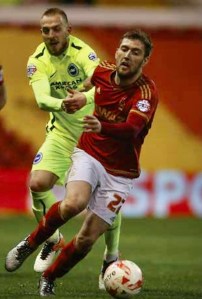
It was tough for Gardner to grow in Sami’s barren patch

A GARY GARDNER goal ended a winless Albion run of 12 league matches under Sami Hyypia in the autumn of 2014.

Just 54 seconds of the game against Wigan Athletic on 4 November had passed when the Aston Villa loanee netted for the Albion.

He got on the end of a Sam Baldock cross to give the Albion an early lead which they managed to hold onto for the entire match, in spite of several close shaves as the former Premier League opponents tried to salvage a point.

Gardner in action for Forest with Albion’s Jiri Skalak

The game also saw the return of Elliott Bennett, on loan from Norwich City, a first match (as sub for Bennett) for Greg Halford, on loan from Nottingham Forest, and a home debut in goal for teenage stopper Christian Walton.

It wasn’t the first time Gardner had scored at the Amex, though. That had come three years earlier, on his professional debut, when on loan at Coventry City a game which saw Albion beat the Sky Blues 2-1.

Gardner was no stranger to loans away from parent club Villa: he’d already been to Coventry and Sheffield Wednesday, and after Brighton he had temporary moves to Nottingham Forest, Barnsley and Birmingham City.

Indeed by the time Albion took on Forest at the Amex on 7 February 2015, Gardner was on the opposing side as the visitors gave new boss Dougie Freeman a winning start, edging it 3-2.

Gardner’s early development had encountered major setbacks caused by two cruciate knee ligament injuries.

Although he had made his Premier League debut for Villa in the 2011-12 season, the 15 starts and five sub appearances he made for Brighton was the first real regular run of football he’d enjoyed – and he was still only 22 at the time.

He scored again for Albion only four days after that Wigan winner, when the Seagulls were held 1-1 by Blackburn Rovers at the Amex. But with the brief Hyypia reign having come to an end, his appearance in the home Boxing Day 2-2 draw against Reading was his last in a Brighton shirt.

Inigo Calderon salvaged a point with a last-minute equaliser against a Royals side who had gone 2-0 up in 26 minutes courtesy of goals from on loan striker Glenn Murray!

Gardner had been Albion’s tenth new signing of the summer back in August, following in the footsteps of Villa teammate Joe Bennett, who’d joined on a season-long loan a week earlier.

“Gary is a quality midfielder who we have been aware of for some time,” said Hyypia, who explained the club was keen to have more options in that area of the side, especially with Dale Stephens out with a long-term injury.

“More importantly, given the considerable demands of the Championship, I want to be able to rotate the squad,” he said.

“Gary has had a tough couple of seasons due to injury, but he showed during a spell with Sheffield Wednesday last season that he is over those problems. We hope this loan spell will benefit everyone: Gary, us and Aston Villa.

“He is the type of midfielder who is active and mobile, but very importantly he has real quality on the ball – and is also capable of producing things from set pieces.”

Another midfield slot opened up during his time with the Albion when fellow midfielder Andrew Crofts suffered a cruciate injury against Watford.

“I am absolutely gutted for him. Having gone through exactly the same injury as him, with the two cruciate operations, I know exactly how he is feeling,” he said. “I know he will come through this.

“He is a strong guy, a model pro and he’ll be extra determined to get back playing for the club.”

Born in Solihull on 29 June 1992, Gardner was one of six brothers, and in a programme article he said the football-daft family had divided loyalties between Villa and Birmingham.

Just as well, because both Gary and eldest brother Craig ended up with the Blues having started off at Villa. Craig made 80 league and cup appearances for Villa, but later played for Sunderland, West Brom and Birmingham, where he became technical director after his playing days ended.

Gary was on Villa’s books from the age of seven and progressed all through the ranks until Alex McLeish gave him his first team debut as a substitute in a 3-1 win away to Chelsea. He made a total of five starts and 11 appearances off the bench in that 2011-12 season.

But it wasn’t until Villa were back in the Championship in the 2016-17 season that he had his longest run of games for his parent club, making 19 starts and eight appearances off the bench.

That squad, led by former Albion centre-back Tommy Elphick, thwarted already-promoted Albion’s hopes of winning the title in the final games of the season at Villa Park when a late, speculative long-range Jack Grealish shot squirmed through David Stockdale’s grasp to gain Villa a draw.

Gardner was a non-playing sub that day and when he fell down the pecking order in 2017-18, he spent the season at Barnsley.

Gardner followed his brother to Birmingham City

After spending the entire 2018-19 season on loan at Birmingham, he then made the switch permanently (in a swap with Spaniard Jota) and has been there since.

In July 2021 he signed a new deal to extend his stay at St Andrews until June 2024.

Gardner earned international recognition at various levels and made his England under 21 debut as a substitute in a 4-1 win over Israel at Barnsley on 5 September 2011 and the following month replaced Ross Barkley as England won 2-1 in Norway.

A month later he scored twice in a 5-0 win over Iceland after going on as a sub for Jason Lowe at Colchester. Four days on, his involvement was once again off the bench when young England were beaten 2-1 by Belgium in Mons.

His last appearance was against the same opponents the following February when England exacted revenge at the Riverside Stadium, Middlesbrough. In a 4-0 win, Henri Lansbury scored twice before Gardner replaced him.

His contemporaries in the side at that time included the likes of Jack Butland, Jordan Henderson and Alex Oxlade-Chamberlain.

Why Saint Dan riled the Albion

DAN HARDING was promoted twice with Southampton and once with the Seagulls and later cut short his career because of family tragedy.

Personally, I’m not sure he really need to be cast as ‘public enemy no.1’ because of the way he left Brighton.

With the benefit of hindsight, it was really no surprise that he chose to turn his back on playing at Withdean in favour of Elland Road, Leeds.

OK, the stringing-out of the contract negotiations, and public slanging match that accompanied them, didn’t help matters.

But football careers are short and the Amex was a long way off becoming a reality when Harding decided to opt for pastures new.

“I really enjoyed my time at Brighton but you can’t compare the size of the two clubs or the facilities,” he told the Leeds matchday programme at the time. “It has been like going from one world to another.”

Ironically, it seems his success on the pitch with Brighton, which led to him gaining international recognition, might well have been the unsettling influence.

Former Albion boss Peter Taylor selected him for England under-21s as the 2004-05 season got underway. He made his England debut as a substitute for Micah Richards in a 3-1 win over Ukraine at the Riverside Stadium, Middlesbrough, on 17 August 2004. Future full internationals James Milner and Darren Bent were in the same squad.

He started the 8 October 2004 match against Wales at Ewood Park, Blackburn: a 2-0 win courtesy of goals from Milner and Bent. He also started the game four days later when the under 21s drew 0-0 away to Azerbaijan in Baku. His last cap came the following month in a 1-0 defeat away to Spain when he was replaced by Ben Watson. Future Albion loanee Liam Ridgewell was also a substitute in that game.

It was this platform that sowed the seeds of discord, according to former chairman Dick Knight’s take on the circumstances surrounding Harding’s acrimonious departure from the Albion.

In his autobiography Mad Man: From the Gutter to the Stars, Knight reckoned it was while on international duty that Harding was “egged on by his agent about his value after talking to players with bigger clubs, on bigger wages”.

Knight went on: “Early on, I offered him a sizeable contract renewal but he sat on it. He kept saying he wanted to stay, but I don’t think he had any intention of doing so.

“Because he was under 24, we were entitled to compensation. Shaun Harvey, the Leeds chief executive – who became CEO of the Football League in July 2013 – tested me with a couple of paltry sums before finally offering £250,000, which I rejected.”

DH Leeds action 2Via the Football League tribunal system, Knight managed to get the figure up to £850,000, part achievement-based, and with a 20 per cent sell-on clause.

All in all, not a bad return for a player who came through the Albion’s youth and reserve ranks after being spotted at 15 playing for Hove Park Colts.

Born in Gloucester on 23 December 1983, the young Harding loved kicking a football from the moment he could walk and enjoyed watching his dad, Kevan, turn out for the Army team.

The family was posted to Brighton, and Harding was taken to the Goldstone Ground by his mum, Linda. One of his earliest memories was on 23 September 1992 seeing a 17-year-old David Beckham make his Manchester United debut as a substitute for Andrei Kanchelskis in a League Cup tie that finished 1-1.

Harding joined the Albion initially on schoolboy terms for a year and was then taken on as a YTS trainee, progressing through the juniors and reserves before eventually making his first team debut on 17 August 2002, during Martin Hinshelwood’s brief reign, as a substitute for Shaun Wilkinson in a 2-0 home defeat to Norwich City.

After Hinshelwood was replaced by Steve Coppell, and Harding sustained a back injury, the youngster played no further part in the first team picture that season, but he was awarded a new contract in April 2003.

In the first part of the 2003-04 season, Harding was a regular on the bench, but, on 21 February 2004, Coppell’s successor, Mark McGhee, gave him his full debut in place of the suspended Kerry Mayo in a 3-0 win over Bournemouth.

Dan Harding

Harding kept his place through to the end of the season, making a total of 23 appearances, including being part of the side that lifted the divisional play-off trophy at the Millennium Stadium, Cardiff, as the Seagulls beat Bristol City 1-0.

“In hindsight, it was a very lucky time for me. I broke into a team that was winning games and was promoted,” he told the Daily Echo. “Looking back now, I don’t think I appreciated at the time what a big achievement it was.”

Sent off in only the second game of the following season for two bookable offences, it wasn’t long before his contract discussions were aired publicly, with McGhee telling the Argus in October: “It’s starting to really frustrate me.

“Dan keeps telling us and saying publicly he wants to sign but we cannot tie his agent down to have a meeting with us. He has to be honest with us.”

Harding in turn denied he was being difficult, telling the Argus that talks were ongoing.

The off-field issues certainly seemed to be troubling Harding and McGhee publicly blamed the defender for a 2-0 defeat at Millwall in December. He was also outmuscled by Stoke City’s Ade Akinbiyi in a game at Withdean, leading to a late winner for the visitors. Across the season, McGhee dropped him on four occasions because of such inconsistency.

When he won his place back in February, he told the Argus: “I had to prove not only to the gaffer but to the other players and the fans that I want that position back.

“That’s where I prefer to play. I like to call that my position. I don’t mind playing on the left hand side of midfield or centre midfield, but I do love playing at left-back.

“Hopefully I can reproduce the same sort of form and keep my confidence up. Everyone wants to be playing, so when you are left out it’s a bit of a kick in the teeth. It’s not nice, but you have to pick yourself up and try to get back into the team.”

DH leeds action 1However, the Brighton contract offer was declined and on 7 June that summer, Harding put pen to paper on a deal with Leeds, whose fans were no doubt delighted to read that he used to follow their fortunes when he was a youngster.

“When I lived in Germany, they showed quite a lot of Leeds games on telly and, in a strange way, I kind of ended up supporting them because it was the only football I really got to see out there,” he said.

His dad later took him to a Leeds FA Cup match v Wolves, and he added: “I have to admit I have been a closet Leeds fan. Obviously, I didn’t shout about it when I was playing for Brighton and it’s kind of strange now that this move has happened.”

If Harding doubted the size of the task at Elland Road, he’d only have had to read the comments of manager Kevin Blackwell, often Neil Warnock’s no.2, who was the Leeds manager at the time.

In an article about Harding in the club programme, Blackwell said: “It has been a big transition for him. No disrespect to Brighton, but coming from the scaffolding at Withdean to Elland Road was a big step-up for Dan. He was nervous in the first couple of games, but he has started to settle down.”

He talked about how he needed to cement his place at United, and added: “If he does succeed here, all the doors will be open to him. I have no doubt that once he develops certain aspects of his game and his self-confidence, he will go a long way because he is a real athlete with a great left foot.”

Brighton fans vented their displeasure at how things had turned out every time Harding touched the ball when Leeds entertained the Seagulls on 12 September 2005; a game which finished 3-3. The fact two of Albion’s goals came from crosses on Harding’s flank prompted Blackwell to drop him for the following match.

After only seven games, Harding picked up an injury and, over the course of the season, played just 21 matches for United. In August 2006, the Yorkshire club used the full-back as a makeweight in a deal which took future Albion loanee Ian Westlake from Ipswich to Leeds.

He was a regular at Portman Road for a couple of seasons but, in his third season, manager Jim Magilton deemed him surplus to requirements and sent him out on loan to Southend United. I recall going to a match at Roots Hall and seeing him have an outstanding game against Brighton.

Later the same season, with Ipswich bobbing along in mid-table, Harding seized the chance to join Steve Coppell’s promotion-chasing Reading, and he played in their play-offs defeat to Burnley.

When Roy Keane took over at Ipswich in 2009, Harding was sold to Southampton; manager Alan Pardew’s first signing for the Saints. Harding’s former Albion youth coach, Dean Wilkins, was part of Pardew’s coaching team.

Harding reflected in an interview with the Southern Daily Echo that what followed were the happiest three years of his career, in which he played 121 games and chipped in with five goals.

In 2010-11, he was named in the PFA League One team of the year along with teammates Kelvin Davies, Jose Fonte, Adam Lallana and Alex Oxlade-Chamberlain.

In the harsh and fickle world of football, Brighton fans relished Brighton’s 3-0 win over Southampton at the Amex on 2 January 2012 when Albion winger Will Buckley gave Harding such a torrid time that, to compound his humiliation, the former Brighton player was subbed off by boss Nigel Adkins with five minutes of the first half still to play.

Although part of the Saints side that won promotion back to the Premier League that May, Harding didn’t get the chance to play at the top level because Adkins moved him on to Nottingham Forest.

Harding talked in detail to the Echo’s Paul McNamara about life at Forest, which he found an unstable place, especially when Sean O’Driscoll, the manager who signed him, was sacked.

Although he played some games under that legendary left-back Stuart Pearce, when he took over, Harding eventually went on loan to Millwall, but wasn’t able to help them stave off relegation from the Championship.

He reveals in his interview with McNamara how disillusioned he became with the amount of dishonesty in football and, coupled with his pregnant wife losing two of the triplets she was expecting, he put family before football and, at the age of only 31, dropped down four divisions to play non-league with Eastleigh.

He talked about the tough decisions he’d had to make in an interview before a FA Cup tie Eastleigh played against Bolton Wanderers.

In 2016, Harding joined Whitehawk as a player, then became part of the coaching set-up, and was briefly caretaker manager before the appointment of Steve King.

Tidy full back Stewart Henderson polished Saints diamonds

1 SH monoALBION’S right back when I first started watching them in the late 1960s was someone who would go on to make much more of a mark as a coach.
Gareth Bale, Theo Walcott and Adam Lallana were among the players developed by Stewart Henderson. Wayne Bridge and Chris Baird, too.

That was all to come for Stewart when I first saw him wearing the number 2 shirt in Freddie Goodwin’s Division 3 side.

hendo biog

Henderson, who shares the same June birthday as me, albeit he was born 11 years earlier, was only 5’6″ tall but he had noticeably muscular thighs. Hailing from Bridge of Allan in Scotland, his stature didn’t stop him earning Scottish schoolboy international honours and he was on the winning side in three matches.

The Scots beat Northern Ireland 5-1 at Windsor Park, Belfast – when future Albion teammate John Napier was playing for the home side – Wales at Ninian Park, Cardiff, and England at Ibrox Park where a 30,000 crowd watched.

That recognition followed his success playing for his school team, St Modans High School in Stirling, and Stirlingshire Schoolboys. It eventually took him to England at the age of 17 in 1964 to join Chelsea.

Tommy Docherty was their manager at that time and he obviously wasn’t convinced Henderson was good enough for the First Division, so he dropped down to the Third with Brighton where, for a couple of seasons, he had the unenviable task of trying to oust captain and Northern Irish international Jimmy Magill from the right back slot.


Stew Hendo blue

He made his debut on 3 May 1966 away to Exeter a month before his 19th birthday and didn’t make his home debut until 1 October that year, stepping up when Magill was injured and helping Albion to a 5-2 win over Peterborough.

It wasn’t until March 1968, though, that he eventually cemented his place in the side. But when he did, he became a near-permanent fixture for the next four years. He only scored once in 199 appearances, that coming in a 6-0 drubbing of Oldham Athletic on 24 August 1968.

Stew Hendo PoYIn the 1969-70 campaign, he missed only one game and the supporters chose him as player of the season. He played 36 league games in Pat Saward’s first season in charge and in the 1971-72 promotion campaign was a regular in the line-up right through until the famous televised Aston Villa home game in March 1972 when Saward made two shock changes and left out both Henderson and captain John Napier for the top of the table clash.

It was the beginning of the end for Henderson and he cuts a rather-forlorn looking figure in a picture of the newly-promoted team captured in the Goldstone dressing room after gaining the necessary point against Rochdale, standing fully-clothed alongside his team mates in their kit, taking a sip of champagne.

Saward made him available for transfer at the end of the season and although he stayed with the club, he played only two more league games, and a league cup game, in the following season before being transferred to Reading in June 1973.

Henderson had chalked up 198 league games and 14 cup games during his time with Brighton but the move to Berkshire was by no means a petering out of his career.

I am grateful to the website of the Reading FC Former Players Association (readingformerplayers.co.uk) to discover how, although manager Charlie Hurley signed Stewart initially as a full-back, in 1975 he pushed him into a midfield role with immediate success: Stewart scored twice in the first 17 minutes at Bradford City.

He went on to be an influential member of Reading’s 1976 Fourth Division promotion winning side. In May 1977, he was made club coach and worked closely with manager Maurice Evans helping the club win the 1978/79 Fourth Division Championship.

Amazingly Stewart was recalled to the playing squad at the beginning of the 1979/80 season, at the age of 32, and continued playing intermittently until May 1983 when he played the last of his 186 games for the Royals and became Reading’s first Centre of Excellence director.

Coaching became his new direction and he was at manager Ian Branfoot’s side when Reading beat Luton at Wembley to win the Simod Cup in 1988 (a game incidentally in which former Albion winger Neil Smillie was one of the goalscorers for the Royals and Steve Foster and Danny Wilson were playing for Luton).

Henderson left Elm Park in 1989 to take up the role of youth development officer at Southampton, where his work began helping to produce some of the finest footballing talent in the country.

He was to spend over 20 years at Southampton in various roles working with the youth and academy teams, the reserve side and even had a short spell as first team manager.

It’s worth quoting an article from the Mirror in October 2012, when Matt Law reckoned Southampton owed a £55million debt of gratitude to Malcolm Elias, Steve Wigley, Huw Jennings and Stewart ­Henderson who spotted and coached the incredible Southampton Fame Academy, which through transfer fees effectively saved the club from extinction.

Gareth Bale, Theo Walcott, Alex Oxlade-Chamberlain, Wayne Bridge, Kenwyne Jones, Adam Lallana, James ­Ward-Prowse and Luke Shaw were all named as coming under the influence of the quartet who, after being released by Southampton moved on together to Fulham.

Henderson was a guest at an Albion raceday in 2006 and met up with former teammate Ian Goodwin