Why Colin Pates is forever grateful to Liam Brady

ONE-TIME Arsenal back-up defender Colin Pates had a Gunners legend to thank for persuading him to quit the game before he did any life-altering damage.

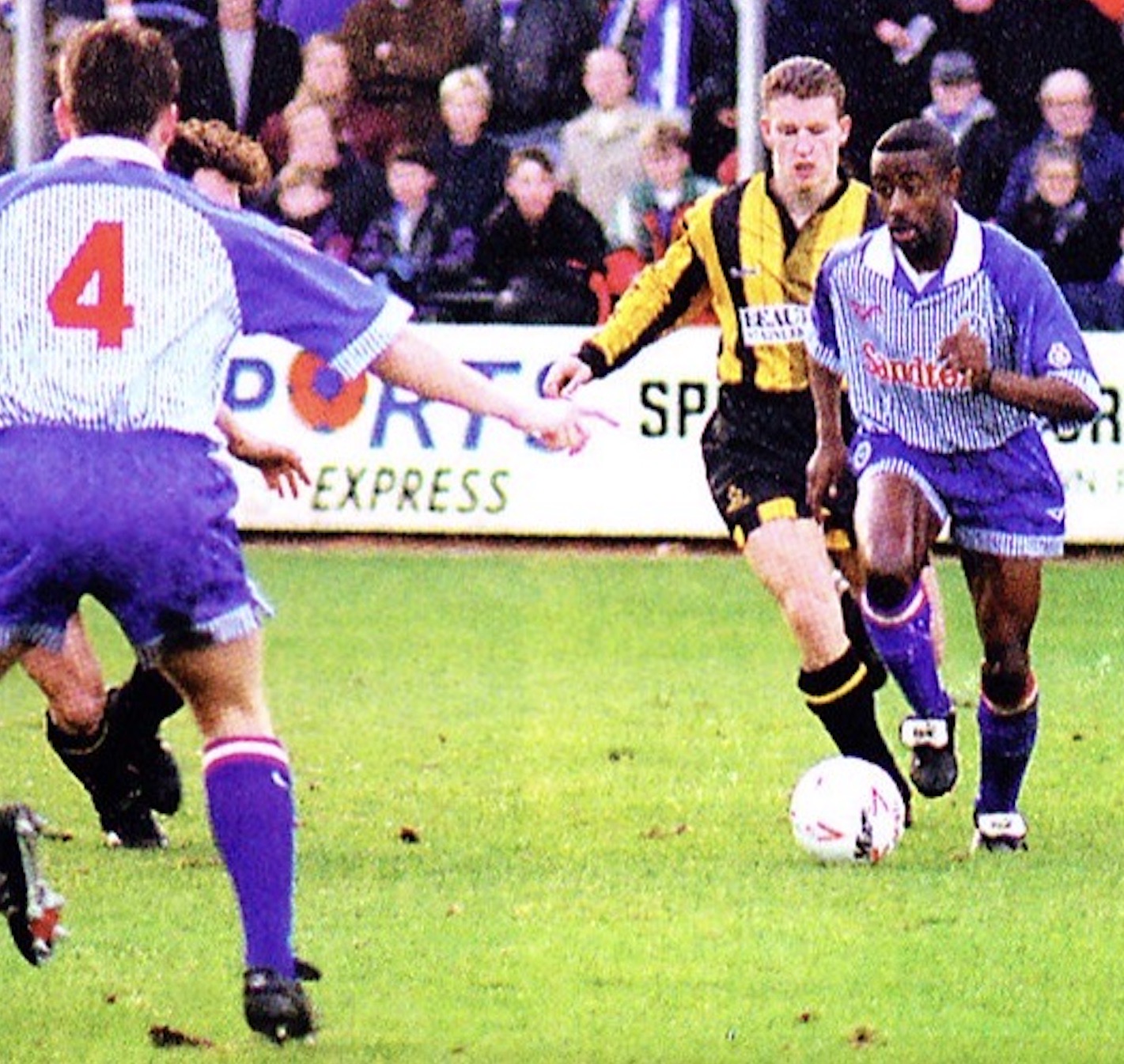
Thankfully, Pates took Liam Brady’s advice to bring his professional playing days to an end at Brighton in January 1995 and he went on to have a long and successful career coaching at an independent school in Croydon where he introduced football to what was previously a rugby-only establishment.

“Liam told me that I should think of my health before my playing career and that I would be a fool to myself if I carried on playing,” Pates told the Argus in a 2001 interview.

“My knee had fallen apart and it was the right advice. If I’d ignored it, I could well have ended up not being able to walk.

“Footballers need to be told when it is the end. I’ll always be grateful to Liam for that.”

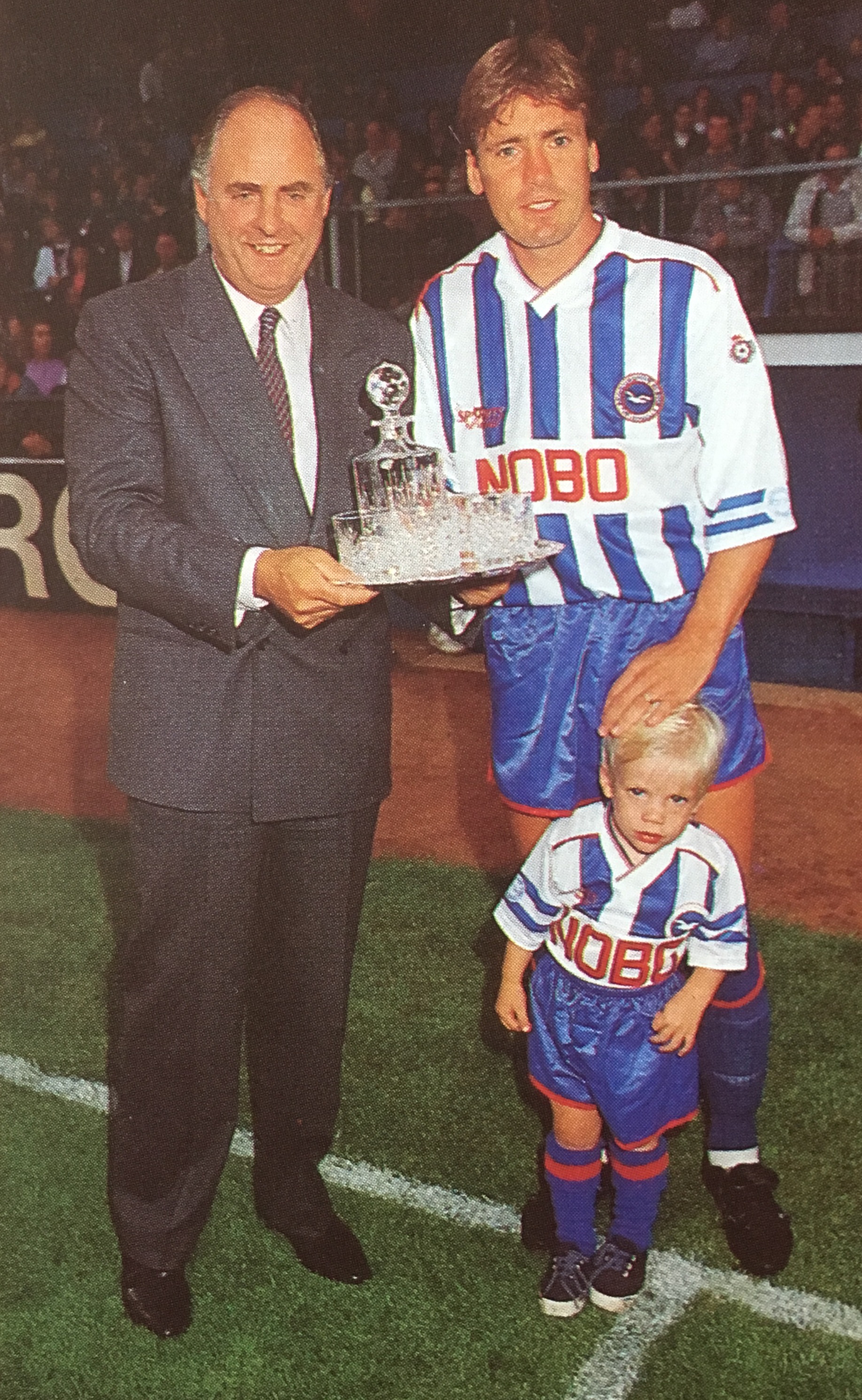
Pates had played the last of 61 games in the stripes (a 0-0 home draw against Bournemouth) only six weeks after he was presented with a silver salver by former England manager Ron Greenwood to mark his 400th league appearance (on 24 September 1994, a 2-0 home win over Cambridge United).

In the matchday programme of 17 December, Brady confirmed that Pates and fellow defender Nicky Bissett, (who’d twice broken a leg and then sustained a knee injury) would be ruled out for the rest of the season. Neither played another game for the Seagulls.

It brought to an end Pates’ second spell with the Seagulls, having originally spent a most productive three months on loan in 1991 helping to propel the club to a Wembley play-off final. If Albion had beaten Notts County that May, Pates may well have made a permanent move to the south coast. As it was, he said: “Unfortunately, the club couldn’t meet Arsenal’s asking price for me that summer so I returned to Highbury.

“But when my contract expired in 1993, there was only one club I wanted to be at… Brighton.”
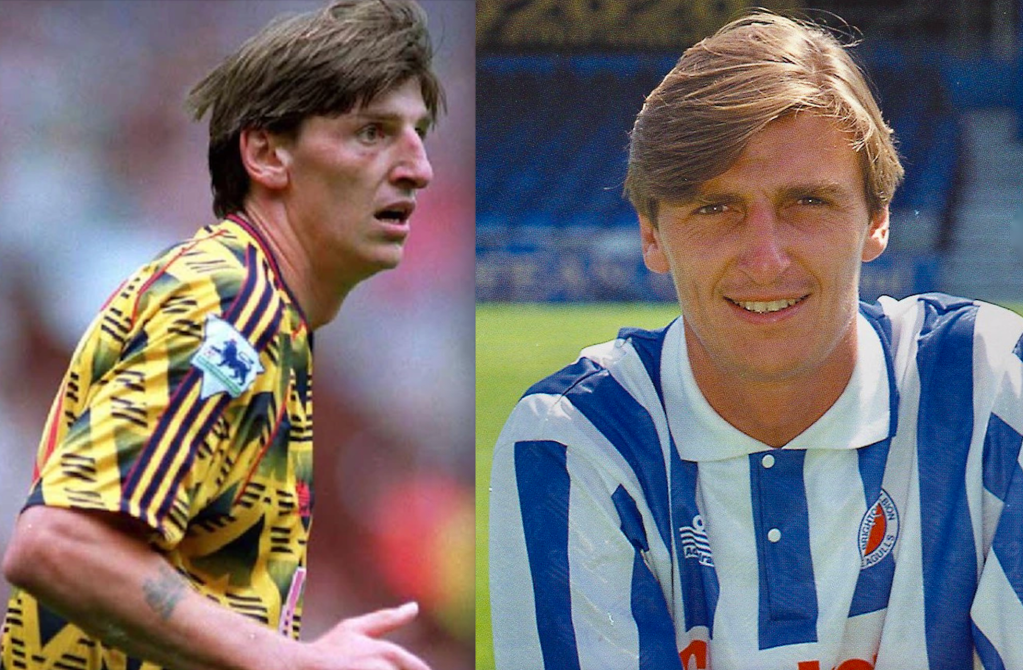
Pates had plenty of competition for the centre back berth at Arsenal

As if Tony Adams, Andy Linighan, David O’Leary and Steve Bould weren’t enough centre back competition at Arsenal, manager George Graham had also taken Martin Keown back to the club from Everton for £2m – six and a half years after selling him to Aston Villa for a tenth of that amount.

So, it was no surprise that Pates found himself surplus to requirements at Highbury and given a free transfer. Graham’s old Chelsea teammate, Barry Lloyd, eagerly snapped up the defender for a second time, this time on a permanent basis.

Goalkeeper Nicky Rust, still a month short of his 19th birthday, who’d also been given a free transfer by Arsenal, made his Albion league debut in the season-opener at Bradford City behind the returning Pates, who had just celebrated his 32nd birthday four days before the game.

After starting the first 10 matches alongside the aforementioned Bissett, Pates suffered an abductor muscle injury early on in a 5-0 drubbing away to Middlesbrough in the League Cup which necessitated a spell on the sidelines. He missed nine matches – only one of which was won.

These were the dying days of the seven-year Lloyd era and, even with Pates back in the side, one win, two draws and four defeats brought the sack for the manager.

Any doubts new manager Brady had about Steve Foster and Pates were swiftly dispelled, as he wrote about in his autobiography (Liam Brady: Born To Be A Footballer).

“Fossie was 36. I feared he might be going through the motions at this stage in his career and it would have been hard to blame him,” said Brady. “Colin Pates was a few years younger, but he’d been at Chelsea and Arsenal and could have been winding down.

“I appealed to them to give me a dig out, to lead this rescue mission. And they responded just as I hoped.”

Together with the even older Jimmy Case, who was brought back to the club from non-league Sittingbourne, they “brought on” the younger players in the new man’s first few weeks and months.

Under Brady, young Irish centre-back Paul McCarthy played alongside Foster in the middle, with Pates at left-back. And Pates saw the arrival of some familiar faces in the shape of young Arsenal loanees, first Mark Flatts and then Paul Dickov, whose successful spells helped Brady to steer the Seagulls to safety by the end of the season.

“I really enjoyed it, playing mainly at left-back,” said Pates. “It was a great family club and I made a lot of friends there along the way.”

At the time Pates had to call it a day, Albion were a third-tier side but the bulk of his career had been played at the top of the English game for two of its leading lights in Chelsea and Arsenal, and briefly Charlton Athletic.

Albion’s ex-Arsenal trio Liam Brady, Raphael Meade and Colin Pates

The player’s move to Arsenal from Charlton for £500,000 in January 1990 raised more than a few eyebrows because he was 28 at the time and none of Arsenal’s back four – Lee Dixon, Bould, Adams and Nigel Winterburn – looked like giving way.

“People asked me why I went there,” said Pates. “But when a club is paying that money and that club is Arsenal who wouldn’t go and take the chance?

“I knew this was going to be the last opportunity to have a move like this in my career and although I knew I was only being signed as cover, I couldn’t turn it down.”

He continued: “I’d joined a team that had just won the league, that would do so again in 1990-91 and they had the fabled back four – the best defensive unit in world football at the time.”

The website upthearsenal.com acknowledged: “Pates had built a solid reputation at Chelsea as a dependable defender who was strong in the air and no slouch on the deck.”

Pates added: “When I first met George (Graham) in his office at Highbury, he was honest and straight talking. He told me I’d have to work hard to get into the side.”

However, within a month he made his Gunners debut at left back in place of the injured Nigel Winterburn in a 1-0 defeat to Sheffield Wednesday. It turned out to be his only first team appearance that season.

Although he found it difficult to motivate himself for reserve team football, he pointed out: “I still enjoyed the training sessions with the first team and I did learn a lot about defending from George, even at that late stage in my career.”

However, after his return from the loan spell at Brighton, he saw action as a sub in three pre-season friendlies ahead of the 1991-92 season and that autumn had his best run of games in the first team.

He featured in eight games on the trot between October and November 1991 and memorably scored his one and only goal for Arsenal in a European Cup match at Highbury against a Benfica side managed by Sven-Göran Eriksson. He also played in the February 1992 1-1 North London derby against Spurs and made two appearances off the bench that season.

It was a similar story in the 1992-93 campaign when he went off the bench on five occasions although he had two starts: in a 2-0 win at Anfield (Anders Limpar and Ian Wright the scorers) and a 3-2 defeat away to Wimbledon.

“I was a bit-part player but it was a good time to be at the club with the cup finals and being part of the squads,” said Pates.

On his release from Brighton, Pates had a spell as player-manager of Crawley, played a handful of games for non-league Romford, and coached youngsters in various places including Mumbai in India and the Arsenal School of Excellence.

Pates told The Guardian in a 2002 interview how a sense of history and continuity was the first thing he had noticed when he signed for Arsenal.

Brady, Paul Davis, Bould and other former Arsenal players were all invited to the Arsenal academy, and Pates told the newspaper. “Young players need people like Stevie Bould to tell them how proud they should be to pull the shirt on and to show them what’s expected of them. “When I joined Arsenal, everyone was kind and considerate. You were left in no doubt about how you were supposed to conduct yourself. For the way it’s run, it’s the best club in the country.”

By then though, Pates had begun a new career as a coach getting football off the ground at the independent Whitgift School in Croydon. He was to stay 24 years at the school having been invited to introduce football by its headmaster, Dr Christopher Barnett.

The story has been told in depth in several places, notably in London blog greatwen.com by Peter Watts, among others. Watts wrote: “A posh school in the suburbs is not where you’d expect to find a hard-bitten former pro, and Pates admits: ‘Whitgift is quite alien to some of us, because we had state school educations. It was intimidating, and not just for the boys.’ But he jumped at the opportunity.

At first, he took a sixth-form team on Wednesday afternoons, but there were no goalposts, pitches, teams or even footballs! “We didn’t have anything. So, we had to start from scratch, pretty much teach them the rules,” he said.

“They were rugby boys playing football, so these were quite aggressive games. But after three years we introduced fixtures and we’ve never looked back,” said Pates.

In an interview with the Argus in October 2001, Pates added: “We went over the local common for our first training session with some under-18s after finding a ball that looked like the dog had chewed it up.

“I had to go right back to basics. All they had known was rugby, so it was a case of going through the rules of football to start with, like the ball we use is round!

“I was told that in 300 years football had never been considered. But a lot of the boys and their parents expressed an interest.

“It might be an independent school but you can forget the black and white filmed images of public school kids. Most are from working class backgrounds and they love their football.

“It grew a lot quicker than the head thought and he told me I should take over as master in charge of football.”

As the sport grew, he recruited his former Charlton teammate (and ex-Brighton, Wolves and Palace full-back) John Humphrey and Steve Kember, the former Chelsea and Palace midfielder to help with the coaching.

Asked about it on the chelseafancast.com podcast Pates delighted in recounting how from time to time he would show Humphrey a video clip of a rare goal he scored for Chelsea against Wolves when he flicked the ball over Humphrey’s head in the build-up to it – however Chelsea lost that 1983 match 2-1!

More seriously, Pates spoke at length to Watts about the benefits of a good education in case things didn’t pan out.

“You have to be an exceptional footballer to make it these days. So, we want to give them the best opportunity to be a footballer, but also give them a magnificent education so if they don’t sign scholarship forms they have something to fall back on. It works for us, it works for the academies and it works for the families.”

How the career of high rise Flatts came tumbling down

MARK FLATTS was destined for a glittering career after breaking into Arsenal’s first team when only eighteen.

It was the season when George Graham’s side finished in a disappointing 10th place in the league but won the League Cup and the FA Cup, beating Sheffield Wednesday in both competitions.

Flatts got seven starts plus four appearances off the bench and the following season, after he’d been troubled with a few injuries, Graham sent him out on loan to get some games under his belt.

His first loan was at Cambridge United, then in January 1994 Flatts joined forces with former Gunners legend Liam Brady at Brighton.

The former midfield maestro who’d graced the game at the highest level as a player had not long arrived at the Goldstone Ground, creating a buzz of anticipation amongst the largely disillusioned Albion faithful.

Brighton were bumping along around the foot of the third tier table when he arrived and it augured well that Brady could use his connections with his former club to secure the services of a prodigious young talent who’d already played a handful of matches in the Premier League.

He made his debut in a cracking 4-1 New Year’s Day home win over Cambridge United when Kurt Nogan scored a hat-trick and he was only on the losing side twice during his two months at the club, helping the Albion move away from the relegation zone.

Brady wrote about it in his autobiography Born To Be A Footballer, describing how “livewire” Flatts had heated up “a freezing Goldstone” on that debut day. “He’s a lovely young kid off the field but on the park there’s a strut about him. That’s exactly what we need. He’s full of tricks.”

Flatts started nine matches, came on as a sub once, and scored one of Albion’s goals in a 3-2 home win over Blackpool, but it was his skill on the ball and pace that fans enjoyed most.

After he had returned to Highbury, Brady thanked him for his contribution and said in his programme notes: “He gave the place a tremendous lift. He’s a very confident lad and he did us a real favour and hopefully he’s got something out of it as well. I think he has and I think he enjoyed his time with us.”

Flatts confirmed as much recently. Although he has kept a low profile for many years, in 2020, online from his home in Norfolk, he appeared in two podcasts talking about his career.

On the Shoot the Defence podcast in April 2020, Flatts talked admiringly of his time under Brady at Brighton – “He still had it in training” – as well as the experience of playing alongside senior pros Jimmy Case and Steve Foster at the Goldstone Ground.

“Loyal fans as well. It was a good time,” he said. “I got on well with the fans and a few of them still text me, so that’s nice. Liam Brady and Jimmy Case had seen me in a few games, said they wanted me on loan, and I went there and enjoyed it.”

Born in Islington on 14 October 1972 and brought up in Wood Green, Flatts played for Haringey Borough and Middlesex County school teams and he was playing for Enfield Rangers when he caught the eye of professional clubs.

He spent time training with Watford and West Ham, but his mum and older brother were Arsenal fans so, when they invited him to join them, it was no contest. The scout responsible for picking him up for the Gunners was the former Brighton wing-half, Steve Burtenshaw.

Flatts was one of the country’s top talented 14-year-olds who went through the FA National School of Excellence at Lilleshall before becoming a trainee at Highbury after graduating.

In the first edition of a new fans’ podcast Over and Over and Over Again on 20 August 2020, Flatts talked about how he, Andy Cole and Paul Dickov up front, Ray Parlour and Ian Selley in midfield, Scott Marshall at the back and Alan Miller in goal were all going through from youth team to reserves at the same time. “It was a good strong youth team,” he said. “Pat Rice was the youth team manager who brought us through. He was a good coach.”

Flatts signed professional in December 1990 and he progressed to the reserve side who were managed by another Arsenal legend, George Armstrong.

One particular reserve match stands out as memorable – but not because Flatts scored a goal in a 2-2 draw. Ordinarily, Flatts was accustomed to playing in front of a few hundred supporters for the second string, but on 16 February 1991 it’s reckoned more than 10,000 turned up.

The Ovenden Papers Football Combination game against Reading was originally scheduled to be an away fixture but freezing conditions meant the game was swapped to Highbury because it had undersoil heating.

The reason for the surge of interest was the match saw the return to playing of Tony Adams after his release from prison, having served half of his four-month sentence for drink driving. The amazing response of the Arsenal faithful was remembered in this football.london article in February 2018.  

Often niggled by injuries, Flatts was sidelined by one he hadn’t even been aware of, other than what felt like a small discomfort. “I got a stress fracture on my ankle and was playing on it for a month without realising,” he said.

Physio Gary Lewin arranged for him to see a Harley Street specialist and it was only after he was put through tests on a running machine that the problem was diagnosed. The injury required surgery that put him out of action for over a year.

Flatts got his first real involvement with the first team on a pre-season tour of Norway ahead of the 1992-93 season, getting on as a substitute against Stabaek and Brann Bergen. He was a non-playing sub in two subsequent pre-season friendlies away to Wolves and Peterborough.

It was back to reserve team football at the start of the season but Graham selected him to travel with the squad for an away game at Sheffield United on 19 September and he made his competitive debut as a 71st minute substitute for Anders Limpar, shortly before Ian Wright netted an equaliser for the Gunners.

His next involvement came in a third round League Cup encounter with Derby County. He was a non-playing sub in the away tie but started in Limpar’s place for the replay on 1 December 1992, when Arsenal edged it 2-1.

Flatts (right) celebrates Arsenal’s League Cup win with some familiar faces

He kept his place for the league game which followed four days later but was subbed off as Arsenal lost 1-0 at Southampton.

At one point, the Islington Gazette declared Flatts, Neil Heaney, Parlour and Dickov as the “next crop of Arsenal starlets who will take the club forward”.

As the year drew to a close, on 19 December, Flatts earned rave reviews for his showing in a 1-1 home draw against Lennie Lawrence’s Middlesbrough.

“It’s very unusual to have a quick player with a brain,” said manager Graham. “Mark has skill but he also has the application to go with it.”

Writing about how brightly Flatts shone in the game, Trevor Haylett, of the Independent, said: “He possesses an easy and deceptive running style which frequently carried him away from markers, and has a confidence that few of his colleagues shared in a desultory first 45 minutes.”

Haylett observed: “The problem for Graham is that his most productive line-up, with Merson in the ‘hole’ to distribute and ghost into scoring areas, leaves no room for Flatts, who amply justified his manager’s contention that he has a ‘very big future in the game’.”

Flatts kept his place for the following match, a goalless Boxing Day home draw against Ipswich Town, and was back on the bench away to Aston Villa three days later but came on for the second half in a game Arsenal lost 1-0.

The game he remembers most fondly came just over a fortnight later away to Manchester City at Maine Road. He sped past two players and crossed it for Paul Merson to score with a near post header that gave Arsenal a 1-0 win.

But competition for places was intense and he didn’t next get a start until 1 March against Chelsea at Stamford Bridge, another game that finished goalless.

He had to wait until May for his next involvement, as a sub in a 1-0 defeat away to Sheffield Wednesday, who his teammates would play twice in the space of five days later that month to win the FA Cup on penalties, both games having ended in draws.

With the first of those matches only four days away, Graham put out a young side to face Spurs in the last league game of the season, and Flatts was part of a side who lost the north London derby 3-1, Dickov getting the Arsenal goal.

After his loan spell at Brighton, Flatts got back into the first team picture at Arsenal towards the end of the 1993-94 season, featuring in three successive league games: as a sub in a 1-1 draw with Wimbledon and starting in a 2-1 win at Villa and a 1-1 home draw against QPR.

While he travelled to Copenhagen with the squad for the European Cup Winners’ Cup Final on 4 May 1994, he didn’t play in the Gunners’ 1-0 win.

Flatts wasn’t back in the Arsenal first team set-up until December 1994, when he had a four-game spell, starting in a 2-2 draw away to Nottingham Forest, being a non-playing sub away to Manchester City and then coming on as a sub in a 3-1 defeat at home to Leeds on 17 December and in the goalless Boxing Day home match with Aston Villa.

He came off the bench in a third round FA Cup replay defeat to Millwall on 18 January 1995 but the following month the manager who had supported his development was sacked, and the young wideman went out on loan to Bristol City.

Flatts didn’t reckon much of the man management skills of Graham’s temporary successor, Stewart Houston, but it was the manager who eventually succeeded him who showed the youngster the door.

“Bruce Rioch took over, and said: ‘No, you’re not good enough’ and that was it,” Flatts recalled. He had another short loan spell, this time at Grimsby Town, in the 1995-96 season, but when his contract was up in 1996, he was given a free transfer.

When Flatts left the famous marble halls of Highbury, all that early promise rapidly evaporated and despite a handful of trials at several clubs, his career fizzled out, the player admitting he fell out of love with the game.

Initially, he headed off to Italy to try his luck with Torino in Serie B. He said while he enjoyed his few months there, a limit on the number of foreign players who could play at any one time edged him out of the picture.

According to arseweb.com, back in the UK he had trial periods with Manchester City (September 1996) and Watford (October 1986), although the scathing Hornets fans website, Blind, Stupid and Desperate has a less than flattering summary of his efforts to impress at Vicarage Road. He was briefly at Kettering Town in December 1996, then Barnet (1997-98 pre-season) and Colchester United (1999-00 pre-season) but none of them took him on.

Former Arsenal striker Martin Hayes, manager at Ryman League Division One side Bishop’s Stortford, signed him during the 1999-00 season.

And his last appearance on a team-sheet was as an unused substitute for Queens Park Rangers in a 2000-01 pre-season 4-2 away defeat at Dr Martens League Premier Division side Crawley Town.

Flatts told host Richie Wakelin on Over and Over and Over Again that he kept on picking up niggling injuries too regularly. “With fitness concerns, I just lost interest,” he said. “I ain’t got no regrets. I loved it at Arsenal. I loved playing football. George Graham had faith in me and he gave me a go.”

He said his teenage son and daughter both play football and he has done some coaching at a local level and has considered setting up his own coaching school. He has also done some scouting work for Cambridge United and Norwich City.

Flatts looks back at his football career during a 2020 podcast

Pictures from Albion’s matchday programmes and various online sources.

Steve Gatting’s three Brighton Wembley dates after missing out with Arsenal

1 MAIN gat sees GS goal.jpgSTEVE Gatting played at Wembley three times for Brighton having twice been denied the opportunity by Arsenal.

After being left out of Arsenal’s FA Cup Final sides in both 1979 and 1980 he finally got to step out onto the hallowed turf twice in the space of five days in 1983.

And his appearance in Brighton’s 3-1 defeat to Notts County in the 1991 play-off final at the famous old stadium was also his last in an Albion shirt after 10 years at the club.

In Match Weekly’s 1983 Cup Final preview edition, Gatting revealed his heartache at missing out with Arsenal in 1979. “I expected to be at least substitute after playing in five of the games leading up to Wembley, including the semi-final,” he said. “I was desperately sick when I didn’t get a chance. Although I really wanted the lads to do well, I couldn’t help feeling pangs of regret as the cup was paraded around the ground.”

Born on 29 May 1959 in Park Royal, London, two years after his famous brother Mike, the former Middlesex and England cricket captain, Steve was no mean batsman himself.

Instead of joining the ground staff at Middlesex County Cricket Club, though, Gatting shone at football with Middlesex and London Schoolboys teams and became an associate schoolboy with Arsenal before joining as an apprentice in July 1975. Terry Neill signed him as a professional at the age of 17 and a year later he made his First Division debut against Southampton at Highbury.

Gatting made 76 appearances for Arsenal over three seasons, his most memorable being the 1979 FA Cup semi-final against Wolves at Villa Park. He said his biggest disappointment was missing out on the May 1980 European Cup Winners Cup Final against Valencia in Brussels.

In his youth career, Gatting played in the centre of the back four but Arsenal generally played him in midfield, where competition for places was fierce with the likes of Liam Brady and Graham Rix. He admitted after joining Brighton: “When they bought Brian Talbot from Ipswich, I sensed I was on my way out.”

It was rumoured Albion would take Gatting as part of a swap deal that would see Mark Lawrenson join Arsenal but, of course, Lawrenson went to Liverpool instead. Albion were still interested in Gatting, though, and in September 1981 new manager Mike Bailey met him and his displaced colleague Sammy Nelson at Gatwick Airport and agreed terms to buy the pair of them; £200,000 the fee for the young Gatting.

Albion offered Gatting the chance of regular first team football and, although the expectation was for him to occupy a midfield spot, he quickly stepped in alongside Steve Foster in the back four and completed 45 appearances that season.

Aside from a rare couple of spells back in midfield, he remained a defender for the rest of his career, often slotting in at left back – apart from when he played right-back in the Cup Final replay.

Gatting had a terrific game alongside Gary Stevens in the 2-2 drawn first game against Man United, but Jimmy Melia unwisely chose to play the left-footed Gatting in place of injured Chris Ramsey (he should have put Stevens there) and the back line was noticeably unbalanced as they went down 4-0.

The Paul Camillin / Stewart Weir book Albion The first 100 years said: “Played out of position at right-back in the replay, he endured an uncomfortable evening in an unfamiliar role.”

Even so, interviewed three years later in the Albion matchday programme, Gatting spoke fondly about his memories of the whole occasion.

“The helicopter flight to Wembley was a new experience. We flew over the stadium and saw all our fans below,” he said. “That was a great moment. We landed and drove to the ground and went straight out onto the pitch to get a taste of the atmosphere. I met my brother Mike out there and to be honest he was more nervous than me!

“The greatest part of the whole day was walking out of the tunnel and seeing all the fans and being deafened by the cheering. That is an ambition every footballer has, to play in the Cup Final at Wembley. It was a dream come true for us and I think it lifted our game.”

Gatting had made only eight first team appearances in the 1984-85 season before, in November 1984, he sustained a serious pelvic injury which threatened his career. After five months, it was decided the only solution was a bone graft to the pelvis.

He had to remain motionless in hospital for a month and then rest on his couch when he was allowed home.

His wife Joy told Tony Norman in March 1986: “I felt sorry for Steve. He’s usually such an active person but suddenly he just had to sit there. It must have been very difficult. But Steve never got into self-pity. He stayed very positive and I respected him for that.”

Norman reported: “It was a long hard road for Steve. He started taking long walks in July, to build up strength and that progressed into jogging, light training and finally full training. He made his comeback game in the Reserves on 26 October.

Gatting told the interviewer: “When you are playing regularly, you tend to take things for granted. But when something like a serious injury comes along, it makes you realise how lucky you are to be fit and playing the game you enjoy so much. When you’re sitting on the sidelines week in week out it brings it home to you.”

The injury restricted him to only 17 appearances in the 1985-86 season but he was restored fully to the side in 1986-87 when financial issues clouded Alan Mullery’s return to the manager’s chair and successor Barry Lloyd couldn’t stop the inexorable slide to relegation from the second tier.

In a League Cup game replay away against First Division leaders Nottingham Forest, Gatting had to take over in goal when Perry Digweed  was forced off with a broken cheekbone. Gatting completed 45 appearances that season and said: “Dropping into the Third Division was far worse than going out of the First.

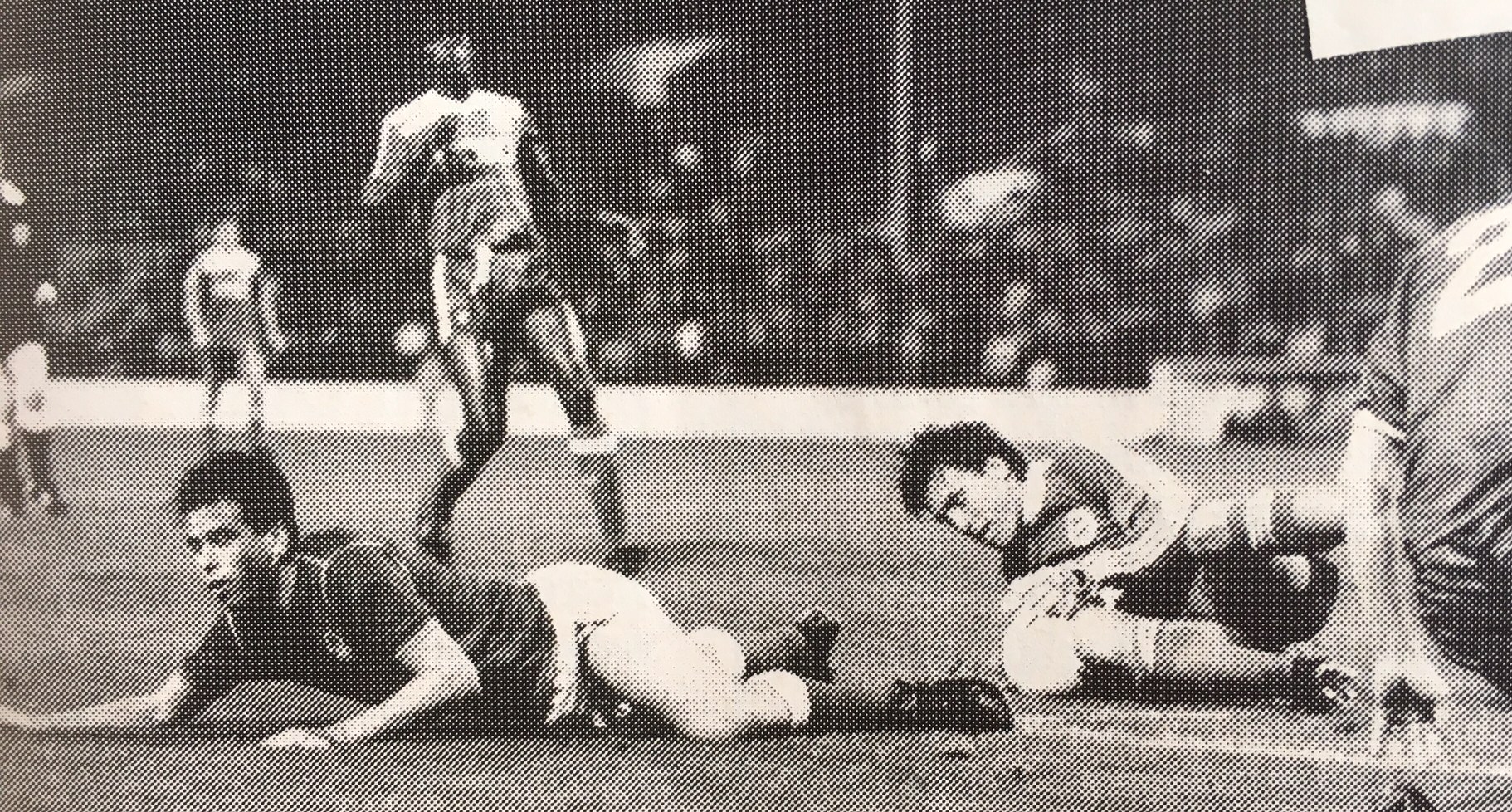
'keeper Gatt - webb on ground

Makeshift ‘keeper Gatting claims the ball with Nottingham Forest’s Neil Webb grounded

“All the players at the time felt they were good enough to stay up, but it didn’t happen and we gave a lot of silly goals away.

“The whole club was unsettled, too, but things became better again. Getting back into the Second Division was a boost for everybody.”

Gatting was ever-present in the 1987-88 promotion-winning campaign, even though in July 1987 Lloyd had given him a free transfer! The defender had other ideas and managed to play his way back into contention to such an extent that he ended up the season as captain, taking over from Doug Rougvie.

“It was nice to know I was wanted, particularly after relegation the year before,” he said.

Having made his 200th league appearance for the Albion against Chester on 12 December 1987, it was no surprise he viewed with some relish a FA Cup tie against his old club.

“Quite honestly, as a Third Division club, we don’t expect to go all the way, but I think we have the ability to scrape a result against Arsenal,” he said. “It gives me the opportunity to renew old friendships with Kenny Sansom, David O’Leary, Graham Rix and Paul Davis who were all members of the Arsenal staff when I was there.”

Albion pushed the Gunners all the way in front of a packed house and Garry Nelson rifled a memorable goal, but Arsenal prevailed 2-1.

Evening Argus Albion reporter John Vinicombe profiled Gatting warmly in a piece produced for a pre-season supplement ahead of the 1989-90 season, headlined “ice-cool Gatt”.

He described Gatting as “surely one of the most laid-back of individuals, whose natural personality is quiet and reserved”.

The report continued: “He shuns being the centre of attention, but the fact that he stays cool, even in nerve-wracking situations, is an important consideration when assessing leadership qualities.

“Leadership runs in the family, and many would say that older brother Mike was unlucky to lose the captaincy of England’s cricket team.”

On another occasion, Gatting said of his brother: “I’m proud of what Mike has achieved and I keep up to date with the latest news and enjoy watching the highlights on TV.

“We are close, we always have been, but the funny thing is I hardly ever go to see Mike play. When I do go, he never seems to make runs. So I think it’s best to stay at home and watch the Tests on TV.”

As mentioned previously, Steve was a good batsman in his own right and played for Middlesex Second XI. In Sussex, he enjoyed a summer tour with Brighton Brunswick as well as making runs for Preston Nomads.

Vincombe wrote: “Gatting occupies a special niche in the affections of Albion regulars. They see in him a thoroughly decent and well-behaved person whose standards on and off the field are high. Albion have been good to him and Gatting, after not a few periods of uncertainty, has been good for Albion.”

Gatting for his part said: “I’ve seen a lot of changes since arriving here, and I’ve played under five managers who have all had different ideas.”

testimonialA cut glass decanter and glasses from chairman Dudley Sizen at Gatting’s testimonial

He was granted a testimonial for his long service and a curtain-raiser to his 10th season with the club saw Albion draw 2-2 with Arsenal in front of a crowd of 5,517. The Gunners included their recent big money signings David Seaman, Andy Linighan and Anders Limpar.

Injury niggles continued to plague him towards the end of his 10 years at the club but he worked his way back into the side in 1990-91, slotting in at left-back and culminating in that 1991 play-off final against Notts County at Wembley.

Long after all the other members of the Brighton 1983 Cup Final side had departed, Gatting was still pulling on the stripes, and, but for those injuries, he would surely have made many more appearances than the 366 + three as sub (21 goals) that stand as his record.

Given another free transfer in 1991, he departed for Second Division Charlton Athletic along with Garry Nelson, linking up with former Albion teammate Alan Curbishley who at the time was joint manager with Steve Gritt.

Charlton only narrowly missed out on a play-off place while Albion were relegated!

By the end of the following season, when Gatting retired, he had played a total of 64 games for the Addicks.

He then turned his attention to coaching and spent seven years at independent school Christ’s Hospital, Horsham, before returning to Arsenal in 2007 to work as an academy coach. Gatting was working as Arsenal’s under-23s coach until May 2018 when he and his assistant Carl Laraman were suspended after accusations of bullying were made against them, and neither returned to their roles.

Gatting subsequently joined League Two Stevenage as assistant coach under Dino Maamria just before Christmas 2018 but he left the Hertfordshire club shortly before the end of the 2018-19 season.

• There have not been many father-son combos during my time watching Albion (Gerry and Darragh Ryan were the first that spring to mind) but it must have given Steve great pride to see his son Joe make it through the youth ranks at Brighton and go on to play for the first team. He made 44 appearances and I recall an away game at Carrow Road when Steve and Uncle Mike were both watching the youngster in Albion’s forward line. Eventually, after he left the Seagulls in 2008, he turned to cricket and was good enough to play at county level for Sussex and Hampshire.