BRIGHTON travel to Newcastle in the fifth round of the FA Cup with the backdrop of having won there twice in the competition in the 1980s – not to mention a 1-0 win in the Premier League this season.
The 1-0 third round win at St. James’ Park in January 1983 set Albion en route to that season’s FA Cup final – but Toon supporters of that era blamed the game’s unusually-named referee, Trelford Mills, from Barnsley, for their exit.
Think I’m exaggerating? Newcastle fans’ website themag.co.uk had this to say ahead of another FA Cup game between the two sides in 2013: “It is doubtful that anything could match the anger and frustration that many of us felt nearly thirty years ago.
“Wednesday 12 January 1983 will always be synonymous with the name Trelford Mills, etched into the consciousness of an entire generation of Newcastle fans, convinced he cheated us out of the FA Cup. Well, a chance of the fourth round anyway!”
Neil Smillie, goalscorer Peter Ward, Steve Gatting, Chris Ramsey and Andy Ritchie celebrate after the 1983 win.
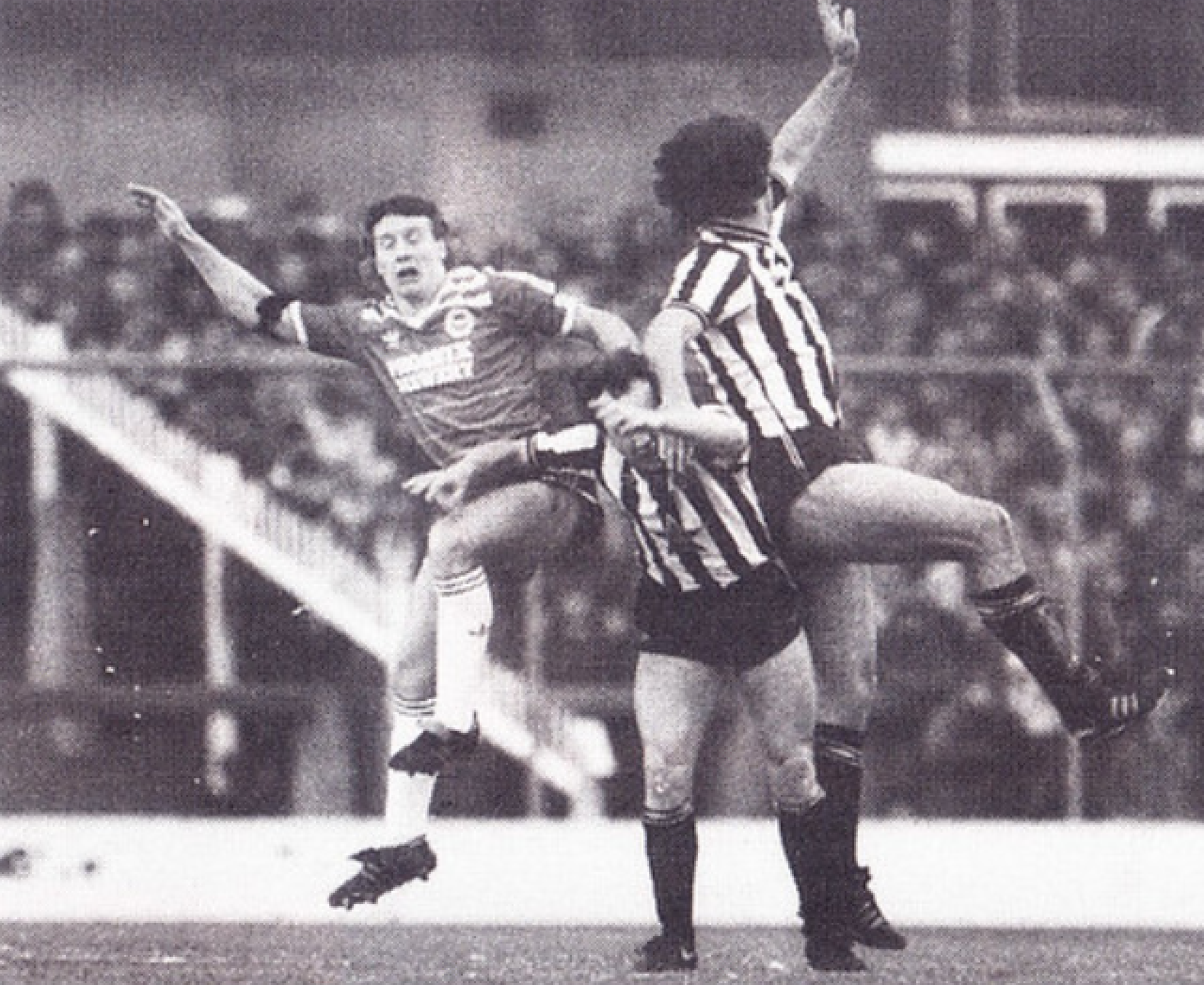
Mills disallowed two Newcastle ‘goals’ while Albion nicked it courtesy of a penalty area pounce by Peter Ward, back at the club on loan from Nottingham Forest, on 62 minutes. They did it without captain Steve Foster who was suspended (as, of course, he would be for the final too).
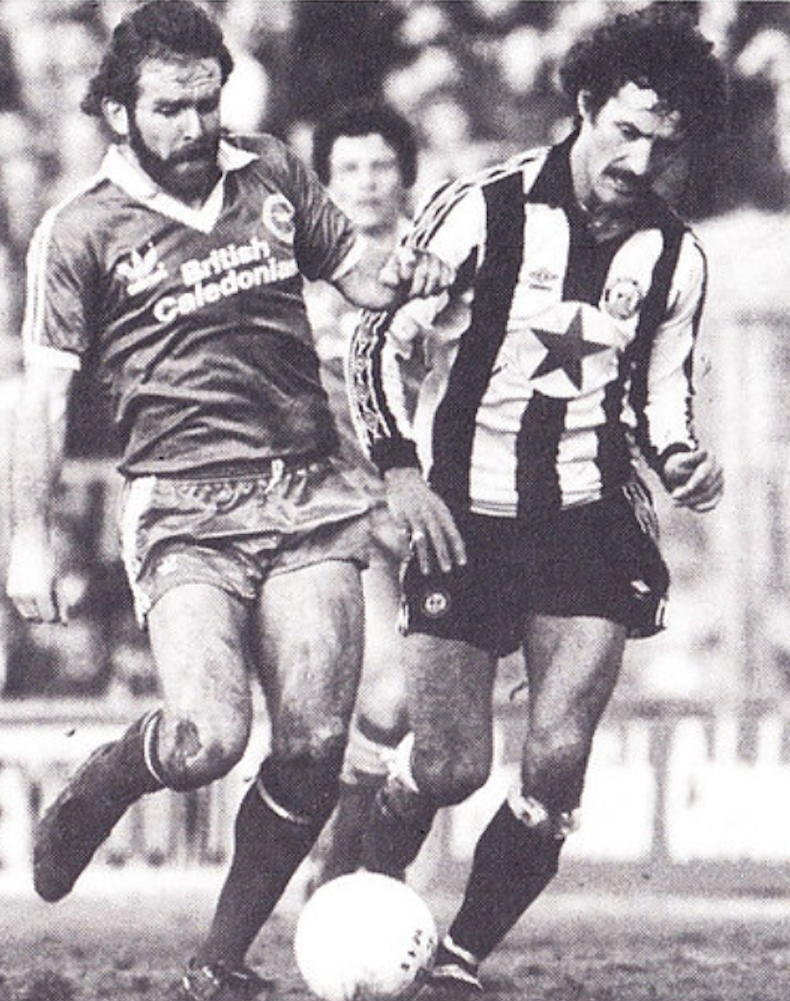
The game was a third round replay four days after the sides drew 1-1 at the Goldstone Ground when Andy Ritchie’s mis-hit shot in the 56th minute put Albion ahead and Terry McDermott (below right, with Tony Grealish) equalised on 77 minutes.
Even though the Magpies were in the old Division Two at the time, they had Kevin Keegan and Chris Waddle in their line-up, and they fully expected to win because Brighton hadn’t previously won away that season.
Albion, competing in the top division for the fourth season in a row, with joint caretaker managers Jimmy Melia and George Aitken in charge, had goalkeeper Graham Moseley to thank for some heroic stops to keep them in the first game.
The replay at St. James’s Park was in front of a typically noisy crowd of 32,687 and Newcastle did everything but score: they had shots cleared off the line and hit the woodwork and, when they thought they’d scored, Mr Mills disallowed them – twice!
In the meantime, Ward made the most of a counter attack to put the Seagulls ahead. It turned out to be the last goal he scored for the Albion, although he was in the side that pulled off a shock 2-1 win at Anfield to knock out Liverpool in the fifth round.
“I remember Brighton went one up, then Imre Varadi went through on goal, but quite clearly controlled the ball with his wrist,” said Mills.
“I think the Brighton keeper realised this, just as most of the players did, and let the ball go into the goal just to waste a bit of time. I just restarted with a free kick. I have spoken to Imre since. I think he accepts my version now.”
Mills continued: “Jeff Clarke managed to win a ball in the penalty area, but only because he had his arm around the defender’s neck. Keegan bundled the ball into the goal, but I had blown up a few seconds before it went in.
“Keegan did his Mick Channon cartwheel arm in front of the Gallowgate end, but I just jogged across to where I wanted the free kick taken from and indicated as to why I had disallowed the goal.”
Mills also recalled how he and his fellow officials needed a police escort away from the ground after the match. “When we sat in the dressing room after the match, I remember chatting to one of my linesmen, John Morley, when this police officer turns up,” he said. The copper said to him: “You’d better hang on here a while, Trelford. There are 2,000 Geordies outside and they all want your autograph!”
Three years later, the status of the teams had been reversed with Newcastle promoted back to the top division in 1984 and Albion back in the second tier, relegated the same year as the cup final appearance.
While Keegan had retired, Willie McFaul’s side had a young Paul Gascoigne in midfield and Peter Beardsley in the forward line. Clarke, who’d played four games on loan at Brighton two years earlier, was still in the centre of United’s defence and it was his foul on Terry Connor in the first minute of the game that saw Albion take a shock early lead.
Danny Wilson floated in a free kick from 30 yards out on the right which found centre back Eric Young on the far edge of the penalty box. He hooked the ball into the Newcastle net with only 50 seconds on the clock!
Albion, wearing their change strip of red, had to endure a relentless series of attacks (Toon had 23 corners to Albion’s one!) and Perry Digweed in Brighton’s goal put in a man of the match performance between the sticks, notable saves keeping out shots from John Bailey, Beardsley and Billy Whitehurst.
With five minutes left of the game, against the run of play, a quick throw-in by Graham Pearce found Dean Saunders and he rifled home an unstoppable shot past Martin Thomas for his 10th goal of the season.
Manager Chris Cattlin summed up afterwards: “It was really tough and we had a little luck on our side, but to go away to a club who have won the cup no fewer than six times and come away winners was quite an achievement.
“With the Geordie fervour up there the noise their supporters created was something special, but our efforts speak volumes for everyone connected with our club.”
There would be no fairytale ending that season, though, with Albion being dumped out of the cup 2-0 by Southampton in a quarter-final tie at the Goldstone Ground.
John Barnes and Steve Harper were on pundit duty for ESPN for the 2012 match
Younger fans will doubtless recall two more recent FA Cup meetings between Brighton and Newcastle, in consecutive seasons during Gus Poyet’s reign, at the Amex in 2012 and 2013.
The Championship Seagulls beat the Premier League Magpies on both occasions – 1-0 in the fourth round in 2012 and 2-0 in the third round the following year.
Getting to grips with Will Buckley
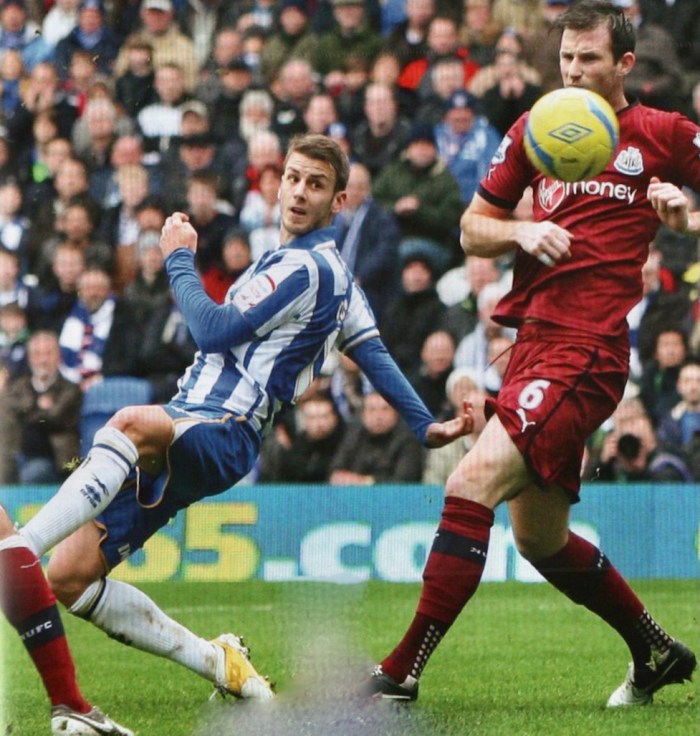
A Mike Williamson own goal was enough to give Albion the edge over Alan Pardew’s side in the first of those games; Will Buckley’s 76th minute shot deflecting off the defender and looping over Tim Krul for the only goal of the game. Leon Best, who would later have a torrid time at Brighton, missed two good chances for the visitors.
The 2013 fixture was a more convincing win for Brighton against a weakened Newcastle side who had Shola Ameobi sent off. Andrea Orlandi gave Albion the lead on the half-hour mark and substitute Will Hoskins added a second late on.
Andrea Orlandi hooks in Albion’s first goal
Praise for Liam Bridcutt
“This was an impressive victory for Brighton, a result that will add to the optimism that surrounds this upwardly mobile club and strengthen their resolve to host Newcastle in next season’s Premier League,” wrote Ben Smith, for BBC Sport. “The cool passing game of Liam Bridcutt at the heart of their midfield was tremendous.”
The reporter added: “Sharper to the ball, and swifter to make use of it, the Seagulls toyed with their more celebrated opponents for much of the opening 45 minutes, producing some stylish attacking moves while tackling, battling and dominating territory in their uncomplicated and effective way.”
TRANSFER makeweight Matt Thornhill fell foul of managerial changes and debilitating injury which together brought a promising professional playing career to an early end.
Brighton’s former assistant manager Colin Calderwood believed in the midfielder but his successor as Nottingham Forest manager, Billy Davies, didn’t.
Surplus to requirements at the City Ground, Thornhill was Russell Slade’s seventh signing of the summer in 2009, heading to Sussex as part of the deal that saw Albion academy graduate Joel Lynch move to Forest for £200,000 (having spent the previous season on loan there).
Thornhill initially joined on a six-month loan and he was full of optimism, telling the Argus: “They (Brighton) are looking to go for it this season and hopefully I can be a part of that team and help them strive for the top five of the table and the play-offs.
“My target is to play as many games as I can for Brighton and see what happens. If everything goes well then I could extend it to a year, but we’ll just see.”
Although he started the first game of the season at home to Walsall, he was subbed off at half-time as the Seagulls lost 1-0. Three days later, he was in the side beaten 3-0 by Swansea City in the League Cup (Andrea Orlandi was playing for the Swans and Stephen Dobbie scored his first two goals for City in the Liberty Stadium clash).
But it was another two months before he started another game. Other new arrivals at Withdean (like big money signing Elliott Bennett) at the start of that 2009-10 season and niggling injuries limited Thornhill’s involvement, and, at the end of October, Slade was sacked and replaced by Gus Poyet.
Thornhill, who turned 21 during his time with the Seagulls, only started five games, made four appearances off the bench, and was an unused sub for eight matches.
Poyet had his own ideas about the squad he wanted and swiftly Thornhill and fellow Forest loanee midfielder Arron Davies, who’d played under Slade at Yeovil, were sent back to the City Ground.
Born in Nottingham on 11 October 1988, Thornhill was only eight when he was first offered the chance to sign for Forest, but his father said he was too young.
They went back in for him when he was 14, and, despite other interest from Derby County and Notts County, as a Forest fan it was an easy decision to make.
He was initially coached by former Forest defender Chris Fairclough. When he left school at 16, he became a scholar under John Pemberton, and signed a pro contract a year later.
Calderwood gave him his first team debut at Chester City in the Carling Cup in August 2007, a game Forest won on penalties.
Thornhill made five starts and 11 sub appearances across that 2007-08 season as Forest went up from League One and he scored his first goal for the club in a 4-0 win over Leyton Orient. He featured in 28 league and cup games (16 starts, 12 from the bench) on their return to the Championship.
“Calderwood was really good,” said Thornhill in an extended interview with the Nottingham Evening Post in 2018. “He came and watched the young lads and gave us confidence,” he told reporter Matt Davies.
“He said that if you were good enough, he’d give you a chance with the first team. Some managers don’t go with the academy players.
“They bring players they know in. I saw Lewis McGugan get his chance though and that spurred me on.
“When I got in the team I never thought far ahead. I took every week as it came. I knew the manager believed in me.
“I tried to make the most of it. Playing for Forest meant a lot to me and my family.
“It was massive. I knew growing up how big the club was.”
Thornhill was still only 19 when he played in the biggest game of his career, a 3-0 FA Cup third round win at Manchester City in January 2009.
Forest were floundering at the wrong end of the Championship and had just sacked Calderwood. Pemberton took caretaker charge and it was the biggest cup upset of the round when Forest beat the newly-enriched City so convincingly.
“City were spending loads of money,” said Thornhill. “We had nothing to lose, but wanted to impress the new manager (Billy Davies was watching from the stands).
“I should have scored. I shanked it to Robert Earnshaw and he scored in the end.”
Two days later, Davies took over as manager and Thornhill said he made it quite clear he was going to send out on loan all the young lads who did well under Calderwood.
After his foreshortened Albion loan spell came to an end, he then joined League Two Cheltenham Town on a similar basis, helping them to narrowly avoid dropping out of the league.
Back at Forest for the new season, Thornhill thought he had changed Davies’ opinion, telling the Nottingham Evening Post: “I had a really good pre-season. He told me I’d done well and that I’d be in his plans for the season.
“I was buzzing. The first league game he named me on the bench.”
In the second game of the season, he was a starter in a 2-1 Carling Cup defeat at Bradford City
“I scored and felt I did really well,” said Thornhill. It turned out to be his last game for the club.
“I’d have loved to have got the opportunities Billy said he would give me but there was nothing I could do about it,” he said.
“It annoyed me that he told me I was in his plans and never got the chance when I was at my fittest.”
By Christmas 2010, he was told he had no future at Forest. And he never played in the Football League again.
Former boss Calderwood took him to Scottish Premier League Hibernian in January 2011, but after only nine matches for the Edinburgh side he damaged medial knee ligaments and missed the rest of the season.
Thornhill told Davies of the Post: “I believed in myself still when Forest let me go and Colin Calderwood gave me another chance at Hibs.”
As well as the knee issue, Thornhill contracted a stomach condition which kept him out for eight months. By the time he was fit again, Calderwood had been sacked.
New boss Pat Fenlon did not see a role for him; he was sent to train with the youth team, and was eventually released after making only 15 appearances for Hibs.
Still only 23, he joined Northern Premier League side Buxton (‘The Bucks’) while hoping he would get the chance to resurrect his league career. It never came and instead, after two years at Buxton, he moved on (left) to Barnsley-based Shaw Lane Aquaforce ‘The Ducks’), whose head coach Craig Elliott said: “It is a massive coup for the club.”
Elliott told Non League Yorkshire: “He’s one I didn’t think we would get as a couple of other clubs were after him, but I convinced him to be part of our project. “He has a fantastic CV and he did well at Buxton last season. Everyone at the club is pleased to have him.”
He helped the club to win promotion to the Northern Premier League Division One South in 2014-15 and was club captain the following season when they reached the divisional play-off final, only to lose 3-1 to Coalville Town.
He then moved up two levels in the football pyramid and spent a season with National League North side Gainsborough Trinity, where he was appointed captain.
The player told Non League Yorkshire: “I am really pleased to be a part of what (Gainsborough manager) Dominic (Roma) is building at Trinity this season and am glad to be signed early, so I can get a good pre-season under my belt. I really feel I can help the team and channel my experience in a positive way.”
In 2017, Thornhill switched to his local club Basford United and he is still playing for the Northern Premier League Premier Division outfit.
A key figure for Basford United
When he signed a new two-year deal with Basford in 2021, then manager Steve Chettle (himself a former Forest player) told the Hucknall Dispatch: “It is vitally important that we set out to continue where we have been for the last two [incomplete] seasons and Matt has been a massive part of that, and he has a been a key figure in the success of this club in the last five years.
“His attitude to all parts of the games and training is an example to all and his contribution in assists and goals over the years has been fantastic. He is a fans favourite and for the captain to re-sign really shows our intentions.”
Chairman Chris Munroe added: “Matt has shown the club, Steve and myself a great deal of loyalty over the years and my dream is that he finishes his playing career with us at Basford, which is now a real possibility.
“There is nothing better for our fans than to see Matt scoring goals or contributing numerous assists and we hope that continues in good supply moving forward as we enter an exciting phase for the football club.”
In that 2018 interview with the Nottingham Evening Post, Thornhill said: “I never really got back where I wanted. I started so well and since Billy let me go I’ve been hampered by injuries.
“I do think I’d have kicked on but for injuries. I might still have been a pro now. It’s football though. It’s what can happen.”
The article said Thornhill was working for a company supplying paint to the car repairs industry and he said philosophically: “My job now is different to football obviously. You’ve got to do what you’ve got to do to get by in life.
“Anyone that knows me knows I get on with things. I see it that I was lucky to play for Forest.
“I was lucky to play for a club that big. There’s no point having regrets and always looking back.”
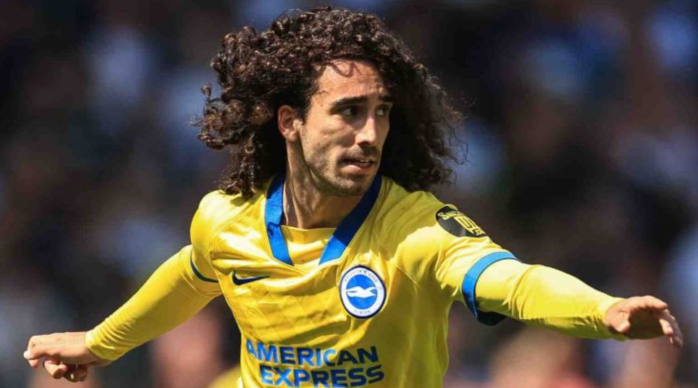
MARC CUCURELLA has got used to going from hero to zero in the eyes of fickle football fans.
A revelation in his one and only season playing for Brighton, he scored a stunning goal in a 4-0 thrashing of Manchester United and was crowned both Players’ Player and Player of the Season.
But he pushed for a transfer only one year into a five-year contract and, although he didn’t get his hoped-for move to Manchester City, joined Chelsea for £62m.
While his first few months at Stamford Bridge were tough on and off the pitch, he finished the season as a regular in Mauricio Pochettino’s side and then went on to bigger and better things for his country.
He became a cult hero for his impressive performances at left-back during Spain’s winning run to claim the European Championship in July.
Euro winners: Cucurella with Nico Williams
Capping an excellent tournament by supplying the inch-perfect pass for Mikel Oyarzabal’s late winner, Cucurella was justified in having a dig at pundit Gary Neville who’d previously said the defender was “probably one of the reasons why Spain could not go all the way” in the tournament.
“We went all the way, Gary. Thanks for your support,” was Cucurella’s social media retort after the 2-1 win over England rounded off a tournament that he might not have been involved in if Valencia’s Jose Gaya and Barcelona’s Alejandro Balde hadn’t been injured.
The left-back with the “massive” hair also let his feet do the talking in response to German fans who booed his every touch of the ball in the semi-final and final because they reckoned he was guilty of a handball in the penalty area against the host nation but a penalty wasn’t given.
“I did not care too much, but at the same time, it felt a bit sad that some people came to that game just to boo a single player,” Cucurella told The Athletic. “Some people wasted tickets that could have gone to fans who would have really enjoyed the match.”
But, he pointed out, it wasn’t a new experience because Brighton fans, angered by the manner of his big money departure from the club after only one season, reacted similarly when he returned to the Amex playing for Chelsea.
“It was another night when the boos were really loud every time I touched the ball, so I got used to it,” he said. “The first time I went through this… I won’t say it’s an unbearable feeling but it’s unpleasant. Now I’m more used to it.”
Some players move on stylishly, others go about it in what is perceived to be the wrong way – thus incurring the opprobrium of supporters who remain loyal to the club.
A sizeable enough contingent of Albion fans were aggrieved by the manner of Cucurella’s departure from the club to vent spleen whenever he touched the ball as a Chelsea player back at the Amex.
It was a toss-up between Cucurella and Graham Potter as to who was the bigger pantomime villain when Chelsea were thumped 4-1 at Falmer in October 2022. “The Spaniard was booed and jeered relentlessly for over an hour on his first game at Brighton since his transfer,” The Athletic noted.
The online sports news outlet continued: “According to Whoscored, Cucurella’s defensive output included no tackles, no interceptions and just one clearance.”
They noted it was the fourth time in five starts that Cucurella had been taken off early, and said: “This change would have hurt the most. The taunts grew louder as he made his way off the pitch and the look on his face spoke volumes.”
Things might not have been going well for him at the time, but Potter was not unduly concerned and said: “He’s a resilient character, he’s a really good person. Sometimes when you move clubs it goes really well, and sometimes it can be a little bit of an up-and-down period. Marc’s a little bit up and down but he’s a top player and he will show his quality.”
Cucurella was an unused sub when Albion clinched the double over the Londoners that season with a 2-1 win at Stamford Bridge. But the next time he faced his old teammates, he demonstrated a level of commitment that in some quarters earned him the man of the match accolade.
When Potter’s successor Mauricio Pochettino selected him at right-back in the Carabao Cup against Brighton in September 2023, previously critical Chelsea supporters couldn’t believe what they saw as the home side edged the match 1-0. One said: “Pocketed Mitoma and Joao Pedro . What a shift for him.”
Agreeing he was ‘man of the match’, another said: “Cucurella was absolutely brilliant in that second half, playing that well at right-back was not something that I expected, fair play to him, maybe he should be given more opportunities.”
Arguably, he answered Brighton supporters’ criticism even more effectively – in a similar style to what he did in the Euros final v England – on 15 May 2024 at the Amex when his pinpoint cross in the 34th minute was comprehensively buried in the back of Albion’s net by Cole Palmer’s head.
But let’s remember a much happier time, when the Spaniard was the toast of the Albion faithful with a quite magnificent contribution to that 4-0 thumping of Manchester United.
Muhammad Butt on squawka.com positively purred about Cucurella’s performance declaring his man of the match accolade as “a richly deserved reward for a player who could truly ascend to any height in the world game”.
The writer’s colourful report observed:“What Cucurella did to poor Diogo Dalot all afternoon recalled The Avengers when Hulk whipped Loki around like a caveman trying to dry a wet sock on some rocks.
“Cucurella has the instantly iconic look of a comic book hero, a wiry frame with a face that is all prominent eyebrows and colossal curly hair giving him an instantly iconic silhouette.
“And he plays with the kind of ceaseless energy that one would attribute to those spandex-adorned heroes for whom stamina never seems to be an issue.”
Warming to his theme, Butt continued: “Cucurella grabbed the game by the scruff of the neck and was the dominant force on the pitch. Even when he played no part in the goals, the overall pressure that was weighing on United and keeping them pinned back in their own half was born of the Catalan’s drive and determination.
‘Such was Cucurella’s power against United that when he scored Brighton’s second goal, arriving late in the box like some left-sided Frank Lampard to lash the ball home violently at the near-post leaving David de Gea in the early stages of a Bee Gees tribute dance, it wasn’t even surprising. It made perfect sense, as though he had been doing it all season when, in fact, it was his first goal of the campaign.”
Sadly for Brighton fans, that showing seemed to be like an audition for a bigger and better stage and he had only two more matches in Albion’s colours.
Born in the Catalan village of Allela on 22 July 1998, he played futsal with his local club before linking up with the junior sides of Espanyol, where he was made captain. From there, at the age of 14, he joined Catalan giants Barcelona in 201
A rare appearance for Barcelona
“Barcelona were always my team,” he told the Albion matchday programme. “I liked the style of play and the big players the club always attracted.”
He went on: “For me to join such a special club, at such a special time in its history, was a proud moment for my family.”
He made his debut for the club’s B team at the age of 18 but also had the chance to train with the stars of the first team.
“While I was still in the academy, I would sometimes train with Messi or Neymar, which was really exciting,” he said. “I’d train with Busquets, Jordi Alba, sometimes Suarez, and it was scary the first time I stepped up.
“I was very nervous, training alongside players I’d only seen on TV or on the PlayStation, but these are the moments you remember for the rest of your life.”
He only made one brief substitute appearance for the Barcelona first team, going on for Lucas Digne in a 3-0 Copa del Rey win at Real Murcia in October 2017, and he said: “It was a very nice moment for me but it was a shame I never got to play for the team at Camp Nou.”
Cucurella got to play in La Liga on loan at Eibar (in 2018-19) and Getafe (in 2019-2020) before moving permanently to Getafe for the 2020-21 season.
When Albion signed him, fellow former Barca B graduate and ex-Albion midfielder Andrea Orlandi, now a TV pundit, told the Albion matchday programme: “Marc is a super-energetic player whose main assets are his energy, attitude and intensity.
“He was in the top three in every physical study in La Liga for the last three seasons and can’t play without giving it 100 per cent. He has the perfect attributes to be a success in the Premier League.”
Perhaps it should be no surprise that he shone for Spain at the 2024 Euros because he had been selected by his country at almost every age group level and won a silver medal as part of the under-23 side at the 2020 Olympic Games.
His first senior appearance was in a friendly against Lithuania in June 2021 when he captained the side to a 4-0 win. A second cap followed in a 3-3 draw with Brazil at the Bernabeu in Madrid in March 2024. The run through to the final took his caps tally to 10.
In an in-depth interview with Pol Ballus for The Athletic in July 2024, Cucurella opened up on the turbulence he had suffered after making the move to Chelsea. “Until the summer of 2022, my football career had been great: a constant progression, always upwards with no setbacks. Then I arrived at a club where the expectations were so, so high.
“Until then, I had played at clubs where every victory felt really special, where every point is celebrated. Then you go to Chelsea, where you win a game because that’s what you have to do. There is no time to chill or enjoy.”
Not only was managerial change disruptive, things didn’t go well for him off the field. “I spent the first two months living in a hotel with my family, then soon after we found a place to live we had thieves breaking into our home. After this, I spent two days hospitalised for a virus. I lost a lot of weight and had to start from scratch to get in shape again. It wasn’t easy to come back. The team couldn’t find their way on the pitch, either.”
Cucurella said fans had expectations of him because of the size of the fee Chelsea played Brighton but he pointed out: “People expect that, with certain price tags, you need to be a machine. Sometimes it’s difficult to understand that we are normal people who have our own problems off the pitch. We have worse and better phases in our lives.”
He worked with a psychologist to try to help him through his struggles, admitting: “Confidence is the most important thing. You miss it when you struggle, but it flows when you thrive. I’ve worked a lot on this, to stabilise those moments.”
Certain he could improve, he knuckled down in training and eventually seized his chance when it was given.
Towards the end of the 2023-24 season, Pochettino tinkered with Chelsea’s formation and successfully deployed Cucurella in a midfield role, drawing praise from observers such as Nick Purewal in The Standard, who said: “Cucurella’s ability in possession, to act as an auxiliary pivot and progress the ball has transformed Chelsea.”
The player himself had some fun on social media in the summer (right) when, with a nod to the chant Brighton fans conjured up during his time at the Amex, he filmed himself with a bottle of Estrella and sang the song… “he drinks Estrella, eats paella…” but his normally “massive” hair was neatly matted down!
WHILE I’ve not found a direct link between Brighton and Europa League last 16 opponents AS Roma, there is an indirect one via Roberto De Zerbi’s assistant, Andrea Maldera.
Maldera’s uncle Aldo – a left-sided full-back or midfielder who was in the Italy squad at the 1978 World Cup – spent three years playing for Roma between 1982 and 1985.
Aldo Maldera
The majority of his career was spent at AC Milan but as well as Roma he also played for Bologna and Fiorentina and won 10 caps for his country.
Maldera won Serie A with them in 1983 – only the second time they’d won the Scudetto with a 41-year gap in between.
Nicknamed the Giallorossi after the club’s kit colour of carmine red and golden yellow (that’s how it is described!), the club’s official history gives Aldo a special mention.
“The team put together by Nils Liedholm turned out to be a perfect machine: an impenetrable defence with pillars such as Tancredi, Vierchowod, Nela and Maldera, an admirable midfield with Di Bartolomei, Falcao, Ancelotti and Prohaska and an explosive attack with striker Pruzzo and winger Bruno Conti.”
Before you ask, yes, that was Carlo Ancelotti, later a successful manager with the likes of AC Milan, Chelsea, Paris Saint-Germain, Real Madrid and Bayern Munich.
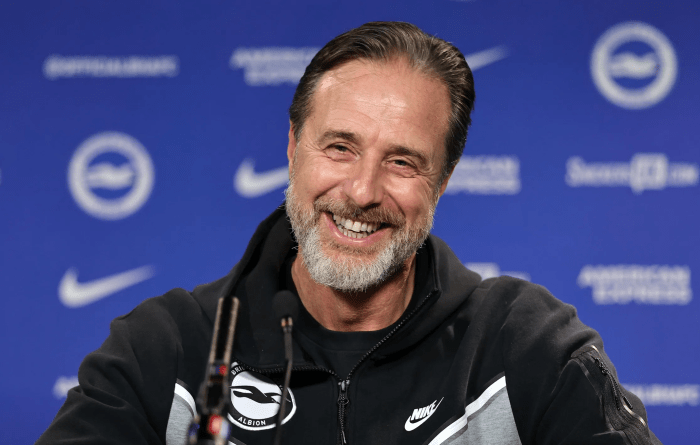
Brighton’s likeable assistant manager (pictured above), who was thrust into the media spotlight in early February 2024 when De Zerbi was absent following dental surgery, didn’t follow in Aldo’s playing footsteps, nor his dad Luigi, a centre-back who won the European Cup with Milan in 1969. Another uncle, Attilio, was also a professional at Milan, and later coached the club’s youth players.
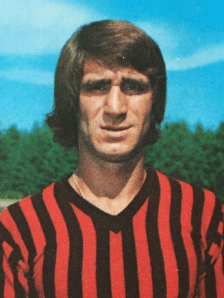
Luigi Maldera
Attilio Maldera
Born in Milan on 18 May 1971, although young Andrea went through Milan’s academy system, his playing days were in lower leagues of Italian football with Leffe.
It was as a coach that he found his niche, starting out with Milan’s under-19s and then stepping up to be technical coach for the first team.
He worked under Massimiliano Allegri when they won the league title in 2010-11 and the Italian Supercup. And De Zerbi need look no further than his no.2 for someone with experience of European football because Maldera was part of Milan’s set-up when they reached the quarter-finals of the Champions League in 2012, where they lost to Barcelona. They’d beaten Arsenal 4-3 over two legs in the previous knock-out round.
Maldera reverted to head of video analysis for the under-19s after Filippo Inzaghi took charge in 2014 and the following year linked up with former Milan and Chelsea striker Andriy Shevchenko as head of analysis for the Ukraine national team.
It was in Ukraine that De Zerbi and Maldera talked together a lot about Ukrainian players and the assistant explained a little more of their background ahead of Brighton’s February game versus Spurs.
“My father was his coach when Roberto was in the academy of AC Milan and I worked for a lot of seasons at AC Milan and after that I worked with the national team of Ukraine.
“We spent a lot of time on the phone talking tactics because for me he’s one of the best coaches in this moment. When he was a coach at Foggia or Sassuolo, I was working at AC Milan and we spoke a lot about football and I studied his idea a lot.
“When he went to Shakthar Donetsk we spoke about the Ukrainian players and we always had a big discussion about football. Two years ago he changed some people on his technical staff, he called me and I was very happy.
Andrea Maldera relishing his role working alongside Roberto DeZerbi
“For me it’s a dream. I am 53 but I am young for a second time with him and working in the Premier League. Roberto he has a big energy, a big passion, he involves you a lot. I become younger with him.”
Another big fan of De Zerbi is former Brighton player Andrea Orlandi, who first saw the head coach at work when he was in charge of Italian third tier side Foggia. Although born in Barcelona, Orlandi’s parents were both Italian: a Juventus-supporting dad and an AC Milan-supporting mum!
He was winding down his playing career in Italy’s Serie B with Novara when he first saw De Zerbi taking training sessions. He told the Albion podcast in November 2023: “When you saw the clips of his Foggia team play, you knew the coach was going to be amazing. Then he went to Benevento and Sassuolo. In Serie A he was able to play a style of football that they would usually say no to – “this isn’t how you should play” – attacking and looking after the ball.
“In Italy, 80 per cent of the teams play the same style; the same pattern of play ‘give the ball to the wing-back and he will run…’ every team does the same.
“By being provocative at times is how he became successful at Sassuolo.”
There can be little doubt De Zerbi will feel he has an incentive to get one over on Roma because in 2021 the Giallorossi pipped his eighth-placed Sassuolo side to UEFA Conference League qualification on a narrow two-goal difference; both sides having finished the Serie A season on 62 points – six points behind sixth-placed Lazio.
Continuing his appreciation of Albion’s head coach, Orlandi said: “He’s a fantastic motivator and coach, he’s the next big thing in football. It’s great to have him at the club and hopefully Albion will be able to keep him for a long while. He’s impressed me, but he has probably gone beyond my early expectations.”
De Zerbi’s qualities as a coach are something Orlandi says were a part of the Italian’s makeup as a player. “He as a player was a number ten, he was left-footed player and he had this magic about him, they would call him anarchic. Managers wouldn’t play him because ‘he doesn’t fit the system’ and he probably thought, ‘well, I am going to be a coach and I am going to be different.’
“He was different as a footballer, he has the same magic and charisma in coaching.”
Although De Zerbi was on AC Milan’s books as a young player, the majority of his playing days were spent with lower league clubs in different regions of Italy.
WES FOGDEN is still playing the game he loves despite injuries blighting much of a career that might never have got off the ground.
Being told he might not play again when undergoing an operation to remove a benign tumour on his spine as an 18-year-old at Brighton made him even more determined to enjoy every moment of being able to step out onto a football pitch.
Although he eventually broke through to Albion’s first team, it was at AFC Bournemouth that he got regular league football as the Cherries began their rise through the football pyramid.
Brighton-born Fogden has stayed in Dorset and now plays part-time for Poole Town while working as head of football for Branksome-based Elite Skills Arena, a business owned by former Bournemouth chairman Eddie Mitchell.
“Bearing in mind the amount of time injured, I’ve missed out on about five seasons of football,” Fogden told The News, Portsmouth’s Neil Allen in an interview published on 1 December 2022.
“I’ve had pretty much every injury going. Cruciate ligament damage to both knees, hamstrings, ankles, I’ve broken my nose four or five times, I fractured my cheekbone when going up for a header in the FA Youth Cup against Andy Carroll.
“There was even the time when the ball smacked me in the private regions, requiring an operation and putting me out for four or five weeks. A real variety of injuries.
“But I wouldn’t have it any other way. As long as I’m fit, I want to be playing every game, especially after what happened at Brighton.”
Fogden was never short of admirers for the way he bounced back from the devastating blow of being told he might never be able to play football again.
Tommy Elphick, who also went through Brighton’s youth ranks before moving to Bournemouth, said: “One thing with Wes is that you know he is going to dig in for you. He is a very good player; a footballer who can play at right-back, right wing or in central midfield.”
The player himself told the Albion matchday programme: “When I was told that I might not play again was the worst moment of my life but to come through it is a great achievement.”
After surgery to remove the tumour from his spine was thankfully successful, Fogden had to spend three months in a body cast before slowly recovering throughout the 2006-07 season.
He was grateful to the support of physio Malcolm Stuart, fitness coach Matt (‘Stretch’) Miller and physio Kim Eaton in aiding his return to fitness.
Albion sent him out on loan to Dorchester Town to gain experience but when Dean Wilkins’ squad was hit by ‘flu, the midfielder, who had previously been part of Wilkins’ successful Albion youth team, was recalled.
He made his first team debut at right-back in a Johnstone’s Paint Trophy tie against Swansea City when he was up against future Albion player Andrea Orlandi.
Fogden kept the shirt for the following Saturday’s league game at Oldham but was unfortunate to be sacrificed early in a reshuffle Wilkins was forced to make after wantaway Dean Hammond had got himself sent off early in the game. Nathan Elder went on as a substitute and scored a last-ditch equaliser for the Seagulls.
After that, Fogden’s involvement was a watching brief from the subs bench although he did get on in the 64th minute of a game at Cheltenham, replacing Albion’s goalscorer Jake Robinson in a 2-1 defeat.
Fogden subsequently went back out on loan, this time to Bognor Regis Town, and when Micky Adams was brought back to the Albion over Wilkins’ head that summer, he preferred to select more experienced players.
Fogden returned to Dorchester on loan initially and made the move permanent in October 2008. “Dropping out of league football wasn’t a tough decision,” he told afcb.co.uk. “Dorchester Town offered me a good deal, they were the only professional club in the Conference South at the time and it was a good opportunity to play first team football week-in-week-out.”
A cost-cutting exercise early in 2009 saw Fogden let go and he joined Havant & Waterlooville, who were in the same division. He was voted the Supporters’ Player of the Season in 2009-10 and 2010-11.
Having contemplated a career outside of football, he enrolled to take a degree in sports coaching and PE at Chichester University but Bournemouth boss Lee Bradbury gave him a second chance to build a career in league football.
“It was a difficult decision to put my studies on hold when Bournemouth approached me,” he said. “I was a year and a half in and I wasn’t expecting that call.
“After speaking to my family and the university, I decided to give the professional game one last shot.”
With the three-year deal done, Fogden said: “I’m really pleased to get back here at this level.
“It is a big jump for me. I was only young when I made my few appearances for Brighton and the pace was a lot quicker so hopefully I can just adapt as soon as I can.”
Bradbury told BBC Radio Solent: “Wes is a young prospect, who has a good grounding from his time at Brighton. He can play on either wing and can also play up front or in behind the strikers.
“He’s well thought of in the non-league circuit, and I saw it as a good opportunity to get him down here and integrate him into our squad.”
After three substitute appearances, Fogden produced an eye-catching performance on his full debut in a 1-1 draw at Colchester United in October 2011, Bournemouth’s Daily Echo observing that he “showed some neat touches in a lively display” playing just behind the striker in an attacking midfield role.
“I thought Wes Fogden was probably the best player on the park for us,” said Bradbury. “He was different class. He had great energy levels and worked really hard. He set the standard for the rest of the team.
“He has played off the striker quite a lot. He can play on either wing or up front in a partnership.
“He has got a lot of uses. He showed on Tuesday night what great quality he has, what a great professional he is and the fitness he has as well.”
The following March, after Fogden struck a 20-yard winning goal in a 1-0 victory over Brentford, Bradbury was once again full of praise for his signing. “I’m delighted for him. It was a terrific strike,” he said. “His energy levels are fantastic and he works so hard for the team. He’s very durable and a pleasure to work with.”
Fogden was part of a group of players who shared a close bond through meeting up at the Cotea coffee shop in Westbourne. The group included Ryan Fraser, Marc Pugh, Benji Buchel and Shaun MacDonald.
MacDonald, who joined Cherries two months before Fogden, told the Glasgow Times: “Just before I left, we all started going to Cotea in Westbourne. The food was always perfect, the coffee really nice and the people who own it are lovely.”
Fogden remained part of the set-up during Paul Groves’ brief reign after taking over from Bradbury, and then the return from Burnley of Eddie Howe and Jason Tindall. “Eddie and Jason gave the whole club a lift, the fans, the staff and the players, and we went on a roll that didn’t stop,” said Fogden.
Howe’s appreciation of Fogden was demonstrated in an interview with the Daily Echo, when he said: “Wes is a hard worker and a real team player but has got ability as well. He is a very good footballer, he has quality on the ball and you can`t underestimate that.”
Describing him as a valued member of the squad, the manager added: “Wes has certainly got the fire inside him to want to improve and to keep his place and I have been very impressed with him.”
Having made 59 appearances for the Cherries, including 32 League One starts, Fogden didn’t make any appearances in the Championship during the first half of the 2013-14 season and moved on to Portsmouth in January 2014.
Ahead of the move, Howe told BBC Radio Solent: “He’s been a really good servant to the club in his time here, he’s been an outstanding professional and someone who we have really enjoyed working with.
“But it’s been difficult to give him, although he has been injured this season, as much game time as he wants.”
Looking back on it a couple of years later, Fogden said: “I still had 18 months on my contract but decided that moving to Pompey was right for me.
“It was sad to leave, but it was time for a new chapter in my career. After the injuries I had when I was young it made me realise that, ultimately, I just love playing; if you’re not in that starting eleven on a matchday it’s very difficult.”
Born in Brighton on 12 April 1988, Fogden started playing football from an early age. “I was four or five years old, playing with boys a couple of years above me in my older brother’s team, which was run by my dad,” he said. “I signed for Brighton at 11 years old and played right the way through my school years.”
That senior school was Patcham High and in 2001 Fogden was in a Sussex under-14s squad alongside the likes of Richard Martin, Joel Lynch, Tommy Elphick, Tommy Fraser, Scott Chamberlain and Joe Gatting who all went on to play for the Albion.
He was part of the hugely successful Albion youth team of 2006 who, against all the odds, beat the youth sides of Premier League clubs Chelsea and Blackburn Rovers in the FA Youth Cup before losing on penalties to Newcastle United (managed by Peter Beardsley) in the quarter finals.
It was only after he had signed on as a professional at 18 in 2006, that he found out about his spine tumour.
“Initially I was told I would never play football again,” he recalled. “A diagnosis like that definitely changes the way you think about things; you take each day as it comes and enjoy it for what it is.”
Fogden’s time at Portsmouth was disrupted by a serious knee injury and he was only able to make 29 appearances in 19 months at Fratton Park. He later suffered a similar injury while playing for Dorking Wanderers and, in a March 2022 interview with Surrey Live, said: “With both of my ACL injuries I gained a lot of experience in the exercises I’d need to do,” he said.
“With the first ACL I had, I had a great physio at Portsmouth, Sean Duggan, who gave me a step-by-step plan. It was an unbelievable plan and I’ve used a lot of that into what I’ve done this season.
“Every minute of every game is a bonus now. I’m one of those that likes to play every minute anyway because of the injuries I’ve had. You cherish the moments you are out there.”
Fogden’s last professional league action came at League Two Yeovil Town where he was the 12th of 19 new signings made by Paul Sturrock ahead of the 2015-16 season.
He scored two goals in 17 appearances (plus one as sub) but was released in the summer of 2016 by Sturrock’s successor Darren Way.
He returned to Havant & Waterlooville in the Isthmian Premier League, helping them to promotion to the National League South and over four seasons made 154 appearances, scoring 23 goals.
For the 2020-21 season, Fogden switched to National League South outfit Dorking Wanderers, where he was once again dogged by injuries, including a nasty head injury that required hospital treatment.
He dropped back down to football’s sixth tier with Poole Town for the 2022-23 season because of the travel requirements playing and training for Dorking entailed.
There had been times when it clashed with his day job demands and taking on more at Elite Skills Arena had also influenced the decision. ESA owner Mitchell was chairman at Dorchester way back when the player went there on loan from Brighton.
“I’ve been working for Eddie Mitchell for a while now and have known him going back 15 years. He’s been really good to me,” he said.
As regards continuing to play, Fogden told The News: “All the time I can move about the pitch and be involved, playing as well as I can, then I’ll stay in the game. I’m still playing central midfield, right in the action, attacking and defending. I’m still going.
“When you’re a footballer, injuries are going to happen, the way I play is always twisting and turning, being involved, action packed. Freak injuries occur for me because of that – I can’t change my playing style.
“Considering I’m a bit shorter than a lot of players and at elbow height, it doesn’t help with my facial area. The same for dead legs, my thighs are knee-height compared to most players, it’s just one of those things.
“As I’ve got older, I’ve learnt to get away from some of the injuries which maybe I could have avoided previously. I’m still all-action, but sometimes it’s a case of pulling out of tackles I know I haven’t got any chance of winning.
“Are my injuries connected with the back? I don’t think anyone can really know, there might be a bit of a lack of mobility in that area, which could cause hamstring injuries and give less knee support, and perhaps a pelvic imbalance. I don’t know, I’m not really sure.
“It has been 16 years since that back operation and I’m still playing. Without football I wouldn’t be anywhere near the person I am. It’s strange thinking back to how it could have been, had it not been for a fantastic surgeon.”
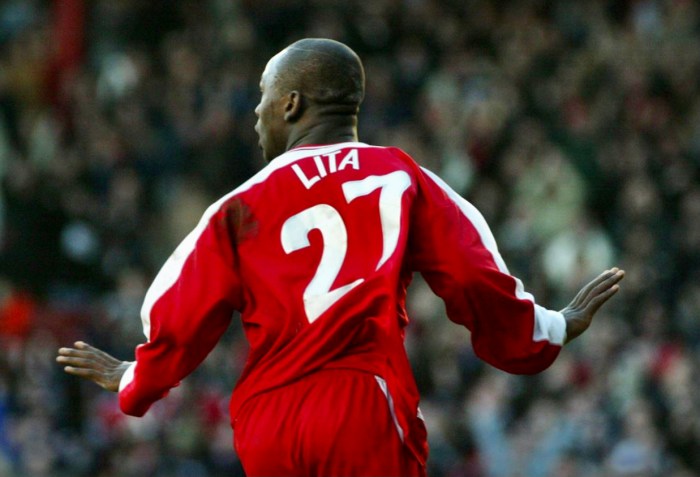
PROLIFIC second tier goalscorer Leroy Lita was a Gareth Southgate free transfer signing for Middlesbrough where he scored 20 in 82 games.
Two years after Boro cashed in and sold him for £1.75m to newly promoted Premier League side Swansea City, Lita joined an injury-hit Brighton side three months into Oscar Garcia’s reign.
Goals had been harder to come by for Lita after Brendan Rodgers had signed him for the Swans and he was sent out on loan, spending time back in the Championship with Birmingham City and Sheffield Wednesday.
It was a familiar story for Lita who had been Reading’s first £1m player when Steve Coppell signed him from Bristol City in 2005.
He netted a goal every three games for the Royals, but towards the end of his four years at the Madejski Stadium, he’d gone on loan to Charlton Athletic and Norwich City.
By the autumn of 2013, Lita had become something of a footballing nomad, fed up with a lack of first team action under Michael Laudrup.
With Albion’s leading striker Leo Ulloa out for two months with a broken foot, and Craig Mackail-Smith and Will Hoskins also sidelined, Garcia brought the diminutive striker to Brighton on a three-month loan arrangement.
“He is strong, fast and direct, and he has shown he can score goals in the Championship,” Garcia told the club website. “He offers us something different going forward.”
I can remember being at the Keepmoat Stadium, Doncaster, when he scored his only goal for the club two minutes after going on as a substitute for Jake Forster-Caskey (he’d played with his stepdad Nicky Forster at Reading).
Forster-Caskey had scored a wonder goal with his left foot from 35 yards before Rovers equalised but visiting Albion went on to collect three points in a 3-1 win (David Lopez scored the other with a long range free kick).
Lita had made his debut in a 0-0 draw at Yeovil on 11 October, going on as a sub for Ashley Barnes and his home debut saw him replacing another loanee, Craig Conway, in a 1-1 draw with Watford.
The eager striker made a public plea via the Argus to be given a start but Garcia only ever used Lita off the bench for the Seagulls (he went on as a sub on five occasions and was an unused sub for three games).
“The staff have a bit of doubt but I feel fine,” Lita said. “When I am on the pitch my mind just takes over anyway. “I don’t ever feel tired or not match fit. I know you still need your match fitness, but you have to get that at some point, so hopefully this week.”
Having got off the mark for the fifth Championship club he had served on loan, he added: “Once you get that first goal you are thinking about the next one and the next one. I am just looking forward to scoring plenty of goals.
“I know I can score goals wherever I go so I’ve never had that doubt. Whoever has doubted me it’s up to them. My belief in myself is not going to end until I am 50 years old and can’t move!”
But with Ulloa’s fitness restored, Lita’s final appearance in an Albion shirt was on 3 December when he went on for Barnes at the Amex as the Seagulls succumbed 2-1 to Barnsley.
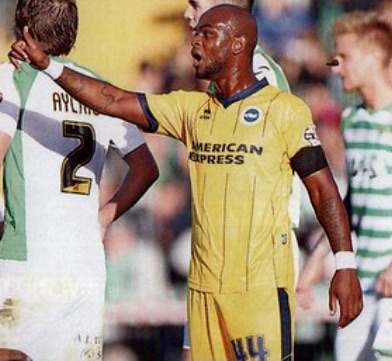
Maybe Lita’s Albion spell was cursed from the start when he was handed squad number 44 (all the fours, droopy drawers)?
He was still only 28 when he arrived at the Amex with an impressive record of 101 goals in 330 league and cup games, 14 of which had been in Reading’s 2006-07 Premier League season.
“I know the Championship well,” Lita said in the matchday programme. “Consistency is the main thing at this level because everyone beats everyone; some teams start well and drop off, while others start badly then pick up a run of results. So, it’s all about putting a good run together then you never know what might happen.”
Lita followed in the footsteps of former Swansea teammates Kemy Agustien and Andrea Orlandi to the Amex, but he also knew Liam Bridcutt and Andrew Crofts from his time as a youngster at Chelsea.
He recalled summer training camps at Horsham with Bridcutt and he played in the same Chelsea junior side as Crofts. “They have both gone on to become really good players,” he said.
“It helps when you go to a club and know a few people but I think the style of play here will also suit me.
“It is similar to Swansea and the club only signs players here who know the system.
“I played against Brighton last season, scoring on my home debut for Sheffield Wednesday, and although we won that day, I was still impressed by the way the team played.” He had also played at the Amex before when he was on loan at Birmingham and (below right) was the subject of a page feature in the matchday programme.
Born in Kinshasa in the Democratic Republic of Congo on 28 December 1984, it was as a teenager on Chelsea’s books that he couldn’t believe his luck to be sharing a training pitch with Jimmy Floyd Hasselbaink and Eidur Gudjohnsen.
“I would go home and see them on TV and the next day I would be training with them,” he told The Guardian. “It was unbelievable.”
Reporter Jon Brodkin wrote: “Chelsea broke his heart by releasing him but his three years at the club he supports were hardly wasted. The thrill of being a ballboy was surpassed by training with the first team’s front two.”
Lita told him: “I was 15 and the academy director said he had spoken to my school and I could have a couple of days off a week to train with the first team and the ressies [reserves]. It was a great opportunity and I learned a lot from it.
“Hasselbaink’s finishing was unbelievable, he didn’t mess about. He could place it and smash it. I mainly did finishing with them, not much else, but I could see as well how professional they were and how they looked after themselves.”
After Lita’s release, he contacted a few clubs – Fulham were interested but didn’t offer a contract – and he was aware that after leaving Arsenal Andy Cole had made a new start to his successful career at Bristol City.
It was the Robins who gave Lita an opportunity and former Albion skipper Danny Wilson handed him his first team debut at the beginning of the 2002-03 season when he was still only 17.
His first league goal was a late winner on 28 September 2002 to secure a 3-2 victory after going on as a substitute at Port Vale (for whom an 18-year-old Billy Paynter had scored).
“The striker hit a glorious goal to end Vale’s hopes of a point after they had fought back to level matters just a minute earlier,” said the BBC report of the game.
It wasn’t until the following season that he was given a professional contract and it was only after Brian Tinnion succeeded Wilson as manager in 2004-05 that Lita established himself in the City side. He scored 29 goals in all competitions and that form earned him a call-up to the England under-21s, Lita having decided not to play for his birth country.
He scored on his debut on 8 February 2005 when he went on as a sub for Justin Hoyte in a 2-1 defeat against the Netherlands at Derby’s Pride Park.
Those goals also earned him a £1m move to Reading, even though Tinnion advised him against the move, believing a Premiership club would come in for him.
“Once I got down here, I knew it was right,” Lita told The Guardian. “I want to go a step at a time. Reading are a good club, they’re looking to get into the Premiership and that’s where I want to be.”
He went on to score 15 goals in 25 league and cup games (+ seven as a sub) as Reading topped the Championship, and he returned to the England under-21 fold in February 2006.
He was on home turf at the Madejski Stadium when he earned his second cap, again as a sub, replacing David Nugent in a 3-1 win over Norway (future Albion loanee Liam Ridgewell was among his teammates).
A year later, after finding the net in the Premier League with Reading, Lita got a third cap as a substitute (for James Milner) and scored again in a 2-2 draw against Spain at Pride Park. Liam Rosenior was also a substitute that day.
Lita’s first start for the under 21s came the following month, on 24 March, in a 3-3 draw with Italy in the first game played at the new Wembley Stadium, in front of 55,700. On 5 June the same year, Lita scored England’s fifth goal in a 5-0 win over Slovakia at Carrow Road after he’d gone on as a sub for Nigel Reo-Coker.
Lita was an overage player in the 2007 UEFA European Under 21 Championship: he missed an 88th minute penalty after going on as a sub in a 0-0 draw with the Czech Republic but scored in each of the three games he started: 2-2 v Italy, 2-0 v Serbia and 1-1 v the Netherlands (who won the tie 13-12 on penalties). But a full cap eluded him.
Lita was a regular throughout Reading’s first top-flight campaign. In a side that include Ivar Ingimarsson and Steve Sidwell, Lita scored 14 times in 26 league and cup starts plus 12 appearances off the bench.
But with Kevin Doyle and Dave Kitson the preferred strike duo in 2007-08, Lita’s game time was much reduced and he went on loan to Charlton in March 2008.
It was a similar story the following season when he scored seven times in 16 games during a three-month loan at Norwich City – the haul included a hat-trick against eventual champions Wolves.
The excellent Flown From The Nest website, that profiles former Norwich players, recalled how that treble attracted the interest of plenty of other clubs, but City boss Glenn Roeder said: “It’s a better problem to have than him not scoring and playing rubbish – then none of us want him. What can you do?
“He was brought here to score goals. He was a little bit rusty in his first game which was understandable. He did better in the second game against Bristol City when he had a couple of chances which unfortunately never went in, and then in the third game on Tuesday night, we saw the real Leroy Lita and what he is all about.”
Lita returned to Reading and played in a FA Cup third round defeat at Cardiff and although Sheffield United made a bid for him, he preferred to stay with the Royals.
Nevertheless, at the end of the season, he finally left the Madejski and headed to Teesside on a three-year deal.
On signing for Boro, Lita said: “The manager has been after me for about a year, it’s great to feel wanted. I have a lot of respect for the gaffer and I want to do well for him and the club.
“I aim to repay him for his faith in me with goals. That’s the main strength to my game and I’m looking forward to scoring goals for Middlesbrough.”
He told the Northern Echo: “I’m raring to go. I haven’t enjoyed the last two seasons one bit, but this is a fresh start and I’m excited about the challenge.
“Other clubs were interested in signing me, but there was only once place I wanted to go and that was Middlesbrough.”
Southgate added: “Leroy has a hunger to score goals and his goalscoring record in the Championship in particular is very strong.
“His record says he gets one in two at this level so that will be important for us. I think he has a point to prove and, when he’s fully fit, he will relish the challenge.”
It wasn’t long before Southgate was succeeded by Gordon Strachan but Lita made the second highest number of appearances (41) in that season’s squad and scored nine goals as Boro finished mid-table.
There was yet another managerial change the following season, with the return of former player Tony Mowbray, but Boro once again finished mid-table with a side that featured Joe Bennett at left back and Jason Steele in goal.
Lita scored 11 times in 40 matches, which was enough to attract newly-promoted Swansea. “I’ve had a good chat with Leroy,” said Mowbray. “He has a chance to play in the Premier League and good on him. His talent has earned him that chance.”
But he only scored twice in six starts (+ 12 appearances off the bench) all season and in September 2012, Lee Clark signed him on a three-month loan for Birmingham.
“I know Leroy very well having worked with him at Norwich during a loan spell in which he scored seven goals in 16 games,” said Clark. “He’s a proven goalscorer who has power and pace and there’s no doubt that he’ll add quality to my squad.”
Lita scored three goals in 10 games for Birmingham before being recalled early, but in late January 2013, he joined Sheffield Wednesday on loan until the end of the season.
Wednesday manager Dave Jones told BBC Radio Sheffield: “Leroy has a lot of experience at this level and the one above. It could be with a view to a permanent deal. This lets us have a look at him and he can have a look at us.” But he only scored twice in nine appearances for the Owls.
Released by Swansea at the end of the 2013-14 season, Lita was then reunited with Danny Wilson, manager at newly relegated League One Barnsley.
“He was my first manager and I like the way he works,” said Lita. “He’s got a lot of trust in me and I’ve got a lot of trust in him.
“I enjoyed my time under him as a youngster. He helped me a lot and helped me progress in my career so far. I just want to get back to playing football regularly again and I’m going to get that opportunity here.”
He scored in his first two league games but didn’t register again for 21 games. When Wilson was replaced by Lee Johnson in February 2015, within a matter of weeks Lita joined lowly Notts County on loan until the end of the season but was unable to prevent their relegation.
On expiry of his Barnsley contract, Lita moved to Crete side AO Chania in August 2015 but was back in England the following March, signing a short term deal with League Two Yeovil Town, where he scored once in eight games. That was his last league club in England.
He scored five goals in 21 games for Thai Premier League side Sisaket in 2017 and on his return to the UK turned out for a number of non-league clubs: Margate, Haverhill Rovers, Salisbury and Chelmsford City.
In May 2020, the Coventry Evening Telegraph hailed his signing for Nuneaton Borough, whose manager Jimmy Ginnelly told the newspaper: “His partner is from Nuneaton and they’ve recently moved into a house on The Longshoot, which is just five minutes from the ground, so this is a win-win situation for both parties.
“These sorts of players don’t come onto Nuneaton’s radar very often so we moved quickly and obviously all of us here at the Boro are very excited.”
He scored eight goals in 33 appearances for Nuneaton, went on to play for Southern League Premier Division Central rivals Stratford Town before moving on to Hednesford Town, where he’s still playing.
In March 2022, the Express and Star reported: “Lita lit up Keys Park last night as he smashed a debut hat-trick to help Hednesford to a 3-1 victory over Stourbridge.”
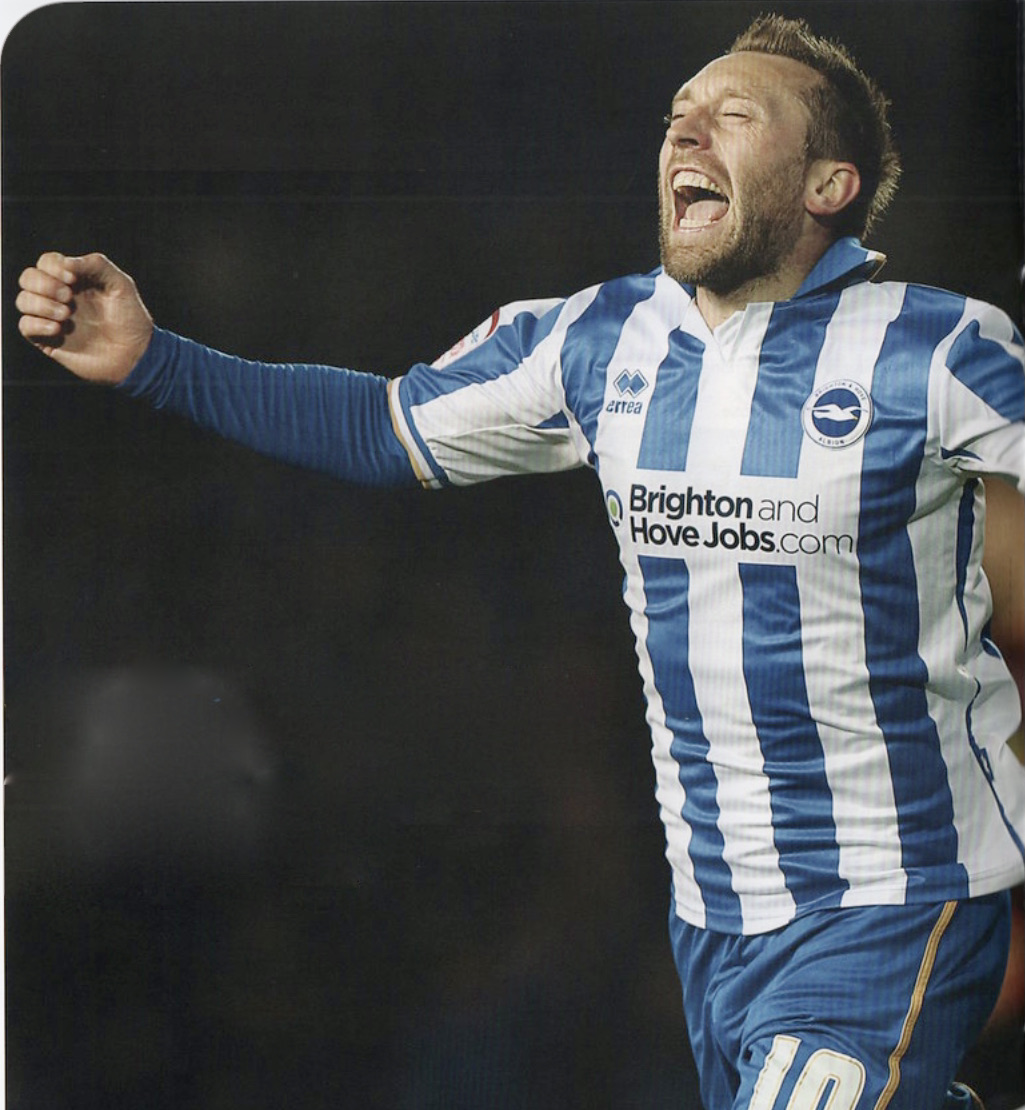
A 93RD-MINUTE winning goal in a Championship match against Peterborough United was as good as it got in Stephen Dobbie’s brief stay with Brighton.
Dobbie left the Albion for Crystal Palace just five months into a three-year contract after failing to live up to the hope that he would be the answer to Albion’s shortage of a genuine goalscorer.
“He has great quality which will unlock defences and I have no doubt he will also score plenty of goals,” Poyet said on capturing a player who had a goalscoring pedigree at Championship level with Swansea City and Blackpool, as well as in Scotland.
“He has played and proven himself at this level and in the Premier League. His goals helped Blackpool win promotion in 2010 and he returned on loan to help them reach the play-off final last season,” he said.
Dobbie was one of four players who joined Brighton on 31 August 2012; fellow Swansea player Andrea Orlandi also arrived, along with Dean Hammond, on loan from Southampton, and Athletic Bilbao’s David Lopez.
Seldom a starter, Dobbie’s first Albion goal came after he’d gone on as a 64th minute substitute for Andrew Crofts at home to Peterborough. Despite relentless Albion pressure, the game looked to be heading for a goalless draw when Dobbie produced a composed finish from an Ashley Barnes pass in the third minute of added on time.
A delighted Poyet said: “We needed quality and Dobbie showed us what he is capable of and that won us the game. It was real quality and that’s what we needed to score tonight.
“On another day, another player would have smashed that and it would not have gone in. The touch was magnificent and we are all delighted.”
Dobbie added: “Before I came on the gaffer told me to keep doing what I have been doing in training. I was confident that my time would come. Hopefully I can kick on and show the sort of form I have showed before in the Championship.”
As it happened, Dobbie did score in the next match too although an astonishing game at Molineux possibly summed up his time with the Albion. He had a great chance when through on goal that Carl Ikeme saved; he then put Albion 3-2 up with an 89th minute penalty – but 10-man Wolves hit back with a 90th-minute equaliser.
“We are all a bit gutted because the three points were there to be taken and on another day we probably would have scored four or five,” said Dobbie afterwards.
Dobbie didn’t score again and after just five starts plus 10 appearances off the bench Poyet decided to cut his losses and ship the player out on loan to Palace.
He couldn’t put his finger on exactly why it hadn’t worked out and was open in his assessment when talking to the Argus about it.
“I don’t think there is one reason, one person responsible,” said Poyet. “I think it didn’t click, that’s all. I am more than happy to take the blame but it’s a mix of things, the way we play, the player, the results, the team.
“The moment it was a possibility to get him I was convinced he was the perfect player for us, to play between the lines, arrive late, get goals, play in different positions in a front three or even behind the striker.”
Earlier in the season, Dobbie said matters off the pitch had made it difficult for him to settle. He had been living in a hotel with his wife and young son for a month during which time his wife gave birth to their second child.
“It was quite hard living in the hotel with my wife and little boy but thankfully we’re now settled in a house and another little boy has since come along, so I can concentrate fully on my football,” he told the matchday programme. “It’s not easy when you’ve got so much going on, it takes a period of adjustment, but now I’m able to just focus on what I’m doing on the training ground.”
At least the move to Palace reunited Dobbie with a familiar face: he had played under Palace boss Ian Holloway during two loan spells at Blackpool. Dobbie scored three times in 15 matches for Palace as they won promotion via the play-offs (thankfully he didn’t play in the semi-finals v Brighton).
Albion and Palace had to make the transfer a loan initially to comply with FIFA regulations regarding the number of clubs a player can play for on a permanent basis in one season, but the loan became permanent in the summer.
Although he signed a two-year deal at Selhurst Park, he only played in one Premier League game and one League Cup tie before returning to Bloomfield Road on loan to Blackpool for a third time.
It was perhaps inevitable that Dobbie should score an equaliser for relegation-threatened Blackpool when they salvaged a point in a disappointing 1-1 draw at the Amex on 21 April 2014.
Blackpool player-manager Barry Ferguson said:“It was a great strike. [Dobbie] has quality and it’s up to him to produce it more often.
“I let him play where he wants to. I’ve known him a long time and, apart from what he does on the ball, his work-rate off the ball is excellent.”
Although still under contract with Palace, Dobbie spent the 2014-15 season on loan at newly promoted League One side Fleetwood Town.
Released by Palace at the end of that season, he spent pre-season on a trial basis at Championship side Bolton Wanderers and when boss Neil Lennon liked what he saw he was given a one-year contract with the Trotters.
In 2016, Dobbie returned to the club where he’d previously been most prolific as a goalscorer: Queen of the South. In his first spell (2006-09), he scored 55 goals in 105 games for the Scottish First Division outfit.
That level of goalscoring prowess returned second time around, as he netted 111 goals in 178 games over five seasons in the Scottish Championship. He topped the Championship scoring charts in 2017 and 2018 and his 43 goals in 2018-19 was the best ever total for a Queens player in a single season.
Born in Glasgow on 5 December 1982, Dobbie grew up in the tough Barlanark district of the city, and in an interview with the Daily Record he described his experience playing street football in the area.
He was a Rangers fan and, although it was Hearts who first showed interest in him, he spent two years as a youth player at Ibrox Park.
“I signed for the club when I was about 10 or 11,” he recalled. “I was quite lively as a kid but I was soon brought back down to earth whenever I got to meet my heroes. It was intimidating walking into a room and there’s Gazza, Brian Laudrup and Ally McCoist sitting there.”
He added: “They were world class and although I never got to follow them into the first team, it was a brilliant club and I loved my time there.”
While he scored goals for Rangers reserves, he didn’t break through to the first team with his boyhood heroes. The first of many loan moves in his career saw him go to Sydney in Australia and score three times in three games for Northern Spirit.
In the summer of 2003, he was transferred to Hibernian and made a total of 33 Scottish Premier League and cup games during his first season at Easter Road. But a regular starting berth eluded him and he went on loan to Scottish First Division St Johnstone.
That move was turned into a permanent switch but in 2006-07, when once again he couldn’t nail down a regular starting spot, he was loaned to Third Division Dumbarton, where he hit a purple patch, scoring 11 goals in 18 matches.
Such form attracted Queen of the South; he joined them on 5 January 2007 and enjoyed a successful two-and-a-half-year spell.
After he’d finished the 2008-09 season as the Scottish First Division’s top goalscorer with 24 goals, Swansea City, then in the Championship, made him an offer he couldn’t refuse.
“Dobbie has reinvented himself in the last two seasons and is at the best stage of his career,” said Swansea manager Roberto Martinez.
Aged 26 at the time, Dobbie was reunited with Swans top scorer Jason Scotland who he’d played with at St Johnstone in 2005-06.
“He has been through many different moments since his Rangers days, but I firmly believe he is now ready for a new challenge,” said Martinez. “He is a typical Swansea player – very gifted and strong technically.
“He’s also a natural goalscorer, has high standards and is hungry to show off his talent in the Championship.”
Dobbie’s first goals for Swansea somewhat ironically came against Brighton when the Welsh side dumped Russell Slade’s side out of the Carling Cup with a 3-0 victory at the Liberty Stadium.
He scored again in the next round but injury then kept him out of the side and by the following February he was on his way to Blackpool on loan for the first time.
Ironically, Dobbie went on to play for Blackpool in their 3-2 Championship play-off win over the Swans bitter rivals Cardiff City, which saw him branded “Secret Agent Dobbie” by a certain section of the Swansea faithful.
Back at Swansea, Dobbie finally got his place back after Brendan Rodgers had taken over from Paulo Sousa in the manager’s chair.
Dobbie score four times for the Swans but he eventually found himself back on the bench playing second fiddle to loan signing Marvin Emnes and Craig Beattie.
Nevertheless, he chipped in with some important goals from the bench and once again found himself playing in the Championship play-off final, this time getting on the scoresheet as Reading were beaten 4-2.
Remarkably, he featured in a third successive Championship play-off final, again with Blackpool, having failed to hold down a place in Swansea’s Premier League side. He made eight appearances at the elite level but didn’t get on the scoresheet.
Dobbie joined Holloway’s Blackpool in March 2012 but they missed out on another promotion when West Ham beat them 2-1 at Wembley.
In April 2021, Dobbie announced his departure from Queen of the South, with the Daily Record declaring: “The 36-year-old has scored 166 times in 282 games over two spells with the club and is regarded as one of their best players of all time.”
Having put down roots in the North West (even when he was playing for Queen of the South he would commute from his home on the Fylde coast), it was little surprise to see him start the 2021-22 season with AFC Fylde of the Vanarama National League North.
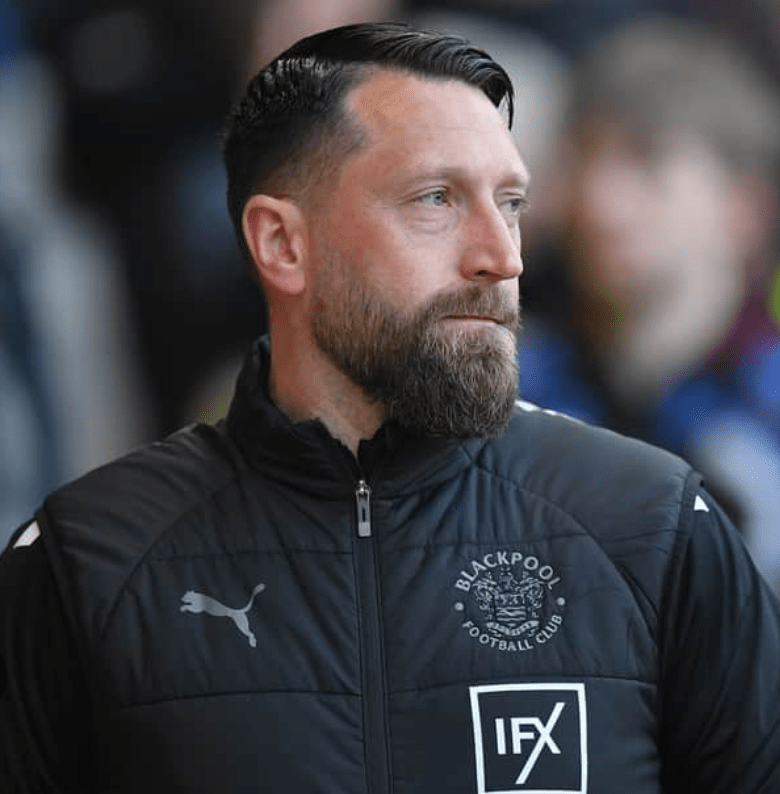
Dobbie became part of Steve Bruce’s coaching team at Blackpool

























 In parallel lines