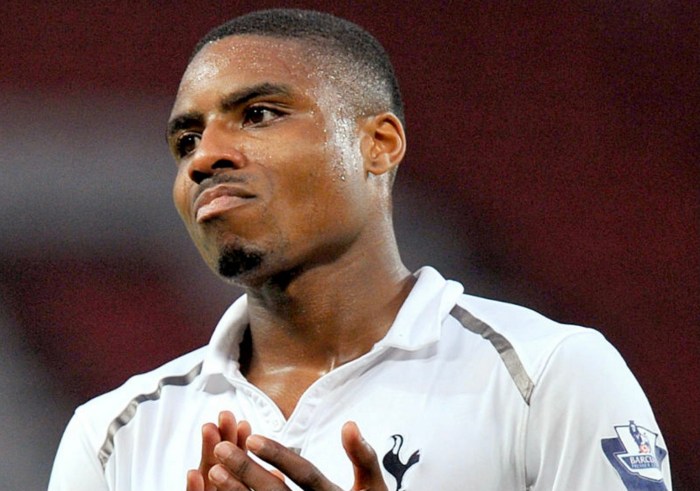
Albion’s lifeline for the boy from Baghdad who turned down Spurs

BAGHDAD-BORN Yaser Kasim went through the youth ranks at Tottenham Hotspur but rejected a professional contract at White Hart Lane and tried to build a career at Brighton instead.

Although it didn’t work out at the Albion, he subsequently thrived at Swindon Town where his former Seagulls’ development squad coach Luke Williams had become assistant manager.

“He is one of the best coaches I have worked with. This guy is at another level,” he said.

Kasim joined the Spurs academy at the age of 11 in June 2003 and progressed to become a full-time scholar at 16. He was in the club’s youth team in the 2009 FA Youth Cup (they lost 3-1 to north London neighbours Arsenal in the quarter-finals) alongside Andros Townsend, Steven Caulker and Jonathan Obika.

“When the time came to sign pro forms at Tottenham, I decided to go on my own and turned it down,” Kasim told Tom Hopkinson of the Sunday People.

“From that decision it was ­difficult to get another club ­because everyone knows how ­powerful Spurs are and I couldn’t sort the compensation out for all those years I’d trained with them.”

Kasim in action for Albion Reserves v Eastbourne Borough. Pic: Simon Dack

A contractual impasse left Kasim in limbo and he was forced to train on his own until former Spurs teammates Gus Poyet and Mauricio Taricco, having taken over as manager and no.2 at Brighton, stepped in.

The pair managed to resolve the dispute between player and club and in October 2010 offered him a short-term deal with the Seagulls. Kasim later told the Argus: “They sorted something out for me and I love the football here, because they play good football, and the players are great, so everything is good except for playing more games…I’ll work hard for that.”

He was talking after he had been handed his Albion debut in the final game of the 2010-11 season, a 1-1 draw away to Notts County, with the Seagulls already having been crowned League One champions.

Kasim played for 70 minutes in midfield alongside Liam Bridcutt, Matt Sparrow and Elliott Bennett before being substituted, with Poyet saying: “The pitch didn’t help him. He is a technical player. We are trying to work on the other side of his game, the toughness and his defensive work. I think he has got a great future.

“He was very good on the ball, confident and strong. As soon as the game became more 50-50 it wasn’t good for him or us but opponents are going to try to make it a war against us.”

The Uruguayan added: “We are offering him the chance to stay with us. He is thinking about it and we’ll probably have a few more words.

“He knows where he stands. We’ve been honest with him, it’s up to him.

“It’s complicated because I don’t know if it will be easy for him to step up and start playing for the first team in the Championship, but we are offering him the chance to be there or thereabouts.”

As it turned out, he was a regular in Luke Williams’ development squad but only made the first team bench on three occasions, getting on (pictured above) just the once, as a sub for Alan Navarro, in the 66th minute of an inexperienced Albion’s 1-1 FA Cup draw at home to then non-league Wrexham on 7 January 2012.

Kasim managed to collect a booking during his brief time on the pitch in a game that saw young Ben Sampayo given his debut and Grant Hall his first start (he’d previously been a sub five days earlier against Southampton). Anton Rodgers, son of Brendan, was sent on at the same time as Kasim entered the fray. Kasim was an unused sub in the replay when Albion only advanced courtesy of a penalty shoot-out, edging it 5-4 after the game ended 1-1.

Come the summer of 2012 and Kasim went on a six-month loan to then Conference Premier League Luton Town, with Hatters boss Paul Buckle telling the club’s website: “Yaser can do a variety of jobs. He can be a box-to-box man and also play in a defensive midfield role.

“It’s great we have been able to capture someone of his calibre for six months. I have no doubt that he will prosper with us.”

The player made five starts plus six appearances off the bench and scored once, in a 2-1 win at Tamworth (the other scorer was Stuart Fleetwood, who’d been on loan at the Albion in the 2008-09 season).

In the second half of the season, Kasim played five games for Conference National League Macclesfield Town.
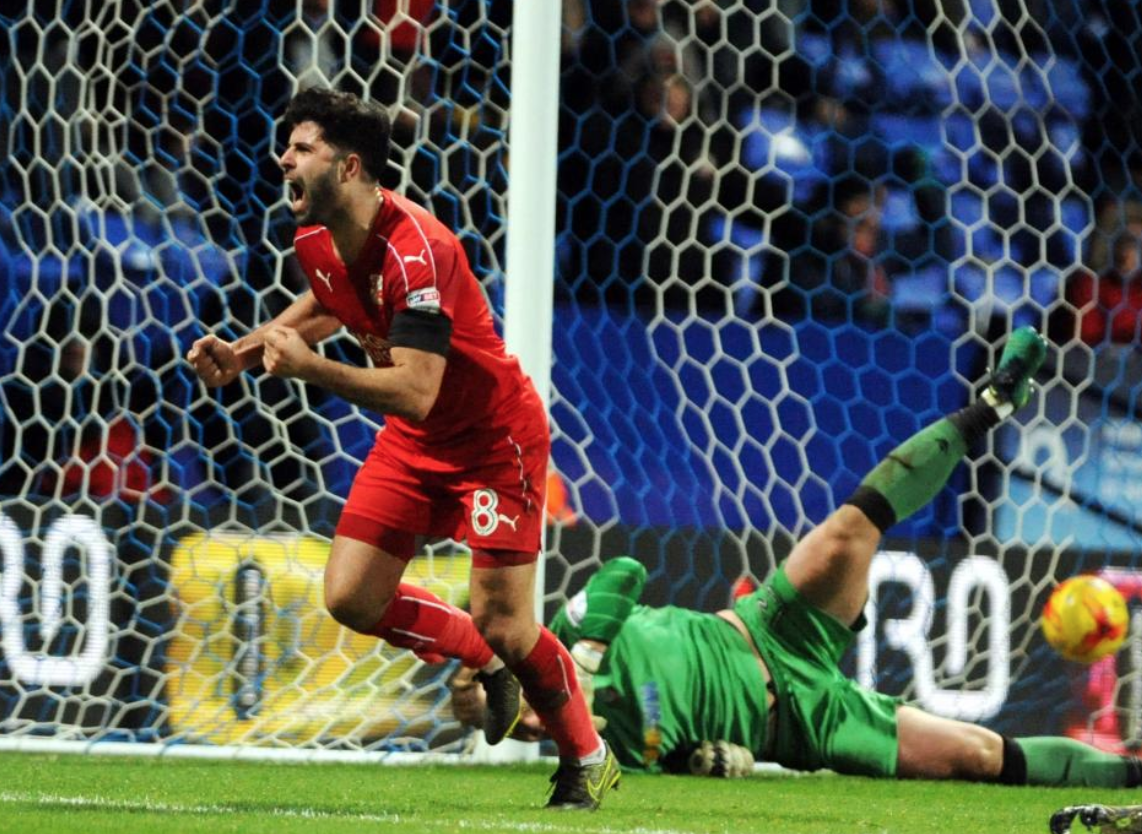
Released by Brighton in May 2013, Kasim went on trial to League One Swindon and signed a three-year deal after spending a week at the Robins’ pre-season training camp in Portugal. Manager Mark Cooper paired him in midfield with Massimo Luongo and he played 45 times in his first season.

Reliable Robin

Perhaps it was inevitable that Kasim managed to get on the scoresheet against Brighton in August 2014 when Swindon lost 4-2 (after extra time) at home to Sami Hyypia’s Albion in the second round of the League Cup (future Town midfielder Rohan Ince scored a belter for the Seagulls, Adrian Colunga edged Albion ahead in the 95th minute. Kasim equalised before two late penalties scored by Jake Forster-Caskey put Albion through).

Kasim ended up having four seasons at the County Ground, was part of the side that made it to the League One play-off final in 2015, when they lost 4-0 to Preston, and it was reported at one point that Premier League Swansea City and West Ham were interested in signing him.

Nothing came of that, though, and his final campaign with the Robins saw him dogged by groin and hip injuries as Town were relegated to the bottom tier.

Mentor Williams was Town’s head coach by then and, after being forced to drop Kasim in February 2017 and replace him with the aforementioned Ince, opened up to the Swindon Advertiser.

Reckoning Kasim was not showing enough of a physical side to his game, Williams said: “I have known Yaser a long time and he is an incredibly talented player but, for one reason or another, I don’t think he is performing to anywhere near his best and at the moment, he needs to come out of the team.

“Players fall out of form because of a combination of things, sometimes off the pitch as well.

I wish I could find the reason and try to make everything okay for Yaser because he is a very important player and has given a fantastic service to us.

“He is somebody that I think a lot of personally so I would love for him to be in top form.

“I think Yaser in top form is as good a player as you’ll see at this level for sure, unfortunately he doesn’t seem to be able to quite find it.”

The coach added: “He came here and I think, certainly for the first two seasons, he was absolutely fantastic and last season, there was far more good from Yaser than bad. This year, he hasn’t been able to recapture that.”

Born in the Karrada district of Baghdad on 10 May 1991, three months after the end of the Gulf War, Kasim’s passion for football began at a young age on the streets of Baghdad.

“I lived in Iraq until I was six years old,” he told the-afc.com. “I don’t know how young I was when I started to play, but before I left we used to play a lot of football on the streets.

“It is a very sunny and hot climate so we used to play on the streets and there were a lot of people playing 20 a-side sometimes on the tarmac and there were a few rolled ankles and a few chipped toe nails, but I loved it and we used to be outside all day.”

The family left Iraq because Kasim’s father saw a decline in his business as a used car parts salesman. They spent a year in Jordan before moving to England, and eventually settling in north west London.

“I started playing after school every day and then I started to go to football clubs and a coach at one of my sports centres took me to Fulham,” he said. He had only been at Fulham a few months before switching to Spurs.

Explaining why he turned down the offer of a professional contract at Tottenham, Kasim had concerns about the way players were being cared for. He said: “There was a lot of competition; I don’t mind competition as the more the competition, when growing up especially, the better it is, but they were bringing in players without plans on how to look after them and I felt they weren’t doing things right by the players so I saw that my opportunities would be limited and I thought this was not for me.”

It was during his time at Brighton that he was approached to join up with the Iraq national side, at the time coached by Wolfgang Sidka. He won 21 caps over a number of years, although he had a somewhat chequered relationship with the representative side.
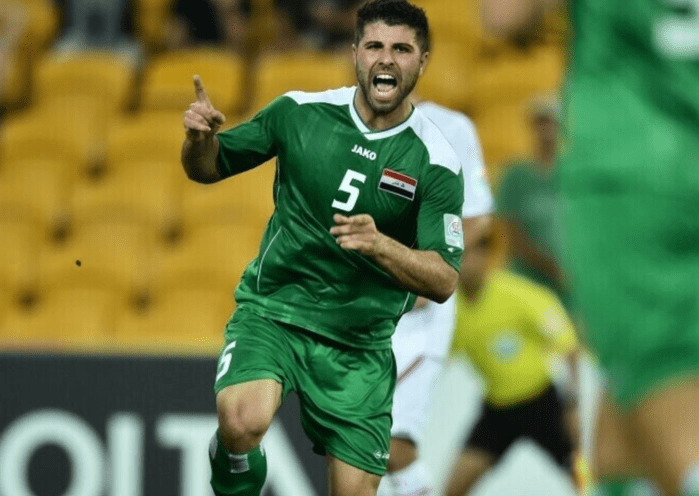
In international action for Iraq

He made his debut in March 2014 featuring in a 3-1 win over China, was hero-worshipped after a series of influential performances in the 2015 Asian Cup (scoring a key winning goal in their opener against Jordan and netting a penalty in the quarter-final shootout against Iran), but went AWOL during the country’s preparations for the 2016 Rio Olympics (he was called up as one of three coverage players for the tournament but he left the training camp in Spain and never returned).

He also turned down national team call ups under coaches Radhi Shanaishel and Basim Qasim then, after saying he’d retired from the national set-up, returned and went on as a sub in a 4-1 win over Saudi Arabia in 2018 – the most high-profile match to be staged in Iraq for years and Kasim’s first international match on Iraqi soil (previously ‘home’ matches were played at empty grounds across the world).

“Just having that real home feeling is very special,” Kasim told Mark Lomas in a post-match interview for Arab News.

“When you compare it to playing in Dubai, or playing in Malaysia, the difference is just ridiculous. Even when it’s an important game, it is just not the same as it being in Iraq. It elevates you to another level – really, it’s amazing being out there on the pitch. I really do hope we get to play our home games here going forward.
“I truly hope that FIFA sees this game and realises that these fans deserve to watch their team play in Iraq.”

Kasim added: “I have always said that the Iraqi fans are the best in the world — they are crazy for football and for the players.

“I appreciate them so much and I’m humbled when they shout my name. When I come back to Iraq, I get to meet a lot of people every day and you just get such a good vibe.”

By the time of that interview, Kasim had moved on to League One Northampton Town but he told Thomas: “It is just really good that someone like me, who left Iraq at a young age, is able to come back and reconnect with my heritage. It brings out something within you as a man, a bit of maturity and cultural understanding. It goes some way to helping you feel more complete as a person.

“This occasion, obviously, will always give me happy memories of Basra. It kind of trumps everything else I’ve experienced in Iraq. Being around the people and these sorts of occasions, it really helps the country move forward. You realise that officials are stepping up and doing things right. I’m hoping this is just the beginning.”

After Kasim left the Cobblers in January 2019, he had brief spells with Örebro SK in Sweden, and Erbil and Zakho in Iraq (when Dick Advocaat was briefly Iraq manager, Kasim was recalled for the 2021 FIFA Arab Cup after he’d impressed playing for Zakho).

Ahead of the 2022-23 season, Kasim was a trialist for Notts County in a pre-season 1-1 draw with   Boston United (National League County were managed by the aforementioned Luke Williams) but his next club was National League South Welling United, where he played 11 matches.

On signing him, manager Warren Feeney said: “He’s a fantastic player. We’re very lucky to get him and we’re absolutely delighted. He’s a player who can open teams up, he’s a great player who’s played at a great level and is an international so he has great pedigree. He’s hungry and we’re delighted to have him.”

After only three months, he moved on to National League North Gloucester City but after only one game headed back to the south east and linked up with Football’s Next Star winner (and one-time Brighton teammate) Ben Greenhalgh, who was assistant manager at Margate, of the Isthmian Premier League. Kasim played 13 matches for Margate and the following season linked up with another former Brighton colleague, coach Mark Beard, who was in charge of National League South Eastbourne Borough.

He played 17 matches for Boro before returning to Margate where after 12 more games he decided to retire from playing at the age of 33.

In May 2024, Kasim wrote a lengthy piece on the medium.com platform entitled The Illusion of Time and Space: A Footballer’s Perspective in which he explained: “The most beautiful part of playing the game has been the ability to create the illusion of time and space on the pitch. This involves making complex decisions and movements appear effortless, allowing a player to control the game seamlessly.”

As to what he’s doing now, his LinkedIn profile says he’s aiming to develop a career in investment management. Also, as the holder of a UEFA B licence, he’s a part-time coach for Crystal Palace’s academy, working with different age groups.

The Harry Hotspur youngster who went west

MULTIPLE loans away from parent club Tottenham Hotspur didn’t succeed in laying a path to a top level football career for striker Jonathan Obika.

One of the last such arrangements saw the young forward spend three months with the Seagulls in the 2013-14 season.

Nathan Jones, no.2 to Brighton head coach Oscar Garcia, had seen what Obika could do when the young striker had been under him as a coach on loan at Yeovil and Charlton Athletic.

Unfortunately, his impact with the Seagulls was underwhelming even though he scored on his first (and, ultimately, only) full start in a 3-1 win away to Port Vale in the fourth round of the FA Cup.

Obika salutes his one and only goal for Brighton

Albion’s other goals that day, from Rohan Ince and Solly March, were also their first for the club – generating the statistic that it was the first Albion game in 110 years in which three players had scored their first goal in the same league or cup match.

It had been an amazing goalscoring performance for Spurs reserves that prompted Albion to make a move for Obika as cover for first choice Leonardo Ulloa, especially with Craig Mackail-Smith and Will Hoskins sidelined by injury and Ashley Barnes on the brink of a move to Burnley.

The Argus reported that Obika had previously been a target but a move had been put on ice because he’d been injured. His return to fitness saw him net a double hat-trick in a friendly for Tottenham against Charlton’s under-21s, watched by Jones.

“The report coming back on him after the game was one word – lethal!” former Seagulls goalkeeper Ben Roberts, then on the coaching staff at Charlton, told the Argus.

“Like Nathan, I worked with Jon at Yeovil and then at Charlton and he’s a really good pro,” said Roberts. “He is guaranteed to score goals. He is a real predator around the box.

Obika in action for Yeovil

“I’ve been waiting for his career to really kick off. When he came to us at Charlton it took him a couple of weeks to get up to speed. But he was brilliant for us. The end of the season came too soon for us.

“He is a great signing for Brighton and he will suit the way they play.”

However, Garcia also brought in Spaniard David Rodriguez at the same time and Obika found himself down the pecking order, especially when Manchester United loanee Jesse Lingard was added to the forward options.

The Vale cup game aside, Obika made just seven appearances as a substitute but didn’t add to the lone goal and was eventually recalled by Spurs and sent out on loan to Charlton again until the end of the season.

Nevertheless, Garcia said: “He came in to give us forward cover and, while he may not have played as much as he would have liked, he has been a great professional and a pleasure to work with.”

Obika’s long association with Tottenham finally came to an end in September that year when he headed west to League One Swindon Town, where he played for three years, scoring 28 times in 108 games for the Robins.

In 2017, he switched to Town’s rivals Oxford United on a two-year deal before then trying his luck in Scotland, playing in the Scottish Premier League for St Mirren.

On the expiry of that contract, Obika moved to League One Morecambe and, in January 2022, found himself back in the news ahead of this year’s FA Cup third round when Morecambe travelled to North London to take on the club who nurtured his early career for 13 years.

Although Morecambe took a shock first half lead against Spurs through defender Antony O’Connor, it wasn’t a fairytale ending as the Premier League side eventually won the tie 3-1 with three goals in the last 16 minutes of the game.

Obika had to watch from the bench until the 58th minute when he replaced Jonah Ayunga – a Brighton reserve player between 2016 and 2018 – with Morecambe still clinging on to their slim lead.

Born in Enfield on 12 September 1990, of Nigerian parents, Obika grew up in Edmonton and it was while playing football for his primary school, St Paul’s & All Hallows, that he was scouted by Tottenham.

“I lived five minutes from the stadium, so I used to walk to training as a 10, 11-year-old,” he said. “That was my only focus back then.” He later attended Bishop Stopford School in Enfield and left with seven GCSEs.

Originally a left winger, Spurs’ under 18s coach Alex Inglethorpe was responsible for moving him to play as a central striker and in the 2007-08 season he was top scorer for the Spurs academy side.

Those goals caught the attention of first team boss Harry Redknapp and he signed his first professional contract at 18, while a second-year trainee in the academy, and earned a call-up to the first team squad.

Wearing the number 80, he made his debut off the bench in a UEFA Cup game in Holland against NEC Nijmegen on 28 November 2008. A few weeks later, he made his first senior start in front of the White Hart Lane faithful, playing against Shakhtar Donetsk in the same competition.

“I didn’t know I was starting at the beginning of the game, there were a few injuries so a lot of the youth team players trained that week and we were in the squad,” Obika remembered.

When announcing the team, Redknapp actually read out his name as John Utaka, his former player at Portsmouth, amid much hilarity. “That broke the ice,” said Obika. “I was less nervous after that. I was more relaxed and actually ended up having a good game. To play at the Lane, having grown up down the road, was a great feeling and I had all my family and friends there that night.”

Along with Inglethorpe, the coaches who most influenced his development at Spurs were John McDermott and, when he progressed to the reserves, Tim Sherwood, Les Ferdinand and former Albion full-back Chris Ramsey.

Obika and fellow Spurs youngster Andros Townsend were sent out on loan to Yeovil – it was the first of four loan spells there for Obika – as recalled by Jones in an interview with coachesvoice.com: “A host of other clubs wanted them, but I think Harry saw two young kids who wanted to play, and he saw something in us as a coaching team.

“Townsend clearly had huge drive and ambition, and Obika scored the goals that kept us in League One that season – so we will always be thankful to Harry for that.”

Obika recalled: “While I was at Yeovil, Nathan Jones was my coach and I built up a good relationship with him. He would stay behind with me while I did extra shooting: he didn’t need to, I could have done it with other teammates, but he wanted to be there and help me progress and I really appreciated that. He is a good man. He also took me to Charlton for a loan spell and, of course, to Brighton.”

Obika also had loan stints at Millwall, Crystal Palace, Peterborough and Swindon although in the 2012-13 season he did manage to get two more games for the Spurs first team, featuring in the League Cup and the FA Cup.

He went on as a 75th minute substitute for Clint Dempsey when André Villas-Boas’ Spurs side beat Carlisle United 3-0 in the League Cup in September 2012, and was a 59th-minute substitute for Gylfi Sigurdsson when Leeds dumped Spurs out of the FA Cup 2-1 in a fourth round tie at Elland Road in January 2013.

Did Chris Ramsey’s injury alter outcome of 1983 FA Cup Final?

2-near-post-guardBRIGHTON & HOVE Albion’s May 1983 FA Cup Final clash with Manchester United was historic for the club and for their 21-year-old right back it was even more eventful.
Who would have known that former Bristol City apprentice Chris Ramsey’s ignominious departure from the field in a firemen’s lift on Glen Wilson’s shoulder would more or less be the end of an all-too-brief playing spell in the top echelons of the English game?

Might the match – and Ramsey’s career – have panned out differently if it hadn’t been for that diabolical tackle by Norman Whiteside?

Trouble had been brewing in the weeks leading up to the final and the national media, looking for every possible angle to pick at, had singled out Ramsey for criticism. Did that stoke the fire?

Let’s rewind a little and explore what happened.

Born in Birmingham on 28 April 1962 , Ramsey, whose father came to the UK from St Lucia, was one of two boys and five girls. Rejected by Charlton Athletic as a schoolboy, he became an apprentice at Ashton Gate but was then released and, after a successful trial, Brighton took him on.

The 1980-81 season was Albion’s second in the top division and, as it drew towards its close, it was looking increasingly likely they were heading for relegation.

Manager Alan Mullery was openly criticising his players for their efforts and his big ally off the field, vice-chairman Harry Bloom (current chairman Tony Bloom’s granddad) had died of a heart attack on the team coach on an away trip to Stoke.

Something had to change and, at the tender age of 19, Ramsey was called up from the reserves and plunged in at the deep end.

In three of the last four games, he took over the no.2 shirt after Mullery switched John Gregory from right back into midfield. Ramsey’s debut came in a crucial Easter Saturday clash away to rivals Crystal Palace when, released from the shackles of defending, Gregory scored twice in a 3-0 win. Ramsey also played in the wins over Sunderland away and Leeds at home.

The Seagulls stayed up by the skin of their teeth and Evening Argus reporter John Vinicombe said in his end of season analysis that Ramsey had been “a revelation” in those three games.

Within a matter of weeks, Mullery quit as manager in the furore over chairman Mike Bamber selling Mark Lawrenson to Liverpool (after Mullery had already agreed a deal to sell him to Manchester United).

Gregory was sold to QPR for £300,000 but, far from that move opening up an opportunity for Ramsey, Mullery’s replacement Mike Bailey brought in on a free transfer from Loftus Road the experienced Don Shanks, who was immediately installed as the first choice right back.

Indeed Bailey froze out Ramsey for the following 19 months! At one point he was transfer listed but it was Bailey who departed the Goldstone first – his sacking working to the advantage of the young defender.

When George Aitken and Jimmy Melia took over in December 1982, Ramsey was instantly promoted from the reserves and seized his opportunity.

In a profile in an Albion matchday programme in February 1983, Ramsey told Tony Norman: “Like any other young apprentice, my dream was to play in the First Division. I must admit that even after coming to Brighton, I had times when I wondered if I’d make it. But now I’ve got my chance and I’m keen to make the most of it.”

In one of the most comprehensive profiles on Ramsey, former Brighton teammate, Andy Ritchie, told Adam Ellis of The Football League Paper: “He was quite a shy lad back then but he had everything you want in a full back. Aggression, pace, agility – and he could tackle like a demon.”

These were the attributes that Melia appreciated too. In a Daily Mail preview of the Norwich quarter final, Melia told reporter Brian Scovell: “The other players love playing with him. He’s a great competitor, tackles well and uses the ball with a bit of style.

“I’m pleased he’s taken his chance. He deserves to play at Wembley if we manage to get there.”ramsey + mel

As it turned out, Ramsey’s place was in jeopardy because of two sendings off in the league in April which led to him being banned for the semi-final against Sheffield Wednesday at Highbury.

After being sent off in a 2-1 home win over Spurs, Terry McNeill reported in the News of the World: “Ramsey was lucky to stay on earlier after bringing down Mark Falco in a probable scoring position. When he took the striker again from behind, there was no escape.”

The 20-year-old Ramsey was fairly phlegmatic about the situation and told Alex Montgomery of The Sun: “Whatever I did, I did for the club. You can’t think about Cup games when you are struggling for points at the bottom of the First Division.”

His second dismissal, along with Coventry’s Steve Jacobs (who later played for the Albion under Chris Cattlin) after a scuffle in a 1-0 win at the Goldstone, was lambasted by one of the pre-eminent football writers of the day, Frank McGhee of the Daily Mirror.

“Can Brighton afford to field at Wembley a man who by then won’t have been able to play for 19 days?” he intoned. “And can they trust Ramsey not to sully soccer’s great state occasion by a moment of blind madness?”

Nevertheless, after Wednesday were beaten, Melia was happy to restore his first-choice right back to the starting line-up but one wonders now whether Ramsey had a sense of foreboding about how the big occasion would unfold.

Reflecting on those dismissals in the build-up to the final, he told The Sun’s Montgomery: “I just hope people aren’t looking for me. I’ll certainly be careful. I honestly don’t think I deserve the reputation which I’ve been saddled with in the last few weeks.

“The dismissals were just coincidences – nothing more than that. I know I am an aggressive type of player but that is my game. I always want to give 100 per cent for the club. The last thing I want is trouble at Wembley.”

After Albion had taken a shock lead through Gordon Smith’s header, United piled on the pressure and Ramsey headed a goalbound Gordon McQueen effort off the line.

But then came a pivotal moment early in the second half. Tim Carder and Roger Harris record it thus in their excellent Seagulls! The Story of Brighton & Hove Albion FC: “Whiteside went in high on Ramsey’s shin as the Albion full back cleared, and then trod on his ankle. The referee had a strong word with the United forward but did not signal a foul.”

The tackle had rendered Ramsey lame and while he tried in vain to carry on, two minutes later he wasn’t able to challenge for a ball to the far post which Frank Stapleton duly dispatched to equalise.

Those of us watching in the stadium, together with millions glued to TV screens around the world, saw Ramsey carried from the Wembley turf and, in those days of only one substitute, wondered how Albion would cope with a makeshift defender in the shape of Gerry Ryan.

After United took the lead through Ray Wilkins, Ramsey’s friend – and fellow England under-20 teammate – Gary Stevens’ equalised to send the game into extra time and ultimately a replay. Stevens was adamant about the impact Whiteside’s challenge had on the game.

In Match of My Life, edited by Paul Camillin, he said: “It was a bad tackle and perhaps cost us the game. In those days we only had one substitute and Gerry Ryan came on and did a great job at right back, even though he was a midfield player, but we did miss Chris because he had been having a great game.”

Whiteside was unapologetic about the challenge but Ramsey fumed to The Sun’s Montgomery: “It could have broken my leg. If I’d done it, I’d have been off. I just can’t understand how Whiteside got away with it.”

The injury deprived Ramsey of the chance to play in the replay five days later and, after that sad exit, his playing career never reached similar heights again.

Indeed he actually only played 37 games for the Albion, most of those coming in that 1982-83 season. He played only a handful of games in the following season and in August 1984 went on loan to Swindon Town before joining them permanently four months later.

There, he played alongside the likes of Sky Sports reporter Chris Kamara and one-time Albion assistant manager Colin Calderwood and clocked up over 120 appearances, including being part of Lou Macari’s Fourth Division champions in 1986 and Third Division play-off winners in 1987.

In August 1987, he joined Southend United but played just 13 games for them before persistent back injuries forced his early retirement at the age of just 26.

Some business ventures he embarked on didn’t work out and former Albion right back rival Shanks set him up with a trial for a team in Malta, Naxxar Lions, where he made a playing comeback.

Eventually the ongoing injury problems made him look to other ways of making a living. He coached in the United States but also started studying like crazy.

Amongst lots of qualifications, he got a Master’s degree at the University of North London in Health, Physical Education and Recreation (a qualification which enabled him to become a primary school teacher) and simultaneously obtained his UEFA coaching badges.

That Football League Paper piece records: “With an MSc, ten diplomas and myriad other qualifications, Ramsey is so highly educated that he actually sets the test for pro licence candidates.”

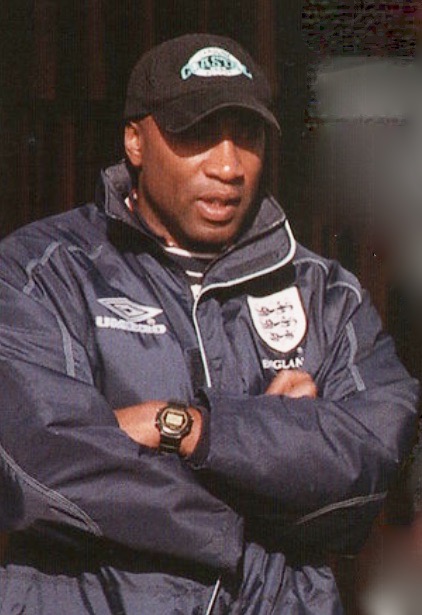
ramsey EngA stint in charge of youth development at Leyton Orient and coaching Newham Ladies was followed by an FA appointment as coach to the England under-20 side in the 1999 FIFA World Youth Championship when among the players under his direction were Ashley Cole, Peter Crouch, Matthew Etherington and John Piercy, who later played for the Albion. At the FA he learned from the likes of Les Reed and one-time Albion winger Howard Wilkinson.

He had a short and unsuccessful three-month spell as assistant to Ricky Hill at Luton Town, and he said: “Ricky Hill was a massive inspiration to me.”

Just when it appeared new offers had dried up, Ramsey got the chance to manage Charleston Battery in the USA, where he stayed for three years.

Winning the USL A-League (second division) with Battery in 2003 brought him to the attention of Spurs, and, as head of player development, many of the young players he coached in tandem with Les Ferdinand and Tim Sherwood were Harry Kane, Ryan Mason, Danny Rose, Nabil Bentaleb, Andros Townsend, Steven Caulker and Jake Livermore.

“He was massive for all of us,” French midfielder Bentaleb told The Football League Paper. “He believed in us, he encouraged us. He told the manager we were ready when everyone else believed we were not. He was not shy or scared of anybody and he knew exactly what he wanted.”

chris ramsey (spurs)In the Evening Standard in 2012, Spurs and England centre back, Ledley King, said: “He is one of the best coaches in the country. The youngsters love the way he works and they have really bought into his methods.”

Ramsey left Spurs in 2014 to take up a coaching role at QPR, and when Harry Redknapp left the floundering Hoops in February 2015, Ramsey stepped up to become a fully-fledged Premier League manager.

He was not able to halt Rangers’ relegation from the elite, though, and lasted only until November in charge of the side as they struggled to come to terms with life back in the Championship.

However, in January 2016, he was appointed technical director at QPR to oversee the club’s academy coaching and player development.

The club’s director of football, Ferdinand, told The Guardian: “While we were disappointed things didn’t work out with Chris at first team level, we were determined to retain his services. As such, we actually put a clause in his contract which allowed us to retain Chris’s services in a player-development role should things not work out for him as head coach.”

Ramsey finally left QPR in January 2024. By then 61, the head of coaching and technical director told the club website: “I have had a fantastic nine years at QPR and the club will always have a special place in my heart.”

The club’s chairman Lee Hoos said: “Chris has been a great servant to the club. I cannot thank him enough for his incredible hard work, dedication and guidance.

“However, as we thoroughly rationalise everything we do, and following very amicable discussions with Chris, it is felt this move is in the best interests of all parties. He will always remain a friend of the club.”

  • Shootthedefence.com did a face-to-face interview with Ramsey on 23 September 2016 which is well worth a listen as he talks in detail about his whole career.
  • In pictures from my scrapbook, Ramsey graces the cover of an Albion matchday programme; (top) he defends the near post during the 1983 FA Cup Final with Gordon McQueen in attendance; he is photographed by Tony Norman outside the Goldstone and criticised in the Daily Mirror by Frank McGhee.