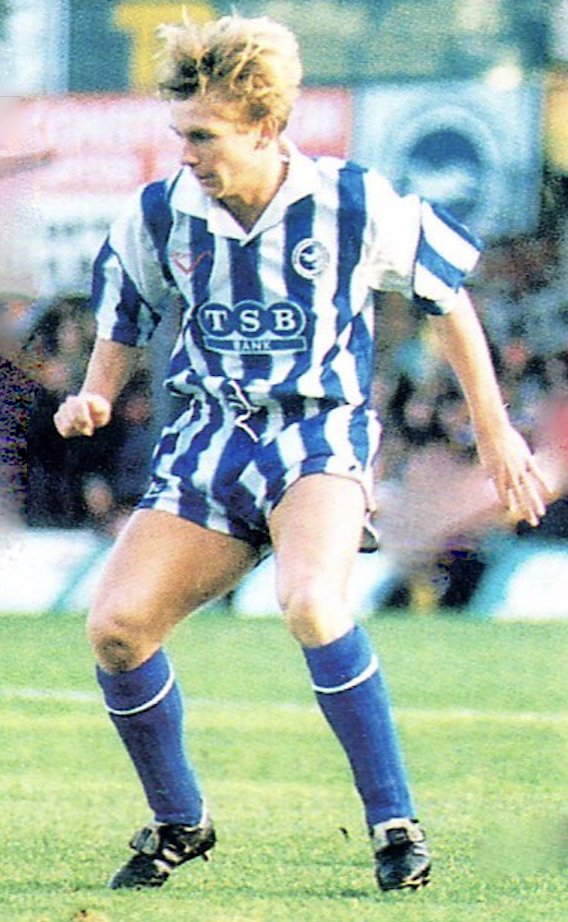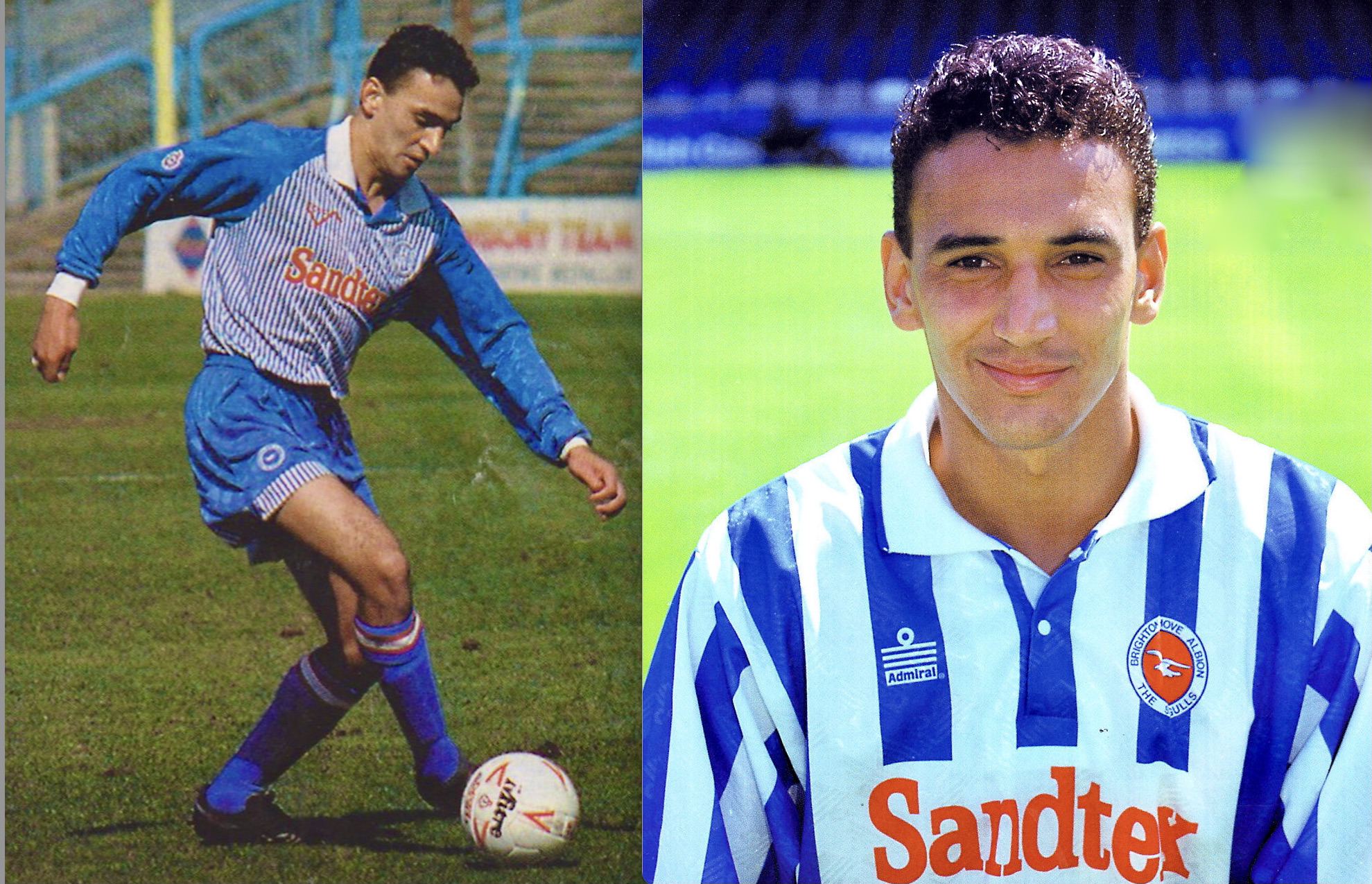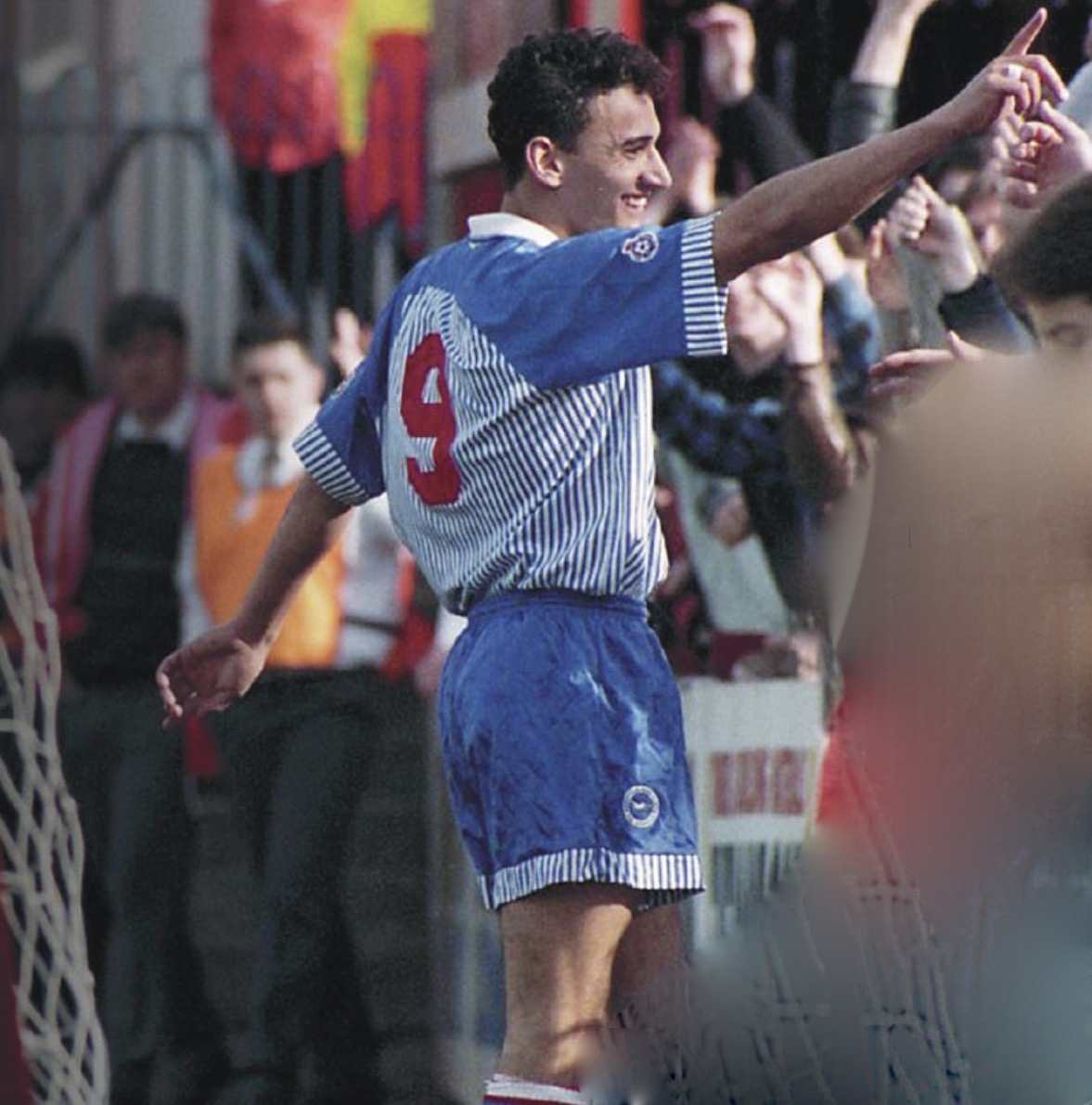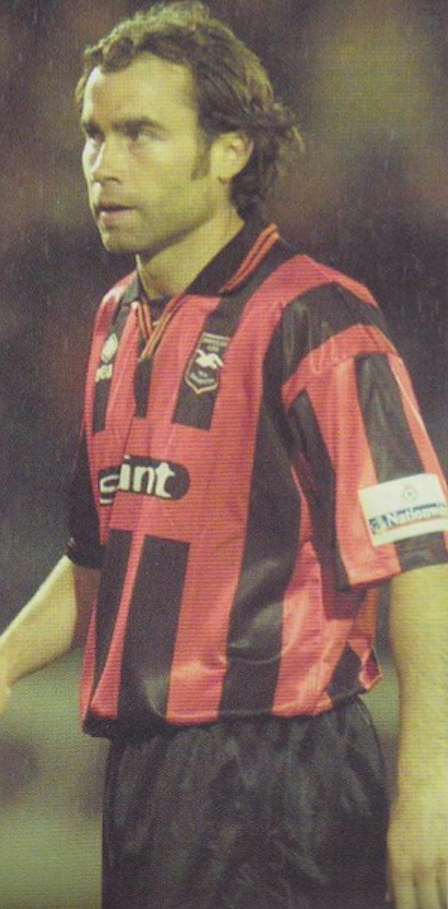
Edwards stole the limelight when Beckham made his debut

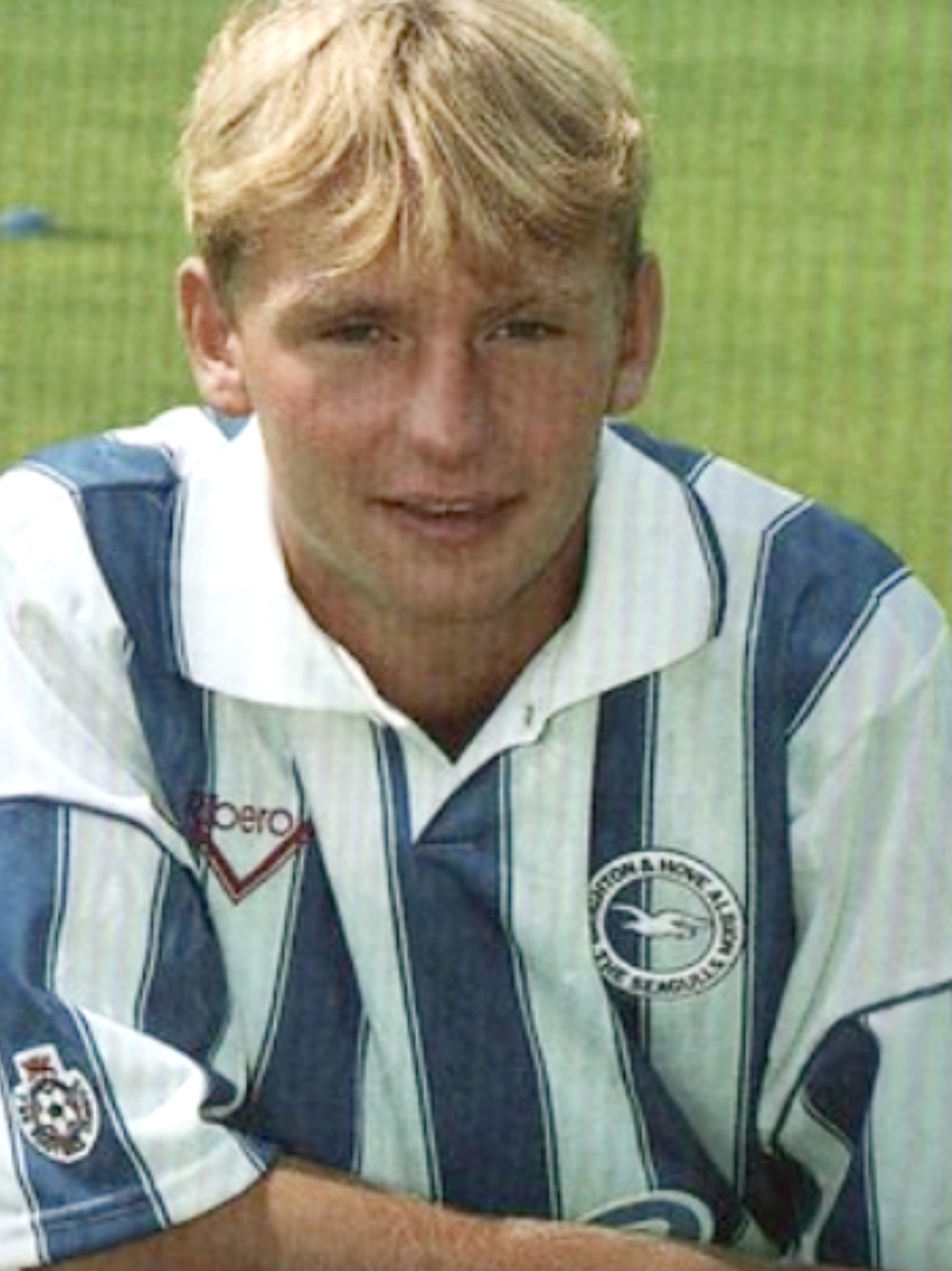
THE STORY of Matthew Edwards scoring for Brighton against Manchester United in the same cup match in which David Beckham made his debut has been told many times, and who wouldn’t be proud of that memory.

The history books can’t take it away from him, nor should they. “Scoring that goal against Manchester United was certainly the highspot of my career. Everyone wanted to talk about it and I was mentioned in all the papers and (I was) interviewed on television,” he said.

While that second round League Cup game on 23 September 1992 stands out, Edwards actually played 78 matches for the Albion after being released by Tottenham Hotspur, where his only first team outings were in testimonials or friendlies.

Albion were a very different proposition in September 1992, just beginning to reacquaint themselves to life back in the third tier of English football barely 16 months after having come close to returning to the top flight.

Big name players had been sold to try to balance the books and manager Barry Lloyd had to turn to free transfers, loanees and young hopefuls to put out a side.

Edwards was in that category and he probably only played in that United match because the respective parent clubs didn’t want loan forwards Steve Cotterill and Paul Moulden to be cup tied. He played alongside Scot Andy Kennedy, a recent arrival from Watford.

The youngster seized his chance and made a name for himself by heading home an Ian Chapman cross to cancel out Danny Wallace’s 35th-minute opener for the illustrious visitors.

Beckham had been sent on for his United bow in place of Andrei Kanchelskis (serenaded by a familiar North Stand chant of ‘Who the f****** h*** are you?’) but the game finished 1-1 at the Goldstone Ground, setting things up nicely for the second leg at Old Trafford (which United won 1-0).

Edwards once again earned a place in the headlines four months later when he scored the only goal of the game in a FA Cup third round win over south coast rivals Portsmouth, a side playing in the division above the Seagulls, and who had reached the previous season’s semi-finals.

Born in Hammersmith on 15 June 1971, the family lived in Brighton for a time and the young Edwards, who first started kicking a football around the age of six, played for local side Saltdean Tigers. At 13, he was on the Albion’s books under the guidance of Colin Woffinden, a former player who became youth coach.

But the family relocated to Surrey and it was while playing schoolboy football for Elmbridge Borough that he was spotted by Tottenham. In an extended interview with Lennon Branagan, Edwards explained how he got his big break courtesy of Fred Callaghan, Fulham’s left-back for 10 years who managed Brentford in the 1980s.

His son was playing in the same side as Edwards and Callaghan recommended Edwards to his friend Ted Buxton, a renowned coach and scout, who was working for Spurs at the time.

“I didn’t know that Ted had come along to watch me and then after one of the games they said: ‘Do you want to come to Spurs?’” Edwards recounted.

Young Spur Matthew Edwards

He signed associate schoolboy forms and while at Hinchley Wood Secondary School, Esher, travelled up to White Hart Lane on a Tuesday and Thursday night for training on an indoor pitch next to the main reception area.

On leaving school, he was taken on as an apprentice at Spurs and worked through his YTS under the auspices of youth team manager Keith Blunt and coach (and Blunt’s successor) Keith Waldon.

At 17, he signed on as a professional and he was on the books for three and a half years.

“We were quite successful in the reserves and I think that we used to win the league pretty much every season,” Edwards recalled.

It was tours abroad that he remembered most fondly from his time at Spurs, playing in Hawaii and Japan, and he also joined up with the first team squad for tours to Norway, Ireland and Italy.

A rare first team opportunity came in Billy Bonds’ testimonial at West Ham on 12 November 1990.

“I was young and had long blond hair and I can remember getting absolutely slaughtered by the West Ham fans that day,” he said.

In his final year, he went on loan to Reading, where he played eight games before returning to Spurs, and later the same season went to Peterborough on a similar arrangement, although he only played in one cup match for Posh.

He sensed his days at Spurs were drawing to a close, telling an Albion matchday programme: “I knew it was time for me to go when (manager) Peter Shreeves forgot my name!”

He said: “I had three months on loan at Peterborough but didn’t get a league game. Martin Hinshelwood rang me up in May and asked if I would be interested in coming to Brighton.”

Edwards marked by ex-teammate Justin Edinburgh

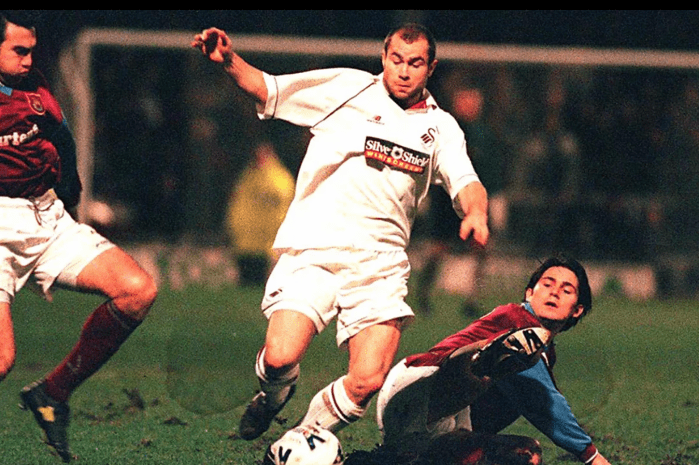
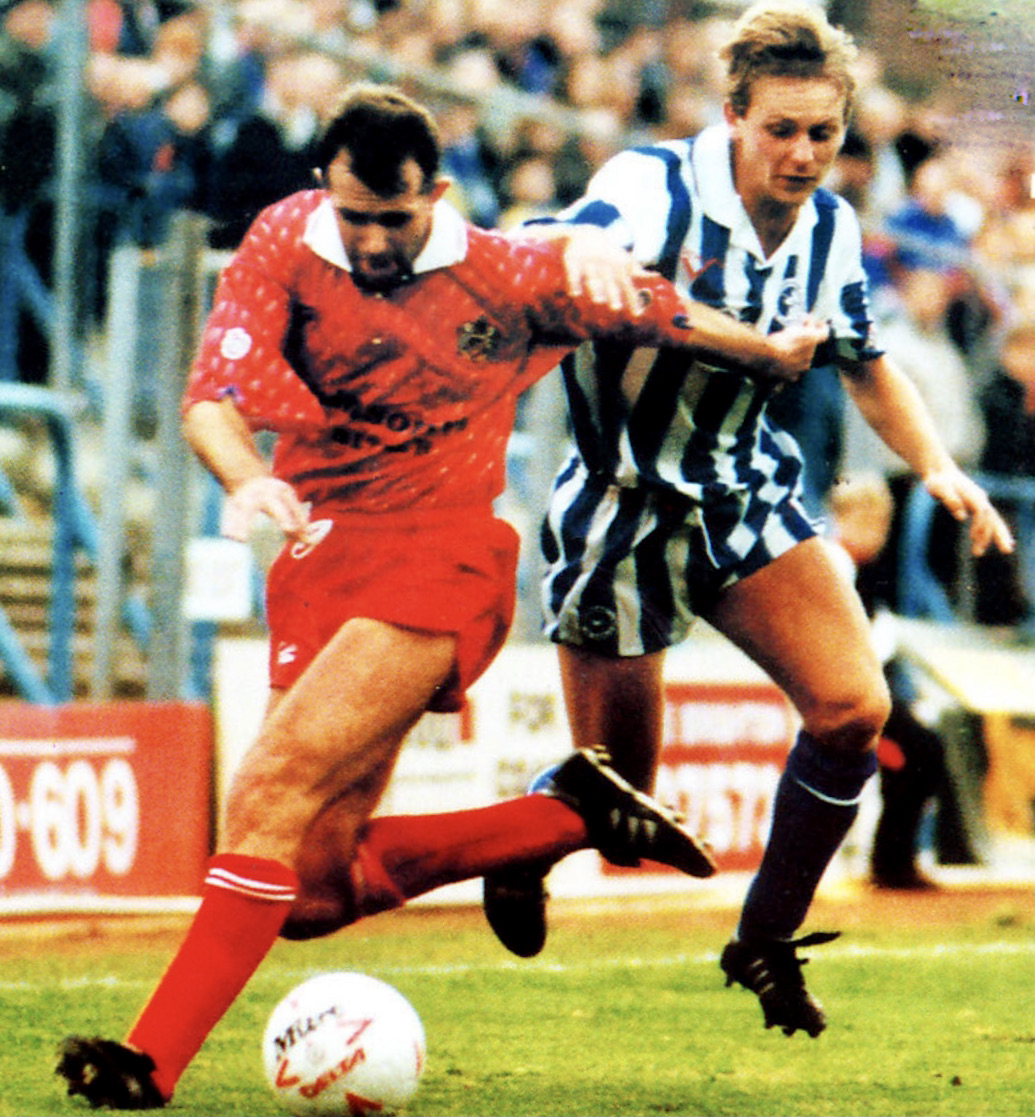
One of the first matches he played for the Seagulls was in a pre-season friendly against his former club, a 1-1 draw at the Goldstone on 29 July 1992. In a shocking excuse for a programme for the visit of Croatian side FC Inker Zapresic, a barely recognisable picture of the new signing was included. Thankfully a more professional programme appeared for the opening home league game, against Bolton Wanderers, and Edwards was pictured (left) in action up against his former teammate Justin Edinburgh

After Cotterill and Moulden had returned to their parent clubs because Albion couldn’t afford to make their moves permanent, Edwards started to forge a fledgling forward partnership with Kennedy. But Kurt Nogan took over and his prolific goalscoring saw Edwards have more of a peripheral role, although he ended the season taking over from soon-to-depart Clive Walker on the left wing.

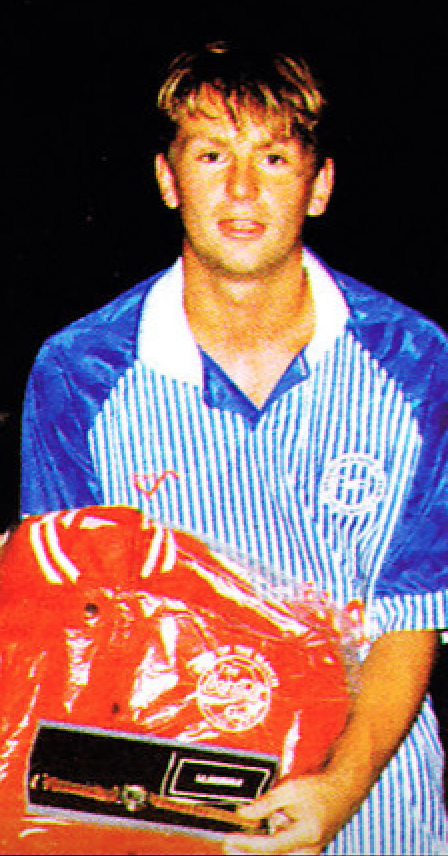
Edwards was in the starting line-up for the first half of the 1993-94 season, won a man-of-the-match award for his performance against Gillingham in the League Cup and scored in a 2-2 draw at home to Huddersfield.

He was the programme cover boy for the Exeter City home game on 2 October (0-0) but, with Albion dangerously close to the drop zone, Liam Brady took over from Lloyd and it soon became quite a different picture for the former Spurs youngster.

He played in the first seven games under the new boss, and scored in a 3-3 FA Cup tie v Bournemouth, but Brady had his own ideas and started looking elsewhere for solutions.

“Me and him didn’t really see eye to eye, or he didn’t particularly fancy me as a player,” Edwards told Branagan.

Although Edwards was a sub three times in March, his appearance off the bench in a home 1-1 draw with Burnley was his last involvement with the first team.

A regular in the reserves in the latter part of the season, at the end of it he was released and joined Conference side Kettering where he had barely got his shorts dirty before suffering a cruciate ligament injury.

“That that was the start of the end of my career as such,” he confessed. “I had a year out of the game.”

On his return to fitness, he had two good seasons for Walton & Hersham, and then Enfield. “My knees just kept on going for me,” he recounted. Over the course of another couple of years, he appeared for Carshalton Athletic, Sutton United, Molesey, Yeading, Bognor and Egham.

But he said: “My knees just weren’t up to playing football, so I had to call it a day and that was the end of the career.”

Interviewed for an Albion matchday programme article in 2019, he told journalist Spencer Vignes he had developed a career in computer software sales and had been a visitor to the Amex on behalf of a ticketing company that worked with the club.

He had subsequently moved on to providing similar expertise for visitor attractions such as zoos, museums, aquaria and cathedrals.

Reflecting on his all too brief career, he said: “I suppose I’m lucky in that I was in the right place at the right time to play for the Albion at the Goldstone, rather than Withdean. Saltdean Tigers to Spurs to Brighton; there can’t have been many people who have done that!”

Nicky Rust played more than 200 games then quit at 24

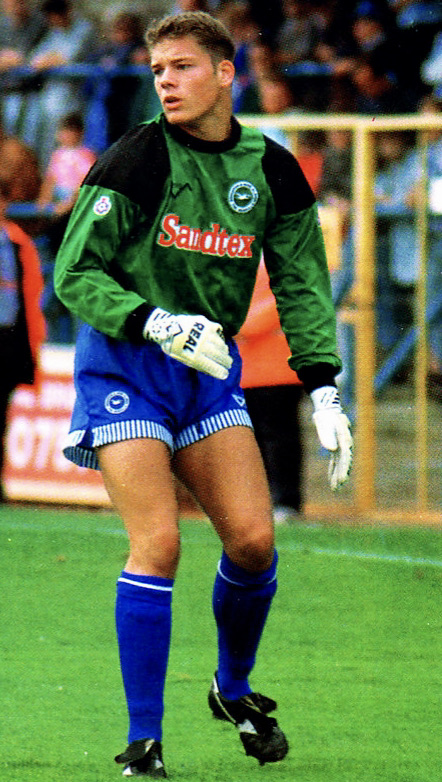
IT SEEMS extraordinary that a young goalkeeper who played more than 200 first-team games for Brighton quit the professional game at 24.

Nicky Rust had been one of the country’s elite young players when he graduated from the FA School of Excellence at Lilleshall. Then, at Arsenal, he was coached by the club’s legendary former ‘keeper Bob Wilson and trained alongside England international David Seaman.

But with little likelihood of 18-year-old Rust dislodging the established Seaman any time soon (and Alan Miller as back-up), Arsenal let him go in the spring of 1993. He ended up playing for five different managers in five years with the Albion.

Young Rust found himself picking the ball out of his net after only four minutes of his debut in Albion’s colours. That was on trial on 23 April 1993 away to Norwich City when Albion’s reserves, under Larry May, were looking for their first win in TWENTY attempts!

The Canaries included big money signing Efan Ekoku in their side and he opened the scoring before Rust had even had chance to break into a sweat.

However, a fairly strong Brighton side, including striker Andy Kennedy, returning to action after a back injury, Ian Chapman and Dean Wilkins, equalised with a Wilkins special: a 25-yard free kick that flew into the top corner past Mark Walton, a goalkeeper who would join Brighton five years later. Kennedy won it for the Albion with a cool finish past Walton in the last minute of the game.

Rust’s arrival was as a direct replacement for Mark Beeney, whose £350,000 move to Leeds three days previously had quite literally saved the club from going under (all the money went to pay an overdue tax bill with the Inland Revenue threatening to wind up the Albion).

By the time the summer came round, cash-strapped Albion also let go long-serving ‘keeper Perry Digweed, who’d been with the club for 12 years. So Rust, still only 18, suddenly found himself first choice at the start of the new season.

“I was thrown in the deep end and didn’t have time to think about nerves,” Rust told the Argus in a 2002 interview. “Barry Lloyd brought me in. Obviously, like any youngster, I had aspirations of making it in the Premiership.”

Arsenal boss George Graham was a former teammate of Lloyd’s going back to their days together at Chelsea and that friendship had already helped Albion obtain the services of defender Colin Pates on loan two years earlier (Pates also made a permanent move to the Albion that summer).

“Arsenal were and are a big club,” said Rust. “I had Bob Wilson as a goalkeeping coach and David Seaman was there offering me a lot of good, sound advice. He was a bit like myself in temperament, laid back, and we got on very well. But unfortunately for me it didn’t work out, and I was released. I was pleased Albion wanted me.”

Albion lost their opening two games, 2-0 at Bradford City in the league and 1-0 at Gillingham in the League Cup but two wins and a draw followed. While the side’s subsequent poor form ultimately led to the end of Lloyd’s reign, Rust kept his place when Liam Brady took over and was Albion’s regular no.1 for the next four years, much of which was played out against huge turbulence off the pitch.

“There was a lot of turmoil when I was there and saving our league status was a huge relief and was, in a strange way, one of my highlights,” he said. “The club’s problems were constantly there in the background and we were getting headlines for all the wrong reasons.”

On the pitch, Rust only missed two games in his first three years at the Albion. He equalled a club record for clean sheets with five on the bounce across February and March 1995.

The young goalkeeper had his own place in Portslade and also proved to be something of a landlord for other young players. He welcomed to his home temporarily during their loan spells former Arsenal teammates Mark Flatts and Paul Dickov and, longer term, striker Junior McDougald who had been at Lilleshall at the same time.

“Even though he was ex-Spurs and I was an ex-Gunner we got on really well,” he said. “We came from similar areas. I was from Cambridgeshire and he was from Huntingdonshire.”

Rust played his 100th league game for the Albion away to Bournemouth the day before he celebrated his 21st birthday on 25 September 1995. Teammate Steve Foster celebrated his 38th birthday on the day of the game, which Brighton lost 3-1. “Fozzie was a big influence in the dressing room,” Rust remembered. “He was highly respected and one of the loud characters. I certainly got my ear bent.”

Rust’s 210 games for Albion place him eighth in the list of longest-serving goalkeepers in the club’s entire history. But an injury and loss of form in the 1996-97 season led to him losing his place to local lad Mark Ormerod, who had started the season and was in goal for the final six matches when Albion only just survived dropping out of the league.

Rust had to play a waiting game as Ormerod continued as first choice at the start of the 1997-98 season. Unluckily for him, his chance of returning to the starting XI coincided with his partner having their first child. In November 1997, after only two wins in 15 matches, manager Steve Gritt was planning to rest Ormerod and reinstate Rust for an away game at Hull City.

But Rust’s pregnant partner went into labour and he dashed to be with her for the birth. Typically, Ormerod kept the first away clean sheet Albion had managed for TWENTY months and when he repeated the feat the following Saturday at Hartlepool, they were the first successive clean sheets since Rust’s run of five in March 1995!

Rust had to wait another fortnight, after Ormerod had been beaten twice in a defeat at home to Rotherham, before finally getting his chance to return to first-team duties.

Before long he demonstrated what he was capable of in a game close to home territory, at Peterborough United on 28 December 1997.

Albion were under severe pressure but held on for a 2-1 win and Gritt said: “We showed a great deal of fighting spirit and commitment to overcome their attacks and, on the day, had Nicky Rust in superb form to keep them out when they got through our last line of defence.”

The game was marred by young Darragh Ryan breaking a leg but Jeff Minton celebrated his 24th birthday by scoring Albion’s first goal and substitute Robbie Reinelt added Albion’s second – the first goal he’d scored since that all-important equaliser in the last game of the previous season at Hereford.

It came halfway through a run of 17 league games Rust played that season, the last of which (a 2-0 defeat at Exeter City) coincided with Gritt’s last game in charge.

New boss Brian Horton went with Ormerod and Rust had to watch on from the sidelines, although he did prove quite adept at offering his opinion on matches when drafted in as a summariser for South Coast Radio coverage of games.

The matchday programme noted he had been “doing an excellent job with his inside knowledge whilst, at the same time, earning the respect of his fellow players whose loved ones have been listening at home”.

While admitting he’d rather have been playing, Rust said he enjoyed the commentary banter. “His perception of the game and sense of humour have certainly come through on the air; they have received many favourable comments from listeners,” the programme noted.

However, disillusioned with life as an understudy, Rust chose to leave the Seagulls at the end of that season.

“I had got used to being No.1, but I wasn’t complacent and worked hard to get back in,” he told the Argus. “But it wasn’t the best of times for me.

“Brian Horton called me in one day and said: ‘You’re not in the team, how are you feeling?’ I said I thought I needed a new challenge. He told me not to rush into anything and I waited until the end of the season when I still felt the same way. It was very amicable.”

However, the grass definitely wasn’t greener on the other side. He spent pre-season with Orient but didn’t get taken on and moved to Barnet instead.

On his debut for Barnet, he picked the ball out the back of his net NINE times as the ‘keeper’s new club went down 9-1 at home to Peterborough, the cause not being helped by two Barnet players being sent off, one as early as the ninth minute.

After only two games for Barnet, Rust switched to Conference side Farnborough Town (where former Albion defender Wayne Stemp was playing at the time).

“The trouble was that the only contract Barnet could afford, because of limited finances, was just not enough,” Rust told the Argus. “It just wasn’t viable for me to sign it. I had a young family, my partner Clare, a childhood sweetheart by the way, and baby daughter Eloise to consider. Quite simply, the family came first. I wasn’t prepared to put them at risk by being selfish.” They later had a son, Harrison.

Rust chose to quit the full-time game and went on to run his own building business.

“A lot of goalkeepers go on forever but, in my case, I thought, at 24, that I ought to go out and get a proper job,” he said. “I don’t regret it for a moment.”

He went on to play non-league closer to home with Cambridge City and later helped out with once-a-week goalkeeper coaching.

Born in Ely, Cambridgeshire, on 25 September 1974, his father Alistair was a policeman in Great Shelford, just south of Cambridge, and his mother Corinne ran her own curtain making business. Rust was one of five children: there were three brothers (James, Philip and Thomas) and a sister (Francesca).

From Swavesey Primary School he moved on to Sawston Village College and the promising youngster was chosen for the Cambridgeshire and East Anglia representative sides.

He then gained a place at the FA School of Excellence at Lilleshall. Apart from McDougald, other contemporaries were Kevin Sharp and Jamie Forrester from Leeds United and Tottenham’s Sol Campbell, Danny Hill and Andy Turner.

Rust had trials at Tottenham and Luton Town, and Manchester United showed some interest, but he chose Arsenal as an associated schoolboy. It was the summer of 1991 when he joined them on a full-time basis as a YTS trainee.

The young ‘keeper played for England at under 15, under 16 and under 18 level and after joining the Albion was at one point put on standby for England under 21s.

‘Mad Dog’ Kennedy’s eyes weren’t always on the ball!

A Ken shot

IN A ‘10 worst Albion strikers you’ve seen’ list, Andy Kennedy would be a leading contender.

On the rare occasions he scored, he would celebrate with an exaggerated swagger befitting scoring the winning goal in a cup final – all rather out of place in a humdrum third tier league match!

The disdain in which the supporters of Watford hold him is hilariously summed up by Darren Rowe in an article on Blind, Stupid and Desperate.

“If an opposing team wanted to keep him under control, they did not need to mark him, merely make sure that he was offside, which, for long spells of the game, he would be,” opined Rowe. “Andy always seemed to have forgotten to put any studs in his boots. If ever he felt he could get away with it, his legs would give way at the edge of the box.”

In the same online title, author Chris Stride is a little more appreciative, before putting the knife in!

“He had good control, strength, ball skills and packed a powerful shot. In his early days at Blackburn, I saw him score a magnificent 25-yard curler and have an all-round blinding game against Aston Villa in the FA Cup.

andy kennedy - wat“When he signed for Watford I was hoping for more of the same. All we ever got was one long range effort away to Southend in the First Round of the Coca-Cola, and a couple of seasons of strolling around the pitch preserving his hairstyle and energy for (page three model girlfriend) Maria Whitaker.”
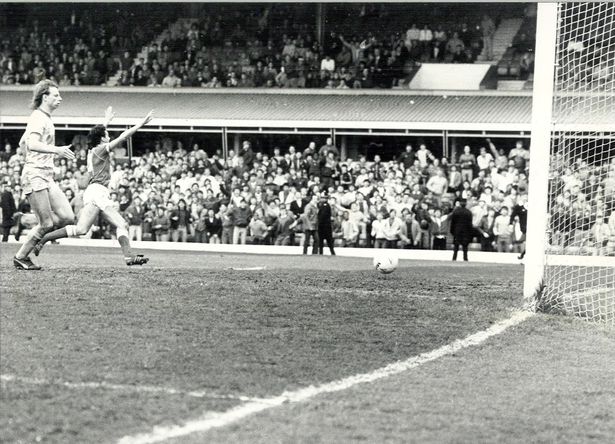
A Blackburn Rovers fan, posting in February 2018 under the name Drog on roversfans.com, also shared an amusing recollection of Kennedy’s time at his club.

“My main memories of Walsall though are from an occasion at homely former ground Fellows Park where Andy Kennedy netted a brace in a 2-1 win.

“My travelling companions and I managed to gain admission to the less than Babylonian splendour of something exotically named the Terry Ramsden Suite, after a colourful but ill-fated owner, where I was hoping to perhaps pass my congratulations on to Andy and his then-paramour, a lass named Maria Whittaker whom I greatly admired but sadly she had not made the trip to the Midlands.

“I can’t remember exactly what she looked like but the captions which accompanied her frequent newspaper appearances always made me think she’d make a sparkling conversationalist.”

It seems the shapely Ms Whitaker must have occupied Kennedy’s mind quite a lot. Non-League Paper contributor Liam Watson, once a player with Witton Albion, recalled in a 2013 article: “We also signed the striker Andy Kennedy – long dark hair, good looking fella – and he was knocking off the page three girl, Maria Whittaker, at the time. That was all he talked about.”

Born in Stirling on 8 October 1964 the son of an engineer father and beautician mother, Kennedy went to Wallace High School in the town and first gained football representative honours at under 13 level. It was his performances for Stirling Boys Club that caught the eye of Glasgow Rangers scout Davie Provan.

In those days he was a winger but after going through the ranks at Ibrox and signing professional at 17, he was converted into a central striker. He eventually broke through into the first team in 1982.

He mustered 20 games for the Scottish giants, scoring three times, but also spent some time on loan at Seiko in Hong Kong. Clearly it was time to move on from Glasgow!

In March 1985, Birmingham City were faltering as promotion candidates in the chasing pack at the top of the old Second Division when manager Ron Saunders took on the 20-year-old Kennedy at St Andrews.

Andy-Kennedy           Kennedy displays a more conventional goalscoring celebration for Birmingham

On 8 April, with regular striker David Geddis suspended and Blues trying to end a run that had seen just one win in the previous six games, Kennedy was called up for his debut at home to Sheffield United.

And what a start he made! Not only did he score with a header past former Villa ‘keeper John Burridge, he also set up Wayne Clarke to make it 3-0 and Blues went on to win 4-1.

Kennedy’s good form continued as he scored four in seven appearances and the stuttering Blues went from fourth to second and won automatic promotion back to the elite.

Kennedy was leading goalscorer the following season….but with just nine goals that didn’t say much, as the Blues went straight back down!

Throughout the course of his three-year contract with Birmingham he made 76 league appearances but scored just 18 goals and, in March 1987, was loaned to Sheffield United, where he scored once in nine games.

In the summer of 1988, he was on the move again, this time to Blackburn Rovers for a £50,000 fee. To be fair, the Ewood Park faithful probably saw the best of him as he netted 25 goals in 59 appearances during his two years at the club.

Watford were his next club and he joined for a fee of £60,000 in August 1990. But he failed to make an impact and was loaned out to Third Division Bolton Wanderers. Unfortunately, a back injury curtailed his time with the Trotters and he only managed one game before returning to Vicarage Road.

In his unhappy time with the Hornets, he made just 25 league appearances and scored only four goals.

A KenIt was a ‘phone call from Barry Lloyd‘s no.2 Martin Hinshelwood that heralded his arrival at the Goldstone. He joined Brighton for a nominal fee in September 1992, making his debut as a substitute for Steve Cotterill in a 1-0 home defeat to Reading on 26 September 1992.

“I am delighted to be here with a great bunch of lads and now I am determined to play my part in scoring goals and getting the club promotion,” he told the matchday programme.

A skip through recollections of Kennedy on North Stand Chat hardly stand as a ringing endorsement to his contribution in the stripes, the most complimentary coming from Austrian Gull, who maintained: “He wasn’t always that bad – we’d been spoilt by the beast that was Mike Small and Kennedy could never come close to reaching that level. Wasn’t the most hardworking but him and (Kurt) Nogan were okay. We certainly had a lot worse than Kennedy to come.”

Meanwhile backson reckoned: “Frustrating player. When we played United in the cup at Old Trafford, I seem to remember he was genuinely fouled in the box but went down so damn theatrically, like he’d been shot, it wasn’t given.”

Others recall him through that nickname ‘Mad Dog’ (first coined in a News of the World article about his affair with Ms Whittaker). Gwylan said: “Mad Dog wasn’t that bad – he was just lazy and looked unfit. If he had the attitude of Gary Hart, say, he’d have been an excellent player for us as he had a fair degree of ability.”

Pinkie Brown also observed: “Certainly had ability when he felt inclined. Sadly, as he had a bad attitude and was lazy, supporters saw little of that ability. One of those players who could have gone further had he been more focused.”

Several fans remember how he didn’t react well to observations from the terraces pointing out his shortcomings. Bladders was amused to recall: “One time, when he lazily chased a ball that went out of play, my old man told him to ‘put some bloody effort in Kennedy’. Kennedy then threatened to jump into the South Stand and smash his face in if he gave him any more lip.”

I must say on checking with the record books, I am staggered to discover he scored 10 times in 42 games for Brighton – although I do remember those over the top celebrations.

It’s said he left the club in 1994 after Liam Brady told him he wasn’t good enough to play for the reserves in the Sussex Senior Cup Final.

He ended his English league career with a cameo at Gillingham and at the age of 30 tried his luck in Hong Kong again, this time with Tsing Tao, before returning to the British Isles to play in Northern Ireland with Portadown and Shelbourne in Dublin.

As he was not the sort of player likely to be invited back to the club to reminisce over old times, he appears to have slipped below the radar in recent times.

However, Kennedy has linked up as a coach with the Rangers Soccer Schools programme at home and in North America. In 2005, Kennedy was part of a team of Rangers coaches who ran soccer schools in Canada. According to a Birmingham Mail report in 2015, Kennedy stayed in Canada at Ajax FC.

Kurt Nogan’s phenomenal goalscoring record for Brighton

Screen Shot 2023-03-06 at 08.26.32KURT NOGAN is right up there as one of my favourite all time Brighton & Hove Albion players. The ‘No, no; No, no, no, no; No, no, no Nogan’ fans’ chant still rings around my head when I think about his goalscoring exploits in the stripes.
One of my favourite Albion memories involved Kurt scoring at Filbert Street when he rounded off one of Albion’s best ever performances to give Division 2 Albion a 2-0 League Cup victory over Premiership Leicester.

It was the autumn of 1994 and I had travelled halfway across the country to Cheltenham to meet up with my then exiled Albion-supporting friend Colin Snowball to travel up to Leicester together to watch the game.

Before the match, we parked in a side street near the university and found a tiny back-street boozer where they served a magnificent pint of Everard’s Tiger, the local ale.

In those days, League Cup games were played over two legs and Albion, with Liam Brady as manager, went into the away game leading 1-0, courtesy of another Nogan goal, which had given us optimism rather than confidence that Albion could progress.

Leicester got their Nogans in a twist in the match programme, mistakenly identifying the first leg scorer as Kurt’s older brother Lee who played for Watford at the time: they knew which one it was by the end of the game!

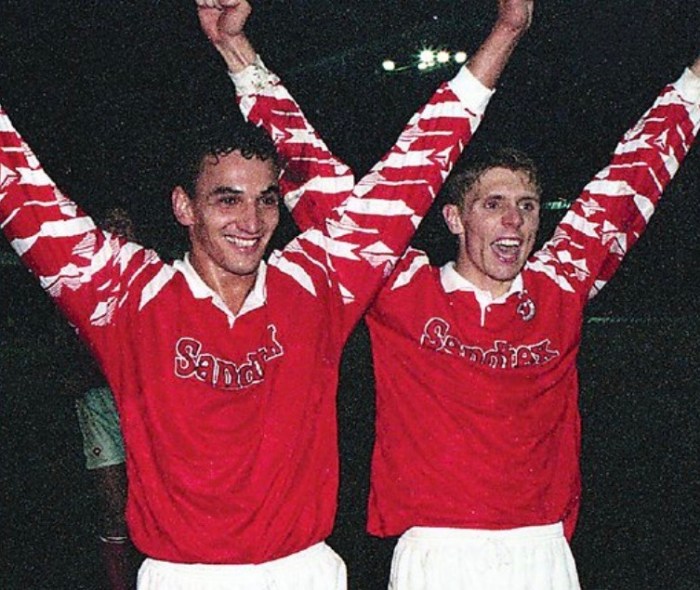
With one of the best away displays I have seen, Brighton took the game to their supposedly more illustrious opponents and caused a major shock when a stunning long range strike from young defender Stuart Munday (celebrating above with Nogan) sailed past Kevin Poole in Leicester’s goal.

There was a curious cameo towards the end of the game when Jimmy Case, who was hard of hearing, trotted over to take a corner and seemed to be wasting time. The ref also thought so and promptly sent him off but Case later claimed he had been waiting for the whistle but hadn’t heard it above the din of the crowd!

With Leicester pushing up for a goal to get themselves back in it, Nogan was left unmarked to seal the win and stun the majority of the crowd into silence.

None of the faithful knew at the time, of course, but it was the last goal Nogan would score for the club.

He subsequently went on a 20-game barren run and, at the end of February 1995, with Albion desperately needing funds, they persuaded Burnley to part with £250,000 for his services.

He might have finished on a downer, but Nogan’s Albion record was 60 goals in 120 games, making him one of the club’s great all-time goalscorers.

Born in Cardiff on 9 September 1970, Nogan arrived at the Goldstone having been released at the end of the 1991-92 season by David Pleat during his second spell as manager of Luton Town. At Luton, Nogan celebrated  his top flight debut in 1990 with a goal in a 2-2 draw against Liverpool at Anfield.

The young Welshman was quickly called up for his country’s under-21s for whom he also scored on his debut. However, competing for a place alongside the likes of established forwards Mick Harford and Brian Stein, he struggled to gain a starting berth in the Luton first team, mainly being used as a substitute.

He had just turned 22 when he signed for the Seagulls, and he told the matchday programme in 2020: “I’d been at Luton since I was 16 – cleaned Steve Foster‘s boots as an apprentice, so I did.”

On reflection, he realised it was a crossroads moment in his life. “You can either drop out of the professional game altogether, or something comes along and you get lucky. For me, Brighton came along and I got lucky.”

If Albion had been able to retain the services of the on-loan strike pair Steve Cotterill and Paul Moulden, who started the 1992-93 season up front, Nogan’s chances of making the breakthrough might have been limited.

But finances dictated otherwise and Nogan eventually made his debut in October 1992, taking over up from another free transfer signing, Matthew Edwards, although much of the season he played alongside Edwards, who moved out to the wing, and Andy Kennedy.

nogan saluteAfter a slow start Nogan scored his first goal in one of those lower league meaningless cup matches and then started finding the net regularly in the league, ending the season with 22 goals in all competitions.
For part of the 1993-94 season he enjoyed a particularly fruitful partnership with a young Paul Dickov, the diminuitive Scottish striker on loan from Arsenal for eight matches.

Nogan ended the campaign with 26 goals to his name, and was voted player of the season, even though the team finished in a disappointing 14th place.

Nogan continued to have a variety of strike partners – often it was Junior McDougald but twice in late 1994 he was alongside the legendary Frank Stapleton who was doing his old Arsenal teammate Brady a favour by turning out for the Seagulls.

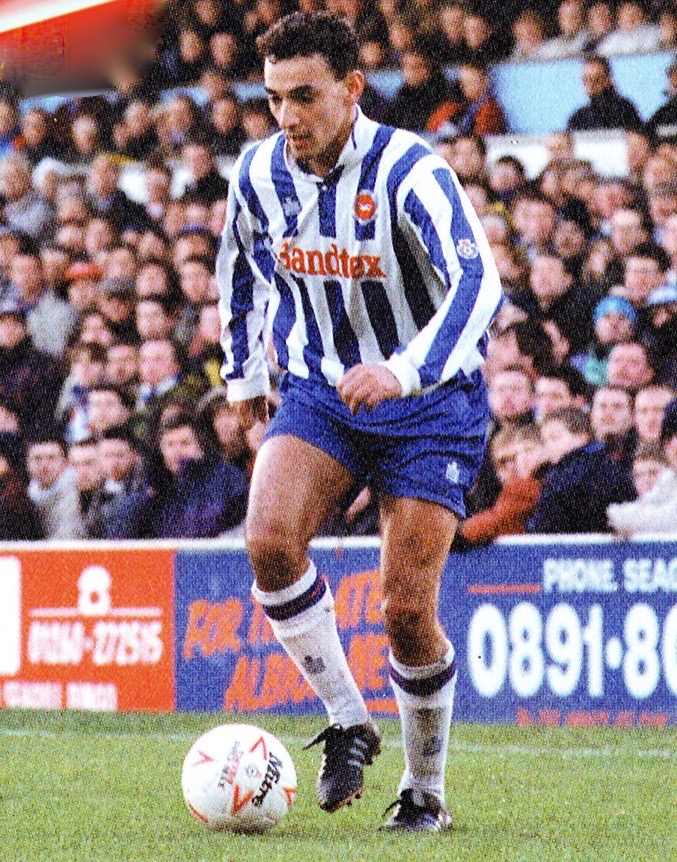
nogan ballIn fact, one of Stapleton’s two games in a Brighton shirt was away to Cardiff on 5 November 1994. In the Bluebirds line-up that day were future Seagulls Charlie Oatway and Phil Stant, the latter scoring twice in a 3-0 win.

Nogan’s career was detailed brilliantly in a profile by Tony Scholes on clarets-mad.co.uk and he noted that Burnley boss Jimmy Mullen’s gamble on Nogan wasn’t enough to prevent them being relegated. The Welshman scored just three times and got involved in an altercation with the manager after being substituted at Bristol City.

However his goal touch returned in the 1995-96 season when he racked up 26 goals, 20 of them in the league, and got on well with Mullen’s successor Adrian Heath – until halfway through the following season when he was suddenly out of favour.

A move was inevitable after Nogan aired his differences with the manager on local radio. “All of a sudden the crowd hero had become public enemy number one,” said Scholes.

That he moved to near neighbours Preston in February 1997 was somewhat galling and Burnley fans of a certain age recall the inevitability of him scoring against them for his new club.

Three years later he moved to home town club Cardiff but, after only four full games and a few substitute appearances, a ruptured hamstring ended his league career prematurely at the age of 32. He did subsequently turn out for some Welsh League clubs but he wasn’t able to return to the previous level.

  • Matchday programme pictures include various shots of Nogan in action and, from the Leicester programme for that cup tie, he is wrongly captioned with his brother’s name.