

WITH all due respect to his predecessors in the number 6 shirt, Dennis Burnett was a classy addition to Brighton’s defence when he signed from Hull City in 1975.
At the end of his first season with Brighton, when they toyed with promotion from Division 3 but just missed out, Burnett was selected in the PFA Third Division Team of the Year, which said everything about his stature amongst his fellow professionals. Albion’s Peter O’Sullivan was also selected while the goalkeeper was Eric Steele, then with Peterborough, and Crystal Palace winger, and, future Brighton manager, Peter Taylor, was also in the XI.
Before 1975, Brighton fans had been used to seeing their centre halves hoof it, but Burnett play more in the style of another famous former West Ham number 6. OK, he might never have reached Bobby Moore’s level but he played alongside the great man for a while and came through the ranks at West Ham when they had a reputation for playing cultured football.
He started off in the West Ham youth team and was in the 1963 FA Youth Cup winning side alongside the likes of Harry Redknapp, Clive Charles, Bobby Howe and John Sissons.
Burnett made his first team debut for the Hammers as a 21-year-old in October 1965, along with Jimmy Bloomfield (the future Orient and Leicester manager), in a 3-0 defeat to Fulham at Craven Cottage. He made 24 league appearances in 1965-66, the most he managed in any one season for the Hammers.
In March 1966, he collected a League Cup runners-up medal playing right back in a side that lost 5-3 over two legs to West Brom. The team was captained by Bobby Moore, and included Martin Peters and Geoff Hurst, just four months before all three played in England’s one and only World Cup win.
Burnett went on to complete 66 league and cup appearances for West Ham.
Born in Southwark on 27 September 1944, perhaps it was no surprise his next stop was Millwall. West Ham sold him to The Lions in 1967 for £15,000, and the vast majority of his football career was spent at The Den, playing in the second tier.
Playing alongside Barry Kitchener at centre half and Harry Cripps at left back, he was part of a team that nearly made it to the First Division, particularly in 1971-72.
In a scene you would never get now in the mobile phone age, Millwall were leading Preston at home and the word went round The Den that rivals for promotion Birmingham were losing at Sheffield Wednesday. It looked like Millwall would be promoted to the elite for the first time in their history and the news spread to the players on the pitch.
Unfortunately, the rumour was completely wrong. Birmingham were leading, not losing. Club skipper Cripps had even gone round the Preston players telling them Millwall were going up but level-headed Burnett didn’t get carried away.
millwall-history.org records: On-the-field skipper Dennis Burnett was less convinced. “I wasn’t going to believe it until I knew for sure,” he said. “Those last few minutes were agonising. We played on in a dream. It was the longest 20 minutes ever for me.”
As the end of the game approached, the crowd jammed the touchline, waiting to cheer off the Millwall players. The pressure behind Millwall’s goal was so great that the woodwork began to buckle.
Centre-forward Barry Bridges (who would join Brighton five months later) ran back to appeal to the fans to be patient. When the referee blew for the last time – suspiciously early – half the 20,000 crowd stormed on to the pitch. Cripps was carried aloft and some of the other players lost their shirts.
Finally the correct score from Hillsborough was announced and the crowd fell silent and faded away.
The following season, Millwall struggled near the bottom of the table and manager Benny Fenton moved Burnett into midfield.
“As a sweeper I was a bit restricted,” he told Goal’s Ray Bradley, who described him as “one of the most accomplished and stylish players outside the First Division”.
“I had to stay back and wasn’t so involved,” said Burnett. “ Now I find I can express myself more and go up in support of the attack.”
Unlike his illustrious former Hammers teammates, full international recognition eluded him but in April 1973 Burnett was part of an English FA squad managed by Sir Alf Ramsey that thrashed Gibraltar 9-0 in a ‘friendly’. Frank Worthington (of Leicester at the time) scored a hat-trick.
Hankering for another shot at top division football, Burnett went on to the transfer list at The Den. He got his move, but only to a club in the same division.
After clocking up 257 appearances for Millwall, in 1974, Terry Neill paid £80,000 to take Burnett to Hull City, where a young Stuart Pearson, future West Ham, Man Utd and England international was making a name for himself.
However, when Neill left to become manager of Spurs, his replacement John Kaye brought in his own man while Burnett was out of the side suspended. After losing his place, Burnett had a brief loan spell back at Millwall.
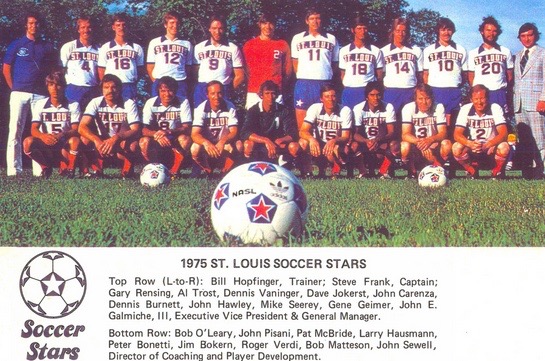
During the summer of 1975, he played 21 games in the States with St Louis Stars (for whom former Chelsea and England goalkeeper Peter Bonetti was playing) before Brighton manager Peter Taylor secured his services for the Seagulls.

In an article in Shoot incorporating Goal, Burnett explained how, although he’d been sidelined for two months with an ankle ligament injury, he’d got back in the side only to be sent off in a game away to Bristol City.
“It was a most unjust decision. Even the opposition seemed flabbergasted,” he said. “Anyway, I never played for Hull again. The signing of Dave Roberts from Oxford United put paid to my chances of a first team recall, following my suspension.
“Eventually, manager John Kaye called me into his office and asked if I wanted a move. A price of £30,000 was put on my head, later reduced to £15,000. No one came for me so in April I went to the United States and played for St Louis Stars in Missouri, a North American Soccer League club.
“While there I received another contract from Hull City, which I refused to sign. I lodged an appeal against it to the Football League Management Committee. Surprisingly they upheld it, and, during July, I received a letter to say I’d been given a free transfer.
“I arrived back in England on August 24th, made and received a number of ‘phone calls which resulted in my being offered a three-year contract by Brighton, plus excellent wages, which at the age of 31 was fantastic for me,
“Added to all this is the potential of Brighton in terms of location, players and attendances. It was a move not to be resisted.”
Burnett told the magazine he felt Brighton were much better prepared for promotion than Millwall had been. “Had we gone up, we would have needed a miracle to survive in the First,” he said. “At Brighton, we are winning matches without being fully stretched. The right blend is there and we can only get better.

“If I look after myself, I can get through another four or five seasons, by which time Brighton could be up amongst the big boys.”
Burnett was obviously a good judge because Brighton certainly got themselves up amongst the ‘big boys’ four years later – although by then he was no longer a part of it.
After a successful first season in which he developed a formidable central defensive partnership with Andy Rollings, and earned that placed in the PFA team of the year, perhaps there were signs that age was catching up with him.
In his end of season review in the Evening Argus, Albion reporter John Vinicombe observed: “Over the course of the season, the most improved player was Andy Rollings who profited by the experience of Dennis Burnett at his elbow.
“There were times when Burnett looked unflappable in the centre of the defence. As time wore on, and situations became more frenetic, that casual style, no doubt a legacy of his West Ham upbringing, now and again landed him in trouble.”
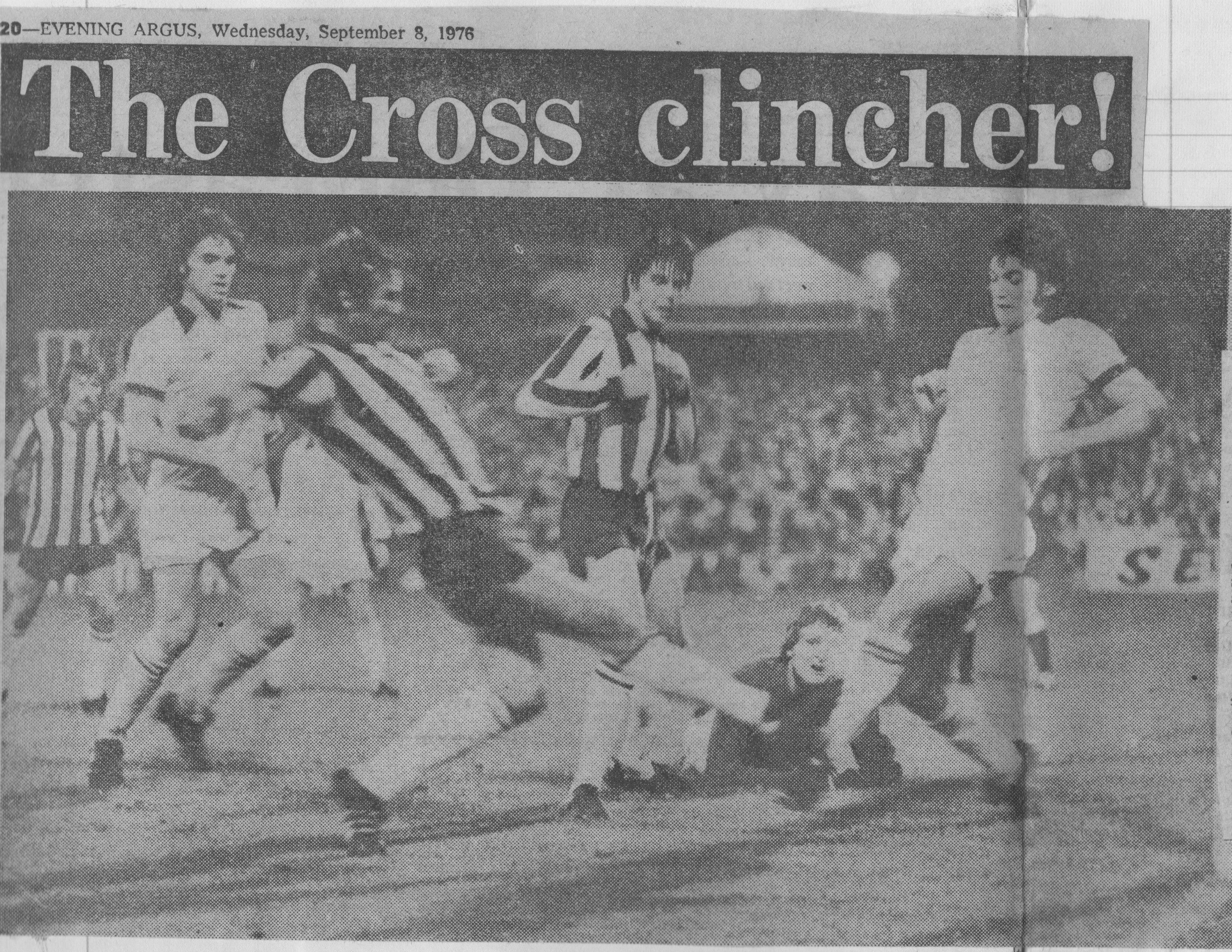
Maybe manager Taylor thought the same because one of the last things he did before quitting and rejoining Brian Clough was to sign veteran defender Graham Cross, which spelled trouble for Burnett.
Under new manager Alan Mullery, in the league at least, Cross was preferred alongside Rollings. Burnett deputised for Rollings when he was injured – for example, he played alongside Cross in the memorable 7-2 demolition of York City – and was given some games in midfield, but mainly in the League Cup he got the chance to shine.
He played in memorable games against First Division opponents Ipswich, West Brom and Derby, and was assured alongside Cross in the memorable narrow 2-1 defeat at the Baseball Ground in November 1976.
Vinicombe reported: “Cross and Burnett played coolly and neither looked out of place among the high-priced cream.”
He kept his place for a league game away to Port Vale five days later, but that 2-2 draw was his last in an Albion shirt.
In early February 1977, together with ex-Spur Phil Beal, he agreed a pay-off with the club and played non league with Ilford for the remainder of the season before returning to the States and another 19 games for St Louis Stars, where he was joined by former Albion teammate Fred Binney.
Mullery explained several years later in his autobiography that he had inherited a squad of 36 professionals and needed to prune the numbers. The older players were the obvious ones to go and, although Beal and Burnett went quietly, he had more truck dispensing with Joe Kinnear’s services – but that’s a story for another day.
On his return to these shores, Burnett headed for Ireland to play for Shamrock Rovers, at that time managed by the legendary Johnny Giles.
The defender subsequently played for three years in Norway, for SK Haugar, and popped up back in Sussex in 1994 as assistant manager of Sussex County League side Lancing, and played in a 2-1 defeat against Horsham YMCA in the FA Cup a month before his 50th birthday!
According to Wikipedia, Burnett ran a painting and decorating business in Sussex after he left football and was working in the hospitality suites at Upton Park before West Ham moved to the Olympic Stadium.


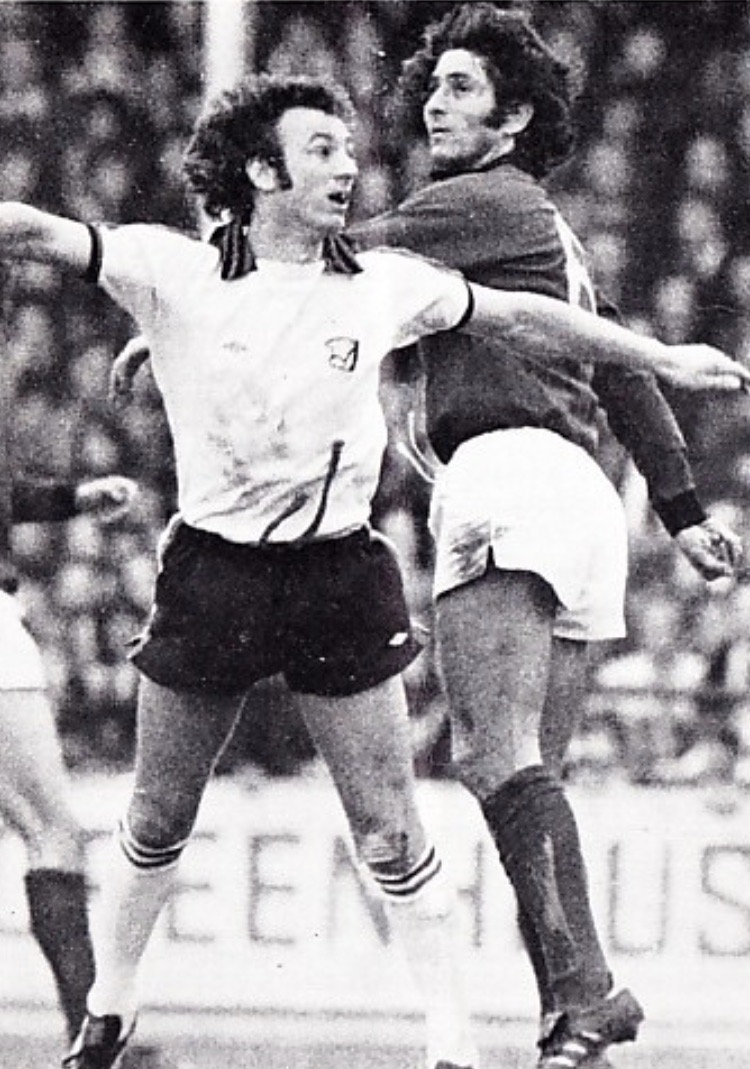
Pictured above are a Newham Recorder shot of Burnett in West Ham colours; in action for Millwall (from Goal), and in Albion’s stripes (from Shoot!). Below, an archive shot of the St Louis Stars side of 1975 with Burnett in the back row wearing the 18 shirt and Peter Bonetti in the centre of the front row.
 GRAHAM Cross won promotion from the third tier in successive seasons – one with Brighton & Hove Albion, the next with Preston North End.
 However, when he realised he could land the highly promising 20-year-old
  Cross had been part of the furniture at Leicester and the meashamfox blog recalls how he scored on his debut on 29 April 1961 against Birmingham City in a 3-2 win at Filbert Street.


 THE SONGS still sung today that immortalise


 In parallel lines