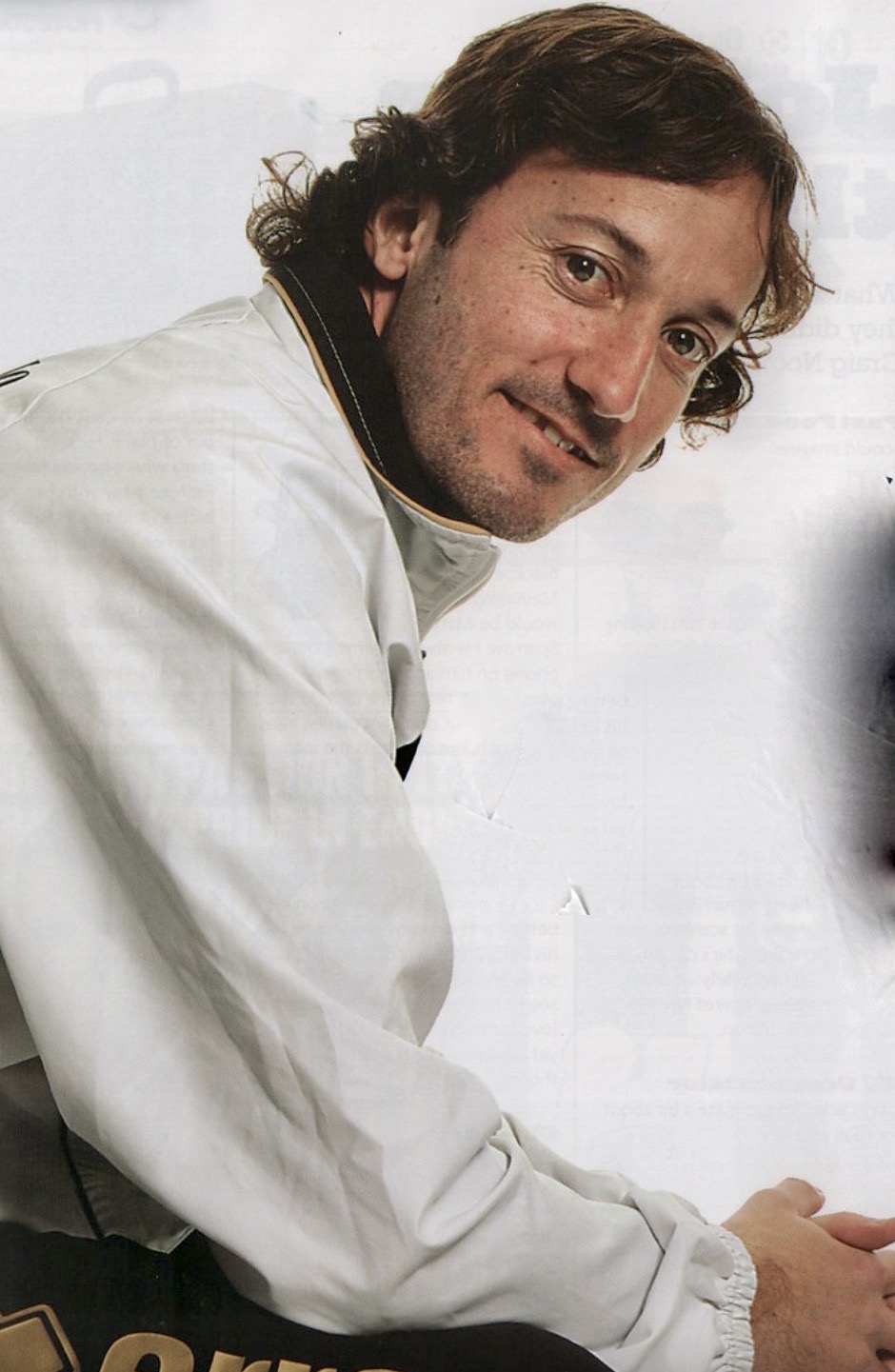
Alexis Mac Allister: the history-making World Cup winner

IF WINNING the World Cup is the pinnacle of any footballer’s career, there can be no question that Alexis Mac Allister has no equal as the greatest ever Brighton and Hove Albion player.

Several players have achieved the honour of representing their country on the back of their performances for Brighton, but never before December 2022 had the club boasted a World Cup winner, an international teammate of world-renowned Lionel Messi.

Argentinian Mac Allister has got the lot in his locker: equally adept as a holding or attacking midfielder, a great eye for pinpoint passes, deadly from the penalty spot, and with thunderbolt shots from distance to boot.

Indeed, one of the most memorable long-range strikes he scored for Brighton – against Leicester in Graham Potter’s last game in charge – would have been a goal of the season contender had it not been ruled out by the narrowest of VAR calls. It took the video assistant referee more than four minutes to chalk it off for offside which Potter conceded was “probably a millimetre or two the right decision”.

Thankfully, Mac Allister managed two that did count in that 5-2 win, converting a penalty for Albion’s fourth and then curling in an excellent 25-yard free-kick in injury time.

Potter’s input to making Mac Allister a more complete player was acknowledged in an interview with SunSport, not long after the coach departed forChelsea.

“He was very helpful — improving my versatility and physicality. I’m a much better player today because of it so I can thank him a lot,” said Mac Allister, who admitted how at first he found it difficult to transition from a more advanced player to a deeper-lying midfielder.

“The first year wasn’t easy for me. I found it very hard coming from Argentina with a different language and different way to play football. I physically wasn’t as strong as I am today,” he said.

In fact, he came close to jacking it all in at Brighton in December 2020, as he revealed in an in-depth interview with theplayerstribune.com, but was talked round in a FaceTime call with his mum in Buenos Aires.

“By that Christmas, with no fans in the stadiums, I had my bags packed. Literally, they were packed. I had two offers to leave — one from Russia and another from Spain, and my mind was made up.

“At the time, I was barely playing for Brighton. It was embarrassing, because I had the no. 10 shirt for a Premier League club, which is the dream of so many kids in Argentina, but I was a nobody. My name was nothing. I thought that I was cursed,” he said.

He got on FaceTime with his mum and he admitted: “I was sobbing. I was at my flat in Brighton, and she was back home in Buenos Aires. I had lost my head. I said, ‘Mum, I can’t do it anymore. I’m coming home. I need to get out of here’.” 

He continued: “I wanted to go home so bad. But my mum made me see the light. ‘Ale, remember how much you always wanted this?’ she said. ‘You have to be brave. You can’t quit now’.” 

In the new year, Mac Allister started many more games and eventually cemented his place in the heart of Albion’s midfield.

No longer a nobody; Mac Allister now has a staggering 8.6 million followers of his Instagram account!

“I like to play as a no. 10, I like to play as a no. 6,” he said. “The most important thing for me is to help my teammates win football games and try to be as central as I can so I can be as close to the ball to get on it as much as possible.”

Potter himself spoke highly about the way Mac Allister handled the transition, saying in January 2021: “Sometimes when players make the move there can be an assumption that it will all happen for them straight away.

“He’s moved from South America and was adapting to a new country before COVID and then picked up a couple of injuries.

“But he’s a determined individual and he’s a really good guy to work with. He reads the game really well and has a good footballing brain.”

Born in the Argentine lowland city of Santa Rosa on Christmas Eve 1998, Mac Allister started his career with Club Social y Deportivo Parque before joining the youth team of Argentinos Juniors in Buenos Aires.

He made his senior team debut there in October 2016 and a year later he and his older brothers Kevin and Francis all played in the same side. Their father Carlos, a left back known as El Colorado — “the Redhead”—  had also played for Argentinos Juniors and Boca Juniors (and won three caps for Argentina).

Alexis signed for Brighton in January 2019 on a four-and-a-half-year contract and said at the time: “The main reason I signed was because the club came to Argentina looking for me and they seemed very convinced about me.

Mac Allister liked the direction Albion saw for him before signing

“They made a big effort, told me about their project and their ideas to keep growing in this league, and I liked their ideas. I liked what they said.”

He was loaned back to Argentinos Juniors until the end of the 2018-19 season and then moved on loan again to Boca Juniors, where brother Kevin was playing, for the first half of the 2019-20 season. This was a Boca side that had one of the players he used to admire from afar – former Man Utd and West Ham striker Carlos Tevez – up front.

Mac Allister told GQ magazine in September 2025: “When I was younger, there weren’t many Argentinians in the Premier League but I used to wake up very early in the mornings to watch players like Carlos Tevez and Maxi Rodriguez.

“I was a big fan of the Premier League, so I hope the next generations are doing the same with us, not just with me but with Argentinian players in general.”

Albion recalled Mac Allister in January 2020 a couple of months before the Covid pandemic began to bite. “My time at Boca helped me mature and I learned a lot of things,” he told the Albion website.

Mac Allister made his debut as a substitute at Molineux in the last fixture before matches were halted for three months. I was at that Wolves match and even in a few short minutes on the pitch there were glimpses of what the young Argentinian was going to add to Potter’s side.

But the break hit Mac Allister hard. “Everything shut down. No football. No friends. And the worst part was that I was stuck in a country where I didn’t speak the language, he told theplayerstribune.com.

“When I first came here, I thought ‘I’ve played for Boca Juniors, one of the best teams in South America, I am ready’,” Mac Allister said in an interview on the Albion website in February 2022. “We had the Covid situation and I didn’t train for two or three months with my teammates. When we returned, I realised I wasn’t at the level I needed to be. I had to work.”

The year which would end with Mac Allister as a World Cup winner began well too when he scored twice at Goodison Park in Albion’s first ever win at Everton on 2 January. The player himself saw it as pivotal moment.

Mac Allister reckoned everything clicked for him when he scored twice at Goodison Park

The game was only three minutes old when Mac Allister latched on to Neal Maupay’s knockdown to score in the third minute before Dan Burn put Albion 2-0 up on 21 minutes.

Anthony Gordon pulled one back but Mac Allister found the top-right corner with a superb strike to make it 3-1 on 71 minutes. Gordon struck again 14 minutes from the end, but Brighton held on to win.

“When I scored two against Everton in January 2022, it felt like everything clicked for me,” he said. “That day at Goodison, I became something different.”

Admitting he had been hoping to improve on the goalscoring front, Mac Allister told the club website: “When I played in Argentina I would score and assist a lot more. I have scored a few times for Brighton now, it’s nice to get the confidence from that.

“I had a few games where I was on the bench and that’s not what I want, so I knew I had to keep working because I knew I would get my chance and when I did, I wanted to be ready. When that chance came along, I thought I took it well.

“The message from the gaffer and my teammates was to keep my head down and work hard. It’s not just the 11 who start, the people on the bench are important too.”

Always deadly from the penalty spot

The next step change in his career came with the appointment of Roberto De Zerbi as Potter’s successor. “A few months before the World Cup, it changed everything for me,” he said.

“The main thing that he helped me improve was my scanning of the field — my “profiling” of the situation. Taking little mental pictures of the chess board every two seconds. We looked at Ødegaard as an example of this. For me, he’s one of the best in the world at scanning. His head never stops moving. De Zerbi gave me this gift, and it really elevated my game.”

Mac Allister told theplayerstribune.com: “Playing every week, with the manager’s trust, the idea of the World Cup started to seem not so distant.

“I will never forget, we were away at Wolverhampton, and I was in the hotel whenI received the call of my dreams. I was in the squad. I was actually going to Qatar.”

He called his parents and they cried together. He reflected: “Two years earlier, I couldn’t get off the bench at Brighton. Now I was going to the World Cup with Argentina, trying to make history.”

When he helped his country to lift the World Cup on 18 December 2022 (beating France 4-2 on penalties after the game finished 3-3), Mac Allister’s stock had already been rising. He was man of the match after scoring for his country for the first time in a 2-0 win over Poland that took Argentina through to the last 16. In the final, he delivered an inch-perfect cross for Angel di Maria to give Argentina a 2-0 lead in the first half and De Zerbi observed how well he played alongside maestro Messi.

“Messi and Mac Allister speak the same (football) language and Messi understands very well the quality of Alexis,” De Zerbi told The Athletic. “If you watch the game, Messi was looking for Alexis lots of times and they made a lot of passes to each other. Alexis was always giving back to Messi a clean pass.”

With Mac Allister playing further forward for his country than with the Albion, it had De Zerbi pondering. “I’d like to speak to him when he comes back,” the Italian told The Athletic. “I like him a lot in the other position (deeper).

“I spoke with his father the other day and he told me he prefers the Argentina position, but in that position we have (Adam) Lallana and Lallana is a teacher.

“If a team wants to become big, the quality needs to be further back. For me the midfielder can play on the defensive line, because he’s bringing more quality.”

But he added: “Alexis can play anywhere on the pitch. I don’t know if he’s better as a playmaker or 20 metres further forward.”

Established as a kingpin in Albion’s midfield alongside Moises Caicedo — almost certainly, Albion have never had a better pairing in that area of the team — it was inevitable that they would move on.

In May 2023, De Zerbi was phlegmatic about losing them both. “I think it’s right they can leave, can change teams and play in a level higher,” he said. “If you ask me about Caicedo and Mac Allister, I love them and they are two big, big players and can be in a big, big European team.

“They can play in every competition and are ready to compete for a big team and I hope for them they can play in the best team in the world.”

The manner of their departures differed, of course, and after Mac Allister had moved to Liverpool, De Zerbi admitted: “With me and with my staff he was super correct. Before we could read it in the newspapers, in the press, the possibility he could go to Liverpool, he went into my office to communicate it in front of me and to explain the reason.

“I understood logically and I appreciated a lot because he was clear and he was honest. Not all other players were the same. Of course, he was happy to go to Liverpool and we can understand it. But, in the same way, he was sad to leave his teammates and this club.”

Mac Allister revealed how he had a secret rendezvous with Jürgen Klopp ahead of the £35m deal being done. “He flew down and we met in secret somewhere halfway to Brighton,” he said. “I was a bit shocked that he did that for me.

“I had won a World Cup, but I was not a star at all. We had a coffee, and he explained to me that he really wanted me to come to Liverpool, because I reminded him a bit of Gündogan, who he developed at Dortmund into one of the best box-to-box midfielders in the world.”


After observing how well Mac Allister had settled in with the Reds, De Zerbi maintained: “He became a great, great player. I’m happy and I’m proud for him because I worked with him and he deserves to be an important player in a big team.”
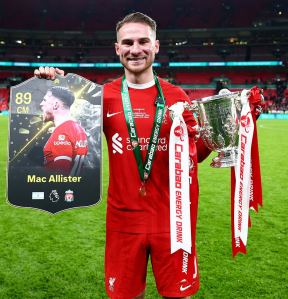
The Argentinian’s first goal for the club, in a 4-3 Premier League win over Fulham at Anfield in December 2023, turned out to be Liverpool’s goal of the 2023-24 season.

It was a perfect half-volley that dipped and swerved into the top right corner of the net from around 30 yards.
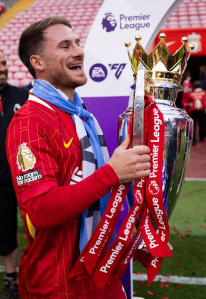
He collected his first domestic honour that season, too, when Liverpool beat Chelsea 1-0 to win the Carabao Cup (right).

Under Klopp’s successor Arne Slot, Mac Allister made 35 appearances (30 starts + five as sub) when Liverpool won the Premier League title (left) in May 2025.
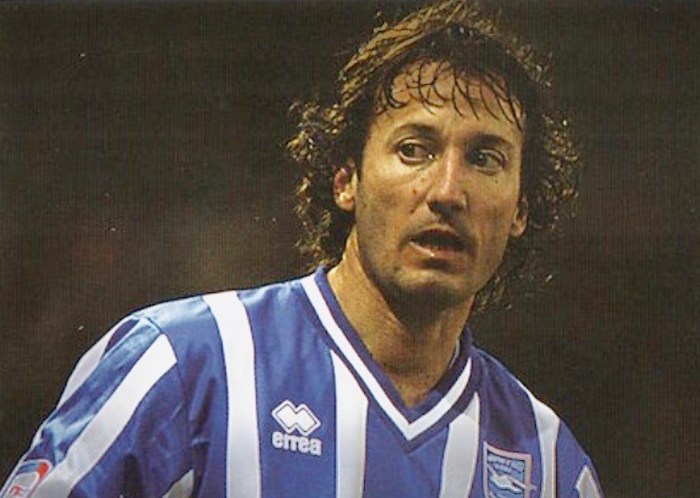
Tano incurred the wrath of plenty during Spurs playing days

GUS POYET’s loyal deputy, Mauricio Taricco, once labelled ‘The Premiership’s most hated footballer’, had a late and unexpected swansong to his playing career with Brighton.

It came six years after the Argentinian full-back thought his playing days were over when he sustained a bad injury on his debut for West Ham, having switched across London from Tottenham Hotspur, where he played alongside Poyet.

Taricco was no stranger to a red card during his days playing at the top level and he was also sent for an early bath in his comeback game when the Seagulls beat Woking on penalties in the FA Cup.

Some of Taricco’s actions drew fierce cricitism when he was at White Hart Lane, for instance the BBC’s chief football writer, Phil McNulty, wrote an excoriating piece which he began: “Taricco may have a modicum of limited talent, but he hides it brilliantly behind a selection of all that is sneaky and cynical in football.”

Spitting, diving and feigning injury were among the accusations levelled at Taricco, and he left Everton’s Thomas Gravesen nursing a shin wound that required 30 stitches.

After two sendings off in three games in 2002, McNulty said the Argentine was “swiftly becoming the Premiership’s most hated footballer” and concluded: “Taricco is a scar on the Premiership and on a club with a name for a certain style – and (Glenn) Hoddle must operate to remove it.”

Strong stuff but the BBC man was not alone in his scathing criticism; Leicester boss Dave Bassett was incensed when Taricco feigned injury to try to get Foxes’ Andy Impey sent off at White Hart Lane. “That man should be done away with,” said Bassett. “He is a disgrace to the game.”

After Taricco had been sent off at Old Trafford, and then again following “a wild lunge” on Graeme Le Saux in a match against Chelsea at Stamford Bridge, Hoddle stood up for the Argentine defender, saying he’d been harshly criticised and that the reaction was disproportionate.

“I’m not saying that there haven’t been times this season that he’s done some silly things, and he admits that, but the two sendings off, in my eyes, have not been warranted,” said Hoddle. “The press have gone OTT on it.”

Not everyone viewed him harshly. Jonas Ahrell, of sports internet company Sportal, said: “A string of assured performances, along with great control, touch and distribution, has shown him to be a shrewd purchase by Spurs boss George Graham, who knows a thing or two about defenders.”

He explained how his nickname Tano is Argentine for Italian – his father was from Sardinia – and he described the defender as “articulate, impeccably-mannered and an all-round lovely bloke”.

Born in Buenos Aires on 10 March 1973, Taricco grew up playing football in the capital’s streets and he would eventually follow in the footsteps of Argentina’s famous World Cup stars Ossie Ardiles and Ricky Villa to White Hart Lane.

It was John Lyall who was instrumental in his arrival on European soil. Taricco had been playing for home city club Argentinos Juniors for only a year when Ipswich Town boss Lyall and experienced scout Charlie Woods were in South America on the hunt for new talent. Their main target was Uruguayan midfielder Adrián Paz, but they took a chance on 21-year-old Taricco too for whom a £175,000 fee was paid.

“You often see two players coming over together to help each other with a new culture and a new way of life but it proved to be me who stayed,” Taricco recalled in an Albion matchday programme article. “Although I was playing in the top league in my homeland, it was always an ambition to play in Europe.

“I think that Adrian leaving after a few months helped me. I was now more isolated, but it helped me to stand on my own two feet. I had to understand the language and mix with people.”

While Taricco quickly made his debut in the League Cup against Bolton Wanderers, he mainly had to be content with reserve team football initially until a change of management – from Lyall to George Burley – and relegation from the Premier League eventually worked in his favour.

Taricco made 167 starts for Town and although defending was his priority, he also scored half a dozen goals – memorably in a 2-0 League Cup win over Manchester United in 1997 and a 3-0 league win against Crystal Palace in 1998 which followed a solo run from inside his own half.

In a March 2020 interview with the East Anglian Daily Times, Taricco looked back fondly on his days at Portman Road, telling Richard Woodall: “I have great memories of being an Ipswich player – in particular the derby games against Norwich. I always knew what that game meant for the fans and for everybody involved with the club. Winning the derby, oh my god, it was a nice feeling.”

Woodall said fans remembered him as a big game player; for example, following a pre-match presentation of his Supporters’ Player of the Year award in 1997, he went on to score in that evening’s 2-0 win against Norwich. The Argentinian described the award at the time as the “greatest honour of my career”.

His cult status among Tractor Boys fans was best described by Csaba Abrahall in a piece for When Saturday Comes and, when he was sold to Spurs for £1.75m in November 1998, there was widespread outcry amongst the faithful.

Taricco became the first signing of Graham’s reign as manager at White Hart Lane, although he was injured at the time, causing a delay before he could make his debut.

“It was always my ambition to move to the Premier League, although I still left Ipswich with a heavy heart,” he said. “I was George Graham’s first signing, but I didn’t see that as an extra pressure – I knew Spurs had been watching me for a while, so I just got on with my football and I coped with the step up – I was a regular for much of my time at the club.

“At Ipswich, we lost in the play-offs and I was absolutely devastated because my dream had gone, that’s why I was so determined to make the most of the opportunity to play at the top level.”

Taricco maintained: “I think the fans at Ipswich and Tottenham liked me because they could relate to me. I’m like a fan when I’m playing. I want to win. When fans get a penalty, even if their player has dived, they jump for joy. I was the same and I’m on the pitch! I didn’t care about other players, fans, clubs. I was playing for my team and nothing else mattered.

“I always got stuck in. You don’t have to be big but you have to have the will to do it. Sometimes you give it, sometimes you take it, that’s football.

“Saying that, there were things I only learnt when I came here. For instance, when you see a 50-50 tackle here and someone gets hurt you just say ‘both players were committed’ and you carry on. In Argentina, there would be a red card and a fight breaking out. So, I learnt that I could get away with things here. If a bad tackle’s coming in and I knew a player was not going to get booked, I had to ‘manage’ things.”

Off the field, there were several managerial changes during his time at the Lane but Taricco learned most from Hoddle. “He was a very technical type of manager, as he was a player, and it was of prime importance to him to have his teams playing a particular type of football,” he said. 

“I really appreciated this as someone who always wanted to play the ball on the ground, think forward and create lots of goal-scoring opportunities.  He was a really positive manager and I can take a lot from my days working under him.”

The other important take from his time there was getting to know Poyet well (after the midfielder’s move from Chelsea in 2001) and developing a strong bond of friendship that would last through appointments at Albion and several other clubs.

Taricco’s time at Spurs came to an end in 2004 after 149 games (plus seven as a sub) when French manager Jacques Santini told him he was not part of his plans. He missed the start of the season through injury and then suspension and was allowed to join West Ham on a free transfer. It’s now quite well known that he sustained a bad injury on his Hammers debut against Millwall and voluntarily tore up his contract.

He moved to Sardinia with his wife and children, managed a property portfolio by day and kept himself fit turning out for his local team.

The idyll lasted five years before his old friend Poyet asked if he’d be interested in becoming his no.2 at Brighton. “Gus is a person I respect both as a man and for his football brain,” he said. “When he asked if I wanted to join him, I said ‘yes’ straight away – I was willing to swap everything I had for Brighton and it’s been a great decision.”

While the plan was always for him to use his knowledge and experience on the training ground and in the dugout, on 18 August 2010 there was a hint of a comeback when he suddenly played 45 minutes for Albion reserves in a 0-0 draw with Gillingham at Culver Road, Lancing. By then he was 37.

The matchday programme observed how he “turned in a cultured display, likewise one feisty challenge that has become a hallmark of an illustrious career”.

The assistant manager himself said: “It was a normal match and nothing more – there was not a lot of thinking behind my decision to play.

“West Ham v Millwall was my last professional game, although I played amateur league (for Castiadas) and regional league football (for Villasimius) in Sardinia right up until last November when I arrived at Brighton.

“But I’m not thinking about coming back to play, I’m just thinking about getting myself as fit as I can.”

However, he added: “If something happens with the team regarding an injury crisis or suspension and I can get fit enough and powerful enough to cope with League One, then who knows?

“I will now try to push myself more and try to get involved in training more often, when I can. If I can mix it up and do my own specific programme to get my sharpness and explosive power back, then I’m sure I will.”

Sure enough, three months later, Taricco stepped into first team action in the FA Cup, playing against Woking on 16 November 2010, although his involvement ended prematurely when he was sent off for two yellow cards – the second one for dissent.

He also played in the next round when it took two games to see off FC United and he finally made his 350th senior appearance after a six-year absence from playing professionally.

“I love playing football, so it’s nice to play, although I feel like I need a bit more power in my legs,” he said. “If I can get that bit more power for the first four or five yards I’ll be happier, but I am 37 years old.

“Any game could be your last, so you have got to make the most of every opportunity. Every player needs to give his all because that’s what you need to make it to the top. That goes for training as well as matches and it’s the way I’ve always approached the game of football.”

He didn’t expect to play regularly, though, and said: “I still see myself as part of the coaching staff rather than the playing staff. I’m there if we need to rest players or if somebody is recovering from an injury, because it is a very long and intense season.

“It is nice to play, don’t get me wrong, and I have enjoyed training with the team, but there are players with better legs than me in the squad.”

By the end of the season in which Albion won promotion to the Championship, he’d started five games and been sub twice, but he was still not done with playing.

The following season, Poyet called on his assistant’s playing experience on nine occasions (plus three as a sub) although Taricco was never far from the headlines for the wrong reasons.

Taricco looks back in anger after seeing red at St Mary’s

I can remember watching at St Mary’s as Taricco so hotly disputed a controversial penalty award by Peter Walton when Lewis Dunk downed Jose Fonte, quite clearly outside the box, that his protests gained him a straight red card.

Taricco also didn’t cover himself in glory at the Madejski Stadium on Boxing Day when lively wideman Jobi McAnuff gave him a torrid time and got two goals in a 3-0 win.

He featured in a six-game spell spanning December and early January but the surprise New Year 3-0 home win over Saints, when young Grant Hall replaced him in the 54th minute, turned out to be his last appearance as a player.

After his departure from the Seagulls with Poyet following the defeat to Palace in the 2013 Championship play-offs, Taricco followed his friend to Sunderland, AEK Athens, Real Betis, Shanghai Shenhua and FC Bordeaux.

He told the East Anglian Daily Times: “When I choose who to work with, I want to know that they are a decent human being, and Gus Poyet is certainly that. This quality is not always easy to find in football.

“Both of us come from similar cultures and we think about football the same way. As well as wanting to win, we both want to put our players in situations where they will flourish. Both of us feel that sometimes as players, our managers didn’t necessarily give us that chance.”

In October 2020, Taricco told the EADT: “Not being a coach now means I’ve had the time to think a lot, and I’m currently learning about world finance, how the world’s monetary system works, and why poverty still exists, so quite big topics!”

But he added: “When the phone goes and the right opportunity comes along, I’ll be ready to be assistant manager again!”

• Pictures from online sources and matchday programmes.