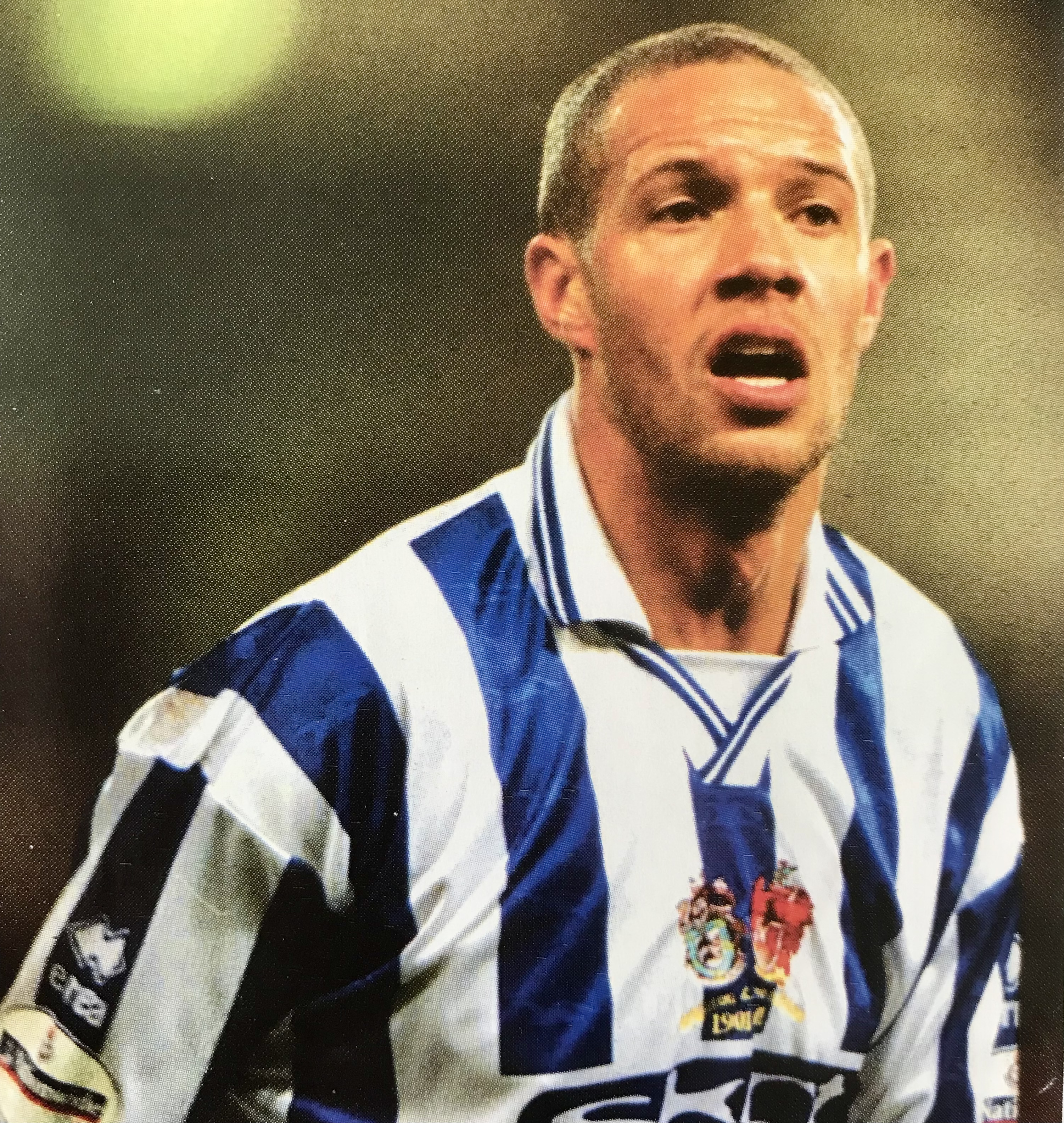
‘Talent in his boots and balance sheets in his briefcase’

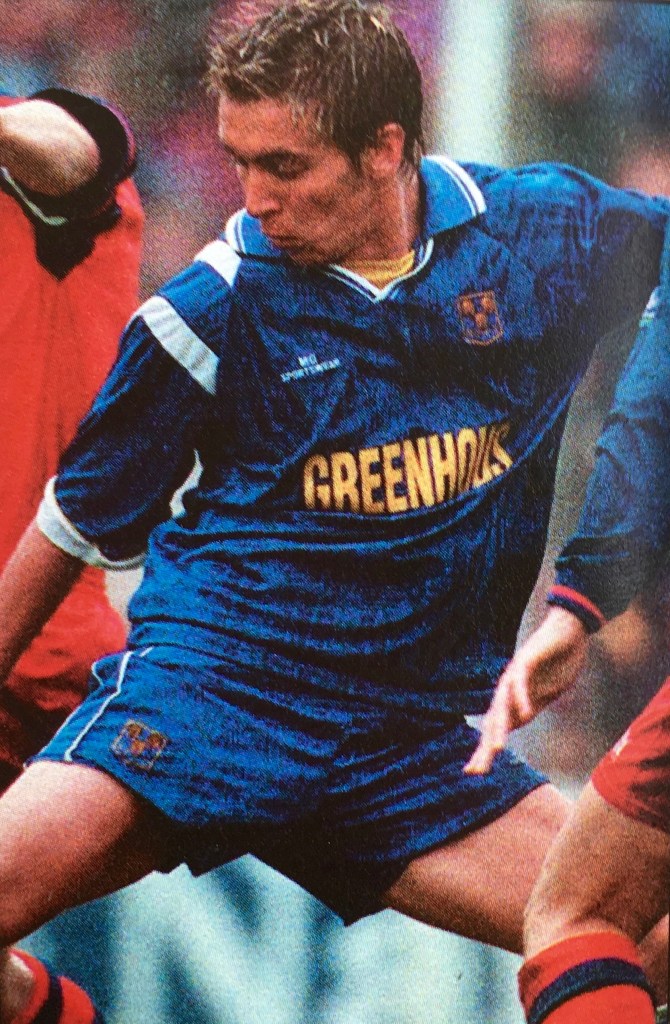
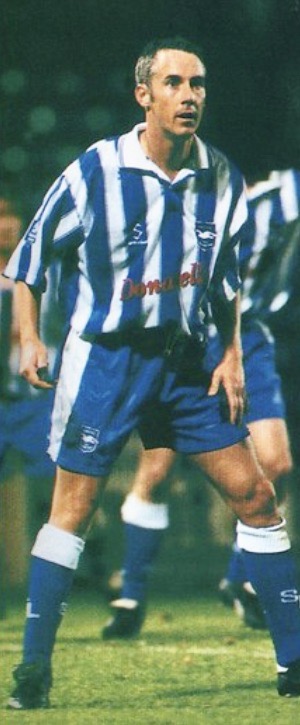
ROBERT CODNER, Brighton’s first black captain in the early ‘90s, was an enigma for plenty of managers throughout his playing days but, by his own admission, the much-maligned Barry Lloyd got the best out of him.

A dynamic midfielder with a terrific shot in his locker, Codner made way more appearances for the Albion than any other club he went to and his attachment to the Seagulls continued into the modern era when he was Solly March’s agent.

Of Lloyd, he told Albion’s matchday programme: “Barry Lloyd was good for me and I don’t think he gets the acknowledgement he deserves as he steered the club through some difficult times. I know I had my moments on and off the pitch, but he always stood by me and backed me all the way.”

Born in Walthamstow on 23 January 1965, nearby Tottenham Hotspur were Codner’s first club and, although he featured in their youth team alongside future first-teamers Ian Crook, Mark Bowen and Tony Parks, he didn’t take the next step with them.

“It is very difficult to come through at White Hart Lane, they always seemed keener to go and buy someone than risk a youngster,” Codner told Shoot! magazine.

And in a matchday programme interview with Dave Beckett, he said: “At 18, Tottenham told me that they wouldn’t put me on a professional contract, so I ended up at Leicester under Gordon Milne for about 18 months.

“I never managed to make a break into the first team which I thought I deserved, and that’s why I left in the end.”

In a slightly different telling of the story, he said: “At the end of my contract he (Milne) didn’t offer me another one which was a bitter disappointment. I felt let down and was disillusioned with the game.”

After a spell working on a building site, he tried to get fixed up with Luton Town but their manager, David Pleat, urged him to get experience playing non-League football while they kept tabs on him.

“That’s why I joined Dagenham for four or five months, but I didn’t particularly like it there, so when Barnet offered me a good deal and Luton said they couldn’t top it, I switched clubs,” he said.

His form for Barnet brought him selection for the England semi-professional side; Wimbledon showed some interest but in a pre-season game in August 1988, as a triallist for Millwall, he played against the Albion.

Brighton boss Lloyd was sufficiently impressed that he was prepared to fork out what at the time seemed like an amazing sum of £115,000 for a non-league player to give him another chance to make it as a professional. (Only a matter of days previously, Lloyd paid the same sum to secure the services of centre back Nicky Bissett from Barnet).

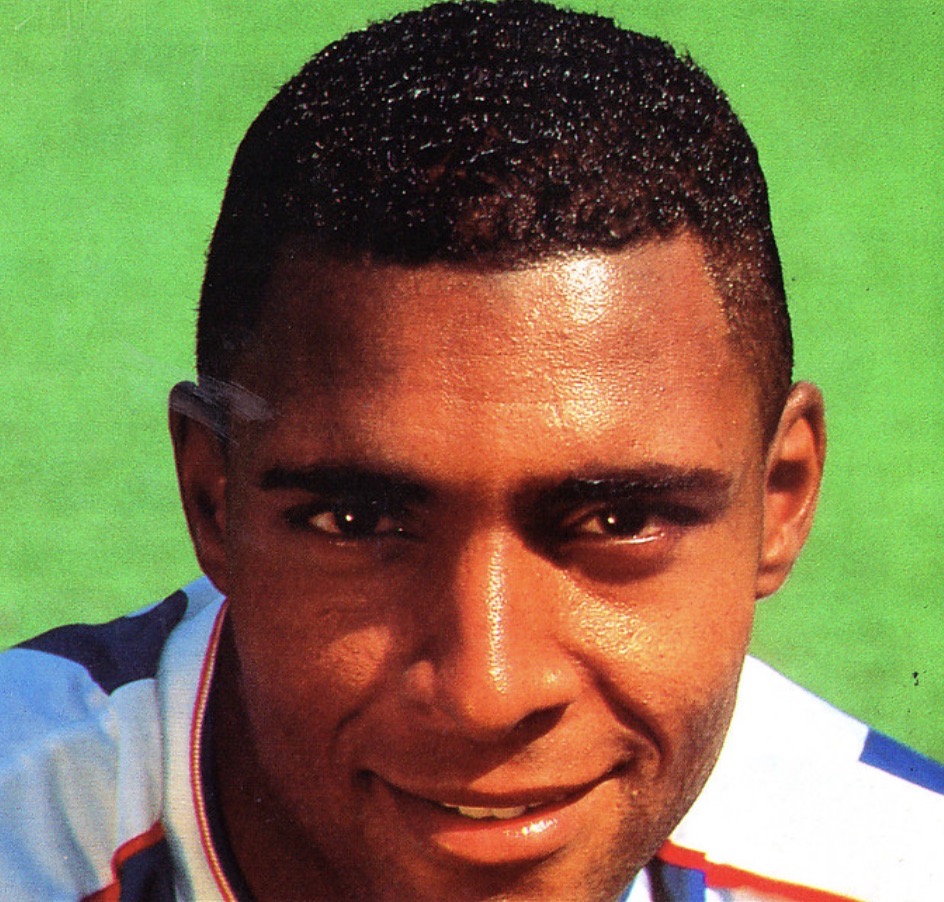
The ebullient Barry Fry, Barnet manager at the time, said: “Codner is a super athlete with two good feet, pace and an ability to score goals.”

The conundrum at the time was that away from football Codner had begun to pursue a successful career in the City, having turned the tables on a would-be finance salesman suggesting he could do a better job.

The salesman’s employers agreed and Codner was suddenly thrust into the world of advising on unit trusts, pensions, mortgages and insurance.

It prompted a description of him in that Shoot! article as the ‘City whizz-kid with talent in his boots and balance sheets in his briefcase’.

In an interview with John Vinicombe in the Argus, Codner denied he was not utterly dedicated to playing.

“That is not so,” he said. “I’m more dedicated because I choose to play. I always believed I would get a second chance after what happened at Leicester, and Brighton have given me that chance.

“Players have to look ahead, and, ten years from now, I want to be comfortably off.

“Of course, I’m ambitious. I want to be a millionaire as a footballer and be a millionaire financial consultant too.

“I’m lucky because I don’t have football as the be all and end all, I play because that’s what I enjoy doing.”

He added: “People may ridicule me sometimes for carrying on in business as well, but a lot of footballers end up on the scrapheap; I’m determined not to be one of them.

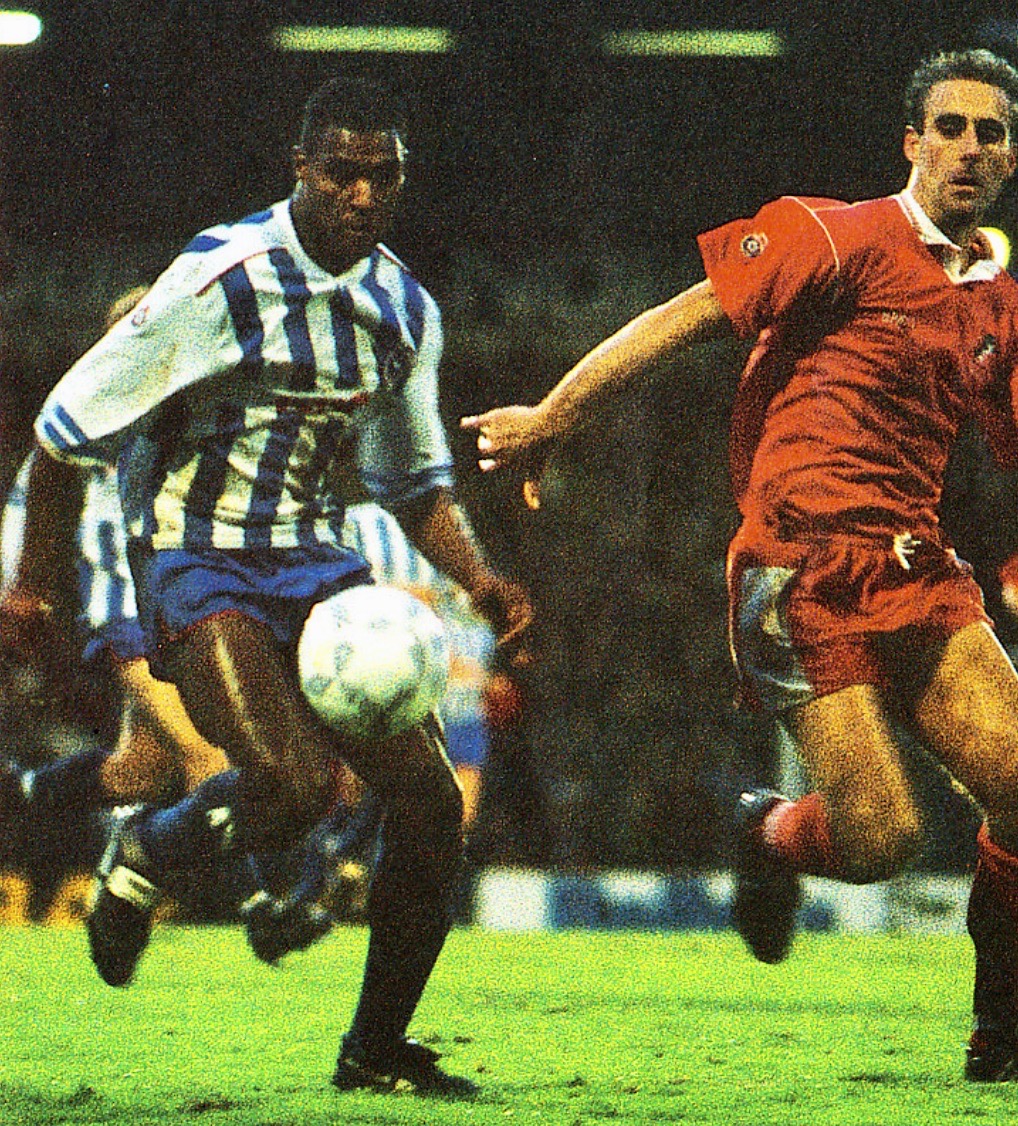
“Having been given a second bite of the cherry, I’ll make sure I don’t end up with nothing.”

His time with the Seagulls was certainly not a smooth ride, however, and even the club’s own mouthpiece – ie the matchday programme – said: “His time at the Goldstone has not been without controversy. Earlier this season he failed to report on time for the game at West Bromwich Albion.

“At the beginning of the season the manager said he was hoping that Robert would be one of those players who, having benefited from the experience of more than a season in the league, would play a prominent part in the club’s performances this campaign. However, he is still striving to reach a high level of consistency and his name has now been circulated to other clubs as being available for transfer.”

A retrospective article in a subsequent matchday programme also didn’t spare the midfielder’s feelings. “Codner made an immediate impact and went on to score some brilliant goals, but his relationship with the supporters, like his form, eventually blew hot and cold.

“Several clubs were interested in Codner during his time with the Albion, including West Ham, who were reported to have bid £500,000 for the player in 1991.”

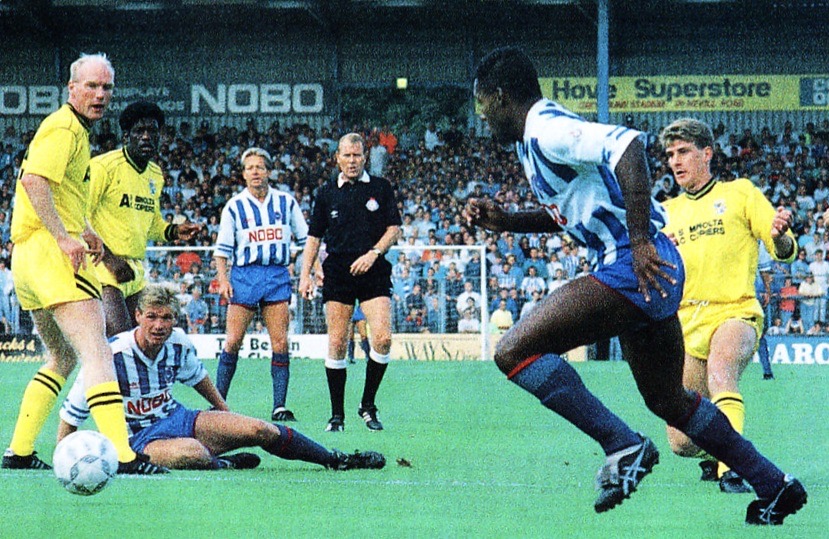
Codner was almost a permanent fixture in the no.10 shirt as Albion reached the 1990-91 end-of-season play-offs with the chance to return to the top tier. He scored in both the home and away semi-final legs against Millwall as the Seagulls guaranteed a place in the Wembley final v Notts County with a 6-2 aggregate win.

After the disappointment of losing 3-1 to Neil Warnock’s County, Codner said: “We’d put in so much to get to the final and unfortunately we didn’t really turn up when it mattered most. We had phenomenal support that day at Wembley but it just didn’t happen for us.”

Albion began to implode financially and were relegated at the end of the next season. Codner was still a mainstay of the midfield, though, making more appearances than any other player, and it was a spot he shared with Mark Beeney and Gary Chivers in the 1992-93 campaign.

Perhaps it was fitting that both Codner and Bissett should be the scorers in the first game after Lloyd parted company with the Albion (Martin Hinshelwood was in temporary charge). Bissett’s 89th-minute goal salvaged a point in a 2-2 draw at Hartlepool on 11 December 1993 but Albion supporter The Groundhog remembered Codner’s 54th-minute goal for the Seagulls thus: “You can’t not love a guy who, at Hartlepool’s Victoria Ground in 1993, while the away fans were shielding themselves from freezing sideways daggers of rain blowing in off the North Sea onto the exposed corner terrace, unleashes a 35-yard thunderbolt thwang-er-wang-er-wanging off the underside of the bar to score. You just can’t.”

While Codner appeared in new manager Liam Brady’s first game in charge, a 1-0 defeat at home to Bradford City, his off-field demons caught up with him when he had to serve three weeks in Lewes Prison for driving offences.

Codner was restored to the side towards the end of January and retained his place through to the end of the season.

A subsequent matchday programme noted: “He emerged from prison a more focused player, but, after an alleged bust-up with (Liam) Brady, was dropped in early 1995 and then released at the end of the season.”

Although Codner had been a regular under Brady in the first half of the 1994-95 season, he didn’t play for the first team again after being part of the side thrashed 4-0 at Crewe Alexandra on 14 January. Brady maintained in his programme notes: “The attitude on the day was not what we were looking for and that’s what contributed largely to losing as badly as we did.”

After finally leaving the Albion with more than 260 appearances for the club under his belt, Codner popped up at a multitude of clubs subsequently (Wikipedia lists 17 he was associated with), playing a handful of games for Reading, Peterborough and Southend United, and having a slightly longer spell back at Barnet in the 1996-97 season.

Codner now operates his own Epsom-based football agency, RC Ballers Ltd.
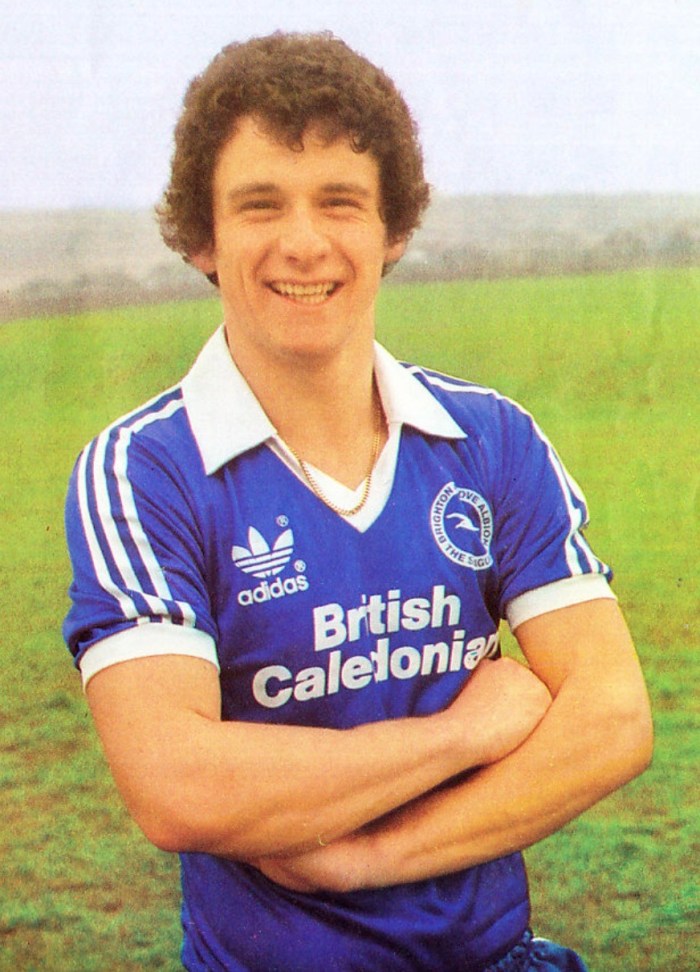
Putney printer Pearce went to Wembley with the Albion

HE took a circuitous route back to his hometown club but full-back Graham Pearce eventually made it to Brentford’s first team after Brighton had resurrected his career and given him a chance to play at the top level of the English game.

Pearce was first on Brentford’s books as a teenager between 1971 and 1976, but he didn’t make it as a pro with the Bees and, after also being turned down by QPR, he went non-league, initially with Hillingdon Borough for three years and then Barnet.

When Pearce lined up for Barnet in a FA Cup third round tie on 2 January 1982, it must have been beyond his wildest dreams to imagine just over a year later he’d be playing in that competition’s final at Wembley.

But the steady, assured performances 21-year-old Pearce put in as Alliance Premier League Barnet held Brighton 0-0 before losing 3-1 in a replay at the Goldstone impressed the watching Albion boss Mike Bailey sufficiently to sign him up for the Seagulls.

Although he was itching to join, he had to serve a week’s notice with the Putney printer where he had a full-time job because they weren’t in a position to release him sooner.

Just over a year later, when injuries depleted Jimmy Melia’s cup hopefuls the closer they got to a dream Wembley date, Pearce seized his chance to put his own name in print. Circumstances fell just right for him, but it might not have happened if the experienced left-back Sammy Nelson hadn’t been sidelined.

A packed East Terrace at the Goldstone the backdrop as Pearce faces Newcastle in the FA Cup

Pearce played in the third round 1-1 Goldstone draw with Newcastle – one of six games he played in January 1983 – but he missed the 4-0 demolition of Manchester City in the fourth round and didn’t feature again until 22 March when he was sub for the 2-2 home draw with Liverpool.

Because versatile Gary Stevens was more than capable of playing alongside Steve Foster, normal centre back partner Steve Gatting was preferred at left-back for 14 matches from the end of January.

But when right-back Chris Ramsey was suspended for the semi-final against Sheffield Wednesday, Stevens took his spot, Gatting returned to the middle and Pearce slotted in at left-back.

Because Foster was suspended for the final against Man Utd, Stevens paired up with Gatting in the middle and Pearce retained his place.

Even when Foster returned for the replay, Pearce kept his place because Ramsey had been crocked in the first match and wasn’t fit to play (Melia making the mistake of putting left-footed Gatting at right-back instead of Stevens).

In a pre-match interview with the Daily Mail, Pearce said: “There’s money to be made from appearing at Wembley but the thrill for me is just being there – a player from non-League who thought his chance of playing league football had gone.”

Pearce retained the no.3 shirt at the start of the 1983-84 season back in the second tier but, when Chris Cattlin took over from Melia, he made it clear he wanted someone with more experience in that position.

In his matchday programme notes he wrote: “With Kieran (O’Regan), Eric Young and Graham Pearce all playing together, we have three players who haven’t been long out of non-League football.

“Normally these players would have been blooded slowly into the side, instead of being plunged in the deep end. They have done well and shown the right attitude, but when we play against aggressive sides away from home, some of their inexperience has been exposed.”

Until a suitable replacement could be found, Pearce remained in the side and even poked home his first Albion goal in a 4-3 win away to Cambridge United on 29 October 1983.

But four weeks later, after a 2-2 draw at home to Shrewsbury Town, Cattlin was typically forthright in his next programme notes, declaring: “I was unhappy with our defence and our failings in this department cost us the game.”

Pearce and fellow full-back Ramsey were promptly dropped; the left-back berth going to new signing Chris Hutchings from Chelsea.

Cattlin had high praise for his new recruit as he said: “Chris Hutchings is an enthusiastic, strong and determined defender and has a lot to offer, he’s also a fine footballer.”

After 18 consecutive games, Pearce found himself out of the side for the rest of the season.

It’s interesting to note that the reserve side for the 1 May 1984 fixture at home to Southampton featured five players (Pearce, Ramsey, Gary Howlett, Gerry Ryan and Neil Smillie) who’d been in the FA Cup Final squad a year earlier.

The new season was almost three months’ old before Pearce was seen in the first team again, and, ironically, the opponent was once again Shrewsbury.

The game at the Goldstone finished a goalless draw and, with Hutchings having been switched to right-back, Pearce got a run in the side extending to 19 matches.

Unluckily for him, he was then left out of the side in favour of Martin Keown, who Cattlin managed to bring in on loan from Arsenal, and the future England international quickly proved his calibre.

Pearce made one further appearance, in a 2-1 defeat at Middlesbrough, before the end of the season but in the 1985-86 season he finally cemented his place in the side and played a total of 41 matches.

Three days after Christmas 1985, he scored a rare goal as the Seagulls beat Leeds 3-2 at Elland Road. Ian Baird – later to play for the Albion in the old Fourth Division – missed a penalty but scored one of Leeds’ goals and Pearce clinched the winner on a pitch rutted by a rugby league game played on it only two days earlier.

The matchday programme described the goal thus: “Pearce played a one-two with (Steve) Jacobs and found himself with only Mervyn Day to beat and Leeds screaming for offside. The trusty left foot of the Londoner lobbed goalwards, Day was stranded, and Pearce had scored his first goal in 26 months to give Albion another three valuable points.”

Not such a memorable game came in a 3-0 defeat away to Norwich City on 5 April 1986. The full-back went into the referee’s notebook for a foul on future Albion winger Mark Barham, who was substituted shortly afterwards. Albion had a great chance to pull a goal back when Pearce was through one-on-one with Chris Woods, but the England ‘keeper saved his effort comfortably. Then, eight minutes from time, Pearce fouled Wayne Biggins in the penalty area and Welsh international David Williams buried City’s third from the penalty spot.

Pearce played in Albion’s final game of the season, a 2-0 defeat at Hull City under George Petchey, following Cattlin’s sacking, and it turned out to be his last match in a Brighton shirt.

The returning Alan Mullery explained in his programme notes for the opening game of the new season that he released Jacobs and Pearce because “I felt we had too many defenders”.

Pearce switched to Third Division Gillingham under Keith Peacock and played a total of 48 matches as the Gills narrowly missed out on promotion when losing a play-off final replay against Lou Macari’s Swindon Town in 1987.

Following a disappointing second season with the Gills, when they finished mid-table, Pearce returned to hometown club Brentford where he played 14 times (+ 8 as sub) in Steve Perryman’s 1988-89 side. One of his teammates was fellow former Albion cup star Smillie.

Pearce joined up with Peacock again for Maidstone United’s debut season (1989-90) in the Fourth Division, which culminated in a play-off semi-final defeat at the hands of a Cambridge United side featuring Dion Dublin up front.

The following season, under Phil Holder, Pearce was back at Brentford as first team and reserve coach. He subsequently had spells as player-manager with Isthmian League clubs Enfield and Molesey. He later became a PE teacher at Homefield Preparatory School in Sutton.

Born in Hammersmith on 8 July 1959, Pearce was one of seven children (five boys, two girls) and attended Grove Park Primary School, where he was captain of their under-9 football side. He went on to play for the Middlesex County side and Middlesex Wanderers before his stop-start professional career began.

• Pictures from my scrapbook and matchday programmes.

Set-piece expert Darren Currie earned Uncle Tony’s approval

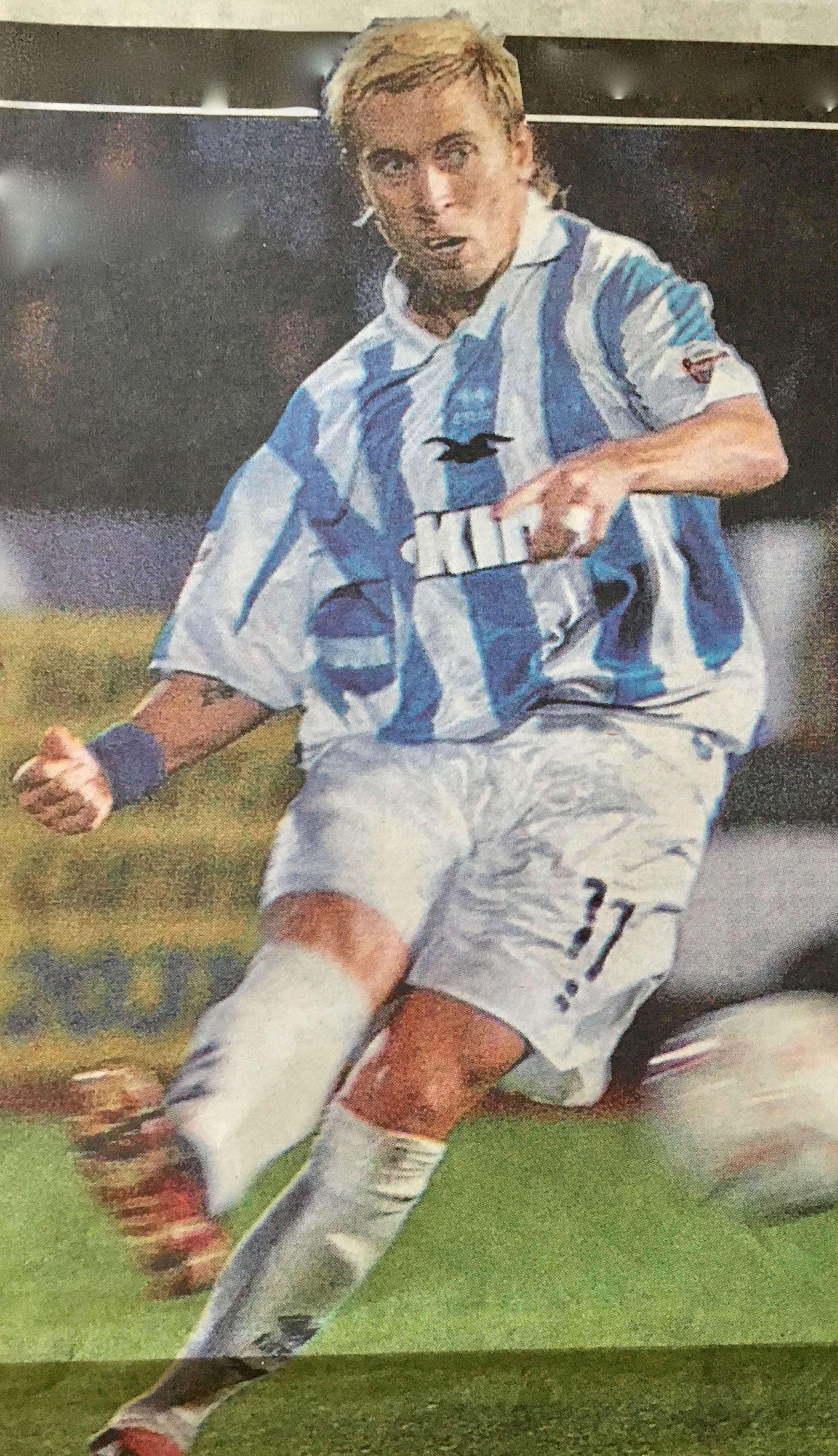
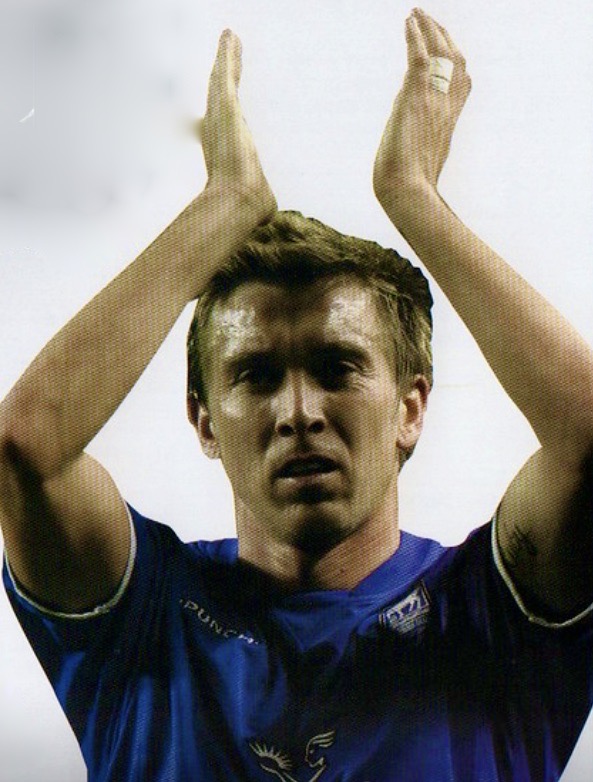
THE PINPOINT accuracy of Darren Currie’s passing and shooting was a joy to watch, even though a lack of pace stopped him being as good a player as his famous uncle.

Currie was a decent player in his own right, making nearly 700 appearances for 15 different clubs, but wherever he went he was always known as the nephew of the former Sheffield United, Leeds, QPR and England creative midfielder Tony Currie.

Perhaps with a hint of family bias, Uncle Tony said in an interview for ITV Digital: “Darren is, without doubt, the best crosser of the ball, after Beckham, in the country. He’ll produce nine times out of ten, right foot or left foot.”

The young Currie attributed his crowd-pleasing skills to the start he was given in the game by West Ham. After 10 years stuck in the lower leagues, Currie was given a platform to perform in the Championship by Brighton, and he very nearly made it to the top when transferred for £250,000 to high-flying Ipswich Town.

As if by a cruel twist of fate, Ipswich lost to the Hammers in the 2004-05 Championship play-off semi-finals having just missed out on automatic promotion.

“Playing for West Ham at youth and reserve levels was a terrific way to start a career,” Currie told the Ipswich Star. “They gave me everything but my debut.”

He certainly came close though, featuring alongside recognised first-teamers like Lee Chapman and Frank Lampard in friendlies and testimonials, but he had to move elsewhere to gain competitive first-team action.

Initially he had loan spells with Shrewsbury Town and Leyton Orient, and when the Shrews bid £70,000 for him in 1996, he chose to drop down a couple of divisions to get regular football.

“The difference in money was only about £50. The then West Ham manager Harry Redknapp called me in and said that I was an adult and had to think about continuing to play regular first team football,” Currie explained. “I was given the opportunity to have a new contract at West Ham or moving permanently to Shrewsbury.

“I was a young pro at West Ham and I had been out on loan a couple of times and I got the buzz for playing at three o’clock on a Saturday afternoon. There was no other feeling like it.

“I thought to myself I’ll go to Shrewsbury and I’ll play really well for a year and I’ll get a move back up to the top.

“My naivety kicked in then because it didn’t quite happen. I thought I’d done OK and I was linked with a couple of moves but the route back to the top wasn’t as simple as I thought it would be in my head.”

Indeed, it was a decade in which, after three seasons with the Shrews, he moved on briefly to Plymouth Argyle, then to Barnet (three seasons) and Wycombe Wanderers (three seasons).

Currie said it got to a point where Wycombe couldn’t afford to keep him, and boss Tony Adams made it clear he was free to look elsewhere.

Mark McGhee invited him to Brighton for a trial and was impressed with the way he knuckled down in training to get himself fit following a programme devised by McGhee’s deputy, Bob Booker.

Currie was offered a 12-month contract but it was more about the opportunity to play at a higher level that prompted him to sign.

“It wasn’t a fantastic offer – put it this way, Peterborough offered me three years – but it wasn’t about the money,” Currie told Spencer Vignes in an Albion matchday programme article.

“It was about the football and playing in the Championship. I was determined to do well and to prove myself, which I did. That’s when people began to sit up and take notice.”

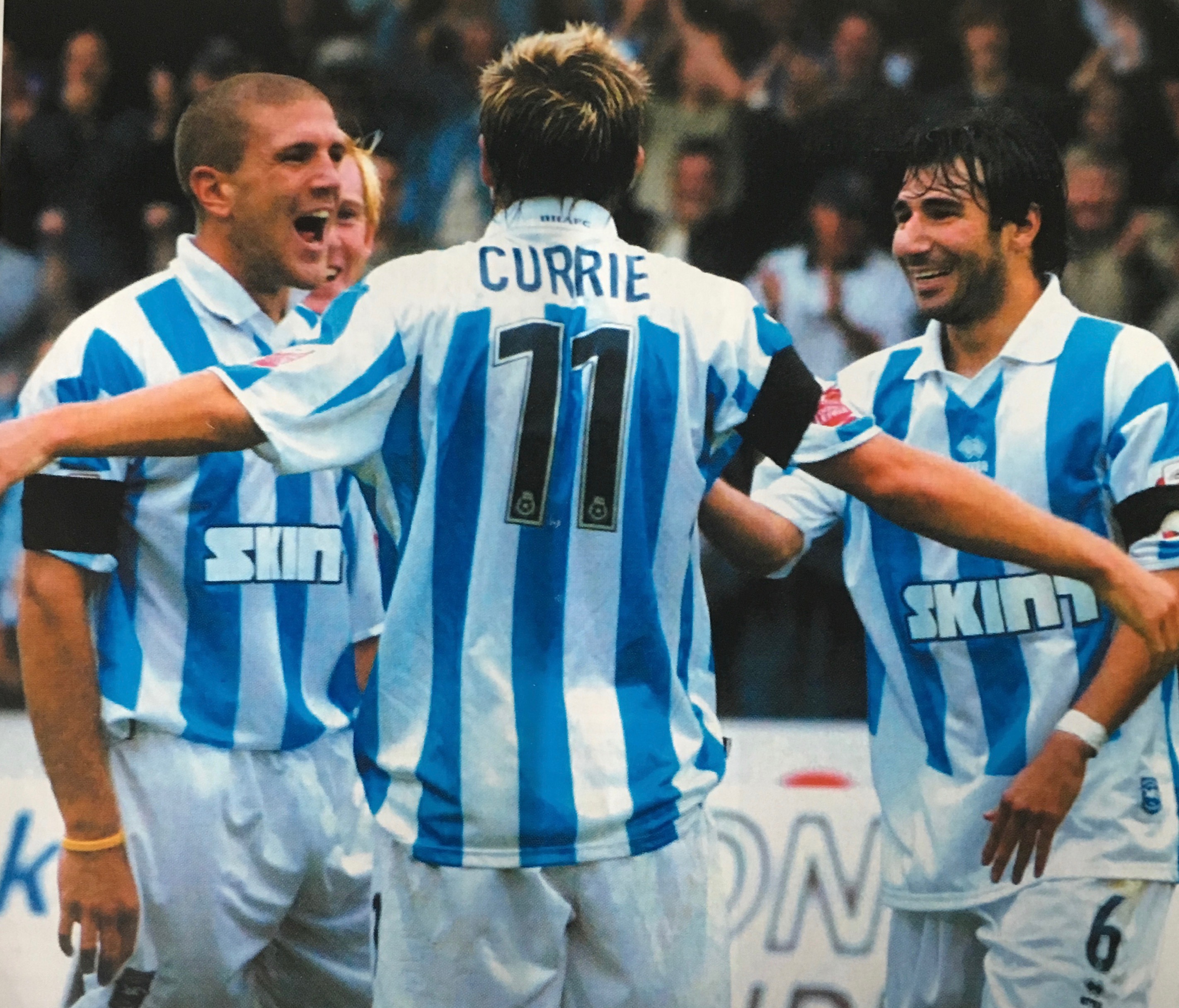
Currie’s ability on the ball carved him out to be a crowd-pleaser and the first of two goals for the Albion typically came from a free kick in a 3-2 home defeat to QPR that left Argus reporter Andy Naylor purring over its execution.

“Currie, having shaved a post and hit the bar with two earlier free-kicks, made it third time lucky from 20 yards just before the break. It was a sumptuous effort from the set-piece expert which rendered Rangers’ keeper Chris Day motionless.”

His other goal came in a 1-1 draw at home to Sheffield United, more noted for Albion wearing the limited-edition Palookaville strip to help publicise backer Fatboy Slim’s latest album.

Injury-hit Albion considered it a point gained rather than two dropped and Naylor complimented Leon Knight for “superbly crafting” Currie’s goal by evading his marker and threading a square pass through the legs of Leigh Bromby.

“Currie, with time as well as room, picked his spot to score, which meant even more to him because of the opposition,” wrote Naylor, informing readers that the Yorkshire side had rejected him as a 16-year-old following a fortnight’s trial.

Unfortunately for Currie, he was only on the bench when the Albion travelled to Upton Park on 13 November 2004. After three successive defeats, McGhee confessed he set the side up not to lose rather than go for a win.

Somewhat ironically, the Seagulls blagged a 1-0 win courtesy of a Guy Butters goal, in a real backs-to-the-wall match, with veteran striker Steve Claridge ploughing a lone furrow up front.

It was only in the 90th minute of the match that McGhee introduced Currie in place of Claridge to play out the final few minutes of the game.

Currie only played 22 games for Brighton over four months but the fee they received for him from Ipswich gave a vital boost to club funds when they were struggling to compete in the division because of the restricted crowd numbers at Withdean. Having signed him on a free transfer, the deal was a no-brainer for the Albion hierarchy, even if it weakened a squad who subsequently only avoided relegation back to the third tier by a single point.

McGhee wasn’t that surprised to see Currie go, telling the Argus: “He was obviously happy here, but I thought he was doing so well that he would keep his options open.

“I cannot see Darren being a regular for Ipswich in the Premiership if they are promoted, but his skills and touch are good enough to justify him making a contribution to a squad in the Premiership.”

It didn’t pan out like that, but Currie was nonetheless grateful to the Albion, and told Vignes: “I am so pleased I had the chance to be a part of it all down there, to see what the support is like and to play with a group of lads who stick together through thick and thin.

“I played at the Goldstone when I was a kid, playing youth team football with West Ham, so I know how important the stadium issue is for everyone. I always will be extremely grateful to the Brighton fans and Mark McGhee because without a doubt without their help this opportunity wouldn’t have come along.”

Currie explained in a matchday programme article how McGhee had helped to develop his game and to add other dimensions which improved him. “I owe a helluva lot to Mark and Bob Booker,” he said.

Currie became an instant hit with the Tractor Boys fans earning the man of the match accolade in two of his first four games.

“I tend to build up a rapport with supporters wherever I go,” he told the Ipswich Star. “I am my own biggest critic and I know when I have done well, and I am very satisfied with my contribution so far.”

After his brief cameo for the Seagulls at West Ham, he got the chance to play against his boyhood club three times that season with Ipswich.

He was in the Town side that lost 2-0 at home to the Hammers on New Year’s Day 2005. Then, in the first leg of the play-off semi-final, Currie and Matt Richards (later a loanee with the Albion) were half-time substitutes who helped Ipswich to recover a deficit to draw 2-2.

Currie started the second leg and had Ipswich’s best opportunities with a shot straight at James Walker, then a long-range drive 10 minutes before the interval which the goalkeeper hopelessly misjudged but fumbled to safety. But they failed to make the final when Bobby Zamora scored two second half goals for West Ham to earn them a 2-0 second leg win. West Ham beat Preston in the play-off final.

Born in Hampstead on 29 November 1974, Currie’s early footballing talent drew interest from Watford and Chelsea, but he decided to join West Ham’s academy.

“The facilities were great, the training for us there as kids was first class and I really enjoyed my time there,” Currie said.

“A lot of the player I became was what I was taught as a kid at West Ham,” he told twtd.co.uk. “It was all about the ball and all about the technical skill and how to manipulate the ball. It was a way I enjoyed playing anyway so it was a really good fit for me.”

After signing professional in 1993, he was a regular in the West Ham reserve side and a trawl through the excellent archive website whu-programmes.co.uk records show he played in a Football Combination game away to Brighton on 1 April 1994, and later the same month was up against Guy Butters in Portsmouth’s reserve side at the Boleyn Ground. Mark Flatts and Paul Dickov were in opposition when the Hammers stiffs entertained their Arsenal counterparts at home on 11 May.

In an Avon Insurance Combination match at the Goldstone Ground on 30 November 1994, Currie scored the only goal of the game from the penalty spot in a West Ham side also featuring Lee Chapman and Frank Lampard.

The following summer, Currie played in four matches when he was part of West Ham’s squad on a centenary tour of Australia.

Shrewsbury boss Fred Davies, a former playing colleague of Redknapp’s at Bournemouth, took Currie on full time after his two loan spells at Gay Meadow.

He moved on to Plymouth Argyle in 1998 but only played five matches in three months, then switched to Barnet where he made 136 appearances, plus seven as a sub, in three years.

Wycombe Wanderers paid £200,000 to sign him in the summer of 2001 and manager Lawrie Sanchez told BBC Three Counties Radio: “He’s obviously a quality player. He gets crosses in and that’s an area where we weren’t very good last year. He’s come to add that to our game and his free kicks will trouble the ‘keeper as well.

“It was quite a lot of money for our club to spend but I’ve got to back my judgement. I’d looked at him for a while and quite liked him. He gives us something we haven’t got, he’s a great technician. He hasn’t got particularly great pace but what he does with the ball is tremendous. We’re hoping he does all the things he was doing at Barnet and a little bit more for us.”

Sanchez added: “A lot of people looked at him for a long time. He’s always been considered one of the best players in the Third Division and hopefully we’ll give him the stage where he can prove he’s one of the best players in the Second Division.”

After Currie’s flirtation with promotion to the Premier League ended in disappointment, Joe Royle left Portman Road and his replacement Jim Magilton axed Currie from the side in the 2006-07 season. He was sent on loan to fellow Championship sides Coventry City and Derby County, for whom he made a play-offs appearance as a substitute, although he wasn’t involved in the final when County beat West Brom 1-0.

That summer, on the expiry of his Ipswich contract, Currie moved on a free transfer to League One Luton Town. He made 38 appearances for the Hatters but when they went into administration, were deducted 10 points and relegated, he was among several players given a free transfer.

Micky Adams, back in the hotseat at the Albion, was hopeful of getting Currie back to Brighton for a second spell, telling BBC Southern Counties Radio on 11 July: “He’s a player I’ve admired for a long, long time. We want him, and he wants to come back. He’d offer competition for places and fantastic delivery from set pieces.”

But at the end of the month the player rejected the terms on offer and took up a three-year contract at Chesterfield instead.

While the first year at Saltergate went OK, in the second season, the manager who signed him, Lee Richardson, had been replaced by John Sheridan, and Currie was out of the picture. He went on loan to fellow League Two side Dagenham & Redbridge and the deal was made permanent in January 2010. Currie played in 16 matches as the Daggers won promotion to League One.

They went straight back down the following season, and Currie departed for Conference South outfit Borehamwood as player assistant manager. He was there less than three months before moving to Isthmian League Hendon for a year as a player.

In October 2012, Currie returned to Dagenham & Redbridge, initially as a development coach and later as assistant manager under John Still.

In June 2018, Currie was appointed assistant manager at National League side Barnet, working under Still. He succeeded Still in December 2018, initially as caretaker, before landing the role permanently in January 2019.

Currie, assisted by former Albion loanee midfielder Junior Lewis, came close to getting Barnet promoted to League Two but, having missed out, and the club struggling financially because of the Covid-related lack of fan revenue, both left the club in August 2020.

Ups and downs of medal-laden Mark McGhee’s career

MARK McGHEE saw highs and lows as Brighton & Hove Albion manager after a medal-laden playing career that took him from his native Scotland to England and also to Germany.

McGhee was in charge when the Seagulls memorably won the 2004 play-off final to gain promotion from the third tier, beating Bristol City at the Millennium Stadium, Cardiff.

Play off final boss

Keeping the Seagulls up the following season was arguably an even greater achievement considering at the time playing home games at the crowd-restricted Withdean Stadium meant the club was at a huge disadvantage compared to most clubs in the division.

With the Amex still a distant dream, relegation came at the end of the 2005-06 season, and it wasn’t long into the following season that Dick Knight wielded the axe on the Glaswegian’s time in charge.

“It was hard to sack Mark, but we had to have a change,” Knight wrote in his autobiography, Mad Man: From the Gutter to the Stars. “Everyone recognised what he had done in taking up and keeping up a team that was not that great, to be honest. Hats off to him, he had done a terrific job. And he is a very intelligent, personable guy.”

Knight took decisive action when part of the crowd became vociferous in wanting McGhee out, and the chairman also felt some of the young players drafted into the team weren’t responding to him.

He was finally toppled over lunch at Topolino’s, and Knight admitted: “It was a difficult decision. There was strong vocal opposition to McGhee, but also a large, less noisy element who were behind him.”

McGhee liked Brighton so much he made it his home despite subsequently taking on a series of other roles the length and breadth of the country.

It’s probably fair to say the Scot has never been afraid to speak his mind, which his former Newcastle boss Bill McGarry mentioned to him. McGhee recounted in an interview with theleaguepaper.com: “I was managing Wolves at the time. He said ‘Mark, you talk too much. Tone it down a bit’. I tried to take his advice, give nothing away in media briefings. Then, somebody would say something interesting and I wasn’t able to stop myself.”

It’s probably what helped him gain a place on the Sky Sports Soccer Saturday panel when he was in between management jobs.

McGhee would most likely look back on some jobs he’d perhaps have been wiser to stay away from, for example taking temporary charge of Eastbourne Borough in 2018, although his enthusiasm was undimmed as he revealed in an interview with thenonleaguefootballpaper.com.

Born in Glasgow on 20 May 1957, his father was an electrical engineer and his mother a fertility consultant at Glasgow Royal Infirmary. McGhee was on the books of Bristol City at the start of his long career but he returned to Scotland and became a part-timer with Greenock Morton while also training to be an architect.

Aforementioned manager McGarry signed him for Newcastle for a £150,000 fee on 30 December 1977 and he made his debut on 2 January 1978.

His face didn’t fit after Arthur Cox took over as boss, but Alex Ferguson took a punt on him in March 1979 and signed him for Aberdeen, and it proved to be one of many shrewd decisions the esteemed Scot would make in his career.

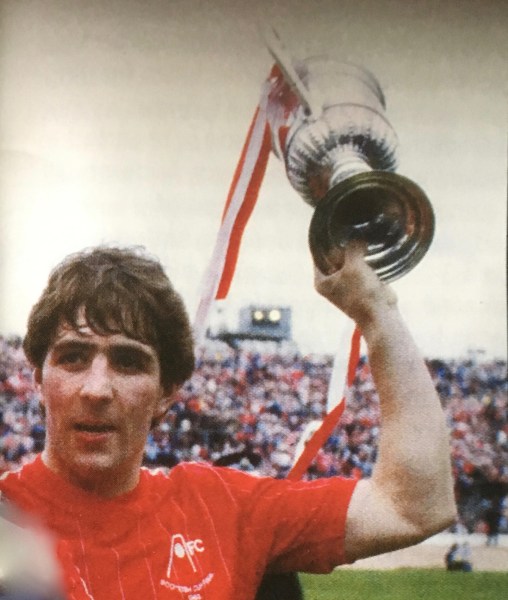
McGhee was named Scottish PFA Players’ Player of the Year in 1982, and the following year was part of the Aberdeen side who beat Real Madrid 2–1 to lift the 1983 European Cup Winners’ Cup in Gothenburg.

mcg cup

He also scored the second goal as Aberdeen defeated Hamburg 2-0 to win the UEFA Super Cup in the same year.

Asked about the best goal he scored, he said: “Probably the winning goal in my last game for Aberdeen.”

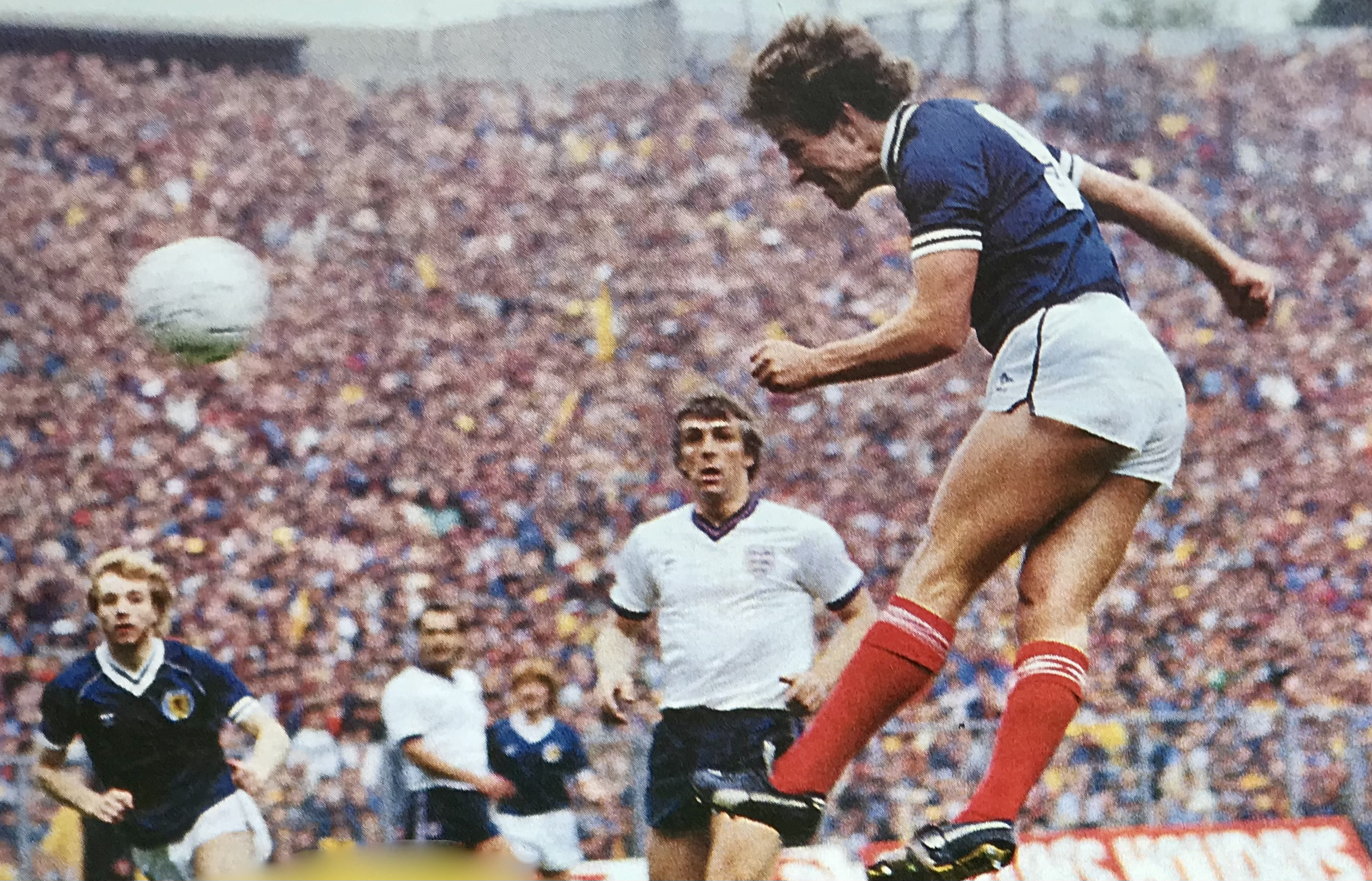
McGhee reckoned his best moment in football came on 26 May 1984 when he scored against England at Hampden Park. He headed in a cross (as pictured) from his great pal Gordon Strachan past Peter Shilton.

McG v Eng

“It put us 1-0 up but Tony Woodcock equalised to make the final score 1-1.”

It was one of four caps he won for his country. Nearly two decades later, in January 2013, Strachan appointed him as his no.2 with the Scottish national side.

M McGhee Old Football PhotosBut back to those playing days, and with two Scottish league titles and three Cup wins behind him, McGhee tried his hand at European football and spent 16 months at Hamburg. The spell was probably more of an education than a success, with injuries limiting his game time.

A £170,000 fee took him back to Scotland, to Celtic, where he had mixed fortunes during four years with the Glasgow giants. He was, though, part of the squad that won a League and Cup double in their centenary season.

After winning another Scottish Cup winners’ medal in 1989, he was on the move again, back to Newcastle.

Now with Jim Smith in charge, Newcastle paid £200,000 to take McGhee back to St James’ Park, where he formed an impressive strike partnership with the legendary Micky Quinn as Toon finished third in the old Division Two.

“We were good friends, but we didn’t blend on the pitch like Toshack and Keegan, Quinn told theleaguepaper.com. “Mark was a free spirit. He’d get the ball and drift left or right and drop deep.

“He’d turn defenders and drag them out of position. He would hold the ball up well for me to get into the box and score goals. He went where he wanted, but it worked.”

football back then McGhee

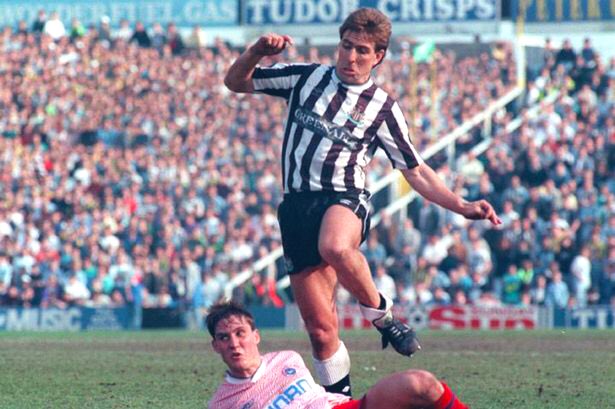
This Football Back Then picture shows McGhee in action for Newcastle against Albion’s Nicky Bissett.

His farewell performance came on 6 April 1991, not long after Ossie Ardiles had taken over as manager, and McGhee departed having scored a total of 36 goals in 115 appearances for the Magpies.

Next stop was Sweden, where he played briefly for IK Brage, but he seized the opportunity to try his hand at management by taking up the role of player-manager at Reading in the summer of 1991.

He’d been recommended for the role by his old boss Ferguson, and, after quitting playing through injury in 1993, he led the Royals to promotion from the third tier the following year.

A struggling Leicester City gave him a chance to manage in the Premier League but he was unable to keep them up and, less than a year after joining, decided to switch to Wolverhampton Wanderers, to succeed Graham Taylor.

Wolves just failed to gain promotion in 1996-97 (they lost in the play-off semi-finals) and were ninth the following campaign. Four months into the 1998-99 season, following a string of poor results, McGhee was fired.

It would be 20 months before he gained his next opportunity, this time at Millwall where he enjoyed initial success, leading them to promotion from the third tier, and then narrowly missing out on another promotion when they lost in the play-off semi-finals to Birmingham City.

McGhee apptWhen he parted company from Millwall in October 2003, he wasn’t out of work long because Brighton needed a replacement for Steve Coppell, who’d been wooed to take over at Reading (pictured above, with chairman Dick Knight, at his unveiling as Albion manager).

Those Albion fans who stuck by the team in the humble surroundings of the Withdean Stadium enjoyed some good moments during McGhee’s time as manager, in particular promotion via the play-off final in 2004.

He certainly found a formula to get the best out of certain players, as Adam Virgo, converted from defender to goalscorer, observed in that theleaguepaper.com article. “Mark is a very good communicator and very experienced,” he said. “He can make you feel ten feet tall. He’s very good at being honest, at analysing your game and telling you what you’re good at.”

After his departure from the Albion, McGhee was out of the game for nine months but got back in at Motherwell, turning them from near relegation candidates to qualifiers for European competition.

The lure of his old club, Aberdeen, proved too strong in the summer of 2009, but his tenure proved to be disastrous – and brief.

He spent the majority of 2012 as manager of Bristol Rovers, where one of the squad he inherited was former Brighton defender-turned-striker, Virgo. The following year, his old pal, Strachan, appointed him as assistant coach to the Scottish national side.

He later combined the role part-time when he returned to Motherwell but there were mixed fortunes second time round, and he left them again in early 2017. Towards the end of that year, he popped up at League Two Barnet, but the arrangement lasted only two months before he was moved to a ‘head of technical’ role, and then dismissed in March 2018.

McGhee was ‘slaughtered’ on Twitter when he took over as interim manager of National South side Eastbourne Borough in the spring of 2019, after being beaten 3-0 by Wealdstone in his first match in charge, his new side reduced to nine men after two players were sent off. Borough won just once in 11 matches.

When Albion under 23s coach Simon Rusk was appointed manager of Vanarama National League side Stockport County in January 2021, McGhee was appointed as one of his assistants.

His final managerial post was at Dundee in February 2022 when he took temporary charge of the Scottish Premiership side until the end of the season (with Rusk as his assistant), but they couldn’t avoid them being relegated, overseeing just one win in 13 matches.

McGhee finally announced his retirement from the game in September 2022 at the age of 65, telling the Sunday Post: “I won’t be pursuing any other managerial vacancies, and nor would I want to be a director of football or a head of recruitment. That’s not what I am – I’m a manager.

“I feel that players now deserve a young manager who can give them the energy I was able to when I started out. They don’t need a 65-year-old with a dodgy ankle.”

Canaries hero Culverhouse was Seagulls skipper, then coach

Culvs BHA

A DEFENDER who enjoyed Norwich City’s European journey in the early 90s ended his playing days as captain of the Seagulls before embarking on a coaching career running the reserves.

Ian Culverhouse was part of some of the Canaries’ best years flying high in the football pyramid – later being named by fans as their best ever right-back.

In February 1999, Albion’s then chairman, Dick Knight, told the Argus: “Ian has impressed me greatly with not only his experience but his attitude. He has been a real leader in the dressing room as well as on the field and we are giving him a chance to bring that know-how to bear on the coaching side.”

Manager Jeff Wood added: “Ian has shown on the field that he is a player of immense ability. In his new coaching role, he will now have the opportunity to pass his knowledge on to the younger players at the club.”

Culverhouse added: “This is a good opportunity for me and I am looking forward to it.

“It’s the first chance I’ve had to coach and it’s something I wanted to do anyway when my career finished. It has just come at a nice time.”

It was former boss Brian Horton who first brought Culverhouse to the Albion, from non-league Kingstonian, signing him on a month-to-month contract in August 1998.

In October, it looked like he was being released, but when captain and sweeper Gary Hobson picked up an injury, Horton reinstated Culverhouse on a contract to the end of the season, and appointed him captain.

culvsbw

Culverhouse, by then 34, could look back on the experience of 369 games for Norwich, and 115 for Swindon Town. He said: “The future of Brighton is looking very exciting and it’s great to be considered a part of the plans.”

When Wood was sacked with six games of the season still to be played, Culverhouse told the Argus: “I am shocked and absolutely gutted for the bloke.

“It’s down to the players he puts out there. We have let him down.”

Culverhouse survived the managerial upheaval and when new manager Micky Adams took charge, he told the Argus: “Ian reminds me a bit of myself. You have got to get on the ladder somewhere. He is enthusiastic, has had a good career and sets himself high standards.

“He has a lot to learn in terms of coaching, but I hope he will become fully qualified along with the rest of my staff.

“He will still be registered as a player as well in case we need him in emergencies, but I don’t envisage him playing too many games.”

In 2000, Culverhouse became youth coach at Barnet and two years later joined Leyton Orient in a similar role before being elevated to assistant manager. He left the Os in August 2005 – replaced by future Villa boss Dean Smith – but was then appointed coach at Wycombe Wanderers by Glenn Hoddle’s former no.2, John Gorman.

When Paul Lambert succeeded Gorman, he and Culverhouse developed a strong bond. He followed Lambert to Colchester United to become assistant manager, then returned to Norwich in the same role, where he didn’t forget Wood’s role in setting him on the coaching ladder, being instrumental in the former Albion manager’s appointment as Norwich’s goalkeeping coach.

When Lambert upped sticks from Norwich to join Aston Villa, Culverhouse went with him, and, in June 2013, the Birmingham Mail carried a lengthy article talking about the trust Lambert placed in his right-hand man, and how much he rated his judgement.

But in April  2014 Culverhouse was suspended by the club and, following an internal investigation into “off the field matters”, was dismissed.

Between January 2016 and February 2017, Culverhouse was assistant manager to veteran boss John Still at Dagenham & Redbridge. He left Dagenham to become manager of Southern League Premier Division side King’s Lynn Town. In May 2018, he moved on to Grantham Town but left after only five months and returned to King’s Lynn where he recently signed a new two-and-a-half-year contract.

Born on 22 September 1964 in Bishop’s Stortford, Culverhouse spent his early football career at Tottenham Hotspur and was capped at England Youth level. He impressed in Spurs’ youth and reserve sides and spent three years at the Lane.”I was playing alongside players like Ricky Villa, Ossie Ardiles and Glenn Hoddle, which was tremendous experience,” he said.

He even collected a UEFA Cup winners’ medal in 1984 as an unused substitute in the first leg of Spurs’ win (on penalties) over Anderlecht; future Albion boss Chris Hughton was left-back and recent signing from Albion, Gary Stevens, was in midfield, and scored one of the decisive penalties.

But Culverhouse only made one full appearance for the first team, plus one as a substitute, and in October 1985 moved to Norwich City under Ken Brown for a £50,000 fee.

He was part of the Norfolk club’s old Second Division title-winning side of 1985-86 and became an established defender, usually as a right-back but also as a sweeper, as the Canaries flew high in the Premier League, finishing third in 1992-93 after enjoying three top five finishes in the old First Division.

After nine years as a player at Carrow Road, he was somewhat controversially sold for £150,000 to Swindon where he was a key part of their League One Championship winning squad in 1995-96 but left in May 1998 after falling out with boss Steve McMahon.

He began the 1998-99 season with Kingstonian before Horton revived his league career with the Seagulls.

Sprinter’s boys took different tracks after starting Gunners

A GUNNER from the age of nine gained valuable first team experience with the Seagulls but ultimately fell short of reaching the same heights as his brother.

Commonwealth Games gold-medal winning sprinter Wendy Hoyte saw sons Justin and Gavin climb through the academy and reserve ranks at Arsenal.

Justin played 68 first-team games for the Gunners and went on to make a name for himself in the North East, but younger brother Gavin only played four first-team games for Arsenal and had to set his sights lower to pursue a professional career.

The younger Hoyte spent most of the 2009-10 season as a Brighton player and, although only 19 at the time, got a rough ride from Seagulls supporters who expected more from someone who’d played at the top level of the game.

Initially signed on loan in October 2009 by Russell Slade to cover for the injured regular right-back Andrew Whing, Hoyte was handed his debut against Slade’s former club Yeovil Town at Huish Park.

“I am delighted to know the club wants me,” the youngster told The Argus. “They have got a lot of games this month and I just want to get out there and play.”

As it turned out, Hoyte outlasted Slade at the Withdean, and his temporary transfer was extended when Gus Poyet took over as manager.

The young full-back in the no.27 shirt gained a good amount of game time until Poyet unearthed Inigo Calderon in January 2010.

Even then, Poyet was happy to retain the services of the Arsenal youngster, telling the Argus: “We explained to Gavin before asking Arsenal that there was probably a player coming.

“Arsenal knew that as well, so nothing has been hidden. Everyone knows where they stand.

“We are working on different aspects of the game with Gavin, because he has got something which is very difficult to find sometimes in football, the speed to recover.

“When you have that ability, you don’t need to go to ground, because you are quicker than most players.

“He is young and there is plenty to come. We want to help him become a Premier League player or top Championship player.”

G Hoyte stripes

Hoyte got another chance to prove himself when Calderon picked up a nasty hip injury in April, bringing his total number of Albion games over the season to 21.

When it looked like the popular Spaniard was going to move to Southampton instead of accepting a contract offer from the Seagulls, Argus reporter Andy Naylor ventured: “Gavin Hoyte’s encouraging conclusion to the campaign suggests he might even be capable of rising to the occasion if he returns on loan from Arsenal.”

It didn’t come to that, though, and, over the next two years, he dropped down another division with loan spells at Lincoln City and AFC Wimbledon.

When he realised there was little hope of him ever getting close to the Arsenal first team, he left for Dagenham and Redbridge, having spoken to Arsenal goalkeeping coach Tony Roberts, who’d played for the Daggers himself.

Born in Leytonstone on 6 June 1990, Hoyte followed in his brother’s footsteps to Arsenal and progressed to the point of being appointed the under 18 team captain in the 2006-07 season when he was still only 16.

“I am very vocal during games, although I wouldn’t quite say that I was a Tony Adams, but that’s the sort of captaining style I try to emulate,” Hoyte told the Arsenal matchday programme. “I have captained at schoolboy level and in particular in tournaments and so I do have some experience, but I did not expect to be captain of the under 18s so early.”

Hoyte captained Arsenal’s under 18s when he was only 16

Hoyte was also capped at England under 17, under 18, under 19 and under 20 levels. In the 2009 UEFA under 19 championships, he played in two qualifiers in the space of four days when England beat Slovakia 4-1 and Scotland 2-1; his teammates including current Albion no.3 Jason Steele in goal, and future full international Kieran Trippier.

He was part of the squad who took part in the finals in Ukraine, starting twice and coming on as a substitute three times as England finished runners up to the hosts. The side was managed by Brian Eastick, who’d been an Albion coach during the Mike Bailey era.

Hoyte’s one game for the under 20s came as a substitute in a 1-1 draw away to Uzbekistan on 2 October 2009, when a fellow substitute was Sam Baldock. Two non-playing subs in that game were Jonathan Obika and Gary Gardner, who both had spells on loan with the Seagulls.

Hoyte looked back on his Arsenal time in an interview with Will Unwin for planetfootball.com and said: “When you’re there you always think you’re going to make it – I was pretty confident.

“I had my older brother there as well, so that helped a lot, seeing how he progressed.

“That was a big thing for me, seeing him play every week, watching him, thinking, ‘I want to try and get to where he is’.”

Hoyte was an unused substitute for several first team games before making his debut in a 6-0 League Cup win over Sheffield United, and starting in the next two rounds, against Wigan and Burnley. His Arsenal career only seemed to be heading in one direction.

“Just to play at the Emirates was massive, coming out to a big crowd,” he told Unwin. “There were a lot of young boys in the team so that helped me with confidence and eased it.

“But there were a lot of players in front of me, so I didn’t think about playing in the Premier League. It was always in the back of my mind, but I wasn’t thinking I was going to play immediately.”

But 11 days after the second of those League Cup appearances, Hoyte was handed his Premier League debut, after William Gallas had been stripped of the club captaincy for criticising team-mates amid a poor run of only one win in four games.

G Hoyte v Man City

Up against Robinho of Manchester City, he was taken off after an hour of a 3-0 defeat, and it would prove to be both the start and end of his top-flight career.

Hoyte didn’t recall getting much feedback after the game, although it wasn’t long before he was awarded a new contract. He made his fourth appearance for the club in a League Cup quarter-final defeat to Burnley at the start of December – but he didn’t play for Arsenal again.

He was sent out on loan to Championship side Watford for the second half of the 2008-09 season, featuring in 10 matches, and he eventually left Arsenal in 2012 when his contract expired.

After two seasons in League Two with Dagenham, he spent the 2014-15 season with League One Gillingham, featuring in 35 matches. He dropped down to League Two with Barnet, ended up at National League Eastleigh until the end of the 2017-18 season before returning to Dagenham in 2018-19.

It proved to be a frustrating season for him under the managership of former Albion boss Peter Taylor, but, reunited with former manager John Still at Maidstone United, he has been a regular at right-back in 2019-20 and scored just the third goal of his career against Dulwich Hamlet in December.

Along with his brother, the younger Hoyte has enjoyed the opportunity to play international football with Trinidad and Tobago, as he told socawarriors.net, and spent 20 minutes on the same pitch as Lionel Messi in a friendly as Argentina warmed up for the 2014 World Cup.

Injury-hit Albion among six to borrow Borrowdale

DEFENDER Gary Borrowdale couldn’t have been more aptly named for a loanee which is just as well because he found himself in that situation half a dozen times over five years.

He made a temporary switch to Brighton from QPR in March 2009 to fill the spot vacated when Albion’s regular left-back Jim McNulty suffered a shocking injury in a 4-0 home defeat to Crewe Alexandra.

While McNulty needed an operation to remove a kidney, former England under 20 international Borrowdale had the chance to resurrect his flagging career with the Seagulls.

For a player who’d clocked up 100 appearances for Crystal Palace by the time he was 21, there was the inevitable ‘noise’ about helping out the arch rivals, but Borrowdale just wanted some game time, and he was one of five debutants who pulled on Albion’s sky blue second kit for the game at Brisbane Road on 7 March 2009.

Brighton lost that match 2-1 but, under Russell Slade’s astute stewardship, Borrowdale acquitted himself well during 12 matches through to the end of the season and the Albion just managed to retain their third-tier status.

Borrowdale montage“I made my debut for Palace at 17 and played my first game in the Premiership at 18, so it was a great start and Palace will always be dear to me as a result,” Borrowdale told Spencer Vignes for a matchday programme article.

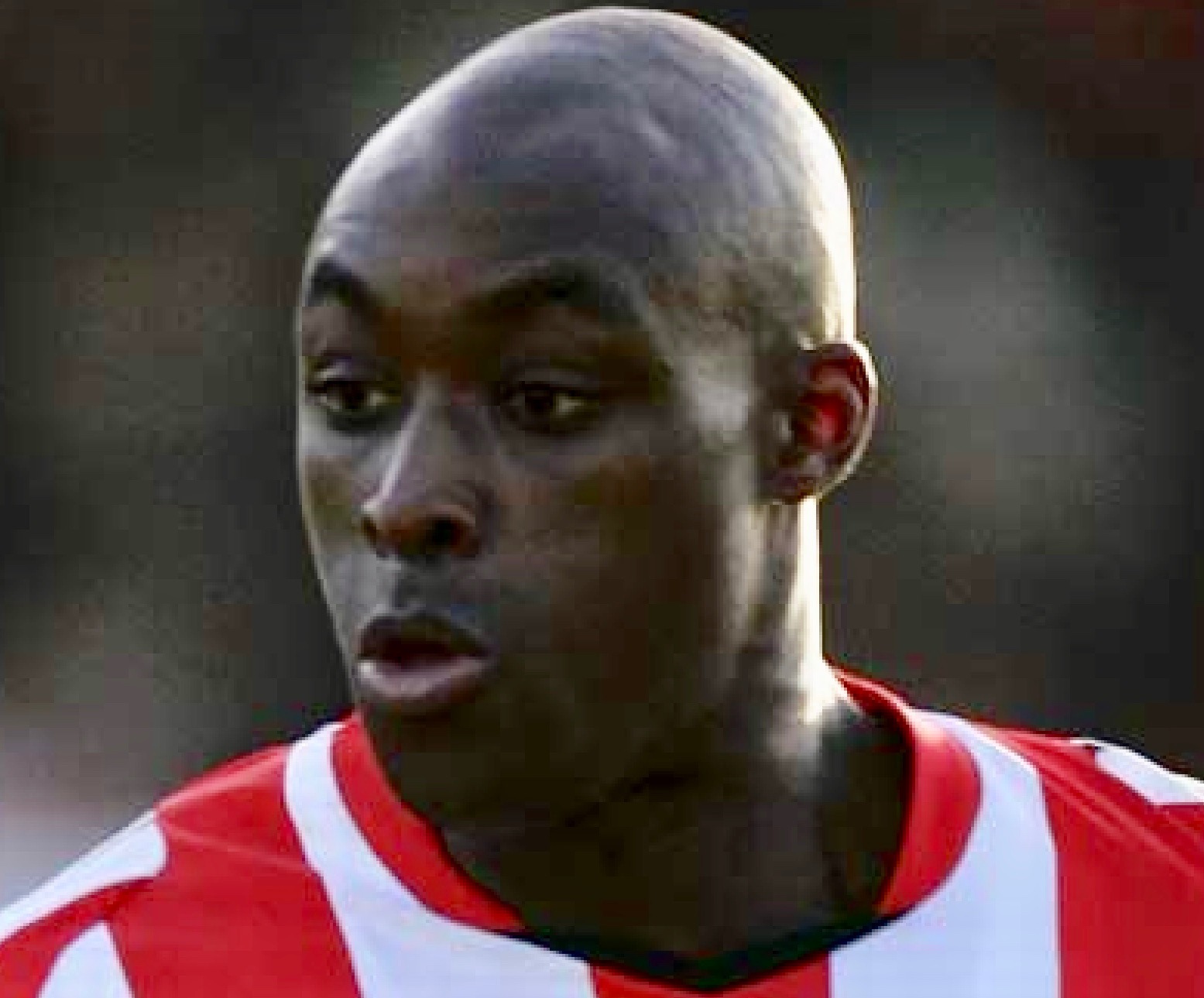
“The highlight of my career would be the promotion I had with Palace when we went from the Championship to the Premiership,” he said, referring to the play-off win over West Ham, the day before Albion beat Bristol City in their own divisional play-off.

Borrowdale returned to west London after his spell on the south coast but in March 2010 he went on loan to Charlton Athletic and the following year had temporary spells at Carlisle United and Barnet.

His league career seemed to be over when QPR released him in June 2012 and he went over to Northern Ireland to join second tier outfit Carrick Rangers.

In January 2014, he looked to have got a foothold back in the English professional game when loaned by Margate to Gillingham, but he didn’t play any first-team games and was released at the end of the season.

Former Albion boss Peter Taylor told the club’s official website: “He’s done very well, lost weight every week and looked fitter every week.

“I just don’t think he’s ready for League One football, especially considering if we have to play Saturday and Tuesday. As a result, I have decided to let him go.”

Borrowdale then linked up with Greenwich Borough, initially as a player, before becoming a coach.

Born in Worcester Park, south London, on 16 July 1985, Borrowdale came through the youth ranks at Selhurst Park and Trevor Francis handed him his debut for Crystal Palace in December 2002.

When Iain Dowie took over as manager, Borrowdale quickly became a regular in the first team. He also represented England at each of the age groups from 16 to 20, playing alongside the likes of Gary Cahill in defence.

In a 2-2 draw with the Netherlands, played at Turf Moor, Borrowdale’s teammates included fellow Palace youngster Scott Flinders in goal and future Albion player Will Hoskins.

Borrowdale won Palace’s Young Player of the Year award in 2006-07, but, when Dowie moved on to manage Coventry City, Borrowdale joined him there, a tribunal fixing the transfer fee at £650,000.

The move didn’t work out, though, and, with Dowie gone, Borrowdale was sidelined, eventually being sent out on loan to Colchester United and then QPR.

Paulo Sousa took him on loan in November 2008 and, although he didn’t feature, made the move permanent in January 2009 on a three-and-a-half-year deal. He made just 22 appearances for QPR during that time.

Borrowdale stripes

Pictures as featured in the Albion matchday programme.

Owusu raised the roof as Albion escaped the drop

Owusu stripes

FEW Brighton players have made such an impact in such a short time as Lloyd Owusu, a Ghana international who in 2009 struck seven goals in 14 appearances to help Russell Slade’s Albion retain their League One status.

The popular Slough-born goalscorer also earned legendary status amongst Sheffield Wednesday fans even though his playing time for the Owls was similarly fairly limited. His most prolific time as a striker came in two spells at Brentford, but he was happy to travel and ended up playing in Australia.

Born in Slough on 12 December 1976, Owusu started his career with local GM Vauxhall Conference club Slough Town, managed at the time by future Reading boss Brian McDermott.

Owusu rose through the ranks at youth and reserve team level before breaking into the first team in September 1996. Owusu marked his full league debut for Slough with four goals in a 6-0 win over Telford United.

In 1998, after netting 18 goals in 59 appearances for Slough, Brentford, then managed by former Palace chairman Ron Noades, took him to Griffin Park for a fee of £25,000, but it was under future Albion boss Steve Coppell that saw the majority of his best playing days.

Owusu BrentOwusu scored 76 goals in two spells with the Bees, and, in the 1998-99 season, his 24 goals in 53 games in all competitions saw him lead the scoring charts in Nationwide Division Three (now Football League Two) with Brentford crowned champions.

While two below par seasons followed, in 2001-02 he was back on top form, scoring 22 goals to help Brentford reach the Division Two play-off final at the Millennium Stadium. However, the Bees lost 2-0 to Stoke City and Owusu’s contract was not renewed.

Sheffield Wednesday, then in the Championship, signed him on a free transfer and he became an instant Wednesday legend. Coming on as a substitute in a typical fierce Steel City derby match against Sheffield United, he headed a goal with his first touch.

“Scoring with my first touch for Wednesday was a dream come true. I actually dreamt that I was going to score on my debut with my first touch,” Owusu told beatsandrhymesfc.com. “All I remember was the ball coming off the cross bar from a (Shefki) Kuqi header and me being there to put it in the net past Paddy Kenny.”

Although the Owls went on to win the match 2-0, Owusu subsequently had limited game time, starting only 13 games out of a possible 34 in all competitions in that 2002-03 season.

“I missed pre-season due to a knee operation so I was always on the backburner and could never reproduce my best performances,” Owusu explained.

When a similar story followed in 2003-04, he went on loan to Reading, and then moved permanently to the Royals in the summer of 2004. In the 2004-05 season, Owusu scored six goals in 14 league starts.

The striker rejoined Brentford on a free transfer in the summer of 2005, the same year he won his first cap for Ghana. Unfortunately, he tore a groin muscle in a friendly match playing for Ghana in April 2006 and was sidelined for nearly a year.

He finally made his comeback in March 2007, but he was released by Brentford two months later and signed on a free transfer for Russell Slade’s Yeovil Town in July 2007.

In September that year, he was a scorer at the Withdean Stadium as the Glovers left with all three points courtesy of a 2-1 win. But on transfer deadline day, 1 September 2008, Owusu joined Coca-Cola League 1 side Cheltenham Town on a one-year deal.

It was in March 2009, with Cheltenham looking to cut costs, that Owusu linked up with the Seagulls on loan until the end of the season. “Going to Brighton was one of my best memories of my career,” Owusu told gloucestershirelive.co.uk.

Owusu grabbed the headlines as he scored seven goals in 14 League appearances for Brighton, helping Russell Slade’s side to avoid relegation from League One. He was even named Powerade League One player of the month for April 2009.

On the strength of his performances, Owusu was offered an extended contract by the Seagulls but he chose to try his luck in Australia, where he has since returned to work.

He initially joined A-League side Adelaide United on a two-year deal but was struck by swine flu and pneumonia, and struggled to make an impact on the pitch. He had a short spell at Chinese Super League club Guangzhou Evergrande, but his contract was terminated by mutual consent at the end of December 2010.

Back in the UK, he linked up with Luton Town, at the time trying to get back into the Football League. He scored seven in 13 games but the team missed out on promotion after losing on penalties to AFC Wimbledon in the play-off final at the City of Manchester Stadium (as it was then).

After spending pre-season with Cypriot side AEP Paphos in the summer of 2011, Owusu returned to the UK to make a handful of appearances for Barnet and Hayes & Yeading United (on loan), but picked up an injury and left Barnet after his contract expired.

In February 2012, he re-signed for Slough to help manager, and former teammate, Steve Bateman achieve promotion, before returning to Adelaide with White City. He has since developed a coaching and acting career Down Under.

Owusu took his coaching badges in Australia and, as well as coaching at some of the top private schools in Sydney, has launched his own coaching company, XL Soccer.

“There has also been a bit of modelling, TV commercials and the odd appearances in a documentaries and movies,” he told gloucestershirelive.co.uk. “I was in Gods of Egypt with Gerard Butler and also appeared in the TV shows Danger5 and Deadly Women along with ads for OPSM (opticians) and HomeAway (holiday rentals).”

His LinkedIn profile says his current role is general duties master at Cranbrook School in Sydney.

Big Chiv’s Brighton cameo at the end of an illustrious career

FORMER England international Martin Chivers rose majestically to head home a goal in a 3-3 draw between Leyton Orient and Brighton & Hove Albion.

It was textbook Chivers – a replica of so many similar goals he’d scored for Spurs and England during his glory days – and it put Albion 2-1 up. It turned out to be his one and only goal for the Albion.

It came in one of just five games he played for the Seagulls as his illustrious playing career drew to a close. In Teddy Maybank’s absence through suspension just as Brighton inched closer to promotion to the elite for the first time ever, Chivers – once one of this country’s top centre forwards – was an ideal stand-in.

The game at Brisbane Road on 7 April 1979 saw former Spurs League Cup winning teammates Chivers and Ralph Coates on opposing sides and, a 3-3 thriller was a cracking match for ITV’s The Big Match to have chosen for showing the following Sunday afternoon.

A month later Albion would travel to St James’s Park, Newcastle and clinch that dream promotion.

John Vinicombe, faithful chronicler of Albion’s fortunes for the Evening Argus, declared: “Make no mistake, Albion are First Division bound after that tremendous match at Orient.”

Mike Calvin in the Sunday Mirror, said: “Chivers’ bullet like header became an instant candidate for ITV’s goal of the season.”

While Ian Jarrett in The Sun said: “Martin Chivers’ 32nd minute goal came straight out of the former England striker’s scrapbook. ‘It was a dream goal. I’d like to have it on tape so that I could watch it being played back again and again,’ Chivers told him.

In the days when strikers invariably hunted in pairs, Chivers had previously starred for Tottenham Hotspur alongside the late Scot, Alan Gilzean, as Spurs put silverware in the White Hart Lane trophy cabinet in three successive seasons.

The team captain during that successful period was Alan Mullery and after the midfielder had hung up his boots and taken charge of the Seagulls, he turned to his old teammate in his hour of need.

With regular striker Maybank facing a two-match suspension, Mullery bought the 34-year-old Chivers for £15,000 from Norwich City just before transfer deadline day in March 1979 and he made his debut in a home 0-0 draw against Notts County on 31 March.

Chiv v CharltonEven a crocked Chivers (by his own admission, a troublesome Achilles tendon restricted his fitness) could do a job for the Albion in an emergency, the young manager believed.

“I took a bit of a chance on him, but he was terrific for us,” Mullery recalled in a retrospective matchday programme article. “He was a proven goalscorer and helped us both on and off the pitch.”

Chivers explained exactly how it came about in his autobiography, Big Chiv – My Goals in Life, which he discussed in an interview with the Argus in 2009.

Maybank returned to the side for the successful promotion run-in and, during the summer, Chivers had an operation on his Achilles. The new season, amongst the elite for the first time, was 13 games old before Chivers saw action for the Seagulls.

He appeared as a substitute in a 2-1 defeat away to Coventry City on 20 October, and the national media singled him out for mention.

“When Chivers came on for Ward 11 minutes after the break, the game at last came to life. From then on, Brighton were more decisive in attack and played with more confidence,” said the Daily Telegraph.

Sunday Express reporter William Pierce added: “Martin Chivers went on as a substitute for the out-of-touch Peter Ward and the ex-England striker twice might have scored.”

That contribution earned Chivers a starting place at Maybank’s expense in the next game, a 4-2 home defeat to his old club Norwich, and he stayed up top, this time partnering Maybank, in a 0-0 home draw with Arsenal in the fourth round of the League Cup.

But that was the last time he appeared in the first team. Mullery turned instead to another former Spur, Ray Clarke, and he and Ward were the preferred front pairing for the rest of the season.

Chivers remained with the club, appearing regularly in the Reserves through to the end of the season, and doing some scouting work, but his top-flight career was finally over.

But let’s take a look back at what had gone before. It was an impressive rise to fame.

Born in Southampton on 27 April 1945, Chivers was a pupil at the city’s Taunton’s Grammar School and wrote to his local club asking for a trial. His prowess as a goalscorer grew rapidly.

chiv SaintAfter playing regularly for Southampton’s youth side, his breakthrough came in September 1962 when just 17. He made his first-team debut against Charlton Athletic and signed as a full-time professional in the same week. He became a first-team regular the following season.

In February 1964, Chivers and future teammate Mullery were called up (along with future Albion goalkeeper Peter Grummitt) by Alf Ramsey as Reserves for the England under 23 side for a 3-2 win over Scotland, played in front of 34,932 fans at St James’s Park, Newcastle.

Two months later, at Stade Robert Diochon in Rouen, shortly before his 19th birthday, Chivers made a goalscoring debut for the Under 23s when coming on as a substitute for Geoff Hurst as England drew 2-2 with France.

It was the start of a record-breaking Under 23 career; in four years he appeared 17 times.

Southampton skipper Terry Paine, who was part of England’s 1966 World Cup winning squad, played alongside Chivers as he developed. “The potential was always there, especially when he made the Southampton first team. But the one thing he may have lacked was determination,” he told Goal magazine.

On Saints’ promotion to the top division in 1966, Bates supplemented his attacking options with the addition of established international Ron Davies from Norwich.

Davies and Chivers proved a twin threat to opponents but Chivers was somewhat overshadowed by the Welshman, and Paine said: “They just weren’t compatible. It didn’t work having two big blokes up there together. Chivers was playing second fiddle. He was no match for Ron in the air, there was never any doubt about that.”

It eventually led to Chivers putting in a transfer request in December 1967 and, a month later, having scored 106 goals in 190 appearances for Southampton, he was transferred to Tottenham for £80,000 with winger Frank Saul, an FA Cup winner with Spurs in 1967, a £45,000 makeweight going in the opposite direction.

Saints fans had a new hero in the emerging Mike Channon and inevitably comparisons were drawn between the two. “Martin had more finesse on the ball when he was Mike’s age, without punching his weight,” said Southampton boss Ted Bates. “Mike, however, has more drive and desire, a ruthless approach which Martin never had.”

Indeed, even in the early days at Spurs, fans failed to see why Spurs had shelled out what at the time was the biggest ever transfer fee in the country for the striker, with the legendary Jimmy Greaves and Scot Alan Gilzean the preferred front pairing.

It didn’t help matters when he was sidelined for months by a serious knee injury, although Bates felt the spell out actually proved to be a turning point in his career.

“During that long spell out of action I think he must have taken a good, long look at the game and examined himself thoroughly,” said Bates. “The result is that he now uses the full range of his talents.”

Bates believed he lacked belief in his own power and seemed reluctant to use his size to his advantage. “We were always trying to get Martin to use his physique properly,” said Bates. “He knew he had to be more aggressive, but in those days a big, strong centre-half could swallow him.”

It looked as though Chivers was going to be an expensive flop and, in an interview with Ray Bradley for Goal magazine, he admitted he’d been through a crisis at Spurs and his career had been at a crossroads.

“It was a hell of a frustrating time for me,” he said. “No matter how hard I tried I just couldn’t strike form. I suppose I was really battling to regain confidence again after injury.

“The fans, disgruntled with the form we had been showing, were gunning for me and finally they got their way when I was dropped.

“Things looked black for me but I was determined to fight my way back into the side. The turning point for me, I think, came in a reserve game against Northampton at the end of the season.”

Reserve team manager, Eddie Baily, took him aside and had a private chat, telling him the only way he’d get back his confidence was to fight for it on the pitch.

“He instilled in me that I must be more aggressive, that I must put myself about more if I was to win back my first team place,” said Chivers. “That little pep talk seemed to do the trick. It was a wet pitch and I really gave it all I had and ended up by scoring five goals.

“His words of encouragement after the match made me realise that it was up to myself if I wanted to succeed.”

With Greaves having departed the club for West Ham, once Chivers was back in the first team he did well up against Jack Charlton and Norman Hunter of Leeds, and he began to recapture his form. A good start to the 1970-71 season saw everything start to slot into place.

“I’ve always liked scoring goals,” he said. “Ever since I was a boy I liked to see the ball hit the back of the net.”

After scoring twice to help Spurs beat Aston Villa in the 1971 League Cup Final, Chivers said: “I feel fabulous. That’s the only way to describe how I feel after scoring two goals in my first-ever appearance at Wembley.

“Spurs are back on the glory trail and those two goals have really sealed my comeback this season.”

In a series of Goal articles about Chivers in November 1971, writer Warwick Jordan declared: “There have been few more exciting centre forwards to grace the game and there is little reason to dispute the claim that the Tottenham striker could become one of the best ever,”

A whole raft of top division players and managers were happy to put on record their admiration for the centre-forward. Everton boss Harry Catterick described him as “the new John Charles” and claimed: “Chivers has emerged this year as the most talented centre-forward in Britain.”

Leeds manager Don Revie was a big admirer, saying: “Chivers is a better player than Geoff Hurst. The comparison is appropriate as both men possess a high degree of skill not normally found in strikers of their heavy build.

“It’s hard to choose between them, but I consider Chivers has the slight edge as he does not rely so much on the men around him. He has the ability to take the ball through on his own and create chances out of nothing.”

Manchester City team boss Malcolm Allison said: “This boy is the best all-round centre-forward in Britain. He’s big, strong, skilful and exciting. A tremendous player who will always get goals.”

Stoke midfielder Mike Bernard told the magazine: “Chivers has got guts, skill, aggression, ball control and tremendous determination. You can’t fault the guy.”

Teak-tough centre back John McGrath, who once had a brief spell on loan to the Albion from Southampton, added: “That bad injury has helped to make him a much more determined player. When your career is in the balance it gives you a greater determination to succeed. Chivers has come back to the game a different player.

“He’s a much more physical player now. A more confident player than he was before. He’s developed more character.

“People don’t realise how fast he is. He’s got a sort of loping run, a bit ungainly. But it’s deceptive because he is gathering speed all the time.”

Despite gaining that record number of England under 23 caps, it wasn’t until early 1971 that he got his chance on the full international stage. His reinvigorated Spurs form led to him making his full England debut away to Malta on 3 February 1971, when England gained a 1-0 win under the captaincy of his Spurs teammate Mullery.

He scored his first goal for England two months later in a 3-0 win against Greece at Wembley.

It was said Chivers really arrived as an international star after a powerful two-goal performance in a 3-1 win over Scotland at Wembley on 22 May 1971.

“This has been the greatest day of my life,” said Chivers, after that win. “I didn’t know I was playing until lunchtime on the same day. I was determined to show I was worth my place.

“I know a lot depended on my display in that game. I know I could have jeopardised my international future if I had not grabbed the opportunity.”

Afterwards, though, he declared: “Now I feel I have established myself as an England player.”

Fellow England striker Francis Lee told Goal’s Jordan: “He’s a football manager’s dream. At his present rate of progress, he could become the greatest centre-forward this country has seen.

“His tremendous potential blossomed during that game in Switzerland (scored in a 3-2 win in Basle, 13 October 1971) where his performance made the difference between victory and possible defeat.

“But his finest game for England so far was the one against Scotland. Today he is the hottest soccer property in the game. He’s going to be a big winner for England.”

In total, he scored 13 times in 22 starts plus two appearances from the subs bench, but, in less than three years, Chivers’ England career was over.

He never played for his country again after being subbed off in the crucial game that meant England wouldn’t qualify for the 1974 World Cup – a 1-1 draw with Poland at Wembley in 1973.

In eight years at Spurs, Chivers scored 174 goals in 367 games, his greatest success coming between 1970 and 1973, when he scored more than 20 goals in successive seasons, and was a key part of the side that won the 1971 and 1973 League Cups, finished third in the league in 1971, and picked up the 1972 UEFA Cup.

He had two seasons in Switzerland, playing for Servette, before returning to the English game with Norwich in 1979-80, before the move to Brighton.

On leaving Brighton, he went initially to Southern League Dorchester Town as player-manager, then Norwegian side Vard and finished playing 10 games for Barnet in 1982-83.

It was a phenomenal scoring record to notch 255 goals in 546 appearances.

After he’d finished playing, Chivers became a hotelier in Hertfordshire (during which time I got to speak to him in a professional capacity, helping to promote my client’s involvement in his business) and for several years he was a matchday host at White Hart Lane.

Chivers died at the age of 80 on 7 January 2025.

Pictures from a variety of sources, especially Goal and Shoot magazines and matchday programmes.


Peter Taylor disciple Junior Lewis helped Seagulls to promotion

JunLewJUNIOR LEWIS was a loyal disciple of Peter Taylor, linking up with him as a player or a coach at EIGHT different clubs.
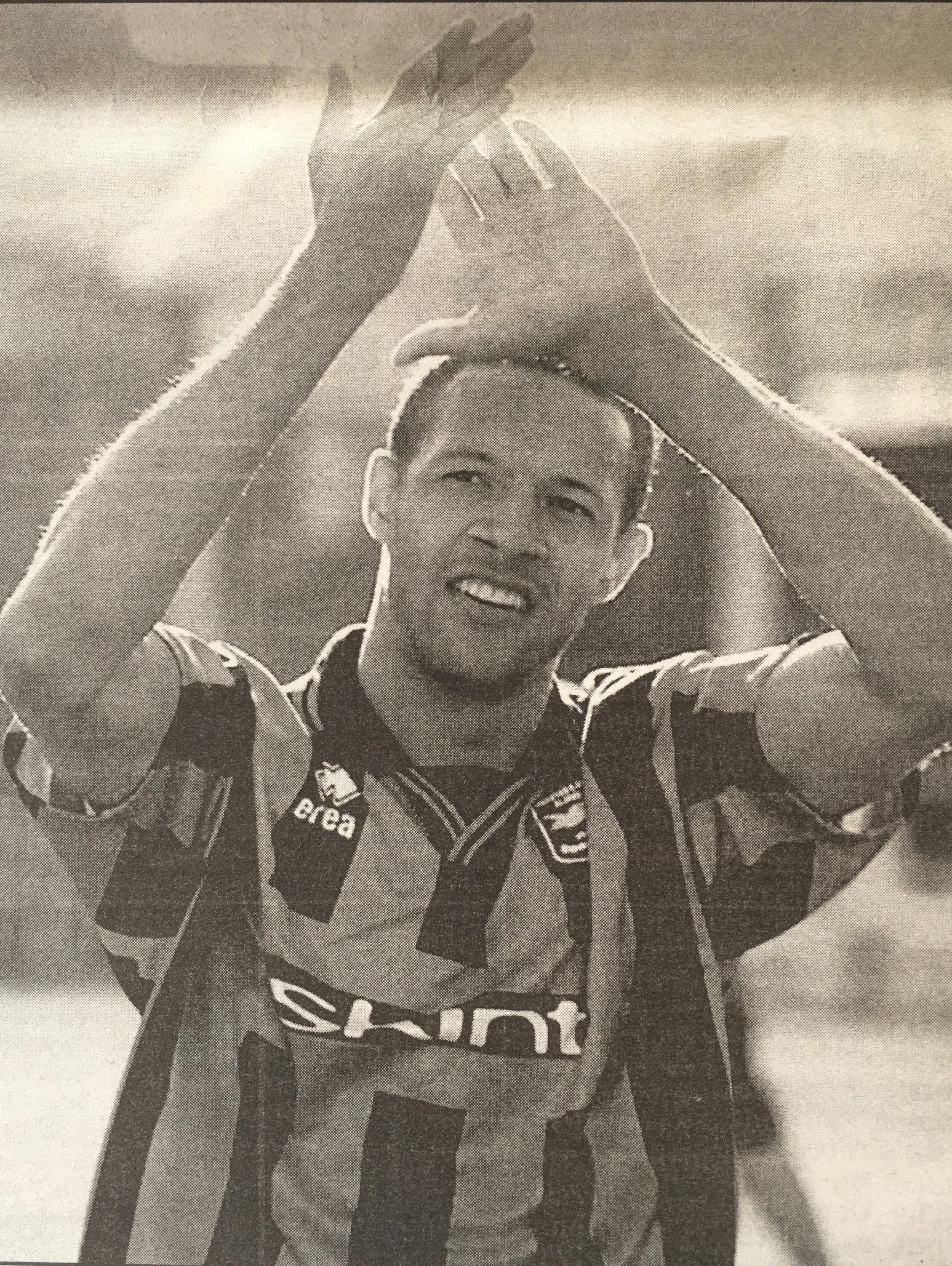
Although he didn’t win the support of too many Leicester City fans during his time with the Foxes, his arrival for the final third of Brighton’s 2001-02 season helped them to claim the third tier crown.

One particular game stands out in the memory, and it came on a rain-soaked night against league leaders Reading at the Withdean Stadium.

I recollect watching the action from the front row of the covered east side of the ground – the roof affording no protection whatsoever as the rain swept in.

Reading hadn’t lost in 12 games but with Bobby Zamora in sparkling form, Albion beat the Royals 3-1.

Lewis marked his debut with a simple tap-in after Zamora had set him up. The striker with the golden touch had scored his 26th goal of the season to give Albion the lead on 59 minutes and then provided the assist for an unstoppable strike by Steve Melton.

Five days later, Lewis scored the only goal of the game at home to Huddersfield  and, as promotion came properly into view, boss Taylor talked to the Argus about the difference he had made to the side.

Brighton went on to overtake Reading to claim the title, rounding off the season with a 1-0 win away to Port Vale. Lewis finished with three goals in 15 appearances as the side Taylor inherited from Adams lifted the championship trophy.

lewis applaudsBorn in Wembley on 9 October 1973, Lewis was on Fulham’s books as a youngster and made it through to the first team, his debut coming as a substitute in a league game against Burnley in October 1992.

But he played only six games at first team level before dropping into non-league and playing for three years with Dover Athletic – where he was first managed by Taylor.

He went on to play for Hayes and Hendon before getting back into league football under Taylor at Gillingham.

In a season and a half with the Gills, he played 59 games before Taylor, by now manager of Premiership Leicester City, took him there initially on loan and then as a permanent signing in 2001.

Although he was a Leicester player for three years, he managed only 30 appearances for the Foxes because Taylor’s successors as manager sent him out on loan.

After the temporary move to Brighton, Lewis had two spells on loan at Swindon Town the following year, then, in 2004, he was reunited with Taylor at Hull City, initially on loan and then on a permanent basis.

After 52 appearances for Hull, he had fleeting spells with Brentford, Milton Keynes Dons, Edgware Town and Stevenage Borough.

He joined Taylor’s backroom staff as a coach at Wycombe Wanderers and then moved in a similar capacity when Taylor was appointed as boss at Bradford City, the eighth club where they’d worked together.

“I’ve worked with him at every level from the Conference right up to the Premier League and been lucky enough to get promotion at a lot of those clubs,” Lewis told the Bradford Telegraph and Argus. “I know how the manager works and how he likes things done from playing for him and working under him as a coach.”

In a FourFourTwo magazine article by Nick Moore on 19 February 2016, Lewis reckoned Taylor always sought him out because he reminded him of his younger self.

“We were both two-footed, but mainly left-footed, and we relied on a similar trick – feinting to cross but chopping back onto your right foot,” Lewis explained. “I watched a video of him play once and I thought: ‘I do that’.

“He trusted me to keep things ticking over. I fitted his philosophy, and he brought the best out in me. But I didn’t assume that when he moved, I’d automatically follow. When he took over Leicester in the Premier League I did really hope I’d join, but I didn’t hear from him for ages.”

Lewis also reckoned operating in a difficult position was a way to become a favourite. “I was always a two-footed holding midfielder. There aren’t a lot of us around, compared to more attacking players, probably because you don’t get as much glory.

“So, having me in that role meant Peter always knew he had one position sorted.”

Before joining Taylor at Bradford, Lewis had continued playing at Welwyn Garden City and after leaving Bradford pulled on the boots once more as player-coach back at Hendon in 2014.

To the astonishment of many, Lewis was named first team coach of Leeds United in June 2014, when the relatively unknown Dave Hockaday was appointed their manager, but the role lasted only a couple of months as the pair were sacked by controversial owner Massimo Cellino after a poor start which included a 2-0 defeat at home to Brighton on 19 August.

In 2015-16 Lewis was coaching Canvey Island before moving on to become first team coach at Barnet, when former Seagull Darren Currie took over as boss from the veteran John Still.  Lewis and Currie were relieved of their duties at Barnet in August 2020 when the club had to restructure after missing out on promotion back to the League.