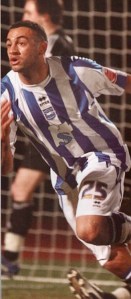
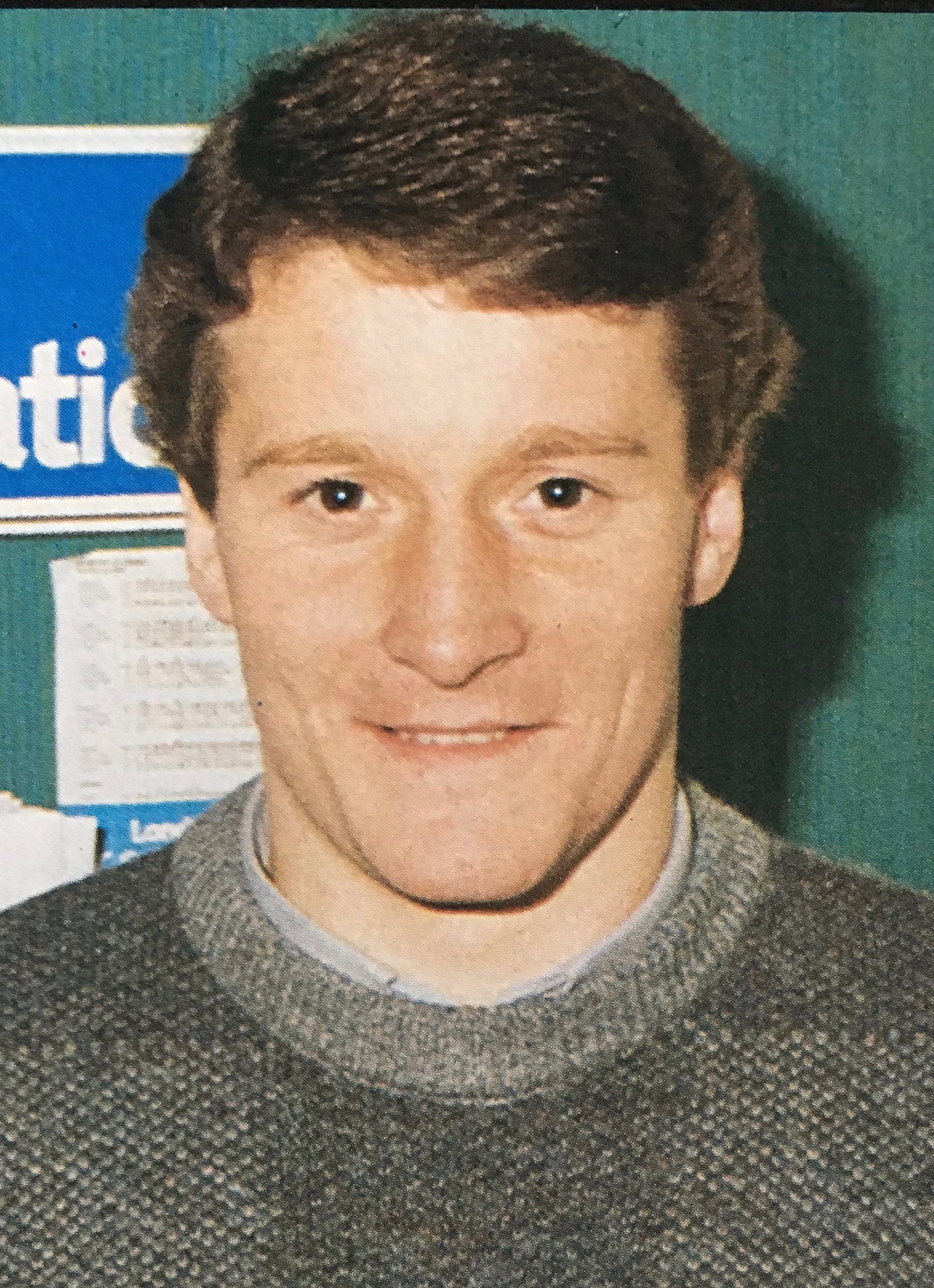
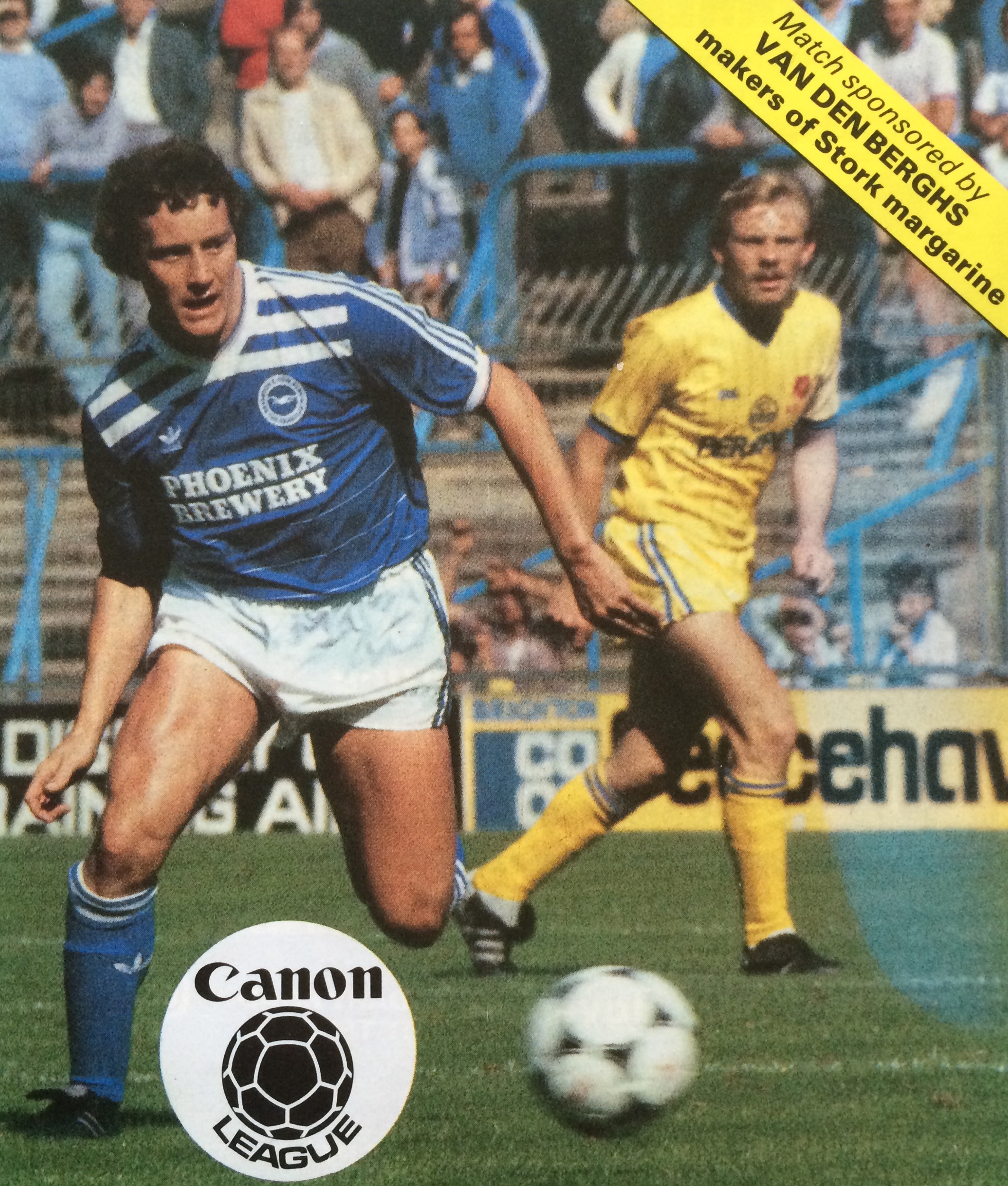
Kiwi Chris Wood took off with the Seagulls

TWO former Chelsea teammates were instrumental in enabling fledgling Kiwi international striker Chris Wood to develop his goalscoring craft with the Seagulls.

Roberto di Matteo allowed Wood to leave West Brom on loan in the 2010-11 season to add attacking options to Gus Poyet’s promotion-seeking Seagulls.

It was a temporary move that not only bolstered Division 1 Brighton’s goalscoring threat that season but also sowed the seeds of a partnership with Ashley Barnes that Burnley have profited from in the Premier League.

The pair dovetailed well with Glenn Murray (during his first spell at the Albion) and it is testimony to just how good the third-tier trio were that they all went on to score goals at the highest level.

Wood, who only scored three times in 27 games for the Baggies, scored nine in 24 matches (plus seven as sub) for the Albion, who he joined after an expected 93-day loan stint with Barnsley had been cut short.
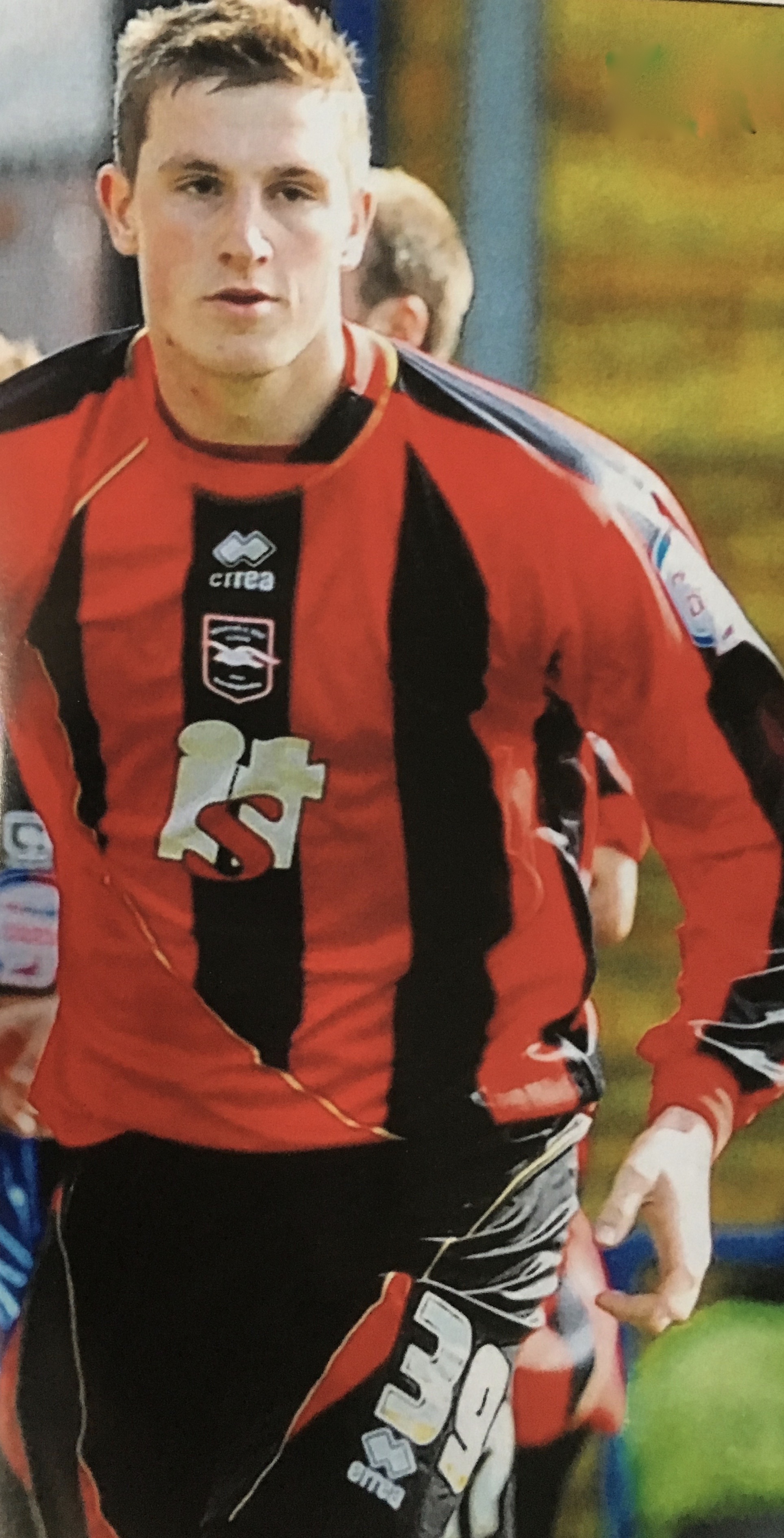
Described by The Argus as “a fresh-faced teenager in a man’s body”, towards the end of the season, Wood told Andy Naylor: “It has been a big experience. I have been playing week in and week out. That is something I needed to do at my age.

“You don’t know if you really want to drop down that many levels, but I thought I could start scoring some goals, kick on my season and hopefully push my career up. It’s worked out very well.”

He somewhat presciently added: “I want to play in the Premier League one day, hopefully consistently.”

While that time would still be a little way off, Wood’s role in Brighton’s promotion squad earned him a League One winners’ medal and Poyet reckoned he left the south coast a much better player than the one who arrived six months previously.

“We helped him a lot,” Poyet told The Argus. “When he was here, he was one type of player and, when he went back, he was in shape, he was quicker, more mature, he scored ten (sic) goals, he did well.”

Wood went on to become something of a nemesis for Brighton, often scoring against the club for various other sides he played for on loan or on a permanent basis.

After he scored twice against the Seagulls in December 2012 while on loan at Millwall, Poyet sang his praises to the media, declaring: “He is the kind of player we would like to bring in. He’s only 21 and I feel he will be a top, top player.

“When he was with us on loan, he was a baby but now he is maturing. He’s a man now.

“He’s clinical and brave and we have played a part in helping him on his way.”

Di Matteo’s successor at West Brom, Roy Hodgson, had also sent the young striker out on loan, the shorter distance to Midlands neighbours Birmingham City, during Chris Hughton’s tenure as manager. He scored 11 in 15 games (+ 14 as a sub) for the Blues before spending the second half of the 2011-12 season at Bristol City.

Next up was Millwall for the first half of the 2012-13 season but WBA curtailed that stay because they wanted to sell him, and he joined Leicester in a permanent deal.

At Leicester, Wood was mainly involved off the substitutes’ bench as Nigel Pearson’s Foxes won the Championship in 2014, but one of his most memorable goals was a stunning long-range volley against his future employers, Burnley, in a 2-0 win at Turf Moor. “That was a nice one,” he said. “It kind of clinched Leicester’s championship. It was a ‘make or break’ game for who was going to win the league that year.”

Wood found his chances of Premier League football stymied by the arrival of Leonardo Ulloa from Brighton and after only seven substitute appearances ended the season on loan at Ipswich Town. Before Leicester’s famous title-winning season was under way, Wood had moved on to Leeds for £3m.

Wood felt he wasn’t given a fair crack of the whip at the King Power Stadium, telling the Leicester Mercury: “I was disappointed that I didn’t get more of a chance.

“I did well and felt I deserved at least an opportunity with the way I had played. That’s football at the end of the day, managers make the decisions, you have to live by them and move on.

“I think that experience has made me into a better player. It helped me to adapt and do things in a different way. It helps you prepare mentally, to understand and control.

“Not everything is going to be rosy along the way in your career. You’ll always have your ups and downs and it’s about how you deal with the downs which helps you become so much better.

“I don’t like sitting in the stands. I just wanted to get out, play football and progress my career.”

Wood scored 27 goals in Leeds’ 2016-17 Championship season under Garry Monk but, after beating Brighton 2-0 on 18 March, they fluffed their lines in the run-in, winning only one of the remaining eight matches and missing out on the top six as Brighton went up with Newcastle. To rub salt in the Yorkshire wounds, Huddersfield were promoted via the play-offs.

Wood, though, had the chance finally to make it to the elite when Burnley dangled a £15m fee to take him to Turf Moor, where he was to be reunited with Barnes.

Explaining his decision to make the move, Wood told The Times: “It had been my dream since I was a kid to play in the Premier League.

“I had spent seven years in the Championship waiting to get that break and I couldn’t guarantee that I would get another chance.”

The success of the Wood-Barnes partnership was analysed in a 2019 article by Benedict O’Neill for planetfootball.com in which Murray harked back to the 2010-11 season.

“I was the older head when they came in as two young lads,” he said. “We forged quite a formidable trio. It was good because they were just young and learning their trade – they got valuable game time and scored plenty of goals in that season.

“They’ve both gone on to have fantastic careers.”

Wood ended the 2020-21 season as Burnley’s top goalscorer with 12 goals (his fourth consecutive season in double figures) and he also collected their Player of the Season and Players’ Player of the Season accolades.

After netting a hat-trick against Wolves in April 2021, Andy Jones, for The Athletic, purred: “Unstoppable, unplayable. This was Wood at his best.

“Burnley’s big No 9 epitomised all the key components of the display, setting the tempo, pressing with energy, intensity and importantly, intent. No ball was a lost cause, no pass was going to be easy for Wolves.”

Burnley boss Sean Dyche told the Burnley Express: “His hold up play is improving all the time, his physicality is improving – he can be a real handful as well as being a talented player.

“I’ve been very impressed with him over the season for sure.”

In January 2022, Wood made a £25m move to Newcastle United but after finding his first team starts limited moved on to Nottingham Forest a year later, initially on loan until the end of the season. The move was made permanent in the summer of 2023.

He was Forest’s top scorer with 15 goals in 35 appearances in the 2023-24 season and when he scored the winner in Forest’s 3-2 win over Manchester United at Old Trafford in December 2024, his header meant he became Forest’s record Premier League scorer, overtaking Bryan Roy, by moving to 25 in the competition.

Born in Auckland, New Zealand, on 7 December 1991, Wood swiftly showed great promise in his homeland before his coach over there, Roger Wilkinson, switched to West Brom and recommended the youngster be taken on at Albion’s academy.

Wood’s English mother, Julie, had been instrumental in him taking up football rather than the oval-shaped ball game Kiwis are more accustomed to.

“I came over and they liked what they saw and offered me a scholarship,” he told the Birmingham Mail.

After he proved successful at youth team and reserve level, Wood made his West Brom first-team debut in 2009 away to Portsmouth.

In the same year, he made his international debut and, aged just 18, was in the New Zealand squad at the 2010 World Cup in South Africa. He has gone on to play nearly 60 times for his country. He also became the youngest captain of New Zealand when he led the side for the first time in November 2014.

A goal by over-age Wood against South Korea helped New Zealand secure their first ever men’s football win at an Olympic Games in Tokyo but the host nation beat them in a penalty shoot-out to deny the striker the chance of a medal.

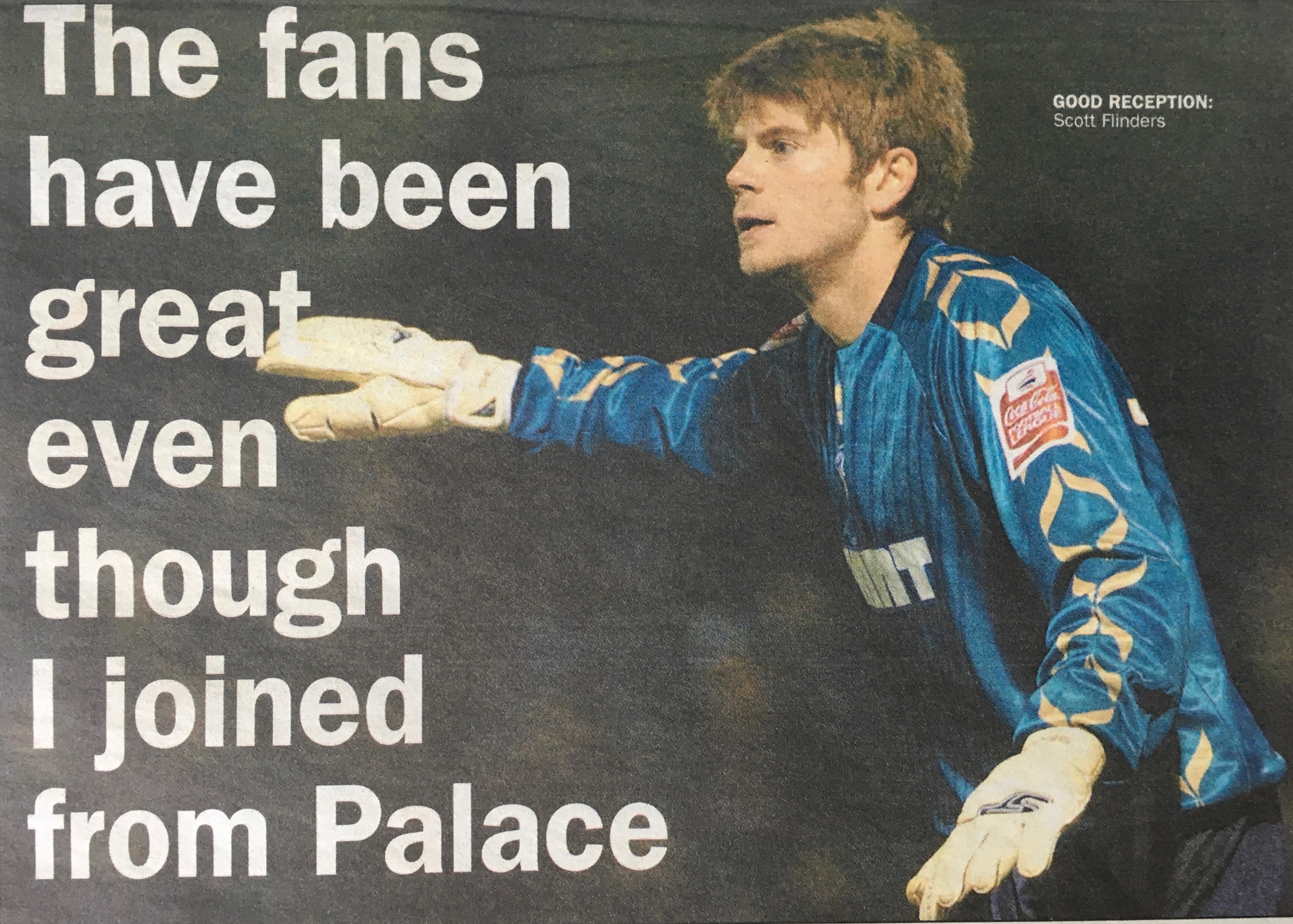
Flu-hit Flinders came to the rescue in a goalkeeping crisis

AN UNDERSTUDY to eccentric Crystal Palace goalkeeper Gabor Kiraly played a dozen games in goal for Brighton in the spring of 2007.

Scott Flinders was just 20, and suffering from the effects of a bout of ‘flu, when he answered a call from fledgling manager Dean Wilkins to help solve a goalkeeper crisis.

With first choice Michel Kuipers injured, Wilkins considered it too early to risk rookie ‘keepers Richard Martin and John Sullivan, so he turned to Albion’s arch rivals to borrow 6’ 4” Flinders.

“I always thought Millwall were Palace’s biggest rivals but then I got told, I think it was by Dougie Freedman or Clinton Morrison, that it is Brighton,” Flinders told The Argus. “It didn’t put me off signing. It is just about playing games.”

IMG_6009Flinders made a slightly shaky start in a win away to Gillingham, and in a defeat to Bristol City on his first appearance at Withdean, but he made some important stops to help earn points in consecutive away draws at Crewe and Blackpool.

Manager Wilkins told The Argus: “We knew we were bringing in somebody who was not 100 per cent for the first couple of matches. Scott has recovered from that and he has done very well for us.

“We are still in a position where we need another ‘keeper with a bit more experience than the young lads we’ve got.”

Flinders seemed happy to extend his loan from one month to two and said: “The fans have been absolutely excellent towards me, even though I am coming from a rival club.

“John Keeley, the goalkeeping coach, has been different class and I am delighted to be here.”

Unfortunately, Albion lost all five of their matches in April and finished 18th, six points clear of relegation.

Born in Rotherham on 12 June 1986, Flinders joined nearby Barnsley as a youth trainee in 2003 and made it through to the first team in 2005 when former Albion striker Andy Ritchie was the manager.

He took over from Ross Turnbull and featured in 11 games over three months before losing his place and subsequently having to settle for being understudy to Republic of Ireland international Nick Colgan.

However, Flinders earned his own international recognition in the shape of five caps for the England under 20 side, three of them in the 2005 Toulon tournament. He made his debut in a 3-0 win against the Korean Republic in a side which also featured Liam Ridgewell, Liam Rosenior and Greg Halford.

He kept his place three days later in a 0-0 draw with France, then came on as a sub three days later in a 1-1 draw with Mexico.

In August the same year, he started against Russia but was substituted as the side went down 4-0. A teammate in that one was Will Hoskins. His final match was at Turf Moor when England drew 2-2 with Holland, although he was subbed off again. In that England team was future England centre-back Gary Cahill while the left-back was Gary Borrowdale, who played on loan at Brighton under Russell Slade in 2009.

Frustrated playing second fiddle at Barnsley, Flinders had trials at Chelsea and Wigan Athletic but he ended up at Crystal Palace in 2006 as part of an exchange deal involving midfield player Sam Togwell.

It’s believed Palace paid an initial fee of £250,000 with additional instalments to be paid according to appearances.

However, Flinders only made one league cup appearance before being sent on loan to Gillingham. It was the first of five loans away from Selhurst Park, the lengthiest being his time at Brighton.

Other loan spells saw him spend time with Yeovil Town, Blackpool and Falkirk and he was released by Palace in May 2009 after playing just 13 games for them in three years.

His years of understudying finally came to an end when he headed to the north east in the summer of 2009 and joined Hartlepool United, where he established himself as first-choice ‘keeper.

Flinders even got on the scoresheet while at Hartlepool, scoring with a 94th minute header against Bournemouth on 30 April 2011 to earn his side a point in the last home game of the season.

The 2012-13 season was a particular triumph for him when he earned the accolades of Player’s Player, Supporter’s Player, Away Player of the Year and Hartlepool Mail SportsMail Player of the Year.

In six years at Hartlepool, he made more appearances – 276 – than any other ‘keeper in the club’s history, eventually moving on in June 2015 to League Two York City.

Flinders received a five-match ban from the Football Association in August 2016 following an incident in a League Two game between York and AFC Wimbledon on 19 March that year.

It was alleged Dons striker Lyle Taylor grabbed Flinders by the testicles and, as he retaliated, the goalkeeper was alleged to have used racist abuse.

Flinders denied the charge but was found guilty by the FA following an independent regulatory commission. Fined £1,250, Flinders was also warned about his future conduct and ordered to complete an education course.

York initially suspended Flinders but then loaned him out to National League rivals Macclesfield Town, who he subsequently joined on a contract from January to June 2017.

On deadline day in August 2017, he joined League Two Cheltenham Town, with boss Gary Johnson telling the club’s website: “Scott has played over 400 league and cup games in his career and there is no substitute for experience.”

In January 2020, Flinders suffered a broken leg in a game against Oldham which put him out of the game for nine months.

  • Pictures and headlines from The Argus.

One-goal striker Craig Davies a Seagulls flop

THE PHRASE ‘journeyman striker’ sits perfectly with Welsh international Craig Davies who, despite success later in his career, fired blanks for Wolverhampton Wanderers and Brighton.

To use that rather amusing, though well-worn phrase, he couldn’t hit a cow’s arse with a banjo during his time with the Seagulls.

He arrived on the south coast in January 2009 during Micky Adams’ second, unsuccessful, spell in Albion’s managerial chair.

Oldham Athletic received a reported £150,000 for his signature and, in 23 games for Brighton, he managed just the one goal – on his debut!

That strike came at Withdean – the opening goal in what ended up a 4-2 defeat to Peterborough United (for whom a certain Craig Mackail-Smith equalised).

When a 4-0 home thrashing by Crewe Alexandra meant it had been six games on the trot without a win, Adams was fired by Dick Knight at a Little Chef on the A23. He’d managed just seven wins in 34 matches, and ‘fireman’ Russell Slade arrived just in time to rescue the Seagulls from the League One relegation trapdoor.

Many different striker permutations were tried that season, with main men Nicky Forster and Glenn Murray sidelined by injury, and Albion’s survival was largely due to the goals of loan arrival Lloyd Owusu. Davies huffed and puffed but simply couldn’t make a meaningful connection when the goal beckoned.

Typical of the fans’ eye view was this observation by wearebrighton.com: “That Adams actually paid money for Craig Davies remains one of the more startling moments of his reign of terror.

“Rarely has a Brighton player enraged the Seagulls support like Davies, a man who mixed incompetence – such as the ability to put the ball over the bar when faced with an open goal three yards away – with a complete lack of effort.”

There had been such promise on his arrival, with chairman Dick Knight telling the matchday programme: “Craig is an exciting player with loads of potential, he is lightning-quick and his direct approach can be a nightmare for defenders. This is a major career move for him and he has every chance to be a crucial part of our future.”

Davies himself clearly thought he’d finally found a place to further his career, saying: “I’ve had a few ups and downs through my career but hopefully now I can get settled at Brighton and start knocking in the goals here.

“The gaffer seems to have a bit of faith in me so hopefully I can repay that by putting in some performances and getting a few goals.”

Albion cut their losses on Davies and loaned him to Yeovil Town (he didn’t score in four games for them, either) and then Adams re-signed him, this time for League Two Port Vale, where he finally managed to find the back of the net again.

In the summer of 2010, Davies came to a mutual agreement to end his Brighton nightmare and he joined League Two Chesterfield, from where his career began an amazing upward trajectory.

Born in Burton-upon-Trent on 9 January 1986, Davies began his career as a schoolboy at Shrewsbury Town, but did his apprenticeship at Manchester City. In August 2004, he moved on to League Two Oxford United, where he made his league debut the same month in a 1-0 win at Notts County.
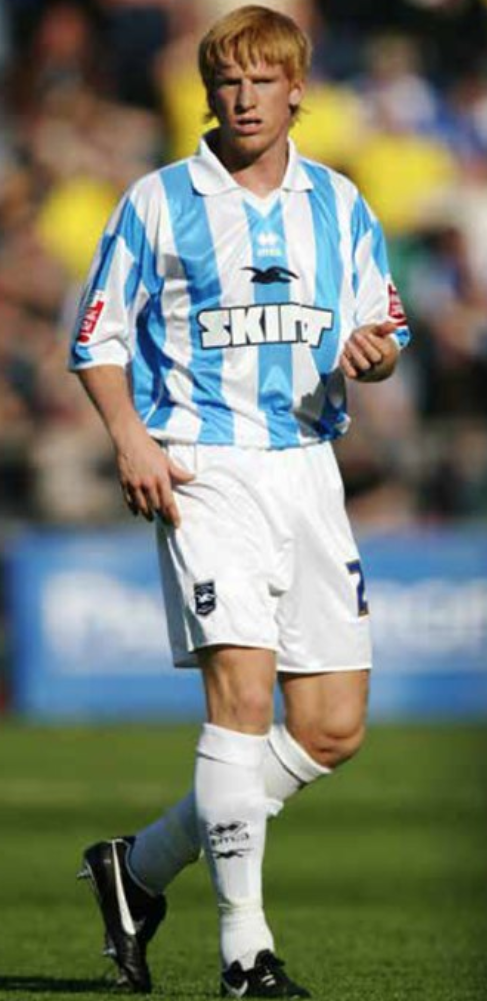
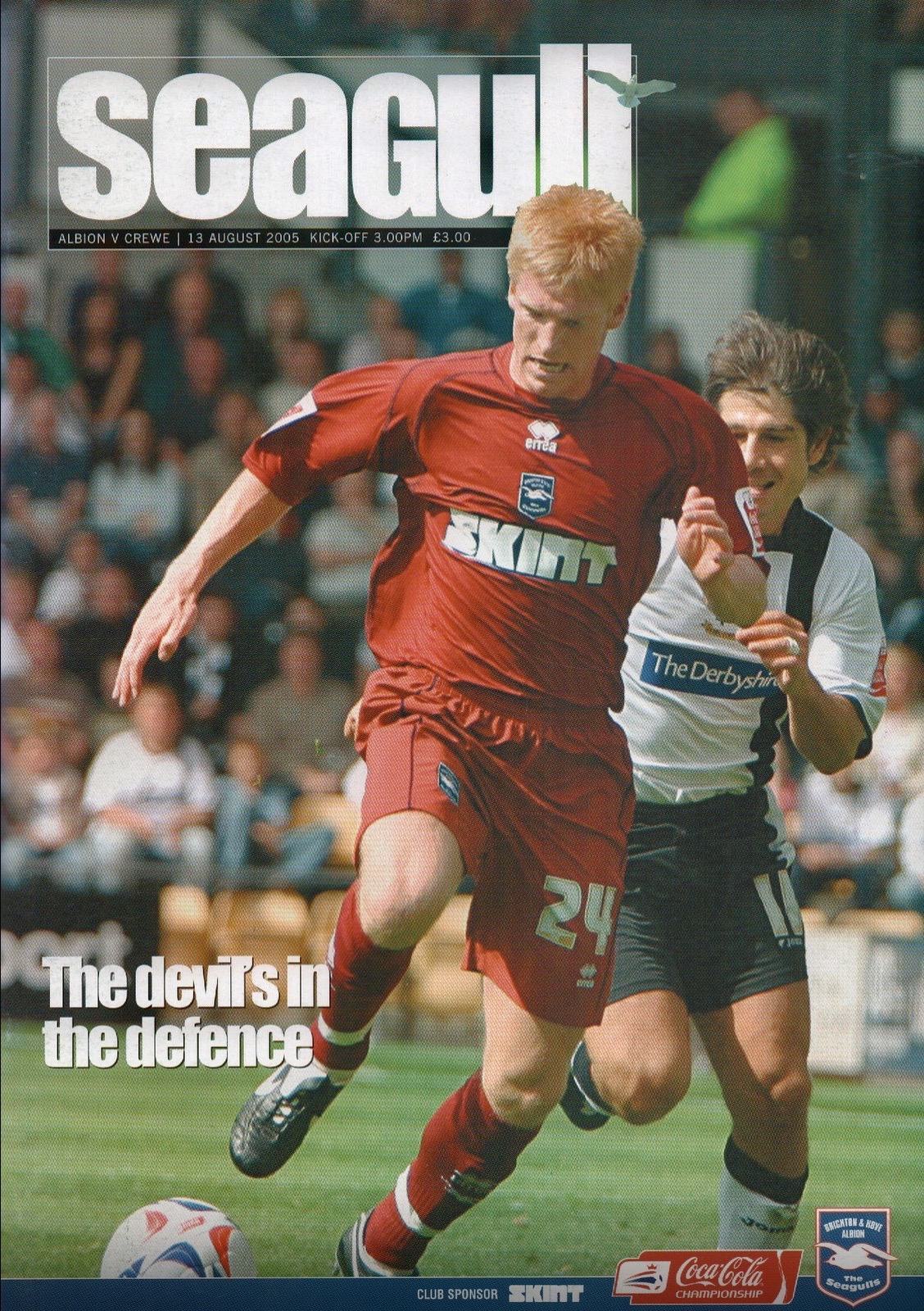
In two seasons with Oxford, managed by former Ipswich and Arsenal midfielder Brian Talbot, he scored eight times in 55 appearances. In the summer of 2005, he made his debut for Wales (qualifying because he had a Welsh grandfather) as a substitute in a 0-0 draw v Slovenia. Reports linked him with a move to Premier League Charlton Athletic, but nothing came of it and instead, in January 2006, he moved to Italy to join Hellas Verona for a £85,000 fee.

It proved to be too big a step for someone who was then only 20, and he referred to feelings of homesickness in an interview with the BBC.

Remarkably, Davies hit the headlines in May 2006, when in the sixth of seven games he played for the Wales under-21 side (which featured Gareth Bale, Andrew Crofts and Arron Davies) he scored a hat-trick in a 5-1 win over Estonia, and it earned him a recall to the full international side.

Wales under-21 manager Brian Flynn told the BBC: “Craig has sometimes been frustrating to watch, but he has skill and we will help him, and them all, to flourish.”

Davies hoped the international goals would attract a club to rescue him from Italy. “I have found it very hard to settle in Italy,” he told the BBC. “Verona want me to come back and have a year on loan somewhere and then they will look at the situation again when I have a bit more experience.”

It was Wolves, then in the Championship, who offered him a lifeline back in the UK and he moved to Molineux on loan, playing 23 games, mainly in the first half of the 2006-07 season.

The only goals he scored for Wolves both came in a FA Cup tie against Oldham Athletic who, ironically, turned out to be his next club. He joined them for an undisclosed fee from Hellas in June 2007.

Davies netted 13 times for a League One Latics side in 2007-08 but, after a 10-game barren spell the following season, he was sent on loan to Stockport County where he scored six times in 13 games, including bagging a hat-trick against Bristol Rovers, and scoring a penalty against Albion as County won 2-0.

When Adams rescued Davies from his Seagulls horror spell, he was rewarded with seven goals in 24 matches for League Two Port Vale between January 2010 and the end of the season.

Chesterfield stepped in to sign him on a one-year deal for the 2010-11 season – and he was promptly sent off in his first competitive game for the Spireites!

Things did get much better, though, and he ended the season with 25 goals to his name, Chesterfield were promoted, and Davies was chosen in the divisional PFA select team for the season.

Such success drew attention from other clubs and he opted to join Championship side Barnsley under Keith Hill. He struggled to find the net in the opening nine matches but eventually finished the season with 11 goals in 42 appearances.

In September 2012, Davies scored FOUR goals in the space of 19 minutes in a 5-0 demolition of Birmingham City at St Andrews and, with nine goals in 22 appearances to his name in the first half of the 2012-13 season, Bolton Wanderers came forward with a £300,000 bid to take him to the Reebok Stadium.

He scored four goals in 18 Championship games for Wanderers but another of his barren spells struck in the opening half of the following season. Wanderers loaned him to League One Preston and he got a goal on his debut as well as a hat-trick in a 6-1 thrashing of Carlisle United. North End reached the play-offs, and Davies made his way back to Bolton having scored five in 15 games.

Hamstring injury issues plagued him in 2014-15 and manager Neil Lennon released him at the end of the season.

He didn’t have far to travel for his next port of call when newly-relegated Wigan Athletic offered him a two-year contract. He only scored twice in 30 appearances, but Wigan won promotion as League One champions.

With just one goal in 14 Championship games in the first part of the 2016-17 season, Davies was on the move again, this time linking up with League One Scunthorpe United until the end of the season. Cue another barren spell: no goals in 21 games.

The 2017-18 season saw Davies return to his old club, Oldham Athletic, and despite scoring 14 goals in 44 appearances, could not prevent the club being relegated to League Two. Davies had strong views about the ownership of the club as he departed for Mansfield Town.

He signed a two-year deal with the Stags, but injury curtailed his involvement in 2018-19.

C Davies Wales

Paul McShane wrote his name in Albion’s history in one season

McShane

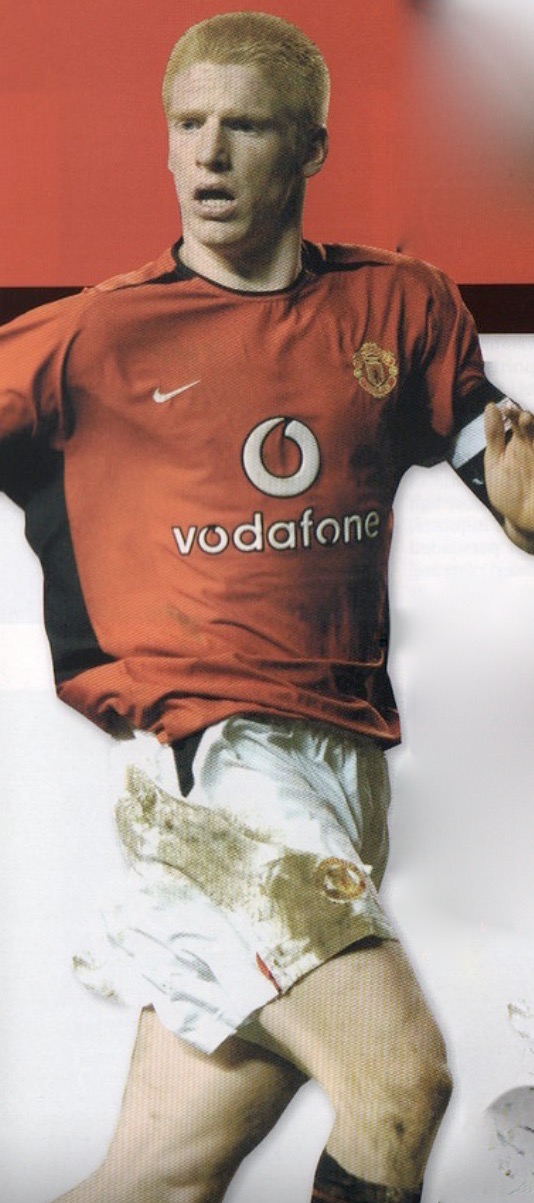
FLAME-HAIRED Irish centre back Paul McShane was a complete revelation during a season on loan to Brighton from Manchester United.

The 2005-06 season ended ingloriously for the Seagulls but McShane was imperious, given a platform to launch a career which saw him play most of it in the second tier of English football, and almost 100 times at the top level, together with earning him 33 full caps for his country.

Although he was given a squad number by United, and had been selected by Sir Alex Ferguson for pre-season matches, McShane didn’t get the chance to play any proper competitive football for United’s first team.

United reserve team manager, Brian McClair, a former Celtic teammate of Albion manager, Mark McGhee, could see the benefit of giving McShane first team football at a decent level and an initial half-season loan was agreed, then, in January, it was extended to the season’s end.

Brighton were missing the long-term injured Adam Hinshelwood and although veteran Jason Dodd had been signed to add experience to the defence, his season was to be plagued by injury, so McShane was a near permanent fixture alongside Guy Butters in the centre of the back four.

The young defender shared a flat in Hove with fellow Republic of Ireland international Wayne Henderson and in an early season profile article, Butters was quick to acknowledge the quality of the youngster. “He is an excellent player. He’s only 19 but you see he’s got that Premiership quality about him,” said Butters. “He’s very confident; he likes to bring the ball down and play.”

The former Spurs and Portsmouth defender said he reminded him of Richard Gough, a former teammate at Tottenham. “He’s strong; not the tallest, but makes up for that with his great leap. Very good on the ball, quick and great in deep positions.”

McShane coverHis passion and aggression sometimes got the better of him and the only reason he wasn’t ever present was a penchant for bookings – 12 over the course of the season – which earned suspensions, and a couple of injury-induced absences. And he was missed when he wasn’t available.

After he’d picked up an ankle injury that required him to return to Old Trafford for treatment, the matchday programme put together an article extolling the merits of the young defender in which it said: “Paul’s cool reading of the game and his ability to overcome some of the most effective attacking players in the division marked him out as a fine prospect, and he proved competitive in the air and on the ground, his pace and positional sense being a real asset.”

In their end-of-season player ratings, the Argus summed up his contribution thus: “Talent and determination in abundance. Rash in the tackle at times but that is a product of his insatiable hunger. Will be sorely missed next season.”

Such was the impact of McShane’s outstanding performances over the course of the season that he was selected as the Player of the Season, the first time a loan player had ever been given the honour.

Butters was convinced it was the right choice and told the Argus: “He’s done really well for us. He’s scored some vital goals. Obviously the one away to Palace springs to mind.

“He has been solid all-round. He is very aggressive, ultra-competitive and hates losing, even in training.”

It’s perhaps inevitable that any player who scores a winning goal against arch rivals Crystal Palace earns a place in Albion folklore. McShane’s scruffy effort, which appeared to go in off his shoulder, at Selhurst Park on 18 October 2005 proved to be the only goal of an intense scrap but how it went in became irrelevant as time passed.

“Crystal Palace was a special night, because of the rivalry,” said McShane. “It was a great atmosphere and scoring that goal was brilliant.”

He scored three other goals over the season, including a crucial opener in a 2-0 win away to Millwall as the Seagulls put up a valiant, but hopeless, fight to avoid the drop, but it will always be the goal at Selhurst that fans remember most.

McShane confessed in an interview with Andy Naylor in the Argus that relegation had hurt, but the season for him had been “brilliant” and “a great experience”.

He said: “It has given me a chance to get out there and make my name in the Championship and I think I have done that well enough.

“It has given me a great opportunity to get the experience I need to take back to Manchester and hopefully give it a good crack there, because I’ve learnt so much this season.

“Brighton have been brilliant to me. They’ve treated me really well. They’ve made me feel very welcome, the fans and the people around. That has helped a lot. It has been great.”

In conclusion, he told Naylor: “The club is part of me now. You never know what will happen in the future but Brighton will always have a place in my heart.”

Perhaps rather presciently, Naylor commented: “McShane’s fierce commitment is unlikely to be seen in an Albion shirt again. If he does not make it at Manchester United, there are sure to be Championship clubs interested in signing him.”

With Rio Ferdinand and Nemanja Vidić United’s regular centre back pairing, and Wes Brown as back-up, it was always going to be a difficult ask to dislodge them, and in August 2006 McShane left Old Trafford together with goalkeeper Luke Steele as makeweights in the deal that took goalkeeper Tomasz Kuszczak to United.

mufcmcshaneMcShane and Steele had both been members of United’s winning FA Youth Cup team of 2003, a side which also included Kieran Richardson and Chris Eagles, who went on to make names for themselves in the game.
McShane, born in Wicklow on 6 January 1986, played hurling, Gaelic football, rugby and badminton (his dad, Sean, and uncle played Gaelic football for Dublin) in his early years in Ireland but eventually began to demonstrate his soccer prowess with junior clubs and was playing for St Joseph’s Boys AFC in Dublin when United snapped him up in 2002.

“I was 16 when I signed; I wasn’t going to until I went to Old Trafford with my mum and dad,” McShane said. “It was so down to earth for such a big club. I would be getting the best coaching and training, also playing with some of the best players in the world.”

He added: “Alex Ferguson has been brilliant to me and my family; a very nice man. He just cracks jokes all the time.”

After his success with United’s Youth Cup team, McShane’s first senior football came in 2004 during a brief loan spell with Walsall, where he played four games and scored once.

At Championship West Brom, McShane played 42 games in the 2006-07 season as the Baggies finished fourth and agonisingly lost to Derby County in the play-off final.

Before the new season got underway, McShane was one of 12 new signings manager Roy Keane made for Sunderland, newly-promoted to the Premier League.

He scored an own goal in only his second league game but Sunderland salvaged a 2-2 draw at Birmingham and he went on to make 21 appearances (plus one as sub) as the Black Cats finished just three points clear of the drop zone.

In the following season, McShane went on loan to Premier League new boys, Hull City, and having played 19 games for the Tigers made the move permanent the following season. The KFC Stadium would be his home for the next six years, although he was sent out on loan twice, to Barnsley in 2011 and Crystal Palace in 2012.

In the final game of the 2012-13 season, McShane scored a vital goal for Hull which guaranteed them promotion back to the Premier League, and he earned a new two-year contract from manager Steve Bruce.

However, with Curtis Davies, Alex Bruce and James Chester ahead of him, his appearances were limited, although he did get on as a substitute in Hull’s 3-2 FA Cup Final defeat to Arsenal.

McShane featured 23 times as Hull relinquished their Premier League status in 2015, and he was among six players released by the club, including Liam Rosenior, who moved to Brighton, of course, and goalkeeper Steve Harper, who’d had a short loan spell at Brighton from Newcastle.

McShane wasn’t without a club for long, and joined Reading in July 2015, with manager Steve Clarke telling the club website: “I knew that Paul’s contract with Hull City was due to expire and was always monitoring the situation. When we met up earlier in the summer for a chat I knew that Paul would be a good signing for Reading FC and I’m pleased that we managed to get the deal completed.

“As well as his obvious talents as an experienced defender who is aggressive both in the air and on the ground, I felt that he was a good character to bring into our squad.
“Paul has gained good experience at many clubs and, like Stephen Quinn, was an important part of a promotion-winning team. He has a winning mentality and it will be good for our two young central defenders, Michael Hector and Jake Cooper, to train and play alongside Paul.”

After four years at Reading, over which he played 103 games, in 2019 McShane switched to League One Rochdale.

In July 2021, McShane returned to Man Utd as player-coach for the under 23 side and made two appearances for the under 21s in the EFL Trophy as an over-age player. When he retired from playing at the end of the 2021-22 season he took up the role of professional development phase coach (covering under 18s through to under 23s).

“I’m calling it a day playing now,” he told manutd.com .”I’ve had 20 years playing and I’ve come back into the club as a player-coach in the under 23s. It’s been a great year and great experience but now it’s time to fully focus on the next stage of my career, which will be in coaching.

“It’s amazing how things work out. It’s a great way to end my career, to come back here and help the future generation with their careers. It was perfect, to be honest with you, when this role came about, and I’m grateful to the people who made it happen. I think it’s a great way to end my playing days.”

Winger Neil Smillie was a Wembley winner eventually

NS v MU Wemb

AN UNSUNG hero of Brighton’s 1983 FA Cup Final side, winger Neil Smillie, had the distinction of being the first ever apprentice the legendary Malcolm Allison signed for Crystal Palace.

Big Mal had enjoyed league and FA Cup success at Manchester City as Joe Mercer’s sidekick but he swept into Palace in the early 70s as a boss in his own right, courting publicity with his flamboyant fedora hat and giant cigar.

Smillie admitted: “I was going to West Ham but Allison persuaded me to take a look at Palace.

“The place was so alive and vibrant under him that I went there instead.”

Born in Barnsley on 19 July 1958, Neil followed in the footsteps of his dad, Ron, a former professional who played for Barnsley and Lincoln.

After joining Palace in 1974, Smillie turned professional a year later and was on Palace’s books for seven years, although he had three loan spells away from Selhurst.

In 1977, he went briefly to Brentford, who he ultimately would have a long association with later in his career.

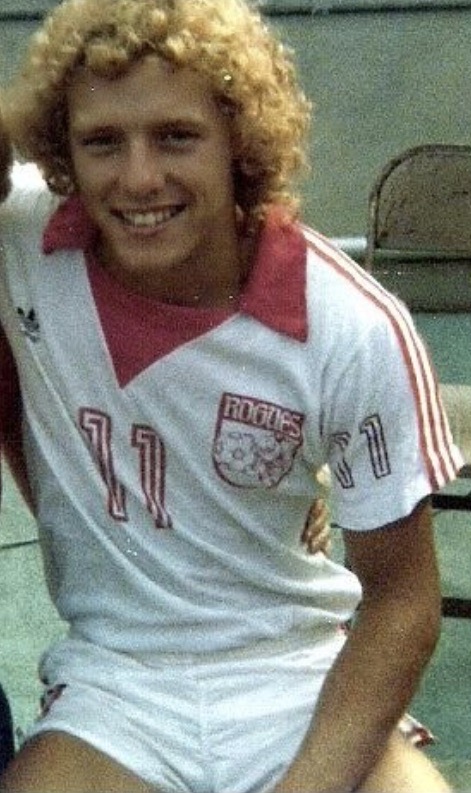
Smillie MemphisThe following two years, he went to play in America for Memphis Rogues (pictured left) where his teammates were players from the English game winding down their careers: the likes of former Albion players Tony Burns and Phil Beal, ex-Chelsea, Leicester and Palace striker Alan Birchenall and former Chelsea winger Charlie Cooke; the side being managed by former Chelsea defender Eddie McCreadie.

At the end of the 1981-82 season, Smillie was denied a pay rise by Palace so he decided to quit and wrote letters to clubs in the top two divisions in England asking for a job!

Brighton had managed to offload the troublesome Mickey Thomas to Stoke City so had a need for a left winger. They were the first to come up with an offer, and with full back Gary Williams surplus to requirements since the arrival of experienced defender Sammy Nelson, Brighton offered him in exchange for Smillie.

The bubble-haired winger gratefully accepted the switch to the Seagulls. While he made the starting line-up for the opening game of the new season, a heavy (5-0) defeat away at West Brom in the next game then saw him dropped and sidelined for months.

It was only once ultra-cautious manager Mike Bailey had left that Smillie got back in contention, and only then – in January 1983 – through someone else’s misfortune.

He said: “I was out in the cold and only got my break when Giles Stille was injured during the Cup game against Newcastle United.”

Smillie seized his opportunity and remained in the side for the rest of the season, culminating in the two Wembley FA Cup Final matches against Manchester United.

Back in the second tier following Brighton’s relegation, Smillie played 28 games plus once as a sub but following new manager Chris Cattlin’s signing of Northern Irish winger Steve Penney, there was competition in the wide areas.

Throughout the 1984-85 campaign, Smillie was more often than not a substitute rather than a starter. He did manage a seven-game run of appearances in the late autumn and began the final three games of the season, but the last game, a 1-0 home win over Sheffield United, proved to be his farewell.

Smillie revealed in a 2003 interview with Spencer Vignes that he’d discovered Manchester City had been keen to take him on loan but Cattlin hadn’t sanctioned it, even though he wasn’t selecting him.

“Chris had turned them down, saying I was a good player and he needed me. Yet he wasn’t even playing me! I just couldn’t believe he’d done it,” he said. Although he and his family were settled in Sussex, he realised he had to move.

Several eyebrows were raised when Cattlin managed to secure a £100,000 fee from Watford for Smillie’s services in the summer of 1985. The winger joined Graham Taylor’s beaten FA Cup finalists but he failed to establish himself in the side and made just 16 first team appearances in a season with the Hornets.

In the summer of 1986, he moved on to Reading for two years and, in 1988, after his disappointment with Brighton, Smillie was finally a winner at Wembley, scoring and setting up two goals as Reading beat Luton 4-1 in the Simod Cup Final.

The Hatters were led by former Albion captain Steve Foster and another of Smillie’s former teammates, Danny Wilson, was in their midfield. Mick Harford scored the opening goal for Luton, but Smillie’s pass allowed Michael Gilkes to bundle home an equaliser.

Smillie then won a spot kick converted by Stuart Beavon, and, in the second half, Mick Tait swept home another Smillie assist. Smillie then rounded off a great afternoon by scoring himself. It was hailed as one of the best days in Reading’s history, witnessed by over 45,000 loyal Royals fans.

Nevertheless, Smillie didn’t hang around and instead joined Brentford, where his former Palace teammate Phil Holder was assisting the manager at the time, Steve Perryman.NS Bees

Nick Bruzon interviewed Smillie in depth for a Where are they now? feature on the Brentford FC website in July 2010.

“Representing Brentford over three different decades, initially on loan in 1977 and then for five years from 1988 to 1993, Neil Smillie combined raw pace with ceaseless energy to make him one of the most popular players to patrol the New Road touchline,” said Bruzon. “Whilst with Brentford he experienced promotion, relegation and play off heartbreak, scoring 18 goals in 185 games.”

Smillie said: “I’ve got to say, the five years I spent at Brentford (and I was 30 when I signed) I thoroughly enjoyed.

“I’d reached a point in my career where I felt comfortable in terms of what I could give on the pitch. I’d always been a hard worker and I got the feeling that the supporters appreciated someone who worked hard.”

In the 1992-93 season, he played alongside Chris Hughton, who, like Smillie, was winding down his playing career.

“I loved taking people on and I loved getting crosses in for people to score so that just seemed to fit in nicely at the time with the team that we had,” he said. “I played my part as well as others who played theirs in getting the ball to me. We all did our bit and for me it was a great part of my career.”

On leaving Brentford, Smillie became a player-coach at Gillingham when his old Palace teammate Mike Flanagan was the manager. When Flanagan was sacked, Smillie took over the managerial reigns on a caretaker basis while the club tried to stabilise during financial troubles.

Smillie told Bruzon: “We were in a fairly precarious position and ended up in a decent position. So there was some enjoyment to it but the situation at a club without any money and struggling was difficult.”

Some names familiar to Brighton fans were at Gillingham at the time. Smillie played up front with Nicky Forster. Paul Watson was in defence and Richard Carpenter in midfield.

His three-month reign came to an end when Gillingham appointed Tony Pulis as the new manager and former Palace manager Alan Smith took Smillie to Wycombe Wanderers to look after their youth team.

When Smith left, Smillie was caretaker manager until former Albion full back John Gregory got the managerial post. Smillie then became Gregory’s successor in the hot seat for a year.

When the inevitable sack came, Smillie stepped outside of day to day running of football to become sports marketing manager for Nike in the UK. His role was to identify emerging talent for Nike to associate themselves with, and, as a result he stayed in touch with the game.

Among the players he signed to Nike were Theo Walcott, Darren Bent, Gabby Agbonlahor, James Milner, Tom Huddlestone, Danny Welbeck and Johnny Evans.

Pictures show (top) Smillie in action on the cover of the Albion programme; walking his dog; in Match magazine, on the cover of Shoot! being tackled by Liverpool’s Sammy Lee; a Simod Cup winner with Reading.

Goalkeeping guru Eric Steele: a promotion talisman at Brighton

1 ES action v Mansfield

GOALKEEPER Eric Steele was involved in an incredible six promotions as a player before becoming one of the country’s top goalkeeping coaches.

Two of those promotions came in his three years with Brighton & Hove Albion and another during a five-year spell at Watford.

His penchant for coaching began during his time at Brighton who he joined in February 1977 for £20,000 from Peterborough United.

As a replacement for the injured Peter Grummitt, Steele made his debut in a 3-1 defeat away to Crystal Palace but the season was to end in triumph. With Peter Ward making the headlines at one end, Steele kept the ‘keeper’s jersey to the end of the season as Albion won promotion to the old Second Division in runners up spot behind Mansfield Town.

As Albion chased a second successive promotion in 1977-78, Steele’s terrific form meant new signing Graham Moseley had to wait five months to make his debut. Steele played 38 matches but Moseley took over for the final four games of the season, as Albion just missed out.

The following season, manager Alan Mullery opted for Moseley as his first choice but the accident-prone former Derby ‘keeper twice caused himself damage – once with a hedge trimmer and then by falling through a plate glass window – which opened the door for Steele, who, by the season’s end, played 27 times compared to Moseley’s 20.

Steele 4 AlbionSteele was between the posts as the Seagulls won 3-1 at St James’ Park to win promotion to the elite for the first time in their history, a particularly sweet moment considering Newcastle had discarded him early on in his career.
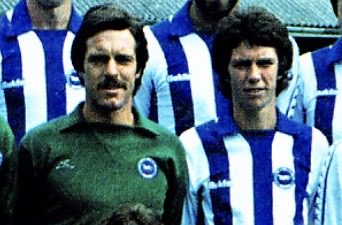
“It was important to go back as part of something, to show that I should have been given a chance,” he said in a 2019 Albion matchday programme article. And rather than join the infamous promotion party train ride back to Brighton, after the match Steele stayed over in Newcastle.

“I wanted to be with my family,” he said. “They’d supported me all the way from when I was a kid. To actually do it at my hometown club as well was a bit special. It was a great day for me, a really great day.”

In Spencer Vignes’ excellent book A Few Good Men, it’s interesting to hear Moseley’s view about his rival for the shirt. “He was very dedicated, much more so than I ever was. He would train every day after everybody else had finished.”

Nevertheless, at the higher level, it was not long before Mullery decided to dispense with Steele’s services, and it came within a matter of days of an amazing incident at Old Trafford when Steele exchanged punches with his own defender, Gary Williams, in a 2-0 defeat.

Steele and Williams together in the 1979-80 Albion squad photo

Argus reporter John Vinicombe produced a book (Super Seagulls) to document the history of Albion’s memorable first season in the first tier and covered in detail Steele’s somewhat acrimonious departure.

“Mullery knew from the beginning that one day he would have to choose between the lightning-on-the-line reflexes of Steele and the aerial domination of his great rival, Moseley,” said Vinicombe.

Mullery told the reporter: “Eric is an exceptionally good goalkeeper on the line, there’s no doubting that. But I feel he is not as commanding in the air as Graham, especially on crosses.”

Steele’s departure was felt quite keenly by the fans who, as much as his contribution on the pitch, had applauded his coaching in local schools and support for Sussex charities, in particular Chailey Heritage.

Regardless of that, in October 1979, Mullery turned a sizeable profit on his original investment and sold Steele to Second Division Watford for £100,000.

The articulate Steele shared his thoughts with the readers of Shoot! magazine.

“I didn’t want to leave Brighton,” he said. “That’s the first and most important point. It wasn’t my decision, it was Alan Mullery’s. I think he was wrong and I’ll be proved right in time. Once he’d made up his mind, I had to resolve myself to leaving.

“But it hurt. It took me a long time to get to the First Division and I think that in the ten games I played, I proved I was good enough to keep my place at that level. But once I knew I was on the move, I wanted to get away as quickly as I could.

“I went on the list on a Thursday and Watford came straight in for me the next day. I’d signed for them within a week. I was very happy to join such a progressive club. I would never have come here if I didn’t believe we would be a First Division side in a couple of years.”

Steele maintained he was taking one step back to take two forward and must have remembered those thoughts when Watford won promotion to the top division for the first time in their history in 1981-82.

However, vying for the no.1 jersey with Steve Sherwood, he made just 65 appearances in five years and said it was when watching from the stands as Watford played in the 1984 FA Cup Final that he realised he needed to move on.

Born on 15 May 1954, Steele’s path to professional football was the one taken by many talented Geordies – via Wallsend Boys Club to Newcastle United.

He never made it to the first team at St James’ Park but put that right when he joined Peterborough, setting a record of 124 consecutive appearances, including being part of the side that won the Fourth Division championship in 1974.

After those spells with Brighton and Watford, he linked up with former Newcastle United boss Arthur Cox at Derby County, and was part of their promotions from the third tier through to the first.

When he retired in 1988, it was to run a pub, but he also set up Eric Steele Coaching Services and began an illustrious career in which he has been instrumental in the development of some of the country’s top goalkeepers, working with ‘keepers at Manchester City, Aston Villa, Leeds United, Derby County, and Barnsley, as well as overseas in Australia, Switzerland, Norway, Germany and the United States.

When another former Watford ‘keeper, Tony Coton, was forced to retire as Manchester United’s goalkeeping coach because of injury, he recommended Steele as his successor.

Coton told the Republik of Mancunia website: “Eric Steele was my goalkeeping coach when I was a player at Manchester City, and it soon became evident after just a couple of training sessions that Eric was a unique and talented coach.

“Eric was different due to his innovative teaching style. Every session was challenging and interesting, and his breadth and depth of knowledge was second to none. Because of this I decided to call Eric ‘The Guru’, a name that he is now known by throughout the Premier League.”

As well as former Brighton ‘keeper Wayne Henderson at Villa, Steele also coached Kaspar Schmeichel at Manchester City. And at Man Utd, he famously played a part in Ben Foster successfully saving a penalty in the 2009 League Cup Final penalty shoot-out after the game ended 0-0.

Foster explained: “We went into the shootout as well prepared as possible. We have had things to look at over the last couple of days and before the shootout you can see me looking at an iPad with Eric Steele.

“It had actual video on it and showed where players put things. It is a new innovation for us. Eric brought it when he came to the club. I have never seen anything like it. It is a fantastic tool for us.”

Steele was part of Sir Alex Ferguson’s team at United between 2008 and 2013 and helped to recruit long-standing no. 1 David de Gea.

When Ferguson stood down at Old Trafford, Steele returned to Derby – where he’d previously worked as a coach for four years – under Steve McLaren and then went on to coach young goalkeepers for the English FA. He’s also an ambassador for Evolution Goalkeeper Coaching.

2 Steele claims v Palace
3 Steele Pat Partridge Pipes
4 steele farewell
5 Steele + De Gea
Steele has coached young England goalkeepers

Scrapbook photos from the Albion matchday programme, the Argus, and the republikofmancunia.com.

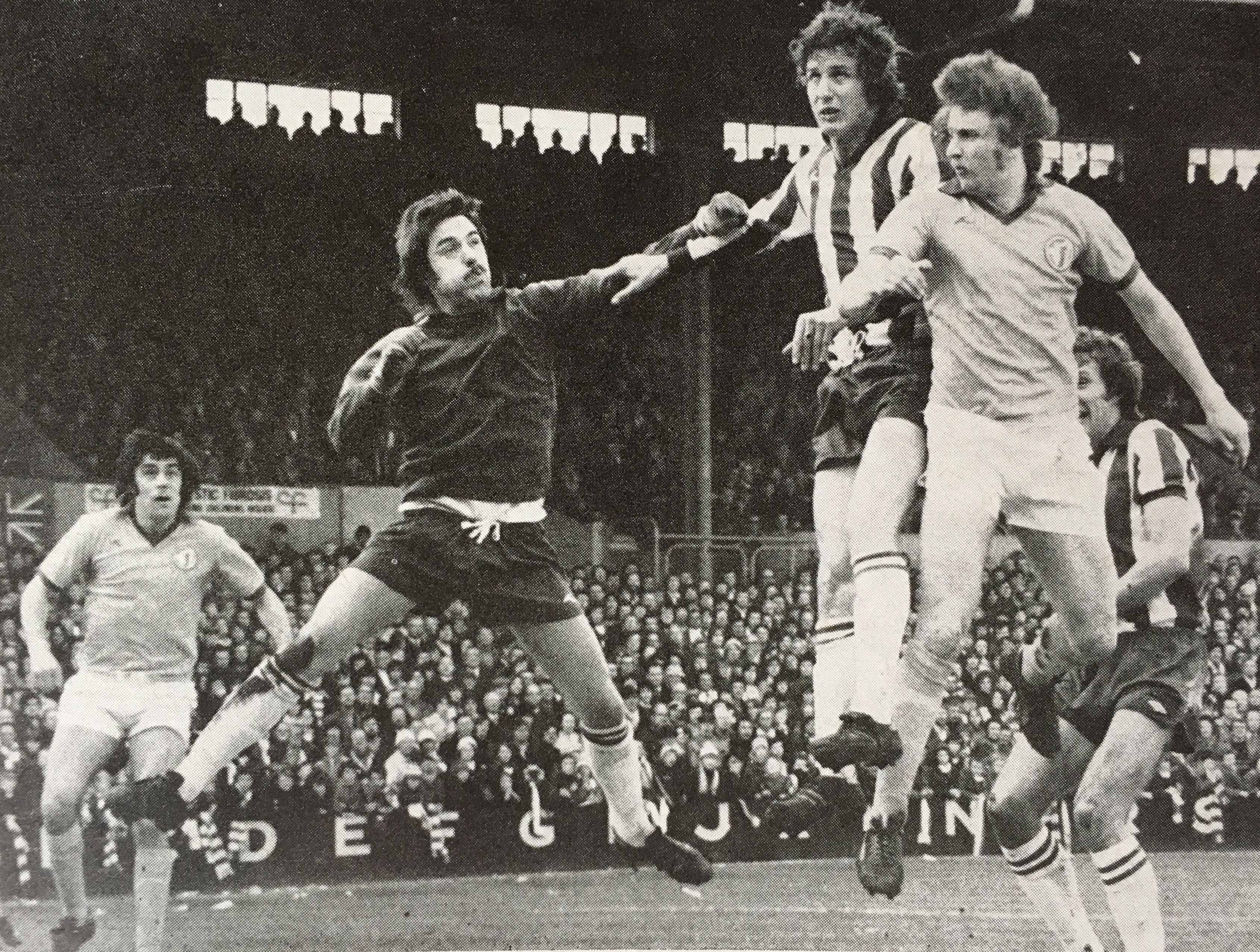
  • Top one shows Steele in action in one of his early Albion matches, a top-of-the-table clash against Mansfield Town in front of a packed Goldstone. I am one of those supporters crammed into that south west corner terrace!
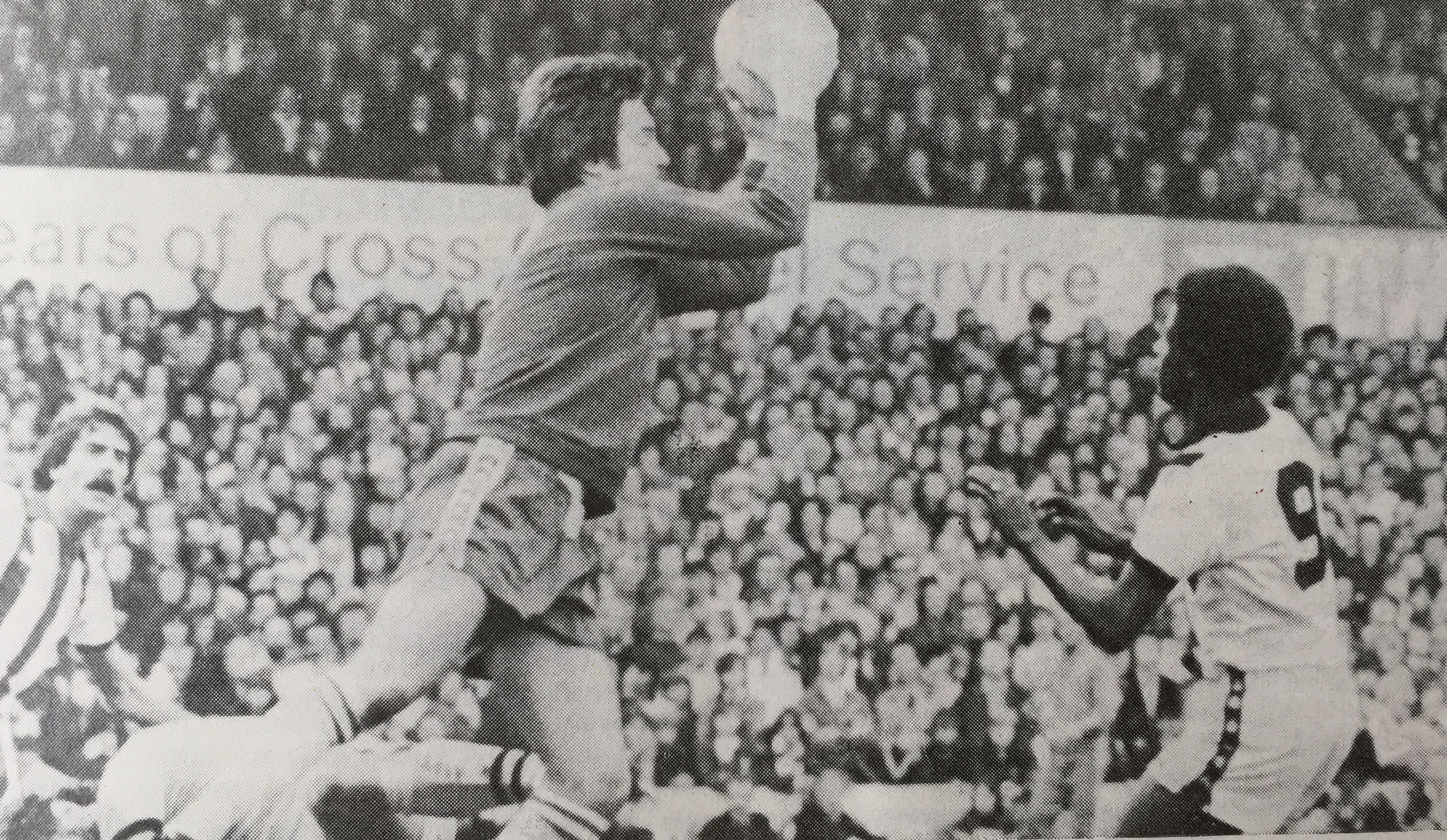
  • Peter O’Sullivan (left) looks on as Steele claims a cross in a home game against Crystal Palace.
  • Steele and ref Pat Partridge see the funny side of it as spongeman Glen Wilson fixes a facial injury to Steve Piper.
  • A thumbs up to the crowd as Steele says his farewell at the Goldstone.
  • Steele working at Man Utd with David de Gea.

Cattle auctioneer Kevin Bremner gave clubs a promotion prod

bremner-portraitAS GOALSCORING partnerships go, the pairing of Kevin Bremner and Garry Nelson was something of a masterstroke by Albion manager Barry Lloyd.
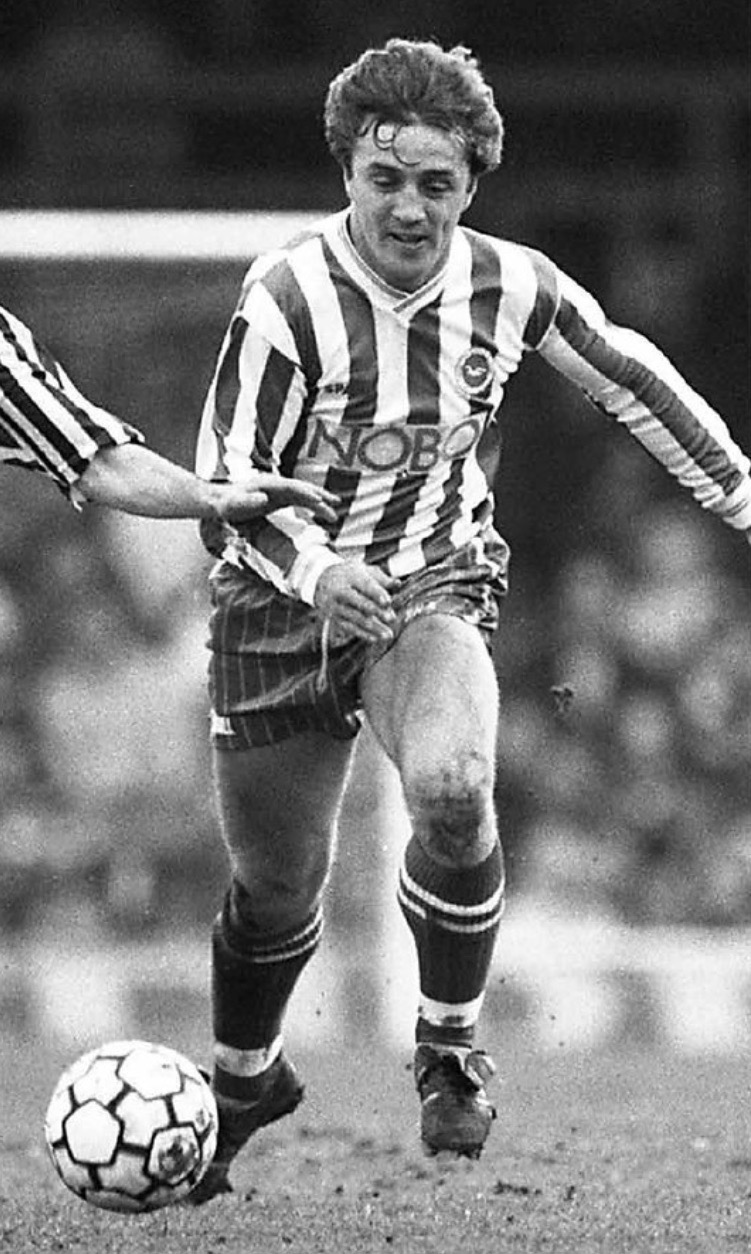
Having to readjust to life back in Division 3 after relegation in 1987 meant cashing in on some of the better players – the sale of Terry Connor, Danny Wilson and Eric Young raised over £400,000 – and replacing them with bargain buys.

At £65,000 for Bremner and £72,500 for Nelson, Lloyd showed how shrewd an operator he could be in the transfer market. When Nelson was injured and sidelined for a while, £80,000 was paid to bring in Paul Wood to play alongside Bremner.

Bremner was born on 7 October 1957 in Banff in the Scottish Highlands and worked as an auctioneer in the cattle market in his home town as well as playing Highland League football.

He didn’t make his start in the English league until the relatively late age of 23. That was with Colchester United and he made his debut in a 2-2 home draw with Barnsley in Division 3 on 11 October 1980.

He went on to make 93 consecutive appearances for Colchester in the third and fourth divisions and scored 35 goals while Bobby Roberts was in charge. All was going well until Bremner got in a dispute with the club and found himself out of the side.

Division 1 Birmingham took him on a month’s loan and, after he’d scored a goal in his four games there, Roberts’ repplacement at Colchester, former Ipswich and Northern Ireland centre half Allan Hunter, recalled him to Layer Road. However, former boss Roberts had moved on to Division 3 Wrexham, and he took Bremner on loan at the Racecourse, where he also got on the scoresheet.

“He wanted to take me on permanently but they couldn’t afford it so my next stop was Home Park, and a spell at Plymouth Argyle,” he told the Albion matchday programme. “It was touch and go whether or not I’d stay there in the long term, but once Lincoln and Millwall showed an interest I knew that I’d soon be on my way.”

He chose Millwall – “it was closer” – and joined the Lions in December 1982 for a £25,000 fee. He was one of eight new signings made by manager George Graham as Millwall were floundering at the bottom of Division 3 at the time. In a remarkable turn-round, they picked up 27 points in 12 games to escape relegation.

He was then part of the Millwall side who won promotion from Division 3 in 1984-85. In total, Bremner scored 33 goals in 87 games for the Lions. “It was a fabulous couple of years even though the side was struggling when I joined,” he said. “Playing at The Den is great – it’s wicked for away teams because the atmosphere is so strong.”

Next stop was Reading for a £35,000 fee. He spent two seasons with the Royals and enjoyed a successful partnership with lofty Trevor Senior which helped the Royals to promotion as champions from Division 3 in 1986.

I can remember going to watch Albion play Reading in November 1986 and Bremner scored twice in a 2-1 win for the Royals at Elm Park. He finished the season with 15. Albion signed him from Reading for £65,000 in July 1987.

Brem flowAfter a flying start with Brighton, in which he scored 11 goals, the league goals dried up for Bremner but strike partner Nelson couldn’t stop scoring as Albion powered their way to automatic promotion.
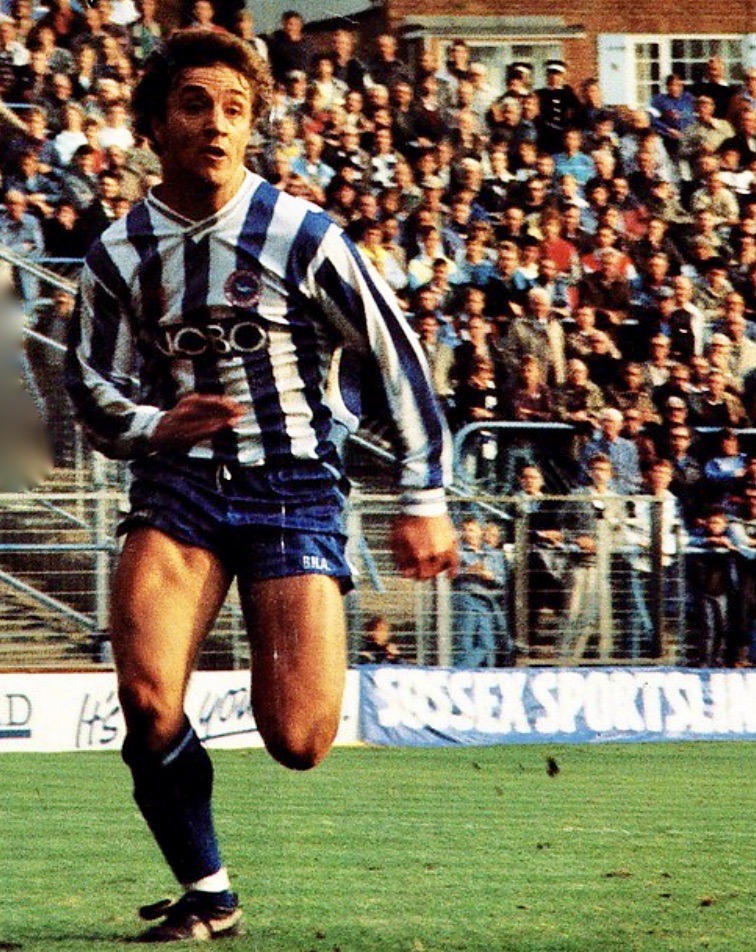
Second spot behind Sunderland was clinched via a 2-1 Goldstone win over Bristol Rovers on 7 May, Bremner finally ending his goal drought with a diving header, and Nelson, inevitably, getting the winner – his 32nd goal of the season.

What was all the more remarkable about the pairing was that it was the first season Nelson had played as an out-and-out striker.

Back in the second tier in 1988-89, Albion struggled to make an impression against better quality opponents although Bremner did score 15 goals, including a hattrick in a New Year’s Eve 4-0 mauling of Birmingham City. In September 1988, he took over the goalkeeper gloves (below) at home against West Brom when Perry Digweed was forced off with a serious groin injury.

In a matchday programme interview, Bremner said: ”I’m probably enjoying the game more than at any time before. I regret not coming into the professional game earlier but I’m delighted at the way things have turned out.

“We always thought we could do well at the Goldstone and after two years of hard work I’d like to think that we can put the club back on the map and, besides, I’d like another try in the First Division.”

The programme notes declared: “It’s his consistent scoring record that has opposing defenders on tenterhooks. His total commitment invariably creates an opportunist goal and he is a popular player with the fans.”

Brem runBremner scored 12 in the 1989-90 season, five of them coming in the space of a week at the start of the season! He was virtually ever-present but Albion struggled in the lower half of the table for most of the season. His goal in a 1-1 draw away to Blackburn in the final game of that campaign was his last for the club. In 134 games (plus three as sub), he’d scored 36 goals.

He moved on to Peterborough United in the close season as manager Lloyd had a new strike partnership up his sleeve in the shape of John Byrne and Mike Small.

After a year at Peterborough, Bremner moved back to Scotland to play for Dundee but in the spring of 1992 had a month’s loan spell at Shrewsbury Town.

Back in the far north of Scotland he had spells as player-manager with Brora Rangers and his old club Deveronvale then in 1995 he became youth team manager at Gillingham and stayed for eight years, and was then academy coach at Millwall for three years. He subsequently coached youngsters in Kent, at an academy and at an independent school.

  • Pictures show the front page of the Evening Argus following Albion’s promotion from Division 3 in 1988 with Bremner diving to score; a shot of Bremner in action against West Ham that appeared on the front of a matchday programme, a portrait from a matchday programme at the beginning of the 1989-90 season, and other action pictures from matchday programmes.

Gary Lineker cleaned defender Larry May’s boots

larry may wednesINJURY cut short Larry May’s playing career at Brighton but, during a purple patch of his four-year spell at Barnsley, he impressed his peers to the extent he was in the 1986-87 PFA team of the year.
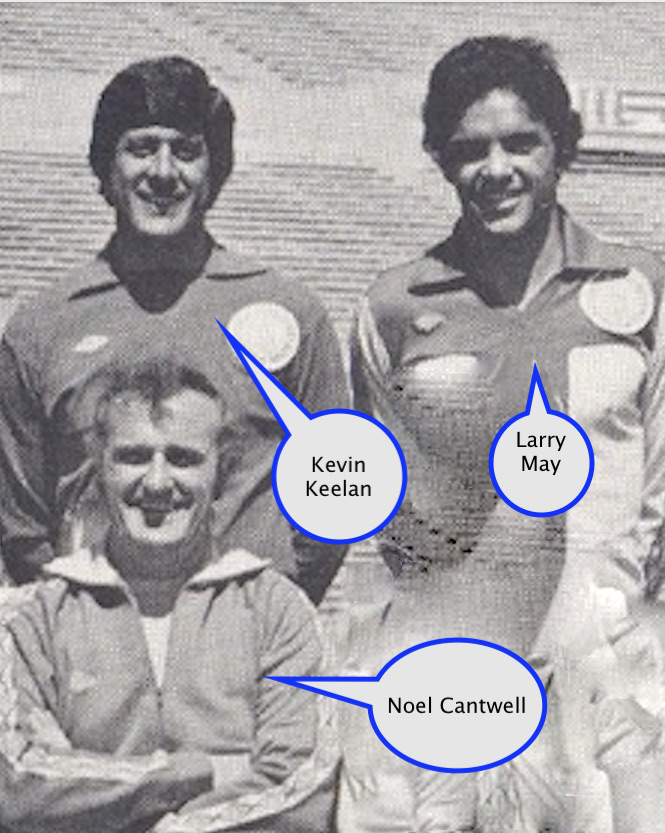
Alongside him in that selection were Lee Dixon, the ITV football pundit who in those days played for Stoke City prior to his move to Arsenal, and former Albion full back John Gregory, who was playing in midfield for Derby County at the time.

Centre back Larry began his career with Leicester City and played over 200 games for them between 1977 and 1983. When given a run in the first team by former Rangers manager Jock Wallace, Larry’s boots were looked after by none other than Gary Lineker: the Match of the Day host being a Filbert Street apprentice at the time.

Leicester’s club historian John Hutchinson – who said of May: “He was very strong in the air, a powerful tackler and had pace” – drove down to Brighton in 2015 to interview Larry about his time with the Foxes and published the story on foxestalk.co.uk.

Leicester had spotted him playing for a local youth team in Birmingham and invited him for a trial. Aged 17, he made his debut in the top division against Bristol City when one of his teammates was Frank Worthington, another who later played for the Albion.

In the following season, Jimmy Bloomfield, the manager who gave him his debut, departed and was replaced by Frank McLintock, who didn’t give May much of a look-in.

Screenshot
May played in front of ex-Norwich goalkeeper Kevin Keelan for the Tea Men

He went to play for New England Tea Men (a franchise owned by the Lipton tea company) in America under ex-Coventry manager Noel Cantwell to get some games but ruptured a cruciate ligament which some thought might end his career before it had even got off the ground.

Back at Leicester, McLintock was succeeded by Wallace and he paired May at the back with John O’Neill – a partnership that endured for the best part of five years.

In those early times, though, May admitted he had to play through pain and regularly ice his knee.

Not only was May ever-present in the 1979-80 side that won promotion from Division 2, he headed the only goal of the game at Leyton Orient on the last day of the season to clinch the title. Striker Alan Young, who played for Albion in the 1983-84 season, was another ever-present.

Leicester only survived a season in the top flight and following relegation Gordon Milne replaced Wallace as manager, guiding them to promotion in his first season. May, though, didn’t see eye to eye with the former Liverpool midfielder and ended up handing in a transfer request.

In an Albion matchday programme, May said: “”We fell out over something and nothing really but at 24 you think you know it all and there was no future for me once I’d asked for a transfer. “Thinking back, I realise that I should have got on with it.”

As it was, in August 1983 he dropped a division and joined Barnsley for a fee of £110,000, signed by the legendary former Leeds hard man, Norman Hunter.

larry may bw“For a man with a reputation of being one of the fiercest characters in football it was unbelievable – I’d say he was definitely the nicest fellow I’ve ever played for,” said May.
While on the books at Oakwell, with a nod towards a longer future in the game, May took his full FA coaching badge.

He told foxestalk.co.uk: “I was happy at Barnsley but, in retrospect, I should have bided my time and stayed at Leicester really. But I was a bit young and naïve. I loved it at Leicester. Leicester were the best club I ever played at. It was my best time in football and I loved it there.”

After three years with Barnsley, former Albion winger Howard Wilkinson took May to Sheffield Wednesday. He had just turned 28 and the move represented a step back up in standard.

“It was an important move at that stage in my career but looking back it was never brilliant for me at Hillsborough,” he said.

Amongst the competitors for his place was Nigel Pearson, later to be better known for some eccentricities in management with various clubs.

At the start of the 1988-89 season, a move south to Brighton was mooted but Wilkinson held onto him because of some early season injury problems. However, Barry Lloyd got his man towards the end of September 1988 and May joined Brighton for £200,000.

His debut in a 2-1 Goldstone win over Leeds brought to an end a run of eight defeats at the beginning of the season but it was back to losing ways – both 1-0 – in the following two games which, ironically, were against his former clubs, Barnsley, at home, and Leicester, away.

monoMay

The return fixture with Leicester was a happier outcome for May, though, because he was the sponsors’ man of the match in a 1-1 draw.

In his programme notes for the Barnsley game, manager Lloyd said: “I know he’ll have a big impact on the way we play….at 29, we know he has a lot of football left in him.”

Captain Steve Gatting had a programme column that season and he also welcomed the central defender, adding: “His experience in the top two divisions is bound to rub off onto some of younger players. When we’ve played against Larry in the past he’s tended to be the man of the match and I’m sure everyone at the Goldstone wishes him and his family every success.”

Understandable sentiments, of course, and such a shame that before the season’s end, after only 25 games, the cruciate ligament in his right knee was shattered in an accidental collision with teammate Paul Wood during a magnificent 2-1 home win over Man City.

“I knew straight away, having had knee trouble before, how serious it was,” he said. “It wasn’t Paul’s fault. It was just one of those things.” He was carried off on a stretcher and it was his last game for the club.

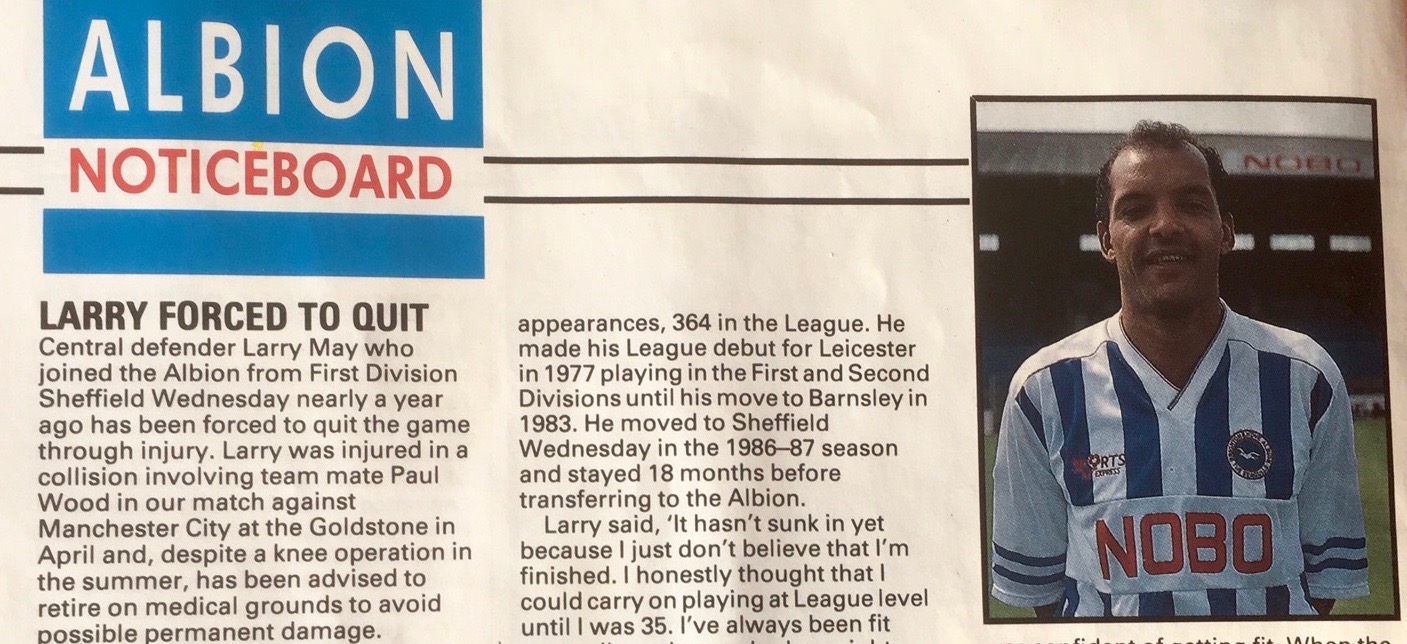
It was in the matchday programme for Albion’s game v Ipswich Town on 27 September 1989 that news of his forced retirement was announced.

“The sudden decision has stunned 30-year-old Larry and his family who were beginning to settle in the Brighton area after moving from Wakefield last year,” the announcement read. “In a 12-year career in the game, Larry has made more than 400 senior appearances, 364 in the league.”

A dejected May told the programme: “It hasn’t sunk in yet because I just don’t believe that I’m finished. I honestly thought that I could carry on playing at league level until I was 35. I’ve always been fit generally and never had a weight problem and this has really hit me.

“When the specialist told me that I shouldn’t play again my first reaction was that it had to be wrong. Now I’ve got to rethink and I’m not really sure about my future.”

Manager Lloyd added: “The announcement that Larry May had been forced to retire from playing was a particularly sad one. He performed very well for us last season and put heart and soul into everything around the club.”

Thankfully Larry was able to put that coaching badge to good use when Lloyd made him reserve team coach and, after a time working for the Surrey FA, he later returned to the club as Head of Sports Participation for Albion in the Community.

His links to the club also extended to his sons: Chris was a young goalkeeper who once had to replace the injured Michel Kuipers during a game and Steve was a centre-back who was in the youth set-up.

1-larrymaystripes2-argusmayintheface3-may-quits4-coach-may

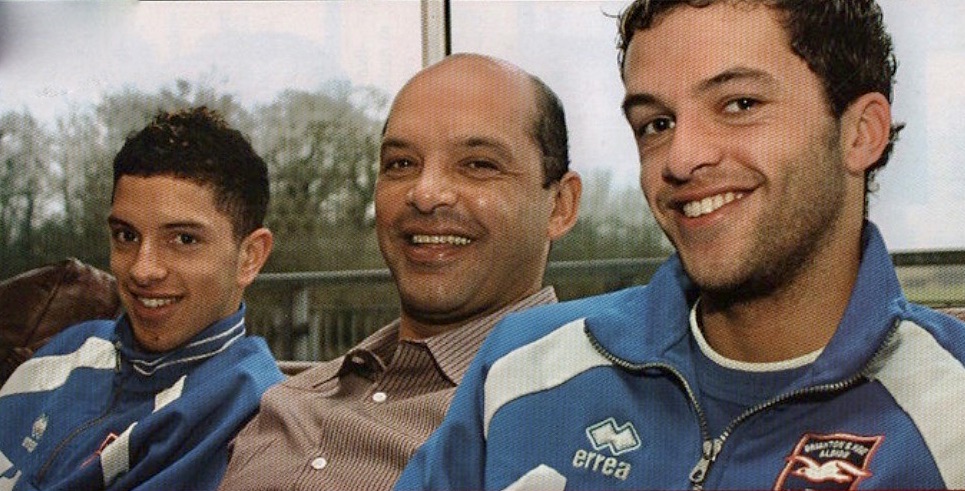
Larry and his sons Steve (left) and Chris

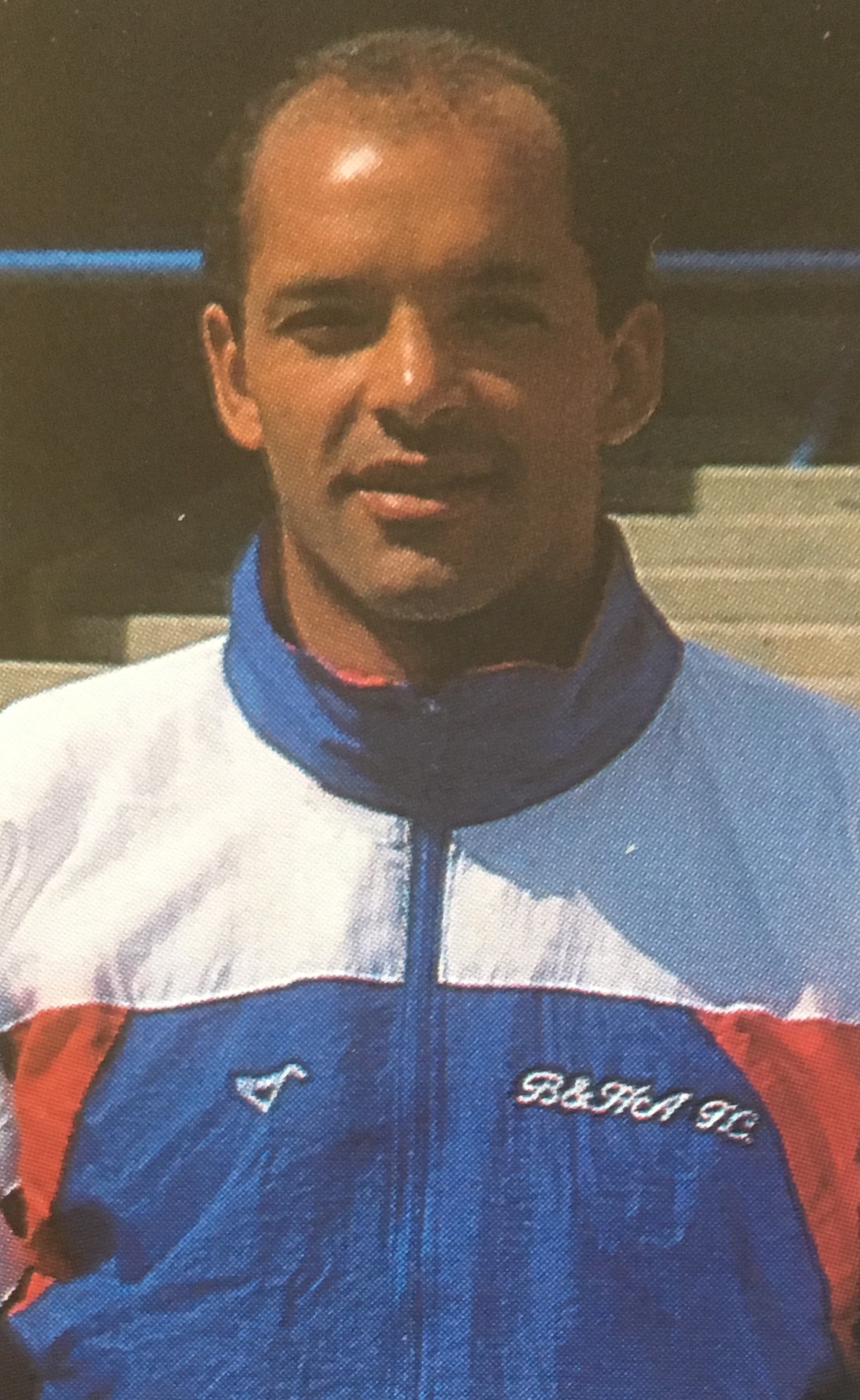
Pictures include Larry May in matchday programmes; captured by an Evening Argus cameraman getting a hand in the face; the programme announcement of his retirement; in an Albion team line-up as a coach, and with his sons.

Well-travelled Wilson’s highs and lows as player and manager

IMG_5140DANNY WILSON, a Brian Clough signing for Nottingham Forest who struggled for games at the City Ground, hit the ground running when he joined the Albion, initially on loan, in November 1983.

He scored twice on his debut – one a cheeky back-heel (below) – when Cardiff City were beaten 3-1 at the Goldstone, and manager Chris Cattlin was swift to praise the newcomer, writing in his matchday programme notes: “I think that this lad, in the right setting, will be a great asset to this club.” Prophetic words. By the end of the season, he’d scored 10 times, four of them penalties, in 26 appearances.

backheel“It was a fantastic move for me,” Wilson said in a retrospective matchday programme article. “I’d gone from being a regular at Chesterfield to being a bit part at the City Ground, surrounded by all these players who had won European Cups, people like Garry Birtles and Viv Anderson. But with the likes of Ian Bowyer ahead of me, I was never going to get first team football.

“That all changed at Brighton. There was a great feeling about the place, and with players like Jimmy Case and Joe Corrigan, no shortage of talent. Fortunately, I got off to a good start, and things went from there.”

Not long after Wilson made the temporary move permanent, in exchange for a fee of £45,000, he played in a memorable 2-0 FA Cup fourth round victory over Joe Fagan’s Liverpool at the Goldstone.

Liverpool went on to win the league, the League Cup and the European Cup that season but goals from Gerry Ryan and Terry Connor denied the Reds achieving the quadruple.

“That has to be my favourite memory from all my time at the Goldstone,” he said. “Back then, Liverpool were just awesome, and to beat them like we did was virtually unheard of. It was the first-ever FA Cup tie to be screened live on television which made it even more special.”

Born in Wigan on New Year’s Day 1960, Wilson hoped to begin his career with Sunderland, but he was released as a boy and instead started out with his hometown club, who were then non-league. He stepped into league football with Bury before moving on to Chesterfield (right).Wils -Chest

His performances for the Spireites earned him a step up to Brian Clough’s Nottingham Forest but he struggled to make it as a regular.

It was after a brief spell on loan to Scunthorpe that he joined the Albion.

Towards the end of his spell with Brighton, Wilson earned his first cap for Northern Ireland (courtesy of his mother having been born in Londonderry) and over the next five years he collected 24 caps for them .

Wilson scored 39 times in 155 games for the Albion before the cash-strapped Seagulls, relegated to Division Three in 1987, cashed in on someone who had become a valuable asset and captain of the side.


The midfielder was sold to Luton Town for £150,000 where, alongside former Albion teammate Steve Foster in 1988, he won the League Cup, scoring a late equaliser (below left) as the Hatters beat Arsenal 3-2 at Wembley.

It was from Luton that he moved on to then recently-relegated Sheffield Wednesday – a £200,000 signing by Ron Atkinson –  in the summer of 1990. He continued to contribute his fair share of goals, netting 11 in 98 appearances for the Owls, as well as being a League Cup winner again in 1991.

Wednesday were the penultimate and eighth club of his playing career, before he embarked on what would become a multiple-club managerial career of varying success. Over the course of 25 years, Wilson’s teams won trophies, promotions, and narrowly escaped relegation, and he managed more than a thousand games.

His first post in the hotseat was as a player-manager at Barnsley, who he steered into the Premiership and earned the Managers’ Manager of the Year award. Unfortunately he could not deliver the same degree of success when he returned to Oakwell between 2013 and 2015, although that spell did mark his 1,000th game as a manager.

His second managerial job had also involved a return to scenes of past glory when he returned to Hillsborough in the top tier between 1998 and 2000. The spell ended ignominiously in the sack, though, after pressure was applied by local MPs for his removal, shortly before Wednesday’s relegation from the Premier League.

After what he felt was an unjust sacking by Wednesday, he was given a four-year contract to take charge of Bristol City. That spell came to an end after Mark McGhee’s Brighton beat the Robins to win the Third Division play-off final in Cardiff.

Six months later, he was back in the game for MK Dons’ inaugural campaign in League One, but he couldn’t save them from relegation to League Two at the end of the 2005-06 season and was once again looking for a new employer.

Within a month, he took over the reins of Hartlepool United, who’d been relegated with MK Dons, and in 2007 led them to promotion back to League One.

After leaving Hartlepool in December 2008, he began a three-year spell as manager of Swindon Town. Amongst his many signings were Gordon Greer, who went on to become Albion captain, and prolific striker Charlie Austin, who had a knack of scoring for Southampton against Brighton.

In May 2011, Wilson controversially crossed the great Sheffield city divide to take charge of United – which didn’t go down too well with Blades followers. During his reign, he helped to turn a young Harry Maguire from a midfielder into a defender. Wilson led United to the League One play-off final in 2012 where they agonisingly lost on penalties to Huddersfield Town.

His era at Bramall Lane came to an end in April 2013 after a string of poor results but by the end of that year he was back in the game for that second spell at Barnsley.

When Wilson left Oakwell in February 2015, he was out of work for 10 months but had an early Christmas present that year, once again returning to one of his old clubs in a managerial capacity. It was on Christmas Eve that he was appointed manager of Chesterfield, then in League One, where he took over from his old Brighton teammate Dean Saunders.

He managed to keep the Spireites in the division but a final parting of the ways came in January 2017, and that was his last managerial post.

Wilson tells his footballing life story in I Get Knocked Down (Morgan Lawrence Publishing Services, 2022).

IMG_6054

Wilson close

IMG_6052

Wilson cover

Wilson prowled many a touchline as a manager

Pictures from Albion matchday programmes.