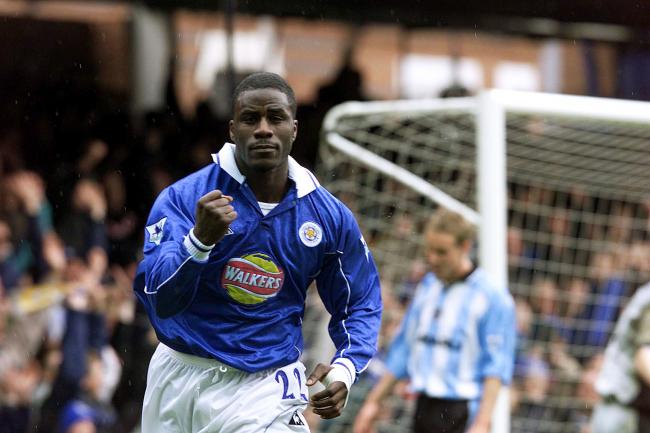
Tony Rougier couldn’t have wished for a better Albion start

A GOAL by Tony Rougier three minutes into his debut as a substitute gave Brighton a glimmer of hope in their battle to avoid relegation.

His strike against Mark McGhee’s mid-table Millwall side at Withdean Stadium on 22 February 2003 was the only goal of the game and lifted Albion out of the bottom three of the Championship.

When Bobby Zamora dummied Kerry Mayo’s pass to allow Arsenal loanee Graham Barrett to turn and move the ball goalwards, Rougier nipped in to complete a neat finish past Tony Warner in the Millwall goal.

Manager Steve Coppell had sent on the Reading loanee as a 61st minute substitute for winger Paul Brooker although he admitted to Stuart Barnes of The Guardian: “I honestly didn’t know if Tony would make a difference, but I felt he would pep up everybody else because we were starting to lose our grip.

“Getting out of the bottom three will give the players a lot of self-esteem. For a long time this season they have questioned whether they belonged at this level.”

Trinidad and Tobago international Rougier joined the Seagulls having been sidelined by Alan Pardew at Reading who paid £325,000 when signing him from Brian Horton’s Port Vale.

Horton gave the Argus an insight of what Albion fans might expect when he said in an interview: “Tony has a great build and he is a threat with his pace and strength.

“We had to sell him because we needed the money and he was one of our major earners.”

He had been Vale’s leading goalscorer with eight goals in 38 games when they were relegated from the First Division in 2000 before moving to Reading that August.

Rougier made a total of 84 appearances for Reading, scoring six goals, and in his first season helped them to the Division Two play-off final where they lost 3-2 to Walsall (and Rougier scored an own goal after going on as a substitute). But a year later, he made 20 starts and 13 appearances off the bench as Reading were promoted in second place – behind the Albion!

He had scored twice in 12 outings for Pardew’s high-flying Royals in 2002-03, including in a 1-0 win against Albion at Withdean. But competition for places was fierce, with the likes of Nicky Forster, Darius Henderson, John Salako and Nathan Tyson.

Coppell told the Argus: “I speak with Alan fairly regularly but this came totally out of the blue when I phoned him up.

“Tony is a big, strong lad and he gives us options. He can play as a wide man or down the middle and the move suits Reading, the player and me.”
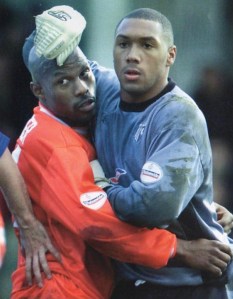
Getting to grips with Jason Brown of Gillingham

Coppell needed forward cover because Gary Hart was about to start a four-match suspension, Zamora was banned for the next away game at Gillingham, Paul Kitson was still injured and Barrett was struggling for form and goals.

The following matchday programme observed Rougier had not been signed for his goalscoring prowess, but rather for his “power, direct running, and causing havoc that others can exploit”.

But the goal was very welcome in a season that might well not have ended in relegation if Coppell had started the season in charge rather than joining after so many games had already been lost under Martin Hinshelwood.

Rougier made his first start in a 3-0 defeat away to Gillingham playing up front with Barrett when Zamora and Hart were suspended.

He featured in home wins over Rotherham United (2-0) and Nottingham Forest (1-0) as well as an away defeat at Stoke City (0-1), but he missed the 2-1 defeat at Sheffield United after twisting his right ankle against Forest.

He bowed out in style in his final appearance, making one goal and scoring a second in a memorable 2-2 draw away to Ipswich Town.

I took my then 14-year-old son Rhys to the clash at Portman Road and the lively midfielder-cum-striker in the no.34 shirt, who had been taken to the hearts of the Albion faithful, was suitably serenaded with the chant ‘Ra-ra-ra Rougier’ to the tune of the popular vaudeville and music hall song Tarara Boom-de-ay.

His first significant involvement saw him go up for a header from Hart’s cross and Town goalkeeper Andy Marshall diverted the ball into his own net to gift Albion an equaliser.

Future Albion loanee striker Darren Bent missed a penalty that would have put Ipswich back in front, and then, with 10 minutes to go, Albion fans were buoyant with expectation when Rougier slammed the ball into the roof of the net after Ipswich had failed to clear their lines.

Unfortunately for Brighton, a 30-yard thunderbolt from Martin Reuser flew past Dave Beasant to put the home side level and Albion had to be content with a point, which ultimately wasn’t enough to avoid making an immediate return to the division they’d left the previous season.

While the player was keen to extend his stay, Pardew wanted him back to help with Reading’s promotion run-in, although thankfully he wasn’t involved in Brighton’s shock 2-1 win at the Madejski Stadium on 4 April (and Steve Sidwell, who had been on loan at the Albion earlier that season was an unused sub). Goals from Brooker and sub Kitson took the spoils for the Albion, Cureton netting for the home side.

The Royals finished fourth in the league before losing 3-1 on aggregate to Wolves in the play-off semi-finals, and Rougier was released on a free transfer having scored three times in 13 starts and nine appearances off the bench.

Rougier told the Argus he would be interested in returning to the Albion, but nothing came of it and he joined Brentford instead. Manager Wally Downes believed the player had “real quality” although Brentford fans seemed to have divided opinions on what he brought to the side.

‘Snappy’ on The Griffin Park Grapevine reckoned: “The guy is a huge asset, especially in the last 10 minutes of a game when he can hold the ball up and dance his way around players like they were statues and relieve the pressure on the defence.”

‘West Ealing Bee’ agreed: “He is an asset to the club and a very important part of the team.” But ‘Boston Bee’ had a totally different take on the player:Even when he actually tried (15min/match) he looked like he wasn’t trying. His lack of interest in the game going on around him drove me crazy.”

Rougier made 34 appearances for the Bees, scoring five goals but when Martin Allen took over as manager in March 2004, Rougier was one of five players he allowed to leave Griffin Park as part of a squad overhaul that ultimately helped them to a last-day escape from relegation.

Meanwhile, Rougier linked up with another ex-Albion captain, Danny Wilson, at Bristol City on a free transfer. Indeed, Rougier appeared for the Robins when they lost 1-0 to McGhee’s Albion in the divisional play-off final in Cardiff on 30 May.

But when Wilson lost his job that summer, Rougier followed him out of the exit and he returned to Trinidad, where he won the last of 67 international caps for Trinidad and Tobago.

Rougier stepped into coaching

He has since turned to coaching, becoming a UEFA A licensed coach, and attained a degree in sports development. On his LinkedIn profile, he describes himself as the founder, president and technical director of FC South End, and, in 2014, among his past coaching experiences was a spell working with his nation’s under 20 squad.

Four years later, he had moved to the United States to coach the New England Revolution academy team.

Born on 17 July 1971 in Sobo, a village in south west Trinidad, his footballing career was initially confined to his home country.

Tom Lunn, writing for Reading fan website thetilehurstend.sbnation.com in 2019, profiled Rougier describing how the player began his senior footballing career in his home country with La Brea Angels. His Wikipedia page says he also played for Trintoc, United Petrotrin, and Trinity Pros.

An Albion matchday programme article said Rougier then moved to New York where he spent a year working in the baggage department at John F Kennedy airport before heading to the UK.

After overcoming work permit issues, he was taken on by Raith Rovers where, over the course of two years, he became something of a cult hero. In 2018, he returned to Fife to be inducted into the club’s Hall of Fame.

“This is where it all started,” he said in an interview with the club’s TV channel. “It never felt the same whichever club I went to afterwards. The Fife people gave me respect and it’s something I’ll never forget.”
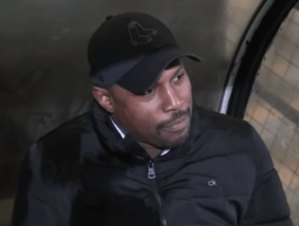
Rougier welcomed back in Fife

During the interview, Rougier remembered fondly an occasion when he man-marked Paul Gascoigne, playing central midfield against Rangers.

His stand-out moment was a UEFA Cup second round tie in Munich’s Olympic Stadium on 30 October 1985 when Raith only narrowly lost 2-1 to Bayern Munich who boasted the likes of Oliver Kahn in goal and Jurgen Klinsmann up front.

His performances for Raith earned him a £250,000 move to Hibernian. He scored four times in 45 matches for Alex McLeish’s Edinburgh outfit but in January 1999 joined Port Vale, signed by Horton’s predecessor John Rudge for £175,000.

By then, he had established himself in the Trinidad and Tobago national side, a teammate of Dwight Yorke, and often being chosen as captain.

In his own words, he describes himself as: “A highly experienced football coach and former professional player with a career in the game spanning more than 25 years, I has successfully made the transition into coaching, management and club operations through a consistent focus on long term player and team development.

“A former national team captain with Trinidad & Tobago and a promotion winner in both England and Scotland, I have been able to effectively apply my on-field experience to guide team success and coaching strategy at professional, grassroots and school level.

“I am a positive, dynamic and passionate professional who is committed to my continued progression as a coach. I am always open to opportunities in which I can develop while positively impacting a football club or organisation, and would relish the opportunity to work with elite players within an ambitious environment.”

Eagles’ Cup Final scorer Gary O’Reilly had two Seagulls spells

GARY O’REILLY was one of those rare players who had two different spells with Brighton – and played for rivals Crystal Palace in between.

Indeed, his career highlight came when he played – and scored – in the 1990 FA Cup Final for Crystal Palace against Manchester United.

It was from Phil Barber’s free-kick on the right that O’Reilly put Palace ahead after 18 minutes, his header looping over goalkeeper Jim Leighton.

United recovered to lead 2-1 before Ian Wright, only six weeks after breaking his leg, came on to score twice, in the 72nd minute and again at the start of extra-time. But Mark Hughes got an equaliser for United seven minutes from the end of extra-time, and, just as they had against Brighton in 1983, United went on to win the replay.

Born in Isleworth on 21 March 1961, O’Reilly started to make a name for himself with the Essex Boys team and, as a schoolboy, played for both England and the Republic of Ireland because his father was from Dublin and his mother English.

Arsenal wanted him on associate schoolboy forms, but it was Spurs who snapped him up at the age of 13. His youth team-mates at White Hart Lane included Kerry Dixon and Mick Hazard.

O’Reilly also had the offer of a sports scholarship at Columbia University before signing for Spurs as a professional. Among a total of 45 first-team appearances in five seasons at Tottenham were games in the Charity Shield at Wembley against Liverpool and a quarter-final victory in the UEFA Cup over German giants Bayern Munich.

Ironically it was the arrival of Gary Stevens from Albion shortly after the 1983 FA Cup Final that began to signal the end of his time at White Hart Lane, together with the emergence of Danny Thomas.

Even though he still had two years of his contract remaining, O’Reilly requested a transfer and, in August 1984, he became part of Chris Cattlin’s Albion squad after signing for a fee of £45,000.

Cattlin recalled: “I watched him eight times before signing him, and six times with Tottenham Reserves he had stinkers. But I thought then he had great potential.”

O’Reilly made his debut at right-back in a notorious home game against Notts County which saw centre-backs Jeff Clarke and Eric Young both hospitalised after clashes with County’s Justin Fashanu, meaning the new arrival hastily shifting into his more familiar position in the centre.

In what was an eventful first few weeks, he also joined that illustrious list of players to score a winning goal AGAINST Palace. That came on 15 September 1984 when 15,044 at the Goldstone Ground saw O’Reilly score the only goal of the game.

His centre-back partner that day – and for most of his time at the Goldstone – was Young, who also later joined the Eagles, having left Brighton for Wimbledon.

O’Reilly made 79 appearances in three seasons with Albion, scoring three goals, and was virtually an ever-present for the first two seasons.

GO'R by the pierOff the field, he became a popular figure with a social conscience, leading a campaign to help youngsters fight drug addiction and becoming president of the Junior Seagulls.

Unfortunately, injuries, including a worrying hamstring condition, restricted him to just eight games in the ill-fated 1986-87 season.

Then, on 3 January 1987, manager Alan Mullery reluctantly sold him to Palace for £40,000. Mullery later recounted: “I remember Gary O”Reilly coming in the day before we were going up to Grimsby. I asked him: ‘Do you want your wages next month?’ He thought it was some kind of quiz question, but I said ‘If you do, you are going to have to leave the club’. That’s how bad it was. We couldn’t afford the wages.” Albion won 2-1 at Grimsby but two days later, Mullery was gone himself – his second spell as manager ending in a sacking.

O’Reilly played 70 times in his first four seasons at Selhurst Park but he did not figure in Steve Coppell’s plans in the 1990-91 season and had just one game on loan with Birmingham City.

At the age of 30, the versatile defender returned to the Seagulls and was given a two-year contract by Barry Lloyd.

“There’s no substitute for first-team football,” he said. “There is nothing like playing regularly to give a player the right degree of confidence.”

Although he made 31 appearances in the 1991-92 season, he was unable to prevent Albion’s relegation back to the third tier and, after a series of unsuccessful knee operations, he was forced to retire from the game in April 1993.

After hanging up his boots, he embarked on a successful broadcasting career for Sky Sports, BBC, ART Prime in Dubai and Trans World International’s Premier League international feed.

On Twitter, with the handle @mythreeleftfeet, he describes himself as “global TV presenter, co commentator, ex professional football player all round sports broadcaster, writer, amateur photographer & someone you might just like…”

worldsoccertalk.com caught up with him in May 2017 to discuss a new venture in which O’Reilly is joint host (alongside stand-up comedian Chuck Nice) of a weekly podcast in America Playing With Science, which explores fascinating topics linking sport and science.

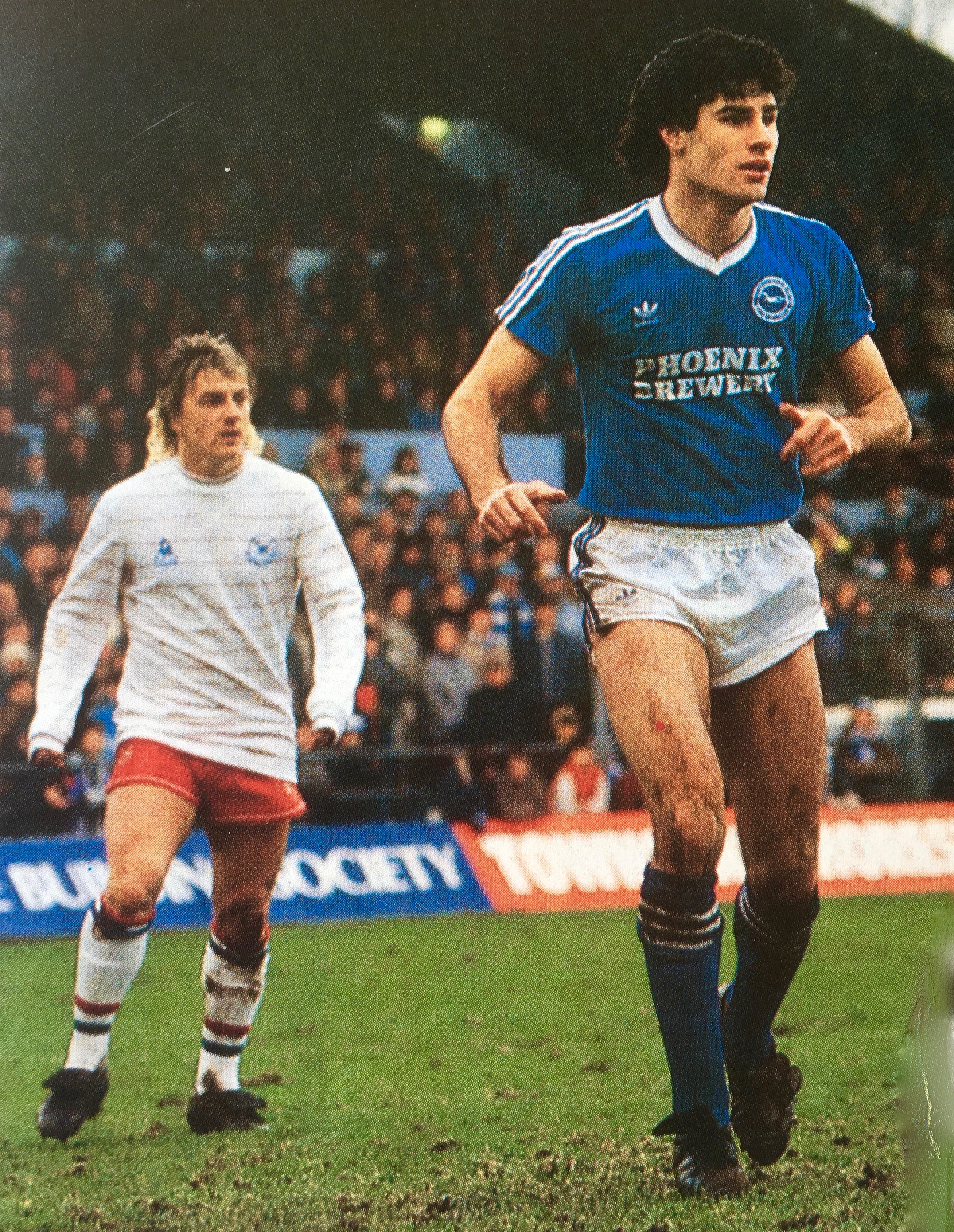
Phoenix O'R w Pompey's Biley

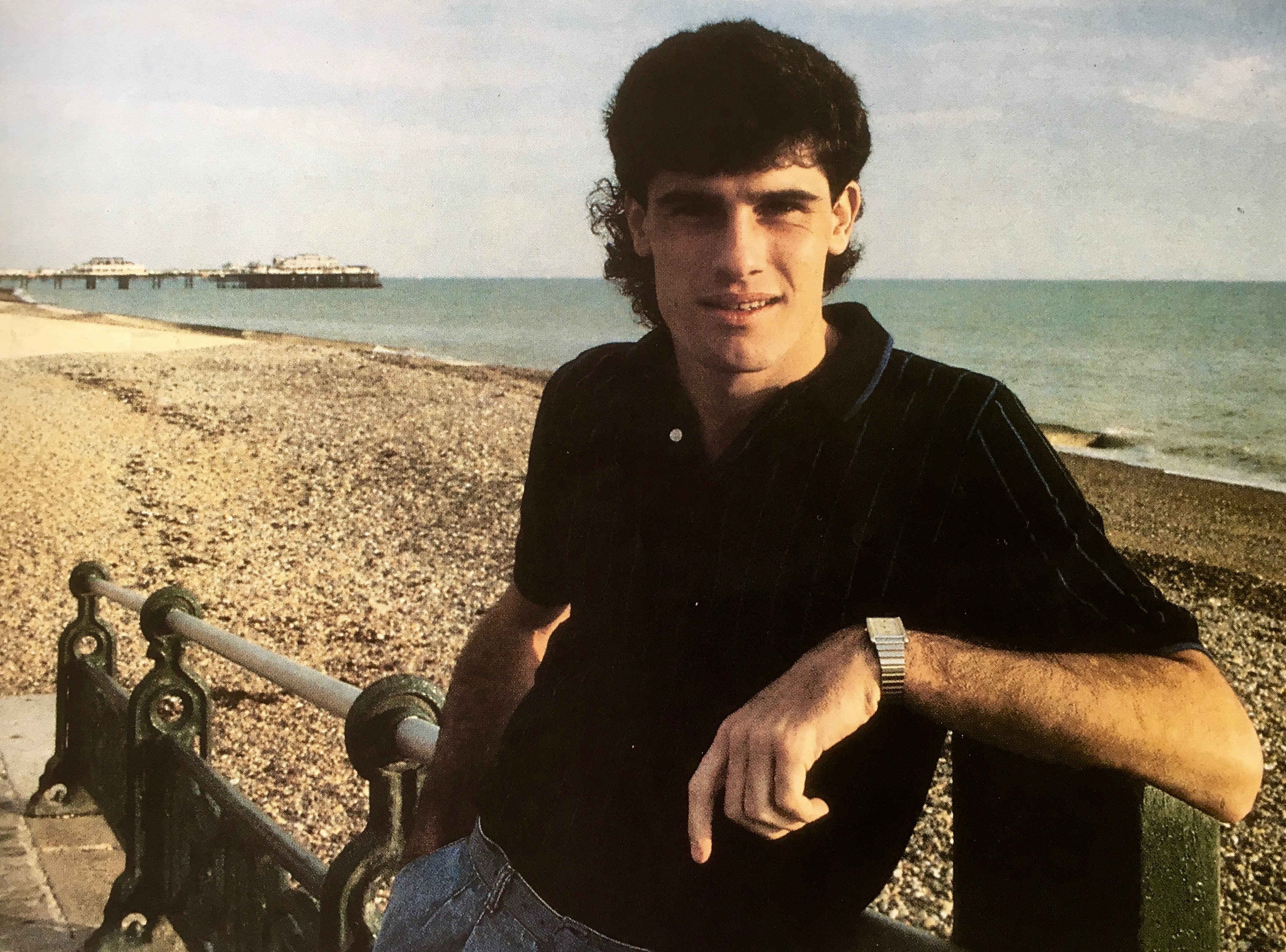
Pictures mainly from the matchday programme.

Above, defending against Portsmouth’s Alan Biley, who later played alongside him.

Much-travelled Ade Akinbiyi a big hit in brief Seagulls spell

A STRIKER with wildly differing fortunes in a varied and much-travelled career made a good early impression when joining Albion on loan from Norwich City back in the autumn of 1994.

Ade Akinbiyi had not long since broken through to the City team as a teenager and he scored four times in seven games on loan to the Seagulls.

Just turned 20, Akinbiyi arrived at a time when Liam Brady’s Albion hadn’t registered a win for 11 games and, although Albion lost the first game he played in, the remaining six produced three wins and three draws.

AA scores

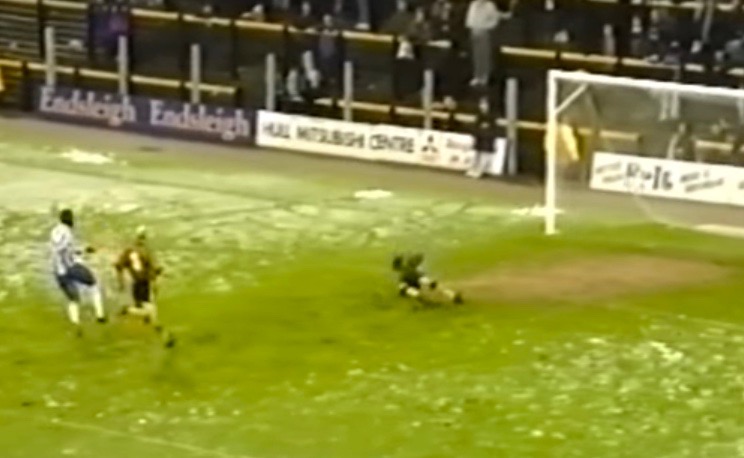
There is some YouTube footage of him scoring Albion’s second goal on a snowy pitch at Hull City’s old Boothferry Park ground in a game that finished 2-2.

“He is powerful and big and he can take knocks and we have missed having somebody in that mould,” Brady wrote in his matchday programme notes.

Later in his career Akinbiyi would prove to be a real handful for the Seagulls – I recall him shrugging off a powder-puff challenge from a young Dan Harding at Withdean and muscling his way to a winning goal for Stoke City. Manager Mark McGhee subbed Harding off and publicly lambasted him afterwards.

Born in Hackney on 10 October 1974, Akinbiyi was more interested in athletics at an early age, as he told the Lancashire Telegraph.

“I was interested in football but not massive on playing it,” he said. His school PE teacher persuaded him otherwise. “I went to play for my district team, Hackney, and it all started from there.”

From Hackney, Akinbiyi joined nearby Senrab, the team that blooded the likes of Bobby Zamora, Leon Knight, John Terry and Jermain Defoe.

His age group earned a place in a children’s tournament in Great Yarmouth called the ‘Canary Cup’ where he was spotted by a scout for nearby Norwich, who signed him as a schoolboy.

“The schoolboy and youth team system was second to none, as it still is now,” said Akinbiyi. But he found it hard living away from home, missing his mum’s native Nigerian cooking.

But after finding new digs with a few of his team-mates, he stuck at it and earned a dream debut as a substitute against Bayern Munich in the return leg of their UEFA Cup second round game, less than a month after his 19th birthday.

“I thought my debut would come in a cup game, perhaps against lower league opposition, not against Bayern Munich,” he said. “Not many people make their debut in a European cup competition.”

Although Akinbiyi made 51 league appearances for Norwich, his Canaries career never really took off, hence the Brighton loan spell and a similar move to Hereford United.

Eventually, though, a manager who believed in him, Tony Pulis, made him a record £250,000 buy for Gillingham in January 1997. Akinbiyi repaid Pulis’ faith in him with 29 goals in 67 starts, leading to Bristol City paying £1.2million for the striker following their promotion to the old Division One (now the Championship).

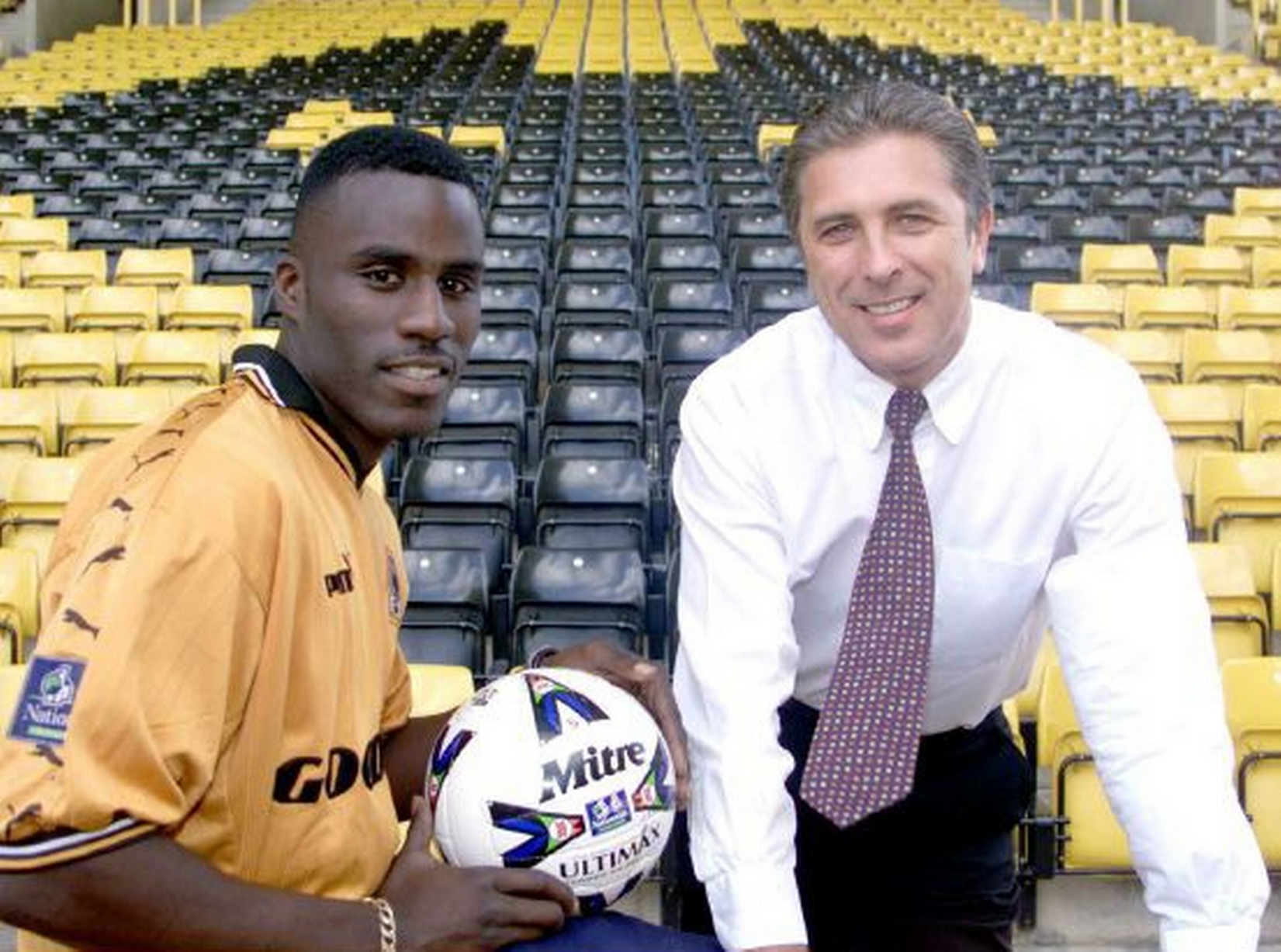
akinbiyi + colin lee

After scoring 21 goals in 47 league appearances for the Robins, in 1999 he completed a £3.5m move to Wolverhampton Wanderers. In the same year, he played his one and only game for Nigeria, in a friendly against Greece in Athens.

He made a great start at Wolves, scoring eight times in his first 12 games for Colin Lee’s side, but a year later, switched to Premier League Leicester City, after the Foxes’ boss Peter Taylor (later to replace Micky Adams at Brighton) paid out a £5m fee for the striker.

Ade A LeicesterAkinbiyi was brought in to replace Emile Heskey, a real Filbert Street hero who had been sold to Liverpool for £11m. However, his goal touch eluded him and he managed to score only 11 goals in 58 league appearances for the club – some Leicester fans dubbing him Ade Akin-Bad-Buy!

Akinbiyi looked back on it in an interview with Four Four Two magazine and said: “I came in as Emile Heskey’s replacement, but he is a different breed of footballer.

“He’s big, strong and scores goals, but, back then, if Heskey wasn’t scoring a lot he could get away with it. He was the local hero. I was a different player – I’d be running in behind and trying to cause people problems. But Leicester looked at my record in the Championship and thought I’d come and do the same thing.”

Eventually they cut their losses and sold him to Division One Crystal Palace for £2.2m. At Selhurst, he was rather ignominiously given the number 55 shirt! Having scored just one goal in 14 league and cup appearances, in 2003 he was loaned to Stoke City, under his old boss Pulis.

He scored twice – the second goal coming in the last game of the 2002-03 season, when the Potters won 1-0 against Reading to seal their Division One (now the Championship) status (the season Albion were relegated).

Akinibiyi discussed the events in an interview with another ex-Stoke, Burnley and Brighton striker, Chris Iwelumo, for Stoke City FC TV.

AA chat with CIIt led to Akinbiyi joining on a permanent basis, on a free transfer, and he became a cult hero with the Stoke City crowd.

In March 2005, Burnley signed him for £600,000 – and he was promptly sent off on his debut! The game was only two minutes old when he head-butted George McCartney of Sunderland, and was shown a straight red.

Less than a year later, he was on the move again, switching to Sheffield United in January 2006 for what was then a club record £1.75m fee.

He scored on his Blades debut against Derby County but by October that year he was in the news for his alleged involvement in a training ground bust-up with team-mate Claude Davis.

In all, Akinbiyi made only five appearances for the Blades in the Premiership in 2006 and, on New Year’s Day 2007 he returned to Burnley for a £650,000 fee, with add-ons.

He scored in his first game back, against Reading, but only notched three by the season’s end. Burnley fans have some good memories of him, particularly in a brief spell when he played alongside loan signing Andrew Cole, but on 2 April 2009, Burnley offloaded him to Houston Dynamo.

Dave Thomas, a prolific writer on all things Burnley, talked about Akinbiyi’s cult hero status among Burnley fans, telling thelongside.co.uk: “Ade certainly had a talent and that talent was scoring goals. The story that he was utterly bad at this is totally inaccurate, but that is the legend that developed, at one club in particular, Leicester City.

“In truth, at Burnley too, he missed sitters that Harry Redknapp might say his wife could have scored. But then so do all other players and, in many games, he displayed all the things that he was good at, and the attributes that he had in abundance.”

After he was released by Houston, back in the UK he played 10 games for Notts County, as they won the League Two title In 2009-10, and the following season pitched up in south Wales to play for then non-league Newport County.

In July 2013, Akinbiyi became a player-coach for Colwyn Bay, managed by his former Burnley teammate Frank Sinclair, but both resigned in January 2015 after a 5-0 defeat at Boston.

Akinbiyi now lives in Manchester and in 2015 was interviewed about work he has done as an ambassador for Prostate Cancer UK after his father died from the disease.

Villa’s European Cup winning captain at the Albion

2-mortimer-in-flightA CULTURED midfielder regarded in many circles as the best ever captain of Aston Villa was almost ever-present in one season with Brighton.
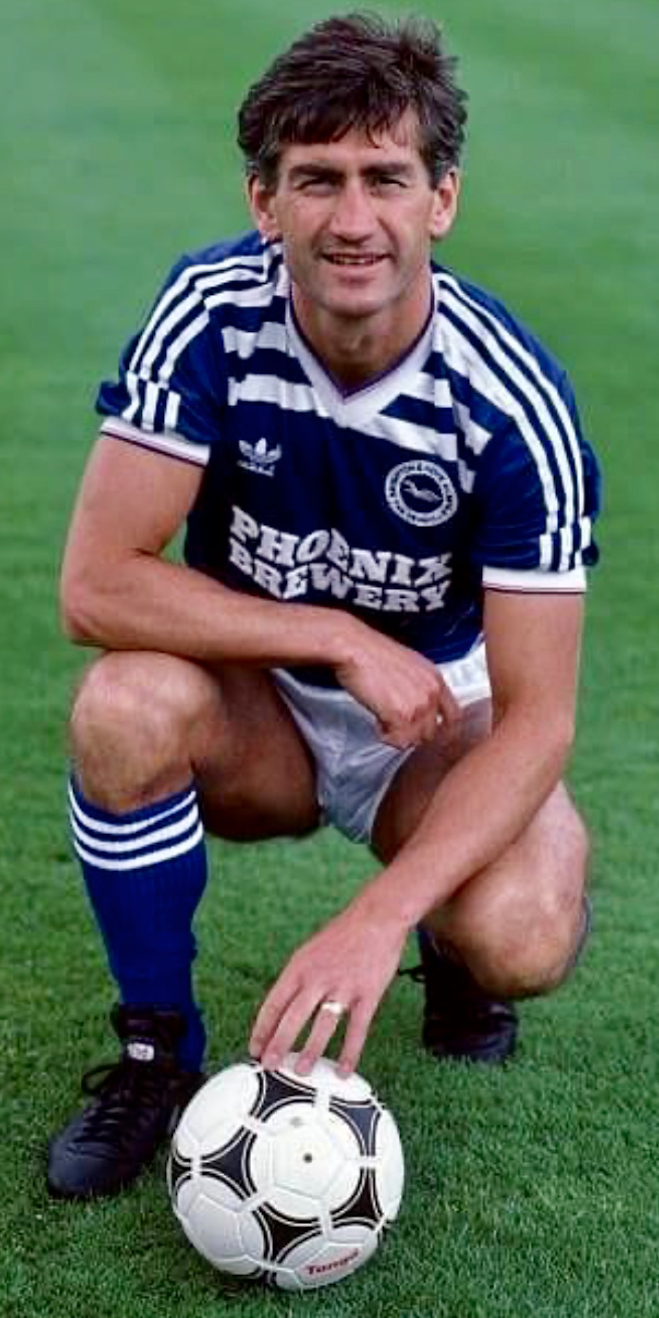
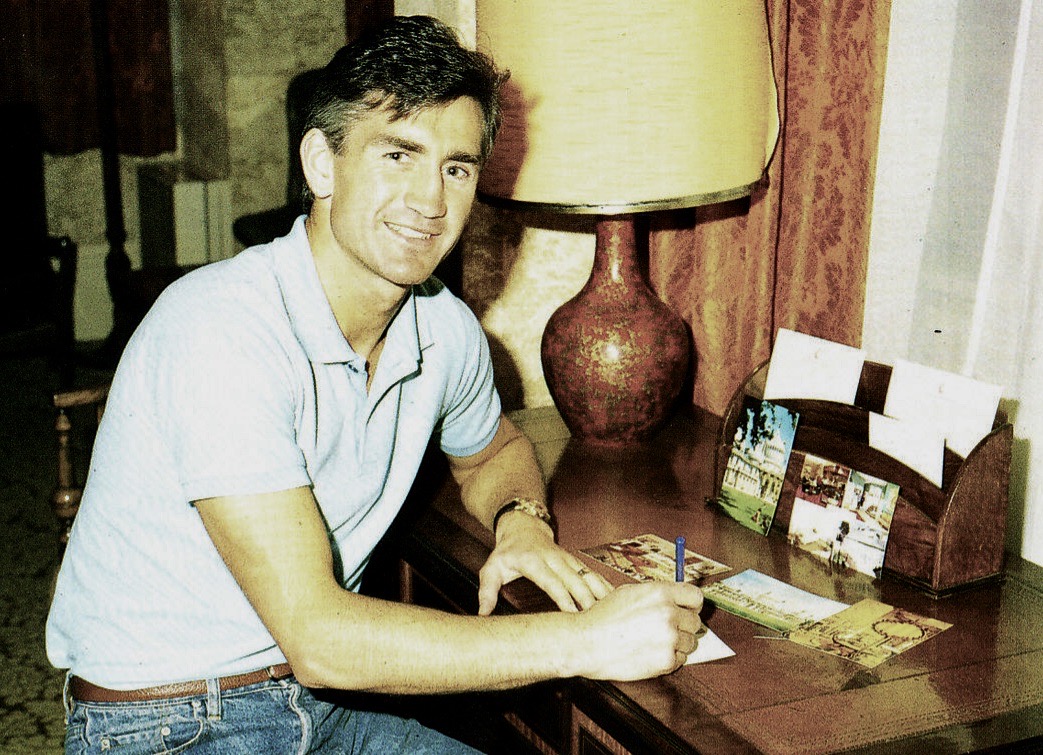
Dennis Mortimer captained Villa when they won the European Cup in 1982 under manager Tony Barton.

Mortimer joined the Seagulls three years later and shone in what was a rather disappointing Division 2 season which saw the Albion finish 11th.

Brighton’s near-promotion form in the season before had prompted Mortimer to try to help the Seagulls to restore their elite status after he’d been released by Villa.

In a programme feature by Tony Norman in November 1985, he said: “I knew this was a good side to come into; a team that wanted to play good football and win promotion.

“They missed it so narrowly last year and I felt I would like to be part of that challenge this year. I knew there would be excitement in the season ahead, and to me that is one of the most important things in football.

“Obviously I’m coming to the end of a long career in the game. I’ve been a professional for 17 years now and I wanted one final challenge. That’s why I came to Brighton.”

In his programme notes for the opening game of the season (against Grimsby Town), manager Chris Cattlin said of his former Coventry teammate: “He is a truly outstanding professional who will give the team steadiness and experience.”

Fans had a taste of what he would bring to the team when he scored a cracker in a pre-season game against Arsenal.

Unfortunately, while Mortimer was a consistent performer in midfield and the team enjoyed a decent run in the FA Cup – losing in the quarter finals to Southampton – Cattlin’s side were beset by injuries to key players and ultimately fell short of the top spots.

Morty BHAmorty writesKnowing his time on the south coast was going to be limited, Mortimer didn’t uproot his family from their Lichfield home and instead lived in the Courtlands Hotel in Hove (above) for a while and also bought a flat where his wife and children could visit during school holidays.

Despite being born in Liverpool, the bulk of Mortimer’s career was connected with West Midlands teams, beginning with Coventry City under the tutelage of Pat Saward, who later managed the Albion, and ending with West Brom where he had a spell as assistant manager after his playing days were over.

He had not been a schoolboy star but was picked up and developed through Coventry’s youth development system. As well as coach Saward, Coventry’s youngsters also benefitted from the experience of Bob Dennison, the man who, at Middlesbrough, brought together as players one of the most famous footballing partnerships in Brian Clough and Peter Taylor.

“As a lad I thought I would be an engineer and, although the whole family were Liverpool mad, and we never missed a home game, it did not enter my head that I might be a professional until I was 14,” Mortimer said in a Goal interview in 1973. Coventry offered him a trial just as he was leaving school and his career built from there.

His initial Coventry boss Noel Cantwell, the former Man Utd and West Ham full back, was sure Dennis was destined for greater things after his first England under-23 call-up. “Dennis will become a big name in football, “ he said. “When he gets in Sir Alf’s side I don’t think he will lose his place easily.”

Although he never won a full cap, in 1971 he went on an end-of-season tour to Australia in an English FA squad that also included Peter Grummitt (then of Sheffield Wednesday) and Barry Bridges (of Millwall at the time). The group played the Republic of Ireland in Dublin, drawing 1-1, before heading Down Under where they won all nine of the matches they played in various locations across a month.

Coventry general manager, Joe Mercer, who was a legendary figure in the game and had a spell as caretaker manager of England, said of Dennis: “He has this great change of pace…he can go into another gear and accelerate out of trouble like all the good ones.”

However, it was after his move to Villa in 1975 that he rose to prominence, culminating in that famous 1-0 win over Bayern Munich in Rotterdam, courtesy of a Peter Withe goal.

As part of a 30th anniversary celebration of the achievement, Mortimer told the Birmingham Mail in 2012: “It was such a momentous occasion for Aston Villa Football Club and for all of us as young men that you never forget it – and I doubt the fans who witnessed it would ever forget it either.

“You only have to see how big the competition is now and how much hype it gets to realise what an amazing achievement it was for us.

“Every year when the final of the European Cup, or Champions League as it is called now, comes around, I get a glimpse of that fantastic trophy and it all comes flooding back.

“I’ll never get bored of talking about it, but I don’t get reminded about it that much any more. It’s usually me telling the younger kids that Aston Villa won the European Cup.

“Some of them don’t believe me, because it was so long ago, and before a lot of them were born, but they go away and Google it and think ‘Wow, yes, they did win it!’”

DM Villa

In 10 years at Villa, Mortimer made 403 appearances and scored 36 goals. A 1977 League Cup winner, he led Villa to the English Division One title on May 2, 1981, and then lifted the European Cup on May 26, 1982.

The Birmingham Post said in 2010: “The Liverpudlian was at the forefront of the club’s finest era of modern times; a driving force from midfield that helped bring a level of success to Villa Park that his successors can only dream of.”

Although capped by England under-23 and England B, a full cap eluded him. That seems extraordinary now, especially after scoring twice in a 3-1 win for the under-23s against the Netherlands at Highbury, when Goal magazine reported he was being “hailed as the new Bobby Charlton”.

Mortimer was subsequently picked for the senior squad but didn’t get a game. “I got as far as the bench in the home internationals when Villa won the league, but never got on,” he said in a 2010 interview. “I always felt I should have done but there were so many good midfield players around at that time.

“I just needed to get on that pitch for five minutes in that home international, but Ron Greenwood wouldn’t put me on.”

After Cattlin allowed Jimmy Case to leave Brighton (telling the board his legs had gone, even though he then had six seasons at Southampton!), the team was crying out for a seasoned cool head in midfield who could put their foot on the ball and spread the ball about.

Cattlin eventually turned to his former Coventry teammate to bring that quality to a squad that was not quite reaching the heights required to restore the elite status lost in 1983.

Sadly, Mortimer spent just the one season at The Goldstone, but his 49 league and cup appearances were the highest number in that season’s squad.

Cattlin had offered him a two-year contract with the chance to start coaching but, following the manager’s sacking close to the end of the season, and his replacement Alan Mullery not fancying the experienced midfielder, he left the club.

“Player-coach would have been great as I had plenty left in the tank,” Mortimer told journalist Spencer Vignes: “He swapped a player with plenty of experience for one with no experience (Dale Jasper) and I was let go. Four months later (it was actually eight), Alan was let go as well.”

Mortimer returned to the Midlands – making the somewhat controversial decision to join Villa’s arch rivals Birmingham.

Funnily enough at the very same time he was heading back to the Midlands, the captain who lifted the European Cup that month also went on to play for the Albion. Romanian international Stefan Iovan was the Steaua Bucharest captain when they beat Barcelona on penalties in Seville; five years later, he was stepping out at Wembley as part of the Seagulls’ line-up in the Division 2 play-off final with Notts County.

But finally back to Mortimer. Now a sports speaker, pundit and coach, he’s not afraid to speak his mind and has been known to upset a few people with his outspoken comments about Villa’s plight in recent years.

  • Pictures from my scrapbook show Dennis Mortimer in action for Coventry against Liverpool, from Goal magazine, and an Albion matchday programme shot of him in full flight for the Seagulls. Also pictured is Mortimer when reserve team coach at West Brom during Ossie Ardiles’ reign as manager. When Ardiles moved to Spurs, Mortimer became new boss Keith Burkinshaw’s assistant. Full grey head of hair picture from 2010.