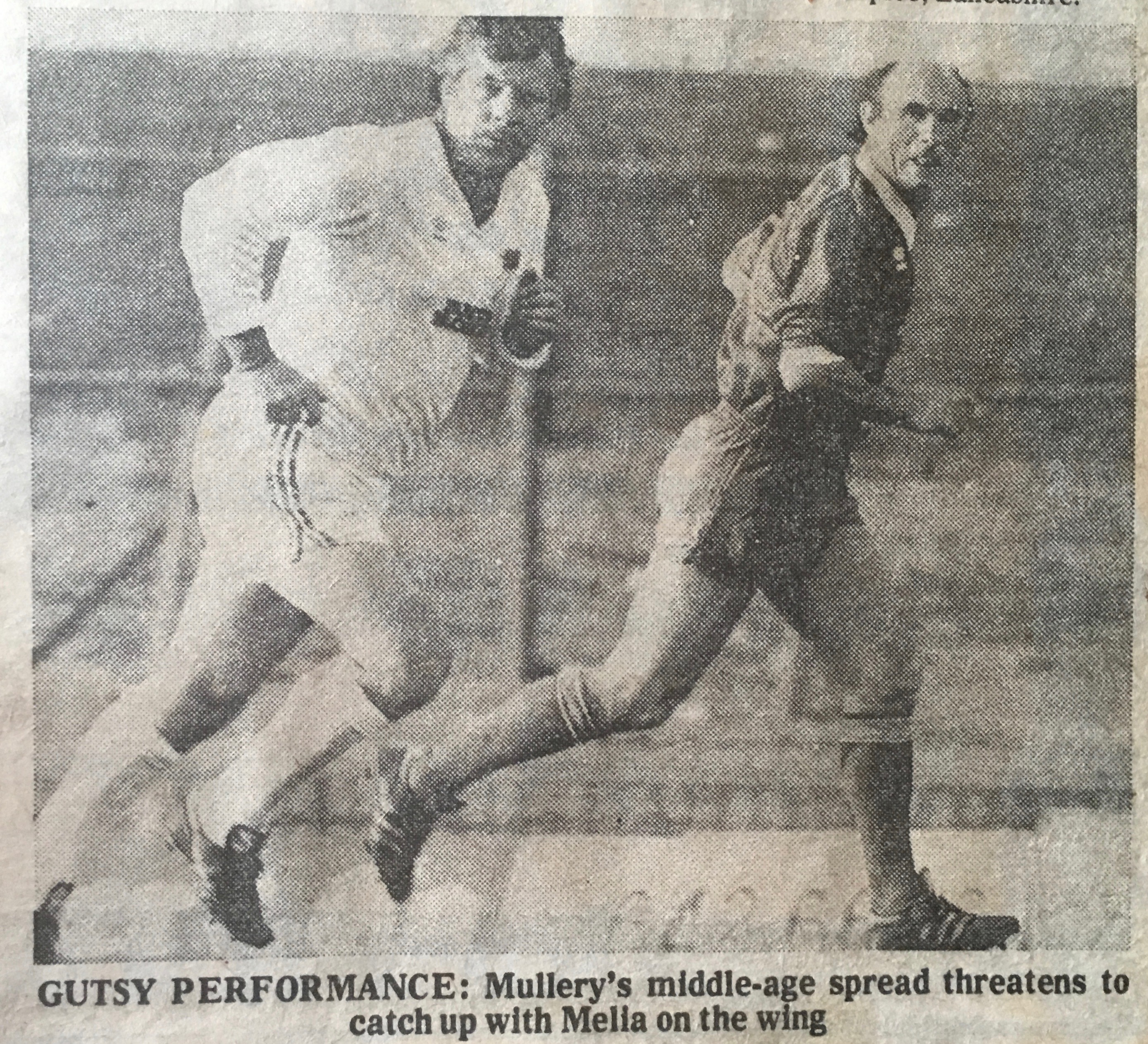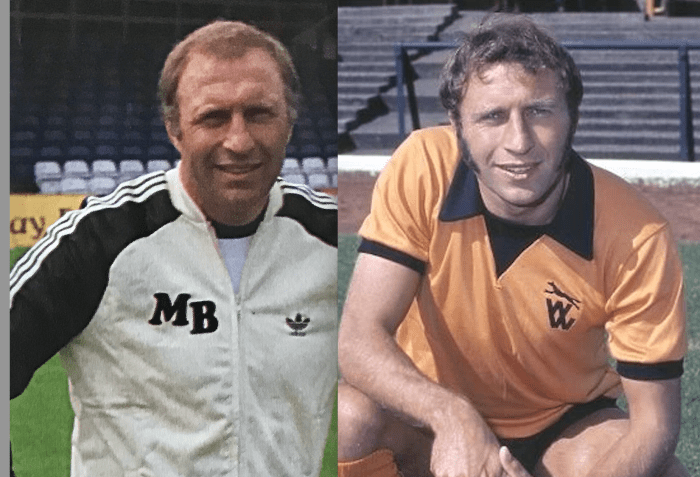
Should Mike Bailey have had longer to realise his ambition?

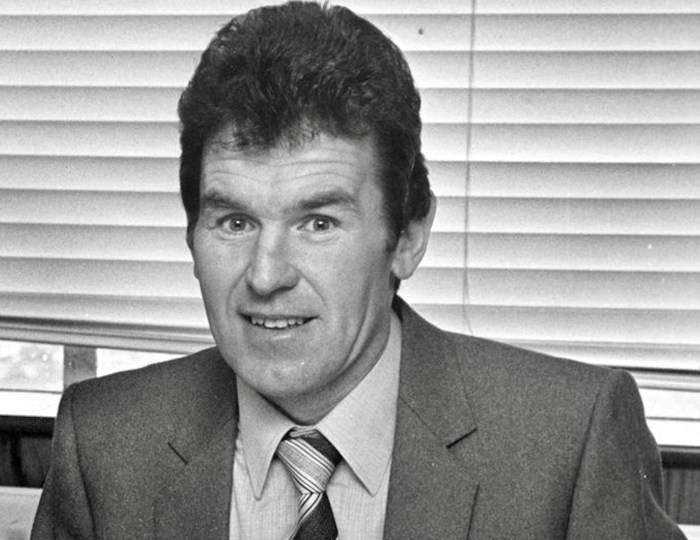
FOR 40 YEARS, Mike Bailey was the manager who had led Brighton & Hove Albion to their highest-ever finish in football.

A promotion winner and League Cup-winning captain of Wolverhampton Wanderers, he took the Seagulls to even greater heights than his predecessor, Alan Mullery.

But the fickle nature of football following has remembered Bailey a lot less romantically than the former Spurs, Fulham and England midfielder.

The pragmatic way Brighton played under Bailey turned fans off in their thousands and, because gates dipped significantly, he paid the price.

Finishing 13th in the top tier in 1982 playing a safety-first style of football counted for nothing, even though it represented a marked improvement on relegation near-misses in the previous two seasons under Mullery, delivering along the way away wins against Tottenham Hotspur, Liverpool and then-high-flying Southampton as well as a first-ever victory over Arsenal.

Bailey’s achievement with the Albion was only overtaken in 2022 with a ninth place finish under Graham Potter; since surpassed again with a heady sixth and European qualification under Roberto De Zerbi.

Fascinatingly, though, Bailey had his eyes on Europe as far back as the autumn of 1981 and laid his cards on the table in a forthright article in Shoot! magazine.

Bailey’s ambition laid bare

“I am an ambitious man,” he said. “I am not content with ensuring that Brighton survive another season at this level. I want people to be surprised when we lose and to omit us from their predictions of which clubs will have a bad season.

“I am an enthusiast about this game. I loved playing, loved the atmosphere of a dressing room, the team spirit, the sense of achievement.

“As a manager I have come to realise there are so many other factors involved. Once they’re on that pitch the players are out of my reach; I am left to gain satisfaction from seeing the things we have worked on together during the week become a reality during a match.

“I like everything to be neat – passing, ball-control, appearance, style. Only when we have become consistent in these areas will Brighton lose, once and for all, the tag of the gutsy little Third Division outfit from the South Coast that did so well to reach the First Division.”

Clearly revelling in finding a manager happy to speak his mind, the magazine declared: “As a player with Charlton, Wolves and England, Bailey gave his all, never hid when things went wrong, accepted responsibility and somehow managed to squeeze that little bit extra from the players around him when his own game was out of tune.

“As a manager he is adopting the same principles of honesty, hard work and high standards of professionalism.

“So, when Bailey sets his jaw and says he wants people to expect Brighton to win trophies, he means that everyone connected with Albion must forget all about feeling delighted with simply being in the First Division.”

Warming to his theme, Bailey told Shoot!: “This club has come a long way in a short time. But now is the time to make another big step…or risk sliding backwards. Too many clubs have done just that – wasted time basking in recent achievements and crashed back to harsh reality.

“I do not intend for us to spend this season simply consolidating. That has been done in the last few seasons.”

Mike Bailey had high hopes for the Albion

If that sounds a bit like Roberto De Zerbi, unfortunately many long-time watchers of the Albion like me would more likely compare the style under Bailey to the pragmatism of the Chris Hughton era: almost a complete opposite to De Zerbi’s free-flowing attacking play.

It was ultimately his downfall because the court of public opinion – namely paying spectators who had rejoiced in a goals galore diet during Albion’s rise from Third to First under Mullery – found the new man’s approach too boring to watch and stopped filing through the turnstiles.

Back in 2013, the superb The Goldstone Wrap blog noted: “Only Liverpool attracted over 20,000 to the Goldstone before Christmas. The return fixture against the Reds in March 1982 was the high noon of Bailey’s spell as Brighton manager.

“A backs-to-the-wall display led to a famous 1-0 win at Anfield against the European Cup holders, with Andy Ritchie getting the decisive goal and Ian Rush’s goalbound shot getting stuck in the mud!”

At that stage, Albion were eighth but a fans forum at the Brighton Centre – and quite possibly a directive from the boardroom – seemed to get to him.

Supporters wanted the team to play a more open, attacking game. The result? Albion recorded ten defeats in the last 14 matches.

At odds with what he had heard, he very pointedly said in his programme notes: “It is my job to select the team and to try to win matches.

“People are quite entitled to their opinion, but I am paid to get results for Brighton and that is my first priority.

“Building a successful team is a long-term business and I have recently spoken to many top people in the professional game who admire what we are doing here at Brighton and just how far we have come in a short space of time.

“We know we still have a long way to go, but we are all working towards a successful future.”

Dropping down to finish 13th of 22 clubs, Albion never regained a spot in the top half of the division and The Goldstone Wrap observed: “If Bailey had stuck to his guns, and not listened to the fans, would the club have enjoyed a UEFA Cup place at the end of 1981-82?”

Bailey certainly wasn’t afraid to share his opinions and, as well as in the Shoot! article, he often vented his feelings quite overtly in his matchday programme notes; hitting out at referees, the football authorities and the media, as well as trying to explain his decisions to supporters, urging them to get behind the team rather than criticise.

It certainly didn’t help that the mercurial Mark Lawrenson was sold at the start of his regime as well as former captain Brian Horton and right-back-cum-midfielder John Gregory, but Bailey addressed the doubters head on.

“I believe it was necessary because while I agree that a player of Lawrenson’s ability, for example, is an exceptional talent, it is not enough to have a handful of assets.

“We must have a strong First Division squad, one where very good players can come in when injuries deplete the side.

Forthright views were a feature of Bailey’s programme notes

“We brought in Tony Grealish from Luton, Don Shanks from QPR, Jimmy Case from Liverpool and Steve Gatting and Sammy Nelson from Arsenal. Now the squad is better balanced. It allows for a permutation of positions and gives adequate cover in most areas.”

One signing Bailey had tried to make that he had to wait a few months to make was one he would come to regret big time. Long-serving Peter O’Sullivan had left the club at the same time as Lawrenson, Horton and Gregory so there was a vacancy to fill on the left side of midfield.

Bailey had his eyes on Manchester United’s Mickey Thomas but the Welsh wideman joined Everton instead. When, after only three months, the player fell out with Goodison boss Howard Kendall, Bailey was finally able to land his man for £350,000 on a four-year contract.

Talented though Thomas undoubtedly was, what the manager didn’t bargain for was the player’s unhappy 20-year-old wife, Debbie.

She was unable to settle in Sussex – the word was that she gave it only five days, living in a property at Telscombe Cliffs – and went back to Colwyn Bay with their baby son.

Thomas meanwhile stayed at the Courtlands Hotel in Hove and the club bent over backwards to give him extra time off so he could travel to and from north Wales. But he began to return late or go missing from training.

After the third occasion he went missing, Bailey was incandescent with rage and declared: ”Thomas has s*** on us….the sooner the boy leaves, the better.”

At one point in March, it was hoped a swap deal could be worked out that would have brought England winger Peter Barnes to the Goldstone from Leeds, but they weren’t interested and so the saga dragged out to the end of the season.

After yet another absence and fine of a fortnight’s wages, Bailey once again went on the front foot and told Argus Albion reporter John Vinicombe: “He came in and trained which allowed him to play for Wales.

“He is just using us, and yet I might have played him against Wolves (third to last game of the season). Thomas is his own worst enemy and I stand by what I’ve said before – the sooner he goes the better.”

Thomas was ‘shop windowed’ in the final two games and during the close season was sold to Stoke City for £200,000.

In his own assessment of his first season, Bailey said: “Many good things have come out of our season. Our early results were encouraging and we quickly became an organised and efficient side. The lads got into their rhythm quickly and it was a nice ‘plus’ to get into a high league position so early on.”

He had special words of praise for Gary Stevens and said: “Although the youngest member of our first team squad, Gary is a perfect example to his fellow professionals. Whatever we ask of him he will always do his best, he is completely dedicated and sets a fine example to his fellow players.”

The biggest bugbear for the people running the club was that the average home gate for 1981-82 was 18,241, fully 6,500 fewer than had supported the side during their first season at the top level.

“The Goldstone regulars grew restless at a series of frustrating home draws, and finally turned on their own players,” wrote Vinicombe in his end of season summary for the Argus.

He also said: “It is Bailey’s chief regret that he changed his playing policy in response to public, and possibly private, pressure with the result that Albion finished the latter part of the season in most disappointing fashion.

“Accusations that Albion were the principal bores of the First Division at home were heaped on Bailey’s head, and, while he is a man not given to altering his mind for no good reason, certain instructions were issued to placate the rising tide of criticisms.”

If Bailey wasn’t exactly Mr Popular with the fans, at the beginning of the following season, off-field matters brought disruption to the playing side.

Steve Foster thought he deserved more money having been to the World Cup with England and he, Michael Robinson and Neil McNab questioned the club’s ambition after chairman Bamber refused to sanction the acquisition of Charlie George, the former Arsenal, Derby and Southampton maverick, who had been on trial pre-season.

Robinson went so far as to accuse the club of “settling for mediocrity” and couldn’t believe Bailey was working without a contract.

Bamber voiced his disgust at Robinson, claiming it was really all about money, and tried to sell him to Sunderland, with Stan Cummins coming in the opposite direction, but it fell through. Efforts were also made to send McNab out on loan which didn’t happen immediately although it did eventually.

All three were left out of the side temporarily although Albion managed to beat Arsenal and Sunderland at home without them. In what was an erratic start to the season, Albion couldn’t buy a win away from home and suffered two 5-0 defeats (against Luton and West Brom) and a 4-0 spanking at Nottingham Forest – all in September.

Other than 20,000 gates for a West Ham league game and a Spurs Milk Cup match, the crowd numbers had slumped to around 10,000. Former favourite Peter Ward was brought back to the club on loan from Nottingham Forest and scored the only goal of the game as Manchester United were beaten at the Goldstone.

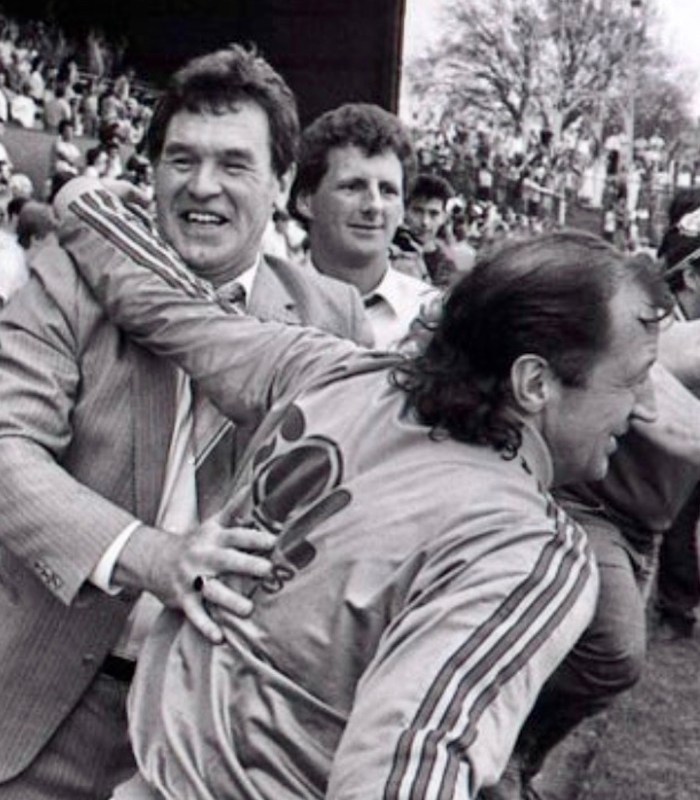
But four straight defeats followed and led to the axe for Bailey, with Bamber declaring: “He’s a smashing bloke, I’m sorry to see him go, but it had to be done.”

Perhaps the writing was on the wall when, in his final programme contribution, he blamed the run of poor results simply on bad luck and admitted: “I feel we are somehow in a rut.”

It didn’t help the narrative of his reign that his successor, Jimmy Melia, surfed on a wave of euphoria when taking Albion to their one and only FA Cup Final – even though he also oversaw the side’s fall from the elite.

“It seems that my team has been relegated from the First Division while Melia’s team has reached the Cup Final,” an irked Bailey said in an interview he gave to the News of the World’s Reg Drury in the run-up to the final.

Hurt by some of the media coverage he’d seen since his departure, Bailey resented accusations that his style had been dull and boring football, pointing out: “Nobody said that midway through last season when we were sixth and there was talk of Europe.

“We were organised and disciplined and getting results. John Collins, a great coach, was on the same wavelength as me. We wanted to lay the foundations of lasting success, just like Bill Shankly and Bob Paisley did at Liverpool.

“The only problem was that winning 1-0 and 2-0 didn’t satisfy everybody. I tried to change things too soon – that was a mistake.

“When I left (in December 1982), we were 18th with more than a point a game. I’ve never known a team go down when fifth from bottom.”

Bailey later expanded on the circumstances, lifting the lid on his less than cordial relationship with Bamber, when speaking on a Wolves’ fans forum in 2010. “We had a good side at Brighton and did really well,” he said. “The difficulty I had was with the chairman. He was not satisfied with anything.

“I made Brighton a difficult team to beat. I knew the standard of the players we had and knew how to win matches. We used to work on clean sheets.

“With the previous manager, they hadn’t won away from home very often but we went to Anfield and won. But the chairman kept saying: ‘Why can’t we score a few more goals?’ He didn’t understand it.”

Foster, the player Bailey made Albion captain, was also critical of the ‘boring’ jibe and in Spencer Vignes’ A Few Good Men said: “We sacked Mike Bailey because we weren’t playing attractive football, allegedly. Things were changing. Brighton had never been so high.

“We were doing well, but we weren’t seen as a flamboyant side. I was never happy with the press because they were creating this boring talk. Some of the stuff they used to write really annoyed me.”

Striker Andy Ritchie was also supportive of the management. He told journalist Nick Szczepanik: “Mike got everyone playing together. Everybody liked Mike and John Collins, who was brilliant. When a group of players like the management, it takes you a long way. When you are having things explained to you and training is good and it’s a bit of fun, you get a lot more out of it.”

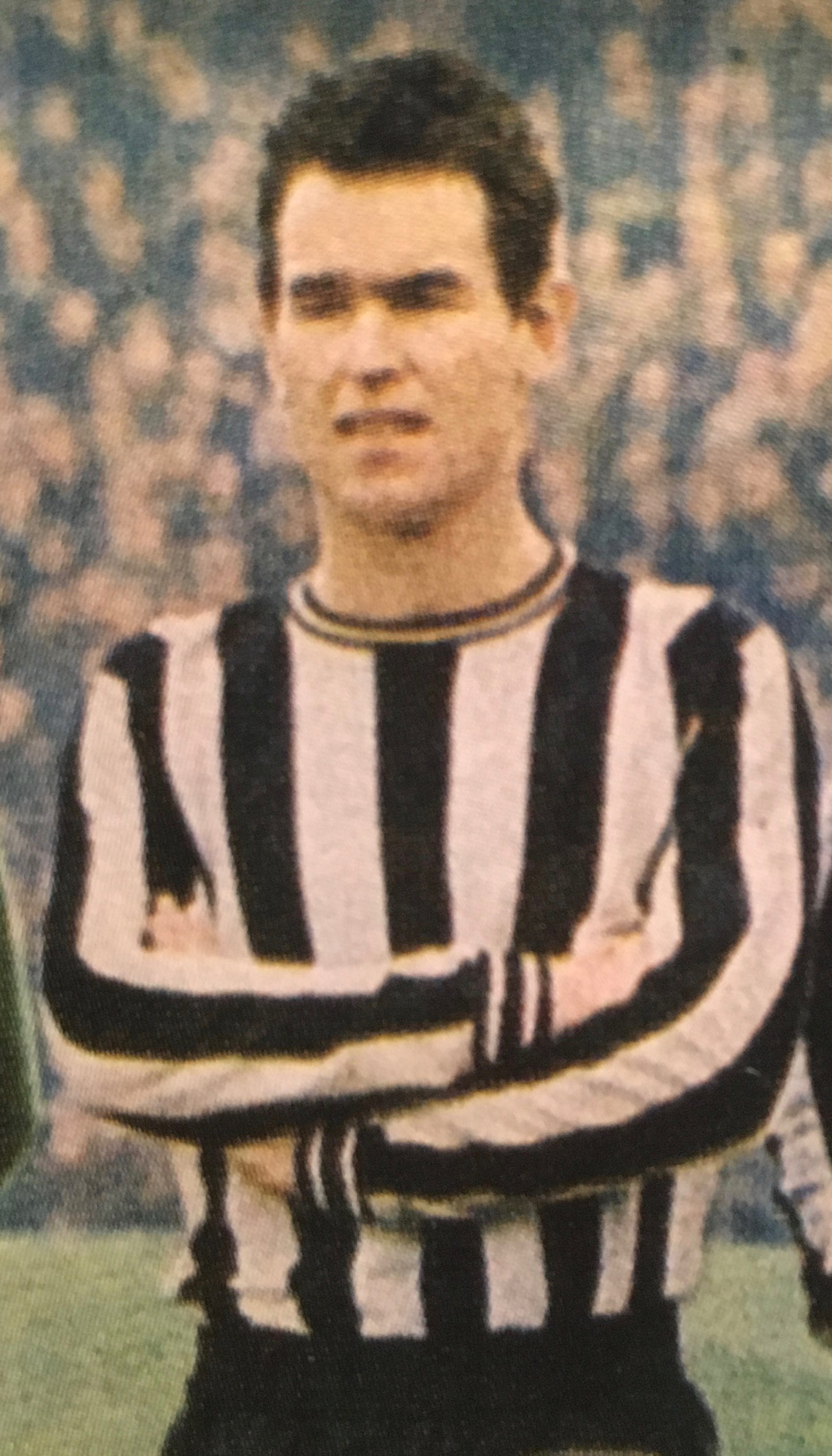
Born on 27 February 1942 in Wisbech, Cambridgeshire, he went to the same school in Gorleston, Norfolk, as the former Arsenal centre back Peter Simpson. His career began with non-league Gorleston before Charlton Athletic snapped him up in 1958 and he spent eight years at The Valley.

During his time there, he was capped twice by England as manager Alf Ramsey explored options for his 1966 World Cup squad. Just a week after making his fifth appearance for England under 23s, Bailey, aged 22, was called up to make his full debut in a friendly against the USA on 27 May 1964.

He had broken into the under 23s only three months earlier, making his debut in a 3-2 win over Scotland at St James’ Park, Newcastle, on 5 February 1964.He retained his place against France, Hungary, Israel and Turkey, games in which his teammates included Graham Cross, Mullery and Martin Chivers.

England ran out 10-0 winners in New York with Roger Hunt scoring four, Fred Pickering three, Terry Paine two, and Bobby Charlton the other.

Eight of that England side made it to the 1966 World Cup squad two years later but a broken leg put paid to Bailey’s chances of joining them.

“I was worried that may have been it,” Bailey recalled in his autobiography, The Valley Wanderer: The Mike Bailey Story (published in November 2015). “In the end, I was out for six months. My leg got stronger and I never had problems with it again, so it was a blessing in disguise in that respect.

“Charlton had these (steep) terraces. I’d go up to them every day, I was getting fitter and fitter.”

In fact, Ramsey did give him one more chance to impress. Six months after the win in New York, he was in the England team who beat Wales 2-1 at Wembley in the Home Championship. Frank Wignall, who would later spend a season with Bailey at Wolves, scored both England’s goals.

“But it was too late to get in the 1966 World Cup side,” said Bailey. “Alf Ramsey had got his team in place.”

During his time with the England under 23s, Bailey had become friends with Wolves’ Ernie Hunt (the striker who later played for Coventry City) and Hunt persuaded him to move to the Black Country club for a £40,000 fee.

Thus began an association which saw him play a total of 436 games for Wolves over 11 seasons.

In his first season, 1966-67, he captained the side to promotion from the second tier and he was also named as Midlands Footballer of the Year.

Wolves finished fourth in the top division in 1970-71 and European adventures followed, including winning the Texaco Cup of 1971 – the club’s first silverware in 11 years – and reaching the UEFA Cup final against Tottenham a year later, although injury meant Bailey was only involved from the 55th minute of the second leg and Spurs won 3-2 on aggregate.

Two years later, Bailey, by then 32, lifted the League Cup after Bill McGarry’s side beat Ron Saunders’ Manchester City 2-1 at Wembley with goals by Kenny Hibbitt and John Richards. It was Bailey’s pass to Alan Sunderland that began the winning move, Richards sweeping in Sunderland’s deflected cross.
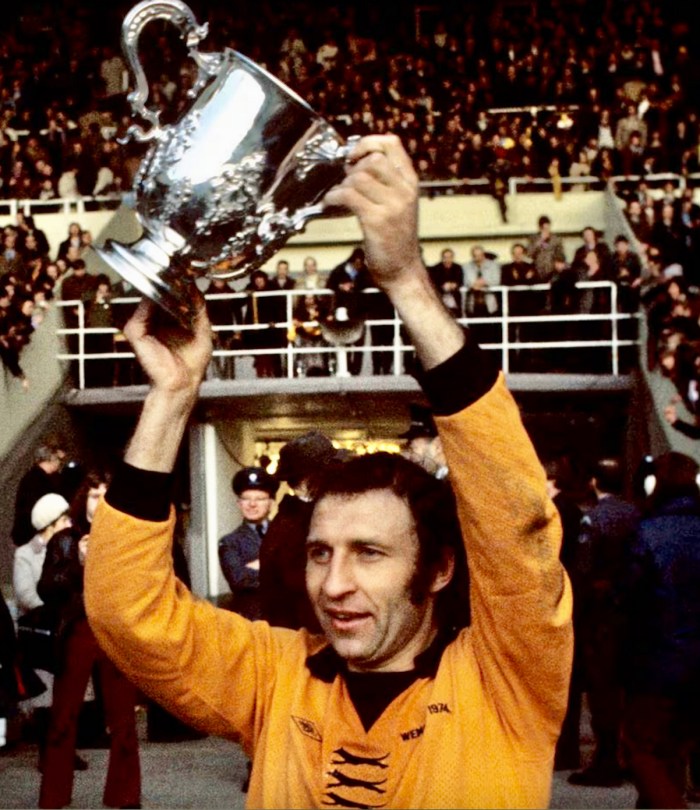
Bailey lifts the League Cup after Wolves beat Manchester City at Wembley

This was a side with solid defenders like John McAlle, Frank Munro and Derek Parkin, combined with exciting players such as Irish maverick centre forward Derek Dougan and winger Dave Wagstaffe.

Richards had become Dougan’s regular partner up front after Peter Knowles quit football to turn to religion. Discussing Bailey with wolvesheroes.com, Richards said: “He really was a leader you responded to and wanted to play for. If you let your standards slip, he wasn’t slow to let you know. I have very fond memories of playing alongside him.”

In a lengthy tribute to Bailey in the Wolverhampton Express & Star to mark his 80th birthday, journalist Paul Berry interviewed several of his former teammates.

“He gave me – just as he did with all the young players coming into the team – so much help and guidance in training and matches on and off the pitch,” said Richards.

“There were so many little tips and pieces of advice and I remember how he first taught me how to come off defenders. He would say ‘when I get the ball John, just push the defender away, come towards me, lay the ball off and then go again’.

“There was so much advice that he would give to us all, and it had a massive influence.”

Midfielder Hibbitt, another Wolves legend who made 544 appearances for the club, said: “He was the greatest captain I ever played with.”

Steve Daley added: “Mike is my idol, he was an absolute inspiration to me when I was playing.”

Winger Terry Wharton added: “He was a great player…a bit of a Jekyll and Hyde character as well. On the pitch he was a great captain, a winner, he was tenacious and he was loud.

“He got people moving and he got people going and you just knew he was a captain. And then off the pitch? He could have been a vicar.”

When coach Sammy Chung stepped up to take over as manager, Bailey found himself on the outside looking in and chose to end his playing days in America, with the Minnesota Kicks, who were managed by the former Brighton boss Freddie Goodwin.

He returned to England and spent the 1978-79 season as player-manager of Fourth Division Hereford United and in March 1980 replaced Andy Nelson as boss at Charlton Athletic. He had just got the Addicks promoted from the Third Division when he replaced Mullery at Brighton.

In a curious symmetry, Bailey’s management career in England (courtesy of managerstats.co.uk) saw him manage each of those three clubs for just 65 games. At Hereford, his record was W 32, D 11, L 22; at Charlton W 21, D 17, L 27; at Brighton, W 20 D 17, L 28.

In 1984, he moved to Greece to manage OFI Crete, he briefly took charge of non-league Leatherhead and he later worked as reserve team coach at Portsmouth. Later still, he did some scouting work for Wolves (during the Dave Jones era) and he was inducted into the Wolves Hall of Fame in 2010.

In November 2020, Bailey’s family made public the news that he had been diagnosed with dementia hoping that it would help to highlight the ongoing issues around the number of ex-footballers suffering from it.

Perhaps the last words should go to Bailey himself, harking back to that 1981 article when his words were so prescient bearing in mind what would follow his time in charge.

“We don’t have a training ground. We train in a local park. The club have tried to remedy this and I’m sure they will. But such things hold you back in terms of generating the feeling of the big time,” he said.

“I must compliment the people who are responsible for getting the club where it is. They built a team, won promotion twice and the fans flocked in. Now is the time to concentrate on developing the Goldstone Ground. When we build our ground, we will have the supporters eager to fill it.”

Pictures from various sources: Goal and Shoot! magazines; the Evening Argus, the News of the World, and the Albion matchday programme.

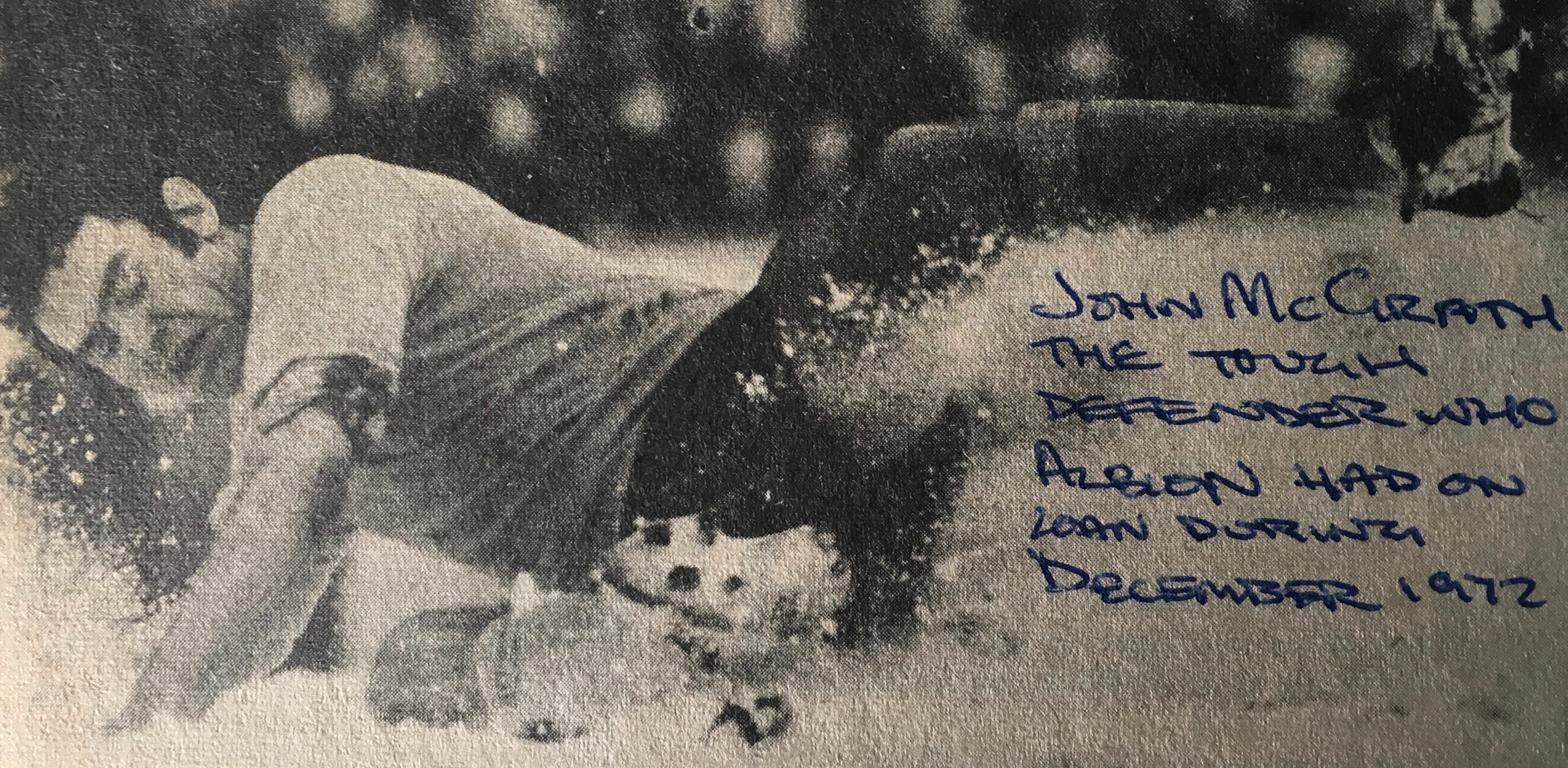
Even fearsome John McGrath couldn’t stop the rot

IN ALBION’S bleak midwinter of 1972-73, manager Pat Saward was desperate to try to reverse a worrying run of defeats.

The handful of additions he’d made to the squad promoted from the old Third Division in May 1972 had not made the sort of improvements in quality he had hoped for.

An injury to Norman Gall’s central defensive partner Ian Goodwin didn’t help matters and Saward chopped and changed the line-up from week to week to try to find the right formula.

Previously frozen out former captain John Napier was restored for a handful of games (before being sold to Bradford City for £10,000). The loan ranger’ (as Saward was dubbed for the number of temporary signings he brought in) then tried Luton Town’s John Moore in Goodwin’s absence.

Youngster Steve Piper was given his debut at home to high-flying Burnley, but Albion lost that 1-0. Then Saward tried left-back George Ley in the middle away to Preston, but that didn’t work either. North End ran out comfortable 4-0 winners with Albion’s rookie ‘keeper Alan Dovey between the sticks after regular no.1 Brian Powney went down with ‘flu.

As December loomed, and with Goodwin still a couple of weeks away from full fitness after a cartilage operation, Saward turned to John McGrath, a no-nonsense, rugged centre-half who had played close on 200 games for Southampton over five years.

“With his rolled-up sleeves, shorts hitched high to emphasise implausibly bulging thigh-muscles, an old-fashioned haircut and a body dripping with baby oil, ‘Big Jake’ cut an imposing figure,” to quote the immensely readable saintsplayers.co.uk.

In Ivan Ponting’s obituary in the Independent following McGrath’s death at 60 on Christmas Day 1998, he reckoned his “lurid public persona was something between Desperate Dan and Attila the Hun”.

Although McGrath had begun the 1972-73 season in the Saints side, the emerging Paul Bennett had taken his place, so a temporary switch to the Albion offered a return to first team football.

Albion had conceded eight goals in three straight defeats and hadn’t registered a goal of their own, so, even though the imposing centre-half was approaching the end of a playing career that had begun with Bury in 1955, it was hoped his know-how defending against some of the best strikers in the country might add steel in the heart of the defence, and stem the flow of goals.

In short, it didn’t work. McGrath played in three matches and all three ended in defeats, with another eight goals conceded.

In his first match (above left), Middlesbrough won 2-0 at the Goldstone. At least the deficit was slimmer in his second game: a 1-0 loss away to George Petchey’s Orient in which Lewes-born midfielder Stan Brown played the last of nine games on loan from Fulham.

McGrath’s third match saw Albion succumb to a thrashing at Carlisle United. By then, Brighton had lost five in a row and still hadn’t managed to score a single goal. Stalwart Norman Gall was dropped to substitute to allow the returning Goodwin to line up alongside McGrath, and Bert Murray led the side out resplendent in the second strip of red and black striped shirts and black shorts.

Carlisle hadn’t read the script, though, and promptly went 5-0 up. To compound Albion’s agony, with 20 minutes still to play, goalkeeper Powney was carried off concussed and with a broken nose.

In those days before substitute goalkeepers, Murray (who’d swapped to right-back that day with Graham Howell moving into his midfield berth) took over the gloves. Miraculously, Albion won a penalty and because usual spot kick taker Murray was between the sticks, utility man Eddie Spearritt took responsibility having relinquished the job after a crucial miss in a game in 1970.

Thankfully, he buried it, finally to make a much-awaited addition to that season’s ‘goals for’ column.

No more was seen of McGrath, however. Gall was restored to the no.5 shirt and was variously partnered by Goodwin, Piper and, towards the end of the season, Spearritt.

After another heavy defeat, 4-0 at Sunderland, which had seen another rare appearance by Dovey in goal, he was transfer-listed along with Gall and Bertie Lutton, as Saward pointed the finger. Lutton got a surprise move to West Ham but Gall stayed put and Dovey was released at the end of the season without playing another game.

The run of defeats eventually extended to a total of 13 and was only alleviated after a big shake-up for the home game versus Luton Town on 10 February.

Powney, who’d conceded five at Fulham in the previous game, was replaced by Aston Villa goalkeeper Tommy Hughes on loan; out went experienced striker Barry Bridges in favour of rookie Pat Hilton and exciting teenage winger Tony Towner made his debut. Albion won 2-0 with both goals from Ken Beamish, and the monkey was finally off their backs.

Although the following two games (away to Bristol City and Hull) were lost, results did pick up, but it was all too little too late and Albion exited the division only 12 months after their promotion.

Born in Manchester on 23 August 1938, McGrath sought unsuccessfully to get into the game as an amateur with Bolton Wanderers but at 17 he joined Bury who were in the old Division Two at the time.

Although they were subsequently relegated, McGrath was part of the 1961 side that went on to win the Third Division Championship. By the time they lifted the trophy, though, he had moved on to Newcastle United for a fee of £24,000, with Bob Stokoe (later renowned for steering Second Division Sunderland to a famous FA Cup win over Leeds United in 1973) a makeweight in the transfer.

It was a busy time for the young defender. On 15 March 1961, he made his one and only England Under-23 appearance against West Germany at White Hart Lane, Tottenham, playing alongside future World Cup winners George Cohen at right-back and the imperious Bobby Moore.

Also in the young England side for that 4-1 win was Terry Paine, who would later become a teammate at Southampton.

Newcastle had hoped the defender would prevent their relegation from the top flight, but it didn’t happen as they went down having conceded 109 goals; their worst ever goals against tally.

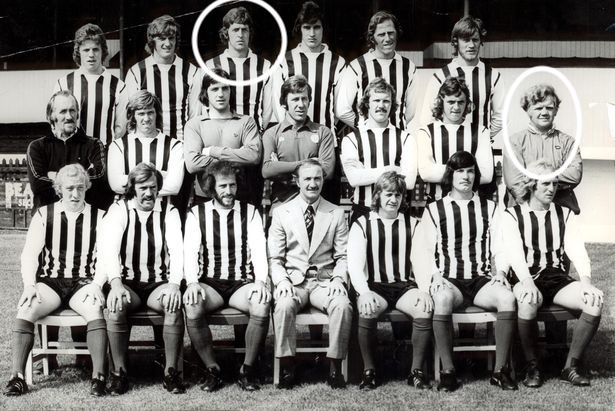
Joe Harvey eventually succeeded Charlie Mitten as manager as Newcastle adapted to life back in the Second Division, and McGrath (below left and, in team picture, back row, far left) played 16 matches in a side in which full-back George Dalton (below, back row, far right) had started to emerge.

Future Brighton captain Dave Turner was one of the successful FA Youth Cup-winning side Harvey inherited, but his first team outings were rare and he was sold to the Albion in December 1963.

Meanwhile, McGrath really established himself, featuring in 41 games in 1963-64 (Dalton played in 40) as Newcastle finished in a respectable eighth place.

The 1964-65 season saw McGrath ever-present as Toon were promoted back to the First Division, pipping Northampton Town to the Second Division championship title by one point. McGrath – “a monster of a centre-half, who was as tough as he was effective” was “the cornerstone” of the promotion side, according to newcastleunited-mad.co.uk.

McGrath retained his place in Toon’s first season back amongst the elite but the arrival of John McNamee and the emergence of Bobby Moncur started to restrict his involvement.

That pairing became Harvey’s first choice, and young Graham Winstanley was in reserve too, so, after playing only 11 games in the first half of the 1967-68 season, McGrath, by then 29, was sold to Southampton for £30,000. He’d played 181 games for United.

In Ted Bates’ Saints side, McGrath was a rock at the back alongside Jimmy Gabriel, although, as saintsplayers.co.uk records, he wasn’t too popular with opposing managers: Liverpool’s Bill Shankly accusing Southampton of playing “alehouse football”.

He went on to make 194 appearances (plus one as a sub) for Saints, before becoming youth coach at the club, part of the first team coaching staff when Southampton won the FA Cup in 1976, and then reserve team manager.

Not content with a backroom role, McGrath took the plunge into management and made his mark with two clubs in particular: managing Port Vale on 203 occasions and Preston North End in 205 matches.

According to Rob Fielding he became a cult hero at Vale Park with his unorthodox ways, once putting FIFTEEN players on the transfer list…which resulted in a six-match unbeaten run!

Winger Mark Chamberlain, who went on to play for Stoke and England, and later Brighton, was one of the young players McGrath introduced.

Long-serving Vale defender Phil Sproson, who was originally signed by former Albion midfielder Bobby Smith, rose to prominence under McGrath and said: “I’ll always be grateful because he taught me how to play centre-half.”

Fielding reckoned McGrath’s finest hour was steering Vale to promotion from the old Fourth Division in 1982-1983, even though by then he had sold Chamberlain to Stoke.

Against a backdrop of player unrest and what were perceived to be ill-judged moves in the transfer market, McGrath was sacked in December 1983 and replaced by his assistant, John Rudge.

He wasn’t out of work for long, though, and took the reins at basement side Chester City where he was in charge for just under a year. Most notably in that time, he gave future Arsenal and England defender Lee Dixon his first taste of regular football.

While success eluded him at Chester, his arrival at Preston in 1986 proved fruitful, North End striker Gary Brazil recalling: “It needed a catalyst and it needed a change and very fortunately for the club and for the players, John McGrath came walking through the door who was like a Tasmanian devil. He came in and the world changed really, really quickly for the better.”

McGrath led Preston to promotion from the bottom tier in 1987 with a squad built around Sam Allardyce and veteran Frank Worthington.

Manager McGrath and Frank Worthington celebrate promotion

“Frank Worthington was a delight to have around and set a real high standard for a lot of us in terms of how we train,” said Brazil. “He just stunned me how he was always first out training.”

The turnround McGrath oversaw, with Deepdale crowds rising from below 3,000 to more than 16,000, rejuvenated the club and the city.

Brazil reminisced: “It was the best year of my football life that year that we got promoted. It wasn’t just an experience playing but an experience of a group of players and how well they could bond and John was integral to that. He was a very, very clever man.”

Indeed McGrath was viewed as having saved North End from the ignominy of losing their league status, the club having had to apply for re-election the season before he arrived at Deepdale.

Edward Skingsley’s book, Back From The Brink, features a black and white photograph of McGrath on its cover and tells the story of North End’s transformation under his direction.

Describing his appointment as “a masterstroke” he reckoned the club owed him a massive debt for masterminding their resurgence and subsequent stability.

“Without him, it is debatable whether Preston North End would even exist today, never mind play in the latest fantastic incarnation of Deepdale,” said Skingsley. “Thank goodness he caught Preston North End before it died.”

McGrath left Preston in February 1990 and had one last stab at management, this time with Halifax Town. He succeeded Saints’ FA Cup winner Jim McCalliog and was in charge at The Shay for 14 months but left in December 1992. Five months later they lost their league status, finishing bottom of pile.

The silver-tongued McGrath was subsequently a popular choice on the after-dinner speaking circuit and a pundit on local radio in Lancashire but died suddenly on Christmas Day 1998.

Knock-out stories of Mark ‘The Fizz’ Leather

MARK LEATHER spent six years as the first team physiotherapist at Anfield having previously been Brighton’s physio in the early days of Barry Lloyd’s reign as manager.

Leather tended the injured when Albion were promoted from the old Third Division in 1987-88 and half of the 1988-89 tier two campaign before moving back to his native north west.

Roy Evans added Leather’s specialist knowledge to the backroom team at Anfield in 1994 but the physio was controversially sacked by his successor Gerard Houllier following a row over the then teenage striker Michael Owen’s fitness.

A sign of the way Leather expected to work with managers came in an interview for Albion’s matchday programme. “Barry Lloyd will respect the decision if I say a player needs more time to get back to fitness,” he told interviewer Dave Beckett. “From that point of view, he is sadly in the minority.

“If it was different, I wouldn’t hang around, but it still amazes me that some clubs don’t realise that if we all stick to what we know things will run more smoothly.”

Leather, who’d spent three years studying for a diploma, and gained experience in the National Health Service, added: “We’re getting away from the old ‘bucket-and-sponge’ image.”

Ahead of his arrival at the Goldstone, Leather had combined his studies with helping out Exeter City, Leek Town, Port Vale and Sheffield Wednesday. And during the Commonwealth Games in Edinburgh in 1986, Leather provided specialist medical support for the weightlifters and wrestlers.

He revealed a funny story against himself in a matchday programme article. Asked to reveal his ‘most embarrassing moment’ he said: “During the Port Vale and Scunthorpe match in 1985, when Port Vale scored, I jumped up out of the bench hitting my head on the dugout roof and needed smelling salts and a cold sponge.”

Perhaps predictably nicknamed ‘The Fizz’, Leather sought to give an insight to his role in his matchday programme interview. “I try to be friends with all of the lads and the management too, but sometimes you really do have to sit on the fence,” he said.

“There’s pressure sometimes from both sides to say a player’s ready to return, but you have to stand back from the situation and give a professional opinion.”

The Albion gave him a regular slot in the matchday programme which he used to give readers updates on the progress of injured players, and in recent times he has become a regular source for the media seeking expert comments on football injuries.

Leather now has his own physiotherapy business and back in the day at Brighton he and his physiotherapist wife Lucy ran a sports injury clinic for the general public two evenings a week.

Born in Bolton on 24 June 1961, Leather left the Seagulls halfway through the 1988-89 season to return to more a familiar part of the country and took a job in the NHS in Chorley, Lancashire.

Leather had been an ardent Bolton Wanderers fan from an early age and his all-time favourite player was Frank Worthington, who had played for the Seagulls during the 1984-85 season.

When Evans stepped up to take charge of Liverpool, Leather was one of his first appointments (along with goalkeeping coach Joe Corrigan, whose playing career had ended with the Seagulls).

Leather and Corrigan together in Liverpool backroom team

An insight into Evans’ decision-making was given in the book Men In White Suits, by Simon Hughes. “With Mark Leather’s arrival, there was an end to the running repair jobs carried out by a succession of unqualified coaches mid game,” he wrote.

“Regularly injured players had long been treated with suspicion at Liverpool. (Bill) Shankly maintained his side were the fittest in the league, with pre-season geared towards building stamina and therefore preventing muscle tears.

“It was a difficult theory to argue against. Liverpool won the 1965-66 title using just 14 players all season. Anyone who suffered an injury was almost bullied into feeling better. ‘Otherwise you really were persona non grata,’ Alan Hansen said.

“Leather’s recruitment meant that (Ronnie) Moran could focus on drilling the first team in the Liverpool way rather than writing what Evans describes as ‘little scribbles’ on an old ledger, charting training patterns.”

Endorsements to Leather’s attributes appear on his website from the likes of Robbie Fowler and Jamie Redknapp, who is quoted as saying: “Mark Leather has been brilliant with me. He has kept me going and it’s because of him really that I’m back to full fitness as soon as I am.”

In 1999 media reports said Houllier was facing “a furious players’ backlash after his escalating row with Liverpool physio Mark Leather took a dramatic twist”.

Leather was left in the UK when Liverpool went to Oslo for pre-season games, a move which was said to be causing disquiet in the dressing room.

Leather clashed with Houllier over the condition of injured Michael Owen

“Leather is one of the game’s top physios and he was publicly praised by Robbie Fowler after helping the striker make a miraculous recovery from a cruciate knee ligament injury last season,” said one report in the Scottish Daily Record. “Other stars, including Michael Owen and skipper Jamie Redknapp, are known to have a close bond with the medic.”

Houllier was angry at the length of time it was taking for Owen to return to full training after a hamstring injury and sent him to a specialist in Germany for a course of treatment.

In 2013, when Owen’s many injuries finally forced him to his retire from the game, he recalled bad decisions in the past that ultimately affected his career.

“I was compromised because I played too much too soon as a youngster at Liverpool. In my opinion, had I been managed differently I would have been at my best for longer as opposed to being a better player,” he said in The Mirror.

“I basically run on two hamstrings on my right leg and three on the other. I lost a third of the power.

“If I hadn’t, 90 per cent of the other injuries wouldn’t have happened and I would have been the all-time leading scorer for England.”

The Mirror article continued: “If there was a defining moment in his career, then it was a snapped hamstring when his then-manager Houllier ignored the advice of his physio and insisted Owen be brought back from injury quickly because he needed his goal threat so desperately.

“The French coach fell out so badly with the physio, Mark Leather, he forced him out, but Houllier later admitted to the mistake, which Owen believes led to the moment that changed his career – on a cold March evening at Elland Road, Leeds, in 1999. ‘My hamstring snapped in two and it was at that point that my ability to perform unimpeded was finished,’ said Owen.

Leather wasn’t finished with football, however, and he moved to his beloved Bolton Wanderers as Sam Allardyce’s physio for a year, before joining former Trotter Peter Reid at the Stadium of Light.

“From a personal point of view, I’ve had the privilege of working with two guys I used to support from the terraces at Burnden,” Leather told the Bolton News ahead of a match between Bolton and the Black Cats in September 2001. “There’s only one team I’ve ever supported and leaving them last year was purely a professional decision,” he said. “Financially and from a facility point of view, it was the right move for me, but I’ll never stop supporting the Wanderers.”

Leather spent four years (2000-2004) as the head physio at Sunderland straddling the managerial reigns of Reid, Howard Wilkinson and Mick McCarthy.

It certainly wasn’t all plain sailing for Leather on Wearside, as the Republic of Ireland winger Kevin Kilbane, now a TV pundit on the BBC, mentioned in his autobiography (Killa: The Autobiography of Kevin Kilbane; Aurum Press Ltd, 2014).

The player was determined to play for his country but the physio obviously didn’t feel he should because he was still trying to recover from an ankle injury.

Leather had already put him through some tough routines to test the strength of his ankle and when they were then on opposing sides in a two-a-side hockey match, Leather caught Kilbane on the tender joint with his hockey stick.

“After a few times and much pain, I finally snapped, and I gave him a left hook and decked him, leaving him with a fat lip and a very surprised look on his face,” Kilbane admitted.

Although he told the assistant manager Bobby Saxton what had happened, nothing more was done about it. Kilbane said: “I later apologised to Mark Leather but was disappointed he didn’t reciprocate. Things were never right between us after that, although we didn’t let it interfere with our professional relationship.”

After Sunderland, Leather switched sports and took on a similar position with Wigan Warriors rugby league side before moving into the world of academia. He spent seven years at Edge Hill University as a senior lecturer in sports therapy and programme leader for the Football Rehabilitation MSc course.

In October 2006,Leather joined Chester City as club physio, with City chairman Stephen Vaughan declaring: “He is a fully qualified physio and has a wealth of experience at Premier League level, so it’s something of a coup to bring him to the Deva Stadium.”

In 2013, he returned to Bolton, spending three years as Head of Sports Performance.

He had also set up his own physiotherapy business in 2008 and, since 2016, has been a senior lecturer and course leader for the Football Science and Rehabilitation MSc course at the University of Central Lancashire.

• Pictures from the Albion matchday programme and various online sources.

Shankly ‘disciple’ George Aitken coached Mariners and Seagulls

MEDIA-friendly Jimmy Melia stole all the limelight as Brighton stormed to the final of the 1983 FA Cup but a quiet, wavy-haired Scot alongside him played a big part in the achievement.

George Aitken was joint caretaker manager with Melia for three months after Mike Bailey’s dismissal in December 1982, and he’d previously been in the dugout alongside Alan Mullery and Ken Craggs during Albion’s rise through the divisions having originally been brought to the club by Peter Taylor.

.When he died aged 78 in August 2006, Jimmy Case told the Cumbrian Times & Star: “George was a great character, a great friend and coach right the way through my time at the club. “Jimmy Melia was in the front line with his white shoes but George was right there in terms of the workings of the club and picking the team. He was well respected for his knowledge of the game.”

Mark Lawrenson also paid tribute in an interview with Argus reporter Paul Holden, telling him: “George never got carried away. He had seen it all before. He was a very wily old fox. He was from the old school, a good, honest, true, loyal man.

“He knew his football, knew his players and liked a laugh. He had one of those infectious laughs.”

Micky Adams said: “He was a great football man, George. When I first joined Brighton as manager, he was one of my biggest allies. He always popped into the office to chew the cud and talk football. He loved Brighton and was a well-respected man who loved the game.”

Holden also reported that at Aitken’s testimonial dinner in 1988, former Albion secretary, Stephen Rooke, said: “He may never have reached the dizzy heights attained by many of his friends and acquaintances over the years but he represents a rare breed, in fact the very lifeblood of our national game.

Aitken tiler sully 78

Aitken puts Ken Tiler and Peter O’Sullivan through their paces in pre-season training in 1978

“Deep down George is a very private person but his reliability and honest, down-to-earth approach has, quite rightly, earned him enormous respect throughout the football world.”

Aitken had been a manager in his own right at Workington, and he and Melia had both been players under one of the game’s legends – Bill Shankly.

Shankly managed Workington between 6 January 1954 and 15 November 1955, when Aitken was a strong and commanding centre back for the Cumbrian side, and five of Melia’s 10 years playing for Liverpool were under Shankly’s managership.

Born in Dalkeith, Scotland, on 13 August 1928, Aitken was educated at Dalkeith High School and played football for Midlothian Schools.

His step up to senior football came at Edinburgh Thistle, which was essentially a feeder side for Hibernian.

David Jack, remembered as the first player ever to score at Wembley, had become manager of Middlesbrough in 1944, and took Aitken to Ayresome Park after the war.

“I was 20 at the time and it took me two seasons to reach the first team,” Aitken recalled in an Albion matchday programme article.

“Middlesbrough had a great team at the time and I played alongside the likes of (England internationals) Wilf Mannion and George Hardwick.”

Aitken made his debut against Fulham in 1951-52, but only made 18 top division appearances and, in July 1953, was sold to nearby Workington for £5,000.

It was the beginning of a long-standing relationship with a club who in those days played in the basement division of the Football League and is now in the Northern Premier League – the seventh tier of English football.

Aitken amassed 262 league appearances for Workington and, in the 1957-58 season, played against the famous Busby Babes at home in the 3rd round of the FA Cup in front of a record 21,000 crowd – just a month before the Munich air crash. Dennis Viollet scored a hat-trick for United in a 3-1 win.

“The game was an experience that I’ll never forget,” said Aitken, who kept on the wall of his house a picture of him with United’s skipper that day, Roger Byrne, who not long after that match perished in the Munich air crash.

Aitken retired as a player in 1960 but he stayed on at Borough Park as a coach, initially under Joe Harvey, who later enjoyed success at Newcastle United, and then Ken Furphy, who went on to manage Watford, Blackburn and Sheffield United before moving to the USA and taking charge of four different clubs.

Aitken had a brief spell as Workington manager between March and June 1965 (stepping in after Keith Burkinshaw – later famously boss of Spurs – had left) but then followed Furphy to Watford in 1965 as his coach. During that time, Watford, then in Division Two, famously beat Shankly’s Liverpool 1-0 in the quarter-finals of the FA Cup before losing to eventual winners Chelsea in the semi-finals.

The lure of Workington was to draw him back to the north west, though. When the manager’s job became vacant in 1971, Aitken took over and stayed for three seasons, eventually leaving in October 1974.

grimsby 75

In the 1975-76 season, he was trainer-coach during Tommy Casey’s spell managing Grimsby Town (where, as in picture, one of the players was former Albion defender Steve Govier), but left the Lincolnshire outfit to join Peter Taylor’s coaching set-up at Brighton in 1976. The Scot ended up staying for 10 years.

Aitken and wife Celia had three children and I well remember one of them, Bruce, appearing for Worthing FC.Aitken 2

George was clearly football daft, and in a matchday programme feature of September 1985, Celia told Tony Norman: “Football has always been his hobby, as well as his way of earning a living. He really loves the game. It’s not unusual for us to be driving somewhere and to stop because George has seen a game going on in a park by the road. He can’t resist watching for a while.”

During Chris Cattlin’s reign as manager, Aitken was the reserve team manager and chief scout, and in the programme article he said: “I can look back on some very happy memories. I was assistant manager when we took the club to Wembley and that experience is something I’ll never forget. But that is all in the past and what really matters to me is the future for Brighton Football Club. So, I enjoy going out to look for youngsters who could do a good job for us in years to come.”

After being sacked by Brighton, Aitken did scouting work for Graham Taylor during his spells at Watford and Aston Villa and then had three years working for the FA during Taylor’s reign as England manager. His last football role  was at Bolton Wanderers when Colin Todd was the manager.

end shot aitken armchair

Pictures from a variety of sources including the matchday programme, online sites and the Argus.

Liverpudlian Melia etched a never-to-be-forgotten place in Brighton’s history

IT WAS the stuff of dreams when Liverpool born and bred Jimmy Melia saw his underdog Seagulls side beat the mighty Merseyside giants en route to Brighton’s one and only FA Cup Final appearance.

In fact, it wasn’t the first time Melia had taken a side to Anfield to play in the competition. On 2 January 1971, as player-manager of lowly Aldershot, he returned to the ground where he’d been an inside forward under Bill Shankly and gave them a scare in the third round, the Fourth Division side only losing 1-0.

Even Liverpool’s wideman, Steve Heighway, admitted: “I suppose we were lucky to win. It was a frosty day and the ball was playing quite a few tricks. I don’t think we were in any danger of losing. But Aldershot were playing well that day. They could have sneaked a draw.”

How satisfying, then, to return in 1983 and pilot Albion’s unlikely 2-1 win, with a winning goal courtesy of that other former Anfield favourite, Jimmy Case.

In the run-up to the game, Melia, raised in Liverpool’s Scotland Road, told the Daily Mail: “I’ve got 11 brothers and sisters in the Liverpool area and they’ll all want to be there.”

He clearly didn’t fear the game, pointing out that Brighton had been the last team to win at Anfield, and telling the Argus: “It is a great tie for us. When I was manager at Aldershot we lost 1-0 to them and I think we will do better this time. Remember, the Cup is full of all sorts of upsets. It wouldn’t be the Cup otherwise.”

After the famous victory, Melia told Alex Montgomery of The Sun: “I’ve been involved in some great Liverpool victories but this is without doubt the greatest win.

“The great thing about it is that we didn’t just nick a win. We deserved what we got. A lot of people said that if we attacked them we would just set ourselves up for a hiding. That is not the way it worked out.”

It emerged after the game that John Manning, an old footballing friend of Melia’s, had been key to plotting the victory. Former Crewe, Bolton and Tranmere striker Manning, Albion’s scout in the north at the time, gave the players a pre-match rundown on what to expect.

“Best team talk we’ve ever had,” defender Gary Stevens told the Daily Mail. “Liverpool played exactly the way he said they would and he was even right about which side (Phil) Neal would send his penalty (which went wide of goalkeeper Perry Digweed’s post).”

Born in Liverpool on 1 November 1937, Melia attended the city’s St Anthony’s School and didn’t play his first organised football match until the age of 11. He quickly demonstrated a talent for the game and after shining for the school side was picked to play for Liverpool Boys.

At 14, he was selected for England Schoolboys but a broken collarbone meant he was unable to play. A year later, though, after captaining Liverpool Boys, he got another chance with the national schoolboy side, making his debut against Eire in a team that included Bobby Charlton and Wilf McGuinness.

Liverpool offered him a place on the groundstaff as soon as he left school and, at the age of 17, he was taken on as a professional by former Brighton manager Don Welsh, who took over as Liverpool boss in 1951. Ahead of a Brighton v Portsmouth game in 1983, Melia mentioned his closeness to their manager at the time, Bobby Campbell.

“We virtually grew up together in the same street in Liverpool and we both signed for Liverpool as youngsters on the same day,” he wrote in his matchday programme notes. “We literally have a lifelong friendship.”

Melia scored on his Liverpool debut against Nottingham Forest in a 5-2 win when the famous Billy Liddell scored a hat-trick, and he was making a name for himself at a national level too. Melia scored twice for the England Youth side as they romped home 9-2 winners over Denmark at Home Park, Plymouth, on 1 October 1955. The following month he was on target again as England beat the Netherlands 3-1 at Carrow Road, Norwich.

Between the 1955-56 and 1963-64 seasons, Melia played 287 games for Liverpool, scoring 78 goals. It might have been more but for the fact he had to do National Service although the consolation was that he got to play in the British Army side with the likes of Duncan Edwards, Bobby Charlton, Dave Mackay, Peter Swan, Cliff Jones and Alan Hodgkinson.

One of his Liverpool goals came in a home game against Brighton on 10 October 1959. Phil Taylor’s Liverpool were 2-1 down to the Albion that Saturday afternoon and, in the 85th minute, Melia stepped up to take a penalty…and missed. Nevertheless, he atoned for the mistake by slotting home a last-gasp equaliser. A month later, Shankly took over as manager.

In a series of profiles of the leading Liverpool players of the era, journalist Ivan Ponting said: “Jimmy Melia was the principal midfield ideas man as Liverpool rose from the second tier in 1961-62 and he was capped twice in 1963 ahead of sparkling creatively in the opening half of the Reds’ first title campaign under Bill Shankly.”

In only the second game of Alf Ramsey’s reign as England manager, he selected Melia to play for the national side in a 2-1 defeat to Scotland at Wembley on 6 April 1963.

Then on 5 June 1963, in Basle, he was one of the goalscorers in the side that hammered Switzerland 8-1; Bobby Charlton scored a hat-trick but remarkably Jimmy Greaves didn’t get on the scoresheet.

Although he didn’t win another full cap, he was in a FA squad Ramsey took to Gibraltar in May 1965 when the Rock’s representative XI were soundly beaten 7-1 on 22 May and 6-0 the following day.

In the 1963-64 season, when Melia was sidelined by a minor ankle injury, Shankly reshuffled his line-up, moved centre-forward Ian St John into a more deep lying role and put Alf Arrowsmith up top. The change worked so well that Melia never did regain his regular place in the team.

“It was a stunning blow and a surprise to the balding Merseysider whose flair, industry and intelligence had been so productive, with his through-passing an exquisite speciality, even if some fans disliked what they saw as over-elaboration on the ball,” Ponting wrote for Back Pass magazine.

Melia was sold to Wolves for a then record fee of £48,000 in March 1964, but because he had played a certain number of games for Liverpool earlier in the season, was awarded a medal when the Reds were crowned champions.

It was the legendary Stan Cullis who had taken him to Molineux and, Melia told Charlie Bamforth for wolvesheroes.com, it was with the intention of him subsequently moving into a coaching role. But, when Cullis was sacked before the end of the year, his replacement, Andy Beattie, swiftly dispensed with Melia’s services, offloading him to Southampton in December 1964 for £30,000.

At The Dell, Melia (pictured below in Saints’ famous stripes) joined forces with the likes of Terry Paine and Martin Chivers and, in 1965, helped Ted Bates’ side to promotion to the top division.

Melia Saints

He was an ever present in the side during their first top division campaign, notable as a provider of crosses for Ron Davies and Chivers.

Eventually, the emerging Mike Channon took his place and, in 1968, after making 152 Saints appearances, on the strength of a recommendation from his old boss Cullis (by then manager of Birmingham), Aldershot paid £9,000 for him to become player-coach. The following April he became player-manager.

When he was sacked in January 1972, having made 134 league appearances for the Shots, he moved back to the north west as player-manager of lowly Crewe Alexandra but finally hung up his boots in May that year to concentrate on the manager’s job.

As a lowly league manager, Melia seldom came to the wider public’s attention, but when the opportunity arose, he was quick to seize it. Before another FA Cup third round match, this time against Huddersfield, he told Goal magazine any success he’d had as a manager could be put down to the influence of Shankly and his managers at Wolves and Southampton, Cullis and Bates.

“I was lucky,” said Jimmy. “You can’t help but learn from men such as these and I consider myself very fortunate to have served under them.”

In his first season as manager of Crewe Alexandra, his inexperienced team finished bottom and had to seek re-election to the league (in those days relegation was not automatic).

“I believe some of the youngsters we have here are destined for great futures. But perhaps you need a little more than just skill and enthusiasm to be successful,” he told Goal in July 1973.

Melia was clearly scarred by his treatment at Crewe. He told Ian Jarrett of The Sun: “We finished in the bottom four and were in danger of getting kicked out of the league so I spent days ringing around all my mates to get the votes to save us at the annual (league) meeting.

“I succeeded and went away feeling pretty happy until a phone call from the chairman warned me that I had only narrowly survived a vote of confidence.

“The following September I was made manager of the month but the club called an extraordinary meeting, got rid of the chairman, and soon after that I was out on my ear.

“The experience taught me a lesson.”

In 1975, Melia had three months as manager of Southport, before ending the same year coaching in the Middle East.

He then moved to the USA and linked up with a former Wolves teammate Laurie Calloway to become his assistant coach at NSL side Southern California Lazers. In 1979, Melia moved to Ohio to become coach of Cleveland Cobras.

A window back into the English game opened in April 1980 when Brighton boss Alan Mullery appointed him as the club’s chief scout.

Looking back now, it seems a tad ironic that Albion chairman Mike Bamber was all for sacking him and other members of Mullery’s backroom staff in the summer of 1981 to save money. Mullery refused – and subsequently left the club himself.

Melia retained his position under Mullery’s successor, Mike Bailey, who, despite taking the Albion to their highest ever finishing position (13th) in 1982, failed to win over fans with a style of football that saw them stay away in their thousands.

A concerned Bamber finally brought down the curtain on the Bailey era in December 1982, handing the first team managerial reins on a caretaker basis jointly to Melia and loyal backroom ‘boy’ George Aitken (himself a former manager who, like Melia, had been a player under Shankly during his time at Workington).

From the outset, it was Melia who put himself forward to handle interviews with the press, TV and radio, and, as the club progressed in the FA Cup, so the spotlight began to shine brighter on the Liverpudlian, especially with that tie at Anfield.

Inevitably, the question kept arising as to whether Melia would land the manager’s job on a permanent basis and, in one of many interviews, he somewhat tellingly said: “I’d love the job and, if we stay up, that will improve my chances. But I’m not going to attempt to survive by playing boring, safety-first football.”

In a comment that was something of an oxymoron, Melia told Paul Weaver of the News of the World: “I don’t want to say anything against my predecessor, Mike Bailey, but I wouldn’t have paid money to watch Brighton in the first half of the season.”

mullers + meia

Perhaps not surprising, then, that in a veterans’ charity match played at Selhurst Park just before the semi-final, Bailey refused a request to be photographed with Melia, albeit he was happy to pose alongside Mullery.

By then, Melia had indeed finally been given the manager’s role on a permanent basis (once Norwich had been defeated in the quarter final). On 16 March 1983, Bamber took him out to lunch at a Hove hotel to break the news.

In a front-page splash on the Argus, Melia said: “This is the happiest day of my life. It is a dream to be manager of a First Division club with also the possibility of taking them to Wembley.

“I am just pleased the chairman has given me the opportunity, and I hope to stay at the club for the next 20 years.” It would, of course, turn out to be closer to 20 weeks!

As excitement built in the run-up to the Cup Final, Bamber told Argus reporter Phil Mills: “Jimmy knows the game from A to Z but what I particularly like is that he’s always bubbling. He’s lively and looks on the positive side of things – even when we lose.

“The Jimmy Melia story is a fairy tale – three months ago he was our chief scout. Now he’s leading the Albion to Wembley for the FA Cup Final.

“You couldn’t get a better fairy tale than that.”

There’s no doubting Melia milked the moment, but who could blame him?

He told Ian Jarrett in The Sun: “I must make this situation count because I might never be involved in anything like it again.

“I have felt like the President of the United States in the past couple of weeks. Everyone has wanted to shake my hand and cars have beeped me in the street. It’s heaven to be in this position and I think everyone in the club should make the most of it.”

The Daily Mail even went as far as describing the opposing managers for the 1983 final as “Liberace meets Max Wall”, rather playing on the fact United’s Ron Atkinson had a penchant for bling and the follicly-challenged Melia bore something of a resemblance to the comedian and actor renowned for a silly walk. John  Roberts wrote: “Little Jim has given his usual 110 per cent in the discos, a chest-revealing Tom Jones shirt, black leather trousers, white dancing shoes and glamourous girlfriend offsetting a glistening dome that is just made for the Seagulls.”

The writer continued: “Brighton’s progress to Wembley for the first time in their history has made a relegation season tolerable and enabled the 46-year-old Melia to recapture a measure of the prestige he enjoyed as a player.

“As a nimble, intelligent inside forward he won Second and First Division championship medals with Liverpool and played for England. Some of his friends consider that he suffered to a degree for being a home-produced player rather than a fashionable big-money signing.”

Roberts even quoted comedian Jimmy Tarbuck, a boyhood friend of Melia’s, who said: “To use an old showbusiness saying, Jimmy’s been there and back.”

Who knows what might have happened had Albion actually won that Cup Final?

Melia will forever be associated with taking the club to what was then a globally-watched event and raising their profile to heights never previously achieved.

The cold, hard reality, though, was that Brighton’s brief stay among the elite of English football was over. Melia’s open, expansive style of play had been punished in the league, resulting in relegation and a loss of status that took 33 years to restore.

Melia had designs on boosting his coaching staff in the summer of 1983 with the introduction of the aforementioned Calloway, but Bamber had other ideas and, without consulting his manager, instead installed former Albion defender Chris Cattlin as first team coach.

From the outset, it was evident the two were not going to see eye to eye and it wasn’t long into the new season before it emerged publicly that Cattlin was actually picking the team.

Eventually Melia couldn’t continue with what was clearly an untenable position and resigned, but, in a rather tawdry denouement, appeared being carried shoulder-high on the north stand terrace at the next home game amid cries of ‘Bamber out, Melia in’.

At the time, there were rumblings of an Albion takeover from businessman Jeffrey Kruger and Bamber described Melia as “a disgrace” and claimed he had been operating as a mole for Kruger.

Nothing came of the takeover and the dust had not long settled on the end of Melia’s Albion association when he moved to Portugal and spent three years as boss of Belenenses, taking them to a top five finish.

Former Argus Albion reporter John Vinicombe reflected on Melia’s career in a wistful piece for the newspaper in 2001, and recalled: “Back in England Jimmy had a brief spell in charge at Stockport, then it was time to move on to Kuwait and Dubai, San Francisco, San Jose and Dallas.”

He subsequently settled in Dallas and became technical director for Liverpool’s academy in Texas.

Pictures from various sources including the Argus, The Sun, The News of the World, Shoot! and Goal magazines and the matchday programme.


Mike Bailey took the Seagulls to their highest-ever finish

ONE OF the all-time greats of Wolverhampton Wanderers led Brighton & Hove Albion to their highest-ever finish in football.

Midfield general Mike Bailey played for Wolves for 11 seasons between 1965 and 1976, leading the team to promotion from the Second Division in 1966-67, helping them to top-flight positions of fourth and fifth in 1971 and 1973, getting to the final of the UEFA Cup in 1972, and lifting the League Cup at Wembley in 1974.

MB WWFCLgeCupMike Bailey holds aloft the League Cup after Wolves beat Manchester City 2-1 at Wembley.

It was perhaps a hard act to follow Alan Mullery as manager of Brighton, particularly as the former Spurs and Fulham captain had led the club from Third Division obscurity to the pinnacle of English football within three years.

But Bailey had just got Charlton Athletic promoted from the Third Division and in the 1981-82 season led Albion to a 13th place finish, a record which was only threatened in 2017-18 by Chris Hughton’s side, who eventually ended up 15th.

Unfortunately, although Bailey’s team was relatively successful, the style of play he adopted to achieve that position was a turn-off to the fans who deserted the Albion in their hundreds and thousands.

Eventually, chairman Mike Bamber felt he had to address the slump in support by sacking Bailey in December 1982. “He’s a smashing bloke, I’m sorry to see him go, but it had to be done,” said Bamber. There are plenty – in particular Bailey! – who feel he acted a little too hastily.

Bailey shared his feelings in an interview he gave to the News of the World’s Reg Drury in the run-up to the 1983 FA Cup Final.

Mike Bailey talks to the News of the World; his often frank programme notes; his assistant, John Collins, a former Luton Town player.

“It seems that my team has been relegated from the First Division while Jimmy Melia’s team has reached the Cup Final,” he began.

Wanting to put the record straight having been hurt by some of the media coverage he’d seen since his departure, he explained: “I found the previous manager Alan Mullery had left me with a good squad, but, naturally I built on it and imposed my own style of play.”

Bailey resented accusations that his style had been dull and boring football, pointing out: “Nobody said that midway through last season when we were sixth and there was talk of Europe.

“We were organised and disciplined and getting results. John Collins, a great coach, was on the same wavelength as me. We wanted to lay the foundations of lasting success, just like Bill Shankly and Bob Paisley did at Liverpool.

“The only problem was that winning 1-0 and 2-0 didn’t satisfy everybody. I tried to change things too soon – that was a mistake.

“When I left, we were 18th with more than a point a game. I’ve never known a team go down when fifth from bottom.”

It was clear from the outset of Bailey’s reign that he didn’t suffer fools gladly and there were numerous clashes with players, notably Steve Foster, Michael Robinson and Neil McNab, the displaced Gordon Smith and Mickey Thomas, a Bailey signing who repeatedly went missing because his wife didn’t like it in the south.

Bailey would vent his feelings quite overtly in his matchday programme notes; he was not afraid to hit out at referees, the football authorities and the media, as well as trying to explain his decisions to supporters, urging them to get behind the team rather than criticise.

Happier times as Mike Bailey becomes Albion manager and signs Tony Grealish to replace outgoing stalwart midfielder and skipper, Brian Horton.

Attempting to shine a light on the comings and goings associated with his arrival, he explained: “The moves we have been making are designed to provide Brighton with a better football team and one that can consolidate its position in the First Division, rather than struggle, such as in the last two seasons.”

By Christmas, the team were comfortably in the top half of the table and in an interview with the Argus, Bailey said: “I must admit that as a player and captain of Wolves I was a bit of a bastard, slagging others off, and that sort of thing. But being a manager, one sees everything in a different light. I am still trying to learn as a manager, especially now that I am with a First Division club.”

Three months later, shortly after he had appeared at a fans forum at the Brighton Centre, he very pointedly said: “It is my job to select the team and to try to win matches.

“People are quite entitled to their opinion, but I am paid to get results for Brighton and that is my first priority.

“Building a successful team is a long-term business and I have recently spoken to many top people in the professional game who admire what we are doing here at Brighton and just how far we have come in a short space of time.

“We know we still have a long way to go, but we are all working towards a successful future.”

As he assessed his first season, he said: “Many good things have come out of our season. Our early results were encouraging and we quickly became an organised and efficient side. The lads got into their rhythm quickly and it was a nice ‘plus’ to get into a high league position so early on.”

He had special words of praise for Gary Stevens and said: “Although the youngest member of our first team squad, Gary is a perfect example to his fellow professionals. Whatever we ask of him he will always do his best, he is completely dedicated and sets a fine example to his fellow players.”

Meanwhile, in his own end of season summary, Argus Albion reporter John Vinicombe maintained: “It is Bailey’s chief regret that he changed his playing policy in response to public, and possibly private, pressure with the result that Albion finished the latter part of the season in most disappointing fashion.

“Accusations that Albion were the principal bores of the First Division at home were heaped on Bailey’s head, and, while he is a man not given to altering his mind for no good reason, certain instructions were issued to placate the rising tide of criticisms.”

Vinicombe recorded that the average home gate for 1981-82 was 18,241, fully 6,500 fewer than had supported the side during their first season amongst the elite.

“The Goldstone regulars, who are not typical of First Division crowds (but neither is the ground) grew restless at a series of frustrating home draws, and finally turned on their own players,” he said.

At the beginning of the following season, off-field matters brought disruption to the playing side. Arsenal’s former FA Cup winner Charlie George had trained with the Seagulls during pre-season and senior players Foster, Robinson and McNab publicly voiced their disappointment that the money wasn’t found to bring such a player on board permanently.

McNab in particular accused the club of lacking ambition and efforts were made to send him out on loan. Similarly, Robinson was lined up for a swap deal with Sunderland’s Stan Cummins, but it fell through.

Meanwhile, Albion couldn’t buy a win away from home and suffered two 5-0 defeats (against Luton and West Brom) and a 4-0 spanking at Nottingham Forest – all in September. Then, four defeats on the spin in November, going into December, finally cost Bailey his job. Perhaps the writing was on the wall when, in his final programme contribution, he blamed the run of poor results on bad luck and admitted: “I feel we are somehow in a rut.”

It would be fair to say Bailey the player enjoyed more success than Bailey the manager. So, where did it all begin?

Born on 27 February 1942 in Wisbech, Cambridgeshire, he went to the same school in Gorleston, Norfolk, as the former Arsenal centre back Peter Simpson. His career began with non-league Gorleston before Charlton Athletic snapped him up in 1958 and he spent eight years at The Valley.

M Bailey charltonDuring his time there, he was capped twice by England as manager Alf Ramsey explored options for his 1966 World Cup squad. Just a week after making his fifth appearance for England under 23s, Bailey, aged 22, was called up to make his full debut in a friendly against the USA on 27 May 1964.

He had broken into the under 23s only three months earlier, making his debut in a 3-2 win over Scotland at St James’ Park, Newcastle, on 5 February 1964.He retained his place against France, Hungary, Israel and Turkey, games in which his teammates included Graham Cross, Mullery and Martin Chivers.

England ran out 10-0 winners in New York with Roger Hunt scoring four, Fred Pickering three, Terry Paine two, and Bobby Charlton the other.

Eight of that England side made it to the 1966 World Cup squad two years later but a broken leg put paid to Bailey’s chances of joining them, even though he got one more chance to impress Ramsey.

Six months after the win in New York, he was in the England team who beat Wales 2-1 at Wembley in the Home Championship. Frank Wignall, who would later spend a season with Bailey at Wolves, scored both England’s goals. Many years later, Wignall was playing for Burton Albion when a certain Peter Ward began to shine!

In 1965, Bailey broke his leg in a FA Cup tie against Middlesbrough and that was at a time when such injuries could be career-threatening.

“I was worried that may have been it,” Bailey recalled in his autobiography, The Valley Wanderer: The Mike Bailey Story (published in November 2015). “In the end, I was out for six months. My leg got stronger and I never had problems with it again, so it was a blessing in disguise in that respect.

“Charlton had these (steep) terraces. I’d go up to them every day, I was getting fitter and fitter. But it was too late to get in the 1966 World Cup side – Alf Ramsey had got his team in place.”

 Bailey missed out on the 1966 England World Cup squad but he won Football League representative honours and enjoyed success as captain of Wolves.

During his time with the England under 23s, Bailey had become friends with Wolves’ Ernie Hunt (the striker who later played for Coventry City) and Hunt persuaded him to move to the Black Country club.

Thus began an association which saw him play a total of 436 games for Wolves over 11 seasons, leading a side with solid defenders like John McAlle, Francis Munro and Derek Parkin, combined with exciting players like forwards Derek Dougan and John Richards, plus winger Dave Wagstaffe.

However, when coach Sammy Chung stepped up to take over as manager, he selected Kenny Hibbitt ahead of Bailey so the former skipper chose to end his playing days in America, with the Minnesota Kicks, who were managed by the former Brighton boss Freddie Goodwin.

Nevertheless, Bailey’s contribution to the team famous for their old gold kit saw him inducted into the Wolves Hall of Fame in 2010.

On his return to the UK, Bailey became manager of Hereford United, then he returned to The Valley as manager of Charlton and, immediately after getting them promoted to the third tier, took over at Brighton in the summer of 1981.

A somewhat extraordinary stat I discovered about Bailey’s management career in England through managerstats.co.uk was that he managed each of those three clubs for just 65 games. At Hereford, his record was W 32, D 11, L 22; at Charlton W 21, D 17, L 27; at Brighton, W 20 D 17, L 28.

In 1984, he moved to Greece to manage OFI Crete, and he later worked as reserve team coach at Portsmouth. Later still, he did some scouting work for Wolves.

Pictures from various sources: Goal and Shoot! magazines; the Evening Argus, the News of the World, and the Albion matchday programme.

Cross the colossus majestic in promotion-winning season

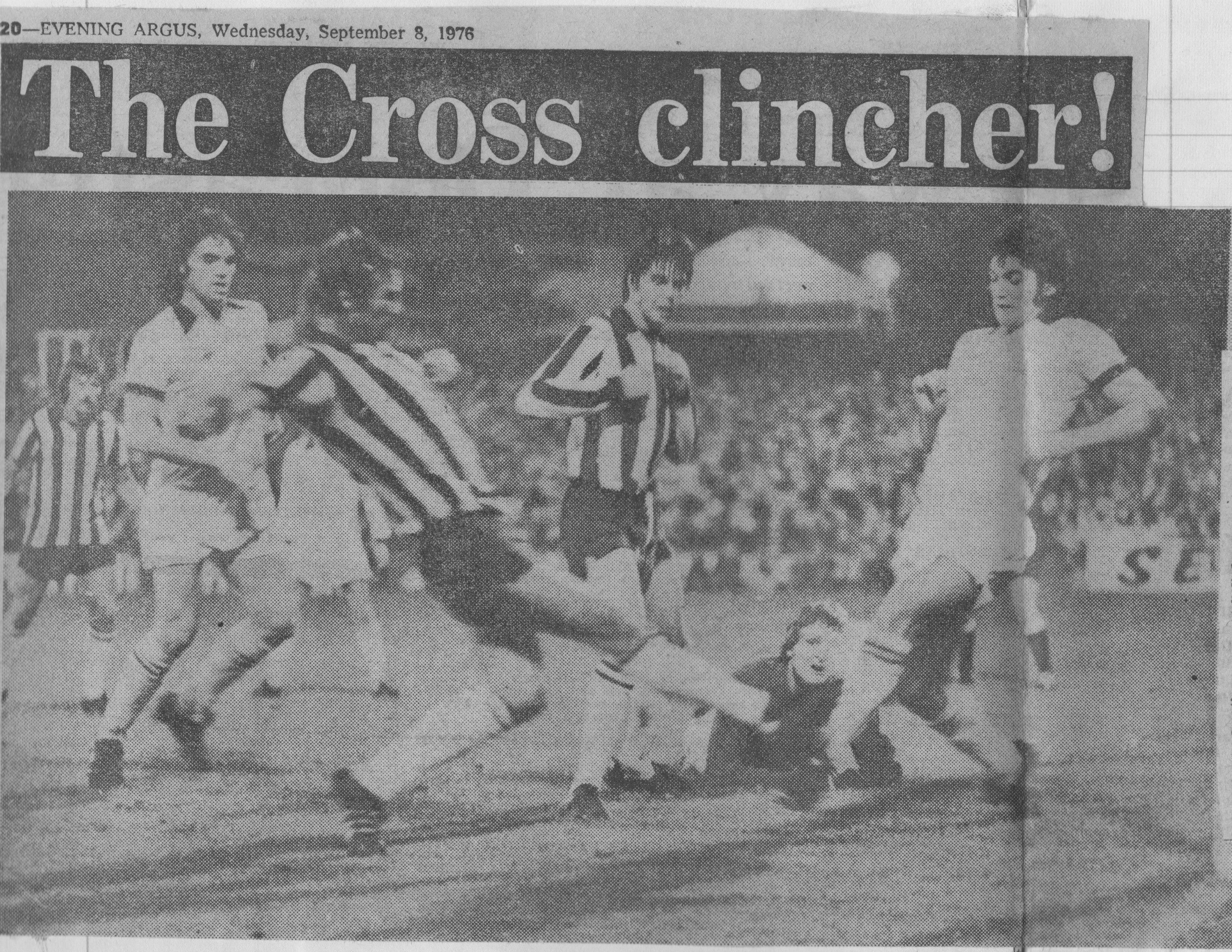
1-cross-clincherGRAHAM Cross won promotion from the third tier in successive seasons – one with Brighton & Hove Albion, the next with Preston North End.

They came after a record-breaking 15-year spell with his hometown club Leicester City.

Cross was a tower of strength and ever-present in Alan Mullery’s 1976-77 promotion-winning team. He was so consistent that his fellow professionals named him and fellow Seagulls Brian Horton and Peter Ward in the division’s PFA team of the year.

One standout performance I recall was in a cracking League Cup replay at the Goldstone against Division 1 side Ipswich Town on 7 September 1976 (see picture above).

Despite the Albion being down to 10 men, having had Phil Beal carried off injured after sub Ian Mellor had already come on, Cross scored the winning goal two minutes from time to give Albion their first competitive victory against a first division team for 43 years!

“Graham had an absolutely tremendous 1976-77 season for us and I can’t speak too highly of him,” Mullery told Shoot! “When I first started planning for the new term I reckoned on having him in the side for our step up into the Second Division.”

G Cross BW HSHowever, when he realised he could land the highly promising 20-year-old Mark Lawrenson from Preston for £112,000, those plans changed.

Lawrenson had played brilliantly against the Albion during the promotion season and was eager to take the step up so he headed south together with full back Gary Williams and Cross and left back Harry Wilson went in the opposite direction.

“I wish him well at Preston and can assure their supporters they are getting one of the most honest lads in the game in Graham,” said Mullery.

Cross certainly played his part as Preston earned promotion from the third tier – one of his teammates was centre forward Michael Robinson, who joined Albion in 1980 – but in the following season the magic touch eluded him when he played 19 times for Lincoln City but didn’t manage to stop them being relegated to the Fourth Division.

3-gc-leicesterCross had been part of the furniture at Leicester and the meashamfox blog recalls how he scored on his debut on 29 April 1961 against Birmingham City in a 3-2 win at Filbert Street.

He was a real ‘Mr Versatility’ who played in eight different positions, although mostly  in midfield – the history books describe him as an inside forward or wing half – and at centre back.

During all the hullabaloo surrounding Leicester’s remarkable Premiership title win in 2016, there were flashbacks to the last time a Leicester side went that close to clinching the league title – in 1962-63 – with Cross a member of that side.

In an interview with the Leicester Mercury, his former Scottish international teammate Frank McLintock spoke about a so-called signature move called ‘the switch’ Leicester employed whereby Cross dropped back and McLintock bombed past him.

“It was a load of rubbish, really,” McLintock told the paper. “It was just that I was really fit and Graham, who was a great player, would be a bit puffed out when he got back. We just swapped positions for a bit.

“The opposition would get confused with who was picking up who. Even Bill Shankly copied it later on at Liverpool.”

Unlike the 2016 vintage, the 1963 side blew their title chances by losing their last four league games. However, they did reach the FA Cup Final that year. Cross was in the side that lost 3-1 to Manchester United. He was also in the Leicester side that lost the 1969 final 1-0 to Manchester City.

His performances in 1963 were good enough to earn him a call up to the England under 23 team, making his debut in a 0-0 draw with Yugoslavia at Old Trafford. In the return fixture two months later, he scored a penalty to supplement an Alan Hinton hat-trick as England won 4-2.

He was a permanent fixture in the side for 10 matches (including a 4-1 win over West Germany, when future Albion colleague Peter Grummitt was in goal). But in November 1964, Leeds’ Norman Hunter took over the no.6 shirt.

Cross was recalled for one more game, in April 1966, when the under 23s beat Turkey 2-0 at Ewood Park. Two of the side that day – Martin Peters and Roger Hunt – would go on to be part of the England World Cup winning team three months later, but Cross never progressed to the senior England team.

Nevertheless he did pick up a  League Cup winner’s medal when Leicester beat Stoke City in 1964 but was a loser the following year when they were beaten narrowly by a Chelsea side containing Barry Bridges and Bert Murray.

Three years before joining Brighton, Cross received a long service clock to mark 500 first class appearances.

Throughout this period, he was also one of that rare breed who played county cricket too.

A right-arm medium-fast bowler, he played 83 first class matches for Leicestershire between 1962 and 1976 and took 92 wickets at an average of 29.95. His top batting performance was a knock of 78.

I am indebted once more to the meashamfox blog to learn that it was Cross’ dual sporting prowess that eventually brought his Leicester career to an end.

In the summer of 1975, he was part of the Leicestershire side captained by Ray Illingworth that won the county championship and the Benson and Hedges Cup, making him the only man to have played in cup finals at Wembley and Lord’s.

But the Leicester board took a dim view of him carrying on playing cricket instead of reporting back for pre-season training and he was suspended.

He was sent out on loan to Chesterfield and played 12 times for them in the 1975-76 season, before being released.

He arrived at the Goldstone on May 25 1976 at the same time as full back (and future manager) Chris Cattlin.

Manager Peter Taylor had impeccable contacts in the Midlands and in Cattlin, from Coventry, and Cross, from Leicester, he acquired two experienced campaigners who had played at the top level in the game for many years.

Taylor’s intention was that Cross would have the sort of impact at Brighton that the ageing Dave Mackay had on Derby when Taylor and Brian Clough signed him from Spurs.G Cross LEic

Taylor had tried to sign Cross before, in the pair’s early days at Derby. Leicester even accepted an £80,000 bid but Cross prevaricated over the move and they turned their attentions elsewhere. He admitted his regret at missing out on the £4,000 cut of the deal but told Goal magazine: “I’m happy in Leicester and I’m pleased that I decided to stay.”

That decision would ultimately lead him to become the all-time appearance record holder for Leicester, having played 599 games; a feat still not surpassed.

Clough and Taylor were renowned for building their sides on solid defences and, having already captured Grummitt, Graham Winstanley, Andy Rollings and Wilson, Taylor added Ken Tiler, Dennis Burnett, Cattlin and Cross.

Taylor, of course, didn’t hang around to see how Cattlin and Cross would contribute. With only four weeks to go to the start of the season, he decided to quit and renew his partnership with Clough, this time at Nottingham Forest.

One of the first images fans saw of his replacement, Alan Mullery, showed him embracing Cross and Cattlin at the pre-season press photocall.

Cross mostly played alongside Rollings, with Burnett and Winstanley filling in when Rollings was sidelined.

Interestingly, Cross never actually moved to Brighton during his spell with the Seagulls: the deal he agreed allowed him to continue to train with Leicester because he and his wife had business interests in the Leicester area.

The meashamfox blog declared “Graham Cross was Leicester City’s finest ever player” although the author was also sad to report how in February 1993 “he had been jailed for using post office funds to pay off his gambling debts”.

The blog concluded: “Despite this blip in his life, for me ‘The Tank’ Graham Cross is a true Leicester legend.”

Pictures from my scrapbook show:

  • A cracking Argus picture and headline record the winner Graham Cross scored against Ipswich in the League Cup.
  • A full page colour photo in Goal magazine when at Leicester.
  • Celebrating his inclusion in the PFA division 3 team of the year with Brian Horton and Peter Ward at the annual awards dinner.
  • Another Goal article, from 1973, marking a clock presentation to Cross in recognition of 500 senior appearances for Leicester.
  • Cross in the Preston team line-up alongside Michael Robinson, who would eventually join the Seagulls via Manchester City.
Cross aged 77 was interviewed and photographed by The Times ahead of Leicester’s 2021 FA Cup Final win over Chelsea