Well-loved Grealish went down with the Albions and City

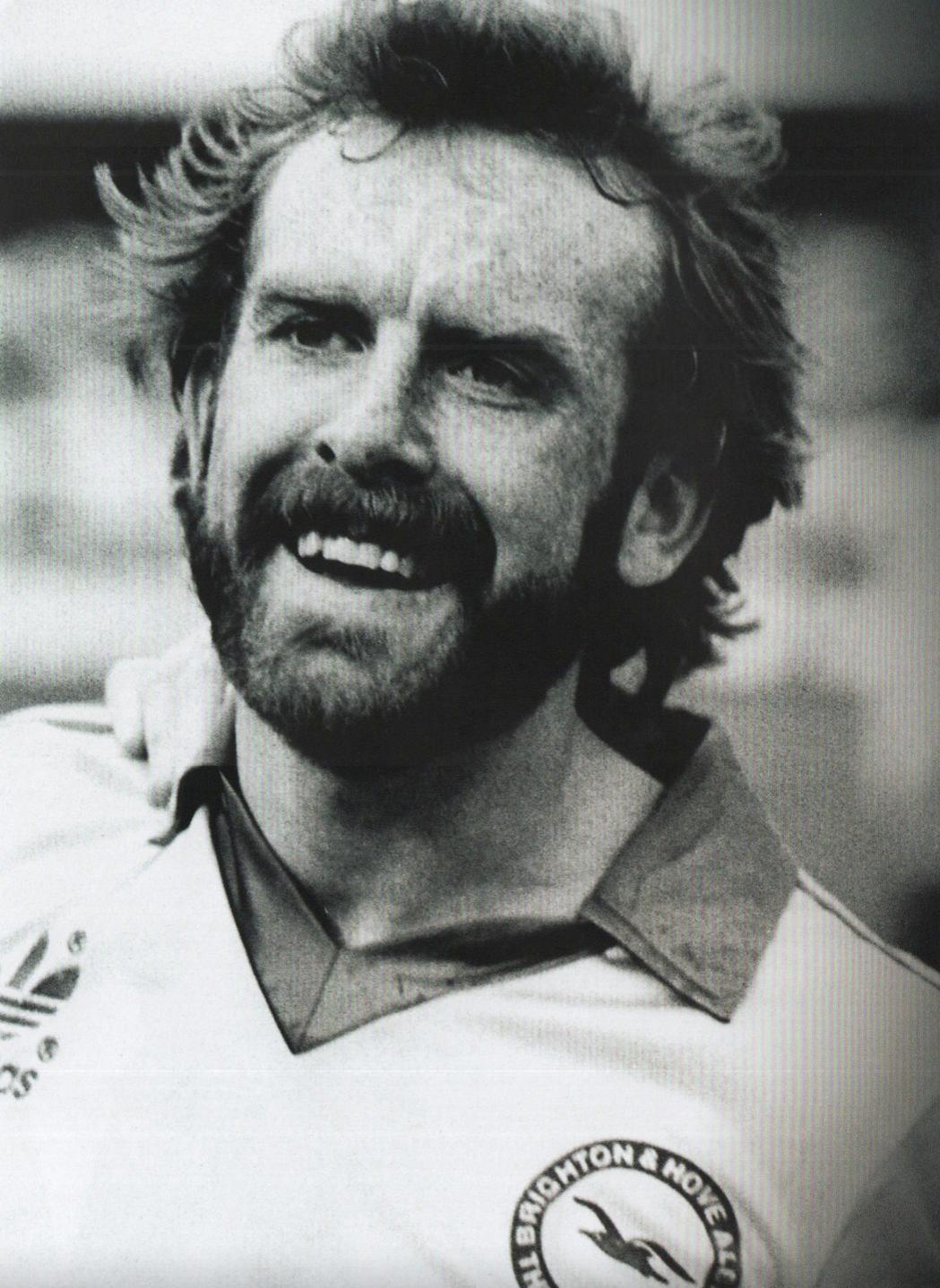
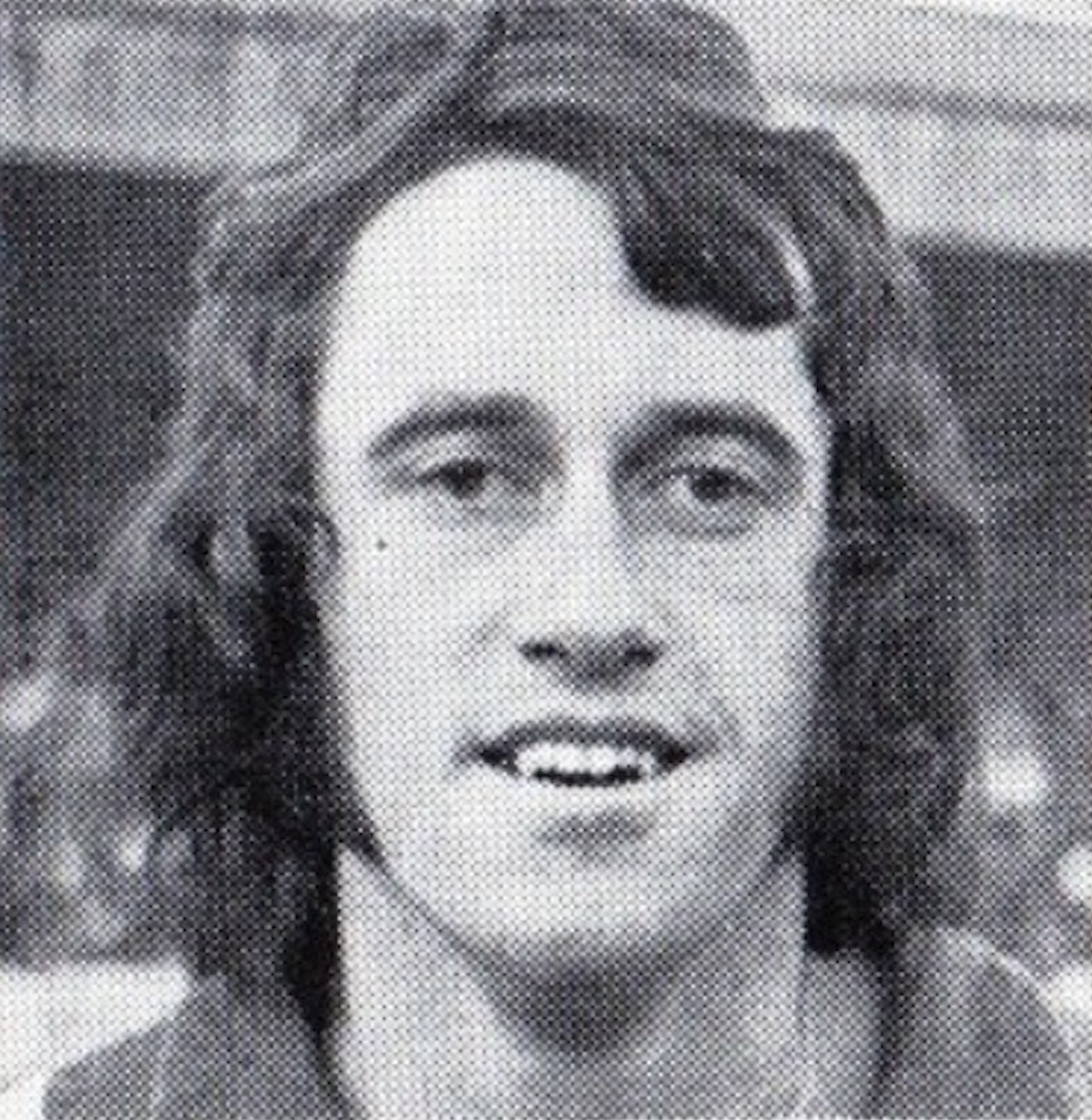
TENACIOUS Tony Grealish earned plenty of plaudits in a 20-year professional career spanning almost 600 matches and etched his name in the record books along the way.

Thought to be the only person to play in two different sports at Wembley Stadium, Grealish was also the first Brighton & Hove Albion player to captain his country.

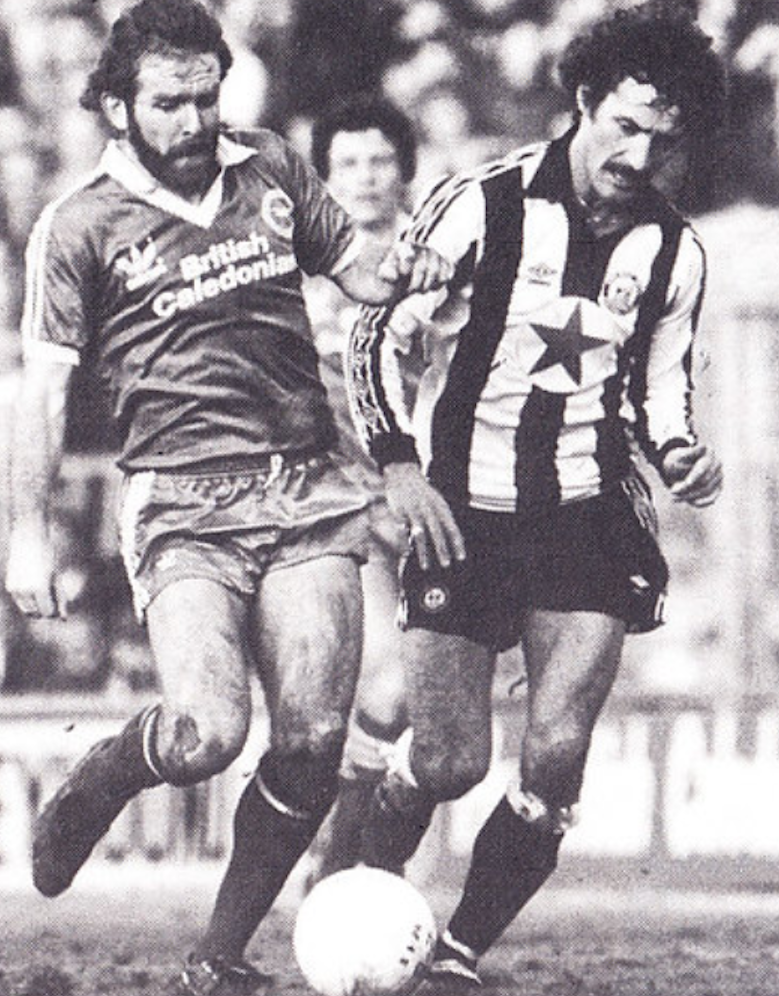
On the ball for Brighton

One statistic less favourably remembered is that he was relegated from the top level of English football with three different clubs: Brighton, West Bromwich Albion and Manchester City.

The London-born Republic of Ireland international was first relegated in the same year that he led the Seagulls out at Wembley for the 1983 FA Cup Final.

He was also part of the Throstles squad who went down in last place in 1986. And it was two relegations in a row after switching to an ailing Sky Blues side that went on to relinquish their top flight status in 1987.
When Grealish signed for Brighton from Luton Town for £100,000 in July 1981, it was a time of significant change. After only just avoiding relegation the season before, manager Alan Mullery had quit over a disagreement with chairman Mike Bamber and four key players left the club: John Gregory, Mark Lawrenson, Peter O’Sullivan and captain Brian Horton.

Grealish had quite a tall order taking over in midfield from ex-skipper Horton, who replaced him at Kenilworth Road, but Gordon Smith, another Albion teammate who later played for City, said:

“He did it with style – he was excellent. He was a very hard working player, he could tackle, but he was also classy with it – he could always pick out a pass.”

Part of the deal that saw Liverpool acquire Lawrenson saw the experienced Jimmy Case move to Brighton and he also appreciated what Grealish brought to the side. “Tony was so, so reliable. Playing with him in midfield, you knew that if the going got tough, he would be shoulder to shoulder alongside you.

“He would go in where it hurt, a tough lad, but he was not just a worker, he could play a bit as well and his enthusiasm for the game rubbed off on everyone in that changing room.”

Grealish and Case together with Mullery signing Neil McNab proved to be quite a formidable midfield trio and together they helped Mike Bailey’s side to jostle for top half of the table positions during the 1981-82 season before falling away to finish in 13th place – a record that remained in place until 2022!

Wembley gesture

Reaching the FA Cup final in 1983 under Jimmy Melia and George Aitken provided a personal highlight for Grealish when he captained the Seagulls in the absence of suspended regular skipper Steve Foster, memorably wearing the defender’s trademark white headband as a mini-protest at his exclusion.

Grealish’s departure to West Brom in March 1984 was part of the ongoing break-up of the former top level squad, Melia’s successor Chris Cattlin being tasked with trimming the wage bill to bring it into line with second tier football.

Three and a half years later, Grealish had just turned 30 when Jimmy Frizzell signed him for City in October 1986 for a modest £20,000 fee, re-uniting him with McNab.

It was only a short-term deal, though, and he continued to live in Sutton Coldfield, a commute of 90 miles each way! “We haven’t bought a place because I only signed until the end of the season,” he explained. “We’ll see what happens first.”

Frizzell had previously been assistant manager to Billy McNeill but took over the reins when the former Celtic captain, frustrated by City’s parlous financial circumstances, left for Aston Villa in September 1986.

City of the mid-1980s were a very different proposition to the modern day version: they were more than £4m in the red and struggling with crippling debt repayments after an ill-advised spending spree in the late 70s and early 80s.

“The first thing I was told when I joined and went to discuss money was that they were so skint they would sell their goalposts if they could,” a Grealish contemporary, centre-back Mick McCarthy, told Chris Bevan for BBC Sport in a 2013 article looking back at that period.

Frizzell felt the relatively youthful City needed some experienced old heads to steady the ship and Grealish joined from West Brom in the same week John Gidman joined on a free transfer from city rivals Manchester United. Both made their Maine Road debuts for bottom-of-the-league City against United in a 1-1 draw on 26 October 1986.

It was the 118th meeting between the two sides, but the first to be broadcast live on TV.

Injury-hit United took the lead through a Frank Stapleton header that crept past the diving Perry Suckling and inside the post, but McCarthy equalised with a header from a cross by McNab.

Under fire United boss Ron Atkinson only had one more game in charge of the Reds; after a 4-1 League Cup defeat by Southampton, he was sacked.

United’s plight was nothing compared to City, though. They didn’t win away throughout the whole season and, in spite of the additions of forwards Paul Stewart and Imre Varadi, scored a meagre 36 goals in 42 games.

Youngster Paul Moulden, having been a prolific goalscorer in City’s FA Youth Cup-winning side of 1986, briefly offered hope when scoring four goals in four games in November but then picked up an injury.

Frizzell blooded several other members of that youth side including Paul Lake, David White and Ian Brightwell but City were relegated. Grealish’s last game for them was in a 0-0 home draw against Newcastle in March, City’s first point in a month. They only won twice in the remaining 10 games and were relegated…along with McNeill’s Villa!

Grealish only made 15 appearances in that 1986-87 season and was an unused sub on two other occasions. He made 11 league starts, one in the FA Cup (a 1-0 defeat v Man U) and three in the Full Members Cup. He also played in City’s reserve side on 14 occasions (stats courtesy of the Gary James archive).

Born in Paddington, west London on 21 September 1956, Grealish played underage for St Agnes Gaelic football club in Cricklewood – alongside brother Brian – and represented London at various underage levels.

That special 1983 Wembley moment meant Grealish achieved the unusual claim to fame as reportedly the only person to play soccer and Gaelic football at the iconic stadium. He’d previously played there in the early ’70s for London’s Minors against New York in what at the time was an annual Whit weekend tournament.

“For a group of London lads, playing at Wembley Stadium was magnificent,” said Éamonn Whelan, a teammate of Grealish’s for St Agnes and London.

Ireland was certainly in his blood even if he wasn’t born there: his father, Packie, was from Athenry in Galway, and although his mother, Nora, was born in London, both her parents came from Limerick.

No surprise then, that Grealish represented Eire with some distinction, winning 45 caps between 1976 and 1985, and It was during Alan Kelly’s brief reign in charge, in 1980, that Grealish was first made Eire skipper – in a 2-0 win over Switzerland at Lansdowne Road, Dublin.

Brighton’s Lawrenson and Gerry Ryan were teammates that day, as was Chris Hughton.

One of the goalscorers that day, Don Givens, said of Grealish: “He gave so much effort that he wasn’t going to accept anything less from his teammates.

“Tony was a 100 per cent tough little midfield player, and a great character off the pitch.”

Former Ireland manager Eoin Hand chose Grealish as Eire captain for the 1984 European qualifying campaign, when Ireland ended in third place behind Spain and Holland.

In his book, First Hand My Life and Irish Football, Hand said Grealish was “more Irish than the Irish themselves”.

“With his dynamic, combative style in the midfield engine room, Tony, with his tousled hair and Viking beard, was the kind of guy you were happy to go into battle alongside,” he said.

Grealish on the international stage with the Republic of Ireland

“He was a natural leader, and although known for his ceaseless industry, he was no mere artisan. Grealish could play as well and conjure up the odd goal from deep positions.”

Previous manager Johnny Giles had given Grealish his Ireland debut at the age of 19, in a friendly against Norway at Dalymount Park, Dublin on 24 March 1976.

Grealish, unusually, started at full back as Ireland won 3-0 thanks to goals from Liam Brady, Jimmy Holmes and a penalty from Mickey Walsh.

“Tony was very good for me when we played together in midfield because he was a ball winning all action player, and we had a good understanding,” said Brady, who later became Brighton’s manager.

“Around the Ireland dressing room, he was very enthusiastic, determined and very motivating – he liked to motivate everyone around him,” he told the Irish World in 2013.  “He’d be up for every match.”

Brady added: “We had a strong friendship, and I haven’t met anyone who played with him who wasn’t a friend of Tony Grealish’s.

“He was a super man, and a super bloke. He made the atmosphere better wherever he was.”

Grealish took his first steps to becoming a professional footballer aged 15 in 1972 when he joined Leyton Orient as an apprentice. Manager George Petchey took him on as a professional in 1974 and he was the club’s player of the year at the end of the 1975-76 season.

In 1977-78, Orient reached an FA Cup semi-final at Stamford Bridge, where they lost 3-0 to  Arsenal, although the aforementioned Liam Brady mentioned: “He man-to-man marked me that day and put me out of the game. Luckily some of our other players performed despite the fact that I didn’t.”

One of the last of his 171 appearances for Orient was in the April 1979 3-3 draw with promotion-chasing Brighton in front of The Big Match cameras (John Jackson was in goal for the Os and Martin Chivers scored his only goal for Brighton).

Grealish transferred to David Pleat’s Luton Town in the summer of 1979 for a fee of £150,000, racking up 78 Division Two appearances over two seasons before joining Brighton.

In total, Grealish played 116 games plus five as a sub for Brighton, and his last game for the Seagulls ironically saw him score in a 1-1 home draw with Manchester City.

Having known what he could bring to a side, it was Giles, when manager of West Bromwich Albion, who took Grealish to the Hawthorns in March 1984 for £75,000.

Reunited with Johnny Giles at West Brom

In one and a half seasons with the Baggies, Grealish made 65 appearances before that move to City.

He spent a brief period with Salgueiros in Portugal before former Leeds hard man Norman Hunter signed him for Rotherham United in August 1987. He made 110 appearances over three seasons, going down with them in 1987-88 and helping them to bounce straight back by winning the Fourth Division title the next year under another former Albion midfield player, Billy McEwan.

His last league club was Walsall during Kenny Hibbitt’s managerial reign before he continued playing at various non-league clubs in the Midlands: Bromsgove Rovers, Moor Green, Halesowen Harriers, Sutton Coldfield and Evesham United.

He returned to Bromsgrove Rovers as player-manager before calling it a day, and then worked in the scrap metal business. He died of cancer aged 56 in April 2013.

An obituary in Albion’s matchday programme saw tributes paid by several former teammates. Gary Stevens, who memorably scored Albion’s equaliser in the 2-2 Cup Final draw against Man Utd, said: “Off the field, Tony was the life and soul of the party.

“When he was with us, he was always laughing, joking and just enjoying life. Yet on the pitch he always gave 100 per cent, was tenacious in the tackle and he had a tremendous will to win.”

Ex-skipper Foster added: “Tony was a lovely man off the pitch and a passionate footballer on it. He was a fantastic midfielder.”
Stockdale’s key role in Albion’s rise to the Premier League

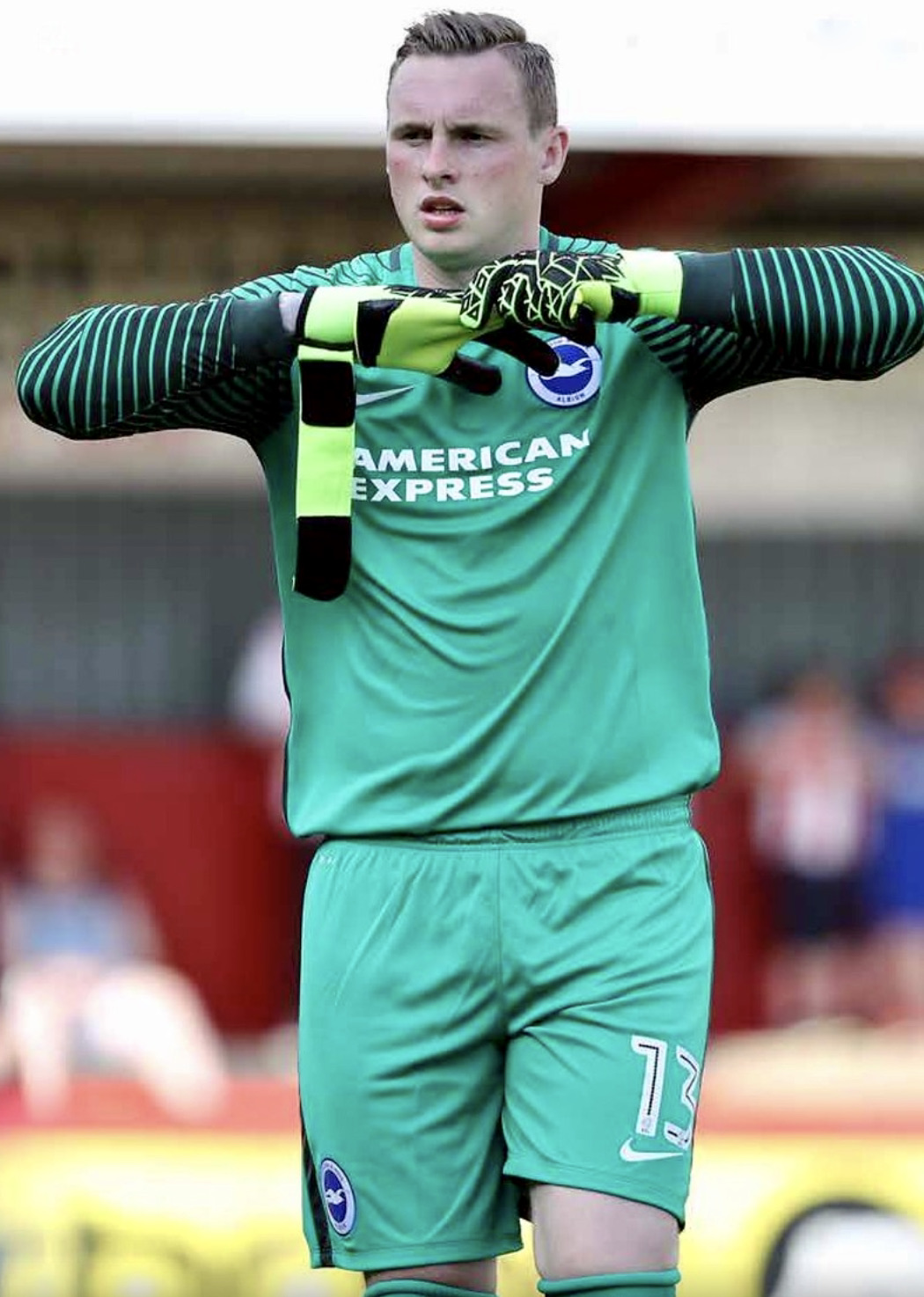
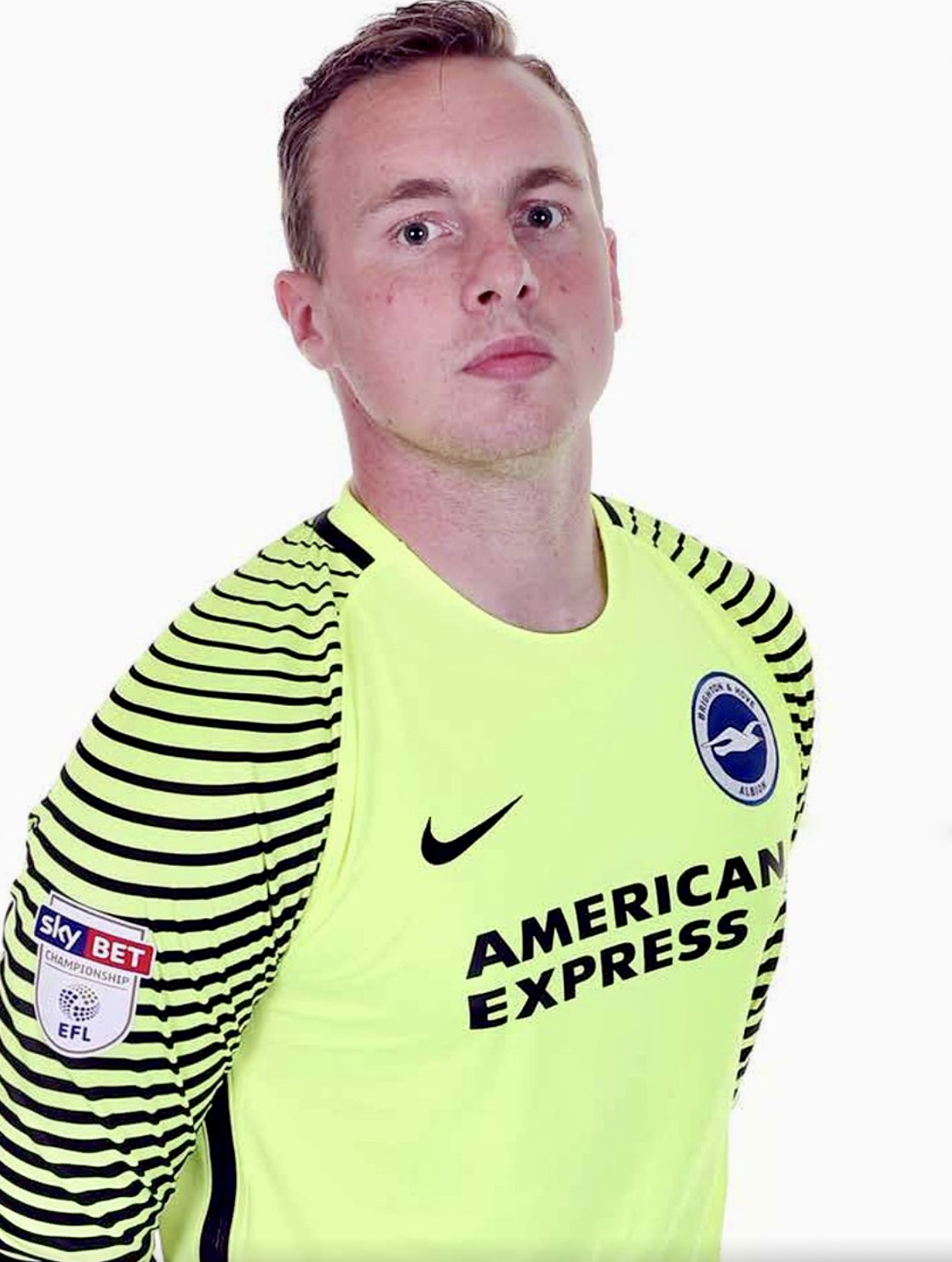
DAVID STOCKDALE kept 20 clean sheets as Brighton were promoted from the Championship to the Premier League.

He was chosen by his peers in the PFA Championship team of the year and was runner up to Anthony Knockaert as player of the season.

What seemed like a mystery at the time, though, was that he then remained in the Championship by signing a three-year contract with Birmingham City (at the time managed by Harry Redknapp).

“I’m not ashamed to say I put my family first and football second for a change,” Stockdale explained, referring to his desire to sign a longer term deal than the Seagulls offered because he didn’t want the upheaval of a move that might have unsettled his daughter’s education at a time she was about to take exams.

Stockdale had joined the Seagulls from Fulham in the summer of 2014 and was first choice ‘keeper for three seasons, playing a total of 139 matches for the club.

Remembered for some notable performances between the sticks, Stockdale impressed off it too. In the wake of the Shoreham air crash, he showed great compassion for the victims.

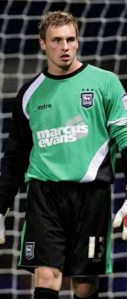
Before the next game, away to Ipswich Town, he wore personalised gloves and a training top bearing the names of two of them, Albion groundsman Matt Grimstone, who was Worthing United’s goalkeeper, and his teammate Jacob Schilt.

He also spent time talking to Matt’s family, visiting with Albion ambassador Alan Mullery. “We are all guilty of complaining about the little things in life but there are far more important things to worry about and I wish more people realised that,” he told the matchday programme.

At the end of the season, Stockdale’s support was recognised by the award of the PFA Community Champion trophy. “A lot of tears were shed,” he told Albion reporter Andy Naylor, when he got the inside track on Stockdale’s story in an interview for The Athletic on 17 November 2019.

“I’d spoken to Matt a few times, with him being a goalkeeper. We used to shout across at each other. I’d joke, ‘You come and train with us and I’ll do that (groundskeeping)’.”

The way the club rallied round didn’t surprise the goalkeeper because he’d heard good things from Fulham teammate and all time Albion legend Bobby Zamora when he was mulling over the move.

“I knew it was a good club, a very progressive club, but when Bobby told me it was the best club, that was good enough for me,” he said.

There was a familiar face waiting for him at training too because the goalkeeping coach when he arrived was Antti Niemi, who had taken him under his wing in his early days at Fulham.

“I was only 21 at the time, at a big Premier League club, and he spoke to me a lot in those early days,” he said. “Although he’s the goalkeeping coach here now, it sometimes feels the same as it did back then.

“He’s the one putting on the sessions now, and I’ve enjoyed them like I did when I trained with him before,” he said.

Even so, Stockdale was even more impressed by Niemi’s successor, Ben Roberts. “There’s no better goalkeeping coach than him,” he said. “Ben and I had tried to work together at previous clubs and it hadn’t come off. So, when we finally did at Brighton, he said ‘this is what I want you to work on, stay with me and trust me and the process’.

“It wasn’t always easy, I was 30 at the time trying to adapt my style, sometimes it’s hard. But I trusted him and it worked. He’s shown with numerous keepers that he can help anyone improve. That’s why people hold him in such high regard.”

A personal highlight for Stockdale came in January 2017 at the Amex when he made a double save from a Fernando Forestieri penalty against Sheffield Wednesday that helped put Brighton top of the division.

Less memorable were two own goals in a 2-0 defeat at Norwich City when Alex Pritchard shots rebounded off the woodwork, hit him and went in.

And when Albion had a chance to clinch the Championship title at Villa Park, Stockdale fumbled a long-range Jack Grealish shot to concede a late equaliser which meant Newcastle finished top instead.

“I left with great memories, on a high, apart from the Villa game,” Stockdale told Naylor. “It was one of those when everyone knows it was a mistake. It just wasn’t meant to be, but as a player you feel the responsibility.

“We got what we wanted, got promoted, but I think it left a bit of a bad feeling.”

Born in Leeds on 20 September 1985, Stockdale stayed in Yorkshire in the early part of his career, initially in the youth sides of Huddersfield Town and York City.

It was York who took him on as a trainee, in 2000, and in the last game of the 2002-03 season, aged just 17, Terry Dolan gave him his first team debut as a half-time substitute for Michael Ingham, who was suffering a shoulder injury, although City lost 2-0 to Oxford United.

By then in the Conference, Stockdale made 19 consecutive appearances for the Minstermen between August and December 2004 before being dropped by caretaker manager Viv Busby.

It was during that run of games that Stockdale first gained international recognition, being selected for the England C (non-league) squad for a friendly v Italy (he went on as a sub for Nikki Bull).

After his club disappointment, he told the York Evening Press: “I was gutted when I was taken out of the team but I’ve just gone back to the training ground and worked as hard as I can.

“I have got my best years to come. I am only 19 and I hope I can get a contract for next year and stay at the club.”

When former Albion midfielder Billy McEwan took charge, he offered Stockdale his first professional contract, although the youngster prevaricated over signing it, much to the manager’s dismay.

McEwan told the York Evening Press: “If the players don’t want to sign, then it’s up to them. They can go because I want players who want to play for York City Football Club.

“But David Stockdale is the biggest disappointment to me and I have told him that. He’s a young apprentice getting his first professional contract and the last thing in his mind should be money. That should be of secondary importance and he should be grateful York City are offering him a contract.

“On the evidence of his last performance of the season, he has to do better if he wants to get into the team.

“At the moment, he has potential but so have a lot of players. Maybe he feels he can get an automatic number one spot but that’s up for grabs this summer.”

Shortly after signing the contract, Stockdale went on loan to Northern Premier League club Wakefield-Emley and the following March joined Worksop Town on a temporary basis.

Stockdale was released by York at the end of the 2005-06 season with some more harsh words from McEwan about his weight ringing in his ears. After signing for League Two Darlington, Stockdale told the York Evening Press being released had been the incentive he needed to save his career.

“I have done well in pre-season and got back into shape after letting myself go at York, which was well-documented,” he said. “I accept now that was the case and agree with the manager but I would have preferred not to have been criticised in public.

“It has probably given me a kick up the backside though to get me going again and I feel a better person now. I would have loved to have stayed at York because I was there for a long time and have a great affection for the club.

“I would like to thank everybody there for all the help they have given me. The fans were always great and I learnt everything there so it was a bit of a shock to go.”

Clearly benefiting from full-time goalkeeping coaching from former Darlington, Bristol Rovers and Middlesbrough no.1 Andy Collett, Stockdale became manager Dave Penney’s preferred first choice ‘keeper, ousting former Derby and Bolton stopper Andy Oakes.

Scouts from Birmingham and Newcastle were said to be monitoring his development but it was Fulham who stepped in and signed him in April 2008 for an undisclosed sum (thought to be £350,000 rising to a possible £600,000). He was loaned back to Darlo to finish the season when they lost out in the League Two play-off semi-finals.

Although he was at Fulham for six years, much of Stockdale’s time on their books was spent out on loan: in League Two with Rotherham United, League One at Leicester City, and in the Championship with Plymouth Argyle, Ipswich Town and Hull City.

Temporary Tractor Boy

Nevertheless, his parent club did give him a reasonable sprinkling of first team outings: he played a total of 52 games, 39 in the Premier League.

Indeed in 2011, when he was covering for the injured Mark Schwarzer, Fabio Capello, the England boss at the time, called him up for international duty, although he didn’t get to play.

His best run of games for Fulham in the Premier League came in the 2013-14 season when he made 21 appearances (he also played five cup games).

After he left Brighton, Stockdale was Birmingham’s first choice ‘keeper throughout the 2017-18 season (apart from two months out with an injured wrist). He played 39 games, having replaced the previous season’s no.1, Tomasz Kuszczak, who had also moved to City from Brighton.

Blues only narrowly avoided relegation from the Championship with Redknapp only lasting until mid-September as manager; Lee Carsley briefly in temporary charge, Steve Cotterill for five months and then Garry Monk.

Monk brought in Lee Camp as his first-choice ‘keeper and Stockdale was sent out on loan to three different League One clubs: Southend United (on an emergency seven-day arrangement), Wycombe Wanderers and Coventry City.

After making a single appearance for Birmingham under Monk’s successor Pep Clotet at the start of the 2019-20 season, Stockdale rejoined Wycombe in January 2020 on a half-season loan.

He then moved to Wycombe on a permanent contract in September 2020 but only played twice, with Ryan Allsop the preferred no.1. In February 2021, he linked up with League Two Stevenage on loan and played five matches before having to return to Wycombe when Allsop was injured.

He kept the shirt until the end of the season, when Wanderers were relegated to League One, and, with Allsop having been released, Stockdale stepped up and was ever-present throughout the 2021-22 season. His 18 clean sheets earned him the League One Golden Glove award, jointly with Michael Cooper of Plymouth.

Nevertheless, with his contract up, he then returned to Yorkshire, signing for Darren Moore’s Sheffield Wednesday, where he played 27 games in the 2022-23 season.

They say what goes around comes around, and at the start of the 2023-24 season Stockdale went back to York City, although he sustained an injury early on in the season that caused him to be sidelined from the National League team.

As well as his familiar playing role, Stockdale began to look towards a time when he hangs up the gloves by also being appointed York’s head of recruitment. However, he was let go from the role in April 2024.

Away from his direct involvement in club football, he began a postgraduate diploma in Global Football Sport Directorship with the PFA Business School.

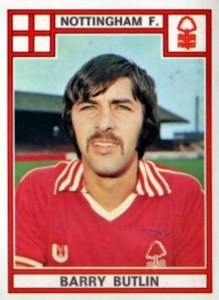
Barry Butlin’s belter at Selhurst helped revive Forest career

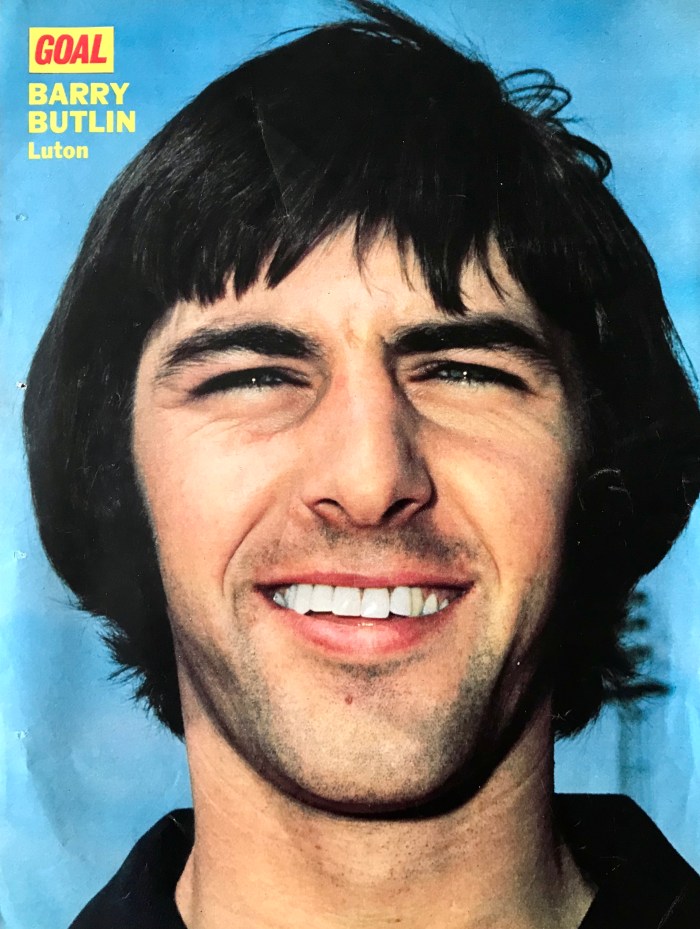
BARRY BUTLIN is one of that pantheon of players who’ve scored winning goals for the Albion against Crystal Palace.

He may sound like the alliterative title of a south Wales holiday camp, but this was a moustachioed striker who’d joined Third Division Brighton on loan from Second Division Nottingham Forest.

When former Albion boss Brian Clough couldn’t find a place for him in his Forest line-up in September 1975, previous managerial partner, Peter Taylor, going it alone at the Albion, was more than happy to add Butlin to his forward line options.

Butlin had started his career at Derby County on the periphery of Clough and Taylor’s squad at the Baseball Ground.

During his five years as a Rams player, he’d twice been out on loan to Notts County, scoring eight in 20 games in 1968-69 and another five in 10 appearances in the 1969-70 season.

While Derby won the First Division title in 1972, Butlin was sold for £50,000 to Luton Town, where he made his mark with an impressive 24 goals in 57 matches.

One of them came in a 1-1 draw at Elland Road during Clough’s ill-fated 44-day spell as Leeds manager, and, in a typically odd Clough way, in the post-match press conference he put his arm around Butlin and told the journalists: “This is who you want to write about after that wonderful goal. He deserves it.”

The following month, Butlin’s goalscoring exploits for the Hatters saw Forest boss Allan Brown take him to the City Ground for a fee of £120,000.

Imagine how he must have felt when his old Derby boss Clough arrived to take over at Forest in January 1975!

Nevertheless, the striker said all the right things publicly ahead of the manager’s first game, a third round FA Cup replay against Spurs, as recorded in Jonathan Wilson’s excellent book Brian Clough: Nobody Ever Says Thank You The Biography (Orion Books 2011).

“The lads all know that everybody is starting from scratch with everything to prove,” said Butlin. “Brian Clough has the ability to make an average player good and a good player great.”

Such a show of loyalty might have been understandable in the circumstances but Wilson also recalls Clough’s eccentric attitude towards players when they were injured. Butlin fractured his cheek in a training ground incident when at Derby.

“As he lay on the ground, Clough screamed at him to get up, insisting there was nothing wrong with him,” wrote Wilson. “Even after he’d been taken to hospital, Clough refused to believe anything was the matter.

“When Butlin’s wife turned up looking for her husband and mentioned an ‘accident’ to Clough, he snapped: ‘I’ll tell you when there’s been an accident’.”

Although Butlin feared the worst when Clough arrived at Forest, he wasn’t instantly discarded, finishing that season with seven goals in 33 games (plus one as a sub), while fellow forward Neil Martin netted 12 in 30 matches (plus two as a sub).

Butlin had a front row seat in this Forest line-up

But Clough clearly had other ideas about who he wanted in attack and brought in John O’Hare, who had done well for him at Derby, but less well during the ill-fated spell at Leeds, and introduced a young Tony Woodcock.

Intriguingly, that summer Martin was reunited with Taylor at Brighton and, within a matter of weeks, Butlin was also heading to the Albion, although his move was only temporary.

As it happened, Martin got off to a decent start alongside Fred Binney up front, scoring three times in the opening matches. But Taylor obviously considered Butlin offered a more potent threat; and it wasn’t long before fans saw why.

Butlin lets fly and scores the winner at Selhurst Park in 1975

In only his second game, in the third minute of Albion’s clash with Palace at Selhurst Park on 23 September 1975, Butlin got on the end of a Gerry Fell cross and hit an unstoppable shot that turned out to be the only goal of a pulsating game played in front of a crowd of 25,606 – a quite remarkable number for a third tier fixture.

“It still sticks with me, that one,” Butlin told Spencer Vignes, in his book Bloody Southerners (Biteback Publishing), which details the Clough-Taylor period at the Goldstone.

“It was the start of a cracking time down at Brighton,” said Butlin. “I only wish I could have gone on a little longer.”

Butlin soars to connect with this header

Butlin followed up that midweek winner at Palace with another goal on his home debut four days later when Chesterfield were beaten 3-0 (Peter O’Sullivan and Binney the other scorers).

Although not on the scoresheet, he also featured in two more wins (2-1 at Shrewsbury Town and 1-0 at home to Preston). However, in his absence Forest had gone through a mini slump, losing four out of five matches.

Butlin had taken his wife and children to Sussex with him, staying in the Courtlands Hotel in Hove. They all really liked the area, and the player had hopes of making the move a permanent one. Clough had other ideas.

“Brighton made me so welcome, but Forest weren’t doing very well at all,” Butlin told Vignes. “When I came to the end of my loan period, Brian got me straight back up to Forest and I had a real purple patch during which I played really well.”

In fact, he finished the season with eight goals from 38 games played as Forest finished eighth in the old Second Division.

Collector’s item

“We had this team meeting before one game and Brian said: ‘If sending you down to Brighton gives you that impetus, then I’d better start sending some more players down there!’

“I’d seen the seafront and the wonderful countryside and thought it was the prelude to us staying there as a family, but it wasn’t to be. I was disappointed to say the least.”

Born in the south Derbyshire village of Rosliston, on 9 November 1949, Butlin attended Granville County Secondary School in Woodville from 1961 to 1966, and proudly records on his LinkedIn profile that he obtained six GCEs. He was also the school football captain.

He signed on for Derby in July 1967 but the likes of Richie Barker and Frank Wignall initially, then O’Hare and Kevin Hector, were ahead of him as the Rams progressed from the old Second Division into the First, before winning the title in 1972.

Chances for Butlin were few and far between. He made just four first team appearances in five years but those loan spells at Notts County at least demonstrated there was a player in the making, able to find the back of the net.

A knee injury prevented him making an immediate impact at Luton, after Harry Haslam had signed him, but he was the top scorer as Town gained promotion to the elite in second place in 1973-74.

The Hatters assured promotion by securing a 1-1 draw at West Brom in the penultimate game of the season, and midfield player Alan West relived the moment in an interview with theleaguepaper.com.

“I remember Barry Butlin, who was magnificent in the old centre forward’s role that season, got the vital goal,” he said. “I played in midfield with Peter Anderson and Jimmy Ryan. Peter was a great player and finished that season as our second highest scorer behind Barry.”

Just before Christmas in 2014, Butlin and West were among several former players who got together for a 40th anniversary celebration dinner. Also there were John Faulkner, Gordon Hindson, Alan Garner, Jimmy Husband, John Ryan, Jimmy Ryan, Don Shanks and Ken Goodeve.

Luton history website hattersheritage.co.uk remembers Butlin as “brilliant in the air and no slouch on the ground” and mentions the shock fans felt when he was sold to Forest, particularly as Town were desperate for goals at the time.

In the 1976-77 season, Butlin once more went out on loan, this time to Reading, and the heave-ho from Forest he had long expected finally came when Peter Withe was brought in.

Butlin was sold to Peterborough United and in two seasons with the Posh he scored 14 goals in 77 matches. His teammates at London Road included former Forest colleagues Jim Barron and Peter Hindley as well as former Albion midfielder Billy McEwan.

United just missed out on promotion from the Third Division, finishing fourth in 1977-78. It was a disastrously different second season, by which time another former Albion player, Lammie Robertson had joined them – when Posh were relegated to Division Four.

Butlin’s final club was Sheffield United, as they faced their first season outside the top two divisions. Signed by his former Luton boss Harry Haslam, Butlin scored 12 times in 53 matches for the Blades, but by the end of 1980-81 season, after Martin Peters had taken over, United were relegated to the fourth tier for the first time in their history.

Butlin retired and spent three decades working as a financial adviser and mortgage manager in Sherwood, Nottingham.

He lived in Derby and between July 2000 and October 2010 was secretary and treasurer of the Derby County Former Players’ Association.

City reject Graham Howell a victim of the ‘Clough clear-out’

FULL-BACK Graham Howell spent two and a half years as a professional at Manchester City but was released without making the first team.

Eighteen months after leaving Maine Road, he was one of several new signings made by manager Pat Saward in an effort to strengthen his newly-promoted Brighton side.

Recent players-of-the-season Stewart Henderson (1969-70) and Bert Murray (1971-72) had previously occupied the right-back berth but Saward believed a change was needed at the higher level.

At only 21, Howell was certainly a younger model who’d been trying to make his way at City when they won the league in 1968 and the FA Cup in 1969. After his release, he had played 43 games for Bradford City in the Third Division, which Albion had triumphantly left in runners-up spot in the spring of 1972.

Howell unveiled to the press by Pat Saward

A fee of £18,000 – the equivalent of just over £200,000 in today’s money – prised him from Valley Parade.

“Only 18 months ago, I was released by Manchester City. I thought the bottom had fallen out of my world,” Howell told the matchday programme shortly after signing that August. “I had no hesitation in deciding to join Brighton. It meant Second Division football and was just the chance I wanted.”

He said he’d thought Brighton were “a very useful outfit” in the two games he’d played against them for Bradford (he made his debut for the Bantams in the opening day fixture at the Goldstone when Albion won 3-1 and played in the Valley Parade match on 18 March 1972 when Bradford won 2-1) and said he was determined to prove City had been wrong to let him go.

“I am looking forward to helping Brighton move forward to the First Division. It has always been my ambition to play First Division football.

“I had hoped to achieve this with Manchester City, but it was not to be.”

He pointed out: “I could see that my way forward was limited because of Tony Book, Arthur Mann and several other youngsters like Willie Donachie.

“It was a tremendous blow when I had to leave Manchester City. But I can look back on that all now believing that it was all a blessing in disguise.

“I know that it made me try much harder at Bradford City. And I intend to go on playing it hard for Brighton.

“I am very ambitious, and I want to do really well in football.”

Unfortunately for Howell, Saward struggled to find the right formula for success in the higher division, chopping and changing the line-up and bringing in too many players on short-term loans.

Howell made his debut in a 2-2 home draw against Sunderland on 26 August but, after 15 games at right-back, Saward moved him into midfield and, according to my scrapbook of the time, he became “a destroyer in the Peter Storey mould”.

John Templeman, who’d started the season in the no.2 shirt, reverted to that position as Saward shuffled his pack trying to end a losing streak that eventually extended to 13 matches.

Howell was dropped to the subs bench for the home game against Luton Town on 10 February – and Albion promptly won 2-0, their first win since 14 October the previous year!

He continued as no.12 in the following two matches (both defeats) and was restored to the side at home to Huddersfield, a game which ended in a 2-1 win for the Albion.

In the final game of the season, by which time relegation was confirmed, Howell was once again selected at right-back as Brighton drew 2-2 with Nottingham Forest.

Stern-faced Howell in the pre-season line-up photo

He retained the shirt at the start of the following season back in the third tier but as Saward’s tenure of the hotseat moved into its final days, so did Howell’s game time.

He was out of the side when Brian Clough and Peter Taylor arrived at the Goldstone at the start of November although he has a somewhat unwitting claim to fame by appearing in an oft-used photo of Clough sitting on a park bench at the Stompond Lane ground of non-league Walton & Hersham.

Howell looks rather awkward next to the centre of attention!

Albion had been drawn away to them in the FA Cup first round and the park bench was the somewhat primitive and squashed pitchside seating arrangement for the visiting manager, trainer and substitute – who that day was Howell.

In the picture, he looks rather awkward to be sharing the perch next to the man who only a few months earlier had led Derby County to the top division title. The park bench image was ideal ‘fodder’ for the newspapers, depicting as it did how far from previous glory Clough had descended.

Howell didn’t get on in that game (Albion drew it 0-0 and ignominiously lost the replay at the Goldstone 4-0) and his first action under the dynamic duo came in the infamous 8-2 defeat to Bristol Rovers.

He was sent on as a substitute for left-back George Ley and got his first start under the pair when he took over from John Templeman at right-back in the following game, a 4-1 defeat at Tranmere Rovers.

That match proved to be Ley’s last game in an Albion shirt – and when Howell replaced the former Portsmouth player away to Watford (a 1-0 defeat), it would be his own last outing for Brighton.

By Boxing Day, Clough and Taylor had brought in young midfielder Ronnie Welch and left-back Harry Wilson from Burnley, and they both made their debuts against Aldershot. Howell was an unused sub that day and he didn’t feature for the first team again.

More new faces arrived at the Goldstone as Clough and Taylor brandished chairman Mike Bamber’s chequebook with abandon: the likes of Paul Fuschillo and Billy McEwan increasing the competition for places.

Come the end of the season, Clough made no apologies for clearing out a number of players signed by his predecessor along with long-servers like Brian Powney and Norman Gall. Howell was one of twelve players released.

Howell had made 40 appearances (plus four as sub) for Brighton and he moved on to Cambridge United where he played 71 matches between 1974 and 1976.

Born in Salford on 18 February 1951, Howell grew up a fan of Manchester United and hoped to play for them. “But when City showed interest in me while I was playing for Altrincham and Sale Boys I was happy enough to go on the Maine Road apprentice staff,” he said.

After signing as a professional, Howell spent two and a half seasons playing in City’s Central League side

There were certainly plenty of positive signs for Howell to think he might make it at City.

In January 1969, their matchday programme reported how he’d been for trials for the England Youth side with Tony Towers and Ian Bowyer but was unluckily left out when the squad was selected.

Elsewhere in the programme, a mid-season report on the progress of Dave Ewing’s reserve side declared: “Players like Graham Howell, Tony Towers and Derek Jeffries made great strides.”

It explained that because of injuries to more experienced reserves, several youth team players had been promoted to turn out for the Central League side.

Although they lost eight of their opening 11 matches, they’d turned things round and the report said: “By the end of September, the policy of putting faith and responsibility on the younger players began to pay off.”

While they were bolstered by the return of experienced goalkeeper Ken Mulhearn and George Heslop, youngsters like Bowyer and Stan Bowles were contributing to a turnround in fortunes.

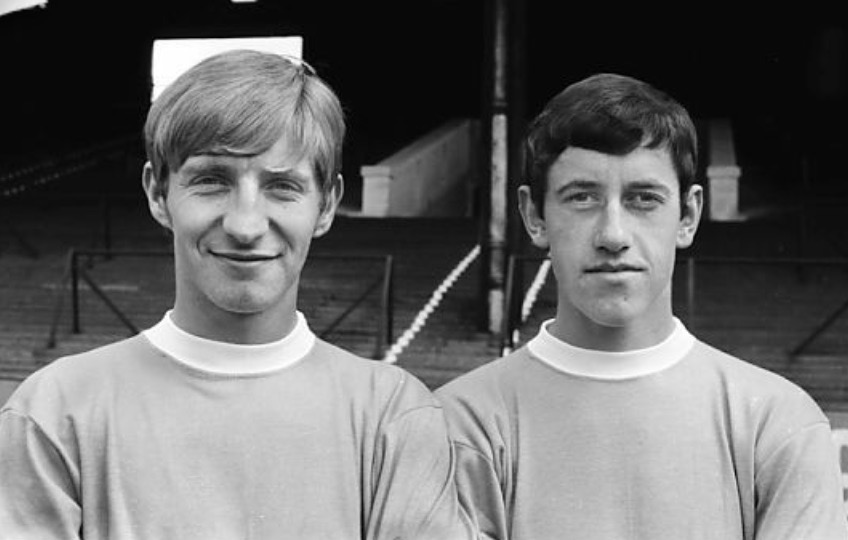
There’s a photo to be found on the internet (above, left) of a young Howell with Paul Hince who played a handful of games for City in 1967-68 and later reported on the side for the Manchester Evening News.

After leaving Cambridge, Howell quit the UK and continued his career in Sweden. He spent six seasons with Swedish club Västerås SK and also played for Irsta IF. He remained in Sweden after his playing career finished.

Pictures from my scrapbook and online sources.

Burnley graduate Ronnie Welch briefly captained the Albion

welch and wilsonTHE FOOTBALLING fortunes of two graduates from Burnley’s famous talent academy of the 1970s took quite different paths after the legendary Brian Clough signed them for Brighton.

While left-back Harry Wilson stayed for four years and enjoyed promotion success under Alan Mullery, midfielder Ronnie Welch left the club less than a year after he’d joined, ‘used’ (together with fellow midfielder Billy McEwan) as a makeweight in the transfer of Ken Tiler to the Albion.

The early signs following Welch’s arrival on the south coast had been positive. Although he and Wilson’s debuts at home to Aldershot on Boxing Day 1973 ended in a 1-0 defeat, results gradually picked up and, at the tender age of 21, Welch even found himself captaining the Albion in the absence of skipper Norman Gall.

Clough had turned to them as he tried to sort out a side who’d experienced a series of heavy defeats (the now-infamous 8-2 home loss to Bristol Rovers; a 4-0 reverse v non-league Walton & Hersham in the FA Cup, and a 4-1 loss away to Tranmere Rovers).

The tale of how Clough turned up at Turf Moor to sign them one lunchtime, only to find the place deserted apart from groundsman Roy Oldfield, has been recounted in said groundsman’s memoirs.

A fee of £70,000 for virtually untried youngsters was quite a lot of money in those days.

Midfielder Welch took over the no.4 shirt previously worn by Eddie Spearritt, who’d started the season as the club captain, and Wilson replaced George Ley, a big-money signing from Portsmouth the season before.

wilson and R WelchWelch stood just 5’6½” tall and weighed 10st 7lb, but Evening Argus football writer John Vinicombe was suitably impressed. His match report of the 1-0 home defeat to Aldershot was unearthed by thegoldstonewrap.com, and we learned: “After a subdued first-half, Welch had a storming second half against the Shots, impressing with his energy.”
Vinicombe reckoned Welch wasn’t as extrovert as Wilson “but is no less involved in midfield and has a fine turn of speed. He made one mistake through trying to play the ball instead of hoofing it away, but this can only be described as a ‘good’ fault.”

For a while, the Albion midfield featured the two Ronnies — Welch and Ronnie Howell became Clough’s preferred pairing — although Spearritt replaced the former Swindon player for a short spell, and competition for those spots hotted up at the end of February with the arrival of fiery Scot McEwan from Blackpool.

In his 10th match in Albion’s colours, Welch scored his first goal as Brighton beat Blackburn Rovers 3-0 in front of a 12,102 Goldstone crowd on 23 February 1974 (Barry Bridges scored twice), and he was on the scoresheet again in the 3 April 1974 midweek evening home game v Cambridge United, as the visitors were dispatched 4-1 (Bridges, McEwan and Howell the other scorers).

Clough was happy to give Welch the responsibility of captaining the side in Gall’s absence, although thegoldstonewrap.com reported: “Unfortunately, the burden of being skipper at such a young age affected his form for the side.”

Nevertheless, after Clough quit the Albion in July 1974, leaving his old sidekick in sole charge, Welch was in the starting line-up for the new season.

Ronnie W 74 pre-seasonAlbion got off to a cracking start with a 1-0 win over Crystal Palace, and Welch played in the opening eight matches. But results didn’t go Taylor’s way and he shook up the midfield by introducing the experienced Ernie Machin, the former Coventry City captain, and also brought in Coventry’s Wilf Smith on loan.
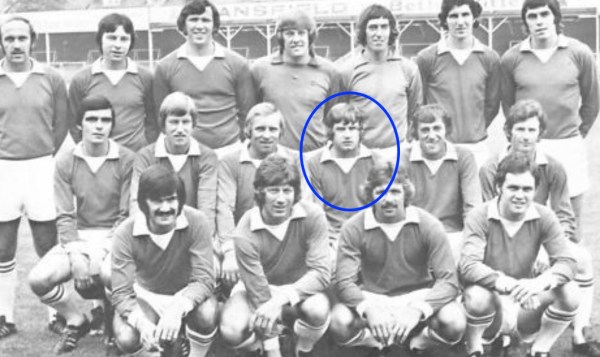
Welch filled in at right-back for three matches and his last involvement in an Albion shirt was as a non-playing substitute away to Gillingham on 26 October.

Ever one for wheeler-dealing, Taylor had his eye on right-back Tiler at Chesterfield, but he had to exchange Welch and McEwan to land his man.

Welch had been born in Chesterfield on 26 September 1952, so it no doubt suited him down to the ground to move back home.

RW ChesterfieldHe was at Chesterfield for three years during the managerial tenure of the former Sheffield United legend Joe Shaw, but only played 24 games.
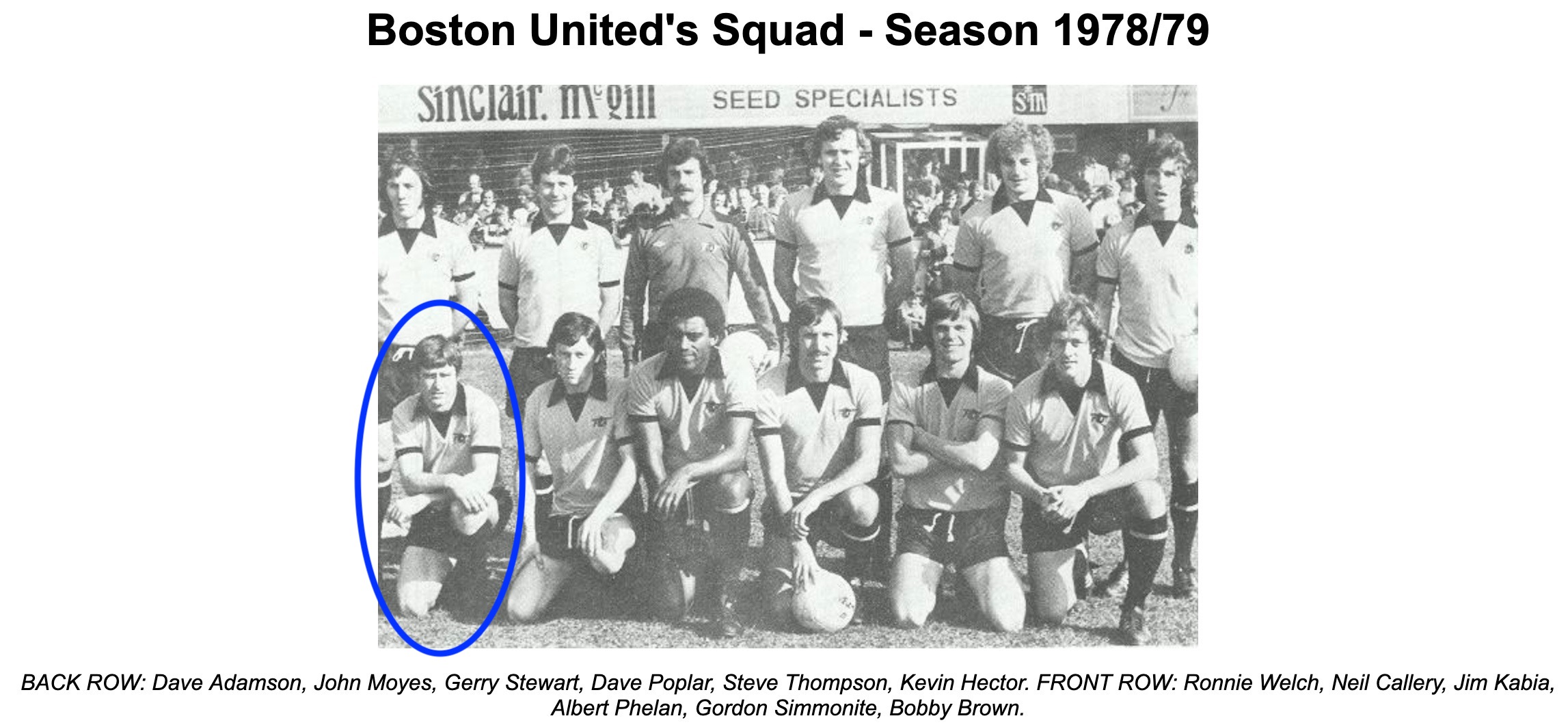
Welch at BostonIn the 1978-79 season he popped up at non-league Boston United where he played 39 matches plus four as a sub and scored four times.
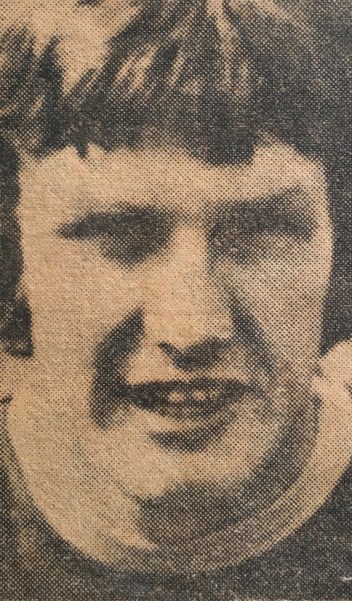
It must have all seemed a long way from the heady days when he graduated from apprentice through to the Burnley first team. He featured three times for the England Youth team in February and March 1969 and Burnley awarded him a professional contract in September that year.

At the time, Burnley had a reputation for bringing through a succession of talented young players.

RW BurnleyHis breakthrough came on 30 January 1971, in a home 1-1 draw against Newcastle United, but it was to be his only appearance in the first team. There were a number of established midfield players ahead of him: the likes of Doug Collins, Mick Docherty and Martin Dobson, and later Geoff Nulty and Billy Ingham
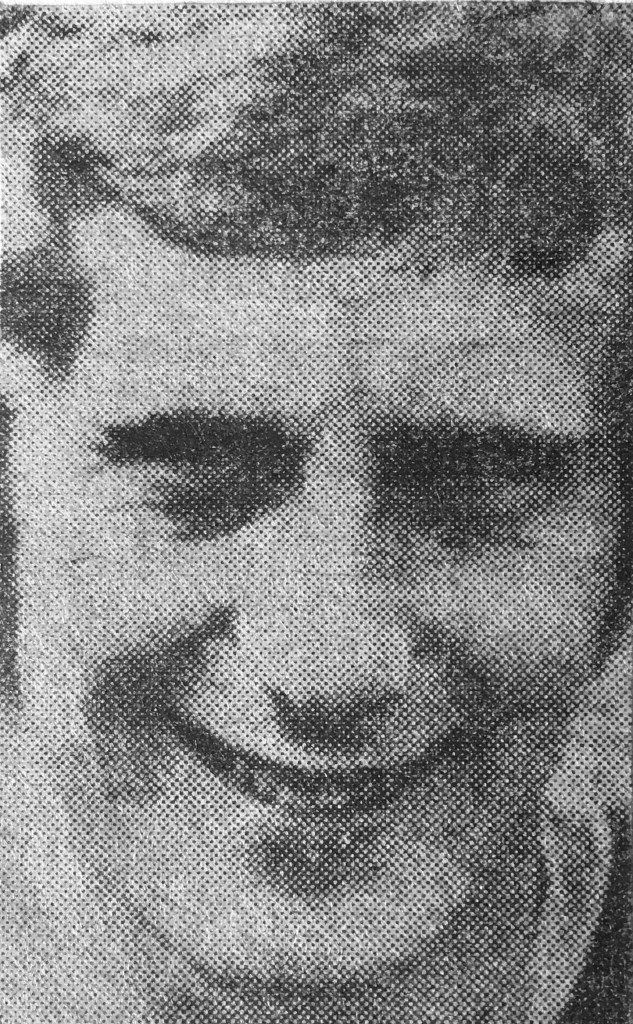
While Welch may have ‘disappeared’ in a footballing sense, when in June 2019 a picture of him was posted by someone on a Chesterfield FC history Facebook page – the excellent Sky is Blue – a flurry of followers came forward to identify him, including his daughter and sister! It was said he now lives in the New Whittington area of Chesterfield.

Left back Harry Wilson “something of a fire-eater”

BRIGHTON boss Brian Clough turned up at Burnley to capture the signings of two of their fringe first team players – and ended up having pie and chips with the groundsman!

When Clough arrived at Turf Moor, he found manager Jimmy Adamson, chairman Bob Lord and secretary Albert Maddox were nowhere in sight, it being lunchtime.

In their absence, as recounted to respected writer Dave Thomas, groundsman Roy Oldfield made the famous visitor a cup of tea, popped to a nearby chippy to get them both pie and chips and chatted all things football until the office re-opened after lunch.

Although Clough hadn’t got quite what he expected on arrival, his journey did bear fruit. In exchange for £70,000, he secured the services of left-back Harry Wilson, a 20-year-old who had made 12 appearances for the Clarets, and midfielder Ronnie Welch, 21, who had played one game.

At the time, Clough was desperately trying to bring in new recruits to a beleaguered Brighton side that he and sidekick Peter Taylor had taken on in October 1973, a period covered in detail in a recent book, Bloody Southerners, by author and journalist Spencer Vignes.

The man who only the season before had led unfashionable Derby County to the First Division Championship, couldn’t quite believe what he had inherited at Third Division Albion.

The players seemed bewildered by what the new celebrity boss expected of them.

Heavy defeats – 4-0 to non-league Walton and Hersham in the FA Cup; 8-2 at home to Bristol Rovers and 4-1 away to Tranmere Rovers in the league – reflected the disarray.

Clough and Taylor weren’t slow in pointing the finger. Their only solution was to find replacements – and quickly.

Former Manchester United reserve Ken Goodeve was first to arrive, from Luton Town, although he failed to impress and made only a handful of appearances before joining Watford at the end of the season.

Goalkeeper Brian Powney was axed in favour of former England under 23 international, Peter Grummitt, initially on loan from Sheffield Wednesday.

Experienced left-back George Ley never played for the Albion again after the defeat at Tranmere, while utility man and former captain, Eddie Spearritt, also lost his place (although he eventually forced his way back into the side briefly).

Lammie Robertson, who knew the pair from his early days at Burnley, was asked to introduce them to their new teammates in the dressing room before an away game at Watford (they’d not been signed in time to play).

Robertson told Spencer Vignes in a matchday programme interview how Wilson was sporting a rather loud checked suit at the time and, in his own inimitable style, Clough boomed out: “Flipping hell, I never want to see that suit again.”

Needless to say the players laughed out loud, only for Clough to say: “What the hell are you all laughing at? They’ll be in the team next week.” And sure enough, they were.

Wilson and Welch made their debuts against Aldershot in a home game on Boxing Day when a crowd of 14,769 saw Albion slump to their fifth successive defeat, although at least the deficit this time was only 1-0.

A win finally came in the next game, a 1-0 success at home to Plymouth Argyle – Ken Beamish scoring the solitary goal.

In a 2010 matchday programme article, Wilson said: “I really didn’t want to go to Brighton. No disrespect but I loved it up at Burnley.

“The people there had been so friendly and helpful when I arrived from the North East so it broke my heart to leave. That said, I thoroughly enjoyed my time at Brighton and met some fantastic people, so, looking back now, I’m glad that Jimmy Adamson let me go.”

In the Evening Argus, reporter John Vinicombe purred about the impact of the new recruits from Burnley, saying Wilson “is looking something of a fire-eater. He has a rare zest for the game and relishes the close, physical contact that is synonymous with his position.

“He knows how to destroy and create, and does both in a manner befitting a five-year background at the academy of fine footballing arts (editor’s note: at the time, Burnley had a reputation for producing highly-talented young players).

“His colleague from Turf Moor, Ronnie Welch, is not so completely extrovert, but is no less involved in midfield, and has a fine turn of speed. He made one mistake through trying to play the ball instead of hoofing it away, but this can only be described as a ‘good’ fault.”

Further signings followed and the ship was steadied. Wilson kept the no.3 shirt through to the end of the season. But Welch made only 36 appearances for Albion before Taylor, by then under his own steam, traded in him and fellow midfielder Billy McEwan as a makeweight in the transfer that brought full-back Ken Tiler to the Goldstone from Chesterfield.

Wilson, meanwhile, became a mainstay in Albion’s left-back spot for three years, including being ever-present in the 1975-76 season.

5 HW action v MillwallEver-present Wilson in action against Millwall at The Den

Suited for England!

Born in Hetton-le-Hole, near Durham, on 29 November 1953, Wilson played for Durham County Schools and made four appearances for England schoolboys (under 15s) in the 1968-69 season. He was taken on as an apprentice at Burnley before signing professional forms in December 1970.

In 1971, he earned an England Youth cap going on as a sub for Coventry’s Alan Dugdale in a 3-2 defeat against Spain in Pamplona. Don Shanks also played in that game.

He made his first-team debut at home to Chelsea on 26 April 1971 and the last of his 12 appearances for the Clarets was on 3 April 1972: away to Sunderland.

Young apprentice Wilson with experienced pros John Angus and Colin Waldron

He was part of Alan Mullery’s Third Division promotion-winning squad in 1976-77, although he was restricted to 22 appearances. The arrival of the experienced Chris Cattlin meant he was no longer first choice left-back, although in several games they both played – the versatile Cattlin being equally at home as right-back.

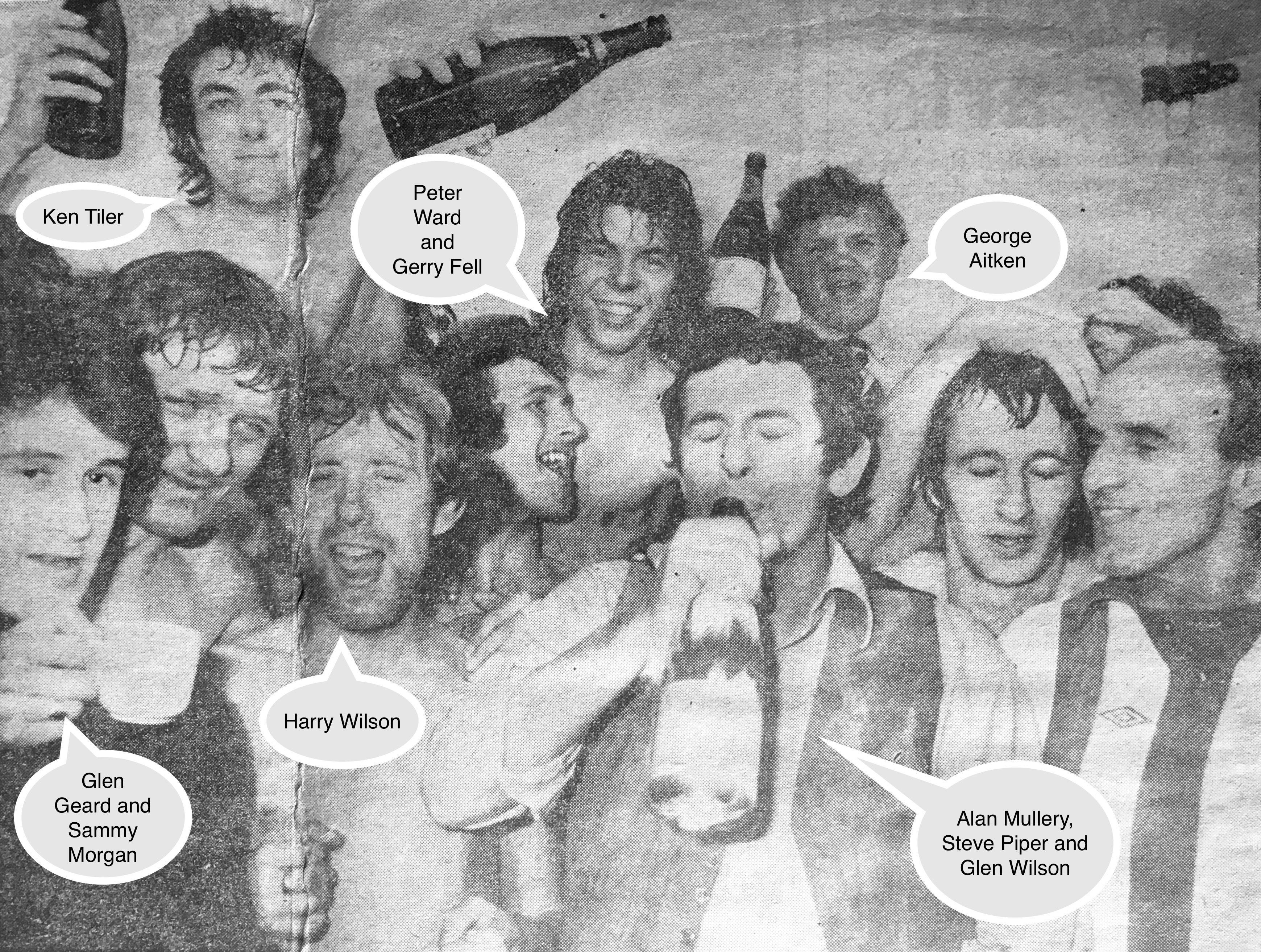
6 HW promotionA bare-chested Wilson was pictured (above) in the Albion dressing room alongside Mullery enjoying the celebratory champagne after promotion was clinched courtesy of a 3-2 win over Sheffield Wednesday on 3 May 1977. But that game was his Goldstone swansong.

He’d made a total of 146 appearances for the Albion – as well as chipping in with four goals – but when Mullery signed Mark Lawrenson and Gary Williams from Preston that summer, Wilson went in the opposite direction along with Graham Cross.

Only six months after arriving at Preston, Wilson was badly injured in a road accident after his car skidded on black ice and collided with a transit van. He suffered a punctured lung and damage to his knees. Doctors told him he wouldn’t play again, but he proved them wrong and ended up spending three years at Preston, playing 42 games.

“I suppose I was lucky to be alive,” he said in an Albion matchday programme article. “I lost a couple of yards of pace, but then again I ws never exactly the quickest of players.”

With his best days behind him, he moved back to his native north-east in 1980 to play for Darlington, making 85 appearances in three years.

He stayed in the north east in 1983, switching to Hartlepool for a season, but only played 16 times for them before dropping out of the league to play for Crook Town.

According to The Football League Paper, Wilson stayed in the game as manager of Seaham Red Star and, in 1988-89, Whitby Town.

He then worked as a community officer for Sunderland before joining the coaching staff at Burnley in the 1990s.

When Chris Waddle took over as manager, Wilson was sacked but he took the club to an industrial tribunal, which found in his favour.

He later worked for his long-term friend, Stan Ternent, at Bury, and as a monitor for the Football League, a job that saw him checking that the right procedures were being followed by the youth development set-ups of clubs in the north-west.

Wilson was in the news in 2007 when Ternent appeared at Lancaster Crown Court accused of assaulting Wilson’s son, Greg, on the steps of Burnley Cricket Club (a venue familiar to visiting supporters as a popular watering hole before games at the neighbouring football ground).

Greg Wilson required hospital treatment for a deep cut above his left eyebrow and needed nine stitches in his forehead.

Ternent said he had accidentally clashed heads, denied causing actually bodily harm, and was cleared by a jury.

4 HW colour laugh w WardWilson in an Albion line-up alongside Peter Ward
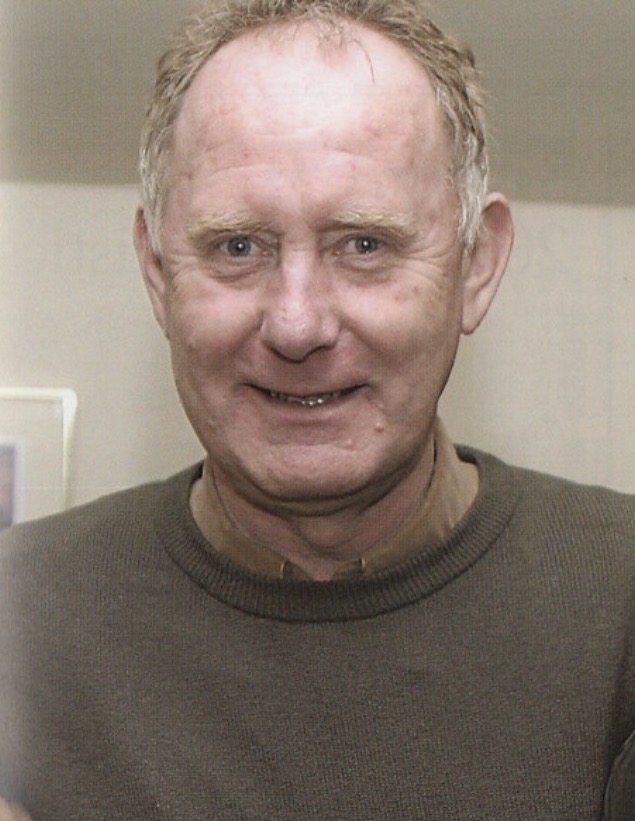
Wilson pictured in 2010