Champion medal surprise for man on the mic Aspinall

THE starry-eyed teenager who made half a dozen top level appearances for eventual league champions Everton had to wait a long time for his share of that distant glory.

But Warren Aspinall was nonetheless delighted when his contribution to the Toffees achievement in 1986-87 was finally recognised with a medal more than 30 years later.

That’s happened since I last featured Aspinall in this blog, which recalled his early days at hometown club Wigan Athletic and darker days after he had ended his playing days in the blue and white stripes of the Albion (three goals in 24 starts plus 13 as sub) in the 1999-2000 season.
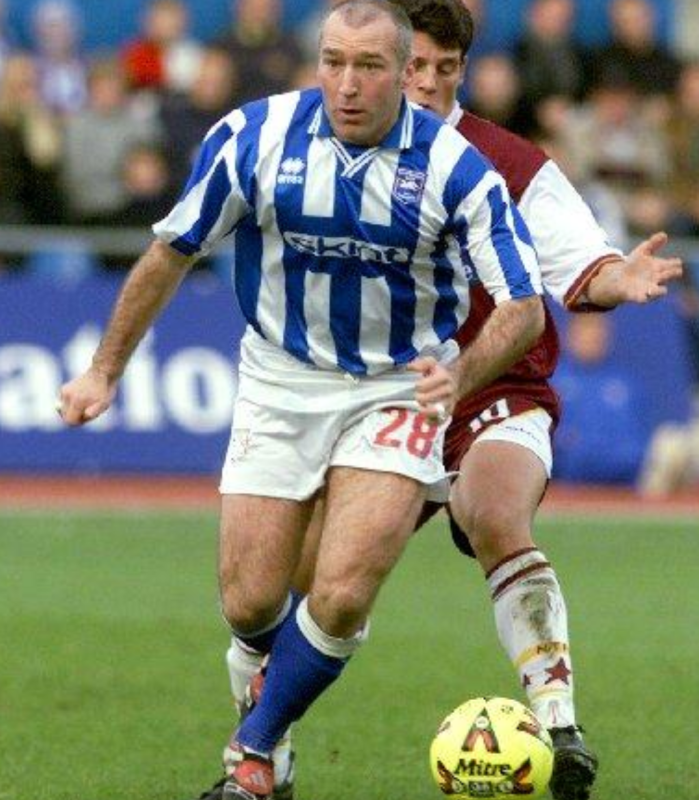
Aspinall is now more often heard rather than seen by Brighton supporters who listen to match commentaries on Radio Sussex, and it was commentator Johnny Cantor, who the summariser sits alongside for the regional BBC radio station’s coverage of all Albion’s games, who instigated a presentation of the belated honour.

“It was JC who pushed it forward and he kept it to himself before surprising me with the news that Everton would be making a presentation,” Aspinall told the matchday programme. “I was shocked but absolutely over the moon.”

The number of games to qualify for a winners’ medal used to be 14, or a third of the season, but the EFL in 2021 decided retrospectively to fall in line with the Premier League which awards medals to players who’ve made a minimum of five appearances.

Aspinall had been unaware of the rule change but Cantor had words in the right places and when Albion played at Goodison Park on 3 January 2023, the former player was finally presented with his medal by Graeme Sharp, one of his fellow Everton forwards back in the day who subsequently became an Everton director.

It’s probably a good job the presentation was made before the game because Albion romped to a 4-1 win that day with goals from Karou Mitoma, full debut-making Evan Ferguson, Solly March and Pascal Gross.

“The medal means the world to me and my family and it now sits proudly on my mantelpiece along with my England under 20 caps,” said Aspinall.

He earned the first of those two caps in the same month that Everton paid £125,000 to sign the 18-year-old from Wigan Athletic, although he saw out the season on loan with the Latics.

He featured in Young England’s 2-0 win over the Republic of Ireland at Elland Road, Leeds, and the following month was in the side that suffered a 4-1 defeat to Scotland at Aberdeen’s Pittodrie ground. Tottenham’s David Howells and Neil Ruddock, then of Millwall, also played in both matches, as did Millwall goalkeeper Brian Horne.

Teenager Aspinall signs for Everton’s Howard Kendall watched by Wigan boss Bryan Hamilton

On his return to Goodison Park at the end of the 1985-86 season, Aspinall was on the bench for the last league game (Kendall rested several players because it was five days before the FA Cup Final, which Everton lost 3-1 to Liverpool) and he made his debut in the 3-1 home win over West Ham when going on for two-goal Gary Lineker, who was playing his last league game for Everton before joining Barcelona.

Everton finished as league runners up that season but they went one better the following season, when competition for forward places saw manager Howard Kendall able to pick Sharp and Adrian Heath as his preferred pair, with Paul Wilkinson and Ian Marshall as alternatives. It meant Aspinall’s playing contributions came in the form of nine league and cup appearances as a substitute (he was also a non-playing sub on four occasions). Although first team chances were limited, he bagged plenty of goals for the club’s reserve side, netting 21 in 23 games.

That was enough to convince former Celtic stalwart Billy McNeill, in charge of relegation-bound Aston Villa, to splash £300,000 to take him to Villa Park – where competition for a starting spot was again daunting, with Andy Gray, Gary Shaw, Simon Stainrod and Garry Thompson all striker options.

Aspinall made his Villa debut on 21 February 1987 in a 2-2 draw at home to Liverpool and by the season’s end, while his former Everton teammates were lifting the league trophy, he was part of a Villa side that was bottom of the pile.

McNeill was duly sacked and the picture changed the following season when Aspinall was joint top-scorer as Graham Taylor’s Villa bounced straight back to the top tier as runners up behind Millwall.

“Garry Thompson and I hit it off up front and we had such a good understanding that we kept Alan McInally out of the team for a long time,” he told Villa supporter Colin Abbott. “Garry was good to play alongside because he was like a battering ram and I fed off him.”

Aspinall made his 50th and final appearance for Villa on 7 May 1988 in a 0-0 draw away to Swindon (playing left back for Villa was Bernie Gallacher and in the opposition line-up was Colin Calderwood and Kieran O’Regan).

Already warned by Taylor that he needed to improve ill discipline that had resulted in too many cautions, Aspinall got himself sent off for stamping in a pre-season friendly against St Mirren and Taylor transfer-listed him.

Happy at Pompey

England World Cup winner Alan Ball, in charge at recently relegated Portsmouth, seized the moment and took him to Fratton Park for a fee of £315,000 in August 1988, where his teammates included Mark Chamberlain and Terry Connor. In six years with Pompey, Aspinall also played under John Gregory, Frank Burrows, caretaker Tony Barton and Jim Smith.

Briefer stays followed along the coast at Bournemouth (loan and permanent), Swansea City (loan) and two seasons at Carlisle United.

Aspinall at Colchester

Keen to return to the south, Micky Adams first signed him when he had taken over as manager at Brentford and he made 48 appearances (plus three as sub) for the Bees but Aspinall then went on loan and then permanently to Colchester United for nine months before Adams brought him on loan and then permanently to the Albion in the autumn of 1999. It was a part exchange for midfielder Andy Arnott.

In only his third game, Aspinall was a delighted scorer of the only goal on his old stomping ground of Brunton Park as Albion returned to Sussex with all the points. The News of the World said: “Former Carlisle favourite Warren Aspinall seized on Billy Barr’s poor back pass to chip keeper Andy Dibble.”

In the Argus, Andy Naylor wrote: “The colourful midfielder then dashed towards the Albion supporters huddled in the seats on a drizzly day in Cumbria before sliding full-length on the greasy turf.”

Aspinall continued his celebration with a finger-on-lip gesture and an ear cupped towards the home support. He told the matchday programme: “I heard the keeper shout for the ball and anticipated the defender’s pass. I think I showed a great turn of pace for a veteran.”

In fact, Aspinall was 32 when he joined the Seagulls and he added experience to a side that went on to finish its first season back in Brighton in 11th place in the fourth tier

At the start of the following season, when he went on as a sub for Gary Hart in Brighton’s home 2-1 win over Rochdale (Bobby Zamora scored both Albion goals), it was to be his last ever appearance.

Suffering from the niggle of a piece of floating bone in his right ankle, he followed physio advice to have it removed in what was expected to be a routine operation. But while in hospital, he caught the MSRA superbug which ate away tendons and ligaments in his ankle.

“They eventually said I would never play football again as a result. I was finished,” he told The News, Portsmouth, in a graphic account of the trauma. “Yet now I needed an operation to get rid of this infection, which involved me scheduled to stay on a hospital ward for 14 days, attached to an intravenous drip while antibiotics were fed into my body.

“After 13 days, my body broke out in a rash from head to toe. It had rejected the drug. So, I had the operation once more – and it happened again. After 13 days, my body rejected it.

“For 28 days I’d been on that hospital ward, so I was then offered the chance to return home if I underwent an operation to insert two tubes into my heart, one for the intravenous drip to enter and the other to take blood out.

“That sounded good to me – apart from my heart subsequently stopping during the procedure. I died. I’m told it was for a few seconds, but I died on that operating table,’ Aspinall told The News. “But they brought me back, and I was allowed to go home to Hedge End, with a district nurse checking on me every day, even Christmas Day.

“There were two six-inch tubes hanging out of my chest, with the nurse taking blood out of one and putting the drugs into the other.

“I lived. The antibiotics killed the superbug, but my career ended there and then. I was aged 33, with nothing planned, no coaching badges. I had to go into the real world.”

The story of what happened in his post-playing days – battles against gambling and alcohol addictions – have been well documented in various media interviews, including a detailed one with the Birmingham Mail in October 2012, when he spoke openly about a near-miss suicide attempt.

He has been Cantor’s co-commentator on Albion matches for Radio Sussex since 2015.

Well-loved Grealish went down with the Albions and City

TENACIOUS Tony Grealish earned plenty of plaudits in a 20-year professional career spanning almost 600 matches and etched his name in the record books along the way.

Thought to be the only person to play in two different sports at Wembley Stadium, Grealish was also the first Brighton & Hove Albion player to captain his country.

On the ball for Brighton

One statistic less favourably remembered is that he was relegated from the top level of English football with three different clubs: Brighton, West Bromwich Albion and Manchester City.

The London-born Republic of Ireland international was first relegated in the same year that he led the Seagulls out at Wembley for the 1983 FA Cup Final.

He was also part of the Throstles squad who went down in last place in 1986. And it was two relegations in a row after switching to an ailing Sky Blues side that went on to relinquish their top flight status in 1987.

When Grealish signed for Brighton from Luton Town for £100,000 in July 1981, it was a time of significant change. After only just avoiding relegation the season before, manager Alan Mullery had quit over a disagreement with chairman Mike Bamber and four key players left the club: John Gregory, Mark Lawrenson, Peter O’Sullivan and captain Brian Horton.

Grealish had quite a tall order taking over in midfield from ex-skipper Horton, who replaced him at Kenilworth Road, but Gordon Smith, another Albion teammate who later played for City, said:

“He did it with style – he was excellent. He was a very hard working player, he could tackle, but he was also classy with it – he could always pick out a pass.”

Part of the deal that saw Liverpool acquire Lawrenson saw the experienced Jimmy Case move to Brighton and he also appreciated what Grealish brought to the side. “Tony was so, so reliable. Playing with him in midfield, you knew that if the going got tough, he would be shoulder to shoulder alongside you.

“He would go in where it hurt, a tough lad, but he was not just a worker, he could play a bit as well and his enthusiasm for the game rubbed off on everyone in that changing room.”

Grealish and Case together with Mullery signing Neil McNab proved to be quite a formidable midfield trio and together they helped Mike Bailey’s side to jostle for top half of the table positions during the 1981-82 season before falling away to finish in 13th place – a record that remained in place until 2022!

Wembley gesture

Reaching the FA Cup final in 1983 under Jimmy Melia and George Aitken provided a personal highlight for Grealish when he captained the Seagulls in the absence of suspended regular skipper Steve Foster, memorably wearing the defender’s trademark white headband as a mini-protest at his exclusion.

Grealish’s departure to West Brom in March 1984 was part of the ongoing break-up of the former top level squad, Melia’s successor Chris Cattlin being tasked with trimming the wage bill to bring it into line with second tier football.

Three and a half years later, Grealish had just turned 30 when Jimmy Frizzell signed him for City in October 1986 for a modest £20,000 fee, re-uniting him with McNab.

It was only a short-term deal, though, and he continued to live in Sutton Coldfield, a commute of 90 miles each way! “We haven’t bought a place because I only signed until the end of the season,” he explained. “We’ll see what happens first.”

Frizzell had previously been assistant manager to Billy McNeill but took over the reins when the former Celtic captain, frustrated by City’s parlous financial circumstances, left for Aston Villa in September 1986.

City of the mid-1980s were a very different proposition to the modern day version: they were more than £4m in the red and struggling with crippling debt repayments after an ill-advised spending spree in the late 70s and early 80s.

“The first thing I was told when I joined and went to discuss money was that they were so skint they would sell their goalposts if they could,” a Grealish contemporary, centre-back Mick McCarthy, told Chris Bevan for BBC Sport in a 2013 article looking back at that period.

Frizzell felt the relatively youthful City needed some experienced old heads to steady the ship and Grealish joined from West Brom in the same week John Gidman joined on a free transfer from city rivals Manchester United. Both made their Maine Road debuts for bottom-of-the-league City against United in a 1-1 draw on 26 October 1986.

It was the 118th meeting between the two sides, but the first to be broadcast live on TV.

Injury-hit United took the lead through a Frank Stapleton header that crept past the diving Perry Suckling and inside the post, but McCarthy equalised with a header from a cross by McNab.

Under fire United boss Ron Atkinson only had one more game in charge of the Reds; after a 4-1 League Cup defeat by Southampton, he was sacked.

United’s plight was nothing compared to City, though. They didn’t win away throughout the whole season and, in spite of the additions of forwards Paul Stewart and Imre Varadi, scored a meagre 36 goals in 42 games.

Youngster Paul Moulden, having been a prolific goalscorer in City’s FA Youth Cup-winning side of 1986, briefly offered hope when scoring four goals in four games in November but then picked up an injury.

Frizzell blooded several other members of that youth side including Paul Lake, David White and Ian Brightwell but City were relegated. Grealish’s last game for them was in a 0-0 home draw against Newcastle in March, City’s first point in a month. They only won twice in the remaining 10 games and were relegated…along with McNeill’s Villa!

Grealish only made 15 appearances in that 1986-87 season and was an unused sub on two other occasions. He made 11 league starts, one in the FA Cup (a 1-0 defeat v Man U) and three in the Full Members Cup. He also played in City’s reserve side on 14 occasions (stats courtesy of the Gary James archive).

Born in Paddington, west London on 21 September 1956, Grealish played underage for St Agnes Gaelic football club in Cricklewood – alongside brother Brian – and represented London at various underage levels.

That special 1983 Wembley moment meant Grealish achieved the unusual claim to fame as reportedly the only person to play soccer and Gaelic football at the iconic stadium. He’d previously played there in the early ’70s for London’s Minors against New York in what at the time was an annual Whit weekend tournament.

“For a group of London lads, playing at Wembley Stadium was magnificent,” said Éamonn Whelan, a teammate of Grealish’s for St Agnes and London.

Ireland was certainly in his blood even if he wasn’t born there: his father, Packie, was from Athenry in Galway, and although his mother, Nora, was born in London, both her parents came from Limerick.

No surprise then, that Grealish represented Eire with some distinction, winning 45 caps between 1976 and 1985, and It was during Alan Kelly’s brief reign in charge, in 1980, that Grealish was first made Eire skipper – in a 2-0 win over Switzerland at Lansdowne Road, Dublin.

Brighton’s Lawrenson and Gerry Ryan were teammates that day, as was Chris Hughton.

One of the goalscorers that day, Don Givens, said of Grealish: “He gave so much effort that he wasn’t going to accept anything less from his teammates.

“Tony was a 100 per cent tough little midfield player, and a great character off the pitch.”

Former Ireland manager Eoin Hand chose Grealish as Eire captain for the 1984 European qualifying campaign, when Ireland ended in third place behind Spain and Holland.

In his book, First Hand My Life and Irish Football, Hand said Grealish was “more Irish than the Irish themselves”.

“With his dynamic, combative style in the midfield engine room, Tony, with his tousled hair and Viking beard, was the kind of guy you were happy to go into battle alongside,” he said.

Grealish on the international stage with the Republic of Ireland

“He was a natural leader, and although known for his ceaseless industry, he was no mere artisan. Grealish could play as well and conjure up the odd goal from deep positions.”

Previous manager Johnny Giles had given Grealish his Ireland debut at the age of 19, in a friendly against Norway at Dalymount Park, Dublin on 24 March 1976.

Grealish, unusually, started at full back as Ireland won 3-0 thanks to goals from Liam Brady, Jimmy Holmes and a penalty from Mickey Walsh.

“Tony was very good for me when we played together in midfield because he was a ball winning all action player, and we had a good understanding,” said Brady, who later became Brighton’s manager.

“Around the Ireland dressing room, he was very enthusiastic, determined and very motivating – he liked to motivate everyone around him,” he told the Irish World in 2013.  “He’d be up for every match.”

Brady added: “We had a strong friendship, and I haven’t met anyone who played with him who wasn’t a friend of Tony Grealish’s.

“He was a super man, and a super bloke. He made the atmosphere better wherever he was.”

Grealish took his first steps to becoming a professional footballer aged 15 in 1972 when he joined Leyton Orient as an apprentice. Manager George Petchey took him on as a professional in 1974 and he was the club’s player of the year at the end of the 1975-76 season.

In 1977-78, Orient reached an FA Cup semi-final at Stamford Bridge, where they lost 3-0 to  Arsenal, although the aforementioned Liam Brady mentioned: “He man-to-man marked me that day and put me out of the game. Luckily some of our other players performed despite the fact that I didn’t.”

One of the last of his 171 appearances for Orient was in the April 1979 3-3 draw with promotion-chasing Brighton in front of The Big Match cameras (John Jackson was in goal for the Os and Martin Chivers scored his only goal for Brighton).

Grealish transferred to David Pleat’s Luton Town in the summer of 1979 for a fee of £150,000, racking up 78 Division Two appearances over two seasons before joining Brighton.

In total, Grealish played 116 games plus five as a sub for Brighton, and his last game for the Seagulls ironically saw him score in a 1-1 home draw with Manchester City.

Having known what he could bring to a side, it was Giles, when manager of West Bromwich Albion, who took Grealish to the Hawthorns in March 1984 for £75,000.

Reunited with Johnny Giles at West Brom

In one and a half seasons with the Baggies, Grealish made 65 appearances before that move to City.

He spent a brief period with Salgueiros in Portugal before former Leeds hard man Norman Hunter signed him for Rotherham United in August 1987. He made 110 appearances over three seasons, going down with them in 1987-88 and helping them to bounce straight back by winning the Fourth Division title the next year under another former Albion midfield player, Billy McEwan.

His last league club was Walsall during Kenny Hibbitt’s managerial reign before he continued playing at various non-league clubs in the Midlands: Bromsgove Rovers, Moor Green, Halesowen Harriers, Sutton Coldfield and Evesham United.

He returned to Bromsgrove Rovers as player-manager before calling it a day, and then worked in the scrap metal business. He died of cancer aged 56 in April 2013.

An obituary in Albion’s matchday programme saw tributes paid by several former teammates. Gary Stevens, who memorably scored Albion’s equaliser in the 2-2 Cup Final draw against Man Utd, said: “Off the field, Tony was the life and soul of the party.

“When he was with us, he was always laughing, joking and just enjoying life. Yet on the pitch he always gave 100 per cent, was tenacious in the tackle and he had a tremendous will to win.”

Ex-skipper Foster added: “Tony was a lovely man off the pitch and a passionate footballer on it. He was a fantastic midfielder.”

Irish midfield maestro’s arrival created buzz of excitement

AN AIR of excitement swept around the crumbling terraces of the Goldstone Ground when one of the finest midfield players of his generation became Brighton’s manager.

Liam Brady had been the darling of Highbury in the 1970s, won titles in Italy with Juventus and then brought the curtain down on a glorious playing career in three years with West Ham United.

After six years watching Brighton’s fortunes fluctuate under the low profile guidance of Barry Lloyd, fans who craved a return to the glory days of Alan Mullery’s first reign had great expectations when such a well-known footballing figure as Brady arrived at the Goldstone in December 1993.

But how did it come about? Brady’s first foray into management – at Glasgow giants Celtic – had not gone well and he was unemployed having resigned in early October.

With only four wins in 26 games, Lloyd’s near-seven-year reign at the Goldstone was in its final throes as autumn turned to winter, and in early December he was said to have left “by mutual consent”.

The managerial vacancy caught the eye of former Albion favourite – and Brady’s former Irish international teammate – Gerry Ryan, who’d been forced to retire from playing and was running a pub in Haywards Heath, and he got in touch.

“He asked if I’d be interested. I saw it as another part of my learning curve as a manager and was happy to take it,” said Brady.

Ryan was promptly installed as Brady’s assistant and before long he’d persuaded Jimmy Case to return to the Seagulls at the age of 39 (he’d been playing non-league for Sittingbourne) to bring experience to the battle against relegation and lend a hand on the coaching side.

Brady takes charge at the Albion

By a strange quirk of fate, the opponents for Brady’s first game in charge, Bradford City, were managed by his former Arsenal and Eire teammate, Frank Stapleton, who the following season he recruited for a couple of games.

Unlike the effect of Brian Clough’s arrival at the Goldstone 20 years previously, the gate for the Bradford match the Saturday before Christmas was only 6,535. Albion lost 1-0 but in the next four games, played over the course of 13 days, there were two wins and two draws. Steady improvement on the pitch was helped by the introduction on loan of two exciting youngsters from Brady’s old club Arsenal – firstly Mark Flatts and then Paul Dickov.

The threat of relegation lifted and, looking back, Brady said his favourite match in charge came on 6 April 1994.

“We beat Swansea 4-1 in an evening game towards the end of my first season, when we had (Paul) Dickov on loan in a very good partnership with Kurt Nogan,” he said.

“There was a real buzz that we were going to avoid relegation. The players believed the club was going places again, as we all did.”

At the start of the following season, Brady picked up two youngsters from Arsenal’s north London neighbours, Spurs, in lively forward Junior McDougald and midfielder Jeff Minton.

Right-back Peter Smith, who assistant manager Ryan had spotted playing in a non-league charity match, was brought on board and crowned his first season by being named player of the season.

Brady also brought in the former England international Mark Chamberlain, but the balance of the side remained youthful and, with money remaining tight, a mid-table finish was not entirely unexpected.

In a matchday programme article in 2015, Brady reflected on how relegation had been avoided against the ugly backdrop of what the directors were doing to the club (selling the ground with no new home to go to) and realised subsequently that he should have left at the end of that second season.

“I became aware that Bill Archer had no intention of taking the club forward, despite his public announcements to the contrary. I could tell that the club was going nowhere.

“Archer and Bellotti were winding the club down and it wasn’t right. But it wasn’t a case of me walking away. I was living in Hove, I had grown attached to the club, the fans, and feelings were running high.”

After 100 games in charge of the Seagulls, he quit in November 1995, handing the reins to Case, who was reluctant to take on the job.

Brady’s fondness for the club remained undiminished, though, and he was subsequently involved in Dick Knight’s consortium trying to wrestle control of the club out of Archer’s hands.

It had been planned that he would return as manager but as the negotiations dragged on he was offered the opportunity to return to Arsenal as head of youth development and couldn’t turn it down.

“I had a family to think about and it was a dream job for me. Dick understood, particularly as there were no guarantees with what was happening at the time at Brighton.”

The fact he had the Arsenal job for the following 25 years meant he probably made the right decision! Even after leaving that role, Brady retained his links with Arsenal by becoming an ambassador for the Arsenal Foundation.

Brady was born into a footballing family in Dublin on 13 February 1956 – a great uncle (Frank) and older brother, Ray, were internationals, older brother Frank played for Shamrock Rovers and another brother, Pat, played for Millwall and QPR.

Brady went to St Aidan’s Catholic Boys School but left at 15 in 1971 to join Arsenal after their chief scout, Gordon Clark, had spotted him and Stapleton playing for Eire Schoolboys.

A Goal magazine article of 7 October 1972 featured boss Bertie Mee talking about the pair as future first team players – even though they were only aged just 15 and 16.

Mee said: “Brady is almost established as a regular in the reserve side. He needs building up but has the potential to become a first-team player. Stapleton has made quite an impact in his first season and, providing he maintains a steady improvement, he could also follow the path of Brady.”

It was only Brady’s second season and Clark said at first he thought he would be better suited to becoming a jockey because he was so small and frail!

He quickly changed his mind when he saw his ability with a football. “He was like a little midget, but he had so much confidence. He’s really shot up now and although he’s still not very tall, he’s strong enough to hold his own,” said Clark. “Liam’s got a very mature head on his shoulders. His maturity shows in his play.”

Brady became a professional at 17 in 1973 and made his debut in October that year as a substitute in a league game against Birmingham City. Mee used him sparingly that season and he picked up the nickname Chippy – not for any footballing prowess but for his liking of fish and chips!

Initially dovetailing with former World Cup winner Alan Ball in Arsenal’s midfield, he eventually took over as the key man in the centre of the park. He became a first team regular in 1974-75 and began to thrive when Terry Neill took over as manager with Don Howe returning to Arsenal as coach. In the second part of the decade, Brady was named the club’s player of the year three times and, in 1979, he won the prestigious Players’ Player of the Year title from the PFA.

Brady played in three successive FA Cup finals for Arsenal – in 1978,1979 and 1980 – winning the competition in the 1979 classic against Manchester United, courtesy of his driving run and pass to Graham Rix whose sublime cross from the left wing into the six-yard area allowed Alan Sunderland a simple tap-in for the winner.

Having lost to Ipswich Town the year before, it was Brady’s first trophy with the Gunners and he said: “It was just wonderful to experience being a Wembley winner. It’s something I’ll never forget.”

The opening game of the following season saw Brady line up for Arsenal at the Goldstone in Albion’s very first top level match.

There was nothing more likely to rile Arsenal than a former Spurs captain claiming beforehand what his team were going to do to the Gunners.

Arsenal promptly romped to a 4-0 win and Brady recalled: “Alan Mullery was shooting his mouth off. Brighton had arrived in the big time and were going to turn Arsenal over.

“Mullers was good at motivating players but he motivated us that day.

“We all thought it was going to be a hard game, but once we got the first goal we settled down and Brighton were in awe of us. I scored a penalty and we ran out comfortable winners.”

However, it was the start of Brady’s last season as an Arsenal player. The following May, Arsenal lost to Trevor Brooking’s headed goal for West Ham in the FA Cup Final and Arsenal also lost to Valencia in the Cup Winners’ Cup Final in a penalty shoot-out – Brady and Rix missing their spot kicks in Brussels.

Nevertheless, having played 307 games (295 starts + 12 as sub), arsenal.com recalls one of their favourite sons warmly: “Chippy had everything a midfielder could want – skill, vision, balance, strength, a powerful shot and the ability to glide past opponents at will.

“Like all great players he always had time on the ball and almost always chose the right option. On a football pitch, Brady’s brain and feet worked in perfect harmony.”

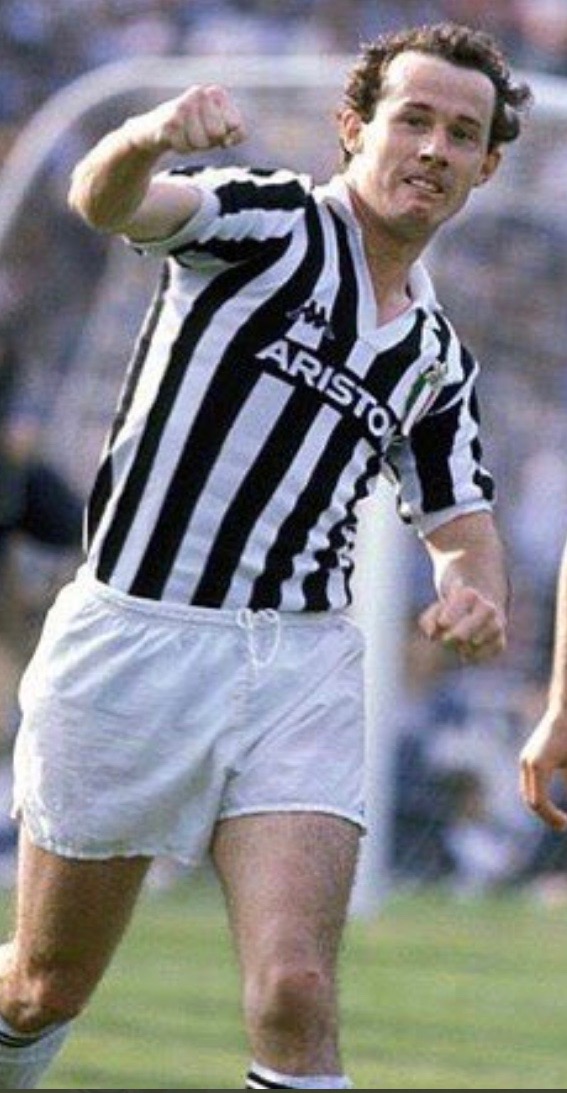
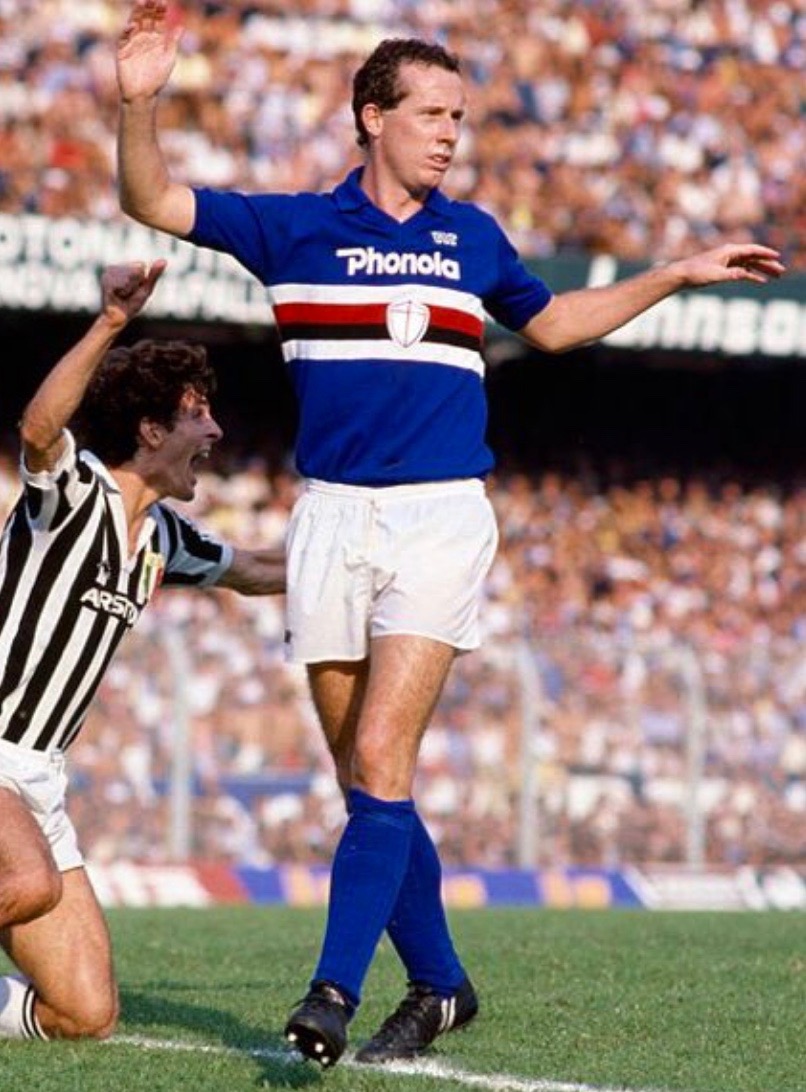
Brady moved on to Italy where he spent seven years, initially with Juventus, winning two Italian league titles and then with Sampdoria, Inter Milan and Ascoli. In his second season at Brighton, Brady had the Seagulls wearing the colours of Inter as their change kit – I still consider it to be the best the club has had.

As well as a highly successful club career, Brady won a total of 72 caps for his country. He made his Republic of Ireland debut on 30 October 1974 in a 3-0 home win over the Soviet Union and went on to win 72 caps for his country.

He retired from internationals ahead of qualification for the 1990 World Cup and, although he later made himself available for selection, manager Jack Charlton decided to choose only those who had helped Eire qualify for the finals.

Brady had returned to the UK in March 1987 to enjoy three years at West Ham in which he scored 10 goals in 119 appearances. His first somewhat ironically came against Arsenal while he reckoned his best was a 20-yarder past Peter Shilton that proved to be the winner in a league game against Derby County.

Brady explained the circumstances of his move to the Hammers in an interview with whufc.com. He nearly ended up joining Celtic instead, but he’d given his word to West Ham boss John Lyall and, because he’d retained an apartment in London, it made sense to return there.

Brady in action for West Ham at the Goldstone, faced by ex-Hammer, Alan Curbishley

In only his fourth West Ham game, he found himself up against Arsenal and was mobbed after netting the final goal in a 3-1 win at the Boleyn Ground.

“With ten minutes remaining, I won the ball on half-way before running to the edge of the 18-yard box, where I hit a low curler around David O’Leary and beyond Rhys Wilmott’s dive, into the bottom right-hand corner,” he said. “The place went wild! I certainly wasn’t going to just walk back to the centre-circle without celebrating my first goal for my new team.”

While the Hammers finished 15th that campaign, they were relegated in 1989 which brought about the departure of Lyall. Brady clearly didn’t see eye to eye with his successor, Lou Macari, but was pleased when he was replaced by Hammers legend Billy Bonds.

Brady eventually called time on his playing days in May 1990, Wolves and West Ham players lining up to give him a guard of honour as he took to the pitch for the final game of the season.

He was substitute that day but went on for Kevin Keen and rounded off his remarkable career by scoring in a 4-0 win.

“Having scored at the Boleyn Ground with my last-ever kick in professional football, I couldn’t have written a better script,” he told whufc.com.

After not making the move to Celtic as a player, his first step into management came at Celtic Park as successor to former club legend Billy McNeill in June 1991. He was the first manager not to have played for the Hoops.

It was a big step to take for a novice manager, and hindsight suggested the players he signed didn’t do him any justice. He later admitted: “I didn’t do particularly well as Celtic boss. Second place behind Rangers was seen as a failure and, even if you’ve had a good reputation as a player, it counts for little as a manager.”

Brighton (well, Hove actually) would prove to be as far from the cauldron of Glasgow as he could possibly get, but the club management game clearly didn’t suit Brady, and he didn’t take on any other senior managerial hotseats after the Seagulls.

Alongside his youth team responsibilities at Arsenal, he did assist his country’s national team between 2008 and 2010. He was assistant to Giovanni Trapattoni during his time in charge, also working alongside Brady’s former Juventus teammate Marco Tardelli.

Brady still lives in Sussex and he told whufc.com how he occasionally meets up with Billy Bonds at Plumpton Races and enjoys a round of golf with Trevor Brooking.

Boylers’ service appreciated both sides of the Atlantic

MIDFIELD enforcer John Boyle was born on Christmas Day 1946 and went on to play more than 250 games for Chelsea.

Towards the end of his career, he spent two months on loan at Brighton trying to bolster the Albion’s ailing midfield in the dying days of Pat Saward’s spell as manager.

Indeed, Boyle was in that unenviable position of being at the club when the manager who brought him in was turfed out, and the man who replaced him (in this case none other than Brian Clough) swiftly dispensed with his services and sent him back to Chelsea.

By then, Boyle’s time at Chelsea was at an end and, after his 10-game Goldstone spell was also over, he went the shorter distance across London to play for Orient, before ending his playing days in America with Tampa Bay Rowdies.

Born in Motherwell, Boyle went to the same Our Lady’s High Secondary school that spawned Celtic greats Billy McNeill and Bobby Murdoch and, just around the time he turned 15, his stepbrother, who lived in Battersea, organised through a contact they had with then boss Tommy Docherty for him to go down to London for a trial.

He did enough to impress and 10 days later Chelsea sent him a letter inviting him to join their youth team, together with the train ticket from Motherwell to London.

“When I got off the train, Tommy Doc was waiting for me to take me to my digs,” Boyle told chelseafc.com in a recent interview. “I stayed in the digs that Bobby Tambling and Barry Bridges had stayed in before.”

Boyle – known to all as ‘Boylers’ – made his debut in the 1965 League Cup semi-final against Aston Villa and, at 18, it couldn’t have been much more memorable.

“I played on Monday in a Scottish youth trial and Wednesday I was playing against Aston Villa in the semi-final of the League Cup,” Boyle recounted. “After 20 odd minutes, I tackled this guy and he got injured and carried off. The crowd then booed me, he limped back on and then the crowd booed me more!

“It went to 2-0, to 2-2 and then with about 10 minutes to go I got the ball 30 yards out, rolled it forward and went crack and it went into the top corner of the net. I remember Terry Venables ran up to me and said ‘John, I am so pleased for you,’ and that was my first game. To score the winning goal in your first game was Roy of the Rovers stuff.”

He went on to become Chelsea’s youngest ever cup finalist when he was in the team that won the trophy. In those days, it was played over two legs, and, after beating Leicester City 3-2 in the home game, they drew the away leg 0-0. His teammates in the second leg were Bert Murray and the aforementioned Bridges, who he would go on to play alongside at Brighton in 1973.

The Goldstone Ground was familiar territory to him. On 18 February 1967, he was famously sent off for the visitors in a FA Cup 4th round tie when Albion held their more illustrious opponents to a 1-1 draw in front of a packed house. Chelsea went on to win the replay 4-0 and that year went all the way to the final where Boyle was part of the side who lost 2-1 to Spurs. In another fiery FA Cup tie between Brighton and Chelsea, in January 1972, Boyle was Chelsea’s substitute as they won 2-0 in a game which ended 10 a side, George Ley and Ron Harris being sent off.

john boyle chels blueWhen Docherty moved on from Stamford Bridge, and Dave Sexton took over as manager, Boyle’s involvement in the side was more sporadic, as he told fan Ian Morris on his Rowdies blog.

“Dave appreciated my energy and willingness, but I don’t think he really fancied me as a player. Basically, I became an odd-job man, filling in here and there, and in football it doesn’t help to get that reputation,” he said.

Although he wasn’t in the squad that beat Leeds in the 1970 FA Cup Final, he was back in the side when Chelsea beat Real Madrid over two legs in May 1971 to win the European Cup Winners’ Cup.

After Brighton’s disastrous 1972-73 season in the second tier – the general consensus is that they’d not properly been prepared for promotion and didn’t invest sufficiently in the team to have a fighting chance of staying up – the side continued to be in the doldrums as they adjusted to life back in the old Third Division.

Manager Saward was struggling to come up with the right formula and, having transferred former captain Brian Bromley to Reading, sought to boost his midfield with the experienced Boyle, who was surplus to requirements at Stamford Bridge.

With the paperwork signed on 20 September, Boyle was handed the no.8 shirt and made his debut alongside Ronnie Howell in a 0-0 draw away to Grimsby Town.

He made his home debut the following Saturday, but the Albion went down 1-0. Three days later, this time partnering Eddie Spearritt in the middle, Boyle helped Albion to a 1-0 win at Oldham Athletic.

After a 3-1 defeat away to Blackburn Rovers, at home to Halifax Town Boyle had a new midfield partner in John Templeman. But again they lost by a single goal.

With Howell back alongside him for the home game v Shrewsbury Town, Albion prevailed 2-0 in what turned out to be Saward’s last game in charge. Perhaps by way of another interesting historical note, Boyle was subbed off to be replaced by Dave Busby, who became the first black player to play for the Albion.

Caretaker boss Glen Wilson retained Boyle in midfield for the midweek 4-0 hammering of Southport and he was also in the line-up for Clough’s first game in charge, a 0-0 home draw against York City on 3 November. But the 2-2 draw away to Huddersfield Town on 10 November was his last game for the Albion.

As someone who’d gained something of a reputation as enjoying the social side of things at Chelsea, particularly with the likes of Peter Osgood, Charlie Cooke and Alan Birchenall, it maybe doesn’t come as too big a surprise to learn that Clough advised him “always buy two halves instead of a pint, or people will think you’re a drinker”.

Boyle was still only 28 when he tried his hand in Florida in February 1975, being appointed Tampa Bay Rowdies captain, and leading them to victory in the Super Bowl against Portland Timbers in August that year.

His former Chelsea teammate Derek Smethurst scored 18 goals in that inaugural season, playing up front alongside ex-West Ham striker Clyde Best, while former Crystal Palace ‘keeper Paul Hammond was in goal.

A newspaper article about Boyle’s contribution resides on tampapix.com, a hugely entertaining site featuring loads of players of yesteryear who turned out for the Rowdies.

It somewhat flamboyantly says: “‘Captain Rowdie’ John Boyle was a barrel-chested midfielder with legs as white as snow and hair as thin as a wheat crop during a summer drought.  He became the role model for the club, as much because of his leadership as well as the fact that he knocked opponents ‘grass-over-tea kettle’ when they came his way.”

He retired from playing in November the same year but, two years later, he stepped in as Rowdies coach when Eddie Firmani quit. However, he had also gone into the pub business in the UK and ultimately the need to be behind the bar at Simon the Tanner in Bermondsey, with his wife Madeline, meant he had to turn his back on the sunshine state and return to London.

Unable to resist the lure of the States once more, Boyle played five matches for indoor league side Phoenix Inferno in the 1980-81 season.

In that wide-ranging interview Boyle gave to chelseafc.com earlier this year, he said: “I wouldn’t change a thing in my life, I am just grateful for what I have done. I have been blessed and one of the great things about it is 50 years later you can still talk about it! I was a lucky young man to have played when I did and meet the people I did.”


Paul Moulden chipped in with goals for Bournemouth and Brighton before batter days

MouldyWORLD RECORD youth level goalscorer Paul Moulden now runs a successful chippy in Bolton but he was once in the firing – rather than frying – line for AFC Bournemouth and Brighton & Hove Albion.

The career of the prodigious goalscoring wonderkid tailed off early although it may have taken a new direction in Sussex if the cash-strapped Seagulls had been able to afford to buy him.

Born in Farnworth, near Bolton, on 6 September 1967, Moulden went to the town’s Thornleigh Salesian College where, having excelled for the school football team, he went on to play for England Schools. He also played for Bolton Lads Club under-15s: his staggering personal goal tally of 289 goals in 40 games in a single season earned him a place in the Guinness Book of Records.

He was snapped up by Manchester City as an associate schoolboy during John Bond’s reign as manager and signed on as an apprentice before turning professional on his 17th birthday. He was part of City’s FA Youth Cup winning side in 1986, although manager Billy McNeill had already blooded him in the first team on New Year’s Day that year in a 1-0 home win over Aston Villa.

Moulden CityHe made two further substitute appearances for the first team that season and finished top scorer for City’s reserves. By late 1986, he had earned a regular place but a broken leg sustained in training restricted him to just three appearances in 1987-88.

In the 1988-89 season, Moulden was City’s top scorer with 13 goals as they won promotion from the old First Division back to the elite. But the young striker elected not to take up the offer of a new contract in the summer of 1989 and ended up joining Bournemouth, where Harry Redknapp was beginning his managerial career. Moulden was valued at £160,000 as the makeweight in a deal which saw Bournemouth’s Ian Bishop move to Maine Road.

City boss Mel Machin, himself something of a legend at Bournemouth (a Cherries player, manager and director of football) spelled the end of Moulden’s career at City.

Moulden told FourFourTwo magazine: “Machin just didn’t fancy me. I was offered a contract but it was a contract you’d have been a fool to sign, so I didn’t sign it and I became for sale. All the backroom staff and everyone else concerned was upset that I was going but to have tied yourself down for three years on the contract they were offering, you would have been a fool. That was the lever to get me out.” The Lancashire lad’s move to Dorset proved to be a success on the pitch – but was brief.

He scored six goals in his first three home league matches, including a hat-trick in a 5-4 win over Hull and both goals in a 2-1 win over Newcastle. “I remember the two goals against Newcastle,” Moulden told the Bournemouth Echo in 2016. “One was a three-inch tap-in and the other was a run from the halfway line.”

While he said in the Echo interview how much he enjoyed his time with the Cherries, he told efl.com: “Moving to Bournemouth was a huge move for me. At the time, I was single and it was exciting, but the novelty soon wore off and I found it hard to settle.

“It was a lovely club but I was delighted to return home and back to Oldham.”

Moulden told FourFourTwo: “Bournemouth had some good players, like Luther Blissett, Paul Miller and goalkeeper Gerry Peyton. The thing that struck me was how many old players they had – I was 22 at the time – but Harry was just starting out and I suppose for his first job he wanted security around himself.

“It was a small club and I’d imagine he had to get success quickly. Harry was a nice guy, a decent manager.”

SOCCER
PAUL MOULDEN – OLDHAM ATHLETIC

After just seven months at Bournemouth, and with 13 goals in 37 starts to his name, he was snapped up by Oldham Athletic on transfer deadline day in March 1990.

A £225,000 fee meant a decent profit for Bournemouth but, with Oldham flying high at the time, and Moulden struggling with injuries, he only managed 19 games for the Latics in two and a half seasons. He spent two months at Molde in Norway restoring his match fitness and when Oldham manager Joe Royle suggested he look for a new club, the move to Brighton looked like the ideal opportunity to resurrect his career.

Newly-relegated back to the third tier, Albion desperately needed some inspiration up front and manager Barry Lloyd thought he’d hit the jackpot in securing on loan the services of strike pairing Moulden and Steve Cotterill, from Wimbledon.

Each got themselves a goal in an opening 3-2 defeat to Orient so the signs were promising and the new men duly delivered the goods on the pitch.

The two goals Moulden scored as Albion beat Preston North End 2-0 in September 1992 were especially sweet, as he explained to Brian Owen of the Argus in 2016.

In total, Moulden scored five goals in 11 league appearances and Cotterill four, but the Albion couldn’t afford to sign either of them permanently.

The void was ultimately filled by the arrival of free transfer Kurt Nogan, who subsequently became a prolific goalscorer for the Seagulls. Moulden, meanwhile, ended up being sold to Birmingham later the same season for £150,000 and Cotterill, also deemed too expensive for Albion, was sold to Bournemouth for £80,000 the following summer.

In an interview with Howard Griggs of the Argus, in January 2011, Moulden explained how he would dearly have liked to have made the move to Brighton permanent.

“I played at Bournemouth two seasons before,” he said. “I liked the south coast and I had the chance to go to either Brighton or Plymouth. I jumped at the chance to go to Brighton and I thoroughly enjoyed my time there. I struck up a good understanding with Steve Cotterill.”

Moulden spoke particularly highly of assistant manager Martin Hinshelwood – “he was different class, absolutely brilliant” – and said: “It felt just right from the start. I did well with Steve Cotterill. We both scored goals for the team.”

As an ex-City player, Moulden was particularly miffed that Oldham boss Joe Royle would not let the outcast striker play for Albion against Manchester United in the League Cup that autumn, and he added: “If Brighton had had the money I certainly would have signed.”

He told Griggs: “Manchester City was certainly good, and I enjoyed my time at Birmingham under Terry Cooper, but there were plenty of good times and I can honestly say my two months at Brighton was up there.”

One of Moulden’s best games came in a 2-1 home win over Huddersfield as Albion won 2-1. Steve Foster, back at the club for a second spell, put Albion ahead on 17 minutes with a header from a John Robinson corner. Although Huddersfield equalised through a Iwan Roberts penalty, livewire Moulden popped up with the winner six minutes from time.

The Terriers would ultimately be Moulden’s next destination after leaving Birmingham in 1995 but he made only two appearances before switching to nearby Rochdale where he played 16 times in the 1995-96 season.

In total, Moulden suffered four broken legs and his league career came to a premature end at 28, although he played non-league with Accrington Stanley and Bacup Borough.

He later coached at his old boys’ club and also spent three years with the Manchester City academy but sensibly he had an eye for a career outside of football too and followed in his mum and dad’s footsteps by opening up Paul’s Chippy in Bolton.

Pictures: Albion matchday programme and online sources.

The never forgotten miss by FA Cup Final scorer Gordon Smith

3 and smith must score“NEVER in my wildest dreams – or should that be nightmares? – did I think that, more than 20 years later, that miss in front of goal would still be getting replayed on television and mentioned in the media wherever I go.”
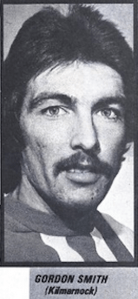
The words could only have been said by one man and they appear in the autobiography…And Smith Did Score (Black and White Publishing, 2005).

Gordon Smith’s football career included being a treble trophy winner with Glasgow giants Rangers, top scorer of the season for Manchester City, and becoming chief executive of the Scottish FA.

But it is what happened in the final seconds of extra time in the 1983 FA Cup Final that he is most remembered for.

Gordon Duffield Smith was born in Kilwinning (20 miles south of Glasgow) on 29 December 1954 and followed in his grandfather Mattha’s footsteps in becoming a pro footballer.

He was at Kilmarnock for five years, scoring 36 goals in 161 appearances, during which time he earned international honours with Scotland’s under-23 side, twice starting and three times going on as a substitute.

“It’s always a tremendous thrill to be selected in a squad for my country,” Smith said in a 1976  Shoot / Goal! magazine article. “It’s great to think Mr (Willie) Ormond considers me good enough for selection. I always do my very best for Scotland. I don’t need any further incentive other than pulling on that dark blue jersey.”

The item was highly complimentary of the player, saying: “The Kilmarnock dazzler is a player of poise and balance. He is one of the swiftest in Scotland and is certainly one of the most gifted. He has the talent to show the ball to the full-back then leave him helpless with astonishing acceleration.

“Smith can make and take goals. Some of his scores have been in the ‘unbelievable’ category. The flash down the wing, the cut-in, the race along the bye-line and then, with the ‘keeper expecting the cut-back, the explosive shot to finish the move in grandstand fashion – the ball zipping between the ‘keeper and the near post.”

In 1977, having joined Rangers for a fee of £65,000, he also collected an under-21 cap as an overage player, in a 1-0 defeat to Wales, but he was never selected for the full international side.

In his first season at Rangers, they won the domestic treble and he scored 27 goals from midfield. To cap it off he scored the winning goal in the 1978 Scottish League Cup Final against Celtic.

Alan Mullery paid £400,000 to take him to Brighton in 1980, and talked about the deal in his autobiography. “Sadly, Gordon Smith is remembered as the man who missed the last-minute chance to win the FA Cup in 1983,” said Mullers. “That’s a shame because he was one of the best players I ever worked with. He reminded me of Trevor Brooking. A midfield player with silky skills who could read the game perfectly.”

Smith played 38 games in his first season at Brighton and scored 10 goals. “I couldn’t ask for more than that,” said Mullery. But when Mullery quit the club in the summer of 1981, the rest of Smith’s time at the Goldstone could at best be described as turbulent.

He didn’t get on with Mullery’s replacement, Mike Bailey, or his assistant John Collins, mainly because of their more defensive style of play. In March 1982, the Argus reported Smith was pondering his future having been left out of the side, with Gerry Ryan and Giles Stille being selected ahead of him.

“I am just wondering what is happening now that I’m not even travelling with the team. I don’t know what my standing is at all,” he told reporter John Vinicombe.

Bailey accused some players of lacking commitment following a 4-1 reverse at Notts County, and Smith was dropped for the following game.

Smith voiced his displeasure at being made a scapegoat and told the Argus: “It seems that every time we lose, I get dropped. Then I read the manager’s remarks about lack of commitment. What other inference can I draw?

“He asked me to play defensively at Notts and I don’t think I let him or the team down. Throughout my career, I have never shown any lack of effort.”

In the 1981-82 season, Smith played 27 matches plus four as sub. He started 15 of the first 16 games of the 1982-83 season but, as Bailey and Collins tried to find the right formula, he lost his place to summer signing Neil Smillie and decided to take the opportunity to return to Rangers on loan.

He only played three matches, but one of them happened to be a League Cup Final defeat against Celtic at Hampden Park!

Almost as soon as Bailey and Collins had left, on Smith’s return to the south coast Jimmy Melia restored him to the first team, hence his subsequent involvement in the 1983 FA Cup Final.

“I had said I would never kick another ball for Brighton, but that was because I had been told there was no place for me as a regular first team player,” Smith said in the run-up to the big game.

“The change of manager altered that and obviously now I am looking forward to playing at Wembley within six months of taking part at Hampden Park. I just hope the result is different.”

Interestingly, the Express said: “The Wembley stage may just suit Smith’s style of game; he’s a studious player with a capacity to drift past people and quite capable of producing telling passes from the bye-line.”

It didn’t help Brighton’s striker options that Brian Clough had refused to allow Peter Ward’s loan from Nottingham Forest to continue until the end of the season, nor that Melia had organised a deal that saw striker Andy Ritchie swap places with Leeds United’s Terry Connor – who was already cup-tied, thus ineligible to play cup games for the Seagulls.

But, in an amazingly prescient pre-match comment, Melia said: “Gordon can be a matchwinner in his own right…he can play a very key part in this final.”

As the title of Smith’s autobiography reflects, the Scot silenced Manchester United followers the world over by opening the scoring for Brighton on that memorable May afternoon in 1983.

In only the 13th minute of the game, young midfield player Gary Howlett found Smith with a delightful chipped diagonal pass over United centre back Kevin Moran and Smith arched a header past Gary Bailey to put the Seagulls in dreamland (below, Smith celebrates the goal with Michael Robinson).

After United had taken the lead, and Gary Stevens had equalised for Brighton, the game went into extra time and the stage was set for one of the most talked about moments in the club’s history.

Interestingly, United ‘keeper Bailey believes Smith has been given a raw deal over the years.

He told the Argus: “It was not the best save I ever made and not the greatest ever seen in English football, but it was a decent one because of my reaction after I’d blocked it.

“I managed to keep my eyes open to make sure I got to the loose ball before Gordon. Often in those 50-50 situations your eyes close and the forward just taps it in but I watched and reacted quickly that time. I want to take credit for it because it came at such a vital time.

“Gordon has taken a lot of stick for what happened, and it was a crucial moment in Brighton’s history, but he shouldn’t get the blame. It is not justified at all. He didn’t score, but he didn’t miss the target.”

On the 25th anniversary of the 1983 final, Argus reporter Andy Naylor interviewed Smith at The Grand Hotel, Brighton, and asked if he ever got sick and tired of being asked about the incident.

“Not really. In life, you have to be able to get over things and deal with them,” Smith explained. “If you become famous for something you don’t do, a lot of people throw it in your face and take the mickey out of you, so you have to show a bit of character and I think I’ve done that.

“I am able to handle it and talk about it and I have no problem at all in taking full responsibility.

“I should have scored. I would love to have scored. I am sorry for the fans, my teammates, the management, everybody who suffered as a result. I suffered greatly too because I’m a perfectionist and I always wanted to be at my best. Everybody else’s disappointment can’t match my own.

“You just have to live with it. There are two choices, either hide away or come out and deal with it. I have put it into perspective. I swapped shirts with Alan Davies after the game. He got a winner’s medal and I didn’t. He’s dead now. He committed suicide. So winning didn’t change his life for the better.”

And, with the benefit of hindsight, would he have done anything differently? “I would have delayed my shot,” said Smith. “I thought Gary would come to me to shut me down. That is why I took a touch and hit it early, hard and low to his side, which meant he would never have got down to it. I scored a few goals in my time like that.

“For some strange reason, I don’t know why, Gary decided to dive. He dived the wrong way and it stuck in his legs. If I had delayed my shot for another split second, he was going down and I would have just chipped it over him.”

To personalise the situation just for a few short moments: Smith’s parents were travelling back to Sussex on the same coach as me that day, and I’ll never forget what happened. We had all gradually drifted back to our seats on the coach and there was understandably an excited hubbub of chatter mixed with the disappointment of seeing Brighton come so close and yet so far from winning the fabled trophy. As Gordon’s parents boarded the coach, an almighty silence descended. You could hear a pin drop. No-one quite knew what to say.

Of course, no-one would have known it at the time, but less than a year later, Smith was no longer with the club.

The new season back in the second tier of English football was barely a couple of months old before manager Melia was on his way, succeeded by Chris Cattlin, the former player who had been drafted in as coach by the chairman, Mike Bamber.

G Smith cover

Smith fell out with Cattlin and was ostracised for five months – ordered to train with the youth team and banned from anything to do with the first team and reserve team.

Looking back many years later, Smith told journalist Spencer Vignes: “He (Cattlin) told me one day that I wasn’t passionate about football and I just found that unacceptable…and I told him so.He just misread me totally.”

During that time, I can remember travelling by coach to Brighton’s FA Cup tie at Watford on 18 February 1984 and, as we were headed along the motorway, Smith was sitting in the front seat of a minibus of fans heading in the same direction.

Nine months earlier, he had scored – and missed – for the Seagulls at Wembley, and, here he was, reduced to a minibus passenger travelling to watch his pals because the club wouldn’t allow him to use any of their official transport.

His first team exile was suddenly lifted unexpectedly for just one more game, and he scored in a 3-0 away win at Derby County on 17 March 1984. But, within days, he was sold to then second-tier Manchester City for just £45,000.

A tad ironically for an ex-Rangers player, it was legendary Celtic captain Billy McNeill who took him to Maine Road. He made his debut in a home game against Cardiff City on 24 March 1984.

Thirty-eight of his 46 appearances for City came in the 1984-85 season, when he was top scorer with 14 goals.

Smith recalls the details of his spell at the club in the autobiography but, in short, he fell out with McNeill and made his last appearance for City on 4 November 1985, at home to Sunderland. He eventually moved to nearby Oldham Athletic, where he played nine games.

In 1987, he had the chance to play for Austrian side Admira Wacker, where he featured in 38 games, and the following season he switched to FC Basel in Switzerland, playing 25 games.

Eventually, in 1988, he returned to Scotland and finished his playing career at Stirling Albion.

Smith subsequently became an agent, representing the likes of Paul Lambert and Kenny Miller, but relinquished that work when he was appointed the chief executive of the Scottish FA, a job he held for three years. He was later director of football at Rangers during the 2011-12 season.

In June 2018, the Daily Record reported Smith’s daughter Libby had given birth to a baby boy and she’d taken on board her dad’s suggestion to call him Edson Thunder after the legendary Pele!!

Neil McNab: Brighton fans ‘worst crowd I’ve played for’

FIERY SCOT Neil McNab left Brighton for a sizeable loss on their initial outlay and went on to be voted Manchester City’s Player of the Year twice.

No stranger to brushes with the football authorities, McNab joined Brighton in the second half of their first-ever season in the top flight.

In his autobiography, manager Alan Mullery said: “Neil McNab was a Scottish whippet, a fierce competitor in midfield who never stopped running or competing.

“I bought him halfway through the season from Bolton Wanderers and he gave us the extra edge we needed.”

The player to give way at the time was Republic of Ireland international Gerry Ryan, and it would be fair to say the football writers were impressed by the tenacious Scot’s early impact.

After watching a 5-1 drubbing against Southampton from the subs bench, McNab made his debut at home to West Brom in a game that finished goalless. “McNab showed some touches of class in his home debut but scarcely as much as the home crowd expected from their £230,000 capture,” said Harold Palmer in the Sunday Express.

The News of the World’s Peter Jarman was slightly more effusive and described it as “impressive” and John Vinicombe in the Evening Argus said: “McNab, on his home debut, impressed with his industry and general involvement.”

Of his second game, a 1-1 draw away to Leeds, the Sunday People’s Keith Ray observed: “McNab looked light years from the off-key young man that Bolton sold. His prompting coupled nicely with Lawrenson’s hard work, and Ward had two chances to hit the target before he made the vital strike.”

A demonstration of his appetite came in the next game, another 1-1 draw, at home to Coventry, when he ran 25 yards to stop Peter O’Sullivan from taking a corner that he fancied for himself. He whipped the ball in and Ray Clarke thumped a header past Jim Blyth in the Coventry goal.

Gordon Smith, another Albion player who moved to Manchester City, remembered McNab’s quick wit in his autobiography, And Smith Did Score.

When it looked like Brighton were heading for relegation, Mullery, in fear of losing his job, famously threatened the players that he’d run them down in his car if that happened.

Smith recounted how the players were huddled round trying not to laugh at the astonishing outburst. “I almost fell off my chair when Neil leant over and whispered, ‘If he loses his job, he’ll no’ have a f****** car!’”

It was no laughing matter for player or club, though, when the tenacious McNab was suspended for four matches for pushing a referee. In the following season, he was up before the FA again after a skirmish with World Cup winner Alan Ball at the end of a 5-a-side tournament at the Brighton Centre.

Charged with bringing the game into disrepute, Ball was fined £100 but McNab was given a £250 fine and a two-game ban.

Manager Mike Bailey was clearly relieved and told the Daily Mail’s Brian Scovell: “Neil was expecting more but the last instance was entirely different. It was on the field of play when he touched the referee.

“We got a fair hearing. We’re not complaining. Both were guilty but the crimes were different as Neil’s part was unfortunately physical while Ball’s was verbal.”

McNab had the third highest number of appearances (44 plus two as sub) in the 1981-82 season, which saw Brighton’s highest ever finish of 13th, and all four of the goals he scored were from the penalty spot.

However, the safety-first style of play adopted by Bailey created a disconnect between players and fans. In the final home game of the season (a 1-0 defeat to Ipswich), McNab was substituted in the 62nd minute and the crowd booed him off.

The often-obtuse Vinicombe reported in the Argus: “When McNab was withdrawn, 30 minutes from time, his gestures to the crowd were capable of only one interpretation.” In the Daily Mail, McNab told Brian Scovell: “They are the worst crowd I’ve played for. When you do something good on the ball they don’t clap and if you make a mistake they give you stick.”

Worse was to follow after the row at the beginning of the 1982-83 season when Steve Foster and Michael Robinson slapped in transfer requests in protest at chairman Bamber refusing to sanction the acquisition of Charlie George, the former Arsenal, Derby and Southampton maverick, who had been on trial pre-season.

In what was supposed to have been a clear-the-air meeting, McNab let his feelings be known in no uncertain terms.

McNab still had five of six years left on his contract. They tried to offload him on loan to Newcastle, but the midfielder refused to budge. Instead, he made a bitter personal attack on the chairman, accusing him of picking the team, and slapped in his own transfer request.

McNab blasted: “The club is petty and small-minded, and players are treated disgracefully.” McNab made it clear he didn’t see his future at the club and after a few months eventually went to Leeds for a six-game spell and also to Portsmouth.

That came after Bailey had been sacked and his replacements, Jimmy Melia and George Aitken, gave the team a big shake-up, dropping McNab and adopting a more adventurous approach (which ultimately led to relegation).

Although completely out of the first team picture from early December 1982 onwards, McNab was to play one last game nearly five months later.

With Melia struggling to field a team because of injuries and suspensions, McNab got the nod for an away game at Notts County on 30 April 1983.

But he was unable to join in the FA Cup run to Wembley because he had been cup tied during his spell at Leeds. The 1-0 defeat to County was the Scot’s last ever Seagulls appearance.

Relegation led to the release of some of the high earners, and while Robinson and Gary Stevens were sold for sizeable fees, McNab was sold to Manchester City – who had been relegated with Albion – for just £35,000.

Born on 4 June 1957 in Greenock, McNab went to the town’s Highlanders Academy and he was in his primary school team at the age of eight. By the time he was 10, he was playing for the Greenock and District Under 12 representative side.

He moved on to Mount Secondary School, playing for the school team at all age groups, and at 14 was selected for the Scotland Schools side.

He played against England at Ibrox Park, against Ireland at Stranraer, and even travelled to Frankfurt to play against West Germany. All the attention alerted various scouts but he had already signed schoolboy forms for his local club, Greenock Morton.

He actually left school before he was 15 to join Morton as a professional and when he made his first team debut aged 15 in September 1972 he was the youngest outfield player ever to play in the Scottish League. McNab ended that season having played 11 matches and appeared a a sub on three occasions.

McNab SpursHe made 14 appearances for them before being snapped up for £40,000 by Tottenham Hotspur in 1974 and made his first team debut for Spurs while still only 16. A former teammate at that time, Andy Keeley said in a recent interview: “I’ll never forget how he played in a friendly match; first team v reserves. He controlled the game from start to finish. He was outstanding. He had a very good career but I never understood how he didn’t become a superstar.”
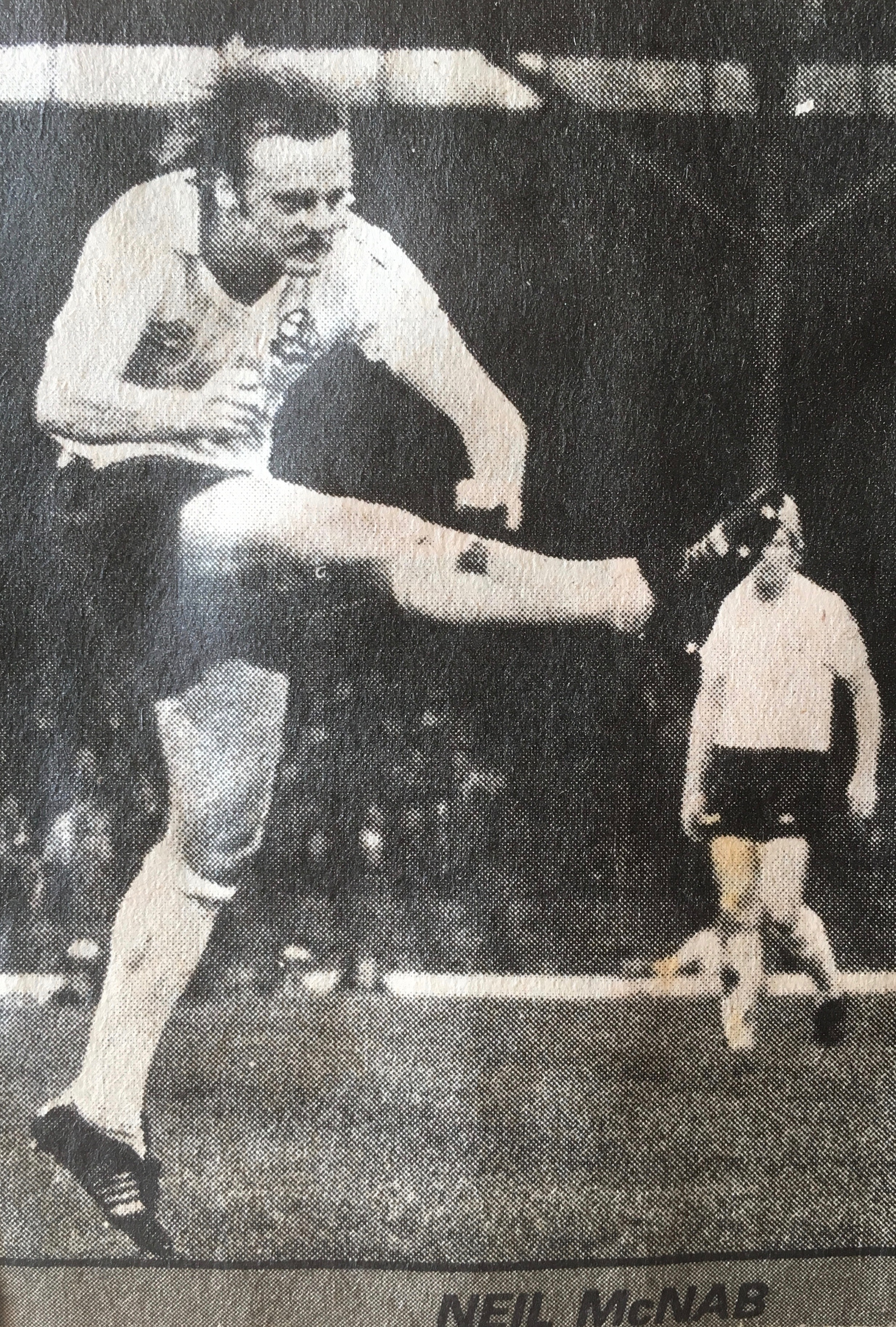
In four years at White Hart Lane, McNab played 72 matches and was selected by Scotland at under 15, under-18 and under-21 level, but never made it to the full Scotland team.

McNab - BoltonIn November 1978, Bolton Wanderers paid £250,000 for him but after only 35 appearances for the Trotters, in February 1980, Mullery signed him for Brighton.

When the former Scotland and Celtic captain Billy McNeill captured McNab’s signature in the summer of 1983, he began what would be a long association with Manchester City and he turned out to be a bargain buy considering in 1986-87 and 1988-89 he was voted City’s Player of the Year.

“Combative and always willing to stick a boot in, McNab was a key figure in City’s drive to promotion on more than one occasion,” was how manchestercity-mad.co.uk described him, while mancity.com, looking back at past players of the year, said: “Like a fine wine, got better as time went on.”

McNab w HartfordAcknowledging his initial signing failed to excite the City faithful, it added: “McNab developed into a skilful, combative midfielder who became a huge crowd favourite. Not unlike Asa Hartford (pictured above with McNab), McNab was a schemer who could pick a pass and kept the team’s tempo ticking over.”

McNab scored 19 goals in 261 league and cup games (plus five as sub) for City  but when Mel Machin’s successors at Maine Road (caretaker Tony Book and Howard Kendall) discarded him, he continued his playing career at Tranmere Rovers who paid £125,000 to take the 33-year-old to Prenton Park.

The combative midfielder added nous, steel and no little skill to the Rovers midfield, ending his first season in Birkenhead with two appearances at Wembley including the Leyland Daf Cup victory over Bristol Rovers,” said the Liverpool Echo.

He played 105 games for Tranmere, scoring six goals, and was part of the squad that secured promotion to English’s football’s second tier. He also earned the dubious distinction of being the first and thus far only Tranmere player to be sent off in a European game – a 2-1 win over Cosenza in the Anglo-Italian Cup.McNab HS

Determined to carry on playing, McNab had an 11-game loan spell at Huddersfield Town, returned to his native Scotland to turn out for Ayr United, appeared briefly for Darlington, played 13 games in Northern Ireland for Derry City, went non-league with Witton Albion (12 games) before finally calling it a day with Long Island Rough Riders in the States.

In 1994, he returned to Maine Road as youth team coach, when his old Albion teammate, Brian Horton, was City manager, and kept the position even when the aforementioned Alan Ball replaced Horton. But eventually he lost his job during another managerial upheaval in 1997 and took up a similar position at Portsmouth, once again working with Ball.

In October 2002, he finally landed a managerial position when he took the helm of League Two Exeter City. The reign was shortlived, though, and with only six wins in 26 matches (eight draws, 12 defeats) he was relieved of his duties.

McNab’s twin sons, Neil junior and Joe, who were born in Brighton, followed in their dad’s footsteps and were part of the young age group sides at Man City and Portsmouth. But after struggling to make the breakthrough, they moved to Wilmington, North Carolina, and have played for various sides in America.

Neil senior followed them to the States and in 2008 became director of coaching at Chiefs Futbol Club in Atlanta, Georgia, with Neil junior the club’s executive director.

In August 2017, it was reported Neil senior had suffered a severe stroke which left him fighting for his life.

On 2 March 2018, a message was sent via freelance writer Spencer Vignes to say that McNab had finally managed to return home after five months in hospital and in rehabilitation. “He has made tremendous progress, but still has a long way to go,” his son said.