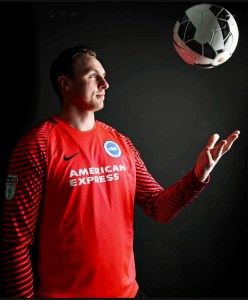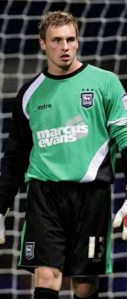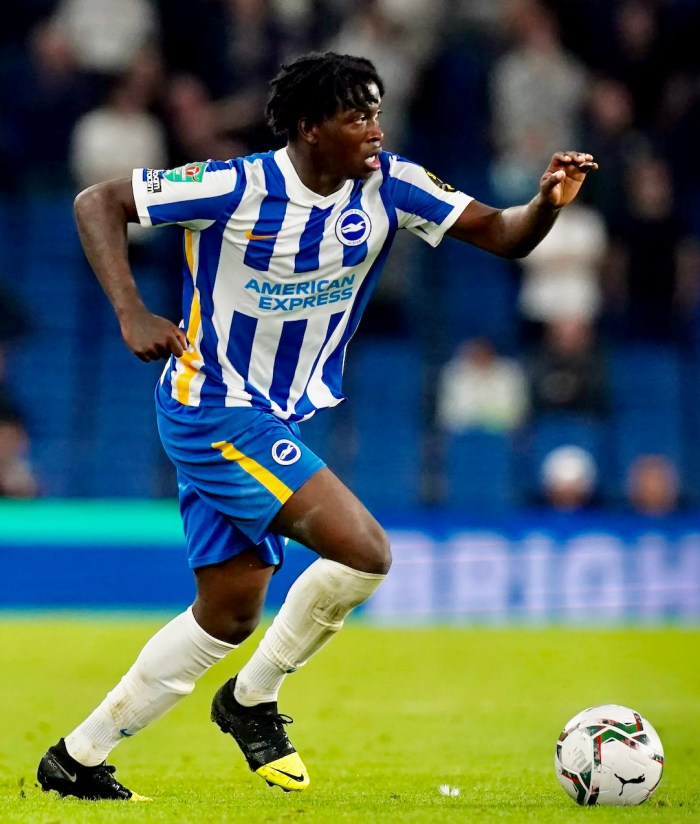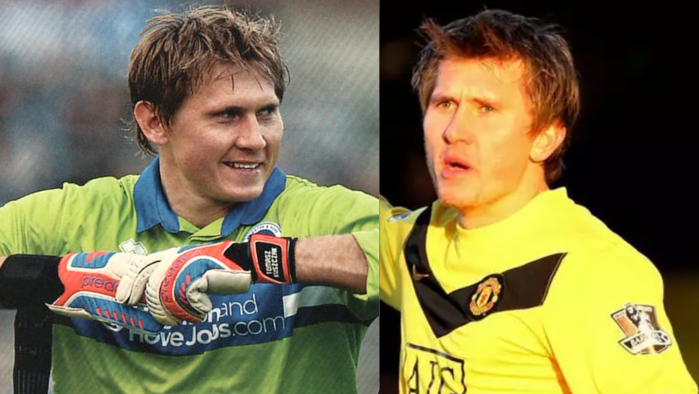
Pole in goal Tom experienced Cup highs and lows

THERE’S plenty of FA Cup history between Brighton and Manchester United and a goalkeeper who played for both has his own memories of the competition – not all of them good!

Although Tomasz Kuszczak played 32 league games for United, as a back-up at Old Trafford rather than first choice, he often found himself called upon in cup matches (eight FA Cup, 10 League Cup – including collecting a winners’ medal in 2010 – and 11 European games).
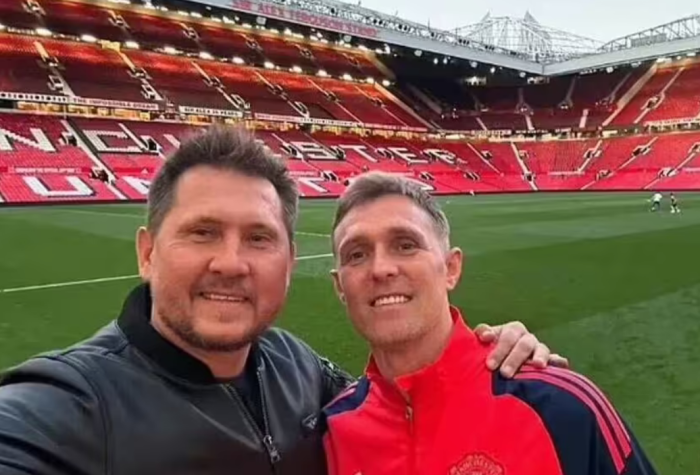
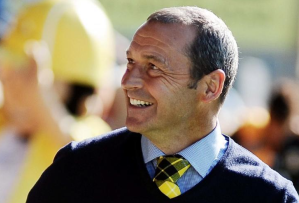
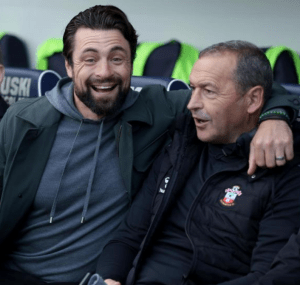
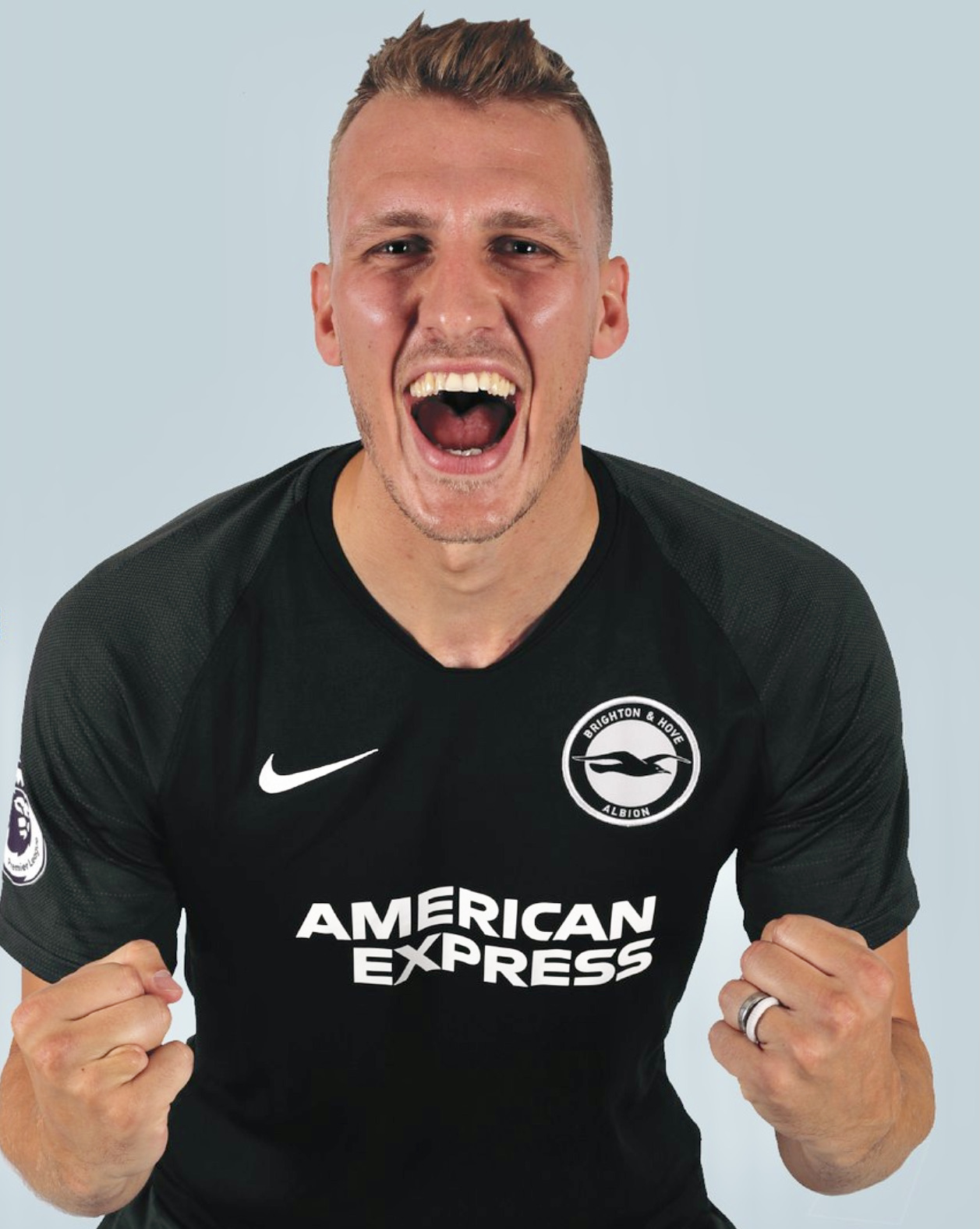
In April 2025, Kuszczak paid a return visit to Old Trafford to watch United’s 0-0 draw with Man City and snapped some selfies watching from the stands and (above) on the pitch with former teammate Darren Fletcher, now in temporary charge at United following the dismissal of Ruben Amorim.

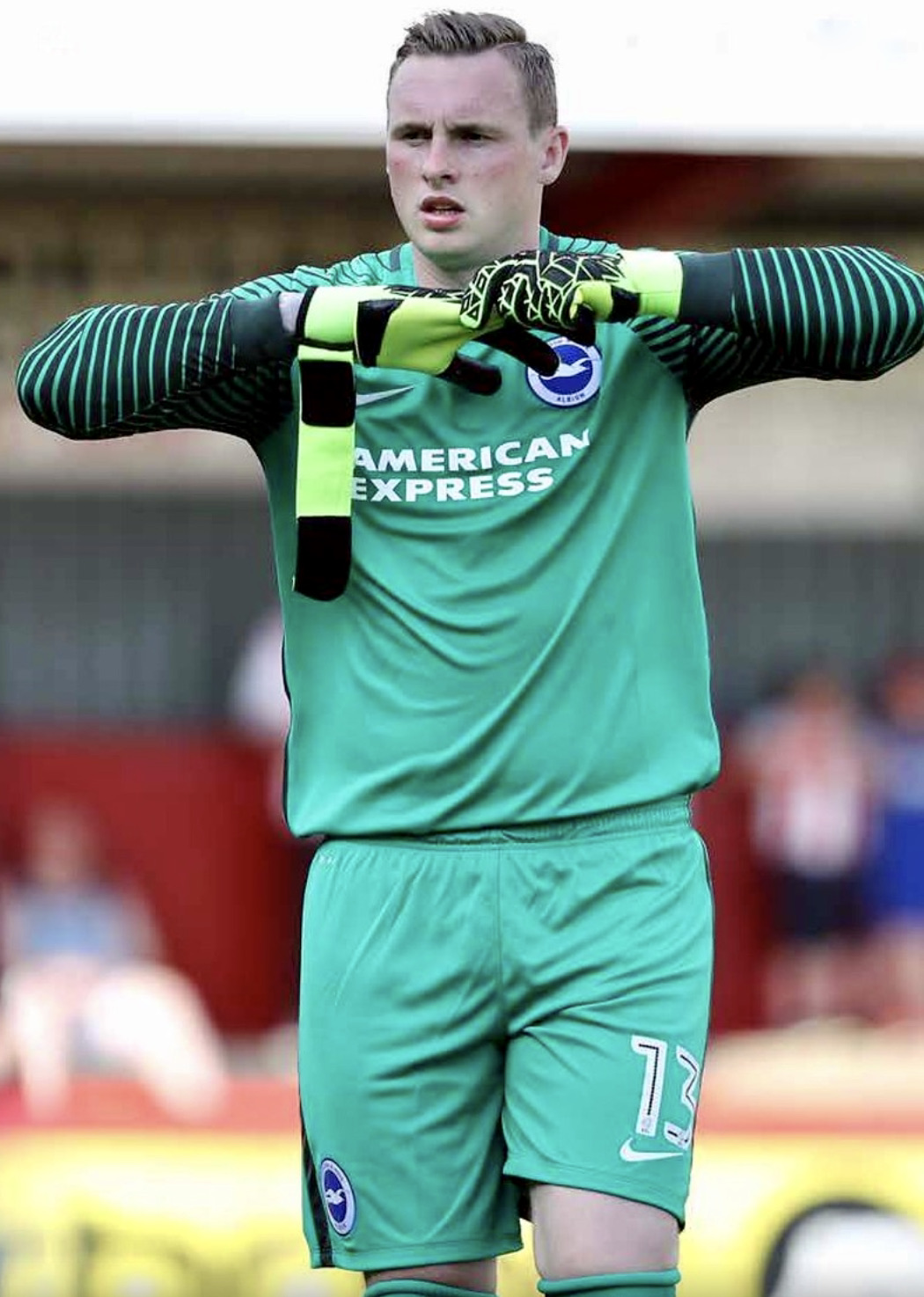
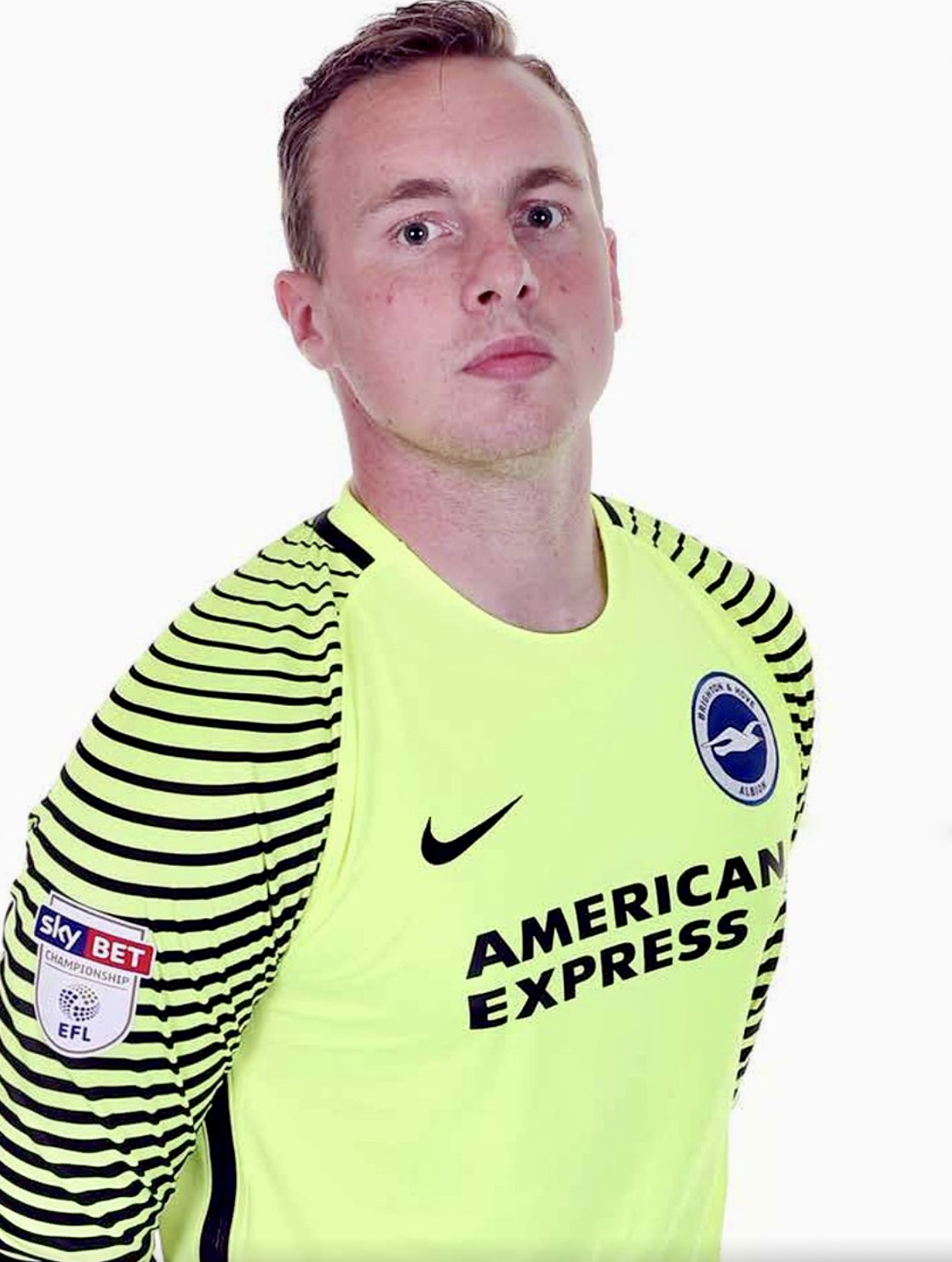
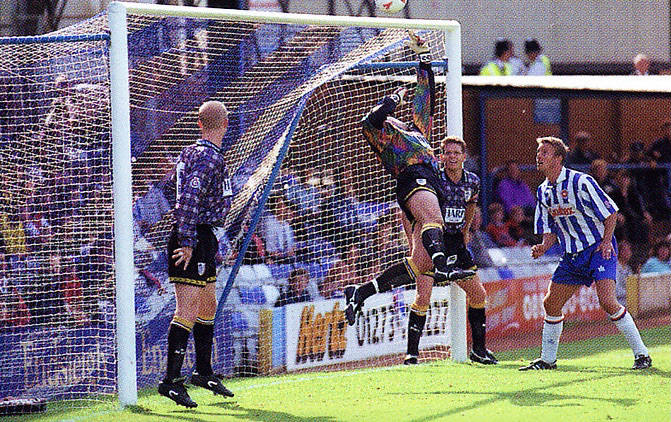
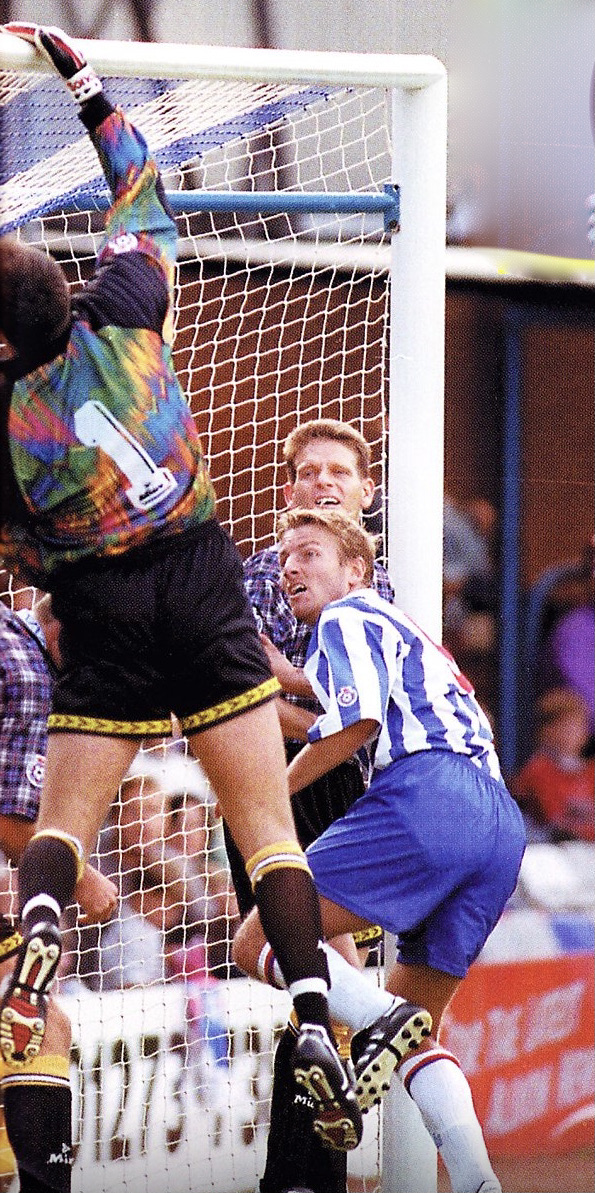
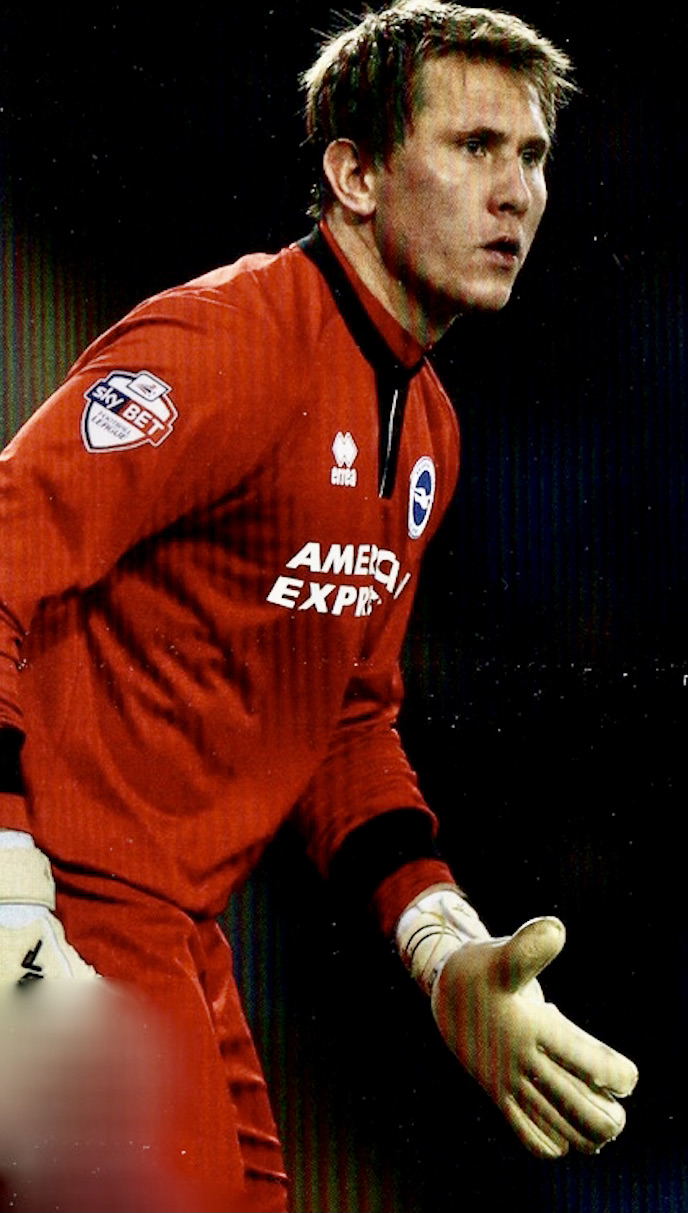
At Brighton, where Kuszczak was the first choice for two seasons, he found the goalkeeping duties reversed for FA Cup ties and he gave way to either Casper Ankergren or Peter Brezovan.

Signing the Polish international for Gus Poyet’s Championship Brighton side was something of a coup and the boss told the club website: “There were clubs in England and abroad interested in Tomasz, but it says a lot for the ambition of this club that he wanted to sign for Brighton.”

Poyet later told The Argus: “When we had the chance, we got him. You don’t have too many chances sometimes to sign this sort of player, so it was very important.”

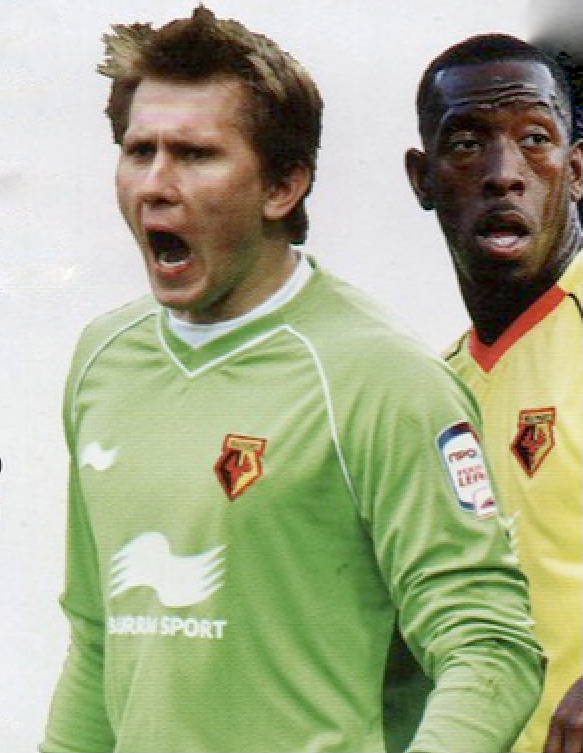
Kuszczak said one of the reasons he chose to join the Seagulls was because of what he’d seen when playing against them the previous season, while on loan at Watford.
“I was very impressed with the way the team played – it was totally different to the rest of the Championship and more like what I was used to at Manchester United.

“This team likes to pass the ball, they like to create, they are attractive to watch. The way Brighton play is the future of football.

“I had other clubs who wanted to sign me but my heart told me that this was the right choice.”

Kuszczak continued: “I have played Premier League football for eight years, with West Bromwich Albion and Manchester United, and I believe the structure is in place here to join them.

“The manager and coaching staff, the team, stadium, crowds, through to the plans for the new training ground, everything is geared up for playing at the highest level and I could sense that ambition to be a top club straight away.
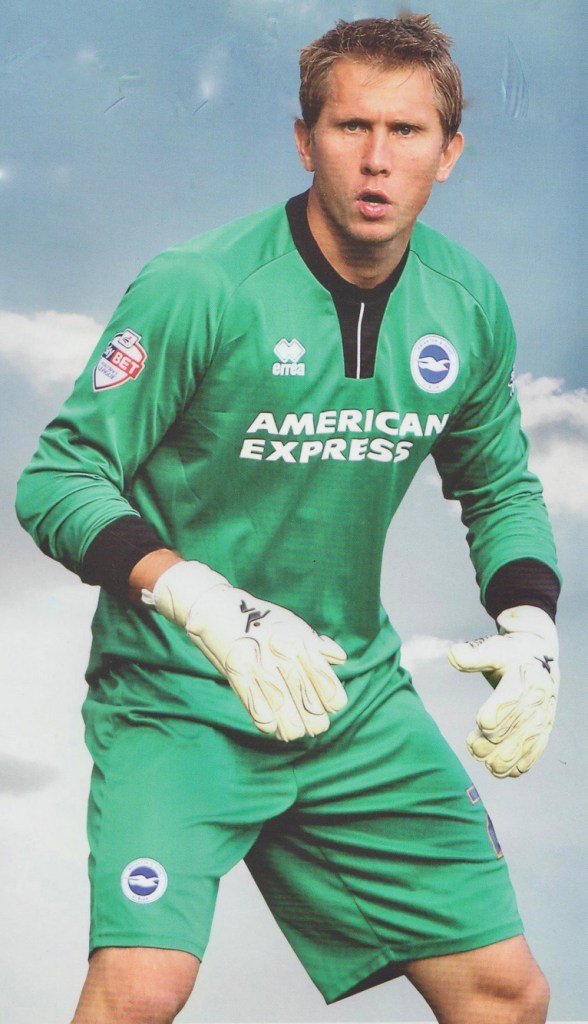
“The Premier League is where I want to be again and I believe I can get there with Brighton. This club is heading in only one direction, and I want to play my part in helping us get there.”

During his time at Manchester United, five of Kuszczak’s eight FA Cup appearances were in the 2007 competition when United reached the final – although first choice Edwin van der Sar took over between the sticks for that game, when Chelsea won it 1-0.

The 2008 competition certainly wasn’t one Kuszczak remembered fondly. In a quarter-final against Portsmouth at Old Trafford on 8 March 2008, he went on as a sub for the injured van der Sar at half-time, but 30 minutes later was handed a straight red card for fouling Milan Baros.

Rio Ferdinand took over in goal but failed to save Sulley Muntari’s penalty, the only goal of the game.

In 2010, Kuszczak was in goal when League One Leeds United, with Ankergren in goal, pulled off a shock third round win at Old Trafford – United’s first exit at that stage of the competition since 1984 (the year they went into it as holders after beating Brighton in a replay in 1983).
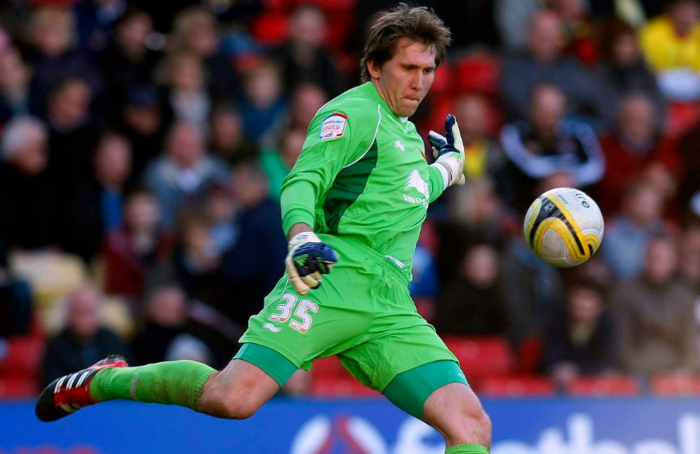
Jermaine Beckford’s 19th minute goal clinched it for the Yorkshire side against a United who had Danny Welbeck playing up front alongside Dimitar Berbatov and Wayne Rooney.

There was some consolation the following month when United won the League Cup at Wembley, beating Aston Villa 2-1. James Milner opened the scoring from the penalty spot for Villa, sending Kuszczak the wrong way. But goals from Michael Owen and substitute Rooney clinched it for United.

The following year, Kuszczak was again in goal for United’s FA Cup third round tie at home to arch rivals Liverpool which United edged with an early goal by Ryan Giggs. Liverpool captain Steve Gerrard was sent off just past the half-hour mark for a two-footed tackle on Michael Carrick.

But Anders Lindegaard was chosen ahead of Kuszczak as United marched to the semi-finals, where they were beaten 1-0 by Manchester City. In the fifth round, United only narrowly overcame Crawley Town, who had former Albion ‘keeper Michel Kuipers in goal.

By the time the 2011-12 season came round, Kuszczak had slipped down the list of United custodians, with David de Gea first choice, and Lindegaard and Ben Amos also ahead of him.

In February 2012, Kuszczak was loaned to Championship side Watford, where he made 13 appearances, including that third-to-last game of the season at the Amex, which finished 2-2. Former Seagulls promotion-winner Chris Iwelumo was in Sean Dyche’s Hornets side that day when goals from Troy Deeney and Sean Murray (penalty) put the visitors ahead at half-time and second half replies from Inigo Calderon and Will Buckley, against his former club, ensured a share of the points.

It was on Kuszczak’s release from United in June 2012 that he moved to Brighton.

Born in Krosno Odrzańskie in western Poland on 20 March 1982, the son of a Polish army colonel, Kuszczak grew up in Wroclaw, the city on the River Odra whose Tarczyński Arena was a host stadium for the 2012 Euros.

When he was 11, Kuszczak fancied himself as a striker but soon realised he wasn’t quick enough.

“I was always taller than everyone else, a bit like my father and brother, and I loved climbing, jumping from trees, taking a risk, so the position of goalkeeper seemed idea to me,” he said in a matchday programme interview.

“My father and brother would take shots at me, hard shots as well, and I enjoyed trying to stop them.”

He began his career with one of his country’s top teams, Śląsk Wrocław, and a year after earning his first pay packet at the age of 16 crossed over the border to Germany to play for KFC Uerdingen 05 and Hertha Berlin.

Although he made 87 appearances for the Berlin side’s reserves, he was unable to dislodge ex-Palace ‘keeper Gabor Kiraly and Christian Fiedler to claim a first team spot.

He was capped at under 16, under 18 and under 21 level (14 caps) by Poland and, while never first choice ‘keeper for the senior international side, he made his debut in 2003, in a 4-0 win over Malta, and played 11 times for his country, the last time in 2012. He initially took over from Liverpool keeper Jerzy Dudek but, invariably, Artur Boruc and Wojciech Szczesny were picked ahead of him.

He moved to the UK in 2004 when Gary Megson signed him for West Brom. He was reserve ‘keeper behind Russell Hoult in his first season at The Hawthorns but managed 28 league appearances when competing for the gloves with the often-injured Chris Kirkland in his second season.

In one of those appearances, against Wigan Athletic in January 2005, he pulled off a spectacular save to deny Jason Roberts which was subsequently voted Save of the Season by Match of the Day viewers.

Four months later he went on for an injured Hoult at Old Trafford after only 19 minutes and he recalled: “I had a fantastic game, saving everything that came my way and we ended up drawing 1-1. It was a game which ultimately got me my move to United.”
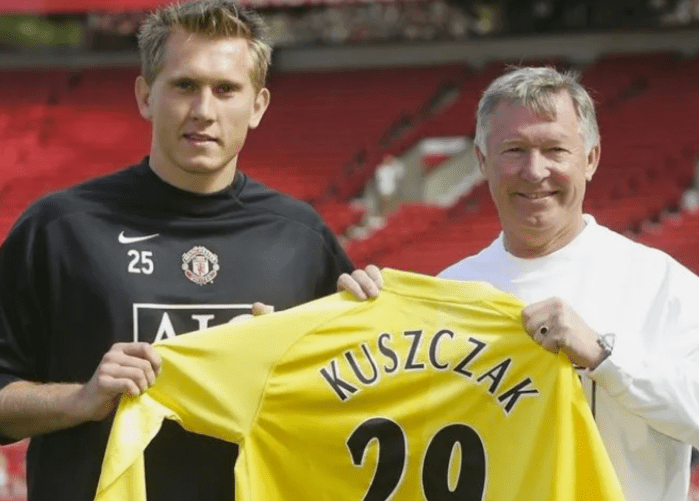
Sir Alex Ferguson captured Kuszczak from West Brom

In a somewhat complicated transfer deal, Man U signed Kuszczak in the summer of 2006 in exchange for United’s former Albion loanee, Paul McShane, and young goalkeeper Luke Steele, but the first year of the arrangement was on a loan basis. In five seasons at United, he played a total of 61 games.

After he retired from playing Kuszczak completed a degree in sports journalism and he had already shown his writing ability during his time with the Seagulls, compiling a piece for The Footballers’ Football Column in December 2013 which appeared in the Daily Mail.

Perhaps he also showed his true colours regarding dropping down into the Championship when he wrote: “I miss the Premier League a lot. The idea around moving to Brighton was to get more games and put myself on the market.”
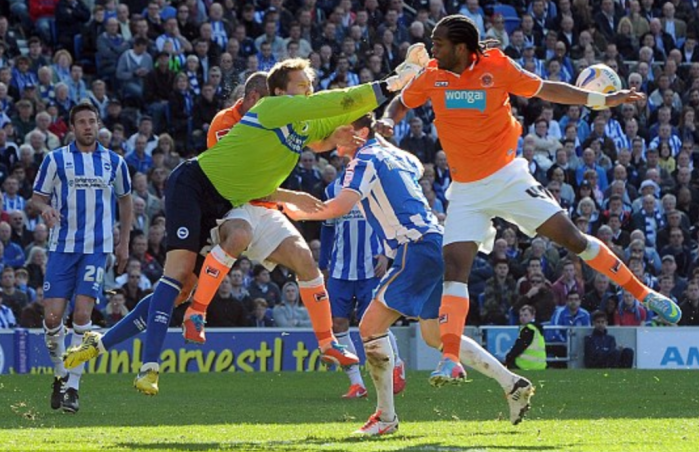
Kuszczak in the thick of it for Brighton against Blackpool

Although he added: “This move was all about giving me the opportunity of playing in the Premier League in the future. I would love to go with Brighton – that’s the aim. We’re ambitious and want promotion.

“It may sound arrogant but my place is in the Premier League. I came to England with West Bromwich Albion and enjoyed my time there, as I did at United. I want to be back in business in front of great crowds.

“I want my friends to be watching me on TV every week and have a chance of challenging the best in the world.”

Kuszczak certainly addressed the issue of more playing time during his two seasons with the Albion, completing 89 appearances across the two successive play-off promotion campaigns, initially under Poyet and then Oscar Garcia.

But within days of Garcia’s resignation after the play-off semi-final defeat to Derby, it was announced Kuszczak was being released.

There were a number of unsubstantiated and colourful reasons as to why he wasn’t retained by Brighton, but Andy Naylor in The Argus said neither Garcia nor his replacement, Sami Hyypia rated his ability with his feet or his distribution skills.

For around six months, Kuszczak was unable to find a new club but then Kenny Jackett took him to Wolverhampton Wanderers where he played 13 games deputising for the injured Carl Ikeme.

Midlands rivals Birmingham City swooped to sign him in the summer of 2015. Even though Harry Redknapp signed Brighton’s David Stockdale as first choice ‘keeper at St Andrew’s in 2017, Kuszczak found himself back in the first team after Steve Cotterill arrived as manager.

He spent four years at St Andrews, finally leaving in 2019 having made 89 appearances for the Blues.

After hanging up his gloves, he returned to Poland and started up his own construction company building houses and apartments.

He also completed his journalism studies and obtained his UEFA A coaching licence. He coached the Polish national team goalkeepers for six months between September 2023 and March 2024.
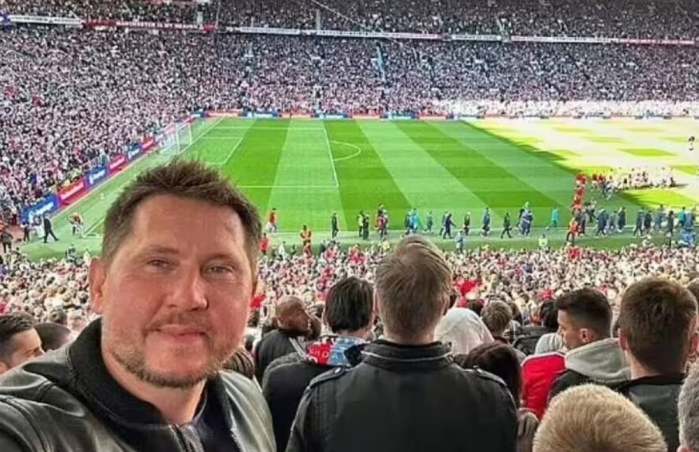
Kuszczak took a selfie as he watched from the Old Trafford stands in April 2025

The Foxes hero who led Albion’s line in an hour of need

STEVE CLARIDGE became a Leicester City hero long before briefly coming to Brighton’s rescue.

He scored the winner in a play-off final at Wembley to take the Foxes up to the Premier League at the expense of Crystal Palace, who’d discarded him at an early age.

Both sides had been relegated from the top flight the year before and Claridge’s right-foot strike past Nigel Martyn in the 120th minute meant it was an immediate return for Martin O’Neill’s side.

“The high is not equal to anything,” Claridge told Leicestershire Live.

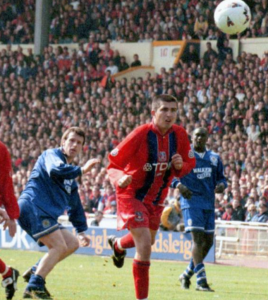
Scoring play-off winner v Palace

It came in 1996 and a year later he scored the only goal of the game (past Ben Roberts) in the 100th minute of a replay against Middlesbrough to win Leicester the League Cup, leading to him being named FourFourTwo’s ‘Cult Hero of 1997’.

Claridge had only completed a £1.2m move from Birmingham City two months before that play-off and he labelled it the most important goal of his life coming after a worrying period in which he wasn’t sure he’d ever be able to play again.

A mystery illness had ravaged his form and in only his fifth Leicester game he was taken off after 15 minutes. “Pins and needles from my knees down were so extreme, I could not even feel the ball,” he recalled.

It turned out a drug prescribed for a thyroid problem he’d had since the age of 12 was destroying his thyroid gland. “The main energy provider of my body was no longer functioning,” said Claridge.

However, once on the right medication, he made an almost unbelievable recovery, was restored to the side and helped to secure a play-off place.

After beating Stoke City in the semi-finals, they went a goal down to Palace in the final but pulled it back through a Garry Parker penalty before Claridge seized his chance in the dying moments of extra time.

Wembley winners for Leicester: Garry Parker and Steve Claridge

He collected a quick free kick from Parker and took aim, his shot from distance kissing the stanchion with goalkeeper Martyn motionless.

“The crowd is just really stunned in disbelief, I don’t know if that was because I’d hit it,” laughed Claridge. “It was so far out, and everybody was used to me scoring goals inside the six-yard box.”

He reflected: “To finish off after the lows I went through, the absolute lows where you’re thinking, ‘my career is over I can’t see a way out of this,’ to doing that and taking you to the ultimate high – winning that game of football. It’s unparalleled.”

Albion cover ‘boy’

Such experience was exactly what Championship strugglers Albion required when, on the back of three defeats, they faced the daunting prospect of promotion-seeking West Ham away on 13 November 2004.

Manager Mark McGhee, who’d previously signed Claridge when he was at Wolves and Millwall, was desperate to stem a tide which had seen eight goals conceded and no points on the board.

“He is one of the fittest players I’ve worked with and I had no doubt that after 18 months away from this level he would be able to perform,” said McGhee.

Claridge’s professional career looked to have run its course after he left Millwall in 2003 and became player-manager of Southern League side Weymouth.

But the disappointment of missing out on promotion had seen him and chairman Ian Ridley leave the club and Claridge, at the age of 38, was keen to give league football another go.

In what turned out to be a real backs-to-the-wall smash and grab raid, Albion earned the unlikeliest of 1-0 wins courtesy of a Guy Butters header from Richard Carpenter’s free kick.

Albion held firm despite a relentless wave of attacks by the home side and afterwards McGhee said: “We approached the game differently. Whereas before we thought we could win, today we did not, and played to make sure we didn’t get beaten.

“We kept the ball up front more which is important. Steve Claridge was key to that.”

Unfortunately, Brighton were not able to build on the win at the Boleyn Ground and there was only one more win (1-0 at home to Rotherham) during Claridge’s month with the club.

His fifth and final game for the Seagulls came away to his old club Millwall on 11 December 2004, when Albion lost 2-0.

In a programme feature about him that day, Claridge likened the circumstances of both clubs. “The club has no money and it is tough just to survive, but everyone is in it together,” he said. “At Millwall we had a great team spirit and togetherness, and that is very much the case here.”

McGhee’s tight budget prevented Claridge’s stay at Albion being extended and, after his deal was over, rather than it being one last hurrah, he went on to continue his league playing days at Brentford, Wycombe Wanderers, Gillingham, Bradford City and Walsall.

And, at the age of 40, and with him needing just one more game to fulfil the landmark of 1,000 professional games, his old club Bournemouth – where he’d started out as a professional in 1984 – gave him a match against Port Vale on 9 December 2006. No fairy tale, though, as they lost 4-0.

Born in Portsmouth on 10 April 1966, Claridge was brought up in Titchfield and began his football career at nearby Fareham Town in 1983. His initial foray into the pro game at Bournemouth only amounted to seven games before he moved to Weymouth for three years.

Crystal Palace offered him a route back to the full professional game in 1988 but he didn’t make their league side and after three months moved on to fourth tier Aldershot Town.

Two spells with Cambridge United followed between 1990 and 1994 for whom he scored 46 goals in 132 games. A falling out with manager John Beck saw him sold to Luton Town in 1992, but he was then bought back after Beck’s departure.

Birmingham City paid £350,000 to take Claridge to St Andrews and he became one of the club’s most prolific goalscorers, netting 35 in 88 games, and was top scorer with 25 goals when part of Barry Fry’s Blues side that won the Second Division title and the Auto Windscreens Shield (Football League Trophy) in the 1994-95 season.

After spending two years at Leicester, he went on a two-month loan to his hometown club, Portsmouth, but, in March 1998, McGhee signed him for the first time – and it didn’t go well.

The Scot, who had controversially left Leicester to take over at Wolves, took Claridge to Molineux for a £350,000 fee. But Wolves fans were not impressed, as Levelle revealed in this 2012 piece, and after just six games and no goals in the famous old gold shirt, he was sold to Portsmouth for £250,000 at the end of the season.

Even more galling for Wolves followers was that no sooner had Claridge made the switch to Portsmouth, he scored all three in a 3-1 win at Fratton Park!

David Miller in The Telegraph wrote: “The 34-year-old Steve Claridge, who had failed to score in five months when previously with Wolves, now gave sun-blessed Portsmouth a bank holiday funfair with a first- half hat-trick that was as easy as licking an ice-lolly.”

On the ball for Pompey

The goals and games came thick and fast for Claridge back on home turf – 34 in 104 – but his reign as player-manager at Fratton Park in 2000 was curtailed after just 25 games by the quirky chairman Milan Mandarić.

Remembering the player he’d seen only briefly a couple of years earlier, McGhee, by now in charge at Millwall, offered the striker a lifeline with the Lions, initially on loan and then as a permanent signing.

Going through the pain barrier at Millwall

Over two seasons in south east London, he became something of a fans’ favourite, scoring 26 in 85 matches, his efforts summed up by writer Mark Litchfield. “His style was unconventional, to say the least: shirt untucked, one sock down and no shin pads, any naïve defender probably thought they could eat him for breakfast. But hard work was a pre-requisite for Claridge – he wouldn’t give any opposition player a moment’s rest and would more often than not always get the better of them, too.”

Claridge had a less happy association with Millwall too when in July 2005 he was sacked after just 36 days as manager when the chairman who appointed him, Jeff Burnidge, was replaced by  Theo Paphitis, who wanted Colin Lee instead.

Even after achieving the 1,000-game landmark courtesy of Bournemouth, Claridge couldn’t resist the lure of another game, turning out for Worthing, Harrow Borough, Weymouth and Gosport Borough.

He was one of a group of five that formed Salisbury FC at the end of 2014, and as team manager was involved in gaining two promotions in the Southern League before leaving in October 2022.

Although he had officially hung up his boots in 2012 after helping Gosport to promotion to the Southern League Premier Division, in 2017 he played in a friendly defeat to Portsmouth in July and then put himself on against Paulton Rovers in the league a few weeks later.

His final ever game as a player came in a 3-2 victory over Fareham Town, when he was a remarkable 51, but he had to go off in the 71st-minute after picking up an injury. 

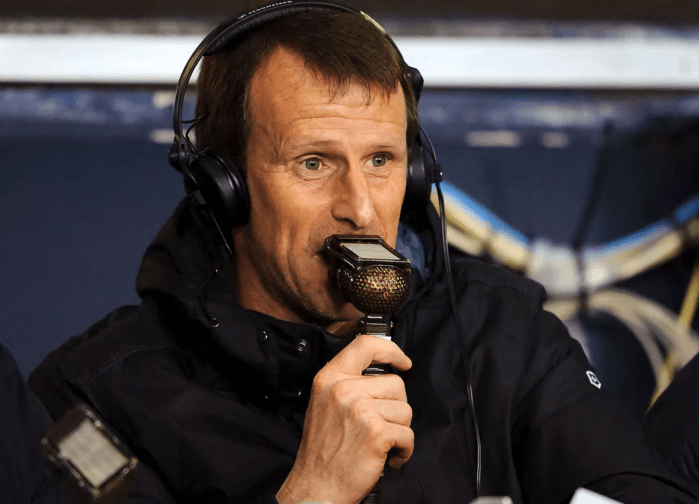
Pundit Claridge contributed his thoughts on radio and TV

Claridge also became a familiar face and voice working as a pundit for the BBC on TV at Football Focus and Final Score and on BBC Radio 5 Live. He also wrote scouting reports on promising players for The Guardian, numbering future Brighton signing Matt Sparrow among them.

“He is easy on the eye, links well with his forwards but also protects and helps his defenders by tackling from the wrong side and makes sure he tracks his runner whenever he threatens to get goal-side,” wrote Claridge of the then Scunthorpe United player in 2007.

Claridge later set up his own coaching scheme for youngsters in Salisbury and Warsash.

In 2023, he took over as manager of Gosport-based Wessex League Division One side Fleetlands FC for the 2023-24 season. In August 2024 they announced he was stepping down from the role “due to personal reasons”.  
On its website, a statement added: “The club would like to place on record our huge thanks to Steve for taking up the role in our hour of need and taking us to a fantastic 5th place finish last season.”

Calderwood’s switch to promotion rivals backfired

Hughton’s not so loyal assistant

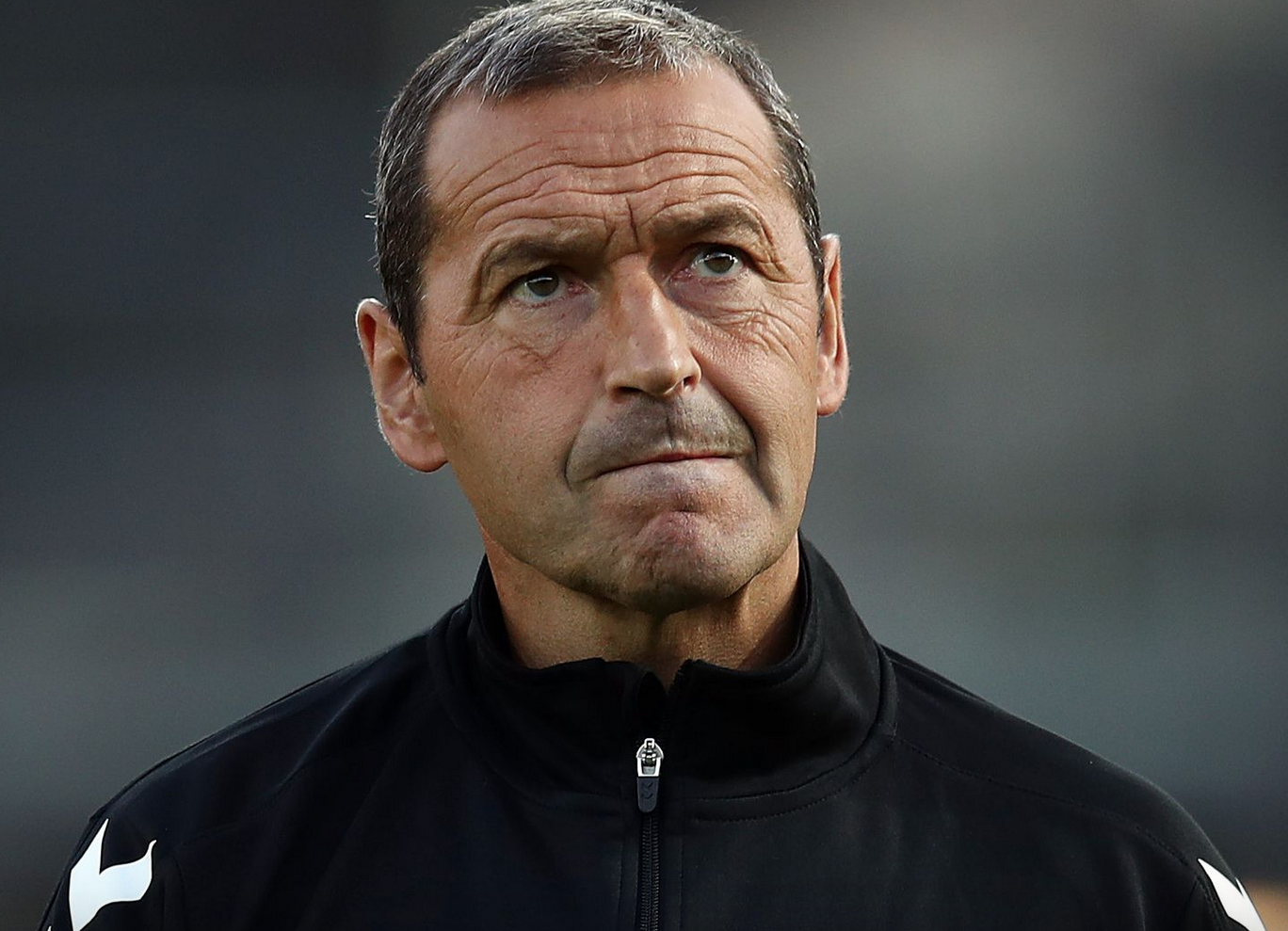
SCOTTISH international Colin Calderwood played for and managed Nottingham Forest in a lengthy playing and managerial career that has spanned a host of clubs across the country.

His 21 months as assistant manager to Chris Hughton at Brighton came to an abrupt end that drew harsh criticism at the time but thankfully didn’t hinder Albion’s upward trajectory.

Calderwood worked under Hughton at three other clubs: Newcastle United, Birmingham City and Norwich City.

The pair first met on the same A licence coaching badge course and Hughton was later a coach at Tottenham when Calderwood was a player. He then played a part in Calderwood becoming reserve team coach at White Hart Lane after his playing days were over.

Calderwood went on to become a manager in his own right at League Two Northampton Town, where he got them promotion at the end of his second season (in 2006).

Two and a half years as boss at Forest followed, during which he got them promoted from League One to the Championship. In 2007-08, his Foest side took four points off the Albion, winning 2-0 at Withdean but being held to a goalless draw at home.

Forest were promoted in second place behind champions Swansea City (Albion finished seventh) but Calderwood was sacked just before Christmas in 2008 with the side struggling in the Championship relegation zone.

When Hughton succeeded Sami Hyypiä at the start of 2015, it wasn’t long before he turned to trusted ‘lieutenant’ Calderwood to help Albion’s cause.

The no.2 had first worked with him at Newcastle in 2009 when, after relegation from the Premier League, the pair led the Magpies back to the elite as Championship champions in 2010.

Hibernian in Edinburgh lured him to try a third spell as a no.1 but, after just 13 months in charge, and only securing 12 wins from 49 matches, he was sacked. He was not out of work for long, moving later the same month to Birmingham to become Hughton’s assistant at the Championship side, where another of Hughton’s backroom team, Paul Trollope, was first team coach.

When Hughton left for Premier League Norwich in June 2012, Calderwood, Trollope and chief scout Ewan Chester (who also later joined him at Brighton) all decamped to Carrow Road. City dispensed with their services in April 2014.

Having helped steer Albion to the Championship promotion near-miss of 2015-16 (when they suffered the agonising play-off semi-finals defeat to Sheffield Wednesday), the Seagulls were well geared up to go one better the following season.

So it came as something of a shock when Calderwood quit in November 2016 to become assistant manager to Steve Bruce at promotion rivals Aston Villa.

Hughton was said to be “very disappointed” and “very surprised” by his assistant’s departure, “particularly at this stage of the season”. Albion watcher Andy Naylor reckoned that amounted to a “withering condemnation” from the normally placid manager.

In an excoriating article for the Argus, Naylor wrote: “He clearly feels let down – and he is entitled to feel that way. Is there any justification for treating Hughton the way he has?”

It emerged that the move gave Calderwood a much shorter daily commuting distance from his home in Northampton, but, even so, Naylor reckoned Hughton deserved better.

Thankfully, there was a ready-made replacement in the wings because Trollope had just lost his job at Cardiff City.

Naylor wrote: “Trollope is in the right place at the right moment to bring his promotion-winning mentality as both a player and manager into the camp. Let’s hope he demonstrates more loyalty than Calderwood.”

Perhaps it was the supreme irony that as Albion marched to promotion from the Championship the following spring, the side Calderwood had moved to only finished in 13th place – although the last-game draw at Villa stymied Albion’s chances of going up as champions.

Nevertheless, there were no bitter recriminations on Calderwood’s part. “Chris did a terrific job turning around the shape and the balance of the team,” he recalled in an interview with the Argus in January 2021.

Ahead of his subsequent club Blackpool’s visit to the Amex for a fourth round FA Cup tie (Albion won 2-1), the former assistant boss said: “We found, as I’ve found at most clubs I’ve been at, there’s a core group of players that have an appetite and an ability level that can give you a chance of success.

“When it falls into place, it is really nice to watch and it is very heart-warming and you feel justified in what you preach and practice.

“A lot of the time you are determined by the quality of the person and the player within the club. We found some really good people down there.”

Born on 20 January 1965 in Stranraer, Calderwood didn’t play professionally in Scotland, instead joining Mansfield Town as a 17-year-old in 1982.

He realised in hindsight that he learned a lot from Town’s manager at the time, the experienced Ian Greaves, and he went on to play over 100 matches for the Stags before Swindon Town boss Lou Macari signed him for £27,500 in 1985.

“Ian and Lou were the ones that built the foundations of my career,” he told the Albion matchday programme.

The centre back spent eight seasons at the County Ground and is recognised as a Swindon legend having featured in 412 matches (plus two as a sub).

At only 21, he was made club captain and, despite a difficult start, led Town to back-to-back promotions as they won the Division Four title in 1986 and overcame Gillingham in a Division Three play-off final replay in 1987.

Promotion winner with Swindon Town

Calderwood was said to be “a rock at the heart of the defence” and eventually led Town to their first promotion to the top-flight, after beating Sunderland in the play-off final at Wembley in 1990. But Swindon were demoted due an irregular payments scandal in which Calderwood was implicated: he was arrested just four weeks before the Wembley match but released the same day without charge.
Calderwood missed five months of the 1990-91 season following a horror tackle by Wolves legend Steve Bull but he returned stronger than ever and was ever present when, under Glenn Hoddle, Swindon were promoted at the end of the 1992-1993 season, beating Leicester 4-3 in the play-off final.

But instead of featuring for Swindon in the Premiership, Town’s former manager Ossie Ardiles took him to Tottenham for a fee of £1.25 million.

Playing in the top division for Spurs earned him international recognition. He made his Scotland debut aged 30 in a Euro 1996 qualifier against Russia and was a regular under Craig Brown, winning 36 caps in four years, including playing at the 1998 World Cup.

According to Spurs fan website mehstg.com (My Eyes Have Seen The Glory), Calderwood was “a solid defender, who could tackle and was good in the air, but lacked the pace and distribution skills to be a top class centre half.

“Calderwood gave Spurs a tough presence in the middle of the back four they had been missing for some time and showed that Ardiles’ judgement had been sound.”

After 198 appearances for Spurs (more than 150 in the Premier League), he left White Hart Lane in March 1999 when a £230,000 move saw him join Aston Villa under John Gregory. A year later, he switched to David Platt’s second tier Forest for £70,000.

He had only been at Forest a month when, ironically at Birmingham’s St Andrews ground, Calderwood, by then 35, suffered an injury that would ultimately force him to retire.

Forest goalkeeper Dave Beasant had already been injured in a clash with City’s Jon McCarthy earlier in the game but recovered. Calderwood wasn’t so fortunate. He ended up being stretchered off after a collision with the same player. He had fractured his leg and dislocated his ankle, causing ligament damage.

The injury overshadowed Forest’s 1-0 win and it meant he played only a handful of games at the City Ground. He later had a brief spell on loan at neighbours Notts County before calling it a day.

Calderwood initially returned to Spurs as reserve team manager before leaving for Northampton in October 2003. Spurs director of football and caretaker manager, David Pleat, said: “Colin leaves us with our very best wishes. He’s had two-and-a-half years here as a coach which I’m sure has been valuable experience.

“Colin is young, he has energy, ideas and, most importantly, ambition. This could be a terrific apprenticeship for him and everyone at the club wishes him well in his new role.”

Fast forward 15 years, and after he left Villa along with Steve Bruce in October 2018, two months later he was back in the game at League Two strugglers Cambridge United. He was given an initial 18-month contract and a year later he was given a two-year extension on his deal.

However, after a 4-0 home defeat to Salford City in January 2020 which meant Cambridge had taken only one point from their previous six games, he was sacked.

In October that year he was taken on at Blackpool as part of Neil Critchley’s managerial team and was part of the set-up that saw the Tangerines win a place in the Championship in 2021.

In June 2021 Calderwood returned to his old club Northampton as assistant manager to Jon Brady, and he told the League Two club’s website: “I have learned a lot in the years since I was last at the club and hopefully I can put all of that experience to good use.

“The situation here is similar to the situation I arrived in at Blackpool in working with a talented young manager.
“I have spoken with Jon Brady a number of times, that relationship will build quickly and I am really looking forward to working with him and the rest of the coaching staff.”

The Cobblers finished fourth in League Two and made it through to the division’s play-off semi-finals where they lost 3-1 on aggregate to Calderwood’s first club, Mansfield.

They made up for it in 2022-23 when they earned automatic promotion in third place behind Leyton Orient and Stevenage.

Nevertheless, in October 2023, Calderwood returned to Championship level as part of Russell Martin’s backroom team at Southampton.

Teaming up with Russell Martin

“First and foremost, he’s a brilliant human being. I really trust him and know him very well,” Martin told the Daily Echo

“We worked together at Norwich many moons ago when he was the assistant manager. I used to moan all the time to him and he had a brilliant way of being able to deal with that.

“He just has a great relationship with the players, and he’s a coach throughout my career who I’ve stayed in real constant contact with and discussed football.

“We’ve spoken a lot even when he’s not worked with me. I tried to get him at my two previous clubs and it couldn’t quite happen for various reasons.

“He’s been a manager, an assistant manager, he’s helped some young managers recently get promoted in Neil Critchley and Jon Brady, and added huge experience and value to them.”

Stockdale’s key role in Albion’s rise to the Premier League

DAVID STOCKDALE kept 20 clean sheets as Brighton were promoted from the Championship to the Premier League.

He was chosen by his peers in the PFA Championship team of the year and was runner up to Anthony Knockaert as player of the season.

What seemed like a mystery at the time, though, was that he then remained in the Championship by signing a three-year contract with Birmingham City (at the time managed by Harry Redknapp).

“I’m not ashamed to say I put my family first and football second for a change,” Stockdale explained, referring to his desire to sign a longer term deal than the Seagulls offered because he didn’t want the upheaval of a move that might have unsettled his daughter’s education at a time she was about to take exams.

Stockdale had joined the Seagulls from Fulham in the summer of 2014 and was first choice ‘keeper for three seasons, playing a total of 139 matches for the club.

Remembered for some notable performances between the sticks, Stockdale impressed off it too. In the wake of the Shoreham air crash, he showed great compassion for the victims.

Before the next game, away to Ipswich Town, he wore personalised gloves and a training top bearing the names of two of them, Albion groundsman Matt Grimstone, who was Worthing United’s goalkeeper, and his teammate Jacob Schilt.

He also spent time talking to Matt’s family, visiting with Albion ambassador Alan Mullery. “We are all guilty of complaining about the little things in life but there are far more important things to worry about and I wish more people realised that,” he told the matchday programme.

At the end of the season, Stockdale’s support was recognised by the award of the PFA Community Champion trophy. “A lot of tears were shed,” he told Albion reporter Andy Naylor, when he got the inside track on Stockdale’s story in an interview for The Athletic on 17 November 2019.

“I’d spoken to Matt a few times, with him being a goalkeeper. We used to shout across at each other. I’d joke, ‘You come and train with us and I’ll do that (groundskeeping)’.”

The way the club rallied round didn’t surprise the goalkeeper because he’d heard good things from Fulham teammate and all time Albion legend Bobby Zamora when he was mulling over the move.

“I knew it was a good club, a very progressive club, but when Bobby told me it was the best club, that was good enough for me,” he said.

There was a familiar face waiting for him at training too because the goalkeeping coach when he arrived was Antti Niemi, who had taken him under his wing in his early days at Fulham.

“I was only 21 at the time, at a big Premier League club, and he spoke to me a lot in those early days,” he said. “Although he’s the goalkeeping coach here now, it sometimes feels the same as it did back then.

“He’s the one putting on the sessions now, and I’ve enjoyed them like I did when I trained with him before,” he said.

Even so, Stockdale was even more impressed by Niemi’s successor, Ben Roberts. “There’s no better goalkeeping coach than him,” he said. “Ben and I had tried to work together at previous clubs and it hadn’t come off. So, when we finally did at Brighton, he said ‘this is what I want you to work on, stay with me and trust me and the process’.

“It wasn’t always easy, I was 30 at the time trying to adapt my style, sometimes it’s hard. But I trusted him and it worked. He’s shown with numerous keepers that he can help anyone improve. That’s why people hold him in such high regard.”

A personal highlight for Stockdale came in January 2017 at the Amex when he made a double save from a Fernando Forestieri penalty against Sheffield Wednesday that helped put Brighton top of the division.

Less memorable were two own goals in a 2-0 defeat at Norwich City when Alex Pritchard shots rebounded off the woodwork, hit him and went in.

And when Albion had a chance to clinch the Championship title at Villa Park, Stockdale fumbled a long-range Jack Grealish shot to concede a late equaliser which meant Newcastle finished top instead.

“I left with great memories, on a high, apart from the Villa game,” Stockdale told Naylor. “It was one of those when everyone knows it was a mistake. It just wasn’t meant to be, but as a player you feel the responsibility.

“We got what we wanted, got promoted, but I think it left a bit of a bad feeling.”

Born in Leeds on 20 September 1985, Stockdale stayed in Yorkshire in the early part of his career, initially in the youth sides of Huddersfield Town and York City.

It was York who took him on as a trainee, in 2000, and in the last game of the 2002-03 season, aged just 17, Terry Dolan gave him his first team debut as a half-time substitute for Michael Ingham, who was suffering a shoulder injury, although City lost 2-0 to Oxford United.

By then in the Conference, Stockdale made 19 consecutive appearances for the Minstermen between August and December 2004 before being dropped by caretaker manager Viv Busby.

It was during that run of games that Stockdale first gained international recognition, being selected for the England C (non-league) squad for a friendly v Italy (he went on as a sub for Nikki Bull).

After his club disappointment, he told the York Evening Press: “I was gutted when I was taken out of the team but I’ve just gone back to the training ground and worked as hard as I can.

“I have got my best years to come. I am only 19 and I hope I can get a contract for next year and stay at the club.”

When former Albion midfielder Billy McEwan took charge, he offered Stockdale his first professional contract, although the youngster prevaricated over signing it, much to the manager’s dismay.

McEwan told the York Evening Press: “If the players don’t want to sign, then it’s up to them. They can go because I want players who want to play for York City Football Club.

“But David Stockdale is the biggest disappointment to me and I have told him that. He’s a young apprentice getting his first professional contract and the last thing in his mind should be money. That should be of secondary importance and he should be grateful York City are offering him a contract.

“On the evidence of his last performance of the season, he has to do better if he wants to get into the team.

“At the moment, he has potential but so have a lot of players. Maybe he feels he can get an automatic number one spot but that’s up for grabs this summer.”

Shortly after signing the contract, Stockdale went on loan to Northern Premier League club Wakefield-Emley and the following March joined Worksop Town on a temporary basis.

Stockdale was released by York at the end of the 2005-06 season with some more harsh words from McEwan about his weight ringing in his ears. After signing for League Two Darlington, Stockdale told the York Evening Press being released had been the incentive he needed to save his career.

“I have done well in pre-season and got back into shape after letting myself go at York, which was well-documented,” he said. “I accept now that was the case and agree with the manager but I would have preferred not to have been criticised in public.

“It has probably given me a kick up the backside though to get me going again and I feel a better person now. I would have loved to have stayed at York because I was there for a long time and have a great affection for the club.

“I would like to thank everybody there for all the help they have given me. The fans were always great and I learnt everything there so it was a bit of a shock to go.”

Clearly benefiting from full-time goalkeeping coaching from former Darlington, Bristol Rovers and Middlesbrough no.1 Andy Collett, Stockdale became manager Dave Penney’s preferred first choice ‘keeper, ousting former Derby and Bolton stopper Andy Oakes.

Scouts from Birmingham and Newcastle were said to be monitoring his development but it was Fulham who stepped in and signed him in April 2008 for an undisclosed sum (thought to be £350,000 rising to a possible £600,000). He was loaned back to Darlo to finish the season when they lost out in the League Two play-off semi-finals.

Although he was at Fulham for six years, much of Stockdale’s time on their books was spent out on loan: in League Two with Rotherham United, League One at Leicester City, and in the Championship with Plymouth Argyle, Ipswich Town and Hull City.

Temporary Tractor Boy

Nevertheless, his parent club did give him a reasonable sprinkling of first team outings: he played a total of 52 games, 39 in the Premier League.

Indeed in 2011, when he was covering for the injured Mark Schwarzer, Fabio Capello, the England boss at the time, called him up for international duty, although he didn’t get to play.

His best run of games for Fulham in the Premier League came in the 2013-14 season when he made 21 appearances (he also played five cup games).

After he left Brighton, Stockdale was Birmingham’s first choice ‘keeper throughout the 2017-18 season (apart from two months out with an injured wrist). He played 39 games, having replaced the previous season’s no.1, Tomasz Kuszczak, who had also moved to City from Brighton.

Blues only narrowly avoided relegation from the Championship with Redknapp only lasting until mid-September as manager; Lee Carsley briefly in temporary charge, Steve Cotterill for five months and then Garry Monk.

Monk brought in Lee Camp as his first-choice ‘keeper and Stockdale was sent out on loan to three different League One clubs: Southend United (on an emergency seven-day arrangement), Wycombe Wanderers and Coventry City.

After making a single appearance for Birmingham under Monk’s successor Pep Clotet at the start of the 2019-20 season, Stockdale rejoined Wycombe in January 2020 on a half-season loan.

He then moved to Wycombe on a permanent contract in September 2020 but only played twice, with Ryan Allsop the preferred no.1. In February 2021, he linked up with League Two Stevenage on loan and played five matches before having to return to Wycombe when Allsop was injured.

He kept the shirt until the end of the season, when Wanderers were relegated to League One, and, with Allsop having been released, Stockdale stepped up and was ever-present throughout the 2021-22 season. His 18 clean sheets earned him the League One Golden Glove award, jointly with Michael Cooper of Plymouth.

Nevertheless, with his contract up, he then returned to Yorkshire, signing for Darren Moore’s Sheffield Wednesday, where he played 27 games in the 2022-23 season.

They say what goes around comes around, and at the start of the 2023-24 season Stockdale went back to York City, although he sustained an injury early on in the season that caused him to be sidelined from the National League team.

As well as his familiar playing role, Stockdale began to look towards a time when he hangs up the gloves by also being appointed York’s head of recruitment. However, he was let go from the role in April 2024.
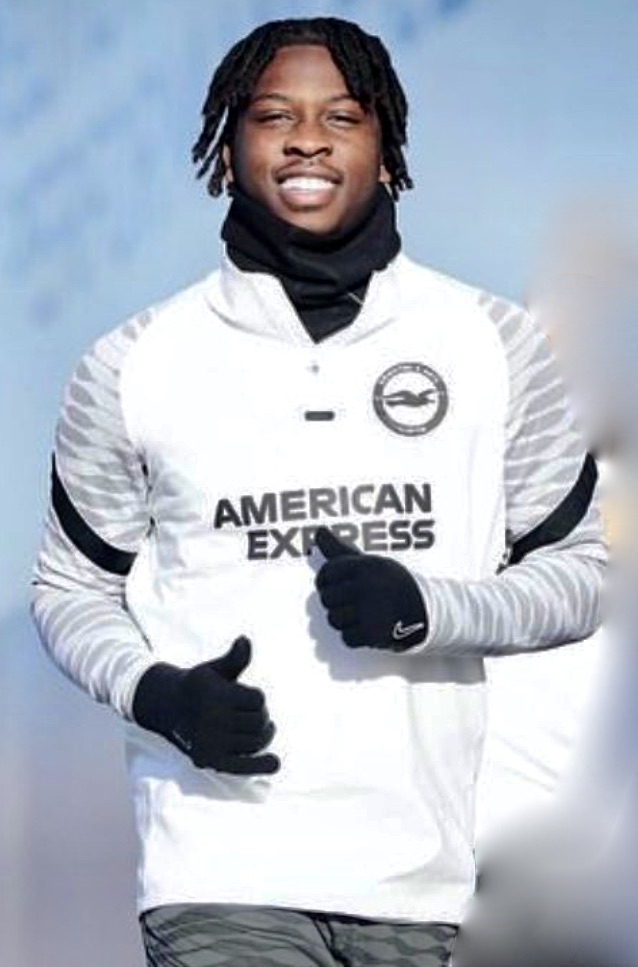
Away from his direct involvement in club football, he began a postgraduate diploma in Global Football Sport Directorship with the PFA Business School.

City grounding signalled high hopes for talented Taylor

EXPECTATIONS of a bright future in Albion’s colours fizzled out for Taylor Richards after the most audacious of starts.

Richards cheekily scored with a Panenka chipped penalty in a pre-season friendly against Crawley Town which instantly made the watching supporters take notice of the new signing from Manchester City.

It was reported Albion paid £2.5 million for the 18-year-old when he decided to move on after four years moving through the youth ranks at City.

“I did not have to leave because I still had years on my contract,” he told the Argus. “I just felt that I needed a new challenge.

“When I found out that Brighton were interested in me I was also made aware that I had a chance of breaking into the first-team further down the line.

“That is all I wanted to hear, that if you do well and train well, you’ll be given opportunities.

“But I would not change my time at City for anything. The only thing I would change is probably not taking my opportunity as well as I should have done.

“When you’re in that comfortable environment, you do not always realise what you have and maybe take your foot off the gas a little, but it’s all a learning experience and one I really enjoyed.”

Richards did get his wish of making it through to Albion’s first team, but his involvement was very sporadic and after a season on loan at Championship side Queens Park Rangers, he eventually moved there permanently in the summer of 2023.

For Richards, it was a case of moving home. Having been born in Hammersmith on 4 December 2000, he grew up in Shepherd’s Bush – although his football journey began in the academy at Fulham.

City took him north at the age of just 14 and he earned a scholarship aged 16. Eventually, he became a regular for City’s under-18s.

In February 2017, he played for England under-17s in a tournament on the Algarve, starting in a 1-0 defeat to Portugal and going on for City teammate Phil Foden in a 3-2 win away to Germany. Two days later, he started in England’s 1-0 win over the Netherlands. That side featured Jadon Sancho, who went through the age groups at City at the same time as Richards.

“I hung around with Sancho quite a lot because we went into the academy at the same time and we had a good connection,” he said. “What’s happened with his career proves you never know what might happen. It’s all about working hard and taking your opportunity when it comes.”

Taylor made seven appearances for City’s under 23s – three in 2017-18 and four in 2018-19 – although he didn’t feature in the first team. He was on the scoresheet in a Checkatrade Trophy quarter final match in January 2019 when City fought back from 2-0 down to beat Rochdale 4-2 (former Albion player Jim McNulty was on the scoresheet for Rochdale).

“Once you’re in that environment, winning is the only thing on the table and losing is no option,” he said. “Everyone’s at it and it’s a good place to be for a young player to get you ready for the men’s game. Every age group tried to do what the first team did. It was the same philosophy that went right through the academy, so when you stepped up to the next level, it made it easier.”

Richards made an instant name for himself shortly after signing for the Albion with that penalty against Crawley. He told the matchday programme: “I knew I was going to chip it, but I took a long run-up to make the goalkeeper think I was going to smash it.

“I’ve never had the fans sing my name before, so it’s a great moment for me and one I’ll cherish for life. Hopefully that left a nice impression, but it was only my first game.”

Head coach Graham Potter told the club website: “He showed his confidence with the penalty. He’s not been here long but is ambitious and wants a taste of first-team football. That’s always the challenge for young players, to get the right next step from youth football.

“He has quality and ability, so we’ll make an assessment of him and the right pathway for him to gain that first-team experience.”

The 2019-20 season was only two months old when Richards made his Albion competitive first team debut. A team comprising several youngsters lost 3-1 to an experienced Aston Villa side in the Carabao Cup at the Amex. “I remember chasing Douglas Luiz around the whole evening,” he said. “It was a long night, but a good night, apart from the result. It helped me a lot in understanding the level and what I needed to do to play against that level of opposition.”

With further first team chances unlikely because of the competition for places, Richards was sent on a year’s loan to Doncaster Rovers in 2020-21.

The attacking midfielder scored 11 goals in 48 appearances and learned a lot from the experience. “The manager, Darren Moore, wanted us to play football, which was a similar style to Brighton, but sometimes the other teams didn’t want to play,” he recalled. “They were a bit more long-ball, more physical, and I definitely came back a better player for it.”

He signed a new three-year contract at Brighton and was a non-playing substitute in the opening Premier League matchday squad, with head coach Potter saying: “Taylor has impressed during pre-season, and he was deservedly part of the first-team squad at Burnley last weekend.

“He had a very productive loan spell at Doncaster last season, and this new contract is a reward for his hard work and progress he’s made since he arrived.”

Richards made starts in two Carabao Cup matches (against Cardiff and Swansea) and went on as a sub in two league matches, replacing Jakub Moder in a 2-0 home defeat to Everton and taking over from Enock Mwepu in a 1-0 home defeat to Wolves.

Having made his league debut against Everton, with mum Shani watching on, he said: “I thought I did well. I was nervous, like most people would be, but I tried to keep the ball as much as I could, tried to give more going forward but this is my first game and I will learn from these moments and go again.

“Despite the result, because that comes first, I am happy I got on the pitch. My mum has been with me through this whole journey and she got to see me make my Premier League debut so it is a proud moment for me.”

But, in the second half of the season, he once again went out on loan, this time to Championship side Birmingham City, Albion boss Potter explaining: “Taylor has been with the first-team squad for the first part of the season, he has benefited from that time and he has made great progress during that time.

“He has played in the Carabao Cup ties and also made his Premier League debut. But we feel it is now important for him to play regular football during the second half of the season and he will get that opportunity with Birmingham, a club I know well.”

In a bizarre turn of events, it was two months before he was fit to start for the Blues because he injured an ankle doing the medical associated with the move.

Bemused Brum boss Lee Bowyer said: “I’ve never heard anything like this. It’s crazy. I have never heard of a player getting injured in the medical.”

After he had finally made his debut, Birmingham Mail reporter Brian Dick had a favourable impression. “He looked very, very neat on the ball, not afraid to take possession and retain it in tight spots and also good at finding little angles around and in the box.

“He is a languid mover with good pace and plays with his head up, looking to bring others into the game,” the reporter observed. “Of all the January recruits there was more buzz at the club about Taylor than anyone else – and the very early signs are promising.”

Bowyer pointed out: “He can score, he can assist, he can make that pass.”

However, he only made two starts for Blues, plus three from the bench, and in the summer the player switched to QPR on a season-long loan with the plan to make the move permanent.

“I haven’t got the words, it feels great to be at QPR,” said Richards, who had been taken to Loftus Road by his mum as a seven-year-old to watch his first ever game.

“I am from Shepherd’s Bush and all my family and friends support QPR,” he said. “Everyone is excited and I just can’t wait to get on the pitch, that’s where it matters.”

Mick Beale, the manager who signed him, declared: “Taylor is a very, very talented boy who I have watched extensively in the past. 

“Given his age and the fact that he’s a Hammersmith boy, I think he’s perfect for us in terms of the identity we have as a team and as a club.

“He can travel with the ball and is powerful in his play, so we’re delighted to have him.”

Excited by the player’s versatility, Beale added: “He can play as a number 10, wide left, wide right – but predominately he is an attacking midfielder, a number eight. He gives more competition and our midfield is looking stronger for it.

“He is a midfielder who can dribble at speed, from one line to another – he can score and he can play.”

But Richards made only one start throughout the whole season, joining the action from the bench on 15 occasions. Nevertheless, when Gareth Ainsworth took over from Neil Critchley in February 2023 he was quick to acknowledge the player’s attributes.

“I like Taylor. I think he is a fantastically talented boy, I really do,” said Ainsworth. “He is very similar to some of the players I have come across in my management career before.

“But I think with young players today there is so much more to them than what you see on a Saturday, and it is our job as managers to work with them day in day out and work with them and give them clarity.

“Taylor is a fantastic player. I don’t want to put too much pressure on the boy, but he has been at some top places and is highly thought of and highly thought of by this manager as well.”

Richards joined the Rs on a three-year deal ahead of the 2023-24 season.

A non-playing sub for their opening day 4-0 defeat to Watford, Richards was in the starting line-up for a first round Carabao Cup match at home to Norwich City, facing former Albion players Shane Duffy and (sub) Ashley Barnes, and the visitors edged it 1-0.

Having played only four league matches for QPR in 2023-24, in July 2024 Richards switched to League One Cambridge United on a season-long loan.

United manager Garry Monk said, “Taylor is an exciting talent who has huge potential to be an outstanding player in this league. He will bring another dimension to our team and we are very excited to work with him this season.”

Richards told the club website “It’s a big opportunity for me to come here and play some football – I just want to get out there and show what I can do. 

“I want to get back to enjoying my football and if I am enjoying it, then everything else will come along with that.”

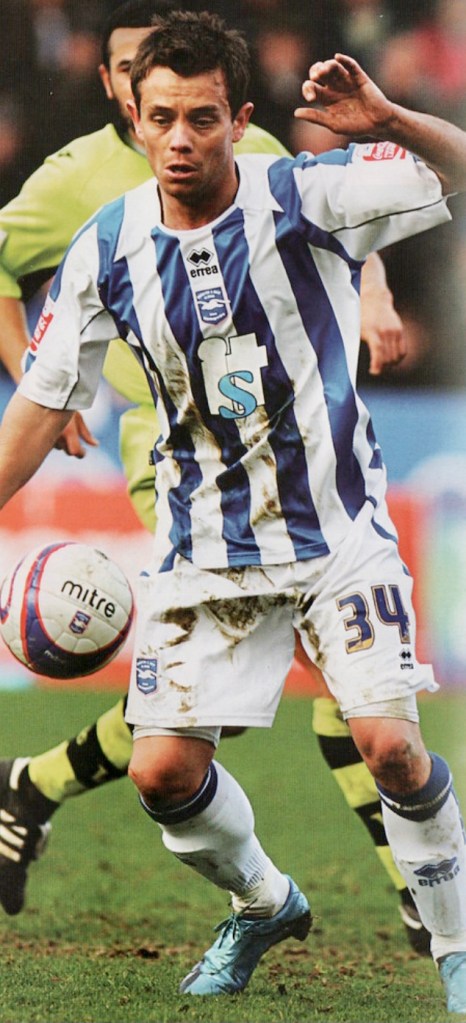
The moment Lee Hendrie felt ten feet tall at Brighton

SKY SPORTS pundit Lee Hendrie has reached heights and plumbed depths in a life that saw him stop off at third-tier Brighton in 2010 after 17 years with Aston Villa.

Hendrie was something of a forgotten man of football when Gus Poyet snapped him up for the Seagulls on loan from Derby County in March 2010.

Hendrie featured in eight Albion games in the last six weeks of the season: four wins, two draws and two defeats.

Turning out in League One was quite a fall for a player Glenn Hoddle selected for England, but he told the matchday programme: “The main thing is to play football. If you’re not playing then you tend to get forgotten but hopefully I can get some game time between now and the end of the season.”

And he later said to football.co.uk: “I went to Brighton to get my face back out there. Gus Poyet was brilliant. He got the lads together in a circle and said, ‘******* hell, we’ve got Lee Hendrie here’. Let me tell you, after feeling so unwanted I suddenly felt 10 feet tall.”
Hendrie made his debut as a 75th minute substitute for Sebastien Carole in a 3-0 home win over Tranmere Rovers, and he told the matchday programme: “We could have had more than three goals and I should have scored.”

But Hendrie was bubbling after his involvement and said: “Listening to the gaffer in the changing room, you can see why the lads are playing with a lot of confidence and have improved so much.

“I’ve played under a few managers, but not many, can I say, are like Gus, who is so enthusiastic and tells the players to go and enjoy themselves. There is nothing a player wants more than a gaffer telling you to enjoy your game.”

Of Albion’s midfield triumvirate of Gary Dicker, Alan Navarro and Andrew Crofts, it tended to be Dicker who was edged out by Hendrie’s arrival.

However it was in Crofts’ place that the loanee got his first start, in a 2-0 Easter Monday defeat at Hartlepool in which former Albion loanee ‘keeper Scott Flinders prevented the visitors from leaving with a point. Hendrie was subbed off on 58 minutes when Kazenga LuaLua took over.

Hendrie went on as a sub for Dicker in the following home game against Carlisle United and it was his cross that set up what looked like a late equaliser by Tommy Elphick, only for Gary Madine to nick all three points with a second for United two minutes from the end.

Hendrie started in place of Dicker away to Gillingham but gave way to the Irishman in the 79th minute and the game ended 1-1. Hendrie started once again in the 1-0 win away to Southend, but Dicker replaced him on 65 minutes.

Hendrie’s third successive start in place of Dicker came at home to Bristol Rovers, when Albion won 2-1, but once again he didn’t last the 90 minutes as Dicker took over on 74 minutes.

In the penultimate game of the season, away to MK Dons, the game finished goalless although Alex Rae and Diego Arismendi were red carded for brawling. Hendrie started and Dicker replaced him on 58 minutes.

The on-loan midfielder’s only full 90-minute appearance came in the last game of the season when Yeovil were beaten 1-0 at the Withdean Stadium; Elliott Bennett scoring the only goal of the game a minute before half-time.

The chances of a permanent deal for Hendrie looked unlikely with Poyet admitting: “We were very pleased with him and he was pleased to be here. We will wait to see if, when we start putting the squad together, there is a possibility of it happening. It’s not an easy one, because of the wages.”

Born in Solihull on 18 May 1977, football was in Hendrie’s blood: Scottish dad Paul had played for Villa’s arch rivals Birmingham City and he was playing professionally for Portland Timbers at the time his son was born. He later played for Bristol Rovers, Halifax Town and Stockport County.

For someone who became Villa through and through, Hendrie admitted to the Birmingham Mail that he had actually been at city rivals Birmingham’s school of excellence before ‘Big’ Ron Atkinson snapped him up as a teenager.

As well as his dad having played for them, his nan was a City season ticket holder and his uncle also supported them. “Villa didn’t come and scout me at the time and Blues were the first club that did. It was an opportunity for me to get myself into the pro ranks and see what it was all about. Dad said it would be good to go and have a feel for it, which I did.”

But ever since he’d scored two goals in a schools’ cup final victory for his school, Washwood Heath, against Hodge Heath at Villa Park, he had dreamed of playing for Villa.

The dream came closer when Hendrie signed on the dotted line as a 14-year-old at Villa’s Bodymoor Heath training ground, although he remembers his dad tempering his excitement.

“When we came out after I’d signed, I’d got given a load of training clobber and I thought this was it, I’d made it,” he said. “My dad said: ‘Take a step back, you, you ain’t got anywhere yet, this is the start of a long road. Just because you’ve got all the kit it doesn’t mean you’re a professional footballer and an Aston Villa player – relax yourself’.”

Hendrie and his best mate Darren Byfield, who had been strike partners in Erdington Star and Erdington & Saltley district team as kids, developed a reputation as a dynamic duo on and off the pitch, and soon became Atkinson’s ‘teacher’s pets’.

Atkinson converted Hendrie from a centre forward to left winger (even predicting he’s one day play for England in that position) and the duo continued to do well for the Villa youth team.

As it turned out, it was Atkinson’s successor, Brian Little, who ended up giving Hendrie his first team debut – although it was memorable for all the wrong reasons!

It came two days before Christmas in 1995 when he went on as a 33rd minute substitute for Mark Draper away to Queens Park Rangers. He collected a yellow card for kicking the ball away and was red carded in stoppage time; a second booking for an innocuous foul on Rufus Brevett. Into the bargain, Villa lost 1-0.

A devastated Hendrie revealed it was the opposition player-manager, Ray Wilkins, rather than Little, who put a comforting arm round him. “Someone who I’ve seen play football, a legend of the game, to come and console me and say: ‘This is football, welcome to football, these are the ups and downs you’re going to have in your career’.

“He said there’s lot of people who are talking highly of you, you’ve got a big future in the game, kid. As he got up, he tapped my shoulder and said: ‘Keep that up’.”

Few subsequent chances were given to him under Little but, when John Gregory took over, he became more established.

He would go on to make a total of 308 appearances for Villa (243 league and cup starts), scoring 32 goals, with his best performances coming in Gregory’s tenure. He wasn’t quite the same player under Graham Taylor or David O’Leary.

It was on November 18 1998 that he won his one and only England cap, sent on by Glenn Hoddle as a 77th minute substitute for Villa team-mate Paul Merson in a 2-0 win over the Czech Republic at Wembley. Two other Villa teammates, Dion Dublin and Gareth Southgate, were also part of Hoddle’s squad.

Unfortunately for Hendrie, Hoddle was sacked two months later and no subsequent England bosses called on him. “It’s a regret that I didn’t go on and make more of my England career,” he said. “It’s great that I’ve got a cap and it’s something you can’t take away from me, but I hate being classed as a one-cap wonder.”

Hendrie’s days at Villa came to an end in August 2006, his last involvement being from the bench in Martin O’Neill’s first match in charge, a 1-1 Premier League draw at Arsenal on the opening day of the 2006-07 campaign.

While Hendrie, by then 30, was excited about playing for O’Neill, the new boss had other plans and told him he was not part of them.

Initially he joined Stoke City under Tony Pulis on a season-long loan but Bryan Robson at Sheffield United outbid the Potters for his services on a permanent basis, and he signed a three-year deal at Bramall Lane at the start of the 2007-08 season.

Unfortunately, when Robson swiftly parted company with the Blades, Hendrie didn’t see eye to eye with his successor, Kevin Blackwell, who accused the player of being a money-grabber.

“Sheffield United was just the worst thing I could have done,” he told the Claret & Blue podcast.

“Kevin Blackwell was one of the worst managers I have ever, ever been under. He put the nail in the coffin for (my career).”

Blackwell sent him on loan to Leicester City, where he played nine games, and he later went to Blackpool too. United moved him on to Derby County but when he struggled for games there, he joined Brighton.

If the spell at Brighton was a temporary relief from his mounting problems, he revealed in a Guardian interview with Donald McRae that 2010 turned out to be one of the worst years of his life, and he attempted suicide on several occasions.

A property empire he had built up amassed insurmountable debts which even saw his mother’s home repossessed. He lost his own house as well, and it sent him into depression. Divorce and bankruptcy made the situation even worse.

“The football was almost over and my head was gone. I’d been trying to sell property, but the housing market crashed,” he said. “I got to the stage where I just wanted to end it all. I’d hit rock bottom.”

The ups and downs of Hendrie’s colourful life have featured in various media interviews.

The rise and fall tale was charted by the sporting.blog and Hendrie’s spoken about his troubles on Sky Sports, where he later became a pundit.

He was in tears on Harry’s Heroes: Euro Having A Laugh discussing his depression struggles with Vinnie Jones. The BBC radio programme You and Yours highlighted his plight in a March 2013 episode.

On the footballing front, a brief spell at Bradford City was followed by a host of short stopovers at Bandung (2011), Daventry Town (2011), Kidderminster Harriers (2011-12), Chasetown (2012), Redditch United (2012) and Tamworth (2012-13) before he retired as a professional.

He then played for Corby Town (2013), Highgate United (2013), Basford United (2013 – 2015), Montpellier (2016-17), Redditch United (2016), Nuneaton Griff (2019) and Highgate United (2019) on a non-professional basis.

As he tried to find a new purpose in life, alongside his media work, Hendrie set up FootieBugs, a football academy for kids aged from three to 12.

Hendrie chats on TV with Dion Dublin, a former Villa teammate

The Liddle and large story of Dan Burn’s football rescue

WHEN Albion beat Wigan Athletic 2-1 to win promotion to the Premier League in April 2017, few Brighton supporters were paying much attention to the tall defender lining up for the opposition.

“There was a party atmosphere around the place, with the players and everyone on the pitch – so it was a great time for Brighton, but not such a great time for us as Wigan players,” recalled 6’6” Dan Burn. “We were all but relegated to League One, which was a low point in my career.”

By the time he next stepped out at the Amex, in January 2019, he was wearing Albion’s colours, and making his debut in a 0-0 stalemate v West Brom in the fourth round of the FA Cup.

Signed on a four-year contract towards the end of the Chris Hughton era, to say Burn’s Albion career had a slow start would be an understatement. He joined the Seagulls on August deadline day in 2018, but was immediately loaned back to the Latics while also nursing a foot injury.

He told the Albion matchday programme: “I’m buzzing to get another crack at the Premier League but I know it won’t be easy. The competition within the squad is very good in my position.

“I’m under no illusions that it’s going to be a very tough ask but, when I do get a chance, I’ve got to show what I can do.”

Hughton, a former Newcastle United boss when Burn was a season ticket holder at St James’s Park, said: “Dan has a wealth of experience from his time with Fulham, Birmingham City and Wigan, amongst others.

“He’s an imposing figure and had an excellent season helping Wigan to the League One championship. He also impressed in an excellent FA Cup run to last season’s quarter-finals.” 

Once recovered from his foot injury, Burn played 13 games, plus once as a sub, for Paul Cook’s Latics before arriving at Falmer in January.

He managed just three FA Cup games under Hughton, but his fortunes changed dramatically with the arrival of Graham Potter, initially slotting in on the left of Shane Duffy and Lewis Dunk in a back three, and later showing versatility and no little ability on the ball as a left-back or left wing back.

“Graham had a meeting with the lads, sat us down and told us the past was past and we just had to go out and prove we could play.

“I’m a good trainer; I train as I play and so always felt I had a chance. I also learn best when I’m out of my comfort zone. Playing left of three or left-back or left wing back, I’ve proved a lot of people wrong, which is what I like to do.”

Burn’s Albion Premier League debut came in the impressive 3-0 away win at Watford that opened the 2019-20 season, and, after Albion supporters had voiced their approval, Burn told the matchday programme: “It’s nice to be appreciated by our fans who are tremendous both home and away and for me to prove to people that I can play at this level.”

It was certainly a special occasion for Burn when Albion travelled to St James’s Park on 14 September 2019. He admitted: “Even coming out the tunnel and listening to Local Hero being belted out of the speakers was emotional for me. As a season-ticket holder for years, I could see my old seat.

“All my family were there, dotted around the stadium, people I used to go to school with, parents of friends. On the day I just had to focus solely on the game and then afterwards I could relax a little bit and go up to see my family.”

Burn was born in Blyth, the seaside town 13 miles north of Newcastle, on 9 May 1992. Because his dad was an ardent Newcastle fan, his son was quickly enrolled as a supporter and, having begun playing football with some pals when he was six or seven, he admitted: “Once I started going with him and watching games I never looked back. I was always out on the back field playing football or playing at school.

“Around 99 per cent of people in Blyth supported Newcastle. Everyone dreamed of playing for Newcastle.”

The dream looked like it might become a reality when he was just nine. While playing for the junior side of Blyth Spartans, he was scouted by Newcastle and invited to join their development centre.

“You have the Academy, where the best players went, and the development centre would run alongside that, where you would train Fridays, and they kept an eye on the players’ progress,” Burn recalled in a matchday programme interview.

“It wasn’t that great to be honest. While I was a good footballer when I joined them, as the two or three years went on, I declined quite rapidly. My body shot up, and I didn’t really catch up with myself football-wise until I was 15 or 16.”

He left the Toon at 11 and reflected: “It wasn’t a particularly good experience being let go by the club you support, with the realisation setting in that you’re probably not good enough to play at that level. I got released around Christmas time too, and it knocked my confidence.”

His chance of making it in the game wasn’t lost, though. He played for Blyth Town and Blyth Spartans, as well as New Hartley Juniors, and was spotted by a scout working for an organisation which selected players who weren’t associated with professional clubs.

Still a sixth former at school, he played for an England representative side against the other home nations and did enough to persuade Darlington’s youth team manager Craig Liddle to invite him for a trial. Burn credits Liddle with giving him the belief he could play at a higher level.

He was given a two-year YTS deal in July 2009 and it certainly beat pushing shopping trolleys for ASDA, which he’d been doing to make a bit of money.

In December 2009, with the League Two club in some trouble, Burn suddenly found himself given a first team chance. At just 17, he made his debut as a first half substitute away to Torquay.

“Although we got beat 5-0, I came off the pitch buzzing,” he recalled. “Here I was, a 17-year-old, and I was playing in League Two. We’d been pumped away from home, facing this horrendous journey home, but I was over the moon when I got back to my car – ridiculous really.”

Burn the Quaker

Unfortunately, Darlo were relegated to the Conference at the end of that season. In January the following season, Burn managed to get a foothold in the side.

His performances caught the eye of Premier League Fulham and a £350,000 fee – a lifeline towards keeping the Quakers going for a little while – took him to London. Somewhat ironically, Burn revealed that Newcastle (at the time managed by Alan Pardew) matched Fulham’s offer “but I’d already been down to Fulham, had a tour of the ground and done my medical, so was happy to sign for them”.

Being 18 at the time, he realised staying in the north-east could have made it difficult to avoid the temptations of nights out with his mates, quite apart from the scrutiny that locals give their local football heroes.

Winning a header in Fulham’s colours

“I would have loved to play for Newcastle but, at that age, at that time in my career, it was the best decision for me to get away from that goldfish bowl where everyone’s analysing what you’re doing,” he reflected. “I just wanted to get away and concentrate solely on my football which was the correct decision.”

Burn spent five years as a Fulham player but with decidedly mixed fortunes, as managers came and went.

He spent most of 2012-13 on loan at Gary Johnson’s Yeovil Town and scored the winner in the 2013 League One play-off final at Wembley when the Glovers beat Brentford 2-1.

“I remember my header going in and losing all control,” he said. “I was running round like a madman!” He added: “For a club like that to be in the Championship was ridiculous but I’ll forever be thankful for Yeovil taking a punt on me.

Wembley winner with Yeovil Town

“I really grew up as a player and learnt what it really meant to be a footballer.”

Loan spell at Bimingham under Toon legends Lee Clark and Steve Watson

Although he signed a new two-year contract with Fulham, he then went to Birmingham on loan (playing under Toon ‘legends’ Lee Clark and Steve Watson) for six months before returning to the Cottage in January 2014.

With Rene Meulensteen having succeeded Martin Jol as manager, Burn made his Premier League debut in a 2-0 defeat to Arsenal at the Emirates, and retained his place against the likes of Chelsea, Man Utd and Liverpool.

By then he was 21 and was just enjoying playing but, when relegation saw Meulensteen sacked, in the Championship Burn sometimes found himself not even getting into matchday squads under Slavisa Jokanovic.

“It was such an anti-climax; I’d been on top of the world playing and now it was the complete opposite.” He admitted speaking to a psychologist about the situation to help him through.

He played 35 matches in 2015-16 as Fulham narrowly avoided dropping into League One but was not retained at the end of the season. He made the switch to newly-promoted Wigan Athletic whose manager Gary Caldwell said: “He is a powerful defender, but he likes to play as well.”

The 2016-17 season proved to be bittersweet: the Latics were relegated back to League One, but, according to Paul Kendrick of Wigan Today: “After a shaky start, Burn barely put a foot wrong on a personal level, with a series of highly consistent displays that ensured he was the landslide winner of the Player of the Year award.”

Under new manager Paul Cook, Burn was an ever-present for Wigan throughout the 2017-18 season when they bounced straight back, collecting the League One title with 98 points, two ahead of Blackburn Rovers.

Burn’s performances earned him a place in the PFA’s League One team of the year, and the new season was less than a month old when Albion made their move for him.

Of course, a significant part of Burn’s three years with the club covered the period when Covid prevented fans from attending matches but Burn scored a truly memorable first goal for the club when there was a partial return of supporters.

In front of 8,000 noisy fans at the Amex on 18 May 2021, Burn, in his 60th match for the club, sealed a remarkable comeback from 2-0 down to secure a 3-2 win for the Seagulls. His 76th-minute winner came after Leandro Trossard (50th minute) and Adam Webster (72nd) had made it 2-2. It was the Seagulls’ first top-flight win over City since 1981.

“That was a real high point for the team and for me personally,” he said.

Burn’s second goal was pretty special too, coming at Goodison Park on 2 January 2022, sandwiched between Alexis Mac Allister’s brace, as Albion beat Everton on their own turf for the first time ever.

It was towards the end of that month’s transfer window that Albion initially rebuffed newly-Saudi-enriched Newcastle’s attempts to sign Burn, but the lure of a return ‘home’ was too great and on deadline day he eventually departed for a fee said to have been £13million.

In an emotional farewell on the club website, he said: “The transfer came as a surprise. I had no desire to leave, but the opportunity to join my hometown club Newcastle United was the only way I would have wanted to leave. While I am excited to begin this new chapter, I am also sad to be ending another.

“Brighton has been a hugely successful period of my career and it’s been a memorable time for me off the pitch. We had my son down here, and I have loved seeing my family grow up as part of the community and living in Brighton & Hove. 

“Newcastle were the only club who could have tempted me away. Second to Newcastle United, Brighton & Hove Albion, the city and those associated with the club will always have a special place in my heart.”

When Burn scored his first goal for Newcastle in a 2-0 Carabao Cup quarter final at home to Leicester on 10 January 2023, manager Eddie Howe described it as an “incredible moment”, telling the media: “I am so pleased for him. This is his club and he has come back here and he is savouring every moment.”

The goal came when Burn ran on to Joelinton’s pass, beat two defenders and slotted a shot into the bottom corner.

“I used to sit in the east stand,” he said. “You always want to score in front of the Gallowgate end. To do that in front of my family was amazing.

“I like to get forward and it’s entertaining watching a guy my size running into the box.”

It was tough for Gardner to grow in Sami’s barren patch

A GARY GARDNER goal ended a winless Albion run of 12 league matches under Sami Hyypia in the autumn of 2014.

Just 54 seconds of the game against Wigan Athletic on 4 November had passed when the Aston Villa loanee netted for the Albion.

He got on the end of a Sam Baldock cross to give the Albion an early lead which they managed to hold onto for the entire match, in spite of several close shaves as the former Premier League opponents tried to salvage a point.

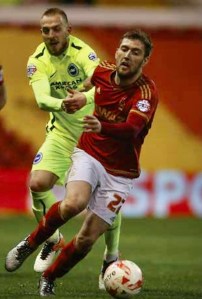
Gardner in action for Forest with Albion’s Jiri Skalak

The game also saw the return of Elliott Bennett, on loan from Norwich City, a first match (as sub for Bennett) for Greg Halford, on loan from Nottingham Forest, and a home debut in goal for teenage stopper Christian Walton.

It wasn’t the first time Gardner had scored at the Amex, though. That had come three years earlier, on his professional debut, when on loan at Coventry City a game which saw Albion beat the Sky Blues 2-1.

Gardner was no stranger to loans away from parent club Villa: he’d already been to Coventry and Sheffield Wednesday, and after Brighton he had temporary moves to Nottingham Forest, Barnsley and Birmingham City.

Indeed by the time Albion took on Forest at the Amex on 7 February 2015, Gardner was on the opposing side as the visitors gave new boss Dougie Freeman a winning start, edging it 3-2.

Gardner’s early development had encountered major setbacks caused by two cruciate knee ligament injuries.

Although he had made his Premier League debut for Villa in the 2011-12 season, the 15 starts and five sub appearances he made for Brighton was the first real regular run of football he’d enjoyed – and he was still only 22 at the time.

He scored again for Albion only four days after that Wigan winner, when the Seagulls were held 1-1 by Blackburn Rovers at the Amex. But with the brief Hyypia reign having come to an end, his appearance in the home Boxing Day 2-2 draw against Reading was his last in a Brighton shirt.

Inigo Calderon salvaged a point with a last-minute equaliser against a Royals side who had gone 2-0 up in 26 minutes courtesy of goals from on loan striker Glenn Murray!

Gardner had been Albion’s tenth new signing of the summer back in August, following in the footsteps of Villa teammate Joe Bennett, who’d joined on a season-long loan a week earlier.

“Gary is a quality midfielder who we have been aware of for some time,” said Hyypia, who explained the club was keen to have more options in that area of the side, especially with Dale Stephens out with a long-term injury.

“More importantly, given the considerable demands of the Championship, I want to be able to rotate the squad,” he said.

“Gary has had a tough couple of seasons due to injury, but he showed during a spell with Sheffield Wednesday last season that he is over those problems. We hope this loan spell will benefit everyone: Gary, us and Aston Villa.

“He is the type of midfielder who is active and mobile, but very importantly he has real quality on the ball – and is also capable of producing things from set pieces.”

Another midfield slot opened up during his time with the Albion when fellow midfielder Andrew Crofts suffered a cruciate injury against Watford.

“I am absolutely gutted for him. Having gone through exactly the same injury as him, with the two cruciate operations, I know exactly how he is feeling,” he said. “I know he will come through this.

“He is a strong guy, a model pro and he’ll be extra determined to get back playing for the club.”

Born in Solihull on 29 June 1992, Gardner was one of six brothers, and in a programme article he said the football-daft family had divided loyalties between Villa and Birmingham.

Just as well, because both Gary and eldest brother Craig ended up with the Blues having started off at Villa. Craig made 80 league and cup appearances for Villa, but later played for Sunderland, West Brom and Birmingham, where he became technical director after his playing days ended.

Gary was on Villa’s books from the age of seven and progressed all through the ranks until Alex McLeish gave him his first team debut as a substitute in a 3-1 win away to Chelsea. He made a total of five starts and 11 appearances off the bench in that 2011-12 season.

But it wasn’t until Villa were back in the Championship in the 2016-17 season that he had his longest run of games for his parent club, making 19 starts and eight appearances off the bench.

That squad, led by former Albion centre-back Tommy Elphick, thwarted already-promoted Albion’s hopes of winning the title in the final games of the season at Villa Park when a late, speculative long-range Jack Grealish shot squirmed through David Stockdale’s grasp to gain Villa a draw.

Gardner was a non-playing sub that day and when he fell down the pecking order in 2017-18, he spent the season at Barnsley.

Gardner followed his brother to Birmingham City

After spending the entire 2018-19 season on loan at Birmingham, he then made the switch permanently (in a swap with Spaniard Jota) and has been there since.

In July 2021 he signed a new deal to extend his stay at St Andrews until June 2024.
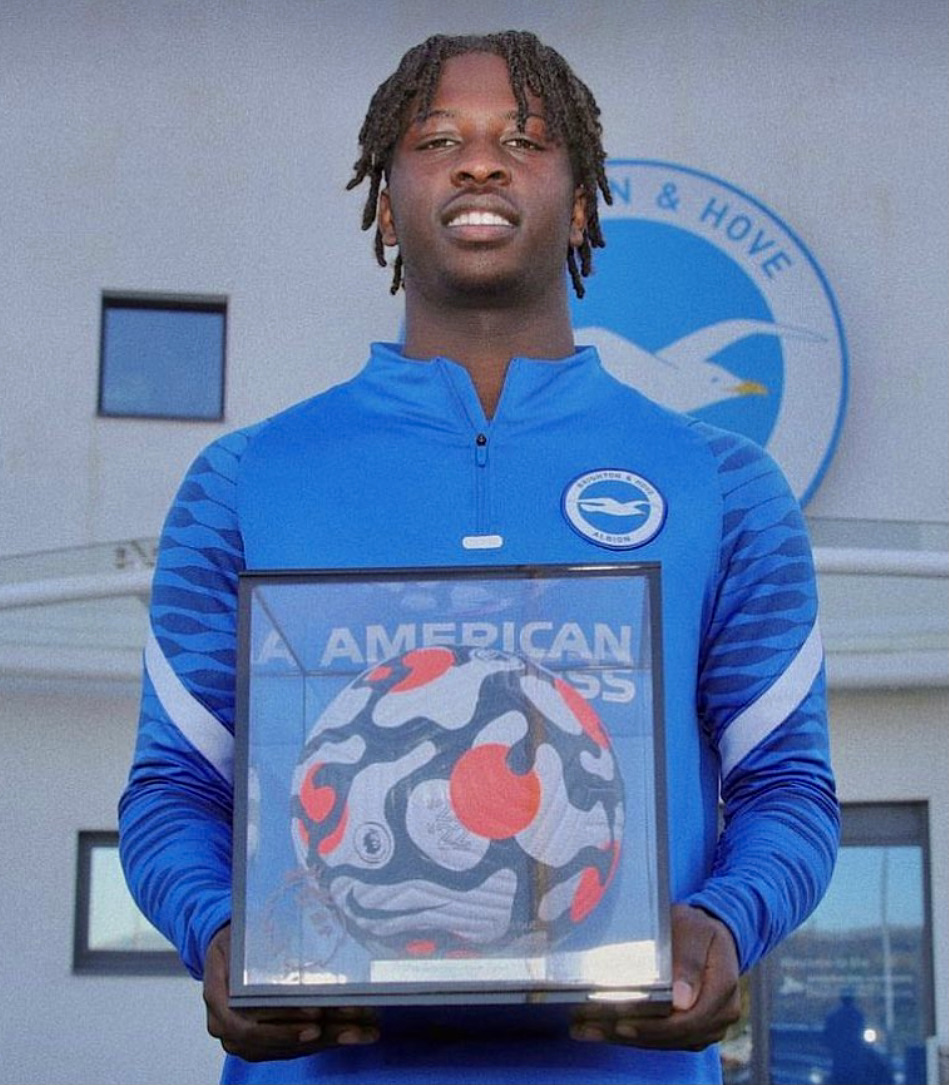
Gardner earned international recognition at various levels and made his England under 21 debut as a substitute in a 4-1 win over Israel at Barnsley on 5 September 2011 and the following month replaced Ross Barkley as England won 2-1 in Norway.

A month later he scored twice in a 5-0 win over Iceland after going on as a sub for Jason Lowe at Colchester. Four days on, his involvement was once again off the bench when young England were beaten 2-1 by Belgium in Mons.

His last appearance was against the same opponents the following February when England exacted revenge at the Riverside Stadium, Middlesbrough. In a 4-0 win, Henri Lansbury scored twice before Gardner replaced him.

His contemporaries in the side at that time included the likes of Jack Butland, Jordan Henderson and Alex Oxlade-Chamberlain.

‘Goal machine’ Bully’s place in Premier League history

GARY BULL had good family connections to offer hope to Liam Brady’s Brighton at the start of the 1995-96 season.

Unfortunately, the Nottingham Forest loanee was often in the shadow of his cousin Steve, a Wolves goalscoring legend who went on to play for England.

Gary arrived at the Goldstone in August 1995 against the backdrop of off-the-pitch disquiet caused by the underhand machinations of the despised directors of the club at that time.

Bull scored three times in 11 appearances for the Seagulls but the cash-strapped club couldn’t afford to keep him on.

Although Bull had made a name for himself as a goalscorer lower down the football pyramid, he had made only four starts plus eight appearances as a sub for Forest over the previous two seasons, scoring just the once.

However, that goal did put him amongst an elite group of players: he was the second of only four players to score on their single Premier League appearance.

Perhaps it was all the sweeter because it secured Forest a 1-0 home win over Crystal Palace that took them up to fourth place in the table.

Interviewed by premierleague.com, Bull said: “It was fate, I would imagine. I was in the right place at the right time.

“It was an inswinging corner. A couple of people missed it and I was about three yards out. It was unmissable really, although I tell my kids it was a screamer.”

Bull had his brief moment in the limelight because first choice striker Stan Collymore pulled out of the match on 2 January 1995 due to illness.

The striker had spent three months on loan at Birmingham City the previous autumn, scoring an impressive six goals in 10 matches (he was in the City side who won 1-0 at the Goldstone in October 1994).

Bull only had one more sniff of first team action for Forest that season, once again against Palace, when he went on as a substitute for Scot Gemmill in a 2-1 fourth round FA Cup defeat on 28 January.

With Collymore in fine scoring form (24 in 43 matches that season), and Dutchman Bryan Roy also a regular up front, manager Frank Clark didn’t turn to Bull again, and Forest finished in an impressive third place in the Premier League.

Bull had to be content with a cameo role in an end-of-season fixture, netting Forest’s third goal in a 3-1 win over Singapore’s national team in an exhibition match in Singapore in May 1995.

Even though Collymore was sold to Liverpool for £8.5m that summer, Bull had to look elsewhere for first team chances and Brady was happy to bring him in to boost Albion’s attacking options.

He got off the mark in his third game, although Albion lost 2-1 at home to Wycombe Wanderers in front of just 5,360 fans.

Bull later scored twice away at Cambridge United in a 4-1 win in the Auto-Windscreens Shield trophy (it was the game in which former Ipswich and England centre back Russell Osman made his debut for the Albion).

But a 1-0 defeat at Rotherham on 7 October was his last game in the stripes and, not long after his return to the City Ground, he was given a free transfer and joined Birmingham on a permanent basis.

Born in West Bromwich on 12 June 1966, his first club was Paget Rangers in the Midlands League but in 1986 he joined Southampton as a trainee under youth team boss Dave Merrington. Jimmy Case and Craig Maskell were in the Saints first team at the time; Kevan Brown in the reserves.

It wasn’t until Bull moved on to Chris Turner’s Cambridge United in March 1988 that he made his professional breakthrough, scoring four in 19 games.

His prowess in front of goal really began to flourish when he dropped out of the league to help Barnet FC win the Conference. Tony Hammond – a Barnet FC devotee known as ‘Reckless’ – reckoned the £2,200 fee manager Barry Fry paid for him was “one of the bargains of the century”.

In four seasons at Barnet, Bull netted an impressive 121 goals in 219 appearances, becoming an Underhill icon. In his blog, Hammond quoted Fry as saying: “He was bloody good that Bully, I never had to worry about him being in the right place at the right time in front of goal it was always just pure instinct.”

Bull was buzzing for Bees

When Bees finally won promotion to the Football League in 1990-91, Bull scored 35 goals – including two four-goal hauls and a hat-trick – and was voted Player of the Year.

Bull’s scoring form continued during Barnet’s first season in the Fourth Division. He bagged 33 as the Bees reached the play-offs where they only narrowly lost a two-legged tie against Blackpool.

In 1992-93, Bull and strike partner Mark Carter were prominent again, as Barnet finished third in the table, clinching promotion to what was then a reorganised Division Two.

Sadly, Barnet were in deep financial trouble and were forced to shed players. Bull was signed by Premier League Forest’s newly appointed manager Frank Clark in July 1993.

“I would have stayed at Barnet but I had a family to look after and had no choice but to move on,” Bull told Hammond. “It was a memorable four years and certainly a period that I look back on with pride,” he added.

The subsequent move to Birmingham reunited Bull with his old boss Barry Fry, although a somewhat cynical view of the move was espoused by writer John Tandy in When Saturday Comes.

“It took Fry 18 months of sustained and public pressure to talk the board into signing Gary Bull. Eventually, in November 1995, we landed the Tipton Tyke. Six games and some time on the bench later he was on his way to York,” he wrote.

Bull spent two seasons at York. The highlight of his stay came in a second round League Cup tie at home to Everton. Bull put the Minstermen 2-1 ahead in the 57th minute, tapping in a rebound off the post and York went on to win it 3-2.

It was one of 11 goals Bull scored in 84 games for City before spending time in Lincolnshire. While he only scored once in 31 games for Scunthorpe, his scoring boots were well and truly back on at Grantham Town: 68 goals in 125 games.

He then moved on to Lincoln United for two years before finishing his career with a flourish at United Counties League Boston Town. During the 2006–07 season, he scored a club record 57 goals! He later went on to become their all-time top scorer with over 200 goals,

Bull only retired from playing aged 45 in 2012.

He then became a postman and told premierleague.com: “I’m one of those people who gets up and actually enjoys going to work and getting the physical aspect of it.

“We probably do between 10 and 12 miles a day. Some would say I do more now than I did on the pitch.”

Agustien talked a good game but fitness was a big issue

A MIDFIELD player who helped keep Crystal Palace in the Championship frustrated Brighton fans in an injury-plagued two seasons with the Seagulls.

Kemi Agustien, who hailed from the Dutch Caribbean island of Curaçao, wasn’t fully fit when he joined Oscar Garcia’s Seagulls from Swansea City in the summer of 2013, and injuries he picked up restricted him to just 10 starts and seven appearances off the bench.

Albion’s ‘keyboard warrior’ followers were not at all impressed and poured out their vitriol, accusing the player of being overweight and not being committed to the cause.

The main gripe seemed to be frustration that a player who had played 31 games in the Premier League only fleetingly showed his capabilities in the division below.

It seems remarkable that Agustien once scooped the official man of the match award for a powerful display in Swansea’s midfield in a 1-1 top flight draw against Manchester United.

As Brighton fans would later discover for themselves, Agustien wasn’t shy at singing his own praises, saying after that United match in March 2013: “I put out a statement to the manager, the staff and for myself and my family.

“There were doubts over my fitness or if I had the ability to play in the Premier League but hopefully everybody who watched the game against Manchester United will have seen what I can do.

“I always put pressure on myself, I’ve been in and out of the team and, like every footballer, I want to play and start every week. It was my first start for such a long time and I thought I did well.

“I am not the sort of player who likes to talk about himself, but I think I can be proud with how I played.”

As so often seemed to be the case in his career, an injury stopped any hoped-for progress in its tracks and by the end of the season boss Michael Laudrup dispensed with his services on a free transfer, even though he still had a year left on his contract.

There was a sense of irony that the midfield slot Agustien took on at the Albion had become vacant when the Seagulls managed to offload Ryan Harley, another ex-Swansea player who had been a disappointment. Harley was allowed to join Swindon Town after a settlement was agreed on the remaining 11 months of his contract.

What Albion were getting in return was, on the face of it, an upgrade, and Agustien’s agent, Wessel Weezenberg, somewhat bullishly told the Argus: “Brighton are getting an excellent, all-round midfielder. He is a very technical player, physically good and strong, and will fit in well with their type of football due to his Dutch background.”

Head coach Garcia seemed to buy into it, too, saying: “He has experience in the Premier League with Swansea and his technical level, experience and confidence with the ball will help us a lot with the way we want to play.

“We will work with him, because he is not fit enough to play 90 minutes at the moment, but he wants to be fit as soon as possible and, with our fitness coaches, I don’t think it will take much time.”

Somewhat immodestly, Agustien reckoned he could fill any of the Albion’s midfield positions, explaining: “I feel I can play box-to-box, I have the power and the ability to do that. I can be dangerous in the final third, but if I need to hold I can do that as well.

“I think I’ve got all the strengths to do both but I know I can still improve. There is more to come from me.”

When he was sidelined with calf injury issues not long into his time at Brighton, he told the matchday programme: “I want to be an important part of this team, but the only way I can do that is when I’m fully fit.

“I can’t do myself justice on 80 or 90 per cent. I know when I’m 100 per cent I can bring quality to this team.”

Reflecting on his ill-fated spell at the Albion in a March 2020 interview with Tom Coleman of Wales Online, Agustien admitted: “It started all wrong. There was a certain pressure coming out of Swansea and going to Brighton.

“I had a meeting with the manager back then, and he told me how he wanted to play a certain way and that he wanted me to play in a certain position, as a number 10.

“For me, to start in that position was like adapting to a new style, and I wasn’t really fit because I didn’t really have a pre-season because of what happened with Swansea. I came quite late and I was overweight.”

Over the course of the 2013-14 season, Agustien made just eight starts plus six appearances off the bench in Garcia’s side, and he was an unused substitute on eight other occasions. Rohan Ince, Jake Forster-Caskey, Andrew Crofts and loan signing Keith Andrews formed the mainstay of the midfield before the arrival of Dale Stephens.

Albion supporters were, it would be fair to say, divided in their opinions about Agustien’s contribution. For example, ‘Clean Sheet’ on the Argus comment section said: “This guy has the potential to be a game-changer. He needs to get fit and motivated. If this happens, then he could be like a major new signing.”

But ‘Steveg1958’ reckoned: “This guy is unbelievable. He needs firing now and kicking out. What a joke. If any of the rest of us worked like him, we would be given the push. How he has got away with this for so long at Albion is nothing short of scandalous.”

On the popular fans forum North Stand Chat, ‘BensGrandad’ said: “He shows great skill and some brilliant passes but he appears to be lazy and not prepared to tackle back when required, or when he loses the ball. Perhaps that is where the problem lies.”

‘Stumpy Tim’ maintained: “He’s not mobile enough to play centre-mid. Wouldn’t mind seeing him in one of the forward positions as he’s definitely one of the more creative players in the team.”

If Agustien thought his Albion fortunes might change when Sami Hyypia replaced Garcia, he was to be disappointed. He made just two starts under the former Liverpool man, plus one substitute appearance, all at the start of the season.

He was sent on as a sub for Forster-Caskey in the opening day 1-0 home defeat to Sheffield Wednesday that got Hyypia’s reign off to an ignominious start.

I do recall him putting in a decent shift away to Leeds United later the same month, contributing to a fine 2-0 win which saw Albion leave Elland Road with all three points, although he had to go off after twisting an ankle.

He started in a 2-0 League Cup win over Cheltenham Town but was replaced by Kazenga LuaLua on 68 minutes and wasn’t seen in first team action again.

He underwent surgery for a persistent thigh muscle injury, and Hyypia’s successor Chris Hughton didn’t rule him out altogether, but he said at the end of February 2015: “At this moment he is quite a way from being fit and ready to play.

“He hasn’t been fit for most of the season. If he is able to get fit and available for any part of the season we’d be delighted.” But he left the club without reappearing in the first team.

It wasn’t that he hadn’t done OK at that level, either, because he had already played 18 games for Birmingham City in the Championship during the 2008-09 season, and, in the 2010-11 season, three starts for Swansea under Brendan Rodgers and, when he hadn’t been able to win his City place back after injury, six starts and two appearances off the bench on loan at Dougie Freedman’s Crystal Palace as they fought to avoid the drop at the end of the season.

Explaining the Palace loan, Rodgers told Sky Sports News: “I felt Kemy needed games. He has found it difficult this season. I brought him in and he is a good lad, but some players are all right if they are not playing and others are not.

“Kemy is the type who wants to play. He came here injured and the players in his position have done very, very well.

“He has another season on his contract with us and, while it hasn’t quite happened for him here as he would have wanted, I want to see him getting games. Hopefully, come the start of pre-season, he will be fully fit.”

He got off to a decent start under Freedman when Palace won 2-1 against a Barnsley side which had former Brighton loanees Paul McShane in defence and Diego Arismendi, who went on as a substitute.

The Palace website reported Agustien impressed with his distribution on his debut, combining well with James Vaughan, and in a 2-1 defeat at Ipswich, it was an Agustien free kick that found skipper Paddy McCarthy who scored the visitors’ goal.

The loanee was in the starting line-up for Palace’s crucial away trip to Hull City when both sides needed a point to be sure of staying up. It finished 1-1. And his last game in Palace colours was in the final game of the season when the home side succumbed 3-0 to Nottingham Forest.