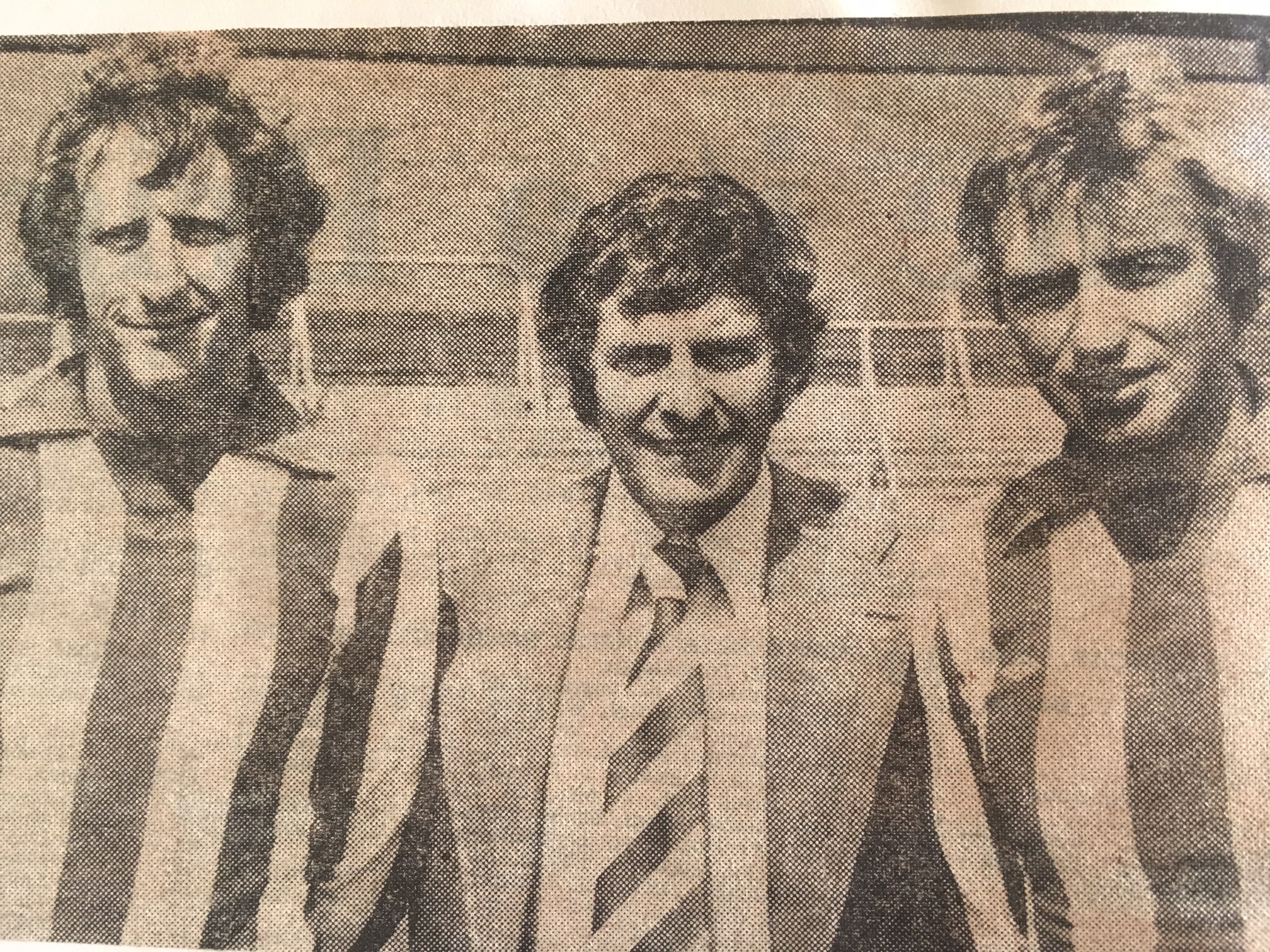
Sammy Nelson’s glittering career came to an end at Brighton

2 Sam NelsonEXPERIENCED Northern Irish international full-back Sammy Nelson was an Arsenal legend who joined Brighton towards the end of his career.

The last four of his 51 international caps came while with the Seagulls. One was a 4-0 defeat to England at Wembley when Albion teammate Steve Foster made his England debut, another was a substitute appearance at the 1982 World Cup against Spain. His last appearance for his country came in a 2-2 draw with Austria at that tournament.
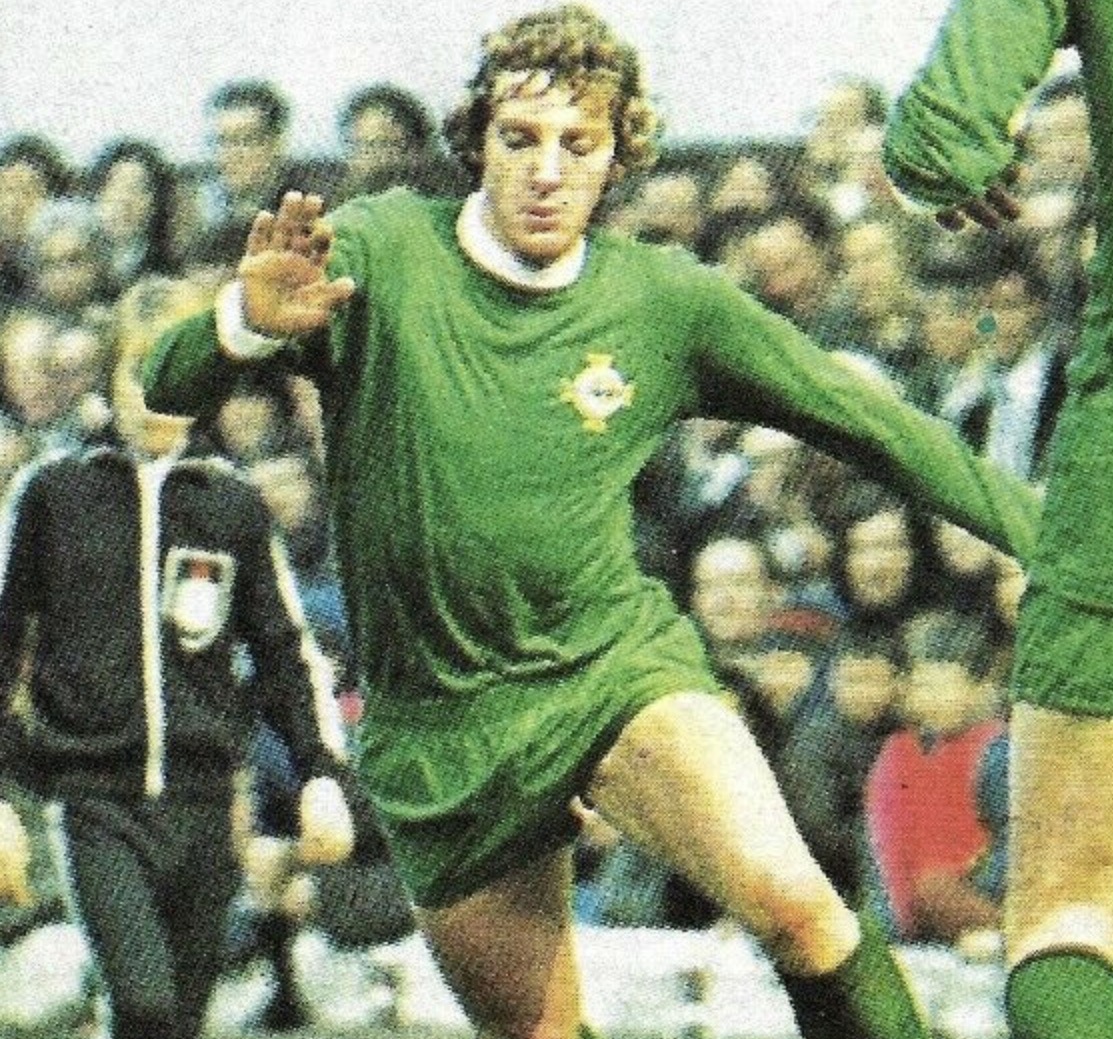
nels NI colLeading up to that competition, Nelson had played a significant part in helping Albion to what remained their highest ever finish in the football pyramid – thirteenth place – until the 2022-23 season.

A lot of fans didn’t like manager Mike Bailey’s style of play, but, with some degree of resonance to Chris Hughton’s philosophy, he built his side on a solid defence and preferred experience over youth.

Nelson was a key player in that defence after ousting long-serving Gary Williams a third of the way into the 1981-82 season.

He played alongside his former Arsenal teammate Steve Gatting, who Bailey had signed for £200,000 as a replacement for Mark Lawrenson (the famous departure to Liverpool having been the trigger for Alan Mullery to quit as manager).

Nelson had made only one substitute appearance for Arsenal in the previous season but he enjoyed a bumper testimonial game when a crowd of 20,000 turned up at Highbury for a game against Celtic.

Bailey declared on paying £35,000 for a 32-year-old player who had made 339 league and cup games for the Gunners: “The signing of Sammy Nelson has now given me the sort of squad I feel we need to compete with the best in the division.

“Sammy is a fine player and a very good professional but, like everyone else, he will have to compete for a team place.”

He did indeed have to wait for his chance, largely because he had a foot strain at the time of signing. But the chance came in a league cup second leg game at home to Huddersfield at The Goldstone.

Williams was restored for the following two league games but Nelson got the nod for a third round league cup game away game at Barnsley (which ended in a 4-1 defeat) and kept the shirt for all but two games through to the end of the season, making 32 appearances in total.

After only seven games, he gave an interestingly candid interview to the Argus. He admitted he was struggling with the daily commute from his home in Brookmans Park in Hertfordshire, being that it necessitated a 6am wake up.

“Towards the end of a week, it is only natural to start feeling tired at that sort of routine when, instead, I should be fresh for the coming game,” he said.

In the same interview, Nelson went on to take a bit of a swipe at a small section of the Albion following. “They expect the championship to come overnight. Some of them, instead of getting behind the team, have begun to get abusive, even vindictive,” he maintained. “I would have expected a little more loyalty from the crowd, but I must stress that I am only talking about a small section.”

It must have given Nelson some pleasure in April 1982 to be on the winning side as Albion beat Arsenal 2-1 in the top flight for the first time in nine attempts since gaining promotion in 1979.

Especially as former boss Terry Neill was up in arms about a challenge Nelson had made that went unpunished. The News of the World declared: “Arsenal boss Terry Neill last night blames former Highbury hero Sammy Nelson for his team’s defeat.

“Neill claimed the Brighton fullback should have been booked for bringing down Raphael Meade as the striker closed in for a goal which would have sewn up the match for the Gunners.”

Nelson was born in Belfast on April Fools Day 1949 and joined Arsenal on his 17th birthday in 1966, just as all eyes in England were focused on the World Cup.

His first silverware came as a member of Arsenal’s FA Youth Cup winning side that year, when they beat Sunderland 5-3 over two legs.

At that time he was a left winger but coach Don Howe converted him to a full back. The established first choice left back was Bob McNab and in the famous 1970-71 Double winning side, Nelson only got to play four games.

In fact he understudied McNab for the best part of five years, until the former Huddersfield man left the Gunners in 1975. Then Nelson made the position his own, with fellow Irish international Pat Rice on the opposite flank.

Nelson was almost ever present for five seasons and was part of the Arsenal team which reached three successive FA Cup Finals: 1978, 1979 and 1980, picking up a winners’ medal in the 1979 win over Manchester United. The Arsenal 1-2-3 that day were all Ulstermen: Pat Jennings, Rice and Nelson.

I particularly like this story from Arsenal fan Paul Reynolds, published on untold-arsenal.com: “In 1980 I took on a paper round and one of the houses I delivered newspapers to was where the Arsenal left-back Sammy Nelson lived. I didn’t see him often because I delivered the papers very early, but I’ll never forget the morning of the Arsenal v West Ham final.

“At about 10am I got a phone call from the paper shop owner to tell me that Sammy had popped in the night before and dropped off two tickets to give to the lad who delivered his papers. I was thrilled to bits and my girlfriend and I rushed off to Wembley and just about made it in time for kick-off – we didn’t care that we had to stand right at the back.

“Although, sadly, we lost the game 1-0 I’ll never forget that generous and thoughtful gesture by my former Arsenal hero and will always be grateful to have been supporting the club during an era when the players genuinely had a connection with the supporters and cared enough to go out of their way ahead of a massively important game to help a fan like me. Arsenal ‘til I die.”

arsenal.com remembers Nelson as one of their top 50 players, describing him as “a funny and endearing individual, the Ulsterman was held in genuine affection by team-mates and supporters alike”.

It also recalls the time he dropped his shorts and bared his backside to the North Bank – which earned him a fortnight’s ban by the FA. It was his response to scoring an equaliser after he’d earlier been barracked for scoring an own goal in a league game against Coventry.

The website adds: “A fine strike in a League Cup trouncing of Leeds United in 1979 was the pinnacle of his goalscoring feats, but Nelson was always willing to venture into enemy territory. At the back his obdurate tackling and bravery was complemented by a sure touch on the ball.”

Arsenal’s signing of Kenny Sansom spelled the beginning of the end of Nelson’s time at Highbury and he moved to Albion in September 1981.

Although he started the 1982-83 season in the Albion first team, he picked up an injury and retired at the end of the season having played a total of 45 games for the Seagulls.

On retirement he initially became Albion’s reserve team manager and then first team coach when Chris Cattlin took over as manager from Jimmy Melia. But he left after only one season and took up a City consultant job in life assurance and pensions.

Funnily enough, as a regular commuter to London myself at that time, I’d frequently see Sammy joining the train at Hove in the mornings and then relaxing in the buffet car on the return journey in the evenings.

He told the Independent in a ‘where are they now?’ feature in March 1994: “It’s funny, I never saw myself being part of the rat race but now I find myself standing on the platform in the right place for ‘my’ seat, just like everyone else.”

Pictures from my scrapbook and matchday programmes

A Goal magazine action shot of Nelson in Arsenal’s colours and the full-back in action for the Albion at the Goldstone, pictured in the matchday programme.

Also pictured: Nelson in full flight against Southampton; with young Gary Stevens captured by the Argus singing In Brighton at Busby’s disco in Kings Road; making the headlines in the News of the World; in action against Wolves.

When Chris Cattlin rocked up to play for and manage Brighton

1-cat-in-goalIT MUST BE difficult for today’s reader to imagine a player with the opportunity to sign for either Coventry City or Chelsea choosing the Sky Blues over the London giants.

But in 1968, when the choice faced Huddersfield Town’s Cattlin, he moved to Highfield Road because the following day they were playing a star-studded Manchester United side and, as the full-back who’d be marking the legendary George Best, he couldn’t resist pitting his ability against the Irish wizard.

It was one of several career insights Cattlin revealed in an excellent interview by Doug Thomson in the Huddersfield Examiner in June 2013.

Huddersfield were happy to collect a £70,000 transfer fee when Coventry bid for Cattlin, but he told the Examiner: “Chelsea also came in for me and I was due to speak to them in the afternoon after talking to Coventry in the morning.

“City were playing Manchester United the next day and the manager, Noel Cantwell, told me I would definitely be in the team.

“I knew that if I could say I’d played against George Best, Denis Law and Bobby Charlton, I could die a happy man, so I never got as far as Stamford Bridge!

“I signed for £65 a week when the man in the street was probably getting £20, so to be paid like that for playing football made me more than happy!”

As it turned out, Cattlin marked Best out of the game and his new team won 2-0 with goals from Ernie Machin (who later left the Albion at the same time Cattlin arrived at the Goldstone) and Maurice Setters, against his old team.

Cattlin went on to play more than 250 league and cup games for Coventry, (then in the equivalent of today’s Premier League), before moving to Brighton in 1976, where his playing career finished, but he returned as manager between 1983 and 1986.

Going back to the beginning, though, Cattlin was born in Milnrow, Lancashire, on 25 June 1946, the son of a rugby league player, Bob, and his early school days were spent at Milnrow Parish School. He moved on to Ashton-under-Lyne Technical College (Geoff Hurst was three years his senior there) and then took a job in textile engineering.

In the meantime, he trained and played for Burnley’s youth team but he struggled with the 40-mile round trip travelling from his home. A Huddersfield Town scout, Harry Hooper, had spotted his potential and he was offered a professional contract with the Terriers in the summer of 1964 which allowed him to carry on working two days a week at the textiles factory.

“I went across to Leeds Road, and just fell in love with the place. It was far from luxurious, but there was just a feel about the ground and the people there,” he recalled.

Maybe it was also a feeling that Huddersfield knew a thing or two about decent left backs. Cattlin took over from Bob McNab, who later made a name for himself at Arsenal, and played four games for England, and McNab had replaced England World Cup winner Ray Wilson, who Town transferred to Everton.

Cattlin was signed by Eddie Boot only for the manager to resign the day after, following a 2-1 home defeat by Plymouth. Boot’s successor was Tom Johnston and he insisted on Cattlin becoming a full-time pro, which caused a degree of angst with Cattlin’s concerned parents, but he went for it and didn’t look back.

It was emerging coach Ian Greaves, a former Manchester United player (who later took Town to the top flight as manager), who was to have a lasting effect on Cattlin. “Ian lived in Shaw, the next village to Milnrow, and he’d give me a lift to Leeds Road each day, in the days before the M62, on that winding old road over the moors,” he explained.

“He was a great coach and later manager, and a superb motivator, just a football man through and through.”

Cattlin made his debut in a 3-1 home win over Derby on the final day of the 1964-65 Division 2 (now Championship) campaign but didn’t fully establish himself in the side until the 1966-67 campaign.

In total, he played 70 times for Huddersfield and, for a while, he was playing for the town’s football team while dad Bob was playing for its rugby league side. “My dad played for Huddersfield at rugby league, I played for Huddersfield Town at football. I think we’re the only father and son to have done that,” he said.

After that 1968 transfer to Coventry, Cattlin became a firm favourite at Highfield Road and although he didn’t quite emulate Wilson and McNab, he did play twice for England Under 23s. He made his debut on 2 October 1968 in a 3-1 win over Wales at Wrexham in a side that also included Peter Shilton in goal, West Ham’s Billy Bonds and John Sissons and Everton’s Howard Kendall and John Hurst.

Six weeks later he won his other cap in a 2-2 draw with the Netherlands at Birmingham’s St Andrews ground, when Arsenal’s John Radford and Hurst were the scorers. Cattlin also represented the Football League v the Scottish Football League.

Cattlin was part of the only Coventry side ever to qualify for Europe (in 1970-71) and remembered relative success, only eventually getting knocked out by a Bayern Munich side that included the likes of Franz Beckenbauer and Gerd Muller.

On another occasion, in a tour match, he played in a 2-2 daw against Santos of Brazil, with Pele in their team, in front of an 80,000 crowd. “Pitting your wits against those kinds of players was a fantastic education,” he said.

When manager Gordon Milne decided to give Cattlin a free transfer after nine years and 239 matches for Coventry, fans organised a petition to keep him at Highfield Road.

But there was no turning back and Peter Taylor signed him for Brighton – along with another experienced defender, Graham Cross (from Leicester City) – a short time before quitting the club to rejoin Brian Clough at Nottingham Forest.

CC76

It was Alan Mullery’s good fortune to inherit a squad that would take Division 3 by storm to earn promotion and Cattlin was able to contribute in both full back positions although mainly at left back, having the edge on Harry Wilson.

With the arrival of Gary Williams from Preston, Cattlin switched to the right and vied with Ken Tiler for the shirt, regaining the upper hand for the final two thirds of the season which ended with promotion from the old Division 2 in 1978.

“That Brighton promotion team – what a fantastic set of lads, with no little ability,” he said. “They could all play and were great characters. I was a very lucky lad to come along at the end of my career and join a dressing room like that.”

Although he made just one appearance (in the disastrous 4-0 League Cup defeat at Arsenal) during the 1979-80 season, he notched up a total of 114 games for Brighton.

And he obviously liked the place so much that once his playing days were over he opened a rock shop on Brighton seafront, as well as investing in property. However, three years after quitting as a player, he returned to the Goldstone as a coach, appointed in the summer of 1983 by chairman Mike Bamber to assist manager Jimmy Melia – without Melia’s knowledge!

It all got rather messy with Melia and Cattlin clearly not getting on and talk of a takeover rumbling on in the background.

By the middle of October, Melia quit and Cattlin took over as manager, with another well known former left back, Sammy Nelson, elevated from reserve team manager to assistant manager.

Cattlin then began to shape his own squad and among notable signings who served Albion well were Steve Penney, Danny Wilson and Dean Saunders while there were some memorable cup games, including beating Liverpool in what I believe was the first FA Cup tie – other than finals – to be shown live on TV.

One of TV’s pundits of today, Martin Keown, was another Cattlin signing, joining on loan from Arsenal and beginning with Brighton what was a memorable career with the Gunners, Aston Villa, Everton and England.

Cattlin admitted in 2010: “I had to sell a lot of the popular, best players for financial reasons and bring other ones in to keep the show on the road and make it interesting for the crowd. That was my job.” The likes of Steve Foster (to Aston Villa), Jimmy Case (to Southampton), Tony Grealish (to West Brom) and Gordon Smith (to Manchester City) were all sold by Cattlin.

In 1984, Cattlin certainly found an entertainer when he brought to the Albion a former teammate from his days at Leeds Road, the mercurial Frank Worthington, who moved along the south coast from Southampton.

By that time, Worthington wasn’t too mobile but he’d lost none of his skill and flamboyance and Cattlin told his 2013 interviewer: “He did a good job for me.

“Frank wasn’t only a great player, but a great bloke as well, a dedicated trainer and a great bloke to have around a club.”

Catt dog
Barking up the wrong tree? Cattlin couldn’t quite restore Albion to the elite when he returned as manager

Cattlin stayed in the manager’s chair until April 1986, overseeing finishes of ninth, sixth and 11th in the second tier, although he clearly felt the writing was on the wall as far as his job was concerned when the Albion board wouldn’t give him £6,500 to sign the experienced defender Jeff Clarke from Newcastle, as Cattlin explained at the Albion Roar live show in December 2018 (skip to 28 minutes in).

Distractions and changes in the boardroom were an uncomfortable backdrop to much of his time in charge and it was evident that the fans didn’t perceive Cattlin to be to blame for the failure to finish higher.

When he was sacked, there were protests from supporters, a 2,000-signature petition calling for his reinstatement and Cattlin himself addressed a 200-strong rally in Hove.

But it was all to no avail. His former boss, Mullery, returned and Cattlin went back to his non-football business interests.

In a 2010 interview in the matchday programme, Cattlin said: “I think I deserved another season at least to get them back into what is now the Premiership.

“If it had gone wonky then they wouldn’t have had to fire me – I’d have gone myself. Nevertheless, to play, coach and manage Brighton and Hove Albion made me a very proud man. But I wish I could have put them back where I felt they belonged.”

  • Pictures show (top) Chris Cattlin pictured in Goal magazine in Coventry’s sky blue; in an Evening Argus shot alongside new manager Alan Mullery and fellow close season signing Graham Cross; how the Albion programme headed his managerial notes.

Cattlin pictured in 2010

100 goals in Scotland and England for Neil Martin

2 MartinSCOTTISH international Neil Martin remains a legend at one of his homeland clubs but his brief time at Brighton was more like a bad dream after a goalscoring start.
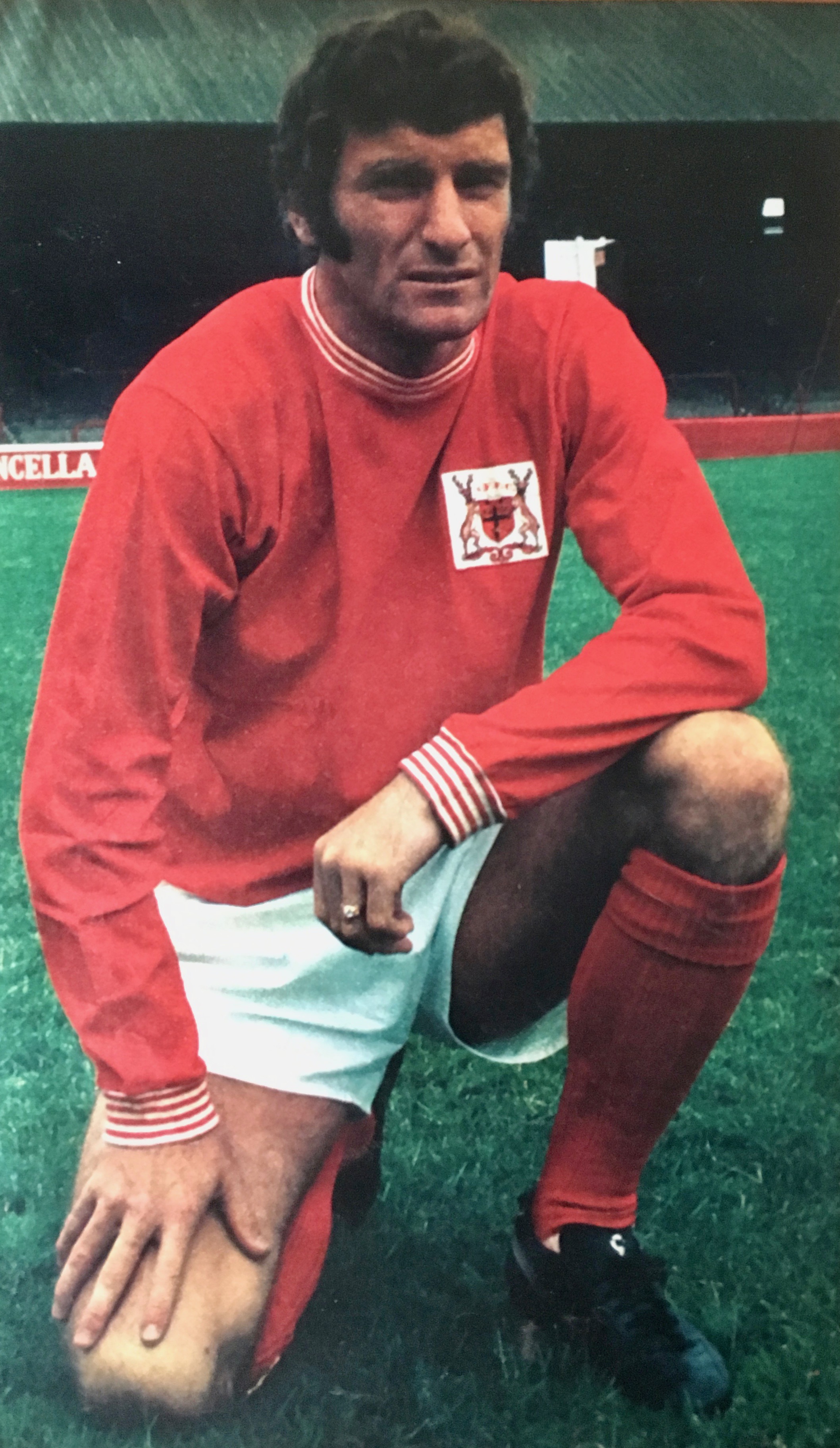
QoS Martin

The striker’s youthful picture can still be found on the legends section of Queen of the South FC’s website where it notes he was among the first players to score 100 league goals in both Scotland and England.

It was while playing for the Wearsiders that he gained three Scotland international caps, all in 1965.

IMG_5147Martin scored 28 goals in 119 games for Nottingham Forest having moved down from Scotland in the 1960s and begun his English league career with Sunderland.

Martin partnered the legendary Denis Law up front in World Cup qualifiers against Poland and Finland and his third and final cap was earned in a 1-0 win over Italy playing alongside Tottenham’s Alan Gilzean.

IMG_5146One of his most prolific spells was at Coventry City (above) where, in three years, between 1968 and 1971, he scored 40 goals in 106 appearances.

He was slightly less prolific for Forest (although he was on the scoresheet in Clough’s first game in charge) before Peter Taylor brought him to the Albion on 26 June 1975.

Four new players were presented to the assembled press that pre-season and standing alongside Martin was one Peter Ward.

Martin scored on his league debut for Brighton as Rotherham United were dispatched 3-0 but he didn’t stay in the side long because Taylor brought in loan signing Barry Butlin, also from Forest, for five games to play up front alongside Fred Binney and Gerry Fell.

Martin did get a run back in the side during the autumn, when he added to his goals tally. But Taylor obviously felt the attack needed something extra and the £30,000 arrival of Northern Ireland international Sammy Morgan from Aston Villa spelt the beginning of the end of Martin’s short spell at the club.

He scored eight league goals and one in the FA Cup in 18 starts (plus four substitute appearances) but it all ended somewhat acrimoniously.

The Argus reported on February 13 1976 that the 32-year-old former Scotland international had been transfer listed and banned from the Goldstone.

Words had evidently been exchanged after Martin had been subbed off in a reserves game and, try though he did, reporter John Vinicombe couldn’t find out exactly what had gone on.

Taylor was renowned for his tough stance with players. He suspended six players in the September that season and he had fallings out with Ian Mellor, Joe Kinnear and reserve ‘keeper Derek Forster.

Martin didn’t play for the club again, instead being moved on to Crystal Palace where he scored just the once in nine appearances.

At the end of the season, he joined what was a familiar exodus for ageing English league players at the time and played alongside England’s World Cup winning captain Bobby Moore, and ex-Arsenal full back Bob McNab, for San Antonio Thunder in America.

It wasn’t unfamiliar territory for Martin because, in the summer of 1967, he was part of the Sunderland contingent who played in the NASL as Vancouver Royal Canadians. The 16-man squad also included the above-mentioned Forster.

After Martin’s 1976 stint at San Antonio, he didn’t play in England again. His final playing days were in the Republic of Ireland, interestingly being given a lifeline by another former international striker who’d played for Brighton – Barry Bridges.

The former Chelsea, Birmingham, QPR and Millwall striker had a couple of seasons managing Dublin side St Patrick’s Athletic, where Martin joined him.

The Scot had a brief managerial foray with Walsall, mainly in tandem with Alan Buckley, but it didn’t end well and he left the club in 1982.

Born in Tranent, just east of Edinburgh, on 20 October 1940, Martin’s break into the professional game came at Alloa Athletic. His 25 league and cup goals in the 1960-61 season brought about a move to Queen of the South where he continued to score plenty of goals – 33 in 61 appearances.

A £7,500 transfer fee took him to Hibernian in 1963. He’d supported them as a boy and after Jock Stein took over as manager in 1964, Martin netted 29 league and cup goals in the 1964-65 season. He said later that Stein was the biggest influence on his career.

It was top-tier Sunderland who paid £45,000 to take Martin south of the border. His goalscoring in his first taste of English football wasn’t quite as prolific as it had been in Scotland, mainly due to the Wearsiders not being able to decide on the best strike partner for the Scot.

Eventually, in 1968, he moved on to Coventry City, newly-promoted to the old First Division. He spent three years at Highfield Road, developing good partnerships with Ernie Hunt and John O’Rourke, with the emerging talents of Willie Carr and Dennis Mortimer providing good service from midfield.

His switch to Nottingham Forest towards the end of the 1970-71 season helped them survive the drop, but they went down the following season and that was the last Martin saw of top-flight football.

1 Martin
3 Martin