Steve Harper’s part in the Seagulls-Magpies goalkeeping ‘trade’

BRIGHTON and Newcastle United clearly have a similar eye for goalkeepers with a string of custodians having played for both clubs.

A few years before I started watching, Dave Hollins, older brother of ex-Chelsea midfielder John, moved to Tyneside in 1960 after three years with the Albion, and played twice as many games for Newcastle in the early part of that decade than he had for Brighton.

Back in the first Alan Mullery era, Eric Steele, who went through the Newcastle ranks without making the first team, arrived at Brighton to replace the injured Peter Grummitt in 1977 and was in the side that won promotion to the elite via a 3-1 win at St James’ Park in 1979.

Dave Beasant, who Newcastle bought from Wimbledon for £850,000 in 1988 – although he only played 20 games for the Magpies – was between the sticks for the Albion for 16 games in 2003.

More recently, Dutchman Tim Krul – who’d been at Newcastle a decade – spent a couple of seasons as back-up to Mat Ryan and would probably be disappointed he didn’t get more game time.
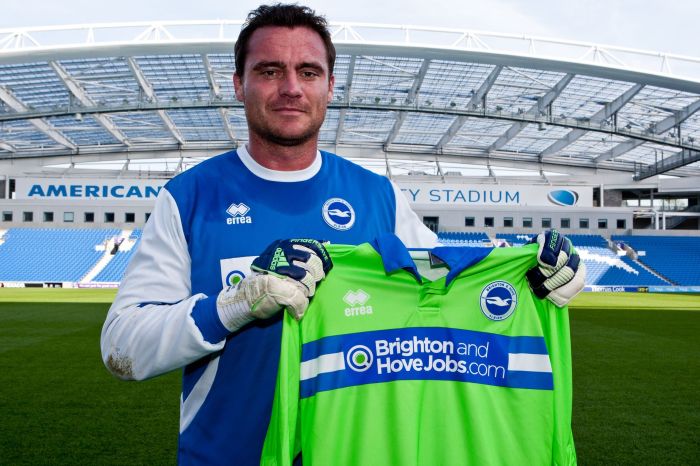
My post on this occasion, though, is about Steve Harper, United’s longest-ever serving player having been there 20 years. He later went back as one of the coaches working with Steve Bruce, as well as being goalkeeping coach to the Northern Ireland international side.

Harper is a qualified UEFA A coach and UEFA A goalkeeping coach, and holds a Masters degree in Sport Directorship.

Back in 2011, Harper was happy to lend his experience to the second tier Seagulls during Gus Poyet’s tenure as manager, a decision applauded by Alan Pardew, Toon boss at the time.

“He just wanted to play,” Pardew told the Chronicle. “Not all the top players in the country would have gone on loan – you’re vulnerable.

“You’re going down a division, but he was prepared to do that, and fair play to him.”

For his part, Harper told BBC Sport: “Everybody knows I haven’t played enough football until the last two-and-a-half years.

“I hadn’t played a competitive game for about six months so it was nice to blow the cobwebs out.”

In his first Seagulls match, unfortunately Albion lost against West Ham to a single goal from Harper’s former teammate Kevin Nolan, and he said: “It was disappointing to lose against West Ham with the possession we had.

“Now I’m here, it’s time to get stuck in. We want Brighton to consolidate and finish as high as we can. People tell me it’s a lovely city. I’m looking forward to seeing more of it.”
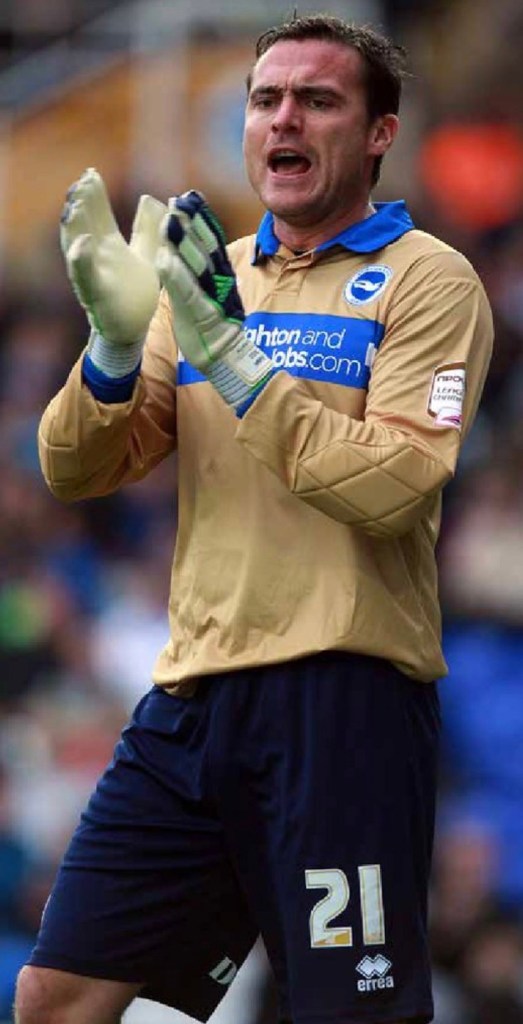
Harper recalled the time fondly in an interview for the Albion website in 2019.

He featured in five games for the Seagulls, keeping two clean sheets. While he conceded five goals, three came away to Southampton when the Seagulls were unjustly punished by referee Peter Walton.

Harper told journalist Nick Szczepanik: “I would have stayed longer given the opportunity. They made me feel very welcome.”

He even managed to give two of his new teammates a surprise when he started speaking to them in Spanish. Playing behind Spanish speakers Inigo Calderon and Gonzalo Jara Reyes, he explained to Andy Naylor, then of The Argus: “After five years of Bobby Robson and his multi-lingual team talks my Spanish is okay.

“Calde got quite a shock with how much Spanish I know, but I had Colocinni and Enrique in the team with me at Newcastle.”

After his brief spell with the Albion, Harper returned to Newcastle and played nine more games for them the following season before moving on to Hull City (at the time managed by current Toon boss Bruce), where he played alongside Liam Rosenior.

Born in Seaham on 14 March 1975, Harper grew up in the County Durham mining village of Easington and went to its local comprehensive school. Originally a striker at local Sunday league level, he only started playing in goal from the age of 17 and he turned out for Newcastle’s youth team while he was still at college doing A levels.

In fact he was offered a place at John Moores University in Liverpool to study for a Sports Science degree but he deferred it when Newcastle offered him a one-year contract. He signed in 1993 as a back-up for first choice Pavel Srnicek, later Shaka Hislop and subsequently Shay Given.

Much of his time at Newcastle was as a more than capable deputy to whoever was first choice although in United’s 2009-10 season in the Championship, under Chris Hughton, he was the main man and played 45 matches.

Harper had nothing but praise for Hughton, telling chroniclelive.co.uk: “He came in at an incredibly difficult, turbulent time after relegation.

“Chris was the man at the centre of a perfect storm who steered us through some very choppy waters.

“He did a wonderful job and I don’t think he got enough credit. It was no surprise to me to see him go on to do an excellent job at Birmingham City and then at Brighton.”

In total, Harper played 199 games for Newcastle, featuring under nine different managers – Kevin Keegan and Bobby Robson being his favourites.

Periodically over the years, he went out on loan to gain first-team action, appearing between the sticks for Bradford City, Gateshead, Stockport County, Hartlepool and Huddersfield. The Brighton move was his sixth spell out on loan.

Harper’s long service for Newcastle was rewarded with a testimonial against AC Milan in 2013 before he left the club to join Hull, where he spent two seasons.

Six months after his departure from Hull, he was taken on by then Premier League Sunderland as cover for Jordan Pickford and Vito Mannone, but he didn’t make a first-team appearance and was released at the end of the season.

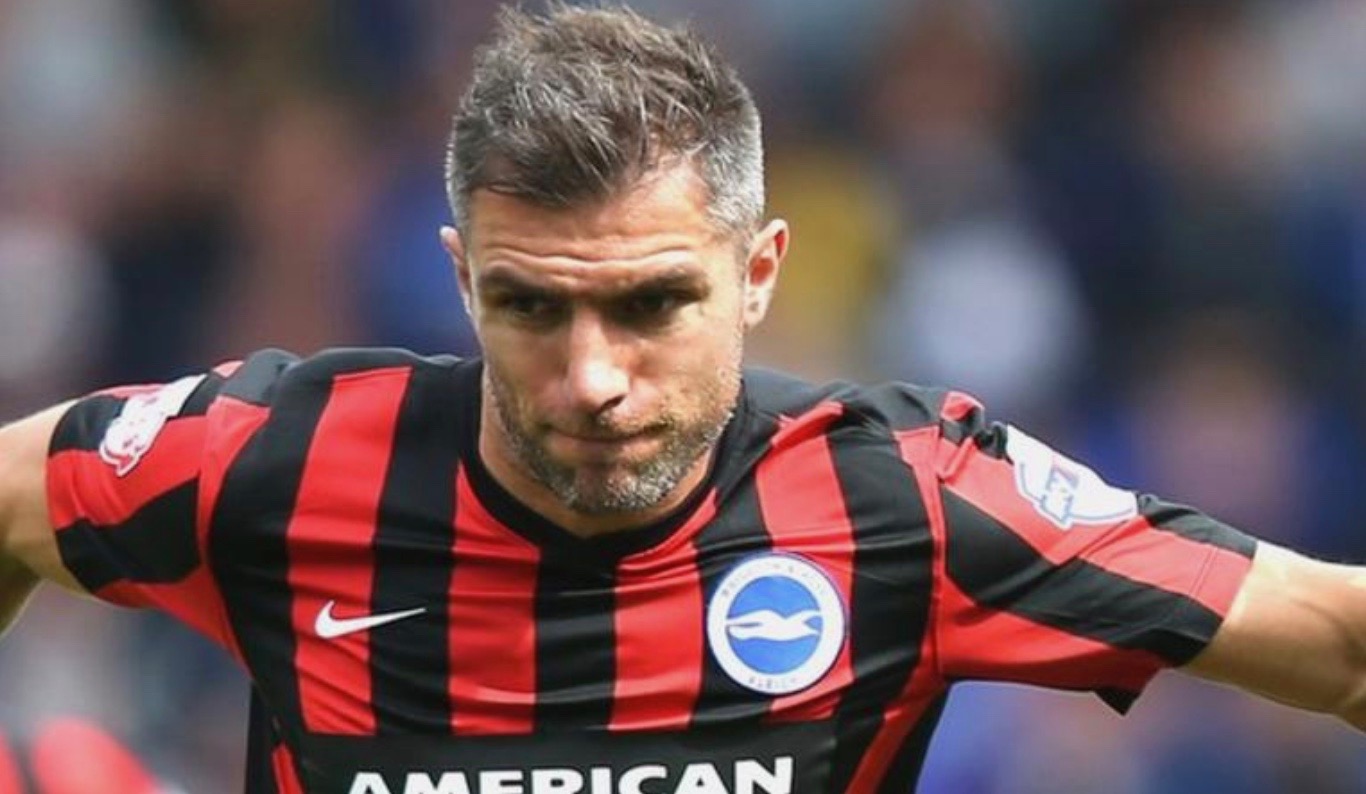
Northern Irish legend Aaron Hughes was talk of the Toon

AH red blackVETERAN Northern Irishman Aaron Hughes only brought down the curtain on his lengthy playing career in June 2019 at the age of 39.

On 12 June he finally confirmed his playing days were over in an emotional speech to his Northern Ireland team-mates in the Borisov Arena after the country’s 1-0 victory over Belarus.

Remarkably, Hughes had first been called up to the Northern Ireland squad at the age of 17, before he’d even broken through at Newcastle United.

“Having known Aaron Hughes for nearly 25 years, it was an honour to be present to witness his typically classy speech to all of the Northern Ireland players and staff to announce his retirement from the game after an amazing career,” former Newcastle keeper and current Northern Ireland coach Steve Harper told the Belfast Telegraph.

Amongst many others paying tribute, former international Paddy McCourt added: “Without doubt the best professional I encountered during my football career. I was fortunate enough to play alongside Aaron Hughes at Brighton and we also spent many years together with Northern Ireland. A true gentleman and brilliant player.”

He had just the one season with Brighton & Hove Albion – in 2014-15. Mainly a central defender, Hughes could also play comfortably in either full-back position or midfield.

He was the first Brighton signing of Sami Hyypia’s ill-fated spell as manager, and Hyypia told the club website: “We wanted to bring another experienced defender, and Aaron fits the bill – having played at Premier League, Champions League and international level.

“I have played against Aaron a few times during my time at Liverpool and also for Finland, and I know his qualities and what he will give us.

“He has a very good footballing pedigree, is an intelligent player, and he has a great mentality and good approach to the game.

“He has that experience I wanted to bring into the squad, which alongside our other senior players, will help our younger players continue to develop and progress in the first-team squad.”

As it turned out, Hughes was only used as cover and during his season with the Seagulls made only 13 appearances.

Nevertheless, Hughes’ stay on the south coast clearly left an impression and fellow Northern Ireland international Oliver Norwood described how Hughes played a part in persuading him to join the Seagulls in 2016.

“I spoke to Hughesy about his time here and he spoke so highly of the club, mentioning the facilities, the stadium and that it’s set up to go to the Premier League,” Norwood told the club website. “He’s a wonderful person that’s achieved so much.

“I know he didn’t get the game time he would have liked here, but if I have half the career he has, then I’ll be very happy.”

Born in Cookstown, County Tyrone, on 8 November 1979, Hughes joined Newcastle United’s youth ranks at 17 and, over eight years, he made 279 appearances for the Magpies.

A Hughes superb footy picsEyebrows were raised when former Northern Ireland manager Bryan Hamilton took Hughes to Portugal for a World Cup qualifier in October 1997, when he was still only 17, but Hamilton told the Belfast Telegraph: “There was something special in him, even at a young age, and I wanted him in the squad. I felt he could be an outstanding player for Northern Ireland and I knew that coming in early wouldn’t affect or faze him.”

Hughes had to wait until Lawrie McMenemy succeeded Hamilton to make his international debut the following March, and by then he’d made a memorable debut for Newcastle in November 1997 against Barcelona at the Nou Camp. Selected by manager Kenny Dalglish, despite the 1-0 defeat, the 18-year-old showed tremendous promise against the likes of Figo, Ronaldo and Stoichkov. He eventually held down a regular first team place under Dalglish’s successor Ruud Gullitt before Bobby Robson took the helm.

Hughes made his name at St James’s Park in the centre of Newcastle’s defence, playing alongside Sylvain Distin in a side also featuring Craig Bellamy, Gary Speed and Alan Shearer. He spoke about his time playing under Dalglish and Robson in an interview with the Guardian.

Discerning followers of Toon were quick to join in the tributes paid to Hughes when he announced his retirement. Elsewhere they have vented their spleen at the decision Graeme Souness took to sell him to Aston Villa.

Hughes had three seasons at Villa, having been signed by David O’Leary in the 2005-06 season. But Villa fans are a tough lot to please and, despite his previous success at Newcastle, it seems they expected more. “Hughes, despite filling his role admirably as a centre back, never felt integral to our defence as he found himself chopped and changed with (Olof) Melberg, and fellow signing Wilfried Bouma,” declared readastonvilla.com.

Eventually with injury-hit defender Martin Laursen returning to the side under new manager Martin O’Neill, Hughes became more of a squad player at Villa Park. He was allowed to leave to join Fulham and was signed by a former Northern Irish international teammate, Lawrie Sanchez.

hughes fulhamAt Fulham, he formed a formidable defensive partnership with Brede Hangeland and fulhamfc.com said: “The pair worked brilliantly together, with the fans soon referring to them as our very own Thames Barrier. Their styles complemented each other perfectly, and while Hughes wasn’t the tallest of centre-backs, his leap and reading of the game more than made up for it.”

Hughes was one of three ever-presents – with Mark Schwarzer and Danny Murphy – when Fulham finished seventh in the Premier League in 2008-09, which led to European qualification.

He was part of the side captained by Murphy, with Bobby Zamora up front, who went on a gloriously unexpected UEFA Cup journey in 2010, only to be pipped to the trophy in extra time by Atletico Madrid.

“The way we lost, right at the end of extra-time, still grates with me, so the final is a bitter-sweet memory,” Hughes reflected in a 2014 interview for Albion’s matchday programme. “The Juventus game stands out more, where we came back from 3-1 down from the first leg in Italy to win 4-1 at Craven Cottage.”

On transfer deadline day in January 2014, Hughes signed a short-term deal for Harry Redknapp’s Queens Park Rangers for whom he made 11 Championship appearances.

After his season with Brighton, even at the age of 36 Hughes had no intention of packing up playing. Instead, he headed to Australia and played for Melbourne City and then linked up with India’s Kerala Blasters before he joined Hearts for his final two seasons.

His last club game saw Hearts bring him on in the 68th minute of their final league game of the season, a 2-1 defeat to Celtic at Celtic Park. Upon replacing John Souttar, the 39-year-old Hughes took the captain’s armband for the final few minutes of a career stretching across an impressive 22 years.

Hughes won an amazing 112 caps for his country across 20 years – a record for an outfield player. He was second only to the legendary Pat Jennings as most-capped player and was captain of his country for eight years. Small wonder, then, that he should be so grateful to so many at the Irish FA for the longevity of his international career.

hughes NI

  • Pictures from various online sources.

Cup Final hero Dave Beasant was Brighton’s oldest player

Beasant BHA

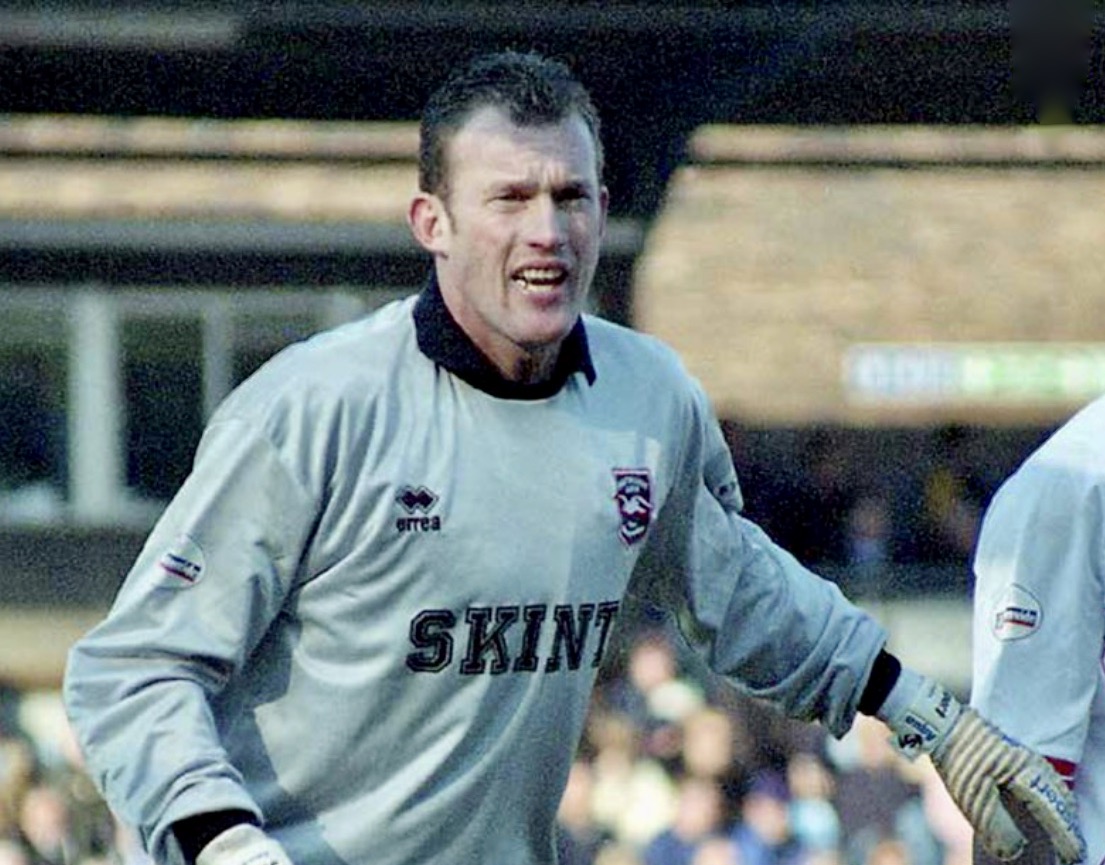
THE FIRST goalkeeper to save a penalty in an FA Cup Final – and the first to captain his team in the historic end of season finale – played between the sticks for Brighton at the ripe old age of 44.

Admittedly Dave Beasant is better known for his years playing for Wimbledon, during which time he laid down those FA Cup milestones in the 1988 final against Liverpool.

Nicknamed Lurch after the butler in The Addams family, Beasant’s heroics to keep out John Aldridge’s spot kick and preserve the 1-0 lead given to the humble south west London club by Lawrie Sanchez, led to the giant goalkeeper lifting the cup.

It also turned out to be the last ever game he played for Wimbledon. A month after that Wembley triumph, Newcastle paid £750,000 for his services – a transfer fee record for a goalkeeper at that time.

Not a bad return on Wimbledon’s £1,000 investment ten years earlier after he had impressed Dario Gradi playing for Edgware Town against the Dons in a pre-season friendly.

Beasant made his league debut against Blackpool in January 1979, and, remarkably, between August 1981 and the end of that 1987-88 season, made 304 consecutive league appearances for the Dons as they rose through the leagues.

When Newcastle sold Paul Gascoigne to Spurs for £2.2 million, they decided to splash £750,000 of it on the big Wimbledon goalkeeper.

Sadly, it was not money well spent. Beasant’s spell on Tyneside lasted just five months and certainly didn’t match the fairytale ending at Wimbledon.

Newcastle struggled at the foot of the table in 1988-89, and were relegated, but before the trapdoor opened Beasant had already departed after just 20 appearances.

He moved back to London in January 1989 to join Chelsea, where he played 193 times, initially under Ian Porterfield, until falling out of favour in 1992.

It was towards the end of 1989 that Beasant won two England caps, playing against Italy and Yugoslavia, and an injury to David Seaman saw Beasant selected for Bobby Robson’s 1990 England World Cup squad, although he didn’t play.

When Glenn Hoddle took over at Stamford Bridge, Beasant was relegated to number three ‘keeper behind Dmitri Kharine and Kevin Hitchcock, so he went out on loan for brief spells at Grimsby Town (six games) and Wolves (four games) before securing a £300,000 move to Southampton in 1993 to succeed Tim Flowers as their no.1.

He played 105 times for Saints but several managerial changes saw his fortunes fluctuate and, in 1997, he once again found himself third choice – this time behind Maik Taylor and Paul Jones – and he was on the move again.

By this time he was 38, but retirement was still not on his agenda. After joining on loan initially, Beasant moved permanently to Nottingham Forest in November 1997 and played 139 games in four years.

It was back to the south coast again in 2001, when Portsmouth needed a goalie following the death in a road accident of their regular ‘keeper, Aaron Flahavan. Beasant played 27 times for Pompey.

Emergency loan spells then followed successively at Tottenham, Bradford City and Wigan Athletic, although he didn’t play any first team games for any of them.

It was from Wigan, just a few weeks before his 44th birthday in 2003, that he once again headed south, this time to join Brighton’s brave but ultimately unsuccessful attempt under Steve Coppell to stave off relegation from Division One.

With Michel Kuipers out of the side with a thigh injury and loan replacement, Ben Roberts, suffering from ‘flu, Beasant was drafted in.

In the Bradford City v Brighton programme in February 2003, Colin Benson wrote almost poetically about the legendary goalkeeper.

Beasant landsc“The unmistakeable figure of Dave Beasant stood tall under the Brighton crossbar at the Bescot Stadium a fortnight ago marking his debut for his 11th club at 43 years of age by brilliantly saving from Leitao’s shot on the rebound after beating out an effort from Corica,” he wrote. “Unfortunately he could not crown the day with a match winning clean sheet for Walsall pinched a 1-0 victory but it amply demonstrated that after 20 years between the posts he has lost none of his technique or resilience.”

In a 2018 interview with Spencer Vignes, Beasant said: “Stevie Coppell gave me a bell. I think you’d lost 12 straight games. I remember looking at the table thinking ‘They’re going down’. But there was also something about it that I quite liked. It was a challenge.”

Beasant said that morale was good despite the league position, and he added: “Wherever I go, I can add something on the field and off it. And that’s what happened. We clicked really well together.”

He played 16 games through to the end of the season and although ultimately the bid to stay up was not successful, no blame could be laid at Beasant’s door for lack of effort.

Never was it more evident than in the final game of the season away to Grimsby. With the score 2-2 and all hope virtually extinct, Beasant was still giving his all when other players’ heads had dropped.

I chatted briefly to Beasant at the club’s end of season dinner and remarked how I had been impressed by his never-say-die attitude right to the very end of that game, even though it was a lost cause.

Obviously the consummate professional, he said to me that however unlikely a win would be, you had to continue to play in the hope things might change round.

What a pro and exactly the sort of attitude that meant Beasant endeared himself to the Albion faithful. In a prophetic assessment after the Grimsby game, he told the Argus:

“You feel for those fans because they have been superb. They are gearing themselves for next season already and hopefully the players can set the same target as the fans and, obviously, that is to bounce straight back.”

Beasant cemented his place in the record books as Albion’s oldest-ever player while Albion, of course, went on and did just as he thought they might on that glorious day at the Millennium Stadium in Cardiff.

Although Coppell offered Beasant the chance to stay on with the Seagulls, he didn’t want to drop down to the third tier and instead took up Chris Coleman’s offer to become a player-coach at Fulham. He was proud to say that on his 45th birthday he was on the bench when Fulham played Chelsea.

Beasant remained on the Fulham coaching staff after Coleman’s departure under his old Wimbledon teammate Lawrie Sanchez (he had already worked with Sanchez in his previous role as Northern Ireland manager). But when Sanchez was fired, Beasant went too.

He subsequently worked for his son, Sam, at Stevenage, and at the age of 55 was famously registered as part of the squad for the 2015 play-off final, even though he didn’t play.

Between 2015 and 2018, Beasant was goalkeeping coach at Reading.