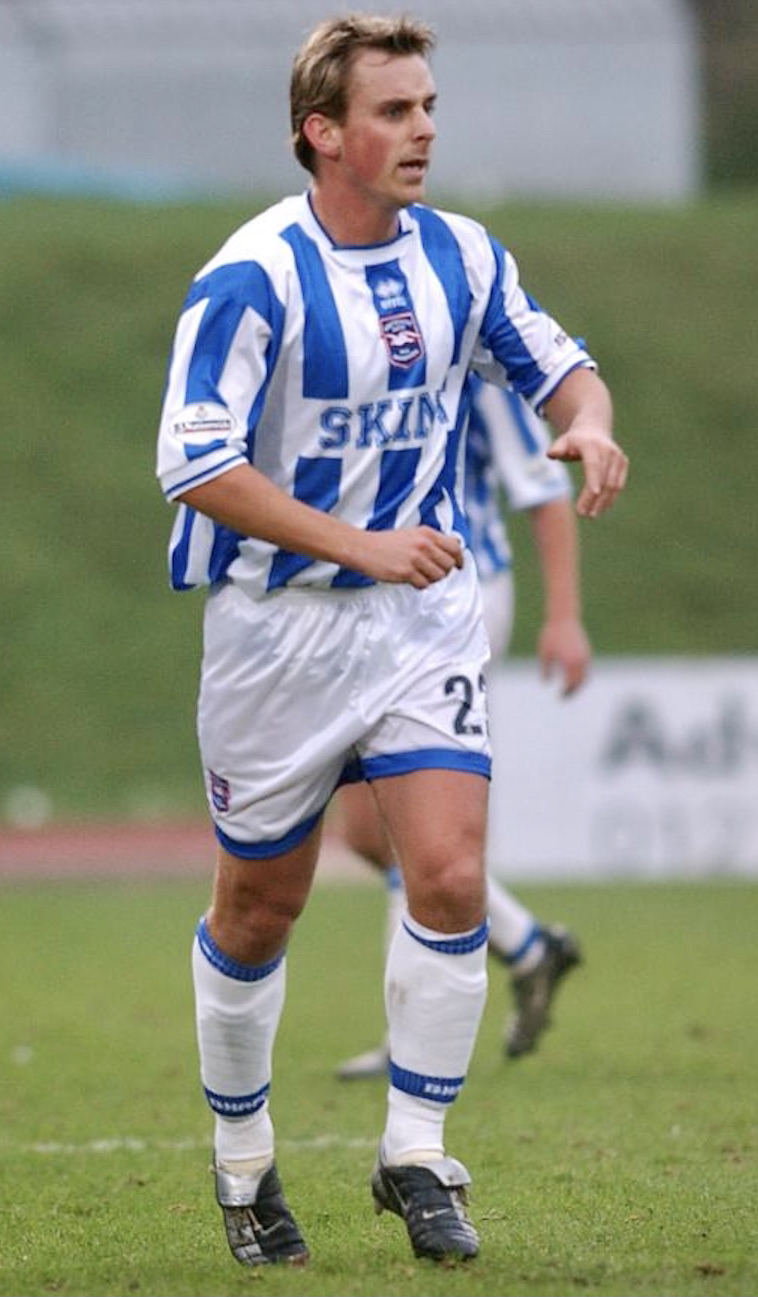
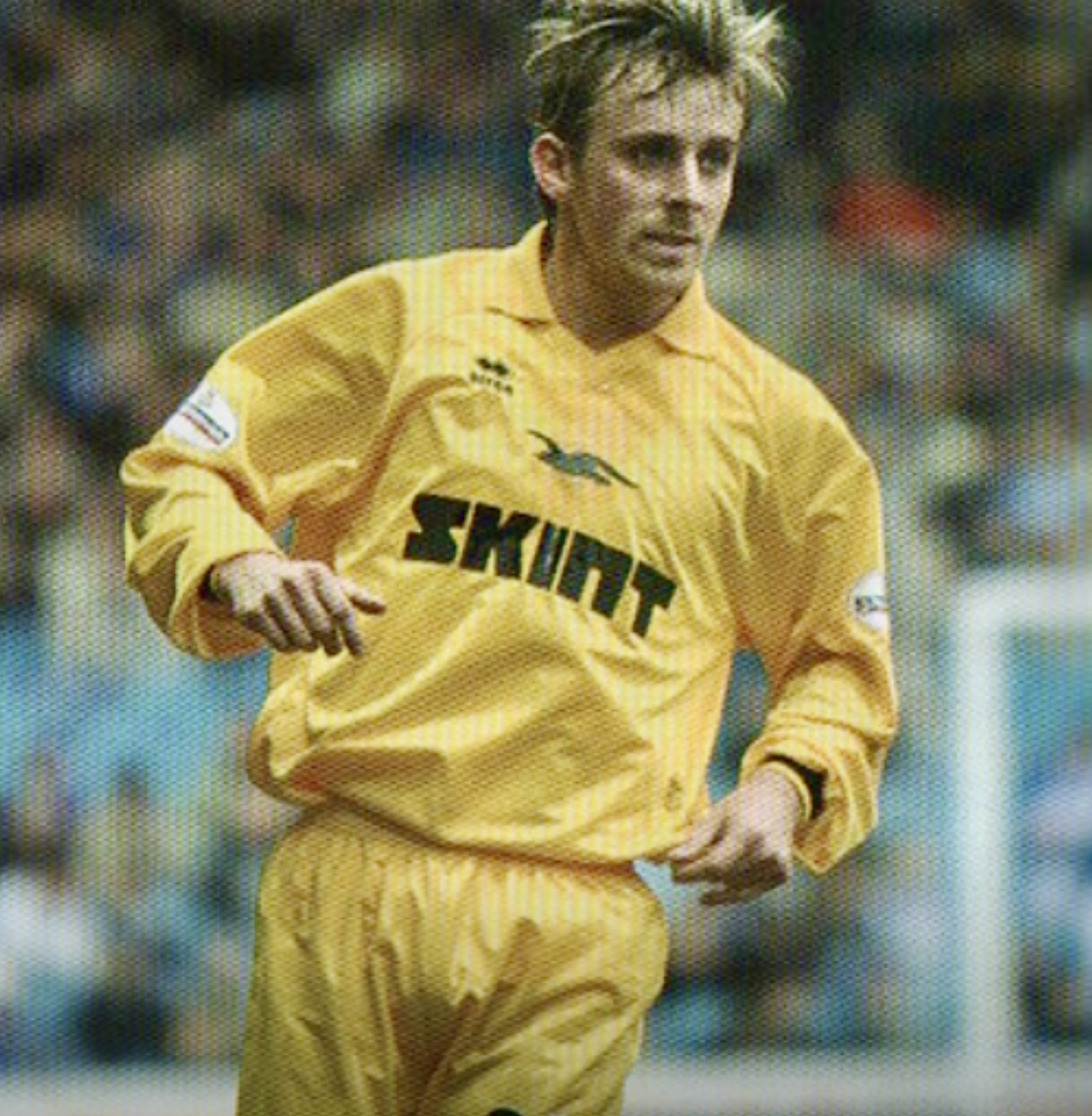
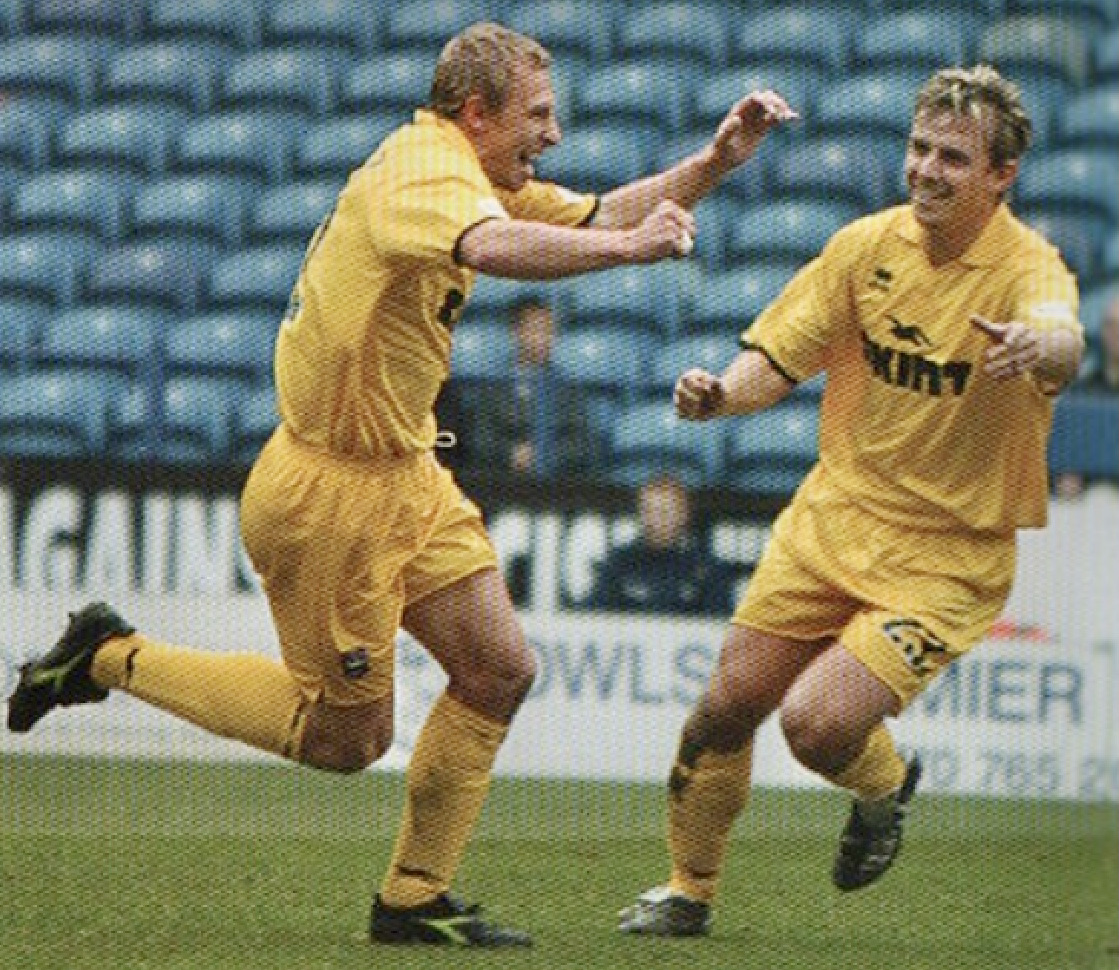
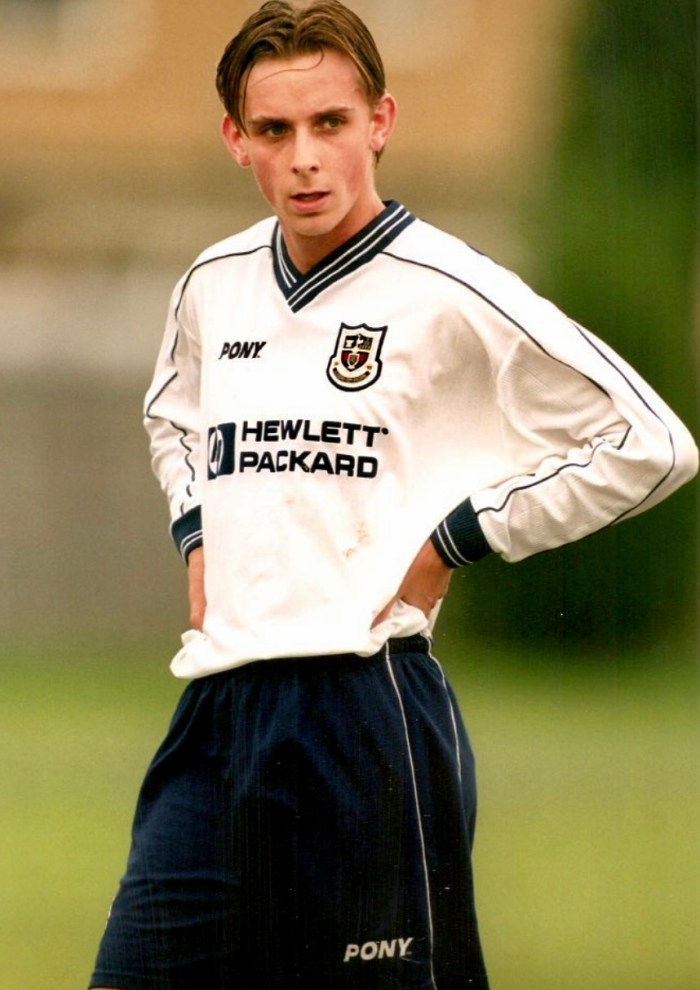
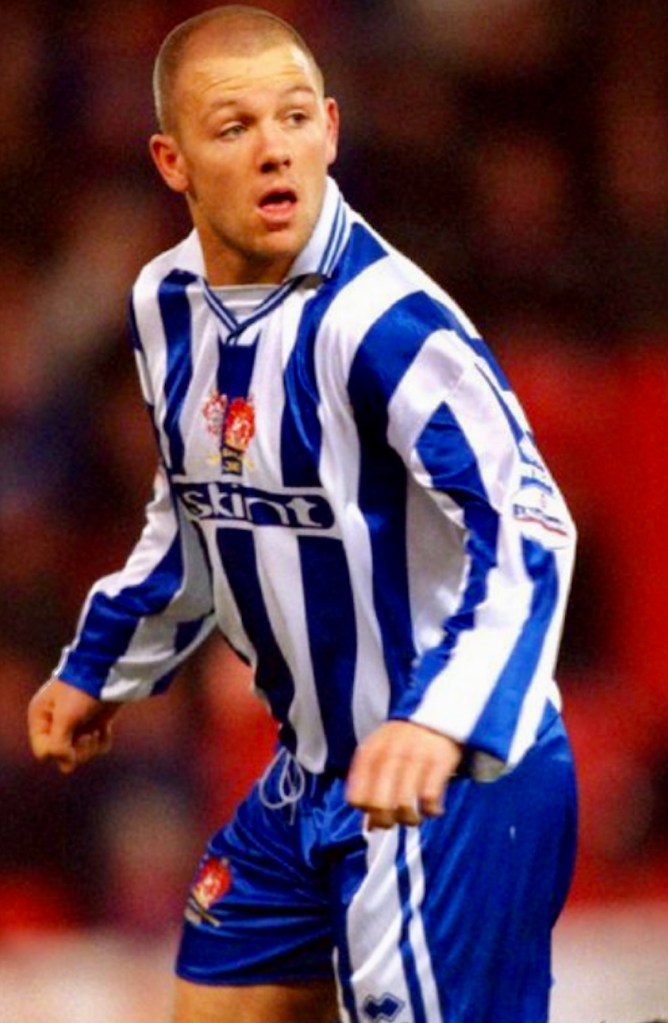
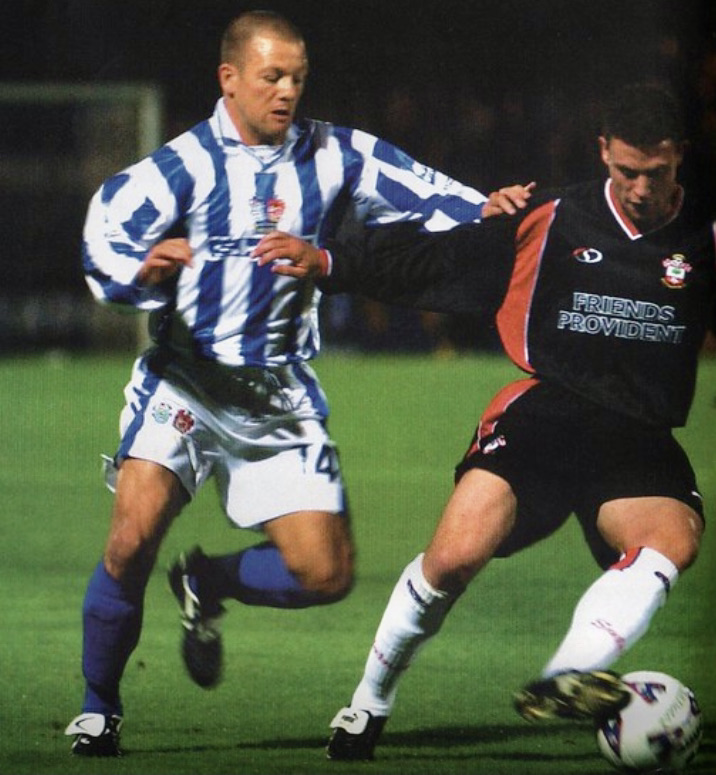
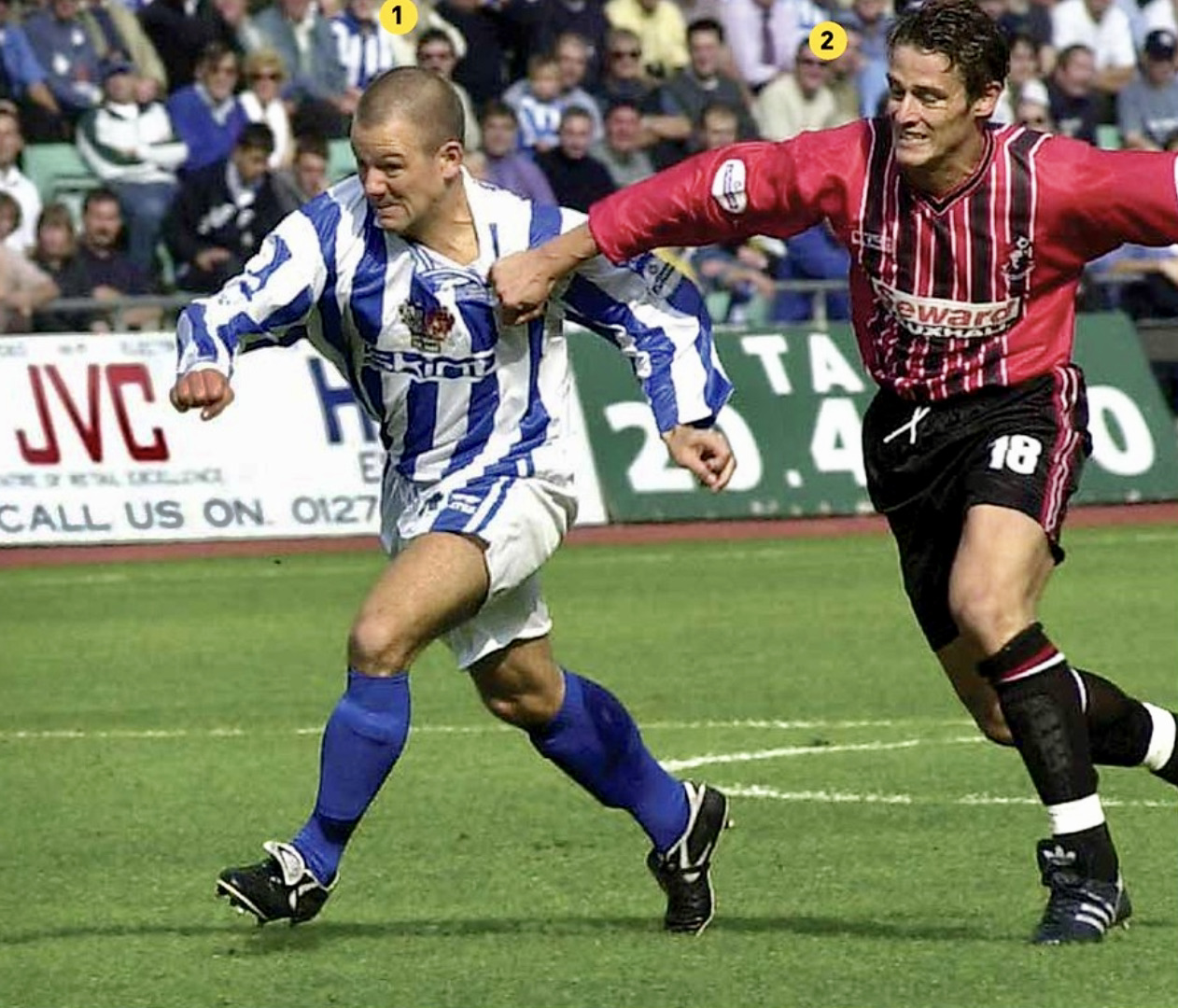
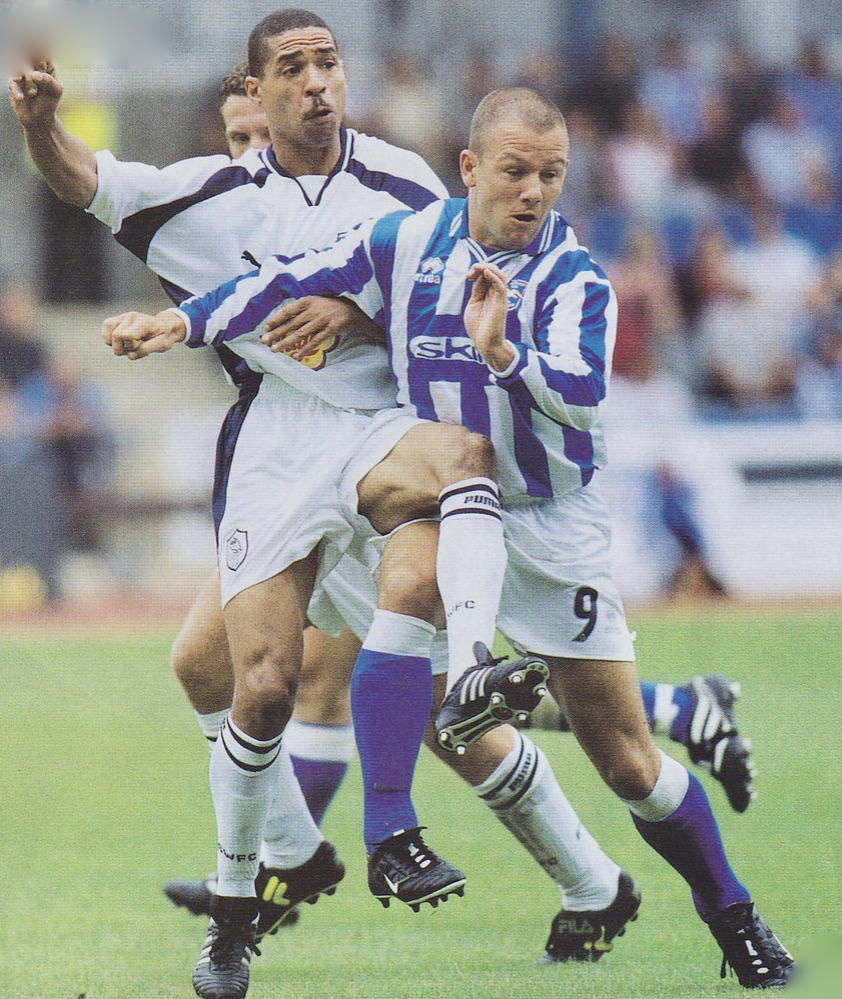
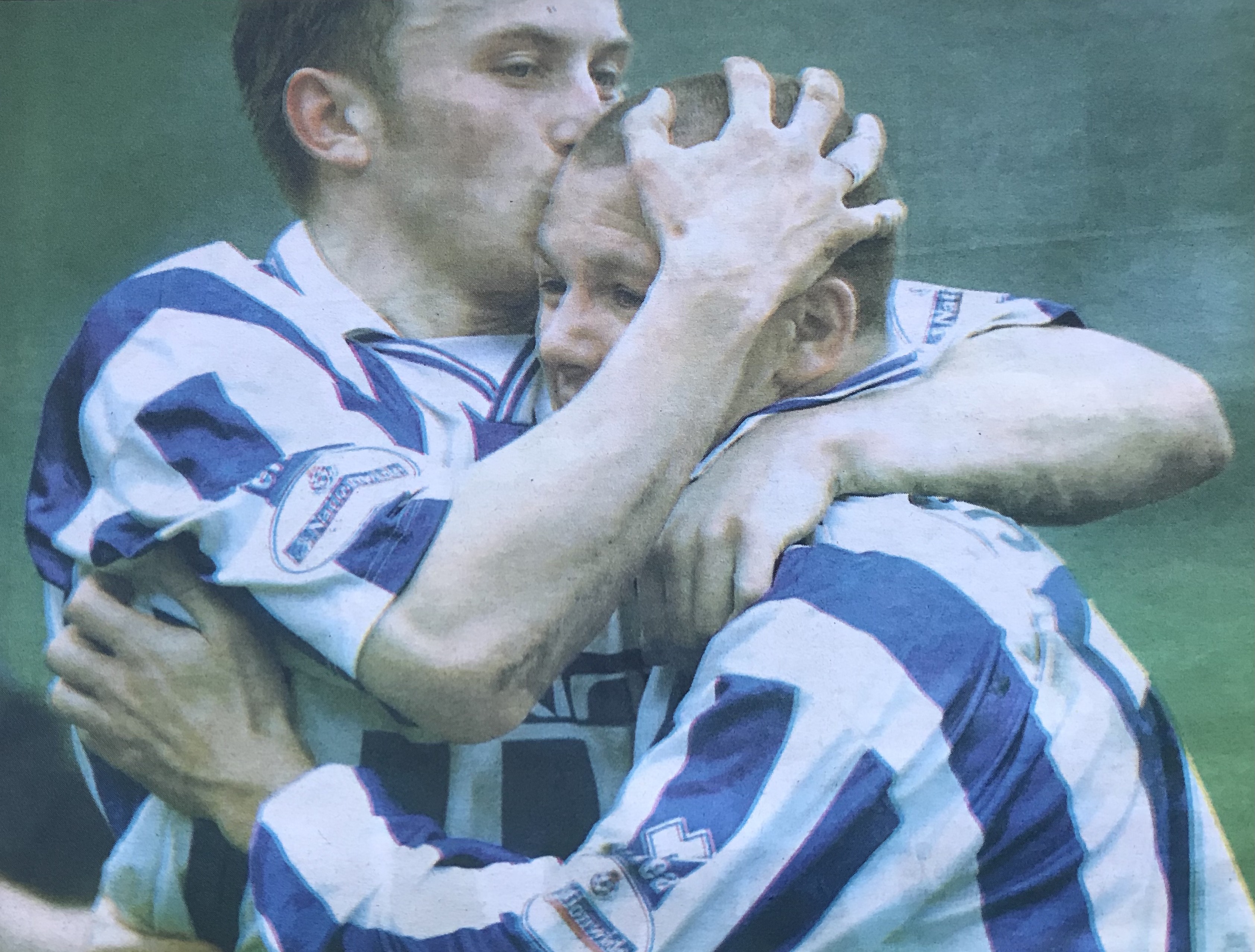
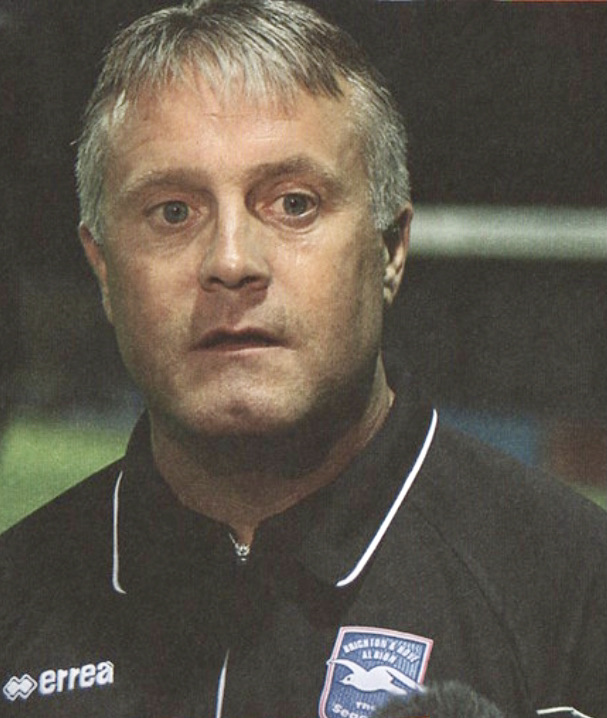
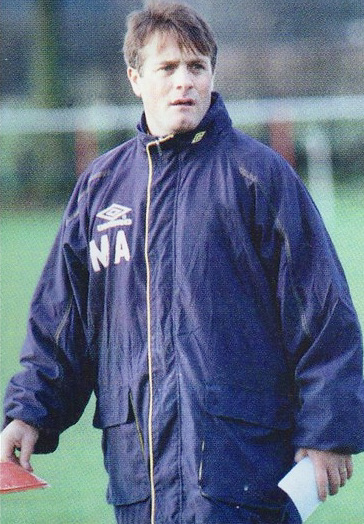
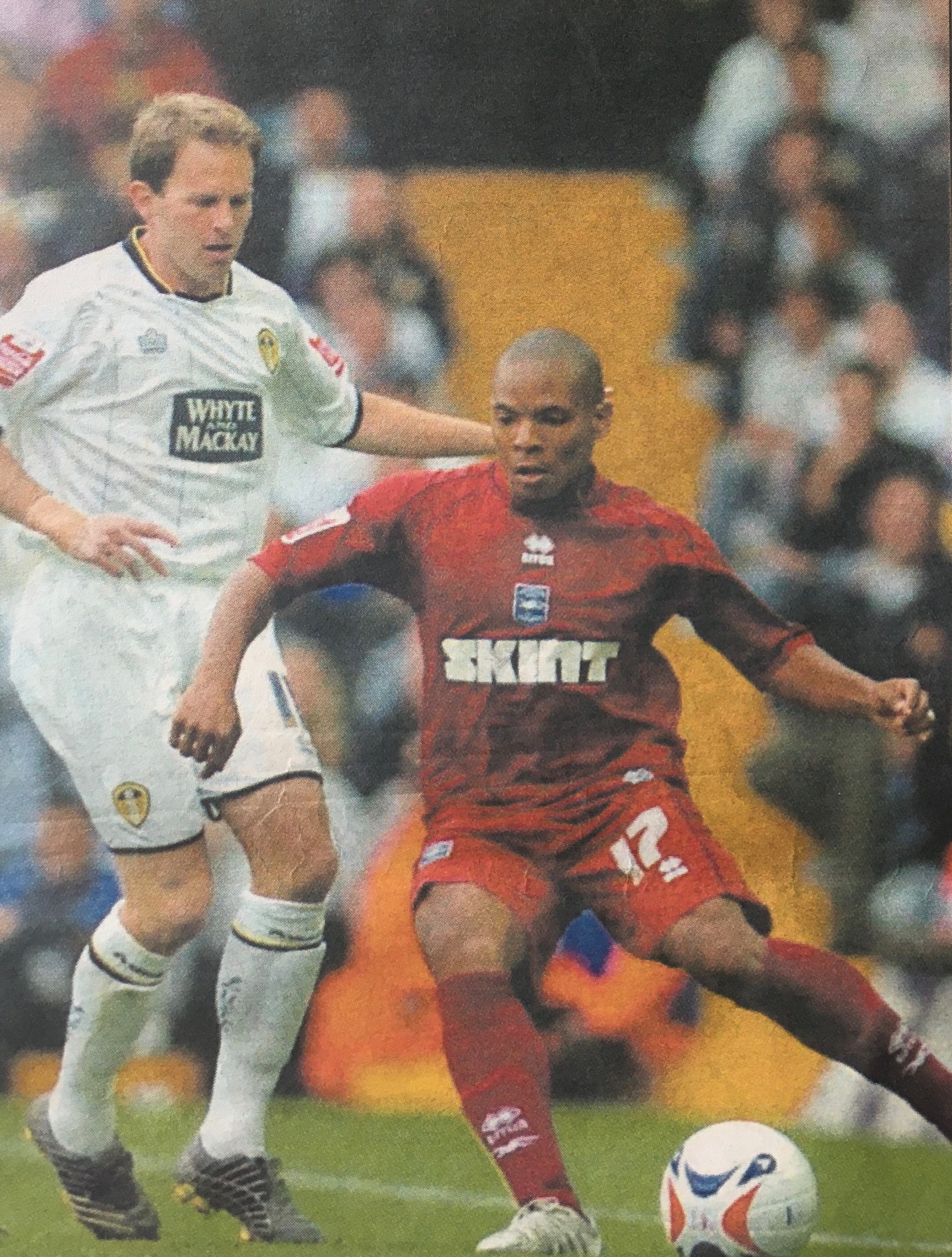
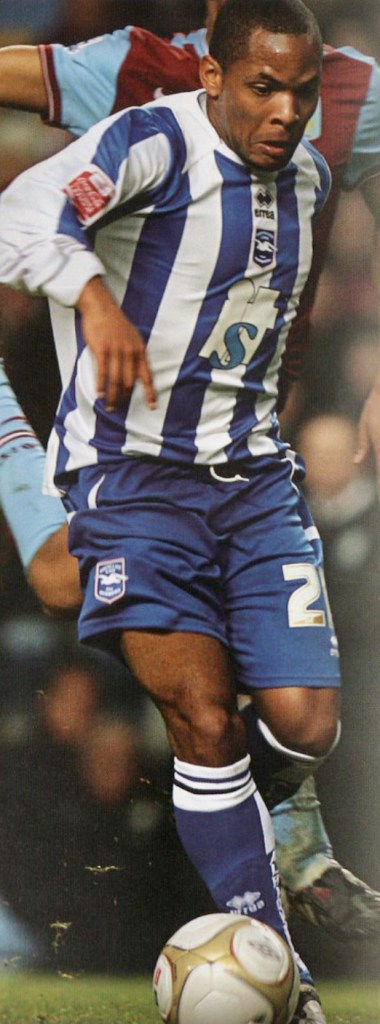
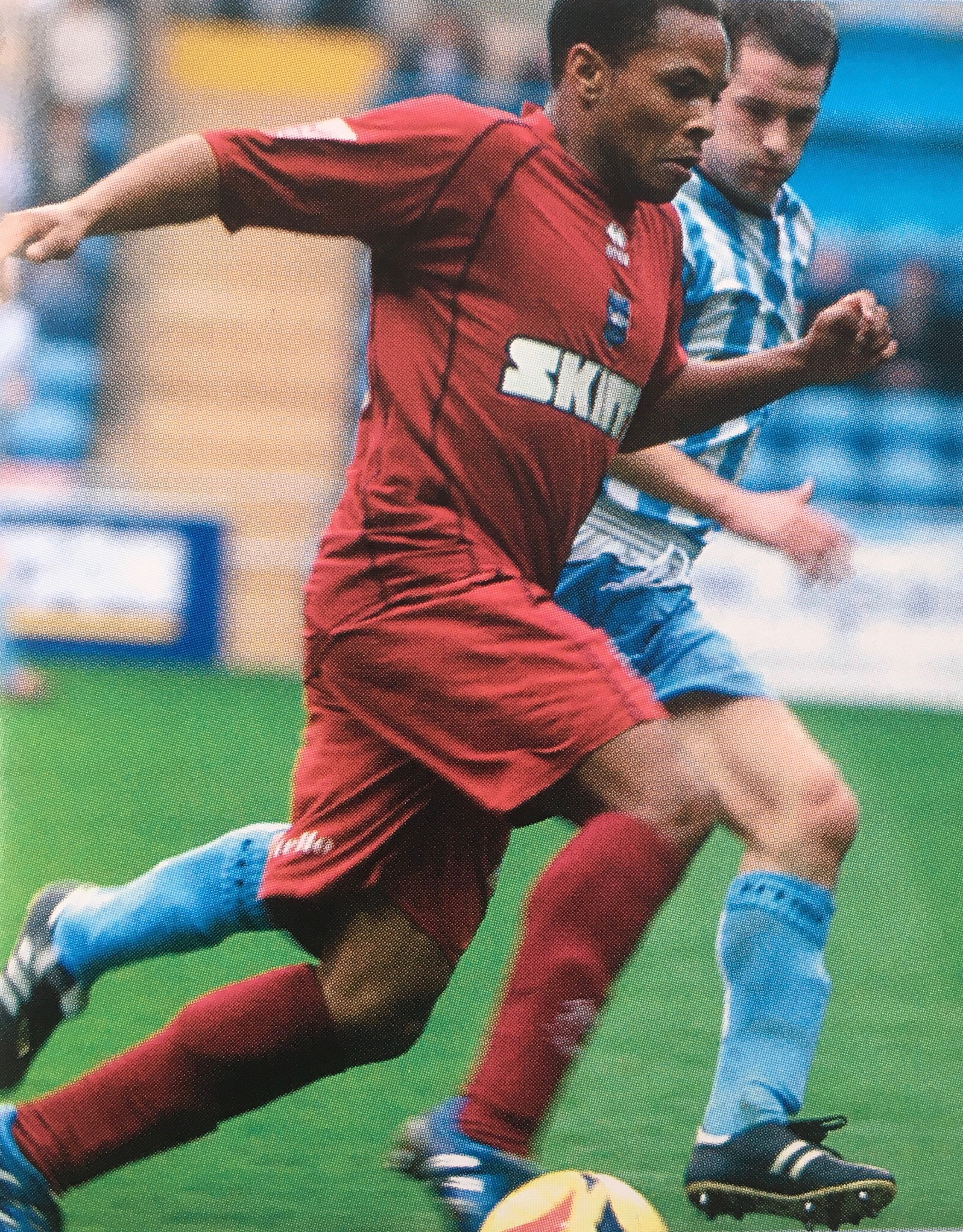
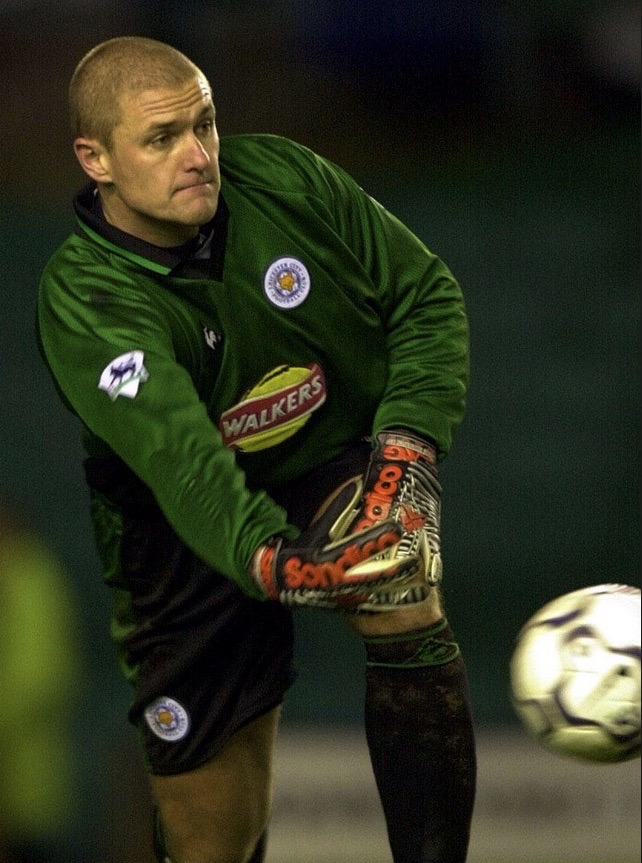
Tony Rougier couldn’t have wished for a better Albion start

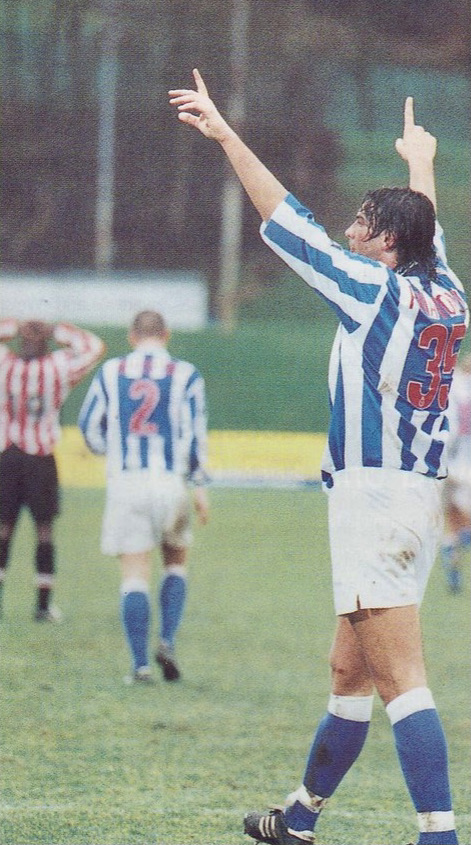
A GOAL by Tony Rougier three minutes into his debut as a substitute gave Brighton a glimmer of hope in their battle to avoid relegation.

His strike against Mark McGhee’s mid-table Millwall side at Withdean Stadium on 22 February 2003 was the only goal of the game and lifted Albion out of the bottom three of the Championship.

When Bobby Zamora dummied Kerry Mayo’s pass to allow Arsenal loanee Graham Barrett to turn and move the ball goalwards, Rougier nipped in to complete a neat finish past Tony Warner in the Millwall goal.

Manager Steve Coppell had sent on the Reading loanee as a 61st minute substitute for winger Paul Brooker although he admitted to Stuart Barnes of The Guardian: “I honestly didn’t know if Tony would make a difference, but I felt he would pep up everybody else because we were starting to lose our grip.

“Getting out of the bottom three will give the players a lot of self-esteem. For a long time this season they have questioned whether they belonged at this level.”

Trinidad and Tobago international Rougier joined the Seagulls having been sidelined by Alan Pardew at Reading who paid £325,000 when signing him from Brian Horton’s Port Vale.

Horton gave the Argus an insight of what Albion fans might expect when he said in an interview: “Tony has a great build and he is a threat with his pace and strength.

“We had to sell him because we needed the money and he was one of our major earners.”

He had been Vale’s leading goalscorer with eight goals in 38 games when they were relegated from the First Division in 2000 before moving to Reading that August.

Rougier made a total of 84 appearances for Reading, scoring six goals, and in his first season helped them to the Division Two play-off final where they lost 3-2 to Walsall (and Rougier scored an own goal after going on as a substitute). But a year later, he made 20 starts and 13 appearances off the bench as Reading were promoted in second place – behind the Albion!

He had scored twice in 12 outings for Pardew’s high-flying Royals in 2002-03, including in a 1-0 win against Albion at Withdean. But competition for places was fierce, with the likes of Nicky Forster, Darius Henderson, John Salako and Nathan Tyson.

Coppell told the Argus: “I speak with Alan fairly regularly but this came totally out of the blue when I phoned him up.

“Tony is a big, strong lad and he gives us options. He can play as a wide man or down the middle and the move suits Reading, the player and me.”
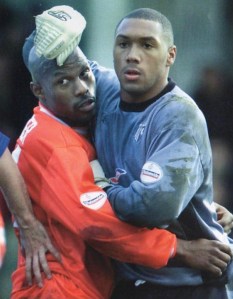
Getting to grips with Jason Brown of Gillingham

Coppell needed forward cover because Gary Hart was about to start a four-match suspension, Zamora was banned for the next away game at Gillingham, Paul Kitson was still injured and Barrett was struggling for form and goals.

The following matchday programme observed Rougier had not been signed for his goalscoring prowess, but rather for his “power, direct running, and causing havoc that others can exploit”.

But the goal was very welcome in a season that might well not have ended in relegation if Coppell had started the season in charge rather than joining after so many games had already been lost under Martin Hinshelwood.

Rougier made his first start in a 3-0 defeat away to Gillingham playing up front with Barrett when Zamora and Hart were suspended.

He featured in home wins over Rotherham United (2-0) and Nottingham Forest (1-0) as well as an away defeat at Stoke City (0-1), but he missed the 2-1 defeat at Sheffield United after twisting his right ankle against Forest.

He bowed out in style in his final appearance, making one goal and scoring a second in a memorable 2-2 draw away to Ipswich Town.

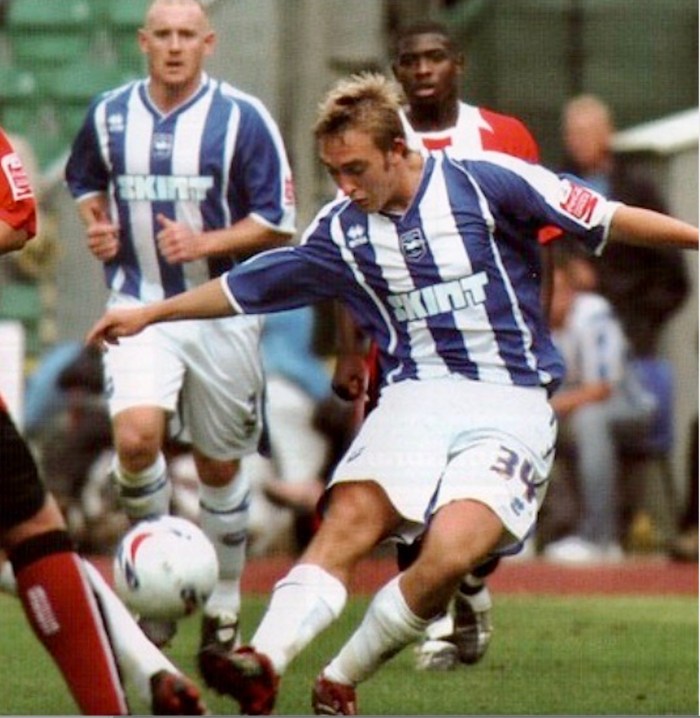
I took my then 14-year-old son Rhys to the clash at Portman Road and the lively midfielder-cum-striker in the no.34 shirt, who had been taken to the hearts of the Albion faithful, was suitably serenaded with the chant ‘Ra-ra-ra Rougier’ to the tune of the popular vaudeville and music hall song Tarara Boom-de-ay.

His first significant involvement saw him go up for a header from Hart’s cross and Town goalkeeper Andy Marshall diverted the ball into his own net to gift Albion an equaliser.

Future Albion loanee striker Darren Bent missed a penalty that would have put Ipswich back in front, and then, with 10 minutes to go, Albion fans were buoyant with expectation when Rougier slammed the ball into the roof of the net after Ipswich had failed to clear their lines.

Unfortunately for Brighton, a 30-yard thunderbolt from Martin Reuser flew past Dave Beasant to put the home side level and Albion had to be content with a point, which ultimately wasn’t enough to avoid making an immediate return to the division they’d left the previous season.

While the player was keen to extend his stay, Pardew wanted him back to help with Reading’s promotion run-in, although thankfully he wasn’t involved in Brighton’s shock 2-1 win at the Madejski Stadium on 4 April (and Steve Sidwell, who had been on loan at the Albion earlier that season was an unused sub). Goals from Brooker and sub Kitson took the spoils for the Albion, Cureton netting for the home side.

The Royals finished fourth in the league before losing 3-1 on aggregate to Wolves in the play-off semi-finals, and Rougier was released on a free transfer having scored three times in 13 starts and nine appearances off the bench.

Rougier told the Argus he would be interested in returning to the Albion, but nothing came of it and he joined Brentford instead. Manager Wally Downes believed the player had “real quality” although Brentford fans seemed to have divided opinions on what he brought to the side.

‘Snappy’ on The Griffin Park Grapevine reckoned: “The guy is a huge asset, especially in the last 10 minutes of a game when he can hold the ball up and dance his way around players like they were statues and relieve the pressure on the defence.”

‘West Ealing Bee’ agreed: “He is an asset to the club and a very important part of the team.” But ‘Boston Bee’ had a totally different take on the player:Even when he actually tried (15min/match) he looked like he wasn’t trying. His lack of interest in the game going on around him drove me crazy.”

Rougier made 34 appearances for the Bees, scoring five goals but when Martin Allen took over as manager in March 2004, Rougier was one of five players he allowed to leave Griffin Park as part of a squad overhaul that ultimately helped them to a last-day escape from relegation.

Meanwhile, Rougier linked up with another ex-Albion captain, Danny Wilson, at Bristol City on a free transfer. Indeed, Rougier appeared for the Robins when they lost 1-0 to McGhee’s Albion in the divisional play-off final in Cardiff on 30 May.

But when Wilson lost his job that summer, Rougier followed him out of the exit and he returned to Trinidad, where he won the last of 67 international caps for Trinidad and Tobago.

Rougier stepped into coaching

He has since turned to coaching, becoming a UEFA A licensed coach, and attained a degree in sports development. On his LinkedIn profile, he describes himself as the founder, president and technical director of FC South End, and, in 2014, among his past coaching experiences was a spell working with his nation’s under 20 squad.

Four years later, he had moved to the United States to coach the New England Revolution academy team.

Born on 17 July 1971 in Sobo, a village in south west Trinidad, his footballing career was initially confined to his home country.

Tom Lunn, writing for Reading fan website thetilehurstend.sbnation.com in 2019, profiled Rougier describing how the player began his senior footballing career in his home country with La Brea Angels. His Wikipedia page says he also played for Trintoc, United Petrotrin, and Trinity Pros.

An Albion matchday programme article said Rougier then moved to New York where he spent a year working in the baggage department at John F Kennedy airport before heading to the UK.

After overcoming work permit issues, he was taken on by Raith Rovers where, over the course of two years, he became something of a cult hero. In 2018, he returned to Fife to be inducted into the club’s Hall of Fame.

“This is where it all started,” he said in an interview with the club’s TV channel. “It never felt the same whichever club I went to afterwards. The Fife people gave me respect and it’s something I’ll never forget.”
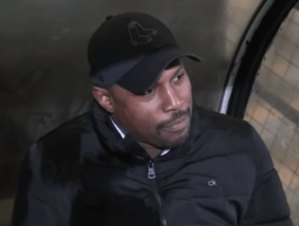
Rougier welcomed back in Fife

During the interview, Rougier remembered fondly an occasion when he man-marked Paul Gascoigne, playing central midfield against Rangers.

His stand-out moment was a UEFA Cup second round tie in Munich’s Olympic Stadium on 30 October 1985 when Raith only narrowly lost 2-1 to Bayern Munich who boasted the likes of Oliver Kahn in goal and Jurgen Klinsmann up front.

His performances for Raith earned him a £250,000 move to Hibernian. He scored four times in 45 matches for Alex McLeish’s Edinburgh outfit but in January 1999 joined Port Vale, signed by Horton’s predecessor John Rudge for £175,000.

By then, he had established himself in the Trinidad and Tobago national side, a teammate of Dwight Yorke, and often being chosen as captain.

In his own words, he describes himself as: “A highly experienced football coach and former professional player with a career in the game spanning more than 25 years, I has successfully made the transition into coaching, management and club operations through a consistent focus on long term player and team development.

“A former national team captain with Trinidad & Tobago and a promotion winner in both England and Scotland, I have been able to effectively apply my on-field experience to guide team success and coaching strategy at professional, grassroots and school level.

“I am a positive, dynamic and passionate professional who is committed to my continued progression as a coach. I am always open to opportunities in which I can develop while positively impacting a football club or organisation, and would relish the opportunity to work with elite players within an ambitious environment.”
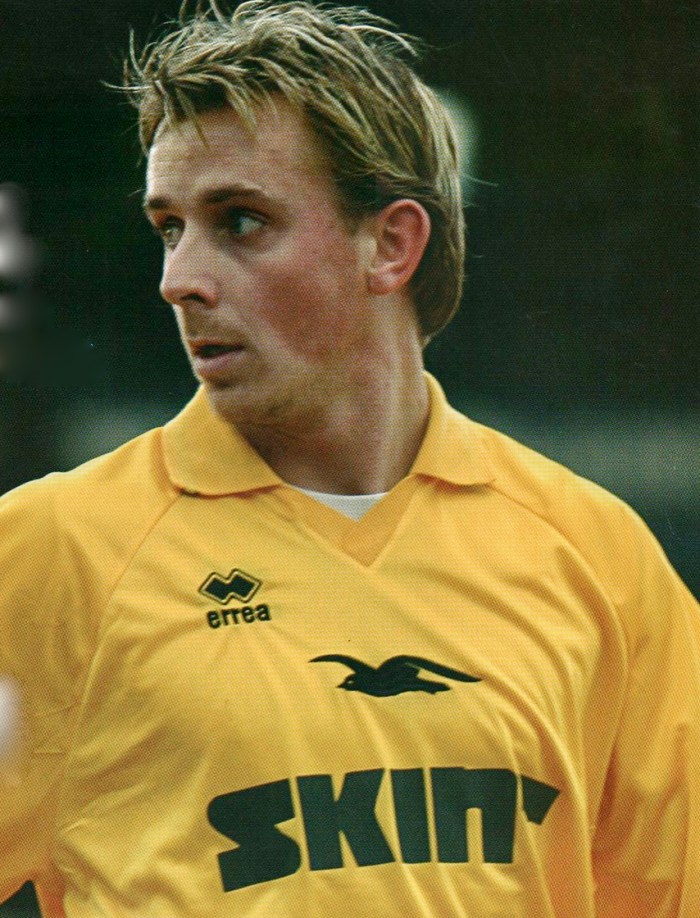
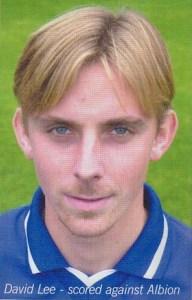
Fate dealt blows throughout Essex lad David Lee’s career

IT MAY simply have been David Lee’s misfortune that he joined Brighton at a time when they weren’t short of decent midfield players.

Nevertheless, a player who had gone through the ranks at Spurs alongside the likes of Peter Crouch and Ledley King might have been expected to make more of an impression.

As it was, the manager who signed him moved on and he ended up starting just one league game in two and a half years with the club.

Ultimately a horror injury brought a premature end to Lee’s career at the age of 28, but he stayed in the game as an agent – Lewis Dunk being one of his clients.

It was in January 2002 that Peter Taylor, a one-time Spurs player himself, brought Lee to the Albion from Hull City in direct exchange for fringe player Matthew Wicks.

Taylor had been close to signing him when he was manager of Gillingham but, after moving on to Leicester City, Taylor recommended him to Southend United instead.

By the time Lee arrived at the Albion, they were already on an upward trajectory towards promotion from the third tier and he had to be content largely with reserve team football and a seat on the first-team subs bench.

The first Albion fans got to see of him came on 23 February 2002 at home to Wrexham when he went on as a 23rd minute substitute for Gary Hart alongside inexperienced Chris McPhee, who was playing in the absence of goal king Bobby Zamora.

Wrexham brought Albion’s run of five straight home wins to an end in what the Argus described as “a dour deadlock” and in the process became the first side to stop the Seagulls from scoring at Withdean Stadium for 13 months.

In fact, sharper-eyed Albion watchers might have recognised the newcomer as a player who’d scored against the Seagulls twice the previous season.

He marked his debut for Southend in the opening match of the 2000-2001 season with an 83rd-minute second goal that sealed a 2-0 win for the home side.

Then, in the reverse fixture, he scored again as United completed the double over the Seagulls on a quagmire of a pitch at Withdean on New Year’s Day 2001. On that occasion, Lee went on as a 77th minute substitute for Ben Abbey and scored five minutes later as the Shrimpers again won 2-0.

Described by Spurs history website ‘My Eyes Have Seen The Glory’ as “a slightly built, but athletic midfielder, who had an eye for an attacking option as he used his passing to try and open up opposition defences”, Lee spent a season at Roots Hall, initially under Alan Little, scoring 10 goals in 52 games. “I played nearly every game so it couldn’t have gone much better really,” Lee told the Basildon Canvey and Southend Echo.

But after just one season with Southend, Lee joined Division Three Hull City, managed by previous manager Little’s brother Brian (better known for his time in charge of Leicester and Aston Villa). It was a decision Lee later rued.

“Looking back, I do regret it,” he said. “I left because the (Southend) manager Dave Webb said he thought I’d had a good season and that Leicester were interested in me.

“My form wasn’t good at the end of the season so he told me they would be coming back to have another look at the start of the next season. Then he told me I’d have to take a pay cut to stay.

“At the same time, Hull offered to double my money for three years.” Hence he ended up with the Tigers.

He made his debut as a substitute in the League Cup and followed up that appearance with brief cameo roles off the bench in the league. One saw him score Hull’s fourth goal in a comprehensive 4-0 thumping of York City for whom Graham Potter was playing!

Lee made a rare start in a 1-1 draw away to Shrewsbury Town and kept his place for the next game (a 1-0 win over Torquay United), but it was back to appearances off the bench after that.

It was Taylor, fired by Leicester but installed as Micky Adams’ replacement at promotion-seeking Albion, who rescued him from Hull, signing him on a two-year contract in January 2002.

Unsurprisingly, Lee saw it as a “massive blow” when Taylor quit the Albion after steering the side to promotion because he didn’t believe enough was going to be spent on investing in the squad to compete at the higher level.

“I’m disappointed because he brought me to the club in the first place,” Lee told the Argus. “When I came, he wasn’t looking for me to get straight into the first team.

“He told me next year he would look to get me more involved. Now he has left it’s going to be difficult. When the new manager comes in, I have got to make sure I am fit and try to impress him.

“It’s a huge stage for a young player in the First Division and I need to be playing.”

Of course, if Lee had hung on at Hull slightly longer, he’d have been joined there by Taylor!

“I should have stayed there for longer but I went to Brighton,” Lee told the Basildon Canvey and Southend Echo. “I did three and a half years there (ed. it was two and a half) and had some great times winning the promotions but I never did hold down a first team place and, when Peter Taylor left, I was well out of it.”

Indeed, in the 2002-03 season, Lee didn’t make a single league or cup appearance for the Albion, although, in October 2002, after Steve Coppell’s appointment as manager, he appeared – and scored – in the first half on a rainy, gale-battered evening alongside trialists Simon Rodger and Dean Blackwell when an Albion XI beat Hassocks 5-0 in a game to mark the opening of a new stand for the County League side. While Blackwell and Rodger subsequently signed up, Lee was sent on loan to Bristol Rovers, but only stayed for a month.

Pretty clear his future didn’t lie with the Albion, on 23 April 2003 he played in a trial match for Cambridge United’s reserves against Gillingham in a 3-0 win. Impressing in another reserve match against Colchester, the U’s manager said he would like to sign Lee on a permanent basis. But nothing came of it, and he remained on Albion’s books.

As if to emphasise what they missed out on, in August 2003 Lee scored against Cambridge in a comprehensive Albion Reserves win. The 3-0 win was the opening fixture for the Seagulls’ second string in the Pontin’s Holidays Combination League.

A short spell on loan to Ryman League Thurrock followed in October 2003 but, in the time he was away, Brighton had a new manager; Mark McGhee replacing Coppell, who had moved to Reading.

And so it was, in December 2003, that Lee finally made his full Albion debut, away to QPR in the LDV Vans Trophy. Albion narrowly lost 2-1, and he was subbed off on the hour mark, being replaced by Gary Hart, but McGhee defended his selection in the following matchday programme.

“I saw the game as an opportunity to find out about players who haven’t had the chance since my arrival,” he said. “The inclusion of David Lee and Dan Harding in particular did not result in us losing the game. Basic defensive errors led to the defeat. However, I did learn a lot about Dan and David and I do believe that both players will continue to make a contribution this season. So, as an exercise, there were positives to take out of the game.”

While Harding would go on to become an established member of McGhee’s side, Lee was a perennial bench warmer and only started one league match: a 2-1 defeat at Sheffield Wednesday on 27 March 2004.

“That was a nice surprise,” he said. “I thought I did okay, apart obviously from the result.”

But Lee realised his Albion future was up in the air, telling the Argus: “I’ve had a meeting with the gaffer and he said he is going to have to wait and see where we are next season, so it’s touch and go for me.”

He admitted he’d been close to moving to Grimsby just before the transfer deadline, but Town boss Nicky Law had chosen alternative options.

Lee was able to join in the celebrations that followed Albion’s promotion via the play-off final win over Bristol City at the Millennium Stadium in Cardiff, but he was only ever on the periphery.

He was given one last chance to prove himself when he was handed a three-month deal in July 2004. But, over that period, Albion brought in Darren Currie and Alexis Nicolas, so, on the expiry of the short term deal, Lee was released.

Assistant manager Bob Booker said: “David worked extremely hard but just fell a little short to make the first team.”

While Lee told the Argus: “I never really got started all the time I was at Brighton. But I worked really hard in the summer, and I did quite well pre-season. That’s why I am disappointed to be going now.”

Born in Basildon, Essex, on 28 March 1980, Lee went to Gable Hall School in Thurrock from 1991 to 1996 and his young footballing talent was spotted as an under 10 by Spurs scout Lenny Cheesewright.

Lee talked at length about his career to Lennon Branagan in August 2020 for the excellent SuperHotspur blog.

He developed through the different age groups at Spurs under various coaches, citing in particular Tommy Cunningham really putting him through his paces aged 15-16, then Bobby Arber after he’d signed a scholarship. “He was a real top coach who taught me a lot about tactics and positioning and the ugly side of the game.”

The highlight of his time at Spurs came when he was captain of the 1996 Spurs youth team that won the Northern Ireland Milk Cup, an annual international youth tournament. Spurs beat Blackburn in the final by a single goal scored by John Piercy, who later also moved to Brighton.

Another memorable moment came when Lee, aged only 16, scored the winning goal for Spurs Reserves against Bristol City in a testimonial for Leroy Rosenior (father of Liam).

In Spurs’ youth team, Lee was managed by the former West Ham winger Patsy Holland, who he felt never really rated him. Eventually, in Spurs’ reserve side, he was managed by Chris Hughton – “one of the best coaches that I’ve played for and had the pleasure of working with”.

While contemporaries such as Luke Young progressed to the first team, Lee fell just short and he was honest enough to admit: “Looking back now, I think the thing that you look at was did I really show the coaches that I wanted it enough? And did I really give absolutely everything to be a top player? And probably the answer’s no, if I’m being honest with myself. That’s the biggest regret or the real shame that I have really.”

Ironically, it was when his friend Piercy got a first team call-up instead of him that he decided to move on from Spurs although, once again with the benefit of hindsight, he reckons he was probably too hasty in his decision.

George Graham was manager at the time and Lee reckoned he wasn’t his type of player. Although he still had 18 months left on his contract, he decided to move on because he couldn’t see himself making it at Spurs. But not long afterwards, Glenn Hoddle took over as manager and Lee reckons if he had stayed he might have had a better chance of training with the first team a bit more, and improving as a player.

After the Seagulls released Lee in September 2004, he trained with Oldham Athletic and signed on a non-contract basis for a month but was not retained.

He returned to Thurrock, had a trial at Kidderminster Harriers, signed for Conference side Stevenage Borough in February 2005, but then changed his mind and signed for Aldershot instead.

Football agent Lee

It was during a game for the Shots against Canvey Island in August 2005 that he suffered a horrific injury that doctors told him would end his career.

“I was actually only an hour away from losing my foot and it was all quite worrying as you would expect,” said Lee. “When I was in hospital they told me I would never play again.”

The injury forced him to miss the majority of the 2005-06 season, and, although he extended his contract by a year on 30 May 2006, he eventually left the Shots at the end of January 2007 and signed for Ryman League Division One Harlow Town. That didn’t last long; he had a short spell with Braintree, then AFC Hornchurch and then Canvey Island.

In an interview with Chris Phillips of the Basildon Canvey and Southend Echo in June 2008, Lee said he was pleased to have proved the doctors wrong in managing to get back playing football, but he admitted: “I’ve been playing non-league this season, but my heart hasn’t been in it.”

Lee turned to football agency work that year and has continued in that line ever since. He was with Skillequal for 10 years before switching to ICM Stellar Sports in April 2018.

Mixed fortunes at Brighton for Liverpudlian Lee Steele

ONE-TIME Liverpool triallist Lee Steele was part of the Albion squad which won back-to-back promotions from the fourth and third tiers.

Unfortunately for him, a certain Bobby Zamora was almost always ahead of him in the pecking order, along with Gary Hart, so the diminutive striker often had to be content with involvement off the subs bench.

Nonetheless, he contributed important goals as the Seagulls under Micky Adams went up from League Two in 2001 and from League One in 2002 under Peter Taylor.

His first season at Brighton was marred by a drink-driving incident which, in hindsight, he believed tainted the rest of his time at the club. Indeed, as the season drew to a close, he was put on the transfer list and was at loggerheads with Adams.

“I told him I’d prove him wrong, and he said that only one player had said that to him before and gone ahead and done it,” Steele told Spencer Vignes in a matchday programme article. After shedding a few pounds and improving his fitness, he said: “I scored loads of goals in pre-season and worked my way into the side.

“I got a few more as the season began, and then he left and I was back to square one with Peter Taylor.” Steele said Taylor was easier to get on with than the “totally demanding and driven Adams” although he reckoned: “The intensity went from our game a fair bit.”

Nevertheless, in the 2001-02 season, he made 25 starts plus 19 appearances off the bench and the most important of his 10 goals was the 91st-minute winner in an Easter Monday 2-1 win over Bristol City at the Withdean after he’d gone on as a 30th-minute sub for Paul Brooker, who’d turned an ankle.

Argus reporter Andy Naylor pointed out how Steele had gone from villain to hero after getting himself sent off in a reserve game just as Zamora was ruled out for three games with a shoulder injury. As it turned out, that goal against City was his last in an Albion shirt.

In its end of season play-by-player analysis, the Argus said of Steele: “An enigma. More to offer than he has showed, although he would argue a regular run in the side would help. Still managed to finish with ten goals and has the pace and power to trouble defenders.”

However, there was no more to offer Brighton because Taylor’s departure that summer coincided with Steele’s Albion exit too.

Reflecting on his time at the Albion in another Vignes interview for the matchday programme, Steele said: “I wasn’t used to playing substitute all the time, which I found hard to adjust to. Then when I did come on, I used to put myself under so much pressure that I wouldn’t deliver the goods. It still haunts me actually. OK I was in Bobby’s shadow, but I was at a massive club and should have done better.”

He moved to Oxford United on a two-year deal, but didn’t enjoy a happy time under Ian Atkins, and then joined Leyton Orient where some vital goals – including one that earned the Os promotion while simultaneously relegating his old club out of the league – helped earn him a ‘fans favourite’ tag.

After the Os, he had a season with Chester City, then dropped out of the league to return to Northwich Victoria.

He moved on to semi-pro side Oxford City but was sacked for a homophobic tweet about Gareth Thomas, which he said was tongue-in-cheek. Northern Premier League side Nantwich took him on, although he only played one game for them.

Born in the Garston district of Liverpool on 2 December 1973, Steele was a ‘Red’ from an early age, first being taken to watch them aged six and idolising Ian Rush. He was educated at St Austin’s Catholic Primary School, Liverpool, Holmwood School and then St Mary’s College.

The young Steele harboured ambitions of becoming a professional golfer rather than a footballer but, when that didn’t work out, he started playing football with non-league Bootle while working for his uncle as a bricklayer.

“I managed to get a trial for Liverpool,” he told Andy Heryet in the Albion matchday programme. “I hoped they would ask me back, but I didn’t hear anything from them, which was disappointing as they promised me that I’d hear either way, but they never got back to me.”

It was Northwich Victoria who propelled him towards a career as a professional, signing him as cover ahead of a FA Trophy final against Macclesfield.

Steele scored five goals in three end of season games, earned a place on the bench at Wembley and got on for the last 20 minutes, although Victoria lost.

In his second season at Northwich, his reputation was growing as a prolific striker and Third Division Shrewsbury Town snapped him up for £40,000 – a decent-sized fee for a non-league player.

“I wanted to go. I’d always wanted to be a professional footballer, ever since it became clear I wasn’t going to make it as a golfer,” Steele told Heryet.

He spent the next three seasons with the Shrews although the club’s struggles at the wrong end of the league prompted him to look for a move.

While he was keen to go to Tranmere Rovers, who’d shown an interest, no deal was forthcoming, but Brighton went in for him and, having played against them the season before, he liked what he saw.

Steele has had several strings to his bow since finishing his playing career: he’s a qualified licensed UEFA B coach, a personal trainer and a nutrition advisor. Clients have included pro footballers, elite junior tennis players, 16-times PDC World Darts Champion Phil ‘The Power’ Taylor and Team GB age group triathletes.

He also spent a year as a fitness coach with Oldham Athletic during Lee Johnson’s reign as manager and two years as a scout for his old club, Leyton Orient.

Since 2008 he has been operations manager for Kickback Tax (a tax advisor agency for footballers) and, since December 2021, has been senior scout for Northampton Town.

Confrontation was seldom far away in Micky Adams’ career

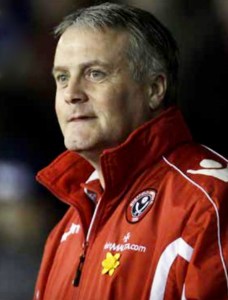
THE FIRST player ever to be sent off in a Premier League game managed Brighton twice.

Fiery Micky Adams saw red playing for Southampton when he decked England international midfielder Ray Wilkins.

“People asked me why I did it. I said I didn’t like him, but I didn’t really know him,” Adams recalls in his autobiography, My Life in Football (Biteback Publishing, 2017).

It was only the second game of the 1992-93 season and Adams was dismissed as Saints lost 3-1 at Queens Park Rangers.

Adams blamed the fact boss Ian Branfoot had played him in midfield that day, where he was never comfortable.

“He (Wilkins) was probably running rings around me. I turned around and thumped him. I was fined two weeks’ wages and hit with a three-match ban.”

It wasn’t the only time he would have cause not to like Wilkins either. The former Chelsea, Manchester United and England midfielder replaced Adams as boss of Fulham when Mohammed Al-Fayed took over.

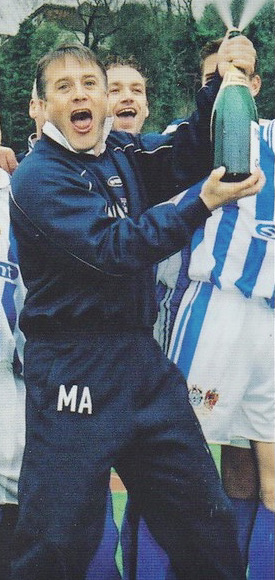
His previously harmonious relationship with Ray’s younger brother, Dean, turned frosty too. When Adams first took charge at the Albion, he considered youth team boss Dean “one of my best mates”. But the two fell out when Seagulls chairman Dick Knight decided to bring Adams back to the club in 2008 to replace Wilkins, who’d taken over from Mark McGhee as manager.

“He thought I had stitched him up,” said Adams. “I told him that I wanted him to stay. We talked it through and, at the end of the meeting, we seemed to have agreed on the way forward.

“I thought I’d reassured him enough for him to believe he should stay on. But he declined the invitation. He obviously wasn’t happy and attacked me verbally. I did have to remind him about the hypocrisy of a member of the Wilkins family having a dig at me, particularly when his older brother had taken my first job at Fulham.

“We don’t speak now which is a regret because he was a good mate and one of the few people I felt I could talk to and confide in.”

With the benefit of hindsight, Adams also regretted returning to manage the Seagulls a second time considering his stock among Brighton supporters had been high having led them to promotion from the fourth tier in 2001. The side that won promotion to the second tier in 2002 was also regarded as Adams’ team, even though he had left for Leicester City by the time the Albion went up under Peter Taylor.

Adams first took charge of the Seagulls when home games were still being played at Gillingham’s Priestfield Stadium.  Jeff Wood’s short reign was brought to an end after he’d failed to galvanise the side following Brian Horton’s decision to quit to return to the north. Horton took over at Port Vale, where Adams himself would subsequently become manager for two separate stints.

Back in 1999, though, Adams had been at Nottingham Forest before accepting Knight’s offer to take charge of the Albion. He’d originally gone to Nottingham to work as no.2 to Dave Bassett but Ron Atkinson had been brought in to replace Bassett and Adams was switched to reserve team manager.

The Albion job gave him the opportunity to return to front line management, a role he had enjoyed at Fulham and Brentford before regime changes had brought about his departure from both clubs.

On taking the Albion reins, Adams said: “For too long now this club has, for one reason and another, had major problems. The one thing that has remained positive is the faith the supporters have shown in their club.

“The club has to turn around eventually and I want to be the man that helps to turn it around.”

The man who appointed him, Knight, said: “Micky is a formidable character with a proven track record. He knows what it takes to get a club promoted from this division. But, more than that, Micky shares our vision of the future and wants to be part of it. That is why I have offered him a four-year contract and he has agreed to that commitment.”
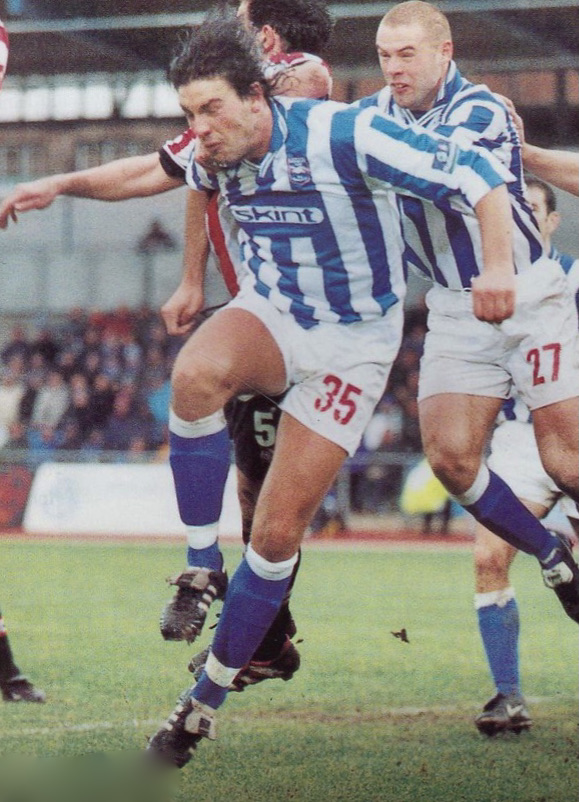
Not long after taking over the Albion hotseat, he was happy to say goodbye to the stadium he’d previously known as home when a Gillingham player in the ‘80s and it was a revamped squad he assembled for the Albion’s return to Brighton, albeit within the confines of the restricted capacity Withdean Stadium.

Darren Freeman and Aidan Newhouse, two players who’d played for Adams at Fulham, scored five of the six goals that buried Mansfield Town in the new season opener at the ‘Theatre of Trees’.

Considering he was only too happy to be photographed supporting the campaign to build the new stadium at Falmer, it’s disappointing to read in his autobiography what he really thought about it.

“My mates and I nicknamed it ‘Falmer – my arse’ although I never said this to Dick’s face,” he said. “There was always so much talk and we never felt like it was going to get done.”

The turning point in his first full season in charge was the arrival of Bobby Zamora on loan from Bristol Rovers. “The first time I saw him he came onto the training ground; he looked like a kid. But he was tall and gangly with a useful left foot; there was potential there.”

Interestingly, considering Adams makes a point of saying he usually ignored directors who tried to get involved on the playing side, he took up Knight’s suggestion that the side should switch to a 4-4-2 formation – and the Albion promptly won 7-1 at Chester with Zamora scoring a hat-trick!

After a so-so first season back in Brighton, not long into the next season Adams was forced to replace his no.2, Alan Cork, with Bob Booker because Cork was offered the manager’s job at Cardiff City, at the time owned by his former Wimbledon chairman, Sam Hammam. Adams reckoned Booker’s appointment was one of the best decisions he ever made.

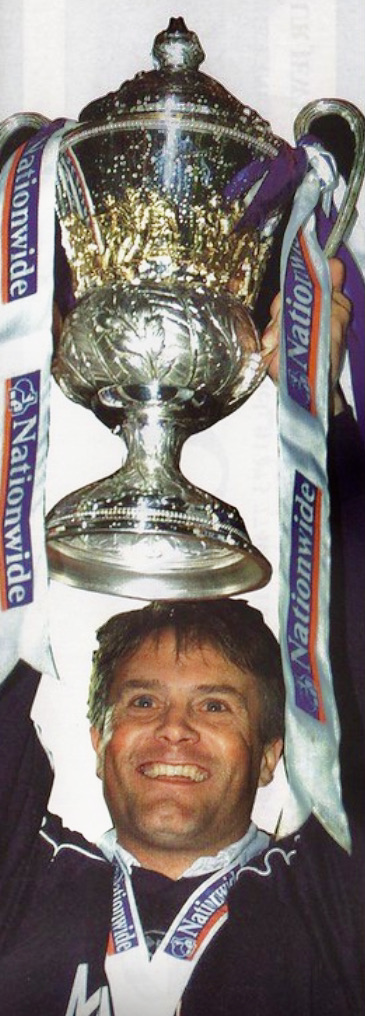
Surrounded by players who had served him well at Fulham and Brentford, together with the additions of Zamora, Michel Kuipers and Paul Rogers, Adams and Booker steered Albion to promotion as champions. Zamora was player of the season and he and Danny Cullip were named in the PFA divisional XI.

Not long into the new season, the lure of taking over as manager at a Premier League club saw Adams quit Brighton, initially to become Bassett’s no.2 at Leicester City, but with the promise of succeeding him.

“While I thought I had a shot at another promotion, it wasn’t a certainty,” Adams explained. “I knew I had put together a team of winners, and I knew I had a goalscorer in Bobby Zamora, but football’s fickle finger of fate could have disrupted that at any time.”

He admitted in the autobiography: “Had I been in charge at the age of 55, rather than 40, then I perhaps would have taken a different decision.”

While Albion enjoyed promotion under Taylor, what followed at Leicester for Adams was a lot more than he’d bargained for and, to his dismay, he is still associated with the ugly shenanigans surrounding the club’s mid-season trip to La Manga, to which he devotes a whole chapter of his book, aiming to set the record straight.

On the pitch, he experienced relegation and promotion with the Foxes and he doesn’t hold back from lashing out about ‘moaner’ Martin Keown, “one of the worst signings of my career”. Eventually, he’d had enough, and walked away from the club with 18 months left on his contract.

After a break in the Dordogne area of France, staying with at his sister-in-law and her husband’s vineyard, he looked for a way back into the game. He was interviewed for the job of managing MK Dons but was put off by a Brighton-style new-ground-in-the-future scenario. Then Peter Reid, a former Southampton teammate, was sacked by Coventry City. He put his name forward and took charge of a Championship side full of experienced players like Steve Staunton and Tim Sherwood.

The side’s fortunes were further boosted by the arrival of Dennis Wise, but, in an all-too-familiar scenario Adams had encountered elsewhere, the chairman who appointed him (Mike McGinnity) was replaced by Geoffrey Robinson. It wasn’t long before it was obvious the relationship was only going to end one way. As Adams tells it, Robinson was influenced by lifelong Sky Blues fan Richard Keys, the TV presenter, and it was pretty much on his say-so that Adams became an ex-City manager after two years in the job.

With an ex-wife and three children to support as well as his partner Claire, Adams couldn’t afford to be out of work for long and fortunately his next opportunity came courtesy of Geraint Williams, boss of newly promoted Colchester United, who took him on as his no.2.

However, it only got to the turn of the year before he was out of work once again, although, from what he describes, he wasn’t enjoying his time with the U’s anyway because Williams kept him at arm’s length when it came to tactics and team selection.

He was amongst the ranks of the unemployed once again when Albion chairman Knight gave him a call, but, with the benefit of hindsight, he said: “Going back turned out to be one of the biggest mistakes of my life.”

Adams blamed the backdrop of “the power struggle” between Knight and Tony Bloom on the lack of success during his second stint in the hotseat, and he reckons it was Bloom who “demanded my head on a platter”. The fateful meeting with Knight, when a parting of the ways was agreed, famously took place in the Little Chef on the A23 near Hickstead.

Looking back, Adams conceded he bowed to pressure from Knight to make certain signings – namely Jim McNulty, Jason Jarrett and Craig Davies in January 2009 – who didn’t work out. He reflected: “I shouldn’t have taken the job in the first place. I’d let my heart rule my head but, in fairness, I didn’t have any other offers coming through and it seemed like a good idea at the time.

“I wouldn’t ever say he (Knight) let me down, but he had his idea about players. I did listen to him, and maybe that’s where I went wrong.”

He added: “Going back to a club where success had been achieved before felt good, yet, the second time around, the same spark wasn’t there no matter how hard I tried.”

Born in Sheffield on 8 November 1961, Micky was the second son of four children. It might be argued his penchant for lashing out could have stemmed from seeing his father hitting his mother, which he chose to spoke about at his father’s funeral. Adams is obviously not sure if he did the right thing but he felt the record should be straight.

The Adams family were always Blades rather than Wednesdayites and, at 15, young Micky was in the youth set-up at Bramall Lane having made progress with Sunday league side Hackenthorpe Throstles.

While he thought he had done well under youth coach John Short during (former Brighton player) Jimmy Sirrel’s reign as first team manager, Sirrel’s successor, Harry Haslam, replaced Short and, not long afterwards, Adams was released.

However, Short moved to Gillingham and invited the young left winger to join the Gills. Adams linked up with a group of promising youngsters that included Steve Bruce.

In September 1979, he had a call-up to John Cartwright’s England Youth side, going on as a sub in a 1-1 draw with West Germany, and starting on the left wing away to Poland (0-1), Hungary (0-2) and Czechoslovakia (1-2) alongside the likes of Colin Pates, Paul Allen, Gary Mabbutt, Paul Walsh and Terry Gibson.

Adams honed his craft under the tutelage of a tough Northern Irishman Bill ‘Buster’ Collins and began to catch the attention of first team manager Gerry Summers and his assistant Alan Hodgkinson, who had played 675 games in goal for Sheffield United.

He made his debut aged just 17 against Rotherham United but didn’t properly break through until Summers and Hodgkinson were replaced by Keith Peacock (remember him, he was the first ever substitute in English football, in 1965, when he went on for Charlton Athletic against John Napier’s Bolton Wanderers) and Paul Taylor.

“Keith saw me as a full-back and that was probably the turning point of my career,” Adams recalled.

Once Adams and Bruce became regulars for the Gills, scouts from bigger clubs began to circle and at one point it looked like Spurs were about to sign Adams. That was until he came up against the aforementioned Peter Taylor, who was playing on the wing for Orient at the time (having previously played for Crystal Palace, Spurs and England).

“He nutmegged me three times in front of the main stand and, to cut a long story short, that was the end of that. Gillingham never heard from Spurs again,” Adams remembered.

Even so, Adams did get a move to play in the top division when Bobby Gould signed him for Coventry City. Managerial upheaval didn’t help his cause at Highfield Road and when John Sillett preferred Greg Downs at left-back, Adams dropped down a division to sign for Billy Bremner’s Leeds United (pictured below right with the legendary Scot).

“He had such a big influence on my career and life that I wouldn’t have swapped it for the world,” said Adams. But life at Elland Road changed with the arrival of Howard Wilkinson, and Adams found himself carpeted by the new boss after admitting punching physio Alan Sutton for making what an injured Adams considered an unreasonable demand to perform an exercise routine even though he was in plaster at the time.

Nevertheless, Adams admits he learned a great deal in terms of coaching from Wilkinson, especially when an improvement in results came about through repetitive fine-tuning on the training pitch.

“It is the one aspect of coaching that is extremely effective, if delivered properly,” said Adams. “I learnt this from Howard and took this lesson with me throughout my coaching and managerial career.”

However, Adams didn’t fit into Wilkinson’s plans for Leeds and he was transferred to Southampton, managed by former Aston Villa, Saints and Northern Ireland international Chris Nicholl. Adams joined Saints in the same week as Neil ‘Razor’ Ruddock and the pair were quickly summoned by Nicholl to explain the large size of the hotel bills they racked up.

Adams moved his family from Wakefield to Warsash and he went on to enjoy what he reflected on as “the best few years of my playing career”. He was at the club when a young Alan Shearer marked his debut by scoring a hat-trick and the “biggest fish in the pond at the Dell” was Jimmy Case.

Adams described the appointment of Branfoot in place of the sacked Nicholl as a watershed moment in his own career. “Overall he was decent to me and I found his methods good,” he said. And he pointed out: “I was getting older, I’d started my coaching badges and I already had one eye on my future.”

Adams recalled an incident during a two-week residential course at Lilleshall, after he had just completed his coaching badge, when he dislocated his shoulder trying to kick Neil Smillie.

“I was left-back and he was right-wing, and he took the piss out of me for 15 minutes. The fuse came out and I decided to boot him up in the air,” Adams recounted. “The only problem was that I missed. I fell over and managed to dislocate my shoulder hitting the ground. It was the worst pain I’ve ever had.”

If life was sweet at Southampton under Branfoot, that all changed when he was replaced by Alan Ball and the returning Lawrie McMenemy. Adams and other older players were left out of the side. Simon Charlton and Francis Benali were preferred at left-back. Eventually Adams went on a month’s loan to Stoke City, at the time managed by former Saints striker Joe Jordan, assisted by Asa Hartford.

On his return to Southampton, and by then 33, Adams was given a free transfer.

Former boss Branfoot came to his rescue, inviting him to move to League Two Fulham as a player-coach in charge of the reserve team. Branfoot also signed Alan Cork and he and Adams began a longstanding friendship that manifested itself in becoming a management pair at various clubs.

On the pitch, Branfoot struggled to galvanise Fulham and, with the team second from bottom of the league, he was sacked – and Adams replaced him. He kept Fulham up by improving fitness levels and introducing more of a passing game.

But he knew big changes were needed if they were going to improve and he gave free transfers to 17 players, despite clashing with Jimmy Hill, who had different ideas.

An admirer of what Tony Pulis was doing at Gillingham, Adams signed three of their players: Paul Watson, Richard Carpenter and Darren Freeman. He also got in goalkeeper Mark Walton and centre back Danny Cullip. Simon Morgan was one of the few who wasn’t let go, and Paul Brooker emerged as a skilful winger. All would later play under him at Brighton.

Promotion was secured and Adams was named divisional Manager of the Year but after all the celebrations had died down Mohamed Al-Fayed bought the club and things changed dramatically.

“The club was in a state of flux as it tried desperately to come to terms with its new status as a billionaire’s plaything,” Adams acerbically observed. “From having nothing, we had everything.”

Before too long, in spite of being given a new five-year contract, Adams was out of the Craven Cottage door, replaced by Wilkins and Kevin Keegan.

But he wasn’t out of work for long because Branfoot’s former deputy, Len Walker, introduced him to the chairman of Swansea City, who were on the brink of relieving Jan Molby of his duties as manager.

Various promises were made regarding funds that would be made available to him but when they were not forthcoming he realised something was not right and he quit, leaving Cork, the deputy he’d taken with him, to take over.

By his own admission, if he hadn’t been sitting on the £140,000 pay-off he’d received from Fulham, he probably would have stayed. As it was, he was out of work once again…..until he had a ‘phone call from David Webb, the former Chelsea and Southampton defender who was the owner of Brentford, but in the process of trying to sell the club.

His brief was to keep the side in the league and to make it attractive to potential purchasers. It was at Griffin Park that he first met up with the aforementioned Bob Booker, who was managing the under 18s at the time. “He is one of the most loyal and trustworthy friends I have ever known,” said Adams. “He would do anything for you.”

However, although he signed the likes of Cullip and Watson from Fulham, he wasn’t able to stop the Bees from being relegated. During the close season, former Palace chairman Ron Noades bought the club and announced he was also taking over as manager.

Once again, Adams was out of a job but his next step saw him appointed as no.2 to Dave Bassett at Nottingham Forest.

Which brings us almost full circle in the Adams career story, but not quite.

After the debacle of his second stint in charge of Brighton, he was twice manager at Port Vale, each spell straddling what turned out to be a disastrous period in charge of his family’s favourite club, Sheffield United.

It was Adams who gave a league debut to Harry Maguire during his time at Bramall Lane, but the side were relegated from the Championship on his watch, and he was sacked.

Adams took charge of 249 games as Vale boss but quit after a run of six defeats saying he’d fallen out of love with the game.

It didn’t prevent him having another go at it, though. He went to bottom of the league Tranmere Rovers and admitted in his book: “It was arrogance to think I could turn round a club that had been relegated twice in two seasons.”

In short, he couldn’t and he ended up leaving two games before the end of what was their third successive relegation.

“It was a really poor end to a career that had started so promisingly at Fulham,” he said.

The strange tale of Lorenzo Pinamonte, a gentleman of Verona

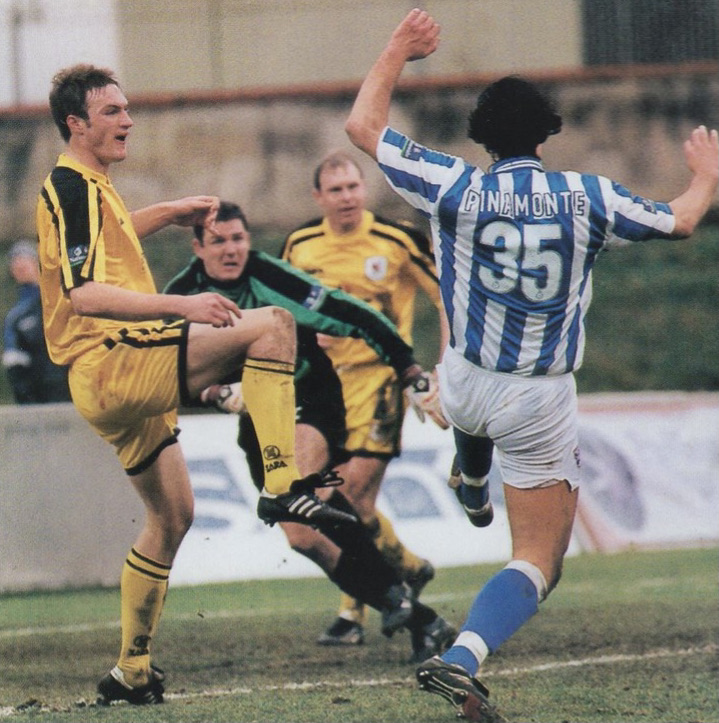
IF CASH-STRAPPED Brighton hadn’t been outbid by Brentford for a little-known Italian striker in the opening months of the 21st century, a teenage forward who went on to earn a place in the club’s history might never have appeared in an Albion shirt.

‘If only’, ‘but’ and ‘maybe’ preface many a football fan’s dashed hopes but in the case of Lorenzo Pinamonte, it seems the Gods were smiling on the Seagulls.

The imposing Italian scored only three goals in 26 appearances for the Bees after their £75,000 gazumped Albion’s bid to take him permanently from Bristol City.

Thankfully Brighton’s fortunes were vastly improved by the chap they signed instead: a raw reserve at City’s neighbours Rovers called Bobby Zamora!

Let’s go back to the last month of the 20th century. After a spectacular start to life back in Brighton following the two-year exile playing home games at Gillingham – including an opening day 6-0 crushing of Mansfield Town – mid-table Albion were struggling to find the back of the net with any consistency.

Twice-red-carded striker Darren Freeman missed multiple games through suspension, former soldier David Cameron struggled to cut it at leading the line, and former England Youth international Aidan Newhouse didn’t live up to Micky Adams’ expectations either.

That’s when Adams turned to the first Italian to represent the Albion, 22-year-old 6’3” Pinamonte, who was struggling to get a game under Tony Pulis, then boss of the relegated Robins (they’d dropped down to the third tier the season before).

He made his debut for ‘flu-hit Albion away to Swansea City on a rainy night at the Vetch Field, only meeting his teammates for the first time when being picked up en route to Wales for the game.

“Pinamonte led the line as a lone striker,” recalled wearebrighton.com. “A thankless task was made even harder when the Albion were reduced to 10 men following a red card for Jamie Campbell with only 25 minutes played.”

While makeshift Albion lost 2-0 to the Swans, their run of defeats was halted courtesy of a 1-1 Boxing Day draw at home to Barnet and a last game of the century 3-1 win at Rotherham. The 3 January match at home to Exeter City not only famously saw Freeman score the first football league goal of the 21st century, it also featured a brace from the lanky loan signing as Albion won 4-2.

It seems Adams had seen enough to want to make Pinamonte’s move permanent, but matters became complicated when Pulis decided to quit the Robins and take over at Portsmouth.

Because the departing manager’s successor may have had a different view of the striker, he signed on loan for a second month, rather than permanently, Adams telling the Argus: “We are pleased to keep Lorenzo for another month. The situation at Bristol won’t be resolved for a few weeks, so a permanent deal is up in the air.”

The same article declared that Pinamonte wanted to join Albion permanently but the bid put in by chairman Dick Knight was below the asking price, and Brentford, a division above Albion at the time, had also made an offer.

Pinamonte unsurprisingly felt in limbo and confessed to being distracted when he played in a 1-0 defeat against Leyton Orient.

“In your mind you wonder what is happening, whether you are going to stay or go, so there was a little bit of confusion.

“That probably affected me. I was thinking about it, and perhaps not concentrating,” he said. “I think I have done well so far, but not in that game.”

Cover boy Lorenzo

The turn round in form took the Seagulls to within five points of a play-off place but Pinamonte’s head was turned by the chance to play at a higher level and Brentford eventually got their man.

Offered a lucrative three-and-a-half-year contract at Griffin Park, Pinamonte admitted to the Argus: “I am a little bit upset to be leaving and I would love to come back in the future. I wanted to stay but for my future it is better to leave. Money talks and I will be playing in a higher division.”

A disappointed Adams admitted he would have to look elsewhere for a big, hold-up striker. “We thought Dave Cameron would come in and be that big centre forward and Aidan Newhouse also. Unfortunately Dave prefers the ball into his body and feet so he can jink and turn.

“Big Lorenzo came in and gave us that other option. Gary Hart and Darren Freeman gambled off him. Now that he has gone, to get the best out of them and the other forwards at the club, we may need to bring another big man in.”

Adams later told Greville Waterman, one of the voices of authority on all things Brentford: “We were going through an indifferent spell and struggling for a big centre forward. David Cameron wasn’t up to it and we had been outbid by Brentford for Lorenzo Pinamonte, so I called Ian Holloway at Bristol Rovers who told me: ‘I have got a young lad who’s been on loan at Bath City. He’s only 19 and as raw as anything, but he has scored a few goals for them.’

“I was not totally convinced but we were desperate and the clincher was when Ian told me he was only earning £140 per week, so I said ‘send him down,’ and the rest is history!”

For his part, Pinamonte reflected some years later that his time at Brighton probably just came too early in his life. “Maybe if I had gone when I was 25 or 26 it would have been different for me,” he told Brian Owen of the Argus in 2016. “I enjoyed England but it probably came too early for me. I was there alone and I was very young.”

Pinamonte’s time at Brentford certainly divided opinion. ‘Smilely’ on griffinpark.org described him as “Lorenzo Pinthetailonthedonkey” but ‘Saffrey’ on the same platform said: “I think he’s been unlucky with (Ron) Noades as he was never really given a chance, as Uncle Ron brought in that donkey Steve ‘Murray’ Jones, when he should have given Pinamonte, who had recently joined the club, a decent run out.”

The Bees lured Pinamonte from Albion’s grasp – thankfully

‘Chalfont Bees’ reckoned: “All I’ve seen of Lorenzo is him getting booked or worse. He just doesn’t seem to be good enough at the moment and I can’t see him improving. I say cut our losses and get rid of him so as to give other strikers a chance.”
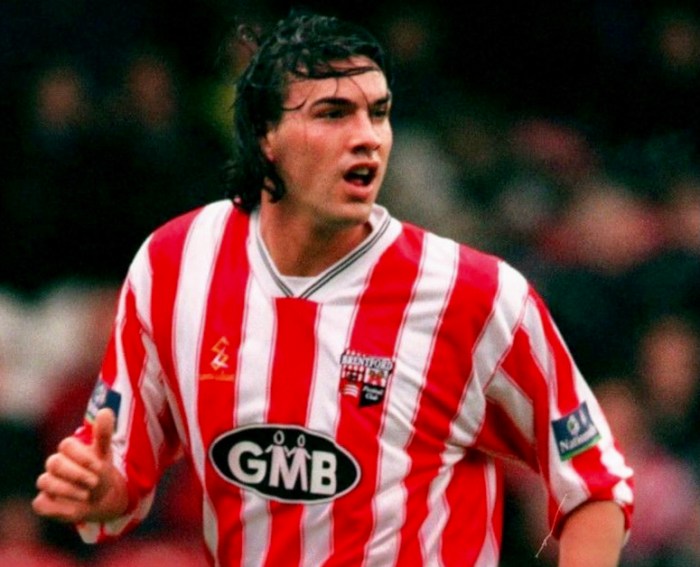
And ‘Holysmith’ opined: “Although Pinamonte hasn’t done much, he has a good strike rate for the amount of time he has played for Brentford. The problem is he doesn’t move about much.”

In the 2000-01 season, Pinamonte went out on a mid-season loan to Leyton Orient and at the season’s end he was released by Steve Coppell.

As he explained in that 2016 interview with Brian Owen, he then returned to Italy and spent eight years playing in the Italian third division until retiring as a pro at the age of 31.

Born on 9 May 1978, a gentleman of Verona (Caprino Veronese to be precise), the young Pinamonte was with southern Italy side Foggia before trying his luck in England. He joined Bristol City on a free transfer in the 1997-98 season.

In City’s disastrous 1998-99 season, when they were relegated from Division One (now the Championship) in bottom place, Pinamonte celebrated his 21st birthday by scoring the only goal of the game on his debut as Norwich City were beaten at Ashton Gate in the last fixture of the campaign.

With their fate already sealed and with an eye to the following season, Swedish manager Benny Lennartsson, who had won only five of the 30 games he’d taken charge of, chose to blood a few youngsters and handed Pinamonte his debut up front alongside £1.2m signing Ade Akinbiyi.

Five minutes before half time, the City faithful finally had a moment to cheer, as Bristol Evening Post reporter Richard Latham recorded. “Akinbiyi, made captain for the day against the club who launched his career, headed down a Micky Bell corner and Pinamonte stuck out a long right leg to find the top corner of the net from close range.”

Lennartsson was relieved of his duties at the end of the season and two months later he was replaced by former Gillingham boss Pulis, who sent the young Italian striker on a fruitless loan at Carlisle United (he didn’t play a game) before answering Brighton’s call for reinforcements.

Off the field, Albion’s matchday programme informed us how Pinamonte was staying at the Courtlands Hotel in Hove during his temporary stay where the manager was Italian Jo Guiseppe-Messina, and he had also enjoyed the hospitality of Angelo Cavalli, the owner of Topolino Duo restaurant in Hove.

Apart from scrapbook memories of his time with the Albion, Pinamonte continued his friendship with Cavalli; the restaurateur had been to visit him at the hotel at Lake Garda that he ran after his professional playing days were over.

Ooh la la: Seb Carole was a history-maker

DIMINUITIVE winger Sébastien Carole has a double entry in the history of Brighton and Hove Albion.

Not only was he the first Frenchman to play for the club, he was also the first to play under three completely separate contracts for Brighton’s first team.

As well as three different spells with the Seagulls (2005-06, 2009 and 2010), he spent two years at Leeds United where his son is now in their under 18 side.

Ironically Carole scored his first goal for Albion against Leeds, but his first Brighton manager, Mark McGhee, thought the player’s ability should have yielded far more goals.

“He’s got to get more goals,” McGhee told the Argus in November 2005. “He’s a great finisher, a great ball striker and he can manipulate the ball.

“He is going to get himself in scoring positions, because he makes space for himself when he comes inside, and in training he scores.”

That goal against Leeds came in a memorable 3-3 draw at Elland Road on 10 September 2005 but Carole’s only other goal that season came in a rare victory, 2-1, over Hull City on 16 December (Charlie Oatway got the other).

An eleven-game winless run from January to the end of March, in which only four points were picked up, pretty much sealed Albion’s fate and the promise of Carole on one wing and fellow Frenchman Alexandre Frutos on the other didn’t live up to expectations. Albion lost their Championship status with only seven wins across the whole campaign.

To cap it off, a disappointed McGhee saw Carole exercise a clause in his contract that meant he could leave Brighton on a free transfer if they were relegated.

“We gave Seb the opportunity to come here and be part of the team,” McGhee told the Argus. “Regardless of that clause, the decent thing for him to do would have been to stay, at least at the start of the season.”

Seagulls chairman Dick Knight explained the clause had to be inserted into Carole’s contract to ensure he’d join from Monaco in the first place.

“If that clause hadn’t gone in then Seb’s wages over the two years would have been higher and the signing-on fee would have been more, so it was a no-brainer,” he said. “We fought hard to keep him, but the agent has persuaded Seb to go.”

The winger chose to move to Leeds, beginning the first of several occasions he’d link up with manager Kevin Blackwell. But Blackwell was sacked after only three months and his eventual replacement, Dennis Wise, told the Frenchman he wouldn’t be part of his plans.

“I had a think about it, had a chat with my wife and I said that I would stay and fight for my place,” said Carole. “I had signed for three years and I wanted to prove I could be a good player for Leeds.

“That summer, Leeds were relegated, and I could have gone back to France and joined Le Havre but I chose to stay and fight for my place. Then, by a twist of fate, the left winger got injured, I got on, played well and after that Dennis Wise told me he didn’t want me to go.”

Wise’s assistant at Leeds was of course Gus Poyet – and the winger’s relationship with the Uruguayan would later be of use back on the south coast.

Unfortunately, when Wise left Leeds for Newcastle, replacement Gary McAllister wanted to bring in his own players so once again Carole found himself sidelined, and there was a mutual agreement to cancel his contract.

He was without a club for a few months although his old boss Blackwell, by now at Sheffield United, invited him to train with them and he played a few games for their reserve side, and he spent a short while training with Bradford City.

However, in December 2008 and January 2009 he linked up with League Two Darlington, where he played seven matches. “It was not far from where I was living and I needed some games for fitness,” he said. “I signed a monthly contract and left a week before I came back to Brighton on trial.”

Micky Adams, back at Brighton for what turned out to be an unsuccessful second spell, tried all sorts of permutations to try to turn round a string of disappointing results and the invitation extended to the Frenchman was one of the last avenues he explored before the Albion parted company with him.

He scored twice and created two more in a practice match against the youth team as Adams ran the rule over him at a trial. “He’s not somebody I’ve worked with before, but everyone at the club speaks highly of him so we will take a look,” said the manager.

The early signs for Carole under Adams were good: he went on as a 56th-minute substitute for Chris Birchall at home to Hartlepool on 2 February, putting in a cross for Nicky Forster to convert.

Sections of the Withdean faithful voiced their disapproval of Adams’ choice of change, but the manager was typically forthright in his response, telling the Argus: “We can all sit in the stands sometimes and play football manager.

“I decided Seb Carole would give us an impetus. That was no reflection on what Chris Birchall had done. I can’t be worried about what the fans are thinking. I’ve got to do what I think is best and stand there and be as brave as I can be.

“Seb travels well with the ball, delivered a couple of great crosses and put one on a plate for Fozzie.”

It wasn’t long before Adams was on his way and although Carole liked what he heard from incoming boss Russell Slade, the new man preferred Dean Cox as his wide option.

Carole told Brian Owen of the Argus: “I love the way he talks. He’s got so much passion and he has tried to do something different.

“He wants us to play a bit of football at times when it’s possible because obviously the pitch doesn’t allow you to play that much. We can see something has happened since he came here.”

However, Carole’s part in ‘the great escape’ was somewhat peripheral, making only five starts plus seven appearances off the bench.

He later said: “Micky Adams signed me and I think I did well under him, then he left and Russell Slade came and I wasn’t really in his plans.

“I wasn’t really involved in the team. I was on the bench most of the time and I didn’t understand why, because I thought I could bring something to the club.

“I was a little bit upset about the whole situation. I didn’t get the chance to do well in that second spell.”

Released by the Albion in June 2009, Carole was attracted by the prospect of playing under the legendary John Barnes at Tranmere Rovers and signed a short-term deal at the start of the 2009-10 season.

However, once again managerial upheaval would be Carole’s downfall. Rovers won only three of their first 14 matches and Barnes was shown the Prenton Park door.

“I was disappointed when he was sacked,” Carole told the Argus. “When I went there we had a long chat about how he wanted to play and I signed because of him, because I knew what he was like as a player and would play the way I like.

“I think it was a little bit unfair and a little bit early for him to be sacked, because he didn’t get the finance to make the signings he wanted.

“I definitely think if he had stayed then I would have stayed longer. When they put the physio (Les Parry) in charge, I just felt it wasn’t that good for me.”

The third coming of Carole at the Albion, on a week-to-week deal, was as a direct result of his having played under Poyet at Leeds, the winger telling the Argus: “He knew what to tell me in a certain way to get the best out of me. That is what he was good at when he was at Leeds.

“He was only the assistant manager to Dennis Wise but, more than anyone else, he was talking to the players in the right way and players were listening to him.

“He brings you confidence and you trust him and he will bring a togetherness to Brighton, which is important to get the team back on track.

“He is exactly the same as when he was at Leeds. He is really relaxed and wants to play a certain system. Obviously, that will take time. I think what he is trying to put in place here will bring the club back to where it deserves to be.”

Poyet was equally positive about taking on the Frenchman. “I know Seb better than anyone,” he said. “Seb’s a winger, not just right or left. People say he’s right-footed but he did a terrific job for us at Leeds on the left.

“We’ve been playing without a natural left-sided winger. People look at Dean Cox out there but I see him a bit more inside. I don’t think we have another player like Seb.

“People will compare him to Elliott (Bennett) but he’s a different type of player. Elliott is more direct, more about speed, more going past people with his speed. Seb is about checking in and out and dummies, taking players out of position with his skills. We don’t have that player. That’s why he is coming in.”

It was six weeks before he got his first start and he fancied his chances of getting a longer deal, especially when a hamstring injury forced Kazenga LuaLua to return to Newcastle.

“With Kaz injured for the rest of the season, I think I have got a massive chance now,” he said. “It’s up to me and how I perform.

“I was pleased to be back in the starting eleven. You always get frustrated when you are not playing but I trust Gus and I know exactly what he wants.

“I kept my head down and kept working hard and knew I would get another chance.”

His best run in the side saw him feature in four games on the trot: a 2-0 win at Oldham, a 3-0 home win over Tranmere, a 2-2 draw at home to Southampton and a 2-0 defeat at Hartlepool.

Carole certainly felt pumped up for the game against Rovers, reckoning he had a point to prove to Parry. “He didn’t play me at all. I want revenge and to show him,” he told the Argus before the match. “If I could score and just kill them I’d be happy.”

Carole didn’t score but he did put in an inviting cross that Andrew Crofts seized on to score a second goal for the Albion on the half hour. Glenn Murray had opened the scoring in the seventh minute and debutant Ashley Barnes went on as a sub to score the third.

Dropped after the Hartlepool defeat in favour of on-loan Lee Hendrie, Carole was a non-playing substitute for four matches and, although he played in the season’s finale, a 1-0 win at home to Yeovil, that was his last game in an Albion shirt.

Born in Cergy-Pontoise, a suburb of Paris, on 8 September 1982, Carole’s first memories of football were as a five-year-old having a kickabout with his dad, Jean-Claude, who had played for Paris Saint Germain’s academy but whose career didn’t take off because of an accident.

Carole went to La Fiaule school in Vaureal from the age of three to 10 where he played football every Wednesday. Apart from football, he also had an aptitude for maths. He went on to La Bussie and joined Monaco at the age of 14. He progressed through the ranks before eventually playing 11 times for the first team, including once in the Champions League.

Carole was 21 when he first came to the UK in January 2004, joining Alan Pardew’s West Ham on loan at the same time that Bobby Zamora joined the Hammers from Tottenham Hotspur.

But the young Frenchman only made one substitute appearance, going on in the 87th minute for Jobi McAnuff as the Hammers beat Crewe Alexandra 4-2 at the Boleyn Ground on 17 March.

The following season he was sent on loan to French Ligue 2 side Châteauroux where he scored once in 11 matches.

It was truly the long and the short of it when in August 2005 Albion announced the joint signing of 5’7” Carole and 6’5” Florent Chaigneau, a French goalkeeper on loan from Stade Rennes. Describing them as “exciting additions to the squad”, Albion chairman Knight said: “The fact that we have been able to attract these young players who have already represented France at various levels, is a measure of the progress we are making at this club. We will give them the stage to make their names in England.”

Carole made his debut in the third game of the season, rather ironically once again Crewe Alexandra were the opponents, in a 2-2 home draw, and Chaigneau played his first match 10 days later as Albion bowed out of the League Cup 3-2 away to Shrewsbury Town. While Carole established himself in the side, Chaigneau only made two more appearances.

Although Carole played for France through the age groups up to 19, in 2010 he played three games for Martinique, the Caribbean island side, in the Didgicel Cup.

After failing to get the hoped-for longer contract at Brighton, Carole spent the 2010-11 season with French Ligue 1 team OGC Nice. He subsequently returned to the UK and spent six months at League One strugglers Bury, managed by his old boss Blackwell, but was released having made just five substitute appearances. He then proceeded to drift around various non-league sides in Yorkshire.

He later set up his own football school, which he ran for a year, and has since been an agent (C & S Football Management). His son Keenan is currently playing for the Leeds under 18 team.

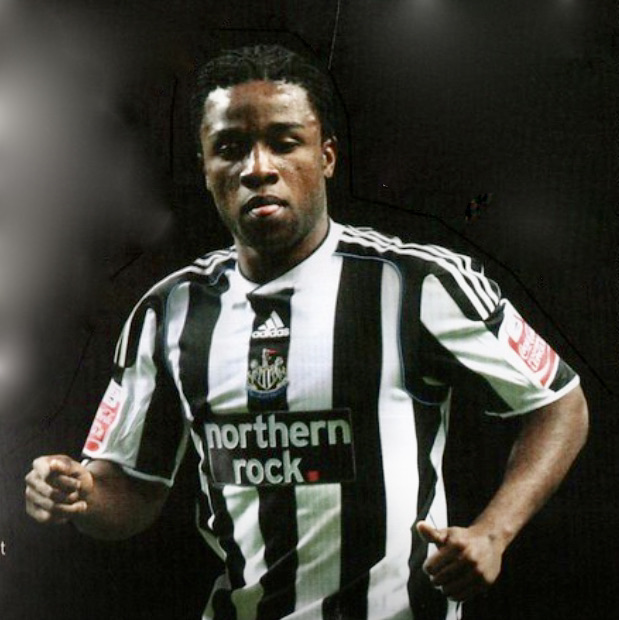
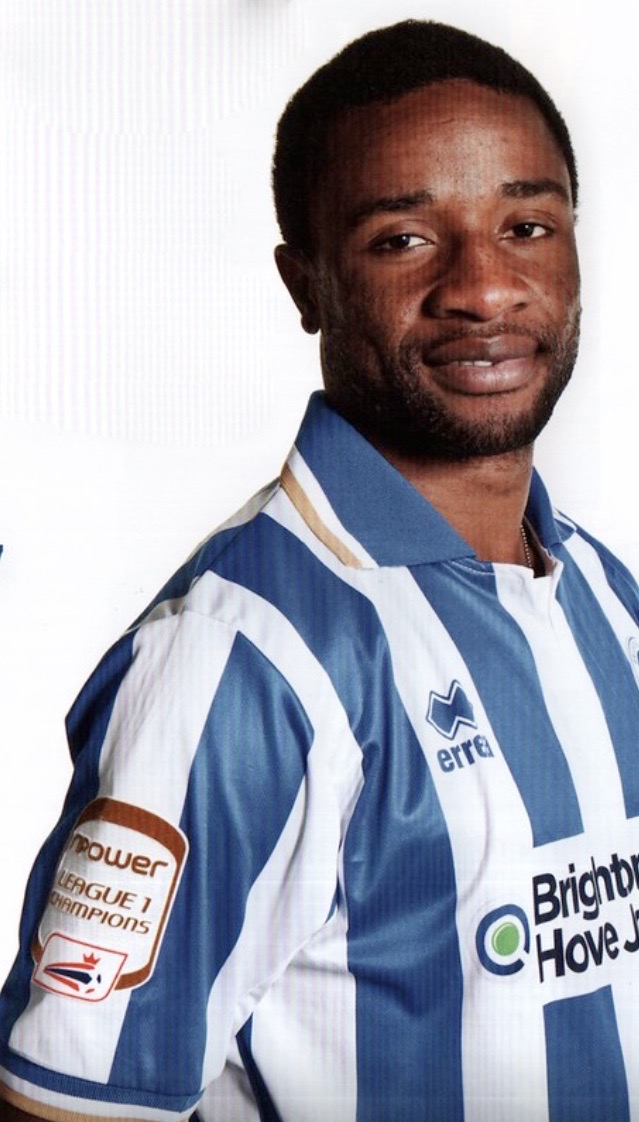
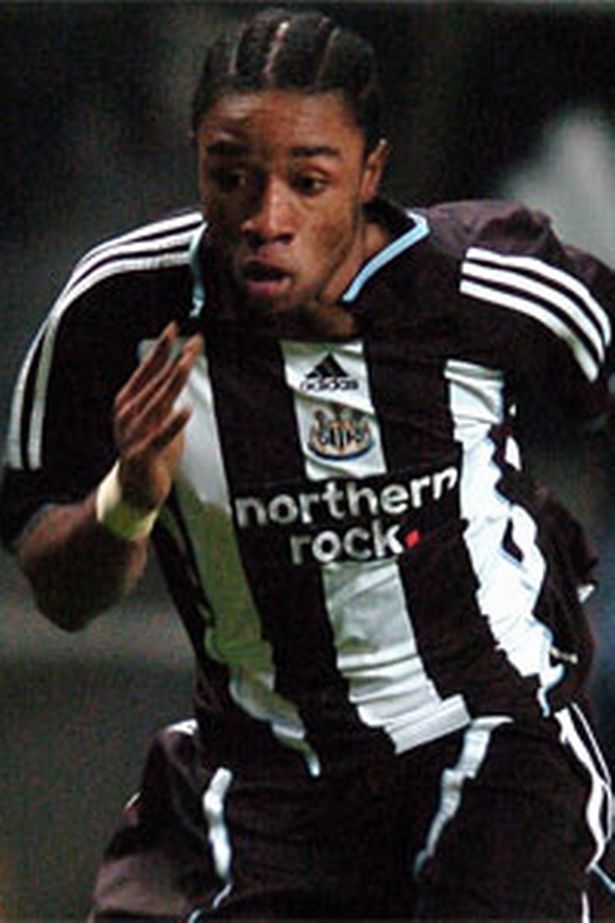
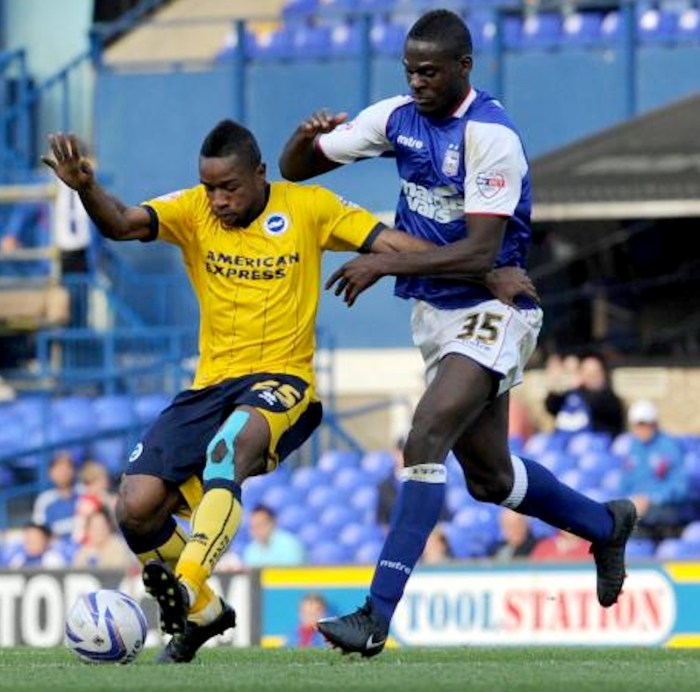
Flipping winger Kazenga LuaLua followed brother to Toon

EXPLOSIVE pace, a feint of the shoulder, and a thunderbolt shot were trademarks of Kazenga LuaLua’s contribution to Brighton’s rise from the third tier.

Not to mention a somersault flipping goal celebration that delighted supporters but gave managers kittens as they could only see an injury in the making.

Sadly, that explosive pace came at a price — hamstrings that were all too often easily damaged, resulting in lengthy spells on the treatment table and in recovery. Ankle, knee and groin injuries also sidelined the pacy winger for long periods.

Left-sided LuaLua had three spells on loan to Brighton from Newcastle United before joining permanently, and his six seasons in Brighton colours were rarely dull. He was undoubtedly a crowd-pleaser when he was on top of his game, leaving full backs trailing in his wake to lay on chances or cutting inside and netting some memorable goals.

However, he invariably made most impact when entering the fray from the substitutes’ bench, although the ‘supersub’ moniker frustrated him.

“You don’t just want to come on as a sub,” he told the matchday programme. “Obviously it’s good in one respect as it means the team needs you, but as a footballer you want to be in the starting 11 in every game.

“I don’t view myself as just an impact player and I know that I can play 90 minutes of football.”

Albion fans first saw the Congolese game-changer in February 2010. Manager Gus Poyet had been tipped the wink about LuaLua by his former Swindon and Leeds managerial partner, Dennis Wise, who had been executive director at Newcastle.

Ashley Barnes celebrates with Albion’s speedy loanee winger

LuaLua started nine games (and went on as a sub twice) as Albion consolidated their position in League One. His impact on the side was appreciated by his teammates, as defender Tommy Elphick explained to the Argus in March 2010. After the 19-year-old winger had run Exeter full-back Steve Tully ragged, Elphick said: “He’s unbelievable for us. He really does stretch the game for you.

“It’s that raw pace and power which I personally think we have been missing for the last two years. Benno (Elliott Bennett) gives you something totally different. He is more technical. Kaz reminds me of Bas Savage in the sort of job he used to do for us in stretching the game and getting us up the pitch.

“It gives the defenders a chance to get to the halfway line and defend a bit higher.”

When Poyet secured his services for a second loan spell for the opening half of the 2010-11 season, he was delighted. “Kazenga is unique. He is pure power and speed,” said the manager. “That nowadays in football is very important and we didn’t have that.

“I don’t think there is another player like him in the division. He gives us something totally different.

“We are very pleased to have him. We know what we are getting and that is the key. He will fit in as a player, and in the dressing room.”

Poyet added: “He made a very big impact during his time here last season and I am hoping he can do the same and add a few goals to his game this time around.”

No sooner said than done; LuaLua marked his second debut with a 25-yard rocket of a free-kick to give Albion the lead in a 2-0 home win over MK Dons.

LuaLua departs the action injured

Sadly, after just seven starts plus four appearances off the bench, his involvement in that promotion season came to an end in November 2010 when a bad tackle in a 3-1 away defeat at Hartlepool left him with a broken ankle.

Born in Kinshasa, Zaire (now the Democratic Republic of the Congo), on 10 December 1990, LuaLua came to England as a small child with his father and famous older brother, Lomana.

It was from Lomana that he perfected the thunderbolt shot — and the celebratory somersault.

“I have always had a hard shot on me,” he told the Albion matchday programme. “I think a lot of it comes from when I was a boy back in Newcastle and I would play with my brother.

“He would always strike a ball hard and I would try to copy him.”

It was football all the way from a young age, LuaLua recalled. “When I was growing up in Kinshasa, I remember skipping school to play football with my friends,” he said. “We were football mad and, as my brother had already moved to England, I wanted to follow in his footsteps.

“Lomana got me in at Newcastle. He moved to London with our dad some time earlier, but once he’d broken into football and moved from Colchester United up to Newcastle, then the rest of the family came over from our homeland.

“I had only been in the country a couple of months when Lomana arranged for me to have a trial at Newcastle and I was taken on straight away. It was fantastic for me and also for him; we’d go into training together and he was always there for advice when I needed it. He has been a massive influence on my career.”

The winger continued: “It was tough to begin with; I was in a new country and had to go to a new school, which was hard in itself given where I’d come from, and then I was brought into a professional football club and one of the biggest in the country.

“But Newcastle were very helpful. All the coaching staff were great towards me, and helped me find my feet. I learned such a lot from them and I quickly made new friends. I was close to Nile Ranger, Sami Adjei, Sami Ameobi, many players, and I learnt so much in terms of coaching and how to conduct myself as a professional.”

Kazenga progressed through the Toon academy and was part of the Toon youth team that reached the semi-finals of the FA Youth Cup in 2005-06. He even earned a first-team squad call-up while still only 16, although he didn’t get to play.

LuaLua’s Newcastle chances were limited

Eventually, he got his first team chance as a substitute for Damien Duff in a 0-0 FA Cup third round match at Stoke in January 2008, right at the end of Sam Allardyce’s reign on Tyneside. It was Michael Owen’s first FA Cup game for Newcastle.

The game was being shown live on TV so LuaLua’s extended family back home in the DR Congo were able to see the moment. “I was one of the club’s youngest debutants at 17,” he said.

He also went on (for Charles N’Zogbia) in the replay at St James’s Park which Toon, under caretaker boss Nigel Pearson, won comfortably 4-1. “To play in front of 52,000 people took my breath away,” he said.

He made his Premier League debut three days later, going on as an 80th-minute sub for Duff at St James’s Park, in Kevin Keegan’s first match back in charge — a disappointing 0-0 draw with Bolton Wanderers.

Although a non-playing sub on other occasions, he got on in the last game of the season, replacing Jose Enrique in the 79th-minute as United went down 3-1 to Everton at Goodison Park.

Against the backdrop of the tumultuous 2008-09 season, when Toon were relegated from the Premier League after a veritable managerial merry-go-round, LuaLua made just four substitute appearances (three in the league and one in the FA Cup), and in January 2009 he was sent out on loan to Doncaster Rovers, then in the Championship, where he played four matches in six weeks under Sean O’Driscoll.

Once Toon settled on Chris Hughton to get them promoted from the Championship, LuaLua found chances hard to come by.

He started in a Carling Cup second round match at home to Huddersfield Town, when Toon edged it 4-3, but picked up a groin injury playing in the next round, a 2-0 defeat at Peterborough in September 2009 (future Brighton teammate Craig Mackail-Smith was one of the Posh scorers).

Three months later, with his fitness restored, he was itching to be given a first team chance and told the Chronicle: “I want to be part of this team. My aim has always been to play for the first team at Newcastle United.

“I’ve been here a long time, and last season I was involved in the first team before going out on loan.”

“I have been playing for the reserves for a while now, and I’m keen to play football at first team level.

“I would go out on loan if they let me.”

That opportunity finally came a couple of months later when Hughton sanctioned the move to Brighton. LuaLua told Albion matchday programme reporter Luke Nicoli: “They are a big club and are using a lot of experienced players at the moment, so it’s been difficult for me to break into the team.

“I’ve been playing reserve team football a lot and I just want to be playing games that mean something again. I want to be playing for points and I want to be learning all the time. I want to be in a position where I can return to Newcastle a better player.”

Immediately before re-joining the Seagulls for his second loan spell, LuaLua made only his second start for Newcastle in a 3-2 Carling Cup win over Accrington Stanley and was selected by Sky Sports as the Man of the Match.

After that broken ankle at Hartlepool had taken him back to Newcastle to recuperate, he recovered to make a Premier League appearance in the penultimate game of the season, a 2–2 draw away to Chelsea. Hughton’s successor, Alan Pardew, sent him on as a 69th minute substitute for Shane Ferguson and it was LuaLua’s run and cut inside around Branislav Ivanovic that won Toon a corner from which Steven Taylor scored a late equaliser.

Nevertheless, Poyet wasn’t giving up on taking LuaLua back to the Seagulls once more and, in July 2011, he took him on another six-month deal with a view to a permanent move.

Poyet told the club website at the time: “Kazenga was one of our main summer targets and I am delighted we have finally come to an agreement with Newcastle. I am sure the fans will be equally delighted to see him back at the club.”

The permanent move went through a month before the loan was due to expire and LuaLua told the club website: “Since I came to the club it has always been my intention to sign a permanent deal so this is a really happy day for me.

“When you are on loan you are never quite sure what the future will hold, but now I’ve signed this contract I can put my mind at rest and focus completely on my football.

“I have come here because I feel Brighton is the place where I can really kick on with my career. At Newcastle I wasn’t really involved in the first-team squad and at my age I want to start playing regular football.

“From the first day I came to the club on loan, everyone was so friendly and that helped me settle very quickly. Now I want to pay that back with my performances on the pitch.”

Albion famously suffered an ignominious 6-1 drubbing in the fifth round of the FA Cup at Anfield in February 2012, but it was LuaLua who temporarily gave the Seagulls parity after Martin Skrtel’s early opener for Liverpool.

LuaLua unleashed an unstoppable 25-yard shot past ‘keeper Pepe Reina and BBC Sport’s Neil Johnston said: “It was a goal worthy of winning a Wembley FA Cup Final.”

Few doubted LuaLua’s ability but inconsistency was one of his demons which often led to him being introduced as an impact substitute rather than starting games.

Poyet wasn’t afraid to explain his selection policy and in March 2012, when he gave the winger a start against high-flying Derby County, he was rewarded with a 2-0 win at the Amex.

“I thought it was the game for Kazenga,” Poyet told the Argus. “I know he played well in his first spell and my first season here, but I don’t remember a better performance from Kazenga for Brighton.

“It was his best performance against a team that has been in the Premier League and in the top ten in the Championship. That shows what he can do. It was his game and he’s a happy boy.

“He has probably been a little annoyed not to be playing, but that is natural and he is always very respectful and always talking to me.”

A troublesome knee affected LuaLua’s involvement

LuaLua ended up playing under four different Albion managers and Oscar Garcia quickly realised the limitations he faced when in September 2013 he told the Argus: “Kaz has a problem on his knee and he cannot play many minutes in all the games. We knew before if he had played for the whole game then maybe on Tuesday we cannot use him.

“Sometimes he has pain, sometimes not, but, if he plays many minutes, he has pain. He’s had this from the start of the season,” he said. “Sometimes he has to rest, he cannot train. We have to manage this.”

The following February, LuaLua was still troubled by knee tendon soreness but was contributing as a substitute.

For example, he went on to set up Leonardo Ulloa to score the only goal of the game at home to Leeds and Garcia told the Argus: “We thought in this game he could come off the bench and make an immediate impact and he did it.

“He is a player who can change a game. We are very happy with him, because every game when he has to come off the bench he comes on with the right attitude and plays really well.”

Happy days with Beram Kayal and Joe Bennett

Even though Sami Hyypia’s time in charge was short-lived, the winger impressed the new boss until a knee injury sidelined him in November 2014.

“He has the ability to hurt people one v one and maybe one v two as well sometimes,” said Hyypia. “He’s done well this season, he has been very concentrated all the time.”

By the time LuaLua returned to fitness, his old Newcastle coach and manager, Hughton, was at the helm.

LuaLua told the matchday programme: “It was difficult for me when he first came here because I was injured, but he was great with me, always stopping to talk to me about the injury, making sure I was okay, and he told me not to rush things. That’s what I’ve done and hopefully I can now show him what I can do on the pitch now that I’m fully fit.”

Although it was a few months before that happened, arguably LuaLua’s best spell with the club came at the start of the 2015-16 season, which coincided with a change of squad number for the player.

The returning Bobby Zamora resumed the no.25 that he’d worn during his first spell at Brighton, and at other clubs, and LuaLua admitted: “I had to give the number 25 to Bobby. There was no way I was going to refuse. He’s a legend at the club and it’s nice to have him back in the squad.”

With 30 on his back, LuaLua scored four goals in the opening seven games and won the Championship Player of the Month award (above). Hughton was simultaneously Manager of the Month and said: “Kaz thoroughly deserves his award, he’s had a wonderful start. The area where he has excelled in his game is where he has got on the ball and provided an end product.”

Once again, though, injury brought the purple patch to an end. LuaLua sustained a groin injury in training that eventually needed surgery. Coach Nathan Jones told the Argus in December: “There is no real timescale on it because someone like Kazenga is so important to the squad and what we do. You can’t rush him and he is such a potent athlete, that’s the problem.”

Hughton also lost Solly March to injury that autumn but Rajiv van La Parra was brought in as a temporary solution. He already had Jamie Murphy as a wide option and then Anthony Knockaert and Jiri Skalak were added, so, by the time LuaLua had recovered, competition for places was intense.

The run-in to the end of the season saw him mainly in a watching brief from the bench, although he did play in successive matches in April – 2-1 wins away to Birmingham and Nottingham Forest.

LuaLua’s Albion days were clearly numbered as the 2016-17 season got under way. He started two League Cup games in August – the 4-0 win over Colchester United and the 4-2 victory over Oxford United, when he scored Albion’s second goal. But he only managed three league appearances as a substitute. By January, it was time for a change of scene, and he was sent on a half-season loan to QPR.

At least he got some games in Ian Holloway’s Championship side, appearing 11 times and scoring once. Having missed out on Albion’s promotion to the Premier League at the end of that season, it was no surprise that he returned on loan at Loftus Road at the start of the 2017-18 season.

However, he left west London at the beginning of December 2017, Rangers boss Holloway telling the Argus: “I don’t feel he was doing as well as some of my lads who I’ve brought here.

“Unless he rips it up and shows me – and he’s trying to – I think the loss of confidence and loss of his father has really hit him.”

In January 2018, LuaLua finally cut his ties with the Albion when he joined Chris Coleman’s Sunderland on a free transfer on a deal until the end of the season. By then 27, the winger told the Sunderland website: “I’m excited to be here and get back out on to the pitch because it’s been a long time without playing football.

“I know the North East well and I know Sunderland are one of the big clubs, not just in the North East but England, so I’m really excited to get started.”

An unfortunate turn of phrase because he didn’t start a game as Sunderland fell through the Championship trapdoor. He made just six substitute appearances.

Released at the end of that season, his former Brighton coach Jones revitalised what looked like a flagging career by signing him for promotion-chasing League One side Luton Town.

Jones told the club website: “He’s a fantastic talent. He has something that not many have, totally different from what we have here.

“He’s a quick, powerful, potent attacking player which is something that is in rare supply – and is something we felt we needed.

“The fact that we’ve been able to get him in and persuade him to come here is a good coup for us.”

And the player said: “I know Nathan from Brighton, and he’s a very good coach. He’s good at what he does, so it made it so easy for me to come in and train with the boys here.”

LuaLua spent three years at Kenilworth Road and clearly enjoyed a good relationship with their supporters. After he signed a new deal with the club following their promotion to the Championship, he told the club website: “The supporters have made me feel welcome since the moment I arrived here.

“When they get behind you, like they did since I have arrived, it gives you a massive buzz. It’s a really nice feeling. It was a really special season. I think they liked the way I play, they got behind me and I really appreciated it.”

Once again, though, his involvement was more as a substitute than a starter (37 starts plus 50 appearances off the bench) and when his contract came to an end in the summer of 2021, he decided to continue his career in Turkey, once again following in the footsteps of brother Lomana, who played for a number of Turkish clubs.

Kazenga signed a two-year deal with second tier side Gençlerbirliği in Ankara and, in November 2021, Argus reporter Brian Owen caught up with him.

“It was the right time for me to move on with my football career,” he said. “I always wanted to go abroad before I stopped playing football.

“Before signing, I was worried. I’ve never played abroad before. But it has been good. There’s a lot of boys here who speak English, including the manager, which helps a lot. I’m enjoying it.”

LuaLua then switched from Turkey to Greece and spent 18 months with Levadiakos before returning to the UK in March 2024 when Nathan Jones signed him for Charlton Athletic on a short-term deal, although he made just five substitute appearances for the League One side.

It was back to the north east for a third time in November 2024 when he signed for National League Hartlepool United under Brighton-born Lennie Lawrence, a former Luton and Charlton manager.

The geography was all wrong for O’Grady’s Seagulls excursion

SHEFFIELD UNITED and Brighton once went head to head for the services of journeyman striker Chris O’Grady.

It might be said many Albion followers were somewhat disappointed that the Seagulls pipped the Blades to signing the player from Barnsley in the summer of 2014!

It wasn’t long, however, before United, then in League One, landed their man when he failed to score in 11 appearances and struggled to settle in Sussex.

On taking O’Grady on loan, United manager Nigel Clough said: “There aren’t too many strikers of Chris’s calibre around at the moment.

“We liked him last season at Barnsley and he has got good Championship experience. Chris was a target for us in the summer but Brighton came in with a deal we simply couldn’t match in terms of wages and what they could have been potentially offering him as a playing challenge.”

The 28-year-old impressed in four Blades starts, scoring once in a draw with Walsall at Bramall Lane, and Clough remained hopeful of eventually doing a permanent deal for the player.

But Albion head coach Sami Hyypia left the club shortly before Christmas and O’Grady was recalled to cover a mini injury crisis amongst the available forwards.

Under caretaker manager Nathan Jones, O’Grady was introduced off the bench at Fulham and set up a goal for Solly March in a 2-0 win.

Then, in Chris Hughton’s first match in charge, a third round FA Cup tie at Brentford, O’Grady bagged his first Seagulls goal in another 2-0 win. On as a 67th minute substitute for Mackail-Smith, O’Grady hit a post, saw an effort trickle wide and then scored a decisive stoppage time second goal against the Bees to secure Albion’s passage through to the fourth round.

It was in the third minute of added on time when, put clear through by Adam Chicksen, he doubled the lead gained when Lewis Dunk headed in an 88th-minute opener at Griffin Park, thus helping Hughton’s reign get off to a winning start against Mark Warburton’s side.

After the match, O’Grady opened up about his struggles in an interview with BBC Sussex. “It’s been extremely tough,” he said. “It has tested a lot of relationships in my life. Thankfully the strongest one, my family, is still together which is the most important thing.”

O’Grady had spent all of his career playing in the Midlands, Yorkshire or the North West and said settling on the south coast with his partner and three children had proved difficult.

“We’ve been trying to settle in the area and it’s not quite happened on the pitch,” he said.

“We’ve got a home we’ve had for quite a few years back up north and we’ve been half in that and half down here as we don’t know what’s going on.

“I’ve been doing my best but it was not working out. I got a chance to go back up north and find myself and get some fitness.

“My whole career I have performed for people who believe in me. I felt I wasn’t sure why I was here.”

O’Grady was fighting an uphill battle at the Albion from the moment he was signed by head of football, David Burke. The Seagulls had banked £8m from the sale of Leonardo Ulloa to Leicester and obtaining O’Grady’s services from relegated Barnsley (he’d scored 15 goals as they went down) was seen by fans as inadequate recompense, even though the club tried to insist it wasn’t a like-for-like transaction.

Hyypia said at the time: “This is an area we want to strengthen, and Chris is a good start. He is a strong, physical presence and gives us something different to the other strikers we already have here at the club.

“You need that option in the squad of a forward with power and strength, and Chris can give us that – as well as scoring goals.

“We still want some extra attacking additions, and in other areas of the team, but I’m pleased we have another one of our targets.”

Those “extra attacking additions” turned out to be Adrian Colunga and Sam Baldock the following month and both largely put paid to O’Grady’s hopes of gaining a regular starting spot.

Not that O’Grady felt overawed by the challenge. “For the past two seasons I’ve hit double figures and that has been a reflection of the desire and hunger that I have to succeed at this level,” he said.

“Having played for Leicester City and Sheffield Wednesday in the past, I know what it’s like to play for a big club – and Brighton certainly fall into that category.

“Earlier in my career playing for those clubs might have been a bit daunting for me, but at my age I know how to deal with the expectation and to win the fans over. It’s fantastic to be joining a club with such big ambitions and to be joining in the peak years of my career.”

O’Grady started the first three games of the season, but the presence of incumbent Craig Mackail-Smith plus the late August signings of Colunga and Baldock soon indicated competition for forward places was going to get a lot tougher.

Injuries to Baldock and Mackail-Smith gave him some limited game time but Hyypia told the Argus he expected more from the bustling big man.

“He is training well, he’s doing his work and he can be a tricky player for the centre-backs because he is so strong.

“I know that he can be dangerous. Sometimes I wish he would go forward a little bit more.

“He’s not slow so he could give the centre-backs more problems if he didn’t always come to the ball.”

Nigel Clough’s Sheffield United were keen to sign O’Grady permanently

It seemed the FA Cup suited O’Grady because he also pulled a goal back for the Seagulls in the 50th minute of the glamour fourth round tie against holders Arsenal, in front of a 30,278 crowd, although they eventually lost 3-2.

Although Clough was keen to take O’Grady back to south Yorkshire, Hughton made it plain he wanted him to stay and fight for his place

“This is a player that came here and had a difficult time, went away on loan and has been excellent for us since he came back,” Hughton told the Argus. “I must admit I’m still getting to know him. I knew him from his time at Barnsley, I don’t know him as much from his time here.

“He certainly couldn’t have done any more than he has in the last two games. He is no different to any other player, you want to be playing and involved, and if you are you are generally happier. At the moment, I think he’s in a nice place.”

O’Grady admitted: “I’m just getting a chance to play. I’m taking it and doing my very best for however long I am wanted here.

“I am being professional and doing my very best. Since I’ve been back, there is a freshness and a chance to get involved and contribute. That’s all I’ve ever really wanted.”

Buoyed by the change in management, and with his family settled, O’Grady told the Argus in early February: “I’ve succeeded at all the clubs I’ve been at in the past five years, which has led me to be here.

“I started in League Two and if you do fail at any club at any time then you are only going to go down. Failure is not really an option. You have to work as hard as possible to succeed.

“Even though the first half of the season didn’t go well, it would have been too easy to give up and just write it off as ‘this one didn’t really work out’.

“That’s a lesson that if you persevere with a situation it will eventually come good if you deserve it.”

Unfortunately, Hughton thought Leon Best on loan from Blackburn Rovers might be a better option, and Baldock or Mackail-Smith invariably were ahead of him as the manager shuffled his pack in a battle to stay in the division.

It wasn’t until 10 March 2015 when O’Grady, making a rare start away to Reading, scored his first – and only – league goal for the Seagulls, netting from the penalty spot as the Albion went down 2-1.

Come the start of the 2015-16 season, Tomer Hemed and the returning Bobby Zamora made O’Grady’s future involvement a lot less likely.

His only action came in two League Cup matches, away to Southend and Walsall, and he missed a penalty as the Saddlers dumped out the Albion 2-1.

So, it was no surprise he was sent out on a season-long loan to Nottingham Forest, the club who’d let him go as a young boy. During that temporary return to Forest in 2015-16, he scored twice in 21 games.

In the last year of his Albion contract, 2016-17, he was reunited with Nigel Clough, this time at Burton Albion, (pictured in action below) where he scored once in 26 games. While he was a regular in the first half of the season, he made only five appearances after the turn of the year following the arrivals of Cauley Woodrow, Luke Varney and Marvin Sordell.

Born in Nottingham on 25 January 1986, O’Grady was at Forest from the age of 10 to 13. “I dropped out of football for a while but then got back into it at 15,” he told Albion’s matchday programme. “I wrote to the clubs local to me: Leicester and Derby. Leicester were doing open trials at the time, and I progressed through that, then on to proper trials at the training ground, and I eventually got signed up.”

A young Chris O’Grady in his Leicester days

It was during his time at Leicester that he took up yoga, inspired by the knowledge Ryan Giggs was an advocate of it. “It definitely helps,” said O’Grady. “I was a young lad in the youth team at Leicester and quite big physically but not very flexible with it.

“I was also picking up injuries at the time so I just knew I needed to do something. Once I started with the yoga all the injuries kind of went away and I’ve never really had a muscle injury since.”

After he’d got on the scoresheet regularly at under 18 and reserve level, former Albion boss Micky Adams gave him his first team chance with the Foxes.

He also won an England Youth cap in a 3-0 defeat away to France in Limoges on 13 November 2002. When he couldn’t pin down a regular place at City, he had loan stints with Notts County and Rushden and Diamonds and, although he returned to Leicester and played a handful of games in the Championship, in January 2007 he was sold to Rotherham United, where he spent 18 months.

Next up was Oldham but, in two years on their books, he had loan spells at Bury, Bradford City, Stockport County and Rochdale.

O’Grady in action for Barnsley against Albion’s Stephen Ward

His 31 goals in 95 matches for Dale earned him a move to Sheffield Wednesday on a three-year deal in the summer of 2011 but on transfer deadline day in January 2013 he made the short journey to Barnsley and then made the move permanent that summer.

At the end of his three-year Brighton deal, O’Grady moved to League Two Chesterfield for a season, but when they lost their league status he moved on in 2018-19 to his former club, Oldham Athletic, by then in League Two, where he scored eight goals in 47 matches.

The following season he moved up a division and played for League One Bolton Wanderers but their relegation to League Two brought down the curtain on O’Grady’s league playing days.

After he was released, he spent a year out of football. But in May 2022 he signed for Southern League Premier Division Central side Ilkeston Town, where he scored seven goals in 19 games. The side’s manager Martin Carruthers declared on signing him: “Chris is an excellent addition to our squad and brings with him a wealth of experience.

“He is a big, powerful unit and super fit, he will certainly be of huge benefit to our current strikers who will all be able to learn and develop from Chris this season.

“He will give us different attacking options and I’m sure will bring plenty of goals to the team.This is a real coup for the club.”

In February 2023, at the age of 37, O’Grady joined ‘The Gingerbreads’ – Northern Premier League Division One East side Grantham Town – where he played alongside former Nottingham Forest and Derby County forward Nathan Tyson. He scored just the once in eight matches, in a 3-0 win over Brighouse Town (Tyson scored the other two).

Hopes for Hammers starlet Tony Stokes didn’t materialise

A YOUNG ATTACKING midfielder who Alan Pardew believed could make it played half a dozen games for Brighton but didn’t deliver on his early promise at West Ham.

It probably didn’t help Tony Stokes’ cause that Mark McGhee, the Albion manager who signed him, was sacked so early in the season. The youngster also dislocated a shoulder which subsequently put him out of action for eight months.

“He’s a good young player and they have high hopes for him,” McGhee had told the club website. “He’ll get on the ball and make things happen.”

The temporary move to League One Albion was Stokes’ second spell out on loan having played 19 games in League Two basement side Rushden and Diamonds’ unsuccessful battle against relegation from the league earlier in 2006.

“West Ham have very high hopes for him and the reviews that have come out of Rushden have been excellent,” said McGhee.

On North Stand Chat, a West Ham fan posted: “Stokes is one of three players that Pardew really thinks can make it in the big league, the other two being Kyle Reid and Hogan Ephraim. The boy’s been a star from under 15s onwards and likes to get on the scoresheet even though he plays in midfield.”

The Albion matchday programme declared Stokes had arrived at the Withdean with a glowing endorsement from Bobby Zamora, who was playing up front for the Hammers at the time.

“Bobby is a top lad. I get on really well with him, and he said to me what a good club this is and how he enjoyed his time here,” Stokes said. “I’m looking forward to my stay because being at a Premiership team makes it hard to get a chance. Hopefully I can play for the first team here at Brighton and show the fans and the manager – who has shown faith in me – what I can do.”

Stokes started on the left of Albion’s midfield trio (alongside Richard Carpenter and Dean Hammond) in each of the opening six matches and came on as a sub for Doug Loft in what turned out to be McGhee’s last game in charge, a 1-0 defeat at Bristol City on 2 September 2006. It was Stokes’ last appearance for Albion.

McGhee had revealed a week earlier that they had been delving into a stamina issue with the youngster, as he explained to the Argus. “We’ve felt in games that he has tired a little bit and we’ve actually discovered there’s a little bit of something going on in his system that West Ham have also discovered.

“It’s not medication but minerals and vitamins and certain things missing that have caused him to tire, so we expect more out of him as the weeks go on and as his fitness improves.

“He’s a footballer and we are playing football. He keeps the game ticking over, but I think he’s got a lot more to come.”

McGhee’s successor Dean Wilkins was keener to blood Albion’s own young talent but Stokes’ injury issue meant him returning early to West Ham anyway.

“I went up for a header and fell back on my arm. At first, I just carried on playing without too much discomfort, but then started to get a dead arm after coming off the pitch so I got it looked at again and it was decided an operation was needed to sort it out,” Stokes said in the West Ham matchday programme for the Hammers v Seagulls third round FA Cup tie in early January 2007.

“It’s not too bad and I am now waiting for it to heal properly so I can get back into training again.”

The youngster reflected positively on his time with the Albion, adding: “It was good for me to get a few matches under my belt, playing regular football. I played around eight or nine games while I was there and when I left to come back to West Ham, Brighton were in the top half, seventh place I think.

“I enjoyed it there, they wanted to try and go for the play-offs and promotion, so you always felt there was something to play for, and that’s good.

“I would go back to Brighton on loan. I liked it there.”

Born in Essex on 7 January 1987, Stokes first linked up with West Ham at the tender age of nine and the club website described him as “a combative but creative midfielder with an eye for goal who has impressed in coming through West Ham United’s youth ranks”.

His one and only competitive first team match for the Hammers came when he was 18, going on as a substitute for Tomas Repka in a 4-2 Carling Cup win away to Sheffield Wednesday in which Zamora scored twice for the Londoners.

“I will never ever forget my debut,” said Stokes. “It was a dream come true.”

In a 2015 interview, Stokes reflected on his eight months out injured saying: “In that time, Alan Pardew got the sack. I was always training with the first team, and in their matchday squads against the likes of Man Utd and Arsenal, but never did end up getting that final chance.”

Stokes was involved in non-competitive games, such as in July 2007 when he was a sub for Reid in Martin Ling’s testimonial at Leyton Orient, and the following day a sub for Freddie Ljungberg in a 3-2 friendly defeat away to MK Dons. Three days later, he was in Sussex playing for a West Ham XI in a 2-0 defeat to Lewes at the Dripping Pan and he also started for a West Ham XI that won 3-1 at Thurrock on 7 August.

Stokes produced some solid displays for the Hammers reserve team early in the 2007-08 season, raising hopes he could force his way into Alan Curbishley’s first-team reckoning – not least when he came off the bench and produced a stunning volley to force a 2-2 draw against Arsenal.

However, his next loan move was to Conference side Stevenage Borough in November 2007, where he played three matches under former Albion boss Peter Taylor.

In May 2008, Stokes was captain of academy coach Tony Carr’s young squad that took part in the Hong Kong Sevens tournament and was sent off in the Plate final which Hammers lost 3-2.

More involvement with the first-team group continued in the 2008 pre-season, Stokes twice appearing as a substitute during West Ham’s tour of North America. He went on as a sub in a 3-1 win over MLS side Columbus Crew and a 3-2 defeat to a MLS All Stars side featuring David Beckham in Toronto.

Back in the UK, he started a friendly away to Cambridge United which finished goalless and came on as a sub in a 2-2 friendly draw away to Southampton.

After Jack Collison was called up to the first team squad, Stokes took over as West Ham’s reserve team captain for the 2008-09 season. However, his career took an unexpected turn in February 2009 after a director of Hungarian side Újpest FC liked what he saw at a Hammers reserve match.

Stokes found himself heading out to Budapest on loan, and he told whufc.com: “I went on loan to the Hungarian team and it went really well. Then, when it came to the end of the season, my contract had run out at West Ham and Újpest wanted to keep me.

“They were playing in the Europa League, so that attracted me. I ended up playing in both legs of the second qualifying round defeat by Romanian giants Steaua Bucharest in the Europa League.

“We usually got crowds of between seven and eight thousand, but against Steaua, we got 15,000 at home and then played in front of 25,000 in the return leg in Romania. That was a great atmosphere to play in.

“For our home games, the supporters were just fantastic and the atmosphere was amazing. They would do absolutely everything to get a win.”

Stokes wore the no.6 lilac shirt for Újpest and quickly became a regular starter under  Scottish manager Willie McStay.

“I loved it out in Hungary. The people were so polite and made me feel so welcome,” Stokes told Tomasz Mortimer of hungarianfootball.com.

Stokes signed a three-year deal and made 24 appearances for Újpest, but, although he enjoyed Budapest, he was homesick and came to an arrangement to end his contract after only 11 months.

Stokes played as a defensive midfielder although he said later his preferred position was “up top or just behind the front two”.

Although he couldn’t speak Hungarian, it helped that the manager and his assistant – Joe McBride – were English speakers along with three other players at the club at the same time: Gary Martin, Scott Malone and Mark Millar. “It did really help me because I didn’t feel alone and they were going through the same feelings I was about missing home,” he said.

“It takes a lot of bottle to just up and move to another country, especially if you don’t speak the language,” Stokes told hungarianfootball.com. “I would definitely go back abroad if it was worth it.”

In a statement on the club’s website, explaining his decision to return to the UK, he said: “I took a long time thinking about what to do before I arrived at the decision, that I would like to leave, subject to the club allowing this, and put my contract on hold.

“I am missing my family a lot. I found it hard to live alone in Hungary during the 14 months I was here.

“I really enjoyed playing for Újpest. I made many friends and also played with many good players. I will take with me many good memories of the club.”

Stokes felt the whole experience improved him as a person, and told football.london in 2017: “Because you are out there all alone, you have to man up and sort out all situations yourself.

“Based on my own experiences I would definitely say players should try moving abroad for a year when they are younger to try and fend for themselves. It made me grow up so much and I wouldn’t change that for the world.”

Although Stokes maintained his decision to leave Hungary was because he was homesick, it might also have had something to do with McStay quitting as head coach in April 2010 and returning to Celtic “amid reports of financial problems” and being replaced by Hungarian coach Geza Meszoly.

Back in the UK, his ambition was to find a professional club and Stokes told whufc.com: “I think I’ve got a lot to offer, so I just want to show what I can do at any level and take it from there.” He ended up at Isthmian Premier League side Concord Rangers, where he scored goals for fun.

Before that, though, he was able to turn out for Tony Carr’s Academy All-Stars in the well-respected academy director’s May 2010 testimonial which featured a gallery of Hammers stars.

He went on to score 78 goals in 124 appearances for Concord and captained them to the Ryman League Cup and promotion to the Conference South via play-offs.

In November 2013, Stokes joined Canvey Island and he later played for Bowers & Pitsea, Brentwood Town and Grays Athletic.

• Pictures from matchday programmes and online sources.

‘Rolls’ Royce was surprise Christmas presence at QPR

IN THE DAYS before wall-to-wall media coverage of all things football, I can remember turning up at Loftus Road to watch a Boxing Day match between QPR and Brighton and wondering who on earth was in goal for the Albion.

It was in the Second Division days when Michel Kuipers was an almost permanent fixture between the sticks for the Seagulls (he’d played 46 consecutive games). But, on 26 December 2001, there was a stranger behind Danny Cullip and Simon Morgan.

He was certainly a stranger to the players, who’d only met him a few hours before kick-off, but, thankfully, he was well known to manager Peter Taylor.

It turned out, Kuipers had pulled a thigh muscle in the previous Saturday’s 2-2 draw at home to Chesterfield and, rather than chance rookie Will Packham, Taylor opted for an experienced ‘keeper who he’d signed twice before.

Taylor had hastily gone back to his previous employer, Leicester City, on Christmas Eve, to sign Simon Royce on loan to cover the period Kuipers was indisposed.

Royce did well to keep a clean sheet in what finished a 0-0 draw, having not had a chance to train with his new teammates.

It transpired Royce had only met them a few hours earlier, at Reigate, en route to Shepherd’s Bush, as the Argus reported, having spent Christmas Day with his family at his Essex home.

Royce managed to pull off decent saves in each half of the encounter at Loftus Road, stopping a goalbound Danny Shittu header in the first half and dealing with a 20-yard shot from crowd favourite Doudou in the second.

Albion’s Paul Watson hit the bar with one of his trademark free-kicks early in the second half while Cullip went close to breaking the deadlock from a Watson corner, only for his header to be cleared off the line by Karl Connolly.

Taylor knew what he was getting with Royce having signed him for both Southend United and the Foxes, where, under Taylor’s successor, Dave Bassett, the ‘keeper had slipped down the pecking order following a bout of laryngitis.

“I had been second choice all season at Leicester, but the way Dave Bassett works, if you are ill or injured he changes it and you have to work your way back,” Royce told the Argus. “I did so well last year, but, when you don’t play, you get forgotten just as quickly.”

He added: “I had been ill a couple of weeks before, so I had lost my place on the bench at Leicester.

“I’d not really played much reserve team football for three or four weeks, so when Peter asked me if I fancied playing a few games I jumped at the chance. It’s nice to keep yourself match fit.”

Royce admitted knowing the manager certainly helped him to drop down two divisions for the chance to play, but the main reason was to get some games under his belt.

“Dropping down a couple of divisions doesn’t bother me at all,” he said. “It’s still a decent standard and Brighton are flying high.

“There are some very good teams in the Second Division, like QPR and Blackpool, so it’s not a problem. I’ve played in the Second Division before with Southend and I quite enjoyed it.

“This is a perfect opportunity for me to get some games in and let people know I am still around.”

Royce was delighted to start his spell with a clean sheet – but that was as good as it got because he conceded 13 goals in the other five matches he played.

Three days after his debut, he let in two but saved a penalty in a 2-2 draw at Blackpool. Albion’s 10-game unbeaten away league record shuddered to a halt in a 3-0 defeat at Wigan, during which Royce needed treatment after being clattered by a Latics striker.

Physio Malcolm Stuart tends to the clattered Royce at Wigan

When Royce finally got to make his Withdean debut, against Cambridge United, he spoiled the occasion with a gaffe, pushing a long-range shot from Paul Wanless into the path of Luke Guttridge for an easy tap-in. Thankfully a Bobby Zamora hat-trick meant the Seagulls prevailed 4-3.

Royce’s penultimate game was a 2-1 win away to Chesterfield but three days later he bowed out in ignominy as Albion were thumped 4-0 by Steve Coppell’s Brentford in a live ITV Digital match, Ivar Ingimarsson and Steve Sidwell scoring two of the Bees goals.

Born in Forest Gate, London, on 9 September 1971, Royce began his football career with non-League Heybridge Swifts while working as a painter and decorator. At the age of 20, a £35,000 fee took him to Southend, signed by former Chelsea defender David Webb, who was managing the Shrimpers back then.

He made his debut for Southend in a 3-1 home win over Grimsby Town in March 1992.

In seven seasons at Roots Hall, Royce made 169 appearances in Divisions One and Two, a couple of them under Taylor, before getting a move to Premier League Charlton Athletic on a Bosman free transfer.

Addicks boss Alan Curbishley briefly promoted him from third to first choice when Andy Petterson was loaned out to Portsmouth and Sasa Ilic lost form. He kept four clean sheets in a row in eight Premier League matches in the 1998-99 season, but injury issues then sidelined him. He didn’t feature at all in the 1999-00 season and, with the arrival of Dean Kiely at The Valley, decided to link up again with Taylor at Leicester, again moving on a Bosman ‘free’.

“I couldn’t have asked for a better move,” Royce told the Daily Gazette. “I played under Peter at Southend and I can’t wait to work with him again because he’s a great coach.

“He had a hard time at Roots Hall, but Peter has matured into an excellent manager in recent years, picking up valuable experience with both the England under-21 side and Gillingham.

“I owe Peter a lot. He knew I was out of contract at Charlton this summer, but he promised me that he would take me to whatever club he was at this year.

“At the time we spoke, Peter was still with Gillingham and I’d have been happy to play for him there in the First Division. But Peter got the Leicester job and he has remained true to his word and brought me on board.”

Initially an understudy to Tim Flowers, Royce had a run of 19 Premier League matches in the second half of the 2000-01 season, keeping clean sheets on seven occasions.

David Lacey, the renowned football writer for The Guardian, even hinted at international recognition for him, after newly installed England manager Sven-Goran Eriksson had been to watch Ipswich Town beat Leicester 2-0 at Portman Road.

“Eriksson was here primarily to run an eye over Richard Wright, Ipswich’s once capped goalkeeper, although, since Wright had so little to do, he must have gone away more impressed by Simon Royce, whose saves kept alive Leicester’s hopes of a point,” wrote Lacey. “Royce, back in the Leicester side because of another injury to Tim Flowers, showed excellent agility and anticipation in keeping out headers from Alun Armstrong and Matt Holland as Ipswich increasingly dominated the match.”

Taylor told the journalist: “Simon Royce’s goalkeeping was the only positive thing to come out of our own performance.”

Any hopes Royce had of taking over the no.1 shirt permanently at Leicester were dashed when Taylor paid £2.5m to install Ian Walker as his first choice ‘keeper.

After his loan spell at Brighton, he went on a similar arrangement to Manchester City later that same season, although he didn’t play any first team games.

The following season he went on loan to QPR, where he featured 17 times.

On his release from Leicester, he moved back to Charlton on a two-year contract, but made only one Premier League appearance in 2003-04.

He was quite literally a loan Ranger in 2004-05, initially playing a couple of games for Luton Town and then returning to QPR, making 13 appearances in their Championship side.

He made a permanent move to Loftus Road in 2005 and, in an away game at Stoke City, was in the news when caught up in a crowd invasion, although manager Ian Holloway said his ‘keeper was fine: “Simon Royce is a big lad and he can look after himself.”

Royce recounted the incident in an interview for brentfordfc.com. “We’d won the game 2-1. I always kept a towel and a water bottle by my left-hand post, so I bent down to pick them up and felt someone jump on my back.

“At first, I assumed it was a team-mate because we’d won the game, but then I looked down and saw a pair of trainers and felt a blow to the back of my head. It was a Stoke supporter who’d run on to the pitch, shouting ‘I’m going to do you, Roycey!’

“I had my hand on the post so managed to pick him up and throw him in the net. After that the stewards rushed on and we had more supporters on the pitch – it was complete mayhem. The fan in question was sentenced to four months in prison for assault.”

Royce managed to hold down a regular starting berth for the first time in several years during his time in west London, playing 32 games in 2005-06 and 22 in 2006-07.

However, he was back on the loan circuit, briefly, when in April 2007 he moved to League One Gillingham to play in their last three games of the season.

During the summer break, he signed for the Kent club on a permanent basis. He featured in 36 matches in the 2007-08 season, and was named Supporters’ Player of the Year, although the Gills were relegated.

When Royce penned a new one-year deal in the summer of 2008, manager Mark Stimson told the club website: “I’m delighted with Simon’s decision.  He’s going to be a vital player for us next season and one that we will need to help get this club back to where we want to be.”

He was first-choice ‘keeper throughout the 2008-09 season, making 49 appearances as Gills were promoted back to League One via the League Two play-off final at Wembley. Royce, by then 38, said keeping a clean sheet as Gillingham beat Shrewsbury Town 1-0 was one of his career highlights. Former Seagulls Albert Jarrett and Mark McCammon were on the Gillingham subs bench that day.

Unfortunately, in December 2009, Royce sustained several injuries in a car accident.

Stimson told BBC Radio Kent: “His knee is in a bad way and he has a bad neck. He’s going to be out for a couple of weeks. He’s had a scan on his knee, we should get the results of that this week.

“He’s also had X-rays on his neck. I’m praying it’s just a couple of weeks because he’s a big player for us. Until we get the scan results we have to wait and see. He’s been a big part of it. He’ll be missed.”

As it turned out, Royce never regained the no.1 spot from Alan Julian, who’d stepped in to replace him, and he left Gillingham at the end of the season to take up a goalkeeper coaching job at Brentford, during which time former Albion no.2 David Button was among the goalkeepers he helped to develop.

Royce eventually left Griffin Park in the summer of 2018 after eight seasons with the Bees.In thanking him for his contribution, Phil Giles, Brentford’s co-director of football, told the club website: “He leaves behind a fantastic legacy, having developed some top goalkeepers during his time here, including Simon Moore, David Button, Dan Bentley, Jack Bonham and Luke Daniels.”

He returned to Gillingham as goalkeeper coach for the 2019-20 season, working with Bonham once again, and on 28 September 2019, at the age of 48, suddenly found himself on the substitute’s bench for Gills’ away game against Oxford United when reserve goalkeeper Joe Walsh suffered an injury just before kick-off. His previous involvement in a competitive match had been more than eight years earlier, for Brentford, in a 4-1 defeat to Dagenham & Redbridge.

Royce remained on the bench as Oxford won 3-0 and, at the season’s end, he left Priestfield as part of a Covid-related cost-cutting measure.

Pictures from various online sources.